If Israel was ‘the chosen’ in the “Old” Testament, are the New Testament believers “the new chosen”?

[First posted in 2014.  We know from reading the “Old Testament” of the Christian Bible, that Israel was clearly the chosen people/nation of the “OT God”.  Christian teaching claims that not only did the ‘new’ supersede the ‘old’ but believers in Jesus Christ have collectively taken the place of Israel, hence, the virtual Church is the New Israel.  Why? Because Israel failed to fulfill its preordained destiny; read Paul’s Epistle to the Romans to understand the original divine plan that Israel was kept in the dark about (according to him anyway) , and this switching or shifting from one select nation to elected individuals from all nations comprising a major world religion.


This is from chapter 4 of MUST READ/MUST OWN: Who are the REAL Chosen People? – by Reuven Firestone. Reformatted and highlighted for this post.Admin 1.]


———————————-


Chosenness and Covenant in the New Testament

 
Image from exploringbiblicalchristianity.com

Image from exploringbiblicalchristianity.com

The New Testament represents God’s message to the world as conveyed by the acts and words of Jesus. No ordinary prophet, Jesus was God incarnate, so his words and deeds—and the accompanying explanations of their meaning recorded in scripture—are no less than the direct message of God.


The original texts of the New Testament were written in Greek and date from about 45 CE to about 145 CE, but the decision as to which of these should be included in the canon of official scripture took centuries to become finalized. This was a process that reflected the particulars of the historical context in which it occurred. That context was the Near East of Late Antiquity.


Christianity and the Religious Context of Roman Palestine


The late antique Near East was quite different from the ancient Near East discussed in the previous chapters.  Divided between the two great empires of Persia and Rome, religion was much less tribal, more universal both in physical range and worldview. The national religion of Persia was a form of Zoroastrianism, while the national religion of Rome was a kind of paganism that had been profoundly influenced by Greek and Roman pantheism, Greek philosophy, Roman administrative and political interest, and ideas and notions that had been current in the old indigenous Near Eastern religions.


As noted earlier, the Jesus movement emerged in an environment in which established religions were under strain. The old Roman system was not meeting the spiritual and religious needs of many Greco-Romans. Similarly, the old biblical system, centered around the Jerusalem Temple, which had been weakened by the loss of Judean political independence, was profoundly challenged by the new ideas represented by Greece and Rome, and somewhat less so by Persian religion and culture. By the year of Jesus’s birth, the religion of biblical Israel had lost much of its luster.  New religious movements were springing up from within the pagan and monotheistic religious worlds, and their leaders naturally competed for influence and support. In the cosmopolitan culture of Roman Judea, they discussed and argued with one another about the tenets and assumptions of their faith.


One of these movements coalesced around the person of Jesus. It is now quite clear that Jesus lived his life as a Jew, and his followers were also Jews. But exactly what kind of Jews Jesus and his community represented is not at all clear.


Just as the ancient religion of Israel was not monolithic (recall the many religious customs and practices that were uprooted by Josiah’s reforms mentioned in 2 Kings 23), neither was the Judaism at the time of Jesus monolithic. Various movements that are identified as sometimes political and sometimes religious—remember the intimate connection between religion and peoplehood or polity in the Near East—were battling one another in words and deeds over dominance over the Jews of Judea.


These were battles about Jewish identity and meaning in a world in which so many of the old assumptions could no longer be certain. Where was God in a world of Roman oppression and weak Jewish leadership? Uncertainty about the future of Israel was endemic. Changes were weakening the unity of the community and the meaning and efficacy of Temple ritual. The resulting insecurity and malaise were shaking the very foundations of Judaism. Many considered an end time immanent, the possibility of an apocalypse that would entirely change the world order.


A number of popular movements emerged during this period that intended to bring the Judean community back on track. These included popular prophetic movements and others that we now refer to as messianic movements—groups that expected a political or military redeemer, a descendant of King David, to restore the Davidic monarchy of old. Under Roman occupation, some groups seem to have expected the arrival of a more miraculous figure who would redeem Israel both physically and spiritually, and they attracted followings during Jesus’s lifetime.


Jesus’s messianic identity was thus tied intimately to his religious and political context. He preached and ministered in the Galilee, a region in what is today northern Israel, and his association with miracles and compassionate, charismatic leadership gained him disciples and followers.
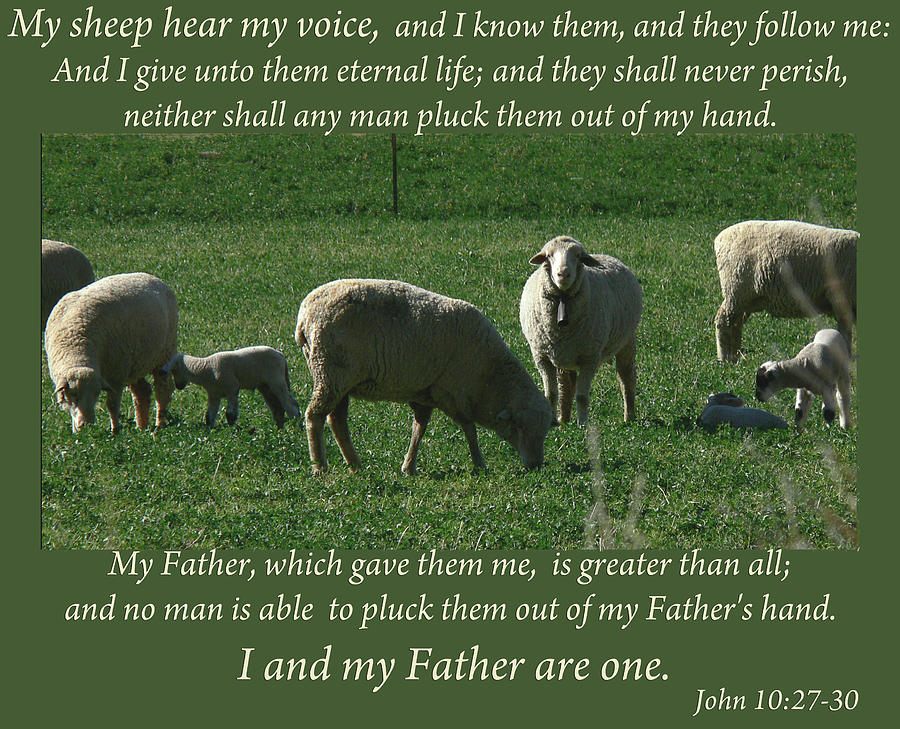
 
Image from www.yhwh-glory-end-time-ministry.com

Image from www.yhwh-glory-end-time-ministry.com

Jesus was known as a healer who would make things right again. He cast out demons (Mark 1:32-34) and even brought the dead back to life (Matt. 9:18-26), an act that certainly awed his witnesses but was not considered unbelievable (Elijah had done the same in 1 Kings 17:17-24). He argued with his Jewish compatriots over the meaning of God’s will, and like many other Jews, he reminded all who would listen of the immanent coming of God’s kingdom (Mark 1:14-15).


Jesus lived at a time and in a place of political and religious instability, a historical period rife with intense argument and polemic. All four Gospels depict Jesus in repeated controversy with Jews, especially scribes and Pharisees, who are portrayed as representing a rigid Jewish establishment perspective that lacked real spirituality (Matt. 23, Mark 12, Luke 20, and John 7).


The issues around which Jesus and other Jewish leaders of his time preached and argued with their fellows were never resolved during his lifetime. The controversy and polemic that would become so emblematic of the relationship between the religions of Christianity and Judaism thus actually began as internal arguments among Jews.


Jesus had many enemies, both Roman and Jewish, and they are depicted in New Testament sources as conspiring to bring about his demise and death. He was humiliated, physically abused, and then crucified. His ignominious end was a great shock for his followers, who were shattered by the brutal dashing of their highest hopes. But the story did not end with Jesus humiliation. What occurred next was the extraordinary event of the resurrection, not witnessed but nevertheless proven to many, first tentatively by an empty tomb, and then by Jesus’s personal appearance before several of his followers (Matthew 28, Luke 24). And it was the resurrection that proved his redemptive, messianic status, confirmed by Jesus himself, who appeared unrecognized before two of his followers and said,

“’Was not the Messiah bound to suffer in this way before entering upon his glory?’ “Then, starting from Moses and all the prophets, he explained to them in the whole of scripture the things that referred to himself” (Luke 24:26-27).


Eventually, and in common with what academics refer to as a process of sect formation and then transition from sect to new religion, the Jesus movement evolved into a separate religious institution. It came to be recognized both by its own adherents and by those outside the community as discrete faith called Christianity, the religion of Christ or “the anointed one” (in Greek, Christos).


As this happened, some of the earlier internal Jewish arguments were recast as arguments among believers representing separate faith communities. Because the Gospels were not canonized until at least the third and perhaps even the fourth century, this transition from internal Jewish argument to Jewish-Christian polemic is reflected even in the texts of scripture. And the followers of Jesus did indeed become a separate faith community that stood outside the broadest margins of the movements that we identify as the Jewish movements of Late Antiquity. 


The process of separation and differentiation is popularly referred to in academic discourse as the “parting of the ways.” It is complex, and scholars are not in agreement over many of its details. But it is clear that when the two communities recognized their distinct identities as unique and mutually exclusive, the polemic that was built up around the old Near Eastern notion of chosenness reached a high level of intensity.


One of the signature differences between the separating faith communities was their notion of covenantal relationship with God.

  • In the Jewish system, which retained the biblical notion of religious peoplehood as it evolved into Judaism, covenantal membership derived from birth of a Jewish mother or formal religious study and conversion. It required circumcision, acknowledgement of the divine origin and eternal validity of Torah, and personal loyalty to the required ritual, civic, and moral-ethical behaviors set down in the Torah and its interpretation. Although Gentiles could be rewarded by God on this earth and even in the world to come, they could not be a part of God’s covenanted people without these.
 
  • Among Christians, on the other hand, after passing through the early period when virtually all followers of Jesus were Jews of one form or another, the overwhelming majority of believers were Gentiles, and circumcision was no longer a requirement for covenant membership. Neither was obedience to what came to be considered by Christians to be an outmoded system of law that had been superseded by God’s grace. Gentiles became part of God’s new covenant through personal faith in the saving power of Jesus as Christ-Messiah. Not only were they welcomed into the new covenantal community, but they also became the exclusive holders of a new covenantal relationship in Christ that excluded all Jews who either would not or could not accept his transcendent status.
 

This position was of course strongly opposed by the Jewish establishment. The Jews were well-established monotheists who were generally deeply respected in Greco-Roman society, even if rather resented. The burden was on the new Christian community to authenticate the new movement in terms that would demonstrate the truth of its claims.


Those who followed Jesus naturally found support for the truth of his mission in the world around them, and like the Jesus of Luke 24:27 who explained to his disciples how references in “the whole of scripture”—meaning the Hebrew Bible—pointed to his messiahship, they look to the Hebrew Bible for support as well. Those who believed in Jesus saw clear scriptural proofs and prophecies of his birth, mission, death, and resurrection. They also saw that the chosen, covenantal relationship between God and Abraham depicted in scripture was actually a proof of the new chosen status of those who had faith in Christ.


Chosen through Faith


Romans 4 are devoted to making sense of the mystery of God having chosen Abraham.


“What does scripture say? ‘Abraham put his faith in God, and that faith was counted to him as righteousness” (4:3).  


Abraham was chosen by God for his faith rather than for his obedience, for his relationship with God began even before he was asked to prove his obedience to God through circumcision and the establishment of the covenants (4:4-12).


“It was not through law that Abraham and his descendants were given the promise that the world should be their inheritance but through righteousness that came from faith” (4:13).


The following few verses make the case that obedience to the law, which was the cornerstone of emerging rabbinic Judaism, was not the real purpose of God’s chosen relationship with Abraham. Abraham’s is having been chosen by God was, rather, on account of his faith, and that faith includes, by extension, faith in resurrection and salvation through Jesus.


If the heirs are those who hold by the law, then faith becomes pointless and the promise goes for nothing. . .The promise was made on the ground of faith in order that it might be a matter of sheer grace, and that it might be valid for all Abraham’s descendants, not only for those who hold by the law, but also for those who have Abraham’s faith , for he is father of us all. . . His faith did not weaken. . . And that is why Abraham faith was “counted to him as righteousness.The words, “counted to him” were meant to apply not only to Abraham but to us; our faith too is to be “counted,” the faith in the God who raised Jesus our Lord from the dead; for he was given up to death for our misdeeds, and raised to life for our justification. (Rom.4:14-25) 


The letter of James argues the same point and concludes by connecting God’s special designation of Abraham as “loving friend” with Abraham absolute faith.


“Was it not by his action, in offering his son Isaac upon the altar, that our father Abraham was justified? Surely, you can see faith was at work in his actions, and by these actions, his faith was perfected? Here was fulfillment of the words of scripture: Abraham put his faith in God, and that faith was counted to him as righteousness,’ and he was called ‘God’s friend’” (James 2:21-23).


As important as Abraham is to Christianity, however, the new symbol of God’s most intimate relationship with humanity is Jesus. Jesus represents the quintessence of intimacy, and God’s love for Jesus, God’s own son, becomes transferred through Jesus’s sacrifice to all those who would have faith in him.  At one level, then, the chosen is Jesus, described in the New Testament as the divinely chosen descendent of David identified as the Messiah:


Do not be afraid, Mary, for you have found favor with God. And behold, you will conceive in your womb and bear a son, and you shall call his name Jesus. He will be great, and will be called the Son of the Most High; and the Lord God will give to him the throne of his father David, and he will reign over the house of Jacob forever; and of his kingdom, there will be no end. (Luke1:30-33)


The subtext for this passage is 2 Samuel 7:12-13, when God tells David,


“When your days are fulfilled and you lie down with your fathers, I will raise up your offspring after you, one of your own issue, and I will establish his kingship. He shall build a house for My name, and I will establish his royal throne forever. I will be a father to him, and he shall be a son to Me …Your house and your kingship shall ever be secure before you; your throne shall be established forever.”


In a later passage in the same Gospel, the actual words used by God to confirm Jesus’ authoritative status includes the idiom of chosenness:


“There came a cloud which cast its shadow over them; they were afraid as they entered the cloud, and from it a voice spoke: ‘This is My son, My Chosen; listen to him’” (Luke 9:35).


Other passages also single our Jesus as symbolic of the chosen relationship with God.

  • Not only is Jesus God’s chosen son (consider the subtext of Isaac as the one chosen for Abraham’s unfulfilled sacrifice in Gen. 22),
  • but he also becomes the actual sacrifice whose blood becomes “the blood of the covenant, shed for many for the forgiveness of sins” (Matt. 26:38; Mark 14:24).
  • He is the” good shepherd” who will lead his flock directly to God:
      • “I am the door; anyone who comes into the fold through me will be safe. He will go in and out and find pasture…
      • I am the good shepherd;
      • I know my own and my own knows me, as the Father knows me and I know the Father: (John 10:9-15).
 

Those who follow the extraordinary and divinely chosen Jesus gain a part of Jesus’s extraordinary blessing. Their faith in Jesus’s incomparable merit actually brings a certain merit upon them, and that merit includes a kind of personal election. Many Greco-Romans and a few Jews, indeed, entered into the fold through Jesus.


Most Jews, however, seem not to have followed him, yet they nevertheless claimed to have the chosen status of Abraham’s descendants without following Jesus. They represent the establishment religion in the New Testament, and whether or not some Jews actually intended to kill Jesus, there can be no doubt that they opposed him vigorously.


The Gospel of John accuses them of plotting Jesus’s death, and notes how they would cite their genealogical relationship with Abraham to prove their elect status. Jesus turns the idiom of kinship relationship on its head by accusing them, metaphorically, of acting as if they were children of the devil rather than of Abraham.         


 “I know that you are descended from Abraham, yet you are bent on killing me because my teaching makes no headway with you. I tell what I have seen in my Father’s presence; you do what you have learned from your father.”

They retorted, “Abraham is our father, ”“If you were Abraham’s children,” Jesus replied, “you would do as Abraham did. As it is, you are bent on killing me, because I have told you the truth, which I heard from God. That is not how Abraham acted. You are doing your own father’s work”. They said, “We are not illegitimate; God is our father, and God alone.” Jesus said to them, “If God were your father, you would love me, for God is the source of my being, and from him I come. I have not come of my own accord; He sent me. Why do you not understand what I am saying? It is because my teaching is beyond your grasp. Your father is the devil and you choose to carry out your father’s desires. He was murderer from the beginning, and is not rooted in the truth; there is no truth in him. When he tells a lie he is speaking his own language, for he is a liar and the father of lies.” (John 8:37-44).


By Jesus’ day, conversion was both a possibility and a reality. In fact, many Greco-Romans who were neither Jewish nor Christian “shopped the market” during the first century CE and later in search of more personally relevant religion. This was the largest potential pool of religious consumers, and some early church fathers noted in their writings how Greco-Romans listened to both Jewish and Christian leaders and attended various worship services.


Both rabbinic Judaism and Christianity represented newly emerging religious movements during the period, but because Judaism insisted that it was carrying the banner of biblical religion, Jews were also represented in the New Testament as the religious establishment, though the most powerful religious establishment was actually represented by the Roman state through worship of the emperor. 


Primogeniture and Promise


If a new religious movement attacks the establishment head-on and aggressively, the polemical assault may not only cause it to suffer more from the results of direct confrontation, but it may also alienate potential followers who are considering their religious options before joining any movement. Successful new religious movements sometimes work subtly with authenticating symbols, therefore, and in ways that will accomplish the opposite of the desire of the establishment to denigrate them.


In the following passage in Romans 11, for example, Paul starts off as if affirming the unique chosen status of Israel but then subverts that notion through a brilliant argument based on well-known biblical symbols and motifs:


I ask then: Has God rejected his people? Of course not! I am an Israelite myself, of the stock of Abraham, of the tribe of Benjamin. God has not rejected the people he acknowledged of old as his own. Surely you know what scripture says in the story of Elijah—how he pleads with God against Israel: “Lord, they have killed your prophets, they have torn down your altars, and I alone am left, and they are seeking my life.” But what was the divine word to him? “I have left myself seven thousand men who have not knelt to Baal.” In just the same way at the present time a “remnant” has come into being, chosen by the graced of God. But if it is by grace, then it does not rest on deeds, or grace would cease to be grace. What follows? What Israel sought, Israel has not attained, but the chosen few have attained it. The rest were hardened. . . I ask, then: When they stumbled, was their fall final? Far from it! Through a false step on their part salvation has come to the Gentiles, and this in turn will stir them to envy… It is to you Gentiles that I am speaking. As an apostle to the Gentiles, I make much of that ministry, yet always in the hope of stirring those of my own race to envy, and so saving some of them. For it their rejection has meant the reconciliation of the world, what will their acceptance mean? Nothing less than life from the dead! (Rom. 11:1-15)


A similar reworking of earlier symbols may be found in it same epistle:


Not all descendants of Israel are truly Israel, nor, because they are Abraham’s offspring, are they all his true children; but in the words of Scripture, “Through the line of Isaac your descendants shall be traced” [Gen. 21:21]. That is to say, it is not those born in the course of natures who are children of God; it is the children born through God’s promise who are reckoned as Abraham’s descendants. (Rom. 9:7-8)


The critical subtext for this passage is Genesis 21:10-13: 


She said to Abraham, “Cast out that slave-woman and her son, for the son of that slave shall not share in the inheritance with my son Isaac.”

The matter distressed Abraham greatly, for it concerned a son of his. But God said to Abraham, “Do not be distressed over the boy or your slave; whatever Sarah tells you, do as she says, for it is through the line of Isaac that your descendants shall be traced. As for the son of the slave woman, I will make a nation of him too, for he is your seed.”


This is a critique of the Jewish claim of chosenness based lineage. Paul’s argument is that God’s mysterious choice of Isaac over Ishmael for the covenantal chosen relationship is explained by the fact that earlier in the narrative, God promised that Abraham would have a second child, who would be named Isaac through Sarah. Therefore, while Ishmael was indeed Abraham’s firstborn son, he was simply a normal child, whereas Isaac was divinely promised and thus attained a preferred, chosen status.


In the biblical system of primogeniture, a father’s firstborn son served as the primary inheritor. Ishmael thus should have attained higher status than his younger brother, Isaac. Yet Isaac, who was born miraculously in Abraham and Sarah’s old age and according to God’s promise, was accorded higher status by God.


According to this reading, simple genealogy is trumped by divine intent. In the same way, says Paul, the Jewish prior claim to chosenness based on direct blood-kinship with Abraham in trumped by the divine promise to those who follow Jesus as Christ- Messiah.


The same analogy is made in an extremely powerful way in Galatians 4:21-31:


Tell me now, you who are so anxious who are so anxious to be under the law will you not listen to what the law says? It is written there that Abraham had two sons, one by his slave and the other by his free-born wife. The slave-woman’s son was born in the course of nature, the free woman’s through God’s promise. This is an allegory. The two women stand for two covenants. The women stand for two covenants. The one bearing children into slavery is the covenant. The one bearing children into slavery is the covenants. The one bearing children into slavery is the covenant that come from Mount Sinai: that is Hagar. Sinai is a mountain in Arabia and it represents the Jerusalem of today, for she and her children are in slavery. But the heavenly Jerusalem is the free woman; she is our mother!… Now you, my friends, like Isaac, are children of God’s promise, but just as in those days the natural-born son persecuted the spiritual son, so it is today. Yet what does scripture say?  “Drive out the slave and her son, for the son of the slave shall not share the inheritance with the son of the free woman.” [cf. Gen 21:10] You see, then, my friends, we are no slave’s children; our mother is the free woman. It is for freedom that Christ set us free. Stand firm, therefore, and refuse to submit again to the yoke of slavery.


The inheritance in this passage is the blessing of God through Jesus as Christ-Messiah. Inheritance is not simply attained by kinship relationship. It must be acquired through God’s intentionally, and that intentionality is expressed through the very personhood of Jesus.


Many other New Testament passages could be cited to show how important the competition was for being the real chosen of God. One of the most powerful and famous is the anonymous letter to the Hebrews 8:6-13, referenced above:


In fact, the ministry, which has fallen to Jesus, is as far superior to [Israel’s] as are the covenant he mediates and the promises upon which it is legally secured. Had the first covenant been faultless, there would have been no need to look for a second in its place. But God, finding fault with them, says,

“The days are coming, says the Lord, when I will conclude a new covenant with the house of Israel and the house of Judah. It will not be like the covenant I made with their forefathers when I took them by the hand  to lead them out of Egypt; because  they did not  abide by the terms of the  covenant, and I abandoned them, says the Lord. For the covenant I will make with the house of Israel after those days, says the Lord, is this: I will set My laws in their understanding and write them on their hearts ; and I will be their God, and they shall be My people. And they shall not teach one another, saying to brother and fellow-citizen.’ Know the Lord!’  For all of them, high and low, shall know Me; I will be merciful to their wicked deeds, and I will remember their sins no more.”

By speaking of a new covenant, He has pronounced the first one old; and anything that is growing old and aging will shortly disappear.


The bulk of this passage is a citation of Jeremiah 31:31-34 Biblical scholars consider the Jeremiah passage to be part of a larger prophecy of consolation and restoration directed to the northern kingdom of Israel that had been destroyed by the Assyrians years earlier. The interpretation of the letter to the Hebrews is that the “new covenant “refers to one to one established between God and a new religious community that will replace the old.


This is one of the powerful texts that claim the supersession of Christianity as the “true Israel” (the Latin phrase is verus Israel). In this passage, the subtext of Jeremiah 31 is brought right into the text to demonstrate and strengthen the point. In this view expressed there, the new covenant represents a new dispensation, a new relationship between God and a replacement “chosen.” The old claim to chosenness has no meaning because God has ended that relationship. The new chosen reflects the most perfect articulation of the divine will.


Chosenness as a Zero- sum situation


The arguments that we have been reading reveal the view that the role of covenanted community was possible for one side only. In the language of game theory, the competition for divine election is depicted in these texts as a “zero-sum” situation:

    • there can be only one elected,
    • only one chosen at any time.
    • If the Israelites are chosen,
    • the Christians cannot be, and vice versa.
    • Only one form of monotheism is valid.
 

The assumption was born in a period when the Israelites were the only community to arrive at the notion of monotheism. There was only one form of monotheism in the world of ancient Israel, or at least only one that could be known to them. The other expressions of monotheism or proto-monotheism mentioned above never survived. All other human communities and nations known to Israel were polytheists. Because the one Great was ”none of the above,” meaning that God was not  limited to being like a  tribal  god of any of the nations—and only Israel realized this—then only Israel could be chosen by the true  God. There was only one chosen, and that chosen was Israel.


The notion of a single chosen is deeply embedded in the chosenness texts of the Hebrew Bible:


Exodus  19:5-6: “You Shall be My treasured possession among all the peoples, for all the earth is Mine.” 

Leviticus 20:26: “I have set you apart from other peoples to be Mine.”

Deuteronomy 7:6: “The Lord your God chose you to be His treasured people.”

Deuteronomy 14:2: “The Lord your God chose you from among all other peoples on earth to be His treasured people.”

Isaiah 42:1: ”This is My servant, whom I uphold, My chosen one, in whom I delight.”


The notion of a single chosen became a dominant theme of Christianity as well, but the difference was that rather than being a religious peopledhood as in ancient Israel, and then rabbinic Judaism, the chosen in Christianity was a voluntary religious community, one of voluntary believers. But only those within that clearly defined community benefit from the new expression of divine election:


”He who believers and is baptized shall be saved but he who does not believe shall be condemned” (Mark 16:16).


Given the repeated statements of unique status, it is not surprising that the first two monotheistic religious system to emerge out of the fall of the Jerusalem Temple agreed that there could only be one true monotheism. 

Q&A: Is it really impossible to obey ‘the Law’ of the ‘OT God’??

Image from www.stufffundieslike.com

Image from www.stufffundieslike.com

[First posted 2017; the image here says’ “not all who wonder are lost” — -amen, how true indeed!Sinaites started “wondering” as in “daring to question” the very religion we were born in (Christianity) and the New Testament scriptures it was based on and checked its claim to be ‘founded’ on the previous scriptures it re-labelled as “Old Testament’.  HOW DARE WE????  Well, we dared and daring led us “wondering” and “wandering” led us to to Sinai, the mountain of revelation, and the God who spoke to the liberated multitude which reformed into the nation of Israel.  How far have we travelled since?  This website is full of articles that explain our journey. —Admin1].

——————–


This began as simply posting  an excerpt  from the long introduction to a chapter in the last book of the TORAH:

Sometimes in our zeal to over-explain the ‘obvious’, i.e. what should be clear in the ‘instructions for living on planet earth’ of the One True God, YHWH, we end up writing long introductions as though the reader won’t ‘get it’ from simply reading a chapter of the TORAH.  And yes, unfortunately, learning from experience, readers don’t always ‘get it’ —  why?  Because of previous religious orientation (whatever their religion is) that prevent them from applying basic reading rules required for understanding and interpreting any reading material, including books that claim to be “the very words of God”.


Readers fail to disengage their thinking from what they have been taught when they read the Hebrew Scriptures, and particularly when they read Christian translations (with a dogmatic  agenda) instead of translations by Jews immersed in the culture and language of their own Sacred Scriptures-cum-national origins/history.


I’m not sure if readers of the Koran have the same tendency if and when they read the Jewish Tanach.  I can only speak from and relate to my experience, having been deeply and lengthily rooted in the 2-part Christian Bible.  Like my Sinaite colleagues who were formerly readers with a Christian orientation — we tended to carry with us ‘baggage’ from New Testament teaching rather than reading the Old Testament with a clear mind, a fresh approach, attempting to understand the text in its original context,  and from the point of view of the original hearers, not fast-forwarding it to our own time frame,  to our  modern context, and to our specific religious orientation.  We should know, been-there-done-that.


Sinaites lived, studied, taught exactly this belief system, hook-line-sinker, for decades of our life.   It is the result of swallowing without question, the Christian doctrine of “progressive revelation” which claims that —

  • the revelation on Sinai was not complete,
  • that the receivers of that revelation were kept in ignorance,
  • ‘blind’ by deliberate divine design as per the apostle Paul’s teaching in Romans;
  • that a sequel was reserved for later revelation through a God-Man,
    • unbeknownst to the original receivers of the original revelation.

What was supposedly kept secret from Israel by the Sinai Revelator?

  • That a Roman political-religious power would form a new religion around their reconfigured NT Godhead;
  • and a Gentile “church” would usurp the chosen nation’s place and title,  calling itself the ‘New Israel’,
  • which would displace the original ‘son’ and ‘servant’ and replace everything in the TORAH and the Hebrew Scriptures with a new everything,
    • new testament,
    • new covenant,
    • new revelation (or continuing the ‘unfinished’ one (prequel) with the final installment’  or sequel, if you will);
    • a new chosen or people whose election is based on choice and not ethnicity;
    • a new and exclusive way to  approach a new reconfigured God,
    • whose ‘salvation’ requires belief in a Savior,
    • membership in His Church,
    • and acceptance of its doctrines.

Why?  Because it is claimed that the “old” was simply too difficult, nay “impossible” to obey,  not doable without the aid of, well, God Himself,

  • who comes down in the form of humanity,
  • tasting what it feels like to be human,
  • as though the all-wise and understanding Designer of individual human beings would not understand
  • unless He had to experience being human Himself,
  • Then,  as God-man, fix the sin/fallen-nature problem as Savior of fallen humanity;
  • fallen and damned because of the doctrine of original sin . . .

—-but let’s not get into that here, I’m forgetting what the original ‘Q’ is here, for which I’m supposed to provide the ‘A’.


The points here are simple and logical:

  • What did the Revelator really say about His own ‘Law’?
  • Would He give instructions impossible to obey?
  • If so, what would be the purpose of that?
  • Is that wise and just?
  • And could the Judge blame humans for failing to obey just because the first man and woman failed His test?

That doesn’t sound at all like a God of Justice!  Human parents would not punish the rest of their children just because their eldest failed to pass their obedience test, would they?  Yet the “OT God” constantly demands obedience nonstop from His chosen original Israel!   Now why would the all-Wise Just God be doing that,  knowing how impossible He has made it for any human, Jew or Gentile, to obey His ‘Law’, His Torah, His instructions for living?


What does the One True God of the Original Torah/Hebrew Scriptures  actually say, even after the supposed “fall” of the first representative humanity?


This is what He reiterates to everyone else after the first parents — ‘simply do as you are told’ or ‘follow the instructions’.


And this is what He says through His mouthpiece, Moses,  to the 2nd generation of the ‘mixed multitude’ who left Egypt and gathered around Sinai to receive the original Revelation and given instructions on how to live together in community:


Deuteronomy/Davarim 30:

11  For the commandment that I command you this day:

it is not too extraordinary for you,

it is not too far away!

12 It is not in the heavens,

(for you) to say:

Who will go up for us to the heavens

and get it for us 

and have us hear it,

that we may observe it?

13  And it is not across the sea, (for you) to say:  

Who will cross for us, across the sea,

and get it for us and have us hear it,

that we may observe it?

14  Rather, near to you is the word,

exceedingly,

in your mouth

and in your heart,

to observe it!


Having been rooted in Christian/Messianic orientation and with an ‘NT’ approach to the “Old Testament” of the two-part Christian Bible, it is difficult for Sinaites NOT to keep connecting what we have been taught by man-made religion, and what we have learned —not from ‘religion’ but from the Revelation given on Sinai, the Torah.


Really, how does one reconcile the declarations of YHWH in this chapter with the Christian teaching that —-

  • man is utterly helpless and definitely hopeless because of ‘original sin’;
  • that man cannot rise above his inherited depraved nature
  • because he has no ‘power’ within himself;
  • that self-changing power is not internal but external,
  • has to come from above, i.e. Holy Spirit;
  • and that 3rd person HS inhabits only those who believe in the 2nd person of the Trinitarian God, Jesus Christ;
  • and only then is one ‘enabled’ to obey . . .

Okay, but obey what? And where does ‘free will’ fit in?


If the expounder of Christian theology, Paul of Tarsus, declares ‘we are under grace, not law’,  then what are adherents of NT theology supposed to obey? Certainly not the Torah of YHWH, since that is ‘obsolete’ and ‘passé’ to Paul.


So, obey what or obey whom?  If not YHWH of the “OT”, then who?


Who else, or what else—the teachings of Christianity’s Man-God Jesus as transmitted to his apostles/disciples.


Oh, but isn’t Jesus God Himself, in the flesh?


Think about it,  who was Jesus?


A Jew who would have obeyed the Torah and if he was God in the flesh, he would remember that as Revelator on Sinai, these were his laws!  In fact according to the gospels, he supposedly declared in Matthew 5:17-18: 


“Think not that I came to destroy the law or the prophets;

I came not to destroy,

but to fulfill.

For verily I say unto you,

till heaven and earth pass away,

one jot or one tittle shall in no wise

pass away from the law,

till all things be accomplished.” 


And supposedly according to the teaching,  ‘all things’ were accomplished at his sacrificial death on the cross as the Paschal Lamb of God, etc. etc.  Please read other posts in this website if you need to be clarified because you’re still confused, or if you’re in shock to hear this for the first time.

The very fact that the 10 commandments or the ‘decalogue’ —

  • has been edited according to the Christian sect using it;
  •  has been adopted by Christianity as part of its commandments,
  • must signify that the original teaching of the TORAH is still recognized as valid,  as ‘law’.
Where did this ‘law’ come from? Where else, the Old Testament that was retitled “old” to suggest obsolescence and that it is for the Jew and not for the Christian.

Really?

The Decalogue states the ten foundational  principles of the Sinaitic Covenant, intended for ALL people.   Sometimes one has to wonder if the new religion of the NT is indeed the ‘New Israel’ . . . when it sounds more like the ‘New Babylon’.


The Lawgiver Himself (YHWH, not mediator Moses) assures the recipients of the TORAH that really, folks,  the commandments are not too hard nor too difficult to understand and  to apply,  THEN–AND–NOW!  This was repeatedly emphasized —

  • to the wilderness-wandering mixed multitude’
  • and to the children of that mixed multitude’ before they entered the Land of Promise,
  • and today, to the  TORAH-recognizing and TORAH-obedient mixed multitude’ of Jews and non-Jews all over the world,
  • i.e.  all humanity in general,  

—for whom TORAH was intended to begin with, or should we say, to end up with!


The prophets Isaiah and Zechariah among others envision the “end of days” when all nations will have knowledge of and recognize Who is the One True God,  obey His Torah, and worship Him and Him alone.

The problem is NOT the commandments.   The problem is the heart of each person who hears, hopefully understands, either accepts or refuses not only the command, but the LAW-GIVER as well.  The commandments are DOABLE as the Law-Giver Himself says in this text!  But unfortunately, even just the dietary prescriptions become a big issue; can’t give up pork, shrimp, oysters, unclean meat!   And the Sabbath? . . . goodness gracious . . . !  Man prefers to embrace a religion that caters to his convenience because the world goes by a Roman-sourced calendar that shifted the sabbath from Saturday to Sunday.

Oh well . . . .to each his choice, that is why the Creator endowed individual humanity with free will.

But choice boils down to only two options:

  •  ‘my’ will or what I want, over and above—
  • His Will and what He has commanded.

Be ready to face the consequences of choosing SELF over the CREATOR of SELF, the “I” in Idolatry vs. the “I” in God’s Image.

INFORMED CHOICE:  that is what we recommend in this website.

We are a ‘resource center’ for seekers of Truth.

Read, chew, then take it or leave it, digest or spit out!

Never mind our words, but do not ignore YHWH’s WORDS of Life, the Torah, the Tree of Life.

As the Life-Giver proposes for individual choice:  Choose life.


NSB@S6K

AIbEiAIAAABDCNPkvrXuucmdeSILdmNhcmRfcGhvdG8qKGJkZTc0YTk3NmUxMGM4OTAzZjk5MDhkMjdkZDI2ODQ3OTliYmQ2MDkwAe5UdNp0lvYvCf8bjAFEJOY_fdsj

The Sinaite’s Liturgy – Last Sabbath on the Last Month of Year 2018

a52b26844d239e6316ddc176b1d84c7d KINDLE THE SABBATH LIGHTS


Lord YHWH, 

Eternal God

with no beginning

and no end,

Before the mountains were brought forth,

or ever thou hadst formed the earth

and the world,

even from everlasting to everlasting,

thou [art] God.  

For a thousand years in thy sight

[are but] as yesterday

when it is past,

and [as] a watch in the night. 

[Psalms 90:2,4]


We thank You for designing earthly time

with designated seasons that remind us 

of the continuing passage of time, 

and yet within that seamless flow of time passing

are opportunities for ‘new beginnings’,

each new day, new week, new month, new year, 

milestones that mark a shift, a change,

a movement to do better in our journey through life,

through our remaining time on earth,

the end of which is not within our purview.

We thank You for teaching humanity —

through Your ‘Instructions for Living’,

Your Guidelines for Life, Your Torah,

how to live every moment and each stage of our earthly life,

with consciousness that the ever-moving ‘present’ is the only time we truly have,

that the past is gone and future has not yet come;

and therefore we should  use our present time wisely and well,

whether for work or for rest,

in company or in solitude,  

in mindless activity or mindfulness of why we keep doing what we do,

going the same direction and not trying another,

reflecting on whether or not  we have made progress

in the days, months, years, and decades that have passed. . .

and what significant changes should we make at this point in our life.

We realize, O Lord God, 

that You have gifted humanity with free will,

so that choice is always in our hands,

according to our will, for good and unfortunately for ill.

And with that realization comes responsibility

to learn wisdom You have imparted to all humanity,

in Your Instructions for Life, Your Torah,

which, when applied in practical living,

would work towards an ideal society

of people who live together,

thinking of ‘the other’ instead of ‘self’

in harmony, unity and peaceful coexistence,

cultivating a healthy respect for individual difference and diversity of opinion.

As we approach the end of another year,

may we reflect on how we have used or misused 

Your precious, precious gift of time,

time in our hands, time within our control, 

time we have put to good use . . . or unfortunately wasted.

Indeed, O YHWH,  

teach us to number our days,

that we may apply our hearts unto wisdom.

[Psalms 90:12]

Yet nothing in life’s experience is ever wasted,

if we learn precious lessons from the negatives

and live more wisely as we apply changes 

and keep moving on with the progress of time.


We hold on to Your message in Jeremiah 29:11

For I know the thoughts that I think toward you,

thoughts of peace, and not of evil,

to give you an expected end.


And the words of Your anointed wise king, Solomon:

 Commit thy works unto the LORD,

and thy thoughts shall be established.

[Proverbs 16:3]


————————–


To Everything There is a Season

[Adapted by songwriter Pete Seeger from Ecclesiastes 3:1-8]

1.  A time to be born, a time to die;
a time to plant, a time to reap;
a time to kill, a time to heal,
a time to laugh, a time to weep.
2.  A time to build up, a time to break down,
a time to dance, a time to mourn,
a time to cast away stones,
a time to gather  . . . stones together.


REFRAIN:  To everything, turn, turn, turn,
There is a season, turn, turn, turn,
And a time to every purpose under heaven.


3.  A time of love, a time of hate,
a time of war, a time of peace,
a time you may embrace,
a time to refrain . . . from embracing.


4.  A time to gain, a time to lose,
a time to rend, a time to sew,
a time for love, a time for hate,
a time for peace, I swear it’s not too late.
REFRAIN:  To everything, turn, turn, turn,
There is a season, turn, turn, turn,
And a time to every purpose under heaven.
TORAH on NEW BEGINNINGS . . .
Image from Shutterstock

Image from Shutterstock

“Forget the former things;

do not dwell on the past.

See, I am doing a new thing!

Now it springs up;

do you not perceive it?

I am making a way

in the wilderness

and streams

in the wasteland.”

Lamentations 3:22-24

“Because of the Lord’s great love we are not consumed,

for his compassions never fail.

They are new every morning;

great is your faithfulness.

I say to myself, ‘

“The Lord is my portion;

therefore I will wait for him.’”

 Psalm 40:3

“He put a new song in my mouth,

a hymn of praise to our God.

Many will see and fear the Lord

and put their trust in him.” 

Ezekiel 11:19

“I will give them an undivided heart

and put a new spirit in them;

I will remove from them their heart of stone

and give them a heart of flesh.”

Isaiah 65:17

“See, I will create new heavens and a new earth.

The former things will not be remembered,

nor will they come to mind.”


————————-


BLESSINGS
Image from www.pinterest.com

Image from www.pinterest.com

Knowing You as God, is a blessing;  

knowing Your Name, YHWH,

is a blessing; 

We pray that our loved ones

will come to know You

and acknowledge You

as God,

and bless Your Name,

O YHWH!


We lift each of them up to You,

for protection, for daily provisions,

for harmony in their relationships,

for peace in heart and mind,

for the development of character

steeped in loving-kindness and wisdom,

that they might experience joy and contentment

at every stage of their lifetime.  

Indeed, may it be so!


SABBATH MEAL

Image from rlst2500-fall2014.blogspot.com

Image from rlst2500-fall2014.blogspot.com


TORAH STUDY

Image from thetorah.com

Image from thetorah.com


HAVDALAH


[Source:  A Prayer for the Jewish New Year

BY: RABBI JOHN L. ROSOVE]


May we hold lovingly in our thoughts

those who suffer from tyranny, subjection, cruelty, and injustice,

and work every day towards the alleviation of their suffering.

May we recognize our solidarity

with the stranger, outcast, downtrodden, abused, and deprived,

that no human being be treated as “other,”

that our common humanity weaves us together

in one fabric of mutuality,

one garment of destiny.

May we pursue the Biblical prophet’s vision of peace,

that we might live harmoniously with each other

and side by side,  respecting differences,

cherishing diversity,  

with no one exploiting the weak,

each living without fear of the other,

each revering Divinity in every human soul.

May we struggle against institutional injustice,

free those from oppression and contempt,

act with purity of heart and mind,

despising none, defrauding none, hating none,

cherishing all, honoring every child of God,

every creature of the earth.

May the Jewish people, the state of Israel, and all peoples

[in all other NATIONS of the World]

know peace in this New Year,

And may we nurture kindness and love everywhere.

[AMEIN!]


Image from Askideas.com

Image from Askideas.com. . . 

And a blessed year – 2019 –

to Sinaites all over the world, 

and to our Messianic/Christian/unaffiliated friends,

Sabbath-keepers all!

 To LIFE!

Image from www.chabad.org

Image from www.chabad.org

In behalf of Sinaite 6000 Core Community based in Baguio City, Philippines . . .

NSB @S6K

logo-e1422801044622


Is Hanukkah a “biblical” feast or is it a festival for the Jews only?

[This was first posted December 2012.  Shortly after we transitioned from our former Christ-centered faith, we continued to celebrate Hanukkah with Jewry, having been formerly Messianics accused of being Jew-wannabe’s.  We had not yet delineated the line between what’s Jewish and what’s biblical.  In 2014, Hanukkah 5775 —we decided we still wanted to celebrate this Jewish festival, but in our own way with our own liturgy. We focused on the symbolism of “light” and how the God of Israel manifested visually as “Light.”   Be sure to greet your Jewish friends a ‘Happy Hanukkah’ during this 8-day festival starting December 12  this year 2017; and follow their wonderful tradition of  lighting one candle on the 9-stem menorah called “hanukkiah” for each day covering the 8-days, ending December 20, 2017.   Why? This post explains.—Admin1].


————————————-


Image from catchmyparty.com

Image from catchmyparty.com

Every year, we receive not a few inquiries about the Jewish feast celebrated at this time of the year called Chanukah/Hanukkah. 


In general, the inquiry is:  

  • Should gentiles celebrate it,
  • and specifically, does our Sinai 6000 community celebrate it?


As far as we know, Leviticus 23 where the Feasts of YHWH are commanded does not include Hanukkah.  Why?  Because the reason for this particular celebration occurred much later after the canon of the TNK was decided upon and closed.  It is therefore a uniquely Jewish festival, part of Jewish history—


a lesser Jewish festival, lasting eight days from the 25th day of Kislev (in December) and commemorating the rededication of the Temple in 165 bc by the Maccabees after its desecration by the Syrians. It is marked by the successive kindling of eight lights.” [dictionary definition] 


hanukiah


That said, Sinaites have nevertheless opted to celebrate it with the Jewish people because for one, it is a reminder of the faithfulness of the God of Israel to His chosen nation as well as His acceptance of any seeker who embraces the Jewish people and ultimately acknowledges Him, YHWH, as the One True Elohiym.  For another, Hanukkah is such a joyous and festive season, full of symbolism in its 8-day observance.  Also called “the festival of Lights” it reminds us Sinaites that—


  • it is YHWH Himself Who manifests as LIGHT (burning bush,  pillar of fire, the consuming fire),  
  • the Sinai Revelation, YHWH’s TORAH is the true light for darkened minds in this darkened world; 
  • the 9-stem Menorah is lit one candle each day from ‘the servant’ candle at the center as a reminder of the miracle of YHWH’s provision for the sanctified oil of the Temple Menorah which lasted for 8 days when originally, there was only enough oil to last one day.  
    • We gentile believers in YHWH are like lamps whose lives are lit up by TORAH and in effect, receive our light from Israel (the ‘servant’ in Isaiah).  We love Israel and are grateful that the chosen people have recorded the Sinai Revelation for all to discover the One True God and His Way.
    • ” . . . the sublime mission of Israel . . . [is] to be His witness before all peoples, to be ‘a light to the nations’, and to point the  way of righteousness and salvation to all the children of men.” (Pentateuch and Haftorah)

That calls for a celebration, don’t you think?  Of course there is much more historical background behind this festival, that is why it is good to celebrate and use it as a springboard for teaching, that others might learn about a significant time in Jewish history and how one could relate to it..


The Jewish websites provide so many interesting articles about this festival.  We have opted to feature two Jewish websites [aish.com and chabad.org] to help gentiles like ourselves understand Hanukkah. There are so many more Jewish websites, please go to our links to read more.


 Note this:  “Hanukkah is not the Jewish Christmas” (aish.com). 

The article of our choice is reproduced at the end, please don’t fail to scroll all the way there!


 http://www.chabad.org/holidays/chanukah/default_cdo/jewish/Hanukkah.htm
http://www.aish.com/h/c/
Why Hanukkah is the perfect festival for religious freedom http://us7.campaign-archive1.com/?u=2a91b54e856e0e4ee78b585d2&id=e5593145f4&e=6db799fe1a
 

————————–

 
Chanukah - Hanukkah

Chanukah (Hanukkah)
Light Over Darkness


Chanukah this year is Saturday evening December 8 – Sunday, December 16.


Chanukah — the eight-day festival of light that begins on the eve of the 25th of the Jewish month of Kislev — celebrates the triumph of lightover darkness, of purity over adulteration, of spirituality over materiality.


More than twenty-one centuries ago, the Holy Land was ruled by the Seleucids (Syrian-Greeks), who sought to forcefully Hellenize the people of Israel. Against all odds, a small band of faithful Jews defeated one of the mightiest armies on earth, drove the Greeks from the land, reclaimed the Holy Temple in Jerusalem and rededicated it to the service of G-d.


When they sought to light the Temple’s menorah (the seven branched candelabrum), they found only a single cruse of olive oil that had escaped contamination by the Greeks; miraculously, the one-day supply burned for eight days, until new oil could be prepared under conditions of ritual purity.


To commemorate and publicize these miracles, the sages instituted the festival of Chanukah. At the heart of the festival is the nightly menorah (candelabrum) lighting: a single flame on the first night, two on the second evening, and so on till the eighth night of Chanukah, when all eight lights are kindled.


On Chanukah we also add the Hallel and Al HaNissim in our daily prayers to offer praise and thanksgiving to G-d for “delivering the strong into the hands of the weak, the many into the hands of the few… the wicked into the hands of the righteous.”

Chanukah customs include eating foods fried in oil — latkes (potato pancakes) and sufganiot (doughnuts); playing with the dreidel (a spinning top on which are inscribed the Hebrew letters nungimmelheiand shin, an acronym for Nes Gadol Hayah Sham, “a great miracle happened there”); and the giving of Chanukah gelt, gifts of money, to children.


Click here for a comprehensive “How To” guide for the observances and customs of Chanukah


Click here to visit www.Chanukah.org


A free, 20-page user-friendly compendium of thought-provoking essays.


By far the most interesting perspective is the following, recommended by Rabbi Kalman Packouz in his Shabbat Shalom Weekly, written by his friend and colleague Rabbi Nachum Braverman, Aish HaTorah Los Angeles.  


Shabbat Shalom Weekly Insights into life, personal growth and Torah.View online:http://www.aish.com/tp/ss/ssw/182724811.html


WHAT WERE THE MACCABEES FIGHTING FOR?


It is ironic that Hanukkah is so widely observed in America, because it’s not clear that Jews today would side with the Maccabees. The Jews didn’t battle the Greeks for political independence and Hanukkah can’t be recast as an early-day version of Israel against the Arabs. Hanukkah commemorates a religious war.


The Greeks were benevolent rulers bringing civilization and progress wherever they conquered. They were ecumenical and tolerant, creating a pantheon of gods into which they accepted the deities of all their subjects. Their only demand was acculturation into the melting pot of Greek civilization and religion.


The Jewish community was divided in response to this appeal. Some believed assimilation as a positive and modernizing influence and they welcomed the release from Jewish parochialism. Led by Judah Maccabee was a small group opposed to the Greek ideal, and prepared to fight and die to preserve the exclusive worship of Judaism. (The name “Maccabee” is an acronym for the Torah verse “Who is like You amongst the gods, Almighty.”)


This was no war for abstract principles of religious tolerance. It was a battle against ecumenicism fought by people to whom Torah was their life and breath. Would we have stood with the Maccabees or would we too have thought assimilation was the path of the future? Would we fight for Judaism today, prepared to die to learn Torah and to keep Shabbat?


Today we face a crisis of identity as serious as the one confronted 2,500 years ago. Will we survive this century as a religious community or merely as a flavor in the American melting pot? Hanukkah calls to us to combat assimilation and to fight for our heritage.


Besides those who actively supported assimilation there were many who passively acquiesced. What is the use in opposing the force of history, they reasoned. We can’t halt assimilation any more than we can stop the tides or the passage of the seasons. Who would be so foolish as to oppose the inevitable? Today, too, there is paralysis before the apparently inevitable progress of assimilation. What chance do we have of convincing our children not to intermarry? Jewish particularism is a past value swept away on the tides of liberalism. With the barriers of anti-Semitism down and the land of opportunity beckoning, the day of cohesive Jewish community seems gone. It’s with resignation that we accept the spiraling intermarriage rate which spells our destruction as a people. Not so the approach of the Maccabees.


Remember the end of the story? Finally triumphant, Jews captured Jerusalem and rededicated the Temple. (The word Hanukkah means dedication and refers to this act.) They found just one flask of oil but the flame which should have lasted one day burned for eight as if to testify that our determination was enhanced by some ineffable power suffusing our efforts with transcendent glow and power. Light the candles, says the holiday to us. Act vigorously, teach, reach, courageously and with determination, and God will invest our efforts with a power, a permanence, and a glow, far beyond our capacity to convey.


A HANUKKAH STORY


I heard the following story years ago when I lived in Israel and to the best of my knowledge it is true. Before the USSR let the Jews leave for Israel, Jews used to hire a guide to smuggle them out of Russia. One Hanukkah a group of Jews were playing “cat and mouse” with a Soviet army patrol as they approached the border. When the guide thought they had lost the patrol, he announced an half-hour break before continuing the trek. One of the escapees, hearing the “magic” number of “one-half hour” — the minimum time a Hanukkah candle must be lit to fulfill the mitzvah — pulls out his menorah, sets up the candles, says the blessing and starts to light the candles. The other escapees immediately pounce upon him and the menorah to put out the candles — when the Soviet patrol moves in and completely encircles them.


The head of the army patrol speaks: “We were just about to open fire and wipe you out when I saw that man lighting the Hanukkah candles. I was overcome with emotion; I remember my zaideh (grandfather) lighting Hanukkah candles …. I have decided to let you go in peace.”

There is a verse in the Book of Psalms, (chapter 116, verse 6), “The Almighty protects fools.” Should he have lit the candle? NO! The Talmud tells us (Ta’anis 20b), “One should not put himself in a place of danger saying, ‘Let a miracle happen.’ ” So, while the story is one of action, adventure, suspense … the real lesson is not to rely upon a miracle to save you from danger … but to be thankful if the Almighty performs one to save you!

 
logoS6K:  AMEIN!!! 

Who really was born on December 25?

Image from http://www.historyasia.com/

Image from http://www.historyasia.com/

[This is a revisit; first posted December 16, 2012.  As the countdown begins toward the much anticipated Christmas day, here’s a timely reminder of why this whole holiday season is celebrated even by non-believers in the Christian Messiah.   Images added by us.–Admin1]
———————


According to HISTORY.COM:


Christmas is both a sacred religious holiday and a worldwide cultural and commercial phenomenon. For two millennia, people around the world have been observing it with traditions and practices that are both religious and secular in nature. Christians celebrate Christmas Day as the anniversary of the birth of Jesus of Nazareth, a spiritual leader whose teachings form the basis of their religion. Popular customs include exchanging gifts, decorating Christmas trees, attending church, sharing meals with family and friends and, of course, waiting for Santa Claus to arrive. December 25–Christmas Day–has been a federal holiday in the United States since 1870.


An Ancient Holiday


The middle of winter has long been a time of celebration around the world. Centuries before the arrival of the man called Jesus, early Europeans celebrated light and birth in the darkest days of winter. Many peoples rejoiced during the winter solstice, when the worst of the winter was behind them and they could look forward to longer days and extended hours of sunlight.


In Scandinavia, the Norse celebrated Yule from December 21, the winter solstice, through January. In recognition of the return of the sun, fathers and sons would bring home large logs, which they would set on fire. The people would feast until the log burned out, which could take as many as 12 days. The Norse believed that each spark from the fire represented a new pig or calf that would be born during the coming year.


The end of December was a perfect time for celebration in most areas of Europe. At that time of year, most cattle were slaughtered so they would not have to be fed during the winter. For many, it was the only time of year when they had a supply of fresh meat. In addition, most wine and beer made during the year was finally fermented and ready for drinking.


In Germany, people honored the pagan god Oden during the mid-winter holiday. Germans were terrified of Oden, as they believed he made nocturnal flights through the sky to observe his people, and then decide who would prosper or perish. Because of his presence, many people chose to stay inside.


Saturnalia


In Rome, where winters were not as harsh as those in the far north, Saturnalia—a holiday in honor of Saturn, the god of agriculture—was celebrated. Beginning in the week leading up to the winter solstice and continuing for a full month, Saturnalia was a hedonistic time, when food and drink were plentiful and the normal Roman social order was turned upside down. For a month, slaves would become masters. Peasants were in command of the city. Business and schools were closed so that everyone could join in the fun.


Also around the time of the winter solstice, Romans observed Juvenalia, a feast honoring the children of Rome. In addition, members of the upper classes often celebrated the birthday of Mithra, the god of the unconquerable sun, on December 25. It was believed that Mithra, an infant god, was born of a rock. For some Romans, Mithra’s birthday was the most sacred day of the year.


In the early years of Christianity, Easter was the main holiday; the birth of Jesus was not celebrated. In the fourth century, church officials decided to institute the birth of Jesus as a holiday. Unfortunately, the Bible does not mention date for his birth (a fact Puritans later pointed out in order to deny the legitimacy of the celebration).  Although some evidence suggests that his birth may have occurred in the spring (why would shepherds be herding in the middle of winter?),  Pope Julius I chose December 25. It is commonly believed that the church chose this date in an effort to adopt and absorb the traditions of the pagan Saturnalia festival.   First called the Feast of the Nativity, the custom spread to Egypt by 432 and to England by the end of the sixth century. By the end of the eighth century, the celebration of Christmas had spread all the way to Scandinavia. Today, in the Greek and Russian orthodox churches, Christmas is celebrated 13 days after the 25th, which is also referred to as the Epiphany or Three Kings Day. This is the day it is believed that the three wise men finally found Jesus in the manger.


By holding Christmas at the same time as traditional winter solstice festivals, church leaders increased the chances that Christmas would be popularly embraced, but gave up the ability to dictate how it was celebrated.


By the Middle Ages, Christianity had, for the most part, replaced pagan religion. On Christmas, believers attended church, then celebrated raucously in a drunken, carnival-like atmosphere similar to today’s Mardi Gras.   Each year, a beggar or student would be crowned the “lord of misrule” and eager celebrants played the part of his subjects.  The poor would go to the houses of the rich and demand their best food and drink.  If owners failed to comply, their visitors would most likely terrorize them with mischief.  Christmas became the time of year when the upper classes could repay their real or imagined “debt” to society by entertaining less fortunate citizens.


Image from www.slideshare.net

Image from www.slideshare.net

An Outlaw Christmas


In the early 17th century, a wave of religious reform changed the way Christmas was celebrated in Europe. When Oliver Cromwell and his Puritan forces took over England in 1645, they vowed to rid England of decadence and, as part of their effort, cancelled Christmas. By popular demand, Charles II was restored to the throne and, with him, came the return of the popular holiday.


Image from weekinweird.com

Image from weekinweird.com

The pilgrims, English separatists that came to America in 1620, were even more orthodox in their Puritan beliefs than Cromwell. As a result, Christmas was not a holiday in early America.   From 1659 to 1681, the celebration of Christmas was actually outlawed in Boston. Anyone exhibiting the Christmas spirit was fined five shillings.  By contrast, in the Jamestown settlement, Captain John Smith reported that Christmas was enjoyed by all and passed without incident.


After the American Revolution, English customs fell out of favor, including Christmas. In fact, Christmas wasn’t declared a federal holiday until June 26, 1870.


Image from www.saywhydoi.com

Image from www.saywhydoi.com

A Sinaite’s Liturgy – Sabbath before the Jewish Feast of Hanukkah

[The Jewish celebration of Hanukkah falls on different times, just like the Christian celebration of Christmas. This year 2018 in the Gregorian calendar, 5779 in the Jewish calendar, Hanukkah starts at sundown of Sunday, December 02, the beginning of the Jewish ‘day’,  and ends on the evening of Monday, December 10, 2018.  We are not Jews but we love to celebrate this Jewish ‘festival of lights’ because it is a celebration of ‘freedom’ and we are in sympathy with Israel and its struggle to exist and live in the land that biblically, has been granted them by the God of Israel, even if the world in this day and age do not recognize that biblical claim nor Israel’s right to occupy portions of the land as granted them by the United Nations.  And even more significantly,  the US President, Donald Trump has made official recognition of Jerusalem as the capital of Israel, by moving the US Embassy to there, a most criticized controversial act of an already controversial US president who didn’t need to add this to his list of presidential faux pas, according to his critics anyway.  And so, Israel continues to survive the odds through six millennia in YHWH’s timeline.  So this liturgy is for the Sabbath that falls before the 8-day celebration of the Jewish feast of Hannukah.—Admin1]


———————————


Image from www.glitters20.com

Image from www.glitters20.com

KINDLE THE SABBATH LIGHTS


LORD YHWH,

Creator of the universe, 

Designer of earthly time,

Eternal,

Immortal,

Invisible,

One and Only God—


You set the sun,

moon and stars

in the heavens,


‘for signs and seasons

and for days and years.’


Image from Hanukkah.jpg

Image from Hanukkah.jpg


We  kindle our Sabbath lights

at the time Jewry will soon be

lighting up their Hanukkiah lamps,

from the center ‘servant light’ 

that signifies their perpetual servanthood to You.  


O God of Israel;

as Your chosen people celebrate their 8-day ‘Festival of Lights’,

the feast of Hanukkah,

We remember how You manifested to your firstborn son Israel—

as burning bush,

pillar of fire,

‘shekinah’ glory cloud,

thunder and lightning on Sinai,

but before all that —

You were the PRIMEVAL LIGHT

that dispelled the darkness of the first 3 days

before Your created sun lit up our galaxy on the 4th day;

Your PRIMAL LIGHT illumines our minds to this day,

those of us who recognize and acknowledge

You and You alone as the One True God, 

for Your manifestations as LIGHT 

directs those with eyes that see, 

with minds wide open,

with seeking hearts 

to the pathway leading to You.


We are grateful for Your Torah

which informs our minds,  

fulfills our hearts

and gives meaning to our lives.

Indeed, Your Torah has kindled Your Light in our lives,

making us virtual lamps

to add to brightening up the pathway

leading to knowledge of You.

We thank You

for the light of Israel, Your chosen people,

whose very existence in this day and age

has been threatened at every stage of their national life,

yet their continuing presence is a witness 

to Your faithfulness to Your promises concerning them.

Even today, Israel’s continuing survival

amidst hostility from unfriendly nations

testifies to Your faithfulness

to your promise to their patriarchs,

and to the reality of Your existence,

O God of Israel. O God of all nations!


We are truly blessed to know as much of You

as You have enabled us to know,

O LORD of the Sabbath, LIGHT of the world,

through Your awesome creation,

through the Hebrew Scriptures,

through Your Torah.

through Your ‘servant’ ‘chosen’ people.

Blessed be Your Name, 

YHWH,

God of Israel, God of the nations, God of Sinaites.


PRAISE IN SONG

[Original Tune: “Of the Father’s Love Begotten” – Revised Lyrics]

Image from weheartit.com

1.  At the time before creation

ere the world began to be,

He is Alpha and Omega,

no beginning, no end has He.

Of the things that have been,

things that are, yet to be,

all the future years shall see,

evermore and evermore!


2. O those first words ever spoken,

words that brought this world to be,

“Let there be light” and indeed was light . . .

and in sequence all came to be:

heaven, earth, land, sea, and everything in between,

O how awesome He must be . . .

evermore and evermore!


3.  Sun and moon and stars in heaven,

night from day, each one set apart,

creatures of the land, sky, waters,

life in all forms each came to be.

balance, harmony, great beauty, diversity

were the order of the days, evermore and evermore!


4.  Then His vision turned toward the dust,

this one He spoke not, but He formed,

from the dust made, not created,

breath of life imparted within;

this one given choice and freedom of the will—

yes the one only one—in His Image human was made.


5.  By the 4th day He saw “it was good”

and declared the 6th “very good”—

signifying satisfaction and completion of His world.

Still He set apart a most unusual day

on the seventh day of rest,

God ceased working on His Sabbath.

Image from www.examiner.com

Image from www.examiner.com

BLESSINGS

Knowledge of God is a joy,

a loving family is a joy,

real friendship is a joy,

youth is a joy, old age is a joy,

good health which is true wealth is a joy.

being together with loved ones is a joy!

For all these and more,

we thank our Lord YHWH, the Source of all joy in life.

Without food for our bodies, how could we survive?

Without the Torah, how could we learn to live His Way?

This bread we share nourishes our body,

the Torah, our Tree of Life nourishes our soul.

We bless the Divine Provider of both,

and for the wine that we drink  to symbolize our joy and delight

in the GIVER of blessings.

To LIFE, His LIFE,

l’chaim!


SABBATH MEAL

Image from www.pinterest.com

Image from www.pinterest.com


TORAH STUDY

Image from www.cllnswbpgfx.com

Image from www.cllnswbpgfx.com


HAVDALAH

May YHWH’s Light shine upon us

May He illuminate our minds with His Wisdom,

May His Love fire up our hearts

so that we might spread it within our family

and outward to others in our circles of relationship,

May His Grace and Mercy be showered upon us

and our loved ones throughout our life on this earth,

May His Shalom and His Peace

reign in our hearth and home always,

from Sabbath to Sabbath and all the days between

all the days of our lives, to the end of our lifetime.

Amen.

Image from www.snydertalk.com

Image from www.snydertalk.com


Happy Hanukkah to our Jewish and non-Jewish friends

who choose to celebrate this wonderful festival of lights with Israel—


In behalf of Sinai 6000 Core Community,


NSB@S6K

Sig-4_16colors


logo


Q&A: Could the first 2 generations of humanity have avoided disobeying the Creator’s simple instructions specific to their situation?

Image from www.relatably.com

Image from www.relatably.com

[First posted in  2017.  This is an excerpt from a revisited post that is sooooo lonnnnng that perhaps readers don’t bother reading to the very end.  Except that this was at the beginning of the discourse, and if you’re curious, here’s the link for the complete discussion which is worth  your patience and time, promise! 

What prompted culling this excerpt out of the complete post is a judgmental attitude among the ‘self-righteous’ who posit that they would have done better than the first couple had they been the ones tested in Eden.   Oh yeah? Easy to say in hindsight, with wisdom gained from mistakes of others.  


The Rabbis teach that one should not judge another unless one has walked in that person’s shoes;  meaning, we should never compare ourselves and presume how much better we would react under the same circumstances because there are many factors involved in any peculiar situation; then,  factor in the personalities involved the story/incident. Perhaps I should write a sequel to this post titled “What if I were Adam or Eve?”  Well guess what, Mark Twain has done exactly that.  Check out his ‘take’ on the progressive education of the first male and female in :  The Diaries of Adam and Eve which  we will soon feature in our MUST READ category.   Meanwhile, learn from this excerpt— it drives home our point about the universality of human curiosity and not listening to wise words even if the source is YHWH Himself!  Just look at the state of affairs all over the world today, does it look like we have learned from the lessons of history, or the Bible, eh? And that today’s generation is wiser than all our forbears?—-Admin1


———————


Why did the Omniscient Creator have to give the first couple a commandment He knew would be disobeyed?


Specific instruction such as that given to Adam and Eve was intended to test that gift of free will they might not even have been conscious of at that time.


If everything in Eden was perfect, who could possibly want more than that ideal life?


Name the animals, tend the garden, eat only seed-bearing fruit, interact with this invisible Presence Who speaks to us. That should be simple enough and easy to do. What a life!


But the problem is, Adam and Eve knew no other kind of life, they probably hadn’t even realized that they had it so good!


You know that saying “the grass is greener on the other side?”  In fact, food tastes better at our neighbor’s dinner table even if it isn’t so, it’s just different from what we’re used to.  It is part of human nature to be curious, and think “what else am I missing?”  Until we fall or lose what we had, we don’t appreciate.


So Adam and Eve are given so many do’s and only one don’t, with an ‘or else’!


Strangely, this early on in the unfolding biblical story, there was no mention of blessing for obedience, understandably, for what else could they possibly need or want in Eden? Presumably, they had already dealt with all the ‘do’s’!


The one and only ‘don’t command was specific regarding not eating of the tree of knowledge of good and evil.  We know how that story ended, so the simple lesson to be learned in hindsight is obey whatever God commands, no ifs and buts!


If the Creator says so, DO SO!  For more discussions of the first couple’s disobedience,  check out these posts:


Image from Pinterest

Image from Pinterest

And now to 2nd generation Cain; why could Cain not have learned from the mistakes of the First Parents?


If the first couple shared their loss of Eden [and why] to firstborn Cain to teach him that hard-learned lesson, Cain failed to ‘get it’.   Why?


  • To begin with, he couldn’t  relate to the tree that got his parents in trouble; he was born and raised out of Eden where life is difficult.  Besides, what kind of tree is called “knowledge of good and evil” and what kind of fruit does it bear? Who would believe there is even such a tree?
  • Secondly, Cain  had to deal with his own personal circumstances—back-breaking toil to get something growing to offer his parents’ God.  Remember, that is part of the curse on Adam, out of Eden where everything is provided, no more easy life, work for your food from now on!
  • Thirdly, that same God who expelled his parents out of their original home was now showing favoritism, not appreciating the fruit of Cain’s toil from the soil as He was with the offering of Abel.
  • Fourthly, he’s now struggling with resentment, even anger toward this younger brother who obviously outshone him.  Ever experienced those two hard-to-overcome emotions?  Sibling rivalry was born here and continued through the next generations.
  • The warning God gave Cain would be a general teaching not only to Cain but to all humanity, about uncontrolled sinful tendencies that could and should be curbed if only we would.
  • For a more thorough discussion of Cain, heres’ a post:


Did disobedience of the Creator’s commands end with Cain?   Meaning, everyone else lived happily ever after, having learned hard lessons from Adam & Eve & firstborn?   At that time, the instructions were quite simple, right?  What’s so difficult about  ‘do not eat the forbidden fruit’ and ‘watch out for sin crouching at your door’?    Alas, those two basic instructions have been violated from the first generation to our times, six millennia later.


Ask yourself, what is the forbidden fruit that you are struggling with?  And have you opened the door to sin crouching out there?  If you had kept the door shut, would you have been much happier . . . or still curious?


NSB@S6K

AIbEiAIAAABDCNPkvrXuucmdeSILdmNhcmRfcGhvdG8qKGJkZTc0YTk3NmUxMGM4OTAzZjk5MDhkMjdkZDI2ODQ3OTliYmQ2MDkwAe5UdNp0lvYvCf8bjAFEJOY_fdsj


Sig-4_16colors

The WAY of YHVH – 5 – TORAH FAITH for Non-Jews?

Image from amazon.com

Image from amazon.com

[First posted in 2012.

Non-Jews . . . Gentiles like ourselves, Sinaites, who have discovered the TRUTH that there is only ONE GOD whose Name is YHVH, Creator, Revelator on Sinai, the God who chose the nation of Israel to be His light to the gentiles—what are we now to do about this discovery?  

 Each person has to make a decision, stay where you are, or change direction. It is not an easy decision to make. You go against a lifetime of Christian influence [entrenched within yourself] and a tidal wave of opposition from Christians.  But what little loss is that compared to the gain—the One True God YHVH? How can that be a “loss”? It places you in the historical entry point into the promised land at the end of the Israel’s wandering in the wilderness, when Joshua challenges the second generation who were born and survived those 40 years:  

If it is evil in your eyes to serve YHVH, choose today whom you will serve:  the gods your forefathers served across the River, or the gods of the Amorite in whose land you dwell.  But as for me and my house, we will serve YHVH!   (Joshua 24:15).

Continuing our resource sharing of the book that played a major part in our decision to leave Christianity and embrace the original Biblical faith, here is the final installment in “The Way,” Chapter Two of James Tabor’s Restoring Abrahamic Faith, which gives a blueprint, a map, guidelines for those who are on the verge of deciding to take on the challenge to explore a totally new and different direction from what they had previously known.  It is unsettling, to put it mildly, to face that fork on the road, so James Tabor offers help on how take that first step.
Slightly edited and condensed for website and better readability; also, presented in 3 installments with added subtitles and for those sequels, here are the links:


Image from www.survivalistboards.com

Image from www.survivalistboards.com

JAMES TABOR  on Abrahamic Faith 


To restore ABRAHAMIC FAITH is to advocate what might be called “TORAH Faith for all nations” (Isaiah 2:3).  If I were to choose a slogan of BIBLICAL FAITH, this would be it.


Although the TORAH was given once for all by Moses to Israel at Sinai, it is essentially universal, that is, intended for all humankind. It is to the TORAH we must go, and from the TORAH we must derive the essentials of the Faith.


 I find it useful to call this Faith “Abrahamic,” since the very mission and meaning of Abraham’s call, and the subsequent Covenant with Israel, was that all nations would be blessed and drawn into this universal PLAN (Genesis 12:1-3). In other words, any view of Abraham, or of the Jewish mission, or of the TORAH, which ignores these universal aspects is wrong-headed from the start.


 Israel was given the gift of the TORAH, not to bottle up and keep to themselves, but to teach the world, through example and proclamation, that eternal WAY. The entire nation of Israel is called a “kingdom of priests” for this very reason (Exodus 19:6).


The primary function of the priesthood is to teach:  


For the lips of a priest should keep knowledge, and people should seek the TORAH from his mouth; for he is the messenger of YHVH of Hosts (Malachi 2:7).


Just as the people of Israel and Levitical priests to instruct them, the entire nation is to function as priest to the world. Rabbi Elijah Benamozegh (1823-1900) brilliantly expounded this concept of Israel’s mission to the nations in his classic work, Israel and Humanity, a book well worth reading to this day. All the Prophets declare that in the future the choosing of Israel, and its mission as the Covenant people, will find ultimate fulfillment when “the TORAH goes forth from Jerusalem” to all the nations of the world (Isaiah 2:3-4).


What is involved in TORAH Faith for non-Jews?


Judaism has never expected that Gentiles are required to convert to Judaism, or “become Jewish.” Such an idea lacks both Biblical foundation and practical wisdom. Israel is to serve as a priest to all nations, which does not mean that all nations are to “become priests.”


Practically speaking, the Jewish people have developed, through their written and oral traditions, a particular    understanding of TORAH observance that is not easily or directly applicable to non-Jews. It is an entire way of life, framed in a rich culture that involves literally every aspect of daily life and religious practice. Few non-Jews would be comfortable with such a drastic transformation of cultural identity. Nonetheless, there are those among the Gentiles who seem to experience an almost irresistible pull toward Judaism. Some Rabbis say that such individuals have a Jewish “nishamah” or soul, either as “lost” Jews or from the “Lost Tribes,” exiled in the 7th century B.C.E.


It is not uncommon for such Gentiles to discover, with a bit genealogical research, that they have fairly recent Jewish ancestors. For those Gentiles who do choose to formally convert to Judaism, the door has always been open. But neither Judaism nor the TORAH has ever specified formal “conversion” in order for one to have a full and valid relationship with God, including full participation in the PLAN to see the Kingdom of God realized on earth. This is an internal, personal, and individual matter, and cuts across all the religious and cultural issues normally associated with “religious affiliation” and “labels.”


noahide_banner3

Image from noahide-ancient-path.co.uk

Universal – Noahide Laws before the Sinai Revelation


As a bare beginning, Jewish tradition teaches that all humankind, as “children of Noah,” (B’nai Noach) is obligated to follow the Noahide Laws.


The TORAH was given to Moses at Sinai, but obviously, from Adam to Moses there was a basic standard of righteousness for humankind. Traditionally there are seven Noahide laws or commandments (mitzvot): prohibitions against —-
  • idolatry, 
  • blasphemy, 
  • murder, 
  • sexual immorality, 
  • theft, and 
  • cruelty to animals (including eating blood), 
  • along with the positive admonition to pursue mishpat or injustice. 
These “basics” are derived from the early chapters of Genesis, especially chapters 1-9. The Talmud elaborates them, and according to traditional Judaism they become the minimum standards of ethical conduct for Gentiles.  Actually these “Seven” are more than single commandments, they are headings or categories, under which are grouped a whole mass of related TORAH legislation applicable to Gentiles. In other words, one must go to the TORAH to fully define what is adultery, theft, murder, idolatry, and so forth.


Gentile God-fearers


 In the ancient wo

Image from ffoz.org

Image from ffoz.org

rld we have evidence of Gentiles who attended the synagogue and were attracted to Judaism, but stopped short of formal conversion. They are called “God-fearers,” and are often mentioned in the book of Acts in the New Testament. They had turned from idolatry and taken up these basic Laws of Noah, and possibly other observances of Judaism.


It is these Noahide Laws that lie behind the crucial decision made by Ya’akov (James), brother of Jesus, at the Nazarene Council (Acts 15:19-21). Much Paul’s ethical instruction to his Gentile followers is based, point-by-point, on this Noahide Code (see the issues that run through 1 Corinthians 5-10). This Noahide Code is a minimal step, a bare beginning, for non-Jews who wish to have acceptance from, and share fellowship with, TORAH observant Jews. It might be likened to a basic “clean up operation” for those who are turning from idolatry, paganism, and misguided ways of our secular society.


These seven commandments, even when expanded into broader categories, do not cover the full range of the WAY of YHVH for humankind as reflected in TORAH. Most who begin serious TORAH study end up wanting to go much deeper into the texts and traditions. Certainly all of the TEN WORDS, including remembering the Sabbath and honoring father and mother are a basic and irreducible part of TORAH Faith.


[Continued in TORAH Faith for Non-Jews – 5a]

TORAH 101 – Rabbi Joseph Telushkin on TANAKH

Image from amazon.com

Image from amazon.com

[First posted 2012, reposted 2015.

This is from Jewish Literacy: The Most Important Things to Know about the Jewish Religion, Its People and Its History, by Rabbi Joseph Telushkin.
What is strange to us gentiles who stand to gain from an informative book like this, is the fact that the book was actually intended for Jews who are— what Telushkin calls —“Jewishly illiterate,” meaning “the most basic terms in Judaism, the most significant facts in Jewish history and contemporary Jewish life, are either vaguely familiar or unknown to most modern Jews.”  Oy vey, we know a bunch of Jewish men who formed a Jewish Club in our city, but we Gentiles know more about the Hebrew Scriptures than they do.  They need to read this post,  eh?  Reformatting and highlights added.–Admin1.]


—————————-


TANAKH


TORAH
Nevi’im/Prophets
Ketuvim/Writings


TA-Nakh – RHYMES WITH BACH – IS AN ACRONYM FOR THE THREE categories of books that make up the Hebrew Bible: Torah, Nevi’im (Prophets), and Ketuvim (Writings). Observant Jews do not commonly refer to the Hebrew Bible as the Old Testament—that is a Christian usage.


The first five books of the Hebrew Bible comprise the Torah, and are regarded as Judaism’s central document. Along with the stories about the *Patriarchs and *Moses and the Exodus from Egypt, they contain *613 commandments, the backbone of all later Jewish law. In Hebrew the five books are also called Chumash, from the Hebrew word chamesh (five). According to Jewish tradition, the books were dictated to Moses by God sometime around 1220 B.C.E., shortly after the Exodus from Egypt.


In Hebrew, each book of the Torah is named after its first or second word, while the English names summarize the contents of the book.
  • Thus, the first book of the Torah is called Genesis in English, because its opening chapters tell the story of the creation of the world. In this one instance, the Hebrew name is very familiar, since the Torah’s opening word, Brei’sheet, means “In the beginning.”
  • In Hebrew, the Torah’s second book is called Sh’mot, or Names, because its opening verse reads “Ay-leh shemot b’nai yisrael—And these are the names of the children of Israel.” In English the book is called Exodus, because it tells the story of the liberation of the Jewish slaves from Egypt. Leon Uris wisely choose to call his novel Exodus rather than Names.
  • The Torah’s third book, Leviticus (Va-Yikra in Hebrew), delineates many of the laws concerning animal sacrifices and other *Temple rituals, which were supervised by the Israelite tribe of *Levites.
  • The fourth book, Numbers (Ba-Midbar in Hebrew), is named for the census of Israelites that is carried out early in the book. It also tells the story of *Korakh’s rebellion against Moses’ leadership.
  • The final book of the Torah is Deuteronomy (Devarim in Hebrew). Virtually the entire book consists of Moses’ farewell address to the Israelites as they prepare to cross over to the Promise Land. He knows that he will not be permitted to enter it, but before he dies, he imparts his last thoughts to the nation he has founded.


The second category of biblical books is the Nevi’im, twenty-one books that trace Jewish history and the history of monotheism from the time of Moses’ death and the Israelites’ entrance into Canaan, around 1200 B.C.E., to the period after the Babylonians destroyed the First Temple and the ensuing exile of Jews from Jerusalem to Babylon (586 B.C.E.).


The early books of the Nevi’im (Joshua; Judges; I and II Samuel; I and II Kings) are written in a narrative style and remain among the most dramatic and vivid histories that any civilization has produced. These books are sometimes referred to as the “Early Prophets.”


The later books, written in poetic form, are what we commonly think of when referring to the prophetic books of the Bible. They primarily consist of condemnations of Israelite betrayals of monotheism’s ideals, and of calls for ethical behavior. Here you find nonstop ruminations about evil, suffering, and sin. In English the primary meaning of “prophet” is one who predicts the future; however, the corresponding Hebrew word, navi, means “spokesman for God.”


The final books of the Tanakh are known as Ketuvim, and have little in common. Some are historical; the Books of *Ezra and Nehemiah, for example, tell the story of the Jews’ return to Israel following the Babylonian exile, while I and II Chronicles provide an overview of Jewish history. Ketuvim also contain *Psalms, 150 poems, some transporting in their beauty, about man’s relationship to God.


Another book, Job, grapples with the most fundamental challenge to religion: Why does a God who is good allows so much evil in the world? (see The Trial of Job and Theodicy). In Ketuvimare also found the Five Scrolls, which include perhaps the best-known biblical book aside from the Torah, *Esther.


The Hebrew Bible has been the most influential book in human history; both Judaism and Christianity consider it to be one of their major religious texts. Several of its central ideas—
  • that there is One God over all mankind,
  • and one universal standard of morality;
  • that people are obligated to care for the poor, the widow, the orphan, and the stranger;
  • that people should refrain from work one day a week and dedicate themselves to making that day holy;
  • and that the Jews have been chosen by God to spread His message to the world—have transformed both how men and women have lived, and how they have understood their existence.

Even the last of the ideas just enumerated, Jewish chosenness, has powerfully affected non-Jews. Indeed, the idea was so compelling that Christianity appropriated it, contending that the special covenant between God and a people had passed from the Jews (Old Israel) to the Church (New Israel). Islam, in turn, similarly insisted that *Mohammed and his followers had become God’s new messengers (see Chosen People).


The Bible influences the thought patterns of nonreligious, as well as religious, people. The idea that human beings are responsible for each other, crystallized by *Cain’s infamous question: “Am I my brother’s keeper?” (Genesis 4:9), has become part of the backbone of Western civilization. Our values in every area of life, even if we have never seen the inside of a synagogue or a church, are suffused with biblical concepts and images. We deride excessive materialists for “worshiping the Golden Calf” (Exodus 32:4), and forgetting that “man does not live by bread alone” (Deuteronomy 8:3). The appeal to a man’s conscience can be like “a voice crying in the wilderness” (*Isaiah 40:3). “Pride goes before a fall,” Proverbs (16:18) warns us, while the cynical, jaded *Ecclesiastes teaches: “There is nothing new under the sun” (1:9). In daily speech, when we refer to a plague, we are of course harking back to that famous series of *Ten Plagues that struck ancient Egypt.


The Bible is so basic to Jewish life that when I drew up a list of terms that make up basic Jewish literacy, almost twenty percent came from the Bible. And yet, as important as the Bible is, few people today read it. Even religious Jews generally restrict their reading of Tanakh to the Torah, the Psalms, and the Five Scrolls. Yet, without a knowledge of the basic textbook of Judaism, how can any person claim to be Jewishly literate?


SOURCES AND FURTHER READINGS:
  • One of the finest Jewish translations of the Tanakh is that of the Jewish Publication Society. Throughout this book, I generally have relied on the very readable JPS translation, though occasionally I have used other translations, or translated the verses myself. The JPS Torah, by the way, comes to only 334 pages: One can actually sit down and read it like a book.
  • In recent years, two important new translations, with brief commentaries, have appeared:
    • Everett Fox, The Five Books of Moses,
    • and Richard Friedman, Commentary on the Torah with a New English Translation.
  • There are a number of longer, excellent Torah commentaries available,
    • including Joseph Hertz, The Pentateuch and Haftorahs (Orthodox),
    • and W. Gunther Plaut, ed., The Torah: A Modern Commentary (Reform).
  • Several prominent Bible scholars in the Conservative movement have recently produced a new commentary on the Torah, also published by JPS: While the books are all of high quality, I have had occasion to study Milgrom’s commentary in depth and found it to be brilliant.
    • Genesis and Exodus (Nahum Sarna),
    • Leviticus(Baruch Levine),
    • Numbers (Jacob Milgrom),
    • and Deuteronomy (Jeffrey Toogay).
  • The late Nehama Leibowitz, a Torah scholar in Israel who popularized the study of Torah among many people, published six volumes of studies covering all five books of the Torah, entitled Studies in the Book of . . . At the end of each chapter, Leibowitz usually poses questions to prompt further study and discussion.
  • Joan Comay has written a very useful and readable work, Who’s Who in the Bible, an encyclopedic dictionary of all the people who appear in the Tanakh.
  • A general introduction to and overview of the Bible are contained in my book Biblical Literacy: The Most Important People, Events, and Ideas of the Hebrew Bible.
  • A popular guide to the prophets is Hannah Grad Goodman, The Story of Prophecy, which actually is a text written for teenagers; I have found it very helpful in understanding what was distinctive in the messages of the various prophets.
  • A very important work is Abraham Joshua Heschel, The Prophets.
  • A good one-volume history of the Hebrews during the biblical period is John Bright, A History of Israel.
  • The list of common biblical expressions used in English found near the end of this entry is taken from Gabriel Sivan, The Bible and Civilization, p. 207.

Am I my brother’s keeper?

Image from www.victorianweb.org

Image from www.victorianweb.org

[This was first posted in 2012; always relevant to human relationships, particularly difficult ones! 


For related posts (life application) check out: 

 Translations:  AST/ArtScroll Tanach; EF/Everett Fox The Five Books of Moses.—Admin1.]


——————————


Poor Cain, the firstborn of Adam and Eve.  


  • Was he the first victim of his parents’ “original sin”?
  • Did he have a choice to be different from the way he turned out, the first fratricide?
  • Does “original sin” really make all descendants of the first parents hopelessly unable to rise above their inherited fallen nature?
  • Are all mankind predestined to damnation?  
  • If that is so, then why was Abel “commended righteous”? 
  • And Seth, to whose good lineage some key biblical figures like Noah are traced? 


Upon revisiting Kayin/Cain, this time without the taint of inherited “original sin” in the picture, a few things emerge.  


For one, Cain was a tiller of the soil while Abel was a keeper of flock.  Which occupation would you think is the more difficult one?


Remember the curse upon Adam: 

Genesis/Bereshith 3:17-19  

To Adam he said;  

Because you have hearkened to the voice of your wife and have eaten from the tree about which I commanded you, saying:  

You are not to eat from it!  

Damned be the soil on your account,

with painstaking-labor shall you eat from it, all the day of your life.  

18  Thorn and sting-shrub let it spring up for you,

when you (seek to) eat the plants of the field!  

19  By the sweat of your brow shall you eat bread,

until you return to the soil,

for from it you were taken.  

For you are dust, and to dust shall you return.


Image from wwyeshua.wordpress.com

Image from wwyeshua.wordpress.com

In effect, for Kayin/Cain to make an offering out of the sweat of his brow, he would have to till the ground, plant, wait for crops to grow, harvest, and bring the fruits of his hard labor as an offering to God. That’s a lot of backbreaking work compared to the idyllic pastoral setting for a shepherd like Hevel/Abel who probably had it easy while on the job—he could rest a lot, play the flute, write psalms, while his flock is in pasture. Poor-sighted sheep [or so we are told] have keen ears that recognize the call of only their shepherd; Hevel/Abel just has to lead the way like the Pied Piper and the flock follows.  At least that’s the image in our minds when we read Psalm 23.  


The Christian teaching on Cain and Abel emphasizes the acceptability of Abel’s offering:


“By faith Abel offered to God a more acceptable sacrifice than Cain, through which he was commended as righteous, God commending him by accepting his gifts.  And through his faith, though he died, he still speaks.”[Hebrews 11:4].  

The word “sacrifice” is used in the NT book of Hebrews because it fits the whole teaching on the shedding of blood for the forgiveness of sins.  


In the Hebrew (not Christian) translation however, another word is used:   


[AST] 3  In the course of time, Cain brought an offering to HASHEM of the fruit of the ground; 5 and as for Abel, he also brought of the firstlings of his flock and from their choicest.  HASHEM turned to Abel and to his offering, 5 but to Cain and to his offering He did not turn.  This annoyed Cain exceedingly, and his countenance fell.


And for one more rendering:


[ET] 3 Now it was, after the passing of days

that Kayin brought, from the fruit of the soil, a gift to YHWH,

4 and as for Hevel, he too brought—from the firstborn of his flock, form their fat-parts.  

YHWH had regard for Hevel and his gift,

5  for Kayin and his gift he had no regard.

 Kayin became exceedingly upset and his face fell.

Image from wwyeshua.wordpress.com

A “sacrifice” suggests having to comply with an actual or imagined divine demand., including the act of slaughtering an animal.  An “offering” suggests simply surrendering a possession, just like giving a ‘gift’. In the prescribed offerings at the Temple, bloodless offerings were allowed such as flour and oil, monetary equivalent such as the shekel:


Leviticus/Waiyqrah 5:11-16


[AST] 11 But if his means are insufficient for  two turtledoves or for two young doves then he shall bring, as his guilt-offering for that which he sinned, a tenth-ephah of fine flour for a sin-offering; he shall not place oil on it nor shall he put frankincense on it, for it is a sin-offering.  12  He shall bring it to the Kohen, and the Kohen shall scoop from it his freefingersful as its memorial portion and cause it to go up in smoke on the Altar, on the fires of HASHEM; it is a sin-offering.  13  The Kohen shall provide him atonement for the sin that he committed regarding any of these, and it will be forgiven him; and it shall belong to the Kohen, like the meal offering.  14  HASHEM spoke to Moses, saying:  15  If a person commits treachery and sins unintentionally against HASHEM’s holies, he shall bring his guilt-offering to HASHEM, an unblemished ram from the flock, with a value of silver shekels, acording to the sacred shekel, for a guilt-offering.  16  For what he has deprived the Sanctuary he shall make restitution, and add a fifth to it, and give it to the Kohen; then the Kohen shall provide him atonement with the ram of the guilt-offering an it shall be forgiven him.


[EF]  11  Now if his hand cannot reach two turtledoves or two young pigeons,

he is to bring as his near-offering (for) what he sinned a tenth of an efa or flour, for a hattat-offering;

he hs not to put on it (any) oil, he is ot to place on it (any) frankincense,

for it is a hattat-offering.  

12  He is to bring it to the priest,

the priest is to scoop out with his fist a fistful of some of it, as a reminder-portion,

and is to turn it into smoke on the slaughter-site, along with the fire-offerings of YHWH,

it is a hattat-offering.  

13  So the priest is to effect-purgation for him for his sin whereby he sinned, in (any) one of these,

and he shall be granted-pardon.  

And it shall be for the priest, like the grain-gift.  

14  YHWH spoke to Moshe, saying:  

15  A person-when he breaks-faith, yes, faith, sinning in error regarding any of the holy-things of YHWH,

he is to bring as his asham/penalty to YHWH:  a ram, wholly-sound, from the flock,

by your assessment in silver shekels by the Holy Shrine shekel, as an asham.  

16  For that whereby he sinned regarding the holy-things, he is to pay, and its fifth he is to add to it, giving it tot he priest;

then the priest is to effect purgation on his behalf with the ram of asham,

and he shall be granted-pardon.


[There are many other similar verses in Exodus, Leviticus and Numbers].


 What was wrong with Cain’s offering was not that it was bloodless. Although the text does not specify, perhaps it simply was not the best of his produce and in addition, his attitude was not right. But if Cain had worked so hard compared to Abel, would he not be justified in feeling dejected?  Of course he could learn from God’s favorable reaction toward Abel’s offering. He could resolve to do better next time, offer only the choicest of his crops. He had a choice to react properly. 


Did God immediately condemn Cain?  On the contrary, just as God issued warnings to Adam and Eve before they chose to disobey, He teaches Cain just like a caring father would.   


Genesis/Bereshith 4:6-7 

[AST]  Why are you annoyed, and why has your countenance fallen?  7 Surely, if you improve yourself, you will be forgiven.  But if you do not improve yourself, sin rests at the door.  Its desire is toward you yet you can conquer it.


[EF]  YHWH said to Kayin:  

Why are you so upset?  Why has your face fallen? 

7  Is it not thus:  If you intend good, bear-it-aloft,

but if you do not intend good, at the entrance is sin, a crouching-demon,

toward you his lust—

but you can rule over him.


Image from www.heartlight.org

Image from www.heartlight.org


Imagine, God Himself says to Cain that he has the ability to rule over sin when Cain had not yet sinned.  Does that sound like Cain was doomed to commit sin because of a fallen nature he had nothing to do with and simply inherited? Cain has free will and can make a choice between doing right and not doing right. Unfortunately, Cain makes the wrong choice: 


Genesis/Bereshith 4 :8-14 

[AST]  8  Cain spoke with his brother Abel. And it happened when they were in the field, that Cain rose up against his brother Abel and killed him.  
9  HASHEM said to Cain, “Where is Abel your brother?”  And he said, “I do not know.  Am I my brother’s keeper?”
10  Then He said, “What have you done? The voice of your brother’s blood cries out to Me from the ground! 11 Therefore you are cursed more than the ground, which opened wide its mouth to receive your brother’s blood from your hand. 12  When you work the ground, ti shall no longer yield its strength to you.  You shall become a vagrant and a wanderer on earth.”  
13  Cain said to HASHEM, “Is my iniquity too great to be borne? 14  Behold, You have banished me this day from the face of the earth—can I be hidden from Your presence?  I must become a vagrant and a wanderer on earth; whoever meets me will kill me!”
 

[EF]  8  Kayin said to Hevel his brother . . .

But then it was, when they were out in the field

that Kayin rose up against Hevel his brother

and he killed him.  

9  YHWH said to Kayin:  

Where is Hevel your brother?  

He said:

 I do not know.  Am I the watcher of my brother?  

10  He said:  

What have you done!  

A sound—your brother’s blood cries out to me from the soil!  

11 And now,

damned be you from the soil,

which opened up its mouth to receive your brother’s blood from your hand.  

12  When you wish to work the soil

it will not henceforth give its strength to you;

wavering an wandering must you be on earth!  

13  Kayin said to YHWH:  

My iniquity is too great to be borne!  

14  Here, you drive me away today from the face of the soil,

and from your face must I conceal myself,

I must be wavering and wandering on earth–

now it willl be that whoever comes upon me will kill me!


God ‘s merciful response to Cain goes as far as protecting him from harm:  


4:15-16

[AST] 15. HASHEM said to him, “Therefore, whoever slays Cain, before seven generations have passed he will be punished.” And HASHEM placed a mark on Cain, so that none that meet him will kill him.  16  Cain left the presence of HASHEM and settled in the land of Nod, east of Eden.


[EF] 15 YHWH said to him:  

No, therefore, whoever kills Kayin, sevenfold will it be avenged!  

So YHWH set a sign for Kayin,

so that whoever came upon him would not strike him down,

16 Kayin went out from the face of YHWH

and settled in the land of Nod/Wandering, east of Eden.


Why did God spare Cain’s life? Is not the taking of a human life condemnable, and most specially when the victim is one’s own blood-brother?   Perhaps it is because the 6th commandment had not yet been given as law. Mankind had yet to be taught right from wrong; Torah had yet to be given as the standard that would govern man’s relationship toward man.


Poor Cain might not have been told that he was indeed his brother’s keeper or, if he was told, he did not listen, or if he did, he did not heed. 


So . . . yes Cain, to answer the question “Am I my brother’s keeper?”  Torah is much about being that to one’s kin, the neighbor, the stranger, and specially the underprivileged in society.  


NSB@S6K

 logo