Q&A: Original Sin and Psalm 51:7

[First posted on March 29, 2012; we’re revisiting past posts which are still relevant in 2019, this is one of them.–Admin1]


Question:   If there is no such thing as “original sin”, then please explain this verse: Psalm 51:7 “Behold in iniquity was I fashioned and in sin did my mother conceive me.”


Answer:  Rabbi M. Younger/Aish.com


Shalom –


If one uses “original sin” to mean that all individuals are decreed to damnation unless they believe in the Christian “savior”, that is totally antithetical to Jewish belief. We believe that God presents challenges and that we have the capacity and responsibility – and hence the reward and punishment – to overcome these challenges.   But, if you ask me if there are certain innate drives/forces in a person that are counter-spiritual I will say yes. We are definitely made of a physical component and that part of us makes demands and is part of the challenge. One formulation of our challenge is that our goal is to make our souls master over our bodies.   And there are things that are matters of environment. One who is born in South Bronx will have challenges presented  that are on a “lower” level (e.g.whether or not to mug someone today) than one who is born into Jerusalem aristocracy. The Almighty accounts for that when given the final reward! When one seeks to repent he must minimally fulfill four criteria:   *


Regret. Realizing the extent of the damage and feeling sincere regret. * Cessation. Immediately stopping the harmful action. * Confession. Articulating the mistake and ask for forgiveness. * Resolution. Making a firm commitment not to repeat it in the future.   Part of cessation is to be able to identify root causes that induce one to sin. It is said that if you know your enemies and know yourself, you will not be imperiled in a hundred battles. Realizing that we are formed in a way that is inimical to pure spirituality is a matter of knowing the enemy…..


For further study,   read “The Real Messiah” by Rabbi Aryeh  Kaplan


You may also want to check out:


http://messiahtruth.com/response.html http://www.jewsforjudaism.org/ http://drazin.com/ http://www.outreachjudaism.org/


The last, in particular, has a section “Let’s Get Biblical” and essays on original sin that you may find useful.


The latter is at http://www.outreachjudaism.org/articles/original-sin.html


I hope that this has been helpful.


With blessings from the Holyland.

FAQs about Sinai 6000

[Posted when we first started this website in 2012; might answer a question unasked by our readers of today, ca. 2019.–Admin1]


Q:  What does it mean to be a Sinai 6000 “Affiliate?”


A:  Our affiliates are believers who agree with our Statement of Faith or are open to studying with us to learn a different perspective:

  • None are required to be “in community” with Sinaites although all are welcome to join any of the groups who gather together for Torah study.
  • Some are still members of christian fellowships and churches but are interested in studying the Hebrew Scriptures; therefore, they attend bible studies or avail of online exchanges.
  • Some are christian pastors who simply wish to enhance their knowledge and teaching of the Christian “Old” Testament.
  • Our objective is simply to share our resources with others who are genuinely interested in learning other perspectives aside from the only one they have known all their lives.
  • Our core group is based in Baguio City, Philippines; we have opted to remove the names of all affiliates from our website but if there are inquiries about the identity behind initials/authorship of any article, you may inquire at nsbsinai6000@gmail.com.

Q: Where can one go for Torah study?  Contact nsbsinai6000@gmail.com to set up a study, individual, group, online, by Skype/Facetime/Viber, your preference.


Updates as of April 2017

In Baguio, there is a gathering for the reading of Shabbat  Liturgy and fellowship after,  that meets at the Baguio Country Club Library every Friday sundown, “erev Shabbat”, at 5PM.  


Q: Do you do one-on-one teaching?

A: Yes, any one of our core group will make himself/herself available to teach one or more individuals in Baguio City.  Or if you live elsewhere and wish to do it online, it can be arranged.  Same with online-chat/study.

Please contact “Admin1”:  nsbsinai6000@gmail.com, for any such requests.

Is Purim a biblical feast or only for Jews?

Image from www.plaintruth.com

Image from www.plaintruth.com

[On March 22, Jewry celebrate Purim, a feast not originally included in the seven “My Feasts” commanded by the God of Israel as recorded in Leviticus 23.  It commemorates an event that occurred much later than the 40-years wandering of Israel in the wilderness of Sinai as narrated in the Five Books of Moses known as the Torah.  Sinaite BAN explains the significance of the feast in this post, first published in 2013.  For a literary perspective on the book that has been relegated in the 3rd section called “Ketuviim” of the Hebrew Scriptures or TNK (Tanach, Tanakh), here’s an extra read:

——————–
The events recorded in Esther took place primarily in Shushan, the capital of King Ahasueraus‘ empire. 
  • Shushan, is the Hebrew form of the name Susa, which is in the area known as Eilam, in what is now Iran.  
  • Back then, it was called Bavel (Babylonia).  
  • It was part of the empire of Persia and Media.  

It happened between Ezra 6 and 7, which was in the third year of Ahasueraus’ reign, that would be the year 483 B.C, placing it during the exile of the Jews  into Babylonia, after the destruction of the First Temple.  


It must be noted that “Ahasueraus” is the title of the Persian ruler, just as Pharaoh was the title of the Egyptian ruler. His name was Xerxes.


The Jews did not all stay in Babylonia during this exile period.  They wandered all over the map and settled in many areas.  


We find that the Book of Esther says that the decree affected Jews in all of the empire, so Jews must have lived in many far-flung provinces of the empire.
                                                                                                                                                                                     
Book of Esther tells how the Jewish nation was rescued from extinction.  
  • It explains the origin of one of the Jews most festive holidays, the Feast of Purim.  
  • The word Purim means lots and refers to the casting of lots by Haman to determine the day of the slaughter of the Jews.  
  • Purim is held the fourteenth and fifteenth days of the last month of the Jewish calendar our February -March).  
  • It is usually preceded by a fast on the thirteenth day in memory of Esther’s fast. (4:16)  
  • That evening the book of Esther is read publicly in the synagogue.  
  • Each time the name of Haman is read, the Jews stamp on the floor, hiss, and cry, “Let his name be blotted out.”  
  • The next day, they again meet at the synagogue for prayers and the reading of the Torah.  
  • The rest of the day and the next day are given over to great rejoicing, feasting, and giving gifts.  
  • This is one feast where the Jews are allowed to drink and get drunk.  

This is not a biblical feast, but the Jews have been observing it faithfully for centuries.

 
The purpose of the book of Esther is to demonstrate the providential care of God over His people.  
  • It is of utmost significance to see this for here lies the living significance and permanent value of the book.  
  • The  great thing here is the fact of providential preservation; “providential” as distinct from  what we call the “miraculous”.  
  • We are meant to see providential overruling  as distinct from supernatural intervening.  
  • In God’s providential care of the universe, He governs in precise detail all that He has created.  
  • He is the God who sees, but also the God who exercises sovereign control over the means and the end.
  • By His sustaining and redeeming activity, every thought , intention, and action throughout history have been orchestrated for the purpose of bringing glory to Him.
 
There is no mention of God in the book of Esther, which is quite puzzling.  There is no reference to worship or to faith.  At least on the surface, there is nothing religious about it.   The story is a a gripping story that we would expect in the pages of the Reader’s Digest than in the bible.  
Image from www.soundthemidnightcry.com

Image from www.soundthemidnightcry.com

So, why is it in the bible?  

  • Because though God may seem distant
  • and though He is invisible to see,
  • He is always invincible.  

This is the main  lesson in the book of Esther.  

Though absent by name from the pages of this particular book, God is present in every scene and in the movement of every event until He ultimately and finally brings everything to a marvelous climax as He proves Himself Lord of His people, the Jews.  It gives a graphic and classic illustration of the hidden workings of God in providence.  
Consider these:
1.   Esther being chosen queen over all the other candidates; (2:15-18)
2.   Mordecai discovering the plot to kill the king.( 2:21-23)
3.  Casting of lots for the day to destroy the Jews resulting in a date late in the year, giving time for Mordecai and Esther to act; (3:7-15)
4.  The king’s welcome to Esther after ignoring her for a month;(5:2)  
5.  The king’s patience with Esther in permitting her to hold another banquet;( 5:8)  
6.  the king’s insomnia that brought to light Mordecai’s deed of kindness; (6:1ff)  
7.  The king’s apparent lapse of memory in 6:19-14, that led him to honor one of the Jews he had agreed to slay;  
8.  the king’s deep concern for Esther’s welfare, when he had a harem to choose from; 7:5ff.


God’s name  is nowhere seen in this book, but God’s hand is nowhere missing.  He is standing somewhere in the shadows, ruling and overruling.
 
The book of Esther is an eye-opener to us that our God, Yahweh, is able to use ordinary events to produce extraordinary results.  
  • It calls us to a life of walking by faith not by sight.  
  • God can use the lowliest and most insignificant person and by providence control the circumstances around them to allow them to be a mighty instrument of His salvation.  
  • There are no coincidences in God’s economy.  
  • We see God in the forefront of every single detail of our life from the time, place and family we were born into and even till the time and place of our death.  
  • The micro as well as the macro details of our life are subject to His purpose.  therefore, there is a true meaning and purpose to every aspect of our life.  
  • All is in submission to God’s will.
 
It follows that as we read and study the book, we seek not for great miraculous movement of God,
  • but carefully observe His orchestration of events seemingly behind the scenes,
  • but always in complete control.  
This truth should encourage us that—-
  • the invisible God but invincible God of the book of Esther
  • is the same God in our lives,
  • working in the seemingly mundane, humdrum circumstances of our lives,
  • whether they be good or bad.    
If the story had specifically explained, that it was God who was bringing about all those happenings which are recorded, the dramatic, force and moral impact of the story would have been reduced, for above all, we are meant to see in the natural outworking of events,
  • how without violating human free will and  without interrupting the ordinary ongoing of human affairs,
  • a hidden Power unsuspectedly but infallibly control all things.  
God is able to use ordinary events to produce extraordinary results.
 
BAN@S6K
logo

The Tree of – ‘the Knowledge of’/’the Knowing of’ – Good and ‘Evil’/Good and ‘Bad’

Image from en.wikipedia.org

Image from en.wikipedia.org

[First posted in 2010.  We have since updated to adding yet another translation, this time by Richard Elliott Friedman who authored THE HIDDEN BOOK IN THE BIBLE which we will be featuring soon in the category MUST READ/MUST OWN.  The reason his translation is mentioned here is because he uses a different word for this tree, calling it “the tree of knowledge of good and bad” — not to be different or unique, but with a claim that the original shortened version of the first prose narrative imbedded in the regular translations of the Torah used that kind of simple language.  What is the difference between ‘evil’ and ‘bad’?  This early, without having read Friedman’s book, hazard a guess. Then check out the MUST READ/MUST OWN feature that will be posted later. Curious?—-ADMIN1.]


———————–


Three images from which we can infer a non-literal reading and interpretation of Genesis 3:

  • the talking serpent
  • the tree of life
  • the tree of ‘the knowledge of’/’the knowing of’ good and evil

We do not encounter these in the natural world where we function so a basic reading rule (if not plain common sense) tells us to resort to thinking metaphorically.


We have dealt with the serpent symbolism; we consistently refer to the Tree of Life as the Torah; but we haven’t really expounded on this third tree—third, because there were all the other unnamed real and natural tree species from which Adam and Eve could freely eat. If the prohibition involved only one tree, then they could also have partaken of the Tree of Life which is at the center of the garden surrounded by all the other species of trees.


Genesis/Bereshith  2:9


[RA] And the LORD God caused to sprout from the soil every tree lovely to look at and good for food, and the tree of life was in the midst of the garden, and the tree of knowledge, good and evil. 


[EF]  YHWH, God, caused to spring up from the soil

every type of tree, desirable to look at and good to eat,

and the Tree of Life in the midst of the garden

and the Tree of the Knowing of Good and Evil.


So this tree against which the Creator issues the first prohibition bears a particular fruit:  knowledge; not just knowledge of anything or everything, but specifically “good” and “evil.”  Everett Fox’s wording is interesting:  “the Tree of the Knowing” — of what?  “of Good and Evil” (capitalized).  It makes one think, is there a difference in “Knowledge of” and “the Knowing of”?  


The dictionary defines “Knowledge’ as: 

1 facts, information, and skills acquired by a person through experience or education; the theoretical or practical understanding of a subject
• what is known in a particular field or in total; facts and information : the transmission of knowledge.

• Philosophy true, justified belief; certain understanding, as opposed to opinion.


2 awareness or familiarity gained by experience of a fact or situation


As for “Knowing”:


  • showing or suggesting that one has knowledge or awareness that is secret or known to only a few people: a knowing smile.
  •  chiefly derogatory experienced or shrewd, esp. excessively or prematurely so : today’s society is too knowing, too corrupt.
  • done in full awareness or consciousness : a knowing breach of the order by the appellants.


One can begin to understand and appreciate the difficulty translators face because ultimately when the language of translation does not have the exact equivalent for the word/meaning in the original language, translators turn into interpreters as well. And we, readers, are dependent on them to gain an understanding of the text, meaning, we either buy their spin or not.


Why the fuss over Knowledge/the Knowing here? Because it is strange that the testing of the first couple, representative humanity, is about gaining ‘knowledge’.  Is it so wrong to want to know two sides of any issue, is that not what having free will is all about, choosing between a minimum of two, whether right choice or wrong choice?  Do the words “good” and “evil” mean the same as “right” and “wrong”?


Now how could one tree contain two opposite fruits? That’s like eating something that could make you healthy enough to live longer and at the same time sick enough to shorten your life. But that’s not fair, is it?  Unless what is meant is that the tree bears two kinds of fruit: a good fruit different from an evil fruit. Depending on what we happen to pick,  it’s like a “hit or miss” guessing game where every fruit looks alike so that you can’t tell which is which; in effect, the consequence betrays which one you happen to pick. But that’s not fair either, plus —where is free choice if this is the case?


Choice was already made in partaking of the fruit, so what does it matter which fruit is picked? The evil is in the exercise of free will to disobey a divine command, not in the fruit.  In fact, a lot of things in nature are neutral — not good or bad — but depending on how man uses it, it could turn one or the other. Ponder that. 


Here are a few other points to chew on:


  • First the “good.” 
    •  Is the “good” in the tree the same quality as the “good” and “very good” that the Creator pronounced on His whole creation?  Why use “good” when it can be outdone by “very good”?  Or better and best? Why not “perfect” as befitting divine standard?  Ever wonder if the original Hebrew is translatable to a word other than “good”?  Perhaps “right” is the better word, since right is right, period, can’t be more or less right and most or least right, right?


  • Next, the word “evil.” 
    • Just as darkness is the absence of light, evil is the absence of right, in effect all that is not right; in a word “wrong” in God’s eyes.
    • Sin is the word we use for—-
        •  violation of God’s command, 
        • disobedience to His expressed will for any situation; 
        • sometimes explained as “missing the mark,” 
        • not hitting the target,  
        • missing the bullseye (God’s requirement) which is obedience.
If, after creating man in His image and likeness, God never spoke to man, never gave instructions, left man to follow his own instincts and inclination, then God cannot fault man for not knowing what is right or wrong in His eyes.  The profile we have of the Creator at this early stage of the book of beginnings is that just like a loving father would instruct his innocent and naive children to keep them from doing harm to themselves and others, the Creator God did exactly that.  


Notice however that in this context, unlike in the Sinai comprehensive revelation, He did not spell out blessings for obedience, only consequences for disobedience. Why?


Obviously, the first couple were enjoying unlimited blessings just from living in Eden. Would Adam balk at performing any of the DO’s? Name the species, reproduce your own kind, eat a vegetarian diet, enjoy the Edenic environment and best of all, direct access to the Creator Himself—one blessing after another, what’s not to like! Why would the first couple even want to change a situation like that?  God has provided everything they would ever need outside of themselves. . . and more . . . within themselves, within each one of us is that spark of divine’ image and likeness which is most likely connected to free will and responsible choice to enable us to align our will with God’s will.


Knowledge of the good, Adam and Eve already had.  They knew the very source of all good and blessing, the Creator Himself.  The one thing lacking in their perfect life? Knowledge of ‘evil’, perhaps we could use “wrongdoing” (since “right” as in sync with God’s revealed will).


In the setting of this story, that knowledge is not only available but readily accessible through the fruit of a particular tree right beside the Tree of Life in the middle of the garden. The text does not say if they partook of the Tree of Life which was among the permitted species to eat from; instead their attention, or let’s be accurate, the woman’s attention turned toward the ‘can’t-have’.  Is this a typical human pitfall, an initial curiosity moving toward attraction and growing to obsession on what is prohibited?  For those who do allow themselves to go that route, it is. A simple resolution to go on a diet is already fraught with potential failure, and anyone who has allowed himself to reach the point of addiction where he gets in bondage to any substance can understand the beginning of Havva/Eve’s desire for self-satisfaction.


Self is ultimately where the struggle is resolved: self above all, self over others, self over God.  No wonder the Torah constantly re-directs our focus on God first, and others next, for through selflessness ultimately comes self-satisfaction. 


To wrap up:


  • The tree of knowledge of good and evil could actually be a literal tree, any of the existing species but which is labeled by God as such for a purpose only within this context;
  • The purpose as it turns out is to use it as a prohibition to test the obedience of the first couple.
  • It symbolizes two choices in life connected with one’s relationship with God—right as in obedience to His command and wrong or evil or sin,  a violation;
  • The tree being outside of man and not within him is not to be confused with the two inclinations within man that give him the chance  to exercise his free will;
  • We have within ourselves free will to make one choice: a consistent pattern of rightful behavior is good for self and others and is pleasing to God.
    • Right is aligned with God’s standards for human behavior toward Him and fellowmen.
    • Wrong thinking leads to wrong actions that are harmful to self and others.
    • Is there a place for neutrality and what does it ultimately stand for? Probably not:  when you abstain from voting for a candidate, could that be construed as—you are not FOR that candidate?

www.alc.com.pt

 In the end, there is nothing magical or mystical about this tree, just as there is nothing healing about the bronze serpent of Numbers 21:1; it is the God Who uses these symbols Who deserves our focus and fixation.

The Tree of Life leads to knowledge of Him; the Tree of the knowledge of Good and Evil leads to knowledge of ourselves, what is in us, what we are capable of doing.   

How well do you know yourself?

Be aware of the inherent good in you to choose and do what is right in YHWH’s eyes, and even more so, beware of your potential to choose and do evil which has consequences for yourself and others.  


That ‘serpent of desire’, remember?


NSB@S6K

logo


Insights on the book of ESTHER

[First posted in 2013; reposted on the occasion of the Jewish celebration of PURIM which falls this year, 2019 on Wednesday, March 20.—Admin1]
is
The events recorded in Esther took place primarily in Shushan, the capital of King Ahasueraus‘ empire.
  • Shushan, is the Hebrew form of the name Susa, which is in the area known as Eilam, in what is now Iran.
  • Back then, it was called Bavel (Babylonia).  
  • It was part of the empire of Persia and Media.

It happened between Ezra 6 and 7, which was in the third year of Ahasueraus’ reign, that would be the year 483 B.C, placing it during the exile of the Jews  into Babylonia, after the destruction of the First Temple.


It must be noted that “Ahasueraus” is the title of the Persian ruler, just as Pharaoh was the title of the Egyptian ruler. His name was Xerxes.


The Jews did not all stay in Babylonia during this exile period.  They wandered all over the map and settled in many areas.


We find that the Book of Esther says that the decree affected Jews in all of the empire, so Jews must have lived in many far-flung provinces of the empire.


The Book of Esther tells how the Jewish nation was rescued from extinction.
  • It explains the origin of one of the Jews most festive holidays, the Feast of Purim.  
  • The word Purim means lots and refers to the casting of lots by Haman to determine the day of the slaughter of the Jews.
  • Purim is held the fourteenth and fifteenth days of the last month of the Jewish calendar our February -March).
  • It is usually preceded by a fast on the thirteenth day in memory of Esther’s fast. (4:16)
  • That evening the book of Esther is read publicly in the synagogue.
  • Each time the name of Haman is read, the Jews stamp on the floor, hiss, and cry, “Let his name be blotted out.”
  • The next day, they again meet at the synagogue for prayers and the reading of the Torah.
  • The rest of the day and the next day are given over to great rejoicing, feasting, and giving gifts.
  • This is one feast where the Jews are allowed to drink and get drunk.

This is not a biblical feast, but the Jews have been observing it faithfully for centuries.

The purpose of the book of Esther is to demonstrate the providential care of God over His people.
  • It is of utmost significance to see this for here lies the living significance and permanent value of the book.
  • The great thing here is the fact of providential preservation; “providential” as distinct from what we call the “miraculous”.
  • We are meant to see providential overruling as distinct from supernatural intervening.
  • In God’s providential care of the universe, He governs in precise detail all that He has created.
  • He is the God who sees, but also the God who exercises sovereign control over the means and the end.
  • By His sustaining and redeeming activity, every thought, intention, and action throughout history have been orchestrated for the purpose of bringing glory to Him.
There is no mention of God in the book of Esther, which is quite puzzling.  There is no reference to worship or to faith.  At least on the surface, there is nothing religious about it.   The story is a  gripping story that we would expect in the pages of the Reader’s Digest than in the bible.

So, why is it in the bible?
  • Because though God may seem distant
  • and though He is invisible to see,
  • He is always invincible.

This is the main lesson in the book of Esther.

Though absent by name from the pages of this particular book, God is present in every scene and in the movement of every event until He ultimately and finally brings everything to a marvelous climax as He proves Himself Lord of His people, the Jews.  It gives a graphic and classic illustration of the hidden workings of God in providence.

Consider these:
1.   Esther being chosen queen over all the other candidates; (2:15-18)
2.   Mordecai discovering the plot to kill the king. ( 2:21-23)
3.  Casting of lots for the day to destroy the Jews resulting in a date late in the year, giving time for Mordecai and Esther to act; (3:7-15)
4.  The king’s welcome to Esther after ignoring her for a month;(5:2)
5.  The king’s patience with Esther in permitting her to hold another banquet;( 5:8)
6.  the king’s insomnia that brought to light Mordecai’s deed of kindness; (6:1ff)
7.  The king’s apparent lapse of memory in 6:19-14, that led him to honor one of the Jews he had agreed to slay;
8.  the king’s deep concern for Esther’s welfare, when he had a harem to choose from; 7:5ff.

God’s name is nowhere seen in this book, but God’s hand is nowhere missing.  He is standing somewhere in the shadows, ruling and overruling.


The book of Esther is an eye-opener to us that our God, Yahweh, is able to use ordinary events to produce extraordinary results.
  • It calls us to a life of walking by faith, not by sight.
  • God can use the lowliest and most insignificant person and by providence control the circumstances around them to allow them to be a mighty instrument of His salvation.
  • There are no coincidences in God’s economy.
  • We see God in the forefront of every single detail of our life from the time, place and family we were born into and even till the time and place of our death.
  • The micro, as well as the macro details of our life,  are subject to His purpose.  therefore, there is a true meaning and purpose to every aspect of our life.
  • All is in submission to God’s will.
It follows that as we read and study the book, we seek not for great miraculous movement of God,
  • but carefully observe His orchestration of events seemingly behind the scenes,
  • but always in complete control.
This truth should encourage us that—-
  • the invisible God but invincible God of the book of Esther
  • is the same God in our lives,
  • working in the seemingly mundane, humdrum circumstances of our lives,
  • whether they be good or bad.
If the story had specifically explained, that it was God who was bringing about all those happenings which are recorded, the dramatic, force and moral impact of the story would have been reduced, for, above all, we are meant to see in the natural outworking of events,
  • how without violating human free will and  without interrupting the ordinary ongoing of human affairs,
  • a hidden Power unsuspectedly but infallibly control all things.
God is able to use ordinary events to produce extraordinary results.
    BAN@S6K
logo-e1422801044622

Who is the “Light of the World”?

[First posted in 2012 — the answer to the title’s question is  from the Sinaite’s perspective and understanding of the Hebrew Scriptures.—Admin1]

Image from build.radiantwebtools.com

Image from build.radiantwebtools.com


Let us be absolutely clear about what Sinaites believe:

  • First of all, the Light of the World is YHWH.
  • Secondly, Israel has been called by YHWH Himself as His “light to the Gentiles.”  

It is to Israel that the TORAH, instructions for living, guidelines, a Way of life was given for the enlightenment of all humankind as to righteousness and justice and interpersonal relationships.


Israel as a nation and as a people continue to be the light-bearer today as they have always been through the ages.  Their Scriptures have been preserved and made available to all who wish to learn the Way of YHWH.


  • There is no other source of physical light, spiritual Light, the light of Divine Revelation, Absolute Truth, Illumination but YHWH.
  • if there are theophanies of YHWH as described in the Hebrew Scriptures, He is usually associated with Light — among others, 
    • the burning bush that does not get extinguished, 
    • the pillar of fire,
    • the Shekinah Glory, 
    • the Consuming Fire.
  • Sample the following verses from the book of Isaiah/Yeshayahu and determine for yourself the answer to the question:  Who is the “Light of the World”?

While we are featuring only the verses that specify who the “light” is, taking them out of their context from the whole book of Isaiah does not properly introduce nor indicate ‘who’ is the ‘servant’ of YHWH.  


When you read chapters prior to or leading to these verses, you will discover and know unmistakably that the ‘servant’,  as well as the ‘chosen’,  is none other than Israel.  With that established, these verses simply elaborate on what this ‘servant’ will do and be, so please keep that in mind as you read.  


Any author does not suddenly change what he has consistently built up and surprise a reader with a sudden change in the identity of the ‘character’ or person or entity he has clearly defined and in fact named!  There is no mystery in the identity of this ‘servant’ in Isaiah IF one reads the WHOLE book and not verses in isolation, divorced from their book context. In fact, the identity of that servant and that light is constantly validated in the Hebrew scriptures.


Notice as well that in the Hebrew translation [AST/Artscroll Tanach], when YHWH is speaking the pronoun referring to Him is the one capitalized, not the ‘servant’ and properly so!  Notice as well that the ‘servant’ is referred to in the singular, collective Israel as a people as a nation is often referred to as one. 


[AST] Isaiah 42:1-6


Behold My servant, whom I shall uphold, My chosen one, whom My soul desired; I have placed My spirit upon him so he can bring forth justice to the nations.


 He will not shout nor raise his voice, nor make his voice heard in the street.  He will not break [even] a bruised reed nor extinguish even flickering flax, but he will administer justice in truth.  He will not slacken nor tire until he sets justice in the land and islands will long for his teaching.  


Thus said the God, HaShem [YHWH], Who created the heavens and stretched them forth; Who firmed the earth and its produce, Who gave a soul to the people upon it, and a spirit to those who walk on it.  


I am Hashem [YHWH]; I have called you with righteousness; I will strengthen your hand; I will protect you; I will set you for a covenant to the people, for a light to the nations; to open blind eyes; to remove a prisoner from confinement, dwellers in darkness from a dungeon.


 I am HaShem; that is My Name; I shall not give My glory to another, not My praise to graven idols.  

Behold the early [prophecies] have come about; now I relate new ones; before they sprout I shall let you hear [them].


[AST] Isaiah 49:6-7


He said:  It is insufficient that you be a servant for Me [only] to raise up the tribes of Jacob and to restore the ruins of Israel; I will make you a light for the nations, so that My salvation may extend to the ends of the earth.  


Thus said HaShem [YHWH]  the Redeemer of Israel and their Holy One, to the despised soul, to the one loathed by nations, to the servant of rulers: Kings will see [you] and arise; officers will prostrate themselves, because of HaShem [YHWH] Who is faithful and the Holy One of Israel, Who has chosen you.


AST note: According to most commentators, this verse begins a new prophecy.  


When God redeems Israel, which has been “despised . . . loathed . . . a servant,” its disgrace will be ended and it will be honored by kings and rulers, who will recognize that the redemption came about “because of HASHEM [YHWH].”  Alternatively, The prophet is still speaking of himself and the contempt with which his prophecies have been treated (Ibn Ezra).


[AST] Isaiah 60:1-3


Arise! Shine! for your light has arrived, and the glory of HaShem [YHWH] shines upon you.  


For, behold, darkness may cover the earth and a thick cloud [may cover] the kingdoms, but upon you, HaShem [YHWH] will shine, and His glory will be seen upon you.  


Nations will walk by your light and kings by the brilliance of your shine.  


Lift up your eyes all around and see, they are all assembling and coming to you; your sons will arrive from afar and your daughters will be raised at [their] side.  


Then you will see and be radiant, your heart will be startled and broadened, for the affluence of the West will be turned over to you, and the wealth of the nations will come to you. 


Sinaite Comment:  


In past holiday seasons (Christmas, Easter), several of our former Christian/Messianic colleagues sent us “reminders” of what we had been taught in Christian/Messianic theology, seriously concerned that we have lost our salvation, hopeful that we would turn around from this ‘apostasy’, this ‘falling away’, to borrow NT terminology for believers who were once ‘in Christ’ but have left the fold.


 In fact, the harsh sounding term is ‘anti-christ’ which, if you think about it in its Hebrew context of ‘anti-messiah’, it aptly applies to us, for we have come to recognize that Jesus of Nazareth is not the long-awaited Messiah of Israel and that he is not YHWH.  We have long moved on from these teachings; yet we will feature one article sent by the Gethsemane Olivet Fellowship, a messianic congregation whose ministry is to educate secular Jews of their unique heritage.  Their ministry appears to be a worthy endeavor except that presumably their ultimate goal is to evangelize Jews to accept the Christian messiah who they consider is the true “light of the world” and the only Savior of mankind.    


It is one thing for one religion to make claims based on its own canon of scriptures (in the case of Christianity, their New Testament); but it is quite another thing—-


  • to attach the scriptures of another people (Israel’s Hebrew Scriptures) yet,   yet reject most of its foundational teachings and worse,
    • consider it irrelevant or passe by calling it “Old” 
    • and use it as mere “prophecy” to their final “fulfillment” 
    • and make all kinds of connections between the two; 
  • change the very nature of the God Who spoke as Creator as well as Revelator on Sinai.

Still, in the interest of balance, we feature their teaching here:

“Light of the World” 


By [source/name redacted]

  1. This is the week between Hanukah and Christmas. We Messianic Jews are somewhat “caught” spiritually and culturally between the two. At our congregation in Jerusalem, Ahavat Yeshua, I taught on Yeshua as the light of the world and the connection with the lampstand of the Temple.

  2. We do not know the date of Messiah’s birth. (Some calculate the date as Sukkot (Tabernacles) by the months from Aviyah’s priestly order (Luke 1:5I Chronicles 24:19) to Elizabeth’s pregnancy to Miriam’s pregnancy (Luke 1:24). This date has the added benefit of seeing Yeshua as “tabernacling” among us. However, with so many other international and local elements of Sukkot in Jerusalem, it is difficult to celebrate Messiah’s birth at that time.)

  3. Hanukah starts the 25th of Kislev. Christmas is the 25th of December. The 25th word of Genesis in Hebrew is “Light.” If Yeshua was born on the 25th of December, then He was circumcised on January 1st (Luke 2:21). The 8th day of Hanukah, when all the lights are lit, occurs during the new moon of Tevat, making it the darkest night of the darkest month in the Hebrew calendar.

  4. God created light in Genesis 1:3 on the first day. Yet the sun and stars were not created until the fourth day. The light of the first day has spiritual significance beyond physical creation.

  5. This spiritual light was prophesied to come into the world to be seen by men living in spiritual darkness (Isaiah 9:1). This light was to come in the form of a “child to be born, a son to be given” (Isaiah 9:5). The light of that child will spread to a group of people who will shine with glory in the end times in the midst of great spiritual darkness over all the nations (Isaiah 60:1-3).

  6. The Child-Light was to be born to the house of David, destined to be the king of Israel and the head of the Church – this is Yeshua! He is the Light of the world (John 8:12; 9:5). God spoke at creation to release the light; the word was the light; the word was with God at the beginning; the word and the light and God are all one. Yeshua is the word and the light of God coming into this world. Through Him we receive grace and truth and life (John 1:1-18).

  7. The Menorah lampstand is described in the Torah (Exodus 25:31-40) – how it is to be built and how it is to be lit. In Zechariah 4:2-3, the lampstand is given further prophetic symbolism, pointing toward the Messiah. (The lampstand and olive branches form the basis of the logo of the modern state of Israel.) The priestly symbolism is given in the Torah; its spiritual meaning is revealed in the New Covenant.

  8. In Revelation 1:12-20 the glorified Messiah stands in the midst of 7 golden lampstands. The lampstands represent a group of people, glorified together with the Messiah. They are the ecclesia (Church), the community of saints, and the greater commonwealth of Israel. The symbols of the Torah, the visions of the Prophets, and the revelations of the New Covenant are all part of the same biblical tapestry.

  9. Hanukah tells the history of the Maccabees. They fought against the pagan emperor Antiochus in order to restore a Davidic kingdom in Israel and priestly worship in a purified Temple. The story of the miraculous oil for the lampstand is recorded only in later rabbinic writings. While the themes of kingdom and light have major importance in the New Covenant, the holiday of Hanukah is mentioned only briefly (John 10:22).

  10. The birth of Messiah is a turning point in world history, not to mention a peak moment of Jewish history. Yeshua is the light of the world.  When flames of fire came down upon the heads of the early disciples (Acts 2:3), they became the first fulfillment of the Temple lampstand. Let us follow in their footsteps so that the world may see the light of Messiah through us.


Dear reader, it is up to each of us, given two sides to ponder, to decide what to believe or not.  The purpose of this website is to make you think beyond the confines and limitations of religious orientation and to encourage you to expand your horizons in terms of biblical knowledge and interpretation.  Ultimately, each of us decides for ourself what path to take — the same pathway we have been on, or another.


The Light of God shines brightly and has done so since His revelation . . . . have you ‘seen’ that Light?

NSB@S6K


logo

Religion and Science – “The best of enemies, the worst of friends?”

Image from www.theharbinger.org

Image from www.theharbinger.org

[First posted in 2014 under the title: The Great Partnership – 5 – Epilogue.  It was the last installment from our Category Must Read/Must Own book by Rabbi Jonathan Sacks.  Here are the previous posts:

Epilogue is the finishing touch that is just too good not to feature in one more post.  Please refer to earlier posts if you haven’t yet done so and learn much more from Rabbi Sacks by going to his website:  http://www.rabbisacks.org/.  Reformatted, images and highlights added; what we have omitted are footnotes/references; you will have to get a copy of the book to get those; this is just the ‘bait’.  If you can’t find a copy in bookstores, it is downloadable as ebook from amazon.com.Admin1.]


——————————–

 
Image from drvidyahattangadi.com

Image from drvidyahattangadi.com

Epilogue:  Letter to a Scientific Atheist


Dear Professor,


If you have followed me thus far, you will know I see science as one of the two greatest achievements of the human mind.  Its achievements in the past century have been frankly astonishing, revealing a universe on the macro- and micro-scale almost beyond comprehension in its intricacy, detail, variety and complexity, from the universe of a hundred billion galaxies each with a hundred billion stars, to the human body, containing a hundred trillion cells each with a double copy of the human genome with 3.1 billion letters, each enough, if transcribed, to fill a sizeable library of five thousand books.


How right Newton was when he said,

‘I do not know what I may appear to the world, but to myself I seem to have been only like a boy playing on the sea-shore, and diverting myself in now and then finding a smoother pebble or a prettier shell than ordinary, whilst the great ocean of truth lay all undiscovered before me.’

 We have seen a little more of the ocean since then, and we have only the dimmest intuition of what we might still discover as Newtons’ heirs voyage yet further across strange seas of thought.


Science fulfills three functions that I see as central to the Abrahamic faith.

  • It diminishes human ignorance.
  •  It increases human power,
  • and it exemplifies the fact that we are in God’s image.

God wants us to know and understand.  He wants us to exercise responsible freedom.  And he wants us to use the intellectual gifts he gave us.  These are not reasons why scientists should become religious.  They are reasons why religious people should respect scientists.


Yet with knowledge comes power, and with power, responsibility; and we know enough from history to be reasonably sure that responsibility is best exercised when diffused, when thoughtful minds from different disciplines and perspectives engage in respectful conversation as to how best to navigate our way as we travel to that one remaining undiscovered country called the future unknown because unknowable, unknowable because we who make it are free.


My aim in writing this book has not been to convince you.  As a Jew I do not believe we are called on to convert anyone.  Besides which I come from a religious tradition whose canonical texts are all anthologies of arguments, and which coined the phrase ‘arguments for the sake of heaven’.  I recall the public conversation I had with the secular Israeli novelist Amos Oz,  who began by saying, ‘I’m not sure I’m going to agree with Rabbi Sacks about everything –but then, on most things I don’t agree with myself.’  (The other typically Jewish remark I cherish is Sidney Morganbesser’s.  In reply to the theological question, ‘Why is there something rather than nothing?’ he said, ‘And if there were nothing, you’d also complain!’)


I have tried simply to show you that religious faith is not absurd,


  • that it does not involve suspension of our critical faculties,
  • that it does not and should not seek to inhibit free pursuit of science,
  • that it does not rest on contradiction and paradox,
  • that it does not force us to accept suffering as God’s will for the world,
  • and that it does not ask us to believe six impossible things before breakfast.

It involves a mode of engagement with the world significantly different from that of science, but not incompatible with it.  Least of all does it presume to tell scientists when they are right and when they are wrong.  That is a scientific enterprise to be performed by scientific methodologies.


I do not regard atheism as an untenable stance towards the world.  I have known some of the great atheists of our time, admired them deeply, and — as I hope I have shown in one or two places in this book — learned much from them, not least about religion itself.  We disagreed, but I would not wish to live in a world in which people did not disagree.  Disagreement is how knowledge grows.  Living with disagreement is how we grow.


Yet I am troubled by the rancour that has entered the debate in recent years.  We seem to have moved into an era of extreme and angry voices, of vituperative atheists and militant religious extremists, of people who deny the world of the spirit and who challenge our very freedom, a clash of fundamentalisms that share a refusal to listen openly and intelligently to voices opposed to their own.  If carried further, the result will be a world in which, to take Matthew Arnold’s words from ‘Dover Beach’, there is

neither joy, nor love, nor light

Nor certitude, nor peace, nor help for pain;

And we are here as on a darkling plain

Swept with confused alarms of struggle and flight,

Where ignorant armies clash by night.


We can do better than that, even if there are fundamentals on which we disagree.

Image from gjismyp.wordpress.com

Image from gjismyp.wordpress.com

We are at the end of one chapter of history and are beginning to write the next with no idea of what kind of chapter it will be.  We know this, that the end of the Cold War did not bring about the global spread of liberal democracy, the conquest of tyranny in the name of human rights, a greater equality within and between societies, or greater tolerance between conflicting views of the world.


The new communications technologies are changing almost everything we knew and not so long ago took for granted:  the nation state, the idea of national cultures, the nature of politics and economics, the character of war and the fragility of peace, the structure of human groups, even, possibly, the architecture of the human brain.  We suffer from information overload and attention deficit.  The internet makes it hard for us to distinguish between truth and rumour and is the most effective disseminator of paranoia and hatred yet invented.


The challenges humanity faces in the twenty-first century are legion:

  • climate change,
  • the destruction of biodiversity,
  • the responsible use of bio- and nano-technology,
  • the extreme vulnerability of the international economy,
  • and the power of spectacular acts of terror to achieve that most sought-after commodity in an information-saturated age: the attention of the eyes of the world.

At almost every point, seemingly, we have moved from stable equilibrium to those complex conditions charged by chaos theory, where the beating of a butterfly’s wings can set in motion a tsunami.


We are in a desecularising and destabilising age.  That bring fear and few things are worse than the politics of fear.  It creates a sense of victimhood and a willingness to demonise those with and from whom we defer.  One of its symptoms is the new secularism, so much angrier and intolerant than the old.  Another is the new religiosity that claims to be, but is not, a continuation of the old.  The best thing to do in such circumstances is for moderates of all sides to seek and find common ground.


In an age of fear, moderation is hard to find and harder to sustain.  Who wants to listen to a nuanced argument, when what we want is someone to relieve us from the burden of thought and convince us that we were right all along?  So people mock.  They blame.  They caricature.  They demonise.  In an age of anxiety few can hear the still small voice that the Bible tells us is the voice of God.


Hence Sam Harris’s argument, mentioned in chapter 13, that the real villains are the religious moderates.  Get rid of the moderates, the argument goes, and we can have a fair fight:  scientific atheists versus religious Neanderthals.  If Sam Harris knew history, he would know the result of such encounters.  the barbarians win.  They always do.


You do not have to be an atheist to fear the new religiosity.  I am a believer, and I too fear it.  I fear angry people who invoke God and religion to justify their anger at a world that fails to meet their expectations.  I fear religion when it leads believers to brand as heretics anyone whose understanding transcends theirs; when it becomes adversarial, turning its followers against the world instead of trying to mend the world; when it becomes involved in partisan politics, dividing where it ought to unite; and when it leads to tyrannical or totalitarian societies where barbaric punishments are exacted and human rights denied.


There is a difference between righteousness and self-righteousness.

  • The righteous are humble, the self-righteous are proud.
  • The righteous understand doubt, the self-righteous only certainty.
  • The righteous see the good in people, the self-righteous only the bad.
  • The righteous leave you feeling enlarged, the self-righteous make you feel small.
  •  It is easy enough to befriend the former and avoid the latter.

We need moderates, that is, people who understand that there can be a clash of right and right, not just right and wrong.  We need people capable of understanding cognitive pluralism, that is, that there is more than one way of looking at the world.  We need people who can listen to views not their own without feeling threatened.  We need people with humility.


That is why I ask for your understanding.  E.O. Wilson wrote his lovely little book about nature conservation.  The Creation, as a series of open letters to a Southern Baptist pastor.  He explains why:


Because religion and science are the two most powerful forces in the world today, including especially the United States.  If religion and science could be united on the common ground of biological conservation, the problem would soon be solved.


Speaking personally, I do not think any real problems are soon solved.  The way is too long and hard.  But the only way is together.  Religion and science, believer and sceptic, agnostic and atheist.  For whatever our view of God, our humanity is at stake, and our future, and how that will affect our grandchildren not yet born.


Religion and science share much, but in particular they share faith.  This sounds odd.  After all, Richard Dawkins is on record as saying;


I think a case can be made that faith, the principled vice of any religion, is one of the world’s greatest evils, comparable to the smallpox virus but harder to eradicate.  Faith is a great cop-out.


But that cannot be the full story.  Listen to Max Planck, the Nobel Prize-winning physicist and founder of quantum theory:


Anybody who has been seriously engaged in scientific work of any kind realises that over the entrance to the gates of the Temple of science are written the words:  Ye must have faith.  It is a quality which the scientist cannot dispense with.


Next, Einstein:


But science can only be created by those who are thoroughly imbued with the aspiration toward truth and understanding.  This source of feeling, however, springs from the sphere of religion.  To this there also belongs the faith in the possibility that the regulations valid for the world of existence are rational, that is, comprehensible reason.  I cannot conceive of a genuine scientist without that profound faith.  The situation may be expressed by an image, science without religion is lame, religion without science is blind.

Image from www.discoveringgodinscience.com

Image from www.discoveringgodinscience.com


Finally, this by Friedrich Nietzsche:


It is still a metaphysical faith upon which our faith in science rests — that even we seekers after knowledge today, we godless anti-metaphysicians, still take our fire,  too, from the flame lit by the faith that is thousands of years old, that Christian faith which was also the faith of Plato, that God is the truth, that truth is divine.
Image from quotes.lifehack.org

Image from quotes.lifehack.org

Clearly Dawkins means something different by ‘faith’ than do the others.  He thinks of faith as a refusal to ask questions.  But faith, as Planck, Einstein and Nietzsche understood it is the opposite:  the courage and principled determination to go on asking questions despite the fact that there is no easy or immediate answer.


Faith has driven the scientific and religious imaginations along their different paths, but with the same basic refusal to rest content with what we know — with the same non-rational but not irrational willingness to travel to an unknown destination beyond the visible horizon, to attempt dimly to discern an order beneath the seeming chaos, to hear the music beneath the noise.


It is that courage to begin a journey not knowing where it will lead but confident that it will lead somewhere, that there really is a destination, an order, a faint but genuine melody, that is the faith not only of the scientist but of Abraham himself who heard a voice telling him to leave his land, his birthplace and his father’s house, and did so confident that the voice was not an illusion and the destination not a no-man’s-land.


That restless faith, that sacred discontent, that principled iconoclasm, has driven the West to achieve what it has achieved.  It is not a cultural universal.  Many cultures, having achieved order, have not sought to move ever forwards.  The truth is that most religious expressions in the history of humanity have been intensely conservative — here we stand and here we stay.  God or the gods have been seen as endorsing the inevitability of the status quo.


The God of Abraham, the voice of the world-that-is-not-yet-but-ought-to-be, the God whose name (‘I will be what I will be’) means the unknowability of the future in a world constituted by freedom, is what scientists call a singularity, a one-off, a unique and world-changing event.  And we, whether we are religious or not, are in some sense his heirs.


What might that mean for us, here, now?  Oddly enough, the Bible tells us very little about Abraham that might explain why he was chosen for the mission he undertook.  It does not call him righteous, as it does in the case of Noah.  It does not portray him as a miracle worker, as it does Moses.  The only place in the Bible to explain why Abraham was chosen is this verse:


For I have chosen him, so that he will direct his children and his household after him to keep the way of the Lord by doing what is right and just.


This tells us three things about what it is to be an heir of Abraham.

  • First, it means that we are the guardians of our children’s future.  We must ensure that they have a world to inherit.  Today that means political, economic and environmental sustainability.
  • Second education — directing our children and our household after us — is a sacred task.  Teach children to love, and they will have hope.  Teach them to hate, and they will have only anger and the desire for revenge.  Thinking about the past leads to war.  Thinking about the future helps to make peace.
  • Third, how do you keep the way of the Lord?  By doing what is right and just.  That is the test.  If religious people do what is right and just, they are keeping the way.  If they do not, then somehow they have lost their way.

I think we can agree on those principles whether we believe in the Lord or not.


In 1779 the German Enlightenment philosopher and art critic Gotthold Lessing wrote a play, Nathan the Wisethat neatly encapsulates the problem of religious conflict and its solution in a way that might be extended to the argument between believer and sceptic.


The play is set up in the twelfth century in the Middle East.  The Muslim Sultan Saladin has won a victory against the Crusaders, but it has cost him a great deal and there is an uneasy truce in Jerusalem, with Muslims, Christians and Jews all eyeing one another with suspicion.

Image from en.wikipedia.org

Image from en.wikipedia.org

He summons Nathan, a leading Jewish merchant, known for his wisdom.  ‘Your reputation for wisdom is great,’ says the Sultan.  ‘The great religions, Judaism, Christianity and Islam, all contradict one another.  They cannot all be true.  Tell me then, which is best?’


Nathan recognises the trap immediately.  If he says Judaism, he insults the Sultan.  If he says Islam, he denies his own faith.  If he says Christianity, he offends both.  Nathan therefore does the Jewish thing.  He tells a story.


There was once, he says, a man who possessed a priceless ring.  Its stone was a lustrous opal that refracted light into a hundred colours.  But it also had the mysterious power to make its wearer beloved of God and of man.  The man passed the ring on to his most cherished son, and so it was handed down, generation after generation.


Finally it was inherited by a man who had three sons, each of whom he loved equally.  Unable to choose between them, he secretly commissioned a jeweller to make to exact copies of the ring.  On this deathbed, he blessed each son separately,  and gave each a ring.  Each son believed that he alone possessed the authentic ring.


The man died.  After the funeral, one after the other of the sons claimed to be the one to whom their father had entrusted his most precious possession, the ring.  There seemed to be no way of resolving the argument because no one could tell which was the original ring.  All three were indistinguishable.


Eventually they brought the case before a judge, who heard the story and the history, and examined the rings.  ‘The authentic ring, said the judge in his verdict, ‘had the power to make its wearer beloved of God and of man.  There is therefore only one way each of you will know whether you have the genuine ring, and that is so to act as to become beloved of God and of man.


‘Bravo,’ said the Sultan to Nathan, and let him go in peace.


Too simple, perhaps, too innocent an example of Enlightenment optimism.  But it contains a truth.  For if we believe in the God of Abraham, we know we cannot fully know God.  We can merely see the effects of his acts.  And that surely is true of the children of Abraham.  We can see how, given their beliefs, people behave.


If they love and forgive, if they are open to others, if they respect their opponents as well as honouring their fellow believers, if they work for a better world by becoming guardians of the heritages of nature and culture, if they care about the future our grandchildren will inherit but we will not live to see, then they will be beloved of their fellow humans, and they will become true ambassadors of the God who loves those who perform acts of love.


That surely is an act of faith on which religion and science can agree.


Let us join hands and build a more hopeful future.

Image from www.zougla.gr

Image from www.zougla.gr

An Inconvenient Truth: THE SABBATH of YHWH

finding-rest-1280x720-1030x579[First posted 2015, revisiting every year to remember the only commandment in the decalogue that says “REMEMBER” that many have ignored, forgotten, changed, or simply could not care less about, much less bother with.


Sabbath-keepers who observe the True Sabbath on the 7th day, as in Saturday, are not always able to properly and fully obey the 4th Commandment in the context of a workweek that considers the 1st day as Monday and culminates on Sunday as “church-day” according to the Christian religious calendar.  To them, the true Sabbath is an inconvenience, especially if they work 6 days, Monday through Saturday and their rest day is Sunday.   However,  this article is not about them but about any awakened religious individual, a regular Sunday church-er who discovers that the true Sabbath is not Sunday but Saturday . . .  and has to make a decision, the beginning of many adjustments as more truth unravel at each point of one’s quest for the One True God and His true revelation.—Admin1]


———————— 


As Christians we never questioned Sunday as the “Sabbath,” the seventh day of rest; after all, it was the day Jesus resurrected.  He was Lord of the Sabbath who taught that the Sabbath was made for man and not man for the Sabbath.  He debated with the Jewish religious leaders about the burdens they placed on people because of their excessive fencing of the commandments to protect against the slightest violation.  As a Torah-observant Jew, Jesus would have taught the importance of sanctifying the Sabbath as well as the whole concept of rest in biblical symbolism.  


It is ironic that Sunday-observance resulted from Jesus’ having resurrected on a Sunday, according to tradition.  As taught, he finished his work of salvation by suffering, shedding blood by crucifixion, and releasing his spirit on Good Friday; then resting in the grave on Black Saturday [in keeping with Shabbat!], then leaving an empty tomb with his  resurrected body to show himself to his disciples on Sunday. Had he known the result would be a complete shift from Saturday to Sunday, if he was truly God in the person of the Son, he should have known better that his church would misconstrue the day he chose to return from the dead.  


The fact is most people are clueless when the the real original Sabbath occurs.  The common thinking is — Monday is the first day of the week and the week culminates on Sunday, the official day-off.  Fortunately, some Christian sects got it right —the Seventh Day Adventists and the Jehovah Witnesses — but unfortunately as a result of Saturday-Sabbath plus a few other beliefs that deviated from the mainstream Christianity belief system, these two ended up in the category of “cults.”  Messianics, being conversant with Old Testament law, followed suit and ended up also being stereotyped as “cultic.”  Imagine, three sects which have recognized the original day on which the Creator Himself rested on creation week and adjusted their belief system—-are the ones regarded as falling short of qualifying as fully Christian like the Sunday-keepers.  


The Roman political-religious power that went anti-semitic in the first three centuries of Anno Domini  left its influence in our management of time, among other areas.  That persecuting idolatrous Roman power through its emperor left its unmistakable fingerprints all over what eventually became a major world religion.  SUN-day is only one of those unfortunate shifts from the original biblical faith.  And yet the Sabbath is not just a matter of which day to rest, or go to “church” . . . .discover its essence in the book recommended here.


————————————————————————


Image from amazon.com

Image from amazon.com

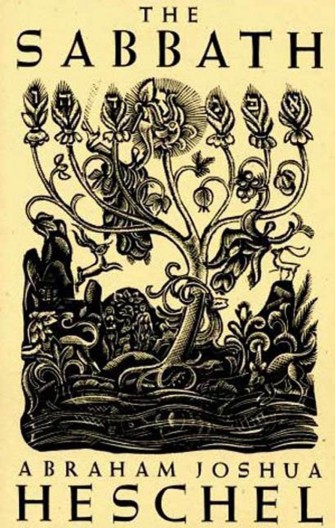
Sinaites were first introduced to the writings of Abraham Joshua Heschel in a thin ornately illustrated pamphlet-size book titled The SABBATH. 


This book by Heschel, so beautifully written, returns the Sabbath where the Creator of Time originally placed it. One cannot read it without making some adjustments in life.  The Sabbath is another “inconvenient truth” in a Sunday-system on which the whole world operates, except in Israel and among the Jewish people.


Here are some excerpts to encourage all to get a copy of this book that should be in everyone’s personal library:


Prologue:  Architecture of Time


There is a realm of time where the goal is not to have but to be, not to own but to give, not to control but to share, not to subdue but to be in accord.  Life goes wrong when the control of space, the acquisition of things of space, becomes our sole concern. . . . Let us not forget that it is not a thing that lends significance to a moment; it is the moment that lends significance to things.


. . . . The Bible is more concerned with time than with space.  It sees the world in the dimension of time.  It pays more attention to generations, to events, than to countries, to things; it is more concerned with history than geography.  To understand the teaching of the Bible, one must accept its premise that time has a meaning for life which is at least equal to that of space; that time has a significance and sovereignty of its own.  


. . . . The God of Israel was the God of events:  the Redeemer from slavery, the Revealer of the Torah, manifesting Himself in events of history rather than in things or places.  Thus, the faith in the unembodied, in the unimaginable was born.


. . . . The bible senses the diversified character of time. There are no two hours alike. Every hour is unique and the only one given at the moment, exclusive and endlessly precious. . . . The Sabbaths are our great cathedrals . . . . it seems as if to the Bible it is holiness in time, the Sabbath, which comes first. . . . The sanctity of time came first, the sanctity of man came second, and the sanctity of space last.  Time was hallowed by God . . . 


The meaning of the Sabbath is to celebrate time rather than space.  Six days a week we live under the tyranny of things of space; on the Sabbath we try to become attuned to holiness in time.  It is a day on which we are called upon to share in what is eternal in time, to turn from the results of creation to the mystery of creation; from the world of creation to the creation of the world.


I.   A Palace in Time  – . . . . on the Sabbath we especially care for the seed of eternity planted in the soul.  The world has our hands, but our soul belongs to Someone Else.  Six days a week we seek to dominate the world, on the seventh day we try to dominate the self.


II.  Beyond Civilization . . . . Man’s royal privilege to conquer nature is suspended on the seventh day . . . . The Sabbath itself is a sanctuary which we build, a sanctuary in time.


III.  The Splendor of Space . . . . The ancient man was inclined to believe that monuments will last forever.  It was, therefore, fit to bestow the most precious epithet on Rome and to call it: the Eternal City.  The State became an object of worship, a divinity; and the Emperor embodied its divinity as he embodied its sovereignty. . . . . The world is transitory, but that by which the world was created—the word of God—is everlasting.  Eternity is attained by dedicating one’s life to the word of God, to the study of Torah.


IV.  Only Heaven and Nothing Else?  . . . .    The world this side of heaven is worth working in.


V.  “Thou Art One” . . . . The Sabbath is meaningful to man and is meaningful to God. It stands in a relationship to both, and is a sign of the covenant entered into by both.  What is the sign?  God has sanctified the day, and man must again and again sanctify the day, illumine the day with the light of his soul.  The Sabbath is holy by the grace of God, and is still in need of all the holiness which man may lend to it.  


VI.  The Presence of a Day . . . . What is it that these epithets are trying to celebrate?  It is time, of all phenomena the least tangible, the least material.  When we celebrate the Sabbath we adore precisely something we do not see.  


VII.  Eternity Utters a Day . . . . When all work is brought to a standstill, the candles are lit.  Just as creation began with the word, “Let there be light!” so does the celebration of creation begin with the kindling of lights.  It is the woman who ushers in the joy and sets up the most exquisite symbol, light, to dominate the atmosphere of the home.  And the world becomes a place of rest . . . the Sabbath sends out its presence over the fields, into our homes, into our hearts.  It is a moment of resurrection of the dormant spirit in our souls.


VIII.  Intuitions of Eternity . . . . The Sabbath is not holy by the grace of man. It was God who sanctified the seventh day.


IX.  Holiness in Time . . . . The emphasis on time is a predominant feature of prophetic thinking. “The day of the Lord” is more important to the prophets than “the house of the Lord.”


X.  Thou Shalt Covet . . . .a form of longing for the eternal Sabbath all the days of our lives . . . seeks to displace the coveting of things in space for coveting the things in time, teaching man to covet the seventh day all days of the week.  


Epilogue . . . . Our world is a world of space moving through time—from the Beginning to the End of Days. . . . Things perish within time; time itself does not change. . . . it is not time that dies; it is the human body which dies in time. . . . Time is man’s greatest challenge. . . . Time, however, is beyond our reach, beyond our power.  It is both near and far, intrinsic to all experience and transcending all experience.  It belongs exclusively to God. . . .  On the Sabbath it is given us to share in the blessings that is in the heart of time.


Get your copy of AJHeschel’s  The Sabbath, a MUST HAVE forTorah-observant believers in YHWH.


Sig-4_16colors

logo

Q&A: Why is Seth the one “in the likeness of Adam” instead of firstborn son Cain?

[First posted in 2012. This post explains the process we took to research this.  Way back in 2012 when we were still groping our way through the TORAH, we would consult the rabbis and then analyze their response.   Really? How dare we question Jewish Rabbis who have studied their own scriptures meticulously for sure, and then not swallow their answer.   But in this research we did . . . we consulted . . . but were not satisfied with the explanations.  So what was the result of our analysis? Find out.—Admin1]


——————————–


Ask the Rabbi

S6K:  Why is Seth the one “in the likeness of Adam” instead of Adam’s firstborn, Cain?


Clarification:  Rabbi Eliahu Levenson:  Please give me the Verse you are looking at please.


S6K:  Sorry, Rabbi, for not giving the exact verse about Seth.

Genesis 5 opens with the book of the generations of Adam.
In verse 1, it repeated that man was created in the likeness of G-d.
In verse 3, when Adam lived to be 130 years, it says he “fathered a son in his own likeness, after his image, and called his name Seth.”

If there were 2 previous sons born to Adam and Eve, Cain being the firstborn from the first parents should have been the son after Adam’s likeness and his image. But Scripture chooses to say it was Seth.


Why is this so? Some say that it is because it’s from Seth that humanity comes, but Scripture also gives a genealogy for Cain . . . so humanity comes from Cain as well. Unless the line being traced is to start over with Noah and his sons.


1.  Answer: Eliahu Levenson/JewishAnswers.org]

 [Wed, Jan 4th 2012 at 10:34 AM]


Shalom,

That is not necessarily a listing of firstborn sons.

It is a listing of the generational progression to Noah, and also a year count to the Flood.

Regards.


2. Answer: Rabbi M. Younger/Aish.com


Shalom –

Thank you for your question.

Rabbi S.R. Hirsch in his commentary to 5:3 points out that the phrase there, “in his form. like his image” is the opposite of 1:26. This possibly teaches us that Sheis was born in an inferior state but nonetheless endowed with the spiritual elements needed (i.e. free will) to fulfill Adam’s
task in the world.


Whereas, we may speculate, Cain had committed his sin and was no longer going to be in that chain of legacy to perform Adam’s original mission. Only the descendents through Sheis were to be the ones to carry on Adam’s mission….


Seforno notes on the words that Sheis was a greater tzaddik than his either of his older brothers (and hence the one to be Adam’s successor). The Ramban says that the phrase just teaches us his great degree of strength and beauty.


I hope that this has been a bit helpful.


With blessings from Jerusalem.


3.  Answer:  Rabbi Menachem Posner/Chabad.org


About Seth, there are a number of views regarding why the Torah specifically mentions that he was born in Adam’s image. The Targum writes that, as Abel did not survive, there was no point in recounting that he carried on the image of Adam, and Cain was indeed not in the image of Adam. Following this vein, Nachmanides points out that this verse comes almost immediately after we read that Adam was created in the image of G-d. As Seth was the one who became the ancestor of Noah and all subsequent people, telling us that he was in the image of Adam and Adam was in the image of G-d tells us that we too are in the image of G-d.


Please let me know if this helps.


Yours truly.


S6K Commentary:  Three different answers from three rabbis.  Are we satisfied?  Not quite.  It appears that to rabbis, this is not an issue.  It is to us who are familiar with Christian teaching on original sin being passed on from the first parents to everyone born thereafter.


To us, it is strange that scripture would make a specific remark about the ‘image’ of the fallen first father (Christianity calls him “Adam”) passing on NOT to his firstborn son Cain, nor to second-born Abel, but to Seth who is presumably third in line (though we’re not sure).


If there was indeed such an evil taintedness as “original sin” on all humanity after the first man and woman disobeyed and failed the test in Eden, then it makes sense that ‘Adam’s’ fallen image would have been inherited by Cain and Abel.  Well, Cain did become a murderer of his brother; but Abel was described as anything but fallen or evil-inclined, in fact,  his offering was acceptable to the Creator.


If this is not an issue with the rabbis (Judaism does not believe in nor teach inherited ‘original sin’), it should be an issue with Christianity.  And that is why we asked this question in the first place.


The rabbis teach that each person has an ‘evil inclination’ . . . only an inclination, get it?  Not an evil nature, as in fallen, damned, unable to choose nor do any good.  Everyone ever born on this earth is free to follow either his good inclination or his evil inclination.  The evil inclination is there only because man is endowed with free will and freedom of choice.  This requires that man has a minimum of two options:  to do good, or not good.  What does ‘good’ mean in scripture?


The Creator was pleased with His creation and declared it “good” and “very good” — meaning, everything created fulfills the purpose for which it was created.  Everything, except the creature that was made in the Creator’s image who has the ability and capability to choose not to fulfill his/her purpose, and that is humanity.


For now, we will leave the discussion at that and pick up this topic in later articles. Please read this post for further clarification:


   NSB@S6K 

logo

Q&A: “Israel means, ‘he will rule as god’ and so the question is . . .”

[First posted in 2014. There is much misunderstanding of the significance of “chosenness” particularly in terms of Divine selection/election of a particular people.  We have a book that well explains that, please check out the following posts:  


Admin1]


——————————-


One of the longest ‘search terms’ landed on our website on 1/12/14.  Automatically, it was added to the daily updated post intended as aid for searchers:  Yo Searchers! Can we help you? – January 2014.  Since it was in the form of a question which had loaded implications coming from a mindset that was obviously Christian-oriented, I wrote a short reply instead of directing the searcher to a whole bunch of articles we had already written.  However, upon rereading I realized I had not REALLY addressed all aspects of the question,  so this is a follow-up.


The Q has been reformatted according to points that need to be elaborated on:


Q:   Israel means, 

“he will rule as god.”

*and so the question is, 

who will rule as god?


A:  [searcher answers his own question with presumptions]:

  1.  people who have repeatedly,  throughout history,  abandoned their covenant with god
  2.   people who may have been born under a certain genetic lineage?
  3. people who futilely put their hope in perfect obedience to an impossible set of laws? 

——————-


Let’s start with point # 2 first, that’s the easiest:

—people who may have been born

under a certain genetic lineage?

Genetic lineage —

referring to the people

who issued from 3 generational line of patriarchs:

Abraham,

Isaac (not Yishmael),

Yaakov (not Esau);

the 12 sons of Yakov AKA Yisrael,

the 12 tribes — Yisrael.


The name “Yisrael” was given only to the 3rd patriarch, Yaakov in Bereshiyth/Genesis 31. Please do your homework and read that chapter and previous ones, to understand the reason for renaming “Yaakov” (heel, supplanter) at this crucial point in his life.  Not all biblical figures were renamed; only ones who underwent a change in character or awakening or assignment as well as other reasons.


Most translators claim ‘Yisrael’ means ‘he wrestles with God’;  jewfaq.com says it means “the one who wrestled with G-d” or “the champion of G-d.”

Later in the Hebrew scriptures, certain names interchange in referring to the chosen people—sometimes it is “Yaakov”, sometimes “Yisrael”.   The point? It is about the people who descended from this renamed patriarch, Yaakov/Yisrael.


Does the meaning of the name carry over to them? This is the difficulty the searcher was facing:  how could these people be so called when they have shown no reason to deserve the name?


Well, since the searcher’s definition of ‘Israel’ is  “he will rule as god”,  it is understandable why he had difficulty swallowing what he considered as ‘predestination’ of the people of Israel.  But since the real definition according to Jewish sources is “he wrestles with God”,  then that is not too difficult to swallow.


In fact,  the name could indeed be prophetic and yes,  the ‘chosen people’ do wrestle with what is expected of them because of the meaning of the name they inherited from the renaming of Yaakov, their progenitor.


On the other hand, just as Mr. ‘Ugly’ bore children who carry his name ‘Ugly’,  that’s just an identifying name;  the children may be anything but ugly! However, when you truly follow the destiny of the chosen people who inherited the name of Yaakov AKA Yisrael,  there does appear to be a connection with their history and modern-day ‘reborn Israel’,  a remnant who made aliyah back in a remnant of the LAND granted them by the United Nations but originally promised to them by their God.


Students of biblical prophecy closely watch how the modern state of Israel is somehow always dragged into world affairs whether or not they are even involved.  Ultimately what they struggle with is the world’s expectations of them, a world that is skeptical of the claims of the Hebrew Scriptures for them; not to forget a major world religion has discredited them, their covenant, their God, and their Torah.


As for presumption no. 1:


–people who have repeatedly,

 throughout history, 

abandoned their covenant with god?


If being disobedient to the God who made a covenant with Israel on Sinai is tantamount to abandoning their covenant with God, no, we don’t agree.


  • Yes the Israelites had difficulty obeying the Torah of YHWH. (Don’t some of us have the same difficulty with some commandments today?)
  • The first generation who died in the wilderness were judged for that very reason (except for Joshua and Caleb);
  • the 2nd generation who were born free, in the wilderness—-did enter, conquered the land and divided it according to divine instructions.


While they  endeavored to obey the Torah of YHWH, as the books of Kings and Chronicles attest—


  • there was failure of king after king to legislate and enforce the Torah as Israel’s way of life,
  • and generation after generation of Israelites likewise failed to be faithful to their God and their Covenant with Him.


One might indeed conclude that Israel virtually abandoned their covenant with YHWH.  Since the covenant on Sinai was ‘conditional’ —IF you do this, the result is this, if not the result is that.


Actually it was as simple as —-

  • obey and receive blessing,
  • OR disobey and do not receive blessing;


In fact the withholding of blessing might even result in ‘curses’ since the English text spells it out specifically as that.


Later texts add meaning to ‘obedience’ by implying it redounds to this:  ‘choose life’.  There is a right way, and that is the Torah Way.


Choose the opposite, as in disobey, then there is danger and darkness and automatic consequences connected with disobedience.  ‘Curse’ is a pretty strong if not frightful word for the consequence of disobedience.


Now, failure to obey is not tantamount to abandoning a master or lord or father; is it?   It simply means the subject (the child or an Israelite or any one of us) has difficulty aligning his moment-by-moment choices that eventually become a pattern that ultimately define his life, for whatever reason causes his failure.  We know many people who have the best intentions and constantly resolve to change or do better; in fact this happens year after year with ‘new year resolutions’.  From the simplest to the most difficult resolutions, people fail . . . not because they wish to abandon the higher power but simply because they give in to moments of  weakness, and make wrong choices willfully or unintentionally, and sometimes leave circumstances to chance.


When Israel failed individually or corporately, they simply failed; but that should not be read as ‘abandoning the covenant’.


As for God, did He abandon that covenant inspite of His chosen people’s failure to keep it?  Absolutely not!   In fact, He renews it by the time of Jeremiah, with the same chosen people, about the same Torah to be internalized in hearts and not simply etched on external surfaces as reminder.  The Divine Hand has always been extended toward Israel which says much about the God of Israel:   He is faithful to His covenant even if the other party was not always faithful.


Admittedly Israel’s record of shame is a blight on their record as the chosen people and yet, you have to admire them nevertheless for recording their failures for all the world to read in no less than their history and sacred scriptures.


Now nobody would have known about it had their Scriptures remained in purely Jewish hands; who else would be interested anyway, and what business is it of anyone else who does not even believe in Israel’s God nor swallow the claim that Israel is the chosen people of this God Who figures prominently only in the Hebrew Scriptures?


Well, that national failure became known worldwide when the Hebrew Scriptures  (TNK) was later appended to the Christian New Testament as a prequel and re-titled “Old Testament” and re-taught as obsolete and passe, yet the Jews were still blinded in observing them.


As for presumption 3,


people who futilely

put their hope in perfect obedience

to an impossible set of laws”


Why  “futilely”?   This derives from a common misconception, identifiably Christian, that it is futile to try to obey the set of laws given by the God on Sinai to the mixed multitude, representative humanity.  Why does Christianity think it is ‘futile’ or useless to hope?


For one, because they think humans are simply not programmed to be able to obey the Torah because humanity is under the curse of ‘original sin’ which places every person born in ‘damnation’ and ‘destined for hell’ and ‘automatically cut off from God’.


For another, there is a misconception that the Old Testament God who is ‘angry and vindictive and full of vengeance’ conceived laws that are impossible for man to obey.   Why impossible? Because according to Christian belief, man is hopeless and helpless in his inborn state of inherited original sin,  and therefore unless one embraces the Christian Savior and appropriate for himself Jesus’ saving work on the cross then one does not receive ‘salvation’ and its accompanying ‘bonus’ the Holy Spirit, 3rd person of the Godhead.  What is the supposed work of the Holy Spirit?   He enables and empowers the believer to rise from his fallenness, helplessness, and inability to obey any of God’s commandments.  That Old Testament God supposedly demands perfect obedience which no person can accomplish on his own.


While it is true that absolute obedience is a must, if you get to know the ‘OT God’ who gave His Torah on Sinai, and look at the record of Avram, Yitzchak, Yaakov, Mosheh — you will quickly discover that those Patriarchs did not always demonstrate perfect obedience. Yet, were they damned to hell by their God?  No.  Did they obey as best as they possibly could?  Not always.


The God revealed in the Hebrew Scriptures is exactly as He self-describes and self-reveals His name, nature, attributes, actions, conditions as well as unconditional declarations!


Such as —

    • One, the First and the Last, there is no Other;
    • Merciful
    • and just,
    • righteous
    • a covenant-making God Who is faithful to His covenant;
    • Who declares what He will do if He makes unconditional promises, and what He requires as conditions before He bestows blessing and fulfillment.


Let us not forget the attribute of this God that is a blessing to sinful man —He is MERCIFUL, and forgives the TRULY REPENTANT; review Ezekiel 18.


As for the  “impossible set of laws” commanded by the God of Sinai,   think about it:  what is so impossible with the Torah laws, ordinances, statutes, etc.?   Would the God in the Hebrew Bible really be so ‘unrealistic’ and ‘inconsiderate’ and ‘mean’ so as to impose  an “Impossible set of laws” upon His chosen people?   And for what purpose? To show that they are puppets in the hands of a manipulative deity, made fools of after being told how He loves them as His firstborn and suffering servant, only to be replaced by a future NT firstborn son and suffering servant?    Awwww come on, let’s be fair!   Give the God of Israel, the God in the TNK more credit than that!  This is small-mindedness, showing ignorance or little understanding of the Self-Revealing God on Sinai!  This comes from replacement theology and supersessionist doctrine, typical of Christian teaching.   And where does that come from?


This human judgment of the God of Israel is a result of the teaching of Paul in the books attributed to him in the ‘New Testament’, particularly the Book of Romans. It also results from the NT Book of “Hebrews” (author anonymous) which promotes the same thinking; there is more to this than we can write here, please refer to all other posts that have already explained these in detail and at length.


NSB@S6K

AIbEiAIAAABDCNPkvrXuucmdeSILdmNhcmRfcGhvdG8qKGJkZTc0YTk3NmUxMGM4OTAzZjk5MDhkMjdkZDI2ODQ3OTliYmQ2MDkwAe5UdNp0lvYvCf8bjAFEJOY_fdsjSig-4_16colors