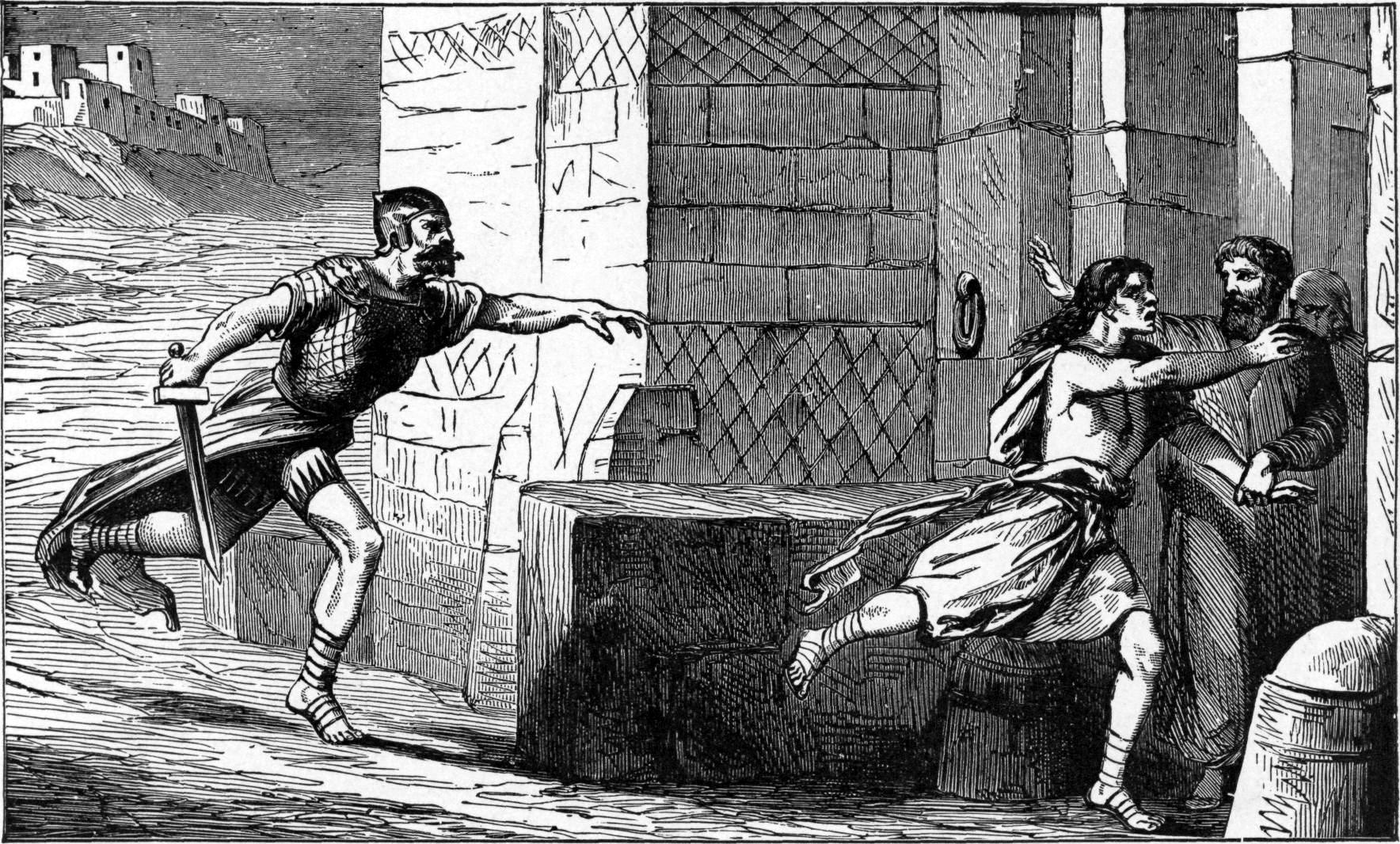
Deuteronomy/Davarim 19: "the (accidental) murderer who flees there, that he may stay-alive"

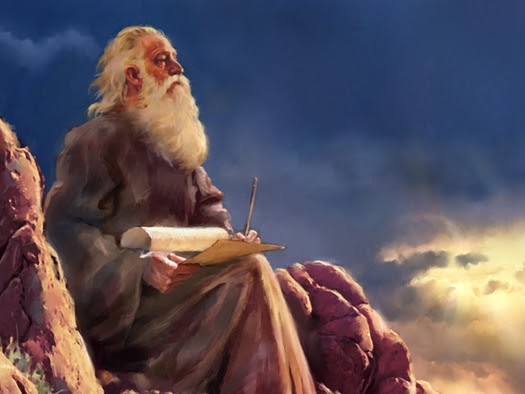
Image from www.truthnet.org

[What does the command to establish a ‘city of refuge’ signify about the justice of the God of Israel?  That there is provision and even mercy for unintentional sin.  In fact, all the sacrifices at the Tabernacle/Temple were all for unintentional sin since, as we are taught, there is no sacrifice for intentional sin because that requires one thing and one thing only— true repentance.  


To apply this now to the disobedience of the first man and woman, ponder this:  was their violation of a commandment for which they were fully informed of details with warning about disobedience, was it intentional? If it were so, was the consequence for them deserved . . . was it harsh or still full of the graciousness and mercy of the Creator?  What about Cain’s murder of Abel, could that be categorized as unintentional . . . or not? He was spoken to about not letting in ‘sin crouching at the door’.  Was the consequence for Cain somewhat like a city of refuge . . . or not? 


Commentary here comes from the best of Jewish minds, as collected by Dr. J.H. Hertz in his excellent resource Pentateuch and Haftorahs; this website uses EF/Everett Fox, The Five Books of Moses.Admin1.]

——————————–

(3) CRIMINAL LAW AND WARFARE


Deuteronomy/Davarim 19

(a) LAWS RELATING TO CRIME

1-13.  CITIES OF REFUGE

Three cities shall be set aside in the future territory to serve as ‘sanctuary’ to the manslayer; see Num. XXXV,9-34 and Deut. IV,41-3.  In this way the immemorial custom of blood-revenge that to this day rests like a curse upon many Bedouin tribes is curbed; and the heathen conception of ‘sanctuary’ for the wilful murderer is abolished.


1 When YHVH your God cuts off the nations
 whose land YHVH your God is giving you, 
and you dispossess them and settle in their towns and in their houses:

dost succeed.  Or, ‘shalt dispossess.’

2 three towns you are to separate for yourselves,
 in the midst of your land
 that YHVH your God is giving you to possess.
3 Measure yourself the way
 and divide-in-three the territory of your land
 that YHVH your God is causing you to inherit.
 It shall be for fleeing there, for every (accidental) murderer.

prepare thee the way. Affording every facility to the fugitive to reach the place of refuge. According to the Talmud, a signpost bearing the inscription , ‘To the City of Refuge.’ was at every crossroad, pointing out the direction in which the City of Refuge lay.

flee hither. The three Cities of Refuge should be equidistant from one another.

borders. Territory.

4 Now this is the matter of the (accidental) murderer who flees there, that he may stay-alive, 
who strikes down his neighbor with no foreknowledge,
 nor did he bear-hatred-toward him from yesterday and the day-before;
5 or who comes upon his neighbor in the forest, chopping wood, 
and his hand swings-away with an ax, to cut wood, 
and the iron-part slips off the wood-part 
and reaches his neighbor, so that he dies:
 he may flee to one of these towns, so that he may stay-alive

fetcheth a stroke. ‘As his hand lets drive with the axe’ (Moffatt), the iron slips off the handle, and, instead of hitting the tree, strikes a man.

6 -lest the blood redeemer pursue the murderer,
 since his heart is hot-blooded, 
and overtake him-since the journey is long-and strike his life, 
though his is not a judgment of death; 
since he has not borne-hatred toward him, from yesterday and the day-before.

the avenger of blood. The nearest kinsman of the dead man; num. XXXV,12.

because the way is long. To the Central Sanctuary, if these three equidistant Cities of Refuge are not provided.

7 Therefore I command you, saying: 
Three towns you are to separate for yourself.
8 Now if YHVH your God should broaden your territory 
as he swore to your fathers, 
and give you all the land 
that he promised to give your fathers:

Enlarge thy border. If Israel comes to possess all the territory that was promised to Abraham (Gen. XV,18), then three more Cities of Refuge should be added.

9 indeed, you are to keep all this commandment, by observing it,
 that I command you today,
 to love YHVH your God, and to walk in his ways, all the days; 
and you are to add for yourself another three towns to these three,

Image from commons.wikimedia.org

10 so that the blood of the innocent not be shed amid your land
 that YHVH your God is giving you as an inheritance, 
and there be blood-guilt upon you!

blood be upon thee.  i.e. blood-guiltiness be upon thee.  If no provision of such Cities of Refuge were made, the guilt of bloodshed would rest upon the land; see on XXI,1-9.

11 But if it should be (that) a man bears-hatred toward his neighbor 
and waits-in-ambush for him 
and rises up against him and strikes his life, so that he dies, 
and he flees to one of these towns:

lie in wait for him. This and the succeeding two verses provide a safeguard against the abuse of the right of sanctuary.  A fair trial and acquittal is secured to the innocent slayer; but the wilful murderer cannot, as among Arab tribes, compound his crime by payment to the kinsmen of the victim.  He must die.

12 the elders of his town are to send and have him taken from there,
 they are to give him into the hand of the blood redeemer, so that he dies.
13 Your eye is not to take-pity on him! 
So you shall burn out the innocent blood from Israel, 
and it will be-well with you.

14.  REMOVING A LANDMARK

14 You are not to move back the border of your neighbor
that the first-ones set-as-border,
 in your inheritance that you inherit
 in the land that YHVH your God is giving you to possess.

landmark.  The line of stone defining the boundary of a man’s field. In Deut. XXVII,17 it is said, ‘Cursed be he that removeth his neighbour’s landmark’ in order thereby to enlarge his own estate.  Such removal was equivalent to theft.  Before the introduction of land-measurement, removing landmarks was a crime more difficult to combat than today.

In later times, this prohibition of removing a neighbour’s landmark (hassagath gevul) received an ethical extension.  Thereby any unfair encroachment upon another man’s honour or livelihood, any ‘poaching on another man’s preserves’ or sphere of activity, is strictly prohibited.

they of old time. Those of a former age.  Moses is here addressing future generations.  Num. XXXIV gives the precise divisions of the land under the superintendence of Eleazar, Joshua and one prince out of every tribe.

15-21.  PLOTTING WITNESSES

Before guilt can be established, whether in a case of manslaughter, murder, the removal of a landmark, or any other injury to life or property, it is here enacted that the testimony must come from the mouth of at least two witnesses.

Whereas in Jewish Law, intention to commit a crime was no punishable offence, it is otherwise with plotting witnesses.  In their case, intention is of the very essence of their crime, and they are to receive the punishment they had intended for the innocent victim.  The Schools differed as to their punishment, if they had succeeded in their criminal intention.

15 One witness (alone) shall not rise up against a man
 for any (case of) iniquity, for any (case of) sin,
 in any sin that he sins;
 at the mouth of two witnesses or at the mouth of three witnesses, a legal-matter is to be established!
16 When there arises a witness of malice against a man,
 testifying against him (by) defection (from God),

unrighteous witness. lit. ‘a witness of violence’, i.e. a witness who purposes to do harm.

perverted witness. lit. ‘a turning aside’, i.e. rebellion against the Law of God.  In XIII,6 the same word is used in reference to the sin of idolatry.

17 and the two men who have the quarrel stand 
before the presence of YHVH, before the presence of the priests or the judges that are-there in those days:

both the men. Both parties must be present at the hearing of the case.

before the LORD.  i.e. before the priests and judges, who are God’s representatives in judgment.

in those days. Whoever the judge of your day may be, due regard must be paid him.  ‘Jephthah in his generation was the equal of Samuel in his’; see  XVII,9.

18 the judges are to inquire well;
and (if) here: a false witness is the witness, falsely has he testified against his brother:
19 you are to do to him 
as he schemed to do to his brother. 
So you shall burn out the evil from your midst!

as he had purposed. The false witness shall suffer the penalty he had sought to bring on another, in accordance with the lex talionis, v. 21.

20 Those who remain will hear and will be-awed,
 they will not continue to do any more according to this evil practice in your midst.

shall hear. According to the Talmud, it was customary for the court to issue the public proclamation, ‘Such and such a person has been punished for being a false witness.’

21 Your eye is not to take-pity- 
(rather) life for life, eye for eye, tooth for tooth, hand for hand, foot for foot!

shall not pity. Willful murder must be punished by death; see on Exod. XXI,12-14.


Deuteronomy/Davarim 18: "How can we know it is the word that YHVH did not speak?"

[Truthfully?  I’m a bit disappointed at reading the criterion for determining a true prophet from a false one:  A true prophet’s word eventually comes to pass while a false prophet’s doesn’t.  That’s plain common sense, not even a revelation.


What if the fulfillment does not happen within our lifetime but centuries, if not millennia from now?  How do we know during our time if the prophet was true or false? Too late for us; meanwhile did we believe and never knew the outcome, if we were right or duped? False prophets thrive in so many religions today, many using the very Scriptures of Israel as their foundation. Who’s to know?  For people today, we have the benefit of hindsight, of Divine truth accessible to anyone truly interested, but it requires much study and wisdom/discernment gained from it.  


At a Sinaite group discussion, someone raised the question:  what is the difference between ignorance and stupidity?  The answer? One has a choice, the other doesn’t.  Now guess which is which!


Commentary comes from the best of Jewish minds, as collected by Dr. J.H. Hertz in his excellent resource Pentateuch and Haftorahs; this website uses EF/Everett Fox, The Five Books of Moses.Admin1.]


Deuteronomy/Davarim 18

(c)  PRIESTS AND LEVITES

1-8.  The priests and Levites were not to possess any allotments of land.  The history of the European peoples would have been a happier one than it has been, if the priesthood had been debarred from ownership of land.


1 There is not to be for the Levitical priests
-the entire tribe of Levi-
any portion or inheritance with Israel;
the fire-offerings of YHVH, and his inheritance, they may eat.

the offerings of the LORD.  These were (a) the burnt-offering; (b) the meal-offering; (c) the thank-offering; and (d) the tresspass-offering.  Certain specific parts in all of these sacrifices belonged to the priests.

His inheritance.  God’s inheritance; i.e. what was appropriated to Him, and from Him to the tribe of Levi; such as heave-offerings, tithes and first-fruits.

2 But a (normal) inheritance he may not have, in the midst of his brothers, 
YHVH is his inheritance, 
as he promised him.

as He hath spoken unto them.  See Numbers XVIII,20.

3 Now this shall be the regulated-share of the priests from the people,
from the slaughterers of slaughter-offerings, whether of ox or sheep:
the priest is to be given the shankbone, the jawbone and the rough-stomach.

priests’ due. The reference here is to further ‘dues’ not previously mentioned in Numbers; viz., those which accrued from the animals slaughtered for ordinary consumption, as distinguished from those brought as sacrifices.

4 The premier-part of your grain, your new-wine and your shining-oil, 
the premier-part of the shearing of your sheep you are to give him.
5 For him YHVH your God has chosen from all your tribes,
for standing-in-service, for attending, in the name of YHVH, 
he and his sons,
all the days (to come).
6 Now when the Levite comes from one of your gates, from all Israel, 
where he sojourns,
and he comes with all his appetite’s craving
to the place that YHVH chooses,

If a Levite come. Only a portion of the tribe of Levites would live in Jerusalem.  Most of them would be scattered among the tribes.  Unlike the non-Levites living on the land in their own clan, these Levites had necessarily no fixed abode; Judges XVII,7-9, XIX; I Sam. II,36.  The officiating priests would tend to close their ranks against the wandering priests.  It is here enacted that should any of these latter come to the Central Sanctuary, he should be allowed to minister and share in the priestly emoluments.

7 and attends in the name of YHVH his God,
like all his brothers, the Levites 
who are standing-in-service there before the presence of YHVH:
8 a share like the (usual) share they may eat,
apart from the sale-revenues of (their) fathers’ (property).

like portions to eat. lit. ‘they shall eat portion as portion’; i.e. share and share alike.

beside . . . fathers’ houses. lit. ‘besides his sellings according to the fathers’.  This refers to the proceeds of the sale of his local possessions, which a Levite inherited from his ancestors (Lev. XXV,33), or of private dues accruing to him.  If a Levite had such extra income, his brother-Levites were not permitted to say to him, ‘You have enough, you must not expect or accept any priestly emoluments!’ He still has his right to share alike with the others.

———————————————

Modern writers seldom do justice to the priesthood.  They exalt the prophet, and almost invariably depreciate the priest.  It is true that ‘the centre of gravity in religion lies for the priest elsewhere than for the prophet; it lies in man’s attitude, not toward his fellowmen, but toward God; not in his social, but in his personal life’ (Kuenen).  To the priest, man is more than a social being; he has also an individual life of his own, his joys and sorrows, his historical claims, his traditions of the past, and his hopes for the future; and all these are brought by the priest under the influence of religion, to become sanctified through their relation with God.  All the details of human life are with the priest so many opportunities for the worship of God (Schechter).


The priest’s indispensable function was to conserve the spiritual discoveries of the past by means of religious institutions.  He gave the daily bread of religion to the people, treasured up whatever had been gained, and kept the people nurtured on it and admonished by it.  To picture the priest as exalting external observance at the expense of moral values is a controversial fiction.  Though Malachi had much to complain of the priests of his day, his estimate of what Levi had been in the past is no exaggeration.  ‘The law of truth was in his mouth, and unrighteousness was not found in his lips; he walked with Me in peace and uprightness, and did turn many away from iniquity.’  


(d) PROPHETS

9-22.  The description of the place of the prophet in Israel is preceded by a stern and detailed denunciation of any dealings with soothsayers and wizards–a restatement of the injunction in Lev. XIX,26,31.  The people may naturally desire to know the future or to learn the Divine mind; and they will be living among nations who hold that the will of the gods was best learned through augury and sorcery.  But Israel does not need such means of obtaining Divine guidance. ‘Alone in the antique world, Israel has the high honour of having broken with this entire system of approaching the Divine’ (Welch).  Its communion with the spiritual world was through a spiritual channel—that of the prophet.  As it is said in Num. XXIII,23, ‘There is no enchantment in Jacob, neither is there any divination in Israel: at the right time it is said to him what God doeth.’


The problem of sorcery confronts every administrator of primitive races.  ‘Attempts to advance them to a higher life in our own day are being rendered futile by the sorcerer: at his instigation the darkest crimes are committed.  To what depths of wickedness his practices can bring men is seen in the horrors of the secret cult of the negroes of Haiti’ (Harper).

9 When you enter the land
that YHVH your God is giving you,
you are not to learn to do according to the abominations of those nations.
10 There is not to be found among you 
one having his son or his daughter cross through fire,
an augurer of augury, a hidden-sorcerer, a diviner, or an enchanter,

pass through the fire.  Human sacrifice was an essential part of Moloch worship.

divination. This is the most general term for the magical practices that follow.  A Gold Coast official recently complained that the numbing effect of omen-taking and consultation with soothsayers had not hitherto received the attention it deserved.

Image from stephaniesylverne.com

a soothsayer. lit. ‘cloud-gazer’; an observer of clouds and omens.

enchanter. Or, ‘augur.’

sorcerer. One who uses magical appliances in the shape of drugs or herbs for curing, or for inflicting diseases.

11 or a tier of (magical) tying-knots, or a seeker of ghosts or favorable-spirits, 
or an inquirer of the dead.

charmer. As of serpents; a dealer in spells.

one that consulteth a ghost. Heb. ob. Saul, desirous of speaking to Samuel on the night before the fateful battle of Gilboa (I Sam. XXVIII,7) said unto his servants, ‘Seek me a woman that divineth a ghost’.  From Isaiah VIII,19 it would seem that the ob was a kind of ventriloquist who impersonated the dead by speaking in a faint voice from the ground.

or a familiar spirit. Coming from the root ‘know’ it would seem to correspond to the English word wizard, which originally meant ‘wise or knowing one’, without any hint of sorcery or evil.

necromancer. An inquirer of the dead. ‘In the Hebrew religion the spiritual part of man was conceived not as ghostly, but under the attribute of holy. It is a significant fact that stories of ghosts or apparitions are almost absent from the Old Testament; and necromancy, which attempts to come into communication with the dead, that is, to deal with ghosts, was especially abhorrent’ (F. Adler).

12 For an abomination to YHVH is anyone who does these-things, 
and because of these abominations 
YHVH your God is dispossessing them from before you!
13 Wholehearted shall you be with YHVH your God!

thou shalt be wholehearted. And not given over in part to demoniac powers, or other evil superstitions of the heathen. ‘Walk with Him whole-heartedly and hope in Him.  Pry not into the veiled future, but accept whatever lot befalls you. Then will you be His people and His portion’ (Rashi).

Wholeheartedness is one of the great requirements of Religion; hence is written in some texts with large initial letter.

14 For these nations that you are coming-to-possess:
to sorcerers and augurers do they hearken,
but you-not thus has YHVH your God made you!

hath not suffered thee so to do. To turn to soothsayers, because God would raise up a Prophet from amongst the Israelites themselves, and thus reveal to them whatever they desired to know from God.

15 A prophet from your midst, from your brothers, like myself
will YHVH your God raise up for you,
to him you are to hearken,

a prophet. In each generation.

like unto me. Not of the same rank as Moses (XXXIV,10), but of the line of Prophets of which Moses is the ‘father’.

16 according to all that you sought from YHVH your God at Horev 
on the day of the Assembly, saying:
I cannot continue hearing the voice of YHVH my God, and this great fire I cannot (bear to) see anymore, 
so that I do not die!

in Horeb. Israel had refused the high honour of hearing directly the voice of God. As Moses was the intermediary at Horeb, so the Prophets shall be the intermediaries in their generation.

17 And YHVH said to me: 
They have done-well in their speaking;
18 a prophet I will raise up for them from among their brothers, like you;
I will put my words in his mouth, and he will speak to them 
whatever I command him.

command him. The office of the Prophet is thus conceived not so much as a foreteller, but in spiritual succession to Moses as the teacher and religious guide of his age, though the gift of predicting the future, where this serves a moral purpose, cannot be denied him.

19 And it shall be:
(any) man who does not hearken to my words which he speaks in my name,
I myself will require (a reckoning) from him.

require.  I will seek out his disobedience, and judge him for it.  ‘The rigorous punishment would deter anyone from coming forward as a prophet, who had not an absolute conviction of his Divine call’ (Dillmann).

20 But: the prophet who presumptuously speaks a word in my name 
that I have not commanded him to speak, 
or that he speaks in the name of other gods:
die that prophet shall!
21 Now if you should say in your heart: 
How can we know it is the word that YHVH did not speak?
22 Should the prophet speak in the name of YHVH 
but the word not happen, not come-about- 
(then) that is the word that YHVH did not speak; 
with presumption did the prophet speak it; 
you are not to be-in-fear of him!

follow not. The test of the false prophet was the non-fulfillment of the specific prediction that he announced as the credentials of his Divine call, though signs and miracles performed by a ‘prophet’ are not necessarily a proof of his truth (XIII,2,6).  ‘The ultimate criterion of the true prophet is the moral character of his utterance’ (Dummelow).

———————————————

Even as the kingship ensured stability to national and social life, and the priesthood gave stability in religion, so the Prophetic order secured spiritual progress and averted stagnation.  The Prophets are the inspired declarers of the Divine will.  ‘The mere foretelling of future events is the lowest stage of prophecy, and in the eyes of the great Prophets of Israel it was of quite secondary importance.  Their aim was to fathom the secrets of holiness; and their striving, by means of admonition and moral persuasion, to guide the peoples in the paths which lead mankind to spiritual and political well-being’ (Shemtob ibn Shemtob).

The competence of the Prophet, however, is not unlimited.  He too is bound by the Torah, to which he may neither add nor subtract, except as a temporary measure of extreme urgency (horaath shaah).  Nor may he venture, solely in virtue of the prophetic gifts with which he is endowed, to give a ruling in matters of Law.  In this respect he must yield place to the Judge, the sage in whom alone is vested the authority to interpret and to apply the sanctions of the Law according to the accepted norms of Biblical interpretation.

‘There is no quarrel between prophet and priest; nor was there ever one.  As guardians of the Law of God, they both cherish common ideals.  The prophets never preached the abrogation of the Law.  What they did stress—and it is what the most resolute formalist can endorse word for word—was that only the heart which is right with God can find fit and proper expression in the well-ordered Temple-worship, and be brought nearer to the Eternal by ritual and ceremony.  Nor did the good and genuine priest—for there were false priests as there were false prophets—ever hold that one could shelter himself behind sacrifices from the judgment of Heaven upon his moral turpitude and waywardness of conduct’ (I. Epstein).

Deuteronomy/Davarim 17: "When you enter the land that YHVH your God is giving you, and you possess it and settle in it, should you say: I will set over me a king like all the nations that are around me . . ."

Image from www.lds.org

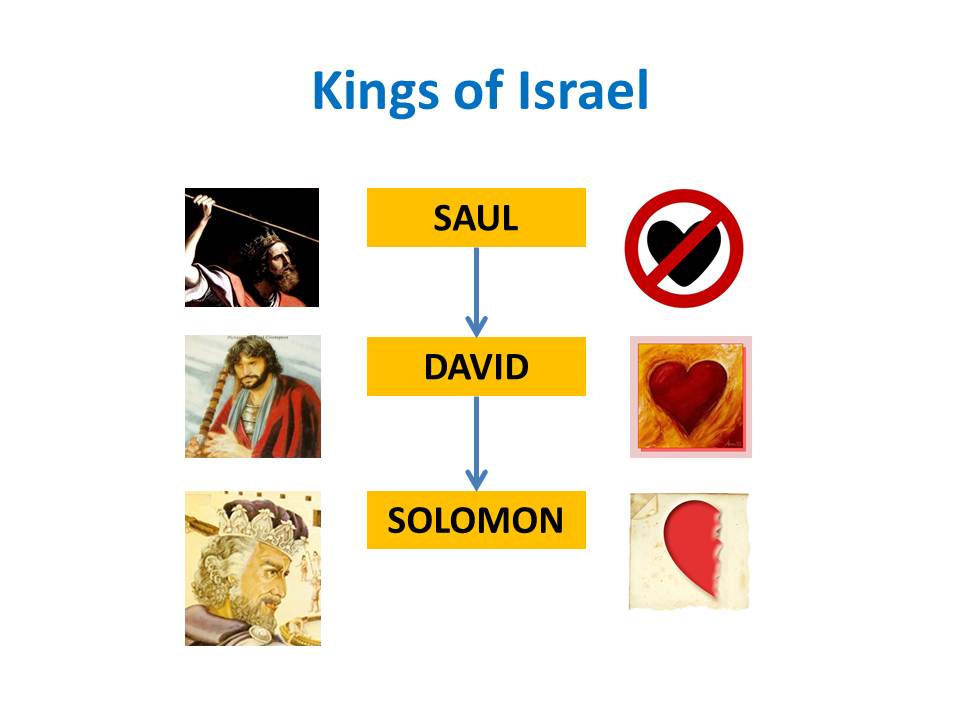
[Who better to be King than the King of kings, the Lord of lords, Creator and Master of the universe—YHWH Himself?  What better form of government than that which He instituted for His chosen people, a theocracy?


Who else but the predictable answer:  the true and only Divine King, Who leads and guides and directs with perfect wisdom, justice, righteousness, kindness, mercy, and Power that overcomes all enemies of His people. YHWH, King of kings!


And yet, folly of all follies, the Israelites clamor for a king just like themselves, human, fallible, someone they can see, just so they could be just “like all the other nations” with human kings! Oy vey as the Jews would say!


Disappointment of all disappointments, this is exactly what does happen during the time of the prophet Samuel . . . yet the wonder of it is—this is prophesied as early as Deuteronomy, way before there was even a Kingdom in the Promised Land.


The bigger wonder of it is — Israel’s God/King condescends and will accede to the people’s clamor: ‘You want it, you got it!’  And the rest will be Israel’s ‘future history’ at least from this vantage point of pre-entry into the Promised Land. But that is not the last word, thank YHWH; while He does allow human kingship to replace His Divine Kingship, He sets rules for the king, just as He sets rules for the Priests and all Israelites.  At the end of this chapter are additional notes which you should not skip if you really wish to understand the Divine perspective on earthly ‘kingship and kingdom’.


Commentary comes from the best of Jewish minds, as collected by Dr. J.H. Hertz in his excellent resource Pentateuch and Haftorahs; this website uses EF/Everett Fox, The Five Books of Moses..Admin1.]


Deuteronomy/Davarim 17

1 You are not to slaughter-an-offering to YHVH your God
(of) an ox or a sheep that has on it a defect, anything ill,
for it is an abomination to YHVH your God!

The sacrificing of blemished or injured animals (XV,21; Lev. XXII,20-22) is a profanation of the service of God; Malachi I,8.

2 When there is found among you, within one of your gates
that YHVH your God is giving you, 
a man or a woman that does what is ill in the eyes of YHVH your God, 
to cross his covenant,

2-7.  DETECTING AND PUNISHMENT OF IDOLATRY

3 going and serving other gods 
and prostrating oneself to them
-to the sun or to the moon or to any of the forces of heaven that I have not commanded,

which I have commanded not. i.e. which I have not permitted you to worship.

4 and it is told to you, 
you are to hear and you are to inquire well,
and (if) here: true and correct is the matter 
-this abomination was done in Israel-

it be told thee . . . the thing certain. The judges were not to act on mere report, but must institute a process of searching inquiry; see XIII,15.

5 then you are to take out that man or that woman
who did this evil thing, (out) to your gates,
the man or the woman; 
you are to stone them with stones, 
so that they die.
6 On the statement of two witnesses or three witnesses shall the one worthy-of-death be put-to-death; 
he shall not be put-to-death on the statement of one witness.

two . . . witnesses.  Whose validity as witnesses is unimpeachable, and who must agree in their testimony, if the sentence is to be carried out.  There was no torture of the accused to compel confession, or to exact the testimony desired by the Court, such as there was in Greece and in the trials of the Inquisition.  A leading principle of Jewish law is, No man can by his own testimony incriminate himself in a capital charge.

7 The hand of the witnesses is to be against him, at the beginning, to put-him-to-death, 
and the hand of the entire people, afterward;
so shall you burn out the evil from your midst!

shall be first.  On the convicting witnesses rests the duty of being first to inflict the extreme penalty with their own hands; so they would feel more seriously the responsibility of their testimony.

8-13.  THE SUPREME COURT

Not a Court of Appeal, but a High Court at the Central Sanctuary for cases too hard for the local courts.  Such a Court is mentioned in II Chronicles XIX,8.  Jewish Tradition—both Talmud and Josephus—attests to the continued existence of such a Court from the days of Moses to the destruction of the Jewish State, and beyond.  In the first century of the present era, the Sanhedrin in Jerusalem made the laws and acted as Court of Appeal.  It consisted of 70 members in addition to the presiding officer, who was generally the High Priest.  In the Provincial towns, there were smaller Sanhedrins of twenty-three members.

8 When any legal-matter is too extraordinary for you, in justice, 
between blood and blood, between judgment and judgment, between stroke and stroke,
in matters of quarreling within your gates,
you are to arise and go up to the place
that YHVH your God chooses,

hard. Or, ‘extraordinary.’

between blood and blood.  Whether the act of killing was intentional or accidental (Biur).

plea and plea. Cases of disputed rights and claims regarding property.

stroke and stroke. Cases where bodily injury has been inflicted, and it is hard to assess the damages fairly.

matters of controversy within thy gates. i.e. the local judges are of divided opinion (Rashi).

9 you are to come to the Levitical priests and to the judge that there is in those days;
you are to inquire, and they are to tell you
the word of judgment.

the priests the Levites. i.e. the priests who were of the tribe of Levi.

the judge. the head of the Court of the Central Sanctuary.

in those days. ‘Even though he be inferior to the judges who preceded him, you are duty-bound to accept his decision. Only the judge of your own day must be your judge’ (Rashi).

declare. lit. ‘announce’.

10 You are to do according to this word that is told you,
in that place that YHVH chooses;
you are to take-care to observe what they instruct you.
11 According to the instruction that they instruct you,
by the regulation that they tell you, 
you are to do; 
you are not to turn-away from the word that they tell you,
right or left.

not turn aside.  ‘Even if in your eyes they seem to tell you that right is left, and left is right, hearken unto them’ (Sifri).

12 Now the man who does presumptuously,
by not hearkening to the priest that is standing in attendance there on YHVH your God, 
or to the judge:
dead is that man,
so you shall burn out the evil from Israel!

the man that doeth presumptuously. The decisions of this Court must be strictly obeyed.  Refusal to do so would, in a theocracy, be tantamount to revolt against the Constitution, and involve capital punishment for the offender.  Tradition explains this v. ti refer to a judge who defies the ruling of the Supreme Court.

the priest. The ecclesiastical president of the tribunal

13 And all the people will hearken, and be awed, 
and will act-presumptuously no more.

(b) THE KING

14-20.  These verses define the selection, the qualifications, and the duties of the king.  It is legitimate to have a king, but he must be a native Israelite and be a constitutional monarch who governs in accordance with the Torah. He was to have no standing cavalry to keep his people in subjection, nor establish a harem; and he was himself to study and obey the laws of the realm.

14 When you enter the land
that YHVH your God is giving you, 
and you possess it and settle in it,
should you say:
I will set over me a king
like all the nations that are around me-
15 you may set, yes, set over you a king that YHVH your God chooses;
from among your brothers you may set over you a king,
you may not place over you a foreign man
who is not a brother-person to you.

thou shalt in any wise set. lit. ‘thou mayest certainly set.’  Monarchy is not commanded, like the appointment of judges, but permitted. This explains the possibility of the opposition to the setting up of a king in I Samuel VIII.

shall choose.  The king must be God’s choice; I. Sam. X,24, ‘See ye him whom the LORD hath chosen.’ God’s choice was expressed through the Prophet of that particular generation.

foreigner. In the latter days of the Second Temple, the Romans made Herod and his kinsmen—who were of Edomite descent—kings of Judea.  When one of these Herodian kings, Agrippa I, read this v. in the Court of the Temple at the close of a Year of Release, ‘he burst into tears, deeming himself unworthy of kinghood on account of his alien ancestry; whereupon the people reassured him with words, “Thou art our brother, thou art our brother”‘ (Talmud).

Image from growingkidsingrace.blogspot.com

16 Only: he is not to multiply horses for himself, 
 
and he is not to return the people to Egypt in order to multiply horses,
 
since YHVH has said to you: 
 
You will never return that way again!

not multiply horses. For war.  He was not to cherish military ambitions. ‘The early kings possessed horses in direct proportion to the strength of their military establishments; and the mark of their strength was the number of their horses’ (Radin).

the people. This cannot mean ‘the whole people’; otherwise, it would mean self-annihilation for him (Dillmann).  Scripture warns against a body of Israelites being devoted by the king for the purchase of horses in Egypt.

return to Egypt. Exod. XIII; XIV,13 and Num XIV,3; XXVIII,68.

to the end . . . horses.  ‘Several of the Hebrew kings’ said a German Professor some years ago, ‘seem to have plied a considerable trade in horses’–a remark that was greeted with ironic applause by his students.  The Professor continued, however, ‘This trade, though not very honourable for kings, is not quite as dishonourable as the trade in human beings that was carried on by German princes during the 18th century, in the sale of their subjects as mercenaries in foreign wars.’  See also I Kings X,28.

17 And he is not to multiply wives for himself, 
that his heart not be turned-aside, 
and silver or gold he is not to multiply for himself to excess.

turn not away. To idolatry, as did Solomon’s (I Kings XI,4). The evils and intrigues of harem-rule are commonplaces in the history of every Eastern court.

silver and gold. This warning is necessary in order to protect the people against exploitation by a despotic monarch.

18 But it shall be: 
when he sits on the throne of his kingdom, 
he is to write himself a copy of this Instruction in a document,
before the presence of Levitical priests.

a copy of this law. lit. ‘a repetition of this law,’ wrongly understood by the Septuagint to refer to the whole of the Fifth Book of Moses, and therefore they called it Deuteronomy, ‘the Second Law.’  According tot he Talmud, the king possessed two copies of the Torah; one in his private treasure, and one which he carried about with him.  At the crowning of a British monarch, the Bible is delivered to him with the words, ‘We present you with this Book, the most valuable thing the world affords.  Here is wisdom; this is the royal law; these are the lively (i.e. living) oracles of God’; II Chron. XIII,11.

the priests the Levites. The custodians of the Law, which was kept by the side of ‘the ark of the Covenant’; see XXXI,26. The king’s copy had to be transcribed from their codex.

19 It is to remain beside him,
he is to read out of it all the days of his life,
in order that he may learn to have-awe-for YHVH his God,
to be-careful concerning all the words of this Instruction 
and these laws, to observe them,

all the days of his life. It was to be his vade mecum, the object of his continual meditation and the guide of his daily life; Josh. I,8; Psalm I,2.

and these statutes. Or, ‘and especially these statutes’ (Koenig).  Whenever a king in Israel threw off the yoke of the Torah and disregarded its precepts of righteousness, then the evils of despotic Oriental rule made their appearance unchecked.  Cruelty, callous indifference to the welfare of the weaker and poorer classes, avarice, corruption, and disorder in all public affairs were rampant; and these are precisely the sins which the true prophets of Israel were continually denouncing (Harper).

20 that his heart not be raised above his brothers, 
that he not turn-aside from what-is-commanded,
to the right or to the left;
in order that he may prolong (his) days over his kingdom,
he and his sons,
in the midst of Israel.

his heart be not lifted up. ‘If pride is to be shunned by a king, how much the more is it to be shunned as a besetting sin in an ordinary mortal’ (Nachmanides).

above his brethren. To the Israelite king his subjects were to be his ‘brethren’.

may prolong his days. The king’s loyalty to the Torah and its regulations concerning the monarchy would establish his throne in the affections of his people and secure it to his children after him.


ADDITIONAL NOTES – THE KING

Among all other Oriental peoples, the word ‘king’ connotes an irresponsible despot, vested with unchallenged authority.  All law is the expression of his will; and, while it binds every other member of the community, the monarch himself is free to disregard or to supersede it.  He owes no formal duties to his subjects, and is answerable to none for his actions.  To the Eastern mind, a ‘limited monarchy’ was a contradiction in terms.


It was otherwise in Israel.  There it is God who is the real King and the sole supreme authority; and the monarch is but the agent of the Divine King, entrusted with an indicated commission for which he is responsible to God who chose him. No Jewish ruler would ever have dared to claim Divine honours, and, like the Egyptian and Roman emperors, order sacrifices to be offered to him. In Israel, the monarch is under the LAW, and is bound to respect the life, honour, and possessions of his subjects. We must keep these things in mind if we are to realize Israel’s unique and original attitude to the monarchy. And then let us turn tot he 21st chapter of the First Book of Kings.


Naboth’s vineyard was by king Ahab’s palace at Jezreel.  Ahab was anxious either to buy it, or to give Naboth a better vineyard in exchange. However, as Jezreel was a walled city, the law of Jubilee did not apply to it, and the inheritance of his fathers, if sold by Naboth, would not eventually revert to the seller, but would be forever lost to the family. He therefore received the king’s proposal with horror, and refused.  Ahab showed his annoyance.  When Jezebel, his foreign queen, hears the story, she is quite unable to comprehend her husband’s difficulties.  A king is nothing, who is not prepared to take what he wants, is her view of the situation.  ‘I will give thee the vineyard of Naboth the Jezreelite,’ she says.   The law which could not be changed by force she evades by fraud.  With Ahab’s acquiescence she assumes royal powers for the purpose.  It may be that Naboth in his indignation at the king’s proposal had uttered some hasty words, though quite insufficient to warrant the course adopted by Jezebel.  She has Naboth accused of blasphemy and treason; he is duly tried in the local courts; and, having been found guilty in the perjured testimony, is made to pay the supreme penalty for his alleged crimes.  When Ahab is about to take possession of the vineyard, he is confronted by Elijah.  The Prophet of Truth and Justice denounces him as a murderer and robber, and foretells the vengeance of Heaven that would descend upon his entire House. It is interesting to compare this incident in Scripture with the conduct of the later Roman Emperor Diocletian.  It was his habit to charge with treason any of his subjects whose estates he desired; to have the owner executed; and then confiscate those estates.  Of course, there was no Elijah to raise the voice against the Imperial procedure.  The Diocletian incident is typical of Roman rule in the Provinces of the Empire.  It was unbelievably merciless.  The hideous misgovernment of Palestine by the Roman Procurators as recorded by Josephus is not exceptional.  ‘Roman administration sucked the life-blood out of its Eastern subjects, and diminished their will to live’ (W.R. Inge).  In the matter of humane government, Rome has as little to teach us as has Greece.


Normally—i.e. outside of Israel—the subject’s life, honour, and property where throughout antiquity at the absolute disposal of the sovereign. This was so not only in regard to individuals.  In Egypt, the lives of vast multitudes of men were sacrificed in connection with the frenzied building schemes of the Pharaohs.  Herodotus tells us that in the time of Necho II (609-588 B.C.E.), no less than 120,000 labourers were worked to death in the construction of a canal connecting the Nile and the Red Sea.  The contemporary Jewish ruler, king Jehoiakim, tried to emulate the example of Necho II, and he built himself palaces by means of forced labour. In other countries, such a thing was taken to be the unquestioned prerogative of the king. But absolute power in a ruler was incomprehensible to the Jewish mind; and that enterprise was deemed an outrage against law and reason, against immemorial custom and all human decency.  Like Elijah before him, Jeremiah the Prophet arose, and came to the door of Jehoiakim’s palace, crying: ‘Woe unto him that buildeth his house by unrighteousness, and his chambers by injustice; that useth his neighbour’s service without wages, and giveth him not his hire . . . . He shall be buried with the burial of an ass, drawn and cast forth beyond the gates of Jerusalem’ (Jer. XXII,13,19).


The king in Israel recognized his responsibility not only to God and the Divine Law, but to the human community that had enthroned him as its leader as well.  It is not the king but the people who is in possession of sovereign rights, and the people was free to impose fresh conditions on each new monarch at his accession.  A refusal to accept these new conditions cost Solomon’s son, Rehoboam, the greater part of his kingdom (I Kings XII,16).  And, as a rule, the kings did not dare to break the covenant entered into with their subjects at their accession.  the exceptions to this rule are, Ahab, who was dominated by his Tyrian wife; and Jehoiakim, who was imposed on Judah by a foreign conqueror.  Thus it comes that even the great Prophets, who certainly never shrank from denouncing social iniquity wherever it was found, say little of royal malpractices in either realm.  And the Psalmists could bid their royal ruler ‘ride on prosperously in behalf of truth, and meekness, and righteousness’ (Ps. XLV,5); and could pray, ‘Give the king thy judgments, O God. In his days shall the righteous flourish, and the souls of the needy shall he save.  He shall redeem their soul from oppression and violence, and precious shall their blood be in his sight‘ (Ps. LXXII,1,7,13,14). They all cherish the Messianic dream that days are coming when the king shall shepherd to his people, when the king’s sceptre shall be a sceptre of peace, and upon him shall rest the spirit of wisdom and counsel and the fear of the LORD (Isa. XI,2).


This truly democratic relation between the governor and the governed in Israel is indicated in the Scriptural words, ‘And it shall be, when he sitteth upon the throne of his kingdom, that he shall write him a copy of this law in a book . . . and he shall read therein all the days of his life . . .that his heart be not lifted up above his brethren.’ On this a recent Schweich lecturer has the following admirable comment: ‘In Israel, the king exists for the sake of his people. He has power and authority; but they are not given him for his own pleasure, but for the safety and wellbeing of the nation over whom he rules.  He does not stand on a higher level than others, except in so far as his duties give him a loftier place.  He is primus inter pares, and though he must of necessity have special authority, yet he belongs to the same order as his people:  he is one of them. While to every other ancient monarch the subject was a slave to the Israelite king he was a brother’ (T.H. Robinson).

Deuteronomy/Davarim 16: "You are to slaughter the Passover-offering to YHVH your God . . .in the place that YHVH chooses to have his name dwell."

Image from www.jpost.com

[Justice — “just behavior or treatment”.  Is there justice in this world?


 We know that the Judge of all humankind is truly just, and yet when we see the world of humankind and how it appears that the righteous are at a disadvantage in a Torah-less world and the unrighteous seem to lord it over all others . . . is true justice only to be expected on the other side of eternity? Human judges are imperfect; the court systems are much the same; we see so much injustice in our real world.  Yet, the ideal is clearly articulated later in this chapter.  If only men would read and heed YHWH’s TORAH!


Commentary is from the best of Jewish minds as collected in one resource book by Dr. J.H. Hertz, Pentateuch and Haftorahs; our translation of choice is EF/Everett Fox, The Five Books of Moses.Admin1.]

———————————————————–

Deuteronomy/Davarim 16

(e)  THE THREE PILGRIMAGE FESTIVALS

The law concerning the three annual pilgrimages to the Temple has already been given in Exod. XXIII,14; XXXIV,18; Lev. XXIII,4, and Num. XXVIII,16.  What distinguishes the statement of the law in Deut. is the emphasis upon the Central Sanctuary, at which all Israel must gather on these Festivals.  These Pilgrimage Feasts had a double signification.  They each had reference to a historical event of national importance, but they also marked the three seasons of the agricultural year.  ‘It is well to keep in view the agricultural aspect of the Three Festivals.  It helps us to realize the fact that Israel was once an agricultural people and that its commercial character is not, as is commonly thought, inborn, but is the result of the unkindly conditions in later ages.  It is good for us and for the world at large to remember that the history of our race has its idyliic side’ (M. Joseph).

1-8.  THE PASSOVER


1 Keep the New-moon of Aviv/Ripe-grain.
 You are to observe Passover to YHVH your God,
 for in the New-moon of Aviv 
YHVH your God took you out of Egypt, at night.the month of Abib.  

lit. ‘of the green ears of corn’; later known as Nisan.

by night. In Nu. XXXIII,3, it is mentioned, ‘on the morrow after the passover, the children of Israel went out.’  The deliverance took place during the night (Exod. XII,31), though the Exodus itself did not begin until the break of the day following the Passover-offering.

2 You are to slaughter the Passover-offering to YHVH your God, (from) flock and herd, 
in the place that YHVH chooses
 to have his name dwell.

and thou shalt sacrifice.  As a token of gratitude for God’s mercies.

of the flock and the herd.  In Exod. XII,3 it is ordained that a lamb was to be used as the Paschal offering; but that restriction was for that special occasion only, not for the perennial observance to be carried out in the Temple.  Another explanation is that the lamb was for the Paschal sacrifice, and the ox for the Festival-sacrifice.  This is confirmed by what is narrated in II Chron. XXXV,7.  In V. 13 of that chapter, it is stated that the lambs, which were the Passover-offering, ‘they roasted with fire according to the ordinance’; and the oxen, which were ‘the holy offerings’, were boiled—this being forbidden with the Paschal sacrifice, but allowed with the Festival-sacrifice.

3 You are not to eat it with leaven; 
seven days you are to eat it with matzot, bread of affliction, 
for with trepidation you went out from the land of Egypt,
 in order that you may bear-in-mind the day of your going-out from the land of Egypt, 
all the days of your life.

with it. i.e. with the Paschal offering.

therewith. The whole period of abstinence from leaven is treated as conditioned by the sacrifice of the Passover immediately preceding, and regulated by the same principle established in the first instance for the Passover.

the bread of affliction. So called because the bread was prepared while the people were in a state of stress and hardship, consequent upon their hasty departure from Egypt (Exod. XII,34,39).  There is, of course, an obvious association of ideas with servitude in Egypt.

in haste. That alone would make it impossible for the Israelites to think that they had gained their liberty by the might of their hand.

4 There is not to be seen with you (any) fermentation in all your territory
 for seven days,
 there is not to remain-overnight 
(any) of the meat that you slaughter at sunset on the first day, till daybreak.no leaven.

 See Exod. XII,9.

with thee. This is not the traditional Jewish interpretation, which requires the rendering ‘of thine’.  ‘The leaven which belongs to thee thou mayest not see, i.e. have in possession; but thou mayest see that which belongs to others’ (Sifri).

the first day at even. This means the evening which commences the first day; i.e. on the 14th of Nisan.  The words ‘at even’ are not to be understood as signifying that the sacrifice was offered at night, but rather ‘towards the evening.’

until the morning. Of the second day of the Festival (the 16th of Nisan), the prohibition to apply also to the Festival-sacrifice.

5 You may not slaughter the Passover-offering
 within one of your gates that YHVH your God is giving you;

within any of thy gates. The law is repeated because the Israelite might think that he should exactly copy the procedure on the fateful night of the release, when each householder had to slay the lamb at the entrance of his house, and stain the doorposts with blood.

6 rather, in the place that YHVH your God chooses his name to dwell 
you are to slaughter the Passover-offering, at setting-time,
when the sun comes in,
 at the appointed-time of your going-out from Egypt.
7 You are to boil it and you are to eat it
 in the place
 that YHVH your God chooses.
 Then you are to face about, at daybreak, 
and go back to your tents.

in the morning. Of the 16th of Nisah.

go unto thy tents. i.e. return home; or, to the temporary dwellings of the pilgrims in Jerusalem (Ehrlich).

8 For six days you are to eat matzot, 
on the seventh day
 is a (day of) Restraint to YHVH your God;
you are not to do (any) work.

six days.   In v. 3 and Exod. XIII,6, the command is to eat unleavened bread for seven days.  There are several methods of reconciling the two statements.  The most obvious is to connect v. 8 with what immediately precedes.  After leaving the Holy City, unleavened bread is to be eaten for six more days.  The Rabbis deduce from the passages that the eating of unleavened bread is obligatory on the first day of the Festival only; on the six other days, the Israelite may not eat that which is leavened, but he is not compelled to eat unleavened bread.  He would not contravene the law if, i.e. he subsisted on fruit.

on the seventh day. Of the Passover Festival.

Passover is the greatest of all the historical festivals, at once the starting-point of Israel’s national life and a well-spring of its religious ideas.  In the Biblical age, we find the Passover celebrated with especial solemnity at important epochs in the national life: such as the religious revivals which marked the reign of pious kings, like Hezekiah, II Chron. XXX, and Josiah, II Chron. XXXV.

9-12.  THE FEAST OF WEEKS

9 Seven weeks you are to number for yourself; 
from the start of the sickle in the standing-grain you are to start numbering, 
seven weeks.
10 You are to observe a pilgrimage-festival of Weeks to YHVH your God 
according to the sufficiency of the freewill-offering of your hand that you give,
as YHVH your God blesses you.

the feast of weeks.  Heb. Shavuos. In Exod. XXIII,16 it is called ‘the feast of the harvest’, and in Num. XXVIII,26 ‘the day of the first fruits’, alluding to its agricultural aspect.  In the Liturgy it is described as ‘the Season of the Giving of our Torah’, viz. the Revelation at Sinai.  It is thus both a nature and a historical festival.

freewill-offering. i.e. with a gift adequate to the ability of the offerer.  On Passover, the Israelite’s offering was prescribed; but on the Feast of Weeks, each pilgrim offered what he felt disposed to give.

11 And you are to rejoice before the presence of YHVH your God, 
you, your son, your daughter,
your servant and your maid, and the Levite that is within your gates,
 and the sojourner, the orphan and the widow that are among you,
 in the place 
that YHVH your God chooses
 to have his name dwell.

thou shalt rejoice.  ‘It is a man’s duty to be joyful and glad at heart on the festivals, he and his wife and his children and those dependent upon him.  Make the children happy by giving them sweets and nuts; and the womenfolk by buying them frocks and jewellery according to your means.  It is also a duty to give food to the hungry, to the fatherless, and to the widow as well as to other poor people’ (Shulchan Aruch).

12 You are to bear-in-mind that a serf were you in Egypt;
 so you are to take-care and observe these laws.

a bondman in Egypt. ‘It was with the view that thou shouldest do these statutes, that I redeemed thee from Egypt’ (Rashi).

Unlike Passover and Tabernacles, the Feast of Weeks has no distinctive ceremony.  In many rites, the Book of Ruth, presenting a charming picture of agricultural life in ancient Palestine, is read.  In many congregations it is also customary to spend the first night of Shavuos in reading selections from the Torah and the Prophets, as well as from Rabbinic literature.  The special book of service for this purpose is known as Tikkun leyl Shavos.  A more universal custom is to decorate the synagogues with flowers and plants on this Festival. On Shavuos, the Jewish child was first initiated into the study of the Jewish religion and the Hebrew Language.

13-15.  FEAST OF TABERNACLES

13 The pilgrimage-festival of Sukkot/Huts you are to observe for yourself, for seven days,
at your ingathering, from your threshing-floor, from your vat.

feast of tabernacles. The name is explained in Lev. XXIII,42.  It is called ‘Feast of Ingathering’ in Exod. XXIII,16, XXIV,22.

tabernacle. Is here used in the sense given by Dr. Johnson, ‘casual dwelling.’

14 You are to rejoice on your festival, 
you, your son, and your daughter, 
your servant and your maid,
the Levite,
 the sojourner, the orphan and the widow that are within your gates.
15 For seven days you are to celebrate-a-festival to YHVH your God
 in the place that YHVH chooses, 
for YHVH your God has been blessing you
 in all your produce and in all the doings of your hands, 
and you shall be, oh so joyful!

seven days. It is noteworthy that the Torah does not add here the observance of Shemini Atzeres, the eighth day of solemn assembly, as in Lev. XIII,36.  But it is evident that this chapter does not aim at giving a list of all the special days, and that is why there is no mention here of the New Year and Day of Atonement.  Its purpose is to describe the three occasions in the year when the Israelite must make a pilgrimage to the Temple. The reason for the omission of Shemini Atzeres is perhaps to be sought in the fact that it was considered ‘a separate Festival’ and the Israelite was not commanded to make the pilgrimage specially for this eighth day.  Being in the Holy City for Tabernacles, he remains there until after Atzeres.

altogether joyful.  Since this Festival marked the reaping of the fruits of the year’s toil, it was an occasion of great rejoicing.  It is sometimes referred to as ‘the Festival’, par excellence.

‘Joyous worship has always been the keynote of the festival of Tabernacles.  In Temple days, the priests, with Lulav and Ethrog, went round the Altar in procession to the sound of the Shofar, chanting, ‘Save now, I beseech thee, O LORD: O LORD, I beseech thee, send now prosperity’ (Ps. CXVIII,25).  The ceremony which appears to have aroused the greatest enthusiasm was the Drawing of water.  The Mishnah tells us, ‘He that hath not beheld the joy of the Drawing of water hath never seen joy in his life.’  There were torch dances by men of piety and renown, and songs and hymns by Levites and people to the accompaniment of flutes, harps, and cymbals.

‘The latest feature in the development of the Festival is the festive character given to the last day (Simchas Torah), as marking the occasion of the completion and recommencement of the reading of the Law.  In the Middle Ages, it became customary to take all the Scrolls from the Ark and to bear them in procession round the Synagogue.  Anxious as Jewish parents have always been to stimulate their children’s love and interest in their religion, they made it essentially a Children’s festival.  In some synagogues, children were called to the reading of the Law.  Fruits and sweets were distributed among them.

‘And thus, in ever-changing surroundings, the note of joy in the festival of Tabernacles can be heard through all the centuries; now as the rejoicing over the harvest, now as the joy of Temple-worship, and now again in triumphant homage to the Law, Israel’s inalienable birthright, “whence with joy he draws water out of the wells of salvation”‘(H.M. Adler).

16 (At) three points in the year
 are all your male-folk to be seen
 at the presence of YHVH your God
 in the place that he chooses: 
on the Festival of Matzot, 
on the Festival of Weeks, 
and on the Festival of Huts;
 and no one is to be-seen at the presence of YHVH empty-handed;

three times in a year. The v. occurs substantially in Exod. XXIII,14-17 and XXXIV,23.

empty. i.e. without offerings.

17 (rather) each-man according to the giving-capacity of his hand
 according to the blessing of YHVH your God that he has given you.

(2)  GOVERNMENT OF THE PEOPLE – This section defines the status of judges, the king, the priests and prophets—all of them officers of the Hebrew Commonwealth.

(a)  JUDGES AND JUSTICE

18-20.  Provision is to be made for an ordered civil government.  Justice must be free, accessible, and absolutely impartial; II Chronicles XIX,5-11.

18 Judges and officials you are to provide for yourselves, within all your gates
 that YHVH your God is giving you,
 for your tribal-districts; 
they are to judge the people (with) equitable justice.

judges.  
Local lay magistrates.

tribe by tribe. i.e. in every town of each tribe.

with righteous judgment. The judges must be both competent and impartial, and are not to be appointed for social or family reasons; see I,13.

19 You are not to cast aside a case-for-judgment,
 you are not to (specially) recognize (anyone’s) face, 
and you are not to take a bribe
 -for a bribe blinds the eyes of the wise,
 and twists the words of the equitable.

thou.  These commands are in the singular, as though they were an exhortation to each judge individually (Ibn Exra).

wrest. Pervert; Exod. XXIII,6.


respect persons. The Heb. idiom for ‘showing partiality’; Lev. XIX,15.  Absolute fairness must be shown in the order of the hearing of the cases, whether the case involve a small sum or a large sum, whether the litigant be rich or poor.  The Rabbis, however, ruled that an exception be made in the suit of an orphan, whose case must always be heard first; next in order, that of a widow; furthermore, that a woman’s cause must be heard before that of a man. The judge is to give everyone a patient and courteous hearing.  He is warned against yielding to the subtle temptation of giving an unjust judgment out of pity to the poor. ‘The judge shall not say, “This man is poor and his opponent is rich, and it is the duty of the latter to help in his need.  I shall therefore decide against the rich man, and thereby cause the poor man to be helped without the taint of almsgiving.” Nor shall the judge say, “How can I put this rich man to shame in public, on account of a paltry sum?  I shall acquit him now, but shall tell him afterwards to make good the amount” (Talmud).


a gift. A bribe. The acceptance of any gift by a judge is forbidden; XXVII,25.  In the East, that judge was regarded as still a just judge who took gifts only from the party in the right.  But judicial venality is not unknown in Western lands.  The absolutely honest intention to accord justice to all is, even in England, only a recent attainment.


blind the eyes. To the facts of the case and their true bearings; and the judge will find it impossible not to seek to justify the giver of the bribe (Talmud).

words of the righteous.  Of men who otherwise would be righteous.  Some translate ’cause’ instead of words’ in that case, righteous means, ‘those who are in the right,’ the innocent.

JUSTICE, JUSTICE SHALT THOU FOLLOW

20 Equity, equity you are to pursue,
 in order that you may live 

and possess the land that YHVH your God is giving you!

justice, justice.  Or ‘that which is altogether just’; or, ‘justice, and only justice.’  Heb. The duplication of the word ‘justice’ brings out with the greatest possible emphasis the supreme duty of even-handed justice to all.  ‘Justice, whether to your profit or loss, whether in word or in action, whether to Jew or non-Jew’ (Bachya ben Asher).  A Chassidic rabbi explained this insistence on ‘justice, and only justice,’ to imply, ‘Do not use unjust means to secure the victory of justice’—a deep saying.  Man is slow to realize that justice is strong enough, Divine enough, to triumph without itself resorting to injustice.  In the eyes of the Prophets, justice was a Divine, irresistible force.  Isaiah, for example, uses only one word to designate both ‘justice’ and ‘victory’ (i.e. the triumph of right in the world).


Justice, justice shalt thou follow.  These passionate words may be taken as the keynote of the humane legislation of the Torah, and of the demand for social righteousness by Israel’s Prophets, Psalmists and Sages.  ‘Let justice roll down as waters, and righteousness as a mighty stream,’ is the cry of Amos.  Justice is not the only ethical quality in God or man, nor is it the highest quality; but it is the basis for all the others.  ‘Righteousness and justice are the foundations of Thy throne,’ says the Psalmist: the whole idea of the Divine rests on them.


It must be noted that the idea of justice in Hebrew thought stands for something quite other than in Greek.  In Plato’s Republic, for example, it implies a harmonious arrangement of society, by which every human peg is put into its appropriate hole, so that those who perform humble functions shall be content to perform them in due subservience to their superiors.  It stresses the inequalities of human nature; whereas in the Hebrew conception of justice, the equality is stressed.  To understand the idea of justice in Israel we must bear in mind the Biblical teaching that man is created in the image of God; that in every human being there is a Divine spark; and that each human life is sacred, and of infinite worth.  In consequence, a human being cannot be treated as a chattel, or a thing, but must be treated as a personality; and, as a personality, every human being is the possessor of the right to life, honour, and the fruits of his labor.  Justice is the awe-inspired respect for the personality of others, and their inalienable rights; even as injustice is the most flagrant manifestation of disrespect for the personality of others (F. Adler).  Judaism requires that human personality be respected in every human being—in the female heathen prisoner of war, in the delinquent, even in the criminal condemned to death.  The lashes to be inflicted on the evil-doer must be strictly limited, lest ‘thy brother seem vile unto thee‘ (XXV,3); and, if he be found worthy of death by hanging, his human dignity must still be respected: his body is not to remain hanging overnight, but must be buried the same day (XXI,23).


It is thus seen that whereas in Greek the idea of justice was akin to harmony, in Hebrew it is akin to holiness.  Isaiah (v, 16) has for all time declared ‘The Holy God is sanctified by justice.’  In brief, where there is no justice, no proper and practical appreciation of the human rights of every human being as sons of the one and only God of righteousness—there we have a negation of religion.  The oppressor, the man who tramples on others, and especially on those like the orphan and the stranger who are too weak to defend themselves, is throughout the Scripture held forth as the enemy of God and man.  The final disappearance of injustice and oppression is represented in the New Year Amidah as the goal of human history, and as synonymous with the realization of God’s Kingdom on earth.


However, justice is more than mere abstention from injuring our fellowmen.  ‘The work of justice is peace: and the effect thereof, quietness and confidence forever’ (Isa. XXXII,17).  It is a positive conception, and includes charity, philanthropy, and every endeavour to bring out what is highest and best in others.  Just as ‘truth’ is usually preceded in Scripture by ‘lovingkindness’—to teach that strict justice must, in its execution, be mitigated by pity and humanity.  To do justly and to love mercy,’ is the Prophet’s summing up of human duty towards our fellowmen.  the world could not exist if it were governed by strict justice alone—say the Rabbis; therefore, God judges His human children by justice tempered with mercy.  Such being the Jewish understanding of justice, it is but natural that in later Hebrew that same word came to denote ‘charity’ exclusively.


Nor is justice limited to the relation between individuals.  It extends to the relation between group and group, and it asserts the claims of the poor upon the rich, of the helpless upon them who possess the means to help.  And even as there is social justice, prescribing the duties of class to class, so there is international justice, which demands respect for the personality of each and every national group, and proclaims that no people can of right be robbed of its national life or territory, its language or spiritual heritage.  It is this wider recognition of justice that has called into existence the League of Nations.  ‘I do not know whether you are aware that the League of Nations was first of all the vision of a great Jew almost 3,000 years ago,—the prophet Isaiah’ (J.C. Smuts); see Isa. II,1-4.


‘The world owes its conception of justice to the Jew,’ says an American jurist.  ‘God gave him to see, through the things that are ever changing, the things that never change.  Compared with the meaning and majesty of this achievement, every other triumph of every other people sinks into insignificance.’


thou mayest live. The pure administration of justice is thus one of the conditions of Israel’s existence as a nation.  Our teachers, from the first of them to the last, brand the perversion of the course of justice as the most alarming sign of national decay.


AGAINST IDOLATROUS WORSHIP

Idolatry may well be included among the laws dealing with government and justice.  The Jewish State, as a theocracy, was based on loyalty to God, and idolatry was regarded as high treason.  There is a close connection between the commands concerning judges and idolatrous worship; ‘He who appoints a judge who is unfit for his office, is as if he were to build an Asherah, a centre of heathen worship’ (Talmud).

21 You are not to plant yourself an Ashera (or) any-kind of tree-structure 
beside the slaughter-site of YHVH your God that you make yourself;
22 and you are not to raise yourself a standing-stone 
(such) as YHVH your God hates.

pillar. which the LORD thy God hateth. These additional words distinguish the heathen pillars from the innocent pillars mentioned in Gen. VIII, 18; V,14 (Ibn Ezra, Dillmann).

 

Deuteronomy/Davarim 15: "However, there will not be among you any needy-person,"

[Is this declaration possible?  Yes, only in a ideal Torah-centric society that focuses on other-centeredness, that gives special treatment for the disadvantaged in society: the widows and orphans, the stranger; which requires that original landowners be given back their land on Jubilee year and that debts be cancelled on sabbatical year.


Does such an ideal exist anywhere in the world? It has been commanded to the Law-Giver’s chosen people; Israel has yet to fulfill its Divine assignment in this un-Torah world system! For Israel and any Torah-observant society, V. 5 is  the condition: 

5 Only: if you hearken, yes, hearken 
to the voice of YHVH your God,
by taking-care to observe all this commandment that I command you today,
6 indeed, YHVH your God will bless you 

Commentary is from the best of Jewish minds as collected in one resource book by Dr. J.H. Hertz, Pentateuch and Haftorahs; our translation of choice is EF/Everett Fox, The Five Books of Mosees.Admin1.]

——————————

Deuteronomy/Davarim 15

THE YEAR OF RELEASE

Every seventh year shall be a year of remission for all debts; this however shall not operate as a motive for refusing loans.  Likewise, the seventh year of the individual’s service brought freedom to the Hebrew bondman, with liberal parting gifts from his master.

1-11.  OF DEBTS


1 At the end of seven years, you are to make a Release.

at the end of every seven years.  It is possible that these words signify ‘when each seventh year has arrived’; Jer. XXXIV,14, where ‘at the end of seven years’ clearly means, ‘in the seventh year.’

a release. Heb. shemittah. This ‘release’ took two forms.  (1) The soil was not to be sown; see Exod. XXIII,10, and Lev. XXV,2.  (2)  The remission of loans.

2 Now this is the matter of the Release:
he shall release, every possessor of a loan of his hand,
what he has lent to his neighbor.
He is not to oppress his neighbor or his brother,
for the Release of YHVH has been proclaimed!

not exact it of his neighbour. Or, ‘he shall not press his neighbour for payment.’ The Jewish traditional view is that the Year of Release in regard to debts does not come into operation until the end of the seventh year. This law was intended for an agricultural community, in which each family had its homestead.  A debt would only be contracted in case of misfortune.  The loan was, therefore, an act of charity, rather than a business transaction.  Circumstances had altered altogether when economic life became more complex and people engaged in commerce.  Debts contracted in the course of trading belonged to quite a different category, and this law could not fairly be invoked for their cancellation.  Consequently in the first century of the present era, Hillel instituted a method whereby the operation of the year of release did not affect debts that had been delivered to the Court before the intervention of the year of release.  Without actually handing over the bond or promissory note to the Court, the creditor could secure his debt against forfeiture by appearing before the Beth Din, and making the declaration, ‘I announce unto you, judges of this Court, that I shall collect any debt which I may have outstanding with N.N., whenever I desire.’  This institution was known as Prosbul.

brother. Fellow-Israelite.

the LORD’s release . . . proclaimed.  Better, a release hath been proclaimed unto the LORD; i.e. in His honour, as the bestower of all wealth and increase (Ibn Ezra).

3 The foreigner you may oppress, 
and he who belongs to you;
as for your brother, your hand is to release (him).

a foreigner.  Heb. nochri; to be distinguished from the ger (X,19).  The ‘foreigner’ merely visits Canaan temporarily, for trade.  He is not, like the Israelite (Exod. XXIII,10), under the obligation of surrendering the produce of his land every seventh year; there is, therefore, no reason in his case for any relaxation of his creditor’s claims (Driver).  It should be noted that the Torah does not declare that the creditor must exact payment; he may do so, if he wish.

thy hand shall release. lit. ‘let thy hand release.’ The Rabbis understood this to mean that payment could not be claimed; but if the debtor voluntarily offered it, it may be accepted.

4 However, there will not be among you any needy-person,
for YHVH will bless, yes, bless you in the land 
that YHVH your God is giving you as an inheritance, to possess.

needy among you. This expresses an ideal which would only be realized if the condition of obedience in v. 5 were fulfilled. There is thus no contradiction with the statement in v. 11, ‘the poor shall never cease out of the land.’

5 Only: if you hearken, yes, hearken 
to the voice of YHVH your God,
by taking-care to observe all this commandment that I command you today,
6 indeed, YHVH your God will bless you 
as he promised you; 
you will cause many nations to give-pledges,
but you will not (have to) give-pledges; 
you will rule over many nations,
but over you they shall not rule.

as He promised thee.  See VII,13; Exod. XXIII,25; Lev. XXVI,3.

thou shalt lend. This is, like v. 4 above, a conditional promise that was as unlikely to become actual as the ideal of ‘there shall be no poor with thee.’  The Israelites began to engage in commerce in the days of King Solomon.  Isa. II,7 and Hos. XII,8 testify to considerable foreign trade in the long reigns of Uzziah and Jeroboam II.  Of later times, the Greek geographer Strabo writes: ‘These Jews have penetrated to every city, and it would not be easy to find a single place in the inhabited world which has not received this race, and where it has not become master.’  Through no fault of their own, Jews were divorced from agriculture and confined to commerce for over 1,500 years.  However, commerce is not their native bent, as is evidenced by the fact that, in recent generations, leadership has almost everywhere been wrested from them by the non-Jewish newcomers in industrial and financial enterprise.

7 When there is among you a needy-person
from any-one of your brothers, within one of your gates
in the land that YHVH your God is giving you,
you are not to toughen your heart,
you are not to shut your hand 
to your brother, the needy-one.

7-11.  The Israelite is warned against letting the approach of the Year of Release hinder him from helping his needy brother.

within any of thy gates.  i.e. in one of thy cities’ and the Sifri bases therein the rule, ‘The poor of thine own city should be helped before those of another city.’

in thy land. The Sifri similarly explains that one must assist the poor in the Holy Land before helping an Israelite who dwelt outside of Palestine.

8 Rather, you are to open, yes, open your hand to him,
and are to give-pledge, yes, pledge to him,
sufficient for his lack that is lacking to him.
9 Take-you-care, 
lest there be a word in your heart, a base-one, saying:
The seventh year, the Year of Release, is nearing-
and your eye be set-on-ill toward your brother, the needy-one,
and you not give to him, 
so that he calls out because of you to YHVH, 
and sin be incurred by you.

thine eye be evil. i.e. refuse to assist, assuming that the loan will not be refunded.

he cry unto the LORD.  God hears the cry of those who are hardly treated; Exod. XXII,122.

10 You are to give, yes, give (freely) to him,
your heart is not to be ill-disposed in your giving to him,
for on account of this matter 
YHVH your God will bless you in all your doings
and in all the enterprises of your hand!

thy heart shall not be grieved.  i.e. the loan must not be made in a grudging spirit; Prov. XIX,17, ‘He that is gracious unto the poor lendeth unto the LORD, and his good deed will He repay unto him.’

11 For the needy will never be-gone from amid the land;
therefore I command you, saying: 
You are to open, yes, open your hand to your brother, to your afflicted-one, 
and to your needy-one in your land!

for the poor shall never cease. See on v. 4.

1-18.  THE RELEASE OF SLAVES

A man’s misfortune may be so overwhelming that he could not save himself by a loan.  To avoid destitution, a Hebrew might sell himself temporarily; i.e. become a member of another’s household, and earn his food and shelter by his labour.  The ‘slavery’ of the Bible was in no way identical with what was understood by that term in Greece or Rome. The master had many obligations towards the bondman, and the infliction of bodily injury by the master secured the bondman his immediate freedom.

In the seventh year of service the bondman goes free, and his master is required at the time of the emancipation liberally to supply the new freedman with an equipment that shall enable him to begin life again with some confidence for the future.  This provision is characteristic of the humanness and philantropy of the Torah in regard to the bondman.

12 When your brother is sold to you, Hebrew-male or Hebrew-female, 
and serves you for six years: 
now in the seventh year 
you are to send-him-free, at liberty, from beside you.

Hebrew woman. This is an addition to the law as stated in Exod. XXI,1-6, and decrees that the same treatment is to be meted out to a an and woman.  Exod. XXI,7 refers to a different set of circumstances.

be sold. The Heb. could also mean ‘sell himself’. According to the Talmud, Scripture here speaks of the case where a person is sold by the court of law because he had committed a burglary and could not repay what he ahd stolen; Exod. XXII,2.

13 Now when you send-him-free, at liberty, from beside you,
you are not to send-him-free empty-handed;
14 you are to adorn, yes, adorn him
from your flock, from your threshing-floor and from your vat,
(from) that which YHVH your God has blessed you, you are to give to him.

liberally. The compliance with this command must be more than sour obedience of the letter of the law.

out of thy flock . . . winepress.  The freed slave is thus to be helped to make a fresh start in life.  This principle has become part of Jewish social ethics.

15 You must bear-in-mind 
that a serf were you in the land of Egypt,
and YHVH your God redeemed you,
therefore I command you this word today!

land of Egypt. Let him remember that he owes his own freedom to the Divine grace; XVI,12.

16 Now it shall be 
if he says to you:
I will not go out from beside you, 
for I love you and your household
-for it goes-well for him beside you-
17 you are to take a piercing-tool 
and are to put it through his ear, into the door,
and he shall be your serf forever;
even to your maid you are to do thus.

also unto thy bondwoman. The comment of the Sifri is: ‘This refers back to the injunction, thou shalt furnish him liberally (v. 14).  ‘Thou mightest say it refers to “thou shalt take an awl, and thrust it through the ear”; therefore the Torah states “and it shall be, if he say unto thee”; he, not she.’  Accordingly, the female slave had to leave in the seventh year, and was not subjected to the rule of having the ear bored.

18 You are not to let-it-be-hard in your eyes 
when you send-him-free, at liberty, from beside you, 
for double the hire of a hired-hand 
did he serve you, six years.
Then YHVH will bless you 
in all that you do.

for to the double.  The master gets double value out of a slave of this kind as compared with a hireling, i.e. a day-labourer; the slave being a member of the  household, the master could get work done by him at night as well as by day.

19-23.  OF FIRSTLINGS

This paragraph, dealing with the firstlings of the cattle, should have followed on XIV,22-29, the law of the tithe.  But the last verses, which mentioned the ‘poor tithe’, suggested the subject of the treatment of the poor, which has occupied this chapter up to this point.

19 Every firstling that is born in your flock and in your herd, the male-one,
you are to hallow to YHVH your God;
you are not to do serving-tasks with the firstling of your ox,
you are not to shear the firstling of your sheep.

all the firstling males.  For the idea of consecrating the firstborn, see Exod. XIII,2.

20 Before the presence of YHVH your God you are to eat (it), year after year,
in the place that YHVH chooses-
you and your household.

year by year. i.e. the offering must not be delayed beyond a year.  This is not at variance with what was stated in Exod. XXI,29 ‘on the eighth day thou shalt give it Me’, for the Mechilta explains that to mean, from the eighth day onwards; Lev. XXII,27.

21 Now if there be in it a defect,
lame or blind,
any defect for ill,
you are not to slaughter (it) to YHVH your God.

be any blemish. The law of the firstlings is also dealt with in Lev. XXVII,26, where it is forbidden to sanctify the firstling by using it as an offering for any other purpose.  Also in Num. XVIII,17, where the flesh of the firstlings is declared to be the priest’s.  The words, ‘Thou shalt eat it before the LORD,’ in this section refer to the person who is entitled to eat it; i.e. the priest, as is prescribed in Numbers.  As Deut. is a continuation of the preceding Books of the Pentateuch, it was obvious to Moses’ hearers who it was that were to eat the firstling, since it had already been ordained and well understood (Hoffmann).

22 Within your gates you are to eat it, 
the tamei and the pure together, 
as the gazelle, so the deer.
23 Only: its blood you are not to eat, 
on the earth you are to pour it out, like water.

Deuteronomy/Davarim 14: "3 You are not to eat any abominable-thing!"

[Really . . . has a god of any religion ever prescribed the diet of his devotees? None but the One True God who is creator of every living thing, Who designed some to be fit for human consumption; yet even with such permitted animals, there is a ban on what part is not to be eaten: specifically blood.


This is one of those details that make the Torah so unique; to think that the major world religion that claims it is rooted to the God of Torah declares even these food-related commandments to be irrelevant, claiming that their Savior ‘declared all foods clean’, oy vey as the Jews would say. Did animals change their basic nature just because a man-made religion changed the nature of God? 

 
Please reread the following previous posts on dietary laws in Torah:

Commentary comes from the best of Jewish minds, as collected by Dr. J.H. Hertz in his excellent resource Pentateuch and Haftorahs; this website uses EF/Everett Fox, The Five Books of Moses.Admin1.]

Image from www.ngabo.org

————————————–

Deuteronomy/Davarim 14

(d)  LAWS OF HOLINESS

The opening words of this chapter are introductory to the regulations following.  There being a close kinship between God and Israel, His people were subject to special regulations that would distinguish them from other nations and constantly remind them of the duty of holiness.

XIV,1-2. AGAINST HEATHEN RITES


1 Children are you to YHVH your God! 
You are not to gash yourselves, you are not to put a bald-spot between your eyes for a dead-person.

ye are the children of the LORD. Exod. IV,22.

Many ancient nations believed in their descent from gods and demi-gods.  But the relation was conceived physically.  In the Hebrew Scriptures, however, God’s fatherhood and Israel’s sonship are historical and ethical, and based on God’s love, deliverance, and providence’ (G.A. Smith).  According to the interpretation of Rabbi Judah, the people of Israel were only children of the LORD so long as they conformed to the Divine will, and they forfeited the honour when they were disobedient; but Rabbi Meir maintained that, whether their conduct was filial or unfilial, they could never cease being children of the LORD.

cut yourselves. As a sign of mourning; see I Kings XVIII,28. The Israelites were not to gash themselves in their grief: firstly, because any deliberate disfigurement of the body was forbidden; and secondly, because as ‘children of God’ they were to regard a bereavement as His decree, and, therefore, something to be accepted with resignation.  The Sifri gives a homilitic interpretation to the Heb.: ‘Ye shall not cut yourselves up into factions; i.e. a holy people must be a united people.

nor make any baldness. This disfigurement was likewise a heathen mourning custom, the hair being sometimes buried with the corpse as an offering to the dead.  In Lev. XXI,5 a similar prohibition had been addressed to the priests; in Deut. the law is given a wider application, in order to embrace the whole of the people, who were ‘a kingdom of priests’.

between your eyes. i.e. on your forehead, as in VI,8.

2 For you are a people holy to YHVH your God,
(it is) you (that) YHVH has chosen to be for him a specially-treasured people
from all the peoples that are on the face of the soil.

3-20.  CLEAN AND UNCLEAN BEASTS, FISHES AND BIRDS

The twofold purpose of the dietary laws is clearly defined.  In the first place, Israel is to be ‘holy’, i.e. distinct, marked off from the other peoples; and these laws powerfully served to maintain the separateness of Israel.  In the second place, the creatures which are forbidden are described as ‘abominable things’—in themselves loathsome and undesirable as articles of diet.

  • Image from vimeo.com

In Deut. we have something more than a mere repetition; there is just the kind of exposition which is appropriate to the circumstances of Moses’ farewell to his people.

3 You are not to eat any abominable-thing!
4 These are the animals that you may eat: 
ox, lamb-of-sheep and lamb-of-goats,

the ox, the sheep, the goat.  In Lev. XI, we merely have the general classification given in v. 6 of this chapter of forbidden animals, with mention of some.  Here the animals are named that may be eaten.

5 deer, gazelle, and roebuck, 
wild-goat, ibex, antelope, and mountain-sheep,

the hart . . . mountain-sheep.  Seven varieties of game.  pygarg, better, antelope; antelope, better wild-os.

6 and every (other) animal having a hoof or cleaving in a cleft two hooves, 
bringing-up cud, among animals, 
it you may eat.

that parteth . . .  cud.  For an explanation of these distinctive features in animals; Lev. XI,3: whatsoever parteth the hoof.  Instead of enumerating the animals which may be eaten, as is done in Deut., the general rule is here given by which the individual species could be tested.  The animal must possess three characteristics—(a) it must divide the hoof; (b) it must be wholly cloven-footed; and (c) it must chew the cud.  It is probable that the three characteristics—divided hoof, cloven-footed, and chewing the cud–are named because they broadly demarcate between beasts of prey and animals of obnoxious habits from those suitable for human consumption.

7 However, these you are not to eat 
among those that bring-up cud, among those that have a hoof, that is cleft: 
the camel, the hare, and the daman,
for they bring-up cud, but a hoof they do not have-
they are tamei for you!

these ye shall not eat.  iThis and the following v. correspond to Lev. XI, 4-8:

camel. At the bottom of the camel’s hoof there is an elastic band or cushion on which the camel gets its foothold in the sand. This pad prevents the hoof from being wholly divided.

 rock-badger. Or, ‘coney.’ This animal and likewise the hare, have the habit of working the jaws as though they were masticating food.

swine. The aversion to the pig is not confined to Israel.  The primary abhorrence was caused, in all probability, by its loathsome appearance and mode of living.

their carcasses. The carcass of a clean animal which had been slaughtered by the Traditional method did not communicate defilement.

8 And the pig- 
for it has a hoof but does not (bring-up) cud-it is tamei for you;
from their flesh you are not to eat, 
their carcass you are not to touch!
9 These you may eat from all that is in the sea:
every one that has fins and scales, you may eat.

in the waters.  The law with regard to fishes is slightly abridged here as compared with Lev. XI,9: i

n the waters. ‘The characteristics given in the Law of the permitted animals,  viz chewing the cud and divided hoofs for cattle, and fins and scales for fish, are in themselves neither the cause of the permission when they are present, nor of the prohibition when they are absent; but merely signs by which the recommended species of animals can be discerned from those that are forbidden’ (Maimonides). In general the Torah forbids every kind of shell-fish—which is disease-breeding, especially in hot countries.

 living creatures that are in the waters.  This alludes to the sea animals which do not come under the category of fish, such as seals and whales.

detestable thing. the forbidden species are described as ‘unclean’; i.e. not only uneatable, but the touch of their carcass is defiling.  With fish it was otherwise.  They were ‘detestable’ and disallowed as food, but they were not defiling by touch.

fins nor scales in the waters. As long as they have the fins and scales when in the water, they are edible. The Rabbis were of the opinion that every fish which has scales also has fins, although these may be of a rudimentary kind and not discernible to the eye.  Therefore in actual practice they permit fish with scales only, but not fish with fins only.

10 But every one that does not have fins and scales, you are not to eat,
it is tamei for you.

11-20. Of birds.  Only the unclean are here named.  In Lev. XI, these are mentioned in a slightly different order.

11 Every (ritually-)pure bird, you may eat.

Lev. XI,13-19.  The birds prohibited all belong to the class denoted as birds of prey, and also those that live in dark ruins or marshy land.  But since the Torah adds the words ‘after its kind’, the Rabbis enumerated various criteria by which a clean bird may be distinguished.

12 But these (are they) from which you are not to eat:
the eagle, the vulture, and the black-vulture,

glede.  This bird is not mentioned in Lev. XI,14. According to the Talmud, all the names in this v. refer to the same bird, which was known under different legislations.

great vulture.  The Heb. word is often translated eagle , but it is very probable that the griffon vulture is intended.  It is the most powerful of the birds of prey.

13 the kite, the falcon, and the buzzard after its kind,
14 every raven after its kind,

raven.  The species including the crow, jackdaw, and rook.

15 the ostrich, the nighthawk, and the hawk after its kind; ostrich.

 lit. ‘daughter of wailing’.  This bird is represented in the Bible as living in dreary ruins (Isa. XIII,21) and constantly wailing (Micah I,8).

sea mew. Or, ‘seagull’.

16 the little-owl, the great-owl, and the white-owl,

little owl. Mentioned in Ps. CII,7, as dwelling amidst ruins.

great owl. The Heb. probably means, ‘the bird which dwells in twilight,’ an inhabiter of ruined places (Isa. XXXIV,11).

night hawk. Or, ‘owl’ the meaning of the Heb. word is uncertain.

horned owl. Or, ‘swan.’

17 the pelican, the bustard, and the cormorant,cormorant.

 lit. ‘the hurler’; 

i.e. the bird which hurls itself from a height and snatches fish from the water.

18 the stork and the heron after its kind, 
the hoopoe and the bat.

stork. The Heb. signifies a bird which is ‘kind and affectionate’ to its young.

heron. Or, ‘ibis.’

hoopoe.  An uncertain word.  The Rabbis understood it to be a species of grouse.

bat. Named together with moles as being a creature which prefers dark places (Isa. II,20).

19 Now every kind of swarming thing that flies:
it is tamei for you,
they are not to be eaten! 

[These are from Lev. II notes–Admin1.]

winged swarming things.  Insects that multiply rapidly and become a pest to man.

go upon all fours.  The phrase used here cannot be taken to mean that the insects were possessed of only four legs. The words probably refer to their method of locomotion, and signify, ‘that move like quadrupeds.’

jointed legs. Bending hind legs, higher than their other legs.

locust. None of the four kinds of locusts mentioned is certainly known (RV Margin). For this reason also, later Jewish authorities realizing that it is impossible to avoid errors being made, declare every species of locust to be forbidden.

20 Every (kind) of pure flying-thing, you may eat.

clean winged things.  In Lev. XI,21 a distinction is drawn between ‘winged swarming things that go upon all fours’ and those that do not—the former class being prohibited as food.  According to Sifri, the phrase ‘clean winged things’ corresponds to the permitted ‘winged swarming things’ in Leviticus; and the unclean species alluded to in the preceding v. is the same prohibited kind mentioned in Lev. XI,23. which have four feet. i.e. without the ‘bending legs’.

21 You are not to eat any carcass.
To the sojourner that is within your gates you may give it, that he may eat it,
or it may be sold to a foreigner;
for you are a people holy
to YHVH your God;
you are not to boil a kid in the milk of its mother!

anything that dieth of itself. Heb. the true meaning of this Heb. term seems to be ‘the carcase of an animal which has not been killed according tot he method of Shechitah’ (Hoffmann).  It would thus include not only an animal which died a natural death, but one which has been put to death by shoting.


the stranger. According to Lev. XVII,15, touching or eating the flesh of a nevelah is defiling both to the Israelite and the ‘stranger’.  In Lev. the ‘stranger’ meant the non-Israelite who had become a proselyte in the full sense of the word, a ger tzedek. Here the ‘stranger that is within thy gates’ refers to the time when Israel would be settled in their Land and would have in their midst not only proselytes, but also men who, while they had abandoned idolatry, did not completely take upon themselves the life and religious practices of the Israelite.  The Rabbis called this class of resident aliens ger toshav; and this v. refers to that class, who were neither Israelites by birth or conversion, nor ‘foreigners’.


Exod. XII,19. sojourner. Heb. ger. The resident alien.  ‘He was not directed or compelled to assume a religious duty of Israel, but he was prevented from interfering with the religious practices of Israel’ (Sulzberger).  In later Hebrew law, the resident alien is either a ger tzedek, a righteous proselyte, who has been received into the covenant of Abraham, and thereby enjoys the same privileges and obligations as the born Israelite; or ger toshab or sha’ar, ‘the stranger of the gate, the alien squatter who remains outside the religious life of Israel, but who has undertaken to adhere to the seven Noachide laws that are binding upon all men who desire to live in human society.

22 You are to tithe, yes, tithe all the produce of your seed-sowing,
(of) what comes forth from the field, year (after) year.

22-29.  TITHES – A tenth of all the yearly produce shall be set aside, taken to the Sanctuary, and eaten there.  This tenth is the so-called ‘second tithe’, as contrasted with the tithe of the produce that was to be given for the maintenance of the Levites; Num. XVIII,26.

all the increase of thy seed. This is defined in the next v. as including corn, wine, and oil.

year by year. The tithe must be computed upon the produce of each year separately.

23 You are to eat, before the presence of YHVH your God, 
in the place that he chooses to have his name dwell,
the tithe from your grain, your new-wine and your shining-oil 
and from the firstlings of your flock and your herd,
in order that you may learn to hold YHVH your God in awe,
all the days.

before the LORD. i.e. at the Central Sanctuary.

to fear the LORD thy God.  The Biblical phrase for being filled with the sense of dependence upon God.  And that was the purpose of bidding the Israelite eat this tithe in the Holy City.  It would impress upon him the thought that the year’s produce was the bounty of God.  Furthermore, ‘inasmuch as the man and his household would not be likely to consume the whole of the tithe, he would be compelled to give part away in charity’ (Maimonides).

24 And if the journey be too much for you, 
that you are not able to carry it,
for it is too-far for you, the place
that YHVH your God chooses to set his name, 
indeed, YHVH your God will bless you:

24-27. Israelites who dwell too far from the Sanctuary may turn their tithe into money, purchase at the Temple what they desire, and feast before God with their households and Levites.

25 you may make-the-gift in silver: 
you may bind up the silver in your hand 
and go to the place
that YHVH your God chooses.
26 You may give the silver for all that your appetite craves,
for herd and flock, for wine and intoxicant, 
for all that your appetite may seek, 
you may eat (it) there, before the presence of YHVH your God;
and you are to rejoice, you and your household.

for strong drink. Heb. ‘The attempt is sometimes made to argue that the juice of the vine praised or prescribed in Scripture is never an intoxicating liquor.  That is clearly contradicted here’ (G.A. Smith.)

27 Now the Levite that is within your gates, you are not to abandon him, 
for he does not have a portion or an inheritance beside you.
28 At the end of three years 
you are to bring out all the tithing of your produce,
in that year, 
and you are to deposit (it) within your gates.

28-29.  THE POOR TITHE.  This was due in the third and sixth years of the Sabbatical period instead of the second tithe, which, or its equivalent in money, had to be consumed in Jerusalem.  In those years, what would have been the Second Tithe is to be retained at home for the poor to consume.  The third year is called ‘the year of tithing’ in XXVI,12.

at the end of.  This is not quite the same word as in XV,1.  It rather denotes, ‘toward the end of’; i.e. after the harvest is gathered in.

all the tithe.  Both the first tithe and the second tithe.

shalt lay it up. i.e. place it at the disposal of the Levite and the poor.

29 And when he comes, the Levite 
-for he does not have a portion or an inheritance beside you-
and the sojourner, the orphan and the widow that are within your gates,
they will eat and be-satisfied,
in order that YHVH your God may bless you
in all the doings of your hand that you do.

and the Levite. He is to take the first tithe, which is due to him; Num. XVIII,21.

stranger, and the fatherless, and the widow.  They are all destitute, and receive the poor tithe.

and be satisfied.  On application being made by a destitute person, he must be granted sufficient for his needs.

may bless thee. The purpose of the poor tithe was to teach the salutary doctrine that man’s possessions are only truly blessed when he permits others to join with him in their enjoyment.  Self-indulgence, without a thought for those in need of assistance, brings no lasting satisfaction; and such a mode of living is without blessing.


Deuteronomy/Davarim 12: "How do these foreign nations serve their gods?"

Image from www.jesus-is-savior.com

[In time and culture and religious practices, we are so far removed from the ‘idolatrous’ foreign nations being referred to in the Hebrew Scriptures: we don’t offer our children and young virgins at the altar of the gods of our creation or imagination, we do not indulge in the ‘abominations’ that Israel’s God YHWH wanted His people to not only NOT embrace but also to purge from the land they would yet occupy. However, idolatry is idolatry in whatever form it manifests in this world at any time, culture or world religion. If YHWH is the Eternal Who does not change in what He loves or hates in the world of men, just think:  how would He react to the modern religions of the world, most of which have replaced Him, do not know His Name, and one major dominant religion even declares His Torah as obsolete, passe and only for Israel?  

Image from newsinfo.inquirer.net

As we Sinaites have repeatedly emphasized in our articles, there is no more reason to be or remain ignorant of the True God and all that He has declared from Sinai. Ignorance in itself is a choice:  ‘choose today whom you will serve’; admonishes Mosheh, ‘choose life’.  


The commentary here comes from the best of Jewish minds as collected in one excellent resource book we’ve been quoting from verbatim because it has helped us understand the last three books of the Torah: Pentateuch and Haftorahs, ed. Dr. J.H Hertz; the translation we use is EF/Everett Fox The Five Books of Moses.Admin1.]

————————–

Deuteronomy/Davarim12

At this point we pass to the Code of Laws.  All that has gone before may be regarded as the religious and historical prelude to the rehearsal of the statutes and judgments which now follow.  So far Moses had been speaking in general terms of the necessity of obedience to the laws of God, reminding them of the Covenant of Horeb, and the fundamental principles of Israel’s Religion.  He now proceed to give detailed laws and precepts that were to govern their lives in the Land of Promise.


These laws deal with

  1. Religious institutions and worship (XII,1-XVI,17);
  2. Government of the people (XVI,18-XVIII);
  3. Criminal law (XIX-XXI,109); and
  4. Domestic life (XXI,10-XXV).
  5. Conclusion of Code: First-fruits, tithes, and accompanying prayers. (XXVI,1-15).

Some commentators detect in all these chapters an elaboration of the basic laws contained in the Decalogue.  Thus XII-XIV deal with the worship of God, and are an expansion of the first three of the Ten Commandments.  In XV-XVI, 17 we have an enumeration of the Holy Festivals analogous to the Sacred Day of the week.  Chaps XVI-XVIII deal with civil and religious government, which plays the same part in the national life as the authority of parents plays in the life of the family.  The remainder of the section corresponds generally to the second half of the Decalogue, and treats of the relationship of man to his fellowman.


1.  RELIGIOUS INSTITUTIONS AND WORSHIP

(a)  concerning the Central Sanctuary;

(b)  distinctiveness in worship;

(c) against heathen rites and religious seducers;

(d) of Holiness (concerning clean and unclean tithes, year of release, firstlings); and

(e) the Three Feasts.

(a)  THE LAW OF THE CENTRAL SANCTUARY

XII-XVI,1-28

When Israel is settled in the Land, sacrifices shall be offered only in the spot to be chosen by God.


1 These are the laws and the regulations that you are to take-care to observe
in the land that YHVH the God of your fathers has given you to possess, 
all the days that you live on the soil:

in the Land. ‘Laws that relate to the Land need to be observed only in the Land; all other laws must be observed everywhere, in Palestine or out of Palestine’ (Sifri).

2 You are to demolish, yes, demolish, all the (sacred) places 
where the nations that you are dispossessing served their gods,
on the high hills and on the mountains 
and beneath every luxuriant tree;

ye shall surely destroy. Better, ye shall utterly destroy.  ‘There first duty would be the eradication of every trace of heathenism.

hills . . . tree. Worship at these places was accompanied by licentious rites; see v. 31 and Hosea IV,13.

3 you are to wreck their slaughter-sites, 
you are to smash their standing-pillars,
their Asherot/Sacred-poles you are to burn with fire, 
and the carved-images of their gods, you are to cut-to-shreds- 
so that you cause their name to perish from that place!

destroy their name. The very memory of the local Baals is to cease.

out of that place. ‘The injunction to destroy idolatrous images applies only to the Holy Land, and not to those places outside it where Jews reside’ (Sifri).

4 You are not to do thus with YHVH your God;

nor so so. The Israelites were not, like the Canaanites, to worship God on the ‘high mountains and under every green tree’, but were to do so in a Central Sanctuary, as stated in the following v.  Some Rabbis, however, connected this v. with the one immediately preceding, and deduced therefrom the prohibition to obliterate in any way the Divine Name in a scroll or book.  In later ages, it became customary to bury disused Hebrew books, so as not to dispose of them in any way that would involve destroy something containing a Divine Name.  Hence the institution of the Gemizah in Eastern Jewish Communities, and the periodic burial of disused, tattered, and fragmentary books of Scripture and devotion in Russo-Polish Jewries.

5 rather, to the place that YHVH your God chooses from among all your tribes
to put his name there, to have it dwell,
you are to inquire and are to come there,

but unto the place.  This insistence upon the eventual establishment of one Central Sanctuary for all Israel was for the purpose of ensuring unity in national life.  The Central Altar was to form a rallying-point to the Israelites wherever they resided, and prove a strong factor in welding the tribes into one compact body. When Jeroboam desired to strengthen the schism in Israel and separate the Ten Tribes from Judah, he set up two new centres of worship.

which the LORD your God. Though Jerusalem was the ultimate place chosen, it is not here in view.  God might from time to time designate different places were offerings were to be brought.  Thus, in XXVII,5, Israel is commanded to build an altar on Mount Ebal and sacrifice burnt-offerings upon it.  Thereafter Shiloh was for centuries the home of God’s choice; see Jeremiah VII,12.  Israel was to be guided on this matter by the Prophets.  The Prophet Gad tells David to erect an altar in the threshing floor of Araunah in Jerusalem (II Sam. XXIV,18); and other instances are found in Judges VI,26; XIII,16-20; I Kings XVIII,32.  There is no contradiction between the law of the Central Sanctuary and Exod. XX,21 (XX,24 in the English Bible).

shall choose.  Not the place which the worshipper chooses, but the place chosen by God.  This is the same truth proclaimed in Exod. XX,21, which should be translated.  ‘In whatever place that cause my name to be mentioned, I will come unto thee and bless thee.’

even unto His habitation. Heb. leschichno,which expresses the same thought–the Divine Presence–as the later term, shechinah (Hoffmann).

6 you are to bring there your offerings-up and your slaughter-offerings,
your tithings and the contributions of your hands,
your vow-offerings and your freewill-offerings, 
the firstborn of your herds and of your flocks.

tithes. The duty of tithing is expounded in XIV,22.

7 And you are to eat there, before the presence of YHVH your God,
you are to rejoice in all the enterprises of your hand, 
you and your households, 
with which YHVH your God has blessed you.
8 You are not to do-according to all that we are doing here today-
each-man, whatever is right in his (own) eyes,
9 for you have not come until now
to the resting-place, to the inheritance that YHVH your God is giving you.
10 When you cross the Jordan
and settle in the land that YHVH your God is causing you to inherit, 
and he gives-rest to you from all your enemies round about, 
and you settle (in it) in security:

he giveth you rest. This did not occur until the reign of David.  Hence the statement in II Sam. VII,1, ‘when the king (David) dwelt in his house, and the LORD had given him rest from all his enemies round about ‘that the desire to build a Temple arose in his heart.  Before that final resting-place in Jerusalem was available, a temporary abode was found in Shiloh; Josh. XVIII,1.

11 it shall be, in the place
that YHVH your God chooses to have his name dwell,
there you are to bring all that I command you:
your offerings-up and your slaughter-offerings,
your tithings and the contribution of your hands, 
and all your choicest vow-offerings that you vow to YHVH.

then it shall come to pass. In other words, the law of the Central Altar was not meant to come into operation till the time was ripe for building the Temple (I Kings III,2).

your choice vows. If a man brings an offering, voluntary or otherwise, he must select for that purpose the choicest that he can obtain (Sifri).

12 And you are to rejoice before the presence of YHVH your God, 
you, your sons and your daughters, 
your servants and your maids, 
and the Levite who is within your gates,
for he has no portion or inheritance with you.
13 Take-you-care, 
lest you offer-up your offerings-up
in any place you might see.

thy burnt offerings. All the various sacrifices enumerated in v. 11.

thou seest. i.e. not that thou seest as suitable for that purpose, but only as a Prophet sees (i.e. selects) for thee, as Elijah did at Mount Carmel (Sifri); see on v. 5 above.

14 Rather, in the place that YHVH chooses in one of your tribal-districts,
there you are to offer-up your offerings-up,
there you are to observe all that I command you.

15-19. EXTENSION OF PROHIBITION OF PRIVATE SANCTUARY

Even the mere eating of sacrificial foods is forbidden outside the city of the Central Sanctuary.

15 Only: in all your appetite’s craving you may slaughter (animals)
and may eat meat according to the blessing of YHVH your God
that he has given you within all your gates;
the tamei and the pure (alike) may eat it,
as (of) the deer, so (of) the gazelle.

mayest eat flesh. See on v. 20.

16 Only: the blood you are not to eat, 
on the earth you are to pour it out, like water.

not eat the blood. See on v. 23.

17 You may not eat within your gates
the tithe of your grain, your new-wine or your shining-oil,
or the firstlings of your herd or of your flock,
or any of the vow-offerings that you vow, 
or your freewill-offerings or the contribution of your hand;

thou mayest not eat. Mention of burnt-offerings and sacrifices is omitted from the list, because these could only be eaten by the priests within the Temple precincts (Lev. VI,19, VII,6); whereas the other sacred foods could be eaten anywhere within the limits of the Holy City.

18 rather, before the presence of YHVH your God you are to eat it,
in the place that YHVH your God chooses: 
you, your son and your daughter, 
your servant and your maid, 
and the Levite that is within your gates;
you are to rejoice before the presence of YHVH your God, in all the enterprises of your hand.
19 Take-you-care, 
lest you abandon the Levite, 
all your days on your soil.

as long as thou livest. lit. ‘all thy days;.’

upon thy land. The Levite is to be supported even in the Sabbatical year and the Jubilee, as long as he is resident in the Holy Land.  Outside its border, he is to be treated as merely a poor man in need of assistance (Sifri).

20-22.  THE SLAUGHTER OF ANIMALS FOR FOOD

In Lev. XVII it is laid down that every animal, even for ordinary consumption, must be slain at the entrance of the Tent of Meeting.  This was a temporary precept for the period of the Israelites’ sojourn in the Wilderness; see on Lev. XVII,3. This precept is replaced by another in this chapter of Deuteronomy. Israel was now about to settle in Canaan, and the individual Israelite could not be expected to go to the Central Sanctuary in Shiloh or Jerusalem whenever he wished to partake of meat food.

20 When YHVH your God broadens your territory, 
as he promised you, 
and you say: I want to eat meat,
because your appetite craves eating meat,
according to all your appetite’s craving you may eat meat.

the desire of thy soul. In Heb. the ‘soul’ is conceived as the seat of emotion and appetite.

21 If it is too far-away from you, the place that YHVH your God chooses to put his name there, you may slaughter (animals) from among your herds and your flocks
that YHVH has given you, as I have commanded you, 
and you may eat within your gates, according to all your appetite’s craving.

as I have commanded thee. This cannot refer to v. 15, as in that case the verb would not be in the perfect tense, but the participle would be used (XI,18,13,22,27,28; XII,11, etc).  Tradition connects as I have commanded thee with the words thou shalt kill.  We have thus an indication that Moses had previously taught the people a method of slaughtering animals.  Since this is nowhere mentioned in the Pentateuch, it follows that Shechitah, the Jewish method of slaughter, must have been communicated orally to Israel.

22 Mark, 
as the gazelle and the deer are eaten,
thus you may eat it, 
the tamei and the pure,
together they may eat it.

gazelle. . . . hart. ‘These were ‘clean’ animals, but were not acceptable as offerings on the Altar, not being domestic animals; Lev. I,2

may eat thereof alike A person ritually unclean could not partake of the flesh of a sacrificial animal, but could join in a non-sacrificial meal.

23-28.  WARNING AGAINST BLOOD

This law is mentioned as early as Gen. IX,4 and repeated Lev. XVII, 11,14; XIX,26. The Jewish method of slaughter and the salting of meat, have as one of their main purposes the draining away of the blood.

23 Only: be strong not to eat the blood,
for the blood is the life;
you are not to eat the life along with the meat!

the blood is the life. See on Le. XVII,11.

thou shalt not eat the life with the flesh. The Rabbis understood this as meaning that it is forbidden to eat a limb torn from a living animal; see on Gen. IX,4.

24 You are not to eat it, 
on the earth you are to pour it out, like water.

thou shalt not eat it. The Rabbis understood this and the following apparently superfluous v. to signify that even the blood which remains in the animal after the flow of blood has ceased, is prohibited.

pour it out upon the earth. In contrast to the blood of a sacrificial animal (see v.27), or to that of a bird or a hunted animal, which blood is covered over; Lev. XVII,13.

25 You are not to eat it,
in order that it may go-well with you and with your children after you;
indeed, you are to do what is right in the eyes of YHVH!

that it may go well with thee.  Ibn Ezra suggests that the use of blood would have a demoralizing effect upon the moral and physical nature, and pass on a hereditary taint to future generations.

26 Only: your holy-offerings that you have, and your vow-offerings, you are to lift-up 
and are to come to the place that YHVH chooses.

which thou hast. i.e. which are obligatory upon thee.

the place which the LORD shall choose. Notwithstanding the permission granted (v.20-22) in the case of meat for food, solemn offerings of every kind should be brought only at the Central Sanctuary.

27 You are to sacrifice your offerings-up, the meat and the blood 
on the slaughter-site of YHVH your God:
the blood of your slaughter-offerings you are to pour out on the slaughter-site of YHVH your God, but the meat, you may eat.
28 Take-care to hearken to these words that I command you, 
in order that it may go-well with you and with your children after you, into the ages,
that you may do what is good and what is right in the eyes of YHVH your God.
29 When YHVH your God cuts off the nations where you are entering, to dispossess them from before you, 
so that you dispossess them and settle in their land,

(b) DISTINCTIVENESS IN WORSHIP  29-31

Not only in regard to the place of sacrifice, but in regard to the mode of Divine Worship, shall the Israelites be distinguished from their heathen neighbours.  Israel shall especially beware of the hideous abominations—such as human sacrifice—that accompany their worship.  This is one of the many exhortations of this nature that, ‘like a chorus, break in upon both the narratives and laws throughout Deuteronomy’ (G.A. Smith).

Image from wordinfo.info

30 take-you-care,
lest you be ensnared (to go) after them,
after they have been destroyed from before you, 
lest you inquire about their gods, saying:
How (exactly) do these nations serve their gods?
I will do thus, I too!

how used these nations serve. Better, used to worship. The meaning of this warning is strikingly illustrated by the narrative in II Kings XVII,25.  Just as these foreign settlers in N. Palestine wished to follow the way of the former inhabitants in regard to worship, so the Israelites might be tempted to inquire after and follow, the minhag of the peoples whose land they would soon inhabit.  There would be fatal danger in such a course, even if the imitation confined itself to forms of worship.  With the alien form, the alien idea would soon find entrance.

30 take-you-care,
lest you be ensnared (to go) after them,
after they have been destroyed from before you, 
lest you inquire about their gods, saying:
How (exactly) do these nations serve their gods?
I will do thus, I too!

every abomination.  It was the immorality and inhumanity of the Canaanite religion that rendered it abominable in the eyes of god, and imposed upon the Israelites the duty of exterminating it.

even their sons. To say nothing of ordinary human sacrifices, including the killing of aged parents.  R. Akiba cites a particularly loathsome instance of such a murder, which he himself had witnessed.


they burn in the fire to their gods. Human sacrifice was the practice among the primeval Greeks and Romans, Celts, Slavs, and Scandinavians.  It was in use among the Germans down to late Roman times; and was widespread among the ancient Semites, especially in times of national danger or disaster.  Recent excavations in Palestine at Gezer, Taanach, and Megiddo, have revealed regular cemeteries round the heathen altars, in which skeletons of scores of infants have been found, showing traces of slaughter and partial consumption by sacrificial fire.


Israel’s fight against this hideous aberration of the religious sense began with the story of the sacrifice of Isaac, and was continued throughout the centuries.  It is one of the better ironies of history, that the one People which for a thousand years fought this horror, and whose religion forbids its followers the eating of any blood in the most rigorous way, should itself have to suffer from the libelous accusation of ritual murder and the use of human blood for religious purposes.  Even in the 20th century, this foul and Satanic lie was officially levelled against Israel in the Beilis trial at Kieff in1913; and only in 1935 it was broadcast by Nazi leaders in their campaign of ruin against the Jewish population of Germany.  In regard to the Nazi resurrection of the fable of ritual murder, it is well to recall that in 1912 no less than 215 non-Jewish leaders in German public life, learning, literature, theology, science, and the arts, issued a protest against this cruel and utterly baseless libel on Judaism.  They wrote: ‘This unscrupulous fiction, spread among the people, has from the Middle Ages until recent times led to terrible consequences.  It has incited the ignorant masses to outrage and massacre, and has driven misguided crowds to pollute themselves with the innocent blood of their Jewish fellowmen.  And yet not a shadow of proof has ever been adduced to justify this crazy belief.’  Se Cecil Roth, The Ritual Murder Libel and the Jew, London, 1935: and A Book of Jewish Thoughts, Oxford edition, p. 181.


Deuteronomy/Davarim 11: "See, I place before you today a blessing or a curse:"

[Commentary from our excellent source book: Pentateuch and Haftorahs, ed. Dr. J.H. Hertz; translation is EF/Everett Fox, The Five Books of Moses.Admin1.]
 

Deuteronomy/Davarim 11

1-9.  LET PERSONAL EXPERIENCE OF GOD’S WONDROUS DEEDS ON BEHALF OF ISRAEL LEAD TO LOVE AND OBEDIENCE


1 So you are to love YHVH your God, 
you are to keep his charge, and his laws, his regulations and his commandments,
all the days (to come).

therefore thou shalt love. See ,20 where Israel is exhorted to ‘fear’ God.  The worship of God must be from a motive of love as well as reverential fear.

his charge.  The Divine precepts in general.

alway. lit. ‘all the days’.

2 You are to know today 
that it is not with your children
who did not know, who did not see 
the discipline of YHVH your God,
his greatness: his strong hand and his outstretched arm,

know ye. i.e., take note of, pay attention to.

for I speak not.  Better, that I speak not.

that have not seen. The contrast comes in v. 7, ‘but your eyes have seen.’

chastisement. Better, discipline; Heb. denotes moral education.  The sight of God’s wonders ‘ought to have exerted upon the Israelites a disciplinary influence, subduing waywardness and pride, and promoting humility and reverence’ (Driver). This word is the word in later Heb. for ‘moral exhortation’ or ‘ethics’.

3 his portents and his deeds that he did in the midst of Egypt
to Pharaoh king of Egypt and to all his land,
4 what he did to the army of Egypt, to its horses and its charioteers,
how he caused the waters of the Red Sea to flow over their faces when they pursued you,
so that YHVH caused them to perish, until this day;

unto this day. A mere rhetorical expression, ‘since once an enemy is put to death, he is destroyed forever’ (Nachmanides).  Some take this phrase here (as in III,14), in the sense of ‘finally, irrevocably’.

5 and what he did concerning you in the wilderness 
up to your arrival, up to this place;
6 and what he did concerning Datan and Aviram, the sons of Eliav, son of Re’uven,
how the earth opened up its mouth and swallowed them and their households and their tents 
and all existing-things that were under their feet
in the midst of all Israel;

Dathan and Abiram. See Num. XVI. Korah, who was the ringleader of the revolt, is not named here.  In the last chapter, X,8, Moses had spoken of the selection of the Levites, among whom must have been sons of Korah who had not perished (Num. XXVI,11).  It was consequently from consideration of their feelings that he omitted the name of their father.  On similar grounds he is not mentioned in Psalm CVI,17 since the Psalm was sung by the ‘Sons of Korah’.

7 indeed, it is your eyes that were seeing 
all the great deeds of YHVH that he did.
8 So you are to keep all the commandment that I command you today, 
in order that you may have the strength to enter and to take-possession of the land that you are crossing into to possess,

be strong. i.e. morally, as a consequence of faithfulness to the Torah; and physically, by reason of the Divine aid.

9 in order that you may prolong (your) days on the soil that YHVH swore to your fathers to give them and their seed, 
a land flowing with milk and honey.

10-17. CANAAN AND EGYPT CONTRASTED

Unlike Egypt, where it never rained and the fields must be watered by human drudgery, Canaan is dependent for its fertility upon the rain of heaven.  This would be witheld or granted according to Israel’s faithfulness.

10 For the land that you are entering to possess:
it is not like the land of Egypt, from which you went out,
where you sow your seed 
and water it with your foot like a garden of greens;

from whence ye came out. i.e. from the part of Egypt whence ye came, viz. Goshen (Sifri).

where thou didst sow thy seed.  Possibly a portion of the Israelites in Egypt were agriculturists; Egypt ‘was so fertile, that it seems even a tribe of shepherds could hardly have refrained from the opportunity which it offered for the richer feeding of their cattle’ (G.A. Smith).

with thy foot. i.e. with a wheel—shaduf—worked by the foot—a reference to the waterwheel and pump, that are worked by the feet.  Illustrations of the shaduf appear on the monuments.

as a garden of herbs. Fields in Egypt had to be watered in the same way as a vegetable garden, by arduous labour, artificially, and not by the natural source of rain, the direct boon of Heaven.

11 but the land that you are crossing into to possess (is) a land of hills and cleft-valleys;
from the rain of the heavens it drinks water;

a land of hills and valleys. And, therefore, with a larger rainfall than a flat country.

12 a land whose (welfare) YHVH your God seeks:
regularly (are) the eyes of YHVH your God upon it, 
from the beginning of the year until the afterpart of the year.

careth for.  The difference between the fixed climatic conditions of Egypt and those of Canaan can be compared to that between a son in receipt of a fixed annual allowance, and a son in his father’s house receiving his portion day by day.  Both should be equally filled with gratitude; but, as a fact, the latter would be held more guilty if he were not so (Harper).

13-21. REWARD AND PUNISHMENT IN JUDAISM.

13 Now it shall be 
if you hearken, yes, hearken to my commandments that I command you today,
to love YHVH your God and to serve him with all your heart and with all your being:

to serve Him with all your heart. ‘What is heart-service?’ Service of the heart is Prayer’ (Sifri).  The institution of Prayer three times daily goes back to an early period; cf. Daniel VI,11,14.

14 I will give forth the rain of your land in its due-time, shooting-rain and later-rain;
you shall gather in your grain, your new-wine and your shining-oil;

I will give.  Moses speaks in the name of God.

in its season. The agricultural year in Palestine consists of two seasons, the one rainy and the other dry.  The whole of the winter is the rainy season.  The heavy rains towards the end of October are the yoreh, ‘the former rain.’  They open the agricultural year.  The rainfall increases throughout December, January and February; it begins to abate in March, and is practically over by the end of April.  The latter rain, malkosh, are the heavy showers of March and April.  Coming as they do when the grain is ripening, and being the last before the long summer drought, they are of great importance.

15 I will give forth herbage in your field, for your animals, 
you will eat and you will be satisfied.

grass. Better, herbage, for human beings as well as for cattle.

in thy fields. A sign of exceptional fertility (Sifri)..  It will not be necessary to drive the cattle some distance to open pasture-land to enable them to feed.  From the fact that Scripture here speaks first of pasture for the cattle and then continues, thou shalt eat, the Talmud deduced the regulation that a man must feed his animals before himself partaking of his own meal; see on XXV,4.

16 Take-you-care, 
lest your heart be seduced, 
so that you turn-aside and serve other gods and prostrate yourselves to them,

take heed. Similarly above, in VIII,11, after the words ‘eat and be satisfied’, the warning note, ‘take heed,’ is sounded.  Satiety easily induces forgetfulness.

your heart be deceived.  Into attributing the blessings you enjoy to ‘other gods’, the local deities worshipped by the heathen inhabitants of old.

17 and the anger of YHVH flare up against you 
so that he shuts up the heavens, and there is no rain,
and the earth does not give forth its yield, 
and you perish quickly from off the good land that YHVH is giving you!

and ye perish.  When the early rains or the latter rains fail, drought comes occasionally for two years in succession, and that means famine and pestilence.

18 You are to place these my words upon your heart and upon your being; 
you are to tie them as a sign on your hand, 
let them be as bands between your eyes

lay up these My words.  This and the two following v. are a repetition, with slight verbal differences, of VI,6-9.  The Sifri joins this on to the words which immediately precede, and interprets:  In the event of your perishing from the land–i.e. of being driven into captivity–even there in the land of exile, you must carry out the ordinances prescribed in VI,6.  As these verses are addressed to the nation as a whole, they are in the plural.

19 you are to teach them to your children, by speaking of them 
in your sitting in your house, in your walking on the way, 
in your lying-down, in your rising-up.

teach them to your children.  This was taken to mean help them to become learned in the Torah, and was therefore understood in the sense of, ‘teach them your sons.’

20 You are to write them upon the doorposts of your house, and on your gates,
21 in order that your days may be many, along with the days of your children
on the soil that YHVH swore to your fathers, to give them
(as long) as the days of the heavens over the earth.

as the days of the heavens. i.e. so long as the visible universe endures.

22 Indeed, if you will keep, yes, keep all this commandment that I command you to observe,
to love YHVH your God, to walk in his ways and to cling to him,
23 YHVH will dispossess all these nations from before you,
and you will dispossess nations greater and mightier (in number) than you.
24 Every place that the sole of your foot treads, yours shall it be:
from the wilderness and the Lebanon,
from the River, the river Euphrates, as far as the Hindward Sea
shall be your territory.

shall be yours. With the extent of Israel’s dominion as described here, Josh. I,4.

the wilderness. South of the Holy Land.

Lebanon. i.e. the boundary in the north.

Euphrates. Israel’s ideal territory is to extend to the Euphrates in the east.

the hinder sea.  The Mediterranean.  The opposite is the ‘front’ or ‘east’ sea (Ezek. XLVII,18) by which the Dead Sea is designated.

25 No man will be able to take-a-stand against you;
terror of you and awe of you, YHVH your God will place upon all the land upon which you tread, as he promised to you.

stand. ‘It is not force but truth that rules the world; and absolutely no limit can be set to the possibilities which open out to a free, morally robust, and faithful people who have become possessed of higher spiritual ideas than the peoples that surround them’ (Harper).

26-32. THE TWO WAYS

These seven verses form the peroration and summing up of the Second Discourse; and, at the same time, are an introduction to the Code itself, which begins with XII,1 and ends with XXVI.  It is an earnest appeal that a right choice be made between the Two Ways now before Israel.  The entire future of the nation depends upon the right choice.  This theme is further developed in XXVII-XXX.

26 See,
I place before you today a blessing or a curse:

I set before you. Both as individuals and as a nation they were endowed with free will, and the choice between the Two Ways rested with themselves.  All that Moses could do was clearly to define the alternatives, and point out whither each of them led; XXX,15.

27 the blessing, 
(provided) that you hearken to the commandments of YHVH your God that I command you today,
28 and the curse,
if you do not hearken to the commandments of YHVH your God, 
and turn-aside from the way that I command you today, 
walking after other gods whom you have not known.

which ye have not known. ‘new gods that came up of late, which your fathers dreaded not’; deities that have not shown and, being dead, could not show, the saving power they had experienced at the hand of God.

29 Now it shall be 
when YHVH your God brings you into the land that you are entering to possess,
you are to give the blessing on Mount Gerizim and the curse on Mount Eval

set the blessing.To impress the truth of the Two Ways more deeply upon Israel, Moses was to arrange a symbolic representation of the Blessing and Curse.

Gerizim . . . Ebal. The two most prominent hills on either side of what is the natural centre of Palestine.

30 -are they not in (the country) across the Jordan, along the path of the coming in of the sun,
in the land of the Canaanites, who are settled in the Plain, opposite the Gilgal/Stone-circle, near the Oaks of Moreh?

behind the way . . . sun. What is here described is the main road running from north to south, and passing through the Plain, east of Shechem.

over against Gilgal. Not the Gilgal of Josh. IV,19, in the vicinity of Jericho.  The word means ‘a circle’ (of stones), a cairn, and seems to have been used to designate several localities.  A Gilgal (Juleiji, the Arabic diminutive for Gilgal) has been discovered near Shechem.

the terebinths of Moreh.  See Gen. XII,6. The association of Moreh with the life of Abraham would have made it a well-known spot to the Israelites.

31 For you are crossing the Jordan to enter to take-possession of the land that YHVH your God is giving you;
when you take-possession of it, when you settle in it,
32 you are to take-care to observe all the laws and the regulations that I place before you today.

Deuteronomy/Davarim 10: " And now, O Israel, what does YHVH your God ask of you. . ."

[Commentary from our excellent source book: Pentateuch and Haftorahs, ed. Dr. J.H. Hertz; translation is EF/Everett Fox, The Five Books of Moses.Admin1.]


Deuteronomy/Davarim 10

RESULTS OF MOSES’ INTERVENTION

The grant of the Second Tables; the institution of the priestly and Levitical services; and the permission to march onward and take possession of Canaan.


1 At that time YHVH said to me: 
Carve yourself two tablets of stone, like the first-ones, 
and come up to me, on the mountain, 
and make yourself a coffer of wood.

at that time. After Moses had succeeded in averting destruction from the people.

2 I will write on the tablets the words that were on the tablets, the first-ones, that you smashed, and you are to put them in the coffer.
3 So I made a coffer of acacia wood, 
I carved out two tablets of stone, like the first-ones, 
and I went up, on the mountain, the two tablets in my arms.

so I made an ark.  ‘So I had an ark made,’ by Bezalel; Exod. XXV,10, ‘thou shalt overlay it with pure gold,’ i.e. have it overlaid.

Some of the Midrashim, followed by Rashi are of the opinion that there were two Arks–a temporary Ark made by Moses on receipt of the Tables, and the permanent one prepared later by Bezalel.

4 And he wrote on the tablets according to the first writing,
the Ten Words
that YHVH spoke to you on the mountain, from the midst of the fire, 
on the day of the Assembly, 
and YHVH gave them to me.
5 Now when I faced about and came down the mountain, 
I put the tablets in the coffer that I had made, 
and they have remained there, 
as YHVH had commanded me.

put the tables in the ark.  I Kings, VIII,9. According to a Rabbinic tradition, Moses also deposited in the Ark the fragments of the First Tables that had been broken.  ‘One should learn from this, to show respect to a scholar who has forgotten his learning through age, sorrow or illness’ (Talmud).  We must respect the aged, though they be broken by years and trouble.

6-9.  The mention of the Ark leads Moses to refer to the appointment of the Levites, who were to have it in their charge.

6 And the Children of Israel marched from the Wells of the Children of Ya’akan to Mosera;
there Aharon died, and he was buried there; 
so El’azar his son served-as-priest in his stead.

children of Israel journeyed.  This and the succeeding v. interrupt the narrative, and may be regarded as a gloss added by Moses when he wrote down the Discourse.  In num. XXXIII,31, we find the stations named in a different order, with the variation in nomenclature that is not infrequent in Scripture.  A probable explanation is that the Israelites, after journeying in a southern direction to the land of Edom, had to turn sharply to the north and retrace their steps for a short distance.

there Aaron died.  By there must be understood the last-mentioned place; viz. Moserah.  As it is unthinkable that, in regard to an important event like the death of Aaron, there should be a divergence in the accounts, Moserah must be thought of as at the foot of Mount Hor mentioned in Num. XX,22, and would indicate the exact spot from which Aaron ascended the mountain.

7 From there they marched to Gudgoda, 
from Gudgoda to Yotvata, a land of streams of water.
8 At that time YHVH separated the tribe of Levi
to carry the coffer of YHVH’S covenant, to stand before the presence of YHVH, to attend on him and to give-blessing in his name, 
until this day.

at that time.  Of the sin of the Golden Calf and its sequel.  The tribe of Levi had held aloof from the rest of the people (Exod. XXXII,26), and, as a reward for their faithfulness, they were appointed to the sacred charge of the Sanctuary.

separated. Better, set apart.

to bear the Ark. One of the functions of the Levites was to assist the priests in carrying the Ark.

to stand before the LORD.  To minister unto Him in offering sacrifice.  This duty was reserved for the priests alone; Num. III,10.

to bless in His name.  To pronounce the Priestly Benediction, Num. VI,23.

9 Therefore Levi did not have an inheritable portion along with his brothers; 
YHVH is his inheritance, 
as YHVH your God promised him.

wherefore.  ‘Without any question, the whole tribe of Levi is here set apart for holy, i.e. priestly duties.  But it does not at all follow from this, that each single member of the tribe could at will perform each and everyone of these functions, without any gradation or distribution of functions among these servants of God’ (Dillmann).

hath no portion. See Num. XVIII,20. When the Land was divided among the tribes, no part was allotted to the tribe of Levi. both priests and Levites.  Their whole time being required for the work of the Sanctuary, they would not be able to attend to the care of the soil.

the LORD is his inheritance.  This phrase is like that of the Psalmist (XVI,5). ‘O LORD, the portion of mine inheritance’ (Ibn Ezra).  The Targum understands it to mean: ‘what God will give them; viz. the portions of the sacrifices that shall be the inheritance of the tribe of Levi.

spoke unto him. See Num. XVII,20.  Although the words are there addressed to Aaron and his sons, i.e. to the priests, they clearly apply to the tribe of Levi generally.

10 Now I stood on the mountain
like the days, the first-ones, forty days and forty nights, 
and YHVH hearkened to me also on that occasion- 
YHVH did not consent to bring-ruin upon you.

I stayed in the mount. This and the succeeding v. are a continuation of IX,18,19.  Moses stayed two periods of forty days on the Mount after the sin of the Golden Calf–the first time, to intercede for the people (alluded to in IX,18,25); the second time, for the purpose of receiving the Tables; Exod. XXXIV,28.

11 YHVH said to me:
Arise, go on the march before the people,
so that they may enter and take-possession-of the land 
about which I swore to their fathers, to give them.

arise.  As Leader of Israel, to bring Israel to Canaan.  The forgiveness of Israel’s sin is complete.

X,12-XI,32.  THE SECOND DISCOURSE OF MOSES: CONCLUDING PORTION

Final review of all the reasons for, and results of, obedience to God.

Image from thebiblein365.blogspot.com

12 And now, O Israel, 
what does YHVH your God ask of you
except to hold YHVH your God in awe,
to walk in all his ways 
and to love him 
and to serve YHVH your God with all your heart and with all your being,

and now. i.e. in conclusion.  Pride having been shown to be out of place in those who had so often provoked God, and who owed their all to God’s forgiveness and the entreaties of Moses, let Israel, in return for God’s undeserved mercies, love and fear Him.

what doth the LORD thy God require of thee.  Nothing impossible or extraordinary, but what is simple, and within the people’s duty–fear, love, service and fulfillment of commandments.  The question recalls the great utterance of the prophet Micah (VI,8), with which it should be compared: It hath been told thee, O man, what is good, And what the LORD doth require of thee: Only to do justly, and to love mercy, and to walk humbly with thy God.


THE WHOLE DUTY OF MAN.  Over and against their fantastic and gruesome ways of propitiating God, the Prophet [Micah] solemnly states the Divine and tender simplicities of God’s demands.

it hath been told thee.  It is no new revelation which he–the Prophet–is announcing; he is merely echoing and restating the message of Abraham, Moses, Samuel, and Elijah.

O man. Heb. adam. The teachings of true religion are of universal appeal, and extend to all the children of men.


Ehrlich points out that adam means ‘man’, and not ‘O man’, as the vocative would have to be ha-adam. Consequently, he translates the Prophet’s answer to the agonizing cry of the benighted worshipper who asks: ‘Shall I offer my child as a sacrifice?’ as follows: ‘Man hath told thee that this is good; but what does the LORD require of thee?  Nothing but to do justly, to love mercy and to walk humbly with thy God.’


to do justly. lit. ‘to execute justice’.  Justice implies reverence for the personality of every human being as the possessor, by virtue of his humanity, of inalienable rights to life, honour and the fruit of his toil.  The whole machinery of the state must be set in motion to protect these inalienable human rights against outrage and injustice.  It is heinous sin for any individual by his action to injure the life, honour and possessions of his fellowman.


to love mercy. Heb. chesed, means kindness to the lowly, needy and miserable, as shown in all charitable acts, especially such as go with personal service.  And man is ‘to love mercy’.  ‘In regard to justice, it is sufficient to carry out its behests; but in regard to mercy, the deed alone is insufficient, even when it is the outcome of a clear sense of duty.  Love is an essential accompaniment of every deed of mercy’ (Hermann Cohen).  The Rabbis translate ‘to love mercy’ by ‘the bestowal of lovingkindnesses’; i.e. clothing the naked, nursing the sick, comforting those that mourn, burying the dead.  When the Temple fell, Johanan ben Zakkai declared: ‘We have another means of expiation, equally efficacious, left us; namely, the bestowal of disinterested deeds of lovingkindness upon our fellowmen.’  The Rabbis imbued the generations of Israel with a veritable passion for pity; and they denied that anyone who was devoid of pity could be a true descendant of Abraham.


to walk humbly with thy God. In fellowship and communion with God; not ostentatiously, but with inward devotion and noiseless acts of love (Margolis).  Rabbi Phinehas ben Yair said:  ‘Holiness leads to humility; humility leads to the fear of sin; fear of sin leads to saintliness; saintliness leads to the Holy Spirit.’ The insistence on humility distinguishes Jewish from Greek ethics.  ‘Everything heroic in man is insignificant and perishable, and all his wisdom and virtue unable to stand the crucial test, unless they are the fruits of humility.  In this there is no exception—neither for any man, any people, or any age’ (Hermann Cohen).


In the light of the above interpretation of v. 8, the cardinal virtues of human life are Justice, Mercy and Humility.  It is questionable, however, whether to walk humbly is the correct translation of the Heb.  A better and higher sense is obtained if we connect it with the later Hebrew which denotes modesty, decency, chastity, personal holiness, purity; and translate the third portion of the Prophet’s answer to walk in purity with thy God. The pillars of Religion are accordingly Justice, Mercy and Purity.


‘Micah’s ideal is not a minimum of religion, it is a maximum.  He provides the great standards by which we may test our acting, our thinking, our religious practice. And this is why Micah’s pronouncement has about it an air of finality.  The Prophet seems to feel that what he is saying is an eternal truth; we seem to feel it as we read it or we hear it read.  Men may come and go, but Micah’s ideal must live for ever’ (Singer).


to fear the LORD. ‘The fear of the LORD is the beginning of knowledge (Prov.I,7); reverence of God is the foundation of religion.  The Rabbis, likewise, speak of ‘the fear of Heaven’ (i.e. the religious sense, the feeling for religion) as the key to all Wisdom.  ‘Whatever man has Learning but no fear of Heaven, to what is he like? ‘ they ask. ‘To a keeper of a house, who has the key to the inner chambers, but lacks the key of the outer doors of the house. Of what avail are those others to him?’

13 to keep the commandments of YHVH and his laws which I command you today,
to have it go-well for you?

for thy good. When God asks man to obey His commands, it is not for His benefit, but for man’s welfare.

14-15.  The fear of God should flow from the thought of His infinity and righteousness; the love of God from the thought of His love towards the Patriarchs and their posterity.

14 Here, YHVH your God’s are
the heavens and the heaven of heavens,
the earth and all that is on it!

heaven of heavens.  The highest heaven.

15 Only to your fathers was YHVH attached, to love them, so he chose their seed after them, you, above all (other) peoples, as (is) this (very) day.
16 So circumcise the foreskin of your heart, 
your neck you are not to keep-hard anymore;

circumcise. i.e. remove.  They are not to allow, as it were, a hard covering to surround their heart making it impervious to Divine influence.  ‘Your heart shall be open for recognizing the truth’ (Nachmanides).

17 for YHVH your God, 
he is the God of gods and the Lord of lords,
the God great, powerful, and awe-inspiring, 
he who lifts up no face (in favor) and takes no bribe,

God of gods. A Hebraism (like song of songs, heaven of heavens) for the Supreme Judge.

the great God. This description of God has been included in the first of the Eighteen Benedictions.

regardeth not persons. ‘Is never partial’ (Moffatt).  Israel must not deliberately sin in the hope of finding mercy through the ‘merits of the fathers’.  The fact that they were the Chosen People only meant that more was expected of them than of heathens; and, furthermore, that their actions would be judged by higher standards.  Cf. Amos, 2 (‘You only have I known of all the families of the earth); therefore I will visit upon you all your iniquities’). therefore. The most famous ‘therefore’ in history. Israel is the chosen of God. Therefore, God demands higher, not lower, standards of goodness from Israel, and will punish lapses more severely.  The higher the privilege, the graver the responsibility. The greater the opportunity, the more inexcusable the failure to use it.

nor taketh reward.  ‘Never to be bribed’ (Moffatt).  He is no human judge, of whom such must be thought, especially in barbaric society.  He is inflexible in His punishment of the iniquitous, and in His protection of the helpless and oppressed.

18 providing justice (for) orphan and widow,
loving the sojourner, by giving him food and clothing.

justice for. The fatherless, the widow, and the stranger, who are too weak to defend themselves against injustice.

19 So you are to love the sojourner, 
for sojourners were you in the land of Egypt;

love ye therefore the stranger. This demand to love the alien is without parallel in the legislation of any ancient people.  In later Hebrew, the word ‘stranger’ (ger) denotes a proselyte, the man or woman who voluntarily joins the ranks of Judaism, and the words of this v. are applied to him.  ‘How great is the duty which the Torah imposes on us with regard to proselytes.  Our parents we are commanded to honour and fear; to the prophets we are ordered to hearken.  A man may honour and fear and obey without loving.  But in the case of ‘strangers’, we are bidden to love them with the whole force of our heart’s affection’ (Maimonides).

for ye were strangers. From their bitter experience in Egypt, the Israelites were to learn sympathy with the alien in their own land.

20-22.  A God of such majesty and justice should command the reverence, devotion and praise of Israel.

20 YHVH your God, you are to hold-in-awe,
him you are to serve, 
to him you are to cling,
by his name you are to swear!

thou shalt fear . . . cleave. The fear of God is not a feeling of terror, which repels and causes men to shrink from it.  It is that grateful reverence which leads men to cleave and cling to God.  The Jewish philosophers coined a special phrase for this feeling: ‘loving fear’ (Hermann Cohen).

21 He is your praise, he is your God, 
who did for you these great and awe-inspiring (acts) that your (own) eyes saw.

He is thy glory. i.e. ‘to Him alone is thy praise due’; or, ‘He is the cause of thy fame,’ by the deeds He has done for thee; Exod. XV,II; Jer. XVII,14.

22 As seventy persons your fathers went down to Egypt,
but now YHVH your God has made you like the stars of the heavens for multitude!

The crowning evidence of God’s claim on the gratitude and obedience of Israel.


Deuteronomy/Davarim 9: "YHVH your God, he is the one who is crossing over before you, a consuming fire"

[Commentary from the best of Jewish minds are collected in our excellent resource book Pentateuch and Haftorahs, ed. Dr. J.H. Hertz; translation is EF/Everett Fox, The Five Books of Moses.Admin1.]


Deuteronomy/Davarim 9

WARNING AGAINST SELF-RIGHTEOUSNESS

Israel’s victories over the Canaanites are due not to any exceptional merits of Israel, but to the wickedness of those nations, and because of the Divine promise to the Patriarchs.

1-7.  ISRAEL’S VICTORY DUE TO GOD


1 Hearken, O Israel: 
You are today crossing the Jordan
to enter to dispossess nations greater and mightier (in number) than you:
towns great and fortified up to heaven;

this day. i.e. in the immediate future.

2 a people great and tall, the Children of the Anakites, 
of whom you yourself know, of whom you have heard (it said): 
Who can take-a-stand before the Children of Anak?-

whom thou knowest.  Having come in contact with Og, King of Bashan, who belonged to a race of giants (III,11).

thou hast heard. From the report of the spies; Num. XIII,28.

3 You are to know today
that YHVH your God, 
he is the one who is crossing over before you,
a consuming fire; 
he will destroy them, he will subjugate them before you,
so that you dispossess them, so that you cause them to perish quickly,
as YHVH promised you.

He will.  The He is emphatic.  The victory is God’s, not Israel’s.

hath spoken. See Exodus XXIII,27,31.

4 Do not say in your heart 
when YHVH has pushed them out before you,
saying:
Because of my righteous-merit did YHVH bring me in to possess this land,
and because of the wickedness of these nations is YHVH dispossessing them from before you!

for my righteousness.  ‘Because of my deserts.

Image from revonator.wordpress.com

whereas for the wickedness.  Better, and for the wickedness.  The meaning of this and v. 5 is as follows:  Do not imagine that there are two reasons for thy possession of the Land; viz. thy righteousness, and the wickedness of the inhabitants.  True the wickedness of the inhabitants lost them their land; but the reason why the Israelites were taking their place was not their righteousness, but the fulfillment of the Divine promise made to the Fathers (Rashi, Rashbam).

the wickedness of these nations.  Recent excavations bear gruesome testimony to the savagery and foul uncleanness of their rites.

5 Not because of your righteous-merit, or because of the uprightness of your heart, are you entering to possess their land,
but rather because of the wickedness of these nations 
is YHVH your God dispossessing them from before you, 
and in order that he might uphold the word that YHVH swore to your fathers, to Avraham, to Yitzhak, and to Yaakov.

not for thy righteousness.  This is illustrated in v. 8 by the outstanding example of Israel’s sin, the Golden Calf.

or for the righteousness of thy heart. This refers to Israel’s unbelief and rebellion.

6 You are to know 
that not because of your righteous-merit is YHVH your God giving you this good land to possess, for a people hard of neck are you!

stiffnecked people.  obstinate; persisting in idolatry; figure taken from a stubborn ox that refuses to submit to the yoke.

7 Bear-in-mind, do not forget
how you infuriated YHVH your God in the wilderness;
from the day that he took you out of Egypt until your coming to this place, 
you have been rebellious against YHVH!

IX,8-X,11.  PROOF FROM HISTORY OF ISRAEL’S REBELLION

But for the intercession of Moses, and the gracious forgiveness of God, Israel would have been destroyed for the Golden Calf apostasy.

8 And at Horev you infuriated YHVH, 
so that YHVH was incensed (enough) with you to
destroy you!

also in Horeb.  Better, even in Horeb, or especially in Horeb. The sin of the Golden Calf is singled out as the most notorious offence committed by the Israelites.

9 When I went up the mountain
to receive the tablets of stone, 
the tablets of the covenant that YHVH had cut with you, 
I stayed on the mountain forty days and forty nights:
food I did not eat, water I did not drink;

I did neither eat.  While the Revelation imposed upon Moses a long abstinence, they treated it so lightly that they indulged in a heathenish orgy.

10 but God gave to me the two tablets of stone, written on by the finger of God, 
and upon them, corresponding to all the words that YHVH spoke with you on the mountain, from the midst of the fire,
on the day of the Assembly.

written with the finger of God.  Exodus XXXi,18: And He gave unto Moses, when He had made an end of speaking with him upon mount Sinai, the two tables of the testimony, tables of stone, written with the finger of God. finger of God.  An expression for the ineffable sanctity of the Tables, and for the Divine source of their Message to the children of men.  [This] connects with the narrative of the Golden Calf, relates that Moses had the Tablets in his hands, this verse tells how he received them.

the assembly.  Heb. kahal; any assembly or its representatives, for organized national action.

11 Now it was, 
 at the end of forty days and forty nights, 
 YHVH gave to me the two tablets of stone, the tablets of the covenant.
12 And YHVH said to me:
 Arise, go down quickly from here,
 for they have wrought-ruin, your people, whom you took out of Egypt, 
 they have quickly turned-aside from the path that I commanded them,
 they have made themselves something-molten!

get thee down quickly.  Exod. XXXII,7 note:  thy people. God disowns the sinful Israelites. He refuses to acknowledge them as His people.  The Rabbis, on the other hand, understand ‘thy people which thou broughtest up out of the land of Egypt‘ as an allusion to the mixed multitude.  It was not God who had brought these out of Egypt, but Moses had allowed them to accompany the Israelites.

thy people.  God repudiates Israel because of their treachery—‘thy (Moses) people,’ ‘thou (Moses) hast brought forth out of Egypt.’

13 And YHVH said to me, saying:
I see this people, and here, it is a hard-necked people!
14 Let me be, that I may destroy them, 
I will blot out their name from beneath the heavens,
and I will make of you a nation mightier (in number) and many-more than they!

blot out their name. Exodus XXXII,32.  blot me.  Moses lived only for his people.  If they were destroyed, he had no desire for life.  ‘This verse is one of the most beautiful and impressive in the whole of Scripture, strikingly depicting Moses’ affection and self-devotion for his people’ (Driver).

15 And I faced about and went down from the mountain
-now the mountain was burning with fire-
the two tablets of the covenant in my two arms,

In this historical retrospect, Moses does not follow the strict chronological order as recorded in Exod. XXXII, and the narrative here is much condensed.

16 and I saw: 
here, you were sinning against YHVH your God, you had made yourselves a molten calf;
you had turned-aside quickly from the way that YHVH had commanded you!
17 Now I grasped the two tablets 
and threw them from my two arms 
and smashed them before your eyes.

broke them before your eyes.  As a sign that God’s Covenant with Israel was at an end.

Image from www.goodsalt.com

18 I lay-fallen before YHVH as at the beginning (of the) forty days and forty nights; 
food I did not eat, water I did not drink, 
because of all your sins that you sinned, by doing what was ill in the eyes of YHVH, to vex him.

I fell down. Better, I cast myself down. 

as at the first. A condemnation of the narrative in Exod. XXXII, and a rearrangement of the details, as in v. 15.

19 For I was in dread of the anger and the venom with which YHVH was furious with you, to destroy you; 
and YHVH hearkened to me, also on that occasion.

that time also.  His prayer on their behalf was heard, as on previous occasions; Exod. XIV,15; XV,25 (Ibn Ezra).

20 But with Aharon, YHVH was exceedingly incensed, (enough) to destroy him,
but I interceded also on behalf of Aharon at that time.

very angry with Aaron. Aaron as leader had lacked strength; his, therefore, was much of the responsibility of what had happened.

21 Now as for your sinful-thing that you had made, the calf: 
I took (it) and burned it with fire, 
I beat it, well ground-up, until it was crushed (into) fine-dust, 
and I threw its dust into the stream that comes down the mountain.

and I took your sin . . . made.  The destruction of the sin, i.e. of the idol that was the occasion of the sin, must precede the removal of the guilt.

I cast the dust thereof.  The fact is here omitted that Moses made the people drink of the mingled water and dust, because the point on which he is dwelling is his intercession on their behalf.  He is not recapitulating the history of the Golden Calf in detail.

22 -And at Tav’era/Blazing and at Massa/Testing, and at Kivrot Ha-Taava/Burial-sites of Craving, you were infuriating YHVH,
23 and (also) when YHVH sent you on from Kadesh Barne’a, saying:
Go up, possess the land that I am giving to you, 
you rebelled against the order of YHVH your God, and did not trust him and did not hearken to his voice.
24 Rebellious have you been against YHVH from the (first) day that I knew you!
25 Now when I lay-fallen before YHVH
for the forty days and the forty nights that I was fallen,
when YHVH said he would destroy you,
26 I interceded to YHVH and said: 
My Lord, YHVH, 
do not bring-ruin on your people, your inheritance 
whom you redeemed in your greatness, 
whom you took out of Egypt with a strong hand!
27 Bear-in-mind your servants, Avraham, Yitzhak, and Yaakov; 
do not face toward the hard-heartedness of this people or toward their wickedness or toward their sin,
28 lest the (people of the) land out of which you took them say:
Because of YHVH’S inability to bring them to the land which he had promised to them 
and because of his hatred for them 
did he take them out, to cause-their-death in the wilderness!

lest the land. i.e. the inhabitants of the land.  In Exod. XXXII, 12, the Egyptians are named.

29 -And they are your people, your inheritance
whom you took out in your great power and with your outstretched arm!