A Sinaite’s Liturgy – 5th Sabbath in March

20615e76bf74f2a8dcaefdcd4637f2a4[These prayers are borrowed from the book titled: 

Entering Jewish Prayer:

Guide to Personal Devotion

and the Worship Service, 

by Reuven Hammer. 

When we feature prayer traditions of other faiths, particularly the liturgical expressions of observant Israel, our purpose is simply to learn from them and experience their way of worshipping the same God we all approach in our differing characteristic and unique ways and words. 

For this liturgy, while the prayers are randomly chosen, we carefully selected those that are universal, not specific or unique to Israel’s experience as YHWH’s “chosen”.  Shabbat shalom to Israel, the original Sabbath-observer, and to all Gentile Sabbath-keepers all over the world!—Admin1.]


———————-


Kindle the Sabbath Lights


The-Miracle-Of-Shabbat-Candles-PictureBlessed are You, O Lord our God,

King of the universe,

Who has sanctified us by His commandments

and commanded us to kindle the Sabbath lights.


Let us come to greet the Sabbath,

For she is the source of blessing,

Anointed of old at the beginning,

Last of creation, first in planning.


And God blessed the seventh day

and declared it Holy.

He blessed it with the lamp . . .

He blessed it with the face of man,

for the light of man’s face on the Sabbath

is unlike that of any other day.


The Lord is God;

He has given us light!

priestly-blessing


PRAISE


The soul of every living thing shall bless Your Name,

     O Lord our God.

The spirit of all flesh shall continually adore

   and exalt the mention of You, O our King.

You are God from everlasting to everlasting.

Other than You we have no king, redeemer, savior,

    liberator, and deliverer

Who sustains and pities at all times of sorrow and distress.


We have no king other than You.

The king enthroned aloft on high,

Dwelling forever,

His name is high and holy.

It is written:

Sing forth, O you righteous, to the Lord;

it is fit that the upright acclaim Him (Ps. 33:1).


You will be praised by the mouth of the upright,

You will be blessed by the words of the righteous,

You shall be exalted by the tongue of the pious,

You shall be hallowed in the midst of the holy.


By the myriad choirs of Your people, the house of Israel,

Your name will be glorified, O our king, in every generation.

For it is the duty of all creatures to thank and acknowledge,

praise, laud, glorify, exalt, adore, bless, uplift, and acclaim You,

O Lord our God and God of our fathers,

beyond all the words of song and praise of David son of Jesse,

Your anointed servant.

The Lord neither slumbers nor sleeps.

He awakens the sleepers and arouses the slumberers.

He makes the dumb speak,

Frees those who are imprisoned,

Sustains those who fall,

Straightens those who are bowed down.

Unto You alone do we give thanksgiving and acknowledgment.


Were our mouths filled with song as the sea,

Our tongues with melody as the multitude of its waves,

Our lips with praise as the expanse of the heavens,

Our eyes bright as the sun and the moon,

Our hands spread out as the eagles of heaven,

Our feet swift as the deer,

We would still be unable to adequately acknowledge You

and bless Your name, O Lord our God and God of our fathers. . . .

Therefore the limbs You have planted in us,

The spirit You have infused within us,

The tongue You have put in our mouths—

They shall all thankfully acknowledge You,

For every tongue shall acknowledge You,

Every tongue shall pledge loyalty to You,

Every knee shall bend to You,

Every back shall bow to You,

Every heart shall revere You,

Every inward part shall sing unto Your name.


As it is written:

All my bones shall say,

“Lord, who is like You”

You save the poor from one stronger than he

the poor and needy from his despoiler”  (Ps. 35:10).

Who is like You?

Who can be compared to You?

Who is equal to You?

The great, mighty, awesome God—

Most High God,

Creator of heaven and earth!


We shall praise, exalt, and glorify You,

We shall bless Your holy name.

As it is said:

Of David.

Bless the Lord, O my soul, all my being,

His holy name.  (Ps. 103:1)


BLESSINGS for FAMILY and FRIENDS


Image from www.howtobeaweddingofficiant.com

Image from www.howtobeaweddingofficiant.com

God of the first generations and of the last,

God of all creatures,

God of all generations,

Praised through the multitude of adorations,

Governing His world with steadfast love

and His creatures with mercy.


I have been young and am now old,

but I have never seen a righteous man abandoned,

or his children seeking bread. (Ps. 37:25)


Enlighten our eyes in Your Torah

and let us succeed in all our endeavors.

Our God, our father,

care for us, provide for us, sustain us,

give us our needs, prosper us—

and speedily relieve us of all our sorrows.


Let us not be in need of the generosity of human beings

nor of their loans,

but only of Your full, open, abundant,

and spacious hand,

O Lord our God,

so that we shall never be ashamed or embarrassed.

[Take this time to remember and lift up specific requests

 for specific members of your family,

for friends and for colleagues in your workplace,

and all other concerns. ]


FELLOWSHIP MEAL

Image from Shutterstock/Illustration of Shabbat candles, kiddush cup and challah.

Image from Shutterstock/Illustration of Shabbat candles, kiddush cup and challah.


TORAH STUDY


a19bb21b780f3e4ebe7d4b6fdc909a7cBlessed are You, O Lord our God, king of the universe,

Rock everlasting,

Righteous one of all generations,

Faithful God who says and does, speaks and fulfills—

For all His words are true and righteous.


You, O Lord our God, are dependable

And Your words are dependable—

Not one word of Your words will remain unfulfilled

For You are a dependable God and king.


Blessed are You,, O Lord, God—

all of whose words are dependable.


I do not place my trust in man,

Nor rely upon a son of God,

But only upon the God of heaven,

For He is the God of truth,

His Torah is truth,

His prophets are truth,

He abounds in deeds of goodness and truth.

In Him do I trust,

To His holy and glorious name I utter praises.


May it be Your will to open my heart to the Torah.

Fulfill all the wishes of my heart

And hearts of all Your people Israel,

For good, for life, and for peace.


HAVDALAH

95b74154c3ef378a1f8074cd21456459[Havdalah is Hebrew for “separation

and refers to the verbal declaration

made at the end of Shabbat or a

Jewish holiday, in which the holy day

is separated from the mundane period

that follows.  Since Jewish days begin and

end with nightfall, havdalah may be said

only once darkness has fallen on Saturday night.]


Blessed are You, O Lord our God, king of the universe,

who distinguishes between holy and profane,

between light and darkness,

between Israel and the nations,

between the seventh day and the six days of activity.

Blessed are You, O Lord,

who distinguishes between the sacred and profane.


Praise the Lord, all your nations;

extol Him, all your peoples,

for great is His steadfast love toward us;

the faithfulness of the Lord endures forever.

Hallelujah.


44341e52fe428ac6d6909bff59707bde

Sinai 6000’s position on Prophecy

[This is the concluding portion of a long article titled:   Revisit: Q&A: “Israel prophecy” – “veiled in obscurity”?   Admittedly, some of our articles are sooooo lonnnnggg that readers don’t make it all the way to the end and therefore miss some valuable insights! So once in a while, we feature the last portion of a long article, just as this one.  Cutting up long articles help our readers focus on the concluding, often most important, portion that sums up all the points we make in those long articles.  The thought progress here is complete in itself, that is why we can separate it from its original source, for our readers’ convenience.—Admin1]


—————————

This is Sinai 6000’s position on Prophecy:


It is our understanding and reading of the Prophetic books — Neviim —that —

  • there was no “new” vision and knowledge of God by the time of the Prophets—
  • rather, there was a reiteration of all that the God on Sinai had already revealed to the first generation of Israelites and gentiles mixed among them,
  • and reiterated to the 2nd generation that entered the Land.

What might have been “new” are the judgments that were to fall on Israel and Judah if they refused to obey . . . and worse, if they did not repent:

  • judgments of being overtaken by gentile powers
  • and being exiled to lands that practiced idolatry.
  • In effect, ‘give them what they want’, the gods of the nations, but at what cost!

And it is not as though these warnings were not already embedded in the five books of Moses, reiterated just before the 2nd generation born in the wilderness were about to enter and conquer the Land with Joshua and Caleb, all repeated in Deuteronomy with new applications relating to living in the Land.


YHWH had revealed Himself and His Way of Life to Israel and repeatedly emphasized the importance of their keeping the Covenant and obeying His Torah.


For what? to keep this way of life and the Name of their God exclusively to themselves?  No, on the contrary . . .

  • to start the Torah movement . . .
  • a way of living,
  • YHWH’s guidelines for Israel and the nations.

But in His wisdom and knowing clueless humanity that was prone to worshipping man-made gods, He had to start with —

  • an identifiable people
  • who will be different,
  • be ‘other’,
  • be His ‘servant’,
  • His ‘son’,
  • be His model community
  • where individuals are ‘other’-centered instead of ‘self’-centered.

And most of all, direct all nations to Himself, the One True God, the Self-revealing God on Sinai.  That is the objective and purpose of having a ‘chosen’ among vast humanity.

Deuteronomy 28:9-10

YHWH will establish you to be a people holy to him,

as he swore to you,

when you keep the commandments of YHWH your God and walk in his ways.

10  And when all the peoples of the earth see

that the name of YHWH is proclaimed over you,

they will hold you in awe.

. . . 12 and by blessing all the doings of your hand;

you will lend to many nations.


After their dismal track record of repeated disobedience as their own Historical-Scriptures/Kings-Chronicles attest to, Israel’s Prophets were merely sent to redirect them back to YHWH and His Torah.


Like a firstborn son, Israel was taught from the start but unfortunately learned the hard way through disobedience and resulting judgment, “curses for disobedience”.   Eventually, to recover and retain their Covenant legacy after they had lost their Land and Temple though not their God and His Torah, the religious remnant of Israel started over with a strict religion “Judaism.”  Indeed the pendulum had swung the other way, perhaps to an extreme but indeed, ‘better safe than sorry’.


Deuteronomy 30:17-19

17 Now if your heart should face-about, and you do not hearken and you thrust-yourself-away and prostrate yourselves to other gods, and serve them,

18 I announce to you today

that perish you will perish, 

you will not prolong days on the soil that you are crossing the Jordan to enter, to possess.

19  I call as witness against you today the heavens and the earth:

life and death I place before you blessing and curse

now choose life, in order that you may stay alive, you and your seed,

20 by loving YHWH your God,

by hearkening to his voice and by cleaving to him,

for he is your life and the length of your days,

to be settled on the soil

that YHWH swore to your fathers, to Avraham, to Yitzhak and to Yaakov,

to give them!


Why do Christians call Israel’s strict observance of YHWH’s Torah as “legalism”?   Because the Torah was “done away with”,  as in they are “under grace and not law”?  Really?  Obedience to Torah is “legalism”?   Is YHWH’s Torah a “burden,”  a “load,” a “yoke” around one’s neck?


To the Christian, yes, because their NT scriptures had declared it thus.  The culprit?   ‘Thus saith Paul of Tarsus’ whose teachings in his epistles dominate Christian theology.


Where can one find Thus Saith the LORD YHWH?’ 


 Indeed, ‘to the Law and the Testimony!’ 

. . . if they speak not according to this word, it is because there is no light in them.

Isaiah 8:

20  Should not a people inquire of their own God? . .

21  I swear by the Torah and the teaching. . .


Why not go back to basics, the claimed “foundation” of NT, the original Sinai revelation, the TORAH?   As long as Israel did not add to the original Torah, they are simply obeying the God Who chose them as His servant/son/light to the nations.


What part of “HEAR”

don’t we still understand,

oh Jew, oh Gentile?


NSB@S6K

logo-e1422801044622


Ha Satan in YHWH’s Heavenly Court?

[First posted in 2014.  Here is the original Introduction:

The translation used here is a composite of various translations, though the main text is from The Complete Tanach by Rabbi A.J. Rosenberg, courtesy of Chabad.org.  For the Book of Iyov/Job specifically, we choose to use “sons of God” instead of ‘”angels” or the Hebrew ‘malakim’, and ‘the adversary’ interchangeable with the Hebrew ‘ha satan’ for reasons that will become clear as you read. And of course, we choose to proclaim the Tetragrammaton Name, YHWH instead of using LORD or HASHEM.–Admin1.]

Image from www.redbubble.com

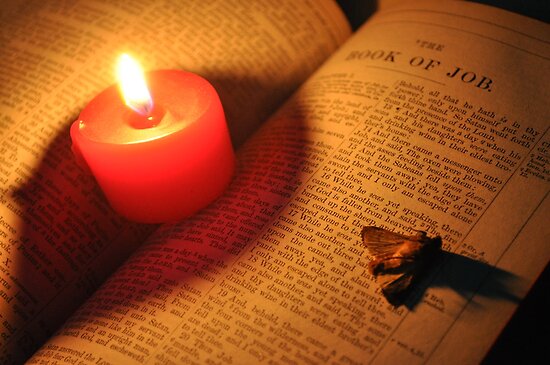
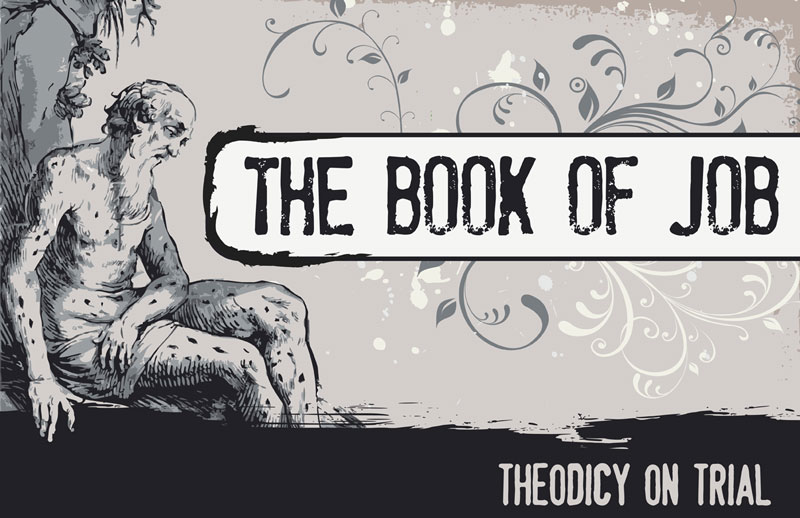
The book of Job is considered a literary masterpiece such that it is included among the MUST READ list of literature majors; something to marvel at because this ancient piece of writing is determined to be the earliest among the manuscripts of the Hebrew Scriptures. That should put us ‘moderns’ to shame if we can’t produce writing of this calibre in terms of poetry, plot, character development, wisdom, and more — it almost appears like God Himself penned the original manuscript.


As it is with translations, no doubt the English pales in comparison with the original Hebrew but literary merit aside, what is more significant is the insight we gain about God and man, and the problem of suffering in a way no other book confronts it. But we will reserve the in-depth and full discussion of Job for a future article. 


For this article’s specific topic, confine the discussion of Job only to it’s being listed as prooftext for the existence of the devil. It is our objective to check out claims and teachings if only to get the facts right, straighten out wrong thinking based on wrong interpretation of prooftexts which useTNK verses for justification.  It is one thing for a religion to write its Scriptures obsessing with the devil from the gospels to Revelation; it is another thing to use the sacred scriptures of a distinct people and use it as proof for doctrinal beliefs.


In the case of fallen angels and the occult, as we have already explained in previous articles, it is outright propagation of myth, legend, superstition, untruths that run counter to the foundational teachings in TNK.


So on to Job.


Who is this character referred to as “the adversary,” ha satan in Hebrew?  He not only appears as a prominent figure but also plays an adversarial key role against the narrative’s protagonist Job. If there is proof of a devil, this appears to be it!


Unlike “the serpent” in Genesis 3, ha satan in the context of Job is one of God’s creatures who has access to His realm, with whom He converses and interacts. John J. Collins, Introduction to the Hebrew Bible cites texts in various TNK books where ha satan appears and clarifies this character’s role:


In none of these cases [Zechariah 3, 1 Chron. 21:1] is Satan the demonic figure or devil of later mythology (he has that character in texts from around the turn of the era, including the New Testament).  Here he appears to be a member of the heavenly council, in good standing.  At least he has the right of access at meetings of “the sons of God” or lesser divinities (who are demoted to the rank of angels in later Judaism and Christianity).  His job, however, is distinctive.  He is a roving prosecuting attorney, who goes to and fro upon the earth to ferret out wrongdoing and put humanity to the test.


After a brief introduction on the character of Job, the narrative transports readers to YHWH’s heavenly court:


1:6  Now the day came about, and the sons of God came to stand beside YHWH, and ha satan  [the adversary], too, came among them.


Imagine, ha satan, the adversary is counted among the “sons of God” and given special mention.  If we think God cannot stand to even look at the Devil or would not allow this rebel to be in His Presence, shouldn’t we expect God to say:

 
 “Get out of my sight you evil fallen rebellious creature, you have no business being here with the other angels who have obeyed me 100%! You belong in hell, but go back to earth where I hurled you down and wait out your time there! Besides, you”ve got a future assignment to tempt Me when I metamorphose into the Trinity, and deal with Me as My alter ego, My Son.”  


Ridiculous? Absolutely, because instead He says— 


7.  YHWH said to the adversary, “Where are you coming from?” And the adversary answered YHWH and said, “From going to and fro on the earth and from walking in it.”


Notice that God is surrounded by his heavenly court of messengers (for that is all ‘angels’ are, part of the ‘heavenly hosts’,  messengers of God who do his bidding and sent on errands), yet He interacts with only one — the handpicked “son of God” to do the special task of testing humankind, the one who makes man aware he has free will to choose between two alternatives: walk God’s Way, or walk his way.  The same one who in this book will obediently carry out a strange divine assignmentthe oppression of a so-far untested “righteous” man.  Now, is that the image portrayed in the Christian scriptures of Satan, Lucifer, the Serpent of Old, the Dragon of Revelation 12, etc.?


So the exchange between Creator and messenger continues:


8. Now YHWH said to the adversary, “Have you paid attention to My servant Job? For there is none like him on earth, a sincere and upright man, God-fearing and shunning evil.”

9. And the adversary answered YHWH and said, “Does Job fear God for nothing?

10. Haven’t You made a hedge around him, his household, and all that he has on all sides? You have blessed the work of his hands, and his livestock has spread out in the land.

11. But now, stretch forth Your hand and touch all that he has, will he not blaspheme You to Your face?”

12. Now YHWH said to the adversary, “Behold, all that he has is in your hands; only upon him do not stretch forth your hand.” Now the adversary left the presence of YHWH.


What are we to make of this? YHWH allows one of His angelic creations– the adversary — to challenge His perfect knowledge about the righteous life of Job and his heartfelt worship and devotion to God. This is only the first round of similar exchanges between God and ha satan about the increasing pressure to be applied to Job; in fact these exchanges show up like a familiar refrain throughout the book.  With each testing, we learn more about the extent of Job’s patience in suffering and his continuing faith in his God.


1. Now the day came about that the angels of God came to stand beside YHWH, and the adversary too came among them to stand beside YHWH.

2. Now YHWH said to the adversary, “Where are you coming from?” And the adversary replied to YHWH and said, “From going to and fro on the earth and from walking in it.”

3. And YHWH said to the adversary, “Have you paid attention to My servant Job? For there is none like him in the earth, a sincere and upright man, God-fearing and shunning evil, and he still maintains his sincerity. Yet you enticed Me against him.”


What?  This ha satan is able to persuade God Himself?  Does that sound like the Christian Devil who tempts Jesus (mouthing OT scriptures at that)  in the wilderness, but Jesus resists his every suggestion?


4. Now the adversary replied to YHWH and said, “Skin for skin, and whatever a person has he will give for his life.

5. But, stretch forth Your hand now and touch his bones and his flesh, will he not blaspheme You to Your face?”

6. And YHWH said to the adversary, “Here he is in your hands, but preserve his life.”


Notice that while God gives ha satan permission to afflict Job, he places a limitation on how far the adversary can go.  The wonder of this is —-ha satan obeys his Creator’s will, just like all angelic messengers given assignments affecting humankind; in fact ha satan does not overstep the set boundary— does that sound like a rebellious fallen angel who will buck his BIG BOSS’s instruction? :


  9. Then his wife said to him, “Do you still maintain your sincerity? Blaspheme God and die!”

10. And he said to her, “You talk as one of the disgraceful women talks. Shall we also accept the good from YHWH, and not accept the evil?” Despite all this, Job did not sin with his lips.


Thanks to the continuing infliction of pain upon Job by ha satan on assignment from God, we continue to get a glimpse of Job’s strength of character and unswayed devotion to God; instead he curses the day he was born. If there’s a character who develops admirably and truly emerges as a “hero” here, it’s not God nor ha satan, but Job, the clueless victim of  . . .  well, two heavenly bullies, a nagging wife, and sympathetic friends, yet who point their accusatory fingers at him.


The narrative moves on to the three friends of Job who give their two cents worth about why Job is suffering and of course all three are off.  Readers are privy to why Job is suffering, knowing the conversation and agreement between God and ha satan.  For now, we will leave it at that since we’re dealing only with ha satan here.


Conclusion:

  • Does this book confirm that there is an adversary, a ha satan used by God for His purposes?  Yes.
  • Does it prove “Satan” the Christian Devil and his fallen angels exist?  No.
 

It is our understanding that since this book has been relegated to the third division of the Hebrew Scriptures –the Ketuviim–-or “The Writings”—- it is to be considered as divinely inspired writing coming from the understanding of its author who is not named.  Hence, one does not build a doctrine on it except where it affirms and conforms with the foundational teaching of the TORAH.


For interesting discussions on Job and the question of why man suffers, here are three books with differing perspectives and conclusions:

 
  • Atheist turned Christian, C.S. Lewis, The Problem of Pain
  • Christian turned atheist, Bart D. Ehrman, God’s Problem: How the Bible Fails to Answer our Most important Question —Why We suffer
  • Consistently Jewish in Judaism, Rabbi Harold S. Kushner – The Book of Job: When Bad Things Happened to a Good Person (Jewish Encounters)
 

For additional commentary on the book of Job, please check out these posts:

Image from www.doxologia.ro –


NSB@S6K

logo

The Sinaite’s Musical Liturgy – 4th Sabbath of March

KINDLE THE SABBATH LIGHTS

[Original Tune: “Praise the Name of Jesus”/Revised Lyrics] 

Image from vineofdavid.org

Image from vineofdavid.org

Light one Sabbath candle

as His blazing sun sets,

darkness fills all the spaces, 

not in the minds where His True Light dwells,

Let His Tree of Life be your Light.


Image from vineofdavid.org

Light two Sabbath candles, 

Brighten up the darkness,

One is good, two is much better,

More minds in harmony reflect more ‘Light’

Let His Tree of Life be our Light.


[Original Tune:  “We Gather Together”/Revised Lyrics]

1.  We gather together to seek the Lord’s blessing,

with joy in our hearts, we delight in Your Day,

We welcome Your Sabbath, we seek Your loving Presence,

We bless Your Holy Name, Yahuwah our Lord.


2.  We break bread together, we bless one another,

We drink to our health and this joy that we share,

We pray for all others, for all the Sabbath-keepers,

Who faithfully observe this blest day of rest.


3.  For joy we derive from our loved ones, our family,

For daughters, for sons, and for grandchildren dear,

For blessings no end that Your gracious Hand has given us,

We bless you back, O Lord, Yahuwah,  our God!


d89120d2a64279dc9e2c1d7ec78a1243Isaiah 58:13-14

You must observe the Sabbath

rather than doing anything you please

on my holy day.

You must look forward to the Sabbath

and treat the LORD’s holy day with respect.

You must treat it with respect

by refraining from your normal activities,

and by refraining from your selfish pursuits

and from making business deals.

Then you will find joy

in your relationship to the LORD,

and I will give you great prosperity,

and cause crops to grow on the land

I gave to your ancestor Jacob.”

Know for certain that the LORD has spoken.


“There’s a blessing in saying the NAME”

Image from www.satansrapture.com

Image from www.satansrapture.com

[Original Tune: “Are You washed in the blood of the Lamb?”/Revised Lyrics]


1.  Have you been to Sinai where the One True God

gave His Name, His ineffable Name,

Which His chosen people dare not say out loud,

out of reverence and awe for His Name.

2.  So they called Him ‘Adonai’ and ‘Elohim’,

and devised other titles for Him,

And in time it happened that not one could say

how the Name is pronounced to this day.

CHORUS:  Yod Heh Vav Heh, Yod Heh Vav Heh,

Yah forgive, we don’t know how to say—

Yah-weh, Ya-hu-weh,Ye-ho-vah, Ya-hu-wah,

There’s a blessing in saying His Name.


3.  So He’s known by many other titles like—-

El Shaddai, Eluheinu, HaShem,

He’s Creator, Master of the universe,

He’s the Rock, He’s Provider, He’s God.

4.  How can anyone who’s never heard His Name

ever call on a God they don’t know?

Are they faulted for not knowing to this day,

when they can’t read His Name in THE BOOK?

CHORUS: Ya-hu-wah, Ya-hu-wah,

is it so wrong to call on His Name,

All the world will never know the One True God,

if we don’t say ‘Yahuwah’s His Name!’


Image from www.pinterest.com

Image from www.pinterest.com


On this Sabbath, O YHWH, Lord of the Sabbath,

God of the families represented here,

God of Sinaites everywhere who call on Your Name,

We seek Your blessings — protection, provisions —

for us and our loved ones: (name them)

parents,  spouse, siblings, children, 

extended kin, dear friends, special people, 

staff in our work places.

We remember with fondness our dearly departed,

thanking You for giving us the joy and pleasure

and privilege of having them as part of our lives:

(name them).

We thank You specially, Lord YHWH,

for enabling us to find You, 

to know You as much as we are able to,

through Your Creation,

and through Your Revelation on Sinai,

Your TORAH for life.

For the remaining Sabbaths

You will allow us to enjoy during our lifetime on earth,

we thank You ! 

Blessed be YHWH, Lord and God of Sinaites,

God of Israel, God of the Nations,

Creator of the universe.

Amen.

[Raise your glass of wine and make a toast: “To Life!” “L’chaim!”

Image from www.pinterest.com

Image from www.pinterest.com

Image from www.adathatikvah.org

Image from www.adathatikvah.org

HAVDALAH


[Original Tune: “Onward Christian Soldiers”/Revised Lyrics]

1.  Onward true believers in the One True God

With God’s Truth before us, leave the false behind,

Once we followed other gods, once we swallowed lies,

That’s all past tense, that’s behind us, disconnect old ties –

Onward, onward, let’s move forward from we were before,

With God’s Truth before us, listen not to lore.


2.  Learn the ‘Old’, unlearn the ‘New’,

That’s the thing to do—

Start from the beginning, Genesis anew,

Learn from Him, Creator God, lay aside your fears,

Learn to reason, get some wisdom, open up your ears!

Onward, let’s move further forward from we were before,

With ‘Old’ Truth before us, there’s more truth in store.


3.  Exodus, Leviticus, read them with fresh eyes,

Don’t bring with you baggage from your former ties,

Numbers, Deuteronomy, these complete the five,

If that’s all that you can process, that is good for life,

Onward, let your search move onward,  leave the past behind,

There’s so much to cover, so much more to find.


4.  Let us follow Joshua’s lead, conquer turfs for God,

Weaken the resistance of those who’ve been ‘had’,

Don’t miss opportunities, say a word or two,

Sow the seeds but better if they see His Life in you,

Onward tread on bad soil, dry soil, sow God’s Word of Truth,

Somewhere there is good soil ready for ‘Old’ Truth!

 A——–men!


Image from mydearpreciousfriends.blogspot.com

Image from mydearpreciousfriends.blogspot.com


Shabbat shalom to Israel,

and to Gentiles of the Nations,

and to Sinaites, and Sabbath-Keepers,

all worshippers of YHWH,

the One True God,

wherever and whoever you are!


In behalf of Sinai 6000 Core Community,

NSB@S6K

logo


Sig-4_16colors


The UNchosen: Who is the ‘Shepherd’ whose flock you belong to?

Image from www.yahwah-apostolic-ministries.org

Image from www.yahwah-apostolic-ministries.org

[First posted in 2012, reposted 2017, time for another repost.
  The original title was:  “Who is the Shepherd in Tanach?”and then was  changed to “Who is your Shepherd?” 


Does the current title reflect what this post is about?  We have updated the message —please read the Postscript for the update. —Admin1.]


———————————-
 
The shepherd is one of the endearing metaphors that Christians apply to Jesus.


Psalm 23 is read at every funeral mass/service so that surviving relatives could visualize their dearly departed (whether a believer or not) as being entrusted in the care of Jesus “the Good Shepherd”.  What a comforting image indeed. Are there “bad” shepherds and what makes them so, ever think about that?  Perhaps the title should ultimately be:  “Who is the TRUE Shepherd?”  


If I have one regret in my life it is this:  when my father died, I missed being with him by 5 minutes when he took his last breath.  I set-up my temporary base in his home after his stroke, anticipating it might lead to the end of his life, wishing to hold his hand and recite Psalm 23 so I could hand him over to Jesus the Savior-Shepherd whom I imagined would then lead him across those green pastures.  Like most Christians, I had always associated Psalm 23 with the dearly departed, not knowing that David the psalmist had intended the shepherding of the God of Israel for His  chosen people while they were all alive.  But of course, why had I not thought of that? Because I never bothered going beyond tradition and what I had been fed by Christian pastors/bible teachers.


Anyway, in hindsight, I suppose it was ‘providential’ that I did not lead my dear dying father into the hands of Jesus since Psalm 23 was really about David’s ‘Shepherd’ and I will just trust that the God self-characterized and revealed in the Hebrew Scriptures is not an “exclusive” God but a universal God who considers and accepts a Torah-life lived by a Torah-ignorant dying father who might not have known he was in YHWH’s flock all along.


Image from www.mmoutreach.org

Image from www.mmoutreach.org

Had I known then what I know now, I would have declared at my father’s deathbed  the name of YHWH Who is the Shepherd of Israel, one of the metaphors for Him  in the TNK . . . . but Who is also the Shepherd for every gentile who chooses Him as God and Lord of life.  When we choose YHWH, we are among the privileged ‘chosen’  who get to know Him through His Sinai revelation.


The leading of theTrue Shepherd is not through death to life in heaven; His  leading is through this life because like blind sheep, don’t we often need direction and protection and the leading of a loving and merciful God?


As we have been doing with all other New Testament symbolism that claim to be rooted in the TNK, presented here are verses that use and develop the shepherd image.  The list of verses are what appear in Strong’s Concordance which is usually the first recourse of anyone doing research on any word.  The  translation is from ArtScroll Tanach.  Please remember that AST substitute “HaShem” or “the Name” wherever YHWH or in Christian translations “LORD” is in the original Hebrew.


The shepherd symbolism is not as controversial as other Christian misapplied metaphors such as the messiah, savior-redeemer, creator; nevertheless, it is enlightening to simply read through as many verses in Tanach if for no other purpose than one’s exposure to the Hebrew version.  After all, we anticipate that the regular visitors to this website are those who may not have spent much time studying the Christian Old Testament and who have little or no exposure to the Hebrew Scriptures and Jewish translations.


A word about Psalm 23:  Admittedly, no translation can compare with the unsurpassable poetic rendering of the King James Version which is worthy of committing to memory; still it is good for readers to be aware of differences in translations and how meaning can change from the original.  


———————–

Update 2015/Postscript:  


There was a time in my Christian past that I would have been offended by the image hereunder and its message.

Image from frankscottage.wordpress.com

Image from frankscottage.wordpress.com

 I used to think that the sheep metaphor is perfect for any Christ-believer because my bible teacher explained that sheep had very poor eyesight but very keen hearing;  the ‘good ‘sense makes up for the ‘poor’ sense.  So what’s the point?  Well, my teacher said the only way sheep would recognize the shepherd from other shepherds (when they’re all mixed up together with other flocks in one sheepfold or pen) is through their ‘master’s’ unique ‘call’.  I thought it was amazing that from one sheepfold of differing flocks all mixed up together, if two or three shepherds called their sheep at the same time, whichever sheep belonged to whichever shepherd would simply go the direction of the call the sheep recognized as its lead. In effect, shepherds do not have to brand their sheep like they do cattle and other livestock because the sheep species, by their keen hearing sense, need only to hear their master’s call and off they go into that recognizable sound direction.


Whether or not my teacher was right about sheep, I never bothered to check because I particularly liked that metaphor when applied to Jesus as my Shepherd.  But now that YHWH, the Shepherd of Israel (according to TNK) is the Shepherd I have chosen to follow, does the metaphor still apply?  Yes, all the more so!  The use of “call” or “voice” is really applicable to identity/character/message (or teaching).  Actually,  Yeshua the Jew would have taught Torah, eaten kosher, worshipped the God of Israel.  Christianity’s Jesus has been transformed to a Christian version (lots of posts on this, won’t get into the discussion here).  Suffice it to say that the message of the Jewish Yeshua would have been — follow the Shepherd of Israel, YHWH.


Sinaites have virtually left the sheepfold belonging to Christianity’s Jesus and followed the call of another Shepherd, the One we consider as the One we missed hearing before but now hear loudly and clearly!  


Should we be ‘proud’ of being called ‘sheep’ instead of  being ‘offended’ because we are called ‘sheep’ as the message in the image (see 3rd image in this post) chides all sheep?   It’s a metaphor . . . and an apt one . . . it’s all about following someone’s lead and obedience to that someone we choose to follow and obey, whether blindly or ignorantly or willingly with eyes wide open.  


Now another poser: go  back to the message in the 2nd image in this post:


Who chooses:  the Shepherd or the sheep?  


Ahhh, dear reader, that question you must answer for yourself! Whether you’re a Christian, Moslem, a convert to Judaism, or Sinaite — did you choose the God you worship?  The chosen people were ‘chosen’ — still, they had to choose to obey the One who chose them.  Not all of them did, not all of them do to this day.  Where do we Gentiles fit, we who were not chosen in the same category as the Jews?  What do you think?  Does our choice lead to our being chosen?


Hint:  sheep are sheep, conditioned by their shepherd to hear their call and follow them; humans are humans, given free will so they can make choices according to their inclination.  

  • One could choose to follow or not follow.  
  • One could choose between two options, which one to take.  
  • One could choose even if there is only one option, how?  Go with the one option or choose not to.
  • One  could choose to follow someone else’s lead or his own desire.  
  • One could choose to follow either of two inclinations within himself:  the inclination to do good or the inclination to do evil, granting one has been educated by Torah on what is ‘good’ as defined by the Law-Giver or the Revelator on Sinai.


 Whose commandments are you following, the “Old” or the “New” in the Christian Bible or the original commandments in the Hebrew Scriptures?  


Which brings us back to the question in this post’s title:  

“Who is the Shepherd” whose flock you belong to?


  • The Shepherd of the Christian Old Testament who continues to be the Shepherd in the New Testament?
  • Or the Shepherd identified in the TNK?

Whose call, whose voice do you recognize and follow,  hmmmm?


Sig-4_16colors

logo

————————————–
Numbers 27:17 Moses spoke to HaShem saying, “May HaShem, God of the spirits of all flesh, appoint a man over the assembly who shall go out before them and come in before them , who shall take them out and bring them in; and let the assembly of HaShem be like sheep that have no shepherd.
1 Kings 22:17 – [Micaiahu] then said, “I have seen all of Israel scattering to the mountains, like sheep that have no shepherd; and HaShem saying, ‘These have no masters; let each man go to his house in peace.


Psalm  23:1 A psalm by David.  HaShem is my shepherd, I shall not lack.


Psalms 80:1For the conductor, for the shoshannim, a testimony, a psalm of Asaph.  Give hear, O Shepherd of Israel, You Who leads Joseph like a flock: appear, O You Who is enthroned upon the Cherubim.    


Ecclesiastes  12:10-11 Koheles sought to find words of delight and words of truth recorded properly.  The words of the wise are like goads, and the nails well driven  are the sayings of the masters of collections, coming from one Shepherd. Beyond these, my son, beware:  The making of many books is without limit, and much study is weariness of the flesh.  The sum of the matter, when all has been considered.  Fear God and keep His commandments, for that is man’s whole duty.  For God will judge every deed –even everything hidden –whether good or evil.    


Isaiah 40:9-11  Ascend upon a high mountain, O herald of Zion, raise your voice with strength, O herald of Jerusalem!  Raise it, fear not; say to the cities of Judah, Behold your God!  Behold, my Lord, HaShem/Elohim, will come with a strong [arm] and His arm will dominate for Him; behold, His reward is with Him, and His wage is before Him.  [He is] like a shepherd who grazes his flock, who gathers the lambs in his arms, who carries them in his bosom, who guides the nursing ewes.  


Isaiah 63:11They [then] remembered the days of old, of Moses [with] His people:  Where is the One Who brought [the Israelites] out of the Sea together with the shepherds of His flock?    


Jeremiah 49:19  Behold [the enemy] will ascend as a lion from the heights of the Jordan to a secure pasture land; for I shall bring [the enemy] suddenly and make him overrun her and he who is chosen I shall charge against her. For who is like Me? Who can challenge me? And who is the shepherd who can stand before Me?  


Ezekiel 34:1-6   The word of HaShem came to me, saying, “Son of Man, prophesy against the shepherds of Israel; prophesy and say to them, to the shepherds:  Thus said the Lord HaShem/Elohim:  Woe to the shepherds of Israel who have tended themselves!Is it not the flock that the shepherds should tend? . . . for the lost you did not search –rather, you subjugated them with force and with rigor.  Thus they became scattered for lack of a shepherd and became food for every beast of the field; they became scattered.  My sheep wander on all the mountains and upon every high hill; My sheep have scattered upon the whole face of the earth, but no one seeks and no one searches.


Ezekiel 34:23 – I will establish over them a single shepherd and he will tend them —My servant David; he will tend them and he will be a shepherd unto them.  And I, HaShem, I will be a God to them, and My servant David a prince among them.  I, HaShem, have spoken.  


Ezekiel 37:24My servant David will be king over them, and there will be one shepherd for all of them; they will follow My ordinances and keep My decrees and fulfill them.    


Zechariah 10:2  For the teraphim [oracles] speak words of nothingness, the diviners falsehoods, and dreamers speak lies; they comfort with meaningless words. Therefore, they have wandered off like sheep; they are humbled, for there is no shepherd.  

11:17 Woe to the worthless shepherd who abandons the flock!  A sword upon his arm and upon his right eye!  May his arm utterly wither and his right eye go completely blind!


A Sinaite’s Liturgy – 3rd Sabbath of March

 KINDLE THE SABBATH LIGHTS

 
Blessed are You, YHWH,  Creator God,
whose very first words recorded in Scripture were:
“let there be light”,
Whose LIGHT illuminated empty space before there ever was a created sun;
Who designed heavenly luminaries
for visual delight as well as  for guidance.


In Your theophanies as recorded in the Hebrew Scriptures, 
You manifested as “flames of fire from within a burning bush” 
as “a pillar of fire by night”
and as shekinah, a glory cloud by day
to guide your people in their journey toward the Land of Promise.
 
On erev Shabbat, we light our Sabbath candles
emulating the symbolic tradition of Your chosen people,
Your designated ‘light to the gentiles’
Your Covenant nation,
 receivers of  Your Torah which is
a lamp unto our feet, 
and a light unto our path.’
Torah observant Jews and Gentiles
will hopefully reflect Your Light and Your Way,
virtual ‘luminaries’ and lamps that brighten up the pathway leading to You,
in a world in dire need of Your True Light, Your Sinai Revelation!
We thank You, Giver of the Torah,
for Israel’s continuing existence  way into our times,
for redirecting our vision to finally see Your Light
in their Hebrew Scriptures,
for illuminating our minds so that by obedience to Your Torah,
 we might also become reflectors of Your Light,
just like Israel.
 

As gentiles drawn to You, Your Torah, and Your Sabbath day.
 we kindle these Sabbath lights,
seeking Your blessings upon all fellowships,
among families and friends.  
May the joy of knowing You
pervade the atmosphere of all meeting places
which are virtual Sabbath sanctuaries
for Sabbath keepers who unite in every part of Your world,
who dutifully obey Your 4th commandment,  
who consciously cease from their daily strivings,
in loving obedience to You, LORD of the Sabbath.
 
O YHWH,
Creator, Lord, and Master,
There is no God but You.


We don’t see you, 
we don’t hear your voice, 
we don’t feel your Presence,
but we acknowledge Your Existence,
for your CREATION is a magnificent testimony to an awesome Designer.


Had we never rediscovered Your Revelation on Sinai,
through which we see You, hear Your voice, feel Your Presence,
we would still be worshipping other gods of men’s creation,
feeling unnecessary guilt and helplessness in ‘original sin’,
relying on another proclaimed Savior’s perfect obedience to substitute for ours,
proclaiming a name other than Yours, O YHWH,
living by grace and not by Your Torah,
 
We thank You,
O YHWH,
 God of Avraham, Yitzhak, and Yaakov,
 God of Israel,  God of Sinaites,
for Your true Sabbath day,
which Israel was commanded to remember and observe,
which we have learned from your Torah
to remember and to observe.
 
Image from www.pinterest.com

Image from www.pinterest.com

[Music from the Seventh Day Adventist Hymnody, Revised Lyrics]

Remember the Sabbath to keep it holy, honor the day,

Remember the LORD of the Sabbath wholly, this is His Day;

We’re blest to learn all the truths He has to say,

Keeping His Sabbath holy, and walk His Way.


The people in bondage He liberated — from the Pharaoh’s hand,

They labored and toiled everyday in slavery, while in Egypt’s land,

How long they waited to hear their God’s command,

‘Passover is your freedom to the Promised Land’.


With manna from heaven and water pouring — from out of the Rock,

such daily provisions through desert wandering, they had no lack,

They learned to cease and desist enough to rest,

from their daily strivings, they passed the test.


Creator of all that exist, we see You — in this world You made,

In six days You spoke “let there be” existence — all foundations laid,

And on the seventh, we still hear what You said,

“Keep the Sabbath holy” —  in Rest, You led.  

Keeping the Sabbath holy, in You we rest!


———————


PSALM 67


May YHWH favor us and bless us,

May He illuminate His countenance with us.  Selah.

To make known Your way on earth,

among all nations Your salvation. 

The peoples will acknowledge You, O YHWH;  

the peoples will acknowledge You — all of them.

Regimes will be glad and sing for joy,

because You will judge the people fairly

and guide them with fairness the regimes on earth. Selah.

The peoples will acknowledge You, O YHWH;

the peoples will acknowledge You– all of them.

The earth will then have yielded its produce; 

May YHWH, our God, bless us.

May YHWH bless us,

and may all the ends of the earth fear Him.


Image from www.essex1.com

Image from www.essex1.com

For countless joys that have blessed the days of our lives—

family, friends, good fortune, and more,

even those disguised as trials and failures—
we raise our wine glasses filled with the fruit of the vine,
 a drink for health, a drink for joy, a drink to LIFE, L’CHAIM!


 For nourishment of body and refreshment of soul,
all these come from Your providential care;
as we partake of this bread we share,
we remember Your miracle manna and water from the Rock,
that nourished Your people for 40 years in the wilderness.
You are the Creator Who filled nature with so much variety of sustenance.
Blessed are You, Creator God, for blessing us with our daily bread.
Image from www.decalsforthewall.com

Image from www.decalsforthewall.com

O YHWH, God of our families,

 we ask You to remember
 our loved ones;
grant them peace, mercy, and grace,
and continued protection
throughout their life on this earth.
May they live according to Your Torah so that their names will be added to your Book of Life:
Parents; Siblings
Spouse; Sons; Daughters; Grandchildren
Extended family: Children’s Spouses
Beloved friends.


Sinaite's Sabbath Table

Sinaite’s Sabbath Table

Image from www.hebroots.com

Image from www.hebroots.com


 HAVDALAH

 
Adonai Elohim YHWH,
LORD of the Sabbath,
How truly privileged we are to spend this day
basking in Your presumed Presence among us,
delighting in  the joy of knowing You,
and enjoying our fellowship with one another.
 
We have partaken of Your goodness, kindness, and benevolence
in granting us by your Divine Providence,
life, health, family, opportunity,
and specially Your blueprint for living,
Your Torah, our Tree of Life.
We have entered into Your sanctuary in time,
truly a fitting memorial to You,
the God of Creation, the Lord of the Sabbath.
As we bid farewell to Your Queen of days,
We look forward to next Friday’s sundown,
when we welcome on erev another cherished time with You.
May You grant us many more Sabbaths during our sojourning on earth!
And when we celebrate our final Sabbath on this earth, 
may we be granted rest from our earthly strivings,
having chosen You as our God,
having obeyed your command to live according to Your Torah;
May our names be written in Your Book of Life,
that we may reap the blessings from having heard and heeded
Your Words to choose life!”
Amen.
foreigners-shabbat

Shabbat Shalom

in behalf of Sinai 6000 Core Community,

NSB@S6K

 logo

Prayer on Life and Death – “SALT” – Art by BBB@S6K/

[First posted on April 28, 2012 when we had just started this website; at the time I did not know the source of the prayer and left a message at the end for readers to inform us if they knew; we never got a response.   However, in a library book sale in Burlington CA, I paid a mere $2 for the ‘treasure-find’  book where I finally found this prayer!  And so the repost on October 1, 2017 and today, February 11, 2019– a timely reflection for the love month of February.—Admin1]

SALT by BBB@S6K Art Work on display at 744 Alabama St., San Francisco, CA

[SALT by BBB@S6K Art Work on display at 744 Alabama St., San Francisco, CA]


Oh God,


You have called us into life,

and set us in the midst of purposes we cannot measure or understand.

Yet we thank You for the good we know,

for the life we have,

and for the gifts that are our daily portion:


For health and healing,

for labor and repose,

for the ever-renewed beauty of earth and sky,

for thoughts of truth and justice which stir us to acts of goodness,

and for the contemplation of Your eternal presence,

which fills us with hope

that what is good and lovely cannot perish.


We need one another when we mourn and would be comforted.


We need one another when we are in trouble and crave help, or when we are in the deep waters of temptation and a strong hand might pull us out.


We need one another when we would accomplish some great purpose and cannot do this alone.


We need one another in our defeats, when with encouragement we might strive again; and in the hour of success, when we look for someone to share our bliss.


And we need one another when we come to die, and would have gentle hands prepare us for the journey.


All our lives we are in need, and others are in need of us.


We best live when we bring one another our understanding and our solace.


[Source:  GATES OF REPENTANCE, pp. 388-389

The Union Prayer Book: For The Days of Awe

CENTRAL CONFERENCE OF AMERICAN RABBIS

5738  New York  1978 Revised 1996]

Why did we leave Christianity? And why did we not join Judaism?


Image from www.jarofquotes.com

Image from www.jarofquotes.com

[First posted 2012. The occasion for the revisit in 2017 was this:  Sinaites BAN & NSB attended a seminar held in Manila Stock Exchange on February 8, 2017. The guest lecturer?  Rabbi Tovia Singer, who is based in Indonesia.  Most of those who attended were former Christians/Messianics who ventured out of their religious roots, just like us.  Not a surprise, what BAN & NSB discovered and realized for the first time is this:  that those who attended who left their Christ-centered religion seem to share the same mindset—and what is that?  That the only alternative for any ex-Christian is to join Judaism.  So there were many questions about how to join and would non-Jews be accepted in that Jewish religion?  Rabbi Singer was frank, that yes, Gentiles will often be discouraged from joining and that Rabbis will usually say ‘no’ 3X to test how zealous is the interested party and if still insistent, they get a foot in the door to start learning all the requirements to qualify.  He added one more information that Sinaites had never heard before:  that joiners of Judaism become “Jews”. What????


And that’s the crux!  And here are more cruxes:

  • End up in yet another religion?
  • And lose one’s native-born identity/nationality? 
  • Isn’t the difference between Jew and Gentile a matter of ethnicity, not religion? 
  • Is that really what an ex-Christian is expected to do and become,  to be a Jew?
  • Did the God of Israel intend for all to become Jews?
  • Or is the Divine intention for ALL humanity, Jew or Gentile,  to know Him, declare His Name, so that all might live His Torah?


Question:   Did we Sinaites ever consider joining Judaism?  Admittedly, at the beginning, we explored it,  read extensively about it, consulted online rabbis, did our thorough research.  Because indeed, where does an ex-Christ religionist-believer go after leaving one of the three monotheistic religions? What is the alternative for Gentiles who don’t want to become Moslem, Buddhist, Noachide, etc.?


This post answers that question and explains the Sinaite’s adventurous spiritual journey: basically,

  • AWAY from man-made religion
  • toward the Source of Divine Revelation,
  • toward YHWH, the God Who revealed Himself, His NAME and His WAY on historic Sinai, once upon a time 6 millennia ago. 


Did BAN & NSB try explaining that to the seminar attendees?  To those who gave them a hearing, yes.  Were they taken seriously?  Not really.  Why not?  


“Sinai 6000?  What is that? Yet another new religion?”  Well, how does one explain in 5 minutes, a 7-year pilgrimage recorded in over 900 articles posted in a website?  


 Here’s the original INTRODUCTION to the 2017 post:


This is from  Sinai6000 > About Us >

Further to our Statement of Faith.  

Revisiting a statement (written in 2012) takes us back to the beginning of our journey (2010), focusing on one of the many books that influenced us to make a difficult and crucial decision to leave Christianity, a religion we had been born in, embraced without question,  lived for decades of our lives, and successfully evangelized many others to convert from their former faith.


This is self-explanatory. —Admin1]


———————


Image from amazon.com

Image from amazon.com

One of the books that greatly influenced our Sinai 6000 community is a book authored by James D. Tabor, Restoring Abrahamic Faith, available on the web at www.Genesis2000.org.


Since majority our affiliates are gentiles who were former Catholics, Evangelicals, Messianics, (and a few unaffiliated independent God-seekers), we felt that turning away from our former Christ-centered faith to turn to the God of Israel placed us in a neither-here-nor-there situation.  Having left institutional religions, most of us were not inclined to get into yet another major religion such as Judaism, even as we embraced the God of Israel Whose Name is YHWH. We checked out gentile groups like the Noachides and web communities like the Synagogue Without Walls but did not fully agree with their credo.  Why?  Because after the flood that saved Noah and his family, what has been formulated as the ‘Noachide Laws’ (7 of them) were superseded by the Sinai revelation.


In time, we found our niche in Abrahamic faith, as defined by James D. Tabor.


While we don’t agree with some of the details he outlines in his Principles of Abrahamic Faith, we fully agree and endorse the following:


  • That there is ONE CREATOR GOD, YHWH.

He who always was, is, who will be, besides Whom there is no other.


He is Awesome, Great, Mighty, Merciful and Gracious, slow to anger and abounding in love and faithfulness. Our deepest love and highest devotion is offered to Him alone. (Genesis 1:1; 17:1; Exodus 3:13-15; 6:3; 34:5-7; Deuteronomy 6:4; Isaiah 42:8; 43:10-11; 44:6-8, 24; 45:5-6, 21-22; Hosea 12:5).


We agree that—

  • the Holy Scriptures, that are divinely inspired, are limited only to the Hebrew Scriptures, the TNK, or Tanakh/Tanach; but we go further in limiting what we consider as “Divine Revelation” or “the very words of God” as the Torah, known as the Pentateuch or the Five Books of Moses.  Update 2015:  We qualify that those ‘five books’ have been ‘attributed to Moses’  but are in process of being challenged by the most recent scholarly research.


As Tabor explains, “the Hebrew and Aramaic texts of these books reflect the fundamental historical revelation of YHWH to humankind.”(Deuteronomy 4:4; 12:32; Psalm 1:2; 19:7-11; 119:89, 142, 160; Isaiah 8:16-20; Malachi 3:22-24 [4:4-6])


We fully agree, without reservation that—

  • “The WAY OF GOD for humanity is revealed and reflected in the TORAH and amplified in the Prophets and Writings.
    • It is chiefly summed up in the Ten Commandments spoken to all Israel at Sinai, but is known and illustrated by precept, example, principle, and admonition, throughout the Holy Scriptures.
    • That WAY is ultimately applicable to all nations –the universal WAY of peace, justice, love, truth, and righteousness for all humankind (Psalm 119:89, 142, 160; Isaiah 2:2-4).


We agree with Tabor that:

  • SALVATION is an individual matter, not a church/religious connection or membership, since what it involves is
    • REPENTANCE, the turning away from belief in false gods or idols
    • and dedicating one’s life of faith, trusting in the One True Self-Revealing God on Sinai —YHWH.
    • All who call upon YHWH as Savior, Redeemer and Lord, receive forgiveness and grace.
    • As Tabor correctly states,  “there are no mediators required, no sacrifices, animal or human” because like a compassionate parent, YHWH forgives sins for His own sake so that those who turn to Him begin to have an intimate relationship just like sons and daughters of a heavenly Father.
    • Just like Abraham, they enter into the Abrahamic Covenant of faith and become the “friends of God.”
    • (Zechariah 1:3-7; Malachi 3:7; Isaiah 1:16-20; 45:22-24; 43:25; Psalm 145:18; 103:9-14; 25; 40:6-8; 51; Micah 6:6-8; Ezekiel 18; Genesis 12:1-3; Jeremiah 16:19; 31-34; Isaiah 26:19; Daniel 12:2-3).


We agree with Tabor that:

  • “The KINGDOM OF GOD is the goal and meaning of history;
    • it is the chief longing of those who know, love, and serve God in the present age.
    • In that Day YHVH Himself will dwell with humankind,
    • the will of God will be done on earth as it is in heaven,
    • violence among men and beasts will cease,
    • and the knowledge of YHVH will fill the world as the waters cover the sea.
    • YHVH will be King over all the earth,
      • the TORAH will reach all nations,
      • and humankind will experience the benefits of a new age.
      • Human beings will be able, at long last, to reach their full potential as creatures made in the image and likeness of their Creator God.
      • (Isaiah 2:2-4; 11; 24; 66; Zechariah 14:1-9; Daniel 2:44; 7:27; Malachi 3:23-24 [4:5])

Indeed,

  • “The NATION OF ISRAEL, descendants of Abraham through Isaac and Jacob, has a continuing Covenant with YHVH that has not been revoked.
    • They are the Chosen nation,
    • the priestly kingdom,
    • the Servant of YHVH through whom He has vowed to bring the light of TORAH to the whole world.
    • Because of this historic mission, the full restoration of all twelve tribes to the Land is the central theme of all the Prophets.
    • (Exodus 19:5-6; Deuteronomy 4:27-31; Jeremiah 31:27-40; Ezekiel 36-37)

Lastly, we affirm that—

  • the First Coming of YHVH occurred on Mount Sinai and that He will come again;   in the words of Tabor,


“The SECOND COMING OF YHVH as Lord, Redeemer, Savior, and King of Kings, to rule over all the earth is the hope of humankind. This great turn in history will be ushered in by His prophetic Messiahs/Anointed Ones, as His chief human agents who prepare the way for His coming — the Branch of David as Prince, and the final Priest/Teacher who stands beside him. They will be empowered by YHVH to fully restore TORAH faith in the land of Israel, complete the re-gathering of the Twelve Tribes, rebuild the Sanctuary as a House of Prayer for all Peoples, and call upon all nations to repent and turn to God. (Isaiah 11; Micah 5:2-4; Jeremiah 23:5-6; 33:14-26; Zechariah 2-4; 6:11-14; Malachi 3-4).

The Ten “Declarations”: 6-10/Duties Towards Fellowmen

Image from amazon.com

Image from amazon.com

[Have you ever wondered if the tablets on which YHWH wrote His Ten Declarations REALLY looked like the arch-top/flat bottom tablets used in most depictions?   The Rabbis present all kinds of possibilities, from the plausible to the fantastic.  


What is your imagination of the first as well as the second set of tablets? The 1st set is difficult to imagine, since it came from the God on Sinai Himself. Would He have chosen to etch his Laws on diamond or gold, standards according to man’s valuation system, or . . . to teach a lesson in humility, material of no value such as stone? What does scripture say?  It is easier to imagine the 2nd set that Moses had to prepare from materials available in the wilderness; hewn from rock, shaped by human hands, most likely nothing compared to the first or, on second thought, an exact replica of the first since he had not only seen it, touched it, carried it down the mountain, but also broken it at the sight of the golden calf, oy vey!


But then, why are we even diverting attention from what is really most important: the WORDS of YHWH, whatever perfect or imperfect earthly material they have been written on?


Is it not more to the point that they should be written on the only earthly ‘matter’ where they should ‘matter’ — in man’s MIND, and HEART, and WILL . . . for the purpose of obedience?  The LAWMAKER and the LAWGIVER had to give laws to humankind, the only creatures endowed with mind, conscience and free will.  The rest of His creation have obeyed His laws—just look at the predictability of the laws of nature, physics, chemistry, the natural sciences.  The two-legged creature endowed with brains and freedom to choose is the only one who continues to violate the CREATOR’s Will.  But that’s the risk GOD must have known and yet was willing to take a chance on.  What an awesome and all-wise GOD! 


Continued from the previous post: Duties Toward God; the commentary is from our MUST READ/MUST OWN list:  Pentateuch and Haftorahs, ed. Dr. J.H. Hertz; reformatted for this post.–Admin1.]


—————————————————


Image from nickgrantham.com

SECOND TABLE: DUTIES TOWARDS FELLOW-MEN

The first five Commandments have each an explanatory addition; the last five are brief and emphatic Thou shalt not’s.  Our relation to our neighbours require no elucidation; since we feel the wrongs which others do to us, we have a clear guide how we ought to act towards others.  These duties have their root in the principle ‘Thou shalt love thy neighbour as thyself’, applied to life, house, property and honour.


—————————————————–


THE SIXTH COMMANDMENT:  THE SANCTITY OF HUMAN LIFE

13.  thou shalt not murder. The infinite worth of human life is based on the fact that man is created ‘in the image of God’.  God alone gives life and He alone may take it away.  The intentional killing of any human being apart from capital punishment legally imposed by a judicial tribunal, or in war for the defence of national and human rights, is absolutely forbiddn.  Child life is as sacred as that of an adult.  In Greece, weak children were exposed; that is, abandoned on a lonely mountain to perish.  Jewish horror of child-murder was long looked upon as a contemptible prejudice.  ‘It is a crime among the Jews to kill any child,’ sneered the Roman historian Tacitus.


Hebrew law carefully distinguishes homicide from willful murder.  It saves the involuntary slayer from his fellow-man from vendetta; and does not permit composition, or money-fine, for the life of the murderer.  Jewish ethics enlarges the notion of murder so as to include both the doing of anything by which the health and well-being of a fellow-man is undermined, and the omission of any act by which a fellow-man could be saved in peril, distress or despair.

For the prohibition of suicide, see Gen. IX,5-6:

And surely your blood of your lives will I require; at the hand of every beast will I require it’ and at the hand of man, even at the hand of every man’s brother will I require the life of man. 6. Whoso sheddeth man’s blood, by man shall his blood be shed; for in the image of God made He man.

your blood of your lives. lit. ‘your blood, according to your own souls.’ The Rabbis understood these words literally, i.e. life-blod, and based on them the prohibition ofsuicide.

will I require. i.e. will I exact punishment for it.

beast.  If an animal killed a man, it must be put to death; see Exod. XXI,28-32 for the law concerning an ox which gored a man.

at the hand of every man’s brother.  Better, at the hand of his brother-man (M. Friedlander).  This clause emphasizes the preceding phrase ‘and at the hand of man.’  If God seeks the blood of a man at the hand of a beast which kills him, how much more will He exact vengeance from a human being who murders his brother-man!

———————————————-

SEVENTH COMMANDMENT:  THE SANCTITY OF MARRIAGE

adultery.   ‘Is an execrable and God-detestsed wrong-doing’ (Philo).  This Commandment against infidelity warns husband and wife alike against profaning the sacred Covenant of Marriage It involves the prohibition of immoral speech, immodest conduct, or association with people who scoff at the sacredness of purity.  Among no people has there been a purer homelife than among the Jewish people.  No woman enjoyed greater respect than the Jewish woman; and she fully merited that respect.

————————————————–

EIGHTH COMMANDMENT:  THE SANCTITY OF PROPERTY

thou shalt not steal.  Property represents the fruit of industry and intelligence.  Any aggression on the property of our neighbour is, therefore, an assault on his human personality.  This Commandment also has a wider application than theft and robbery; and it forbids every illegal acquisition of property by cheating, by embezzlement or forgery.  ‘There are transactions which are legal and do not invovle any breach of law, which are yet base and disgraceful.  Such are all transactions in which a person takes advantage of the ignorance or embarrassment of his neighbour for the purpose of increasing his own property’ (M. Friendlander).

——————————————————-

NINTH COMMANDMENT:  AGAINST BEARING FALSE WITNESS

The three preceding Commandments are concerned with wrongs inflicted upon our neighbour by actual deed; this Commandment is concerned with wrong inflicted by word of mouth.

thou shalt not bear false witness.  The prohibition embraces all forms of slander, defamation and misrepresentation, whether of an individual, a group, a people, a race, or a Faith.  None have suffered so much from slander, defamation and misrepresentation as the Jew and Judaism.  Thus, modernist theologians still repeat that, according to this Commandment, the Israelite is prohibited only from slandering a fellow-Israelite; because they allege, the Heb. word for ‘neighbour’ here, and in ‘Thou shalt love thy neighbour as thyself’ (Lev. XIX,18), does not mean fellow-man, but only fellow-Israelite.  This is a glaring instance of bearing false witness against Judaism; and is proved to be so by XI,2 (‘Let every man ask of his neighbour, jewels of silver, etc.’), where the word neighbour cannot possibly mean an Israelite, but distinctly refers to the Egyptian.  In this Commandment, as in all moral precepts in the Torah, the Heb. word neighbour is equivalent to fellowman.

————————————————–

TENTH COMMANDMENT:  AGAINST COVETOUS DESIRES

14.  covet.  i.e. to long for the possession of anything that we cannot get in an honest and legal manner.  This Commandment goes to the root of all evil actions—the unholy instincts and impulses of predatory desire, which are the spring of nearly every sin against a neighbour.  The man who does not covet his neighbor’s goods will not bear false witness against him; he will neither rob nor murder, nor will he commit adultery.  It commands self-control; for every man has it in his power to determine whether his desires are to master him or he is to master his desires. Without such self-control, there can be no worthy human life; it alone is the measure of true manhood or womanhood.  ‘Who is strong?’ ask the Rabbis.  ‘He who controls his passions,’ is their reply.

thy neighbour’s house. i.e. his household. The examples enumerated are the objects most likely to be coveted.


This Commandment is somewhat differently worded in the Decalogue which is repeated by Moses in his Farewell Addresses to Israel.  that difference, together with the other slight variations in that Decalogue from the original in this chapter of Exodus, is dealt with in the Commentary on Deuteronomy.

 [Commentary on the repetition of the ‘Ten Declarations’ are included in Deuteronomy/Davarim IV,44-XI.—Admin1]

No religious document has exercised a greater influence on the moral and social life of man than the Divine Proclamation of Human Duty, known as the Decalogue. These few brief commands–only 120 Hebrew words in all–cover the whole sphere of conduct, not only of outer actions, but also of the secret thoughts of the heart.  In simple, unforgettable form, this unique code of codes lays down the fundamental rules of Worship and of Right for all time and for all men.


I.  THE DECALOGUE IN JUDAISM

From early times the basic importance of the Ten Commandments was duly recognized in Israel.  The Teachers of the Talmud emphasized their eternal and universal significance by means of parable, metaphor, and all the rare poetic imagery of Rabbinic legend.  The Tables on which the Ten Commandments were written, they said, were prepared at the eve of Creation—thus ante-dating humanity, and therefore independent of time or place or racial culture; and they were hewn from the sapphire Throne of Glory—and therefore of infinite worth and preciousness.  The Revelation at Sinai, they taught was given in desert territory, which belongs to no one nation exclusively; and it was heard not by Israel alone, but by the inhabitants of all the earth.  The Divine Voice divided itself into the 70 tongues


The Ten “Declarations”: 1-5/ Man’s Duties toward GOD

Image from amazon.com

Image from amazon.com

[First posted in 2013, reposted on the occasion of the commanded Leviticus 23 feast of Shavuot 2017, the anniversary of the giving of the Decalogue. Never need a reason to repost yet another reminder.

We’ve chosen “declarations” in our title in place of “commandments” which is the Jewish preference.  The reason for not using “commandments” is —-there are more than 10; in fact as of a Rabbi’s count, 613, although it is explained that the 10 encapsulates all others which fall under any one of the 10.  


The scriptural reference here is from Exodus/Shemoth  XX, 1-14 when the decalogue is first given on the first set of stone tablets written by ‘the finger of YHWH Himself.  Later in Deuteronomy/Davarim, Moshe reiterates these to the 2nd generation who would enter the Land of Promise. This 2nd generation born in the wilderness never experienced bondage but experienced the gracious provisions of their new Lord and Master, YHWH, Who regulated every detail of life during the wilderness wandering of Israel. They would have heard stories about their parents’ exodus from Egypt and might have vicariously related to everything their parents experienced thereafter.  


Jewish commentators cited here expectedly speak to Jews and not gentiles; you feel like an outsider looking in, wondering “where do I fit in?” Well, we gentiles fit in the “mixed multitude” who left Egypt and stood before the Law-Giver on Sinai.  The God of Israel is the God of the Nations; His declarations are for all humankind.  The key phrase is “mixed multitude”.


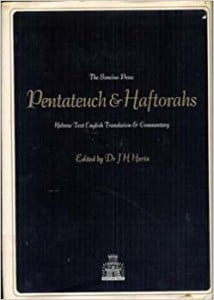
Commentary is from our MUST READ/MUST OWN resource book, not available unfortunately as an ebook but hopefully hard copies are still being sold.  We got ours at a Messianic conference almost a decade ago.  The Rabbi-Editor J.H. Hertz did a great job of putting together commentaries from the best of Jewish minds, indeed what a treasure it is to have.  The title:  Pentateuch and Haftorahs, Soncino Press Edition. Translation is from EF/Everett Fox, The Five Books of Moses.Admin1.]


—————————————


THE TEN COMMANDMENTS [Exodus/Shemoth XX, 1-14]

Image from thecripplegate.com

The “Ten Words” or Commandments . . . or the Decalogue (from deka, ten, and logos, word), are supreme among the precepts of the Torah, both on account of their fundamental and far-reaching importance, and on account of the awe-inspiring manner in which they were revealed to the whole nation. Amid thunder and lightning and the sounding of the shofar, amid flames of the fire that enveloped the smoking mountain, a Majestic Voice pronounced the Words which from that day to this have been the guide of conduct to mankind.


That Revelation was the most remarkable event in the history of humanity.  It was the birth-hour of the Religion of the Spirit, which was destined in time to illumine the souls, and order the lives, of all the children of men.


The Decalogue is a sublime summary of human duties binding upon all mankind; a summary unequalled for simplicity, comprehensiveness and solemnity; a summary which bears divinity on its face, and cannot be antiquated as long as the world endures.  It is at the same time a Divine epitome of the fundamentals of Israel’s Creed and Life; and Jewish teachers, ancient and modern, have looked upon it as the fountain-head from which all Jewish truth and Jewish teaching could be derived.  ‘These Commandments are written on the walls of Synagogue and Church; they are the world’s laws for all time.  Never will their empire cease.  The prophetic cry is true: the word of our God shall stand forever’ (M. Joseph).


The most natural division of the Ten Commandments is into—

  • man’s duties towards God, the opening five commandments engraved on the First Table;
  • and man’s duties to his fellow-man, the five Commandments engraved on the Second Table.

————————————–

FIRST TABLE;  DUTIES TOWARDS GOD

FIRST COMMANDMENT:  RECOGNITION OF THE SOVEREIGNTY OF GOD

2.  I am the LORD thy God.  Jewish Tradition considers this verse as the first of the Ten Words, and deduces from it the positive precept, To believe in the existence of God.

I.  Heb. anochi.  The God adored by Judaism is not an impersonal Force, an ‘It’, whether spoken of as ‘Nature’ or “World-Reason’.  The God of Israel is the Source not only of power and life, but of consciousness, personality, moral purpose and ethical action (M. Joel).

thy God.  The emphasis is on thy.  He is the God not merely of the past generations, but of every individual soul in each generation.

who brought thee out of the land of Egypt.  God is not here designated, ‘Creator of heaven and earth’, Israel’s God is seen not merely in Nature but in the destinies of man.  He had revealed Himself to Israel in a great historic deed, the greatest in the life of any people: the God who saved Israel from slavery had a moral claim, as their Benefactor and Redeemer, on their gratitude and obedience.  ‘The foundation of Jewish life is not merely that there is only one God, but the conviction that this One, Only and True God, is my God, my sole Ruler and Guide in all that I do’ (Hirsch).  The first Commandment is thus an exhortation to acknowledge the sovereignty of God, lit. ‘the taking upon ourselves the yoke of he Kingdom of Heaven’).

The reference to the redemption from Egypt is of deepest significance, not only to the Israelites, but to all mankind.  The primal word of Israel’s Divine Message is the proclamation of God as the God of Freedom.  The recognition of God as the God of Freedom illumines the whole of human history for us.  In the light of this truth, history becomes one continuous Divine revelation of the gradual growth of freedom and justice on earth.

—————————————-

SECOND COMMANDMENT:  THE UNITY AND SPIRITUALITY OF GOD

Jewish Tradition (based on Talmud, Midrash and Targum) makes v. 3 the beginning of the Second Commandment.

3.  thou shalt have no other gods.  Because there are no other gods beside God.  The fundamental dogma of Israel’s religion, as of all higher religion, is the Unity of God.

before Me. Or, ‘besides Me’; or, ‘to my face’ (Koenig).  Nothing shall receive the worship due to Him.  Neither angels nor saintly men or women are to receive adoration as Divine beings; and the Jew is forbidden to pray to them.  This Commandment also forbids belief in evil spirits, witchcraft, and similar evil superstition.  Furthermore, he who believes in God will not put his trust in Chance or ‘luck’.

4.  a graven image. This verse forbids the worship of the One God in the wrong way.  Judaism alone, from the very beginning, taught that God was a Spirit; and made it an unpardonable sin to worship God under any external form that human hands can fashion.  No doubt this law hindered the free development of plastic arts in ancient Israel; but it was of incalculable importance for the purity of the conception of God.

nor any manner of likeness. Nor is He to be worshipped under any image, though such be not graven, which the human mind can conceive.

in heaven above. i.e. of the heavenly bodies; such as the ancestors of the Hebrews in Babylonia adored.

in the earth beneath,e.g. of animal, such as the Israelites saw the Egyptians worshipping.

in the water under the earth. The monsters of the deep.

5.  a jealous God.  The Heb. root for ‘jealous’,  kanna, designates the just indignation of one injured; used here of the all-requiting righteousness of God.  God desires to be all in all to His children, and claims an exclusive right to their love and obedience.  He hates cruelty and unrighteousness, and loathes impurity and vice; and, and even as another is jealous of all evil influences that rule her children, He is jealous when, instead of purity and righteousness, it is idolatry and unholiness that command their heart-allegiance.  It is, of course, evident that terms like ‘jealousy’ or ‘zeal’ are applied to God in an anthropomorphic sense.  It is also evident that this jealousy of God is of the very essence of His holiness.  Outside Israel, the ancients believed that the more gods the better; the richer the pantheon of a people, the greater its power.  It is because the heathen deities were free from ‘jealousy’ and, therefore, tolerant of one another and all their abominations, that heathenism was spiritually so degrading and morally so devastating.

visiting the iniquity of the fathers upon the children.  The Torah does not teach here or elsewhere that the sins of the guilty fathers shall be visited upon their innocent children.  The soul that sinneth it shall die proclaims the Prophet Ezekiel.  And in the administration of justice by the state, the Torah distinctly lays down, ‘The fathers shall not be put to death for the children, neither shall the children be put to death for the fathers; every man shall be put to death for his own sin’ (Deut. XXIV,16).  However, human experience all too plainly teaches the oral interdependence of parents and children.  The bad example set by a father frequently corrupts those that come after him.  His most dreadful bequest to his children is not a liability to punishment, but a liability to the commission of fresh offences.  In every parent, therefore, the love of God, as a restraining power from evil actions, should be reinforced by love for his children; that they should not inherit the tendency to commit, and suffer the consequences of, his transgressions.

Another translation is, ‘remembering the sins of the fathers unto the children’; i.e. God remembers the sins of the fathers when about to punish the children.  He distinguishes between the moral responsibility which falls exclusively upon the sinful parents, and the natural consequences and predisposition to sin, inherited by the descendants.  He takes into account the evil environment and influence.  He therefore tempers justice with mercy; and He does so to the third and fourth generation.

 of them that hate Me.  The Rabbis refer these words to the children.  The sins of the fathers will be visited upon them, only if they do transgress God’s commandments.

6.  unto the thousandth generation. Contrast the narrow limits, three or four generations, within which the sin is visited, with the thousand generation that His mercy is shown to those who love God and keep His commandments.  ‘History and experience alike teach how often, and under what varied conditions, it happens that the misdeeds of a parent result in bitter consequence for the children.  In His providence, the beneficent consequences of a life of goodness extend indefinitely further than the retribution which is the penalty of persistence in sin’ (Driver).

that love Me. Note the verb ‘love’, used to designate the right attitude to God: “Thou shalt love the LORD thy God with all thy heart, with all thy soul, and with all thy might” (Deut. VI,5).  Love of God is the essence of Judaism and from love of God springs obedience to His will.

————————————————

THIRD COMMANDMENT:  AGAINST PERJURY AND PROFANE SWEARING

The Second Commandment lays down the duty of worshipping God alone, and worshipping Him in spirit and not through images.  The Third Commandment forbids us to dishonour God by invoking His Name to attest what is untrue, or by joining His Name to anything frivolous or insincere.

7.  take the name of the LORD.  Upon the lips; i.e. to utter.

in vain. lit. ‘for vanity’, or ‘falsehood’; for anything that is unreal or groundless.

God is holy and His Name is holy.  His Name, therefore, must not be used profanely to testify to anything that is untrue, insincere or empty.  We are to swear by God’s Name, only when we are fully convinced of the truth of our declaration, and then only when we are required to do so in a Court of law. This verse, according to the Rabbis, forbids using the Name of God in false oaths (e.g. that wood is stone); as well as using the Name of God in vain and flippant oaths (e.g. that stone is stone).  God’s Name is, moreover, not to be uttered unnecessarily in common conversation.

will not hold him guiltless. i.e. will not leave him unpunished.  Perjury is an unpardonable offence, which, unless repressed by severest penalties, would destroy human society.  The Rabbis ordained a special solemn warning to be administered to anyone to take an oath in a Court of law.  In various  ages, saintly men have avoided swearing altogether.  The Essenes, a Jewish Sect in the days of the Second Temple, held that ‘he who cannot be believed without swearing is already condemned’.  ‘Let thy yea be yea, and thy nay, nay,’ says the Talmud.

——————————————–

FOURTH COMMANDMENT;  THE SABBATH

8.  remember. The use of the word ‘remember’ may indicate that the institution was well known to the Israelites, long before their manna experiences; that it was a treasured and sacred institution inherited from the days of the Patriarchs.  The Rabbis however explain  “Remember the Sabbath day” to mean,

  • Bear it in mind and prepare for its advent;
  • think of it day by day,
  • and speak of its holiness and sanctifying influence.

They instituted the Kiddush prayer,

  • praising God for the gift of the Sabbath,
  • to celebrate its coming in;
  • and theHavdalah blessing,
    • praising God for the distinction between the Sabbath and the six weekdays,
    • to mark its going out.

sabbath day. Heb. shabbath, from a root meaning desisting from work.

to keep it holy.  To treat it as a day unprofaned by workaday purposes.  In addition to being a day of rest, the Sabbath is to be ‘a holy day, set apart for the building up of the spiritual element in man’ (Philo). Religious worship and religious instruction–the renewal of man’s spiritual life in God–form an essential part of Sabbath observance.  We therefore sanctify the Sabbath by as special Sabbath liturgy, by statutory Lessons from the Torah and the Prophets, and by attention to discourse and instruction by religious teachers.  The Sabbath has thus proved the great educator of Israel in the highest education of all; namely the laws governing human conduct.  The effect of these Sabbath prayers and Synagogue homilies upon the Jewish people has been incalculable.  Leopold Zunz, the founder of the New Jewish Learning, has shown that almost the whole of Israel’s inner history since the close of bible times can be traced in following the development of these Sabbath discourses on the Torah.  Sabbath worship is still the chief bond which unites Jews into a religious Brotherhood.   Neglect of such worship injures the spiritual life of both the individual and the community.

9.  shalt thou labour. Work during the six days of the week is as essential to man’s welfare as is the rest on the seventh.  No man or woman, howsoever rich, is freed from the obligation of doing some work, say the Rabbis, as idleness invariably leads to evil thoughts and evil deeds.  The proportion of one day’s rest in seven has been justified by the experience of the last 3000 years.  Physical health suffers without such relief.  The first French Republic rejected the one day in seven, and ordained a rest of one day in ten.  The experiment was a complete failure.

work. Heb., that which man produces by his thought, effort and will.

10.  a sabbath unto the LORD.  A day especially devoted to God.

thou shalt not do any manner of work.  Scripture does not give a list of labours forbidden on Sabbath; but it incidentally mentions field-labour, buying and selling, travelling, cooking, etc., as forbidden work.  The Mishna enumerates under 39 different heads all such acts as are in Jewish Law defined as ‘work’, and therefore not to be performed on the Sabbath day; such as ploughing, reaping, carrying loads, kindling a fire, writing, sewing, etc.  Certain other things cannot be brought under any  of these 39 Categories are also prohibited, because they lead to a breach of Sabbath laws as well as all acts that would tend to change the Sabbath into an ordinary day.  Whatever we are not allowed to do ourselves, we must not have done for us by a fellow-Jew, even by one who is a Sabbath-breaker.  All these Sabbath laws, however, are suspended as soon as there is the least danger to human life; say the Rabbis.  The Commandments of God are to promote life and well-being, a principle based on Lev. XVIII,5, ‘and these are the precepts of the LORD by which ye shall live.

thou.The head of the house, responsible for all that dwell therein.

manservant . . . maidservant. Or, ‘bondman’ . . . ‘bondmaid”; Deut. V,14.  Not only the children but  also the servants, whether Israelite or heathen, nay even the beasts of burden, are to share in the rest of the Sabbath day. ‘The Sabbath is a boundless boon for mankind and the greatest wonder of religion.  Nothing can appear more simple than this institution, to rest on the seventh day after six days of work.  And yet no legislator in the world hit upon this idea!  To the Greeks and the Romans it was an object of derision, a superstitious usage.  But it has removed with one stroke the contrast between slaves who must labour incessantly, and their masters who may celebrate continuously’ (B. Jacob).

 thy cattle. It is one of the glories of Judaism that, thousands of years before anyone else, it so fully recognized our duties to the dumb friends and helpers of man.

thy stranger.  The non-Israelite, who agrees to keep the seven Noachic precepts; though the Sabbath was not included in these precepts, he too is to enjoy the Sabbath rest for his own sake as a human being.


within thy gates.  Within the borders of the town.

11.  rested.  By keeping the Sabbath, the Rabbis tell us, we testify to our belief in God as the Creator of the Universe; in a God who is not identical with Nature, but is a free Personality, the creator and ruler of Nature.  The Talmudic mystics tell that when the heavens and earth were being called into existence, matter was getting out of hand, and the Divine Voice had to resound, ‘Enough! So far and no further!’  Man, made in the image of God, has been endowed by Him with the power of creating. But in his little universe, too, matter is constantly getting out of hand, threatening to overwhelm and crush out the soul.  By means of the Sabbath, called ‘a memorial to Creation,’ we are endowed with the Divine power of saying ‘Enough!’ to all rebellious claims of our environment, and are reminded of our potential victory over all material forces that would drag us down.

blessed the sabbath.  Made it a day of blessing to those who observe it.  The Sabbath was something quite new, which had never before existed in any nation or in any religion–a standing reminder that man can emancipate himself from the slavery of his worldly cares; that man was made for spiritual freedom, peace and joy (Ewald).  ‘The Sabbath is one of the glories of our humanity.  For if to labour is noble, of our own free will to pause in that labour which may lead to success, to money, to fame is nobler still.  To dedicate one day a week to rest and to God, this is the prerogative and the privilege of man alone’ (C.G. Montefiore).

and hallowed it.  Endowed it with sanctifying powers.  The sanctity of the Sabbath is seen in its traces upon the Jewish soul.  Isaiah speaks of the Sabbath as ‘a delight’; and the Liturgy describes Sabbath rest as ‘voluntary and congenial, happy and cheerful.’  ‘The Sabbath planted a heaven in  every Jewish home, filling it with long-expected and blissfully-greeted peace; making each home a sanctuary, the father a priest, and the mother who lights the Sabbath candles an angel of light’ (B. Jacob).  The Sabbath banishes care and toil, grief and sorrow.  All fasting (except on the Day of Atonement, which as the Sabbath of Sabbaths transcends this rule of the ordinary Sabbath) is forbidden; and all mourning is suspended on the Sabbath day.  Each of the three Sabbath meals is an obligatory religious act and is in the olden Jewish home accompanied by Table Songs.  The spiritual effect of the Sabbath is termed by the Rabbis the ‘extra soul’, which the Israelite enjoys on that day.

Ignorant and unsympathetic critics condemn the Rabbinic Sabbath-laws with their numberless  minutiae as an intolerable ‘burden’.  These restrictions justify themselves in that the Jew who actually and strictly obeys these injunctions and only such a Jew, has a Sabbath.  And in regard to the alleged formalism of all these Sabbath laws, a German Protestant theologian of anti-Semitic tendencies has recently confessed:  ‘Anyone who has had the opportunity of knowing in our own day the inner life of Jewish families that observe the Law of the fathers with sincere piety and in all strictness, will have been astonished at the wealth of joyfulness, gratitude and sunshine, undreamt of by the outsider, which the Law animates in the Jewish home.  The whole household rejoices on the Sabbath, which they celebrate with rare satisfaction not only as the day of rest, but rather as the day of rejoicing.  Jewish prayers term the Sabbath a “joy of the soul” to him who hallows it; he “enjoys the abundance of Thy goodness”. Such expressions are not mere words; they are the outcome of pure and genuine happiness and enthusiasm (Kittel).

 Without the observance of the Sabbath, of the olden Sabbath, of the Sabbath as perfected by the Rabbis, the whole of Jewish life would in time disappear.

——————————————

FIFTH COMMANDMENT: HONOUR OF PARENTS

This Commandment follows the Sabbath command because the Sabbath is the source and the guarrantor of the family life; and it is among the Commandments engraved on the First tablet, the laws of piety  towards God, because parents stand in the place of God, so far as their children are concerned.  Elsewhere in Scripture, the duty to one’s parents stands likewise next to the duties towards God (Lev. XIX,3.)

12. honour thy father and thy mother. By showing them respect, obedience and love.  Each parent alike is entitled to these.  For although ‘father’ is here mentioned first, in Lev. XIX,3 we read, ‘each one shall fear (i.e. reverence) his mother and his father.’ And this obligation extends beyond the grave.  The child must revere the memory of the departed parent in act and feeling.  Respect to parents is among the primary human duties; and no excellence can atone for the lack of such respect.  Only in cases of extreme rarity (e.g. where godless parents would guide children towards crime) can disobedience be justified.  Proper respect to parents may at times involve immeasurable hardship; yet the duty remains.  Shem and Japhet throw the mantle of charity over their father’s shame: only an unnatural child gloats over a parent’s disgrace or dishonour.  The greatest achievement open to parents is to be ever fully worthy of their children’s reverence and trust and love.

that thy days may be long. i.e. the honouring of one’s parents will be rewarded by happiness and blessing.  This is not always seen in the life of the individual; but the Commandment is addressed to the individual as a member of society, as the child of a people.  The home is infinitely more important to a people than the schools, the professions or its political life; and filial respect is the ground of national permanence and prosperity.  If a nation thinks of its past with contempt, it may well contemplate its future with despair; it perishes through moral suicide.

No religious document has exercised a greater influence on the moral and social life of man than the Divine Proclamation of Human Duty, known as the Decalogue. These few brief commands–only 120 Hebrew words in all–cover the whole sphere of conduct, not only of outer actions, but also of the secret thoughts of the heart.  In simple, unforgettable form, this unique code of codes lays down the fundamental rules of Worship and of Right for all time and for all men.