“Superstar” – Confessions of an Idolater

[We are into the Resurrection Season so here’s a resurrected post from t 2012, reposted every Holy Week celebration.  You’ll understand why.—Admin1.]

——————————–


JCS – “Jesus Christ Superstar”

 
Image from Pinterest

Image from Pinterest

Andrew Lloyd Webber is such a musical genius whose contribution to musical theater includes Evita, Cats, The Phantom of the Opera, and two biblically-based musicals Joseph and the Amazing Technicolor Dreamcoat and his classic rock opera Jesus Christ Superstar.


When JCS first appeared on broadway in 1970 and immediately became a huge success particularly among the ‘flower children’, I refused to see its local college campus production because as a closed-minded Catholic then, I thought it was sacrilegious to turn the crucified Savior into a rock-singing cult hero surrounded by hippies.  I hadn’t yet realized how effective it was to resort to evangelism via entertainment; I mean, if you can’t convince the masses to go to mass, you can bring your mass to the masses; much like what they’re doing at the malls today, making it convenient to attend mass while ‘malling.’ Better yet, if you can’t keep your congregants from falling asleep at church service, liven up your service with audio-visual aids—dancers, singers, bands–and just watch the masses flock to your revivals, or end up with a televised service so your flock can enjoy the comforts of home and feel they have “churched” on Sunday!


About 1973 the broadway musical was immortalized on film and was directed by Norman Jewison (often mistaken for being Jewish because of his surname although he was a Protestant and a Canadian).


By 1975 when I was fast deteriorating into a nominal Catholic and happened to be a graduate student in fine arts, majoring in dance at SMU in Dallas, TX, JCS was shown in the local movie theater.  I went to see it initially to watch the choreography; then I went back to rewatch the choreography, the 2nd time around I found myself listening to the rock music; went back a 3rd time and started listening intently to the lyrics; but truth to tell, the real reason I kept going back was because I was smitten with the actor-singer who played Jesus—Ted Neeley.  I fell in love with Jesus because of Ted Neeley, or perhaps I fell in love with Ted Neeley who I imagined would have been exactly what Jesus would have looked like.  I left my catholic faith and became an evangelical Christian after that and was in love with Ted Neeley’s Jesus eversince.


Little did I realize I was an idolater! I praised the Lord for bringing Jesus into my life through Ted Neeley. Each time the movie would be resurrected for showing on “Holy Week” or Easter, I would go see my idol, never missing a year.


Come 1996, I was a mother of three teenage sons who I wanted to expose to musical theater. I figured their best introduction would be what else, my favorite rock opera! Ipods and portable CD players were already affordable and my boys easily took to JCS in eardrum-splitting volume through earphones.  It so happened during a family vacation visit to my husband’s kin in North Carolina, the summer production of JCS would be shown in Greensboro, NC; Ted Neeley was the star, so off I went with sons in tow.  We went backstage after the performance, Ted always met with his fans and gave all the adoring female fans (of differing ages) a hug. I got mine plus an autographed souvenir program.


TedHugNeneFast forward to June 2007, Ted Neeley was to make his farewell JCS performance in San Francisco, CA.  By then, my grown-up sons had been exposed to a lot of broadway musicals and did develop the same passion for live theater as I had, so since we lived nearby in wine country, Santa Rosa, CA at the time, we all went to see the show one last time. [I know, this is beginning to sound like a tour of the U.S. of A.; in fact I was certain at the time there was a Divine Hand arranging all these “coincidences” in my spiritual wandering].  Of course we did line up to see Ted again backstage. I had a chance to tell him how many times I had seen his movie, how I saw him perform in Greensboro with my sons; we all had our picture taken with him and of course, I got my looonnnnnng linnnnngerinnnnnng hug (picture proof frozen in time).  By then, we both had obviously aged; he didn’t sing as well as he did in his movie debut (vocal chords about to retire), but had Jesus lived to age 60-something, he’d have grown older just as handsomely as my stage matinee idol.  It felt like I’ve had a 4-decade albeit one-sided love affair with this actor who best personalized and humanized Jesus for me. 


What is the point of this confession?


As an evangelical Christian, I recounted this as my testimony many a time, that I came to love Jesus as my Lord and Savior because of Ted Neeley through whom I gradually started seeing a very human Jesus; his divinity was never a problem for me, his humanity was.  


Andrew Lloyd Webber had depicted him as a puzzled and reluctant messiah, one who didn’t understand his divine mission, who enjoyed the attention of his followers and adoring crowds but felt overwhelmed by lepers and the more difficult part of his ministry (all the demands for miracles on the spot!).  


When he eventually gives in to the Father’s will, the lyricist gives him the striking line “alright, I’ll die, watch me die . . . take me now, before I change my mind.”  


Image from www.steelopus.com

Image from www.steelopus.com

Webber explained in one of his interviews that JCS was not so much about Jesus as it was about Judas being used by God to fulfill a betrayer’s role, like a pawn in the hands of the divine puppeteer.  I was mystified at how man makes choices and yet plays right into the drama scripted by God Himself but I clearly understood why a God who becomes human is more appealing to us, because we can more easily relate to him when he looks like one of us and might even be as cute and can sing like Ted Neeley.   We lovestruck women age only on the outside; as my own mother confessed when she was pushing 80, she had always felt 26 and had crushes through each decade of her life on Elvis Presley, Bruce Lee, Neil Diamond and Edmund Purdom [lip-sync-ing Mario Lanza’s voice] in the Student Prince, what a strange lineup! 


What is even more strange which I didn’t expect is this:  when I finally discovered the historical Jesus was only human and not divine, I suddenly got over Ted Neeley and I doubt I will go to another showing of JCS!


Now the tables have turned . . . I don’t have a problem with Jesus’ humanity, it’s his divinity I no longer accept.


The lyrics of JCS (placed in the mouth of Judas the betrayer who did make it to HIPPIE- HEAVEN) make more sense to me now; no doubt Andrew Lloyd Webber was way ahead of me in spiritual discernment or skepticism or plain common sense:


“Jesus Christ, Jesus Christ, who are you, what have you sacrificed?
Jesus Christ Superstar, Do you think you’re what they say you are?” 


Sig-4_16colors

logo

Lost in Translation

Image from productivechristian.com

Image from productivechristian.com

[First posted January 23, 2014, part of a series about the problem with biblical translations and Christian translations of the Hebrew Scriptures in their version renamed “Old Testament”.  In the postscript, sequels are listed if you care to read the whole series.—Admin1.]


———————


Languages are said to mirror the character of the peoples who speak them . . . .” – P.A. Bien, translator of Nikos Kazantzakis’ The Last Temptation of Christ.


He is reflecting not only his own difficulty in translating the original Greek language of the said novel into English, but also the experience of Kazantzakis himself in translating the great works of antiquity (Homer’s Odyssey and Dante Alighieri’s La Divina Comedia) into English. Bien explains “demotic Greek shows us a race to whom imagination and audacity come before precision and efficiency.” Presumably, demotic Greek is what New Testament teachers call Koine or the Greek of the marketplace, the Greek spoken by ordinary people, used in everyday speech and writing. Lucky for Bien, he only has to translate once; this is not so in the case of translators of the Bible.


Bible publishers continue to issue updated editions: from ASB to NASB, KJV to NKJV, NIV, NRSV. After updating to a “new,” in the case of the KJV, it is said the publishers realized their “new” did not sit well with majority of KJV readers plus, the new was not a better translation and consequently went through further revisions.


If bible publishers keep updating (which is good), at some point they will exhaust the comparative and superlative adjectives and resort to a totally different marketing label. Let us not suspect all their efforts are simply part of normal business tactics, as in hi-tech toys in the market that keep upgrading to the newer version, convincing the consumer to suddenly become discontented with his perfectly working simple cellphone or computer and get hooked, believe the line, and sink their hard-earned money into a gadget only the truly hi-tech can use to its full working capability.


Image from productivechristian.com

Image from productivechristian.com

Let us think nothing of hidden motives, bible translators really do keep upgrading because that is the nature of language, that translations do not and can never reflect the original 100% and there will never be a perfect translation. With new discoveries in biblical archeology, it is only natural to keep up with new information. There was a time our translations were 3-times divorced from the original Hebrew, what does that mean? The Hebrew TNK was translated into the Greek Septuagint which was translated to the Latin Vulgate on which the English translations were based. The updated versions have gone back to the original Hebrew. But just think about how truth can change from translation to translation, much like the whispering game or actual rumor-mongering, where the end-message differs from the beginning message. If this could happen in current or on-the-spot transmission of information among people who speak the same language, think of what has transpired through centuries or millennia from the original TNK. And translating from Hebrew to Greek is not a mere matter of linguistics but of culture and mores and ethics and national character; indeed Bien said it right, “Languages are said to mirror the character of the peoples who speak them . . . .


For the curious, here’s an interesting link [www.apbrown2.net/web/TranslationComparisonChart.htm] which gives you a word-for-word/thought-for-thought chart of bible translations, the differences in each, sample verses, etc. Publishers have even issued bibles with 4 versions side by side.


An interesting bible is the red-letter edition where the words of Jesus are printed in red; if you have such a bible, be curious enough to check if there are any red-lettered texts in the ‘Old’ testament portion; if there are none, then what conclusion should you reach? If yours does happen to have it, leave a note in the reader’s reply box below, as we would like to know how far Trinitarians have gone into claiming the very words of YHWH as that of the Jesus of Christianity. As far as we know, this has not been done.


Only bilinguals or people who can speak multiple languages can relate to translators because definitely, much is lost in translation. That is how we feel as truth-seekers journeying through the unfamiliar territory of the Hebrew Scriptures, dependent on translators to interpret the map (text) for us.


Why is it so? Aside from obvious differences in word meanings plus many synonyms to choose from, there is frame of reference —

  • first of the biblical figures,
  • then of the modern day Hebrew (or Christian) translator,
  • and then our own.


All that and more add to the haziness in understanding because some words have different connotations when used not only in different time frames but also in different cultures. For example: if you use the word “salvage” in the USA, it means ‘save whatever you can’; if you use it in the Philippines, it’s criminal lingo for ‘kill off the s.o.b’, total opposites, just like the word “cleave” (stick to and sever). These days you can no longer say ‘I’m happy and gay’ if you’re not in fact . . . you know.


Context greatly helps to clear up the foggiest idea but the best resort is of course to learn Hebrew. There are Jewish websites that offer online courses in Biblical Hebrew. Ultimately, we simply have to trust that The Divine Revelator Who is most interested in getting His message across gets it through to receptive hearts and open minds despite the limitations of human languages.


This particular series “Lost in Translation” will be a continuing feature on this website, dealing with specific texts in the Christian Old Testament that appear to have been mistranslated from the original Hebrew text. (For this, we depend on information provided by anti-missionary Jewish websites which have already done extensive research and best explain the meaning of the original texts under scrutiny.) We originally presumed these texts were mistranslated innocently, but some appear to be intentionally translated to turn them into messianic prooftexts.


NSB@S6K

logo

Postscript: You might want to continue reading the sequels to this first post:


And, guess what?


YET a new translation has come out: Robert Alter’s The Five Books of Moses with Commentary; and of course, we will feature his INTRODUCTION explaining why all the previous translations and versions have been faulty. He considers only one other translation of the TORAH/Pentateuch/Five Books of Moses as worthy and closest to its original Hebrew—Everett Fox’s 1995 version of the TORAH which we have a copy of in our library, so we will revisit that and feature here as well.


Obsessive as we are in getting to the best and most accurate English translation of the TORAH, would that we have many more years in our lifetime to explore all these in our effort to get a handle on the original Hebrew text! You might say ‘wouldn’t it be better to just learn biblical Hebrew’? . . . oh well, yes, if we were in the spring of our lifetime instead of winter, dig?


The Messiahs – 4 – Restoring the Biblical Balance

[First posted 2013, reposted during the Christian Lenten season in 2015;  always a timely reminder about  Jewish expectations for the Jewish messiah that signals the ‘end of the age’.


James D. Tabor in his book Restoring Abrahamic Faith clarifies:  

“What we need to recover is some balance:

Image from mymorningmeditations.com

The prime emphasis of the Scriptures is upon the return of YHVH Himself as King of Kings and Lord of Lords, the only ultimate Savior, Redeemer, and Judge.  

This is not to be confused with the role of the Messiahs as His chief agents.

The doctrine of the Messiahs has a place within this general scheme of things, but it has been terribly distorted and grossly overemphasized.”


 If you have not read the related articles about the ‘messiah’ according to the Hebrew Scriptures, here are the posts:

Continuing Chapter 4 of Tabor’s timely wake-up call —– edited, condensed, reformatted. We can’t say it enough, this is a book worth reading many times over, so own one!  The author has a website from which you could order your copies; we got ours on a deal of two for the price of one 3 years ago.  We recommended it for reading to our former fellow-Messianics and their Leaders only to find out it was labeled ‘demonic’ and banned for resource reading.  Why?  Only way to find out is read this and related posts, and read the whole book! —Admin1.]


——————————————–


image from genesis2000.org

image from genesis2000.org

A vital aspect of restoring ABRAHAMIC FAITH is to recover a balanced view of eschatology, that is, the Biblical teachings about the “End of the Age.”  The first step is to thoroughly grasp the essential teachings and emphasis of the Hebrew Prophets.


The teaching about the Davidic Messiah is a key aspect of the Biblical revelation.  It is surely one of the fundamentals of the Faith.  However, both Christians and Jews need to return to the core texts of the Hebrew Prophets, allowing these to be the foundation of messianic faith.  Both groups, often in reaction to one another,  have developed speculative lines of thinking which run far afield of what is written in the Prophets.


What we need to recover is some balance.  The prime emphasis of the Scriptures is upon the return of YHVH Himself as King of Kings and Lord of Lords, the only ultimate Savior, Redeemer, and Judge.  This is not to be confused with the role of the Messiahs as His chief agents. An essential part of the Faith is the link between our own direct, individual, relationship with YHVH God and a deep longing for His coming Kingdom and Presence.  The doctrine of the Messiahs has a place within this general scheme of things, but it has been terribly distorted and grossly overemphasized.

Since the Hebrew Prophets primarily focus upon the Return of YHVH God Himself, in power and manifest Glory, a better term to focus upon might be the Moshia, or Savior,  rather than the Mashiach or Messiah.  Notice Isaiah 63:8-9 in this regard:  


For He [YHVH] said, Surely they are My people, children that will not lie; so He [YHVH] became for them a Savior (moshiah).  In all their affliction He was afflicted [or He did not afflict], and the Messenger (Mal’ak) of His Face saved) them.


It is clear that YHVH is the Savior here, rather than any human “Messiah” figure—yet YHVH acts through the instrument of His Mal’ak/Messenger.  If we are expecting a repeat of the Exodus type of deliverance, which the Prophets certainly foretell (see Micah 7:15), then we should long for the manifestation of YHVH Himself, along with His anointed ones as agents or messengers.  The texts I have set forth in this study can serve as the basis for the restoration of a Biblical balance regarding eschatology.  If we are going to be firm about staying with the core of messianic teaching, spoken of consistently in all the Prophets, we will resist these later Jewish and Christian speculative traditions.  They inevitably take one in non-Biblical directions and are the source of unnecessary controversies.  If we do not find our doctrines clearly set forth in TORAH and Prophets, then we are on shaky ground indeed.  In formulating our doctrine of the Messiahs we need a concentrated focus on the basic texts surveyed in this chapter, and most of all we need a restored balance and emphasis on the Second Coming of our Only God and Savior—YHVH of Hosts.


Second Temple Jewish Messianism


The earliest “Christians” were just that—Messianists–to the core.  Like those of the Dead Sea community at Qumran, they focused on “preparing the WAY of YHVH in the wilderness” (Isaiah 40:3).  They were an apocalyptic, messianic, movement within Judaism.  However, their great distinctive feature was belief in a suffering  Messiah who had actually died for the sins of the people and would return in glory at a later time in history.  The Dead Sea community revered their Teacher of Righteousness, who had been persecuted and possibly killed by a wicked High Priest in Jerusalem.  There is also a newly released pre-Christian Dead Sea inscription that possibly mentions a slain Messiah, who is raised after three days.


[Footnote: See Israel Knohl, “By Three Days, Live: Messiahs, Resurrection, and Ascent to Heaven in Hason Gabriel,” Journal of Religion (2008) 88:147-158, as well as the discussion and links at jesusdynasty.com/blog.  For another related text see James Tabor, “A Pierced or Piercing Messiah,” Biblical Archeology Review, November/December 1992, pp. 58-59).


In later Jewish tradition one finds the doctrine of two messiahs–one, from the tribe of Joseph (Messiah ben Yosef), who appears first and is slain in the great battle for Jerusalem in the last days, while the other (Messiah ben David), comes subsequently and rules triumphantly over Israel and the nations.


[Footnote: For a collection of texts see Raphael Patai, The Messiah Texts (Detroit: Wayne State University Press, 1979), pp. 104-121.  There seems to be little Biblical support for this rabbinic idea of a Messiah from the tribe of Joseph, who is to suffer and die in a battle just before the arrival of the Davidic King.  It was one way the Rabbis dealt with the two aspects of the messianic prophecies, that of his suffering and his triumph, splitting him into two figures.  However, this was not uniformly the case, as the rabbinic discussion in the Talmud demonstrates (b. Sanhedrin 98a).  There the Rabbis maintain that the Davidic Messiah will come either in power “with the clouds of heaven” or in humility, riding upon an ass, depending on the merits of Israel at the time—yet they clearly have a single figure in mind.]


Some scholars maintain that the Nazarenes only developed the idea of the suffering and dying Messiah in reaction to the unexpected death of Jesus, and then subsequently wrote these themes back into the Gospel texts as part of the so-called “Messianic secret.”  Others maintain that Jesus himself anticipated, on the basis of Scriptures such as Isaiah 53 and Psalm 22, his own suffering and death.


[See Tabor, The Jesus Dynasty, chapter 10, as well as the article “Messianic Self-Identity” at jamesdtabor.org.  Hugh Schonfield has made a strong case for the latter position in his controversial book The Passover Plot (1965).  Although his work is popular and speculative it contains some valuable background material and is well worth reading.]


It is possible that the “Seventy Weeks” prophecy of Daniel 9 might also have had some influence on this direction of thinking.  It speaks of a 490 year period toward the end of which an “anointed prince” (maschiach nagid) will be “cut off,” and the city of Jerusalem sometime thereafter destroyed and made desolate.  We know from the Jubilee chronology preserved in the Dead Sea Scrolls that this 490 year period could be calculated in such a way as to stretch into the early first century C.E.  Such a direct reference to a messiah being killed, followed by the destruction of Jerusalem, must have deeply impressed those followers of Jesus who lived through the last half of the century.


From the standpoint of the Hebrew bible, however, the main problem with the idea of a suffering or slain Messiah is none of the texts that mention the reign of the Davidic Messiah even hint at any such thing.  There is an apparent reference to one from the “house of David” being “pierced” in Zechariah 12:10-14, but it is unclear as to whether the author has in mind the Branch figure so strongly highlighted by Isaiah, Jeremiah, and earlier in Zechariah. As we have seen, the Hebrew Prophets, without exception, speak of the rule, power, and successful mission of the Davidic “Branch” figure in bringing about the rule of God to this planet.


However, in the latter part of the book of Isaiah (40:53) one does find the idea of the suffering and death of a “righteous Servant” of YHVH.  Indeed, there are at least ten separate contexts in these chapters of Isaiah that mention the “Servant of YHVH.”  The problem is, this “Servant” figure is never specifically identified with the Davidic Messiah, even though, elsewhere, Isaiah says more about the Messiah than any other prophet.  Is there any justification for bringing together these two concepts—that of the Servant and the Messiah?


Image from outreachjudaism.org

Image from outreachjudaism.org

Most of these ten references to the Servant in Isaiah clearly refer to the people of Israel, personified as YHVH’s instrument or agent for bringing TORAH to the nations.  Isaiah 41:8-9, the very first text, clearly speaks of the nation of Israel as a whole: 


But you, Israel, are My servant, Jacob whom I have chosen, descendant of Abraham My friend.  You whom I have taken from the ends of the earth, and called from its remotest part, and said to you, “You are My servant, I have chosen you and not rejected you.”


Other similar references to the nation of Israel as the Servant are:  42:19; 43:10; 44:1-2; 45:4; 48:20.  However, at least four of these “Servant” texts seem to refer to a righteous remnant, or even a single extraordinary individual, within the larger nation of Israel (Isaiah 42;1-4; 49:1-6; 50:4-9; 52:13-53:12).  The idea seems to be that although Israel as a whole is the chosen Servant of YHVH, the nation has become blind and deaf and has not carried out its task and mission to bring light to the Gentiles (42:18-19).  However, there is a righteous remnant, a persecuted minority, a “Servant to the Servant nation,” so to speak, which through its suffering will bring redemption to the Nation, and thus finally to the world.  The task of this Servant is to bring Jacob back to Him . . . to raise up the Tribes of Jacob and to restore the preserved ones of Israel” (Isaiah 49:1-6).  In some texts this righteous, suffering, “Servant” is clearly seen as a group of zadiqim, cast out by the majority, who are bitterly persecuted and even slaughtered (see Isaiah 51:1-8; 65:13-15; 66:5). We find this idea throughout the Psalms and other places in the Prophets.  David writes, “For Your sake we are killed all the day long, we are counted as sheep to be slaughtered” (Psalm 44:22).  Jeremiah says of his own suffering, “But I was like a gentle lamb led to the slaughter” (11:19).  In Daniel this group is called the  maskilim, who are among the people but suffer by “sword, flame, and captivity” (Daniel 11:33; cf. 12:3-10).


This is clearly the overall meaning of texts like Isaiah 52:13-53:12, which speak of the horrible suffering of this Servant for the sins of the unfaithful majority (the many”).  He is slaughtered like an innocent lamb, he is slain for the sins of my people,” as the text plainly says (Isaiah 53:8).  The sacrificial blood of the righteous is shed because of the sins of a wicked generation.  Through such a death human life and history are redeemed and made worthy of continuation. In that sense, the blood of the righteous is also shed on behalf of the world.  It becomes an “offering for sin.”  We find this idea clearly expressed in Jewish texts that were written during and after the Maccabean period when many righteous martyrs were willing to suffer horribly and die for their TORAH faith.  One of the more striking passages is in 4 Maccabees:  


They [the martyrs] having become, as it were, a ransom for the sin of our nation.  And through the blood of those devout ones and their death as an atoning sacrifice, divine Providence preserved Israel that previously had been mistreated (4 Maccabees 17:21-22).


Of course none of these texts speak of the Messiah dying.  However, it is clear that the followers of the historical Jesus clearly saw his death in this light.  They identified him as both the suffering Servant of Isaiah and the Davidic Messiah, and they interpreted his death in the light of these ideas about martyrdom that were developing within Judaism at this time (Mark 10:45; 1 Peter 2:24). Through his blood, which acts as a ransom for sin and atoning sacrifice, those who turn to God in repentance are given forgiveness.


Yet what one might easily miss is that according to the Gospels, Jesus sees himself as well as his followers in this role.  Just as with the Maccabean martyrs, it is a wider concept that applies to all who follow this sacrificial way, and it is not understood to apply exclusively to a single individual.  When Jesus speaks of his own suffering, rejection, and death he issues a call to his disciples to likewise  “take up a cross and follow him” (Mark 8:31-35).  In other words, although he clearly sees himself as fulfilling the role of the “Suffering Servant” of Isaiah, he never limits this to himself.  Indeed, the text of Isaiah 53 itself supports such a reading.  There are a number of references in this chapter that are in the plural rather than the singular.  For example in verse 8-9 it should read literally:


 “For he was cut off from the land of the living, for the transgression of my people the stroke was upon them (lamo), for they made his grave with the wicked, and with a rich man in his deaths” (Hebrew is plural).  


According to this line of thought, the followers of the Servant become suffering servants, giving up their lives as a ransom “for the many,” thus hastening the redemption.


Jesus’ insight, likely based on these very sections of Isaiah, as well as passages in the Psalms about David’s suffering, was that in order for one to fulfill the exalted role of Davidic Messiah, one must first face the rejection, persecution, and even death, from an apostate majority who have given themselves over to power and corruption.  This was his main and constant emphasis to his disciples—in order to “sit on thrones” in the Kingdom of God, they must learn to be suffering servants in this age of wickedness (see Luke 22:28-30); Mark 9:35-45).  This is clearly the meaning of Isaiah 52:13-14


Behold My servant will prosper, he will be high and lifted up, and greatly exalted . . . so his appearance was marred more than any man.


The greatly exalted Servant, very much like King David, must first  have walked in the valley of the shadow of death, suffering abuse and rejection.  The logic here is compelling.  


Would YHVH choose to exalt to the highest position of rule and authority one who had never shared in the rejection and suffering of his righteous ones (zadiqim) who have been slaughtered like lambs throughout the ages?


 The Jewish sages support this idea.  The Rabbis say that the Davidic Messiah will be “loaded with good deeds and suffering as a mill is laden” (b. Sanhedrin 93b).  They also quote Isaiah 53:4“Surely he has borne our griefs and carried our sorrows:  yet we did esteem him a leper, smitten of God, and afflicted” and apply it to the Messiah to come (b. Sanhedrin 98b).


[Footnote: See the many related texts cited in Patai, The Messiah Texts, pp. 104-121.  In the Talmud Isaiah 53 is also applied to the sacrificial life and death of Moses (b. Sotah 14a) and to the suffering of the righteous in general (b. Berachot 5a).] 


It is unfortunate that Christian polemics against Jews, in misguided attempts to get them to “accept Jesus as their Savior,” have caused many Jews to shy away from any messianic reading of this prophecy of Isaiah (52:13-53:12).


  • The reference here is primarily to an individual, and the Gemara (later Rabbinic tradition) supports such an interpretation.
  • The Rabbis also clearly recognize and discuss the contrasting images of a Messiah who comes with the clouds of heaven (Daniel 7:14), and one who comes in humility, riding upon an ass (Zechariah 9:9). [Footnote:  b. Sanhedrin 98a-98b]
  • They also discuss the possibility that the Davidic Messiah can potentially be one who “comes from the dead,” that is, one who has lived in past generations, died and is raised up to fulfill his messianic role in the last days (b. Sanhedrin 98b).


 [Footnote:In Zohar Shemos 8b, as explained by the ARI (Isaac, Luria, the greatest of the Kabbalists, Sefer Hagilgulim 23), the man designated to be Messiah will lead a normal life in the world, learning and experiencing suffering, he will then have “the soul of the Messiah” bestowed upon him, will realize his role, and then be concealed, ascending to heaven.  Only afterwards will he be revealed openly to the Jewish people and the entire world.]


What is particularly valuable about Jewish messianic tradition is that it remains fluid.  The Rabbis preserve a number of varied and even contradictory opinions about the Messiahs, when they will come, and the precise nature of their roles.  This uncertainty and ambiguity is reflected in the Biblical texts themselves.


In contrast, the Christian views of the Messiah became hardened and inflexible, and subsequently lost much of the richness of the Biblical tradition. The whole subject of the Messiah—or more properly the Messiahs, who they are, when they are to appear, and precisely what they will accomplish—is one about which we should remain open and tolerant.  There are many diverse views and opinions held by devoted students of the Scriptures, and since the Biblical texts are not absolutely clear, one might do well to avoid dogmatism.  No one as all of these matters figured out, and I for one, find myself particularly skeptical of those who claim they do.

The great error of Christianity was to turn the Nazarene into a paganized God-Man, hardly even a human, who uniquely “suffers for the sins of the world.”  Instead of Jesus’ life becoming a call for others to do likewise, millions were told all they needed to do was “believe” that he died for their sins.  In the process, the solidarity of Jesus’ suffering, with all those righteous ones throughout the ages, who have suffered in faithfulness to YHVH, was severed.  That kind of reading of the “Servant” texts of Isaiah is restrictive and ends up undervaluing the blood and suffering of countless individuals who have died for righteousness sake down through the ages.


[Conclusion:  The Messiahs – 5 – A Heavenly Messiah?]

Looking for God in all the wrong places . . .

Image from Can Stock Photo

Image from Can Stock Photo

[This was first posted in 2012.   There are seekers like ourselves out there looking for answers to the same questions we had before we became Sinaites; we see where they’re from, how many posts they check out. We can’t convince one more soul right where we are and yet this website is drawing visitors from all over the globe. How consoling and heartwarming indeed!  The Rabbis and Jewish scholars trail-blazed for us in terms of explaining their Scriptures; we hope we are trail-blazing for others in terms of unlearning teachings from the New Testament and endeavoring to understand the Old Testament from the Gentile perspective.  We are outsiders looking in, so to speak.—Admin1]


————————


Toward the end of my super-lengthy article on Kazantzakis’ novel/film  — 

Tempted by ‘The Last Temptation of Christ’? Kazantzakis’ Jesus: “Salvation cannot be founded on lies.”

— where readers with little patience would have given up scrolling to the end, I wrote this lament which I’m resurrecting because it applies to the topic of this article:  


I am wondering

why it had never once occurred to this indefatigable God-seeker 

who travelled far and untiringly sought truth from various sources,

including the whole spectrum of intellectuals of his time,

from the irreligious to the fanatically religious,

to simply read the first part of his Christian Bible

which might have led him to the Hebrew Scriptures

which would have undoubtedly led him to discover

the One and Only True Saviour of mankind and creation

YHWH.

He would have discovered

how simple YHWH has made it for man to reach Him through—-

partaking of the Tree of Life, 

living the TORAH, 

and knowing Him

through His Sinai revelation . . . 

not the complicated theology

he had been taught and embraced.  

If he did investigate the Hebrew Scriptures

and yet chose to remain within his Christian beliefs,

then that is such a pity,

because for those of us who discovered this truth

even late in life,

we now know that despite adversities in this world,

life in YHWH 

is a joy and a celebration, 

the true Sabbath and Shalom,

not unnecessary suffering

and a lifetime of struggle

and wondering, wondering, wondering . . . .   


It is with great compassion for untiring seekers of God that we decided to start this website where we could hopefully connect with like-minded fellows who are in a quandary, at a crossroad of two contrasting belief systems:

  •  faith in the God of the Hebrew Scriptures,
  • or faith in the God of the Christian Scriptures.

They—God of OT and God of NT—- are not one and the same. 


We have just begun another year and look back to the start of our journey together.  Individually, each of us was on the same crossroad in 2010. It had taken us almost a year to investigate and research and restudy and resign from our former religious affiliations and then re-group!


In September of 2011, we organized into a loose community living in different places/countries, though our core group is based in Baguio City, Philippines.  We called ourselves “Sinai 6000,” explaining in our Creed what we now believe.


To reiterate what we had written in our Statement of Faith:


“Since the majority our affiliates are gentiles who were former Catholics, Evangelicals, Messianics, (and a few unaffiliated independent God-seekers), we felt that turning away from our former Christ-centered faith to turn to the God of Israel placed us in a neither-here-nor-there situation. Having left institutional religions, most of us were not inclined to get into yet another major religion such as Judaism, even as we embraced the God of Israel Whose Name is YHWH. We checked out gentile groups like the Noachides and web communities like the Synagogue Without Walls but did not fully agree with their credo.” 


We realized there was a need to fill the vacuum. Where could people like ourselves go? 


Since we started this website in February 2012, we have written about many articles, we quit counting how many.  This is our way of connecting with and redirecting those like ourselves who don’t know where to go or how to start over. Not expecting any internet-wayfarers to find their way here, we were surprised at the traffic we’ve seen coming our way since we joined the world-wide-web.


Is this website one of the right places to look for “God”?  It depends.


If you’re seeking the God whose is name is YHWH, yes you’ve come to the right place, this is one of the many good places to learn about Him:

  • YHWH is the God of our newfound faith.
  • YHWH is the Name we declare. 
  • YHWH’s unique revelation recorded in the TORAH of the Hebrew Scriptures is the TRUTH we live by.   

There are other places listed on our links you should visit and learn from; mostly Jewish websites, and a sprinkling of awakened gentiles like us.  Actually the Jewish links do a far better job of expounding on the Hebrew Scriptures than we because they’ve studied far longer than we have and have read it in Hebrew while we depend only on English translations.  


There is a young man who shows up when he’s off from working in a farm, for a one-on-one lesson on how to read the Bible. When he texts to make an appointment, he includes a particular biblical verse. It’s a good reminder from the writer of  Proverbs 28:9, presumably King Solomon, for all those seeking to know YHWH: 


[AST]  Proverbs 28: 

9. If one turns aside his ear from hearing the Torah,

his prayer, too, will be [considered] an abomination.”


Sig-4_16colors

 logo


An Inconvenient Truth: THE SABBATH of YHWH

[First posted May 11, 2015; for another excellent discussion of the Sabbath, here’s a post that features the chapter in another book we highly recommend, RESTORING ABRAHAMIC FAITH by James D. Tabor:  

The WAY of YHVH – 4 – Observing the Seventh Day Sabbath

Admin 1]

———————-

As Christians we never questioned Sunday as the “Sabbath,” the seventh day of rest; after all, it was the day Jesus resurrected.  He was Lord of the Sabbath who taught that the Sabbath was made for man and not man for the Sabbath.  He debated with the Jewish religious leaders about the burdens they placed on people because of their excessive fencing of the commandments to protect against the slightest violation.  As a Torah-observant Jew, Jesus would have taught the importance of sanctifying the Sabbath as well as the whole concept of rest in biblical symbolism.  


It is ironic that Sunday-observance resulted from Jesus’ having resurrected on a Sunday, according to tradition.  As taught, he finished his work of salvation by suffering, shedding blood by crucifixion, and releasing his spirit on Good Friday; then resting in the grave on Black Saturday [in keeping with Shabbat!], then leaving an empty tomb with his  resurrected body to show himself to his disciples on Sunday. Had he known the result would be a complete shift from Saturday to Sunday, if he was truly God in the person of the Son, he should have known better that his church would misconstrue the day he chose to return from the dead.  


The fact is most people are clueless when the real original Sabbath occurs.  The common thinking is — Monday is the first day of the week and the week culminates on Sunday, the official day-off.  Fortunately, some Christian sects got it right —the Seventh Day Adventists and the Jehovah Witnesses — but unfortunately as a result of Saturday-Sabbath plus a few other beliefs that deviated from the mainstream Christianity belief system, these two ended up in the category of “cults.”  Messianics, being conversant with Old Testament law, followed suit and ended up also being stereotyped as “cultic.”  Imagine, three sects which have recognized the original day on which the Creator Himself rested on creation week and adjusted their belief system—-are the ones regarded as falling short of qualifying as fully Christian like the Sunday-keepers.  


The Roman political-religious power that went anti-semitic in the first three centuries of Anno Domini  left its influence in our management of time, among other areas.  That persecuting idolatrous Roman power through its emperor left its unmistakable fingerprints all over what eventually became a major world religion.  SUN-day, the day for the pagan worship of the SUN-GOD became the SON-GOD’s worship day,  only one of those many unfortunate shifts from the “Old” Testament to the “New”. 


The Sabbath is not just a matter of which day to rest, or go to “church” . . . .discover its essence in the book recommended here.


————————————————————————


Image from amazon.com

Image from amazon.com

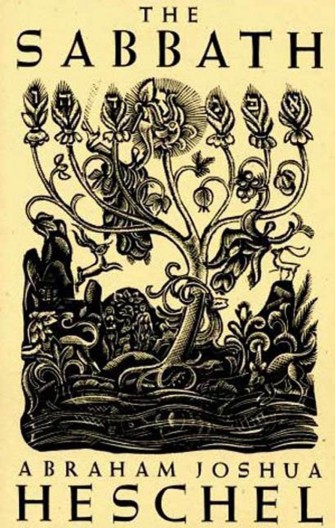
Siniates were first introduced to the writings of Abraham Joshua Heschel in a thin ornately illustrated pamphlet-size book titled The SABBATH. 


This book by Heschel, so beautifully written, returns the Sabbath where the Creator of Time originally placed it. One cannot read it without making some adjustments in life.  The Sabbath is another “inconvenient truth” in a Sunday-system on which the whole world operates, except in Israel and among the Jewish people.

Here are some excerpts to encourage all to get a copy of this book that should be in everyone’s personal library:


Prologue:  Architecture of Time


There is a realm of time where the goal is not to have but to be, not to own but to give, not to control but to share, not to subdue but to be in accord.  Life goes wrong when the control of space, the acquisition of things of space, becomes our sole concern. . . . Let us not forget that it is not a thing that lends

significance to a moment; it is the moment that lends significance to things.

. . . . The Bible is more concerned with time than with space.  It sees the world in the dimension of time.  It pays more attention to generations, to events, than to countries, to things; it is more concerned with history than geography.  To understand the teaching of the Bible, one must accept its premise that time has a meaning for life which is at least equal to that of space; that time has a significance and sovereignty of its own.  


. . . . The God of Israel was the God of events:  the Redeemer from slavery, the Revealer of the Torah, manifesting Himself in events of history rather than in things or places.  Thus, the faith in the unembodied, in the unimaginable was born.


. . . . The bible senses the diversified character of time. There are no two hours alike. Every hour is unique and the only one given at the moment, exclusive and endlessly precious. . . . The Sabbaths are our great cathedrals . . . . it seems as if to the Bible it is holiness in time, the Sabbath, which comes first. . . . The sanctity of time came first, the sanctity of man came second, and the sanctity of space last.  Time was hallowed by God . . . 


The meaning of the Sabbath is to celebrate time rather than space.  Six days a week we live under the tyranny of things of space; on the Sabbath we try to become attuned to holiness in time.  It is a day on which we are called upon to share in what is eternal in time, to turn from the results of creation to the mystery of creation; from the world of creation to the creation of the world.


I.   A Palace in Time  – . . . . on the Sabbath we especially care for the seed of eternity planted in the soul.  The world has our hands, but our soul belongs to Someone Else.  Six days a week we seek to dominate the world, on the seventh day we try to dominate the self.


II.  Beyond Civilization . . . . Man’s royal privilege to conquer nature is suspended on the seventh day . . . . The Sabbath itself is a sanctuary which we build, a sanctuary in time.


III.  The Splendor of Space . . . . The ancient man was inclined to believe that monuments will last forever.  It was, therefore, fit to bestow the most precious epithet on Rome and to call it: the Eternal City.  The State became an object of worship, a divinity; and the Emperor embodied its divinity as he embodied its sovereignty. . . . . The world is transitory, but that by which the world was created—the word of God—is everlasting.  Eternity is attained by dedicating one’s life to the word of God, to the study of Torah.


IV.  Only Heaven and Nothing Else?  . . . .    The world this side of heaven is worth working in.


V.  “Thou Art One” . . . . The Sabbath is meaningful to man and is meaningful to God. It stands in a relationship to both, and is a sign of the covenant entered into by both.  What is the sign?  God has sanctified the day, and man must again and again sanctify the day, illumine the day with the light of his soul.  The Sabbath is holy by the grace of God, and is still in need of all the holiness which man may lend to it.  


VI.  The Presence of a Day . . . . What is it that these epithets are trying to celebrate?  It is time, of all phenomena the least tangible, the least material.  When we celebrate the Sabbath we adore precisely something we do not see.  


VII.  Eternity Utters a Day . . . . When all work is brought to a standstill, the candles are lit.  Just as creation began with the word, “Let there be light!” so does the celebration of creation begin with the kindling of lights.  It is the woman who ushers in the joy and sets up the most exquisite symbol, light, to dominate the atmosphere of the home.  And the world becomes a place of rest . . . the Sabbath sends out its presence over the fields, into our homes, into our hearts.  It is a moment of resurrection of the dormant spirit in our souls.


VIII.  Intuitions of Eternity . . . . The Sabbath is not holy by the grace of man. It was God who sanctified the seventh day.


IX.  Holiness in Time . . . . The emphasis on time is a predominant feature of prophetic thinking. “The day of the Lord” is more important to the prophets than “the house of the Lord.”


X.  Thou Shalt Covet . . . .a form of longing for the eternal Sabbath all the days of our lives . . . seeks to displace the coveting of things in space for coveting the things in time, teaching man to covet the seventh day all days of the week.  


Epilogue . . . . Our world is a world of space moving through time—from the Beginning to the End of Days. . . . Things perish within time; time itself does not change. . . . it is not time that dies; it is the human body which dies in time. . . . Time is man’s greatest challenge. . . . Time, however, is beyond our reach, beyond our power.  It is both near and far, intrinsic to all experience and transcending all experience.  It belongs exclusively to God. . . .  On the Sabbath it is given us to share in the blessings that is in the heart of time.


—————————-


Get your copy of AJHeschel’s The Sabbath, a MUST HAVE forTorah-observant believers in YHWH.


The true Sabbath, the biblical Sabbath is observed according to the biblical definition of ‘day’ or yom in Hebrew.   The 24-hour day which began when the sun was created on Day 4 of creation was from sundown to sundown, not from midnight to midnight (they didn’t have wristwatches and clocks “in the beginning,” simply the heavenly luminaries designed by the Creator to cue humanity for signs and for seasons”;


And God called the light Day, and the darkness he called Night. And the evening and the morning were the first day.

And God called the firmament Heaven. And the evening and the morning were the second day.

13 And the evening and the morning were the third day.

19 And the evening and the morning were the fourth day.

23 And the evening and the morning were the fifth day.

31 And God saw every thing that he had made, and, behold, it was very good. And the evening and the morning were the sixth day.


Hence, sundown Friday is when the chosen nation of YHWH, Israel, welcome their “Queen of Days” and so should all humanity follow suit by ceasing from their strivings to enjoy a commanded “day of rest,”

  • the first to be hallowed/set apart,
  • and blessed,
  • and modeled by the Lord of the Sabbath Himself,
  • and in fact, added as the 4th Law in Decalogue issued by—
    • the Revelator on Sinai
    • Who is the Lord of the Sabbath
    • as well as Creator.
    • Whose Self-declared Name is YHWH.


Whoever taught that humanity should live “by grace” and not “by sight” . . . and we are no longer “under the law but under grace” . . . needs to be reminded by Isaiah 8:20:


To the law and to the testimony:

if they speak not according to this word,

it is because there is no light in them.


Finally, to borrow an appropriate Jewish greeting, “Shabbat shalom” indeed to all Sabbath observers who live by the Light of YHWH’s Torah.


NSB@S6K  

logo

What!? There's a Gospel of Judas?

Image from amazon.com

Image from amazon.com

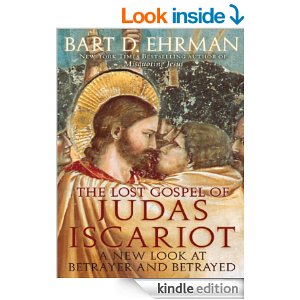
[First posted March 29, 2015. What could possibly be ‘good news’ coming from ‘bad news’ Judas,  the infamous betrayer of the Christian Savior who ‘ID-d’ his Master with a kiss?  

This Foreword by author Bart D. Ehrman is copy-pasted from the  preview of the book available at amazon.com.–Admin1]

———————–

FOREWORD

BART D. EHRMAN

In fall 2004 I received several unexpected and rather mysterious phone calls. The first was from a professional friend of mine, Sheila, who has for years worked on biblical archaeology in Israel. After a brief chat about her next dig, she raised the question that had prompted her call: Had I ever heard of a Gospel of Judas?


I had only a vague recollection of the book: It was one of the gospels that was mentioned by some of the early church fathers, but that had evidently been destroyed, or at least lost, many centuries ago. It is included in none of the standard reference works of the early Christian “apocrypha”—that is, the surviving gospels, acts, epistles, and apocalypses that were not included in the New Testament. I wasn’t able to tell Sheila much more about it.


Her question struck me as odd—why would she be asking me about a gospel that hardly anyone had ever heard of, and that no one had ever seen? I decided to reread the ancient discussions of the Gospel of Judas, just to refresh my memory. It did not take long, as the gospel is mentioned in only a couple of ancient sources.


The earliest is the church father Irenaeus, who in 180 CE wrote a five-volume refutation of different Christian “heretics” (that is, those who held to the “wrong beliefs”), especially groups of gnostics. The gnostics believed that the way to salvation was not through belief in the death and resurrection of Jesus, but through the secret knowledge (gnosis is the Greek word for knowledge) that Jesus delivered, not to the crowds but to his inner circle. This secret knowledge revealed how people can escape the prisons of their material bodies to return to the spiritual realm whence they came. Some gnostic groups had highly esoteric and mysterious views of the world. In one of the most important archaeological discoveries of the twentieth century, a collection of gnostic writings was uncovered in 1945 near the Egyptian town of Nag Hammadi. These Nag Hammadi documents included a number of previously lost gospels—including the Gospel of Thomas and the Gospel of Philip—but they did not contain a copy of the Gospel of Judas.


In any event, Irenaeus does indicate that the Gospel of Judas was used by a group of gnostics called the Cainites. These people believed that the world had been created not by the One True God, but by a lesser, ignorant deity—the God of the Old Testament, who was not to be trusted or followed. The true God was above the inferior God of the Jews. And so, according to the Cainites, anyone who opposed the God of the Jews by breaking his law—as done, for example, by Cain, the first fratricide, and the men of Sodom and Gomorrah—was actually standing for the truth. The Cainites allegedly had a gospel that supported their rather peculiar theology. This gospel was written in the name of Judas Iscariot, known throughout Christian history as the traitor, the one disciple of Jesus who had turned evil and betrayed his master. According to the Cainites, however, what Judas had done was not evil. He alone was the one who understood the mysteries of Jesus and did Jesus’ will. All the other disciples, who worshiped the false Jewish God, failed to understand the truth of Jesus.


After doing this research on the lost Gospel of Judas, I received a second phone call. This one was from a woman who worked for the National Geographic Society. She too wanted to know about the Gospel of Judas. This time I was better prepared and could tell her all that we knew—or that I thought we knew—about the gospel. After a brief discussion, she wanted to know if I thought it would be a significant discovery if the Gospel of Judas were to turn up. I wondered, of course, why she was asking. Rarely does anyone call a scholar to pose a purely hypothetical question about an unlikely discovery. Had the book been found?


I was cautious in my response. In my opinion, if the Gospel of Judas turned up, it would undoubtedly be very interesting for scholars of ancient Christianity. But would it be headline news? It depended entirely on what was in the gospel. If, for example, the gospel was like most of the writings discovered near Nag Hammadi, a book that explained how the world came into existence and how people might escape their entrapment in matter, that would further our knowledge about early Christian gnosticism—obviously a very good thing, but not earth-shattering. If, on the other hand, this gospel included an ancient version of the story of Jesus from the perspective of Judas himself and embraced a view at odds with the one that became “orthodox” throughout the history of the Christian church—a discovery of that kind would be absolutely phenomenal. It would be one of the most significant archaeological discoveries of modern times, certainly the most important of the past sixty years.


She thanked me for the information and we ended the call.


A few days later, she called back with stunning information. As it turns out, the Gospel of Judas had turned up in Egypt, in a manuscript written in Coptic (the ancient Egyptian language that the Nag Hammadi documents were also written in). It was in the possession of a group in Switzerland called the Maecenas Foundation, which was interested in involving National Geographic in the publication and dissemination of the text. In response, the Society was concerned, first off, to learn if this was the real thing or a later forgery.

There was a range of interrelated questions: Was this new discovery the gospel that Irenaeus and other church fathers had castigated as a gnostic creation, telling the story of Jesus from Judas’s perspective? How old was the manuscript that contained the gospel? And when was the gospel itself originally composed? National Geographic needed an expert to verify the discovered text and wanted to know if I could help.


To say I was thrilled would be a profound understatement. Few scholars have the chance to be on the ground floor of a significant discovery. And this might be just that. Of course, it might also be a hoax. Hence the need to verify the facts.

I agreed to help. What the Society wanted was my expertise on early Christianity, to help them see the broad historical significance of a text like this. They were also planning to secure the services of a scientist who could provide a carbon-14 dating of the manuscript. I told them that they would also need a Coptologist—someone whose expertise was in ancient Coptic (my own research specialty is ancient Greek manuscripts). A good Coptologist could examine the text and give an estimate of its date simply based on the style of handwriting. And so, a three-person team was assembled: Tim Jull, director of the National Science Foundation–Arizona Accelerator Mass Spectrometer Facility in Tucson, the expert in carbon-14 dating; Stephen Emmel, an American-born professor of Coptic at the University of Münster in Germany; and myself, historian of early Christianity.


We flew to Geneva in December 2004 and under secretive conditions were shown the documents. They surpassed even our most sanguine expectations. There was no doubt in my mind that this was the real thing. Even though my expertise is Greek rather than Coptic, I have read enough ancient manuscripts to know one when I see one. The form of the manuscript and the style of writing looked very similar to what you can find in Greek manuscripts of the fourth century. My best guess at first glance was that this was from that period. Could it be a modern forgery? Not a chance.


Everyone on the team had lots of questions. Foremost for me was the content of the document. Turning to the final page, I could see the title (titles come at the end of documents in ancient texts):Peuaggelion Nioudas, Coptic for “The Gospel of Judas.” And I could make out a bit of the Coptic at the conclusion where the text indicates that “he handed him over to them.” But what was the rest of it about? Was it a gospel that took Judas’s side in the story of the betrayal, answering why he had done it? Or was it another gnostic text filled almost entirely with mystical reflections about the divine realm and about how this world came to be, with Judas playing at best a minor role? The significance of the document hung on these questions.


There were yet other pressing questions. Where was the text found? Who discovered it? When? Where had it been in all the years since its discovery? Why had none of us heard about it? Who so far had seen it? How did it come to be in the possession of the Maecenas Foundation, the group that evidently owned it? Could they be trusted to make the text available to the rest of the world, scholars and nonscholars alike? How would they publish it? Who would translate it? And so on.


These questions are answered in the present book—a riveting account by Herb Krosney, who first alerted the National Geographic Society to the existence of the document and convinced the Society to consider seriously its possible publication.  More than anyone else, Herb has pursued the question of the document’s discovery some three decades ago and its very peculiar pilgrimage in the intervening years.  With the tenacity of a top-flight investigative reporter, he pursued every facet of the discovery and reclamation of the text.  With an uncanny knack for piecing together isolated data, Herb has provided us with scores of details that, were it not for his efforts, would have been lost forever. This book provides far more information about the discovery, fate, and ultimate publication of the Gospel of Judas than we have for any other archaeological discovery of modern times—including such significant finds as the Dead Sea Scrolls and the Nag Hammadi library.


The most significant factor, of course, is the content of the newly discovered document. As it turns out, my highest hopes have been realized. For this is a gospel that tells the tale of Jesus from the viewpoint of Judas Iscariot himself, the one who allegedly betrayed him. As one might expect, this perspective is completely different from what one finds in the canonical accounts of the New Testament Gospels. In the books of Matthew, Mark, Luke, and John, Judas is the villain. In this newly discovered gospel, he is the hero.


It is worth noting that even though the Gospels of the New Testament agree in vilifying Judas, they do not agree on many of the details of his betrayal. The first Gospel to be written was that of Mark, from about 65 or 70 CE (35–40 years after the death of Jesus), and in that account, there is no clue given as to why Judas decided to turn Jesus over to the authorities, leading to his trial and crucifixion. Written somewhat later (80–85 CE), the Gospel of Matthew indicates that Judas did it for money: He was paid thirty pieces of silver for his foul deed. But when he saw that Jesus was condemned, Judas repented and hanged himself out of remorse. Written at about the same time as Matthew, the Gospel of Luke suggests that Judas was inspired by the Devil, so the betrayal was a Satanic act against the Son of God. The final Gospel to be written was John’s, in which Judas himself is said to have been “a devil.”


In all these accounts, Judas is the fallen disciple, the one betrayer of the cause, the traitor. Yet there are details within these accounts that are difficult—well nigh impossible, in fact—to reconcile with one another. For example, among the Gospels, only Matthew indicates that Judas killed himself. The author of the Gospel of Luke, however, also wrote the Book of Acts, and there we have a different version of Judas’s death—we are told that he fell headlong and his “bowels burst open.” Moreover, in Matthew’s gospel the “blood money” that Judas had returned to the priests out of remorse was used to buy a field to bury strangers in—hence it was called the “Field of Blood” (having come from blood money); in the account in Acts, it is Judas himself who bought the field, which was given its name because he poured out his blood on it.


My point is that each of the individual authors of the New Testament had his own perspective on Judas and told the stories about him in light of that perspective. That continued to be true after the time of the New Testament, as legends about Judas circulated widely. Among the most nefarious of these legends are the ones that paid close attention to the name “Judas,” a name etymologically related to the word Jew. Judas, by the Middle Ages, became synonymous with the “faithless Jew”—the one who was a greedy, money-hungry, thieving, deceitful, treacherous “Christ-killer.”


Some modern scholars have tried to resuscitate the reputation of Judas, but on rather unconvincing textual evidence. Our early records all portray him as the villain in the story of Jesus. But what if there were other portrayals of Judas available that cast him in a more positive light, that interpret his actions differently from the way they are portrayed in the four Gospels that happened to make it into the New Testament?


Now we do have a different depiction.


The Gospel of Judas is a gnostic document, and as such explains in some detail how our evil material world came into being and how we came to be entrapped here. This explanation is understood to be mysterious and secret—it is not for everyone to hear, only the insiders. But the Gospel of Judas is more than simply an additional gnostic text. It is an early gospel that provides an alternative understanding of Jesus, told from the point of view of his betrayer. In this account, Judas is the consummate insider, the one to whom Jesus delivers his secret revelation. Judas is the one faithful disciple, the one who understands Jesus, the one who receives salvation. The other disciples, and the religion they represent, are rooted in ignorance.


As these brief remarks should make clear, this gospel does not conform to traditional Christianity as it emerged in the early centuries to become the most important religious movement in the history of Western civilization. It is an alternative vision of what it means to follow Christ and to be faithful to his teachings.


In this book we learn about how, when, and where this vision was discovered, how it came into the hands of antiquities dealers and how it finally ended up with competent experts who have spent years piecing together the fragmentary text and making it available to us in a modern translation. All of us should be grateful not only for the superb efforts of the translator of this text—the Swiss Coptic scholar Rodolphe Kasser—and the work of the National Geographic Society for putting in the time and expense to make it widely available, but also to Herb Krosney, who has made the story of the Gospel’s discovery and history now accessible to everyone.


WHO’S WHO IN THE LOST GOSPEL


ANCIENT

Jesus

Judas Iscariot

St. Irenaeus, early church father and author ofAgainst Heresies

St. Athanasius, bishop of Alexandria

MODERN

Am Samiah (pseudonym), Egyptian villager

Hanna Asabil (pseudonym), antiquities dealer, Egypt

Ludwig Koenen, papyrologist, U.S.

Nicolas Koutoulakis, antiquities dealer, Switzerland

Yannis Perdios, antiquities collector, Greece

James M. Robinson, early Christianity scholar, U.S.

Stephen Emmel, Coptic scholar, Germany

Boutros (pseudonym), Egyptian villager

Frieda Tchacos Nussberger, antiquities dealer, Switzerland

Father Gabriel Abdel Sayed, Coptic priest, U.S.

Hans P. Kraus, rare book dealer, U.S.

Joanna Landis (pseudonym), Alexandria resident, Egypt

Roger Bagnall, classics scholar, U.S.

Martin Schoyen, antiquities collector, Norway

Bruce Ferrini, antiquities dealer, U.S.

William Veres, antiquities dealer, U.K.

James Ferrell, antiquities collector, U.S.

Mario J. Roberty, lawyer, Switzerland

Michel van Rijn, antiquities blogger, U.K.

Rodolphe Kasser, Coptic scholar, Switzerland

Florence Darbre, manuscript restorer, Switzerland

Charles Hedrick, Coptic scholar, U.S.

Bart D. Ehrman, early Christianity scholar, U.S.

A. J. Timothy Jull, radiocarbon-dating scientist, U.S.

PROLOGUE

Truly, truly I say to you, the man who betrays the Son of God, it is better that he had never been born.

—THE BOOK OF MATTHEW

He’s one of the most hated men in history—the apostle who betrayed Jesus Christ. Judas Iscariot. For centuries, his name has been synonymous with treachery and deceit.


In the mid- to late 1970s, hidden for more than fifteen hundred years, an ancient text emerged from the sands of Egypt. Near the banks of the Nile River, some Egyptian peasants, fellahin, stumbled upon a cavern. In biblical times, such chambers had been used to bury the dead. The peasants entered the cave, seeking ancient gold or jewelry, anything of value that they could sell. Instead, among a pile of human bones, they discovered a crumbling limestone box. Inside it, they came upon an unexpected find—a mysterious leather-bound book, a codex. The illiterate peasants couldn’t decipher the ancient text, but they knew that old books fetched a good price in Cairo’s antiquities markets. This one was made of papyrus, ancient Egypt’s form of paper.


The fellahin had no idea that what they were holding was one of the greatest prizes of biblical archaeology: A document stained by the label “heresy” and condemned eighteen hundred years ago.


In April 2000, approximately twenty-two years later, antiquities dealer Frieda Tchacos Nussberger was headed to John F. Kennedy International Airport in New York when she received some stunning news. She’d recently bought the ancient codex from an Egyptian dealer and had taken it to Yale University to have it examined. Now, on her cell phone, a manuscripts expert at Yale dropped a bombshell. “Frieda, it’s fantastic!” he said in an extremely emotional voice. “This is a very important document. I think it’s the Gospel of Judas!”


For Nussberger, it was the payoff for years of pursuit. She had become obsessed with the mysterious codex without ever knowing what it contained. Could there really be a Gospel of Judas?


Oddly, for someone so notorious, we know very few facts about Judas Iscariot. He was one of the Twelve Apostles. He most likely came from Judea, not Galilee like Jesus and the others. Judas was the apostles’ treasurer and, by some gospel accounts, Jesus’ most trusted ally, making his betrayal all the more contemptible.


But if the details of his life are murky, there’s no question about Judas’s place in history. “He’s the one who handed over his friend,” Marvin Meyer, one of the translators of the newly discovered gospel, explained. “He’s the one who brought about the Crucifixion, and he’s the one who’s damned for all time.” In Dante’s Inferno, Judas is condemned to the lowest pits of hell, where he is eaten, head first, by a giant raptor belonging to Lucifer himself.


“Generally today people think of Judas principally as the betrayer of Jesus, somebody who was a traitor to the cause,” scholar Bart Ehrman, noted for his studies of early Christianity, remarked recently. “Often they think of him as somebody who was greedy, avaricious, and who was more interested in making money than in being faithful to his master.”


“The word itself is despised,” Dr. William Klassen added. “I think virtually throughout the Western world, you wouldn’t even call your dog that. And in Germany, of course, it is illegal to name your child Judas.”


Christ and his apostles were all observant Jews, Orthodox by today’s standards. But in time Judas’s dark deed came to represent the supposed villainy of their entire faith. “Traditionally in Christian circles, Judas in fact has been associated with Jews,” Ehrman notes. “Not just because of his name, but also because of these characteristics that became stereotypes for Jews in the Middle Ages—this stereotype of being traitors, avaricious, who betray Jesus. And this portrayal of Judas, of course, also leads then to horrendous acts of anti-Semitism through the centuries.”


The stain that marks him is based on just twenty-four lines in the Gospels. As C. Stephen Evans, professor of philosophy at Baylor University, said: “Judas Iscariot in the New Testament doesn’t appear much, and I think it’s because he’s an embarrassment. What little is said about him is very sinister, so he’s portrayed in increasingly villainous terms as a thief who steals from the money box. Indeed, even as a person who was influenced by Satan.”


History, however, records that there was once another written source of information about Judas Iscariot. Around 180 CE, Irenaeus, a church father in what is now France, wrote a scathing attack against a Greek text entitled the Gospel of Judas. “This gospel was about the relationship between Jesus and Judas, and indicated that Judas didn’t actually betray Jesus, but did what Jesus wanted him to do, because Judas was the one who really knew the truth, as Jesus wanted it communicated,” Ehrman said.


This version of Judas’s story was too controversial for early Church leaders like Irenaeus. By condemning it, they erased it from history, never to be seen again.

But never is a long time, and the gospel was suppressed only until it could be found again. At least one copy of it had survived, laying dormant in a lightless vault in the arid Egyptian desert for most of two millennia until it was suddenly brought forth again, eventually finding its way decades later into Frieda Nussberger’s custody.


This codex—one of the greatest discoveries in Judeo-Christian archaeology—did not head straight to a museum, nor even to the library of a rich collector. The gospel’s removal from its burial place was just the beginning of a bizarre cloak-and-dagger journey. The Gospel of Judas, treated like a piece of merchandise, would be shopped around on three continents over the course of the next twenty-five years, its contents glimpsed only a few times between long periods of inactivity in far from ideal storage conditions. Every step of the way the precious document would deteriorate, until much of it was reduced to fragments of papyrus fibers.


The people who discovered it, bound together with three other texts, knew only that it was very old and would be worth good money. They sold it to a dealer in Cairo, who couldn’t read the ancient Coptic either, but knew that it was extremely valuable if only he could find the right buyer.


The humid air of Egypt’s capital city contrasts sharply with the arid climate of the desert where the codex was found, and humidity, combined with heat, is a factor that contributes greatly to the deterioration of perishable matter. The papyrus documents would languish while the dealer demanded millions of dollars for their purchase.


The manuscripts were then stolen and landed in Europe—more precisely, Switzerland—where, exposed to the Alpine air, the process of deterioration would continue. Not for the last time, the texts were left to molder in a bank vault. They were subsequently examined by experts who flew in from the United States to determine their authenticity. Already at that stage, warnings were raised about their state of deterioration. The scholars wanted the damage brought under control through careful management and the provision of proper environmental conditions, but that would be years in coming.


The codex next journeyed to the United States for a possible sale. A famous manuscript dealer in New York examined the text yet again but, uncomfortable with the Egyptian seller’s price and the cost of restoration, decided against buying them. Despairing, the Cairo dealer finally put the documents in a bank vault on suburban Long Island, where no one had any idea of their condition or even their existence. There they would deteriorate for sixteen long years.

At last, Nussberger rescued them from the bank vault and turned them over to Yale University to be translated. There, a scholar identified the subject of the texts and some of what they said. For a brief period it seemed the codex—its importance discovered—had found a home at last. Yet Nussberger has spoken of the text as “a curse,” and it did seem that way. The stigma of the great betrayer would linger on long after the discovery of the manuscript. It was almost as though the text didn’t want to be read.


Despite the fact that they contained the fabled Gospel of Judas, Yale was worried about possible legal issues and declined to buy them. Instead they were sold to an antiquities dealer in Ohio. They disintegrated further when they were briefly stored in the freezer compartment of a refrigerator.


A botched sale led to the manuscript’s return to Nussberger and Switzerland, where they would finally find a home where ambient conditions would be adjusted to ensure their future preservation. By this time the fragile papyrus had deteriorated dramatically, with fragments dropping off at the touch. Not only that, but scholars found that pages of the priceless texts were missing, ripped out, possibly to be sold separately.


Each stage of this journey had brought additional damage. Each stage caused the increasingly frail strands of papyrus to deteriorate further, threatening the loss of additional letters, words, and sentences of the ancient texts. Each stage of the journey might cause the voice of Judas Iscariot, now arisen from its centuries-old tomb, to be degraded to the point where it might never be heard.


From the moment Frieda Tchacos Nussberger had learned from the Yale experts what was contained in the mysterious codex, she had been in a race against time to find a buyer who would be able to preserve its pages before they turned to dust. She eventually turned it over to the Maecenas Foundation of Ancient Art in Basel, Switzerland, which specializes in supporting archaeological study projects in ancient cultures or antiquities such as this. Together with Maecenas she engaged Rodolphe Kasser, one of the world’s preeminent translators and scholars of Coptic, the rare and ancient language in which the text is written. Seeing how badly it had deteriorated, he joined forces with a superb document restorer, Florence Darbre.


In 2002, in her studio in Switzerland, Darbre opened the box containing the Gospel of Judas for the very first time. “I had to look at it. I had to open and close the box several times,” she said. “One often needs to have nerves of steel in order to touch certain objects.” In thirty years of work, she had never seen an ancient document in such bad condition. Its fragile papyrus pages had broken into thousands of fragments. “Whatever document you work with, there is always a story. One always wonders who wrote it, where did it go, who had it, and who read it?”


End of this sample Kindle book.


Enjoyed the preview?

Buy with 1-Click

or

See details for this book in the Kindle Store

Book Description

Publication Date: July 4, 2006

Judas Iscariot.

He’s been hated and reviled through the ages as Jesus Christ’s betrayer– the close friend who sells him out for 30 pieces of silver.

But history also records other information about Judas Iscariot. One such reference was written in 180 by an influential Church Father named St. Irenaeus who railed against the Gospel of Judas for depicting the last days of Jesus from the perspective of the disgraced apostle. In its pages, Judas is Christ’s favorite. 

It’s a startlingly different story than the one handed down through the ages. Once it was denounced as heresy, the Gospel of Judas faded from sight. It became one of history’s forgotten manuscripts. 

Until now.

In this compelling and exhaustively researched account, Herbert Krosney unravels how the Gospel of Judas was found and its meaning painstakingly teased from the ancient Coptic script that had hid its message for centuries. With all the skills of an investigative journalist and master storyteller, Krosney traces the forgotten gospel’s improbable journey across three continents, a trek that would take it through the netherworld of the international antiquities trade, until the crumbling papyrus is finally made to give up its secrets. The race to discover the Gospel of Judas will go down as one of the great detective stories of biblical archaeology.

 Show more

The Messiahs – 5 – A Heavenly Messiah?

Image from www.amazon.com

Image from www.amazon.com

[Originally posted December 9, 2013, reposted March 29, 2015; a timely clarification of where the idea of messiah originated.


This is second to the last subtopic, so please bear with us . . . there is so much to study (and check out) in James D. Tabor’s absolutely SOBER and thoroughly researched claims.  As a resource center we are committed to sharing what we’ve learned and have embraced for ourselves, so we have chopped up a whole chapter in chewable doses and in doing so, even those who have already bought their copy and read through it are astonished as to how they missed details they rediscover in this series. Please check out these related posts;

Continuing Chapter 4 of Restoring Abrahamic Faith . . . edited, reformatted, highlighted for this post.–Admin1.]


—————————-


Later Jewish and Christian traditions begin to focus on the Messiah as a heavenly figure, a cosmic Christ, who will be sent to earth from the heavenly realm.


[Footnote: We see the beginning development of this idea in the book of Enoch and in other writings from the 2nd century B.C.E. onward.  See Jacob Neusner, ed. Judaism and Their Messiahs (Cambridge: Cambridge University Press, 1987), for a good scholarly discussion of the relevant materials.  Many sections of the New Testament reflect this type of mystical speculation current among Jewish groups at this time.  See the excellent summary articles on the Christology of Paul and John in the appendices to Hugh Schonfield, Those Incredible Christians (1968).]


There is a clear shift in these latter materials from the concrete and the earthly, to the speculative and the heavenly.  We have seen that there is not a trace  of any such idea in any of the Prophetic texts we have examined dealing with the Messiah, nor in the TORAH itself, which should always serve as the foundation of BIBLICAL FAITH.  This should make us very wary of such texts and traditions, whether Jewish or Christian, most of which develop only late, from the Second Temple period onward (3rd century B.C.E. up through the early MIddle Ages).


How then did such ideas come about?  We can attribute such developments to philosophical and mystical interests in the nature of God.

Image from www.bookreviews.org

Image from www.bookreviews.org

For example, the Logos doctrine contained in John 1:1-8 is not even a Christian invention.  It was first developed by the Stoics centuries before the time of Jesus, and refined by the Jewish philosopher Philo of Alexandria who was in love with Hellenistic thought and language.  The entire Logos doctrine attempts to deal with the problem of how God, who is perfect and unchanging, can deal with our transitory material world.  Such traditions are quite esoteric, appealing to the Greek philosophical mind, but contributing nothing to the practical Hebraic/Biblical task of realizing the Kingdom of God in concrete history!  Parallel discussions of this type were also carried out over the centuries among Jewish mystical and esoteric circles as witnessed in the Dead Sea Scrolls, the Pseudepigrapha, and the kabbalistic traditions now preserved in the Zohar.


The main text in the Hebrew Bible that has lent itself to such speculative developments comes from the book of Daniel:


 I was watching in the night visions, and behold one like a son of man, coming with the clouds of heaven!  He came to the Ancient of Days, and they brought him near before Him.  Then to him was given dominion and glory and a kingdom, that all peoples, nations, and languages should serve him.  His dominion is an everlasting dominion, which shall not pass away.  And his kingdom the one which shall not be destroyed (Daniel 7:13-14).


During Second Temple times many groups began to identify this “son of man” (Aramaic—bar enosh) figure with the Davidic Messiah.  The connection is obvious.  He appears before God in heaven and is given rule and authority over an eternal Kingdom.  Who else could this one be but the Messiah?


However, what these interpreters overlooked was that this text is part of a dream or vision given to Daniel.


It is full of symbols (beasts, horns, etc.) which all must be interpreted.  However, the inspired interpretation is given in this very chapter.  We do not have to speculate as to the identify of this mysterious “Son of Man” figure.


Daniel is plainly told in verse 27 that the “Son of Man” represents the people of the saints of the Most High” (7:22,27).  In other words, like the idea of the “Servant” in Isaiah, it is a collective  term that symbolically refers to the chasidim  or “holy ones” who faithfully serve God and do not follow the ways of the “Beast” (successive Gentile powers that oppose the WAY of TORAH).


Clearly this symbol of the “son of Man” does not refer exclusively to any individual, but to the faithful people of God of all ages, the “Servant” of YHVH.  There is an emphasis throughout the book on the persecuted faithful ones who resist pagan ways (11:32-33; 12:3).  The setting up of the Kingdom is described as the direct action of God Himself (Daniel 2:44).  The specific role of a Messiah is not mentioned in this text.

This language about the “Son of Man coming in the clouds” was removed from its symbolic, visionary, context and mistakenly taken to refer to an arrival of the Messiah from heaven (whether first or second coming).  Such a view ignores the interpretation given in the prophecy itself, and misses the metaphorical meaning of the language.  The “Son of Man coming in the clouds of heaven” clearly refers to the arrival of the Kingdom of God.  It is not to be taken literally, as if the Messiah drops out of the sky.


There are no texts dealing with the Messiah in the entire Hebrew Bible that speak of him as anything other than—

  • a human being,
  • of the line of David,
  • who rules as King over Israel and the nations.

The root idea of the Davidic Messiah

is based on God’s promises and faithfulness to David—

not on cosmic speculations about the heavenly world.  


This is a vital point.  In other words the Prophets do not develop their messianic ideas from speculations about the cosmos and ideas about heavenly beings or the nature of the Godhead.  They are concerned with one dominant image, one that is wholly social and political—the realization of the promises to David and the fulfillment of the ideal reign of such a King.  Even the language about the Messiah sitting at the right hand of YHVH,” or as first born “Son of God” is obviously metaphorical (Psalm 2:7; 110:1).  King David, as YHVH’s anointed, sat at His right hand” and was called “son of God.”


Indeed, all the Kings of Israel were understood to be sitting on the “throne of YHVH” and were called “sons of YHVH” (1 Chronicles 29:23; 2 Samuel 7:14).  Obviously, this does not mean they lived in heaven or that they were the divine offspring of a god.


This language is then applied ideally, by extension, to the Messiahs of the last days.  It refers to the intimacy and powerful exaltation YHVH will give His anointed ones to carry out the rule of the Kingdom of God over all nations.  It surely does not mean that the Davidic Messiah will literally sit up in the clouds of heaven, on a throne.

The WAY of YHVH – 4 – Observing the Seventh Day Sabbath

images[Continuing Chapter 2 of James Tabor’s Restoring Abrahamic Faith: THE WAY; first posted July 2, 2012.—Admin1.]


————-


Remembering the seventh day (Saturday) Sabbath is a vital part of the restoration of true BIBLICAL FAITH.  This fourth commandment is not a minor statute or ordinance to be changed or abrogated with the passing of time.  It is an essential part of the TESTIMONY and every bit as important, and as universalas the commandments regarding murder, idolatry, or adultery.  To our human way of thinking this statement sounds extreme and even absurd.  But God’s “thoughts” are not our “thoughts” (Isaiah 55:8).  The Sabbath Day is vitally connected to knowng and understanding God as Creator and experiencing His Presence, as well as providing essential physical and spiritual rejuvenation to our busy lives.  Our loss of this vital pillar of the Faith has probably contributed more to our disconnection from the people of Israel, and thus to the Hebraic roots of BIBLICAL FAITH, than any other single factor.


The very fact that the Sabbath commandment is one of these great Ten “Matters” of YHVH clearly sets it apart as a major component of the WAY of YHVH.  It would not be included as part of this great Code, this awesome TESTIMONY of YHVH Himself, unless it was an indispensable part of God’s WAY for humankind.  Two of the Ten are stated in positive form:


  •  Remember the Sabbath and
  • Honor your father and your mother; the remaining eight are prohibitions.


These two positive commandments are linked together in Leviticus 19:2-3 as an introduction to the description of true Holiness.  Notice:


You shall be holy, for I YHVH your God am holy.  Every one of you shall revere his mother and his father, and you shall keep my Sabbaths;  I am YHVH your God.


One is the foundation of God’s relationship with humans, the other the foundation of human relationships with one another.


There are two accounts of the TEN WORDS recorded in the TORAH.  The first is the original scene recorded in Exodus 20.  The second is in Deuteronomy 5, forty years later, where Moses reminds the new generation of that awesome face-to-face encounter with YHVH Himself at Sinai. It is instructive to compare these two accounts of the Sabbath commandment side by side:


Remember the Sabbath day, to keep it holy.  Six days you shall labor, and do all your work; but the seventh day is the Sabbath of YHVH your God; in it you shall do no work . . . for in six days YHVH made the heavens and the earth, the sea, and all that is in them and rested the seventh day.  Therefore YHVH blessed the Sabbath day and made it holy. (Exodus 20:8-11)


Observe the Sabbath day, to keep it holy, as YHVH your God commanded you.  Six days you shall labor, and do all your work; but the seventh day is the Sabbath of YHVH your God, in it you shall not do any work . . . And remember that you were a slave in the land of Egypt, and YHVH your God brought you out from there by a mighty hand and by an outstretched arm; therefore YHVH your God commanded you to keep the Sabbath day (Deuteronomy 5:12-15).


The concluding phrases in both accounts are quite interesting.  In the Exodus account we are told why YHVH blessed the Sabbath and made it holy.  In Moses’ summary account in Deuteronomy we are told why YHVH commanded the people of Israel to observe or keep the Sabbath day. Both concepts are important to an understanding of this Commandment and its essential rationale.


Let’s begin with the point made in the Exodus account—that the Sabbath day goes back to Creation Week of Genesis 1:1-2:3.  l There we find the same essential thought:  Thus the heavens and the earth and all the host of them, were finished.  And on the seventh day God ended His work that He had done, and He rested (Hebrew verb Shabbat)—

 on the seventh day form all His work which He had done.  Then God blessed the seventh day and made it holy because in it He rested from all His work that God had created to make (Genesis 2:1-3).


Here we see that the Sabbath day is grounded in the patterned activity of God Himself.  Just as God blessed humankind on the sixth day, telling them to be fruitful and multiply (Genesis 1:28), He also blessed the seventh day at the time of Creation, and made it holy.  He set it apart from the six other days of the week, sanctifying it as a sabbath or “rest” day.  The Sabbath is a memorial of Creation.  It testifies to YHVH’s unique activity as the Creator of all things.  It is as universal as humankind.  YHVH, through Isaiah the prophet, declares:


 Blessed is the man . . . who keeps the Sabbath from profaning it and keeps his hand from doing any evil (Isaiah 56:2).  


In this section of Isaiah all humanity is addressed and the observance of the Sabbath is tightly linked with following the WAY of Righteousness more generally.  To remember the Sabbath day is to acknowledge YHVH as our great Creator and we humans as His creatures.  It is a fundamental step in the path of justice, love, and righteousness.


It is noteworthy that the Sabbath day itself is the reason that many human cultures, from antiquity to the present, observe a seven-day week. Our other cycles of time—days, months, and years, are controlled by the movement of earth and moon in relationship to one another and to the sun. Yet there is no such seven-day cycle, or week, associated with our solar system.  The seven-day week is actually created by the cycle of the seventh day Sabbath.  This weekly cycle, signified by the Sabbath day, is reflected in the earliest narratives of the Hebrew Bible.  Cain and Abel bring their offerings at the end of days, probably referring to the seventh day Sabbath (Genesis 4:3 literal translation).  Noah and his family enter the ark precisely seven days before the flood begins (Genesis 7:4,10).  Later, when the Flood is over, Noah sends out the raven and the doves over a period of several weeks, following the same seven day weekly cycle (Genesis 8:10, 12).


Throughout the world, from ancient through modern times, the seven-day week has been known.  In fact, there is interesting linguistic evidence that the seventh day, from ancient times, was even called the “Sabbath” in most of the major language groups of humankind.


[Footnote:  Hundreds of languages, spread throughout the globe, actually name the seventh day of the week with some derivative form of the Hebrew word shabbat.  There are too many examples to cite here, but a selective sample would include :


 Assyrian sabatu; Persian shambid; Caucasus region samat; Central Africa assebatu; North Africa assebt: West Africa essbi: Hungary szombat; Abyssinia sanbat; Java saptu; Afghanistan shamba; Malta issibt‘ Turkey essabt; Borneo sabtu; Arabic assbt.  Even the Romance languages of Europe, though eventually Christianized, still maintain this ancient “Jewish” designation for Saturday, the seventh day:

Latin sabbatum; French samedi; Italian sabbato; Romania sambata; German samstag.]


The point Moses makes in the second account, recorded in Deuteronomy 5, has to do with why the Sabbath day was specifically given to the people of Israel.  Not only does the Sabbath day look back to YHVH as Creator, but it also pictures the mighty redemptive acts of YHVH in releasing or bringing rest to the entire nation of Israel when they were suffering bitter bondage to Egypt.  In other words, the Sabbath day reminds us of the two most basic aspects of YHVH’s mighty acts:  Creation and Redemption.  The Sabbath day is made a special sign between YHVH and the people of Israel, a perpetual covenant throughout their generations (Exodus 31:15-17).


They were to perpetually testify to that TESTIMONY spoken by YHVH Himself at Sinai, giving witness to the nations of the world to the One Creator God who works His redemptive PLAN in history.


There are two basic concepts associated with the Sabbath in these accounts—to remember it, and to observe (lit. “guard”) it, as holy or “set apart” from the rest of the week.  The instructions in Scripture on how to keep or observe the Sabbath day holy are few.  The literal meaning of the verb is “to stop.”  The basic idea is that one ceases (shabbat) from normal “activity,” setting the day apart (it was marked anciently “from evening to evening,” that is, from Friday sunset until Saturday sunset), as a time of physical and spiritual rest and refreshment, for humans as well as their animals.  In other words, one “keeps the Sabbath holy” by not treating this day as ordinary time—that is, as just one more day of the week.


Isaiah speaks of calling the Sabbath a delight, a day to be honored.  To “pursue one’s own affairs” is considered “trampling” on the day (Isaiah 58:13, see Nehemiah 13: 15-18).  The keynote of the Sabbath day is joy.  It is a wonderful “sanctuary in time” carved out of the profane and mundane activities and surroundings of our everyday lives. Those who have learned to truly remember and guard this holy day as a Sabbath can testify to the incredible blessing it brings upon family and friends as well as the profound and peaceful sense of the very presence of YHVH.


Imagine a world in which everyone on the planet, region by region, as Friday sunset arrived, simply “stopped” or “shut down,” to participate in a physical and spiritual break from our hectic everyday lives.  Anyone who has been in Jerusalem on a Friday afternoon has experienced a tiny taste of what this could be like.  The entire city simply shuts down, most traffic ceases, and people take to the streets with family and friends, enjoy special meals, with time for gatherings in synagogues or table conversations centering on the Torah reading for that particular week.  The collective effect is rather amazing, both for the individuals and the community as a whole.


The Rabbis say that rather than Israel keeping the Sabbath, the Sabbath has kept Israel.  There is great truth to this saying.  The seventh day Sabbath is the most ancient observance of humankind.  It has continued in an unbroken cycle from time immemorial.  It has always been a sign or mark between YHVH and His followers, who live in a covenant relationship with Him, testifying that He alone is Creator and Redeemer.


It is worth noting that historical research indicates the early followers of the Nazarene observed the seventh day Sabbath, not Sunday. It was only in the late 2nd century C.E., under the pressure of a strongly anti-Jewish, antinomian, pagan sentiment which had developed in the Western Christian churches, that “Christians” substituted Sunday for the Sabbath and began to lose touch with the Judaic or TORAH roots of the original Nazarene faith.  Recent scholarship has carefully documented this transition and the change from “Sabbath to Sunday” is one of the most significant developments in early Christianity.


[Footnote:  Samuele Bacchiocchi, Anti-Judaism and the Origin of Sunday (Rome: Pontifical Gregorian University Press, 1975) . . .  one of the very best popular accounts of the general departure of Christianity from its early Jewish roots is Hugh Schonfield, Those Incredible Christians (London: Hutchinson, 1968) and subsequent editions.]


In the same way, Mohammed, in the 7th century C.E., substituted Friday for Saturday as the holy day to be observed by his Muslim followers.  Observing either Sunday or Friday as a kind of “substitute Sabbath” robs one of the profound and positive impact of YHVH’s original TESTIMONY.  The TORAH specifies a specific day, the seventh of the week—not the first or the sixth.  It does make a difference which day is the Sabbath.  It is interesting to note that when Jeroboam broke with Solomon’s son and established the northern Kingdom of Israel the first thing he did was move the festival observances from the 7th month to the 8th month (1 Kings 12:32).  There are obviously profound cultural and social consequences when groups separate and begin to observe alternative festival cycles.


A return to the seventh day Sabbath puts one back in communion with the Jewish people who have kept this Commandment at the center of their religious life through the ages, as well as with multiple thousands of non-Jews who have begun to recover the Hebraic roots of the earliest followers of Jesus.  It is a matter of being in tune with the specific cycle of “rest” which represents the oldest religious observance on our planet.  In the days of Moses the observance of the Sabbath was a “test”commandment, signifying those who live in covenant relationship with the Creator God (Exodus 16:4, 26-30).  It is a vital part of the “restoration of all things” which lovers of the Bible have advocated since the days of the Reformation.


. . . .millions of sincere Christians have never even considered the shift from Sabbath to Sunday in this regard, however, many who read the Ten Commandments have wondered about the reference to honoring “the seventh day as the Sabbath,” rather than Sunday as the first day of the week.  However, significant numbers of biblically oriented Christians are increasingly expressing a desire to return to the Hebraic roots of their faith, that would include a recovery of a Jewish Jesus who observed the Sabbath day as well as the other commandments of the TORAH.


The prophet Jeremiah urged his hearers to seek the “ancient paths where the good way is,and walk therein, and you will find rest for your souls” (Jeremiah 6:16).  Those who have experienced the joy of Shabbat can truly testify that it is the “good way.”  Each Sabbath day, week by week, millions are brought together in a worldwide spiritual fellowship and solidarity that stretches back to Eden and forward to the coming Kingdom of God—when the whole world will experience the true Sabbath peace (Isaiah 66:22-23).


Next:  TORAH FAITH for Non-Jews?

Paul 5 – Conflict with the Jews, and emerging Pauline theology

Image from amazon.com

Image from amazon.com

[First posted 2012.  Continuing “What did Paul Achieve,” Chapter 5 of Charles Freeman’s A New History of Early Christianity; condensed and slightly edited. Please get a copy of the book for your library.–Admin1.]


————————


Corinth may have been the first city where Paul had an opportunity to preach over an extended period. (Acts suggests that he was there for 18 months.)  Timothy and Silas joined him.


Again Paul encountered opposition from the Jews although when members of the community attempted to arraign him before the proconsul of the province, Gallio, the latter refused to respond. To him the arguments over Christ were a matter for Jews alone and he was reluctant to get drawn into the dispute.  The down-to-earth Roman governors were well known for being exasperated by the intricate discussions so loved in the Greek east.  Soon after this incident, Acs tells us that Paul, accompanied by Aquila and Prisca, left Corinth.  As is so often the case in this story, one does not know the background; that the three left together may suggest some kind of division within the Corinthian community and their expulsion from it.

When Timothy had rejoined Paul in Corinth, he had reported on a visit he had made on his own to the Thessalonians.  Earlier in Acts, Luke suggests that Paul had preached, unsuccessfully, in the synagogue there, but the converts whom Timothy had encountered do not seem to have been Jews at all.  They are recorded as having turned from the worship of idols; in other words they had been pagans.  They were also artisans and this suggests that Paul was seeking out marginal groups independent of the synagogues.  


Not having to worry about offending the Jews, Paul was able to express his frustrations in his First Letter to the Thessalonians.  He tells them that the Jews have killed Christ and they have obstructed him in his contacts with the Gentiles.  Now, he goes on, retribution has overtaken them.  It is possible that Paul is referring to the expulsion of Jews from Rome by the emperor Claudius of which he will have learned from Aquila and Prisca, but there is also the record of a massacre of Jews by the Roman authorities in Jerusalem at this time.  Paul’s ‘being all things to all people‘ is on display here in his condemnation of his fellow Jews.  His hold on his communities was so fragile that it was an understandable, if distasteful, tactic for one seeking to strengthen his position against his Jewish adversaries.


Paul, soothed by Timothy’s message that the Thessalonians had valued his teaching and respected him, mentions that he has been worried that they too would be seduced from allegiance to him by ‘the tempter.’  Reassured by Timothy of their loyalty, his letter is altogether more relaxed in tone than his impassioned outburst to the Galatians and perhaps reflects that for the first time, in Corinth, he enjoyed some form of psychological security.  There was one major issue to address.


The Thessalonians had taken on board Paul’s preaching that the Second Coming of Christ was imminent, so imminent, in fact, that all would be alive to see it, yet some of the community had already died and the rest needed reassurance that all would be saved.  The Second Coming, Paul tells them, will come to the unwary like a thief in the night and there will be no escape for those without faith.  For believers such as themselves, on the other hand, night will not fall at all.  They will always live in the light as they are destined by their faith for salvation.  Their duty is to keep sober for the occasion.  As elsewhere in Paul’s writings, soberness is associated with sexual continence —lust is linked to paganism.


In the letter Paul explains that ‘Satan’ had thwarted him in his hopes of returning to Thessalonica.  After leaving Corinth, he made passage back to Asia Minor.  He landed briefly at Ephesus, left Aquila and Prisca there, and appears to have gone on to Jerusalem.  He may have had money from his collection to deliver there.  He eventually made his way back to Ephesus.  This was another of the empire’s most successful trading cities.  Bequeathed to Rome by King Attalus III of Pergamum in 133 BC, it had become a major provincial centre, a focus for sea routes and the hub of important roads inland through Asia Minor.  It was also the home of the great temple to Artemis to which pilgrims flocked from throughout the Mediterranean.  Again, the mix of nationalities and cultures offered opportunities for conversion.  

Paul seems to have used his customary tactic of preaching in the synagogue but again he aroused the opposition of the Jews.  This time, however, he withdrew his own converts to a separate lecture hall and Acts records that he was able to preach safely for two years.  Even now his success offended local interests and a local employer of silversmiths, Demetrius, stirred up the population against a man who threatened the lucrative trade in votive offerings.  ‘Great is Diana [the Roman equivalent of Artemis] of the Ephesians’ becams the rallying cry of the rioters.  This time the authorities confronted the troublemakers and the city was calmed.  However, Paul seems to have left Ephesus soon afterwards.


The short and attractive Letter to Philemon may have been written while Paul was in Ephesus, apparently in some form of custody.  Philemon was a Christian, living probably in Colossae.  His slave, Onesimus, had escaped and was, for some reason, in the same prison as Paul where Paul became dependent on him.  In the letter Paul tells how he is sending back the slave but he pleads for Philemon to be compassionate to him.  On one level this letter can be seen as evidence of Paul’s desired church in which slave and free will live together as equal.  However, Paul’s sympathy may also reflect his own awareness of slavery, freedom from which had given him his status as a Roman citizen.


It was probably while Paul was at Ephesus that disturbing news arrived from Corinth.  The community with which he had formed his closest links was that of Corinth and Paul felt sensitive about its loyalty.  The fundamental weakness of his strategy had been cruelly exposed.  It was one thing to talk of the passing of the Law and its replacement by faith in Christ but this provided no guidance in how to confront the everyday challenges of living together until Christ returned.  A number of problems were reported to him.  First the community had been fragmented by rival allegiances. Some had remained loyal to Paul, but others saw Peter as their mentor.  


There was now a third leader, one Apollos, an Alexandrian Jew.  Apollos had turned up in Ephesus before Paul had arrived there and Prisca and Aquila had heard him speak in the synagogue.  He was a Christian who knew something of Jesus but Prisca and Aquila felt that they needed to give him further insturction.  they then sent him on to Corinth.  They had failed to foresee the impact he would have.  He was clearly learned –it has been suggested, in fact, that he may have been a disciple of the Jewish philosopher Philo.  His education would have included training in rhetoric so, whatever form his Christianity took, he would have been able to expound it with greater eloquence that Paul (who has to tell the Corinthians that he was himself no speaker).  It is not surprising that Apolos created his own following in the fluid world of the early converts especially among those who needed a more intellectually satisfying religion.  He may, in fact, have been the first Christian preacher to bring Platonism into Christianity.  Plato had argued for an intellectual elite who through years of dedicated study were able to transcend the material world with its desires and ambitions and it seems that it was just this approach that was at the core of Apollos’ teaching.


Alongside intelectual divisions there were also reports of social fragmentation.  It is not known how large the Christian community (if one could talk of such a clearly defined group) in Corinth was.  Some reports suggest about forty, others perhaps a hundred.  The group would have depended on wealthier householders to let them meet for their Eucharistic meals.  The allocation of rooms within a Roman house reflected the status of those who entered there, where they would be received and eat, with more intimate friends welcomed further inside to the more private rooms.  The Corinthian Christians were allocated places at table according to status with some being forced to eat outside the main dining room.  As if this were not enough, Paul’s injunction to love one another was reported to have degenerated into sexual immorality.  A man had married his stepmother; another leaders appeared to dress as a woman.  It was exactly the kind of behavior that most disturbed Paul

Paul had communicated with them before but this ‘First’ Letter to the Corinthians is the earliest of these letters to survive.  While Paul is upset about what he heard of their behavior, he has learned to be less denigrating of his recipients and more modest.  He addresses the Corinthians as a community who can be brought back into harmony and avoids the bullying tone he had used for the Galatians.  Their disputes should, for example, be resolved within the congregation and they should shun recourse to the pagan courts.  He talks of the importance of the Eucharist as a memorial of Christ in which all must share equally.  In Chapter 12, he tells how every kind of skill —healing, prophecy and teaching –can be brought together in the service of Christ just as the limbs and organs contribute to a single body.  He was developing a vision of a church as a stable and self-governing community.  It is also in this letter that he tells of his beliefs in the resurrection, the earliest Christian text to mention it in this context as the spiritual transformation of Jesus after the crucifixion. 


There now follows one of his finest outbursts of rhetoric:  the hymn to charity, charity that transcends all other gifts.  There is perhaps no other passage in his writings that has proved a more enduring inspiration than this and it has resonated through the centuries.  Paul goes on to provide a blueprint for worship at which hymns, instruction, revelation and even ecstatic outbursts will be welcomed.


 However, it is only men who can contribute.  Women have no licence to speak and must direct their concerns to their husbands at home.  This stricture may, of course, have been aimed only at the Corinthian community but Paul’s ambivalence towards women is obvious.  While the logic of his theology requires that all male and female, slave and free, Jew and Gentile are welcome in the church if they purify themselves (1 Corinthians 6:11 (cf. Galatians 3:28), he also appears fearful of a breakdown of social distinctions.  Here is one of the most ambiguous of his legacies.  Within 50 years male supremacy appears to have reasserted itself in the Christian communities but there remained an independent tradition in the 3rd century church that Paul had taught that women had the right to teach and baptise.  


At some point after this remarkable letter, Paul visited Corinth again.  In his 2nd letter to the Corinthians he describes this as a painful visit.  His 1st letter had failed to produce the community living in loving harmony that he had hoped for.  One individual in particular seems to have led the opposition to him.  Another (lost) letter he wrote to the community had caused great offence.  The first chapters of the 2nd letter are deeply troubled and rambling, clearly the work of an individual in emotional turmoil.  Paul seems overwhelmed with the burdens he is carrying and it is only the promises of Christ that sustain him.  the anger with which he condemned the Galatians is replaced by a pleading tone in which he ask the Corinthians for acceptance of his weakness.  This chastened Paul is understandably more attractive.  Normally he was not a man who understood compromise but he now appears to understand that he must respond to the concerns of the Corinthians rather than impose his views on them.


However, in a separate letter, which was added later to Chapters 1-9, Paul’s emotional state is such that he appears close to breakdown.  In a tone reminiscent of Galatians, he is back to a hectoring stance, full of self-justification and the denigration of ‘his’ Christians for being led astray by others, just, he says, as Eve was seduced by the serpent.  His rivals appear to have been Hellenistic Jews whose charisma depended on rhetoric and miracle working and Paul feels outclassed by them.  He threatens that when he returns to them he will show no mercy and that, somehow, they will see that he, and not other preachers, speaks through Christ.  The air of desperation suggests that Paul knows he has lost his flock.  


Next: Revisit: Paul 6: Founder of Gentile Christianity


Paul 4 – You foolish Galatians!

Image from amazon.com

Image from amazon.com

[First posted 2012; continuing the series on Paul, the real founder of Christianity.  This is from the book (see image on the left). We encourage serious students of biblical studies to own this book, if only to get straightened out on the history of Christian beliefs and whose thinking and writings shaped this religion.—Admin1]

———————–


The Galatians were Celts who had migrated to Anatolia in the 3rd century BC and who had thrown in their lot with the expanding Roman Empire. The vast Roman province of Galatia had been established in 25 BC, Acts makes it quite clear that Barnabas and Paul only visited cities int he south — Pisidian Antioch, Iconium, Lystra and Derbe, where there were Roman, Jewish and Greek populations. They concentrated their teaching in the synagogues and on the Gentiles associated with them.  Acts records in intense Jewish opposition to their visits and, although it appears that Paul and Barnabas were able to set up small congregations under elders and visit each city twice, they may soon have been on the way back to Antioch.


It was in Antioch that the issue festering within the Christian communities broke into an open sore.  It was quite natural for the early Christian leaders (of whom James, the brother of Jesus, was now dominant), to insist on circumcision for converts but it is likely that, faced with the knife and the isolation from fellow Gentiles that would follow if they practised Jewish dietary laws, most Gentiles balked at conversion.  Could the movement expand if it was not prepared to compromise on its principles?  Even Acts, which plays down the conflicts within early Christianity, talks of ‘much controversy’ on the matter.  Paul and Barnabas set off, as part of a delegation, to Jerusalem and it was here that James masterminded a plan that allowed Gentiles to convert so long as they refrained from meat offered in sacrifice and from fornication.  The Jerusalem leaders appointed two of their own representatives, Silas and Judas, to pass the decision on to the community in Antioch.  Paul and Barnabas accompanied them back to Syria.


It may have been soon after this that the visit of Peter to Antioch, which caused much distress to Paul, took place.  Barnabas joined Peter in submitting to the demands of the Jewish Christians that they withdraw from eating with the Gentiles.  We do not know how dependent Paul had become on his companion but it must have been a major blow.  Worse was to come.  News now reached Paul that the Galatian Christians he believed to be his own had been swayed by ‘another gospel’, none other than that of the Jewish Christians.  One can hardly criticise them for this.  Paul may have convinced some Galatians but they were probably still uncertain of what they were supposed to be convinced of, so when missionaries arrived also preaching Christ, but int he different context of Judaism, they must have been bewildered.


It was a personal crisis that shook Paul to the core. He was incandescent with rage at what had happened.  Whether he wrote his Letter to the Galatians then or later, it is a fitting example of how his personal emotions, here an intense sense of rejection, drove his theology.  There is a single commandment, Paul tells his recipients:  ‘Love your neighbor as yourself’, yet his own letter was certainly not one that showed any love for ‘you stupid Galatians.’  It begins with a long-winded justification of his role as apostle, culminating in an extraordinary identification with Christ himself:  ‘I have been crucified with Christ the life I live now is not my life, but the life which Christ lives in me’ (2:20).  This was a desperate, perhaps even blasphemous, claim and would have been deeply offensive to those Christians who had actually known Jesus while he was still alive.  Imagine the shock to real-life witnesses to the crucifixion if they had read or heard this.


Paul was now forced to develop a theological justification for his conviction that Christ had brought a new era.  He goes back to a promise from God that in Abraham ‘all nations shall find blessing’.  This, he argues, includes all Gentiles who have faith in Jesus Christ.  they are now no longer subject to the Law, which was a temporary measure until the coming of Christ.  He goes further:  if the Galatians continue to observe the Law they will have cut their relationship with Christ; ‘you will have fallen out of the domain of God’s grace.‘ He goes on to outline the fruits of faith in Christ.  Those who have faith have reached a higher level as a result of having ‘crucified’ their lower nature with its base passions, fornication, impurity, idolatry, selfish ambitions, drinking bouts, and orgies.  Now (Galatians 6:11) Paul grabs the pen from his scribe and finishes the letter himself.  the reason why the Galatians are required to be circumcised, he claims, is only so that they have some outward sign of the numbers who have been converted!  He ends with emotional blackmail:  ‘In the future let no one make trouble for me, for I bear the marks of Jesus branded on my body.’  How the Galatians received this letter is unknown.  Were they cowed by it, did they ignore it as an emotional rant or did it simply deepen their confusion over what they were supposed to believe?


When Paul proposed that he should visit the Galatians again, he quarreled with Barnabas over their choice of traveling companion and the friendship was finally broken.  Instead Silas agreed to go with Paul.  It was a sensible choice:  Silas, an appointed representative of the Jerusalem Church, enjoyed an authority Paul did not have and he would have been able to expound the agreement that had been made over Gentile conversion.  So Paul set out again.  In Lystra they came across a convert called Timothy, of mixed Jewish Christian and Gentile parentage whom Paul actually circumcised ‘out of consideration of the Jews who lived in those parts.’  It seems a direct contradiction of all he had told the Galatians but he could perhaps claim that Timothy was Jewish, rather than Gentile, by blood.  It also made sense to enter synagogues, his initial port of call in most cities, only in the company of other circumcised Jews.  Timothy now joined them and was to prove Paul’s most loyal follower.


Clearly things were not easy in Galatia.  Paul did not linger and Luke explains that ‘The Spirit’ forbade him to go into new areas such as Bithynia. Perhaps Silas, with his contacts with Jerusalem, felt that this was now Jewish Christian territory into which Paul should not intrude.  They proceeded instead westwards through Asia Minor to reach the coast of Troas from where they took a boat across to Macedonia.  Although Acts reports later visits by Paul to Galatia, there is no archeological record of an early Christian community there.  It is not until the 3rd century that Christian activity in this area is attested and even then there is no evidence to link it to the activities of Paul.


There was always the hope that new journeys would bring success.  Silas, Paul and Timothy now arrived in Philippi, a Roman colony settled in the late first century BC by veterans of the Roman civil wars. Unlike in most cities of the east, Latin was the dominant language and the city was also distinct in having no Jewish community.  Paul attracted a wealthy dye merchant by the name of Lydia who was baptised along with other women.  Women were certainly easier to convert as the tricky question of circumcision could be avoided.  Lydia welcomed the travellers into her household but the hospitality did not last long.  Paul and Silas were hauled before the magistrates after complaints by the owners of a slave girl whose lucrative fortune-telling business had been quelled by Paul.  They were beaten and imprisoned for a night before being released when the authorities discovered that they were Roman citizens.  Paul may have found it difficult to advertise his status.

Philippi was on the Via Egnatia, the great Roman road built in 130 BC that ran across northern Greece.  The next major city on the road was Thessalonica, capital of the Roman province of Macedonia, a thriving port whose position on the main road with access to the Danube basin to the north had made it the most prosperous city of the region.  There was a mixed population of Romans and Greeks and also a large Jewish community. Once the travellers had arrived Luke records that Paul spent three successive Sabbaths preaching in the synagogue but here again resentment from the Jews was Paul’s undoing.  The Jews simply could not grasp how the risen Christ could be assimilated into Judaism.  Although Luke records that Paul did make some conversions, the Jews hounded the trio out and then followed them to the neighboring city of Beroea to interrupt their preaching there.  For some reason the three now became separated and Paul is recorded as having taken a boat southwards to Athens on his own.  


Anyone who had had even rudimentary contact with Greek culture would have known of the aura of Athens. Plato and Aristotle and a host of other great philosophers, playwrights, historians and others had debated here.  If Paul’s own acquaintance with Greek philosophy had been through the Stoics he would have known that the movement had been founded there and Stoicism was still strong in the city.  Even though the powerhouse of Greek learning, in science and mathematics, was now Alexandria, Athens retained great prestige and still had influential patrons prepared to shower money on it.


Yet it was hardly fertile territory for Paul.  The sophistication of its philosophers mingled with their arrogance towards outsiders.  Luke records how Paul was exasperated by the mass of statues of gods he saw — idols of course, to anyone raised as a Jew.  Nevertheless he was treated with some grudging respect and given a hearing before the Court of the Areopagus.  One of the duties of this ancient court was to oversee new cults being brought into the city and Paul’s individual teaching must have appeared to fall into this category.  While int he city he had seen an altar inscribed “To the Unknown God.’  Ingeniously he argued that this was perhaps the same god that he preached — implying that he was not introducing anything new.  Even though his speech as Luke records it is relatively sophisticated rhetoric, Paul’s talk of a man being raised by God from the dead was hardly likely to convince trained intellectuals and he was widely scoffed at.  When Paul denigrates the ‘wisdom of the wise‘ in his letters, it may have been this humiliating experience that haunted him.  He remained an outsider to the world of the Greek philosophers.

He was far better off in a city where there were marginal groups ready to give allegiance to new religious movements and he did not have to travel far to find one.  The ancient trading city of Corinth had long exploited its position on an isthmus as a crossing place for goods and boats wishing to avoid the tortuous voyage around the Peloponnese.  The city had been sacked by the Romans in 146 BC before being reconstituted by Julius Caesar as a Roman colony.  It had quickly regained its former prosperity and its port was one of the busiest in the empire.  As a mixing bowl of nationalities and cultures, it provided Paul with the opportunity for a fresh initiative to make up for the disappointments he had suffered.


He was lucky to find a husband-and-wife team, Aquila and Prisca, who were, like him, tent makers. (This is the first mention of Paul as tent maker.  Even though it seems a rather low status job for one of such education, it must have provided him with a means of keeping his independence.)  Aquila and Prisca were among those Jews who had been expelled from Rome by Claudius and there is circumstantial evidence that they might also have been freedmen.  It is possible that another Corinthian Christian, Erastus, who rose to city treasurer, was a freedman.  In short, their relationship may have been cemented as much by a shared background as by shared skills.  Certainly this was not a Christian community of high status.  ‘Few of you are men of wisdom, by any human standard; few are powerful or highly born,’ was Paul’s own assessment.


Next:   Paul 5 – Conflict with the Jews, and emerging Pauline theology