Oy Searchers, need help? – January 2017

Image from tcc99.com

Image from tcc99.com

01/02/17 – joshua 1:8-9

Scroll: Joshua 1:8-9


01/01/17 – Welcome 2017, a new year in the Gregorian calendar; the Jewish calendar entered its new year earlier in September, the Chinese calendar has yet to celebrate its new year . . . why the different reckoning of earthly time?    Here’s one of many explanations available on google:


What Is the Difference Between the Lunar Calendar & the Solar Calendar?  
by Kevin Lee


What Is the Difference Between the Lunar Calendar & the Solar Calendar?
Unless you’ve installed software that changes the way your operating system works, your computer tracks time using a solar calendar. This calendar is based on the sun’s movement, and it’s the one with which people are most familiar. It differs from lunar calendars that calculate months using the moon. Although methods used to measure months differ between these two calendars, they both can help you track time accurately and manage your life.
Print Your Calendar Event- Free Get The Free Foxy Calendar App!

foxycalendar.com


Astronomy and Calendars

Throughout history, people have used different types of calendars to help them know when to plant crops, choose the best hunting times, plan meetings and observe religious holidays. All calendars work by making it possible for you to organize time units by observing astronomical cycles. Months are based on the moon’s orbit around the Earth, years are based Earth’s orbit around the sun and days depend on how fast the Earth revolves around its axis.

Solar Calendars and the Sun

Solar calendars, such as the Gregorian calendar, track time using tropical years. A tropical year, also called a solar year, is the length of time between two vernal equinoxes. That time period is 365 days, five hours, 48 minutes and 46 seconds. Many people refer to a vernal equinox is the first day of spring. There is no U.S. law that forces people to observe Gregorian solar calendar dates. The use of that calendar dates back to 1751 when the United Kingdom told its colonies to use the Gregorian calendar.

Lunar Phases and New Moons

A new moon is the opposite of a full moon. As the moon orbits the Earth, its position relative to the Earth and sun changes, and the moon appears to go through phases. When the Earth sits between the moon and sun, people on Earth see a full moon at night. A new moon occurs when the moon sits between the sun and the Earth. New moons occur during the day, so you can’t see them because of the sun’s brightness. A quarter moon, on the other hand, occurs when the moon completes 25 percent of its orbit around this planet.

Lunar Calendars

Because the moon circles the Earth in the same time it takes to rotate once, the moon always shows one face to the Earth. That’s why you never see its far side. A new moon occurs every 29.5 days. Astronomers call the time between new moons a synodic month. All lunar calendars that people create base their months on the synodic month rather than the months you find on a solar calendar.

Is YHWH the source of evil?

[First posted January 09, 2014.  

The one thing we should never say to any person who’s been a victim of tragedy or who has lost a loved one as a victim of violence is:  “It is God’s will.”  That is one statement that is sure to turn even a believer against God.  The other reminder that should not be said by well-meaning sympathizers to a grieving person is “God is real.”  It is bound to elicit a response such as “well . . . where was he when this was happening?”  Need anyone explain the unexplainable? Is there a satisfactory answer for understanding certain evils that do disrupt and wreak havoc on our lives?


This article has been in the back burner since August 2013; when a potential post not authored by a Sinaite is placed on ‘hold’ it only means we have asked permission to reprint but never got a reply.  We have reprinted articles from MeaningfulLife.com before and the only requirement is that we give the proper acknowledgment which we never fail to do.  And so I’m risking posting this now since the topic is well worth being discussed by the proper ‘authorities’, i.e. the custodians of the Hebrew Scriptures who dispense some of the best interpretations and commentaries one will ever come across . . . and why not, they are in the best position to understand the God whose words are enshrined in their TNK.


Reformatted and highlights added.—Admin 1.]


 ———————————————–

The Translation of Evil


See, I give you today the blessing and the curse.

– Deuteronomy 11:26


“The blessing and the curse”: all phenomena, and all human activity, seem subject to categorization by these two most basic definers of reality.  A development is either positive or negative, an occurrence either fortunate or tragic, an act either virtuous or iniquitous.

Indeed, the principle of “free choice”—that man has been granted the absolute autonomy to choose between good and evil—lies at the heart of the Torah’s most basic premise: that human life is purposeful. That our deeds are not predetermined by our nature or any universal law, but are the product of our independent volition, making us true “partners with G‑d in creation” whose choices and actions effect the continuing development of the world as envisioned by its Creator.


Philosophers and theologians of all ages have asked:

  • From where does this dichotomy stem?
  • Does evil come from G‑d?
  • If G‑d is the exclusive source of all, and is the essence of good, can there be evil in His work?
  • If He is the ultimate unity and singularity, can there exist such duality within His potential?

In the words of the prophet Jeremiah,

“From the Supernal One’s word there cannot emerge both evil and good” (Lamentations 3:38).

Yet the Torah unequivocally states:

“See, I am giving you today the blessing and the curse”

I, and no other, am the exclusive source and grantor of both.

Transmutation

One approach to understanding the Torah’s conception of “the blessing and the curse” is to see how this verse is rendered by the great translators of the Torah.
Aramaic, which was widely spoken by the Jewish people for fifteen centuries, is the “second language” of the Torah.   It is the language of the Talmud, and even of several biblical chapters. There are also a number of important Aramaic translations of the Torah, including one compiled at the end of the first century CE by Onkelos, a Roman convert to Judaism who was a nephew of the emperor Titus; and a translation compiled a half-century earlier by the great Talmudic sage Rabbi Yonatan ben Uziel.
In Onkelos’ translation, the Hebrew word kelalah in the above-quoted verse is translated literally as “curse” (levatin in the Aramaic).   But in Rabbi Yonatan’s translation, the verse appears thus: “See, I give you today the blessing and its transmutation.” The author is not merely avoiding the unsavory term “curse”—he himself uses that term but three verses later in Deuteronomy 11:29, and in a number of other places in the Torah where the word kelalah appears.  Also, if Rabbi Yonatan just wanted to avoid using a negative expression, he would have written “the blessing and its opposite” or some similar euphemism. The Aramaic word he uses, chilufa, means “exchange” and “transmutation,” implying that “the curse” is something which devolves from the blessing and is thus an alternate form of the same essence.
In the words of our sages, “No evil descends from heaven”—only two types of good. The first is a “blatant” and obvious good—a good which can be experienced only as such in our lives. The other is also good, for nothing but good can “emerge from the Supernal One”; but it is a “concealed good,” a good that is subject to how we choose to receive and experience it.  Because of the free choice granted us, it is in our power to distort these heavenly blessings into curses, to subvert these positive energies into negative forces.

Onkelos’s is the more “literal” of the two translations. Its purpose is to provide the student with the most rudimentary meaning of the verse.  The verse, in the Hebrew, says “the blessing and the curse,” and Onkelos renders it as such in the Aramaic.


Anyone searching for the deeper significance of the negative in our world must refer to those Torah texts which address such issues.  On the other hand, the translation of Rabbi Yonatan ben Uziel provides a more esoteric interpretation of the Torah, incorporating many Midrashic and Talmudic insights.  So instead of simply calling “the curse” a curse, it alludes to the true significance of what we experience as evil in our lives.  In essence, Rabbi Yonatan is telling us, what G‑d gives is good; but G‑d has granted us the ability to experience both “the blessing and its transmutation”—to divert His goodness to destructive ends, G‑d forbid.  This also explains why Rabbi Yonatan translates kelalah as “transmutation” in the above-cited verse (verse 26) and in a later verse (verse 28), yet in verse 29 he renders it literally as “curse,” in the manner of Onkelos.


In light of the above, the reason for the differentiation is clear: the first two verses speak of G‑d’s giving us both a blessing and a “curse”; but G‑d does not give curses—only the option and capability to “transmute” His blessings. On the other hand, the third verse


(“And it shall come to pass, when the L‑rd your G‑d has brought you into the land . . . you shall declare the blessing on Mount Gerizim and the curse on Mount Eival”)
—speaks of our articulation of the two pathways of life, where the “concealed good” can be received and perceived as an actual “curse.”

Galut
On a deeper level, the different perspectives on the nature of evil expressed by these two Aramaic translations of the Torah reflect the spiritual-historical circumstances under which they were compiled.  Galut, the state of physical and spiritual displacement in which we have found ourselves since the destruction of the Holy Temple and our exile from our land nearly two thousand years ago, is a primary cause for the distortion of G‑d’s blessing into “its transmutation.”
When the people ofIsrael inhabited the Holy Land and experienced G‑d’s manifest presence in the Holy Temple in Jerusalem, they experienced the divine truth as a tactual reality. The intrinsic goodness and perfection of all that comes from G‑d was openly perceivable and accessible.  Galut, on the other hand, is a state of being which veils and distorts our soul’s inner vision, making it far more difficult to relate to the divine essence in every event and experience of our lives.   Galut is an environment in which the “concealed good” that is granted us is all too readily transmuted into negativity and evil.


The translation by Rabbi Yonatan ben Uziel, also called the “Jerusalem Translation,”1 was compiled in the Holy Land in the generation before the Temple’s destruction. The very fact that its authorship was necessary—that for many Jews the language of the Torah was no longer their mother tongue, and the word of G‑d was accessible only through the medium of a vernacular—bespeaks the encroaching galut.   The “concealed good” was already being experienced as something other than an expression of G‑d’s loving relationship with us.  Still, in Rabbi Yonatan’s day the Holy Temple stood in Jerusalem. The descending veil of galut was translucent still, allowing the recognition, if not the experience, of the true nature of reality.   One was aware that what one perceived as negative in one’s life was a distortion of the divine goodness.


T he Onkelos Translation was compiled a generation later, by the nephew of the Roman emperor who destroyed the Holy Temple and drove the people of Israel into exile. In Onkelos’ day, the galut had intensified to the point that the prevalent reality was that of a worlddichotomized by good and evil, a world in which the “concealed good” is regarded as simply “the curse.”  But it is precisely such a world that offers the ultimate in freedom of choice, which, in turn, lends true import and significance to the deeds of man. It is precisely such a world that poses the greater—and more rewarding—challenge: to reveal the underlying goodness, unity and perfection of G‑d’s creation.

FOOTNOTES
1.Certain editions of the Chumash include both a “Translation of Yonatan ben Uziel” as well as a “Jerusalem Translation.” According to most commentaries, these are two versions of the same work.


BASED ON THE TEACHINGS OF THE LUBAVITCHER REBBE
Originally published in Week in Review.


Republished with the permission of MeaningfulLife.com. If you wish to republish this article in a periodical, book, or website, please email permissions@meaningfullife.com.


The content on this page is copyrighted by the author, publisher and/or Chabad.org, and is produced by Chabad.org. If you enjoyed this article, we encourage you to distribute it further, provided that you comply with the copyright policy.

TORAH Through Time – Rabbi Shai Cherry

Image from amazon.com

Image from amazon.com

[First posted September 27,2012, reposted January 4, 2014.  The opening excerpt of this featured book is: 


The truth, and therefore our understanding of God’s Will as expressed in the Torah, grows over time.  


We have often emphasized in this website that it is not YHWH’s TRUTH or REVELATION that is progressive; rather it is OUR understanding of it that should progress, if we relentlessly read, study, mull over, chew, digest and never stop learning.   If getting healthy requires eating the right kind of nutritional food, becoming wise requires spending time filling our minds with the only spiritual food ever dispensed by the Revelator:  His TORAH.  Indeed, as the author of this featured book aptly chose his title, the TORAH is understood progressively through time.  


Another point we have insisted upon in our articles:  


“Revelation, like the sun, is universally accessible.”  


In our computer age when information is easily accessed by the click of a finger, there is no more reason to be ignorant of anything under the sun; ‘FYI’ is readily available and accessible, ready or not, care to read or not. So hey, indulge! but be discerning and expose your mind to all views, but choose  and chew before you digest.


Here is the original introduction we wrote when this was first posted on September 27,2012:


“These are excerpts from the EPILOGUE of the book from which we featured excerpts covering Rabbinic interpretation of “How is man in God’s Image or Likeness?”  


The book’s title:  Torah Through Time: Understanding Biblical Commentary, from The Rabbinic Period to Modern Times, by Rabbi Shai Cherry. Reformatted and highlighted for easier reading and better comprehension.—Admin 1.]


——————————————


The truth, and therefore our understanding of God’s Will as expressed in the Torah, grows over time.


As Abraham Joshua Heschel wrote,

“The Bible is a seed, God is the sun,

but we are the soil.


Every generation is expected to bring forth new understanding and new realization.”  Why?  Because, as every good vintner knows, soil changes according to time and place, and we never know prospectively which combination will yield a quality vintage.


For Heschel, the Torah is a seed, not a tree.

A fig tree produces figs, whether now or later.

But the grape produced from the seed has been affected by the changing soil so that the next generation of seed is unlike its immediate predecessor.


The soil affects the seed.  This botanical metaphor is radically evolutionary.


The context changes the meaning, which changes the subsequent context, which changes the subsequent meaning, and so on.


In Heschel’s analogy, we are the soil.

And we are a combination of history and hermeneutics, of historical context and textual interpretation.


The creation of humanity recounted in Genesis 1, initially, meant something very different than how Jews have come to read that story in the wake of its placement as the “introduction” to the creation of humanity of Genesis 2.


Similarly, the three different law codes related to the Hebrew slave likely possessed different legislative intent until the biblical redactor placed them in the same text.


Moreover, as we read these texts in later historical contexts wherein there is discomfort with patriarchy and slavery, a different soil from which they may have been originally written, the yield is affected.


The midrashic readings of the early Rabbis represent the next soil of interpretive context for Rabbinic Jews and produced the seeds for generations of gardens.


My primary goal in Torah through Time has been—-

  •  to educate tasters about the seeds and the soils,
  • that is, the peculiarities of the Hebrew Bible
  • and the idiosyncracies of its commentators.
  • Our desired byproduct has been—
    •  to illustrate how a religious tradition justifies its claims that its Scripture is a tree of life (Prov. 3:18)
    • and not petrified wood.


  • My second purpose in Torah Through Time has been—
    •  to exhibit some of the gems of Torah commentary
    • and to provide a map for those who seek to return.


Continuous revelation allows God’s light to shine on the descendants of Moses at an angle that allows us glimpses of God’s Torah that Moses himself could not perceive.

  •  “Had God revealed to the Israelites all of His goodness at once, they’d have died . . . .
  • So God reveals to them bit by bit . . .
  • only the slave abdicates responsibility to listen to those intimations of revelation.


Finally, though more of a hope than a goal, Torah Through Time seeks to rouse its readers to join the tradition of Torah commentary. . . .

  • The Torah is too valuable to be left in the hands of any small group;
  • it needs broad participation.


The Rabbis of Exodus Rabbah suggest—

  •  that everyone, alive and not-yet-alive, experienced revelation at Sinai—
  • and the Rabbis of the Talmud go so far as to suggest that revelation was simultaneously broadcast in all languages.

In less mythical terms, revelation, like the sun is universally accessible.


 If we are to heed the angels’ demand—

  • to grow Truth from the ground, 
  • to bring forth new understandings 
  • and new realizations of God’s will, 
  • to hear and respond to those intimations of revelation, 

—– it will require a collective effort.

A Sinaite’s Liturgy – 2nd Sabbath of December


Image from Two Shabbat Oil Candles Stock Photo, Picture And Royalty Free Image. Image 7395655. www.123rf.com

Image from Two Shabbat Oil Candles Stock Photo, Picture And Royalty Free Image. Image 7395655.
www.123rf.com

Kindle the Sabbath Lights


Oh YHWH,

God of Israel,

We bless You for blessing the nations

with knowledge of You

and Your Torah,

the true Revelation that Israel was privileged

to be given

as part of its Covenant with You

on Sinai.


We bless Israel for sharing with the nations,

the Hebrew Scriptures

which record both their failures and successes,

their losses and their victories,

for us to learn from.


Through Your Revelation on Sinai,

and Your interaction with Your chosen people,

 we have gained knowledge of You

the One True God,

the God of Israel,

the God of the nations.


May Israel’s servant light continue to shine

that the whole world may be illumined

by the Light of Your Torah,

and may we Gentiles who have seen Your Light,

through Your servant’s light,

become sparks and lamps ourselves

to help dispel the darkness

in the minds and hearts of humankind,

Oh YHWH,

Revelator on Sinai,

God of our Sinai community . . . .


As we come together

to delight in this season’s festival of Lights,

We remember all the miracles

You wrought in Israel’s behalf,

And yet it is evident to all

who have eyes to see,

that you continue to work miracles

for one nation and one nation only,

to which You committed Yourself

to see them through

from their birth on Sinai 

to the end of the age.


Outside of the timeline of the canon of the TNK,

the forthcoming Jewish feast of Hanukkah recalls yet another miracle

not recorded in the Hebrew Scriptures though surely,

recorded in the mind, heart, and spirit of every Jew

who look back on the reclaiming of the Temple for You,

their God, their Liberator not only from Egypt,

but from all other nations that have since oppressed them

over six millennia of their existence on Your earth . . .

and yet they have survived to this day

to be a nation-witness to the covenant

You made with them on Sinai.


We kindle our Sabbath lights

and join the celebration of Israel,

Your chosen people

who continue to be sustained

by Your grace and mercy,

and Your prophetic utterances

through your human mouthpieces,

not because they are worthy,

but because You are faithful to Your declarations.

“You will be My people, and I will be Your God.”


We are not of Israel,

but we count ourselves among Your people,

for we embrace You as our God,

O Creator, Revelator, God of Israel,

Who revealed Your Name as YHWH, the Eternal,

Who changes not, but will be as You choose to be.


We love Your Torah, we love Your chosen people,

We count ourselves truly blessed

to be counted among those who pray for them,

who pray for peace in Your land of promise,

for You have said,

“I will bless those who bless you” . . . .


As these Sabbath lights

illuminate the darkness around us,

may we be as lamps for Your sake,

and for Your Torah,

by the very life we live,

which we rededicate to You,

on this meaningful commemorative time,

when Israel celebrates their festival of Lights,

O Light of the world,

YHWH,

Israel’s Adonai and Elohim,

God of the Nations,

Our Lord and our God.


strivingfortruth.com

strivingfortruth.com


Blessed are You,

O YHWH, Creator of the universe,

 the Source of all Joy in our lives.

For all the years we sought You,

the One True God,

Even as we did not know You

like we know You now,

Still the joy of seeking You

and serving You and loving You

was always the purpose of our lives.

As we partake of this fruit of the vine

we drink to Your Life in us,

and Your Light that shines upon us,

and hopefully through us.

We drink this wine,

symbol of the sheer joy

of finally knowing You.

L’Chaim, to Life!


Blessed are You, Adonai our Elohim,

for sustaining us all our years on this earth,

with the staff of life,

for food on our tables,

 the nourishment of our bodies,

food for the soul, Your Torah,

the true nourishment of our spirit.


[OriginalTune:  ‘Give Thanks’/revised lyrics]

Give thanks with a grateful heart

Give thanks to Yahuwah God,

Give thanks because He’s given

His True Word, His True Way,

Give thanks for the LIFE we live,

Give thanks for the LOVE He gives,

Give thanks for His provisions

every moment, every day

And now, may we give back to our Lord,

all that He requires from us,

to simply live His Life, His Torah life,

Make known, Who He is, declare His Name,

so that all might come to know,

how He revealed Himself to Israel,

Give Him thanks . . . heartfelt thanks . . .

endless thanks.


Image from www.giftsofart.com


HAVDALAH


As we each go our separate ways

looking forward to celebrating 

the next Sabbath in seven days, 

May the Light of YHWH,

the light of Israel,

and the lamp of Torah

illuminate our way

throughout our continuing pilgrimage

on the one true pathway toward Sinai,

the Mountain of Revelation

the Site of the Covenant,

the Source of Torah Light

Toward YHWH,

the One and Only True God.

 Amen.

Image from www.pinterest.com

Image from www.pinterest.com


Shabbat Shalom from Sinai 6000 Core Community,


logo

Yo searchers! Can we help you? – December 2015

Image from www.fancygirldesignstudio.com

Image from www.fancygirldesignstudio.com


Note:  Always go to  Site Map first, to look at over 800 articles posted under specific categories.


12/25 15 “the jewish mystique pdf” – The Jewish Mystique by Ernest Van Den Haag


12/09/15 “restoring abrahamic faith” – In “Further to our Statement” the opening sentence is this:

“One of the books that greatly influenced our Sinai 6000 community is a book authored by James D. Tabor, Restoring Abrahamic Faith, available on the web at www.Genesis2000.org.”  Here are some excerpts from that book which is a MUST OWN for every true seeker of the One True God:


12/08/15: “mace between his legs” in bible – 

  • Genesis/Bereshith 49: Jacob/Israel’s Legacy and Last Farewell
  • 10 The scepter shall not depart from Yehuda,
    nor the staff-of-command from between his legs,
    until they bring him tribute,
    -the obedience of peoples is his.


    [EF] until they bring . . .: Hebrew difficult; others use “until Shiloh comes.”  The phrase is an old and unsolved problem for interpreter and translator alike.


    [RA] mace.  The Hebrew meoqeq refers to a ruler’s long staff, a clear parallel to “scepter.”  There is no reason to construe it, as some have done, as a euphemism for the phallus, though the image of the mace between the legs surely suggests virile power in political leadership.


    that tribute to him may come. This is a notorious crux.  The Masoretic Text seems to read “until he comes to Shiloh,” a dark phrase that has inspired much messianic interpretation.  The present translation follows an exegetical tradition that goes back to the Middle Ages, which breaks up the word “Shiloh” and vocalizes it differently as shai lo.


Update: 12/05/15:  Can you believe this, there are no ‘search terms’ registering on our site-stats!  No Q, no A.  So we’ll wait.  Meanwhile, don’t forget, Sunday sundown begins the celebration of the Jewish holiday Hanukkah, their festival of lights.  Check out this link if you’re wondering what this feast is about:

And for clarification of a question you didn’t ask but we’re giving the answer anyway:

—————————


[Perhaps it’s because it’s the 12th and last month of the year; perhaps it’s because the month is associated with the Jewish festival of lights called Hanukkah and the Christian celebration of the birth of their Messiah; whatever it is, December is one month that warms the heart and brings to mind many memories about the reunions and celebrations associated with this holiday-filled season.  


Here’s one FYI from http://www.wonderslist.com/10-intresting-facts-about-the-month-december/


December, a month filled with love, humanity and gift giving events like Christmas and New Year Evening, it also be a month filled with Romance. This article present the 10 Interesting Facts About The Month December .


December is the 12th and last month of the year in the Julian and Gregorian Calendars and one of seven months with the length of 31 days. December starts on the same day of the week as September every year and ends on the same day as April every year. December is the month with the shortest daylight hours of the year in the Northern Hemisphere and the longest daylight hours of the year in the Southern Hemisphere. December in the Northern Hemisphere is the seasonal equivalent to June in the Southern Hemisphere and vice versa.

The Top 10 Interesting Facts About The Month December .

1. International Hug Day (Dec. 4)

2. Winter Flowers Day 

3. Human Rights Day (Dec. 10, UN Declaration)

4. Monkey Day (Dec. 14 – US, UK, Canada, Germany . . . really?)

5. Winter Begins (Dec. 21)

6. Forefather’s Day (Dec. 22 – Plymouth, Massachusetts)

7. Human Light, Humanist holiday (Dec. 23)

8. Christmas Evening (Dec. 24)

9. Christmas Day (Dec. 25)

10. New Years Evening (Dec. 31)


Each country most likely has its own day to celebrate this month; our country base honors a national hero like no other, Dr. Jose Rizal, check him out in  Guess who wrote this?


This post is designed to aid searchers navigate their way through this website and discover the topics out of over 800 posts we’ve written since we started in 2012.   Click SITEMAP on the upper right box above the Truth Scroll and active Sinai images and you’ll see the list of categories and articles.  


Our December image of a tweeting bird is our holiday greeting to our visitors . . . . may we all have a joy-filled peaceful December, until we meet again in 2016 . . . YHWH willing!—Admin1]


Becoming Israel – Esau and ‘Israel’

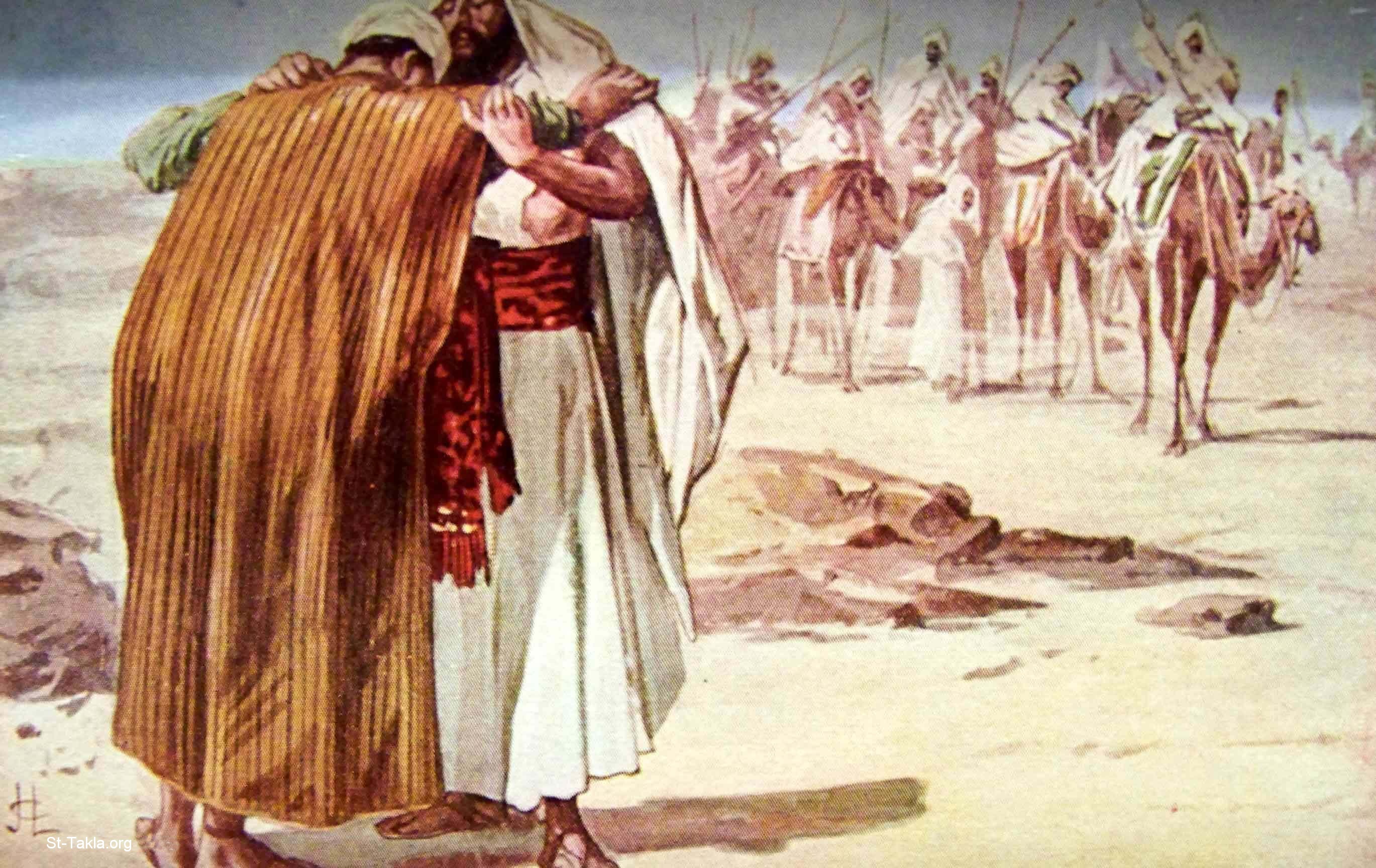
[First posted in 2014.  This series “Becoming Israel” follows the third generation patriarch from whom would issue twelve sons/twelve tribes who would thenceforth be called “Israelites” instead of Jacobites.  As previously explained, this series reflects Sinaite discussions and enables the straight-through reading of this chapter without commentary from our usual three sourcebooks. Our translation of choice is Everett Fox, The Five Books of Moses.—Admin.]


———————————


Notice the title:  this series is about Yaakov AKA Israel, so why is Esau mentioned first?  Hint:  not because he’s the firstborn who lost his birthright.  Character is key here.  His name does not change. Read on.


Getting a new name is easy and can happen overnight.  But  if the name isn’t simply for identification but has meaning that reflects character like most Hebrew names, then what takes time is for the bearer to live up to the meaning of his name.


Yaakov, after 20 years of being humbled and taken advantage of in the household of Laban sees the hand of God working in his favor on not a few occasions.  As a result his faith in the God of his father Isaac and his grandfather Avraham was progressively reinforced.  He starts undergoing a character transformation.  By the time he would face the moment he feared most—the revenge he expected from his brother Esau—he had changed from the man he was when he fled from home to avoid his twin’s revenge. 


For Yaakov the ‘chosen’, change is to be expected, he is renamed “Israel.”  


What about Esau, Mr. “hairy red”? He doesn’t undergo a name change . . . but has this man changed?


 ‘Israel,’ the changed man prepares to meet his twin Esau.  You would think that after wrestling with an angel and “prevailing” over “the divine Other” Yaakov would be highly-spirited enough to face his brother at the forefront of his travelling caravan. At first it appears like he’s a coward because look at how he arranges his entourage—


  • at the front are Bilhah and Zilpah and their children,
  • followed by Leah and her children,
  • then Rachel and Joseph.


Vs 3 however describes that Yaakov/Israel “advanced ahead of them,”  meaning, he did position himself in front. At least he gathered enough courage to meet Esau and his 400 men as the ‘head’ and not the ‘tail’.


Notice his body language at this point:  bowing seven times must have been a recognizable gesture of humility if not respect which Esau graciously responds to, for look at the words describing this changed twin Esau: 

  • “ran,”
  • “embraced,”
  • “flung himself upon his neck,”
  • “kissed”
  • and “wept.”  


What? Think of Esau the last time scripture describes him . . . angry, bitter, vengeful. What happened all the years between? He explains: 


God has shown me favor—for I have everything. 


The gracious God of Abraham, Isaac and Jacob is truly just and demonstrates in the lives of both Ismael and Esau, the ‘not chosen ones’, that He looks after their welfare as well:  


God has shown me favor.”


This unexpected behavior from Esau elicits a response from Yaakov/Israel that gives us a clue to how we “see” God in our midst.  When someone reflects the image of God within him, when we catch a glimpse of godlike character, this affects others in a positive way. Gracious God-like behavior is disarming, surprising, people don’t expect it so there is a surprising effect on others who witness it. 


 Israel says of Esau: 


For I have, after all, seen your face,

as one sees the face of God,

 and you have been gracious to me.  


This is similar to the lyrics of a song in the musical Les Miserables:  


“To love another person is to see the face of God”

—which sums up the changed life of its character Jean Valjean in the end.


What great models of right and proper behavior these brothers demonstrate for those caught in bitter sibling rivalry:  


  • the one who has done wrong recognizes his fault and repents and makes up,
  • on the other side, the wronged twin forgives and is quite willing to reconcile.


God is present in this scene indeed!


In behalf of Sinai 6000 

Core Community,

Sig-4_16colors


logo


Image from st-takla.org

Genesis/Bereshith 33 


1 Yaakov lifted up his eyes and saw:
there was Esav coming, and with him, four hundred men! 
He divided the children among Lea, Rahel, and the two maids: 
2 he put the maids and their children first,
Lea and her children behind them,
and Rahel and Yosef behind them, 
3 while he himself advanced ahead of them.
And he bowed low to the ground seven times, until he had come close to him, to his brother. 
4 Esav ran to meet him,
he embraced him,flung himself upon his neck,and kissed him.
And they wept. 
5 Then he lifted up his eyes and saw the women and the children, and said:
What are these to you?
He said:
—the children with whom God has favored your servant. 
6 Then the maids came close, they and their children, and bowed low. 
7 Then Lea and her children came close and bowed low.
Afterward Yosef and Rahel came close and bowed low. 
8 He said:
What to you is all this camp that I have met?
He said:
—to find favor in my lord’s eyes. 
9 Esav said:
I have plenty, my brother, let what is yours remain yours. 
10 Yaakov said:
No, I pray!
Pray, if I have found favor in your eyes,
then take this gift from my hand.
For I have, after all, seen your face, as one sees the face of God,
and you have been gracious to me. 
11 Pray take my token-of-blessing that is brought to you,
for God has shown me favor—for I have everything.
And he pressed him, so he took it. 
12 Then he said:
Let us travel on, and I will go on at your side. 
13 But he said to him:
My lord knows
that the children are frail,
and the sheep and the oxen are suckling in my care;
if we were to push them for a single day, all the animals would die! 
14 Pray let my lord cross on ahead of his servant,
while as for me, I will travel slowly,
at the pace of the gear ahead of me and at the pace of the children,
until I come to my lord, at Se’ir. 
15 Esav said:
Pray let me leave with you some of the people who are mine.
But he said:
For what reason?
May I only find favor in my lord’s eyes! 
16 So Esav started back that same day on his journey to Se’ir, 
17 while Yaakov traveled to Succot.
He built himself a house there, and for his livestock he made sheds.
Therefore they called the name of the place: Succot/Sheds. 
18 Yaakov came home in peace to the city of Shekhem, which is in the land of Canaan, on his homecoming from the country of Aram,
and he encamped facing the city. 
19 And he acquired the piece of territory where he had spread out his tent, from the Sons
of Hamor, Shekhem’s father, for a hundred lambs’-worth. 
20 There he set up a slaughter-site >
and called it: El/God, the God of Yisrael! 


Deuteronomy/Davarim 28: "And it will come to pass . . . IF . . ."

Image from www.youtube.com

Image from www.youtube.com

[First posted November 18, 2013.


Honestly . . . if God spells out what’s involved in the “IF” —obey or disobey—what part of “IF” do we not understand?


Would it not be better to stay on the safe side, since there is automatic blessing in obedience?  


For anyone clearly forewarned of dire consequences of disobedience ranging from bad, worse, to worst, what’s there to even think about?  Should one even have second thoughts? Surely everyone should opt for the blessing, is that so difficult considering the alternative?


But wait, there are conditions set to get the blessing and there’s the rub! And that’s where humans flunk. In fact, that’s where Israel flunked in its early history. There is precedent: the first couple in Eden were forewarned, yet look what happened . . . Cain was forewarned, but  . . . . so what’s the problem of humankind?  


The “I” in idolatry vs. the “I” in the Image of God.  Freedom of choice always requires two options, because there are two impulses at work within human nature.  Even if there are two impulses within, if there is only one choice, is free will still exercised?  


Consider this trivial example:  you really want to eat a lamb-burger and not a beef-burger;  but the burger fast-food place says they ran out of lamb-burger.  What choice are you left with?  Just one? take the beef?  Nah, you still can opt to try another place and if none, take the beef or change your mind and eat spaghetti.  Trivial, yeah; how about more difficult life-threatening or life-changing situations such as . . . .well, you think of one yourself and decide if —left with only one choice, what would you do?


When there is choice to do right or its opposite, granting one is informed of what is right and clearly God’s will—- why does man go for broke, meaning ‘MY will’ over and above God’s Will? Is this a universal experience?  In the case of Israel, according to its scripture-history, the chosen nation messed up  . . . a lot . . . over and over, until generations down the line learned lessons from consequences of their predecessors wrong choices. 


But let’s not look only at Israel; have other nations fared any better? 


Commentary here is from the best of Jewish minds as collected in one resource book by Dr. J.H. Hertz, Pentateuch and Haftorahs; our translation of choice is EF/Everett Fox, The Five Books of Moses.Admin1.]

———————


Deuteronomy/Davarim 28


THE BLESSINGS AND THE WARNINGS

After the solemn rehearsal of the Dooms, there follows a prescription of their effect and import.  ‘The Prophet has taught the higher law; he has rooted all human duty, both to God and man, in love of God; and now he tries to enlist man’s natural fear and hope as allies of his highest principle’ (Harper).  The Warning, as this chapter is called in Hebrew, is far more detailed than the parallel Warning in Lev. XXVI. ‘The language rises in this chapter to its sublimest strains:  and the prophecies respecting the dispersion and sufferings of the Jewish people in latter days are among the most remarkable in Scripture’ (Speaker’s Bible).

Image from seashoremary.wordpress.com

1-14.  THE BLESSINGS


1 Now it shall be: 
if you hearken, yes, hearken, to the voice of YHVH your God, 
taking-care to observe all his commandments that I command you today, 
then YHVH your God will make you most-high 
above all the nations of the earth.2 Then there will come upon you all these blessings, and overtake you, 
since you have hearkened to the voice of YHVH your God:

overake thee.  The blessings (and curses, v. 15) are personified as actual beings overtaking their objects.

3-6.  Six forms of blessing, covering Israel’s life in town and field, in offspring, crops, cattle, harvest, and daily bread.

3 Blessed be you, in the town, 
blessed be you, in the (open) field;4 blessed be the fruit of your womb, the fruit of your soil, and the fruit of your animals, 
the offspring of your cattle and the fecundity of your sheep.5 Blessed be your basket and your kneading-bowl.

thy basket . . . kneading-trough.  Metaphors for the annual harvest of fruit and daily bread.

6 Blessed be you, in your coming-in, 
blessed be you, in your going-out.

comest in . . . goest out. The blessing of safety in all the manifold activities of ordinary life.

7-13.  The Divine blessing will rest also on their larger enterprises, whether in peace or war.  Theirs will be victory over enemies; material success in all forms of labour, accompanied by religious and cultural supremacy among the nations.

7 May YHVH make your enemies, those that rise against you, 
be smitten before you; 
by one road they will go out against you, 
by seven roads they will flee before you.

seven ways.  A round number, indicating a great quantity.  The compact array of the advancing foe is contrasted with his dispersion, in manifold directions, after defeat.

8 YHVH will ordain for you the blessing 
in your storehouses, 
in all the enterprises of your hand, 
and he will bless you in the land that YHVH your God is giving you.
9 YHVH will establish you to be a people holy to him, 
as he swore to you, 
when you keep the commandments of YHVH your God a
nd walk in his ways.

a holy people. Set apart for Himself, and therefore inviolable.

10 Now when all the peoples of the earth see 
that the name of YHVH is proclaimed over you, 
they will hold you in awe.

called upon thee.  i.e. that He is thy Owner, and, as such, surrounds thee with His protection.

11 YHVH will leave-excess for you of good-things,
 in the fruit of your womb, the fruit of your animals, and the fruit of your soil, 
on the soil that YHVH swore to your fathers, to give them.12 YHVH will open for you his goodly treasuries, the heavens, 
by giving the rain of your land in its set-time, 
and by blessing all the doings of your hand; 
you will lend to many nations, 
but you yourself will not have to take-a-loan.

good treasure. The celestial reservoirs in which the rain was conceived to be stored; Job, XXXVIII,22.

shalt tend. A sign of wealth, as well as of power and independence.

13 YHVH will make you the head and not the tail, 
you will be only top, you will not be bottom, 
-if you hearken to the commandments of YHVH your God 
which I command you today, by taking-care and by observing 
(them),

only. Here in the meaning of ‘nothing but’; ever rising in reputation.

15-68.  THE WARNINGS

Image from lovestthoume.com

In the remainder of this chapter, the Lawgiver sets forth in words of awful power the fact that God’s laws have a reverse, as well as an obverse, side; that the Divine Covenant was indeed a hope and an encouragement, but also a responsibility and a warning.  ‘The sublimity of the denunciations surpasses anything in the oratory or the poetry of the whole world.  Nothing, except the real horrors of Jewish history, can approach the tremendous maledictions which warned Israel against the violation of the Law’ (Milman).  ‘Three times does the wave of holy passion rise and fall.  At first the exuberance of the woes enumerated overpowers our attention the musically parallel sentences, which in other speeches make perorations, here come for intervals of relief.  Another stream of denunciation brings the serving the LORD with joyfulness, and with gladness of heart by reason of the abundance of all things, into contrast with the serving of the enemy in hunger, and in thirst, and in nakedness, and in want of all things; and the siege laid by the enemy is extended in picture to the last horrors the mind can conceive.  Yet another flood of speech begins with the ‘glorious and fearful’ Name; and there passes before us the fading of the life of promise into plagues and exile; in exile, the trembling heart, and failing of eyes, and pining of soul; until for a final climax the original salvation of Israel is reversed in a voluntary returning to the land of bondage, the people selling themselves to their enemies for bondmen and bondwomen, a climax yet more final than this, for “no man shall buy you”‘ (Moulton).

The curses are national and not individual.  They are all of them conditional, declaring what God would bring on Israel in the event of its complete apostasy.  Israel’s survival of the Divine Judgment is due to the fact that Israel always possessed a ‘righteous remnant”.

14 that you not turn-aside from all the words that I command you today, 
to the right or to the left, 
by walking after other gods, by serving them.15 But it shall be: 
If you do not hearken to the voice of YHVH your God, 
by taking-care and by observing all his commandments and his laws 
that I command you today, 
then there will come upon you all these curses, and overtake you:

16-19.  These curses take the same verbal form as the blessing, v. 1-6, and express failure in every department of national life.

16 Damned be you, in the town, 
damned be you, in the (open) field;
17 damned be your basket and your kneading-bowl,
18 damned be the fruit of your womb and the fruit of your soil, 
the offspring of your cattle and the fecundity of your sheep;
19 damned be you, in your coming-in, damned be you, in your going-out.

20-26.  Disastrous years, fevers, droughts, and ruinous defeat in battle.

20 YHVH will send-forth against you
 Curse, Confusion and Reproach, 
against all the enterprises of your hand that you do, 
until you have been destroyed, until you have perished quickly 
because of the evil of your deeds by which you have abandoned me.

cursing.  The general term, particulars of which follow.

discomfiture. Inability to complete a task undertaken (Ibn Ezra).

rebuke. Failure to enjoy the fruit of one’s labours through constant anxiety and vexation.

21 YHVH will make-cling to you the pestilence, 
until it has finished you off from the soil that you are entering to possess.

pestilence.  Any dangerous epidemic.

22 YHVH will strike you 
with consumption, with fever and with inflammation, 
with violent-fever and with dehydration, 
with blight and with jaundice; 
they will pursue you until you are destroyed.

will smite thee. With seven plagues; five on men, and two on crops. The identification of the names of the plagues is by Macalister.

consumption. A wasting fever of the Mediterranean type.

fever. Malaria.

inflammation. Typhoid fever.

fiery heat. lit. ‘irritation’, erysipelas.

23 The heavens that are above your head will become bronze, 
and the earth that is beneath you, iron.
24 YHVH will make the rain of your land powder and dust;
 from the heavens it will come-down upon you 
until you perish.

power and dust. An allusion to the sirocco, with its fogs of sand and dust.

25 YHVH will cause you to be smitten before your enemies: 
by one road you will go-out against them, 
by seven roads you will flee before them- 
you will become an object-of-fright to all the kingdoms of the earth.

a horror unto.  Or, ‘a shuddering unto’; an awe-inspiring spectacle.

26 Your carcass will be for eating 
for all the fowl of the heavens and for the beasts of the earth, 
with none to make (them) tremble.

frighten.  As Rizpah’s mother-love did, II Sam. XXI,10.  So complete would be the rout, that the dead would lie unburied.

27-37.  Incurable diseases, mental blindness, a prey to cruel invaders, and ignominous exile.

27 YHVH will strike you 
with boils of Egypt 
and with tumors, with scabs, and with itching, 
from which you cannot be healed;

the boil of Egypt. VII,15.

28 YHVH will strike you 
with madness, with blindness, and with confusion of heart.

astonishment of heart.  Dismay; confusion of mind.

29 You will feel-about at noon 
like a blind-person feels about in deep-darkness, 
you will not make your way succeed; 
you will be, oh so withheld-from and robbed all the days, with no deliverer.

grope. Reduced to blind helplessness.

as the blind gropeth in darkness. ‘Rabbi Jose said, All my days I grieved at my not being able to explain this verse;  for what difference can it be to the blind man, whether he gropeth in the light of in the dark?  Until one night I was walking in the road, and met a blind man with a lighted torch in his hand.  ‘Son”, said I, “why dost thou carry that torch?  thou canst not see its light.”  “Friend,” replied the blind man, “true it is I cannot see, but as long as I carry this torch in my hand, the sons of men see me, take pity on me, and save me from pitfalls, from thorns and briers”‘ (Talmud).  Thus, the apparently superfluous phrase in darkness was to emphasize the greatness of the calamity that would befall Israel.  Even at noonday they were to grope as the blind do in the darkness, without a ray of light to exhibit their distress to the compassion of men.

30 A woman you will betroth, but another man will lie with her, 
a house you will build, but you will not dwell in it, 
a vineyard you will plant, but you will not put-it-to-use,

not use the fruit thereof.  See XX,6.  The helpless inhabitants would be at the mercy of insatiable conquerors, so that they could call nothing they possessed—not even their wives and children—their own.

31 your ox (will be) slaughtered before your eyes, but you will not eat of it, 
your donkey will be robbed (from you) in front of you, but it will not return to you, 
your sheep will be given to your enemies, with no deliverer for you.

before thine eyes.  Whilst thou art looking on, unable to raise a hand to prevent it.

32 Your sons and your daughters will be given to another people, 
while your eyes look on and languish for them all the day, 
with no God-power to your hand.

thy sons and thy daughters. History records several large deportations of Israelites to distant lands beyond the Euphrates.

33 The fruit of your soil and all that-you-toil-for 
will be consumed by a people that you have not known, 
you will be only withheld-from and downtrodden all the days,
34 and you will go mad from the sight of your eyes that you see!

be mad. i.e. be driven mad.

35 YHVH will strike you 
with evil boils upon the knees and upon the thighs, 
from which you cannot be healed- 
from the sole of your foot up to your crown.36 YHVH will drive you and your king whom you have raised over you 
to a nation that you have not known, (either) you or your fathers, 
you shall serve there other gods, of wood and of stone.

thy king.  II Kings XXIV reports that Jehoiachin was carried captive to Babylon with 10,000 of his subjects.

serve other gods, wood and stone. ‘Transportation to a heathen land would mean absorption into the religion, as well as into the life, of heathenism’ (Welch).

37 You will become an example-of-desolation, a proverb and a byword 
among all the peoples to which YHVH drives you.

a proverb.  A taunt.

byword.  lit. ‘the object of biting remarks.’

38-44.  Impoverished Israel reduced to dependence on the resident foreigner.

38 Much seed you will take out to the field, but little will you gather in, 
for locusts will ravage them.
39 Vineyards you will plant and till, but their wine you will not
 drink, nor will you store (it), 
for the worm will devour them.
40 Olive trees you will have throughout all your territory, but oil you will not (get to) pour-for-anointing, 
for your olives will drop off.
41 Sons and daughters you will beget, but they will not be yours, 
for they will go into captivity.

shall not be thine. With transportation to a foreign land, estrangement from their fathers, Faith and People must inevitably follow.  Such estrangement is deemed a curse in Mal. III,24.  Byalik calls attention to a similar estrangement of the children from their Faith and People in the present age, and considers it the supreme tragedy of the Spiritual Golus of the emancipation era.

42 All the trees and the fruit of your soil, the buzzing-cricket will possess.
43 The sojourner that is in your midst 
will rise-high above you, higher (and) higher, 
while you descend lower and lower;

the stranger. He who had received the charity of the Israelites, to him would they now have to look for commiseration.  They must learn to live as servants where they had once been masters.

44 he will lend to you, but you will not lend to him; 
he will become the head, but you will become the tail.
45 Now when there come upon you all these curses, 
and pursue you and overtake you, 
until you have been destroyed, 
since you did not hearken to the voice of YHVH your God, 
to keep his commandments and his regulations that I 
commanded you,

because. A return to the keynote of this whole chapter, V. 15.

46 they will be for you a sign and a portent, 
and for your seed, for the ages-

for a sign and for a wonder.  The calamities shall testify to the truth of the Divine interpretation in history.  As soon as they were prepared to acknowledge that what they suffered was not unmerited, there was still soundness in them, and they would receive mercy at the hands of God.

upon thy seed for ever. i.e. as long as they maintained their disobedience and rebelliousness.  But, as stated in Deut. XXX,103, should they ‘bethink themselves’ and ‘return’, then would they reap the blessings of restoration and prosperity.

47 because you did not serve YHVH your God in joy and in good-
feeling of heart out of the abundance of everything.
48 So you will have to serve your enemies, whom YHVH 
will send-forth against you, 
in famine and in thirst, in nakedness and in lack of everything;
 he will put a yoke of iron upon your neck, 
until he has destroyed you.

49-55.  Measure for measure.  Invasion by a far-off nation.  The horrors of seige.

49 YHVH will raise up against you
 a nation from afar, from the edge of the earth, 
like an eagle swooping-down,
a nation whose language you do not understand,

bring a nation against thee. The Assyrians and Babylonians.

50 a nation fierce of countenance 
that does not lift up the countenance of the elderly 
and (to) youths shows-no-mercy.

fierce countenance. Unyielding to considerations of humanity or pity.

51 It will devour the fruit of your animals and the fruit of your soil, 
until you have been destroyed; 
it will not leave for you grain, new-wine, or shining-oil,
the offspring of your cattle or the fecundity of your sheep, 
until it has caused-you-to-perish.
52 It will besiege you within all your gates, 
until the collapse of your walls, high and fortified, 
in which you were feeling-secure throughout all your land, 
and will besiege you within all your gates, throughout all your land that YHVH your God has given you.
53 You will consume the fruit of your womb, 
the flesh of your sons and of your daughters 
that he has given you, YHVH your God, 
in the siege and in the straits with which your enemy puts-you-in-straits.

eat the fruit of thine own body.  Hunger would so brutalize them see II Kings VI,25-29.

straiten thee. ‘Press you hard’ (Moffatt).

54 The tenderest man among you, the one exceeding daintiest- 
his eye shall be too set-on-evil toward his brother, toward the wife of his bosom, 
and toward the rest of his children that he has spared

shall be evil.  He would begrudge even this ghastly food to those nearest to him.

55 to give to (even) one of them some of the flesh of his children that he eats, 
because he has nothing left of anything 
in the siege and in the straits with which your enemy puts-you-in-
straits, within all your gates.
56 (She) tenderest among you, the daintiest-one, 
whose sole of foot has not essayed to be placed upon the earth 
out of daintiness and out of being-tender-
 her eye shall be set-on-evil against the husband of her bosom, 
against her son and against her daughter,
57 against her afterbirth that goes out from between her legs 
and against her children that she bears; 
indeed, she shall eat them, out of lack of everything, in secret, 
in the siege and in the straits with which your enemy puts-you-in-straits, within your gates.
58 If you do not carefully observe all the words of this Instruction, those written in this document, to hold-in-awe the Name, this honored and awe-inspiring one, 
YHVH your God,

fear this glorious and awful Name.  The adjective ‘glorious’ has reference to the majesty of God, to Whom fear (i.e. reverence) is due; ‘awful’ denotes God’s awe-inspiring nature.  Name is occasionally used as a synonym for Deity, or as denoting the Divine Presence; Lev. XXIV,11.

59 then YHVH will make-extraordinary the blows (against) you 
and the blows (against) your seed, 
blows great and lasting, sicknesses evil and lasting;

wonderful.  Extraordinary, exceptional.

60 he will return upon you every illness of Egypt 
 from which you shrank-in-fear, 
 so that they cling to you;
61 also every sickness and every blow that is not written in this document of Instruction 
 YHVH will bring up against you, 
 until you have been destroyed;
62 you will be left menfolk few-in-number, 
 in place of your having-been like the stars of the heavens for multitude,
 since you did not hearken to the voice of YHVH your God.
63 And it shall be: 
 as YHVH once delighted in you 
 by doing-good for you and by making-you-many,
 thus will YHVH delight in you 
 by causing you to perish and by destroying you, 
 and you shall be pulled up from the soil that you are entering to possess.

the LORD rejoiced over you. When a son walks in the right way, it is the father’s joy to help him and to show him kindness.  Should, however, the son fall into evil ways, then it is equally the father’s ‘joy’ to find some means—even painful ones—to bring him back to the right path.  In like manner, God ‘rejoices’ to bring upon sinful Israel the trials and sufferings of exile, in order thereby to purify and elevate him, and thus restore him to His favour.

64 YHVH will scatter you among all the peoples, 
from the edge of the earth to the (other) edge of the earth; 
you will serve there other gods, whom you have not known, 
(either) you or your fathers, 
of wood and of stone.

shall scatter thee . . . and stone. See on v. 36.

65 Yet among those nations you shall not find-repose, 
nor shall there be rest for the sole of your foot: 
YHVH will give you there a shuddering heart, failing eyes and languishing breath.

among these nations.  Israel is to have no rest—never-ceasing anxiety, life in perpetual jeopardy, an unendurable present, and a future of undefined terrors.

failing of eyes.  Usually taken to mean the gradual extinction of all hope; or, the eyes refuse their office, because they see only horror.

languishing of soul.  A mind tortured and restless.

66 Your life will hang-by-a-thread before you, 
you will be terrified night and day, 
and you will not trust in (the security of) your life.

life shall hang in doubt before thee.  Like an object suspended by a tender thread and held in front of one’s eyes—about to fall down and break at any moment; but see next comment.

no assurance of thy life.  ‘Thou shalt expect every moment to be thy last’ (Driver).  Better, thou shalt not believe in thy life; i.e. thou canst not believe that these happenings are happening to thee, that they are real; deluding thyself with the vain hope that it is all an evil dream (Steinthal).

67 At daybreak you will say: Who would make it sunset! 
And at sunset you will say: Who would make it daybreak! 
-out of the terror of your heart that you feel-in-terror, 
out of the sight of your eyes that you see.

in the morning thou shalt say. Even as he that suffers acute pain yearns for the hours to pass.  This v. graphically depicts the agonized uncertainty, protracted by day and by night.

68 YHVH will return you to Egypt in ships, 
by the route of which I had said to you: 
You shall not see it again any more! 
You will put yourselves up for sale there to your enemies as servants and as maids, 
with none to buy (you).

Image from www.saveyourheritage.com

bring thee back into Egypt. A culminating calamity. God repeats the prohibition mentioned in XVII,16, and they would be returned to Egypt, to the degradation of their erstwhile Egyptian serfdom.  At the destruction of Jerusalem by the Romans, both Titus and Hadrian consigned multitudes of Jews into slavery; and Egypt received a large proportion of those slaves.

in ships. They came forth from Egypt ‘600,000 men on foot’, a disciplined host of free warriors, but would be carried hither cooped up in slave-ships.  The Romans had a fleet in the Mediterranean, and this was an easier and safer way of transporting prisoners than by land across the desert.

sell yourselves. Better, offer yourselves for sale; ye will in vain seek and yearn to be bought as man-servants and maid-servants (Rashi).

no man shall buy you. Josephus records that when, at the Destruction of Jerusalem, the Roman troops grew weary of slaughter, 97,000 of the younger prisoners were spared.  Those over 17 years were sent to the mines, or to the arenas to fight as gladiators or against wild beasts; those under 17 were sold as slaves; but the market was so glutted that through offered at nominal prices, none would buy them!  Those who remained unpurchased were sent into confinement, where they perished by hundreds and thousands from hunger.

69.  SUPERSCRIPTION

If, in Hellas, the beautiful was conceived to be the fruit of joyful play;if, in Rome, serious will was held to lead to power and right; in Jerusalem, everything high and holy was deemed to be the vintage of suffering and sorrow’ (Steinthal).

69 These are the words of the covenant 
that YHVH commanded Moshe to cut with the Children of Israel 
in the land of Moav, 
aside from the covenant that he cut with them at Horev.

these are the words of the covenant.  A summary description of the contents of the whole chapter.

beside the covenant . . . in Horeb. A reference to the parallel section of the Warning in Lev. XXVI.

 

Numbers/Bamidbar 35: "for I am YHVH, Dweller in the midst of Israel!"

Image from oneyearbibleblog.com

[First posted October 23, 2013.


A God Who dwells among His people, Who travels with them, fights with them in their battles, performs miracles, instructs, reminds and warns . . . and forgives when true repentance is evidenced . . . .how blessed indeed is Israel compared to any other nation?  But with chosen-ness is great and grave responsibility, as Israel learns the hard way over and over again, from the time of their birth as a nation and throughout their history of 6 millennia.


An invisible God Who does dwell ‘in the midst of the sons of Yisra’el’ has to manifest His Presence in some visible way and so one tribe is set apart to serve Him and His symbolic dwelling — the Tabernacle. The Levites/”Leuiyiy” are treated just as differently in terms of land inheritance; that is, they do not inherit territories like the other tribes do, but instead they are given “cities to dwell in; and surrounding regions for the cities all around them”.  


The purpose of this strange legacy to a ‘holy’ tribe of the ‘holy’ nation?? Among others, what stands out is— that any “murderer that kills any nephesh inadvertently may flee there.”


What??!!  


The reason for reading the Hebrew Scriptures is to learn not so much about how Israel and the nations are to relate to the God of  ALL peoples, but more so to learn about that One True God. The best source — aside from His visible Creation — is the record of His acts in history, specifically the history of His chosen nation. As we continue reading through these seemingly ‘strange’ instructions, teachings, and commandments, we are exposed to and hopefully, begin to understand Divine Wisdom. The wisest of Torah-ignorant minds which have conceived man-made laws have not come close to any concept of a ‘city of refuge’, not in those days of antiquity although today, surely from exposure to the “Old Testament” of the Christian Bible, there are laws in civil society that make a distinction between premeditated murder/homicide, and accidental taking of life/involuntary manslaughter. The God of Israel has made it known to all of mankind that provision has been made for sins committed out of ignorance or unintentional sin . . . symbolized by the ‘city of refuge’ as well as the sin offerings; however, for intentional sin, there is only true repentance, a 180-degree turn-around.  


The taking of a life involves not only the cutting off of one man’s life.  The case of Abel, slain by his older brother Cain, is a sad reminder that not only Abel life was snuffed, but his progeny—2nd generation, 3rd generation and ALL future generations that could have been offsprings descended from him.  He had no line to be traced to; and that is the sad truth about life-taking for which only the Giver of Life has the prerogative to give and to take away.


The rabbis have much to contribute to the understanding of this chapter, so provided as usual is the commentary from Pentateuch and Haftorahs, ed. Dr. J.H. Hertz; translation is EF/Everett Fox The Five Books of Moses..—Admin1.]


LEVITICAL CITIES AND CITIES OF REFUGE.

1-8.  LEVITICAL CITIES

Forty-eight cities, with a portion of land attached to each, are to be set aside for the support of the Levites.  The carrying into effect of this law is given in Josh. XXI.  ‘The purpose of this institution seems to be the following.  The tribe consecrated to God’s service shall, through its equal distribution among the other tribes, be enabled to labour among them for the cause of God; guide those that seek instruction in His Law: and at the same time be saved from utter dispersion by living together in family groups in the Levitical cities.  Such distribution among the other tribes was further rendered necessary by the fact that the maintenance of the Levites depended on the tithes, given by the people’ (Dillmann).  According to Rabbinic tradition, the institution of Levitical cities ceased with the destruction of the first Temple.


Numbers/Bamidbar 35

1 YHVH spoke to Moshe, in the Plains of Moav, 
by Jordan-jericho, saying:
2 Command the Children of Israel,
that they may give over to the Levites, from their inherited holdings, towns to settle in, 
and pasture-land for the towns around them, give to the Levites.
 

[P&H]  Levitical Towns of Asylum (35): As a kind of appending to the previous chapter, and for a last mention of the Levites in Numbers, we are given what the Torah regards as an important innovation: the institution of the Towns of Asylum (or Refuge), whereby an accidental mans layer could avoid the expected bold vengeance of the dead person’s family. Greenberg (1959) has claimed that the specified towns probably were a substitute for what in other ancient Near Eastern societies was banishment; in his view, the idea of internal banishment presented here affirms the high and nonnegotiable value put on human life in the bible-even when it is ended by accident. Be that as it may, the law in this chapter puts a brake on a reality of ancient life.
it is likely that the towns in question were previously sacred Canaanite towns, and Frick has raises the interesting possibility that from that special character or status may have evolved the concept of citywide asylum (and not just at the alter a, temporary measure).


[EF] pasture-land: Land for “driving” (Heb. g-r-sh) animals to graze in.

[EF] cities to dwell in.  The Levites were to have the right to dwell in those cities, but the possession of these cities was vested in the tribe in whose territory the particular city was situated.

open land.  Or, ‘suburbs’.  An area consisting of an open space round about the city, serving to beautify it.  It was not permitted to build houses there, nor to plant vineyards or to sow a plantation’ (Rashi).

3 The towns shall be for them to settle in, 
and their pasture-lands shall be for their cattle, their property and for all their animals.
4 And the pasture-lands of the towns that you give to the Levites (shall be)
from the wall of the town and outward, a thousand cubits all around;

[EF]  the wall:   That is, its outer surface (Milgrom).

[EF] A thousand cubits:  About 1500 yards, or somewhat less than a mile.

5 you are to measure outside the city, the eastern limit: two thousand by the cubit,
and the Negev limit, two thousand by the cubit, 
and the seaward limit, two thousand by the cubit, 
and the northern limit, two thousand by the cubit, 
with the town in the middle. 
This shall be for them the pasture-lands of the towns.

two thousand cubits.  From the house of the city (‘the city being in the midst’).  The first thousand cubits for ‘open land’; and the other, for fields and vineyards (Rashi): or, the whole 2,000 cubits for a ‘common’ (Luzzatto).

[EF] two thousand by the cubit: This became the basis in later Jewish law for the maximum distance one could travel on the Sabbath (cf. Plaut for discussion).


6 And with the towns that you give to the Levites,
with the six towns of asylum that you give for fleeing-to for the accidental-murderer- 
along with them you are to give forty-two towns.

cities of refuge.  Places of asylum to shelter the involuntary homicide, see v.9-15.  Levitical cities were selected for this purpose; both because they were regarded as having a sacred character, and because they were inhabited by men who could decide in doubtful cases between wilful murder and accidental homicide.

7 All the towns that you are to give the Levites: 
forty-eight towns, 
them and their pasture-lands.
8 And the towns that you give (them) from the holdings of the Children of Israel-
from those that have-many you are to take-many, from those that have-few you are to take-few, each-one according to his inheritance that they receive-as-inheritance 
is to give of its towns for the Levites.

from the many.  The more populous the tribe, the more cities they were to provide for the Levites.  East of the Jordan, the Levites had ten such cities, and in Canaan proper 38.  The principle of proportionate giving was not literally carried out; the criterion was not the number of the cities given but rather their importance (Nachmanides).

9-15.  CITIES OF REFUGE

Six cities of refuge, three on either side of the Jordan, are to be set aside as places of asylum for accidental homicides.  These six cities did not need always to remain the same.  Others might be substituted, provided their situation conformed to the Biblical law with regard to distances and geographical position.

9 YHVH spoke to Moshe, saying:
10 Speak to the Children of Israel and say to them: 
When you cross over the Jordan, into the land of Canaan:
11 You are to select for yourselves (certain) towns, 
towns of asylum shall they be for you, 
for fleeing-to for the accidental-murderer, one who strikes down a life in error.

shall appoint you.  lit. ’cause to happen’; i.e. make ready, prepare.

may flee thither.  Any one guilty of unpremeditated taking of human life could escape to one of these cities and find shelter and protection.

12 The towns shall be for you for asylum from the (blood) redeemer, 
that the murderer not die 
until he can come before the community for judgment.

from the avenger.  Heb. goel, more usually, goel haddam, lit. ‘the avenger of blood’l ‘redeemer.’  It refers to the nearest representative of the family of the slain man, whose duty it was to ‘vindicate’ the death of the victim.  In primitive society, if one member of a family was murdered, an intolerable shame rested upon the family until ‘satisfaction’ had been inflicted on the manslayer at the hands of the ‘redeemer’ or avenger of the family honour.  It was the sacred aim of the Mosaic legislation to take the decision of the guilt or innocence of the manslayer out of the hands of the ‘avenger’, and assign it to an impartial tribunal.

before the congregation.  The tribunal of elders and judges appointed by the community to which the homicide belongs.  In later times, it was understood

13 And the towns that you provide-
six towns of asylum shall there be for you.
14 Three of the towns you are to provide across the Jordan, 
and three of the towns you are to provide in the land of Canaan,
towns of asylum they are to be,
15 for the Children of Israel, for the sojourner and for the temporary-settler among them, 
these six towns are to be for asylum,
for fleeing-to for anyone who strikes down a person in error.
16 But if with an iron instrument he struck him down, so that he died,
he is a murderer:
put-to-death, put-to-death must the murderer be!

[EF] iron: No one could be oblivious to what would likely result from hitting someone with such an instrument.

17 And if with a stone in hand through which one can die he struck him down, so that he died,
he is a murderer: 
put-to-death, put-to-death must the murderer be!

[EF] in hand: That is, large enough to fit in the hand.

18 Or with a wooden instrument in hand through which one can die he struck him down, 
so that he died, 
he is a murderer: put-to-death,
put-to-death must the murderer be!
19 As for the blood redeemer-
he may put-to-death the murderer,
upon meeting him, he may put-him-to-death.

[EF] meeting: Or, “coming across,” “encountering.”

20 Now if in hatred he pushed him, 
or threw (something) at him lying-in-wait, so that he died,
21 or in enmity struck him with his hand, so that he died,
put-to-death, put-to-death must be he who has struck, 
he is a murderer:
the blood redeemer may put the murderer to death, upon meeting him.
22 But if with suddenness, with no (previous) enmity, he pushed him, 
or threw at him any instrument, without lying-in-wait,
23 or with any stone instrument through which one can die, without seeing (him), 
he dropped it on him, so that he died
-now he was not his enemy, not one seeking his ill-
24 the community is to judge between the striker and the blood redeemer,
according to these regulations;
25 the community is to rescue the murderer from the hand of the blood redeemer,
and the community is to return him to his town of asylum, to which he fled; 
he is to stay in it until the death of the Great Priest 
who was anointed with the oil of holiness.
 

[EF]  Great Priest: High Priest.

26 But if the murderer goes out, yes, goes out 
from the border of his town of asylum, whence he fled,
27 and the blood redeemer finds him, outside the border of his town of asylum,
the blood redeemer may murder the murderer,
he has no bloodguilt.

[EF] finds: Or, “catches” (Fishbane 1988).

{EF[He has no bloodguilt: And hence cannot himself be executed for killing the murderer.

28 Indeed, in his town of asylum he must stay, until the death of the Great Priest;
after the death of the Great Priest 
the murderer may return to the land of his holding.
29 These shall be for you 
as a law of procedure into your generations, throughout all your settlements:
30 whoever strikes down a person, 
at the mouth of witnesses (only) may a murderer be murdered;
one witness (alone) may not testify against the person, to have-him-put-to-death.

[EF] one witness (alone): This became a central principle in later Jewish law (cf. also Deut. 19:15, where the minimum number of witnesses is stipulated at two).

31 You are not to accept a ransom for the life of a murderer, 
since he is culpable, (deserving) the death-penalty, 
indeed, he is to be put-to-death, put-to-death!
32 And you are not to accept a ransom 
for (him to) flee to his town of asylum, 
for (him to) return to settle in the land, 
until the death of the Great Priest.
33 You are not to corrupt the land that you are in, 
for the blood-it will corrupt the land, 
and the land will not be purged of the blood that has been shed upon it 
except through the blood of him who shed it.
 

[EF] corrupt: Murder is one of the major causes of such biblical pollution (adultery is another).


34 You are not to make-tamei the land in which you are settling,
in whose midst I dwell, 
for I am YHVH, 
Dweller in the midst of Israel!

Practical Morality of Some Founders of America.

[This was first posted October 16, 2012; contributed by Sinaite ELZ@S6K who has since passed away: 

We revive it this November where two holidays are celebrated in the USA: Veterans Day and Thanksgiving.—Admin 1.]

———————–
Image from www.pinterest.com

Image from www.pinterest.com

Absolute freedom of worship and religious practice was one of the greatest gifts of the Founding Fathers of the United States to the American people. It is interesting to note that many among them have religious beliefs, practices, and intentions that reflect their unwillingness to accept certain basic principles of the Christian faith.

Some of the Founding Fathers, often called “deists,” believe in God, referring to him as “Providence”. They were religious and morally good men, but their ways of thinking about God and human life differed from orthodox Christianity as the following statements taken from E. Bauman’s “God of our Fathers” clearly show:


1. George Washington
Image from www.gageacademy.org

Image from www.gageacademy.org

I now make it my earnest prayer that God would have you and the State over which you preside, in his holy protection, that he would incline the hearts of the citizens to cultivate a spirit of subordination and obedience to government; to entertain a brotherly affection and love for one another, for their fellow citizens of the United States at large, and particularly for their brethren who have served in the field; and, finally, that he would be most graciously pleased to dispose us all to do justice, to love mercy, and to demean ourselves with that charity, humility, and pacific temper of mind, which were the characteristics of the Divine Author of our blessed religion, and without a humble imitation of whose example in these things we can never hope to be a happy nation. (From a circular letter to the governors of the states, June 8, 1783)


I consider it an indispensable duty to close this last solemn act of my official life by commending the interests of our dearest country to the protection of Almighty God, and those who have the superintendence of them, to his holy keeping. (Address to Congress, Dec. 23, 1783)


Disposed, at every suitable opportunity to acknowledge publicly our infinite obligations to the Supreme Ruler of the Universe for rescuing our country from the brink of destruction; I cannot fail at this time to ascribe all the honor of our late successes to the same glorious Being. (Nov. 27, 1783)


If I could have entertained the slightest apprehension, that the constitution framed in the convention, where I had the honor to preside, might possibly endanger the religious rights of any ecclesiastical society, certainly I would never have placed my signature to it; and if I could now conceive that the general government might ever be so administered as to render the liberty of conscience insecure, I beg you will be persuaded, that no one would be more zealous than myself to establish effectual barriers against the horrors of spiritual tyranny, and every species of religious persecution. For you doubtless remember, that I have often expressed my sentiments that every man, conducting himself as a good citizen, and being accountable to God alone for his religious opinions, ought to be protected in worshipping the Deity according to the dictates of his own conscience. (May, 1789)
It would be peculiarly improper to omit in this first official Act, my fervent supplications to that Almighty Being who rules over the Universe, who presides in the Councils of Nations, and whose providential aids can supply every human defect, that his benediction may consecrate to the liberties and happiness of the People of the United States, a Government instituted by themselves for these essential purposes …


2. John Adams
Image from en.wikipedia.org

Image from en.wikipedia.org

I must be a very unnatural son to entertain any prejudices against the Calvinists, or Calvinism, according to your confession of faith; for my father and mother, my uncles and aunts, and all my predecessors, from our common ancestors, who landed in this country two hundred years ago, wanting five months, were of that persuasion. Indeed, I have never known any better people than the Calvinists. Nevertheless, I must acknowledge that I cannot class myself under that denomination. (July 8, 1820)


Ask me not, then, whether I am a Catholic or Protestant, Calvinist or Arminian. As far as they are Christians, I wish to be a fellow-disciple with them all. (Jan. 21, 1810)
It is the same vanity which gave rise to that strange religious dogma, that God elected a precious few (of which few, however, every man who believed the doctrine is always one) to life eternal, without regard to any foreseen virtue, and reprobated all the rest, without regard to any foreseen vice. A doctrine which, with serious gravity, represents the world as under the government of humor and caprice, and which Hottentots and Mohawks would reject with horror. (April 22, 1761)
Even since the Reformation, when or where has existed a Protestant or dissenting sect who would tolerate a free inquiry? The blackest billingsgate, the most ungentlemanly insolence, the most yahooish brutality is patiently endured, countenanced, propagated, and applauded. But touch a solemn truth in collision with a dogma of a sect, though capable of the clearest proof, and you will soon find you have disturbed a nest, and the hornets will swarm about your legs and hands and fly into your face and eyes. (1814)


I hate polemical politics and polemical divinity as cordially as you do, yet my mind has been involved in them for sixty-five years at least. For this whole period I have searched after truth by every means and by every opportunity in my power, and with a sincerity and impartiality, for which I can appeal to God, my adored Maker. My religion is founded on the love of God and my neighbor; on the hope of pardon for my offences; upon contrition; upon the duty as well as the necessity of supporting with patience the inevitable evils of life; in the duty of doing no wrong, but all the good I can, to the creation, of which I am but an infinitesimal part. (July 13, 1815)
The great and Almighty author of nature, who at first established those rules which regulate the world, can as easily suspend those laws whenever his providence sees sufficient reason for such suspension.


3. Thomas Jefferson
Image from en.wikipedia.org

Image from en.wikipedia.org

Our particular principles of religion are a subject of accountability to our God alone. I inquire after no man’s, and trouble none with mine; nor is it given to us in this life to know whether yours or mine, our friends or our foes, are exactly right. (Sept. 26, 1814)


I have ever thought religion a concern purely between our God and our consciences, for which we were accountable to him, and not to the priests. I never told my own religion, nor scrutinized that of another. I never attempted to make a convert, nor wished to change another’s creed. I have ever judged of the religion of others by their lives, and by this test, my dear Madam, I have been satisfied yours must be an excellent one, to have produced a life of such exemplary virtue and correctness. For it is in our lives, and not from our words, that our religion must be read. (Aug. 6, 1816)


I hold the precepts of Jesus, as delivered by himself, to be the most pure, benevolent, and sublime which have ever been preached to man. I adhere to the principles of the first age; and consider all subsequent innovations as corruptions of this religion, having no foundation in what came from him. The metaphysical insanities of Athanasius, of Loyola, and of Calvin, are, to my understanding mere relapses into polytheism, differing from paganism only by being more unintelligible. The religion of Jesus is founded in the unity of God, and this principle, chiefly, gave it triumph over the rabble of heathen gods then acknowledge. Thinking men of all nations rallied readily to the doctrine of one only God, and embraced it with the pure morals which Jesus inculcated. (Nov. 4, 1820)


To the corruptions of Christianity I am indeed opposed; but not to the genuine precepts of Jesus himself. I am a Christian, in the only sense in which he wished any one to be; sincerely attached to his doctrines, in preference to all others; ascribing to himself every human excellence; and believing he never claimed any other. (April 21, 1803)


The doctrines of Jesus are simple, and tend all to the happiness of man.
1. That there is only one God, and he all perfect.
2. That there is a future state of rewards and punishments.
3. That to love God with all thy heart and thy neighbor as thyself is the sum of religion. (June 26, 1822)


The religion of Jesus is founded in the unity of God, and this principle, chiefly, gave it triumph over the rabble of heathen gods then acknowledged … No one sees with greater pleasure than myself the progress of reason in its advances toward rational Christianity. When we shall have done away the incomprehensible jargon of the Trinitarian arithmetic, that three are one, and one is three; when we shall have knocked down the artificial scaffolding, reared to mask from view the simple structure of Jesus; when, in short, we shall have unlearned everything which has been taught since his day, and got back to the pure and simple doctrines he inculcated, we shall then be truly and worthily his disciples; and my opinion is that if nothing had ever been added to what flowed purely from his lips, the whole world would at this day have been Christian.


Of all the systems of morality, ancient or modern, which have come under my observation, none appear to me so pure as that of Jesus. He who follows this readily need not, I think, be uneasy, although he cannot comprehend the subtleties and mysteries erected on his doctrines by those who, calling themselves his special followers and favorites, would make him come into the world to lay snares for all understandings but theirs.


The truth is, that the greatest enemies to the doctrines of Jesus are those, calling themselves the expositors of them, who have perverted them for the structure of a system of fancy absolutely incomprehensible, and without any foundation in his genuine words. And the day will come, when the mystical generation of Jesus, by the Supreme Being as his father, in the womb of a virgin, will be classed with the fable of the generation of Minerva in the brain of Jupiter. But we may hope that the dawn of reason and freedom of thought in these United States, will do away all this artificial scaffolding and restore to us the primitive doctrines of this the most venerated reformer of human errors.


The whole history of these books (the Bible) is so defective and doubtful, that it seems vain to attempt minute inquiry into it; and such tricks have been played with their text and with the texts of other books relating to them, that we have a right from that cause to entertain much doubt what parts of them are genuine. In the New Testament there is internal evidence that parts of it have proceeded from an extraordinary man; and that other parts are of the fabric of very inferior minds. It is as easy to separate those parts, as to pick out diamonds from dunghills. (Jan. 24, 1814)


4. James Madison
Image from www.americassurvivalguide.com

Image from www.americassurvivalguide.com

If the Church of England had been the established and general religion in all the northern colonies as it has been among us here, and uninterrupted tranquility had prevailed throughout the continent, it is clear to me that slavery and subjection would have been gradually insinuated among us. Union of religious sentiments begets a surprising confidence, and ecclesiastical establishments tend to great ignorance and corruption; all of which facilitate the execution of mischievous projects.


I want again to breathe your free air. I expect it will mend my constitution and confirm my principles. I have indeed as good an atmosphere at home as the climate will allow; but have nothing to brag of as to the state and liberty of my country. Poverty and luxury prevail among all sorts; pride, ignorance, and knavery among the priesthood, and vice and wickedness among the laity. This is bad enough, but it is not the worst I have to tell you. That diabolical, hell-conceived principle of persecution rages among some; and their eternal infamy, the clergy can furnish their quota if imps such business. This vexes me the worst of anything whatever. There are at this time in the adjacent county not less than five or six well-meaning men in close jail for publishing their religious sentiments, which in the main are very orthodox. I have neither patience to hear, talk, or think of anything relative to this matter; for I have squabbled and scolded, abused and ridiculed, so long about it to little purpose, that I am without common patience. So I must beg you to pity me, and pray for liberty of conscience to all. (Nov. 9, 1772)


Because we hold it for a fundamental and undeniable truth, “that Religion or the duty which we owe to our Creator and the manner of discharging it, can be directed only be reason and conviction, not by force or violence.” The religion then of every man must be left to the conviction and conscience of every man; and it is the right of every man to exercise it as these may dictate. This right is in its nature an unalienable right.


It is doubtless to be wished, that the power of prohibiting the importation of slaves had not been postponed until the year of 1808, or rather that it had been suffered to have immediate operation. But is it not difficult to account, either for this restriction on the general government, or for the manner in which the whole clause is expressed. It ought to be considered as a great point in the favor of humanity, that a period of twenty years may terminate forever, within these states, a traffic which has so long and so loudly upbraided the barbarism of modern policy.
(1787)That it (emancipation) ought, like remedies for other deep-rooted and widespread evils, to be gradual, is so obvious, that there seems to be no difference of opinion on that point. To be equitable and satisfactory, the consent of both the master and the slave should be obtained. (1819)


To be consistent with existing and probably unalterable prejudices in the United States, the freed blacks ought to be permanently removed beyond the region occupied by, or allotted to, a white population. The objections to a thorough incorporation of the two people are … insuperable. (1819)


5. Benjamin Franklin
Image from www.sodahead.com

Image from www.sodahead.com

I had been religiously educated as a Presbyterian; and though some of the dogmas of that persuasion, such as the eternal decrees of God, election, reprobation, etc., appeared to me unintelligible, others doubtful, and I early absented myself from the public assemblies of the sect, Sunday being my studying day, I never was without some religious principles. I never doubted, for instance, the existence of the Deity; that he made the world and governed it by his Providence; that the most acceptable service of God was the doing good to man; that our souls are immortal; and that all crime will be punished, and virtue rewarded, either here or hereafter. (Autobiography)


You desire to know something of my religion. It is the first time I have been questioned upon it. But I cannot take your curiosity amiss, and shall endeavor in a few words to gratify it. Here is my creed. I believe in one God, Creator of the Universe. That he governs it by his Providence. That he ought to be worshipped. That the most acceptable service we render to him is doing good to his other children. That the soul of man is immortal, and will be treated with justice in another life respecting its conduct in this. These I take to be the fundamental principles of all sound religion, and I regard them as you do in whatever sect I meet with them.


(March 9, 1790)
My parents had early given me religious impressions, and brought me through my childhood piously in the Dissenting way. But I was scarce fifteen, when, after doubting by turns of several points, as I found them disputed in the different books I read, I began to doubt of Revelation itself. Some books against deism fell into my hands; they were said to be the substance of sermons preached at Boyle’s Lectures. It happened that they wrought an effect on me quite contrary to what was intended by them; for the arguments of the deists, which were quoted to be refuted, appeared to me much stronger than the refutations; in short, I soon became a thorough deist.
As to Jesus of Nazareth, my opinion of whom you particularly desire, I think the system of morals and his religion, as he left them to us, the best the world ever saw or is likely to see; but I apprehend it has received various corrupting changes, and I have, with most of the present dissenters in England, some doubts as to his divinity; though it is a question I do not dogmatize upon, having never studied it, and think it needless to busy myself with it now, when I expect soon an opportunity of knowing the truth with less trouble.


6. Thomas Paine
Image from www.history.org600

Image from www.history.org600

I believe in one God, and no more; and I hope for happiness beyond this life.

The true deist has but one Deity; and his religion consists in contemplating the power, wisdom, and benignity of the Deity in his works, and in endeavoring to imitate him in everything moral, scientific, and mechanical.


Do we want to contemplate God’s power? We see it in the immensity of the creation. Do we want to contemplate His wisdom? We see it in the unchangeable order by which the incomprehensible whole is governed. Do we want to contemplate his munificence? We see it in the abundance with which He fills the earth. Do we want to contemplate His mercy? We see it in His not withholding that abundance even from the unthankful.


Deism is the only profession of religion that admits of worshipping and reverencing God in purity, and the only one on which the thoughtful mind can repose with undisturbed tranquility. God is almost forgotten in the Christian religion. Everything, even the creation, is ascribed to the son of Mary.


In religion, as in everything else, perfection consists in simplicity. The Christian religion of Gods within Gods, like wheels within wheels, is like a complicated machine that never goes right, and every projector in the art of Christianity is trying to mend it. It is its defects that have caused such a number and variety of tinkers to be hammering at it, and still it goes wrong.


The head of the Christian Church is the person called Christ, but the head of the church of the theists, or deists, as they are more commonly called is God Himself; and therefore the word “theology” belongs to that Church which has Theos or God for its head, and not to the Christian Church which has the person called Christ for its head.

Exodus/Shemoth 6: Who's Who!

[This was first posted October 2012, reposted October 14, 2014.   Commentary is by NSB@S6K.  Translation:  EF Everett Fox, The Five Books of Moses.  The regular commentaries usually featured will be added later; for now we are simply changing the translation from our former choice. .—Admin1.]


Image from slideplayer.com

Image from slideplayer.com


If you suddenly heard an audible voice speaking to you from out of nowhere (not just in your head), what would you think?  How would you react?  Would you conclude it’s God speaking to you?  If there is not a soul around, you might, but it depends on the message.  


If you know the True God and what He has said as recorded in the Hebrew Scriptures, you would recognize His “voice” through His “message.”  So how vital is it to know that message, that original revelation?


Now if you were a Christian believing in the devil and his heirarchy of demonic spirits, there are books and books about deception coming from that “demonic” realm so you’d have to be discerning about who’s speaking to you, might be the ENEMY of your soul; he’s well caricatured in the New Testament scriptures, enough to be recognizable; just make sure you’re not hearing your own deluded thinking. 


When we receive a phone-call, isn’t the first thing we ask if the voice is unfamiliar, “who is this please?” But the biblical narratives thus far make it appear that hearing God’s voice was the most natural thing for these biblical figures to experience, so they interact with that speaking God . . . just like Moses here.


Here’s an enigma:  Has any other god (of man’s imagination) ever spoken to mankind except in legends and myths passed on by word of mouth or in written literature  (man-made scriptures included) and unquestioningly accepted by generation after generation?  Why should the One True God even feel threatened by the non-existence of non-gods, what other god exists to compete with Him? Obviously none . . . except that He has to compete with gods in men’s minds and belief systems.  


How ironic, God creates humankind, and humankind create their gods, subjecting themselves to ideas that control their behaviour by superstition, myths and legends, and scriptures of questionable sources.  Agnostics and atheists are way ahead of religionists. The study of world religions is truly fascinating, one man or a group of men decide who god is, what god is like, then make rules, convince or coerce others to believe, and a religious system is born.  (Please read this post:  Revisit: A Crash Course in Comparative Religion).


When you look at the pantheon of any belief system’s gods, could you really believe that men would worship created things, are men that gullible?  Especially if the Creator has taken pains to add to the witness of His awesome creation that He indeed exists, His Revelation which now we read in His TORAH, in this time and age?


Exodus/Shemoth 6

 
1 YHWH said to Moshe:  
Now you will see what I will do to Pharaoh:  
for with a strong hand he will send them free,
and with a strong hand he will drive them out of his land.  
2  God spoke to Moshe,
he said to him:
I am YHWH.  
3 I was seen by Avraham, Yitzhak, and by Yaakov
as God Shaddai,
but (by) my name YHWH I was not known to them.
 

 Did Adam and Eve know the name of the Creator who spoke to them?  Did Cain and Abel? Noah? Abraham, Isaac and Jacob? How did they know WHO was speaking to them?  Did any of them ask?  


From what we have so far read, Genesis to Exodus 6, the speaking God who picked out these familiar biblical figures had not given anyone His Name.  It appears He merely shared the same generic word for deity.


Why did Mosheh not know the Name?  Did he even know this God enough to seek Him? Did any of the Hebrews in Egypt know? We can only guess from their actuations.  For the first 40 years of Mosheh’s life, apparently not; in fact,  it was this God Who sought Mosheh, just like He sought out  Abraham and all the others. Does the True God really do that, just pick out at random from clueless humans and inform them about Who He Is and what He intends to do. . . or does He respond to the individual who seeks Him? 


Deuteronomy/Davarim 4:29  

 
29 But when you seek YHVH your God from there 
 you will find (him),
 if you search for him with all your heart and with all your being.


The context is the prophesied exile of God’s people who, because they keep seeking other gods, He gives them what they seek . . . only then will they learn.  Is it applicable to others, not just Israelites, not just the Jews?  Why not, gentiles are just like the Jews, they could just as easily get diverted by non-gods, He lets us go our way . . . hopefully we learn and if we keep seeking Him, we’ll get there.  Just look at the journey we each have taken all our lives and look at where we have finally arrived!

 
4 I also established my covenant with them, 
to give them the land of Canaan, 
the land of their sojournings, where they had sojourned.
5 And I have also heard the moaning of the Children of Israel, 
whom Egypt is holding-in-servitude, 
and I have called-to-mind my covenant.
6 Therefore, 
say to the Children of Israel:
 I am YHVH; 
I will bring you out
 from beneath the burdens of Egypt, 
I will rescue you
 from servitude to them,
I will redeem you 
with an outstretched arm, with great (acts of) judgment;
7 I will take you
 for me as a people, 
and I will be for you
 as a God; 
and you shall know 
that I am YHVH your God, 
who brings you out 
from beneath the burdens of Egypt.
8 I will bring you
 into the land (over) which I lifted my hand (in an oath) to give to Avraham, to Yitzhak, and to Yaakov. 
I will give it to you as a possession, 
I, YHVH.
9 Moshe spoke thus to the Children of Israel. 
But they did not hearken to Moshe, 
out of shortness of spirit and out of hard servitude.
10 YHVH spoke to Moshe, saying:
11 Go in, speak to Pharaoh king of Egypt, 
that he may send free the Children of Israel from his land.
12 Moshe spoke before YHVH, saying: 
Here, (if) the Children of Israel do not hearken to me, 
how will Pharaoh hearken to me? 
-and I am of foreskinned lips!
13 YHVH spoke to Moshe and to Aharon, 
and charged them to the Children of Israel and to Pharaoh king of Egypt, 
to bring the Children of Israel out of the land of Egypt.
 

The Christian Scriptures renamed the Hebrew Scriptures as we know, so this 2nd book of TORAH is better known as EXODUS . . . but it should really be known as the original recorders and custodians, the Jews, chose to name it, according to its opening lines: “And These are the Names of the children of Israel” . . . or simply NAMES.


Beginning with the unnamed baby drawn from the water, the unnamed Hebrew mother and sister, the unnamed Pharaoh’s sister as well as the unnamed Pharaoh himself, the names are gradually known, as well as and most specially the Sacred Name, HaSHEM . . . YHWH. 


This book of names continues . . . .

 
14 These are the heads of their Fathers’ Houses: 
The sons of Re’uven, firstborn of Israel: Hanokh
and Pallu, Hetzron and Karmi, 
these are the clans of Re’uven.
15 And the sons of Shim’on: Yemuel, Yamin, Ohad, Yakhin and Tzohar, and Sha’ul the son of the Canaanite-woman, 
these are the clans of Shim’on.
16 Now these are the names of the Sons of Levi according to their begettings: 
Gershon, Kehat and Merari. 
Now the years of Levi’s life were seven and thirty and a hundred years.
17 The sons of Gershon: Livni and Shim’i, according to their clans.
18 And the sons of Kehat: Amram, Yitzhar, Hevron and Uzziel. 
Now the years of Kehat’s life were three and thirty and a hundred years.
19 And the sons of Merari: Mahli and Mushi. 
These are the Levite clans, according to their begettings.
20 Amram took himself Yokheved his aunt as a wife, 
she bore him Aharon and Moshe. 
Now the years of Amram’s life were seven and thirty and a hundred years.
21 Now the sons of Yitzhar: Korah, Nefeg and Zikhri.
22 And the sons of Uzziel: Mishael, Eltzafan and Sitri.
23 Aharon took himself Elisheva daughter of Amminadav, Nahshon’s sister, as a wife. 
She bore him Nadav and Avihu, Elazar and Itamar.
24 Now the sons of Korah: Assir, Elkana and Aviasaf; these are the Korahite clans.
25 Elazar son of Aharon took himself one of Putiel’s daughters for himself as a wife, 
she bore him Pin’has. 
These are the heads of the Levite father-groupings according to their clans.
26 That is (the) Aharon and Moshe to whom YHVH said: 
Bring the Children of Israel out of the land of Egypt by their forces;
27 those (were they) who spoke to Pharaoh king of Egypt, to bring the Children of Israel out of Egypt, 
that Moshe and Aharon.
28 So it was on the day that YHVH spoke to Moshe in the land of Egypt,
29 YHVH spoke to Moshe, saying:
 I am YHVH; 
speak to Pharaoh king of Egypt all that I speak to you.
30 Moshe said before YHVH: 
If I am of foreskinned lips, 
how will Pharaoh hearken to me?


Mosheh keeps referring to his “foreskinned lips”; other translations use “unclean lips” or “uncircumcised lips”.  For a discussion of what Mosheh means by this self-assessment, please read this post:  

 
NSB@S6K, for SINAI 6000
logo