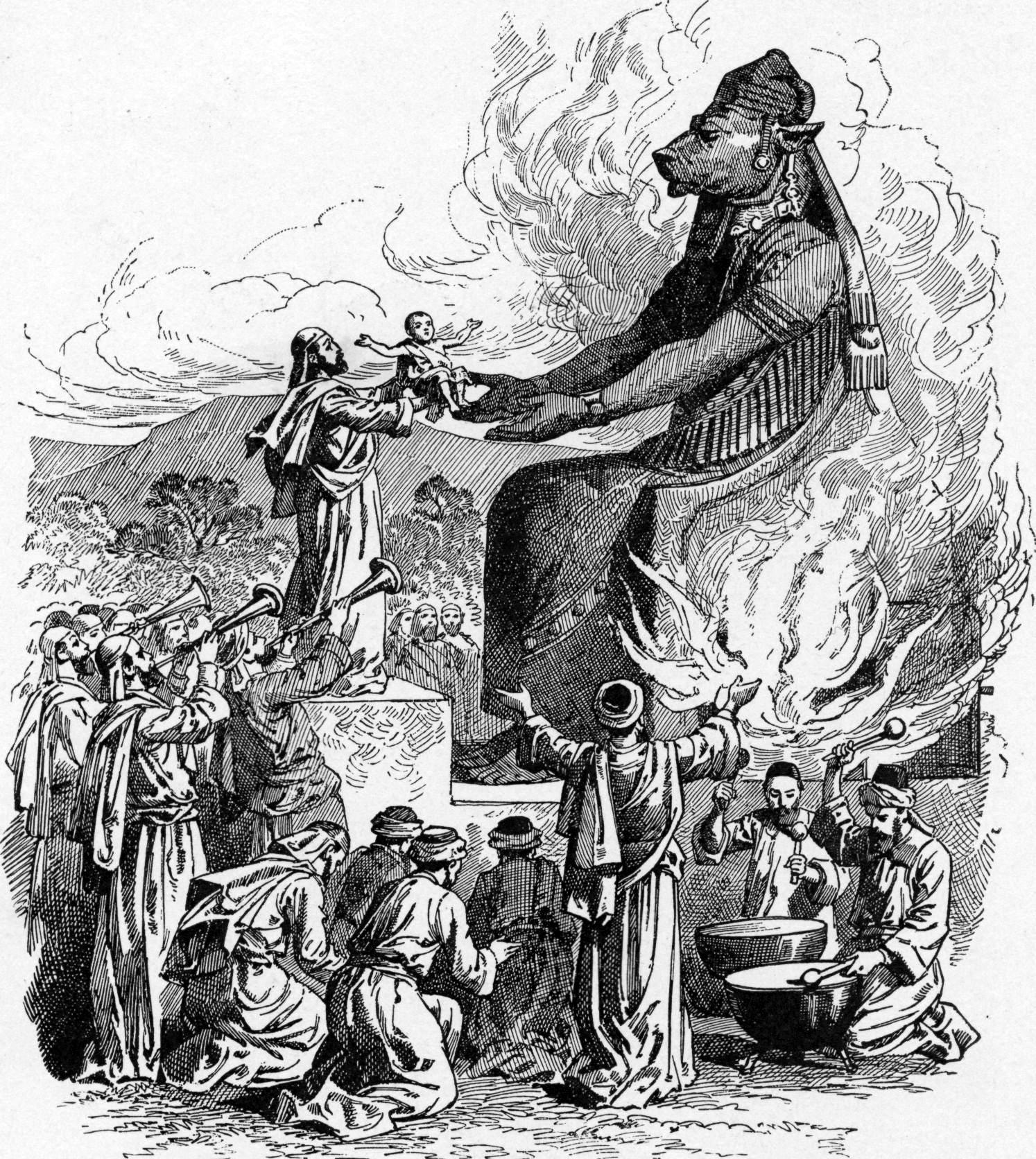
Israel: The Only Nation with a Distinctive National Identity

[First posted in 2012; written by  Sinaite “ELZ” who has since passed on to Spiritual Sinai to finally meet the God she had loved and sought all her life: 

For the short time she was a Sinaite, she contributed many articles to this website, many of which were chapters from her doctoral dissertation on the book of Exodus:

ELZ also encouraged her students at the Christian seminary where she taught, to contribute articles:

Lord, how we miss ELZ and our other elder Sinaite VAN, two valuable original organizers of our Sinai 6000 core community whose names, for certain, are written in Your Book of Life!—Admin 1.]


———————-


National identity is defined as the unique character that binds a body of people in their national life.  It features a distinctive inheritance and common experiences of meaningful events.  Israel’s nationalism is seen through the eye  of faith of those who carried on their ancestral promises and encountering struggles to witness their realization.


The spiritual values of God’s promises and man’s commitment directed Israel to a faith and worship that define their identity as a peculiar people, a holy nation that is separated from the world system.  The Sabbath, circumcision, and Passover are kept as reminders of God’s faithfulness to his promises. The moral and ethical imperatives that govern the people of God account for the distinctiveness and identity of the nation.  Firmly stipulated is the theocratic rule, God as the standard of goodness, and prohibition of idolatry.  God’s demand in the law has for its consequence an ethical life that is pleasing to God.


The Hebrews were naturally influenced by all the great civilizations with which they had cultural relationships, including those ofMesopotamia,Egypt,Phoenicia,Persia, andGreece.  Hebrew religion, an ethical monotheism with high social ideals, is unique in human history.  The faith and worship of the ancient patriarchs reflects three great observances: circumcision, sacrifices, and the Sabbath. The rite of circumcision was observed by Israel in Egypt:


Then Zipporah took a sharp stone, and cut off the foreskin of her son, and cast it at his feet, and said, Surely a bloody husband art thou to me.  So he let him go: then she said: A bloody husband thou art, because of the circumcision. (Exodus 4:25-26)


 The proposal to celebrate a great sacrificial feast in the wilderness implies that sacrificial worship has maintained its hold upon the people: 


And Pharaoh called for Moses and for Aaron, and said, Go ye, sacrifice to your God in the land. And Moses said, It is not meet to do so; for shall sacrifice the abomination of the Egyptians to the Lord our God: lo shall we sacrifice the abomination of the Egyptians before their eyes, and will they not stone us? We will go three days’ journey into the wilderness, and sacrifice to the Lord, our God, as he shall command us.  And Pharaoh said, I will let you go, that ye may sacrifice to the Lord, your God in the wilderness; only ye shall not go very far away: intreat for me (Exodus 8:25-28).


The Sabbath is marked by the direction to gather on the Friday two days provision of manna: 


And it came to pass, that on the sixth day they gathered twice as much bread, two omers for one man: and all the rulers of the congregation came and told Moses.  And he said unto them, This is that which the Lord hath said, Tomorrow is the rest of the holy Sabbath unto the Lord: bake that which ye will bake today, and seethe that ye will seethe; and that which remaineth over lay up for you to be kept until the morning (Exodus 16:22-23).


 The manna was to be gathered every morning and would not keep but a single day.  But on the sixth day, a double quantity was to be gathered to supply the Sabbath since none fell on the seventh day.  On any other day, if a surplus quantity was gathered,   it spoiled but this quantity reserved for the Sabbath, kept pure and sweet.


Sabbath means rest-the term that describes the relief from whatever pointless or selfish wanderings have wearied the soul.  It is the common-sense recognition of the need for periodic rest as God himself rested on the seventh day:


“Six days thou shalt do thy work, and on the seventh day thou shalt rest: that thine ox and thine ass may rest, and the son of thy handmaid, and the stranger, may be refreshed” (Exodus 23:12).


The introduction of the Sabbath command by the word“Remember” convey the impression of previous observance that started at Mount Sinai: 


Remember the Sabbath day, keep it holy. Six days shalt thou labour, and do all thy work: But the seventh day is the Sabbath of the Lord thy God: in it thou shalt not do any work, thou nor thy son, nor thy daughter, thy manservant, nor thy maidservant, nor thy cattle, nor thy stranger that is within thy gates: For in six days the Lord made heaven and earth, the sea, and all in them is, and rested the seventh day: wherefore the Lord blessed the Sabbath day, and hallowed it (Exodus 20:8-11).


 There are indications that Israel’s ancestors had been under the influence of religious views that prevailed throughout the Fertile Crescent, from Mesopotamia to Egypt.  Accordingly, the Exodus was not just a flight from political oppression but was a departure from the religions of the ancient world, from the myths that expressed the relationship between the social order and the divine order of reality.  The religious rituals and ceremonial laws signify the religiosity of the Israelites, but they are not separated from the world.  Nothing can please God which is not clearly separate from evil.  Hence, the holy nation as required by a holy God should be “separated, set apart” as the Hebrew term for “holy” generally means.


The Passover is an annual religious rite which has been central to the life and history of the Hebrew people.  It marks the occasion, describes the ritual, and declares the purpose of the Feast.  The temptation to use Sabbath day for unworthy purposes is seen throughout Israel’s history.  People could be found who were unable to confine their personal and often selfish interests and activities to six days a week.


The God of the Hebrews was different from other gods whom Israel must have seen, and some have worshipped them in Egypt.  He required reverence and honor; an observance of the Sabbath; due honor toward parents.  He prohibited murder, impurity, theft, lying, and covetousness.  When the Israelites remove these acts from their lives, God’s demands would soon result in an ethical life that is pleasing to him who would be their God, and they would be his people-a holy nation: 


Now therefore, if ye will obey my voice indeed, and keep my covenant, then ye shall be a peculiar treasure unto me above all people: for all the earth is mine:  And ye shall be unto me a kingdom of priests, and an holy nation. These are the words which thou shalt speak unto the children of Israel (Exodus 19:5-6).


 Judgment fell upon Egypt, and the strange remorseful appeal of Pharaoh that the people should leave.  So they passed out, and in that passing, the national life began. Mount Sinai was the birthplace of the Hebrew nation.  It was there that the covenant was given to Moses.  The people stayed there for a whole year to establish the permanent covenant relationship between God and Israel. The covenant laid its foundation in the moral, judicial, and ceremonial law given by God to make them a “peculiar nation.”  They passed from slavery to freedom, from brutal oppression to life under advantageous authority, from disgrace, which slavery always brings, to dignity, which life under true government ensures.  Israel’s nationalism regards the conviction that the gift of the land was the supreme sign of Yahweh’s benevolence toward the people.


God called Israel’s family his “chosen people.” By the time of the great exodus, Egypt had been destroyed-  their crops, their wealth, and the army were gone.  God dwelt with them for 40 years as a cloud by day and a pillar of fire by night.  God never did this to any other nation on earth.  The oneness of the chosen people consists in their receiving God’s promises and experiencing their fulfillment.  The “God of their fathers” is not the abstract, philosophical god of the ancient Near East.  He is a God who acts, not just a central idea for an ethical way of life.  He is a God who reveals himself, who builds upon what he has said and done before.  He is known by his people, through his people, among his people.


As Exodus is interpreted by faith from Israel’s standpoint, the events are not just the ordinary rendering of wars, population movement, and cultural advance or decline.  It is the disclosure of God’s activity in events, the working out of God’s purposes in the career of Israel. Israel’s sense of identity has not prevented her people from sending the repercussions of its influence far and wide into the oceans of history.


ELZ@S6K

Israel represents the greatest national success story of all time.


Israel will soon be celebrating  the day it re-assumed its place among the recognized nations of the world in the 20th century.


Sinaites are among those who pray for Israel and seriously take the pronouncements of the God of Israel in  the Hebrew Scriptures regarding its divinely ordained destiny. We are proud that two of our presidents, Manuel L. Quezon and Manuel Roxas played significant roles as ‘friends of Israel’ at crucial times in the struggle for existence of the chosen people with a distinct destiny.  May our nation be among the ‘blessed’ of YHWH.


This is from one of our recommended links, aish.com/https://mail.google.com/mail/ca/u/1/#trash/14ce6678f9b51e31 which traces its original publication to the Jerusalem Post/www.jpost.com.  Reformatting and images added.Admin1.]

————————–


Israel Independence Day: Reason to Rejoice


The Bible quotes Balaam describing the Jews as “a people that dwells alone and is not counted among the nations”. Alas, that aptly describes the status of the Jewish state on the 67th anniversary of its rebirth. Yet despite enormous challenges confronting us, we have every reason to celebrate.


Yes, Israel is the only country in the world whose right to exist and defend itself is continuously challenged. We have neighbors who still dream of driving us into the sea; we face an ongoing global tsunami of viral anti-Semitism; the world judges us by double standards; Israel is an oasis in a region in which primitive barbarism reigns as hundreds of thousands of people are butchered as a matter of routine.


But despite this, by any benchmark Israel unquestionably represents the greatest national success story of all time.

Exiled and scattered throughout the world for 2000 years and suffering endless cycles of persecution and mass murder climaxing with the Shoah, the Jews miraculously resurrected a nation-state.

Since the late 19th century, Jewish idealists have been returning to their homeland and transforming deserts into gardens.


In 1947 the world was astonished when incredibly for a brief moment, both the U.S. and the Soviet Union unprecedentedly agreed to endorse the creation of a Jewish state.


There were only 600,000 Jews in Palestine when the State of Israel was declared. Yet against all odds and despite inadequate armaments and lack of military training, fighters from the fledgling state successfully vanquished the combined military forces of its Arab neighbors, determined to destroy us.


Victory was not achieved without painful sacrifice and 24 hours before rejoicing on Independence Day, we pay tribute to over 20,000 Jews those who gave up their lives to defend our Jewish state.


Our miniscule state enabled an ingathering of exiles from all corners of the world, providing a haven for survivors of the Shoah, refugees from Arab persecution, Jews from underdeveloped countries like Ethiopia and over a million from the former Soviet Union. Out of this melting pot Israel has created one of the most vibrant and resilient societies in the world.


Today we boast a thriving nation of over 8 million citizens and represent the largest Jewish community in the world.

Israel is the second largest country (after the U.S.) in high-tech and startup facilities.


Israel has become a veritable economic power house, emerging as the second largest country (after the U.S.) in high-tech and startup facilities. We overcame our water problems by an extraordinary desalinization program. And now we are effectively energy self-sufficient and will even be exporting surplus gas resources.

Whilst there is room for improvement, our social welfare structure and in particular the medical system provides outstanding services for all Israeli citizens without discrimination.


Culturally, we are a pulsating country in which our ancient and sacred language has been renewed as the lingua franca for Jews coming from totally different cultures. There has been a dramatic revival of Torah learning with more Jews familiar with the texts and teachings of Judaism than at any time in our history.


Despite external threats and terror, we remain a democratic oasis in a regional cauldron of barbarism, providing the right to vote to all citizens and guaranteeing genuine freedom of religion and freedom of expression.


But the most incredible transformation is that after 2000 years as a subjugated and persecuted people, we have become a regional military superpower. The empowerment of the Jewish nation, the success of our people’s army and its ability deter the combined force of all its enemies is mind-boggling. As we face tough challenges such as the threat of a nuclear Iran, even the mullahs realize that an attack on us would lead to their decimation.


Although the American people and Congress remain strongly supportive, as long as the Obama Administration remains in office, Israel may soon be denied the U.S. diplomatic umbrella at the United Nations and the Europeans may well be hatching further schemes to sanction us. Yet, it is mind boggling that our Prime Minister was invited three times to address Congress and on each occasion received standing ovations. That Winston Churchill was the only other leader honored in this manner says it all.


Lessons from our bitter history have taught us that when the chips are down, we can only rely on ourselves. We were initially perceived as the unfortunate underdogs. Today, we are accused of being too powerful. Most of us concur that if the price for being strong and independent obliges us to lose favor with confused bleeding heart liberals, so be it. The reality is that we are stronger today and better able to withstand political and military pressures than ever before.

In Europe, popular anti-Semitism has again transformed Jews into pariahs. Yet Jewish communities will always remain and Israel must encourage efforts to strengthen their Jewish identity and support their struggle against anti-Semitism. Diaspora Jews are fortunate knowing that if their world collapses, Israel provides them with a haven. But many will not wish to see their children grow up in an environment in which they feel obliged to conceal their Jewish identity and have military personnel guarding schools and synagogues. Increasing numbers are therefore likely to make aliyah or at least encourage their children to do so.


In the United States, aliyah will attract those Jews concerned about their grandchildren remaining Jewish in an open society – where currently 80% of non-orthodox are marrying out. Committed Jews are also increasingly attracted to the opportunity of living in a pulsating Jewish state which provides a cost-free Jewish education, in which the Hebrew language, culture and national holidays create a unique Jewish lifestyle which they can never experience in the Diaspora.


We must surely appreciate the privilege of living in a Jewish state and not facing the painful Jewish identity issues confronting our diaspora kinsmen.


Our success defies rationality and by any benchmark must be deemed miraculous.


So despite the challenges facing us, we should dismiss the purveyors of doom and gloom who transform self-criticism into masochism and continuously whine about our failings and reject the highly vocal fringe elements who disparage our achievements, mock Zionism and challenge the merits of statehood.


Of course, many aspects of Israeli society, as with any other, require attention. These include issues of growing inequality between rich and poor and the ongoing irritants in relationship between the state and organized religion. Not to mention the dysfunctional political system.


Alas, the dream of peace with our neighbors remains just a dream. But we should exult in the realization that we are stronger today than in the past when we overcame far greater challenges and genuinely faced annihilation.


Opinion polls indicate that we rank amongst the happiest and most contented people in the world. However many young Israelis now take Jewish statehood for granted, never having undergone the chilling experience of European Jews in the 1930s as they desperately sought entry visas to countries to avoid the impending Shoah. Nor can they appreciate the devastating impact of living in an anti-Semitic environment where Jews are considered pariahs.

Today, on our 67th anniversary, we should give thanks to the Almighty for enabling us to be the blessed Jewish generation, privileged to live in freedom in our resurrected ancient homeland. We should continually remind ourselves that our success defies rationality and by any benchmark must be deemed miraculous.


This op-ed originally appeared in the Jerusalem Post.

Published: April 21, 2015

Image from www.religiousbroadcasters.ca

Image from www.religiousbroadcasters.ca

Exodus/Shemoth 20: “I am YHWH”

[First posted in 2012, part of the Exodus series.  Translation:  The Five Books of Moses by Everett Fox “EF”; where text is unclear, it will be supplemented by AST/Artscroll Tanakh and Robert Alter’s The Five Books of Moses.  The commentary are from S6K and AST and EF.–Admin1]

——————————————–

Exodus/Shemoth Chapter 20

God spoke all these statements, saying:

S6K:  Self-identification of the GOD Who Communicates, and Who starts revealing Himself and His Ways; these verses answer the specific questions:

WHO’s speaking? 

What is His NAME? 

Why should you listen to Him?

What did He do for you specifically, children of Israel (and gentiles mixed among you) who were former slaves in Egypt?

ASTThis is the positive commandment to believe in the existence of HaShem as the only God.

2. I am YHWH

your God,

who brought you out

from the land of Egypt, from a house of serfs.


Image from www.levitt.com

S6K:  What does He then require of you, since He liberated you from former bondage to your cruel Egyptian masters? Complete allegiance, exclusive to Him:


3. You are not to have any other gods before my presence


S6K:  Is it not rather strange for YHWH who knows there are no gods that exist “equal to Him’ that he should feel threatened by? This reminder continues all throughout the Hebrew Scriptures.  Why is this so?  If you know you are the father of all your children, would you keep reminding your children and your wife who you are?  Well, if your wife is unfaithful, adulterous, has relationships with other men, there is reason to feel insecure.  YHWH is ALONE, there are no other gods that exist, HE KNOWS THAT. . . but unfortunately men do not . . . and so He competes with the gods of men’s making, the gods that dominate men’s minds, hearts, lives. How does one experience the existence of the One True God?  

Through His revelation, 

His created world, 

and his acts in history as recorded in the Hebrew Scriptures.  


But alas, other man-made scriptures have duplicated the original with additions and distortions or complete fabrications, and our One True God YHWH has to compete with those “testimonies” as well!


4. You are not to make yourself a carved-image or any figure that is in the heavens above, that is on the earth beneath, that is in the waters beneath the earth;


Graven images in heaven above might be the heavenly bodies, particularly the sun which appears to dominate ancient religious cultures; google “sun worship” and you will get a glut of information more than you’d care to know, including December 25, “sol invictus”. . . ever wonder why we celebrate it to this day? 

It is commonly claimed that the date of December 25th for Christmas was selected in order to correspond with the Roman festival of Dies Natalis Solis Invicti, or “Birthday of Sol Invictus”[7] but Pope Benedict XVI has argued that the December 25 date was determined simply by calculating nine months after March 25, regarded as the day of Jesus’ conception (the Feast of the Annunciation).[8] This claim was mainly based on a passage of the Commentary on the prophet Daniel by Hippolytus of Rome, which was written around year 204.[9] However, even Pope Benedict has stated that “Christmas acquired its definitive form in the fourth century when it replaced the Roman Feast of the Sol invictus.” [10] [http://en.wikipedia.org/wiki/Sol_Invictus]


The First man to declare himself a god, was Nimrod. His mother, Semiramis, declared herself to be “The Mother of god”.  Together with their son, Tammuz, they replaced the worship of Jehovah God, with a  Triune – “trinity” mystery god.  Since Tammuz married his own mother – he was both – “God – the Father” and “God – the son”. [http://christmasxmas.xanga.com/633489653/item/]


Most people who do have statues of their gods know the difference between the god they worship and the statue which supposedly simply aids them in their worship. This has been the explanation given by Catholics whose cathedrals are full of images. Isn’t it better to simply OBEY the commandment? But how can catholics obey when this commandment is missing in their version of the Bible?  [Source: http://www.beginningcatholic.com/catholic-ten-commandments.html]


Here are the Catholic Ten Commandments:

    1. I am the LORD your God. You shall worship the Lord your God and Him only shall you serve.
    2. You shall not take the name of the Lord your God in vain.
    3. Remember to keep holy the Sabbath day.


AST:  Second Commandment: Prohibition of Idolatry,  This commandment comprises four negative injunctions:  

(1)  It is forbidden to believe in idols;  

(2) It is forbidden to make or possess them;

(3)  It is forbidden to worship them through any of the four forms of Divine service (prostration, slaughter, offering upon an altar, libations of wine or other liquids upon an altar) and

(4)  it is forbidden to worship an idol by a means that is unique to it.

5. you are not to bow to them,

for I,  YHWH your God, am a zealous God,


EF:  The Hebrew word (kanna) has a cognate meaning in Arabic, “red (with dye),” so an interesting English analogy expressing facial color changes, would be “livid” (from the Latin “color of lead”).


S6K:  Other translations use the word “JEALOUS”.  If the latter, here’s a puzzle: “a jealous ‘Elohiym.”  If there is None like Him, what is there to be jealous about? Apply the same to a married couple; unfaithfulness of one spouse causes doubt and jealousy on the part of the faithful spouse; even if the unfaithful one has changed, there is always that doubt.  But YHWH knows everything, even the secrets in men’s hearts, and perhaps that omniscience knows that half-hearted faith could so easily be diverted. EF’s  word “zealous” is the better word, our God YHWH is truly zealous about His being One, the only God, and ignorant humans should know Him, specially if He has taken the trouble to be KNOWN to all who care to know Him.

calling-to-account the iniquity of the fathers upon the sons, to the third and the fourth (generation) of those that hate me, 


6  but showing loyalty to the thousandth of those that love me, of those that keep my commandments


AST: Children are punished only if they adopt and carry on the sinful legacy of their parents, or if it was in their power to protest, but they acquiesced to the lifestyle that was shown them (Sanhedrin 27b).


S6K: We read this verse a bit differently, like a hyperbole, a figure of speech demonstrating the comparison between God’s anger at sin (visiting it upon the later generations, to the 6th degree—meaning, a long time) with His loving kindness to “thousands” (a much longer time compared)  that love Him and keep His commandments. His grace and mercy extends farther than His anger at sin.


7. You are not to take up the name of YHWH your God for emptiness, for YHWH will not clear him that takes up his name for emptiness.


AST: Prohibition of vain oaths.

You shall not take the Name of HASHEM, your God, in vain, for HASHEM will not absolve anyone who takes His Name in vain.”  

Just as it is forbidden to show contempt for God by using an idol, so it is forbidden to disgrace His Name by using it for no valid purpose.


S6K:  This commandment is where our Sinai 6000 group is not 100% together in agreement, as we have explained in previous articles.  Some of us feel that unless we use the Name and keep declaring it verbally and in writing, no one will ever know about it.  The others’ reluctance is more on the context of saying the Name without a title such as “Adonai Elohiym YHWH” (Lord God YHWH), not just saying YHWH by itself.  Jewish friends tell us they use it in the context of prayer only and still, with much reluctance.  Ultimately, each person has to decide for himself, how to apply this commandment. EF explains “emptiness” as “use for a false purpose” . . . sample . . . when “religionists” use His Name to elicit a response from hearers, usually to give donation or charity because he is supposed to be a YHWH-worshipper.  We met someone like that whom we helped to the hilt, and yet was disappointing because while he mouthed Torah and YHWH and even claimed to be a prophet of God, his behavior and bad-mouth negated all his life-work of working on the TNK. If anything, he was a ‘turn-off’ rather than a ‘turn-on’.


8  Remember the Sabbath day, to hallow it.  


9  For six days, you are to serve, and are to make all your work,


10  but the seventh day is Sabbath for YHWH your God:  you are not to make any kind of work, (not) your, nor your son, nor your daughter, (not) your servant, nor your maid, nor your beast, nor your sojourner that is within your gates.


11  For in six days YHWH made the heavens and the earth, the sea and all that is in it, and he rested on the seventh day; therefore YHWH gave the Sabbath day his  blessing, and he hallowed it.


AST:This day is a constant reminder that God is the Creator, who created for six days and rested on the seventh.  Sabbath observance testifies to this concept.

This is from http://www.the-ten-commandments.org/romancatholic-tencommandments.html.

The following from the Catholic Encyclopaedia Vol. 4, p. 153 also confirms the deletion of the second Commandment and the change of the fourth.

The church, after changing the day of rest from the Jewish Sabbath of the seventh day of the week to the first made the third commandment refer to Sunday as the day to be kept holy as the Lord’s Day.

This truth can also be found from the following URL which you will need to copy and paste into the address bar as links promote search engine ranking and I cannot promote what is not Biblical truth. The Catholic version is the column on the right hand side titled “A Traditional Catechetical Formula.” The URL is http://www.vatican.va/archive/ccc_css/archive/catechism/command.htm

In 1562 the Archbishop declared that tradition now stood above scripture.

The authority of the Church is illustrated most clearly by the scriptures, for on one hand she recommends them, declares them to be divine, and offers them to us to be read, and on the other hand, the legal precepts in the scriptures taught by the Lord have ceased by virtue of the same authority. The Sabbath, the most glorious day in the law, has been changed into the Lord’s day. These and other similar matters have not ceased by virtue of Christ’s teaching (for He says that He has come to fulfill the law, not to destroy it), but they have been changed by the authority of the Church.” — Gaspare de Posso Archbishop of Reggio, Council of Trent.

Most denominations you ask about the fourth Commandment will say the day is Sunday, otherwise you will receive as many as 1001 different excuses in avoidance of this one Commandment. Besides the five hundred plus denominations that have already rediscovered the truth about this Commandment, it seems the only other Church that acknowledges the truth is the one who changed the day without God’s approval. Since they believe their authority stands above God’s, they observe the wrong day also. If you ask the Catholic Church you will get a statement like the following,

Most Christians assume that Sunday is the biblically approved day of worship. The Catholic Church protests that it transferred Christian worship from the biblical Sabbath (Saturday) to Sunday, and that to try to argue that the change was made in the Bible is both dishonest and a denial of Catholic authority. If Protestantism wants to base its teachings only on the Bible, it should worship on Saturday.” — Rome’s Challenge www.immaculateheart.com/maryonline Dec 2003. Watch this short video to find out what happened to those who did not obey the commandment of the Catholic Church in the dark ages. You can also read more Sabbath Statements from the Roman Catholic Church from this website.

12  Honor your father and your mother, in order that your days may be prolonged on the soil that YHWH your God is giving you.


Jewish commentators explain that the 5th commandment immediately follows the first 4 that relate man toward God because parents, fathers are commanded to teach their children in the Shema (Deuteronomy 6:4:-9). It is ideal that parents pass on their faith to their children, otherwise who else will teach the child while his mind is still compliant, trusting of his parents. We are in our religions because our parents had us baptized, took us to church, perhaps taught us the Bible.  Some retain the same faith as their parents; others take off to a different direction; would that be honoring one’s parents? When children reach the age of responsibility, they are old enough to check out the faith they have inherited and make decisions for themselves. 


13. You are not to murder.  


[AST] Mechilla notes that the first commandment of the second tablet corresponds to the first of the other one, faith in God.  Someone with true belief in God as the Creator and Sustainer of human life will not commit murder.

EF: You are not too . . . : Closer to the Hebrew rhythmically would be a sequence like “No murder!/No adultery!” etc.  or “Murder not!/”Adulter not!” etc.

murder: Some interpreters view this as “killing” in general, while others restrict it, as I have done here.

adulter:  The English has been tailored to fit the Hebrew rhythm of the last five “commandments,” all of which began with lo (“no”) and a two-syllable command.

steal:  ancient Jewish tradition understood this as a reference to kidnapping .

Image from mymorningmeditations.com

flashing torches:  perhaps a poetic description of lightning

You are not to adulter.  

You are not to steal.  

You are not to testify against your fellow as a false witness.

14 You are not to desire the house of your neighbor,

you are not to desire the wife of your neighbor,

or his servant, or his maid, or his ox, or his donkey, or anything that is your neighbor’s.

15.  Now all of the people were seeing the thunder-sounds, the flashing-torches, the shofar sound, and the mountain smoking;  when the people saw, they faltered and stood far off.


16. They said to Moshe:  You speak with us and we will hearken, but let not God speak with us, lest we die!


S6K: What a privilege it is to be spoken to by the Creator God and yet these people “trembled” and “stood far off” and then begged Moses to be the one to speak to them and not this God they have just met “in person” so to speak, through audio-visuals of smoke, thunder, lightning, and . . . just how does a voice resemble a trumpet, perhaps in eardrum-splitting volume?  Again, it is easy to judge in hindsight, knowing what we know today but if we were there ourselves, we might have reacted in exactly the same way. Any experience of the supernatural, the unfamiliar, the unknown, is enough to strike fear in one’s heart. 

17 Moshe said to the people:  

Do not be afraid!  

For it is to test you that God has come,

to have awe of him be upon you,

so that you do not sin.


18 The people stood far off, and Moshe approached the fog where God was.


19 YHWH said to Moshe:  Say thus to the Children of Israel:  

You yourselves have seen that it was from the heavens that i spoke with you.

20.You are not to make beside me

gods of silver, gods of gold you are not to make for yourselves!

21  A slaughter-site of soil, you are to make for me,

you are to slaughter upon it

your offerings-up, your sacrifices of shalom,

your sheep and your oxen!  

At ever place where I cause my name to be recalled

I will come to you and bless you. 

Image from imgur.com

22  But if the slaughter-site of stones you make for me,

you are not to build it smooth-hewn,

for if you hold-high your iron-tool over it, you will have profaned it.

S6K:  Is it not odd that God prefers altar material as He has created it, un-improved by human hands . . . what is the message?  That nature as He designed it cannot be improved upon by humans?  Or that the best of human effort is not good enough? Or that between humanity and creation, the latter has performed according to His purposes while humanity with free will has misused it, against His revealed will? Look at the magnificent cathedrals, priestly garments, adorned altars of religious sects, while well intentioned and inspired by love for God, would these not be acceptable to YHWH?  What is His simple requirement?  Read vs. 22 again.

23  And you are not to ascend my slaughter-site by ascending-steps, that your nakedness not be laid-bare upon it.


EF: that your nakedness: To make sure that the priests’ genitals not be uncovered during the rites; the Egyptians wore rather short skirts (Palut).  Note again the desexualizing of religion.

Discourse – Nazarean Essene/Sinaite – 3

———————–
Thank you for returning my email, here is some of our teachings, we are very strict in how we live for we are from the Nazarites ordained by Moshe.


I would be happy to have discourse with you, and to be a part of your community.
Wayne
—————————–


The Essenes in History.


The Essenes, as they appear in history, were far from being either philosophers or recluses. They were, says Josephus (“Ant.” xv. 10, §§ 4-5), regarded by King Herod as endowed with higher powers, and their principle of avoiding taking an oath was not infringed upon.


  • Herod’s favor was due to the fact that Menahem, one of their number who, excelling in virtuous conduct and preaching righteousness, piety, and love for humanity, possessed the divine gift of prophecy, had predicted Herod’s rise to royalty.
  • Whether Sameas and Pollio, the leaders of the academy (Abot i. 11), who also refused to take an oath (“Ant.” xv. 10, § 4), belonged to the Essenes, is not clear.   Menahem is known in rabbinical literature as a predecessor of Shammai (Ḥag. ii. 2).
  • Of Judas the Essene Josephus relates (“Ant.” xiii. 11, § 2; “B. J.” i. 3, § 5) that he once sat in the Temple surrounded by his disciples, whom he initiated into the (apocalyptic) art of foretelling the future, when Antigonus passed by. Judas prophesied a sudden death for him, and after a while his prediction came true, like every other one he made.
  • A similar prophecy is ascribed to Simon the Essene (“Ant.” xvii. 13, § 3; “B. J.” ii. 7, § 4), who is possibly identical with the Simon in Luke ii. 25.
  • Add to these John the Essene, a general in the time of the Roman war (“B. J.” ii. 20, § 4; iii. 2, § 1), and it becomes clear that the Essenes, or at least many of them, were men of intense patriotic sentiment; it is probable that from their ranks emanated much of the apocalyptic literature.
  • Of one only, by the name of Banus (probably one of the Banna’im; see below), does Josephus (“Vita,” § 2) relate that he led the life of a hermit and ascetic, maintaining by frequent ablutions a high state of holiness; he probably, however, had other imitators besides Josephus.


Origin of the Essenes.


To arrive at a better understanding of the Essenes, the start must be made from the Ḥasidim of the pre-Maccabean time (I Macc. ii. 42, vii. 13; II Macc. xiv. 6), of whom both the Pharisees and the Essenes are offshoots (Wellhausen, “Israelitische und Jüdische Geschichte,” 1894, p. 261).

  •  Such “overrighteous ones,” who would not bring voluntary sacrifices nor take an oath, are alluded to in Eccl. vii. 16, ix. 2, while the avoidance of marriage by the pious seems to be alluded to in Wisdom iii. 13-iv. 1 (comp. II Macc. xiv. 6, 25).
  • The avoidance of swearing became also to a certain extent a Pharisaic rule based on Ex. xx: 7 (see Targ.; Ned. 8b; Yer, Ned. iii. 38a; Soṭah 9b; Ber. 33a); and the rule (Matt. v. 37, R. V.) “Let your speech be, Yea, yea; Nay, nay,” is also Talmudic (B. M. 49a). As a matter of fact, the line of distinction between Pharisees (“Perushim”) and Essenes was never very clearly drawn (see “Perishut” in Abot iii. 13; Soṭah iii. 4, xi. 15; Tosef., Soṭah, xv. 11; Ṭoh. iv. 12; B. B. 60b).
  • Thus the more than six thousand Pharisees who claimed to be “highly favored by God” and to possess by “divine inspiration foreknowledge of things to come,” and who refused to take an oath of fealty to Herod, predicting his downfall while promising children to Bagoas, the eunuch (Josephus, “Ant.” xvii. 2, § 4), were scarcely different from those elsewhere called “Essenes” (“Ant.” xv. 10, § 4).


“The Ancient Ḥasidim.”


About the organization of the ancient Ḥasidim little is known; but each Pharisee had to be admitted by certain rites to membership in the association (“ḥeber” or “ḥaburah”), receiving the name “ḥaber” therefrom (Dem. ii. 3; Tosef., Dem. ii. 2; Bek. 30b); these fraternities assembled not only for worship but also for meals (see Geiger,” Urschrift,” pp. 122 et seq.).

The Pharisaic and Essene system of organization appears to have been at the outset the same, a fact which implies a common origin.  A remnant of this Ḥasidean brotherhood seems to have been the “Neḳiyye ha-Da’at” (the pure-minded) of Jerusalem, who would neither sit at the table or in court, nor sign a document, with persons not of their own circle (Giṭ. ix. 8; Sanh. 23a). They paid special reverence to the scroll of the Law in the synagogue (Masseket Soferim, xiv. 14).

But tradition has preserved certain peculiarities of these “ancient Ḥasidim” (Ḥasidim ha-rishonim) which cast some light on their mode of life.

(1) In order to render their prayer a real communion with God as their Father in heaven, they spent an hour in silent meditation before offering their morning prayer  and neither the duty of saluting the king nor imminent peril, as, for instance, from a serpent close to their heels, could cause them to interrupt their prayer (Ber. v. 1; Tosef., Ber. iii. 20; Ber. 32b).

(2) They were so scrupulous regarding the observance of the Sabbath that they refrained from sexual intercourse on all days of the week except Wednesday, lest in accordance with their singular calculation of the time of pregnancy the birth of a child might take place on a Sabbath and thereby cause the violation of the sacred day (Niddah 38a, b). Peril of life could not induce them to wage even a war of defense on the Sabbath (I Macc. ii. 38; II Macc. v. 25, xv. 4).

(3) They guarded against the very possibility of being the indirect cause of injuring their fellow men through carelessness (Tosef., B. Ḳ. ii. 6; B. Ḳ. 30a, 50b; comp. Giṭ. 7a: “No injury is ever caused through the righteous”).

(4) Their scrupulousness concerning “ẓiẓit” (Men. 40b) is probably only one instance of their strict observance of all the commandments.

(5) Through their solicitude to avoid sin (whence also their name “Yire’e Ḥeṭ” = “fearers of sin”: Sheḳ. vi. 6; Soṭah ix. 15) they had no occasion for bringing sin-offerings, wherefore, according to R. Judah, they made Nazarite vows to enable them to bring offerings of their own; according to R. Simeon, however, they refrained from bringing such offerings, as they were understood by them to be “an atoning sacrifice for the sins committed against the soul” (Num. vi. 11, Hebr.). This aversion to the Nazarite vow seems to have been the prevailing attitude, as it was shared by Simeon the Just (Sifre, Num. 22; Ned. 10a).

(6) Especially rigorous were they in regard to Levitical purity (‘Eduy. viii. 4; Tosef., Oh. iv. 6, 13, where “zeḳenim ha-rishonim” [the ancient elders] is only another name for “Ḥasidim ha-rishonim”; see Weiss, “Dor,” i. 110); they were particularly careful that women in the menstrual state should keep apart from the household, perform no household duties, and avoid attractiveness in appearance (Sifra, Meẓora’, end; Shab. 64b; Ab. R. N. ii.; “Baraita di Masseket Niddah,” in Horowitz’s “Uralte Tosefta,” 1890, i. 5, p. 16, iii. 2-3, pp. 24-27; “Pitḥe Niddah,” pp. 54 et seq.).

(7) This, however, forms only part of the general Ḥasidean rule, which was to observe the same degree of Levitical purity as did the priest who partook of the holy things of the Temple (“okel ḥullin be-ṭohorat ḳodesh”); and there were three or four degrees of holiness, of which the Pharisees, or “ḥaberim,” observed only the first, the Ḥasidim the higher ones (Ḥag. ii. 6-7; Tosef., Dem. ii. 2). The reason for the observance of such a high degree of holiness must be sought in the fact that Levites who ate “ma’aser” and priests who ate “terumah” and portions of the various sacrifices had their meals in common with the rest of the people and had to be guarded against defilement.


The “Zenu’im,” or Chaste Ones.


Upon the observance of the highest state of purity and holiness depended also the granting of the privilege, accorded only to the élite of the priesthood, of being initiated into the mysteries of the HolyName and other secret lore. “The Name of twelve letters  was, after the Hellenistic apostasy, entrusted only to the ‘Ẓenu’im’ [the chaste ones] among the priesthood. The Name of forty-two letters was entrusted only to the ‘Ẓanua” and ”Anaw’ [the chaste and the humble] after they had passed the zenith of life and had given assurance of preserving it [the Name] in perfect purity” (Ḳid. 71a; Eccl. R. iii. 11; Yer. Yoma 39d, 40a). There was a twofold principle underlying the necessity of perfect chastity. When God revealed Himself to Moses and to the people of Israel they were enjoined to abstain from sexual intercourse, Israel for the time being, Moses for all time (Shab. 87a; Pes. 87b; Ab. R. N. ii., based upon Ex. xix. 15; Deut. v. 27). Those in hope of a divine revelation consequently refrained from sexual intercourse as well as other impurity (comp. Rev. xiv. 4; Enoch, lxxxiii. 2).

But there was another test of chastity which seems to have been the chief reason for the name of “Ẓenu’im” (Essenes): the Law (Deut. xxiii. 10-15; comp. Targ. Yer. ad loc.; Sifra, 258; Ber. 62a) enjoins modesty in regard to the covering of the body lest the Shekinah be driven away by immodest exposure. Prayer was prohibited in presence of the nude (Ber. 24b), and according to the Book of Jubilees (iii. 30 et seq., vii. 20) it was a law given to Adam and Noah “not to uncover as the Gentiles do.” The chastity (“ẓeni’ut”) shown in this respect by King Saul and his daughter (I Sam. xxiv. 4; II Sam. vi. 16) gave him and his household a place in rabbinical tradition as typical Essenes, who would also observe the law of holiness regarding diet and distribute their wealth among the (poor) people (Pesiḳ. R. 15; Midr. Teh. vii.; Num. R. xi.; Meg. 13b; Yer. Suk. v. 55c). Every devotee of the Law was expected to be a “ẓanua'” (Abot vi. 1; Niddah 12a; Derek Ereẓ Zuṭa vii.), such as were Rachel and Esther (Meg. 13b), Hanan ha-Neḥba, the grandson of Onias the Saint (Ta’an. 23b), R. Akiba (Ket. 62b), and Judah ha-Nasi (Yer. Meg. i. 72b).


The “Hashsha’im,” or Secret Ones.


The name “Ẓenu’im,” which is replaced or explained by “Kesherim” (the blameless ones), another name for “Ḥasidim” (Yer. Dem. vi. 25d; Yer. Yoma iii. 40d; comp. Tosef., Dem. vi. 6; Ned. i. 1; Ab. R. N., text B, iv., ed. Schechter, p. 14, and comp. note on p. 15), is also applied, like the term “Ḥashsha’im” (see below), to those reticent ones to whom a secret may be confided; e.g., secret scrolls concerning the Temple service were entrusted to them (Tosef., Yoma, ii. 7; Yer. Yoma iii. 41a). It is not always clear, however, whether the name denotes the Essenes or simply the modest ones as a class (see Dem. vi. 6; Ma’as. Sh. v. 1; Tosef., Soṭah, xiii. 6). R. Simeon the Ẓanua’, who, while disregarding the Temple practise, shows a certain contempt for the high priest (Tosef., Kelim B. B. i. 6), appears on all accounts to have been an Essene priest.


In an old Armenian version of Philo’s dictionary of Hebrew names “Essene” is explained as “in silence” (Philo, “De Vita Contempla tiva,” ed. Conybeare, p. 247). The suggestion may be made that the Ḥashsha’im, “the observers of secrecy,” designated also “the sin-fearing,” who “had a chamber called ‘lishkat ḥashsha’im’ in the Temple, where they deposited their gifts of charity in secret and whence the respectable poor drew their support in secrecy,” were the same Essenes from whom “the Gate of the Essenes” in Jerusalem (Josephus, “B. J.” v. 42) derived its name. According to Tosef., Sheḳ. ii. 16, these Ḥashsha’im had in every city a special chamber for their charity-box, so that money could be deposited and taken in secret, a thing that could only be done upon the presumption that the money belonged to all alike; and since each city had its administrative body consisting of its best men, who took charge of the collection and distribution of charity (Tosef., Peah, iv. 6, 16; Tosef., Sheb. vii. 9), it is probable that these Essene-like ascetics (“Ẓenu’im”: Tosef., Peah, ii. 18) followed their own traditions, though they probably also came under the general administration.


The explanation of Εσσάιοι given by Suidas (= ϑεωρήτικοι = “men of contemplation,” or “mystics”) suggests that the name “Ḥashsha’im,” like “Ẓenu’im,” denoted men entrusted with the secret lore given in a whisper “(Ḥag. 13a, 14a; Gen. R. iii.).


“Watikim” and “Holy Ones.”


Another name denoting a class of pietistic extremists showing points of contact with the Essenes is “Watiḳim,” (men of firm principles: Sifre, Num. 92; Sifre, Deut. 13; Müller, “Masseket Soferim,” 1878, p. 257, who identifies them with the Essenes). “The Watiḳim so arranged their morning prayer as to finish the Shema’ exactly at the time when the sun came out in radiance” (Ber. 9b; comp. Wisdom xvi. 28; II Macc. x. 28); the Watiḳim closed the prayers “Malkiyyot, Shofarot” and “Zikronot” with Pentateuch verses (R. H. 32b). As holders of ancient traditions, they placed their own custom above the universally accepted halakah (Masseket Soferim, xiv. 18). Still another name which deserves special consideration is “ḳadosh” (saint). “Such is he called who sanctifies himself, like the ‘Nazir,’ by abstaining from enjoyments otherwise permissible” (Ta’an. 11a, b; Yeb. 20a; comp. Niddah 12a, where the word “Ẓanu’a” is used instead). Menahem bar Simai is called “son of the saints” because he would not even look at a coin which bore the image of the emperor or pass under the shadow of an idol (Pes. 104a; Yer, ‘Ab. Zarah iii. 42c, 43b, where he is called “Nahum, the most holy one”).


In Jerusalem there existed down to the second century a community by the name of “The Holy Congregation” (‘Edah Ḳedoshah, or Ḳehala Ḳaddisha), which insisted on each member practising a trade and devoting a third part of the day to the study of the Torah, a third to devotion, and a third to work: probably a survival of an Essene community (Eccl. R. ix. 9; Ber. 9b; Tamid 27b).


In this connection mention should also be made of the “Banna’im” (builders: Miḳ. ix. 6; Shab. 114a), whom Frankel (“Zeitschrift für die Religiösen Interessen des Judenthums,” 1846, p. 455) with great plausibility identifies with the Essenes.  Originally applied to a gild of builders belonging to the Essenes (see “Polistes,” below; comp. Abba Ḳolon “the Builder,” Cant. R. i. 6; Abba Joseph the Builder, Ex. R. xiii.; the “Bannai” [Builder] in the companyof R. Gamaliel, who was to hide in the walls the Targum to Job, Tosef., Shab. xiii. 2), their name was given the meaning of builders of a higher world and afterward applied to the Rabbis in general (Ber. 64a; Yer. Yoma iii. 40; Yer. Giṭ. vii. 48d; Ex. R. xxiii.; comp. οἰκοδομεῖν in the “Didascalia” and the Pauline writings).  Each hermit built his house himself; hence the names “Banus” and “Bannaia,” adopted by men whose type was the legendary Benaniah ben Jehoiada (Ber. 4a; 18a, b).


Survivals of the Hasidim.


The name of the Ḥasidim of olden times is coupled with that of the “Anshe Ma’aseh” (men of miraculous deeds: Suk. v. 4), a fact which shows that both belonged to the same class. Ḥanina b. Dosa is called the last of “the miracle-workers” (Soṭah ix. 15).  But the Ḥasidim remained wonder-workers in Talmudic times (Ber. 18b; Lev. R. xxii., where “ish hama’aseh” is translated into “‘asḳan bi-debarim”).  In fact, there existed books containing miraculous stories of the Ḥasidim, a considerable number of which were adopted by Talmud and Midrash (see Eccl. R. ix. 10), just as there existed secret scrolls (“Megillot Seṭarim”) and ethical rules of the Ḥasidim (“Mishnat” or “Megillat Ḥasidim”) to which allusion is made here and there in the Talmud (Yer. Ter. viii. 46b; Yer. Ber. ix. 14d), and the contents of which have found their way into the pseudepigraphic and early non-Talmudic, literature (see Horowitz, l.c.).


The Ḥasidim mentioned in old baraitas like Temurah (15b) and Soṭah (ix. 15), and in Abot de-Rabbi Natan (viii.), who spent their time on works of charity, are none other but survivals of the ancient Ḥasidim.  The Ḥasidean traditions may, therefore, be traced from Jose ben Joezer, the martyr-saint and Ḥasidean leader of the Maccabean time (II Macc. xiv. 37, where “Razis” is a corruption of the name; Gen. R. lxv.; Frankel, in “Monatsschrift,” lii. 406 [1851], down to Phinehas b. Jair, who was both in theory and in practise a disciple of the Ḥasidim (see Bacher, “Ag. Tan.” ii. 594 et seq.); indeed, there is little in Essene life which does not find its explanation in rabbinical sources.


Viewed in the light of these facts, the description of the Essenes given by Philo and Josephus will be better understood and appreciated. Philo describes them in his earlier work, “Quod Omnis Probus Liber,” § 12, as Philo’s Account of the Essenes. (comp. Ex. R. xii.:  “Moses should not pray to God in a city full of idols”).


“a number of men living in Syria and Palestine, over 4,000 according to my judgment, called ‘Essæi’ (ὂσιοι) from their saintliness (though not exactly after the meaning of the Greek language), they being eminently worshipers of God (θεραπευταί Θεον)—not in the sense that they sacrifice living animals (like the priests in the Temple), but that they are anxious to keep their minds in a priestly state of holiness. They prefer to live in villages and avoid cities on account of the habitual wickedness of those who inhabit them, knowing, as they do, that just as foul air breeds disease, so there is danger of contracting an incurable disease of the soul from such bad associations.”


This fear of contamination is given a different meaning by Philo (“De Vita Contemplativa,” ed. Conybeare, pp. 53, 206). Speaking of their occupations, he says:


(comp. Ḳid. iv. 11; Tosef., Ḳid. v. 15; Masseket Soferim, xv. 10; all these passages being evidences of the same spirit pervading the Pharisaic schools).


“Some cultivate the soil, others pursue peaceful arts, toiling only for the provision of their necessary wants. . . . Among all men they alone are without money and without possession, but nevertheless they are the richest of all, because to have few wants and live frugally they regard as riches [comp. Abot iv. 1: “Who is rich? Who is contented with his lot? for it is said: ‘When thou eatest the labor of thy hands happy art thou and it shall be well with thee'” (Ps. cxxviii. 2, Hebr.)].


Among them there is no maker of any weapon of war [comp. Shab. vi. 4], nor any trader, whether huckster or dealer in large merchandise on land or sea, nor do they follow any occupation that leads to injustice or to covetousness.”


“There is not a single slave among them, but they are all free, serving one another; they condemn masters, not only as representing a principle of unrighteousness in opposition to that of equality, but as personifications of wickedness in that they violate the law of nature which made us all brethren, created alike.” [This means that, so far from keeping slaves, the Essenes, or Ḥasidim, made it their special object to ransom captives (see Ab. R. N. viii.; Ta’an. 22a; Ḥul. 7a); they emancipated slaves and taught them the Law, which says: “They are My servants (Lev. xxv. 42), but should not be servants of servants, and should not wear the yoke of flesh and blood” (Targ. Yer. to Deut. xxiii. 16-17; Tosef., B. K. vii. 5; Ḳid. 22b.; comp. 38b; Abot i. 10: “Hate mastership!” Abot vi. 2. In regard to their practise of mutual service comp. Ḳid. 32b; Luke xxii. 27; John xiii. 1 et seq.).]


Study of the Law.(comp. the name of “doreshe reshumot,” allegorists, B. Ḳ. 82a).


“Of natural philosophy . . . they study only that which pertains to the existence of God and the beginning of all things [“ma’ase merkabah” and “ma’aseh bereshit”], otherwise they devote all their attention to ethics, using as instructors the laws of their fathers, which, without the outpouring of the divine spirit [“ruaḥ ha-ḳodesh”], the human mind could not have devised. These are especially taught on the seventh day, when, abstaining from all other work, they assemble in their holy places, called synagogues, sitting in rows according to their age, the younger ones listening with becoming attention at the feet of the elder ones. One takes up the holy book and reads aloud, another one from among the most learned comes forward and explains whatever may not have been understood—for, following their ancient traditions, they obtain their philosophy by means of allegorical interpretation”


“Thus they are taught piety, holiness, righteousness, the mode of governing private and social affairs, and the knowledge of what is conducive or harmful or indifferent to truth, so that they may choose the one and shun the other, their main rule and maxim being a threefold one: love of God, love of manhood (self-control), and love of man. Of the love of God they exhibit myriads of examples, inasmuch as they strive for a continued, uninterrupted life of purity and holiness; they avoid swearing and falsehood, and they declare that God causes only good and no evil whatsoever [comp. “kol de-abed Raḥmana le-ṭab ‘abed,” “What the Merciful does is for the good,” Ber. 60b]. Their love of virtue is proved by their freedom from love of money, of high station, and of pleasure, by their temperance and endurance, by their having few wants, by their simplicity and mild temper, by their lack of pride, by their obedience to the Law, by their equanimity, and the like. Of their love for man they give proof by their good will and pleasant conduct toward all alike [comp. Abot i. 15, iii. 12: “Receive every man with a pleasant countenance!”], and by their fellowship, which is beautiful beyond description.


Their Communism.(comp. B. M. ii. 11).


“No one possesses a house absolutely his own, one which does not at the same time belong to all; for in addition to living together in companies [“ḥaburot”] their houses are open also to their adherents coming from other quarters [comp. Aboti. 5]. They have one storehouse for all, and the same diet; their garments belong to all in common, and their meals are taken in common. . . . Whatever they receive for their wages after having worked the whole day they do not keep as their own, but bring into the common treasury for the use of all; nor do they neglect the sick who are unable to contribute their share, as they have in their treasury ample means to offer relief to those in need. [One of the two Ḥasidean and rabbinical terms for renouncing all claim to one’s property in order to deliver it over to common use is “hefker” (declaring a thing ownerless; comp. Sanh. 49a); Joab, as the type of an Essene, made his house like the wilderness—that is, ownerless and free from the very possibility of tempting men to theft and sexual sin—and he supported the poor of the city with the most delicate food. Similarly, King Saul declared his whole property free for use in warfare (Yalḳ.,Sam. i. 138). The other term is “heḳdesh nekasim” (consecrating one’s goods; comp. ‘Ar. vi. ; Pes. 57: “The owners of the mulberry-trees consecrated them to God”; Ta’an. 24a: “Eliezer of Beeroth consecrated to charity the money intended for his daughter’s dowry, saying to his daughter, ‘Thou shalt have no more claim upon it than any of the poor in Israel.'” Jose ben Joezer, because he had an unworthy son, consecrated his goods to God (B. B. 133b). Formerly men used to take all they had and give it to the poor (Luke xviii. 22); in Usha the rabbis decreed that no one should give away more than the fifth part of his property (‘Ar. 28a; Tosef., ‘Ar. iv. 23; Ket. 50a).] They pay respect and honor to, and bestow care upon, their elders, acting toward them as children act toward their parents, and supporting them unstintingly by their handiwork and in other ways”.


Not even the most cruel tyrants, continues Philo, possibly with reference to King Herod, have ever been able, to bring any charge against these holy Essenes, but all have been compelled to regard them as truly free men. In Philo’s larger work on the Jews, of which only fragments have been preserved in Eusebius’ “Præparatio Evangelica” (viii.), the following description of the Essenes is given (ch. xi.):


The Essenes Advanced in Years.


“Our lawgiver, Moses, has trained thousands of disciples who, on account of their saintliness, I believe, are honored with the name of Essæi. They inhabit many cities and villages, and large and populous quarters of Judea. Their institution is not based upon family connections, which are not matters of free choice, but upon zeal for virtue and philanthropy. There exist no new-born children, and no youth just entering upon manhood, in the Essene community, since the dispositions of such youth are unstable on account of their immaturity; but all are full-grown men, already declining toward old age [compare the meaning of “zeḳenim”], such as are no longer carried away by the vehemence of the flesh nor under the influence of their passions, but are in the enjoyment of genuine and true liberty.” [This is the most essential feature of Essenism (comp. Pliny, l.c.), and has been almost entirely ignored. The divine command to marry and preserve the race is supposed to have been obeyed by every young man before the close of his twentieth year (Ḳid. 29b), and he has not discharged his obligation until he has been the father of at least two children, two sons according to the Shammaites, according to the Hillelites one son and one daughter (Yeb. vi. 6). It was therefore only at an advanced age that it was considered an act of extreme piety “to leave children, wife, and friends behind in order to lead a life of contemplation in solitude” (Philo, “De Vita Contemplativa,” ed. Conybeare, p. 49).]


Philo says here also that the Essenes have no property of their own, not house or slave or farm, nor flocks and herds, but hold in common everything they have or obtain; that they either pursue agriculture, or tend to their sheep and cattle, or beehives, or practise some handicraft. Their earnings, he continues, are given in charge of an elected steward, who at once buys the food for their meals and whatever is necessary for life. Every day they have their meals together; they are contented with the same food because they love frugality and despise extravagance as a disease of body and soul. They also have their dress in common, a thick cloak in winter and a light mantle in summer, each one being allowed to take whichever he chooses. If any one be sick, he is cured by medcines from the common stock, receiving the care of all. Old men, if they happen to be childless, end their lives as if they were blessed with many and well-trained children, and in the most happy state, being treated with a respect which springs from spontaneous attachment rather than from kinship. Especially do they reject that which would dissolve their fellowship, namely, marriage, while they practise continence in an eminent degree, for no one of the Essæi takes a wife. (What follows regarding the character of women probably reflects the misogynous opinion of the writer, not of the Essenes.) Philo concludes with a repetition of the remark that mighty kings have admired and venerated these men and conferred honors upon them.


Josephus’ Account.


In his “Antiquities” (xiii. 5, § 9), Josephus speaks of the Essenes as a sect which had existed in the time of the Maccabees, contemporaneously with the Pharisees and Sadducees, and which teaches that all things are determined by destiny (εἱμαρμένη), and that nothing befalls men which has not been foreordained; whereas the Pharisees make allowance for free will, and the Sadducees deny destiny altogether. This refers not so much to the more or less absolute belief in Providence (comp. the saying, “Ha-kol hi-yede shamayim” = ” All is in the hands of God”: Ket. 30a; Ber. 33b; and R. Akiba’s words, “Everything is foreseen, but free will is given,” Abot iii. 15), which the Sadducees scarcely denied, as to the foreknowledge of future (political) events, which the Essenes claimed (comp. Josephus, “Ant.” xv. 10, § 5, et al.); the Pharisees were more discreet, and the Sadducees treated such prophecies with contempt. In “Ant.” xviii. 1, §§ 2-6, Josephus dwells at somewhat greater length on what he assumes to be the three Jewish philosophical schools. Of the Essenes he says that they ascribe all things to God, that they teach the immortality of the soul, and that the reward of righteousness must be fought for (by martyrdom).

(comp. Strabo, vii. 33).


“When they send gifts to the Temple they do not offer sacrifices because of the different degrees of purity and holiness they claim; therefore they keep themselves away from the common court of the Temple and bring offerings [vegetable sacrifices] of their own. [This certainly does not mean that they opposed animal sacrifices on principle, but that they brought no free-will offerings for reasons of their own; see above.] They excel all men in conduct, and devote themselves altogether to agriculture. Especially admirable is their practise of righteousness, which, while the like may have existed among Greeks or barbarians for a little while, has been kept up by them from ancient days [ἐκ παλαιον]; for they, like the Spartans of old and others, have still all things in common, and a rich man has no more enjoyment of his property than he who never possessed anything. There are about 4,000 men who live in such manner. They neither marry, nor do they desire to keep slaves, as they think the latter practise leads to injustice [comp. Abot ii. 7: “Many men servants, much theft”], and the former brings about quarrels; but, living to themselves, they serve one another. They elect good men  to receive the wages of their labor and the produce of the soil, and priests for the preparation [consecration?] of their bread and meat. They all live alike, and resemble most the [holy unmarried] city-builders [pioneers] of the Dacæ.”


The chief information concerning the Essenes is given in “De Bello Judaico” (ii. 8, §§ 2-13). But this account seems to have been taken from another source and worked over, as the description preserved in Hippolytus’ “Refutatio Omnium Hæresium” (ix. 18-28) presents a version which, unobserved by most writers, differs in many respects from that of Josephus, being far more genuinely Jewish, and showing greater accuracy in detail and none of the coloring peculiar to Josephus (see Duncker’s ed., Göttingen, 1859, p. 472, note). The following is Hippolytus’ version, the variations in Josephus’ being indicated by brackets with the letter J:


Hippolytus’ Description Compared with Josephus’.(comp. Eccl. ix. 8)


“There are three divisions [sects, αἱρετίσται = “philosophical divisions”] among them [the Jews]: the Pharisees and Sadducees and the Essenes. These [last] practise a holier life [J: “Jews by birth”] in their display of love for one another and of continence [comp. Ẓenu’im, above]; they abstain from every act of covetousness [J: “pleasure as an evil deed”] and avoid even listening to conversation concerning such things. They renounce matrimony, but they take children of strangers [J: “when they are still easily instructed”; but comp. Abraham in Gen. R. xxxix. and Targ. Yer. to Deut. xxiii. 17], and treat them as their own, training them in their own customs; but they do not forbid them to marry. Women, however, though they may be inclined to join the same mode of life, they do not admit, as they by no means place the same confidence in women.” [This referssimply to questions of Levitical holiness and to the mysteries entrusted to the Ẓenu’im. Josephus has this sentence twisted into the following crude and unjust statement: “They do not forbid marriage and the procreation of children, but they guard against the lasciviousness of women and are persuaded that none preserves fidelity to one man.”] Hippolytus continues: “They despise wealth, and do not refrain from sharing what they have with those in need; in fact, none among them is richer than the other; for the law with them is that whosoever joins their order must sell his possessions and hand the proceeds over to the common stock [Josephus adds here remarks of his own]; and the head [archon] distributes it to all according to their need. The overseers who provide for the common wants are elected by them. They do not use oil, as they regard anointing as a defilement, probably from fear that the oil was not kept perfectly pure. They always dress in white garments”.


Prayers and Meals


“Their way of dressing and their general appearance are decorous; but they possess neither two cloaks nor two pairs of shoes [comp. Matt. x. 10, and parallels]. At early dawn they rise for devotion and prayer, and speak not a word to one another until they have praised God in hymns. [Josephus has here: “They speak not a word about profane things before the rising of the sun, but they offer up the prayers they have received from their fathers facing the sun as if praying for its rising”; comp. the Watiḳim, above.] Thus they go forth, each to his work until the fifth hour, when, having put on linen aprons to conceal their privy parts [comp. Ber. 24b], they bathe in cold water and then proceed to breakfast, none being allowed to enter the house who does not share their view or mode of holiness [see Ḥag. iii. 2]. Then, having taken their seats in order amid silence, each takes a sufficient portion of bread and some additional food; but none eats before the benediction has been offered by the priest, who also recites the grace after the meal; both at the beginning and at the close they praise God in hymns [comp. Ber. 21a, 35a, in regard to the saying of grace; see, M. Ḳ. 28b; Meg. 28a]. After this they lay aside their sacred linen garments used at their meal, put on their working garments left in the vestibule, and betake themselves to their labor until the evening, when they take supper.


The Law and the Prophets  [comp. Wisdom vii. 20]


“There are no loud noise and vociferation heard [at their assembly]; they speak gently and allow the discourse to flow with grace and dignity, so that the stillness within impresses outsiders with a sense of mystery. They observe sobriety and moderation in eating and drinking. All pay due attention to the president, and whatever he orders they obey as law. Especial zeal they manifest in offering sympathy and succor to those in distress. [Josephus here adds a sentence of his own.] Above all they refrain from all forms of passion and anger as leading to mischief [see Anger]. No one among them swears; a word is regarded as more binding than an oath; and one who swears is despised as one not deserving of confidence. They are very solicitous in regard to the reading aloud of the Law and the Prophets [J: “the writings of the ancient ones”], and of any [apocalyptic?] scroll they have of the Faithful Ones [comp. Tan., Wa’era, ed. Buber, 4; and “and they select such as are for the salvation of soul and body”]. Especially do they investigate the magic powers of plants and stones.


“To those desirous of becoming disciples they do not deliver their traditions  until they have tested them. Accordingly they set before the aspirant the same kind of food, outside the main hall, where he remains for a whole year after having received a mattock, a linen apron, and a white robe [as symbols of Ẓeni’ut (Essene, modesty and purity)]. After having given proof of self-control during this period, he is advanced and his ablutions are of a higher degree of purity, but he is not allowed to partake of the common meal until, after a trial of two years more, he has proved worthy to be admitted into membership. Then oaths of an awful character are administered to him: he swears to treat with reverence whatever is related to the Divinity that he will observe righteousness toward men and do injustice to none; that he will not hate any one who has done him injustice, but will pray for his enemies [comp. Matt. v. 45]; that he will always side with the righteous in their contests [this proves, if anything, that the Essenes were fighters rather than mere quietists]; that he will show fidelity to all and particularly to those in authority; for, say they, without God’s decree no one is given power to rule [this refers not to political rulers, as has been claimed with reference to “Ant.” xv. 10, § 5, but to the head of the order, whose election is not made without the guidance of the Holy Spirit (Sifre, Num. 92: Ber. 58a, “min ha-shamayim”; comp. Didascalia, in Jew. Encyc. iv. 590a)]; that, if himself appointed to be ruler, he will not abuse his authority, nor refuse to submit to the rules, nor ornament himself beyond what is customary; that he will ever love the truth and reprove him who is guilty of falsehood; that he will neither steal nor pollute his conscience for the sake of gain; that he will neither conceal anything from the members of the order nor disclose anything to outsiders, even though tortured to death. He swears besides that he will not communicate the doctrines differently from the manner in which he received them himself. [Here Josephus has two conditions omitted in Hippolytus: “that he will abstain from robbery (which in this connection probably refers to the teachings which might be misappropriated and claimed for oneself; the rabbinical rule, which has, therefore, an Essene coloring, being: “He who tells a saying in the name of the author brings about the redemption,” Abot vi. 6, based upon Esth. ii. 22), and “that he will with equal care guard the books of the order and the names of the angels.” These oaths give a better insight into the character and purpose of the Essene brotherhood than any other description, as will be shown later.]


Discipline of the Essene Order.


“If any of them be condemned for any transgression, he is expelled from the order, and at times such a one dies a terrible death, for inasmuch as he is bound by the oaths taken and by the rites adopted, he is no longer at liberty to partake of the food in use among others. [Here Josephus: “and being compelled to eat herbs, he famishes his body until he perishes.”] Occasionally they pity those exposed to dissolution [“shammata”], considering punishment unto death sufficient. In their judicial decisions they are most accurate and just; they do not pass sentence unless in company with one hundred persons [this is possibly a combination of the higher court of seventy-two (“Sanhedrin gedolah”) and the smaller court of twenty-three (“Sanhedrin ḳeṭannah”)], and what has been decided by them is unalterable. After God they pay the highest homage to the legislator (that is to say, to the Law of Moses), and if any one is guilty of blasphemy against him (that is, against the Law), he is punished [J: “with death”]. They are taught to obey the rulers and elders [J: “the majority”].


Sabbath Observance.


“When ten [the number necessary to constitute a holy congregation; sit together deliberating, no one speaks without permission of the rest [the rabbinical term is “reshut”; see the Talmudic dictionaries, s.v.]. They avoid spitting into the midst of them [Ḥag. 5a; Ber. 62b], or toward the right [the right hand is used for swearing; see Brand, “Mandäische Religion,” 1889, pp. 110 et seq.]. “In regard to Sabbath rest they are more scrupulous than other Jews, for they not only prepare their meals one day previously so as not to touch fire, but they do not even remove any utensil [rabbinical term, “muḳẓah”]; nor do they turn aside to ease nature. Some do not even rise from their couch [comp. Targ. to Ex. xvi. 27; Mek., Beshallaḥ, 5], while on other days they observe the law in Deut. xxiii. 13. After the easement they wash themselves, considering the excrement as defiling [comp. Yoma iii. 3]. They are divided, according to their degree of holy exercises, into four classes.”


Zealots Also Essenes.


“For some of these observe a still more rigid practise in not handling or looking at a coin which has an image, nor will they even enter a city at the gates of which statues are erected [comp. Yer. ‘Ab. Zarah iii. 42b, 43b]. Others again threaten to slay any Gentile taking part in a discourse about God and His Law if he refuses to be circumcised [comp. Sanh. 59a, Ex.R. xxxiii.]. From this they were called ‘Zealots’ [Ḳanna’im] by some, ‘Sicarii’ by others. Others again will call no one lord except God, even though they be tortured or killed.


“Those of a lower degree of discipline [holiness] are so inferior to those of the higher degree that the latter at once undergo ablution when touched by the former, as if touched by a Gentile. [These are the four degrees of holiness mentioned in Ḥag. ii. 7: “ma’aser,” “terumah,” “ṭohorot,” and “ḥaṭṭat,” or “most holy.” Another division is: κοινόβια =  = “common meal,” and “ṭohorot” = “priestly meal Tosef., Dem. ii. 11.] Most of them enjoy longevity; many attain an age of more than a hundred years. They declare that this is owing to their extreme piety [comp. the frequent question: “Ba-meh ha’arakta yamim” (By what merit didst thou attain an old age? Meg. 27b, 28)] and to their constant exercise of self-control. [Josephus instead rationalizes.] They despise death, rejoicing when they can finish their course with a good conscience, they willingly undergo torment or death rather than speak ill of the Law or eat what has been offered to an idol.” (Here Josephus adds something of his own experience in the Roman war.)


This leads Hippolytus, exactly as in the “Didascalia,” to the Essene view of the future life, a view in which, contrary to the romantic picture given by Josephus, the belief in Resurrection is accentuated:

Essene View of Resurrection.


“Particularly firm is their doctrine of Resurrection; they believe that the flesh will rise again and then be immortal like the soul, which, they say, when separated from the body, enters a place of fragrant air and radiant light, there to enjoy rest—a place called by the Greeks who heard [of this doctrine] the ‘Isles of the Blest.’ But,” continues the writer, in a passage characteristically omitted by Josephus, “there are other doctrines besides, which many Greeks have appropriated and given out as their own opinions. For their disciplinary life [ἄσκησις] in connection with the things divine is of greater antiquity than that of any other nation, so that it can be shown that all those who made assertions concerning God and Creation derived their principles from no other source than the Jewish legislation. [This refers to the Ḥasidean “ma’aseh’merkabah” and “ma’aseh bereshit.”] Among those who borrowed from the Essenes were especially Pythagoras and the Stoics; their disciples while returning from Egypt did likewise [this casts new light on Josephus’ identification of the Essenes with the Pythagoreans: “Ant.” xv. 10, § 4]; for they affirm that there will be a Judgment Day and a burning up of the world, and that the wicked will be eternally punished.  (comp. Horwitz, “Baraita di Nidda,” i. 2).


“Also prophecy and the foretelling of future events are practised by them. [Josephus has in addition: “For this purpose they are trained in the use of holy writings, in various rites of purification, and in prophetic (apocalyptic?) utterances; and they seldom make mistakes in their predictions.”] Then there is a section of the Essenes who, while agreeing in their mode of life, differ in regard to marriage, declaring that those who abstain from marrying commit an awful crime, as it leads to the extinction of the human race. But they take wives only after having, during three years’ observation of their course of life, been convinced of their power of child-bearing, and avoid intercourse during pregnancy, as they marry merely for the sake of offspring. The women when undergoing ablutions are arrayed in linen garments like the men in order not to expose their bodies to the light of day”


Purpose of the Essene Brotherhood.


A careful survey of all the facts here presented shows the Essenes to have been simply the rigorists among the Pharisees, whose constant fear of becoming contaminated by either social or sexual intercourse led them to lead an ascetic life, but whose insistence on maintaining the highest possible standard of purity and holiness had for its object to make them worthy of being participants of “the Holy Spirit,” or recipients of divine revelations, and of being initiated into the mysteries of God and the future. “Woe to the wives of these men!” exclaimed Zipporah, the wife of Moses, when she heard that Eldad and Medad had become prophets, for this meant cessation of conjugal intercourse (Sifre, Num. 99). Abstinence from whatever may imply the use of unrighteous Mammon was another condition of initiation into the mystery of the Holy Name (Yer. Yoma iii. 40d; comp. Ḥul. 7b; Phinehas b. Jair; Midr. Teh. xxiv. 4, cxxviii. 2; Ḥul. 44b, with reference to Prov. xv. 27). The purpose of their ablutions before every meal as well as before morning prayers, which practise gave them the name of “Ṭobele Shaḥarit” ( = Morning Baptists, Ἡμεροβαπτισταῖ), was to insure the pronunciation of the Name and the eating of holy things in a state of purity (Tosef., Yad. ii. 20; Ber. 2b, 22a). The existence of large numbers of Levites (Yeb. xv. 7) and Aaronites, the original teachers of the Law, whose holy food had to be eaten in holiness, was instrumental in the creation of a state of communism such as the Law prescribes for each seventh year (Peah vi. 1). Fear of defilement led Judas Maccabeus as Ḥasidean leader to live only on herbs (II Macc. v. 27).


A glance at the Essene oath of initiation confirms the statement of Philo that love of God, or reverence for His Name, love of man, or pursuit of righteousness and benevolence, and love of virtue, or humility and chastity, were the chief aims of the Essene brotherhood. Successors to the ancient Ḥasidim who instituted the liturgy (Midr. Teh. xvii. 4: “ḥasidim ha-rishonim”), they laid all possible stress on prayer and devotion, opposing the priesthood in the Temple out of mistrust as to their state of holiness and purity rather than out of aversion to sacrifice (Tosef., Ned. i. 1; Ker. 25a). They claimed to possess by tradition from the founders of the Synagogue (“anshe keneset ha-gedolah”) the correct pronunciation and the magic spell of the Holy Name (Midr. Teh. xxxvi. 8, xci. 8), and with it they achieved miracles like the men of old (Midr. Teh. lxxviii. 12, xci. 2). They taught Jews and Gentiles alike to cleanse themselves in living streams from their impurity of sin, and return to God in repentance and prayer (Sibyllines, iv. 164; Luke iii. 3; comp. Tan., ed. Buber, Introduction, 153). Ever alert and restless while in hope of the Messianic time, they formed a strong political organization scattered through the Holy Land; and, in constant touch with one another, they traveled far and wide to organize Jewish communities and provide them with the three elements of Judaism: instruction, worship, and charity (Abot i. 2); and they were especially assiduous in pursuit of benevolent work (Ab. R. N. iii., viii.). Each community had its seven good men, called “the Good Brotherhood of the Town” (Ḥeber ‘Ir be-Ṭobaḥ: “Ant.” iv. 8, § 14; Meg. 27a; Tosef., Peah, iv. 16; Sheb. vii. 9).


Types of Essenes.


Standing under the direction of the “mishmar,” or “ma’amad” (the district authority: Tosef., Peah, iv. 7), the Essenes claimed, as direct successors to the Ḥasidim, Mosaic origin for their brotherhood (see Philo and Josephus, l.c., in reference to Ex. xviii. 21; comp. Targ. Yer.; B. M. 30b; Mek., Yitro, 2). Whatever their real connection with the  (Jer. xxxv.) was, they beheld in Jonadab, the founder of the sect of the “Water-Drinkers,” as well as in Jabez (I Chron. ii. 55, iv. 10; see Targ.) and in Jethro the Kenite, prototypes, and possibly founders, of the Jericho colony (Mek., Yitro, 2; Sifre, Num. 78; Sheḳ. v. 48c; Nilus, “De Monastica Exercitatione,”iii.; “J. Q. R.” v. 418); likewise in Jesse, the father of David, regarded as sinless and deathless in their tradition (Shab. 55b; Derek Ereẓ Zuṭa i.); and in Obed, Boaz, and his father Salma (Tan., Wayeḥi, ed. Buber, 4; Targ. to I Chron. ii. 54 et seq., iv. 22 et seq.). In this manner Ahijah and Ahithophel became types of Essenes (Midr. Teh. v. 8), as well as King Saul, as mentioned above; but, above all, the Patriarchs and protoplasts. Other Essenic types were Abraham, called “Watiḳ,” the prototype of the Anawim and Ḥasidim because “he rose early” for prayer (Ber. 6b, after Gen. xix. 27; Shab. 105a; Gen. R. liii.); Shem-Melchizedek as teacher of benevolence and true worshiper of God (Midr. Teh. xxxvii. 1, lxxvi. 3); Job as philanthropist and as teacher of mystic lore (B. B. 15a, b; see Kohler, “Testament of Job,” in Kohut Memorial Volume, pp. 265 et seq.); Enoch; and Adam (‘Er. 78b; Pirḳe R. El. xx.). A passage in the Tanḥuma reads: “Only when Abraham separated from Lot and Jacob from Laban did God communicate with them as perushim” (Wayeẓe, ed. Buber, 21). The claim of antiquity for Essene tradition is, accordingly, not the invention of Pliny or Philo; it is essential to the Essene traditional lore. In truth, Abraham, as “‘Anaw” (= “the humble one”), and all doers of works of benevolence, learned it from God, “their Father in heaven” (see Yalḳ. Mekiri to Ps. xviii. 36; Yalḳ. to II Sam. xxii. 36; comp. Sifre, Deut. 49). They are “the lovers of God” (B. B. 8b; Yoma 28a). God unites with the brotherhoods of the humble (“ḥaburot ha-nemukin”: Tan., Wa’era, ed. Buber, 3). He provides each day’s food for them as He provided the manna for Israel (Mek., Beshalalḥ, 2, ed. Weiss, pp. 56 [note] et seq.; Sifre, Deut. 42; Ḳid. 82b; Matt. vi. 25). “When men ceased to hate men’s gifts [the Essene] longevity ceased” (Soṭah 47b, based on Prov. xv. 27).

In regard to Sabbath observance the rabbinical tradition traced the more rigid laws, comprising even the removal of utensils, to Nehemiah’s time, that is, to the ancient Ḥasidim (Shab. 123b), and the Book of Jubilees (1. 8-12) confirms the antiquity of the Essene view. As the best characteristic of the Essene view the saying of Phinehas ben Jair, the last Essene of note, may be quoted: “The Torah leads to conscientiousness; this to alertness [“zerizut”] for holy work; this to blamelessness [“neḳiyyut”]; this to ‘perishut’ [Pharisaic separation from common things]; this to purity; this to ‘ḥasidut’ [Essene piety?]; this to humbleness; this to fear of sin; this to holiness, or to the possession’ of the Holy Spirit; and this finally to the time of the Resurrection; but ḥasidut is the highest grade” (‘Ab. Zarah 20b).


Traces of Essenism and Anti-Essenism.


Essenism as well as Ḥasidism represents that stage of religion which is called “otherworldliness.” It had no regard for the comfort of home life; woman typified only the feebleness and impurity of man. In their efforts to make domestic and social life comfortable and cheerful, characterized the Essene as “a fool who destroys the world” (Soṭah iii. 4), and their ethics assumed an anti-Essene character. Exceptionally, some tannaim, such as R. Eliezer b. Hyrcanus (Shab. 153a; Ned. 20b) and Jose ben Ḥalafta (Shab. 118b), favored the ascetic view in regard to conjugal life, while some amoraim and tannaim gave evidence of Essene practise or special Essene knowledge (see Frankel in “Monatsschrift,” ii. 72 et seq.). Traces of Essenism, or of tendencies identical with it, are found throughout the apocryphal and especially the apocalyptic literature (see Kohler, “Pre-Talmudic Haggada,” in “J. Q. R.” v. 403 et seq.; Jellinek, “B. H.” ii., Introduction, vii., xviii., et al.), but are especially noticeable in the Tanna debe Eliyahu, above all in the Targum Yerushalmi, where the Essenic colonies of Jericho and of the City of Palms are mentioned as inhabited by the disciples of Elijah and Elisha (Deut. xxxiv. 3); the sons of Levi are singled out as forming brotherhoods for the service of God (Gen. xxix. 34); Joseph, Kohath, Amram, and Aaron, as well as the Patriarchs, are called “Ḥasidim” (Targ. Yer. on Gen. xxix. 13, xlix. 22; Ex. vi. 18, 20; Num. xxi. 1); priest-like and angelic holiness is enjoined upon Israel (Ex. xxii. 30; Lev. xx. 7; Num. xvi. 40); angels are expelled from heaven for having disclosed divine mysteries (Gen. xxvii. 12); the Holy Name and the Holy Spirit play throughout a prominent rôle; and God’s own time, like that of the Essenes, appears as divided between studying the Law, sitting in judgment, and providing for the world’s support and for the maintenance of the race (Deut. xxxii. 4).


The Essenes seem to have originally consisted, on the one hand, of rigorous Zealots, such as the Book of Jubilees looks for, and such as were under the leadership of men like Abba Taḥna Ḥasida and Abba Sicara (Eccl. R. ix. 7); and, on the other hand, of mild-tempered devotees of the Law, such as were the Essenes at En Gedi (Yer. Soṭah ix. 24c; Pliny, l.c.) and the Therapeutæ of Egypt. Rabbinical tradition knows only that under the persecution of Rome (Edom) the Essenes wandered to the south (Darom: Gen. R. lxxvi.; comp. Pes. 70b; Yeb. 62b; Midr. Teh. xix. 2), and occasionally mention is made of “the brethren” (“ḥabbarayya”), with reference to the Essene brotherhood (Lam. R. iv. 1; see also Levy, “Neuhebr. Wörterb.” s.v. and ; Geiger’s “Jüd. Zeit.” vi. 279; Brüll’s “Jahrb.” i. 25, 44). It is as charitable brotherhoods that the Essenic organization survived the destruction of the nation.

Discourse – Sinaite /Nazarean Essene – 2

[This is the Sinaite response to:

——————————


Hello Wayne, 

 
Thank you for visiting our Sinai 6000 website and professing your  interest in becoming a “Sinaite”.
 
The answer to your query is stated at the end of this email, but first — we are just as interested in you as “an ordained priest of the Nazarean Essene Order” which, you claim, share our teaching.  
 
Would you mind if you and I (Admin1) start an exchange about our respective belief systems which I will post under the category DISCOURSE (Click MAP and scroll down to DISCOURSE).  This way, our readers (which include Sinaites living in other places) will learn about your Order (if you don’t have a website of your own).  It is a good way of getting your Order known.
But of course, if you would rather not be “publicised”, then we keep this exchange just between ourselves, is that acceptable?
 
Here is the answer to “how does one become a Sinaite”:
 
As our Statement of Faith declares:
 

SINAI 6000 is a way of thinking and a way of life based on “the Way”,   YHWH’s TORAH,  applied as much as it is possible to our times and our culture, whichever society or ethnic community we belong to. 


We do not evangelize nor try to convince anyone to ‘convert’. We study, we share as we learn, we are in continual transition, for the nature of Divine Truth and the Revelator requires an open mind and a yearning of the heart that is always on a quest for more truth in YHWH’s  inexhaustible book of knowledge.


Sinai 6000 is not a “church” nor a “religion” but a community of like-minded gentile believers who make a conscious decision best expressed in the words of a Jewish interfaith proponent —-Abraham Joshua Heschel—-


“I belong to the community of Abraham [the nations],

and my rabbi is Moses [the Hebrew].”


“Thus saith the LORD: Stand by the roads, and look, and ask for the ancient paths, where the good way is; and walk in it, and find rest for your souls.” [Jeremiah 6:16]


And we responded: “We will walk in it.” And so one’s pilgrimage to Sinai begins, at whatever point in life . . . for it is never too late,  as long as the Giver of Life continues to sustain our life on earth.


In other words, Wayne, just live the Torah life!  How does one do that?  Our website explains.  If your Nazarene Essene Order shares our belief system, then you are ALREADY a “Sinaite”! 
 
We believe in declaring Who our God is, His Name is YHWH, the God Who declared Himself and His Way on Sinai —-
May YHWH bless you and your group,  and your efforts to serve Him!


Discourse: Nazarean Essene/Sinaite -1

[We always welcome exchanges of beliefs with those of differing faiths.  So when we received this email, we invited the sender to participate in yet another Discourse with us.—Admin1].
————————-
My name is Wayne l Newton and I am an ordained priest of the Nazarean Essene Order.
I love your web site and have found you teach what our order teaches.
I would love to become a Sinaite and would like to know how?
Wayne l Newton

Deuteronomy/Davarim 13: “so shall you burn out the evil from your midst!”

Image from quitepossiblythelongestinternetaddressofalltime.wordpress.com

[First posted in 2013.  The ‘evil’ referred to here is not the ‘evil’ we, today, would normally think of—you know, corruption in government, crime, pornography, war atrocities—-hardly the big issue in the days of Moses and the Israelites.  


The ‘evil’ then was the biggie —- who or what puny non-gods or man-made gods on the pantheons of the deluded Torah-ignorant nations were competing with the One True God who revealed Himself on Sinai to the liberated slaves from Egypt, newly formed as a nation?  Their bane for the rest of their history would be idolatry — ironic for the one and only people who truly heard the voice of the True God and who were given the Way of Life –the Torah.  How could this be?


We, today, look back with judgmental attitudes thinking, ‘I wouldn’t have done what they did’ but then, we think in hindsight and 20/20 vision knowing what we now know, thanks to the same people who recorded ALL their sins and mistakes and were severely punished for turning away from their God.  


This chapter reminds them, as it reminds us today, of what this ‘evil’ is in the eyes of the One and Only God.  

Who are the gods of modern man, the ones that take our focus away from Him?  


Commentary comes from the best of Jewish minds, as collected by Dr. J.H. Hertz in his excellent resource Pentateuch and Haftorahs; this website uses EF/Everett Fox, The Five Boos of Moses..Admin1.]


Deuteronomy/Davarim 13

Image from en.wikipedia.org

(c)  RELIGIOUS SEDUCERS

Against the danger of religious seduction on the part of false prophets, self-deluded visionaries and base men.


1 Everything that I command you,
 that you are to take-care to observe, 
 you are not to add to it, you are not to diminish from it!

thou shalt not add thereto. See on IV,2. ‘Constant changes would tend to disturb the whole system of the Torah, and would lead people to believe that it was not of Divine origin.  But permission is at the same time given to the wise men, i.e. the Sanhedrin of every generation, to make “fences” round the judgments of the Torah, in order to ensure their keeping.  In the same manner, they have the power temporarily to dispense with some religious act prescribed in the Torah, or to allow that which is forbidden, if exceptional circumstances and events require it; but none of the laws can be abrogated permanently’ (Maimonides).

This prohibition is of more than theoretic interest in modern Judaism.  The various attempts made by revolutionary religious leaders to ‘accommodate’ Judaism to present-day conditions have all suffered spiritual shipwreck, because they acted in defiance of either ye shall not add unto the word which I command you, or of neither shall ye diminish from it. On the one hand, some attempted ‘to diminish’ Judaism by such vital things as the Sabbath, the Hebrew Language, and the Love of Zion.  And, on the other hand, there are those who, besides, are prepared ‘to add’ to the Jewish Heritage things that constitute a serious weakening of the Unity of God, and a radical departure from other fundamental principles of the Jewish Faith.

2-6.  A FALSE PROPHET

2 When there arises in your midst a prophet or a dreamer of dreams
and he gives you a sign or a portent,

a prophet.  A false prophet.

a dreamer of dreams. In Scripture, God often communicates with His chosen servants through the medium of dreams (Num. XII,6); and it would be easy for one who had experienced a dream to regard it as the vehicle of a Divine message.

or a wonder. Better or a parent. Not necessarily a miracle, but a prediction of something that shall happen in the future.

3 and it comes-about, the sign or the portent of which he spoke to you, saying:
Let us walk after other gods-whom you have not known-and let us serve them,

saying. The sense of the v. is. And the sign or the wonder came to pass whereof he spoke unto thee, saying, If what I foretell happens, let us go after other gods.

which thou hast not known. (XI,28. These are the words of Moses, and are not part of the remarks of the ‘prophet’.

4 you are not to hearken to the words of that prophet or to that dreamer of dreams, 
for YHVH your God is (only) testing you 
to know if you (truly) love YHVH your God 
with all your heart and with all your being.

thou shalt not hearken. ‘Reason, which declares his testimony false, is more to be trusted than the eye which sees his signs’ (Maimonides).

putteth you to proof. i.e. the fulfillment of the prediction is not evidence of the validity o f the man’s claims, but God is putting you to the test, whether your loyalty to God can withstand the most insidious seductions from His revealed will.  This refusal to recognize miracle as necessarily a proof of the truth of a doctrine is typically Jewish.  When Sir George Adam Smith writes that it is not in harmony with both the official and the popular mind of ancient Jewry, he does so as a New Testament apologist and in disregard of Rabbinic teaching.  the latter can be disregard of Rabbinic teaching.  The latter can be learned from the story of R. Joshua’s unchallenged assertion, ‘Miracles in themselves cannot be invoked as decisive in matters of reason and law.’ A thousand years later, Hallevi and Maimonides likewise maintained that miraculous acts can on no account be deemed as an unerring attestation of a Divine mission.

to know whether. These words do not mean that God desires to know whether they loved God, for He already knows it  The expression is an anthropomorphism, Scripture using ‘the language of men’.  If the Israelites succumbed to the test, it would demonstrate the weakness of their attachment to God; if they came through it successfully, their Faith would be strengthened as a result of the trial.

5 After YHVH your God you are to walk, 
him you are to hold-in-awe,
his commandments you are to keep,
to his voice you are to hearken,
him you are to serve, 
to him you are to cling!

ye shall walk . . . unto Him. lit. ‘after the LORD your God shall ye go, and Him shall ye fear, and His commandments shall ye keep , and His voice shall ye obey, and Him shall ye worship, and unto Him shall ye cleave.’

6 Now that prophet or that dreamer of dreams is to be put-to-death, 
for he has spoken defection against YHVH your God
-the one taking you out from the land of Egypt,
the one redeeming you from a house of serfs- 
by leading-you-away from the way 
on which YHVH your God has commanded you to walk; 
so shall you burn out the evil from your midst!

brought you out . . . redeemed thee. He hath spoken perversion against Him who is your Saviour and Redeemer, Who alone deserves Israel’s undivided allegiance and lasting gratitude.  Hoffmann calls attention to the fact that Christian theologians have often explained v. 2-6 in relation to the founder of their religion.  The rise of Christianity was indeed a test unto Israel; so also were the expansion of Christianity and its triumphant world-dominion an age-long trial of Israel’s loyalty to God and His Torah.  Israel nobly stood that test and trial.  It remained undazzled by the power of the dominant Faith, and undaunted

‘By the torture prolonged from age to age,

By the infamy, Israel’s heritage,

By the Ghetto’s plague, by the garb’s disgrace,

By the badge of shame, by the felon’s place,

By the branding tool, by the bloody whip,

And the summons to Christian fellowship.’ (Browning)

7-12. SEDUCERS IN ONE’S OWN FAMILY

As against God, even the closest personal ties are not to protect the would-be idolater from unsparing judgment.

7 When he allures you, your brother, the son of your mother,
or your son or your daughter or the wife of your bosom
or your neighbor who is (one) like your (very) self
in secret, saying: 
Let us go, let us serve other gods-whom you have not known, you and your fathers,

Image from ignitenbbc.blogspot.com

the son of thy mother. i.e. even if he be the son of thy mother.  In the days of polygamy, the sons of the same mother were more intimate with one another than with the sons of their father by another wife. ‘As so often, the Septuagint and the Samaritan Text misunderstand the Hebrew original, and insert the words, the son of thy father or before “the son of thy mother”–which renders it trivial’ (Koenig).

or thy daughter. Completing the blood relations. Very significantly and characteristically, father and mother are not mentioned as possible agents of temptation (Bertholet)

8 from the gods of the peoples that are around you,
those near to you or those far from you, 
from the (one) edge of the earth to the (other) edge of the earth-

nigh  . . . or far off. The gods of Canaan, or those of Babylon, or of any nation under heaven.

9 you are not to consent to him, 
you are not to hearken to him,
your eye is not to take-pity on him, 
you are not to show-mercy and you are not to condone him;

consent. ‘With the belief of the heart’ (Ibn Ezra); i.e ‘thou mayest not let thyself be convinced by what he says, even if thou stop short of doing what he desires.

nor hearken unto him. By actual worship of other gods.

conceal him. By silence.

10 rather, you are to kill, yes, kill him, 
your hand is to be against him from the beginning, to cause-his-death,
and the hand of the entire people at the end.

thou shalt surely kill him. Not that one is to take the law into his own hand, but that the would-be seducer must stand his trial and be condemned by a court.

thy hand shall be first. In the public infliction of the death penalty, according to XVII,7.  The convicting witness must bear the initial responsibility of the act, cost him what sorrow it may. Jewish history does not record a single instance of punishment of religious seduction by false prophet or member of one’s family.

13-19. A CITY TAINTED WITH IDOLATRY

11 You are to stone him with stones, so that he dies, 
for he sought to drive-you-away from YHVH your God, 
the one taking you out from the land of Egypt, from a house of serfs.

shalt hear.  The news must come to them; they are not to go on a heresy hunt.

12 Now all Israel will hear and be awed,
so that they will not do any more according to this evil matter in your midst!

13-14.  if . . . base fellows. Or, ‘If thou shalt hear tell that, in one of the cities which the LORD thy God giveth thee to dwell there, certain base fellows.’

13 When you hear in one of your towns that YHVH your God is giving you to settle in, saying:
14 Men, base-fellows have gone out from among you 
and have driven-away the settlers of their town, saying:
Let us go, let us serve other gods-whom you have not known:

base fellows.  Heb. ‘sons of Belial,’ i.e. ‘sons of worthlessness’l the term repeatedly used in Scripture for abandoned criminals , base in word, thought, and action.

are gone out. Of set purpose to seduce their brethren.

15 then you are to inquire, to examine and to investigate well,
and (if) here: the claim is certain (and) true 
this abomination was (indeed) done in your midst-

inquire. Careful investigation had to be made, because the rumour must be thoroughly tested before action is taken.

the thing certain. The story is substantiated.

16 strike-down, strike-down the settlers of that town with the edge of the sword,
devote it to destruction, it and all that is in it, and its animals, with the edge of the sword,
17 and all its booty, you are to gather to the middle of its (town) square, 
and are to burn with fire
the town and all its booty, completely, to YHVH your God; 
it shall be a mound for the ages,
you are not to build (on it) again!

broad place. The market-place.

a heap. Or, ‘mound.’ Heb. tel; Josh VI,17,26.

18 And there is not to cling to your hand anything from what is devoted-to-destruction,
in order that YHVH may turn from the flaming of his anger 
and show compassion to you, 
having-compassion on you and making you many, 
as he swore to your fathers.

cleave nought of the devoted thing to thy hand. The punishment of idolaters must not be made a profitable occupation. This prohibition was disregarded by the medieval Church. Both secular princes and the Inquisition confiscated the possession of heretics.  Persecution became more frequent because of the plunder that accompanied it (Guttmann).

Deut. XIII,13-19 has had a curious history, both in the Synagogue and in the Church.  In the Synagogue, it was maintained that this law was not to be carried out, even if only one mezuzah were found in the tainted city, as the destruction of the city would involve the cardinal sin of destroying the Name of God inscribed on that mezuzah; on XII,4.  Some Rabbis declare, ‘The case here described, viz.  the destruction of a city tainted with idolatry never occurred, nor was likely to occur.’ This section, they said in effect, was only added tot he Torah for the sake of deepening the understanding of the vital necessity of resisting all temptation to idolatry.  This view was not shared by the Church.  Deut. XIII,13-19 was embodied in the Canon Law; and the ghastly records of medieval persecution show that it was not construed as a mere warning against idolatry.  In the year 1097, when the Crusaders arrived at Pelagonia in Macedon, and learned that the inhabitants of the town were ‘heretics’, the paused in their pilgrimage to the Holy Sepulchre, conquered the city, razed it to the ground, and put all its inhabitants to the sword.  Again, at the beginning of the 13th century.  Crusaders annihilated the 20,000 Albigenses, men, women and children, who had fled to Beziers, in Southern France.  Not one was spared. (Lea, History of the Inquisition in the Middle Ages, 1, pp. 107,154.)

19 Indeed, you are to hearken to the voice of YHVH your God, 
by keeping all his commandments that I command you today,
by doing what is right in the eyes of YHVH your God.

Shabbat, Shalom, Shema – Torah Trinity

Image from amazon.com

Image from amazon.com

[First posted 2017.  This is the final chapter of our MUST READ/MUST OWN.  Please read related post:  “Sometimes There is no Reason”.  This is available as an ebook at amazon.com if you can’t find a paperback version which would be surprising, since it’s a bestseller.  Rabbi Kushner has 11 other published books besides the two we have featured in this website.  For those interested here’s a list of titles:  

  • Conquering Fear: Living Badly in an Uncertain World
  • Faith & Family: Favorite Sermons of Rabbi Harold S. Kushner
  • Overcoming Life’s Disappointments
  • The Lord Is My Shepherd: Healing Wisdom
  • Who Needs God
  • Living a Life That Matters:  Resolving the Conflict Between Conscience and Success
  • How Good Do We Have to Be? A New Understanding of Guilt and Forgiveness
  • When Children Ask About God:  A Guide for Parents Who Don’t Always Have All the Answers
  • To Life:  A Celebration of Jewish Being and Thinking
  • When All You’ve Ever Wanted Isn’t Enough:  The Search for a Life That Matters

Reformatting, highlights, images added.—Admin1]


——————

. 
 CONCLUDING MEDITATIONS
 
Each of the six days anticipates the Shabbat to which it leads.  Just as the days of the week prior to Shabbat are considered to be a part of that coming Sabbath’s Torah portion (and the first lines of that Sabbath’s Torah reading are read in the synagogue on the Monday andThursday of the week before), so too are those six days understood to be bound up in that coming Sabbath’s spiritual substance.  Each of those weekdays receives its flow of holiness, its essential energy, from the Shabbat that it anticipates. Collectively, they are the body, and Shabbat is their soul.


Thus are we commanded to “remember the Sabbath day in order to sanctify it” (zakhor et yom ha-shabbat le-kaddsho). That act of remembering is a daily spiritual practice in which we bring to mind the way in which this particular day (the one in which we find ourselves) is rooted in the coming Sabbath. It is yom ri’shon be-shabbat—the first day (i.e., Sunday)—that is of the coming Shabbat. It is anchored in the Shabbat that is anticipated.  It is part and parcel of that Sabbath’s spiritual energy, and every thought and action of that day must be aligned with the Sabbath that stands at its source.


How is our attitude different during the six days of the week as we contemplate their rootedness in the anticipated Shabbat? How might the promise of Shabbat offer us an anchor of intention for our behaviors and our thoughts from Sunday to Friday?


As we learned from R. Tzadok ha-Kohen, the weekdays are sustained and nourished by their connection to the Sabbath source; we must move through the practice of our everyday lives with an ongoing awareness of the fountain of blessing that flows into those ordinary moments. In living with such a heightened awareness, with such a focused state of mindfulness, we truly effect the sanctification of the ordinary.  Each day becomes a fulfillment of the command to sanctify the Sabbath day through an act of remembrance, an act of zakhor.


Remembering the Sabbath may be understood as a kind of mental intention, a focusing of the mind on the deeper meaning of time as we intention, a focusing of the mind on the deeper meaning of time as we experience it in the ebb and flow of the work week. Our goal is to achieve a state of Sabbath awareness, where we recall how the life we live in ordinary time is an organic outflow of the life of holy time.  Each moment can be traced back to its source in the life-living energy of the Sabbath, in the soul of weekday time.
The Hasidic masters teach that each week constitutes a special and incomparable unit in the fabric of Being and time. A unique creation, the individual week stands on its own as something of deep significance—it is not simply absorbed into the sweeping flow of the calendar, week in and week out.  Shabbat is not rest and cessation; it is the energy source for the contained organism of the seven-day unit. For just as it is a zeikher le-ma’aseh bereishit—a remembrance of the act of Creation—so too it is the force of renewal that animates our lives, a fresh beginning that opens into new possibilities and new responsibilities.  Each week is a treasure unto itself, a dimension of reality and experience that has never before been in this world. We must therefore approach life as it unfolds in each new week as filled with wonder and illumination, mystery, and anticipation.


To be aware of the true renewal of Shabbat and its six days is to be open to the untraveled road that beckons at the gateway of this new creation. By receiving each Sabbath as a renewal, we come to realize the preciousness and fragility of every moment, the power of a new beginning to raise our awareness of the sacred, and of all that needs repair and transformation in our lives. Attaining this mindfulness may lead us to a new embrace of repentance and self-examination, an approach of true compassion toward the others we encounter on the path of time.


The renewal of the created world extends to include a renewal within the person, all of which is made possible through the redemptive power of Shabbat. Even if those six days are a time of darkness and great challenge, the Hasidic mystics assert, remember that the Sabbath holds the power to raise you out of your state of misery, to bring healing and redemption to even the most desperate and despairing.  A semblance of the world to come, Shabbat is a glimpse of perfection.  And in opening ourselves to that otherworldly force—in receiving the Sabbath as the groom receives the bride—we allow the power of redemption to enter into our deepest selves, to infuse our despair with the life-giving energy of a new soul from the divine realm.  


Shabbat is a fountain of hope, the promise that we can be raised from even the lowliest of places, the dream that we can heal and rebuild from even the most profound state of brokenness.  And how does Shabbat have that power?  What is it about the seventh day that can promise such redemption?


For the spiritual masters, the Sabbath as we know it is an indwelling of the divine presence from above.  Divinity becomes manifest through this wondrous moment in time, and so infuses the world with the blessing of spiritual mystery, with the flowing river of eternal light.  We must learn to become present to that force of rest and restoration, to receive it into out hearts and our souls, a kabbalat Shabbat true and deep. Whatever the pain and suffering that we carry all week long, Shabbat offers us the chance to release that pressure for a time, to transcend our limiting enslavement to pettiness and greed, to pride and strife.  On Shabbat, in the company of love and friendship, we may experience the redemption of hope, the liberation of peace.


The Sabbath is the stabilizing force of all that is. And just as Creation was incomplete without the introduction of rest into the world, so too reality needs the peace of Shabbat in order to exist. The Sabbath peace is a cosmic energy bestowed by God. It is the equilibrium and harmonizing element of all Being.
Shabbat Shalom! What is the meaning of this “peace” that we associate with the Sabbath?


 As the Hasidic mystics teach, we should not think of peace as merely the absence of violence, discord, and conflict.  It is that, to be sure, but it is first and foremost a positive force in and of itself.  


Shalom is a flux of energy, a pulse of divine being that courses through the rivulets of life and time. Peace is a blessing that is bestowed, an overflow of divine emanation that blankets all reality with tranquillity and centeredness.  When we receive the gift of shalom, we are reconnected to our deepest anchor, to the orienting ground of our existence.  And this peace—this sheltering—is the cosmic force of Shabbat. For just as there is Shabbat in this world, so too is there the dimension of Shabbat within the divine Self. It is the ultimate register of calm and perfection.  Its entrance into our time on the seventh day offers us a glimpse of what is possible in a world redeemed.


The challenge of the spiritual quest is to release the turmoil of mahloket (discord, contention) within ourselves, and to open ourselves up to receive the gift of peace from above. The peace we speak of is not just the resolution of interpersonal and international conflict. It is those things too, but the guiding state of shalom must begin in the inner regions of our own selves, in our hearts and in our minds. We must learn to let go of the competitions and the bitterness that eat away at our emotional and physical health. We must allow ourselves release from the tight grip of egoism and pride, from grudges and anger, from obsessions with pettiness and selfishness that keep us locked in the prison of an inner violence, resentment, and anger. The peace that comes to dwell within us on Shabbat is a vision of the equilibrium that we week throughout the six days of ordinarily time.


The calming energy of Sabbath peace fills the world at sundown on Friday, and it is this tranquillity that we hope to retain through one last inhalation of the spices during Havdalah on Saturday night. But even the Sabbath cannot fill our hearts with peace if we keep them stubbornly guarded and obstructed! This is the true meaning of kabbalat Shabbat, the reception of the Sabbath on Friday evening. We must open our hearts to the flow that streams from the Source of all blessing and all holiness. We must face the luminous presence of Shabbat with souls turned open to the serenity of the hour. Likrat Shabat likhu ve-neilekhah, ki hi mekor ha-berakhah! “Toward the Sabbath let us go forth, for she is the source of blessing!” Penei Shabbat nekabbelah, “Let us receive the face of the Sabbath!”

 
Shabbat is the time when the barriers of perception fall away, when the shalom of Shabbat bestows a vision of sheleimut, the oneness and wholeness of all Being.   Shema! Hear, O Israel, our God is the sublime Oneness of all that is! This is the ultimate moment of prayer, the experience upon which all devotion is based: to be at one with the organic force of all life, to be opened to the presence of God so completely that all divisions disappear, and it is only the blessed name forever and ever (barukh shem kevod malkhuto le-olam va-‘ed). This climactic moment is expressed in the subsequent paragraph of the Shema as well: to love God with all your heart, all your soul, and all your strength is to break open the walls that enclose your fragile heart and soul, keeping it far from the brilliance of the world outside. To be fully present to God is to pour out your heart, to free it of all the pent-up resentments and regrets that fester inside like incubating toxins. Then the Shema is the long exhalation of deep meditative release. We send the breath out, emptying our minds and our souls of all that keeps us from the restorative light of the sacred. In the Shema, our breath becomes one with the Source.
The human being is a microcosm for the very nature of Being. Our bodies are composed on many different parts and elements, but all are interdependent pieces of a single organism. For even though we may speak of limbs or organs as individual entities, can they really be defined apart from the whole? The soul is the divine force that animates this physical self, uniting it as a living being. So too, in the created universe. Though it may appear that this world is composed of separate, independent elements, the deeper truth is that it is all one an inseparable from the life-force of Divinity. We need only wake ourselves up to this fundamental realization, this theological awareness that the seeming manifold character of the world is but a mask for the secret of oneness.

The Shema is the devotional call to this awakening. It is the cry at the heart of the spiritual life that opens our eyes to the truth that God is Being; Divinity is the All, and we are but the outer marks of particularity inscribed in the complete circle of divine unity.


The splendor of Shabbat awakens our yearning for God—we are as lovers entering the wedding canopy. It is the sacred time of the Sabbath that stirs us to fulfill the command of the Shema, you shall love God with all your heart”, and we are moved to a deeper level of devotion than we are able to reach within the bounds of the ordinary.  There is an intangible quality to our encounter with the sacred—senses opened to the sublime, the heart called to purpose and direction. In the restorative airs of Shabbat, our hearts are opened to the flow of divine love, the world is filled with possibility: in the echoes of an ancient song of courtship and desire, we receive the spirit and send it forth. The mystics of old would go out to the fields to receive the Sabbath bride in the twilight of working time. She is the force of rest and blessing that gives breath to nature; she is the face of Shabbat, the light of the Other World.


Community and fellowship have the power to lift us beyond our ordinary natures, indeed beyond the very confines of the natural order. The phrase ‘al tiv’i, beyond nature, is one that we also see with some frequency in the writings of the Gerer rebbe, the Shefat ‘Emet. There Shabbat is characterized as a dimension of reality that reaches beyond the edges of ordinary time and space. Shabbat is le-ma’alah mei-ha-zeman u-le-ma’alah mei-ha-teva’, beyond nature. It evokes something of the otherworldly, a plane of spiritual reality that touches the rim of heaven, transcending the regular structures and forms by which we know and measure existence.


 And yet, many hasidic mystics invoked the famous gematria (alphanumerical meaning and correlation), already known to Spinoza, in which one of the dominant divine names (‘Elohim) is equated with the Hebrew word for nature (ha-teva/). Through this interpretive move, various mystical thinkers sought to underscore the belief that God is to be found within the natural world. Or dare we say that nature is part of the divine essence?


We might expect the mystic to say that one requires seclusion and meditative retreat from other people in order to attain the heights of spiritual experience and encounter with Divinity. But several Hasidic teachers assert that individuality and solitude will get one only so far. To reach for the summit of the spiritual quest, a person must become bonded to the life and energy of a community. That koah ha-rabim (the power of the multitude, the strength of community) holds the force of mystical transcendence, where a person can break through the boundaries of ordinary transcendence, where a person can break through the boundaries of ordinary physicality and natural law. The limitations of our natures are conquered through the collective elevation of devotional fellowship, and this is the rarefied condition that we seek on Shabbat. Individual contemplation and devotional practice are of great value, but is through the energy of togetherness that we are able to climb to new rungs on the ladder.


What is it about community that allows us to reach beyond ourselves in a way that we cannot in solitude? Carried on the tide of melody—now contemplative, then ecstatic—we are transported to another spiritual region of consciousness and feeling. The thunderclap of Sinai pounds within us once again, reverberating in the interconnected caves of time. In the hands of spiritual fellowship, our souls become buoyant and new, able to reach beyond the shapes created by language and tradition. It is through that force of community that we are lifted to a new plane of spiritual consciousness and feeling. The boundaries of physical existence are effaced, and we are able to touch the mystery of the Great Beyond.


Slowly, almost imperceptibly, the late afternoon light begins to unravel—the hour of separation is approaching. Soon the mystery of the seventh day will yield again to the pressures of this world, the realm of souls giving way to ordinary time. For as much as it holds the eternal, Sabbath is also elusive, ever returning us to the mundane rhythms of life. And this is necessary: for it then awakens in us the yearning for that center of calm, that restoration of stillness in our innermost selves.


The dusk throws its otherworldly shadows over the land and the city. We can feel the retreat of the Sabbath Queen, her return to the place of light above. The flame of the Havdalah candle burns bright with its converging strands, offering us a glimpse of the world redeemed. And the spices we inhale are sustenance to the soul as it releases the Sabbath energy; we draw that scent inward, a marker of the ruah, the spirit, that dwells in the seventh day.


 A new week begins, unfolding to undiscovered land, the Sabbath both memory and dream. In entering and exiting the sacred time, we are travelers into the terrain of the eternal and the timeless. For the spark of this day shines with the light of a world beyond our experience, and still with the vitality of generations gone by. Years, centuries, millennia: the candles lit, the food prepared, the prayers said. We can almost hear the voices of unknown ancestors, resounding, and surprising, even as it arrives like a familiar old friend. Likrat Shabbat lekhu ve-neilkhah: Let us go forth again to greet the Sabbath in the fields and on the pathways of this earth. She is the always present soul of our ordinary lives, calling to us from beneath the veils of existence, leading us on our quest for spiritual purpose in this world.

‘Know Me’: The Awesome Self-Description of God

[First posted in 2012.  Has God ever described Himself ?  Would not the Source of LIGHT and spiritual illumination, the Creator,  reveal what He is like and what is His will for the only creature made in “our image” and “likeness”?  He has done so to the custodians of His revelation, whose scriptures are used as prequel to another later reconfiguration of the God of Israel.  Without God’s actual revelation about Himself, man can only guess and in fact create a god after man’s image. . . so let us go back to those foundational scriptures, the Hebrew Bible, the TNK , but please, not the Christian ‘Old Testament’ which is used as “prooftext” for the transformation of an “OT” Unity to an “NT” Trinity.


Image from amazon.com

Image from amazon.com

The book— Restoring Abrahamic Faith—of all books in our Sinai 6000 library, is the first we recommend to anyone in transition or staying within his faith but would like to expand his knowledge of the God Who revealed Himself to Israel and Whose words are recorded in the Hebrew Scriptures.  It should be in everyone’s library; you may order your copy from  www.genesis2000.org as well as in amazon.com.   


Abraham trail-blazed the WAY to YHVH.   The Israelites have walked that WAY. From the ancient days to these modern days, YHVH’s WAY has been all but trodden by modern religions which have taught another way, in fact just the opposite way.   To us, Dr. James Tabor through this book helps us retrace our steps back to the ancient path journeyed through by Abraham, Israel’s Patriarchs, Israelites and the Torah-observant remnant among today’s secular Jews.     That WAY leads back to the original revelation on Mt. Sinai, so if you’ve been convicted that you’ve been walking the wrong path,  then it’s time to change direction, take the first step and keep going all the way back to the roots of your faith . . . that would be the Hebrew Scriptures and specifically the first five books of Moses.  Reformatting and highlights added. —Admin1.]

————————-


This is the third of a 3-part series; if you have not read the first two posts, please check out:

Continuing from Part 2:


There is a further important aspect of this revelation of God at Sinai, beyond these theophanic displays of glory and power.  It took place the second time Moses ascended the mountain after the golden calf incident (Exodus 32).


 According to the account in Exodus God literally identified Himself to Moses and offered him a remarkable description of His Divine character. God had told Moses that he would send his “angel” or messenger to accompany them further, but would not personally go in their midst because of their rebellion (Exodus 23:20-22; 33:2-3).  


Moses had an extraordinary personal relationship with YHVH.  He used to go into a special tent, called the “Tent of Meeting,” that had been pitched just for this purpose (Exodus 33:7-11).  Moses would go in alone, and the cloudy Pillar would stand at the entrance.  Inside this Tent,


“YHVH would speak to Moses face to face, as a man speaks to his friend” (Exodus 33:11).  


The actual visible Presence (literally “Face”) of YHVH, in an audible voice, was manifested during this time in the wilderness (see Numbers 12:8 where YHVH spoke with Moses pe ‘el pe,”  or “mouth to mouth”; compare Numbers 14:14).  In one of these “conversations” Moses pled with YHVH to accompany them personally rather than through the agency of an “angel” or messenger.  YHVH was persuaded and agreed (Exodus 33:12-17).  


Moses in the cleft of th rock; Image from www.theartisans.us

Moses in the cleft of th rock; Image from www.theartisans.us

Then Moses asked something more–Oh, let me behold Your Glory (kaved/)” he pled.  He was told that no human can see God face to face, but that he will be allowed to experience some measure of God’s Glory (or direct Presence) as it passes by him—he will behold God’s “back” (Exodus 33:18-23).  


Moses went up the mountain and what follows is surely the most significant self-revelation of God in the entire Hebrew Bible.  I will quote the full account:


Now YHVH descended in the cloud and stood with him there,

and proclaimed the NAME יהוה .  

YHWH passed before him and proclaimed:  

“YHVH, YHVH God

merciful and gracious,

slow to anger,

and abounding in steadfast love and faithfulness,

keeping steadfast love for thousands,

forgiving iniquity and transgression and sin,

by no means clearing the guilty . . . (Exodus 34:5-7).


This is an incredible scene!  Not only does Moses experience the Glory of the Eternal God to the extent that his face glows thereafter, but God personally proclaims His awesome Name, YHVH, and describes His basic nature and character; 


merciful and gracious,

slow to anger,

and abounding in steadfast love and faithfulness. 


This self-revelation is so significant that it occurs repeatedly in various forms throughout the Hebrew Bible (Nehemiah 9:17; Psalms 86:15; 103:8; 145:8; Joel 2:13; Jonah 4:2).  It becomes a divinely revealed character sketch for YHVH Himself.  Moses refers back to it specifically in Numbers 14:18.


What is so remarkable about this whole Sinai revelation is its absolute concreteness.  When one reads through Exodus and Deuteronomy, our two accounts of these awesome events, there is an unmistakable sense that the texts carry, reflect, and convey.  


The notion of God breaking into the normal events of history and actually introducing Himself, in the most objective sense imaginable, comes through so strongly.  One has the sense that God encounters Moses and the people of Israel in a manner quite similar to the way we encounter and come to know our fellow human beings.  The power of these narratives is quite extraordinary in its effect.  They are not simply accounts of a deity acting with miraculous power, but they seem to carry within their content and structure a consistent sense of God’s nature and purposes.

Image from studyinghisword.blogspot.com

This revelation of the NAME of God, which includes an understanding of His character, also carries with it a unique stamp of divine authority.  Constantly in the TORAH, or the Five Books of Moses (Genesis-Deuteronomy) we encounter the phrase,


And YHVH spoke to Moses, saying . . .”


–followed by entire sections of text in which God speaks directly, in the first person.  Likewise in the Prophets, hundreds of times we encounter the key phrase: Thus says YHVH . . . ”  In Hebrew the phrase is most distinct–-koh ‘amar YHVH.  These phrases, followed by the first  person declarations of YHVH Himself reflect a style that no pious Jew would ever dare to fabricate.  


Neither the writers of the New Testament nor the Rabbis of the MIshnah and Talmud adopt such a mode of speaking.  Given this unique form of discourse it is clear that the Torah and the Prophets must be the fundamental foundation of any restoration of Biblical Faith. Other sacred texts offer commentary and elaboration, but they should be evaluated in the light of these primary and direct Words of YHVH Himself.  


As Isaiah said,  


To the TORAH and the TESTIMONY,

if they speak not according to this Word

 there is no light in them”

(Isaiah 8:20).


To begin to grasp the concept of the Creator God, the God of Abraham, Isaac, and Jacob, the God who called Moses, who led Israel out of Egypt with a mighty hand, who revealed Himself at Sinai, speaking face to face to Moses and the people, the God whose Name is יהוה, and whose WAY is summed up in the TORAH—is to begin to understand just who God is.


Image from mymorningmeditations.com

Image from mymorningmeditations.com

Fearing, Loving, and Obeying


The Great Commandment, summed up in the Shema, tells us wmust love YHVH our God with all our heart, soul, and  might.


 How is it that God would command us to love Him?  Is love something that can be demanded?  When one begins to grasp the greatness and goodness of God, fear and love are the response.  In other words, to truly know YHVH is to fear and love Him.  


Psalm 145 puts it well:


Great is YHVH, and greatly to be praised; and His greatness is unsearchable . . . YHVH is good to all, and His tender mercies are over all His works (vv 3,9).


In this Psalm the precise description of YHVH’s character as revealed to Moses in Exodus 34 is repeated, namely that YHVH is


“gracious and full of compassion; slow to anger, and of great mercy” (145:8).  


Our love for YHVH arises from our deep realization of His goodness, as expressed toward us and to all creation, and in keeping with His revealed character.  In other words this is what He is like! To know God, as so revealed, is to love Him.  As we truly come to experience and understand God’s nature, we are drawn in love toward Him.  


Notice how Moses puts all of these concepts together in his great farewell address to the people of ancient Israel:


And now, Israel

what does YHVH your God require of you,

but to fear YHVH your God,

to walk in all His WAYS,

and to love Him,

to serve YHVH your God with all your heart and with all your soul,

and to keep the commandments of YHVH and His statutes

which I command you today

for your good? 

(Deuteronomy 19:12-13)


Here is a very definite, unfolding sequence of responses in coming to truly know YHVH, the Eternal God—as the verbs indicate.  First, and absolutely vital is the fear of YHVH.  Without this fear of God, there is no possible relationship, and certainly no love, Moses goes on to say:


For YHVH your God

is the God of gods

and the Lord of lords,

the great, the mighty,

and the awesome God!

(Deuteronomy 10:17)


These three terms are, in the final analysis, the only legitimate terms we can really use to talk about God.  All other descriptions of God are anthropomorphic, that is they are merely analogies (i.e., God as Father, King, Lord, Warrior, etc.).  The “fear of YHVH” is the beginning, that is, the absolute foundation, of everything else (Psalm 111:10).  To fear God is to have a deep and awesome reverence for Who and What He is. This fear, or absolute awe, is based on the majestic nature of God that is ultimately indescribable and comparable to nothing else.  As David said, His greatness is unsearchable, past finding out.


  • First and foremost, YHVH is the Creator.  The Scriptures declare, 

“By the word of YHVH the heavens were made” (Psalm 33:6).  


  • YHVH is the ONE who spoke order and life into existence on this planet.  He gives us our very life and breath.  
  • Through this awesome creative Force, that is grounded in God our Creator, our planet Earth is a lovely garden rather than a vast empty wasteland, like Mars or Venus.
  • Likewise the “fear” of YHVH rests upon His great and mighty acts in history, particularly at the Exodus from Egypt and at Sinai (see Psalm 136).  


This fear of YHVH necessarily results in a concrete response, that is, walking in all His WAYS.  Moses tells the Israelites that the awesome display of power and glory at the giving of the Ten Commandments at Sinai was intended so that


“the fear of Him may remain before you, so that you may not sin.”  


This idea of fear or awe involves a profound sense of the righteous power of YHVH, to punish transgression.  As Moses reminds the people of Israel:  


“For YHVH your God is a consuming fire, a jealous God.” (Deuteronomy 4:24).  


By walking in the WAYS of YHVH, which involves the most specific and concrete knowledge, understanding and action, one comes to know, and accordingly, love YHVH—analogous to the way one comes to know and love a fellow human being.


There is no separation between these elements:  fearing, loving, and obeying God.  These are the foundation of an intimate relationship, or “friendship,” with YHVH.  


Recall that the Shema begins by speaking of loving God with heart, soul, and might, but immediately adds,


 “and these words,

which I am commanding today,

shall be on your heart”


Ultimately, the way in which a deep fear of YHWH, coupled with a heartfelt following of the WAY of YHVH, results in a profound and total love of God Himself, is something that can be experienced.  Such a relationship is only found as one learns to walk in all His WAYs. 


But one has then to ask, just how could a person possibly come to know what the Bible calls the “WAY” of God?    

Logo2 by BBB@S6K

Logo2 by BBB@S6K

The fruit of the righteous is a tree of life – Proverbs 11:30

Source: jewishlearningworks.org

Source: jewishlearningworks.org

[First posted on June 7, 2012.


The Hebrew Scriptures often communicate divine truths in fictional as well as historical narratives.  We read story after story about God in conversation or interacting with men from Genesis through Deuteronomy. Teachings, instructions and laws as well as examples are embedded in these stories.  That is why they are so much easier to grasp and remember than theological treatises full of abstract words.   Many stories follow one after the other so that sometimes, readers do not know how to distinguish what are historical narratives as well as who are historical figures as opposed to  prototypes, archetypes, metaphors, parables.


Christians/Messianics tend to read the bible literally while Jews warn against doing so, teaching instead how to learn to distinguish literal from figurative, to recognize when the language switches from one to the other.  Easy for Jews to do that, they read in the original biblical language of Hebrew while we read it in translation.


To 21st century readers, the Torah sometimes reads like a fairy tale told with childlike simplicity. Many find it difficult to relate to details that are not in contemporary experience. For instance, the story about Adam and Eve, the talking serpent, 2 trees.  The better way to approach biblical narratives is to expect both literal and figurative within the same story, and learn to determine when you’re moving from one to the other.


We won’t try to elaborate on that rule of thumb here, but try applying it on verses that stump you. In this story of Adam and Eve, think of it as a way of explaining how the first man and woman violated a commandment which resulted in some consequences for them.  That the commandment involves a forbidden tree, the name of which immediately gives us a clue that the story is figurative; we see no such tree in this world but we can relate to the temptation to go against a divine commandment and suffer consequences.  The other tree mentioned in the story, we also don’t recognize among tree species; however its very name points to a quality and quantity of life if we partake of its fruit.  


Here’s an interesting perspective offered by a Jewish website that teaches Torah living as well as how to read and understand Hebrew. –Admin1].


————————–


What will give us eternity?


The tree of life appears in two aspects in the Hebrew Bible.


For me until now, as a Biblical Hebrew teacher, I was thinking only about the first one that is found in the Garden of Eden’s story. The eternity is the option to live forever, the option of immortality, the outcome of eating two fruits, the forbidden one and the one that we couldn’t reach.


 When you read the story in Genesis 2-3,  the tree of life is not the hero.  We can find the tree of life three times in the story.


The first time is in Genesis 2:9:


“וַיַּצְמַח יְהוָה אֱלֹהִים, מִן-הָאֲדָמָה, כָּל-עֵץ נֶחְמָד לְמַרְאֶה, וְטוֹב לְמַאֲכָל–וְעֵץ הַחַיִּים, בְּתוֹךְ

הַגָּן, וְעֵץ, הַדַּעַת טוֹב וָרָע.”

“And out of the ground made the LORD God to grow every tree that is pleasant to the sight, and good for food; the tree of life also in the midst of the garden, and the tree of the knowledge of good and evil.”


The tree of life is found between two trees, The one Adam could eat and the one that he couldn’t.  The only information about this tree we can assume is its location in the garden.  He is not an outsider;  he is inside the garden without any doubt.


Rashi mentioned in his commentary that the tree is the middle of the garden. Ramban added that the tree of knowledge was also located there and that the tree of life has fruits that gave long life and not eternity.   One of the sages of Israel said in Genesis  Rabbah that the tree could live for 500 years  (the long life is actually for the tree and not for the man!)


When the story ends the tree appears one more time as written in Genesis 3:22-24

“וַיֹּאמֶר יְהוָה אֱלֹהִים, הֵן הָאָדָם הָיָה כְּאַחַד מִמֶּנּוּ, לָדַעַת, טוֹב וָרָע; וְעַתָּה פֶּן-יִשְׁלַח יָדוֹ, וְלָקַח גַּם מֵעֵץ הַחַיִּים, וְאָכַל, וָחַי לְעֹלָם. וַיְשַׁלְּחֵהוּ יְהוָה אֱלֹהִים, מִגַּן-עֵדֶן–לַעֲבֹד, אֶת-הָאֲדָמָה, אֲשֶׁר לֻקַּח, מִשָּׁם. וַיְגָרֶשׁ, אֶת-הָאָדָם; וַיַּשְׁכֵּן מִקֶּדֶם לְגַן-עֵדֶן אֶת-הַכְּרֻבִים,

וְאֵת לַהַט הַחֶרֶב הַמִּתְהַפֶּכֶת, לִשְׁמֹר, אֶת-דֶּרֶךְ עֵץ הַחַיִּים”


“And the LORD God said, Behold, the man is become as one of us, to know good and evil: and now, lest he put forth his hand, and take also of the tree of life, and eat, and live for ever: Therefore the LORD God sent him forth from the garden of Eden, to till the ground from whence he was taken. So he drove out the man; and he placed at the east of the garden of Eden Cherubims, and a flaming sword which turned every way, to keep the way of the tree of life.”


Here it states clearly that if the man would eat from the tree, he will live forever and would be as G-d and as his angels.  Therefore, G-d prevents man of two things: the attendance in the garden itself and the arrival to the tree of life.


However, always the question of how can we live forever is asked.
At the same time, when Plato wrote his beautiful words and fables, sat down another wise man, according to the tradition that was Solomon, and wrote the same idea in the book of Proverbs.


In Proverbs 3:15 it is written: 

“עֵץ-חַיִּים הִיא, לַמַּחֲזִיקִים בָּהּ; וְתֹמְכֶיהָ מְאֻשָּׁר”

“She is a tree of life to them that lay hold upon her, and happy is every one that holdest her fast”


‘She’ is the wisdom and the one who holds it is ‘a tree of life’.   


From that verse, I understood that the wisdom has some kind of eternity. When you will learn Biblical Hebrew, you will see that is the difference between the definite article and the indefinite article.  However, in this verse, it doesn’t matter– the eternity remains!
The same idea, by the way, appears also in Proverbs 11:30

“פְּרִי-צַדִּיק, עֵץ חַיִּים…”

“The fruit of the righteous is a tree of life…”


When a person is wise and righteous he lives forever, even if he is not with us.   His ideas, his actions and his behavior were, are and will be a model to us!