Seven Dangers to Human Virtue

Image from beyondallreligion.net

Image from beyondallreligion.net

First posted in 2013.  Sinaite JF, who resides in Hongkong  posted this on her Facebook Page; we found it  worth sharing with our website visitors with our commentary.


Surely such wisdom, you might conclude is Torah-sourced and yet if you see the image of the man who spoke those words,  better known as Mahatma Gandhi, a Gentile, Hindu by religion, whose life is a testimony to the best of humanity,  you  could swear he was, like David, “a man after God’s own heart”. . . which just proves that even without exposure to Torah, goodness and righteousness are potentials in every human heart if one yields to such virtues, to what we refer to as the “I” in the Image of God instead of the “I” in Idolatry (self, me, my wants, over and above all). 


————————–


SEVEN DANGERS TO HUMAN VIRTUE 


1. Wealth without work
2. Pleasure without conscience
3. Knowledge without character
4. Business without ethics
5. Science without humanity
6. Religion without sacrifice
7. Politics without principle 


Except for # 6 on the list, a point we will explain in a sequel to this post, we agree.  We dug up more from brainyquote.com:


  • “I like your Christ, I do not like your Christians.  Your Christians are so unlike your Christ.”


  • “Even if you are a minority of one, the truth is the truth.”


  • “The best way to find yourself is to lose yourself in the service of others.” 


  • “Prayer is not asking.  It is a longing of the soul.  It is daily admission of one’s weakness.  It is better in prayer to have a heart without words than words without a heart.”  


  • “A man is but the product of his thoughts; what he thinks, he becomes.”  


  • “An eye for an eye only ends up making the whole world blind.”  


  • “You must not lose faith in humanity.  Humanity is an ocean;  if a few drops of the ocean are dirty the ocean does not become dirty.” 


  • “Anger and intolerance are the enemies of correct understanding.” 


  • “It is health that is real wealth and not pieces of gold and silver.” 


  • “When I admire the wonders of a sunset or the beauty of the moon, my soul expands in the worship of the creator.” 


  • “An error does not become truth by reason of multiplied propagation, nor does truth become error because nobody sees it.”


  • “Poverty is the worst form of violence.”


  • “Truth is by nature self-evident.  As soon as you remove the cobwebs of ignorance that surround it, it shines clear.”


  • “If we are to teach real peace in this world, and if we are to carry on a real war against war, we shall have to begin with the children.”


  • “There is nothing that wastes the body like worry, and one who has any faith in God should be ashamed to worry about anything whatsoever.”


  • “I do not want to forsee the future.  I am concerned with taking care of the present.  God has given me no control over the moment following.”


  • “You can chain me, you can torture me, you can even destroy this body, but you will never imprison my mind.”


  • “Nobody can hurt me without my permission.”


  • “My life is my message.”


Mohandas Karamchand Ghandi (2 October 1869 – 30 January 1948), non-violence activist.  


A synopsis from biography.com:

 Born on October 2, 1869, in Porbandar, India,

Mahatma Gandhi studied law

and came to advocate for the rights of Indians,

both at home and in South Africa.

Gandhi became a leader of India’s independence movement,

organizing boycotts against British institutions

in peaceful forms of civil disobedience.

He was killed by a fanatic in 1948.


Isn’t it a tragedy that such great men would meet their end at the hands of fanatics?  At least Gandhi lived long enough to age 79 while our Philippine national hero, Dr. Jose Rizal was executed by a colonial occupier world power in the prime of his life, at age 35; what if he could have lived as long as Gandhi?  Unfortunately we will never know.  [Revisit: Guess who wrote this?]


Truly, the likes of  Gandhi and Rizal were men for all times and seasons, for all cultures and nations, for all to remember as prime examples among the best of humanity who have ever walked this earth, men who lived their words in their lives.


Indeed,  “My life is my message.”   And in the end, doesn’t that ring true for each one of us?



Sig-4_16colors

AIbEiAIAAABDCNPkvrXuucmdeSILdmNhcmRfcGhvdG8qKGJkZTc0YTk3NmUxMGM4OTAzZjk5MDhkMjdkZDI2ODQ3OTliYmQ2MDkwAe5UdNp0lvYvCf8bjAFEJOY_fdsj


No wonder they’re extinct . . .

oddfunny.com

oddfunny.com


This is the 6th time we have reposted this since 2013; we think this cartoon is so well thought out, kudos to cartoonist “Regan”.


There are other meanings one can add to it, not just that the real dinosaurs might have missed the boat in Noah’s day. . . but that perhaps to this day, the ‘religious dinosaurs’ continue to  miss YHWH’s  ‘boat’.    


Example.   Christianity’s “progressive revelation” produced their “New Testament” with a theology that contradicts the “Old”.  Well, guess what?  The original Revelation on Sinai is not supposed to be replaced by any addendum or amendment if we are to take the last verses of the last book seriously.


Deuteronomy 4:1-3

And now, Israel, hear the statutes and the laws that I am about to teach you to do, so you may live, and you shall come and take hold of the land that the YHWH, God of your fathers, is about to give to you.  You shall not add to the word that I charge you and you shall not subtract from it, to keep the commands of YHWH your God which I charge you.”


Do those words sound familiar?  If you’ve read the last book of the New Testament,  the Book of Revelation ends with the same warning. 


18  I testify to everyone who hears the words of prophecy in this book: If anyone adds to them, God will add to him the plagues described in this book. 19 And if anyone takes away from the words of this book of prophecy, God will take away his share in the tree of life and in the holy city, which are described in this book.…


Make your own conclusion on that one.  You might point out that Israel added Neviim and Ketuviim  to the first part of their TNK but if you read those books, the prophets of Israel who were the “mouthpieces” of YHWH were merely giving warnings for disobedience and urging Israel to return to the “Law and the Testimony”, their Torah.  And that is why we, Sinaites, have determined for ourselves that the only word of God we will recognize is the Torah.  But what about a whole “New Testament” that presents a reconfigured Godhead and a different exclusive approach to God?  Does that violate “do not add nor subtract” from the original?


What about the original 7th day, did anybody ‘miss the boat’ on that one?   Is there any doubt that it’s Saturday, not Sunday;  Sabado in hispanic languages. Even the French dictionary defines samedi as the 7th day of the week.


Who missed YHWH’s  boat on determining which day of the week is the 7th?  The Sunday people and the Friday people, sincere and zealous God-worshippers in the two other major world religions that issued, strangely,  from Judaism.  Why do religionists change the original commandments of YHWH?  They do have their explanation and justification; it is up to the individual to swallow or spit out. But what if the One True God reminds each God-seeker, “I’ll meet with you every Sabbath of your life” . . . would you miss the boat on that ‘date’, as in a romantic date on a specific calendar date?


The CREATOR presumably inhabits earth time on “MY appointed times” . . .  virtually a “date with YHWH.”  Abraham Joshua Heschel has the perfect phrase for it: a  “Sanctuary in Time” while someone else (sorry, forgot who) referred to it similarly as a “Cathedral in Time.”  


We imagine that the LORD of the SABBATH meets with all Sabbath-keepers; both Divinity and observant Humanity co-enter this virtual “sanctuary in time”, this  “cathedral in time” and meet “in time”, not on any particular place on earth, but “in time”.  This way, anybody anywhere doesn’t have to go to any particular place on earth . . . but simply set apart, hallow the only day and the first creation ever blessed by the Creator. How many Sabbaths in our lifetime are we given to meet with the Lord of the Sabbath? All of it!


How important is the Sabbath to the Lord of the Sabbath, the Creator, the Revelator on Sinai?

  •  He Himself rested from His creative work on the 7th day,
  • He Himself was the first Sabbath-keeper,  being the example to signify the importance of ‘resting from one’s labors’;
  • the 7th day is the first of His “creation” that He “blessed” and “hallowed”;
  • He taught the Israelites to rest each 7th day from picking up manna during their wilderness wandering, relating the Sabbath to physical nourishment and physical rest and the blessing that results from it;
  • On Sinai, as Revelator/Ruler of the “mixed multitude” freed from bondage, He included the 7th Day observance–
    • into the 4th Commandment of the decalogue,  
    • between 3 commands relating to Him
    • and 6 commands related to human relationships,
    • etched the Decalogue on two tablets of stone.


Consider the significance of the 4th commandment!

All Jewry, Seventh Day Adventists, Jehovah Witnesses, Messianics, Sinaites — all Sabbath keepers are surely blessed for keeping this weekly appointment with the Creator Who was the First Sabbath-Keeper.   And oh, let us not forget the first man and woman were one-day old on their first Sabbath celebration with their Creator,  when the day had not yet become law.


Every Sabbath,  we are IN HIS TIME.  Let us keep our weekly appointment with the True Lord of the Sabbath, YHWH is His Name.  Savor every moment of the day!  What a privilege to be in the Presence of the Creator Who set aside the Sabbath Day for Himself and for humanity’s sake, Who inhabits this earthly sanctuary in time.


Christianity claims they are “under Grace, NOT Law” . . . well, guess what?  Law has been given out of the Law-Giver’s Grace: He could have left humanity ignorant and forever guessing how to please and worship Him but by His Grace, He chooses to inform those with eyes to see and ears to hear and most important, the will to obey!  We are indeed under Grace AND Law, for Law has been issued to all humanity, Jew and Gentile, because our Gracious and Merciful God, in His wisdom,  is just like any parent who teaches children how to live harmoniously under his/her authority.  There is a WAY for all humanity to live together, the Sinai Revelation spells that out but at its core are two basic principles:  

  • God first, and
  • other-centeredness next.  


Where else might ‘religious dinosaurs’ have ‘missed the boat’?  Start making your own list dear visitor, and make sure you don’t miss getting on YHWH’s ark! It’s still docked, waiting for never-too-late-comers to awaken, recognize and appreciate the simple truth that —

  • by His Grace, 
  • the Creator,
  • the Sinai Revelator,
  • YHWH, God of Israel,
  • God of all nations,
  • gave His Law (TORAH)
  • to regulate how all humanity,
  • (Israel and the Nations represented in the “mixed multitude” at Sinai),
  • are to live under His Rule
  • if they accept and acknowledge Him
  • as King and
  • Lord over their lives
  • and respond  just like the “mixed multitude” did
  • who said “yes, we will obey!”
  • and truly obey, unlike the original 1st generation at Sinai, who perished in the wilderness and were not able to enter the Land of Promise, except for Joshua and Caleb.


If you acknowledge and worship another god by another name with another nature other than how YHWH has revealed Himself consistently through His Sinai Revelation and through His prophets in Ketuviim, then perhaps you are indeed not compelled to obey YHWH’s Law and are not under His Rule.   Hopefully this God of Grace and Law will patiently wait for you, as He did with us Sinaites, to get on His boat!


Don’t end up like Regan’s cartoon dinosaurs who say—

“Oh crap, was that TODAY?”


Sig-4_16colors

logo


Lost in Translation 2

Image from Abandon Image

Image from Abandon Image

[This is a series started by Sinaite DVE, Admin2 in 2012 .  Hereunder  are the sequels; hopefully she will pick up where she left off 5 years ago and enlighten our readers some more, demonstrating more examples of mistranslations in the Christian “Old Testament”:

—————————–


LOST IN TRANSLATION – 2


If you are a regular user of social media forums (Facebook, for example), you would know that there is a button that you press if you want to see a translation of posts in your wall, or in your account’s news feeds.  I regularly check my Facebook account because it is the forum that I am able to stay and keep in touch with family and friends all over the world.  Well, there was one instance that I inadvertently pressed the translation button while exchanging private messages with a friend in Canada.  We were exchanging messages in our local Philippine dialect, Tagalog.  But as the exchanges progressed, something strange was happening.  Everything we were typing up was being translated to English!  It was pretty hilarious, because what we were trying to communicate with each other was just lost in the translation process.


I shared the above experience to point out a fact that in translating from one language to another, nuances and fine grammatical distinctions are normally lost along the way.  With this in mind, we now go back to our topic on hand – the translation of the Bible.  We all know of course that the “Old Testament” was originally written in Hebrew, and if we want to learn the lessons that YHWH wants us to learn from His written word, the Torah, we need to keep this fact in mind.  We also know that the Jews have never accepted the New Testament and the reasons will be presented in this and the following articles.


I shall be quoting from the blog of Rabbi Bentzion Kravitz, published in jewsforjudaism.org, entitled “A Text out of Context…is Just Pretext (Why Jews Cannot Accept the New Testament) .”  This blog outlines, in clear and specific terms, the deliberate inclusion of mistranslations of the Torah in the New Testament – and even wrong translations of the Torah (Old Testament) in the Christian Bible


As mentioned, translations are not 100% accurate because there are nuances and cultural contexts that cannot be fully grasped in another language.  We have many Filipino words that do not have a precise translation in English.  It is the same with the original Hebrew of the Torah.  Hebrew words usually have more than one meaning, so it is VERY IMPORTANT to read in context.  To quote Rabbi Kravitz:


Judaism believes that the Jewish Scriptures, often referred to as the Old Testament, are the inspired word of God. If passages appear to contradict one another, it is our responsibility to delve deeply and uncover a correct understanding. Unfortunately, some Christians believe that the end justifies the means and often use the following New Testament passage to justify their approach. “Only that in every way, whether in pretense or in truth, Christ is proclaimed…”  [Philippians 1:18] Additionally, Judaism encourages full disclosure and an honest examination of the Bible. Therefore, when passages within Jewish Scriptures appear to contradict one another, our sages never ignored them. Instead, they always sought an understanding consistent with the entire Torah.


He then goes on to give examples of these.  He starts with 1 Chronicles 21:1 which states:


“Then Satan stood up against Israel and moved David to number Israel.” 


In another passage, 2 Samuel 1, it states, however, that it was God who ordered David to number the Israelites:


“The anger of the Lord burned against Israel, and He incited David against them to say, ‘Go number Israel…”


The question is  who ordered the numbering of Israel, God or Satan?  In Hebrew, there is no Christian concept of Satan (NOTE: There are articles in the site that deals with this topic in very detailed commentaries) – an evil force opposing God.  Satan is an emissary, a messenger of God, who has no free will, and whose function is to obey all that God commands him to do.  The Hebrew word for messenger is “malach” (מאלך), often translated as “angel”.  From the translation,  there is no conflict because it is God, through His messenger, who orders David to number the Israelites.  By carefully studying the ORIGINAL Hebrew text of the Torah, and reading passages contextually, seeming contradictions disappear.   However, according to the article of Rabbi Kravitz, the contradictions in the New Testament are completely of a different nature.  The next article will deal with this.


DVE@S6K

AIbEiAIAAABDCNPkvrXuucmdeSILdmNhcmRfcGhvdG8qKGJkZTc0YTk3NmUxMGM4OTAzZjk5MDhkMjdkZDI2ODQ3OTliYmQ2MDkwAe5UdNp0lvYvCf8bjAFEJOY_fdsj

Is Purim a biblical feast or only for Jews?

Image from www.plaintruth.com

Image from www.plaintruth.com

[On March 11, Jewry celebrate Purim, a feast not originally included in the seven “My Feasts” commanded by the God of Israel as recorded in Leviticus 23.  It commemorates an event that occurred much later than the 40-years wandering of Israel in the wilderness of Sinai as narrated in the Five Books of Moses known as the Torah.  Sinaite BAN explains the significance of the feast in this post, first published in 2013.  For a literary perspective on the book that has been relegated in the 3rd section called “Ketuviim” of the Hebrew Scriptures or TNK (Tanach, Tanakh), here’s an extra read:

——————–
The events recorded in Esther took place primarily in Shushan, the capital of King Ahasueraus‘ empire. 
  • Shushan, is the Hebrew form of the name Susa, which is in the area known as Eilam, in what is now Iran.  
  • Back then, it was called Bavel (Babylonia).  
  • It was part of the empire of Persia and Media.  

It happened between Ezra 6 and 7, which was in the third year of Ahasueraus’ reign, that would be the year 483 B.C, placing it during the exile of the Jews  into Babylonia, after the destruction of the First Temple.  


It must be noted that “Ahasueraus” is the title of the Persian ruler, just as Pharaoh was the title of the Egyptian ruler. His name was Xerxes.


The Jews did not all stay in Babylonia during this exile period.  They wandered all over the map and settled in many areas.  


We find that the Book of Esther says that the decree affected Jews in all of the empire, so Jews must have lived in many far-flung provinces of the empire.
                                                                                                                                                                                     
Book of Esther tells how the Jewish nation was rescued from extinction.  
  • It explains the origin of one of the Jews most festive holidays, the Feast of Purim.  
  • The word Purim means lots and refers to the casting of lots by Haman to determine the day of the slaughter of the Jews.  
  • Purim is held the fourteenth and fifteenth days of the last month of the Jewish calendar our February -March).  
  • It is usually preceded by a fast on the thirteenth day in memory of Esther’s fast. (4:16)  
  • That evening the book of Esther is read publicly in the synagogue.  
  • Each time the name of Haman is read, the Jews stamp on the floor, hiss, and cry, “Let his name be blotted out.”  
  • The next day, they again meet at the synagogue for prayers and the reading of the Torah.  
  • The rest of the day and the next day are given over to great rejoicing, feasting, and giving gifts.  
  • This is one feast where the Jews are allowed to drink and get drunk.  

This is not a biblical feast, but the Jews have been observing it faithfully for centuries.

 
The purpose of the book of Esther is to demonstrate the providential care of God over His people.  
  • It is of utmost significance to see this for here lies the living significance and permanent value of the book.  
  • The  great thing here is the fact of providential preservation; “providential” as distinct from  what we call the “miraculous”.  
  • We are meant to see providential overruling  as distinct from supernatural intervening.  
  • In God’s providential care of the universe, He governs in precise detail all that He has created.  
  • He is the God who sees, but also the God who exercises sovereign control over the means and the end.
  • By His sustaining and redeeming activity, every thought , intention, and action throughout history have been orchestrated for the purpose of bringing glory to Him.
 
There is no mention of God in the book of Esther, which is quite puzzling.  There is no reference to worship or to faith.  At least on the surface, there is nothing religious about it.   The story is a a gripping story that we would expect in the pages of the Reader’s Digest than in the bible.  
Image from www.soundthemidnightcry.com

Image from www.soundthemidnightcry.com

So, why is it in the bible?  

  • Because though God may seem distant
  • and though He is invisible to see,
  • He is always invincible.  

This is the main  lesson in the book of Esther.  

Though absent by name from the pages of this particular book, God is present in every scene and in the movement of every event until He ultimately and finally brings everything to a marvelous climax as He proves Himself Lord of His people, the Jews.  It gives a graphic and classic illustration of the hidden workings of God in providence.  
Consider these:
1.   Esther being chosen queen over all the other candidates; (2:15-18)
2.   Mordecai discovering the plot to kill the king.( 2:21-23)
3.  Casting of lots for the day to destroy the Jews resulting in a date late in the year, giving time for Mordecai and Esther to act; (3:7-15)
4.  The king’s welcome to Esther after ignoring her for a month;(5:2)  
5.  The king’s patience with Esther in permitting her to hold another banquet;( 5:8)  
6.  the king’s insomnia that brought to light Mordecai’s deed of kindness; (6:1ff)  
7.  The king’s apparent lapse of memory in 6:19-14, that led him to honor one of the Jews he had agreed to slay;  
8.  the king’s deep concern for Esther’s welfare, when he had a harem to choose from; 7:5ff.


God’s name  is nowhere seen in this book, but God’s hand is nowhere missing.  He is standing somewhere in the shadows, ruling and overruling.
 
The book of Esther is an eye-opener to us that our God, Yahweh, is able to use ordinary events to produce extraordinary results.  
  • It calls us to a life of walking by faith not by sight.  
  • God can use the lowliest and most insignificant person and by providence control the circumstances around them to allow them to be a mighty instrument of His salvation.  
  • There are no coincidences in God’s economy.  
  • We see God in the forefront of every single detail of our life from the time, place and family we were born into and even till the time and place of our death.  
  • The micro as well as the macro details of our life are subject to His purpose.  therefore, there is a true meaning and purpose to every aspect of our life.  
  • All is in submission to God’s will.
 
It follows that as we read and study the book, we seek not for great miraculous movement of God,
  • but carefully observe His orchestration of events seemingly behind the scenes,
  • but always in complete control.  
This truth should encourage us that—-
  • the invisible God but invincible God of the book of Esther
  • is the same God in our lives,
  • working in the seemingly mundane, humdrum circumstances of our lives,
  • whether they be good or bad.    
If the story had specifically explained, that it was God who was bringing about all those happenings which are recorded, the dramatic, force and moral impact of the story would have been reduced, for above all, we are meant to see in the natural outworking of events,
  • how without violating human free will and  without interrupting the ordinary ongoing of human affairs,
  • a hidden Power unsuspectedly but infallibly control all things.  
God is able to use ordinary events to produce extraordinary results.
 
BAN@S6K
logo

A Literary Approach to the book of Esther/Hadaççah

Image from torah-art.net

Image from torah-art.net

[If there is evidence that the literary approach greatly aids one’s understanding of the Hebrew Scriptures, it would be the book of Esther/Hadaççah(Haddasah). This particular discussion first posted in 2013, feels like you’re reading a commentary of a Shakespearean play — plot, characterization, denouement, etc.  In fact, the whole story of Esther begins to sound like a well-constructed piece of fiction. . . which means either that’s what it is, or the authors of the 3rd section of the TNK, Ketuviim or “the Writings” had literary skills enough to craft such a historical narrative as Esther in ways that a modern literary analyst like Jack M. Sasson would bother to scrutinize and critique. You’ll find out what we mean when you read through this commentary from our MUST READ/MUST OWN resource: The Literary Guide to the Bible, eds. Robert Alter and Frank Kermode.  Highlights, images and reformatting ours.—Admin1.]


Esther
Jack M. Sasson
 
The Book of Esther tells Jews that their national liberation festival originates in a historical event.
  • It explains to them why such a festival bears the non-Henbrew name Purim and instructs them how to observe it.
  • It also seeks to imbue them with pride at the accomplishment of Jewish ancestors who lived in a strange land and faced ruthless foes.
The teller spares no effort to convince his audience of the story’s historical setting:
  • he frequently adopts the style of an archivist, giving dates for specific activities and providing genealogies for his main characters;
  • he flaunts his (imperfect) knowledge of the Achaemenid Empire and its administration, scattering Persian words for which he gives Hebrew equivalents;
  • he invents a few of the names he needs, imitating Persian nomenclature;
  • he challenges readers to check his facts in the chronicles of past Persian kings—certainly an impossible assignment for the average reader.
The exotic behavior of the foreigners and their court is also stressed.
  • The storyteller makes observations on details in passing, as with the crowning of royal horses at parade time (6:8),
  • or he builds a major subplot around them, as with the procedure for securing an audience with the Persian king (4:11).
  • In telling how the king finds a replacement for Vashti (2:8-15), the storyteller lingers over stylized elements which are better known in the Arabian Nights: the need for two semesters to prepare a young woman physically for just one night with the king, and the tribulation of a king who must nightly rise to the occasion until he is released from it by the one true love.

This particular scene may not be the teller’s most successful invention, for it is neither crude enough to arouse prurient interest nor focused sharply enough to keep us mindful of Esther’s bounteous charm and appeal. It does, however, remain typical of Jewish romances of the Hellenistic period (such as Judith, Tobit, Susanna, and segments of Daniel) in exaggerating the manners and mores of others, and thus it vividly illustrates why Esther cannot be judged on its distortion of Persian practices.


The tale can be heard or read in a single session.
  • It alternates action and description, although the two are rarely allowed to merge.
  • The storyteller has in mind an audience who will not grow tired of repetitions, and he adopts a chatty, possibly vernacular, Hebrew.
  • Although sometimes lackluster and often prolix, this idiom nevertheless promotes ambiguity by depending on certain verbal forms which lack temporal precision (for example, the infinitive absolute).
  • The teller is careful to use a language with a restricted vocabulary only when narrating action.
  • However, when lingering on descriptions of specific scenes (such as the banquets or the search for a new queen) he uses a cataloguing style, rich in a vocabulary for luxurious living, often without conjunctions.
  • The narrator often masterfully juxtaposes simultaneous activities within the confines of a single verse.
  • An excellent example is the brilliant contrasts afforded in 3:15: “As the couriers swiftly fanned out with the king’s resolution and as the decree was proclaimed in Susa’s citadel, the king and Haman settled down to drink while Susa was struck dumb.”
The Book of Esther has far less dialogue than other narratives in Hebrew Scripture, and the storyteller sometimes attributes statements to groups rather than to individuals (as in 3:3, 5:14).
  • Occasionally the teller flaunts his omniscience when revelation of a character’s inner thoughts is important to the plot (as at 6:6).
  • He is not beyond expecting his audience to suspend plausibility for the sake of a brilliant ending.
  • Thus the story requires that Haman know nothing of Esther’s relationship (let alone kinship) to the Jew Mordecai.
  • In this ignorance he may be alone: Mordecai, after all, himself paced daily in front of the harem before Esther was chosen, and afterward everyone seems to be transmitting information between the two and among the Jews of Susa (see especially 2:22).
  • There are other ambiguities, especially in the dialogues, whose precise import cannot easily be assessed. For example, Mordecai warns Esther that although she may feel safe within the palace, the help which comes to the Jews from “another quarter” could lead to her death and to that of her “father’s household” (4:14). Esther, of course, is an orphan and may well be an only child.
Except for four central figures—the king, Mordecai, Esther, and Haman—persons who are given little or no background (Vashti, Memucan, Hegai, Hatach, Zeresh, Harbona) enter the story, carry the plot forward, and leave it without unduly burdening the audience’s memory. The main characters themselves are deceptively static; but the development they exhibit as they interact with each other is not expected to alter the audience’s attitude toward them.


Ahasuerus—
  • is a caricature of a king who is swayed by the first advice he hears; but this trait is required by the plot:
    • all the multiple reversals that are featured in the story could not occur easily were the king single-minded in perspective or conviction.
    • On the contrary, the king must be totally open to suggestion.
    • Thus, except when the intoxicated monarch brashly asks for Queen Vashti’s presence at the second banquet honoring the palace personnel (1:10-11), he never acts without some expressly stated or subtly intimated advice.
    • Indeed, the frequency with which advice is offered from all sources and to every character is such a major feature of Esther’s plot structure that is has led some scholars wrongly to locate Esther’s origins in Wisdom circles.
  • Ahasuerus is not without his droll moments, and the writer assigns him what may be the story’s most comic line.
    • When Esther denounces the man who has sold her and her people into slavery, the accused, of course, could be the king as well as Haman.
    • Yet the events of barely a fortnight earlier are so hazy in his memory that Ahasuerus can answer: “Who is he and where is he who dares plan such a thing?”
The writer assigns Haman a rich assortment of postures befitting his evil character.
  • He is proud of his subordination to a capricious king;Haman so obsessively needs to destroy Mordecai that he departs from his own plan in order to hasten the death of his archenemy. His vanity turns him into a buffoon (6:6); so does his panicked reaction to Esther’s accusation (7:8).
    • yet he is so insecure that he brandishes his vita even before those who must know it well (5:9-12).
  • Yet Haman is not one-dimensional. During one brief moment, in fact, he even comes to realize the consequences of his own acts, and in this regard he may well deserve to be termed “antagonist.” This occurs when Haman is told: “If Mordecai, before whom you have begun to fall, is of Jewish stock, you will not overcome him; you will certainly come to ruin in his presence” (6:13).
  • Haman, however, is hardly a Persian Shylock, and his fall remains comic, never eliciting audience sympathy.
Esther enters the scene already favored by circumstances.
  • A Jewish orphan raised by her cousin Mordecai, she is pretty and winsome; but she responds to what others expect of her.
  • She becomes a queen because she lets others make decisions crucial to her future, and she can be browbeaten by Mordecai’s threat even when assured of her husband’s attachment (4:13-14).
  • Yet, like many other women in Hebrew Scripture who come into their own after men create crises they cannot resolve themselves, Esther does rise to the occasion, and even after Mordecai has become the king’s main adviser, she finds the means by which to save her people (8:1-6).
  • That she returns to Mordecai’s control after her moment of triumph tells us much about the circumscribed range of movement antiquity allowed women.
  • The writer’s fondness for Esther is obvious at all stages of the story, and he gives her the most personal voice of any character.
    • Esther can show anxiety about her cousin’s welfare (4:4) as well as elicit pathos at the burden she carries in behalf of her people (4:16).
    • She can be feminine and mysteriously coquettish (5:8), but she can also be ministerial (8:5, 9:13).
    • Her most brilliant lines, however, are delivered at the second banquet, when she flatters, pleads, deplores, then turns sarcastic—the last, admittedly lost on AHasuerus—all within two verses (7:3-4):
If you favor me, O king, and if it please you, may my own life be given me as my wish, and my people as my request; for we have been sold—I am my people—to be destroyed, massacred, and exterminated. Had we been sold just to become male and female slaves, I would have kept my silence; for about such a trifle, it is not worth troubling the king.


The teller sustains tension for two more verses, allowing Esther to deliver the coup de grace:
“the man, the malevolent enemy, is this evil Haman!” (7:6).


Mordecai —
  • is played like a theme in a Sibelius symphony, with fragments of his personality occurring scattered in the early chapters;
  • only after Haman’s fall are they integrated into a full version to represent the writer’s perfect image of a partisan Jew in a position of mastery: “Indeed, Mordecai the Jew ranked just below King Ahasuerus; he was highly regarded by the Jews and was very popular among his brethren, constantly seeking his people’s welfare and interceding in behalf of his kindred” (10:3).
  • From the moment he first appears, Mordecai is a courtier, and his battles are with is colleagues at the royal court.
  • The writer does not judge Mordecai when he brings his brethren to the brink of disaster either because of rancor (he has just saved the king and felt that he deserved better than to be forgotten) or because of insubordination and misplace pride (it is the king, after all, who determines how to treat Haman).
  • The storyteller is deadpan as he reports Mordecai’s quick forsaking of his mourning garb when Haman calls for him with royal attire and chariot (chap. 6).
  • Mordecai has come to represent the Jew who will not be bowed by circumstances and who will seize unforeseen opportunity.
  • Moreover, the teller, who is certainly familiar with Israel’s history, knows that under no circumstances would a descendant of Saul—in this case Mordecai (2:5)—allow a descendant of Agag—in this case Haman (3:1, 11; 9:24)—once again to escape God’s will and thus avoid extirpation (see 1 Sam. 15).
  • Mordecai himself seems aware of the momentous aspect of this confrontation when he berates Esther: “Even if you maintain silence in this situation, relief and liberation will come to the Jews from another source, while you and your family will perish. Who knows, you may well have come to the throne just for this occasion” (4:14).
The characterization of Mordecai changes radically in the other version of Esther available from antiquity: the redaction in Greek preserved in the Septuagint and containing 107 additional verses not found in the Hebrew.
  • Mordecai of the Greek version is a more detached person, more obviously aware of the cosmic struggles in which Jews are mere pawns.
  • This version is set a full year before the Hebrew text begins its tale, and precisely ten years before Haman casts lots.
  • Mordecai receives a dream full of enigmatic visions. He awakes and cannot resolve them but stumbles upon the plot to kill the king. He is immediately rewarded by the king, for which he earns Haman’s jealosy and hatred.
  • The Greek text intimates Haman’s involvement in the plot, and his Agagite descent is made Macedonian (Greek A:1-12).
  • Mordecai’s refusal to treat Haman as the king had commanded is given a noble reason in one of the many prayers inserted in the text: “You know, Lord, that it was not because or insolence or arrogance or vanity that I … did not bow down before arrogant Haman … But I did this in order that I might not put the glory of man above the glory of God” (Greek C:5-7).
  • When, after many self-conscious prayers (not available to the Hebrew version), Mordecai reaches the pinnacle of power, he can recall his dream and find correlations to the events of the past ten years (Greek F:1-10).
  • The reader of the Greek version, therefore, never needs to delve into Israel’s past to appreciate fully the book’s many mysteries; they are all resolved for him by a didactically explicit Mordecai.
In either version,
  • the fate which overtakes Haman is predetermined,
  • and in the ensuing triumph of Mordecai the writer gives his audience opportunity to hope for the future of the Jews.
  • In the Greek account, the storyteller suppresses all that is comic, delivering his grave lesson in a serious tone; and his stylistic and structural imitation of apocalyptic literature (Daniel and the many apocalypses of the Hellenistic period) serves his purpose perfectly.
  • In the Hebrew rendering, however, the comic potential of the story is richly exploited, and laughter at human vanity, gall, and blindness becomes the vehicle by which the writer gives his tale integrity and moral vision.
  • Were it not for its modern pejorative connotation, “travesty” (wherein serious subjects are treated lightly) would suit Esther as a literary category.
  • Setting aside the questions of intellectual influence or contact, we can say that this is essentially the same literary mode adopted by Hellenistic romances (for example, Apuleius’ Golden Ass) by the medieval fabliaux, and by Voltaire in his satiric Contes philosophiques (such as Candide, Zadig, and Micromegas). In all such stylized, farcical narratives, the laughter is broad and comes from the incongruity of situations and from the sharp reversal of fate.
  • In the Hebrew version of Esther, banquets are a key to the tale’s structure.
    • This version opens with two successive banquets (the second also includes Vashti’s own) set in Ahasuerus’ third regnal year (1:3-9), and it ends with two others, set in his twelfth year, wherein the Jews celebrate their victory over their enemies (9:17-18).
    • These parallels bracket the tale, of course, but, more important, they complete a gradual shift of interest from generalities regarding the Persian Empire to particularities of Jewish concern.
    • The lavish descriptions of Ahasuerus’ commemorative banquets are therefore balanced by the reasoned prescriptions for festivities perpetually imposed upon the Jews by Mordecai’s edict (9:20-23) and by Esther’s letter (9:29).
The banquet in honor of Esther’s installation as queen occurs (appropriately enough, given the formulaic importance of the number) in the king’s seventh year (2:18). The king’s munificence on this occasion contrasts sharply with his moody response at the end of Vashti’s banquet. The primary purpose of the king’s banquet, however, is to establish the time for Mordecai’s thwarting of the attempted regicide (2:21-23), an act which ultimately will affect Haman’s fate more than any other. It is not surprising, therefore, that the Greek version places it at the beginning of the story, thus subordinating plot to pedagogy.


Five more years will pass before Mordecai openly clashes with Haman. In this central section of his tale the teller perceptibly quickens the narrative pace. On the first month of Ahasuerus’ twelfth year, Haman casts his fateful lot, determining that the year shall not end without the Jews’ full destruction. The private banquet that Haman and the king enjoy at the end of their conclave (3:15) not only is set against the despair that obtains among the Jews in Susa but also contrasts sharply with Mordecai’s mourning and the Jews’ three-day fast at Esther’s bidding (4:15-16). These events themselves are but background for the most brilliantly conceived of the tale’s banquet scenes; for within a week’s time, the festivities offered by Esther will bring about a complete reversal of fortunes between Mordecai and Haman.
  • The Hebrew version exploits a motif that was all too familiar and even realistic to audiences in antiquity:
    • a usurper murders a king and seeks legitimacy by forcibly appropriating the reigning queen.
    • These crucial scenes (chaps. 5-8) change so rapidly and are filled with so much movement that the audience hardly realizes how carefully they are plotted.
    • In fact, some scholars have mistakenly tried to use these chapters to prove that Esther is formed of two separate strands,
      • one focusing on the harem intrigues involving Vashti and Esther,
      • the other on the court struggles involving Mordecai and Haman.
    • In order to appreciate the artistry of these scenes, we should recognize that Haman’s fall requires the conjunction of three separate factors. By itself, Esther’s accusation of personal malice might only have led the king to investigate the matter, as he did earlier in similar circumstances (2:23). The king himself might not have decided instantly to impale Haman if he had not very recently remembered Mordecai’s loyalty. With Harbona’s revelation, right after Haman’s clumsy lurch at the queen, that Haman has prepared a (seventy-five-foot!) stake for Mordecai, the evidence for a conspiracy fully cystalizes in the king’s mind.
    • Moreover, the scene realizes its comic potential through the contrast between two separate points of view:
      • that of the king, who grows increasingly suspicious,
      • and that of Haman, who, even to the last, never knows why the king, let alone Esther, turns against him.
Esther’s first appearance before the king and the latter’s offer to place at her disposal half his kingdom (repeated almost moronically later) may well have erotic implications because of the submissive tone she adopts, for the king lapses into unseemly familiarity when he talks about “Esther” (without her title “the queen”) to his aides (5:5). What this first visit does, however, is to prepare us for the king’s acceptance of Esther’s second banquet invitation. We cannot know how Esther’s deferential remarks in extending her second invitation, this time within earshot of Haman, affect the king: do they arouse his jealousy and alert him to Haman’s future behavior? In Haman’s case, however, Esther’s words certainly raise his self-confidence and lead him to cast prudence aside in order to seek Mordecai’s immediate death. It is at this point, therefore, that the noose opens wide for Haman.


Chapter 6, which tells of the king’s insomnia and Haman’s misplaced advice, contains a first-rate example of rude comedy and reversal of expectation. However, it also adds a bit of information that will be crucial in the next scene. When Haman advises that he whom the king wishes to honor be dressed to look and act like royalty, he is in effect proposing treatment (we know form extant cuneiform evidence) reserved for substitute kings.


Haman returns home to receive his supporters’ forecast of doom. This vignette is pivotal. The mourning with which he is clothed harks back to Mordecai’s own, but the language at 6:12 (hafuy ro’sh, “crestfallen”) prefigures his despair (peney haman hafu, “ashen faced”) when Ahasuerus accuses him of assaulting the queen (7:8). It is not surprising, therefore, that, badly shaken by the crowning of Mordecai and by his own family’s evil prognoses, Haman is not able to react coolly to Esther’s accusation.


Everything falls together at Esther’s second soiree.
  • She denounces Haman;
  • the king is angered and rushes out to reflect;
  • a terrified Haman turns to Esther for succor;
  • the king returns to finds his vizier prostrate on his wife’s couch and suspects the worst.
  • When Harbona comes in with the announcement that Haman had planned to kill the very man whom the king recently honored for loyalty, Haman’s fate is sealed.
  • As befits the crime, the punishment is severe: the king orders the execution of Haman’s whole family.
  • Any audience in antiquity would recognize the annihilation of a whole clan as standard punishment for treason.
Any Jew would find in Haman’s discomfiture an excellent instance of measure given for measure; if cognizant of Scripture, a Jew would moreover realize that Haman’s downfall finally completes the job of destroying the Agagites that God imposed on the Benjaminite Saul. Anyone else, including all those who now read that tale purely for pleasure, will find in it unambiguously drawn characters and fully resolved situations.
In Esther,
  • unsubtle villains meet with brutal fates;
  • proud partisans are fully vindicated;
  • lovely heroines retain the affection of all;
  • and stolid, dim-witted monarchs are there to be used by all.

“The Moment at Sinai” — An Essay by Abraham Joshua Heschel

51+Z6LNg1-L._SY346_[This was first posted June 11, 2012, revisited , 2014, 2015, 2016 and deserves to be reviewed every so often.  


This is one of 40 essays written by Abraham Joshua Heschel (AJH) circa 1953, in a collection edited by his daughter Susannah Heschel, titled:  Moral Grandeur and Spiritual Audacity.  This book is another excellent MUST READ, in fact MJST OWN, and should be in the library of any serious student of the Hebrew Scriptures. 


What AJH calls “the Bible” is only the TNK, the Hebrew Scriptures, not the Christian Bible with OT and NT. If you’re familiar with his essays, you will agree that almost every sentence is thought-provoking, memorable, in fact quotable. Only highlights of the essay are featured here.


Consider that as a Jewish philosopher, he addresses primarily the people he proudly belongs to but gentiles have much to learn and absorb from his wisdom and unique understanding of what happened on Sinai. In fact, this is the other book that was instrumental in our decision to connect with the Revelator on Sinai and choose the revelation there (Torah) as the main source of spiritual illumination and redirection of our way of life.  


Where does an ex-Christian go when you don’t want to join Judaism, but still be focused on the Hebrew Scriptures, particularly the Torah of YHWH? Sinai, a neutral place chosen by the Creator to reveal Himself to a ‘mixed multitude’. Think of yourself among the ‘mix’, the gentile among Israelites, the odd-man out, but represented nevertheless on that crucial moment in biblical-historical time. Non-Israelite slaves took advantage and joined the exodus, leaving the place of bondage and idolatry to wander in the wilderness toward a Liberator who gives instructions on how to live in the world He created. The Covenant was with Israel, but the prescribed Way of life is for all nations. Gentiles represented the ‘stranger among you’ in Numbers 9:


 There shall be one law for you,

whether stranger or citizen of the country.”


The excerpts have been reformatted and highlighted for this post; consider it as though you’re reading through a Sinaite’s notes from a lecture. [EF] is Everett Fox, translator of our choice, The Five Books of Moses.—Admin1.]


Image from www.kingjamesbibleonline.org

Image from www.kingjamesbibleonline.org


The Bible reflects its divine as well as its human authorship;


    • expressed in the language of a particular age, it addresses itself to all ages;
    • disclosed in particular acts, its content is everlasting.  


The word of God is in time and in eternity.  

    • It preceded the creation of the world, the beginning of time,
    • and is given to us in the setting of time.
    •  It is therefore continually in need of new understanding.


The Bible is not a system of abstract ideas but a record of happenings in history.  Indeed, some of the biblical maxims and principles may be found or could have been conceived elsewhere.


  •  Without parallel in the world are the events it tells about and the fact of taking these events as the points where God and man meet.
  •  Events rather than abstractions of the mind are the basic categories by which the biblical man lives; they are to his existence what axioms are to measuring and weighing.  Man does not steal because of a timeless imperative but because he was told by God not to steal; the Sabbath is kept not because it is of timeless value—because it is good to rest—but because God commanded us to rest.

————————————

The God of the philosopher is a concept derived from abstract ideas; the God of the prophets is derived from acts and events.  

————————————–


The root of Jewish faith is, therefore, not a comprehension of abstract principles but an inner attachment to those events;  to believe is to remember, not merely to accept the truth of a set of dogmas.  


Our attachment is expressed—

    • by our way of celebrating them,
    • by the weekly reading of the Pentateuch rather than by the recital of a creed.  

To ignore these events and to pay attention only to what Israel was taught in these events is like tearing out a piece of flesh from a living body.


AN AESTHETIC experience leaves behind the memory of a perception and enjoyment; a prophetic experience leaves behind the memory of a commitment, not only of a perception.  

  • Revelation was not an act of enjoyment.  God spoke and man not only perceived but also accepted the will of God.  Revelation lasts a moment, acceptance continues.
  • Biblical revelation must be understood as an event, not as a process.   What is the difference between process and event?
    • A process happens regularly, following a relatively permanent pattern; an event is extraordinary, irregular.
    • A process may be continuous, steady, uniform; events happen, intermittently, occasionally.  The term “continuous revelation” is as logical as the term “a round square.”
    • Processes are typical; events are unique.
    • A process follows a law; events create a precedent.
    • Nature is made up of processes—organic life, for example, may be described as consisting of the processes of birth, growth, and decay; history consists primarily of events . . . .
  • The term “event” is a pseudonym for “mystery.”  
    • An event is a happening that cannot be reduced to a part of a process.
    • It is something we can neither predict nor fully explain.  
    • To speak of events is to imply that there are happenings in the world that are beyond the reach of our explanations.  
    • What the consciousness of events implies, the belief in revelation claims explicitly, namely, that there is a voice of God in the worldnot in heaven or in any unknown sphere—that pleads with man to do His will.
  • What do we mean by “the world”?
    • If we mean an ultimate, closed, fixed, and self-sufficient system of phenomena behaving in accord with the laws known to us, then such a concept would exclude the possibility of admitting any super-mundane intervention or penetration by a voice not accounted for by these laws.  Indeed, if the world as described by natural science is regarded as the ultimate, then there is no sense in searching for the divine which is by definition the ultimate.  How could there be one ultimate within the other?

The claim of the Bible is absurd, unless we are ready to comprehend that the world as scrutinized and depicted by science is but a thin surface of undisclosed depths.  Order is only one of the aspects of nature; its reality is a mystery given but not known.  Countless relations that determine our life in history are neither known nor predictable.  What history does with the laws of nature cannot be expressed by a law of nature.


Revelation is not an act of interfering with the normal course of natural events but the act of instilling a new creative moment into the course of natural events.


  • An event . . .  retains its significance even after it has passed;  it remains important because and regardless of its effects.   Great events, just like great works of art, are significant in themselves.  Our interest in them endures long after they are gone.
  • The decisive event in the spiritual history of our people was the act that occurred at Sinai.  It had a two-fold significance.
    • One in opening up a new relationship of God with man, in engaging Him intimately to the people of Israel,
    • and second in Israel’s accepting that relationship, that engagement to God.
  • It is an event in which both God and Israel were partners.  
    • God gave His word to the people, and the people gave its word of honor to God.
    • That word of honor was not given by one generation alone.
    • All generations of Israel were present at Sinai.
    •  It was an event that happened at a particular time and also one that happened for all time.

“Not is it with you only that I make this sworn covenant, but with him who is not here with us this day as well as with him who stands here with us this day before the Lord our God” (Deuteronomy 29:13-14).

[EF]:  “Not with you-alone

do I cut this covenant and this oath,

but with the one that is here, standing with us today

before the presence of YHWH our God,

and (also) with the one that is not here with us today. 


    •  It was an act of transcending the present, history in reverse: thinking of the future in the present tense.  
    • It was a prophetic foresight, for to be a prophet is to be ahead of other people’s time, is to speak of the future in the present tense.

The contemporaries of Moses succeeded in transcending the present and committed subsequent generations to follow the word of God, because of their ability to think of life in terms of time.  

    • They had no space,
    • they had no land,
    • all they had was time
    • and the promise of a land.

Their future depended upon God’s loyalty to His own promise, and their loyalty to the prophetic events was the essence of their future. . . .


The Bible teaches that life without a commitment is not worth living, that thinking without roots will bear flowers but no fruit.  Our commitment is to God, and our roots are in the prophetic events of Israel.


  • In the light of the Bible, history, then, is not a mere succession of faits accomplis, things done and no longer worth arguing against.
  • In the eyes of God nothing is ever lost; the past is always present.
  • Though events do not run according to a predestined plan, and though the ultimate goal can never be expressed in one word or in words at all, we believe that history as a whole has a meaning that transcends that of its parts.
 

We must remember that God is involved in our doings, that meaning is given here and now.  Great are man’s possibilities. For time is but a little lower than eternity, and history is a drama in which both man and God have a stake.  In its happenings we hear the voice as well as the silence of God.


What is the spirit of the Bible?


  •  Its concern is not with the abstract concept of disembodied values, detached from concrete existence.  
  • Its concern is with man and his relation to the will of God.  
  • The Bible  is the quest for the righteous man, for a righteous people.  

“The Lord looks down from heaven upon the children of man, to see if there are any that act wisely, that seek after God.  They have all gone astray, they are all alike corrupt; there is none that does good, no, not one” (Psalms 14:2-3).


  • To the discerning eye the incidents recorded in the Bible are episodes of one great drama:
      • the quest of God for man,
      • His search of man,
      • and man’s flight from Him.

———————————–


Judaism is a way of thinking, not only a way of living.  And this is one of its cardinal premises:  


The source of truth is found not in “a process forever unfolded in the heart of man” but in unique events that happened at a particular moment in history.  

There are no substitutes for revelation, for prophetic events.

 Jewish thought is not guided by abstract ideas, by a generalized morality.

At Sinai we have learned that spiritual values are not only aspirations in us but a response to a transcendent appeal addressed to us.  Greek philosophy is concerned with values; Jewish thought dwells on mitzvot.


The movement of revelation must not be separated from the content of revelation.  Loyalty to what was uttered in the event is as essential as the belief in the reality of the event.  The event must be fulfilled, not only believed in.  


Revelation is the beginning,

our deeds must continue,

our lives must fulfill it. 


Yet we must not idolize the moment or the event.  The will of God is eternal, transcending all moments, all events, including acts of revelation.  


The significance of time depends upon what is done in time in relation to His will.  


The moment at Sinai depends for its fulfillment upon this present moment, upon all moments.  


Goldencalf (1)

 The

tablets 

are

broken

whenever 

the

Golden

Calf

is

called

 into

being. 


We believe that every hour is endowed with the power to lend meaning to or withhold meaning from all other hours.  No moment is as a moment able to bestow ultimate meaning upon all other moments.  No moment is the absolute center of history.


Time is a circle whose center is everywhere and whose periphery is nowhere.


Abraham Joshua Heschel

1953


What!? A snake with 4 legs, really?

[First posted Nov. 8, 2015.  A visitor recently checked it out, so we did too . . . and decided it’s time for a revisit.  Why? Self-explanatory!–Admin1]  


————————–


DVE@Sinai6000, our Admin 2 sent in this link:

http://www.jewsnews.co.il/2015/07/25/proof-of-the-torah-snake-fossil-with-4-legs-found/


Proof of the Torah? Snake Fossil With 4 Legs Found

4-legged-snake-fossil-main


113-million-year-old oldest ancestor of snake first with 4 legs ever seen – proof of Torah account that serpent originally walked upright?

Scientists have long scoffed at the Torah account of how the serpent in the Garden of Eden walked upright before being cursed, but a newly found 113-million-year-old fossil proves that snakes indeed once had four legs.

Back in the first days after Creation, the Torah relates how G-d cursed the serpent for deceiving Eve into eating from the Tree of Knowledge, saying, “upon thy belly shalt thou go, and dust shalt thou eat all the days of thy life” (Genesis 3:14). Several traditional commenters theorize that the first snakes may have had limbs.

The new 19.5 cm long fossil, dubbed Tetrapodophis amplectus and revealed by BBC on Friday, indicates that snakes indeed once had means of not just “eating dust.”

While several previous finds had hind limbs, this is the first with four legs and is thought to be the oldest direct ancestor of current snakes.

The legs of the new first find are small and likely weren’t used for full walking, but could have been used to grab prey and burrow. According to experts, the fossil was apparently in a stage of adaption, indicating previous versions likely used their legs to walk.

Dr. Nick Longrich of the University of Bath, an author in a new study on the find published in Science, told BBC about the amazing discovery.

The front legs were just four millimeters long, and the hind ones seven millimeters, but the doctor made clear they weren’t just “vestigial” evolutionary leftovers.


—————————–


There was a time when we were still Christians that we would have been ecstatic over a discovery such as this!


We believed in our Bible teacher who taught us to read the whole Bible literally, and accept everything as divinely-sourced-so-don’t-question-it;  just swallow it all, hook, line and sinker.


We’ve gone a long way in five years–from gullible to skeptical, from unquestioning to realistic,  from “I was blind” to “now I see!”  To understand what we now recognize as “YHWH’s Word” or  ‘divine revelation’,  read this post:


If you have read our commentary on  who is the serpent in Genesis 3,  you know that we don’t subscribe to a literal reading of this chapter as well as a  literal interpretation of this particular ‘character’ who appears as a specific animal, in fact the first animal mentioned in scripture.  Why?


Think logically.  Three things not found in real life,:

1.  walking-talking serpent

2.  tree of knowledge of good and evil

3.  tree of life


So now that a fossil of a serpent with 4 legs has been discovered, are we changing our position?  Nope.  Why not?


Other members belonging to the reptilian family [check out http://www.reptile-database.org/] have legs, are able to walk. Snakes are reptiles without legs that do move on their bellies; and if a fossil shows a variety of snakes with legs for whatever purpose they are used, there is still the other ability unique to the Genesis snake character:  ‘it’ or ‘he’ could talk!  And not only talk but carry on a conversation, showing he could think logically enough to question Eve’s recollection of the commandment given by the Creator regarding the ‘taboo’ tree of knowledge of good and evil.  


The two trees are also not found in the tree species of the world which suggests that they are figurative and not literal trees.  Check out our posts for the interpretation of these two trees:


About the only realistic figures in the story are the first male and female humans who behave so typically human, they’re believable.  In fact they are so true to life that we can easily relate to them:

  •  they are curious;
  • they tempt themselves by going near what is forbidden;
  • they go against their better judgment and move from intention to action;
  • they don’t think about the consequence of disobedience, just what they want to do right this hot moment;
  • once they’ve ‘dunnit’ they don’t own up to their violation of a specific command;
  • they hide;
  • they lie;
  • they cover up;
  • they pass on the blame;
  • they don’t say ‘I’m sorry’ not even ‘forgive me’.


Human enough?  How many of us can relate to that?


But the walking-talking serpent and the two trees?  Not in our natural world; they belong more to mythology, fables, that category of literature.


So why is a story like this in the Torah?


Because there is nothing wrong with stories that teach universal truths or etiological attempts to answer the ‘whys’ in life. Sometimes such literary conventions or devices even do a better job in teaching truths than factual stories because the creative writer well selects and arranges his masterpiece far better than a news reporter of happenings, for the deeper truths he wants to communicate.


The Torah is full of narratives, historical as well as literary creations wonderfully and skillfully interwoven together.  The key to understanding this book is to recognize which is which (fact and fiction) and learn lessons from them regardless.


Let us not lose sight of what Genesis 3 is really teaching about the nature of our Creator-God and about human nature.


Please read our series of articles interpreting the key figures in Genesis 3.


Image from www.landoverbaptist.org

Image from www.landoverbaptist.org

Now,  back to our title:

let’s just say

that the proof

of a snake

with 4 legs

is not proof enough

that the Genesis 3 snake

was a literal snake

unless we find out

that today

such snakes exist

which not only walk

but also talk . . .

and carry on

logical conversations

with humans.


You think???


Sig-4_16colors

logo

An Inconvenient Truth: THE SABBATH of YHWH

finding-rest-1280x720-1030x579[First posted 2015, revisiting every year to remember the only commandment in the decalogue that says “REMEMBER” that many have ignored, forgotten, changed, or simply could not care less about, much less bother with.


Sabbath-keepers who observe the True Sabbath on the 7th day, as in Saturday, are not always able to properly and fully obey the 4th Commandment in the context of a workweek that considers the 1st day as Monday and culminates on Sunday as “church-day” according to the Christian religious calendar.  To them, the true Sabbath is an inconvenience, especially if they work 6 days, Monday through Saturday and their rest day is Sunday.   However,  this article is not about them but about any awakened religious individual, a regular Sunday church-er who discovers that the true Sabbath is not Sunday but Saturday . . .  and has to make a decision, the beginning of many adjustments as more truth unravel at each point of one’s quest for the One True God and His true revelation.—Admin1]


———————— 


As Christians we never questioned Sunday as the “Sabbath,” the seventh day of rest; after all, it was the day Jesus resurrected.  He was Lord of the Sabbath who taught that the Sabbath was made for man and not man for the Sabbath.  He debated with the Jewish religious leaders about the burdens they placed on people because of their excessive fencing of the commandments to protect against the slightest violation.  As a Torah-observant Jew, Jesus would have taught the importance of sanctifying the Sabbath as well as the whole concept of rest in biblical symbolism.  


It is ironic that Sunday-observance resulted from Jesus’ having resurrected on a Sunday, according to tradition.  As taught, he finished his work of salvation by suffering, shedding blood by crucifixion, and releasing his spirit on Good Friday; then resting in the grave on Black Saturday [in keeping with Shabbat!], then leaving an empty tomb with his  resurrected body to show himself to his disciples on Sunday. Had he known the result would be a complete shift from Saturday to Sunday, if he was truly God in the person of the Son, he should have known better that his church would misconstrue the day he chose to return from the dead.  


The fact is most people are clueless when the the real original Sabbath occurs.  The common thinking is — Monday is the first day of the week and the week culminates on Sunday, the official day-off.  Fortunately, some Christian sects got it right —the Seventh Day Adventists and the Jehovah Witnesses — but unfortunately as a result of Saturday-Sabbath plus a few other beliefs that deviated from the mainstream Christianity belief system, these two ended up in the category of “cults.”  Messianics, being conversant with Old Testament law, followed suit and ended up also being stereotyped as “cultic.”  Imagine, three sects which have recognized the original day on which the Creator Himself rested on creation week and adjusted their belief system—-are the ones regarded as falling short of qualifying as fully Christian like the Sunday-keepers.  


The Roman political-religious power that went anti-semitic in the first three centuries of Anno Domini  left its influence in our management of time, among other areas.  That persecuting idolatrous Roman power through its emperor left its unmistakable fingerprints all over what eventually became a major world religion.  SUN-day is only one of those unfortunate shifts from the original biblical faith.  And yet the Sabbath is not just a matter of which day to rest, or go to “church” . . . .discover its essence in the book recommended here.


————————————————————————


Image from amazon.com

Image from amazon.com

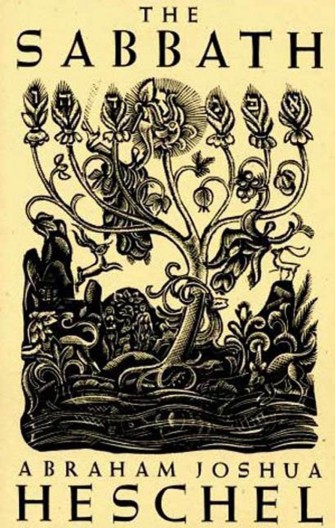
Sinaites were first introduced to the writings of Abraham Joshua Heschel in a thin ornately illustrated pamphlet-size book titled The SABBATH. 


This book by Heschel, so beautifully written, returns the Sabbath where the Creator of Time originally placed it. One cannot read it without making some adjustments in life.  The Sabbath is another “inconvenient truth” in a Sunday-system on which the whole world operates, except in Israel and among the Jewish people.


Here are some excerpts to encourage all to get a copy of this book that should be in everyone’s personal library:


Prologue:  Architecture of Time


There is a realm of time where the goal is not to have but to be, not to own but to give, not to control but to share, not to subdue but to be in accord.  Life goes wrong when the control of space, the acquisition of things of space, becomes our sole concern. . . . Let us not forget that it is not a thing that lends significance to a moment; it is the moment that lends significance to things.


. . . . The Bible is more concerned with time than with space.  It sees the world in the dimension of time.  It pays more attention to generations, to events, than to countries, to things; it is more concerned with history than geography.  To understand the teaching of the Bible, one must accept its premise that time has a meaning for life which is at least equal to that of space; that time has a significance and sovereignty of its own.  


. . . . The God of Israel was the God of events:  the Redeemer from slavery, the Revealer of the Torah, manifesting Himself in events of history rather than in things or places.  Thus, the faith in the unembodied, in the unimaginable was born.


. . . . The bible senses the diversified character of time. There are no two hours alike. Every hour is unique and the only one given at the moment, exclusive and endlessly precious. . . . The Sabbaths are our great cathedrals . . . . it seems as if to the Bible it is holiness in time, the Sabbath, which comes first. . . . The sanctity of time came first, the sanctity of man came second, and the sanctity of space last.  Time was hallowed by God . . . 


The meaning of the Sabbath is to celebrate time rather than space.  Six days a week we live under the tyranny of things of space; on the Sabbath we try to become attuned to holiness in time.  It is a day on which we are called upon to share in what is eternal in time, to turn from the results of creation to the mystery of creation; from the world of creation to the creation of the world.


I.   A Palace in Time  – . . . . on the Sabbath we especially care for the seed of eternity planted in the soul.  The world has our hands, but our soul belongs to Someone Else.  Six days a week we seek to dominate the world, on the seventh day we try to dominate the self.


II.  Beyond Civilization . . . . Man’s royal privilege to conquer nature is suspended on the seventh day . . . . The Sabbath itself is a sanctuary which we build, a sanctuary in time.


III.  The Splendor of Space . . . . The ancient man was inclined to believe that monuments will last forever.  It was, therefore, fit to bestow the most precious epithet on Rome and to call it: the Eternal City.  The State became an object of worship, a divinity; and the Emperor embodied its divinity as he embodied its sovereignty. . . . . The world is transitory, but that by which the world was created—the word of God—is everlasting.  Eternity is attained by dedicating one’s life to the word of God, to the study of Torah.


IV.  Only Heaven and Nothing Else?  . . . .    The world this side of heaven is worth working in.


V.  “Thou Art One” . . . . The Sabbath is meaningful to man and is meaningful to God. It stands in a relationship to both, and is a sign of the covenant entered into by both.  What is the sign?  God has sanctified the day, and man must again and again sanctify the day, illumine the day with the light of his soul.  The Sabbath is holy by the grace of God, and is still in need of all the holiness which man may lend to it.  


VI.  The Presence of a Day . . . . What is it that these epithets are trying to celebrate?  It is time, of all phenomena the least tangible, the least material.  When we celebrate the Sabbath we adore precisely something we do not see.  


VII.  Eternity Utters a Day . . . . When all work is brought to a standstill, the candles are lit.  Just as creation began with the word, “Let there be light!” so does the celebration of creation begin with the kindling of lights.  It is the woman who ushers in the joy and sets up the most exquisite symbol, light, to dominate the atmosphere of the home.  And the world becomes a place of rest . . . the Sabbath sends out its presence over the fields, into our homes, into our hearts.  It is a moment of resurrection of the dormant spirit in our souls.


VIII.  Intuitions of Eternity . . . . The Sabbath is not holy by the grace of man. It was God who sanctified the seventh day.


IX.  Holiness in Time . . . . The emphasis on time is a predominant feature of prophetic thinking. “The day of the Lord” is more important to the prophets than “the house of the Lord.”


X.  Thou Shalt Covet . . . .a form of longing for the eternal Sabbath all the days of our lives . . . seeks to displace the coveting of things in space for coveting the things in time, teaching man to covet the seventh day all days of the week.  


Epilogue . . . . Our world is a world of space moving through time—from the Beginning to the End of Days. . . . Things perish within time; time itself does not change. . . . it is not time that dies; it is the human body which dies in time. . . . Time is man’s greatest challenge. . . . Time, however, is beyond our reach, beyond our power.  It is both near and far, intrinsic to all experience and transcending all experience.  It belongs exclusively to God. . . .  On the Sabbath it is given us to share in the blessings that is in the heart of time.


Get your copy of AJHeschel’s  The Sabbath, a MUST HAVE forTorah-observant believers in YHWH.


Sig-4_16colors

logo

Q&A: Who is the “Wonderful Counselor, Mighty God, Everlasting Father, Prince of Peace” in Isaiah 9:6 [ESV]?

[First posted December 2013.   We are resurrecting this topic for the benefit of one Sinaite who had dropped out of our community in 2014 for medical reasons and became home-bound, unable to attend our Shabbat meetings.  Not a computer-user, she had no access to updated articles on the continuing series of teachings in our website.   We realized that she might not have completely absorbed, if not understood the main reason we broke away from our Christian roots;  strange, for she was part of the original “apostates.”   But to her credit, still hungry for biblical truth, her only recourse was to watch what was available on televised religious programs, dominated mainly by various Christian sects which have discovered the far-reaching influence of what used to be called the “idiot box”.   She contacted us after being shaken by a Christian tele-evangelist who explained that Isaiah 9:6 is PROOF that Jesus Christ was foretold in the Hebrew Scriptures.  


Here’s the answer given to her (by phone),  a timely reminder for those who might also be confused by Christian re-interpretation of the Hebrew Bible.  Remember that the “Old Testament”–the first part of the Christian Bible  and the so-called ‘Messianic Jewish Bible’–is intentionally reconstructed to be forward-looking and therefore, is often mistranslated whether consciously or unconsciously, by Christian translators.  Just as bad or wrong translations could lead to trouble and misunderstanding in simple conversation, all the more MISTRANSLATED FOUNDATIONAL VERSES  lead to WRONG THEOLOGY!


Best to resort to the original Hebrew Bible, the TNK (Tanach, Tanakh), translated by Jews who read IN CONTEXT, understand Biblical Hebrew, and who have no religious agenda other than to faithfully record and pass on the original instructions of the God Who gave Israel His Torah. Where to go?  We’ve ‘been-there-done-that’ so we recommend the specific translations we use here:  The ArtScroll Stone Edition Tanach; Everett Fox and Robert Alter’s individual translations with the same title: The Five Books of Moses; both have ongoing projects translating the whole TNK.  


We asked the same question (on our title) back in 2010  when we started checking out Christian “prooftexts”.  Indeed, what did we know then?  We were on the TNK-ignorant level, confused by the Christian Old Testament of our 2-part Bible which was the only bible we had at the beginning of our re-direction toward the Sinai Revelation. We were unfamiliar with Part I of our Christian Bible, except for memorizing those “prooftexts” constantly cited by Christian teachers/pastors.  Really and truly, who cared to read the “Old” Testament that the apostle Paul himself referred to as passe and obsolete, and that Christian bible teachers cite as “for Jews”, just like the Sabbath, just like “OT Law”?  No wonder, hardly any sincere Truth-seeking Christian ventures back to the so-called “foundational scriptures” on which the “new” was based! It’s “OLD” you see?


How far have we progressed since!  But looking back which is always good to do on any pilgrimage,  in hindsight our first recourse was the correct recourse which was and continues to be: consult Jewish scholars when you can’t figure it out for yourself.  And that is why we listed the Jewish links we first consulted, which helped us to get going on our own fresh reading of YHWH’s TORAH, and the Jew’s Sacred Scriptures, rightly called TNK or the Hebrew Scriptures. Do you know  that Jews do not read the “Old Testament” (what???!!!); what they read is the TNK.


Sorry for our “kilometric introductions” in this website but we do have a lot of ground to cover for some topics we revisit.   Finally, hereunder was the answer of Rabbi M. Younger, of Ask the Rabbi at Aish.com to the Question on our title.  For other Q&A’s submitted to Ask the Rabbi, check this out:  

Ask the Rabbi/Teacher

https://sinai6000.net/resource-sharing/ask-the-rabbi/

Admin1].


—————————-


Question: Who is the Wonderful Counselor, Prince of Peace of Isaiah 9:6? Is it Jesus?


Image from heavenawaits.wordpress.com

Shalom –

Thank you for your question.

The proper translation is,

“For a child has been born to us,
a son has been given to us
and the dominion will rest on his shoulder;
the Wondrous-Adviser- Mighty-G-d- Eternal-Father,
called his name Prince of Peace.”
(Isaiah 9:5)


Taken in context, it is clear who the verse is referring to – King Hezekiah.


We mustn’t forget that Isaiah lived in the days of Hezekiah and many of these prophecies are directed to him or to the Jews who lived at that time.


In other words, ” the Wondrous-Adviser- Mighty-G-d-Eternal-Father ” is G-d! And He called Hezekiah the “Prince of Peace.”


To learn more, read the sixth chapter of the book “Their Hollow Inheritance” by Michael Drazin. You can read this book for free at www.drazin.com.


To read an excellent translation of the Bible, by the “Artscroll Stone Tanach” published by Artscroll. You can purchase it at www.artscroll.com.


With blessings from Jerusalem,

Rabbi M. Younger
Aish.com

MUST READ: “MAN IS NOT ALONE – A Philosophy of Religion” by Abraham Joshua Heschel

Image from amazon.com

Image from amazon.com

Among our 2017 book acquisitions for our Sinai 6000 library is surprisingly this more-than-half-century old publication, copywrite 1951 by AJH, reviewed 1979 by Sylvia Heschel.   As we do with books we feature, we start with the CONTENTS which is what all book-browsers do before deciding whether a book is worth purchasing; then if there are reviews, we throw in as much as there are available on the net.  


So here is the ‘Essays-List’, categorized under two general subjects and 26 subtitles; scanning down this list should already whet our appetite to get a copy of AJH’s book!


I.  THE PROBLEM OF GOD


 1.  The Sense of the Ineffable 

The Awareness Of Grandeur

The Sense Of The Ineffable

The Encounter With The Ineffable

Is There An Entrance To The Essence?

The Disparity Of Soul And Reason


2.  Radical Amazement

Reason And Wonder

Philosophy Begins In Wonder

The Mystery Within Reason

Experience Without Expression

The Root Of Reason


3.  The World is an Allusion

A Cognitive Insight

A Universal Perception

The Allusiveness Of Being


4.  To Be is To Stand For

The Universality Of Reverence

Reverence – A Categorical Imperative

Meaning Outside The Mind

Expectedness And Certainty Of Meaning

Science–An Entry Into The Endless

All Knowledge Is A Particle

Is The Ineffable An Illusion?


5.  Knowledge by Appreciation

A Perception At The End Of Perception

The Way Of Expediency

The Will To Wonder

The World As An Object

Is the World At The Mercy Of Man?

We Sing For All Things


6.  A Question Beyond Words

We Do Not Know How To Ask

Wherefore?  For Whose Sake?

Who Is “I”?

I Am That I Am Not

No Subject To Ask


7.  The God of Philosophers

God As A Problem Of Speculation

Is It Order That Matters Supremely?

Philosophy Of Religion


8.  The Ultimate Questions

What Man Does With His Ultimate Wonder

Religion Begins With The Sense Of The Ineffable

The Ultimate Question

The Situation That Accounts For The Question

Beyond Things

A Spiritual Presence


9.  In The Presence of God

From His Presence To His Essence

The Dawn Of Faith

What To Do With Wonder

Who Is The Enigma?

The Invincible Question

In Search Of A Soul

The Premise Of Praise

Let The Insight Be

God Is Suing For Man

The Enforced Concern


10.  Doubts


11.  Faith

Faith Is No Short Cut

Ways To Faith

Some Of Us Blush

The Test Of Faith

An Act of Spirit


12.  What do we mean by the Divine?

The Peril Of Speech

Standards Of Expression

What Do We Mean By The Divine?

The Attribute Of Perfection

The Idea Of The Universe

Cosmic Brotherhood

The Realm Of Being And The Realm Of Values

One Is Not God


13.  One God

The Attraction Of Pluralism

Unity As A Goal

No Denial Of Plurality

Whither Shall I Go . . .

Hear, O Israel

One Means Unique

One Means Only

One Means The Same

Good And Evil

He Is All Everywhere

Unity Is Concern


14.  God is the Subject

The “I” Is An “IT”

The Thought Of God Has No Facade

God’s Vision Of Man

Is God Unknowable?

Our Knowledge Is An Understatement

Knowledge Or Understanding


15.  The Divine Concern

The Problem Of Existence

Life Is Concern

The Transitive Concern

The Three Dimensions

A Coercion To Forget Oneself

Freedom Is A Spiritual Ecstasy

The Divine Concern

Continuous Expression

Civilization Hangs By A Thread

Compassion

Display And Disguise


16.  The Hiding God


17.  Beyond Faith

The Peril Of Faith

To Believe Is To Remember

Faith As Individual Memory

Faith And Belief

Faith And Creed

The Idolatry Of Dogmas

Are Dogmas Necessary?

Faith And Reason

“Grant Us Knowledge . . .”

Religion Is More Than Inwardness


II.  THE PROBLEM OF LIVING


18.  The Problem of Needs

From Wonder To Piety

The Problem Of The Neutral

The Experience Of Needs

Life–A Cluster Of Needs

The Inadequacy Of Ethics

The Peril Of Living

Needs Are Not Holy

Who Knows His Real Needs?

Right And Wrong Needs


19.  The Meaning Of Existence

Man’s Favorite Unawareness

The Meaning Of Existence

The Ultimate Surmise

Man Is Not An End For Himself

Does Man Exist For The Sake Of Society?

The Self-Annihilation Of Desire

The Quest Of The Lasting

The Helpless Craving

What Is Existence?

The Temporality Of Existence

The Uninterruptedness Of Existence

The Secret Of Existence

In Being We Obey

The Ultimate Goal

Time And Eternity


20.  The Essence Of Man

The Uniqueness Of Man

In The Darkness Of Potentiality

Between God And The Beasts

Beyond Our Needs

Who Is In Need Of Man?


21.  The Problem of Ends

Biological And Cultural Needs

The Myth About Self-Expression

Ends and Needs

The Error Of Pan-Psychology

The Consciousness Of Good And Evil

God’s Secret Weapon

Life Is Tridimentional


21.  What is Religion?

How To Study Religion

Is Religion A Function Of The Soul?

Magic And Religion

The Objective Side of Religion

There Is No Neutrality

The Holy Dimension

Piety Is A Response

The Modesty Of The Spirit


23.  A Definition of Jewish Religion

God Is In Need of Man

The Divine Pathos

“What Does God Desire?”

The Religious Need

The Unknown Ends

The Conversion Of Ends Into Means

The Pleasure Of Good Deeds


24.  The Great Yearning

The Yearning For Spiritual Living

The Noble Nostalgia

The Endless Discontent

Aspirations


25.  A Pattern For Living

The Unvoiced

Neither Deifying Nor Vilifying

Spirit And Flesh

In The Neighborhood Of God

The Holy Within The Body

Not To Sacrifice But To Sanctify

Needs As Mitzvot

Living Within An Order

All Of Life

The Unheroic

The Inner Authority


26.  The Pious Man

What Is Piety?

The Method of Analyses

An Attitude of the Whole Man

The Only Life Worth Living

The Inner Anonymity

Not A Habit

Wisdom And Piety

In The Presence Of God

God Stands Between Man And The World

A Life Compatible With The Presence Of God

The Value Of Reality

An Attitude Toward All Of Reality

Reverence

Thankfulness

Common Deeds Are Adventures

Responsibility

A Perpetual Gift

The Meaning Of Sacrifice

Kinship With The Divine

A Treasure of God

Our Destiny Is To Aid


We end this post with the one and only review we found,  posted in amazon.com:


Man Is Not Alone is a profound, beautifully written examination of the ingredients of piety: how man senses God’s presence, explores it, accepts it, and builds life upon it.

Abraham Joshua Heschel’s philosophy of religion is not a philosophy of doctrine or the interpretation of a dogma. He erects his carefully built structure of thought upon foundations which are universally valid but almost generally ignored.

It was Man Is Not Alone which led Reinhold Niebuhr accurately to predict that Heschel would “become a commanding and authoritative voice not only in the Jewish community but in the religious life of America.”

With its companion volume, God in Search of Man, it is revered as a classic of modern theology.