Yo Searchers! Need Help? — June 2016

Image from www.stlucasucc.org

Image from www.stlucasucc.org

SEARCH TERM ENTRIES:


06/27/16  “joshua 1:8” – The only post we have on this is the photo of a scroll that hangs in the Sanctuary foyer of the University of the Cordilleras, and this is what it looks like: https://sinai6000.net/scroll-joshua-18-9/

The reason we have no articles on the rest of the books in the Hebrew Scriptures other than the TORAH is because we haven’t had time to ‘get there’ — meaning, it is in our agenda but need more time.  Perhaps in a year or so.


06/22/16  “islamic religion” – Anyone interested in this 3rd monotheistic religion that claims to be rooted to Abrahamic faith might be misled by the connection generally made with Abraham’s ‘firstborn’—no, not with Sarah (Isaac) but with her Egyptian maidservant Hagar who bore him Ysmael (Genesis 16).


The general thinking mistakenly points to Ysmael as the precursor of this religion when actually, it was founded only —

  •  millennia later,
  • some 6 centuries after the supposed birth of Christianity’s man-god 2nd person of Trinity (Jesus) and
  • 3 centuries after Christianity had become the official religion of the Roman Empire under the Emperor Constantine; yes, a religious metamorphosis from ‘pagan Rome’ to ‘papal Rome’.

Let’s get it right:   Mohammed/Muhammad (570-632 CE) was the ‘originator’ of Islam whose religious exposure included the scriptures of two major monotheistic movements that trace their roots to Abrahamic faith:

  • Judaism (TNK) and
  • Christianity (OT/NT) .


The book the Prophet Muhammad authored is known as the Koran/Quran; it has many references to Moses, as well as to Mary and Jesus.


The best way to understand this religion is to actually read its sacred scriptures which provide an insight into why its adherents could range from peaceful mosque-attending practitioners to radical Jihadists. Not a surprise,  religionists have that tendency to swing from one extreme to the other, from moderate to fanatic.


That said, we do have helpful posts that should start you off on your research, check out the following:


06/19/16 “happy sabbath quotes” – We have a whole category featuring original prayers and quotes for every Sabbath of each month for a whole year.  Our liturgy of course reflects the Sinaite’s creed and love for the God we have chosen to serve, YHWH, the self-revealing God in Israel’s Torah.  For images with Sabbath quotes, we resort to what is already available in the worldwideweb, just enter “images  for Sabbath blessing” and you will find there is plenty to choose from.  For those we have specifically selected for each Sabbath liturgy, take your pick;  just make sure the original source written at the bottom of each image is properly acknowledged:


A Sinaite’s Sabbath Liturgy


06/09/16   “death-funeral-grave-grave_stone-gravestone-headstone-rmo0135l” – 


06/09/16 “JOHN DOE” – 


06/09/16  “collection-jewish-new-year-tree-of-life2” – 


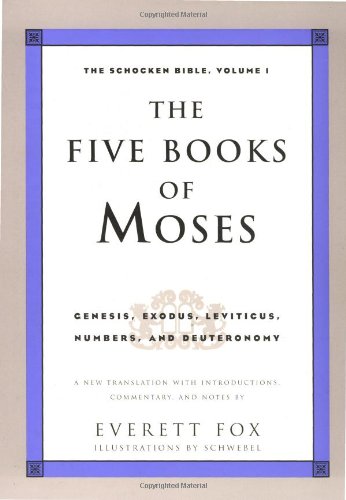
06/05/16  “the five books of moses everett fox pdf” MUST READ/MUST HAVE: The Five Books of Moses by Everett Fox – 3

———————-


Image from www.tofinotime.com

Image from www.tofinotime.com

[Seriously?  Yes, seriously there are many people in this day and age of information technology who still consult fortune tellers, horoscopes and the like.  Some do it for fun, curiosity, testing the ‘fates’ perhaps, others consult before making a decision, yes, seriously.


For example, this is from a WELLNESS site with the title “What do horoscopes have to do with wellness?”


Horoscopes Can Actually Provide Uncanny Perspective, and Valuable Insight into Decisions and Life Situations.

How?

As humans, we can receive messages in many different ways from many different sources. We’re often inspired by other people, songs, books, movies and ideas. Horoscopes are also intended to provide insightful, inspirational and cautionary perspectives without compromising your common sense.

Horoscopes are derived methodically through the study of astrological movements related to time, space, birth and the human condition. While some astrologers are known for their uncanny accuracy in their insight and predictions, many others are known for their influence over people who mindlessly fail to think for themselves. Make sure you use your own heart, intuition and intellect in making important decisions in your life. Nobody can do that for you.

However you get it, seeking any extra degree of insight in situations, changes and opportunities can be productive at times. Does it work for you? Millions of people seem to recognize more of the natural coincidences occurring daily in their lives through astrologically inspired messages going back thousands of years.

How accurate is your horoscope today?


OK, so be it?  Not so fast.  Superstition abounds where ignorance of the One True God and His Word abounds.  Because if they were simply aware that there is a God to begin with, Who has spoken against such superficial and wrong beliefs, perhaps they would simply heed His mouthpiece, the prophet Isaiah 8:20:


To the law and to the testimony!

if they speak not according to this word,

surely there is no morning for them.


But then, who bothers to read the “Old” testament in the Christian 2-part bible?  And even when they do, the translations are hardly recognizable to the very people whose scriptures it was borrowed from.


Horoscopes aside, the month of June welcomes summer in one part of the globe and the wet season in others.  It has been designated as commemorative month for awareness of whatever, ranging from serious to silly: safety, dairy, marriage, men’s health, yoyo, ad nauseum as they do for each month, devised by people with nothing better to do, or just having harmless fun, or intentionally to irritate skeptics.  Hey, live and let live, right?


June 2016 is specifically significant for a particular segment of society in the US that has fought for recognition, equal treatment, respect for gender choice, toilet-rights, etc. Well, not a surprise in the country that respects and protects individual freedom,  they finally got it from the sitting soon-to-move-on president who will be remembered for this legacy among other executive actions:


Image from STOCK PHOTOs

Image from STOCK PHOTOs

“NOW, THEREFORE, I, BARACK OBAMA, President of the United States of America, by virtue of the authority vested in me by the Constitution and the laws of the United States, do hereby proclaim June 2016 as Lesbian, Gay, Bisexual, and Transgender Pride Month,” dictated the 44th US president. “I call upon the people of the United States to eliminate prejudice everywhere it exists, and to celebrate the great diversity of the American people.”


Yes indeed, each person born has free will to be what he/she wills to be, including choosing sexual preference, but we won’t get into that discussion in this post; that topic is in the back-burner for future articles.


Meanwhile, there’s Father’s Day coming up and we do have a post for that.  And for our category on Torah Study, we are adding the commentary from our latest acquisition, Robert Alter’s THE FIVE BOOKS OF MOSES, to the commentary already posted from Everett Fox’s translation with the same title as Alters,  and Pentateuch & Haftorahs, ed. Dr. J.H. Hertz.


Before we forget what this monthly post is all about, this is an ‘aid’ for searchers who enter specific ‘search terms’.  There have been less entries this year which could mean a couple of things, hopefully it is the second:

  • there are no newcomers to this website;
  • or if there are, they simply scroll through the SITEMAP or UPDATED SITE CONTENTS and find what they’re looking for.


Still, we will keep this up, if only to have an informal blog that doesn’t have to be as serious as all the other posts in this website.


So welcome, newcomers, oldtimers,  co-sojourners on the pathway to Spiritual Sinai, seekers of the One True God and His Original Revelation.  We hope this website helps you in your quest for Truth!—-Admin1.]

Adam the First Father

[This was first posted in 2012, reposted 2014, on the occasion of Father’s Day.—Admin1]


——————————-


Image from antsyfather.wordpress.com

Image from antsyfather.wordpress.com

Since we did an article in May on the track record of mothers in the bible on the occasion of ‘Mother’s Day” [The hand that rocks the cradle . . .], on the occasion of ‘Father’s Day” it is only fair to check out if the biblical fathers fared any better [or worse].


The biblical culture being patriarchal and patrilineal—the prominence of men and the tracing of the tribal line through fathers and sons, it is natural to expect more from the male figures in the biblical narratives though let us not forget, men are only human and just as fallible as women;  that’s real equality of the sexes.


Let us not be hard on Adam.  He was not born, he was not created from nothing, he was made from something already existing in creation—-dust—that’s what his name means in Hebrew, “adamah.” He had no “parents” to teach him, but never mind, how could any earthly parent compare with the best fathering Adam could possibly have from the Creator God Himself. 


Genesis 2:24 is a strange text to suddenly appear out of the blue after the description of how woman was made from the rib of man:  


Therefore shall a man leave his father and mother, and shall  cleave unto his wife, and they shall be one flesh. 


At this point, the first couple had no parents to leave behind; and Adam did not know Eve as “wife” but as “help meet”, as the other creature like him but not quite.  Marriage had not been introduced but the first couple had no problem obeying the command to procreate even if they failed the test to not eat from the fruit of the Tree of Knowledge of Good and evil.
Adam sired Cain and Abel but what kind of a father was he toward them?  We’ll never know because the text doesn’t say.  Often we judge according to results.


Presumably, since the brothers made offerings to God early on in the text, we could surmise that they were simply doing what they were taught to do by their parents, be grateful to God and show it through offerings.  We know how the story of Cain and Abel progressed and ended.   After Cain went out from the presence of the Lord, and dwelt in the land of Nod, on the east of Eden, he had a son named Enoch, and his line of descendants is given.  


Then the narrative goes back to Adam who had another son named Seth who becomes the father of Enosh.  [It’s easy to get confused with biblical names, Cain had Enoch while Seth had Enosh.]  Seth supposedly replaces Abel to continue the lineage from which Noah will descend.


“The generations of Adam” is given but not before a distinction is made about Adam having been made in the likeness of God” while Seth was a son in Adam’s own likeness, after his image.  This difference is specifically emphasized as a Christian prooftext for the doctrine of original sin.  Adam in his innocent pre-fall state was made in the image of God; but after “the fall,” Seth was begotten in the likeness and after the image of Adam,  meaning,  Seth was tainted with original sin, so the image of God had been marred, and all mankind would be mired in a fallen nature that dominates them, that they cannot overcome.  


Not so fast . . . if Adam’s “original sin” would taint all his descendants, then it should have been first-born Cain who should have been described immediately as made in Adam’s likeness and image, not the third son.  And let us forget there was a son in between, Abel.  If both Abel and Seth are projected as good apples and only Cain was a bad apple so to speak, then original sin is not a universal inheritance.  In fact, each individual is really responsible for his choice and its consequences.  The rest of the TNK would reinforce that.


We asked the rabbis why it was Seth who was described as made in Adam’s likeness and image and guess what was the answer?  So simple, why did we not think of it:  because of the three sons so far named, it was Seth who looked like Adam, as in father-son physical resemblance, plain and simple.  


We have to learn not to infuse New Testament theology when we read the Hebrew Scriptures; we should not jump to “AHA”-conclusions to make the Old fit the New.  


So back to Adam, how do we rate him as the first father?  If we’re judging him based simply on his obedience to the commandment “Be fruitful, and multiply” he succeeded.  And that’s about all we can deduce from the text.  


Disappointed?


Sig-4_16colors

logo

An Inconvenient Truth for Ham

Image from www.massexplained.com

Image from www.massexplained.com

[On the occasion of Father’s Day, this was first posted in 2012.  Why on father’s day? Who is the father being focused on here?  Well, for one, Noah whose drunkenness causes his son Ham to show disrespect for him. For another, Ham’s dishonoring of his parent had a consequence for his son Canaan who is the patriarchal father of the Canaanites, remember them?   So, father figures in biblical narratives are held accountable for the good as well as bad consequences on future generations.  Unfortunately!  Translation:  EF/Everett Fox, The Five Books of MosesAdmin1]


—————-


In the Genesis narrative about the flood that destroys all living creatures, only Noah’s family of eight and pairs of unclean and seven pairs of clean animals survived . . . a remnant of living creatures that will repopulate the earth.  Noah admirably behaves and obeys every instruction of God until the flood has subsided and life has normalized but then, he slips a little as head of family.  Nothing wrong with planting a vineyard and fermenting grapes into wine and imbibing the “fruit of the vine” which symbolizes joy and in fact is part of Sabbath celebrations . . . it’s Noah’s lack of moderation in drinking that leads to intoxication and losing control till he passes out, and throws modesty aside.


So what? Unfortunately, this one and only father of the two-generation’ start-up’ family provided the  occasion for a son to dishonor his parent.  An inebriated unconscious Noah arouses in his son Ham, something this son might have been harboring—or maybe not—he could have simply found amusement at the sight of his father, the text doesn’t say. The sight of his usually-in-charge parent opened for Ham an opportunity to have fun at his father’s expense.  The reaction of his brothers Shem and Japeth indicates to us that in Noah’s family, they have been taught to show respect no matter what. The 5th of the 10 commandments has not been officially given as Law until generations later, but even so, the brothers’ behavior indicates all 3 were aware of “honor thy father.”


If Ham did not realize then the gravity and consequence of his paternal disrespect, he would realize it when a sober Noah pronounces a curse not on him but on his son Canaan.  


Genesis/Bereshith 9:20-27

20 And Noah was the first man of the soil; he planted a vineyard.  
When he drank from the wine, he became drunk and exposed himself in the middle of his tent.  
Ham, the father of Canaan, saw his father’s nakedness and told his two brothers outside.  
Then Shem and Yefet took a cloak, they put it on the shoulder of the two of them,
and walked backward, to cover their father’s nakedness.
—Their faces were turned backward, their father’s nakedness they did not see.  
When Noah awoke from his wine, it beame known (to him) what his littlest son had done to him.  
He said:
Damned be Canaan,
servant of servants may he be to his brothers!  
And he said;  
Blessed be YHWH, God of Shem,
but may Canaan be servant to them!  
May God extend/yaft
Yefet,
let him dwell in the tents of Shem,
but may Canaan be servant to them!


Now, this is really baffling to bible students.  Is it fair for Canaan to reap the consequence of his father’s mistake?


Deuteronomy/Debari’ym 24:16:

Fathers are not to be put-to-death for sons,

sons are not to be put-to-death for fathers;

every-man for his own sin (alone) is to be put-to-death!


Doesn’t Ezekiel 18 painstakingly lay out the principle that each is responsible for his and only his own sin, that when the father eats sour grapes, the children’s teeth will not be on edge?


And yet other scriptures also seem to refer to inherited sin:


 Exodus/Shemoth 34:5-9

 YHWH came down in the cloud,
he stationed himself beside him there
and called out the name of YHWH.  
And YHWH passed before his face
and called out:  
YHWH YHWH
God,
showing-mercy, showing-favor,
long-suffering in anger,
abundant in loyalty and faithfulness,
keeping loyalty to the thousandth (generation),
bearing iniquity, rebellion and sin,
yet not clearing, clearing (the guilty),
calling-to-account the iniquity of the fathers upon the sons and upon sons’ sons, to the third and fourth (generations)!  
Quickly Moshe did homage, on the ground, bowing low,
and said:
 Pray if I have found favor in your eyes,
O my Lord,
pray let my Lord go among us!  
Indeed, it is a hard-necked people—
so forgive our iniquity and our sin
and make-us-your-inheritance!


Deuteronomy/Debariym 5:8-10
You are not to make yourself a carved-image of any form
that is in the heavens above that is on the earth beneath, that is in the waters beneath the earth.  
You are not to prostrate yourselves to them, you are not to serve them,
for I, YHWH your God, am a jealous God,
calling-to-account the iniquity of the fathers upon the sons to the third and to the fourth (generation) of those that hate me,
but showing loyalty to thousands of those that love me, of those that keep my commandments.


How to resolve this seeming contradiction?


First, get to know the God of the Hebrew Scriptures!  It’s like knowing someone so well that you know that person’s likes, dislikes, what he would do and not do, say or not say . . . so that when you hear about something out of character being attributed to that person, or something you just can’t believe he’s capable of doing, apply that to the God we know in the TNK.  It works the same way.


If you know the self-revelation of the God Whose Name is YHWH not just through a few verses but the whole of TNK, then you would know He is a just God and will do what is right.  Seeming contradictions like these verses are explainable in context.


Second, the immediate context in Exodus and Deuteronomy have to do with warnings against idolatry. 


Third, notice the qualifiers and read these verses as a ‘hyperbole’ [exaggerated statements or claims not meant to be taken literally]; a comparison of God’s judgment [3rd and 4th generation who hate Him and turn away from Him] and his mercy and grace [thousands that love Him and keep His commandments].


The placement of the verse in Exodus occurs after the golden calf episode, when the Israelites so easily slip back to worshipping a god they can see so they have Aaron make one. After Moses pleads on behalf of the idolaters, LORD YHWH describes Himself to Moses—what a truly rare privilege this great leader had among all mankind! 


The placement of the verse in Deuteronomy is the final speech of Moses not to the original multitude that had left Egypt 40 years earlier, [that generation had died] but this time to the 2nd generation born during the 40-year wandering in the wilderness . This generation is being prepared to enter the promised land.  They were not present at the giving of the TORAH on Sinai, so they are reminded of everything their parents had heard and experienced.


 Debari’ym 29:13  

Not with you, you-alone
do I cut this covenant and this oath
but with the one that is here, standing with us today
before the presence of YHWH our God,
and (also) with the one that is not here with us today.


They have a fresh start, with the same guidelines regarding a lifestyle prescribed by their God whose self-description in Exodus is echoed by Moses here to remind them of generational transition of responsibility to be faithful to the Covenant and YHWH their God.  What each generation choose to do has consequences for later generations but even when they face judgment, still divine grace and mercy flows from the heart of this loving God toward the repentant.


The Shema emphasizes the responsibility of fathers to teach their children the Torah. Not nature but nurturance seems to wield a strong influence on young impressionable children. When fathers/parents are amiss in their responsibilities toward their children, there are consequences.  It’s a monkey-see-monkey-do kind of transference of values.  Sociologists/psychologists now see patterns of behavior within families, where battered children tend to become batterers themselves; sexually abused children become sexual deviants; attitudes of parents spilling over to the next generation, until the pattern is broken by one who chooses to be different.


The context of these verses shows the “addressee” which is the nation of Israel. Israel is dealt with by God as a people, a nation, not individually; the nation as a whole suffers for the wrongdoing of a majority, specially when it comes to the sin of idolatry and rebellion.


It will turn out that Noah’s curse on Canaan is prophetic; ‘like father like son’. The land promised to the nation of Israel is populated by the Canaanites, descendants of Canaan.  They are such an evil people that God commands the Israelites to cleanse the land of these inhabitants totally, but the Israelites failed to obey . . . and so until the exile, their generational sin of idolatry plagued the people.


Now back to the inconvenient truth for Ham — he forgot his father would sober up and and be incensed; and as biblical fathers usually pronounce blessings upon their children, Ham not only failed to get a blessing for himself but worse, hears a curse pronounced upon his son Canaan.


Sig-4_16colors

logo

A Sinaite’s Musical Liturgy – 2nd Sabbath in June

Image from www.pinterest.com

Image from www.pinterest.com

[The Sinaite’s musical liturgy borrows from Christian hymnody; lyrics have been revised and might seem awkward to those who know the original but bear with us, our revision reflects our Sinaite creed.   Imitation is the best compliment;  so we salute the composers of Christian hymns;  no doubt they were inspired by the God they love and serve as we, likewise, are inspired by the God we have chosen to follow, serve and worship: His Name is YHWH.  If you’re not familiar with the tune, reciting the lyrics works just as well!–Admin1]


——————————————-


KINDLE THE SABBATH LIGHTS

Image from www.chabad.org

Image from www.chabad.org


[Original Tune:  Bread of the World, Revised Lyrics]

Sing hallelu YAHUWAH LORD;   sing hallelu YAHUWAH LORD;

Sing hallelu YAH, sing hallelu YAH, sing hallelu YAHUWAH LORD!


LIGHT of the world,  dispel the darkness

that makes men blind who see You not,

There’s unbelief, there’s skepticism,

‘There is no God’, or so they say.


CHO:  Your LIGHT shines bright to all believers

who see You, listen to Your Voice,

You speak Your Word through all the ages,

from Sinai to our seeking hearts.


[Original Tune:  All Glory, Praise and Honor, Revised Lyrics]

1.  All glory, praise and honor, Yahuwah God our King!

To Whom our hymns of worship with loud hosannas sing!

Thou art the God of Israel, of all humanity,

Who learn Thy guidelines in Thy Word, believe and worship Thee, 


2.  The company of angels keep praising Thee no end;

We join their mighty chorus, our love to Thee we send!

Thy chosen people Israel, Thy firstborn son Thou led —

as fire by night and cloud by day, with manna they were fed.


3.  To Thee they brought their offerings, they sang their hymns of praise.

Like them we sing our praises, our heartfelt thanks we raise.

Thou art the Source of all our joy, the source of our delight.

We thank Thee for Thy Sabbath rest, the day when we’re most blest!


Image from pkonline.org

Image from pkonline.org.


Psalm 119:1-16


1 Blessed are those whose way is blameless,

who walk in the law of the Lord!
Blessed are those who keep his testimonies,
who seek him with their whole heart,
who also do no wrong, but walk in his ways!
You have commanded your precepts to be kept diligently.
Oh that my ways may be steadfast in keeping your statutes!
Then I shall not be put to shame,
having my eyes fixed on all your commandments.
I will praise you with an upright heart,
when I learn your righteous rules.
I will keep your statutes;do not utterly forsake me!

9  How can a young man keep his way pure?

By guarding it according to your word.

10  With my whole heart I seek you;

let me not wander from your commandments!

11  I have stored up your word in my heart,

that I might not sin against you.

12  Blessed are you, O Lord;

teach me your statutes!

13  With my lips I declare

all the rules of your mouth.

14  In the way of your testimonies I delight

as much as in all riches.

15  I will meditate on your precepts

and fix my eyes on your ways.

16  I will delight in your statutes;

I will not forget your word.


Image from www.lovethispic.com

Image from www.lovethispic.com


[Original Tune: Give Thanks, Revised Lyrics]

Give thanks for this Sabbath day,

Give thanks for this time, we pray,

Give thanks because He’s given all we need, day to day,

Give thanks for our family,

for spouse, for our children dear,

for special friends we’ve chosen,  

All are gifts from His Heart,

CHO:  

And so let us celebrate our joys,

Let us celebrate our life,

As we sip our wine, partake of this bread,

All these are sweet blessings from our God, 

From our awesome loving King, 

Yes, YAHUWAH is His Name,

Praise His NAME,

Give Him thanks,

Heed His WORD,

Live His LIFE.

Image from spectrummagazine.org

Image from spectrummagazine.org

Image from taste-of-torah.blogspot.com

Image from taste-of-torah.blogspot.com


HAVDALAH

[Original Tune:  Gracious Spirit, fill thou me/revised lyrics]


1.  Lord Yahuwah, lead the way, 

through each moment, each new day.

Help me navigate my way, as I study, learn, and pray,

Thank You for Your Torah life, may I live my life Your Way.


2.  Truthful prophets of my God, how can I as truthful be?

And with wisdom speak as clear, may my Torah mind appear,

Followed with good deeds to all, may Thy Truth in me not fall.


3.  Torah Words inspire my soul,  make my actions bare to all.

That my life might speak as loud as the words that make me proud,

Words about Your mighty deeds, may I sow Life-giving seeds.


4.  God invisible to me,  I know You though I can’t see.

Your Creation testifies, Israel still verifies,

Torah is Your legacy, meant for all humanity.

Image from preciouslight.blogspot.com

Image from preciouslight.blogspot.com


Shabbat shalom!

NSB@S6K

logo


Introduction to The Five Books of Moses by Robert Alter – 2

Image from amazon.com

Image from amazon.com

[If you haven’t read it, here’s the link to Part 1:      

We are featuring excerpts from the INTRODUCTION of the book to whet your appetite, with the intention of encouraging you to add this excellent translation of TORAH to your library section on biblical studies.   Reformatted for this post and sub-titles added.—Admin1.]

—————————


INTRODUCTION


I. APPROACHING THE FIVE BOOKS


The rabbinic sage Resh Lakish once wondered why the Hebrew text in Genesis used a seemingly superfluous definite article in the phrase—

“And it was evening and it was morning, the sixth day.” (The definite article is not used for the preceding five days.)

He took this to be a hidden reference to the sixth day of the month of Sivan, when according to tradition the Torah was given to Israel:


—“to teach us that the Holy One made a condition with all created things, saying to them, ‘If Israel accepts the Torah, you will continue to exist. If not, I shall return you to welter and waste’”

(Babylonian Talmud: Shabbat 88A).


This is surely an extraordinary notion to entertain about the cosmic status of a book, imagining that the very existence of the world depends on it.  Jewish tradition abounds in such extravagant celebrations of the supreme importance of this book.


  • What is it about this text that led to such a vision of its unique standing?
  • Are the five literary units it comprises in fact one book or five?
  • How were they brought together?
  • What are we to call them?


Let us begin with the question of the name for the whole. The fluctuations of the title reflect something of the oscillation of the text itself between multiplicity and unity.


  • The Five Books of Moses does not translate any of the circulating Hebrew titles, though it does register the traditional attribution of authorship to Moses.
  • The more compact English title, the Pentateuch, derives from a Greek equivalent for one popular Hebrew designation, the Humash.*
  • Both names simply mean the Five Books (though “book” element is merely implied in the Hebrew term).
  • Pentateuch” was once the prevalent English title but has come to enjoy less currency, perhaps because faintly forbidding polysyllabic Greek terms are now less in favor. It does sound a little ponderous to the contemporary ear, and on those grounds it has not been adopted for this volume.
  • The fuller Hebrew designation is Hamishah humshey torah, literally, the five fifths of the Torah. More simply, these five books are very often referred to in Hebrew and by Jews using other languages as the Torah.

Torah means “teaching,”

or in biblical contexts involving specific laws, something like “regulation” or “protocol,”

i.e., that which is to be taught as proper procedure for a given topic.


Of the Five Books, it is Deuteronomy that most often uses the term torah, sometimes joining it with sefer“book” (as in “this book of teaching”), so that the reference widens at points from a specific teaching to all of Deuteronomy as a book.  After Deuteronomy was brought together editorially with the four previous books, the designation Torah came to be extended to all five.

—————————


In the traditional Hebrew division, the Torah then constituted the first, foundational unit of the three large units that make up the Hebrew Bible, which is called acronymically the Tanakh—that is,

  • Torah,
  • Nevi’im* (the Prophets, Former and Latter), and
  • Ketuvim (the Writings, which is to say, everything else).


Scholarship for more than two centuries has agreed that the Five Books are drawn together from different literary sources, though there have been shifting debates about the particular identification of sources in the text and fierce differences of opinion about the dating of the sundry sources.  


[Some theories about when it was written.]

  • Some extremists in recent decades have contended that the entire Torah was composed in the Persian period, beginning the late sixth century B.C.E., or even later, in Hellenistic times, but there is abundant evidence that argues against that view.
  • Perhaps the most decisive consideration is that the Hebrew language visibly evolves over the nine centuries of biblical literary activity, with many demonstrable differences between the language current in the First Commonwealth—approximately 1000 B.C.E. to 586 B.C.E.—and the language as it was written in the Persian and Hellenistic periods. There is very little in the Hebrew of the Torah that could have been written in this later era. (Ronald Hendel provides a concise and trenchant marshaling of the linguistic evidence against late dating in the appendix to his Remembering Abraham.)
  • A recent revisionist approach, purportedly based on archeological evidence, places the composition of our texts as well as most of the Former Prophets in the seventh century B.C.E., during the reign of King Josiah, the period when, according to scholarly consensus, most of Deuteronomy was written. This contention, however, flatly ignores the philological evidence that Deuteronomy was responding to, and revising, a long-standing written legal tradition, and that the editors of the so-called Deuteronomistic History (the national chronicle that runs from Deuteronomy to the end of 2 Kings) were manifestly incorporating much older texts often strikingly different from their own writing both in style and in outlook.
  • The standard account offered by modern scholars of the Torah identifies four principal literary strands (together with a number of lesser ones):
  • J, the Yahwistic strand (the divine name Yahweh is spelled with a J in German);
  • E, the Elohistic strand;
  • P, the Priestly strand; and
  • D, for Deuteronomy.


The first three are unevenly intertwined through Genesis, Exodus, and Numbers;

  • P predominates in Leviticus;
  • and all of Deuteronomy is D.
  • and E are so designated because of the name for the deity each characteristically uses, respectively, Yahweh and Elohim. J is sometimes thought to be the oldest of these strands, though J and E might have been approximately contemporary, the former a product of the southern kingdom of Judea, the latter deriving from literary activity in the northern kingdom of Israel.
  • The composition of J and E, or at least of J, was once often dated to the tenth century B.C.E., perhaps even to the time of Solomon, and this is a view that still cannot be entirely dismissed. It is more common now, however, to put both a little later, perhaps in the ninth or eight century.
  • P,  like everything else a bone of contention, seems to be both relatively early and late: some of it may have been written as early as the eight century B.C.E., though the principal stratum is in all likelihood a product of the sixth century B.C.E., when these same Priestly writers were also drawing together editorially all the previous sources with their own work into a single text.
  • Deuteronomy, or at any rate the bulk of Deuteronomy, is usually identified with the book purportedly discovered during the Temple renovations in the reign of Josiah in 621 B.C.E. The book presumably would have been written quite close to that date, though it might conceivably have utilized some literary materials going back as far as a century, to


These sundry literary sources were probably edited and fashioned into a single book—the first properly canonical book with binding authority on the national

community—sometime in the sixth century B.C.E., in the Babylonian exile. It has been proposed—not without challenge—that Ezra the Scribe, who instituted public readings of the Torah for the Judeans returned from the Babylonian exile, perhaps soon after 458 B.C.E., may have overseen the final redaction of the Torah. The finished product, as one might expect, exhibits a good many duplications, contradictions, and inconsistencies, which have been abundantly analyzed by modern scholarship. But it

also possesses a degree of cohesiveness as a book, and I would like to sketch out here the general literary design, which will then receive more specific attention in the commentary and in the introductions to the individual books.


—————————


COMMENT ON  GENESIS


  • Genesis is the only one of the Five Books that is more or less continuous narrative from beginning to end, the only recurrent but limited exception being the genealogies (the “begats”), which, as I shall try to indicate in the commentary, have a function a structural and thematic markers. If this were the work of a single writer, one would say he begins at the top of his form, not slowly and circuitously, like the late Henry James, but with a tour de force, like Proust in the initial pages of In Search of Lost Time. 


  • Genesis opens with a narrative of origins—Creation and the Garden Story—that is compelling in its archetypal character, its adaptation of myth to monotheistic ends, and that has set the terms, not scientifically but symbolically, for much of the way we have thought about human nature and culture ever since. 


  • This legendary sequence, which moves from Eden at the beginning to the Tower of Babel in chapter 11, is followed by a different kind of narrative in the Patriarchal Tales that begin with Abraham in chapter 12.  Nowhere else in ancient literature have the quirkiness and unpredictability of individual character and the frictions and tensions of family life—sibling rivalry, the jealousy of co-wives, the extravagance of parental favoritism—been registered with such subtlety and insight.


  • These stories were of course written more than half a millennium after the time of the purported events, and many details reflect political considerations of a later era involving power relations among the tribes and Israel’s posture toward neighboring peoples. Yet the literary miracle of the stories is that the chief personages are nevertheless imagined with remarkable integrity and complexity as individual characters—
    • Tamar fiercely resolved to take into her own hands her personal cause of justice;
    • Jacob, relentlessly calculating yet also imprudently loving, who as an old man becomes a histrionic, tragically weakened father of the clan;
    • Joseph, evolving from spoiled brat to mature and shrewd administrator;
    • Judah, at fist impetuous, in the end, penitent and lovingly devoted to his father in all his weaknesses.
    • Only the David story would equal the Patriarchal Tales in psychological insight and in the representation of character growing and changing through long stretches of life-experience.


  • Genesis ends with the death of Joseph, and Exodus begins with an Egyptians king who “knew not Joseph” and with a flurry of allusions to early Genesis, so the two are clearly meant to be read in succession as a continuous narrative. The focus of the narrative, however, shifts from the emotionally fraught lives of the founding fathers and mothers to the story of the origins of the nation. The account of the enslavement in Egypt, the liberation from slavery through God’s great signs and wonders wrought against Egypt, and the march of the people led by Moses to the foot of Mount Sinai, is a kind of national epic, narrated in a cadenced prose, punctuated with refrain-like rhetorical flourishes, deploying a grand sweeping style only occasionally evidenced in Genesis. This imposing narrative  has been shaped to show forth God’s overwhelming power in history, exerted against one of the great ancient kingdoms, and the forging of the nation through a spectacular chain of divine interventions that culminates in the spectacle of the revelation on the mountain of God’s imperatives to Israel.


COMMENT ON EXODUS


After the Sinai epiphany, Exodus takes a turn that may seem perplexing to modern readers. Narrative is dropped—to return briefly with the arresting episode of the Golden Calf in chapters 32-34—and is replaced first by the articulation of a code of civil and criminal law and then by elaborate instructions for the erection of that Tabernacle that will be implemented in the closing chapters of the book with word-for-

word repetition.  


Narrative continues to be set aside for almost all of the next book, Leviticus, which is devoted to a complex body of legal injunctions, mainly but not exclusively cultic. Structurally, Leviticus is the capstone of the Five Books, balancing Genesis and Exodus on one side and Numbers and Deuteronomy on the other. It will strike many as odd sort of capstone, given its concentration on sacrificial procedure, and one is inclined to suspect that the Priestly editors of the Torah are furthering the

interests of their own guild in the central placement of this book.


It should be said, however, that if these Five Books are chiefly an account of the origins and definition of the nation from its first forebears who accepted a covenant with God to the moment when the people stands on the brink of entering the Promised Land, the ancient writers conceived three major constituents of national identity and cohesion.


The first, and the one that we can most readily understand, is the trajectory of the collective and of its principal figures through the medium of history. In the tracing of this trajectory, the narrative shows us

  • how historical events shape the people,
  • how the people achieves a sense of its identity and purpose through the pressure of events.


This, in essence, is the grand narrative arc from Genesis 12 to Exodus 20.  But the biblical writers assumed that Israel’s covenant with God had to be realized through —

  • institutional arrangements as well as
  • through historical acts;

—-and so the account of national origins and destiny required a body of cultic regulations, in which the people’s relationship with God would be enacted regularly, repeatedly, through ritual, and a body of general law governing persons, property, acts of violence of man against man, social obligations, and ethical behavior.  


Although it is not clear whether all of these laws were actually implemented in ancient Israel, the effect of the lengthy legal passages, both cultic and civil or criminal, is to bridge the distance of the epic illud tempus, the time-back- when, of the narrative and bring the text into the institutional present of its audience.


COMMENT ON NUMBERS


The Book of Numbers begins with a long roll call of the tribes, what might be regarded as a statistically buttressed realization of the imposing extent of the Israelite hosts in the wilderness before the conquest of the land.  After some intervening chapters of cultic and other laws, we at last return, with a few further interruptions, to narrative—a sequence of episodes in which the recalcitrant Israelites “murmur” against Moses and Aaron, the story of the twelve spies with its disastrous outcome, and, late in the book, a series of encounters between Israel and various hostile

peoples of the trans-Jordan region that block their approach to Canaan. The excitements, the grave dangers, and the grand hopes of swimming in the tide of history are all powerfully at play here, and these are vividly brought forth in the evocative poetry of Balaam’s oracles that take up chapters 23 and 24.


COMMENT ON DEUTERONOMY


Although Deuteronomy, as we have already noted, was originally composed quite independently of the preceding four books and actually before a good many of the Priestly passages they contain were even written, in the place it has been given in the process of redaction, it comes to serve as a grand summary of the themes and story we have read up to this point. To be sure, this last book was intended as a fundamental revision of much earlier law, with the emphasis on one exclusive national sanctuary the principal item of revision. Nevertheless, read in sequence with the other four books, it comes across as a strong recapitulation and conclusion.


Moses, standing across the Jordan from the land he will never enter and on the verge of his own death, speaks the message of the book as a long valedictory address or, perhaps more precisely, a series of addresses. He picks up, in first-person singular or plural report, some of the principal narrative elements of the preceding three books (the Genesis stories are not much involved), usually abridging them, sometimes subjecting them to revision according to the overall ideological aims of Deuteronomy.  


Because these speeches are represented as spoken words addressed to the people as audience, rhetoric is spectacularly prominent here in ways that have no counterparts in the first four books with their narrative and legal interests. The rhetoric itself makes this appropriate as a concluding book:  after the narrative and the legislation of Genesis through Numbers, Moses on the rostrum in trans-Jordan delivers a tremendous peroration in which all the themes of liberation, revelation, and theological and ethical imperative of the previous books are deeply impressed on the imagination.


All that I have said here of course does not constitute a claim that the Five Books from—

 “When God began to create…” to

“before the eyes of all Israel”

—form one continuous text. The Torah is manifestly a composite construction, but there is abundant evidence throughout the Hebrew Bible that composite work was fundamental to the very conception of what literature was, that a process akin to collage was assumed to be one of the chief ways in which literary texts were put together.  What we have, then, in the Five Books is a work assembled by many hands, reflecting several different viewpoints, and representing literary activity that spanned several centuries. The redacted whole nevertheless creates some sense of continuity and development, and it allows itself to be read as a forward-moving process through time and theme from book to book, yielding an overarching literary structure we can call, in the singular version of the title, the Torah.


The Torah exhibits seams, fissures, and inner tensions that cannot be ignored, but it has also been artfully assembled through the ancient editorial process to cohere strongly as the foundational text of Israelite life and the cornerstone of the biblical canon.

MUST OWN: Robert Alter – The Five Books of Moses

Image from amazon.com

Image from amazon.com

Why feature yet another translation of the Torah?  Are we not content with our translation of choice, Everett Fox’s THE FIVE BOOKS OF MOSES?


As we have previously announced, once we are able to secure a copy of THE FIVE BOOKS OF MOSES by Robert Alter (RA), we will feature it as well, to further complement Fox’s.   Why not? The more translations we can compare with each other, the better for all, specially those who cannot read the original Torah in biblical Hebrew . . . which includes all of our Sinaite core community and most likely, majority of our web visitors.


As we have mentioned in our introduction to Revisit: MUST OWN: The Five Books of Moses by Everett Fox – 1:


We will “Alter”-nate with Robert Alter’s THE FIVE BOOKS OF MOSES, also with commentary; this is another MUST HAVE for your personal library, Alter’s literary language is ‘par excellence’.  The reason we chose Fox over Alter is the NAME — Fox uses it all over while Alter does not.


Back Page Text


Winner of the PEN Center USA Literary Award for Translation


Winner of the Koret Jewish Book Award for Translation


====================

Through a distinguished career of critical scholarship and translation, Robert Alter has equipped us to read the Hebrew Bible as a powerful, cohesive work of literature.  In this landmark work, Alter’s masterly translation and probing commentary combine to give contemporary readers the definitive edition of The Five Books of Moses.


“Thrilling and constantly illuminating.

After the still, small voices of so many tepid modern translations,

here is a whirlwind.”

—Michael Dirda, Washington Post


“A masterpiece:

Robert Alter’s translation of the Five Books of Moses

is the crown of this distinguished scholar’s career.

This superb book is a cause for celebration,

an act of faith that merits our study, our devotion,

and our thanks.”

Robert Fagles, translator of THE ILIAD, THE ODYSSEY and THE AENEID


“The poets will rejoice.

Alter’s language ascends to a rare purity

through a plainness that equals the plainness of the Hebrew.”

—Cynthia Ozick, NEW REPUBLIC


“Alter’s translation can be fairly described as godsend.  The foundational texts are here

given their due in prose

at once modern and magnificently cadenced.  Immediately readable,

immensely learned,

an education and a restitution.”

—Seamus Heaney, TIMES LITERARY SUPPLEMENT


ROBERT ALTER is the class of 1937 Professor of Hebrew and Comparative Literature at the University of California, Berkeley.  He has published many acclaimed works on the Bible literary modernism, and contemporary Hebrew literature.  His other translations include The David Story, The Book of Psalms, and The Wisdom Books:  Job, Proverbs, and Ecclesiastes.


==================


Image from amazon.com

Image from amazon.com

Here are more praises for Robert Alter’s translation:


“[An] astonishing translation.  Out of mr. Alter’s close reading and translation, something grander really does take shape, along with a conviction that the Bible is not just incidentally mysterious, posing challenges because of its antique references and sources.  It is essentially mysterious.”

—Edward Rothstein, New York Times


“[A] remarkable new translation of the Pentateuch, a monument of scholarship . . . . The result greatly refreshes, sometimes productively estranges, words that may now be too familiar to those who grew up with the King James Bible . . . .  Alter’s translation brings delight because it follows the precepts of the committee of King James, but is founded on a greatly deeper conversance with Hebrew than the great 17th century scholars could summon.  And Alter . . . brings to his own English a scholarly comprehension of the capacities of literary usage. . . . Especially fine is the way Alter seems to dig into the earth of the Hebrew to recover, in English, its fearless tactility.”

—James Wood, London Review of Books


“In the ancient Hebrew, Alter discovers a profound music.  He can raise an already beloved text to new heights of resonance and reality . . . .  Alter’s combination of a freshly minted text and splendidly concise commentaries makes the biblical words resonate.”

—-Thomas D’Evelyn, Christian Science Monitor


“This is a masterpiece of clarity, erudition, and synthesis.  Alter uses his talent as a literary critic to inspire in the reader a passion for studying the text . . . . This work abounds in stimulating thinking and eloquent writing. He honors those he invites not just to follow him but to accompany him.:

—-Elie Wiesel, Bible Review


“The arrival of this new translation of The Five Books of Moses—a heroic and literary achievement that captures in almost standard English the rhythms, repetition, and beauty of the Hebrew original—is cause for celebration . . . [This translation] well might become the definitive text for readers and scholars alike.”

—-Pearl Abraham, The Forward


“Alter has admirably—one could say miraculously—succeeded.” —-Earl Dachslager, Houston Chroicle

“The renowned scholar Robert Alter has produced a fresh translation [and] backed it up with an enlightening commentary.  The result offers Old Testament newcomers, long-term absentees, and veterans a compelling reading experience.”

—-Matt Love, Sunday Oregonian


The Five Books of Moses is a fine work that deserves admiration for it sheer scale and literary power.  The commentary is at least as important as the translation, and the two together make up a unique contribution both to biblical studies and to the understanding and appreciation of a text that is central to Western culture.”

—-John Barton, Times Literary Supplement


“Magisterial . . . an extraordinary achievement by any measure.  Alter is indeed a magician with words.”—-Diana Lipton, Booklog


“Alter has succeeded admirably in conveying to English readers something of the flair, mystery, majesty, and power of the original Hebrew.”

—-John W. Rogerson, Church Times


“Has a story ever been at once so comprehensive, so intricate, and so integral as the one Alter gives us here?  One is tempted to call it inspired.

—-Alan Jacobs, First Things


“Alter demonstrates a general reverence for literature that is complete, and his reverence for the power of the original text is compelling as well.  The thrill of discovery occurs often.”

—-David M. Levine, Congress Monthly


“Alter’s accomplishment is immense.  He has produced a translation of the Pentateuch that respects and captures the beauty and majesty of the original.” —Eric Ormsby, New Criterion


In the sequels to this introductory post, we will feature excerpts from the INTRODUCTION by Robert Alter himself, according to following sub-titles:


I.  Approaching the Five Books

II.  The Bible in English and the Heresy of Explanation

III.  On Translating the Names of God

IV.  About the Commentary


RA’s commentary verse by verse will be added to those of EF and the Pentateuch & Haftorahs [P&H], edited by Dr. J.H. Hertz.  By doing ALL this painstaking work for our own benefit and yet shared with our web visitors in this website, we are serving our God YHWH,  the Revelator on Sinai whose Guidelines for Living known as the Torah will hopefully be disseminated to  as many hungry or curious seekers of Truth who might otherwise have no access to the books we have featured in our category MUST READ/MUST OWN.


NSB@S6K

logo


MUST OWN: The Five Books of Moses by Everett Fox – 1

[First posted February 18, 2014, when we decided on another translation of the TORAH as S6K’s choice.—Admin1]


Welcome to Sinai 6000, Everett Fox [EF]! Good news for all: EF’s translation is downloadable for free as PDF; please go to this link:

 
THE SCHOCKEN BIBLE
toby.weebly.com/uploads/2/7/4/8/2748917/everett_foxxstorah.pdf


I’ve had EF’s translation of THE FIVE BOOKS OF MOSES for about a decade now; read it when I was still a fanatic Christian though unlike fanatics of that major world religion, I read the “Pentateuch” not for its true worth, but—can you relate to this —just so I can claim I’ve read Moses’.  


At that time I regarded it like Christians tend to do—with an attitude of “religious obligation” since it is supposed to be the foundation of New Testament books.  Strangely, TORAH is regarded as passé, obsolete, only for the Jews, in fact superseded by the Gospels;  “OT” theology was not only distortedly ‘updated’,  it was irreverently supplanted by the counter-theology in the Pauline epistles, surprising for a supposed Jewish Rabbi that Paul claimed to be.  So who among Christians  really bother to go through OT more than once except perhaps professors who have to teach OT in seminaries?  


What did I know then? Like most Christians I swallowed Christianity’s ‘Progressive Revelation’ and ‘Replacement Theology’ hook-line-sinker!   Like fish out of water, I shriveled up outside of what should have been my Scriptural ‘home’ environment and primary source of Divine Revelation from the beginning of my quest for the One True God.   Further on the piscene metaphor, just like fish that don’t get eaten up by fishermen who fish for sport rather than food,  I was providentially thrown back to savor and drink from that  true biblical ‘water from the Rock’—The Torah.


I praise YHWH Who never gives up on Truth-seekers who never give up on their quest for more light until they are finally led back to His one and only complete original Revelation on Sinai;  yes, the same one they and I have read but ignored, to my  great loss.  But never mind me, I’m forgetting this is about Everett Fox. . . .


As our website habitués know, we’ve used different Hebrew translations of the TNK in this website:  

  • AST/ArtScroll, JPS/Jewish Publication Society,
  • P&H/Pentateuch and Haftorahs;
  • and for a year, because it prints the Tetragrammaton Name “YHWH”, we’ve used the HNT/His Name Tanakh by Benmara of hearoyisrael.net; however, it is an unfinished work, still in progress, on its 9.0 version.


Why are we switching now to Everett Fox?   Read below and you’ll soon find out.    Better yet, get a copy — there is no ebook version on Amazon, just hard copies for sale at different prices.  I bought mine from Borders in Santa Rosa, CA. way back in 2003, and  am resurrecting it now to become S6K’s official translation but only for the TORAH.   We will “Alter”-nate with Robert Alter’s THE FIVE BOOKS OF MOSES, also with commentary; this is another MUST HAVE for your personal library, Alter’s literary language is ‘par excellence’.  The reason we chose Fox over Alter is the NAME — Fox uses it all over while Alter does not.  


For the TNK, we will be falling back on AST/JPS, that is, until James D. Tabor and Robert Alter finish their translation-projects on the whole TNK.


NSB@S6K

AKA ‘Admin1′

logo

————————————————


For starters:


Widely acclaimed by Bible scholars and theologians of every denomination, Everett Fox’s masterful translation re-creates the echoes, allusions, alliterations, and wordplays of the Hebrew original. Together with its extensive commentary and illuminating notes, this unique translation draws the reader closer to the authentic living voice of the Bible.


Hereunder are sample reviews from amazon.com—please note the statistics on this book; of the 50 reviews, here’s the rating:

5 star 5.0 out of 5 stars 
(43); 4-star (3);  
3-star (2); and
2 stars and 
1 star (1) 


We will feature only the 5 stars, and 1-star.


This review is from: The Five Books of Moses: Genesis, Exodus, Leviticus, Numbers, Deuteronomy (The Schocken Bible, Volume 1) (Paperback)
5.0 out of 5 stars Simply The Best Ever, November 16, 2004


Everett Fox’s translation of the Torah is plain and simple the finest translation from Hebrew I have ever seen.  None of the other notable English translations, from the JPS Tanakh to the excellent Bloch translation of Song of Songs even comes close to the power and faithfulness of Fox’s Five Books of Moses.  He comes as close as is linguistically possible to capturing the rhythm, nuance, and grace of the Hebrew original as is possible in another language.   Furthermore, when he knows that pure translation will be insufficient to capture a play on words– how many native English readers even know the Bible is full of plays on words?— he provides transliterations of the relevant Hebrew phrases as well, so the device becomes apparent.


Some have complained that in forcing the English language to follow the patterns of a different grammatical system– to say nothing of worldview– he has twisted even poetic English beyond recognition.  But not only is this text highly readable poetry, it reinforces with every word the nearly-always neglected fact that the Tanakh (the “Old Testament”) was not written in English, or Latin, or Greek, and represents a vastly different set of literary (and religious) endeavors than the Christian scriptures.   It forcefully gives the reader a much-needed reminder that this is not the book you think it is.


Most translations, in smoothing the text out into English prose and poetry, either sacrifice accuracy (e.g. the King James), or sacrifice the poetry (e.g. the JPS, which contains some of the least poetic poetry I can think of), resulting in an anemic set of verses bearing little resemblance to the wild, vibrant song of the Hebrew original.   Fox’s unique word-flow unpacks the dense Hebrew into a torrent of breathtaking imagery (e.g.,   “At the beginning of God’s creating
of the heavens and the earth,
when the earth was wild and waste,
darkness over the face of Ocean,
rushing-spirit of God hovering over the face of the waters–“).


He retains the proper transliterations of the Hebrew names, for an authentic-sounding “Yitzchak” instead of “Isaac,”  “Yaakov” instead of “Jacob,”  “Moshe and Aharon” instead of “Moses and Aaron.”  Perhaps most importantly, he refuses to translate the Tetragrammaton, and so instead of “the LORD said this” or “the LORD said that,” his text references YHWH (the w instead of the v I expect results from his basing his work on Rosenzweig, who of course used the w because it is pronounced v in German).


My one niggling complaint is his decision regarding the translation of emphatic doubling, so that repetitions like “mot yumat” are translated “he shall die, yes die.”  It certainly reflects a doubled verb form, and it is certainly different from the traditional, “shall surely die,”  but I am not wild about the sound of it.   But that’s a small thing amidst a sea of greatness.


The footnotes and commentary are also very useful, although more so, I think, if you are not a fluent Hebrew speaker familiar with the original text.  Nonetheless, I am both, and I still found several highly valuable pieces of information that I did not know, and many more additional comments that presented the text in ways that I had not quite thought of before.


One word of warning: if you are looking for a Torah with the traditional Jewish type of commentary (like Hertz or Hirsch or the Artscroll), this is not it.   The commentary is not religious, but literary, linguistic, historical, and cultural.  You should still get this translation, just be aware of what it is and is not.  Nobody who reads the Bible and speaks English should be without a copy of this.  That goes double for anyone who speaks English but not Hebrew.
——————————–
1.0 out of 5 stars Uncomfortable with this version, September 7, 2012
 

I tried working with it a couple of times before returning.  Some of the author’s comments made me uncomfortable with his theology. The translation didn’t line up with ancient Hebrew, so this would not be a work I would feel secure in quoting. Although it will take more effort, I would rather have the ancient Hebrew text and work through the translation. Ancient-Hebrew.org  is working on a translation, and I am excitedly awaiting that.


——————————–


5.0 out of 5 starsA new beginning…, June 17, 2003


Schocken Press has undertaken an ambitious project, to retranslate the Bible into modern language capturing the sound and quality of idiom of the original languages as much as possible.  The first volume of this project is available in The Five Books of Moses, Shocken Bible: Volume I, translated and with commentary by Everett Fox.


‘Based upon principles developed by Martin Buber and Franz Rosenzweig, this new English translation restores the poetics of the Hebrew original—the echoes, allusions, alliterations, and word-plays that rhetorically underscore its meaning and are intrinsic to a text meant to be read aloud and heard.’
The underlying premise of most translations of the Bible have been to clarify the meaning of the text. While this is certainly not overlooked here, it can be the case that in the pursuit of textual clarity, the ability to make it audibly intelligible gets lost — a lot of passages from the New Revised Standard Version, for instance, are so precise in construction that they defy oral expression.


Fox says in his Translator’s Preface:  ‘I have presented the text in English dress but with a Hebraic voice.’


Careful attention has been given to rhythm and sound. Too many English translations overlook the auditory quality of the words, and while striving to capture the idea of the text, they miss the crucial ‘hearing cues’ that an oral rendering would give the listener.  To this end, the text is printed as if it were in blank verse (save where a poetic style was already present and could be carried forward).   Proper nouns (the names of persons and places) retain their Hebraic forms;  odd, though, that the title of the book is The Five Books of Moses rather than The Five Books of Moshe.   Also, a principle of the ‘leading-word’ is employed here.
A good example follows:The New English Bible translated Genesis 32.21-22 as:
for he thought, ‘I will appease him with the present I have sent on ahead, and afterwards, when I come into his presence, he will perhaps receive me kindly.’ So Jacob’s present went on ahead of him…
Here, one would get the idea that the ‘present’ is the key word. But, in Hebrew, it isn’t. Fox’s translation reads thusly:
For he said to himself:
I will wipe (the anger from) his face
with the gift that goes ahead of my face
afterward, when I see his face,
perhaps he will lift up my face!
The gift crossed over ahead of his face…
A very different sense of meaning, cadence, and purpose comes out from this translation.


Fox is heavily indebted to the work of Buber and Rosenzweig (who worked on a German translation similar in character to this English translation) in the early part of this century.   Fox dismisses the idea that this is simply an English variant of their German masterpiece, but does acknowledge great inspiration and methodological similarities.  ‘Buber and Rosenzweig translated the Bible out of the deep conviction that language has the power to bridge worlds and to redeem human beings. They both, separately and together, fought to restore the power of ancient words and to speak modern ones with wholeness and genuineness.’


Fox begins each of the five books with an essay discussing historical context, textual contents, themes and structures, and other important items.  Fox continues a running commentary of the text on pages opposite the Biblical text, and has extensive notes.


This is a work of care and precision, and very useful for Biblical research.  Worthwhile for scholars, Bible enthusiasts, and occasional readers, this book is an interesting addition to any collection, and a vital piece for research and exegesis of the Torah.
—————————-
5.0 out of 5 starsDefinitive Translation, August 23, 2001
By J. A Magill (Sacramento, CA USA) – See all my reviews

How many people have actually read the bible?  While many describe this text as the most important work of western civilization, too many people find it both impenetrable and poorly written.  That is not the fault of the actual text; indeed the Hebrew poetry of the bible is among some of the best ever written. The problem lies instead in the translation.   Myriad efforts at popular translations have been made, from putting the bible into common English to straight line-by-line English.  While these methods render the text more easily read, they also cost it the poetic language and much of its drama.


Everett Fox has solved these problems with a translation that is nothing short of masterful. The language is lucid, the prose poetic, and the story intact. Moreover, Fox is an honest translator, detailing his decisions and pointing out where multiple meaning exist. I have read literally dozens of translations of the bible. In my opinion, this is far and away the best.


Fox’s contribution to the text will surely be remembered and appreciated both now and for decades to come.


—————————


5.0 out of 5 starsFor anyone who’s ever tried reading the Bible and gave up., May 31, 2000


While this is the most authentic and poetic translation of the Torah, the five books of the Bible that Jews hold as sacred but Christians & Muslims see as a lot of rules and stories that served as the basis for their guy, it can be read by anyone.


Everett Fox does an amazing job of capturing the Hebrew syntax and poetry down to repeating words which are repeated in the context and bring more insights than many translations which gloss over the word plays.(like the fact that Moses’ “basket” and Noah’s “ark” is the same word. Or that it is the REED sea not the red sea.)


But the most important part of this book is the fact that it makes the “boring” parts of the Bible exciting and vibrant. You will never badmouth Leviticus, Numbers or Deuteronomy again after you read this translation. Trust me.
————————–
5.0 out of 5 starsThe Five Books Of Moses/ Fox’ Version– Critical Review, June 29, 2005


Until recently, I was unaware of the competing versions of the Bible by Biblical scholars Dr. Robert Alter and Dr. Everett Fox.   Both have authored many books and critical essays about the Bible, culminating with parallel academic versions of The Torah (interestingly, they both chose the title, “The Five Books of Moses.”), biography of David’s life (both chose to use 1,2 Samuel) and both offered competing translations of Genesis.


The good news is, is that both men offer surprisingly interesting renditions of these books.  I was especially pleased to recently receive Dr. Fox’ version of the Torah after having Dr. Alters for two months.  Both books offer slightly different translations along with the running commentary, Dr. Fox’ reserves most of his at the beginning of each book, but what stands out is perhaps cadence.  Dr. Fox’ is a bit easier to read. Yes, he does substitute/ replace the English/ Latin names with the original Hebrew names.  I also found his line of reasoning an interesting contrast to Dr. Alter– 21st century Talmudic debate!


The soft cover is very durable, but it is heavy to carry. It is also printed in large fonts.If you’re like me, not crazy about the JPS standard version and you want a lively Chumash, I strongly recommend this version. Do I recommend this over Dr. Alter’s? No. It’s like hearing “Our Love is Here To Stay” and loving Sinatra’s version, but also loving Louie Armstrong’s.
——————————
5.0 out of 5 stars A fine translation that sounds well when read out loud, March 6, 2004


Since I do not read Hebrew or Greek I have to read the scriptures in English and like all readers of translations my views of them are affected by the goals and purposes they took in preparing their translations.  I have read many over the years and there are many that are quite good and have different points to recommend them.   And their critics are always able to point out their limitations and even some questionable points.


This translation is quite interesting in its approach to capture the pulse, feel, and literary style of the Hebrew in English.  I cannot say how effectively it was done, because I can’t read Hebrew.  Many others have praised it.  I can say that it reads in a very vivid and dramatic way.  It has a lively and powerful feel to its language.  There are times it does not read as idiomatic English, but you would expect that if it were trying to capture Hebrew, right?


There are also many helps for the reader including introductory essays, helpful footnotes, and a great suggested reading list for further study.  The hard cover edition I have is very handsomely printed in easy to read type, fine paper, with some black and white illuminations to start the books.  I think this is wonderful addition to the shelves of English translations out there and deserves to be read by anyone interested in getting at a more aural approach to these scriptures. This translation really does sound better being read out lout than it reads for the eye.   As I understand things, that is what the translator was after, and he succeeded.
———————————–
 
5.0 out of 5 stars Original Textual Accuracy, September 20, 2001
By Eddy Hopkins (Tampa, FL United States) – See all my reviews


Though I am only a second-year student of ancient Hebrew,  I can say confidently that the Fox translation is not only accurate to the Hebrew grammar and syntax,  but it also consistent with the original literary devices used by Moses.
—————————-
5.0 out of 5 starsFox’s Five Books of Moses is SUPERB, April 26, 2000
Whether your interest is in the Bible as literature, as inspiration, or as a study in religion — Everett Fox’s translation/commentary is superb. It is like rediscovering the first five books of the Bible. The commentary is especially strong in explaining the literary devices used in the original Hebrew, and the translation does a remarkable job of bringing the literary strengths and techniques into English — with striking results.
————————–
5.0 out of 5 stars Excellent, August 21, 2007
By The Immigrant (Jerusalem) – See all my reviews


I used to say that it was pointless to try to study the Bible without Hebrew — that it was impossible to “feel” the text, to get the humor, the irony, the poetry. Not anymore. This is a must for any student of the Bible, as it captures the liveliness and strangeness of the original and expose it as the allusive, alliterative, jabberwocky text that it is.  It has been said that for one who is serious about Biblical religion, the Bible is to be read as a love letter, not a thematic novel.  One should pick over each word, each letter, and ask, with the obsession of one reading a love letter, “Why did he choose this word?  Why a comma here and not a period? What echoes with what?”   This gets the non-Hebrew reader much closer to being able to do so Hebrew is best, but this is, finally, a good second choice.  It would be perfect if it had Hebrew written alongside – a great way to learn for students.  Maybe future editions could be dual-language, as I’d assume that most people who are this hard-core into studying also are Hebrew students.
————————–
5.0 out of 5 starsA top-notch commentary., January 21, 2007


This is the only Torah Commentary that I have bought thus far.  After reading the reviews and finding a great price on the H/C in Amazon Marketplace I bought it.  It is hard for me to imagine a better commentary on the Five Books of Moses!   I may add more Torah commentaries to my library, but this one will always have a home for my Torah studies.  The print is large enough for easy reading.  Everett Fox uses the Hebrew names throughout the book.  He points out that most English translations convey the idea of the text and translate out the sound.   I appreciate the amount of information this commentary provides.   An example is the subject of Moshe’s physical appearance in Exodus 34:29.   Mr. Fox footnotes an alternative meaning.   The footnotes are plentiful and most of all, helpful.  The Translator’s Preface is well done and explains the background of this translation.  I really like the Introductions to each book.  Another feature that I appreciate is the Guide to the Pronunciation of Hebrew Names.  This is very helpful if you are like me and know little Hebrew. The Hebraic thought in Torah makes this commentary so much more vibrant than what you would read in a standard English rendition of Torah in most modern Bibles.  This book is a refreshing read and I highly recommend it!!
—————————-
S6K Admin1:  If you’re not convinced and care to read ALL 50 of the reviews, please go to:
Please read the sequel following this post, featuring excerpts from the book, mainly:
  • TRANSLATOR’S PREFERENCE and
  • ON THE NAME OF GOD AND ITS TRANSLATION

—as explained by author Everett Fox.

Does the Torah prohibit belief in “ghosts”?

We have a whole series debunking the belief in the devil,  fallen angels, demonic spirits—yes, despite the teaching of Paul of Tarsus and their existence, prominence and predominance in the life of the Christian Savior Jesus in-the-flesh in the gospels and the resurrected triumphant Jesus in battle with Satan in the last book of Revelation.


Now we are tackling the belief in “ghosts” or the spirits of the dead coming back to earth to appear to the living.


Image from lisamorton.com

Image from lisamorton.com

Besides talk about women in white showing up in certain ‘haunted places’ because they supposedly died in an accident or were murdered, there are the ‘haunted houses’ where spooks ‘show up’ as see-through whitish shapes on camera.  Our devout Mormon friend who attends erev Shabbat with us  repeatedly recounts how, while driving at dusk, she saw a woman in white floating with feet in white socks hardly touching the ground.  Why should she see something like that, she asks?


She also believes in the account of her Spanish friends, two sisters, one of whom was hospitalized.   The other sister came to visit and while approaching her sister’s room, she met an elderly couple walking out of the adjacent room and recognized the female as the patient occupying it for the time she had been previously visiting her sister.  When the nurse came to administer medication to her sister, she remarked that the neighboring patient seemed to have fully recovered and had left the hospital with her husband.  The puzzled nurse corrected her saying that the woman had died in the night and that her husband had been long dead.


She also believes the story relayed by the children of another friend that the daughter who had been taking care of the mother ‘saw’ the spirit of her long-dead father picking up the spirit of her mother while she was dying.  When I clarified this story with the brother, all he said was the sister recounted that the mother in her last moments before dying was pleading to their father to pick her up because she was ready to join him.


At our Torah discussion about the non-existence of devils and ghosts where we share similar stories that have been passed around among the superstitious,  including Christians (because the New Testament scriptures do mention them), our Mormon friend continues to challenge us to explain the strange encounters people have had with what they believe are spirits of the dead.


Without casting doubt as to the reality of these experiences, our standard answer is:


What would YHWH’s  purpose  be

for allowing the living to witness

the reappearance of dead people

either as seemingly in-the-flesh or as spectres?


Think about it, why would the God of Israel who gives specific commands against superstitious beliefs allow any of us to see the dead . . . ?  And why do they appear only to some people and not to all?


Let us recall Isaiah 8:20


To the law and to the testimony! if they speak not according to this word, surely there is no morning for them.


What does YHWH, the Revelator on Sinai  and Law-Giver say?


6 And the person who turns-his-face to ghosts or to familiar-spirits, to whore after them,
 I will direct my face against that person 
and will cut him off from amid his kinspeople! [Leviticus 20:6]


The context of this, strangely, is a whole series of prohibitions relating to dishonoring parents, adultery, homosexuality, incest or sexual relations among kin, child sacrifice, and bestiality.  The Law-Giver would not be so specific in His prohibitions if these were not rampant practices normal to the conduct of the ‘nations’ or the ‘gentiles’ among whom Israel had lived or had been exposed to.  Israelites most likely were just as guilty,  for ALL humanity at that time were still ignorant of what is RIGHT and WRONG in the eyes of the Creator God of the universe who sets the STANDARD of conduct for all people.  In His wisdom, His strategy was to start with His chosen nation to be His model for the whole world.  His guidelines for living are enshrined in the Torah.


Here’s the chapter to study for this:


Sig-4_16colors

logo


A Sinaite’s Musical Liturgy – 4th Sabbath of May


[Sinaites enjoy singing the Sabbath liturgy. Since we don’t have our own music, we borrow from Christianity’s rich and varied hymnody.  The music we love, the lyrics we can no longer agree with so we’ve made up our own lyrics. If you’re not familiar with the music, we have provided the accompaniment so you can ‘singalong’.—Admin1.]


KINDLE THE SABBATH LIGHTS

Image from doubleportioninheritance.blogspot.com

Image from doubleportioninheritance.blogspot.com


[Original Tune:  Alleluia Sing to Jesus; revised lyrics]

 Let us kindle the Sabbath candles,

 their flame will glow to brighten our eyes,

Like the gleam from the Light of Torah  

which reaches deep in heart and in mind.

CHO:  When the darkness fades in the distance

as kindled lights move to take up its place,

Shadow and dimness that darken the heart and mind of man brighten up when His Word is heard.

2. Let us kindle the Light of Torah 
to guide our pathway day after day.
Let our minds be enlightened daily
by words of life, from the Giver of Life.
CHO: Sabbath lights in our hearth and home
keep on glowing long after sunset has come,
Torah continues to brighten our way through each new day, through the week till next Sabbath day.

3.  Let us kindle the torch that brightens 

the path that leads to the mountain of fire;

Sinai, deep in the wilderness 

was the place where God descended on man.

CHO:  Thunder, lightning, and Words resounded

that echo down to the days of our lives,

May we not only hear,

  may we heed all His Words and Way,

be the torch that lights up each day.

4.  Let us kindle the lamp of faith  in the Source of Light, the Source of all Life. 

Revelator, Creator God, Who revealed His Name,

His Will and His Way.

CHO:  Lord Yahuwah,  Shekinah Glory, 

the Burning Bush and the Pillar of Fire,

Kindle Your fire in our heart, in our soul and in our mind, 
May the lamp of our faith shine bright!

“YHWH is His NAME”

Image from www.jcpm.com

Image from www.jcpm.com

[Original Tune: Are you washed in the blood of the Lamb? Revised Lyrics and Retitled]

Have you been to Sinai where the One True God 

gave His Name, His ineffable Name,

Which His chosen people dare not say out loud,

             out of reverence and awe for the same.
So they called Him ‘Adonai’ and ‘Elohim’  

and devised other titles for Him,

And in time it happened that not one could say 

how the Name is pronounced to this day. 
CHO:  Yod Heh Vav Heh, Yod Heh Vav Heh,

Yah forgive, we don’t know how to say—

Yah-weh, Ya-hu-weh,Ye-ho-vah, Ya-hu-wah,

There’s a blessing in saying His Name. 

2.  So He’s known by many other titles like 

El Shaddai, Eluheinu, HaShem,
He’s Creator, Master of the universe, 
He’s the Rock, He’s Provider, He’s God!

How can anyone who’s never heard His Name 

ever call on a God they don’t know?

Are they faulted for not knowing to this day

when they can’t read His Name in HIS BOOK?

CHO: Ya-hu-wah, Ya-hu-wah,

Is it so wrong to call on His Name,

All the world will never know the One True God,

If we don’t say ‘Yahuwah’s HIs Name!’


BLESSINGS

Image from www.decalsforthewall.com

Image from www.decalsforthewall.com

[Original Tune:  Oh how He loves you and me/Revised Lyrics]

 For all the joys of our days,

for untold blessings always,

This wine we drink symbolizes our joy,

Bless You, dear Father,   bless one another,

for all we share on this day.

Thank You for bread that we share, 

all Your provisions and care,

We bless You back for the blessings You give, 

How can we love You,  just as You love us,

Oh how He loves you and me.  

Image from harissa.com

Image from harissa.com

Image from anshesholomnewrochelle.org

Image from anshesholomnewrochelle.org

 HAVDALAH

[Original Tune:  Lead me to Calvary, Revised Lyrics]

  1.  Lord of my life, please light my way,

all through the darkness be,

Lest I get lost, can’t find my way,

over my life, please be!

2.  Thou art my Shepherd, lead me to

pastures of green to feed.

Call out my name that I may hear

warnings that I should heed.
CHO:  Lest I forget Thy voice I heard,

lest I remember not Thy word,

Lest I forsake the True Path I’ve tread,

Lead me back, LORD, to Thee. 


2.  Teach me just like the Israelites

all that I need to be,

Show me just how to sacrifice,

show me what pleases Thee.

Best of all that I own and have,

unworthy tho’ they be,

Best of my mind and soul and will,

all are reserved for Thee. 

CHO:  Lest I fall short of Thy command,

Lest I let go of Thy precious Hand,

Light up my path, my eyes, my life,

Lead me back, Lord, to Thee. 

Immandytomko.wordpress.comage from

Immandytomko.wordpress.comage from

Shabbat shalom!
 
Sig-4_16colors
logo

What!? Japanese and Korean children are way ahead of us in exposure to the Talmud/Torah?

Who would have thought?  How could we have known?


Since Sinai 6000 came into existence in 2010 as a core community that radically departed from our Christian religion to return to the  revelation on Sinai enshrined in the Torah, we felt isolated and “set apart” in our lonely pilgrimage.  No one was following behind us on this pathway that only the chosen people of YHWH have trod for six millennia.  Understandably so!


Certainly to our knowledge, there have been no ‘takers’ from among our former Christian colleagues who thought and still think we are bound for hell for abandoning the Christian Savior.  Since three of our colleagues have joyfully moved on from this life and our numbers are gradually dwindling, we started thinking that when we’re gone, this website will no longer be active for lack of  ‘next’ generation Sinaites to take over and continue the work.  Surely there would be one voice less in the speading of information about the Revelator on Sinai YHWH who is the God of Israel and the Creator, not that He needs publicity from the likes of us.


Well what do we know?  We should have paid more attention to the words of Moses!


Here he is, speaking to the second generation who issued from the mixed multitude of Israelites and Gentiles who stood on Sinai . . . that whole generation had died except for  Moses, Joshua and Caleb pausing for one last “sermon” before entering the land of promise:


Deuteronomy/Davarim 3:1-

1  And now, Israel, hearken to the laws and the regulations

that I am teaching you to observe,

in order that you may live

and enter and take-possession of the land that YHWH, the God of your fathers is giving to you.  

2  You are not to add to the word that I am commanding you,

and you are not to subtract from it,

in keeping the commandments of YHWH your God that I am commanding you.  

3  Your eyes (it is) that have seen what YHWH did at Baal Pe’or:  

indeed, every man that walked after Baal Pe’or—

YHWH your God destroyed him from among you!  

4  But you, the ones clinging to YHWH your God,

are alive, all of you, today!  

5  See,

I am teaching you laws and regulations

as YHWH my God has commanded me, to do thus,

amid the land that you are entering to possess.  

6  You are to keep (them), you are to observe (them),

for that (will be) wisdom-for-you and understanding-for-you in the eyes of the peoples,

who, when they hear all these laws, will say:  

Only a wise and understanding people is this great nation!  

7  For who (else) is (such) a great nation

that has gods so near to it

as YHWH our God

in all our calling on him?  

8  And who (else) is (such) a great nation

that has laws and regulations so equitable

as all this Instruction

that I put before you today  

9  Only:  take you care, take exceeding care for yourself,

lest you forget the things that your eyes saw,

lest you turn-aside in your heart

all the days of your life;

make-them-known to your children, and to your children’s children:  

10  The day that you stood before the presence of YHWH your God at Horev,

when YHWH said to me:  

Assemble the people to me, that I may have them hear my words

that they may learn to hold me in awe

all the days that they are alive on the soil

—and their children they are to teach!—


Read the highlighted verses again!  For that is the point of this post.  We are not the ‘trailblazers’ on this pathway to Sinai, other ‘gentiles’ are ahead of us and hey, so are their children.  Patience, patience, there is  a point to this long introduction.


In our observation of Jewish friends and acquaintances, Israel as the ‘chosen’, as a nation, seems to be divided into two kinds of people:

  • There are secular Jews who, because of centuries of experiencing antisemitism, do not believe in the God Who, according to their sacred scriptures, chose them; they  are agnostics or atheists even if some observe distinct cultural traditions such as shabbat, kosher food, carry emblems that are biblical, etc., whatever identifies them as ‘Jewish’.
  • Then there are ‘religious’ Jews who keep the faith in their God and dutifully study and obey their divinely-given way of life, as their Sacred Scriptures dictate. . . . but they stick to the study of the Torah among themselves and do not evangelize like Christians do with their ‘Jews for Jesus’ movement.

So, if the religious remnant among Jews do not evangelize, how does one explain the interest of non-Jews, gentiles, in the Torah of YHWH as expounded on by Rabbis in the Talmud?  Well, evidently, some people groups notice not only the survival of the Jewish people against all odds (worldwide anti-semitism) but also the “genius” of their race.  To what could that be attributed?


Indeed, for the small population of surviving Jews all over the world, the percentage of great achievers whose genius have contributed to advancing medical and scientific knowledge, inventing technology, improving lifestyle, is attention-catching, at least for those with ‘eyes that see’ and ‘ears that hear’.  In fact, surprise of all surprises, Japanese and later, Korean educators have decades ago,  made a connection to explain the achievements of such a small Jewish population now based in the Land and spread out in diaspora.  And having thus noticed, did they just say “WOW”?  No, they studied the ‘secret’ of the people’s success — wisdom – – -coming from what?


Ah, their sacred scriptures.  Really?


In fact, they decided to heed Deuteronomy’s command to teach the Torah to children and their children’s children.  Read this eye-opener please and be amazed just as we were:


Sig-4_16colors


logo