Numbers/Bamidbar 17 – " And it will be that the rod of the man whom I will choose will bud;"

[What a ‘visual’ God is YHWH, Who teaches clearly with words and action.  The beauty of these narratives recounting the exodus and wilderness wandering is that there are so many concrete images deeply embedded in every teaching moment for the liberated former slaves who have yet to learn, step by step, many new lessons from their Liberator, their new Master, their God, Who says what He means and means what He says, no ifs, buts, maybes!


We who read these narratives could so easily visualize incidents such as the parting of the Red Sea, Mount Sinai amidst smoke, thunder and lightning, the Tabernacle, the organization of the camp and the marching of the sons of Israel . . . and now, the budding of the staff of Aaron. Such images evoke the incident connected with each and hopefully, the lessons learned as well; in fact they are so much easier to understand than abstract doctrinal teachings with big words such as “justification”, “sanctification”, “glorification”.


Illustrators of these stories should have no difficulty getting the point across, wouldn’t you think? This chapter is simple enough to understand; still, commentary and Soncino translation from Pentateuch and Haftarahs, ed. J.H.Hertz included as usual.


S6K preferred translation: EF/Everett Fox, The Five Books of Moses.—Admin1.]

————————————————–

Numbers/Bamidbar 17

1-5. The brazen censers of the 250 men are to be collected and hammered into plates for the Altar of burnt-offering.


1 YHVH spoke to Moshe, saying:
2 Speak to El’azar son of Aharon the priest, 
that he may set-aside the pans from the burned-remains,
 and the fire-coals, scatter yonder, for they have become-holy;

and scatter thou the fire yonder.  Scatter the burning coals in the censers far away from the Altar.

for they are become holy.  The censers had previously been private property, but they had, through the fact that incense had been offered in them, acquired sacredness, and must nevermore be used for a secular purpose.


3 (as for) the pans of those-who-sinned, (at the cost of) their lives,
 make of them beaten plates, overlaid for the slaughter-site,
 for they were brought-near before the presence of YHVH, 
and have become-holy. Let them be a sign for the Children of Israel!

at the cost of their lives.  Or, ‘against their own souls’ (RV Text).

covering of the altar.  For an additional bronze covering of the Altar of burnt-offering; Exod. XXVII,2.

a sign.  A perpetual reminder of the fate that befell the rebels who handled the censers out of which these ‘beaten plates’ were made.


4 So El’azar the priest took the bronze pans that the burned-men had brought near, and he beat them as overlay for the slaughter-site,
5 a reminder for the Children of Israel, 
in order that no outside man might come-near who is not of the seed of Aharon to turn smoking-incense into smoke before the presence of YHVH, 
and so that he not become like Korah and like his community, 
as YHVH spoke through the hand of Moshe to him.

of the seed of Aaron.  A priest, and not a Levite.

unto him.  Better, regarding him; Aaron.

6-15. The disaffection had spread so far that many of the people resented the death of Korah and his followers, and held Moses responsible for it.  This further shows that the complete suppression of the rebellion was a question of T be or not to be for Israel.  the people are visited by an outbreak of plague.


6 But all the Children of Israel grumbled on the morrow against Moshe and against Aharon, saying:
 (It is) you (who) caused-the-death of YHVH’S people!
7 Now it was, when the community assembled against Moshe and against Aharon, 
that they turned toward the Tent of Appointment, 
and here: the cloud had covered it,
 and the Glory of YHVH could be seen!

the cloud covered it.  As a symbol of protection to God’s loyal servants against the threatening mob.


8 Then Moshe and Aharon came to the front of the Tent of Appointment.

to the front of the tent.  In response to this Divine manifestation, and to receive the Divine charge for further action.


9 And YHVH spoke to Moshe, saying:
10 Move-aside from the midst of this community,
 that I may finish them off in an instant! 
They flung themselves upon their faces.

fell upon their faces.  In prayer and entreaty to God to spare the rebellious people; XVI,22.


11 Moshe said to Aharon: 
Take (your) pan and place upon it fire from the slaughter-site, putting smoking-incense (there);
 go quickly to the community and effect-appeasement for them, 
for the fury is (still) going-out from the presence of YHVH, 
the plague has begun!


thy fire-pan. lit. ‘the fire-pan’; i.e. the censer which belongs to the High Priest and which he used on the Day of Atonement (Lev. XVI12) when ministering in the Sanctuary.

make atonement for them.  As we see from Lev. XVI,12,13, the use of incense played an important part in the Atonement ritual.

wrath gone out from the LORD. Wrath is spoken of as a Divine messenger that is to execute God’s punishment upon the guilty.  It goes forth to kill, and slays as it proceeds.

12 Aharon took (it), as Moshe had spoken, 
and he ran to the midst of the assembly: 
and here, the plague had begun among the people!
 So he put the smoking-incense (in it), and effected-appeasement for the people:
13 now he stood between the dead and the living, 
and the plague was held-back.


between the dead and the living.  Aaron hastens and takes up a position in front of Wrath.  All behind have died:  those in front have not been touched; they are living.  Thus it is that Aaron stands between the living and the dead, and stays the plague.


14 Now those that died in the plague were fourteen thousand and seven hundred, 
aside from those that died in the matter of Korah.
15 Aharon returned to Moshe, to the entrance of the Tent of Appointment, 
since the plague was held-back.

16-28. VINDICATION OF AARON

Moses deposits 12 wands for each of the 12 tribes, and an additional rod inscribed with the name of Aaron as head of the tribe of Levi.  Ibn Ezra suggests that as the two tribes of the children of Joseph (Ephraim and Manasseh) were reckoned together (Deut. VII,12), the total number of the rods did not exceed 12.  Next morning, Aaron’s rod had budded and brought forth fruit, confirming the Divine choice of Levi.  Henceforth, Aaron’s right to the priesthood is unchallenged.


16 Now YHVH spoke to Moshe, saying:
17 Speak to the Children of Israel, 
take from them a staff, a staff (each) per Fathers’ House from all their leaders, for their Father’s House: 
twelve staffs, 
each-man-his name you are to write upon the staffs.

rods.  Ordinarily carried by the princes as the symbol of tribal authority.

father’s house.  Tribe.

princes. Those named in Chapters II and VII.


18 And the name of Aharon you are to write upon the staff of Levi,
 indeed, one staff for (each) head of their Fathers’ House.


Aaron’s name.  To indicate that God had appointed Aaron to be the prince of his tribe.


19 You are to put them in the Tent of Appointment, before the Testimony, 
where I appoint-meeting with you.


before the testimony. i.e. in front of the Ark that contained the two Tables of the Testimony.


20 Now it shall be: 
the man whom I choose, his staff will sprout;
 thus will I still from upon me the grumblings of the Children of Israel that they set-grumbling against you (both).

I shall choose.  For the special duties and privileges of the priesthood.


21 Moshe spoke to the Children of Israel, 
and they gave him, all the leaders, a staff per (each) one leader, 
a staff per (each) one leader, 
for their Fathers’ House, twelve staffs, with the staff of Aharon in the midst of their staffs.
22 Moshe laid out the staffs before the presence of YHVH,
 in the Tent of the Testimony.
23 Now it was on the morrow:
 when Moshe entered the Tent of the Testimony,
 here: it had sprouted, the staff of Aharon, of the House of Levi! 
It had put-forth a sprouting-flower, it had blossomed a blossom, it had ripened almonds!

Image from safeguardingtheeternal.wordpress.com

24 Moshe brought out all the staffs from before the presence of YHVH
 to all the Children of Israel;
 they saw (them), and each-man took his staff.

and they looked.  Here was indeed Divine confirmation of the High Priesthood of Aaron.

25 YHVH said to Moshe:
 Return the staff of Aharon before the Testimony to be safeguarded as a sign for the rebellious-folk, 
that their grumblings may be finished from me, 
so that they do not die!

token.  A warning to future generations.

26 Moshe did it, 
according to all that YHVH commanded him, so he did.
27 But the Children of Israel said to Moshe, saying: 
Here, we expire, we perish, all of us perish!

behold, we perish.  This and v. 28 form a transition to the next chapter, in which the Levites guard the Tent, lest any layman should perish by approaching it.


we are undone.  A despairing outburst on the part of defeated and disheartened men.  Korah, Dathan and Abiram and their company had perished, and furthermore a plague had swept away several thousands of people.  It looked as if the end had come to all!


28 Anyone who comes-near, comes-near (at all) to the Dwelling of YHVH will die; 
will there be an end to our expiring?

shall we wholly perish?  Better, shall we ever have finished dying?; ‘have we not yet done expiring?” (Benisch).  It was in response to this agonizing cry that Aaron and the Levites were bidden in XVIII to guard the Sanctuary against the approach of any ‘stranger’.

Numbers/Bamidbar 16 – "Why then do you exalt yourselves over the assembly of YHVH?"

[Commentary from Pentateuch and Haftarahs, ed. Dr. [J.H.Hertz;  he uses the Soncino edition; reformatting and highlights added.

S6K preferred translation is EF/Everett Fox, The Five Books of Moses.—Admn1]

————————————————-

THE GREAT MUTINY

In the last Sedrah we had seen the people threatening to appoint a chieftain who was to take them back to Egypt.  It was ominous of further serious revolt.  When the rebellion broke out, it was widespread though not homogeneous.

  • On the one hand, there were those who were discontented with the leadership of Moses.  These were led by Dathan and Abiram, of the tribe of Reuben, the tribe that once possessed what had now lost the ‘birthright’ in Israel, and was, it seems, chafing for the recovery of that primacy.
  • On the other hand, there were Korah—himself a Levite—and his followers, who were aggrieved with Aaron, to whose family all priestly privileges were now confined.

These two groups of malcontents worked separately, and they were in the end cut off by entirely different acts of God (v.32 and 35).  Their punishment was signal, since the vindication of Moses and Aaron had to be complete.  Otherwise, anarchy would soon have destroyed national unity; and, in its trail, there would have followed the total frustration of whatever Divine Mission was in store for Israel on the arena of history.


The general drift of the story of Korah and his companions is thus quite clear, though we cannot follow all the details.  The unprejudiced student finds nothing improbable in the story of such a revolt; and he knows that if it did arise, it could only have taken place in the Desert.  During that period alone, the tribes of Reuben and Levi marched side by side, their joint conspiracy growing out of their proximity to one another at that time.  ‘The two tribes afterwards became entirely parted asunder in their characters and fortunes; the one was incorporated into the innermost circle of the settled civilization of Palestine; the other hovered on the very outskirts of the Holy Land and Chosen People, and dwindled away into a Bedouin tribe.  But the story of Korah belongs to a time when Levi was still fresh from the great crisis in Sinai, by which that tribe had been consecrated and divided from the rest; when the recollection of birthright of Reuben still lingered in the minds of his descendants’ (Stanley).

 
Numbers/Bamidbar 16

1 Now there betook-himself Korah son of Yitzhar son of Kehat son of Levi,
 and Datan and Aviram the sons of Eliav and On son of Pelet, the sons of Re’uven
2 to rise up before Moshe with men-of-stature from the Children of Israel, fifty and two hundred, leaders of the community, those Called in the Appointed-council, men of name.

of the congregation.  Hailing not from one tribe only, but from all Israel, summoned for consultation as need arose.

men of renown.  Distinguished and influential men.

3 They assembled against Moshe and against Aharon and said to them: 
Too much (is) yours!
Indeed, the entire community, the entirety-of-them, are holy, 
and in their midst is YHVH! Why then do you exalt yourselves over the assembly of YHVH?

all the congregation are holy. With the instinct of the true demagogue, Korah posed as the champion of the People against the alleged dictatorship of Moses and Aaron, the two brothers who usurped all power and authority in Israel.

4 Now when Moshe heard, he flung himself on his face.

he fell upon his face.  Either an expression of despair at this sinful rebellion, or of prayer for guidance.

5 Then he spoke to Korah and to his entire community, saying: 
At daybreak YHVH will make-known who is his and who is
holy and he will declare-him-near to him; 
the one that he chooses, he will declare-near to him.

who are His . . . holy.  God will reveal which tribe He has chosen to be nearest unto Him, and who in that chosen tribe is fitted to be high priest.

6 This, do:
 Take yourselves (fire-)pans, 
Korah and his entire community,

take you censers.  Moses here addresses Korah and those Levites who were envious of the higher privileges of the priesthood.  He challenges them to test their claims to equality with Aaron by undergoing a species of ordeal.  They are to assume, for once, the functions of priesthood, and God would show whether or not He approved of such assumption.

7 and put fire in them,
 placing incense on them, before the presence of YHVH, 
tomorrow.
 And it shall be:
 the man whom YHVH chooses, he is the holy-one. 
Too much (is) yours, Sons of Levi!

you take too much upon you.  Indignantly he retorts upon the rebels in their own words.

8-11.  Moses upbraids Korah and he Levites for their discontent with the position already assigned to them.

8 And Moshe said to Korah: 
Pray hearken, Sons of Levi:

unto Korah.   While Moses deals with Korah and his group, Dathan and Abiram stand in the background with their grievance, v. 12.

9 Is it too little for youthat the God of Israel has separated you from the community of Israel
 to bring you near to him,
 to serve the serving-tasks of the Dwelling of YHVH,
 to stand before the community, to attend on them?
10 He has brought-near you and all your brothers, the Sons of Levi, with you- 
would you seek the priesthood as well?
11 Truly, (it is) you and your entire community that come-together against YHVH-
 as for Aharon, what is (wrong) with him that you should grumble against him!

that ye murmur against him.  Aaron was not self-appointed.  God Himself had called him to his office, and his duties and privileges were duly assigned to him.  As a result of this appeal by Moses, some of the Levites—the children of Korah among them—seem to have been detached from the body of rebels.  Furthermore, we learn from I Chronicles VI,22, that in the line of Korah’s descendants appeared leaders of sacred song.  Several of the Psalms are attributed to the ‘Sons of Korah’.  See on XXVI,11.

12-15.  Dathan and Abiram contemptuously refuse Moses’ summons to attend before him, accuse him of misleading the people, and charge him with playing the prince over the People on the strength of promises he cannot fulfil.

12 Moshe sent to call Datan and Aviram, the sons of Eliav,
 but they said: We will not go up!
13 Is it too little that you have brought us up from a land flowing with milk and honey to cause-our-death in the wilderness?
 that you should play-the-prince over us, even the prince?

a land flowing with milk and honey.  Insolently—and ironically—they apply to Egypt the very words by which Moses described the Promised Land.

14 Then too, not to a land flowing with milk and honey have you brought us, 
(nor) have you given us an inheritance of field and vineyard. 
The eyes of these men, would you gouge out? We will not go up!

not brought us.  Probably a satiric reference to the disaster that overtook the Israelites when, despite the warning of Moses, they attempted to enter Canaan, recorded in XIV,45.  Wickedly Dathan and Abiram now by insinuation shift the blame for that disaster on Moses! (Wiener).

put out the eyes.  Are you trying to blind us to the true facts?

these men. A euphemism for ‘us’.

15 Then Moshe became exceedingly upset, 
he said to YHVH: 
Do not turn your face toward their grain-gift- 
not (even) one donkey of theirs have I carried off, I have not done ill to (even) one of them!

wroth.  Grieved and vexed.

respect not Thou their offering. ‘Accept not the offering of incense which they are about to present unto Thee on the morrow’ (Rashi).

not taken one ass.  ‘They accuse me of tyranny.  But I have never so far abused my power and position as to accept even the meanest gift from any one of them!’  In I Sam VIII,11-17, we read what an autocrat of early times had it in his power to do.

16-19.  KORAH AND HIS COMPANY ACCEPT MOSES’ CHALLENGE

16 Moshe said to Korah: 
You and your entire community,
 be (there) before the presence of YHVH,
 you and they and Aharon, tomorrow.

Moses said unto Korah.  To be ready on the morrow and put his claim to the test.

17 And take, each-man, his pan,
place on them smoking-incense,
 and bring-it-near, before the presence of YHVH, 
each-man his pan,
 fifty and two hundred pans, 
and (also) you and Aharon, each-man his pan.
18 So they took each-man his pan, 
placing on them fire,
putting on them smoking-incense, and stood at the entrance to the Tent of Appointment,
 as (did) Moshe and Aharon.
19 And Korah and his entire community assembled against them, 
at the entrance to the Tent of Appointment.
 Now the Glory of YHVH was seen by the entire community;

assembled all the congregation.  The rebellion was indeed a serious matter.  Korah’s demagogy, in addition to his rallying round him the ambitious leaders, had won over to his banner large sections in all the tribes.

20-24.  MOSES’ INTERCESSION

20 and YHVH said to Moshe and to Aharon, saying:
21 Separate (yourselves) from the midst of this community, 
that I may finish them off in an instant!

from among this congregation.  As the whole congregation, favouring Korah, had rendered itself worthy of extermination.

22 They flung themselves on their faces and said: 
O God, God of the spirits of all flesh, 
when one man sins, 
at the entire community will you be furious?

God of the spirits of all flesh. He who made all hearts can be trusted to distinguish between the guilty and those misled by the guilty.

shall one man sin.  Korah, the chief instigator who leads the masses astray; Gen.XVIII,25 (‘That be far from Thee . . . to slay the righteous with the wicked, that so the righteous should be as the wicked; that be far from Thee:  shall not hte Judge of all the earth do justly?”)

wroth with all the congregation.  The dupes of that one man and his misguided confederates.

25-34.  DESTRUCTION OF THE REBELS

Nothing could now have prevented the complete disintegration of the People save the destruction of the instigators of the sedition.  That destruction, moreover, had to be in so striking a way that it would clearly reveal the Divine purpose.

23 YHVH spoke to Moshe, saying:
24 Speak to the community, saying:
 Go up from around the dwelling-place of Korah, Datan and Aviram!
25 Moshe arose and went to Datan and Aviram,
 and there went after him the elders of Israel.

the elders of Israel.  Ibn Ezra suggests that these were the 70 elders who, according to XI,16,17, were to assist Moses in bearing the burden of the people.  These remain loyal during the upheaval.

26 And he spoke to the community, saying: 
Pray turn away from the tents of these wicked men, 
do not touch anything that is theirs,
 lest you be swept away for all their sins!

in all their sins. On account of the great multitude of their sins.

27 They went up from the dwellings of Korah, Datan and Aviram,
 all around. Now Datan and Aviram had come out, stationed at the entrance to their tents, 
with their wives, their children, and their little-ones.

Dathan and Abiram . . . stood at the door. With a brazen mien, reviling and blaspheming God (Rashi).

28 Moshe said: 
By this you shall know
 that (it is) YHVH (who) sent me to do all these deeds, 
that (it was) not from my (own) heart:

all these works. i.e. constituting myself the leader, and my brother the High Priest.

not . . . of mine own mind.  But at the express Divine command.

29 if like the death of all humans these-men die, 
and the calling-to-account of all humans is accounted upon them,
 (it is) not YHVH (who) has sent me.

these men.  Dathan and Abiram and their followers.

die the common death. A natural death.

visited after the visitation of all men. i.e. suffer no extraordinary or significant fate.

30 But if YHVH creates a new-creation, 
and the ground opens its mouth, and swallows up them and all that is theirs,
 and they go down alive into Sheol, then you will know that these men have scorned YHVH.

make a new thing. lit. ‘ create a creation’; i.e. work a miracle which sweeps the rebels out of existence by one stroke; then will their guilt be apparent, and Moses’ authority vindicated.

into the pit.  lit. ‘into Sheol’; regarded as deep down under the earth, and as the place where the wicked go after death.

31 Now it was, just as he finished speaking all these words,
 there split the ground that was beneath them;
32 the earth opened its mouth and swallowed up them and their households,
 all the human beings that belonged to Korah and all the property..

that appertained unto Korah.  All who associated themselves with Korah in his rebellion were suddenly engulfed.

33 So they went down, they and all theirs,
 alive, into Sheol; 
the earth covered them,
 and they perished from the midst of the assembly.
34 Now all Israel that were around them fled at the sound-of-their-voice,
 for they said: Lest the earth swallow us up!

at the cry of them.  At the mingled sound of the human shrieks and of the earth-convulsions that engulfed the men.

35 Now fire went out from before the presence of YHVH 
and consumed the fifty and two hundred men, 
those who had brought-near the incense.

that offered the incense.  The Reubenites who accused Moses of misleading the people were destroyed—like Nadab and Abihu–by fire from the LORD.


“What makes the Jews so Jewish?”

Image from amazon.com

Image from amazon.com

[First posted 2013;  the background of this MUST READ/MUST HAVE book is explained in the introductory post:

 We usually feature only ‘book-end’ chapters of our MUST READ/MUST OWN and sometimes, we throw in a few more.  Our intent is to encourage our readers to buy a copy for their own library.  This post features the final chapter of the book; check these related posts:

Reformatted and highlighted for this post.—Admin1]


———————-


Epilogue


I have tried to suggest throughout what makes the Jews so Jewish—what their essential characteristics are and how they came to acquire and preserve them.


  • The characteristics which identified and unified Jews, despite world-wide dispersion, were at least in part reactions to the non-Jewish environment and to its unremitting and often hostile pressures. But not altogether.
  • The character and fate of the Jews were—

*already distinctive when they invaded Canaan,

**long before their defeat and expulsion from Palestine by the Romans.

***Judaism (and anti-Semitism) existed long before Christianity,

  • and there was a distinctive Jewish character before Jews became the scapegoats of the Western world.

*Belief in one God, in there being no others,

**and belief in the moral requirements of this God

***and in their chosenness

—set Jews apart from the beginning of their recorded history, long before their rejection of Jesus made them outcasts.


Reentry in Israel certainly will not reduce endogenous Jewish characteristics which distinguished Jews independently of ghettoization. It will, however, cause the Jews to be shorn of those traits of their character—mythical or actual—which were acquired in reaction to living among alien and usually hostile populations.


Often these characteristics have identified “Jewishness” in the eyes of Jews and non-Jews alike.


Thus, some visitors (including Arthur Koestler, as well as French and American sociologists) have already remarked that the Israelites do not seem very “Jewish”: they are bereft of ghetto characteristics and of those acquired from living as a marginal group among an alien majority.


The observation is true, and it is fraught with ambivalence:
  • thank God we are no longer exceptional;
  • we no longer have to bear the special burden of Jewishness.
  • But also: my God, have we lost our special destiny?
  • Are we no longer the chosen people?
  • With our special burdens and sorrows—and our ultimate salvation?
In most minds the special destiny which made for Jewishness was related to, if not identified with, the status of Jews in the Gentile world. Surprise, even shock, and certainly nostalgia are among the reactions to Israel that one must expect—as well as pride and relief.


As a nation among nations, the Jews can be special only in the sense in which each nation is.
They no longer are a special element within all nations, nor a universal leaven.


The Jews who have returned to Israel are not the Jews who were compelled to leave thousands of years ago; nor is the country the same.
  • These Jews have not created, therefore, a Middle Eastern kingdom such as existed in Biblical times,
  • nor one akin to those organized in the Arab world, nor a theocratic state.
  • They have created a modern parliamentary democracy.
  • They are on the way to industrialize the country. Israel,

—although in the Middle East,

—essentially is a Western country,

—sharing the values, the ideas, the social, economic, and the political systems prevalent in the West.

Israel will differ from other countries in the same way in which Italy differs from Germany, or France from England. Which is enough for some, but disappointing to others.


The Israeli Jews will remain Jews, but Jews who have shed many old characteristics and acquired new ones.


The two principal groups of Jews remaining in the Diaspora are in the Soviet Union and in the United States.
  • Those in the Soviet Union are not allowed to leave, although many clearly would like to.
  • Those in United States could leave but do not want to.
  • Chances are that Soviet Jews will continue to resist the governmental efforts to stamp out their culture, their life style, and their religion. They will, in all likelihood, succeed no less, and perhaps more, than other Soviet nationalities—despite major Soviet efforts directed toward destroying their identity and their religious beliefs. Jews have survived such attempts before, although with great losses and much suffering each time.
  • Unless present trends are reversed, chances are that Jews in the United States will assimilate themselves out of existence.
    • This may happen through a combination of

*intermarriage,

**secularization,

***and social integration.

Each of these elements reinforces the other.

The reduced impact of religion necessarily reduces endogenous cohesion and identification, and the reduction of external pressure reduces the exogenous element that contributed so much to Jewish survival in the past.


As Jewish children mingle more freely with Gentile ones, as Jews are less and less restricted externally and find less and less reason in their religion to restrain them from integration with the non-Jewish world, that integration will spread. In the next few generations American Jews will become hard to distinguish from other Americans. They will also lose their own feeling of distinctiveness. This will not occur at the same pace throughout. And orthodox sects may well succeed in maintaining a separate Jewish life-style in America by insisting on segregating themselves, as some orthodox Protestant sects did. And some Jews will go to Israel. But for most American Jews, the trend is unmistakably toward disappearance as Jews.


That much about the trend. Prediction as distinguished from prophecy must always be based on the visible trends, as qualified by foreseeable counter-trends, or obstacles.


Yet history in the past has not shown itself to be easily predictable.


Often the one prediction that has been correct has been that predictions, however sensible, cannot be relied on—history abounds with unforeseen elements which, by definition, cannot be predicted and which can make non-sense of the most rational prediction.


Who could have predicted Hitler in 1920—fifteen years before he started killing Jews?
Who in 1930 did foresee what he would actually do?


What the past teaches is that the future is all unknown. Who, therefore, would be presumptuous enough to predict the fate of the Jews from now on?

Israel is the Promised Land . . . but not for American Jews

[First posted 2013; this is from our MUST READ/MUST OWN The Jewish Mystique by Ernest van den Haag.  Keep in mind that this book was published in 1967 so it’s interesting reading in hindsight, knowing the history of the modern state of Israel today, almost five decades later. Related posts you might want to check out:
 Highlights and reformatting added—Admin 1.]


Jews and the Promised Land


Image from www.plataformamesianica.com

Image from www.plataformamesianica.com

During the many centuries of the Diaspora, Jews all over the world included a fervent prayer as part of the rites of Passover. In no matter what language they said it, the promise to each other was always the same: “Next year in Jerusalem.” For many Jews this prediction has now come true; for others it could be fulfilled should they actually so desire.

  • Many Jews went to Israel as soon as it became possible because they wanted to;
  • others went because it became impossible to stay where they were—and Israel was the only alternative for them.
  • This was the case of many who came from the Near East, and of others who fled Hitler in Europe.

One of the reasons the late Israeli Prime Minister Levi Eshkol put pressure on the American Jews to emigrate to Israel, as Ben Gurion did before him, was that only the United States and Russia have any sizable Jewish communities left within their boundaries.

  • The Russian Jews would like to, but cannot go: the government does not allow Jews, or other Russians, to leave the USSR.
  • The American Jews could go but do not want to—though those who celebrate Passover may still include the ritual prayer in the proceedings:

“Next year in Jerusalem.”

But not this year, and probably never. Why?

————————————————–


In the ten years before World War I, during the period of the first great Jewish immigration and settlement in what was then Palestine, only a bare handful of Jews went there from the United States.


  • By 1948, when the State of Israel was established, there were under 10,000 American Jews out of a total population of 650,000 Jews.
  • Today, the figure may be only 20,000 or 25,000.

No wonder Mr. Eshkol and his predecessor, David Ben Gurion, were disturbed, however diplomatically.

  • The American Jews will send their dollars—and they have been generous.
  • Their hearts may be in Israel, but not the rest of their bodies.
  • Yet the Israelis want Jews, body and soul, not just money.
  • The American Jews are the most educated and skilled, and they are the most useful and needed ones.
  • But they prefer to visit.
  • The very dollars, which they send so freely to Israel, keep the American Jews in the United States.
  • They are not only too prosperous, they are too happily settled down into that great middle estate, which is the ambition of the greater part of the human race, to want to rock the boat—or to take one.
Reluctance to emigrate to Israel is reinforced by unhappy experience. Those rare American Jews who do go to Israel and like it stay there and thus do not come back to propagandize. And when they write back, it is to brag about the hardship they are willing to endure.


Those who go to Israel, and do not like it, do come back. They talk about the hardships they were unwilling to endure. Like lovers who somehow feel cheated by the beloved, they are very verbal their disillusionment.


“The problem for an American who emigrates to Israel,” said one such returnee, “is that he’s got it in the back of his mind that he’s leaving a culture in which he has been taught that he has inherited the world—even if he’s a Jew, he’s inherited it by virtue of being an American as well. Now he’s coming to a country which, clearly more primitive, materially at least, than the country he left, nevertheless feels itself morally superior to his old country and therefore to him. He went to help them; they feel—and make him felt—that they are helping him.  [Both are right, perhaps. But they don’t feel comfortable with each other.]
“He wants Israel—his new country—to be better than his old one. After all, that is why he is leaving the United States. For a better place, he thinks. But he doesn’t want his new fellow citizens to be or feel morally superior to him. But they do.”


Americans in Israel are ever so slightly patronized as spoiled children, people who don’t understand. They haven’t been through the Nazi persecution, the liberation, the Arab wars. Neither their capacity to suffer nor their capacity to fight has been tested as that of the Israelites has been. They are just rich. Richer, indeed, than the sufferers and the heroes. Which somehow seems wrong.


And more, the American Jew, poor fellow, doesn’t even speak Hebrew, the language of Israel. And like most Americans, and unlike many Europeans, he doesn’t have a knack for picking up languages quickly and easily. The result is that in the end he comes to feel that he traded the comforts, the ease, and heimischness of America for a less comfortable country where instead of being admired for his idealism in coming, he is looked down and treated—well, the way newcomers often are treated anywhere. But Americans find it particularly hard to be patronized. Above all, once they are abroad they discover how American they are. In America, they may feel that they are Jews. But in Israel, they feel they are Americans.


“The Americans who come to Israel,” says an Israeli medical student at Columbia, “know that there is one thing more precious than anything in the world. Their blue-green American passport. No matter how fired up they are in the beginning about Israel, they always keep that ticket back home firmly in their pocket.


They are very romantic about Israel, and so, naturally, there is a counter-emotion that soon sets in. A disillusionment. They begin to swing between the two worlds, traveling to and from, up and back. They come to Israel with stars in their eyes, but soon discover that Israeli pioneering is nothing like the technicolor movies of the American West which shaped their dreams. They then decide to go back to the United States. But once there, they begin to get fed up with the life there—the process which brought them to Israel to begin with.


‘There is no idealism in America,’ they tell us. ‘You don’t feel you’re one of a people, building something together.’ And in Israeli eyes, there are valid criticisms of the United States and its economic system.


“And so they make their second trip to Israel. Back and forth they go, an entire colony of people who all know each other, at home in both countries and really not at home in either.


Maybe the problems with the American Jew is that, unlike almost any other Jew in the world, he is not forced to go to Israel, and if he does decide to go there to see for himself, again unlike all the other poor Jews in the world, he is not forced by economics to stay there. The American Jew can always buy himself a ticket to go back, and he has country which will take him back. It is this lack of commitment in the American Jew which makes him seem like a dilettante to us.”


Nor does this would-be emigrant get much encouragement from his Jewish friends in the United States. “Maybe it’s because they are all guilty themselves for not going,” says one Jewish boy who has switched from studying medicine to agriculture to prepare himself for a life in Israel after graduation. “Whenever I tell my friends that I am going to live in Israel, they look skeptical or laugh at me for being an idealistic nut. When I told my mother, she looked as if I’d said I was going to marry a shiksa. ‘But it’s so far away,’ she cried. ‘And those Arabs, they’re always making wars. It’s dangerous there. Why don’t you wait a few years, and then if you still feel like it, go. But right now?’ But I don’t want to be like those people, the only way you know they’re Jews is that they eat lox and bagels, and go to Miamiin the winter. If I’m a Jew, I want to be a Jew, and that means going to Israel.”


An American who has lived in Israel for over a year and who is back to pay a visit to his parents, speaks of his difficulties in adjusting to life in Israel:
“It’s like here in America, where there is a whole bunch of people who used to say, ‘Don’t say anything against [Joe] McCarthy. The guys will think we’re all Communists.’ Or, ‘Jews shouldn’t march in the civil rights parades, because the bigots will seize on them for the worst persecution.’ In Israel, there is a whole party of Americans who always feel that the Israelis have their eyes on the Americans, waiting for them to do something ‘American’ and therefore foolish. And they’re not entirely wrong.


Jerusalem, for instance, most of the time, has a marvelous climate. But don’t let the tourist posters fool you. It gets cold in the winter. And the Israelis—you ought to hear them bitch about it. One day, I was in someone’s house—an Israeli couple I had gotten to know. They spoke English. I said something about the cold. And a French girl, Jewish, but French—she spoke English, too—turned to me with a terrible look of contempt. ‘Well, of course all of us weren’t raised with central heating,’ she said. ‘We poor peasants have had to grow up used to the cold.’ I was stunned. After all, the Israelis themselves spend an awful lot of time complaining about the cold. But an American is not allowed to. Everybody there is so suspicious of Americans, so jealous, I suppose, of American affluence, that they are always looking for reasons to dislike us. For the past two thousand years, the world has been suspicious and angry at the Jews because they were supposed to be so rich. Now the Israelis feel the same way about the Americans.


“But if my Americanness separates me from the Israeli Jews, where am I?  Who I am? But worse than that, this separation keeps me from making the final commitment, and giving up my American passport. And that is the very thing that will end this separation for all time. The very thing, but the only thing. It’s like contemplating a marriage. You both want to and you don’t, and you keep holding the girl’s hand but delaying the ceremony.”
An Israeli businessman speaks about why Americans are so often viewed with something less than admiration by Israelis.
“I think what I object to is their particularly American moral earnestness. They have a desire for renunciation, for assuming guilt, that I think is a blend of the worst aspects of both Jews and Americans. For instance, when the militant black nationalists in America make speeches saying,
‘We hate Jews, give us money so we can buy guns to shoot our enemies,’ the American Jews all applaud and raise funds, and Jewish lawyers fight to get these men out of jail.


“So the Americans come here—I’m not talking about the rich tourists who have not really come to Israel, I mean those Americans who are seriously thinking of emigrating. They come to Israel, and they want to fight the Arabs, they want to suffer in the desert. They cannot accept the relatively few, simple pleasures available to them here. And so when we tell them there is no war at the moment, that they are ill-equipped for the desert, they become hopeless and despondent and very often go back right then and there.


“The rest, slowly, get used to it. Their money is usually running out after a while, so they have to. They get used to our diet—so different from the rich American diet. They get used to our inexpensive pleasures. Talking to friends. Going to a concert. They begin to feel they are really getting into Israeli life. After all, this is kind of renunciation of American pleasures, isn’t it? They think it’s charming not to have hot water. They brag about learning how to repair a leaking kerosene stove. They are still playing at suffering, you see. They enjoy the picture of themselves doing without decadent American material pleasures.


“After a while, they go into their next stage, if they stick it out long enough. They stop being American, and they stop thinking it charming to be cold or hungry or blistered by the desert. They get mad at it—like us. But we can do nothing about it, except stay mad at conditions and work to improve them. However, the American, when he suddenly realizes that this whole experience is not his Junior Year Abroad, that it is the rest of his life, and that the discomfort will never stop—he suddenly remembers he has another choice. And so he goes home. To the United States. Except those, of course, who can afford to move into luxury apartment buildings, and so on. Oh, Israelis who can afford to do so—they move into those places, too. Why not? But if you want to live in luxury apartments, with all the implies, why come to Israel to do it? You might as well stay in New York.”


Here’s another opinion on why Americans come to Israel.


“They come because they want controls,” says a tourist official. “They think they want to work for the common good, for a national purpose. But they don’t. They want to be told what to do. You can’t blame them. The United States is perhaps the most anarchistic country in the world. There is no social organization, no fraternity in the United States, merely peace treaties between various groups and individuals—treaties that are always breaking down because the people have a philosophy which tells them they have nothing really in common but this abstract idea of Americanism.


“And anarchy is the most frightening thing in the world. So Americans glamorize the kibbutz life: order, continuity, communality, and the cows must be milked seven days a week, no matter what. Above all, in my experience, the Americans glamorize the idea of no private property on akibbutz. No people in the world have a better idea of the destructive power of private property than Americans.”
Israeli statistics show that only a very small proportion of those who came from the United States work in the kibbutzim. Most Americans who go over tend to remain in their old professions. Doctors remain doctors, architects put up building, lawyers set up practice again as soon as they are licensed.


“They come on some dream,” says the sabra who is studying medicine at Columbia. “They are not radicals who want a new society. They are not religious, not dedicated to the idea of Jewishness. They have come to bathe in the warm water bath of all they had heard about Israel when they were children. OK, so they didn’t like American materialism. But how are they living here? After all, if you’re going to pursue a career for the sake of pursuing a career, why not do it in the United States where there are more opportunities? And besides—where you already know the language?”


Many of the problems of American Jews in Israel begin with the language. Ironically, Israelis call all English-speakers anglo-saxonim.  A Jewish friend of mine told me how he went to see some friends of friends who lived in Tel Aviv. The son of the house, a boy of about eight, was playing nearby, and he and his pal were introduced. The two boys had a conversation in Hebrew, obviously about my friend. When they had left, he asked what the boys had said. There was a moment’s embarrassment, but he pressed for a translation. “Our little boy’s friend asked are you a Jew, and our little boy said, ‘No, he’s one of the anglo-saxonim.’ ”


Throughout Israel, English is the second language, particularly among the government, university, and moneyed classes Americans are likely to meet. Therefore, the need to learn Hebrew is not overpowering. And it is an arduous job to learn not only a new language in which not one single root has a familiar ring, but a new alphabet as well. And why bother to learn the language if there is a sneaking suspicion that one might not stay in Israel after all? Needless to say, not learning the language and the consequent barrier this leaves untranscended to go to reinforce the notion of going back to America. At least one speaks a common language with people there. Communities are built on communication.


“But what turned me off most of all,” says one returnee, “was the situation between American Jewish parents and their Israeli-born children. I would see it again and again in my friend’s houses. It is the principal reason for which I gave up my dream of Israel, no matter how lovely it seemed. The American parents spoke Hebrew, all right. But not well, and not easily. There is a tremendous drive on in Israel for Hebrew, and all children speak it as a matter of course. I remember when I was a child how embarrassed I was—let’s face it—by the broken English my parents spoke. Do I want to raise my children to think of me as a greenhorn?”
The question of Israel—going, staying, returning—is deeper than all this, however. For American Jews, it boils down to whether they actually want to become Jews once more. Are they willing to define themselves as Jews exclusively—not any longer as Jewish Americans? It would mean giving up something known and comfortable for something unknown but certainly uncomfortable. German Jews hesitated to do so even as Hitler came to power and made no secret of his malevolence. Even the ancient Jews left Egypt only under extreme pressure. Jews have wandered all over the world, but never voluntarily. No wonder American Jews find it easier to chant “next year in Jerusalem”—better still to pay someone to chant it for them—than to go. They feel guilty, though. So they pay their debt—with money. They are generous; they are proud of Israel; no doubt they will do everything they can to help and defend it. But leave America?


Not only is there no pressure to make them leave, but America has become positively attractive to Jews who, in numbers far exceeding their proportion in the population, occupy the upper ranks of the class and status system. They are, on the average, better motivated and more intelligent than non-Jews, and, therefore, necessarily rise when there is no pressure to keep them down. Elsewhere this has been an ambivalent blessing; no people is likely, in the long run, to allow itself to be dominated by a group felt as alien. Thus the Jewish rise always produced counter-pressures. But it is not as likely to do so in America.


  • On the one hand, American Jews are so assimilated that they are not felt as particularly alien.
  • On the other, the American people are not a homogeneous group of tradition-bound natives likely to resent Jewish innovators who recently joined and seemed to take over.


Jews are just one of many groups that make up a heterogeneousAmerica—and they melt into it almost as much as other groups do. Hence, chances of anti-Jewish pressure are small—and so are, therefore, the incentives to migrate to Israel.

In Israel, American Jews would not be brighter than the rest of the population. Israel would mean lower status—status is relative, of course—and in a smaller society to boot.


American Jews are by now accustomed to being Jews within a non-Jewish population—which is different from being Jews within a Jewish population. And in America Jews had to make no effort to be Jewish. The environment did that.


Thus, when it comes to deciding, are you Jewish or American, American Jews answer resoundingly, “Jewish Americans”—Jews who feel as Jews in America and are so felt, but who do not feel Jewish enough to make their Jewishness a legal and political nationality, and to live in Israel. They are an American subspecies now: Jewish, but the habitat is America. And likely to remain so.


Numbers/Bamidbar 15 – "Now if one person sins, in error…"

[If you have followed this series on book III and IV of the Torah, chapter by chapter, you will have noticed that the format has turned into somewhat like the “notes of a student”.  In books I and II, our commentary were mostly ours, Sinaite perspective, with a sprinkling of interpretations we have learned from Jewish sources.  Here, we gather commentary from Jewish sources (not Christian sources) and if useful, we absorb; if not, we take it with a grain of salt.  Always, the rule of thumb is:  if the commentary goes outside of what is clearly stated in the text (like some rabbinic additions, or exclusive-for-Israel and Jews only), we think about it specially if it’s useful for application.


A note about the incident of stoning the sabbath-breaker:  this extreme punishment as well as the upcoming feasts in this fall season {Vayyiqrah 23} made us revisit and rethink the sabbath law.  There will be a series on it at this time since it is the season for introspection, individual and communal, to see how closely we have learned to obey and apply the Torah after more than a year of realigning our lives to it.  We agree that nine out of the 10 commandments are not so difficult to observe, well maybe except for the ‘sins of the tongue’,  but the sabbath continues to be lingering question: we know the ‘when’, but do we really know the ‘how’? Does the Lord of the Sabbath give instructions on how to celebrate the Sabbath?  Please follow the series starting with Revisiting the 4th: “Sabbath”: Year II/ 5774.


Commentary from AST/ArtScroll Tanach; Seymour Rossel, Torah: Portion-by-Portion and Pentateuch & Haftorahs, ed. Dr. J.H.Hertz; translation by EF/Everett Fox The Five Books of Moses.—Admin1.]

———————————————-

Seymour Rossel comments in The Torah: Portion by Portion:

A Cluster of Laws

Shelach-Lecha ends with a cluster of laws.

  • One speaks of the challah offering—setting aside “the first yield of your baking” for Adonai.
  • Another repeats the law of strangers:  “You and the stranger shall be alike before Adonai—the same ritual and the same rule shall be for you and the newcomer who lives with you.” Some of these laws contradict laws in Leviticus—they probably came from a different time and place—and this may be why they were placed here.  Suddenly, the midst of the laws, is a court case:
    • Once, when the Israelites were int he wilderness, they came upon a man gathering wood on Shabbat.  [They] brought him before Moses, Aaron, and the whole community.  He was placed in custody, for [no one knew what should be his punishment].  Then Adonai said to Moses, “The man shall be put to death:  the whole community shall pelt him with stones outside the camp.”  So the whole community took him outside the camp and stoned him to death—as Adonai had commanded Moses.

Of course, breaking Adonai’s law of Shabbat was a serious issue.  But up to this time it was not known how people should be punished for this.  Would Adonai punish them? should the Israelites punish them? So Moses had the Israelites guard the guilty man while he asked for Adonai’s decision.  Was the story meant to terrify us into keeping the Sabbath?  Did the man deserve death just for gathering wood?  Modern scholars believe that we have only part of the story here.  Something is lost; something is missing.  It is a mystery that we will probably never solve and even though the judgment came directly from Adonai, no punishment like this was ever again inflicted on an Israelite for breaking the law of Shabbat.


  • Tzitzit

Today we think of the last law in Shelach-Lecha as the most important.  Adonai told Moses:


Speak to the Israelites and instruct them to make for themselves fringes . . . etc.


Rashi says that this law is here because the scouts had followed their hearts and eyes to do evil.  From now on Israelites would be reminded to do good by seeing the fringes on their garments.


Nowadays some Jews wear tzitzit all the time, but most Jews wear fringes only on a tallit.  The blue thread, part of blue dye was made from the shells of a particular sea mollusk.  But that mollusk became rare, almost extinct, and the special dye became too expensive for common folk, so the custom arose of making the tiztzit only of white cord.

Image from int.icej.org.


Later the idea of blue and white as a holy combination gave rise to making the tallit white with blue stripes.  In turn this led to blue and white being considered “Jewish colors”.  It also led to the colors and stripes on the flag of the modern State of Israel, which reminds us of a tallit.


Archeologists notice fringes in paintings of the costumes of many ancient peoples.  Fringes were often worn by royal or wealthy folk.  But the Torah connects the fringes to “all the commands” of Adonai.  In the traditional prayer book this law became part of the Shema prayer.  When it is recited, worshipers gather the tzitzit in their hand and gaze at them.


Numbers/Badmidbar 15


The priestly and ritual laws mentioned in this chapter seem to be supplementary to the sacrificial code of the Book of Leviticus.  They were promulgated during the years of wandering in the desert.


1-16  MEAL OFFERINGS AND LIBATIONS

1 YHVH spoke to Moshe, saying:
2 Speak to the Children of Israel 
and say to them: 
When you enter the land of your settlements that I am giving you,


when ye are come into the land.  These instructions, coming as they did immediately after the doom pronounced upon the generation in the Wilderness, were a welcome intimation that their children should possess the Land of Promise.


ArtScroll note:  15:2-16  Though this passage would not apply until 39 years later, it was pronounced now to reassure the younger generation that God still intended to give them the Land (Ibn Ezra; Ramban).

3 and sacrifice a fire-offering to YHVH: 
an offering-up or a slaughter-offering, 
to make a vow-offering, or in free-will, 
or at your appointed-times, 
to sacrifice a soothing savor for YHVH,
 from the herd or from the flock,


offering by fire.  The general term for every sacrifice consumed on the Altar; see Lev. I,0.


a sacrifice.  Termed more fully in Lev. III,1, ‘a sacrifice of peace offerings.’

4 the one bringing-near his near-offering is to bring-near to YHVH as grain-gift:
 flour, a tenth-measure,
 mixed with a fourth of a hin of oil,

then shall he that bringeth his offering.  The following verses prescribe the quantities of flour and oil for the cereal offering, and wine for the drink offering, that must accompany the important sacrifices.

5 and wine for a poured-offering: a fourth of a hin;
you are to sacrifice it with the offering-up or the slaughter-offering,
-for (each) one sheep,
6 or for the ram, you are to make as a grain-gift:
 flour, two tenth-measures, 
mixed with oil, a third of a hin,

for a ram.  The meal and drink offerings were to be increased when the animal sacrificed was of a larger size.

7 and wine for a poured-offering, a third of a hin;
you are to bring-near a soothing savor 
8 And when you sacrifice the young of the herd as an offering-up or
 as a slaughter-offering, to make a vow-offering or a shalom-offering to YHVH:
9 it is to be brought-near with the young of the herd as a grain-gift:
 flour, three tenth-measures, 
mixed with oil, half a hin,
10 and wine you are to bring-near as a poured-offering, half a hin 
a fire-offering of soothing savor for YHVH.
11 Thus is to be sacrificed with (each) one ox or with (each) one ram or with (any) lamb among the sheep or among the goats,
12 according to the number that you sacrifice;
 thus are you to sacrifice for (each) one,
 according to their number.
13 Every native is to sacrifice these thus, 
to bring-near a fire-offering of soothing savor for YHVH.
14 Now when there sojourns with you a sojourner, 
or (one) that has been in your midst, throughout your generations, 
and he sacrifices a fire-offering of soothing savor for YHVH; as you sacrifice (it), 
thus is he to sacrifice (it).
15 Assembly! 
One law for you and for the sojourner that takes-up-sojourn,
a law for the ages, throughout your generations:
 as (it is for) you, so will it be (for) the sojourner before the presence of YHVH.
16 One instruction, one regulation shall there be for you and for the sojourner that takes-up-sojourn with you!

one law and one ordinance. Another assertion of the identity, in respect of civil, moral, and religious rights and duties, of the homeborn and stranger or proselyte.

17-21.  CHALLAH

17 YHVH spoke to Moshe, saying:
18 Speak to the Children of Israel and say to them: 
When you enter the land that I am bringing you to,

when ye come into the land.  ‘As soon as ye enter upon the soil of the Promised Land, even before ye have subjugated the enemy there, and settled down in comfort’ (Sifri).

19 it shall be
 that when you eat of the bread of the land,
 you are to set-aside a contribution to YHVH:

a portion for a gift. Or, ‘contribution’ or ‘selected portion’; Heb. terumah, see Exod. XXV,2.  It is here used in a wide sense to mean a gift in general.

ArtScroll note; By making the servants of God dependent on the gifts of the nation, God connects those who give with those who devote themselves to matters of the spirit.

20 premier-product of your kneading-troughs,
 round-loaves you are to set-aside as a contribution;
 like the contribution of the threshing-floor,
 so you are to set-it-aside.

of the first of your dough.  This offering is called Challah.  The Rabbis, however, laid it down that the dough in order to become subject to the law of Challah must consist of at least one omer of flour (about 3 quarts). The portion for Challah must be 1/24th of the dough of a private householder, and 1/48th of that of a baker.

as  . . . of the threshing floor.  This offering of bread from the home is as obligatory as the offering of grain from the threshing-floor at the annual harvest.

21 From the premier-product of your kneading-troughs you are to give to YHVH a contribution, throughout your generations.

unto the LORD., i.e. unto the priest; ‘ye shall also give unto the priest the first of your dough, to cause a blessing to rest on thy house’ (Ezek.XLIV,30).

According to v. 18, the law of Challah applied only to Palestine.  But in order that this institution should not be forgotten, the Rabbis ordained that it remain in force beyond Palestine and for all time. It is still kept in observant Jewish households where bread is baked.

22 Now if you should err, 
not doing any of these commandments
about which YHVH spoke to Moshe,

all these commandments.  According to the Talmud, the reference in the present passage is to the sin of idolatry committed unintentionally.  That sin, involving as it does apostasy from the fundamental doctrines of Judaism, is equivalent to breaking all the commandments of the Torah.  Other commentators, like Nachmanides, are inclined to refer these words to any comprehensive breach of the ordinances of the Torah.

23 anything that YHVH has commanded you, through the hand of Moshe, 
from the day that YHVH commanded and forward, throughout your generations,
24 it shall be:
 if (away) from the eyes of the community it was done, by error, 
the entire community is to sacrifice one bull,
 a young of the herd, as an offering-up, as a soothing savor for YHVH; 
with its grain-gift and its poured-offering, according to regulation, 
and one hairy goat, as a hattat-offering.

in error. Heb.; opposed to sins committed in wilful defiance of God’s commandments;

shall offer. The whole community is to bring a common sacrifice.

25 The priest is to effect-purgation for the entire community of the Children of Israel, 
that there may be granting-of-pardon for them,
for it was an error,
but they have brought their near-offering, 
a fire-offering of soothing savor for YHVH,
 and their hattat-offering before the presence of YHVH, 
on account of their error.
26 So there shall be granting-of-pardon for the entire community of the Children of Israel,
 and for the sojourner that sojourns in their midst, 
for (it was done) by the entire people in error.

all the congregation shall be forgiven.  This verse is solemnly recited thrice before the opening of the evening service on Kol Nidre night.  And rightly so;  because it may be said to be the keynote of the Day of Atonement and its message of forgiveness for all sins, and not only of involuntary transgressions.  By the sincere repentance which Yom Kippur demands, the sinner shows that his wilful sins also were largely due to ignorance; and hence they are treated by God as if they were done ‘in error’.

27 Now if one person sins, in error, 
he is to bring-near a she-goat, in its (first) year, as a hattat- offering.

and if one person sin through error.  According to the Talmud, this too refers to the sin of idolatry.

28 The priest is to effect-purgation for the person that errs,
 in sinning, in erring, before the presence of YHVH,
 to effect-purgation for him, that he may be granted-pardon.
29 The native among the Children of Israel,
 and for the sojourner that sojourns in your midst:
 one instruction shall there be for you,
 for him that does (anything) in error.
30 But the person that does (anything) with a high hand among the native-born or among the sojourners,
 it is YHVH that he blasphemes; 
cut off shall that person be from among his kinspeople,

with a high hand. lit. ‘with a hand raised’, as a sign of presumption, as a public defiance of His law.

the same blasphemeth the LORD.  No sacrificial atonement is possible for a wilful offence.

31 for the word of YHVH he has despised, and his commandment he has violated; 
cut off, cut off shall that person be- 
his iniquity is on him!

his iniquity shall be upon him.  As long as he has not done repentance (Talmud).

32-36.  The Sabbath-breaker.  A concrete instance of intentional sin.

‘In the penal code of Israel, idolatry is regarded as a crime of high treason, as being a subversion of the constitution and a revolt against God.  Herein the law exhibits all its rigour, extending to public blasphemy and public violation of the “Sabbath’ (Joseph Salvador).

32 Now when the Children of Israel were in the wilderness, 
they found a man picking wood on the Sabbath day.
33 They brought him near, those who found him picking wood,
 to Moshe and to Aharon, and to the entire community;

unto all the congregation.  To the Council of Elders, who were the congregation by representation.

34 they put him under guard,
 for it had not been clarified what should be done to him.

should be done to him.  The law against Sabbath-breaking had been made known, but not the method of execution; Lev. XXIV,12, to which this is a parallel case.

ArtScroll note: The nature and procedure of the death penalty had not been clairfied, but they knew, as stated in Exodus 31:14 that Sabbath desecration incurs the death penalty (Rashi).

35 YHVH said to Moshe:
 The man is to be put-to-death, 
yes, death, pelt him with stones, the entire community, outside the camp!
36 So they brought him, the entire community, outside the camp;
they pelted him with stones, so that he died, 
as YHVH had commanded Moshe.

37-41.  TZITZIS

37 YHVH said to Moshe, saying:
38 Speak to the Children of Israel and say to them that they are to make themselves tassels on the corners of their garments, throughout their generations,
and are to put on the corner tassel a thread of blue-violet.

fringes.  In Ezek. VIII,3 it denotes a lock of hair.  By analogy, it is employed in the present instance to denote a fringe or tassel.

their garments.  Only of the men; because of the general rule that women, whose duties are more absorbing in the home, are free from all precepts that have to be performed at a specified time.

a thread of blue.  To be intertwined with the ‘tassel’ itself.

blue.  The thread had to be dyed with the blood of a molusc found in the waters near the coast of Phoenicia.  The dye was scarce even in Mishnaic times.  Hence the authorities agreed that white wool-threads alone need be inserted.


39 It shall be for you a tassel,
 that you may look at it and keep-in-mind all the commandments of YHVH and observe them, that you not go scouting-around after your heart, after your eyes which you go whoring after;

look upon it.  The Rabbis translated see it, which was held to imply that the fringe was reserved for worship during daylight.


and remember.  The Tzitzis are to be a constant reminder to the Israelite of all his duties to God, and of the special relationship in which the Israelite stands to God, whose ‘colours’ he wore.  The blue thread in the Tzitzis, say the Rabbis, resembles the sea, the sea resembles the heavens, and the heavens resemble the Throne of Glory.  Thus, the outward act of looking upon the Tzitzis was to the Israelite an inward act of spiritual conformity with the precepts of god. It was such fine spiritualization of ceremonial that led to the beautiful verses of Psalm XXXVI (‘How precious is Thy lovingkindness, O God, and the children of men take refuge in the shadow of Thy wings.  For with Thee is the fountain of life; in Thy light do we see light’) being recited by the worshipper on putting on the Tallis.


after your own heart.  The heart and the eyes are the agents of Sin—the eye seeth, the heart desireth, and the person executeth (Talmud).  The true Israelite, however, arrayed in the sacred covering, reminding him of the Divine Presence, does not stray after the satisfaction of bodily pleasures; but is mindful that he is a member of a ‘holy’ People, dedicated unto God and holiness.


40 in order that you may keep-in-mind
 and observe all my commandments, 
and (so) be holy to your God!


and be holy unto your God.  The aim of this precept is thus distinctly stated to be the furtherance of holiness in the life of the individual and the naiton.


In later generations, the law of the fringes was carried out by means of the Arba Kanfos and the Tallis.  The former is an undergarment consisting of a rectangular piece of cloth, about 3 feet long and 1 foot wide, with an aperture in the centre sufficient to let it pass over the head.  To its four corners are fastened the Tzitzis.


The Tallis is a woolen or silken mantle worn over the garments during worship by day (except on the eve of Atonement, when it is put on some minutes before nightfall).


‘By the 13th century it had become unusual for Jews to mark their ordinary outward garment by wearing fringes.  But the fringed garment had become too deeply associated with Israel’s religious life to be discarded entirely at the dictate of fashion in dress.  Pope Innocent III in 1215 compelled the Jew to wear a degrading badge; the fringed garment became all the more an honourable uniform, marking at once God’s love for Israel and Israel’s determination to “remember to do all God’s commandments and be holy unto his God”‘ (I. Abrahams).


41 I am YHVH your God, 
who took you out of the land of Egypt, to be to you a God;
 I am YHVH your God!


ArtScroll note:  The Torah commands that we remember the Exodus every day (Deut. 16:3).  The Sages instituted that it should be fulfilled through the recitation of this paragraph because, in addition to the mention of the Exodus, it contains several other basic precepts (Berachos 12b).

Numbers/Bamidbar – 14 – "YHVH is with us- do not be afraid of them!"

[Since Caleb figures quite prominently in this episode of the Spies, please read this post: My servant Caleb – a different spirit.


It never ceases to inspire us:   the thought of Israelite Joshua and Kennezzite Caleb as the only two from among the generation that left Egypt who entered the Land along with the 2nd generation that was born in freedom in the Wilderness.  The very symbolism of an Israelite and one ‘absorbed’ or ‘integrated’ or ‘assimilated’ into Israel should add to the clues sprinkled all over the Hebrew Scriptures of the intended inclusion of non-Israelites in the plan of YHWH and in His Torah for all mankind:

  • mixed multitude leaving Egypt
  • in Covenant with YHWH at Sinai,
  • “One law for the native-born and the stranger”,
  • and now a Joshua and a Caleb surviving from the generation that left Egypt,  entering the Land (vs. 30).

Need anyone miss the point?

Another point to remember as we read:  The reference to Israel is sometimes in the plural, and also in the singular (vv.11,12).  In the book of Yeshayahu/Isaiah, this interchanging of pronouns used for Israel is what confuses readers/Christian interpreters who think that just because the “singular” does appear, that it suddenly shifts to a “person” and specifically the 2nd person of their Trinitarian God. But all throughout the TNK, this interchange of pronouns consistently refer to the same chosen people, firstborn son, servant of YHWH. Only those with another religious agenda get confused; follow simple reading rules and common sense.  The Great Communicator intends to be clear with His messages, why should He be vague if He wishes to be understood and obeyed?
 
One more thing to note:  be careful of what we wish for; the chronic complaining first generation that left Egypt wished to return to Egypt or die in the wilderness —as the title of this post quotes YHWH, vv.28-30.

28 Say to them:
As I live-the utterance of YHVH-
if not as you have spoken in my ears,
thus I do to you . . . !
29 In this wilderness shall your corpses fall,
all those-of-you-counted (for battle), including all your number, 
rom the age of twenty and upward,
(you) that have grumbled against me!
30 If (any of) you should enter the land over which I lifted my hand (in an oath) 
to have you dwell in it, 
except for Calev son of Yefunne and Yehoshua son of Nun . . . !
 
Commentary is from Seymore Rossel, The Torah: Portion-by-Portion and Pentateuch & Haftorahs, ed. Dr. J.H. Hertz; translation is by EF/Everett Fox, The Five Books of Moses.—-Admin1.]

——————————————————–

Here’s a comment by Semour Rossel in The Torah: Portion-by-Portion:

In Numbers we are told that Caleb was actually a Kennizite, not an Israelite.  The Book of Joshua says that Caleb claimed the land that he scouted for his people, the Kennizites.  Bible scholar Baruch Halpern recalls a tradition that David later married a Kennezite princess, giving David the right to claim Kennezzite lands. So David would have wanted to celebrate the story of how Caleb “earned” this territory by his loyalty to Adonai. . . .

———————————————

Numbers/Bamidbar 14

1-10  PANIC, WAILING AND REBELLION

1 The entire community lifted up and let out their voice,
and the people wept on that night.

wept that night.  ‘When the sound of their weeping reached heaven, God said:  “Ye weep now without cause; the time will come when ye shall have good cause to weep on this day.”  It was then decreed that the Temple be destroyed on this same day, the ninth day of Ab; so that it became forever a day of tears’ (Talmud).

2 And they grumbled against Moshe and against Aharon, all the Children of Israel,
they said to them, the entire community:
Would that we had died in the land of Egypt, or in this wilderness, would that we had died!
3 Now why is YHVH bringing us to this land, to fall by the sword? 
Our wives and our little-ones will become plunder! 
Would it not be better for us to return to Egypt?
4 So they said, each-man to his brother:
Let us head back and return to Egypt!

let us make a captain.  also in Neh.IX,17.  Ehrlich is inclined to see in this phrase an idiomatic expression and he translates, ‘let us set our mind to return to Egypt.’

5 Moshe and Aharon flung themselves on their faces
before the entire assembled community of the Children of Israel.

fell on their faces.  Overwhelmed by sorrow and shame.

6 Now Yehoshua son of Nun and Calev son of Yefunne,
(alone) from among those who scouted out the land, ripped their garments;

rent their clothes. As at the news of some family bereavement or terrible calamity.

7 they said to the entire community of the Children of Israel,
saying:
The land that we crossed through, to scout it out- 
good is that land, exceedingly, exceedingly!
8 If YHVH is pleased with us,
he will bring us to this land and give it to us, a land that is flowing with milk and honey.

if the LORD delight in us. If they did nothing to alienate God’s favour.

9 But: against YHVH, do not rebel,
and you- do not be afraid of the people of the land,
for food-for-us are they!
Their protector has turned away from them,
and YHVH is with us-
do not be afraid of them!

for they are bread for us. lit. ‘they are our bread’; i.e. we shall easily destroy them.

their defence.  lit. ‘their shadow’; a common metaphor of great significance in a hot country (McNeile).

The word (‘our bread’) may refer to the manna, and lit. ‘their shadow is removed from over them’, to the melting of the manna at noonday (Exod. XVI,21).  The meaning of the passage would then be: ‘Fear not the people of the land, for they are like the manna when the shadows pass, i.e. when the sun has come out.  There is then no manna left.  The LORD is with us: our enemies shall melt away—fear them not’ (Ephraim Lenczic).

10 But the entire community of Israel thought to pelt them with stones. 
Now the Glory of YHVH was seen at the Tent of Appointment by all the Children of Israel,

11-25  DIVINE WRATH AND THE INTERCESSION OF MOSES

11 and YHVH said to Moshe:
How long will this people scorn me? 
How long will they not trust in me,
despite all the signs that I have done among them?
12 Let me strike it down with pestilence and dispossess it,
and I will make of you a nation greater and mightier (in number) than it!

destroy them. The Heb. root has this meaning in Exod.XV,9.

make of thee a nation. Moses would be a second Abraham, and thus the oath sworn to the Patriarchs that their seed should inherit the land would be fulfilled.

13 But Moshe said to YHVH:
When they hear (about it), the Egyptians,
that you brought up this people with your power from its midst,

Egyptians shall hear.  Moses, the faithful shepherd, leaves an unsurpassed example of self-denial to the children of men.  He refuses a glorious future for himself and his descendants, solely because Israel would have no share in it.  He begs God to spare His people out of regard for His own Honour.  The nations would misunderstand the destruction of Israel, and attribute it to His want of power to lead them into the land He promised them.

14 they will tell it to the inhabitants of this land. 
They have heard that you are YHVH in the midst of this people, 
that eye to eye you were seen, O YHVH,
your cloud standing over them, 
in a column of cloud going before them by day,
and in a column of fire by night-
15 should you put this people to death as one man,
then will say the nations that have heard of your fame, saying:
16 (It was) from want of YHVH’S ability to bring this people into the land about which he swore to them, and so he slew them in the wilderness!
17 So now,
pray let the power of my Lord (to forbear) be great,
as you have spoken, saying:

let the power of the LORD be great.  Show, in the sight of all the nations, the greatness of Thy power in forbearing with sinners and forgiving sin.  ‘In God’s mercy is also revealed His power.  He triumphs by His love and gentleness over the follies and frailties of men, and even in spite of themselves, they must at last fulfill the chosen and holy purposes of God’ (Montefiore).  Moses then pleads with God to spare His people out of regard for His own self-revealed Thirteen Attributes of Divine Mercy and Forgiveness, enumerated in Exod. XXXIV,6-7 and reproduced here.  In Exod. God is spoken of as ‘abundant in goodness and truth,’ to teach mortals that in our dealings with fellow mortals ‘goodness’ must precede ‘truth’.  Speak the truth to your fellow men by all means, but be quite sure that you speak it in love.  Even more instructive is the wording in v. 18, ‘plenteous in loving-kindness’.  Here the words ‘and truth’ are missing altogether, as if to impress upon our minds the teaching that there are occasions when ‘loving-kindness is all-important.

18 YHVH,
long-suffering and of much loyalty,
bearing iniquity and transgression,
yet clearing,not clearing (the guilty),
calling-to-account the iniquity of the fathers upon the sons to the third and to the fourth (generation)-
19 pray grant-pardon for the iniquity of this people, 
as your loyalty is great, just as you have been bearing (iniquity) for this people from Egypt until now!

according unto the greatness of thy loving-kindness.  And not in accordance with the smallness of their deserts.

from Egypt even until now.  The though that God has always forgiven, gives Moses courage to ask Him still to do so.  It is otherwise with our fellowmen.  If one has often forgiven us, we are ashamed to ask him again.  But with God the gates of prayer, and forgiveness, are never closed.

20 YHVH said: 
I grant-pardon, according to your words;

thy word.  Thy petition.

21 however, as I live, 
and as the Glory of YHVH fills all the earth:

as I live . . . glory of the LORD.  As truly as I live and as all the peoples of the earth shall know that I am the Omnipotent One, so truly shall I visit the retribution those who distrusted My promises.

22 indeed, all the men who have seen my Glory and my signs that I did in Egypt and in the wilderness, 
and have tested me these ten times,
by not hearkening to my voice:

these ten times.  A large number of times; Gen. XXXI,7.  They had now filled up the measure of their iniquities, and punishment must inevitably come upon them.

23 if they should see the land
about which I swore to their fathers . . . ! 
All that have scorned me will not see it!
24 But as for my servant, Calev, 
because there was another spirit in him, and he followed-me-fully,
so I will bring him into the land that he is about to enter, 
and his seed will possess it.

but my servant Caleb. He alone is mentioned here, because it was he who ‘stilled’ the agitated people (XIII,30).

another spirit.  Altogether different from that of the other Spies—unfaltering courage and unwavering faith in the Divine promise.

followed me fully. lit. ‘fulfilled to walk behind Me’, i.e. faithfully confirmed My word that the land was a good land.

possess it. Caleb received Hebron and the neighbouring hill country; see Josh. XIV,6-15.

25 Now the Amalekite and the Canaanite are settled in the Lowlands; 
on the morrow, face about and march into the wilderness, 
by the Reed Sea Road.

Amalekite and the Canaanite.  Turn away from these formidable nations in another direction, so as not to risk a conflict with them.

Vale.  here, equivalent to mountain defile, declivity, elevated plain.

into the wilderness.  Of the Sinai Peninsula; as distinguished from Palestine on the one hand, and from Egypt on the other.

26-39  THE PUNISHMENT OF THE PEOPLE

26 Now YHVH spoke to Moshe and Aharon, saying:
27 Till when for this evil community,
that they stir-up-grumbling against me? 
The grumblings of the Children of Israel that they grumble against me, 
I have heard!

how long shall I bear with this evil congregation? lit. “how long shall this evil congregation continue to be?”  According to Rabbinic tradition the reference here is to the ten Spies.

28 Say to them:
As I live-the utterance of YHVH-
if not as you have spoken in my ears,
thus I do to you . . . !

as ye have spoken. Your wish, expressed in the words ‘Would we had died in this wilderness’ shall be fulfilled.

29 In this wilderness shall your corpses fall,
all those-of-you-counted (for battle), including all your number, 
rom the age of twenty and upward,
(you) that have grumbled against me!

numbered of you. In the census detailed in Chap. I.

30 If (any of) you should enter the land over which I lifted my hand (in an oath) 
to have you dwell in it, 
except for Calev son of Yefunne and Yehoshua son of Nun . . . !

I lifted up My hand. ‘I have taken an oath.’

31 Your little-ones, whom you said would become plunder-
I will let them enter,
they shall come to know the land that you have spurned.
32 But your corpses, 
yours, shall fall in this wilderness,
33 and your children shall graze in the wilderness for forty years; 
thus shall they bear your whoring, 
until your corpses come-to-an-end in the wilderness.

bear your strayings.  Although the children were to be spared the fate of their sinning parents, they would not altogether escape the consequences of that falling away from God.  ‘Stayings’ is a departure from the RV, which gives the lit. translation of the Heb., the metaphor of marital infidelity used in Scripture to express Israel’s disloyalty to God through the worship of strange gods.

34 According to the number of days that you scouted out the land, forty days
-(for each) day a year,(for each) day a year-
you are to bear your iniquities,
forty years, thus you will come to know my hostility!

My displeasure. Or, ‘the revoking of my promise’ (RV Margin).

35 I am YHVH, I have spoken:
If I do not do this to this whole evil community that has come-together against me . . . ! 
In this wilderness they will come-to-an-end, there they will die.
36 So the men whom Moshe had sent to scout out the land returned and caused the entire community to grumble against him
by bringing a (false) report about the land;
37 the men died,
those bringing a report of the land, an ill one,
in a plague, before the presence of YHVH.

died by the plague.  By a sudden visitation from God.

38 But Yehoshua son of Nun and Calev son of Yefunne remained-alive from those men that had gone to scout out the land.
39 Now when Moshe spoke all these words to the Children of Israel,
 the people mourned, exceedingly. 

40-45.  Instead of obeying the Divine injunction to turn southwards (v.25), the people in self-willed defiance make a frantic effort to enter Canaan without delay.

40 They started-early in the morning
and went up to the top of the hill-country, saying:
Here we are, let us go up to (attack) the place that YHVH promised,
for we have sinned!

the top of the mountain.  Probably some mountain slope in the Negeb.

41 But Moshe said: 
Why now do you cross the order of YHVH? 
It will not succeed!

wherefore now do ye transgress. Your enterprise is contrary to the will of God, nor does the Ark accompany you. The commandment of the LORD in v.42 is given more fully in Deut. I,42.  ‘Go not up, neither fight; for I am not among you; lest ye be smitten before your enemies.’

42 Do not go up, for YHVH is not in your midst- 
 that you not be smitten by your foes!
43 For the Amalekite and the Canaanite are there to face you,
 you will fall by the sword,
 for since you have turned from (following) after YHVH,
 YHVH will not be-there with you!
44 But they went up recklessly to the top of the hill-country, 
 while the coffer of the Covenant of YHVH and Moshe did not move from amid the camp.

but they presumed.  Their self-confidence rendered futile all the attempts of Moses to induce them to desist.

45 And the Amalekite and the Canaanite who were settled in that hill-country came down,
they struck them and crushed them, near Horma.

even  unto Hormah.   lit. ‘unto the Hormah’.  They suffer a crushing defeat and are driven back to the Hormah which they had only recently conquered.  Their direct march northwards is now definitely barred.  Henceforth they can enter Canaan only by passing through — and if that is impossible, around —the territories situated to the south and east of the Dead Sea and can cross the Jordan into Western Palestine.  It will be some 38 years before a fresh military enterprise is undertaken.  ‘In estimating the historical value of this story, we must remember that no nation gratuitously invents or accepts accounts of defeats it has never experienced.  If Hebrew history tells us that the Israelites on attempting to enter the land they subsequently inhabited met with an overthrow so annihilating as to leave them too weak to do anything but wander helplessly in a wilderness for nearly 40 years thereafter, we cannot refuse it credence.  The tendency is always to minimize defeats, not to exaggerate them; and a story such as this bears the hallmark of truth’ (Wiener).


Numbers/Bamidbar – 13 – "Send for yourself men, that they may scout out the land of Canaan"

This commentary is by Seymour Rossel from The Torah: Portion by Portion:

Scouts or Spies? Throughout history, most armies have sent spies ahead of them.  Bur the people Moses sent were not normal spies; they were chieftains of the tribes.  Chieftains are not trained for secret work, nor would Moses send chieftains into danger.  The assignment was just to study the land and its people and to report on life in Canaan.  The chieftains went out as normal travelers.  They were more like scouts than spies.


The Mission:  In the Midrash Rabbi Joshua compares the Israelites to the son of a king.  The king looked far and wide and found a wife for his son.  The girl was wise and beautiful.  She came from a rich and noble family.  The king told the prince, “I found you a fine wife.”  But the prince did not trust his father.  He said, “Let me go and see her!’


This greatly annoyed the king.  The king said to himself:  “What shall I do?  If I say, ‘I will not show her to you,’ he will think: ‘She is awful; that is why he does not want to show her.'” At last the king said to the prince, “Go and see her, then you will know I have not lied to you!  But because you had no faith in me, you shall never have her for your wife!  Instead, I will give her to your son!”


Rabbi Joshua explained:  The Holy One assured Israel “The land is good,” but they had no faith, and said, “Let us first send scouts to see the land.”  Said the Holy One, the Blessed, “If I do not allow them to send scouts, they will say: ‘God does not show it to us because it is not good.’  Better to let them scout the land.  But, since they would not take My word, not one of them will enter the land.  Instead, I shall give it to their children.”  As you read about the scouts, keep Rabbi Joshua’s story in mind:

Adonai spoke to Moses, saying, “Send for yourself men to scout the land of Canaan, which I am giving to the Israelite people.  Send one from each tribe, each one a chieftain.”  So Moses, at Adonai’s command, sent [scouts] from the wilderness . . . 


The name of the parashah is Adonai’s command, Shelach-lecha , “send for yourself.”  As Rabbi Joshua said, Adonai knew the land of Canaan was perfect. But the Israelites still did not trust Adonai completely.  They needed to see for themselves. So Adonai commands,”Send for yourself,” meaning, “for your own sake”.

——————————————————

Commentary is from Pentateuch and Haftarahs, ed. Dr. J.H.Hertz.

Numbers/Bamidbar 13

THE SPIES AND THEIR REPORT

According to some scholars, the victory of the Israelites over the king of Arad in the extreme south of Canaan, recorded in XXI,1-3, took place at this stage.  The Israelites inflicted an annihilating defeat on the enemy, and called his territory Hormah, lit. ‘utter destruction.’  So striking had been their success, that Moses deemed the moment ripe for undertaking the conquest of the Holy Land from this advanced station of their march.  As reported in Deut. I,22, the Israelites then came to Moses saying, ‘Let us send men before us, that they may search the land for us.’  And they would have succeeded in forcing their way into the heart of Canaan, if they had been animated by the high courage required for such an enterprise.  This and the following chapter relate that such was far from being the case.  Twelve men are sent to explore the land, and learn its character and that of the inhabitants.  After forty days they return.  The ‘majority report,’ which is entirely against the possibility of conquest, threatens to demoralize the people by fear.


The incident of the Spies is the turning-point in the lives of all those that had been born in slavery.  By the cowardice and murmurings with which they receive the report of the Spies, they show themselves unfit for the tasks of a free nation.  They must die in the Wilderness.  During 38 years of wandering, a new generation that knew not Egypt was to be reared, in hardship and freedom, for the conquest and possession of the Promised Land.

1-24 THE MISSION OF THE SPIES


 YHVH spoke to Moshe, saying:
2 Send for yourself men, 
that they may scout out the land of Canaan that I am giving to the Children of Israel. 
One man, one man per tribe of their fathers, you are to send,
each-one a leader among them.

send thou men. Heb. shelach lecha; lit. ‘send for thyself’.  The Rabbis stress the word lecha ‘for thyself,’ and make it imply, ‘If thou wishest to spend spies, do so.’

of every tribe.  In order that the whole people might share in the interest and responsibility of the enterprise.

a prince.  Not the same princes that took the leading part in the census (I,5),  but men of importance, capable of grappling with so trying a task.

3 So Moshe sent them from the Wilderness of Paran, by order of YHVH, 
all of them men(-of-standing)- 
heads of the Children of Israel were they.
4 And these (were) their names:
for the tribe of Re’uven: Shammu’a son of Zakkur;

their names.  (Chap. I,15)These names are invaluable documents of early life in Israel, and throw light on the religious feelings of the ancient Israelite.  They are genuine and trustworthy, as they can each be paralleled in Babylonian and Arabian inscriptions.  If, as alleged by hostile critics, these names were merely made to pattern and the product of the age of Ezra, they should be met with in the Books of Ezra and Nehemiah.  This, however, is not the case; and, in fact, such characteristic names as those compounded with Amim, Zur, and Shaddai are never found in post-Exilic times.  ‘It is quite certain that the names contained in the lists in the Book of Numbers cannot be rightly assigned to any other period than that of Moses (Hommel).

5 for the tribe of Shim’on: Shafat son of Hori;
6 for the tribe of Yehuda: Calev son of Yefunne;
7 for the tribe of Yissakhar: Yig’al son of Yosef;
8 for the tribe of Efrayim: Hoshe’a son of Nun;
9 for the tribe of Binyamin: Palti son of Rafu;
10 for the tribe of Zevulun: Gaddiel son of Sodi;
11 for the tribe of Yosef, for the tribe of Menashe: Gaddi son of Susi;
12 for the tribe of Dan: Ammiel son of Gemalli;
13 for the tribe of Asher: Setur son of Mikhael;
14 for the tribe of Naftali: Nahbi son of Vofsi;
15 for the tribe of Gad: Ge’uel son of Makhi.
16 These the names of the men whom Moshe sent to scout out the land -now Moshe called Hoshe’a son of Nun: Yehoshua.

Moses called Hoshea . . . Joshua.  Better, and Moses had called Hoshea the son of Nun Joshua.  The change had already been made at the time of the victory over Amalek, Exod. XVII,9.  Hoshea signifies, ‘He has helped.’ Moses, by prefixing to it a letter of the Divine Name, changed it to Joshua, Heb.Yehoshua, i.e. ‘He will help, at the same time indicating the Source of salvation.  According tot he Midrash, however, Moses here pronounced over Joshua the prayer,’May God deliver thee from the counsel of the Spies.’

17 Now when Moshe sent them to scout out the land of Canaan, 
he said to them:
Go up this (way) through the Negev/Parched-land, 
and (then) you are to go up into the hill-country.

the South.  Better, the Negeb; lit. ‘the dry land’; southern Canaan, extending northward from Kadesh to within a few miles of Hebron, and from the Dead Sea westward to the Mediterranean; the steppe region which forms the transition to the true desert.

the mountains.  The hill-country in Southern Palestine.

18 And see the land-what it is (like),
and the population that is settled in it: 
are they strong or weak, 
are they few or many;
19 and what the land is (like), where they are settled:
is it good or ill; 
and what the towns are (like), where they are settled therein:
are (they) encampments or fortified-places;
20 and what the land is (like):
is it fat or lean, 
are there in it trees, or not?
Now exert yourselves, 
and take (some) of the fruit of the land 
now these days (are) the days of the first ripe-grapes.

of the fruit.  As a tangible confirmation of their testimony.

the time of the first-ripe grapes.  The end of July or beginning of August.

21 So they went up and scouted out the land,
from the Wilderness of Tzyn as far as Rehov, coming toward Hamat.

the wilderness of Zin. N.E. of the wilderness of Paran, and therefore the southern boundary of Canaan.

unto Rehab.  In the north of the land, at the base of Mount Hermon, near the sources of the Jordan.

at the entrance to Hamath. The narrow pass between Mount Hermon and the Lebanon, often spoken of in Scripture as the northernmost border of the Holy Land (XXXIV,8).

22 They went up through the Negev a
nd came as far as Hevron:
there are Ahiman, Sheshai, and Talmai, 
the descendants of the Anakites. 
Now Hevron had been built seven years before Tzo’an of Egypt.

Ahiman, Sheshai and Talmai.  Probably the names of clans, since we meet these names in the time of Joshua (Josh.XV,14).

Anak. lit. ‘neck’; the natives of the Negeb seem to have been very tall and lank, a fact that gave rise to the tradition that they were the remnants of a race of giants.

before Zoan. A city of great antiquity, older than 2000 B.C.E., and rebuilt in the beginning of the Nineteenth Egyptian Dynasty.

23 They came to the Wadi of Eshkol/Clusters and cut down from there a branch and one cluster of grapes 
-they had-to-carry it on a bar (held) by two-
and some pomegranates and some figs

valley. Heb. nachal, denotes a stream and the gorge through which it flows–a wady.

24 That place they called the Wadi of Clusters,
on account of the cluster that the Children of Israel had cut down there.

25-33  THE REPORT OF THE SPIES

25 Now they returned from scouting out the land
 at the end of forty days.
26 They went and came before Moshe, before Aharon, and before the entire community of the Children of Israel in the Wilderness of Paran, at Kadesh;
 they returned word to them and to the entire community, 
 and let them see the fruit of the land.

Kadesh.  Was for many years the seat of encampment for the tribes during the wanderings, and the starting-point for the final march into Canaan.  It has been identified with the modern Ain Kadis (‘Holy Spring’).  ‘Out from the barren and desolate stretch of the burning desert-waste we had come with magical suddenness into an oasis of verdure and beauty, unlooked for and hardly conceivable in such a region.  Running water gurgled under the waving grass’ (Trumbull).

27 Now they recounted to him, they said:
We came to the land that you sent us to, 
and yes, it is flowing with milk and honey,
and this is its fruit-

it floweth with milk and honey.  ‘Pursuing the tactics of slanderers, they began by extolling the land, so as not to arouse, by too unfavourable a report, the suspicion of the people; and knowing also that no report has a chance of being accepted, unless it contains some truth’ (Talmud).

28 except that fierce are the people that are settled in the land, 
the cities are fortified,exceedingly large, 
and also the descendants of Anak did we see there!

howbeit.  Now comes the announcement of the impossibility of its conquest.

29 Amalek is settled in the Negev land, 
and the Hittite and the Yevusite and the Amorite are settled in the hill-country, 
the Canaanite is settled by the Sea, and hard by the Jordan!

Amalek . . . Hittite.  See note at the end of the chapter.

30 Now Calev hushed the people before Moshe and said: 
Let us go up, yes, up, and possess it,
for we can prevail, yes, prevail against it!

Caleb stilled the people.  In the next chapter (XIV,6,30), Joshua is associated with Caleb in his opposition to the ten faithless men.  Being the attendant of Moses, he may have given place to Caleb as the one more likely to be listened to in the then temper of the people.

toward Moses.  He restored silence so that Moses might be heard.

we are well able to. lit. ‘we shall certainly’.

31 But the men who went up with him said:
We are not able to go up against the population,
for it is stronger than we!
32 So they gave-out a (false) report of the land that they had scouted out to the Children of Israel, saying:
The land that we crossed through to scout it out:
it is a land that devours its inhabitants; 
all the people that we saw in its midst are men of (great) stature,

an evil report of the land.  ‘The punishment that God brought upon Miriam was meant as a lesson of the severity with which God punishes slander.  Her experience, nevertheless, did not awe the sinful men who, shortly after that incident, made an evil report of the Promised Land, and by their wicked tongues stirred up the whole people in rebellion against God’ (Midrash).

that eateth up the inhabitants thereof. ‘That does not produce enough to support them; Ezekiel XXXVI,8,11-14,30 (Gray).

33 (for) there we saw the giants-the Children of Anak (come) from the giants- 
we were in our (own) eyes like grasshoppers,
and thus were we in their eyes!

the Nephilim.  The primeval giants mentioned in Gen. VI,4.  The Spies use that name to heighten the effect of their description of the invincibility of the sons of Anak (W.H. Green).


so were we in their sight.  Or, ”so must we have been in their sight.’ Those who are in their own eyes as grasshoppers assume, and rightly so, that others have a similar estimate of them.


The Spies traversed the entire land from south to north.  The length of the Holy Land is about 180 miles, and its average breadth between the Mediterranean Sea and the River Jordan about 40 miles.  The country may be regarded as consisting of three strips running north and south.  There is—(1) the Maritime Plain—extending inwards from the coast to a distance of form 4to 15 miles.  It is very fertile.  It includes the famous Plain of Sharon and the Lowlands of the Philistines.  (2)  Behind this Maritime Plain, and parallel to it, rises the ‘Hill Country’, the backbone of the Holy Land.  On the east, it falls precipitously down to (3) the Valley of the Jordan and the Dead Sea.  Across these lie the Highlands of Gilead and Moab, the modern Transjordania.


In the monumental records, the country is called ‘the land of the Canaanites’, or the ‘land of the Amorites’; from which it may be inferred that these were the tribes originally inhabiting it.  At a very early period the Hittites, who formed a powerful kingdom to the north, established themselves in Canaan.  At the time of the Israelitish Conquest the land was inhabited by a mixture of tribes.  Of these, the principal were the Canaanites (.e. probably ‘Lowlanders’), dwelling in the Maritime Plain and the Valley of the Jordan:  the Hittites and the Jebusites in the south, in what was afterwards called Judea; the Hivites to the north of these, in what came to be known as Samaria; and, still further north, the Perizzites.  The Amorites (i.e. probably, the ‘Highlanders’) were found in the north, and also in the south, to the east of the Jordan.  The Philistines had obtained a settlement in the southern part of the Maritime Plain.


Seymour Rossel in The Torah: Portion by Portion explains:

“Nephilim and Anakites” – The Nephilim were legendary people mentioned in Genesis 6:4, where it says they were heavenly beings who suddenly “appeared in the earth.”  The word nephilim means “fallen ones”, but the Greek Jews of Alexandria translated it as “giants”.  Anakites were legendary giants.  Joshua later conquered them, leaving only a few survivors.  It was said that Goliath, the famous giant slain by David, was an Anakite.


 The Faith to Overcome —Rabbi Max Nussbaum (1908-1974) once taught that Caleb’s words can help us in positive ways in moments when we feel weak, doubt our strength, question our talents, and suspect our courage.  In other words, when we think of ourselves as grasshoppers, we should repeat Calebs words, Ki yachol nuchal lah, “For we can only learn to have faith in the strength that God gave us, as Caleb did, then “we shall surely overcome” our problems.

 
[S6K comment: May we have the last word:  we have written articles explaining the non-existence of fallen angels, i.e. devil, evil spirits, etc. — therefore, we subscribe to the Jewish interpretation that the Nephilim were not half-and-half beings procreated by devils with human women, if we may borrow our messianic teacher’s expression (who himself taught the half-and-half beings called Nephilim), this is “hogwash”.   So what were they?  Probably ‘freaks’ of nature, huge men, mighty men, taller-than-everyone-else-men, like Goliath, depending on their genetic inheritance and diet.  Don’t we see such human beings today?  And only in horror movies and hand-me-down superstitions do we encounter half-and-half creatures.  We either believe God’s Word or men’s, that’s always our choice.]

Numbers/Bamidbar 12- "Now Miryam spoke, and Aharon, against Moshe on account of the Cushite wife"

[So far, we’ve seen some verrrrrry bad behavior among the Israelites.  The masses complain and grumble.  Now the siblings of Moses complain as well.


What is wrong with every one of these freed slaves who are enjoying YHWH’s grace and blessing in visible and experienceable ways? They should be simply praising YHWH! Aren’t they finally free from slavery to cruel masters in Egypt under whose treatment they groaned and prayed for deliverance?  Haven’t they been led and fed by no less than their new Master who is far more powerful (not to mention the TRUE GOD) than all the non-gods of Egypt?  


What is wrong with these people—short memory? Short tolerance for inconvenience? Lack of faith that the Master they now serve can deliver to the last detail of His promises? All of the above?


Surely the problem must be deeper than that . . . something more basic in human nature.  God surely did not put it there, but because of freedom of the will and the tendency to be self-centered, self-serving, self-absorbed, self-ish, humanity in general act in much the same way, giving in to the ME-FIRST tendency.  


That is why the Torah has to teach OTHER-centeredness, and YHWH’s WILL first and foremost! Both go against the satisfy-Me self-inclination.

Commentary is from Pentateuch & Haftorahs, ed. Dr. J.H.Hertz; additional commentary by Seymour Rossel, The Torah Portion by Portion. Translation is by EF/Everett Fox The Five Books of Moses.—Admin1.]

——————————————

This comment is by Seymour Rossel in The Torah: Portion by Portion:

Jealousy Punished

At Hazeroth, two stories are combined into one.  In the first Miriam and Aaron complain that Moses married “a Cushite woman”, a non-Israelite.  The second story is about jealousy.  Miriam and Aaron ask, “Has Adonai spoken only through Moses?  Has [Adonai) not spoken through us as well?”  Adonai heard them.  the text says, “Now Moses was very humble, more so than any person on earth.”  So it was Adonai who called Moses, Miriam, and Aaron to the Tent of Meeting, where Adonai said to Miriam and Aaron:

Hear My words:  When a prophet of Adonai arises among you, I will make Myself known to [the prophet] in a vision, I speak with [the prophet] in a dream.  Not so with My servant Moses . . . With him I speak mouth to mouth, plainly and not in riddles, and he beholds the likeness of Adonai.  How then did you not shrink from speaking against My servant Moses!”  Still angry at them, Adonai departed.


Suddenly, snowy scales appeared in Miriam’s skin.  Aaron was afraid.  He pleaded with Moses, saying, Forgive us for being so foolish.  help her, so that her flesh will not be eaten away!  And Moses pleaded with Adonai, saying “O God, pray heal her!”  But Adonai said, Send her out of the camp for seven days as her punishment. . . .


The way this story is told, Moses pays no attention when Miriam and Aaron complain about his marriage, or even when they are jealous of his place with Adonai.  That is why the Torah notes, ‘Moses was a very humble man.’  But Adonai is offended by Aaron and Miriam’s jealousy.  So Adonai explains how Moses is special.  Other prophets are inspired in visions or dreams sent by Adonai, but Moses receives Adonai’s words “plainly and not in riddles”.  Adonai speaks with Moses “mouth to mouth”.

————————————–

Commentary from Pentateuch and Haftarahs, ed. Dr. J.H.Hertz:

Numbers/Bamidbar 12

MIRIAM AND THE VINDICATION OF MOSES

Moses bore with resignation the complaints and murmurings of his People, and000as we shall see—their alternate cowardice and foolhardiness.  His foes were also of his own household.  This chapter tells how his only brother and only sister offended against him.

1 Now Miryam spoke, and Aharon, against Moshe 
on account of the Cushite wife that he had 
taken-in-marriage, 
for a Cushite wife had he taken. 

spoke against Moses.  Miriam seems to have been the instigator of the evil speaking against Moses.  The story of Miriam in Scripture is brief, but memorable. She first appears during the Oppression in Egypt, guarding the ark of bulrushes in which Moses was saved from destruction.  Then many years later at the crossing of the Red Sea, she led the women’s refrain, ‘Sing unto the LORD, for He hath triumphed gloriously.’  Because of the merit of Miriam—says Jewish legend—a Well accompanied the Israelites on their wanderings till the day of her death.  It is a spiritual tragedy that such a prophetic soul should have been guilty of an offence deserving the dire punishment recorded in this chapter.

the Cushite woman.  Probably Zipporah, a native of Midian, which is a synonym of Cushan (Hab.III,7), the home of the North Arabian people called ‘Kusi”.  Others take the word Cushite in the usual sense of ‘Ethiopian’.  In that case (the second) marriage of Moses with a South Egyptian woman was the occasion of complaint by Miriam and Aaron.  Further details are not given, which fact led legend to step in and fill in the gap, and supply a reason that would serve as the connection between v.1 and 2.

2 They said: Is it only, solely through Moshe that YHVH speaks? 
Is it not also through us that 
he speaks? 
And YHVH heard. 

only with Moses.  Having spoken ill of Moses and thus belittled his importance, they asked, ‘Has Moses a monopoly of Divine communications?  Can we not claim equality with him?’

and the LORD heard it.  God said, Moses is very meek and pays no heed to the injustice meted out to him.  I will therefore defend him (Midrash).

3 Now the man Moshe is exceedingly humble, 
more than any (other) human who is on the face of the earth. 

now the man Moses was very meek.  These words explain how it was that Moses took no steps to vindicate himself.

‘There is about these words, as also about the passages in which Moses no less equivocally records his own faults (XX,12; Exod. IV,24; Deut. I,37), that simplicity which is witness at once to their genuineness and inspiration.  The Heb. word for meek occurs frequently in the Psalms, and as here is applied by the writers to themselves; Psalm X,17, and Psalm XXII,27′.

4 And YHVH said suddenly to Moshe, to Aharon and to Miryam: 
Go out, the three of you, to the Tent of Appointment! 
The three of them went out. 

suddenly. Reproof and retribution followed without delay.

5 And YHVH descended in a column of cloud
and stood at the entrance to the Tent; 
he called out: Aharon and Miryam! 
and the two of them went out. 

both came forth.  They were separated from Moses, because a man’s whole praise may only be uttered in his absence (Sifri). This praise is given in v.7,8.

6 He said:
Pray hear my words:
 If there should be among-you-a-prophet of YHVH, 
in a vision to him I make-myself-known, 
in a dream I speak with him. 

if there be a prophet among you. Better, if there be a prophet of the LORD among you.

I, the LORD do make.  Better, I make.

in a vision . . . dream.  ‘With some of the higher Prophets, such as Jeremiah, dreams as a source of revelation fell into complete disrepute’ (Gray).

7 Not so my servant Moshe: 
in all my house, trusted is he; 

trusted in all My house.  Found worthy of God’s confidence in everything appertaining to the guidance of the House of Israel.  Moses is pre-eminent among the Prophets.  While other Prophets chiefly warned their own generation and comforted them with blessings in the remote future, Moses addresses all times, communicating to them everlasting statutes and laws for all generations.

8 mouth to mouth I speak with him, 
in-plain-sight, not in riddles, 
and the form of YHVH (is what) he beholds.
 So why were you not too awestruck
 to speak against my servant, against Moshe? 

mouth to mouth.  The same as ‘face to face’ (Deut. XXXIV,10).  These phrases denote figuratively ‘the clearest, most direct, and most simple communication, the figure being taken from the way in which men communicate to each other things which they desire to be clearly understood and to leave no doubt as to their truth or meaning’ (Friedlander).

not in dark speeches.  The Talmud expresses this distinction by comparing the vision received by Moses to the reflection given out by a bright mirror, whilst the visions of other Prophets were like the blurred images produced by a dim mirror.

the similitude of the LORD.  Not the essential nature of God, which no man can see, but the similitude in which for the time it pleased Him to veil His glory; as e.g. the burning bush.

9 The anger of YHVH flared up against them, 
and he went off. 

He departed. As a judge departs after trying and convicting evil-doers.

10 When the cloud turned away from above the Tent, 
here: Miryam has tzaraat like snow! 
When Aharon faced Miryam,
here: she has tzaraat! 

Miriam was leprous. Aaron was exempted from punishment, as he was merely drawn into this attack on his brother.  Leprosy was regarded as the Providential punishment for slander.

11 Aharon said to Moshe: 
Please, my lord, 
do not, pray, impose on us guilt-for-a-sin
 by which we were foolish, by which we sinned! 

Oh, my lord.  Aaron now feels humbled and speaks to Moses as to a superior.

lay not, I pray thee, sin upon us.  Do not bring upon us the consequences of our sin.

12 Do not, pray, let her be like a dead-child 
who, when it comes out of its mother’s womb, 
is eaten up in half its flesh! 

as one dead.  ‘Let us not bear the penalty of this wicked folly we have committed.  Let her not turn like a corpse, like one born with a body half wasted’ (Moffatt).

13 Moshe cried out to YHVH, saying: 
O God, pray, heal her, pray! 

Moses cried unto the LORD.  Showing fullest forgiveness for both, and sincerest pity for his smitten sister.

heal her, O God, I beseech thee. This prayer is a model of brevity.  It says so much in five of the simplest, shortest Hebrew words!

14 YHVH said to Moshe: 
If her father spat, yes, spat in her face, 
would she not be put-to-shame for seven days (at least)? 
Let her be shut up for seven days outside the camp, 
afterward she may be gathered-back. 

hide in shame seven days.  Would not a father’s putting his daughter to shame before all the world entail her retirement for seven days at least?  How much more, when her Heavenly Father has seen fit to inflict a public punishment upon Miriam, should she be shut away for at least a similar period!

15 So Miryam was shut up outside the camp for seven days, 
and the people did not march on until Miryam had been gathered-back. 

without the camp.  as was the case with lepers.

till Miriam was brought in again.  This was done out of deference to Miriam.  ‘Miriam waited for her brother Moses one hour, as it is said, “And his sister stood afar off, to know what would be done to him” (Exod. II,4).  In return for this sisterly act, the people of Israel waited for Miriam seven days in the desert’ (Talmud).

16 (Only) afterward did the people march on from Hatzeirot, 
they encamped in the Wilderness 
of Paran. 


Numbers/Bamidbar 11 – And the people complained . . .

[Those from third world countries view life in first world countries with envy, wishing they could experience convenience (never mind luxuries) that the ‘haves’ mostly take for granted . . . such as . . . water coming out of a faucet right in one’s home, cooking food without having to gather wood for a stove, such realities that the ‘have nots’ experience on a daily basis.  And yet when media features life in the USA for instance, whether in news or reality shows or canned TV entertainment or a slice of Americana, the image projected is one of ungratefulness, dissatisfaction, waste of an enviable lifestyle that people of poorer countries could only dream about.


If we think with a judgmental attitude that we could probably have fared better than this generation that left Egypt with no less than the Creator of the universe bringing in miracle after miracle to their lives, appreciating instead of griping about no water, only manna to eat . . . think again.  There is something about human nature that has not changed much from those days of old to these days and that is — being content with what one has, particularly if what one has is truly a privileged life, compared with others.


 If I only had ‘enough’ . . . how much is ‘enough’?  I bought a tea mug because of this reminder:  “I come to see the ancient secret of happiness:  Wanting what I already have.”


Commentary is from Pentateuch & Haftorahs, ed. Dr. J.H.Hertz; additional commetnary from Seymour Rossel, The Torah, Portion by Portion. Translation is by EF/Everett Fox, The Five Books of Moses. —Admin1.]

——————————————

This is commentary by Seymour Rossel from The Torah, Portion by Portion:

Complaining      Even Moses complained.  He asked Adonai, Why have you burdened me with these people?  Where will I find meat for them?  I would rather die than suffer from all their whining.  Adonai told Moses to gather seventy leaders at the Tent of Meeting.  Adonai would remove some of Moses’ spirit and give it to them so that Moses would not have to bear all the burden alone.  As for the people, Adonai said to tell them, “Adonai will give you meat and you shall eat.  You shall eat . . . for a whole month, until [meat] comes out of your nostrils and you hate it.”

So Moses chose seventy leaders and called them to stand around the Tent of Meeting.  Adonai came down in a cloud and spoke to Moses, removing part of Moses’ spirit and putting it on the leaders, “And when the spirit rested on them, they spoke in ecstasy–but only that one time.”

——————————————————–

MURMURINGS AND REBELLIONS

This and the following three chapters deal with the successive rebellions of the People after their departure from Sinai that resulted in their being excluded from the Promised Land.


Numbers/Bamidbar 11

1 Now the people were like those-who-grieve (over) ill-fortune, in the ears of YHVH. 
When YHVH heard, his anger flared up; 
there blazed up against them a fire of YHVH 
and ate up the edge of the camp. 

as murmurers.  Rebellious and complaining, instead of bearing their troubles in a spirit of trustful dependence upon God.

the fire of the LORD.  The punishment was swift and terrible.  It may either have been lightning (Job I,16), a miraculous outburst of flame (Lev.X,2) or an ordinary conflagration.

The Complainers     

2 The people cried out to Moshe 
 and Moshe interceded to YHVH, 
 and the fire abated.  

unto Moses; and Moses prayed.  The Midrash says, ‘It may be likened unto an earthly king who was angry with his son.  What did he son do?  He went to his father’s friend, saying, Go and seek mercy from my father for me.’

abated.  Went out.

3 So they called the name of that place Tav’era/Blaze, 
for (there) had blazed against them fire of YHVH. 

Taberah. i.e. ‘Burning’.

4-35  ‘THE GRAVES OF LUST’

Dissatisfaction with the manna   

4 Now the gathered-riffraff that were among them 
 had a craving, hunger-craving, 
 and moreover they again wept, the Children of Israel, and said: 
 Who will give us meat to eat? 

and the mixed multitude.  The Heb. form is a contemptuous term denoting a number of people gathered together from all quarters, a rabble, or riff-raff.  It is identical with the mixed multitude (Exod. XII,38) of aliens who had attached themselves to the Israelites and accompanied them out of Egypt.

fell a lusting.  Began to have a strong craving for flesh food

the children of Israel also wept.  Discontent, like sin, is contagious.  ‘They were not so much suffering as seeking for some pretext for gambling’ (Sifri).

ArtScroll comment adds this:  the rabble (the promiscuous assembly) i.e. the Egyptians who had joined Israel, influenced the Children of Israel to complain again (Rashi) going so far as to say that they preferred Egyptian slavery to the Presence of God (v. 20).

5 We recall the fish that we used to eat in Egypt for free, 
the cucumbers, the watermelons, 
the green-leeks, the onions, and the garlic! 

we remember.  ‘The natural dainties of Egypt are set forth in this passage with the fullness and relish which bespeak personal experience’ (Speaker’s Bible).  These words enable us clearly to see into those slave souls who preferred the garlic of Egypt to the bread of freedom.

for nought.  Classical writers attest that in Egypt fish was to be had in abundance and was incredibly cheap.

6 But now, our throats are dry; 
there is nothing at all 
except for the mahn (in front of) our eyes! 
7 -Now the mahn is like seed of coriander, 
its aspect like the aspect of bdellium. 

coriander seed.  About the size of a peppercorn; Exod. XVI,31.

as the appearance of bdellium.  See Gn.II,12.  The manna is said to have been white.  The comparison probably turns on the shining or sparkling nature of the bdellium.

8 The people would roam around and collect it, 
grind it in millstones or crush it in a crusher, 
boil it in a pot, and make it into cakes, 
so that its taste was like the taste of (something) rich (made with) oil. 

as the taste of a cake baked with oil.  lit. ‘something juicy made with oil.’ In Exod. XVI,31, it is said to have tasted like wafers made with honey, the ‘oily’ taste no doubt coming to it after it had been ground and beaten.

9 And when the dew came down on the camp at night, 
the mahn would come down on top of it.- 

10-15  MOSES’ DISCOURAGEMENT AND COMPLAINT

10 Moshe heard the people weeping by their clans, 
each-man at the entrance to his tent. 
Now YHVH’S anger flared up exceedingly, 
and in the eyes of Moshe it was ill. 

family by family.  The weeping was general and unconcealed.

Moses’ despair  

11 Moshe said to YHVH:
 For-what have you dealt-ill with your servant, 
 for-what-reason have I not found favor in your eyes, 
 (that you) have placed the burden of this entire people on me? 

wherefore have I not found favour in Thy sight.  ‘This is the language of despair, not the murmuring of unbelief’ (Keil).

12 Did I myself conceive this entire people, 
or did I myself give-birth to it, 
that you should say to me, 
Carry it in your bosom
 like a nursing-parent carries a suckling-child, 
to the soil about which you swore to their fathers? 
13 Where should I (get) meat to give to this entire people, 
when they weep on me, saying: 
Give us meat so that we may eat! 
14 I am not able, myself alone, to carry this entire people,
 for it is too heavy for me! 
15 If thus you deal with me, 
pray kill me, yes, kill me, 
if I have found favor in your eyes, 
so that I do not have to see my ill-fortune! 

my wretchedness. i.e. the failure of his hopes and efforts; the despairing complaint of Elijah in I Kings XIX,4 and of Jeremiah in Jer. XV,10. My wretchedness: his failure to fulfill the task which he cannot abandon because God-given–a feeling of woe that arises whenever a spiritual leader toils vainly and wearily with the dull masses, to whom he is tied by feelings of love and duty’ (Holziner).

16-30  THE SEVENTY ELDERS

16 Then YHVH spoke to Moshe: 
Gather to me seventy men of the elders of Israel, 
of whom you know that they are elders of the people and its officers, 
and take them to the Tent of Appointment, 
stationing them there with you. 

whom thou knowest to be the elders.  Ripe in years as well as qualified by their wisdom to share the burdens of leadership.

17 I will come down and speak with you there,
 I will extend from the rushing-spirit that is upon you 
and place it upon them; 
then they will carry along with you the burden of the people, 
so that you will not (have to) carry it, you alone. 

the spirit which is upon thee.  Implying no diminution of the spiritual power of Moses, ‘even as a light that kindles other lights is not thereby dimmed’ (Sifri).

with thee.  Endowed with a portion of Moses’ prophetic power, their influence in the camp would silence the murmurings and help towards putting an end to dejection and faithlessness.

God responds to the people   

18 Now to the people you are to say: 
 Hallow yourselves for the morrow 
 that you may eat meat, 
 for you have wept in the ears of YHVH, saying: 
 Who will give us meat to eat? 
 For it was better for us in Egypt! 
 YHVH will give you meat, and you shall eat it: 

sanctify yourselves.  Fit yourselves to receive the promised gift of God.

against tomorrow.  In readiness for tomorrow.

19 not for (only) one day shall you eat it, and not for two days, 
not for five days or for ten days or (even) for twenty days- 
20 (but) for a monthful of days,
 until it comes out of your nostrils
 and becomes for you something-disgusting,
 because you have spurned YHVH who is among you
 by weeping before him, saying: 
21 Moshe said: 
Six hundred thousand on foot
 (are) the (fighting-)people among whom I am, 
yet you, you say: 
Meat I will give them, 
and they are to eat (it) for a monthful of days?! 
22 Are there flocks and herds that may be slain for them, 
that they would find-them-sufficient? 
Or are there all the fish of the sea to be caught for them,
that they would find-them-sufficient? 

will they suffice them? Moses expresses amazement at the Divine promise. His realization of the power of God fails for a moment. Scripture portrays Moses as but human!

23 YHVH said to Moshe: 
Is the arm of YHVH (too) short? 
Now you shall see whether my 
word happens to you or not. 

is the LORD’s hand waxed short? i.e. is it too weak or powerless?

24 Moshe went out and spoke to the people the words of YHVH. 
He gathered seventy men from the elders of the people, 
and had-them-stand around the tent. 

New prophets     

25 And YHVH came down in a cloud 
 and spoke to him, 
 and YHVH extended some of the rushing-spirit that was upon him 
 and put it upon the seventy men, the elders; 
 and it was, 
 when the spirit rested upon them, 
 that they acted-like-prophets, but did not continue. 

in the cloud.  The symbol of His perpetual Presence with them.

they prophesied.  A feeling of spiritual ecstasy and exaltation possessed them, causing them to break out into praises of god, and declaring His will and His goodness.  By prophecy is here meant, not prediction of the future, but the power of instructing and admonishing the people with an authority that was recognized as having its source in God.

but they did so no more.  ‘They prophesied that day but never after’ (Sifri).  They were not intended to be permanent sharers with Moses in his task of leadership.  Maimonides compares the recipients of Divine revelations to men whose night is illumined by flashes of lightning.  ‘To some it is given to behold the lightning flashes in rapid succession; they seem to be in perpetual light, and their night is as clear as day.  This was the degree of prophetic flash at long intervals; this is the degree of most of the Prophets.  By still others a flash of lightning is perceived only once during the whole night.  This is the case of those of whom we are told, “They prophesied, but they did so no more.”‘

26 Now two men remained in the camp, the name of the one was Eldad, 
the name of the second, Meidad, 
and the spirit rested upon them
 -they were among those-recorded,
but they had not gone out to the Tent- 
and they acted-like-prophets in the camp. 

Eldad . . . Medad.  Two of the seventy elders had declined the honour and remained in the camp.  They were nevertheless seized with the same ecstasy.

of them that were recorded.  They belonged to those who were originally registered as being of the 70 elders.

27 A (certain) lad ran 
and told Moshe, he said: 
Eldad and Meidad are acting-like-prophets in the camp! 

a young man.  lit. ‘the young man’; some one whose name was known but is not given here; possibly some servant of Moses.

28 Then Yehoshua son of Nun, Moshe’s attendant from his youth, spoke up, 
he said: 
My lord Moshe, contain them! 

shut them in (forbid them).  Restrain them from continuing their prophetic efforts.  He feared that the honour and authority of Moses would be diminished by men prophesying who had not received the spirit from Moses.

29 But Moshe said to him: 
Are you jealous for me? 
O who would give that all the people of YHVH were prophets, 
that YHVH would put the rush-of-his spirit upon them! 

would that all the LORD’s people were prophets. The one saying proves the incomparable greatness of Moses’ character. He loves his people more than himself.  When a man is really great and good he longs that all should be as he is, and better.  So far from being displeased with Eldad and Medad, he yearned for all Israel, elders or not, without the camp or within, to receive the Divine spirit.  ‘Moses expresses the conviction which is true for all time, that the possession of the spirit is not confined to particular persons or classes’ (McNeile).

30 Moshe took himself back to the camp, 
he and the elders of Israel; 

31-34  FULFILMENT OF THE DIVINE POWER

The quail   

31 and a rush-of-wind moved from YHVH 
 and swept in quails from the sea, 
 they spread out over the camp 
 as far as a day’s journey here and a day’s journey there, 
 all around the camp, 
 and about two cubits upon the face of the ground. 

from the sea.  Across the sea; probably the modern Gulf of Akaba.

and let them fall by the camp.  The wind lessened, and the quails exhausted by their long flight across the sea fell down from the heights.

two cubits above the face of the earth. Flying at such a low height, they were easily netted.

32 The people arose all that day and all night, and all the morrow day, 
gathering the quail, 
the least gathered ten homers. 
They spread them, spread them out, all around the camp. 

gathered.  They were arranged in heaps and spread out to be ‘cured’ in the sun.

33 The meat was still between their teeth 
 -(the supply) not yet exhausted, 
 when the anger of YHVH flared up among the people,
 and YHVH struck down among the people an exceedingly great striking. 

very great plague.  Their passionate lust was gratified, but the surfeit killed them; see Psalm LXXVIII,26-31; CVI,13-15.

34 So they called the name of that place Kivrot Ha-Taava/Burial-places of the Craving, 
for there they buried the people who had-the-craving. 
35 From Kivrot Ha-Taava the people marched to Hatzeirot, 
and they remained in Hatzeirot. 

and they abode at Hazeroth. The site has not been identified.


Yo Searchers! Can we help you . . . August 2013

[May August be a month of blessings upon you and yours!  Please read: Dear S6K Visitor


This started as an aid for searchers who land on our website because of the Search Engine Terms ( terms people used to find this site).  Whether or not you intended to consciously seek Sinai 6000, we’ve noticed that some never come back, others linger long enough to check out our posts, and still others have repeatedly returned frequently enough to become S6K habitues to our delight. And so this serves as an aid to searchers with specific topics in mind. This is updated daily so if you failed to find your post today, come back and check the articles listed on your search term, if not we give a helpful FYI on it.–Admin1.


—————————–


8/31  “man-made creeds august 30, 2013″ – Man-made Creeds: Nicaea (325), Constantinople (381) and Athanasius (c.430?)


8/31  “uncircumcised lips” – Exodus/Shemoth 6-b: Do you have “uncircumcised lips”?

 

8/31  “yahuw nathan” – (still checking this out)


8/31  “ted neeley hug” – JCS – “Confessions of an Idolater”


8/30  “insights from the book of esther” – Insights on the book of ESTHER


8/30  “a history of the jews, paul johnson russian” – Jewish History by a Christian Historian


8/29  “one law for the native born” – ויקרא Leviticus/Wa’iyqrah 24: One Law for the native-born as well as the sojourner


8/29  “two silver trumpets” – במדבר Bemidbar/Numbers -10- Two silver trumpets, not the Shofar . . .


8/29  “ernest van den haag” – MUST READ – The Jewish Mystique by Ernest Van Den Haag


8/28 “god is vengeful and jealous” –  Jeffrey Cranford/“Angry, vengeful God” of OT vs. “Merciful loving God” of NT


8/27  “uncircumcised lips”  – Exodus/Shemoth 6-b: Do you have “uncircumcised lips”?
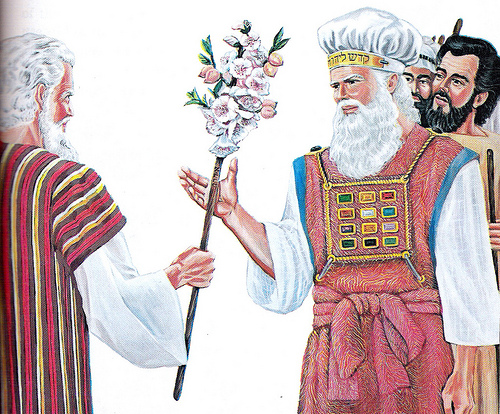
 

8/27   “northrop frye jewish writers great code” – Here’s a link: Northrop Frye and the power of myths in shaping history |

National fullcomment.nationalpost.com/…/barbara-kay-on-northrop-frye-the-pow…


 Aug 8, 2012 – Barbara Kay on Northrop Frye: The power of myths in shaping history illuminating pages of Frye’s The Great Code: the Bible and Literature.


8/27  “is must read hyphenated” – Rabbi Shmuley Boteach


8/26  “is islam or christianity the third monotheistic religion?” – If this searcher is asking which of the three world religions that supposedly could be traced to Abraham came first, second and third historically:  that would be Judaism first, (Post-Exilic Religion. ~800-600 BC) then Christianity developed in 3rd century  (Council of Nicea 325)  and Islam 6th century (Muhammad (ca. 570–632).  Here are 3 posts to check out:

 Paul Johnson.


8/26 “find shai cherry” – TORAH Through Time – Rabbi Shai Cherry


8/26  “dead sea scroll scriptures” – DDS (Dead Sea Scrolls) in English ONLINE? Thank Israel Museum and Google!


8/25  “coming of age prayers and blessings” – Must Own: AMEN – Prayers and Blessings from Around the World –


18/25  ” vengeful and jealous god” – 


8/25  ” jonah parody prophet” – A Literary Approach to the Book of Jonah


8/24  “is faith the same as blind belief” – To ‘have faith’ and to ‘believe’ are related; when one believes in something, one has faith in that something.  What constitutes “blind” faith or “blind” belief?  It’s having faith/believing in something without any basis, you just choose to believe it. Sample:  People tend to believe in ghosts, superstition, premonitions, horoscopes, fortune tellers; why? They never give any satisfactory answer. Here’s a post:  Blind Faith vs. Belief based on Evidence


8/24  “shemoth moses” – There is a whole section on Moses in Shemoth/Exodus, please check out  Updated Site Contents – 08/22/13


8/24  “tabernacle tent of meeting” – There are many posts on the tabernacle/tent of meeting starting in Shemoth/Exodus, continuing in Wai’qrah/Leviticus on to Bemidbar/Numbers; please go to:  Updated Site Contents – 08/22/13


8/23  “understanding the revelations of yahushuwa (pdf)” – “Yahushuwa” is “Joshua” — and as far as the book of Joshua tells the story of the conquest of the Land of Canaan under his military leadership, he has not given any “revelation”.  However, if this searcher is going by the Christian teaching that the name Jesus is from Joshua and which Messianics translate to “Yeshua”, then perhaps the “revelations” of Jesus are better checked out in the Christian gospels . . .  since there are NONE in the TNK or Hebrew Scriptures.  Then again, if the searcher is referring to the revelation of YHWH, or Yahuwah, or Yahweh, that is the Sinai Re velation . . . we have many posts in this website, or simply read the books of Exodus through Deuteronomy [Shemoth through Debariym]. – Updated Site Contents – 08/22/13


8/23   “population of nazareth when jesus was born” – The gospels don’t say anything about this; perhaps Christian history books might contain something; Jesus was supposedly born in Bethlehem but since the gospels record a census required by Roman law (historians debunk this census), supposedly Mary (Levite) went with Joseph to register for the census, and that’s how Jesus was born while in Bethlehem, again, according to the gospel accounts alone and no other source.  Why were they going to Bethlehem, the city of David? Presumably, Joseph would be of the tribe of Judah. But since this is all speculation, none of these are probably helping this searcher.  Question: Why does he/she need to know what the population of Nazareth was when Jesus was born, to begin with?


8/23   “sinai and fertile crescent” – The Fertile Crescent – Bere’shiyth 42 – 43

Definition: The “fertile crescent” refers to an ancient area of fertile soil and important rivers stretching in an arc from the Nile to the Tigris and Euphrates. It covers Israel, Lebanon, Jordan, Syria, and Iraq. The Mediterranean lies on the outside edge of the arc. To the south of the arc is the Arabian Desert. On the east, the fertile crescent extends to the Persian Gulf. Geologically, this corresponds with where Iranian, African, and Arabian tectonic plates meet.  [Please go to: What Is the Fertile Crescent? – Ancient / Classical History – About.com

  1. Fertile Crescent – Wikipedia, the free encyclopedia

    en.wikipedia.org/wiki/Fertile_Crescent

    The Fertile Crescent is a crescent-shaped region containing the comparatively moist and fertile land of otherwise arid and semi-arid Western Asia, and the Nile 

  2. Images for the fertile crescent

8/23   “shai cherry” –  Rabbi Shai Cherry


8/23  “why was seth in the likeness of adam” – Q&A: Why is Seth the one “in the likeness of Adam” instead of firstborn son Cain?


8/22   “al hayah the everliving” –  Checking this out.


8/22  “tabernacle” – 


8/22  “jesus unites us” – Rabbi Shmuley Boteach


8/22  “does the tanakh talk about afterlives?” – Q & A: What does the Tanakh say about the afterlife? — 1


8/21  +[“rod of iron”}+{“deliverance”}+{“spiritual warfare”}+{“thyatira”}> This is New Testament ‘stuff’ . . . we have no posts here on these entry words.


8/21   “essential bible stories jephthah” – The Bible as “Literature” – 3 – Jephthah as “literary art”


8/21  “abraham heschel writing online prophets” – REVISITED: Moral Grandeur and Spiritual Audacity – Abraham Joshua Heschel


8/21  “egyptian gods who were attacked by the plagues” – 


8/21  “angry and vengeful god” – Is our God a “jealous, wrathful, and a vengeful God”?


8/21  “mount sinai sermon” – The Sermon on Sinai vs. The Sermon on the Mount


8/21  “joshua 1:8-9 (niv)” – Here’s the answer we wrote in a similar query on date


 8/13:   “joshua 1:8-9” – This certainly is one of the oft-quoted verses from the Christian OT, applied to anyone and everyone moving toward a new direction or uncharted waters, so to speak.  But let us not forget the context in the TNK; the book  that connects the Torah to the Neviim or the Prophets, recording the conquest of the promised land under the warrior-leader Yahushuwah who succeeded the prophet-mediator Mosheh.  Note the reminder about the source of this people’s wisdom: the Torah and Who makes them win their battles:  YHWH. Note as well the promise that their Elohiym is with them wherever they go . . . which begs the question, Who is your God? And another:  what is His Name? And another:  Is He with you wherever you go? And yet another:  What guidelines for living do you observe, His Torah . . . or is that ‘passé and obsolete as the Christian New Testament claims?  And finally:  Is the Torah only for Israel and not for anyone else, such as yourself?  If your answers to those questions are not the same as what an Israelite would answer, then do not claim this verse for yourself.


NIV:  This Book of the Law shall not depart from your mouth, but you shall meditate in it day and night, that you may observe to do according to all that is written in it.  For then you will make your way prosperous , and then you will have good success.  Have I not commanded you?  Be strong and of good courage; do not be afraid, nor be dismayed, for the LORD your God is with you wherever you go.”


8/21  “yisroel blumenthal” – try this link http://noahide-ancient-path.co.uk/index.php/category/articles-by/rabbi-yisroel-c-blumenthal/


8/20  “mount sinai sermon” – The Sermon on Sinai vs. The Sermon on the Mount


8/20  “rabbi joseph telushkin orthodox” – TORAH 101 – Rabbi Joseph Telushkin on TANAKH


8/20  “pictures of the dead sea scrolls” – DDS (Dead Sea Scrolls) in English ONLINE? Thank Israel Museum and Google! 


8/19  “sons of cham puwt” –  “bloodlines of puwt” – Please go to Bere’shiyth 5, 9 and 10; the verse that includes both Cham and Put is Bereshiyth 10:6.  These chapters provide bloodlines/lineage.


8/19  “denouement plot in book of esther” – A Literary Approach to the book of Esther/Hadaççah


8/19  “yhwh the hebrew symbols for ‘man made in god’s image'” – We have quite a number of articles on this topic:

8/19  “ishmaelites’ impatience” – Call me Ishmael”


8/18  “how can a christian observe yom kippur” – How now do we observe Yom Kippur – 3


8/18  “jewish wannabes” –  This post was written when we started our website . . . much of our thinking has changed since, and will update soon, but for now this post answers the question, to repeat: no, we do no aspire to be Jews nor be Jewish in our ways, and certainly do not intend to join yet another religion such as Judaism.  For now, this post will do:  Are you Jew-wannabes? If not, what are you?


8/17  “how can a christian observe yom kippur”- How now do we observe Yom Kippur – 3


8/16  “holiness is power leviticus 22” – ויקרא Leviticus/Wa’iyqrah 22: Holiness of the Sanctuary


8/16 “how to understand hebrew scriptures – The Bible as “Literature” – 2 – Introduction to the ‘Old Testament’


Yoram Hazony: The Philosophy of Hebrew Scripture


8/16  “noli me tangere original cover” – Guess who wrote this?


8/16  “how far is it correct to say that the origins of prophecy remains vailed in obscurity?” –

 If we, as mere human beings desire to verbally communicate as clearly as we possibly can to each other and, if in writing, to readers — would we not endeavor to get our message across, not leaving the receptors guessing?  It’s hard enough to understand one another in clear language, why make it more difficult by being “obscure”?  What about YHWH?  Is He vague about His Will as expressed in Eden, to Cain, on to Noah, Abraham, Isaac and Jacob, as well as to Moses and the Israelites? AND, if He would want Israel to be warned through prophet after prophet that He sent to His disobedient chosen nation for centuries before He allowed the ‘curses’ or consequences of disobedience to wreak havoc on the national life and the land as He predicted through His mouthpieces the prophets of Israel—-would He want to “veil” His warnings in “obscurity”?  Come on, give our God more credit than what half-baked and ill-prepared bible teachers give Him; their problem is, when they can’t explain, “mystery”; can’t understand, “veiled in obscurity”.  What a cop out. The Great Communicating God of Israel was a God of details, to the point we—readers in this 21st century—can barely stand reading the Torah which is replete with minutiae of YHWH’s will for every area of everyday life.  As for prophecy being “veiled in obscurity” — the problem is with us, readers, not with the mouthpieces of YHWH.  We don’t do our homework in terms of CONTEXT and don’t bother to put ourselves in the place of the original hearers . . . what did they understand when they heard the very words of YHWH, from Him as well as through His mouthpieces? And how do those words apply to us today, living in different times and cultures and receiving His words through defective and sometimes manipulated translations?  The Jewish sages don’t have any problem understanding their Scriptures, seek them out and as our messianic teacher used to say, “think Jewish”.


8/15  “http://www.google.com/search?q=cache:https://sinai6000.net/christian-discovers-yhwh-shares-evidence” – Christian Discovers YHWH, Shares “Evidence”

8/15 “ lesson 11 revelation seminars -sunday observance and the book of revelation” – There is no post as yet on the book of revelation but regarding the shifting of the Sabbath from Saturday to Sunday, check these out:


8/14  “psalm 42:1” – A Literary Approach to the PSALMS


8/14   “uncircumcised lips” – Exodus/Shemoth 6-b: Do you have “uncircumcised lips”?


8/14  “yonah.me2@gmail.com” – This looks like an address more than a Q.


8/13  “bitterness, self-bitternes, fear, ocultism” – What is the question here?


8/13  “biblical peom on in captivity” –  Hmmmm, once in a while we’re not quite sure what searchers mean . . . such as in this entry. Since it appears he/she ended up clicking Biblical Poetry, anyone?, we hope the post answered his query.


8/13   “joshua 1:8-9” – This certainly is one of the oft-quoted verses from the Christian OT, applied to anyone and everyone moving toward a new direction or uncharted waters, so to speak.  But let us not forget the context in the TNK; the book  that connects the Torah to the Neviim or the Prophets, recording the conquest of the promised land under the warrior-leader Yahushuwah who succeeded the prophet-mediator Mosheh.  Note the reminder about the source of this people’s wisdom: the Torah and Who makes them win their battles:  YHWH. Note as well the promise that their Elohiym is with them wherever they go . . . which begs the question, Who is your God? And another:  what is His Name? And another:  Is He with you wherever you go? And yet another:  What guidelines for living do you observe, His Torah . . . or is that ‘passé and obsolete as the Christian New Testament claims?  And finally:  Is the Torah only for Israel and not for anyone else, such as yourself?  If your answers to those questions are not the same as what an Israelite would answer, then do not claim this verse for yourself.

ArtScroll [AS]  translates this verse thus:

8.  This book of the Torah shall not depart from your mouth; rather you should contemplate it day and night in order that you observe to do according to all that is written in it; for then you will make your way successful, and then you will act wisely.  

9.  “Behold, I have commanded you, ‘Be strong and courageous,’ do not fear and do not lose resolve, for HASHEM, your God is with you wherever you will go.


8/13 “hoveh hebrew chapter” – Q&A: “usage of the hebrew verb hoveh, (i am) would imply referring to oneself as being the almighty”


8/12  “literary of exodus” – A Literary Approach to the book of Shemoth/Exodus


8/12  “was yahuwshuwa disciples barefoot” – Sorry, the earlier entry said “yahuwshuwa” is “Isaiah” — confused “Yeshayahuw” with “Yahuwshuwa” which is “Joshua”.  Most likely, this searcher is referring to “Yeshua” [Jesus] which is supposedly a derivative of [Joshua].  Yes, according to the gospels, Jesus did have 12 disciples or apostles.  Were they barefooted?  Well, would footwear have been invented in the year 30 CE? Probably.  How do we know? Hollywood which has made religious films about Jesus would have done their research about proper costumes and if Roman soldiers are shown wearing footwear, most likely the ordinary people in Israel would have at least worn sandals, wouldn’t you think?


8/11 “pilate says veritas” – Pilate: ‘Quid est veritas?’ – Gospel Truth? – 1


8/10  “jews attitudes toward the vengeful god of the old testament” – We forwarded this to a Jew to answer for us, since we can only guess. . . .


8/10  “sermon on the mount mount sinai” – The Sermon on Sinai vs. The Sermon on the Mount


8/10  “1 sam 16 evil spirit of god” – 1 Samuel 16:14-23 – “an evil spirit from God”?


8/9  “according to the tanakh, there is no hell” – That’s right, TNK does not teach that YHWH created a place Christians call “hell” since TNK does not teach that angels have free will like humans, and that they can “choose” to rebel against the Creator.  YHWH endowed only one created being the gift of freedom to choose and that is humankind.  No angel can fall because no angel can make even one choice, least of all, to choose to rebel against His Creator.  Please read these posts:


8/9  conjugal love – This searcher has to be more specific —what is it about conjugal love that he/she wishes to know about?


8/9   “who is adams first born son” – Qayin (Cain) is the first born son of ha’adam (the Mankind) and ishah (woman) later named Chavah or Eve.  The third son, Sheth, however, is  mentioned in the Hebrew Scriptures as the son who resembled his father and we have an article questioning that resemblance:  Q&A: Why is Seth the one “in the likeness of Adam” instead of firstborn son Cain?


8/8  “what are the literary features in the book of lamentations” – A Literary Approach to the Book of Lamentations


8/7  “yhwh” – YHWH, according to YHWH


8/7   “wrathful, jealous, loving god bible verse” –Angry, vengeful God” of OT vs. “Merciful loving God” of NT

8/7  “original cover of noli me tangere” – Guess who wrote this?


8/7  “book of shemoth” –

8/7  “sovereignty rosh hashanah sacks” – Thoughts on Rosh Hashana from Chief Rabbi Lord Sacks


8/6 ” sovereignty rosh hashanah sacks” – Thoughts on Rosh Hashana from Chief Rabbi Lord Sacks


8/6   “usage of the hebrew verb hoveh, (i am) would imply referring to oneself as being the almighty” – 


8/5   “saul talks to samuel’s ghost chabad” –


8/5   “group placed what is now known as the dead sea scrolls in the dead sea’ – DDS (Dead Sea Scrolls) in English ONLINE? Thank Israel Museum and Google!


8/5  “is hanukkah biblical” – Is Hanukkah a “biblical” feast or is it a festival for the Jews only?


8/5  “chapter 28-31 observations- noli me tangere” – Guess who wrote this?


8/5  “original book cover of noli me tangere” – Guess who wrote this?


8/5  “null gods in hebrew” – still love this searcher even if he/she continues to enter the same terms (see repeated entries below) BUT . . . I give up.


8/5  “what is the word most commonly used in hebrew scripture to refer to “null gods” or “non-gods?”


8/5 “word most commonly used in hebrew scripture null gods or non gods”


8/5  “what is the word most commonly used in hebrew scripture to refer to “null gods” or “non-gods?”


8/5   “word most commonly used in hebrew scripture null gods or non gods” – Love this searcher; this is the 6th time he/she has entered the same search terms and he/she keeps landing in this website, probably to his/her dismay.  Obviously, he/she is not content with the answers previously given [see 8/3 and 8/4 below]has not found the answer to his/her query and he/she is not about to give up!  Great trait for a truth-seeker!  Sinaites can relate to this person, since exactly that persevering unrelenting don’t-quit attitude is what brought us to where we are today, on the right pathway leading to the One and Only True God whose Name is YHWH.  Soooo, how else to answer this same question for the 5th time?

Is there a Hebrew word for a non-god?  Basically a non-god is anything/anyone that is not YHWH Himself, which is anything and everything we elevate to take His place in our lives, whether that be another person, our job, an addiction, an obsession, whatever replacement that takes our time, our energy, our focus off Him. Whether we recognize that ‘substitute’ as a non-god or not, it takes His place in our lives. So what would be the term for that?  You decide! This probably will not satisfy this searcher and if he/she lands here again, we will try answering for the umpteenth time.  Love this searcher, makes us work harder!


8/5  “what word is most commonly used in hebrew scripture null gods or non gods” – 


8/5  “hebrew scripture null gods or non gods”- 


8/4  “in the shadow of the temple skarsaune jesus heals on the sabbath” – Our resource library has In the Shadow of the Temple:Jewish Influences on Early Christianity, by Oskar Skarsaune, a book we purchased during one of the yearly Messianic Conferences conducted by the Asia-Pacific Messianic Fellowship (APMF) and the Baguio City Messianic Congregation (BCMC). The search phrase lumps together the book title, the author, and a phrase “Jesus heals on the sabbath”.  This gives us no clue as to what this searcher is specifically looking for. Did Jesus heal on the Sabbath? According to the gospel stories, yes he did. Did he in real life? We have no way of knowing. Sorry.


8/4 “gen 3:15 woman” – Prooftext 1a – Genesis 3:15 – Who is the “woman”?


8/4 “what is the most commonly used in hebrew scripture to refer to “null gods” or “non-gods” in hebrew” – The term “elohiym” is the generic word for “god” and specifically “mighty one”.


8/4 “what is the most commonly used in hebrew scripture to refer to “null gods” or “non-gods” ?” – This searcher is not content with the answer we had posted on his first entry, see below 8/3: “From what we understand, the word “el” was the generic word for “god” and in Hebrew, “elohiym” [with lower case “e”] refers to gods, non-gods, mighty men, and such.  In English, it’s easy — the word is “idol” whether it is an object or a human turned into a god.”


8/3   “ha satan” – There are about 10 posts on “the adversary” or “ha satan” but here are 3; for more, please go to Updated Site Contents 08/02/13 though here are a few posts to check out:

8/3   “what is the word most commonly used in hebrew scripture to refer to”null gods” or “non-gods” ?” – From what we understand, the word “el” was the generic word for “god” and in Hebrew, “elohiym” [with lower case “e”] refers to gods, non-gods, mighty men, and such.  In English, it’s easy — the word is “idol” whether it is an object or a human turned into a god.


8/3   “short reflection from the text proverbs 27:9-10″ – Wisdom Books – 2 – Proverbs


8/3  “yom kippur and the scapegoat lamb” – Sacrificial goat, Scapegoat . . . what about the Lamb? Not on Yom Kippur.


8/3   “leviticus 20 death penalty” – ויקרא Leviticus/Wa’iyqrah 20: The people whom a holy God has chosen for His own must, like Him be holy


8/3  “short reflection from the text proverbs 27:9-10” Wisdom Books – 2 – Proverbs


8/2   “yom kippur and the scapegoat lamb” – Sacrificial goat, Scapegoat . . . what about the Lamb? Not on Yom Kippur.

8/2  “hosea 3:4 rabbi’s commentary zemach” – The Prophets of Israel – Christian Perspective


8/1  “uncircumcised lips” – Exodus/Shemoth 6-b: Do you have “uncircumcised lips”?