
Yo searchers, can we help you? – August 2014

Logo2 by BBB@S6K
Logo2 by BBB@S6K

[Welcome back to Sinai 6000!  We are happy to be back on the web after a month’s absence during our transition from our former server to our current one.  We are grateful to Silver Connect Web Design LLC  whose Jewish owner made an offer we could not refuse—no charge for service,!  Praise YHWH and bless this donor’s generosity! 


The downside to transition is — many of our posts did not ‘transition’ properly,  so it will take us a while to check each article and reformat and reprint images.  Please bear with us during this phase but thank you for not giving up on checking us out.


This post features search terms that land on our site stats.  Aside from directing the searcher to existing articles already posted, we add comments when we have not tackled the searcher’s topic and redirect their search to websites that do, some listed under our links.  

This is updated every time a search term is entered.—Admin1]

———————————–

8/30  “sabbath day” – A Sinaite’s Liturgy – 5th Sabbath of August


8/30  “kiss of judas painting” – Judas – did he really exist?


8/30  “yhwh” – We have many posts on the Tetragrammaton Name YHWH; check out the following:


8/29  “jesus crucified” – A Rabbi analyzes the Crucifixion


8/29  “jesus killed by jews” – “Who killed Jesus?”


8/29  “orthonymous definition” – A World of Deceptions and Forgeries – 3


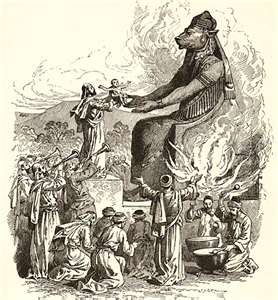
8/29  “greek mythology gods and goddesses names and pictures” – 

8/29  “bible study on uncircumcised lips” –  Exodus/Shemoth 6-b: Do you have “uncircumcised lips”?


8/28  “ishmael isaacs musician” – This search term landed on Sinai 6000 because of “Ishmael” and “Isaac”; it turns out “Ishmael Isaacs” is a “musician” alive and well in this year 2014 whose music category is Rock/PopInternationalReggae/Ska/CalypsoAfricanReggaeWorld.  Ah, we always learn something from our webvisitors; perhaps this one learned something about the biblical Isaac and Ishmael, Yitshak and Yishmael after whom, surely, this contemporary musician was named by his parents.


8/26  “gods of egypt” –  EXODUS: The 10 Plagues–Judgment of YHWH upon Egypt’s gods


8/25   “what is the tree of knowledge of good and evil” – 


8/25  “angry god of ot same loving god of nt” – 


8/25  “egypt gods” –   EXODUS: The 10 Plagues–Judgment of YHWH upon Egypt’s gods


8/24  “what did the levites do from age 30-50″  – Numbers/Bamidbar 4 – Levites ages 30 to 50 . . .serve in the Sanctuary


8/24  “images of sabbath greetings”  – the latest is A Sinaite’s Musical Liturgy – 4th Sabbath of August


8/22  “the greek gods” –  A discussion of the pantheon of Greek gods/goddesses is included in this post:  


8/22  “fox vs alter five books of moses” – Both Everett Fox and Robert Alter produced a translation of the Pentateuch which they titled the same:  The Five Books of Moses.  The difference between the two is what made us choose Fox over Alter; for one, Fox uses the Tetragrammaton Name “YHWH” in his translation, and for another, his version uses poetic language and is formatted as poetry.  As for the notes and commentary, we have included both in addition to Dr. J.H. Hertz’s Commentary in Pentateuch and Haftorahs—at least through the books of Genesis and Exodus.  We have yet to work on the books of Leviticus, Numbers and Deuteronomy which features only Dr. J.H. Hertz.


8/22  “earliest monotheistic religion developed in arabia” – What about the 3rd world monotheistic religion, Islam?


8/21  “schocken bible exodus 1:7-22″ – The Schocken Bible is Everett Fox’s The Five Books of Moses which is our translation of choice for this website; as we have explained, besides the use of poetic format, this is the only published version that uses the Tetragrammaton Name YHWH.  There is no ebook or kindle version of this bible, it is only available in hard copy —check out this link: http://www.amazon.com/The-Five-Books-Moses-Deuteronomy/dp/0805211195—here’s a short writeup:   Widely acclaimed by Bible scholars and theologians of every denomination, Everett Fox’s masterful translation re-creates the echoes, allusions, alliterations, and wordplays of the Hebrew original. Together with its extensive commentary and illuminating notes, this unique translation draws the reader closer to the authentic living voice of the Bible.

Here’s chapter 1 of Exodus:  Exodus/Shemoth 1:15-22 – When is it ‘alright’ to tell a lie?


8/21  “what is moses uncircumcised lips” – Exodus/Shemoth 6-b: Do you have “uncircumcised lips”?


8/19   revelation in a nutshell” –  Revelation in a Nutshell


8/16   “5 commandments of man towards god” – The Ten “Declarations”: 1-5/ Man’s Duties toward GOD


8/16  “5 commandments of man towards man” – The Ten “Declarations”: 6-10/Duties Towards Fellowmen


8/16  blessed sabbath” /blessed sabbaths”/sabbath blessing quotes”/”have a blessed sabbath”   A Sinaite’s Liturgy – 3rd Sabbath of August


 8/15  “sabbath day” – A Sinaite’s Liturgy – 3rd Sabbath of August


8/15 “sarah wife of abraham” – 


8/15  what do quantum physicists say about the garden of eden”- 


8/14  “bamidbar8″ – 


8/13  “judaism symbols”  – Please go to this post: Must Read – 6 – Robert Schoen/The Torah and the Law; Jewish symbols

Additional information is provided by this link:

8/13  “book of genesis who are the second and third women identified?” – Working on this answer later.


8/12  “strange traditions in judah” – Try this posts:


8/11  “is the torah the 10 words spoken on mt sinai”  – The Torah contains the “10 words” or the “10 Declarations” or the “10 Commandments” that were written by the finger of the Sinai Revelator YHWH, on two tablets of stone.  The Torah is the whole five books attributed to Moses and contains historical narrative, instructions on all aspects of living, particular relationship to God and fellow humans. Check this post:  Revisited: IN HIS NAME – Where in What Bible is His Word? – 3


8/11  “gerald l. schroeder” –  He’s a nuclear physicist whose book we recommend as MUST READ/MUST OWN here’s the title:

 
BBB, artist: ART EXPLOSION STUDIOS,  744 Alabama St., San Francisco, CA

BBB, artist: ART EXPLOSION STUDIOS, 744 Alabama St., San Francisco, CA

8/9  “shiprah and puah”  – The artwork featured here as the two Hebrew midwives were not originally intended by the artist to be them; we just borrowed the image and posted as such, the artist did not protest, since he didn’t have a title for his artwork anyway. Unfortunately in our transition to our new server, many of our images disappeared from our media gallery but be patient, we are slowly restoring them.

8/9  “the regions where the descendants of shem ham and japheth migrated” –


8/8   “sabbath day” – A Sinaite’s Liturgy – 2nd Sabbath of August


8/8  “in exodus 6: 30 what is meant by uncircumcised lips?” – Exodus/Shemoth 6-b: Do you have “uncircumcised lips”?


8/7  sinai vs. zion –  MUST READ: SINAI & ZION – 1


8/7  “judas kiss” – Judas – did he really exist?


8/7   “what does tnk mean christian” – TNK is the acronym for the three divisions of the Hebrew Scriptures:  “T” is for the TORAH, “N” is for Neviim (Prophets), and “K” is for Ketuvim (The Writings).  The TNK has nothing to do with “christian” except if you consider that the early Christian fathers had to append the TNK to their New Testament Canon, and for something to be thought of as “new,” there has to be an “old” . . . and so the TNK ‘metamorphosed’ into the Old Testament of the Christian Bible.  In the transition process, a lot of changes were made on the original Hebrew Scriptures.  We have often said that the Jews do not read the “Old Testament” and that surprises people; we explain that what Jews read is the TNK (Tanach, Tanakh) which is their Hebrew Scriptures. There is a world of difference between the two.


8/6  favouritism in children upbringing lessons drawn from isaac and rebekah” – This is our comment in the post Journey of Faith: Yitchak, Isaac – lol!

“So Yitzhak, duped by his younger son in connivance with his wife, inadvertently fulfills the prophecy.  Human machination overturns tradition and culture, and YHWH’s will is still done! But how duped, truly, was Yitzhak?  He used logic thinking how fast did Esau carry out his request; his sense of touch and smell supposedly confirmed ‘hairy hunter’ Esau and yet he had to ask not once, but twice if it was really Esau.  A commentator said that the prophecy about Yaakov was told to Rebecca/Rivka and not to Yitzhak but family dynamics as they work in reality, Yitzhak favored firstborn Esau, Rebecca favored secondborn Yaakov. Parental favoritism as it did in the story of Joseph, causes problems for the whole family.”


8/6  “joseph from prison to palace” – Genesis/Bereshith 41: From Prison to Pharaoh’s Court


8/4  “jewish uncircumcised lips” – This search term “uncircumcised lips” has shown up frequently though this is the first time “jewish” was attached to it.  We’ve explained the distinction between what’s “Jewish” and what’s “scriptural” or “biblical” — there are things “Jewish” that are not necessarily “scriptural” and vice versa.  So let’s just stick to the “scriptural” reference here: 


8/3  tanach ishmael’s son nevayot”  From the post  Genesis/Bereshith 25a: “Yitschaq and Yishma’el buried him in the cave of Makpelah”


Nebaioth.  Later known as Nabataeans.

13. These are the names of the sons of Yishma’el, named in the order of their births: Nebayoth, the firstborn of Yishma’el, and Qedar, ‘Adbe’el, Mibsam,


Here’s another piece of information:

Sons of Ishmael

As for Ismael’s sons, little information is given on them. Although they dwelled in the Arabian Desert, Biblical and history scholars don’t believe they were alone. Of all the sons, the most is known about Nebajoth. Mentioned specifically by the Jewish historian Josephus, the Nabataeans lived in Nabatene. That’s the area between the Euphrates and the Red sea. Because Josephus lived along side the Nabataeans, it’s believed his information was first hand. The Roman and Greek historians call this particular tribe Arabs because they spoke and wrote the early Arabic language. – See more at: http://amazingbibletimeline.com/blog/sons-of-ishmael/


8/2  “august 4th the 4th of ahv what can we exspect according to prohecy” – We have not dealt specifically with the significance of this date in prophecy and fulfillment related to Israel.  You might check out the Jewish websites; the links are listed on our homepage.


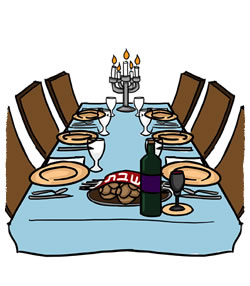
 8/2  images for sabbath blessings” – As you will notice,  Sabbath Liturgy posted week by week is full of images. The internet is the source of these, simply google “images for sabbath celebration” or “images for sabbath lights” or “images for sabbath meals.”  Make sure you acknowledge the source of the image; if not, sometimes it will disappear from your post, particularly those that belong to collections with charges for usage.   8/1  “sabbath day” – Sinaite’s Sabbath Liturgy — 1st in August


8/1 “israel’s prophecy still remains in obscurity.” –  Q&A: “Israel prophecy” – “veiled in obscurity”?

A Book for All People

[This was first posted May 2012.  As you might have noticed, we are in “Revisit mode” since new year 2014; reason is there are so many good articles buried in our site contents, that are still relevant today that searchers are resurrecting as reflected in our ‘site stats’.  So expect a lot more recycled articles for now, and thanks for your visits, revisits showing your interest in the Sinaite perspective.—Admin1.]

——————————————-


One of the websites we subscribe to is the Jewish World Review.  It has excellent articles, well-written, informative, educational, with commentary on current world events.  We highly recommend it to our website visitors.  But just in case you miss this article by Rabbi Berel Wein, entitled THE PEOPLE OF THE BOOK’S BOOK FOR (ALL OF) THE PEOPLE, we are quoting excerpts.  But before we go there, here’s some background that is useful to our understanding, even if it comes from the New Testament Book of ‘Acts of the Apostles’.  


In Acts 15:1-21, Paul and Barnabas meet with the apostles to discuss the influx of gentile converts in the Jewish synagogues outside of Israel, in gentile territories. This meeting is called  the  “Jerusalem Council” although our bible teacher would claim it is the first “messianic conference.”


 The agenda included—

  • first,  a report by Paul and Barnabas on “the conversion of the Gentiles” which were “bringing great joy to all the brethren” and 
  • second and more important,  Paul and Barnabas wanted the Council to decide what they would require gentile believers to observe from the Torah.   


They decided that the requirements would initially be the absolute minimum—short of circumcision—which those  pesky “Judaizers” who kept following Paul in his ministry, were insisting upon.


It turns out that the minimum listing is what is known as the Noachide Laws, i.e., what mankind would have known after the flood and before the giving of the Torah.  


So they write a letter to be sent through Paul and Barnabas, Judas called Barsabbas, and Silas, and this would then be read to the brethren in Antioch, the so-called “first gentile Christian church” since NT scripture says Antioch is where the believers were first called “Christians.”  Understand that “christian” is the English word for “messianic” which comes from the Hebrew “maschiach” meaning, “anointed one.”  


James the elder,  the head of the “Jerusalem Church” expressed his opinion:

Therefore it is my judgment that we do not trouble those who are turning to God from among the Gentiles, but that we write to them that they abstain from things contaminated by idols and from fornication and from what is strangled and from blood.  


Christian bible teachers interpret this to mean ‘gentiles are off the hook’ from observing Torah, failing to take note of  the last sentence: 

For Moses from ancient generations has in every city those who preach him, since he is read in the synagogues every Sabbath.


Why is that important?


This is where Messianic bible teachers come in handy.  Their interpretation of the Jerusalem Council decision is —

in effect, let us be gentle on the gentiles and not shock them with everything the Torah requires; let us start out with the basic issue about gentiles that is offensive to Jews—the eating of blood!


 If Jews and gentiles cannot even share a meal together because of food issues, then how are they to fellowship with each other, since the ancient near east custom of eating together symbolized acceptance of one another. So, if the Council simply requires this little adjustment on the part of gentile believers, it could and should and would eventually lead to the bigger and more important teachings, since gentiles are now going to the synagogues every Sabbath to hear the reading of THE BOOK, YHWH’s TORAH.  If they keep hearing more and more of Torah, then they will themselves acquiesce gradually to the laws, commandments, instructions in Torah.


There is wisdom in this approach.  Ever hear the joke about the frog?  If you put a frog in lukewarm water in a pot, he will not notice that he’s gradually being cooked! But if you throw him in hot boiling water, he’ll instinctively jump out of the pot, so you’ve lost your frog legs appetizer!  


So now, let’s read some excerpts from the JWR article of Rabbi Wein and remember, Jews write to a Jewish audience but even so, learn from their wisdom and their interpretation of Torah:


This Sabbath concludes the public reading of the book of Leviticus. There are a number of subjects that dominate the week’s double Torah (Bible) portion, but a common, central theme in the selection is the concern for human beings, for justice and fairness and for an equitable society.


The ideas and mitzvas (religious duties) of shmita (the sabbatical year), the canceling of debts, jubilee, the return of property to original owners, the freeing of servants, and the support of the stranger and the alien living in our midst, are all meant to point the way to a more just and caring society.


The Torah is about people — human beings and their obligations and relationship one to another. Without that perspective of humanity that the Torah is built upon, this holy book would shrivel away into a mere law book instead of being the living guide for Jewish life and thought.  At the conclusion of the portion of B’Chukosai , the Torah discusses the “worth” of an individual.  Even though this is seemingly only a complex and technical Jewish legal issue resting on the basis of a pledge of money to the Temple, it is symbolic of the far deeper issue of how we are to value the life and worth of another human being and of our own lives as well.


The Torah forbids us from sacrificing human life for a “cause.” The Bolsheviks destroyed tens of millions of people and justified their murderous brutality by stating that it was all-necessary for the cause of Marxism-Leninism to triumph. The Torah, in contrast, treats human life very gingerly and sparingly. Having just completed the bloodiest century in human history, our society could certainly stand a strong dose of Torah humanity and perspective.


The Torah does not demonize the “other” amongst us and it requires us to look inwards into ourselves for sources and answers to problems and not to foist all blame for our ills and difficulties on hapless and innocent scapegoats. If we adopt the Torah’s way of behavior and view of life then G-d promises us a much better life here on earth. If we persist in ignoring G-d’s path then we are doomed to sadness and tears. This is also made explicit to us in B’Chukosai.


The Torah reading concludes this week with the recitation of “chazak” — be strong — by the assembled congregation. Whenever we complete one of the books of Moses we recite “chazak.” Part of the reason for this is that the Torah sets very high standards for us. It does not compromise its demands in order to soothe us into smug complacency. Therefore there could arise a tendency to become discouraged when comparing our actual state of behavior and the bar that the Torah has erected for us.


To counter this feeling of falling short we recite “chazak” and pledge ourselves with renewed strength to attempt to do better and have our behavior and life fall more in line with the Torah standards placed before us. We renew our commitment to be strong and to strengthen others in the task of building this better society and more harmonious world. The Torah is a book of optimism and hope. We know that we can do better and we will therefore do better in the future.


NSB@S6K

A Christian defects from the religion he was born into . . .

 
My name is Finis Leavell Beauchamp, and I am the eldest grandchild of one of the most prominent Christian leaders of the twentieth century. My grandfather, Landrum Pinson Leavell II, was at one time the vice president of America’s largest Protestant denomination, the Southern Baptist Convention, a religious body as numerous as the entirety of Jewry worldwide. My grandfather did not lead from this executive position alone. He also presided, for a quarter-century, over one of the world’s largest Christian seminaries, while penning 14 theological treatises. Thousands of the people who now lead the Evangelical Christian world (with all of the concomitant political power that represents) received their theological training under his direct authority. Millions saw him as their leader.  But that world belongs to memory, for today I am 31 years old, and have been a proud Jew these last nine years.
 

People do not simply leave families like mine, and certainly not to become Jewish.


I am, so far as I know, the highest level defector ever to break from the American Evangelical Anglo-Saxon elite, and certainly the first to become a Jew.


The world from which I emerged, the worldview I discarded, is not easily cast aside. My grandfather was not the first renowned member of my family. As far back as the American Civil War, and even before, my family has been prominent in the South. I share ancestry and connection with George Washington through multiple lines. And, since the turn of the 20th century, when my great-uncle, Landrum Pinson Leavell I, began to preach, until the end of that same century, when his namesake, my grandfather, ended his long career, my family has served in virtually every leadership capacity within the Southern Baptist Convention, as well as the much larger Baptist World Alliance, a colossus of religion with tens of millions of members worldwide. People do not simply leave families like mine, and certainly not to become Jewish. But it was when I was a boy that the edifice my family built began to collapse.


The author, age 2The author, age 2


The world inside the red brick walls of my grandfather’s seminary was austere, starkly Protestant, rigid, and frighteningly apocalyptic. For they believed we lived just before the deluge, which is to say, the coming of the Antichrist. In that environment there was an absolute necessity for ideological uniformity and conviction in the face of what was seen as the collapse and disintegration of all normative values and morality, which undoubtedly was occurring, in the eyes of Evangelical Christianity, in the latter half of the American twentieth century – primarily derived from (though not widely understood to be a result of) the deterioration ofcertainty, due to Descartes and Darwin, and those later philosophers and scientists who further developed their epistemological and scientific questioning, and also to the whittling away of the belief, in the bosoms of Christian laymen, of time in saecula saeculorum, in whose inexhaustibility, particularly in the Deep South, there had previously existed an unshakeable faith.


The rapid erosion of that formerly ever-existent state of affairs – one based on hierarchy, patriarchy, Christianity, and race, created a situation in which an eschatological war was required to counteract the criticisms of those that suddenly arose, in the latter half of the twentieth century, from within the Evangelical world itself. And while any moderate of suspect theology could simply be placed in exile, declared unfit, or removed from authority, there was the rather delicate problem of how to deal with such poison when found in a child, particularly when that child was a scion of the most influential clan in the entirety of the Evangelical world.


A Different Child


I was only a child, yet I was a very different child. But this is best explicated through a snippet of conversation I once shared with my mother.


“When you were a boy you could solve puzzles,” my mother mouthed.


I was in my mid-twenties and had just asked her if she believed that there was something unusual about me as a boy that was not related to spirituality.


“What? What does that mean? Everyone solves puzzles.”

“Yes, but you were very young.”

“How young?”

“Eighteen months.”

“There are puzzles made for babies. Why is that unusual?”

“Well you did them all. We had to get you puzzles for the three-year-olds.”

“I was a year or two ahead of myself. So what?”

“Well you did those too. I got you the puzzles for the five-year-olds. You only needed to look at them one time to solve them. I had to keep buying them. It wasn’t the same with your younger siblings. They had to look at the pieces one at a time and try them in different ways over and over to put the puzzles together. You would see the puzzle complete in your head and put it together on the first attempt.”

“So you got me puzzles for seven-year-olds, for adults?”

“No, no.”

“Why not?”

“It was just too strange.”


Yet if it was in puzzles that I excelled then that was no more than a danger in my parents’ eyes, for soon after I was able to think, I learned to speak. And shortly after having arrived at the glorious conjunction of both thought and speech I was able to question. And questioning soon proved a great talent of mine. My inquiries were primarily directed at my parents, and concerned life, and humanity, and the nature of existence and God, for after all, it was a theologian’s home. But frequently the answers provoked more questions, and in many cases one or more of the answers produced confusion, or, as I saw it, a puzzle.

My mother really meant those beatings to save me from sin and a possible eternity in Hell.

 However there were times when my parents did not see their answers as confusing or puzzling, or as riddles requiring solutions. So there were occasions when the solutions at which I arrived, to satisfy the curiosities acquired when padding about as a child, did not meet with the approval of my parents. Further, there were many times when the answers provided me were not merely puzzling, but were completely unpalatable. And so without compunctions, I felt free to let my parents, particularly my stay-at-home mother, know what I felt about their thoughts and opinions concerning my behavior or beliefs. And all of this questioning and back-talk existed alongside the usual misbehaviors of any normally inquisitive and energetic young boy. And that presented a problem, for I was an extremely willful child.


This sort of childish willfulness did not go over very well in the Southern Evangelical world of that time, where children were to be seen and not heard, and physical pain was seen as appropriate, Biblically mandated, and pedagogically useful. I was just out of infancy when my mother began beating me, and those beatings, which she termed spankings, continued several times a day, every day, throughout my childhood and adolescence. And I do not believe, in the beginning, that those beatings were meant to be abusive. I believe my mother really meant those beatings to save me from sin and a possible eternity in Hell.


Possessed by the Devil


Christianity, unlike Judaism, prizes faith above action, and the acceptance of Christian faith requires obeisance to a convoluted, tangled reticulation of postulates – in essence, a puzzle. To be a good Christian in the world today is to accept a maze of doctrine which collapses at the lightest touch. Consider a simple example which occurred to me as a youth:


They believed that I required radical assistance. I was loaded in a car and driven to an exorcist for an exorcism.


Christians (and Jews) maintain that it is an absolute necessity that the Messiah be descended from King David through the patrilineal line. Christians also maintain that Jesus was born of a virgin (and therefore possessed neither father nor patrilineal line). So the choice is clear. Either Jesus was descended from David in the male line, making him eligible to be the Messiah, or he was born of a virgin. But it is absolutely impossible that both can be true – and therefore one of the two major doctrines of Christianity is necessarily false. This is no more than a simple truth of logic – a truth visible to anyone willing to probe the maze of Christian claims.


Pronouncements of this sort caused my parents to assume that there was something very wrong with me. Though only a small child when my parents began to beat me, it was as I grew older that they determined the multiple daily beatings were having no effect. They came to believe that the wit and intelligence and mischievousness that motivated me as a small boy were no confluence of natural factors, but a direct result of demonic activity in the physical realm. In their minds, ten-year-old boys should not be able to outsmart, outthink, and outmaneuver mature adults who are operating under divine guidance. My parents decided that I must be possessed by literal demons. They believed that I required radical assistance. I was therefore loaded in a car and driven to an exorcist for an exorcism.

And there is no intelligent ten-year-old who will not very quickly begin to experiment with alternative identities, particularly when he has never been exposed to anything other than the metaphysical claims of the inerrant and literal interpretation of the New Testament, with its repetitive passages concerning exorcisms – passages which I knew by heart. If the foundation and rock of one’s life, that is to say, one’s mother, believes that when speaking to you she may not in fact be speaking to you – even while looking directly into your eyes – but rather to one or more maleficent creatures from the netherworld, then you, the precocious, imaginative, ten-year-old, will begin a long process of self-dissociation in which you discover yourself increasingly plagued by the types of epistemological questions that should really not trouble anyone other than tweed-donned and bearded middle-aged professors.


“Am I me?”

“Are there evil beings living inside of me?”

“Did what just happened occur as a result of my actions, or was it the result of an uncontrollable impulse directed by one of the malignant spirits that seem to be hovering all around me?”

“Why did God allow me to become a prime target of these evil beings, simply due to the pedigree of my family, my spiritual potential, and the likelihood that someday I may become a leader of the Christian world? What did I do to deserve that?”

“If it is not me personally who is causing and responsible for these defiant and occasionally uproarious behaviors, then why am I being beaten so thoroughly for them every day?”


Rebel


To break free from the doctrines imposed by the use of a whip it was necessary for me to rebel, and to rebel thoroughly. I became a wild, dissipated teenager. I learned, through terrible pain, of the dark nihilism that exists when one lives as an agnostic, as a man with neither hope, nor purpose, nor God. In time, to battle the blackness of that abyss, I turned to philosophy.


In that first cerebral turn after Christianity I read the Existentialists, who seemed to understand my sudden drowning in the absurd meaninglessness of existence, the nausea that evoked. However, once that nihilism was fully conceptualized and accepted, then continued meditation on the writings exploring the psychological sensations inside that anarchic vacuum became morbid, the stuff of decay, and I recognized the need to turn to a very different type of philosopher. I moved to the major figures of early modern European philosophy, to the foundational questions of epistemology, of determining how one possesses certain knowledge. I quickly realized that I did not have knowledge that there was no deity – I merely possessed knowledge that Christianity was not true. This lengthy philosophical research led me to the belief that a deity exists, and that atheists, for all their bluster, make as heavy a use of faith as do traditional theists.


If there was a God, and said God did not have a son, then who exactly was the true deity?


I knew that Christianity was not true, that the carpenter was neither God nor God’s son. However I had made the choice to believe that there was a God – to believe that Life held meaning and purpose independent of anything I might choose to make of it, beyond any purely mechanical explanation for reality and existence. But that presented an entirely new problem, one I had never before considered. If there was a God, and said God did not have a son, then who exactly was the true deity? There were so many competing claims for the title.


There are a finite number of paths one may choose. First, one must adjudicate between monotheism and polytheism. When one does so, and embarks on the path of monotheism, there are still myriad choices. Yet this seeming feast of ideologies is a complex mirage. The vast majority of monotheistic creeds are derivatives. Let us ask a very simple question: “If there is a God, and if said deity has, in any way, chosen to reveal Truth to mankind, then in what way did this occur, in what possible way could this occur?”


Though the process may seem complex, the logical chain is simple, and sound. There exists a deity. This deity chose to create man, and then to commune with man. The method by which this communication occurred was a document, for men do achieve reason, sentience, separation from primitive life, by means of the written word. This document was the Torah. It was given to the family which reached forward to take it, from among the families of men. At one time there existed a man, Abraham, who advocated monotheism over polytheism, and then reached forward to commune with God. This man’s descendents are the Jews. His descendent Moses received this document by which God communicates with Man. In this there is nothing stupendous, nothing which defies the simplest truism of logic or any psychological law of humanity.


I reached forward to this logical sequence in one hour, on a simple, quiet, weekend afternoon. I was sitting in a chair, relaxing, reading the Christian Bible in a rare effluence of nostalgia. I was submerged in the passage where David is chosen by Samuel, under divine inspiration, to become the anointed King of Israel. David would eventually receive a promise from God that his descendants would eternally inherit the monarchy of Israel, and it was from this promise that the messianic ideal, and later the cult of Jesus, took root.


Suddenly, sitting quietly, the afternoon sun streaming through the window and playing on my hair, I was struck by simple inspiration. I realized that just because Jesus wasn’t the Messiah didn’t mean that there couldn’t still be a Davidic Messiah. That because the New Testament was riddled with internal contradictions didn’t mean the Old Testament was as well. That the New Testament and Old Testament were mutually contradictory on numerous fronts didn’t mean the Old Testament couldn’t stand alone as its own Bible. Jesus and Paul and the other disciples may have been frauds or charlatans or simply ignorant fisherman caught up in a cult, but that didn’t mean that Samuel or Saul or Solomon were anything but men engaged in a divine storyline. Virtually all of the numerous logical problems that had so troubled me with Christianity were eliminated if the New Testament was abandoned. Suddenly I was possessed of a complete monotheism with no Devil, no Hell, no Trinity, no Virgin Birth, no god-man, nothing that I found impossible to believe.


Jews and Judaism


Almost as soon as I experienced this initial inspiration I came to a second realization. I remembered that there were other people who believed in nothing more than the Old Testament. They were called Jews. And then I recalled that the Jews did have a religion, and that it was called Judaism.


It may seem incredible that a young man who had plowed through everything from Sartre to Schopenhauer to Sikhism in a quest to get at some type of metaphysical truth after Christianity would have neglected to investigate Judaism or the Jews. In order to fully explicate this curiosity I must provide context.


I wondered if there were any Jews left who still believed their own Bible.


First, as a former Evangelical Christian, I had been indoctrinated since infancy with the notion that Judaism used to be a religion – but was no longer. Judaism was a Broken Covenant that had been firmly supplanted, or repaired, by Christ. I had never once read the Old Testament without seeing it through the lens of the New Testament. It would have been akin to reading the American Constitution without mentally interjecting the Bill of Rights at every stage. It was inconceivable to me that there could still be persons roaming the earth, two millennia after Christ, who believed in the Law of Moses, and nothing more.


Second, while it had never been explicitly taught, I had simply imbibed, perhaps in the very air of the South, that the Jews remaining on earth were not members of a religion, but were rather a distinct racial group – similar to Africans or Asians. Though I did not know it at the time, there was sound reason for the assumption that Jews were not properly defined solely as adherents of the religion of Judaism, for the majority of Jews alive today are irreligious, are members of other faiths, or are only marginally attached, and primarily for cultural reasons, to any form of Judaism.


I wondered if there were any Jews left who still believed their own Bible. I remembered vaguely having heard that there were still rabbis in the world, but I had assumed that they were fringe gurus involved in a cult. I realized that I had no idea what these rabbis might believe about the Bible. I knew nothing of the tenets of Judaism. I did not know what Yom Kippur was, or Rosh Hashanah. I did not know aleph or beis. The only thing I knew about Judaism, a rumor I heard as a boy, was that Jews didn’t eat pork.


I went to my local university library, and found myself in a quagmire. There were many shelves with hundreds of books on all things Jewish. I did not know where I should begin. I walked to the section that dealt with Judaism proper, and even that section contained more volumes than I would be able to read in a year. I looked up at the ceiling, and then lowered my head and closed my eyes. I prayed the first earnest prayer I had offered up in a very long time.


“God, if you exist… I mean if you really, truly exist, and if you’re the God of the Jews, then please show me which of these books I should read. I don’t know what I’m doing.”


I pulled a book at random from the shelf before me and walked to the check out. I got home and took a closer look at the slim volume. I had arrived home with This is My God, an introduction to Judaism by the Pulitzer Prize-winning author, Herman Wouk. Wouk wrote shortly after World War II, when modernity and the Holocaust had all but destroyed Orthodox Judaism, that is to say, any rigorous devotion to the notion that the Torah is the divinely inspired word of God. At the time the work was published, most observers expected Orthodox Judaism would disappear within a generation.


Wouk wrote both to explicate the religion, as well as to serve as a type of lay-apologist – demonstrating how an intelligent sophisticate can, in the West today, maintain believe in a literal God, inspired Scripture, and absolute moral values. It was almost as an aside that he described the festivals, rituals, and obligations of Orthodox Judaism. His sketch of Jewish history after the time of Jesus was new to me. I knew little of the last two millennia of Jewish history beyond the slaughter of the Holocaust, and the establishment of Israel as a refuge. I had been taught that anything that happened to the Jews after their rejection of Jesus was meant to serve as both a punishment and a warning to those who rejected Christ.


Wouk’s urbane take on religion was radical to me. I had never read such a book. I was deeply affected. I remember turning the last page and sitting in silence for perhaps five minutes. I then decided that I would become an Orthodox Jew.


The path of conversion to Orthodox Judaism was terribly difficult. My poverty was acute. My father, also a pastor, had decided that I was unwelcome under his roof. I had been sent to live with an aunt and uncle. A refusal of my uncle’s firm demand that I attend church meant that I was also unwelcome in his home. I sat in my truck one day staring at the reality of homelessness. In time I found shelter in a friend’s uninsulated garage.’


Through difficult labor I saved the money to move to the Orthodox Jewish community in Memphis, Tennessee. There I was blessed to build a personal relationship with Rabbi Ephraim Greenblatt, z’tzl, a student of Rabbi Moshe Feinstein z’tzl, one of the great rabbinic leaders of the last generation. With his love and support I grew in Judaism, and was able to closely observe true greatness in Torah.


Rabbi Greenblatt served as the head of the rabbinical court which performed my conversion. He then blessed me to go to Israel to learn Torah full-time. From that day to this I have stumbled and risen repeatedly, working on behalf of the Jewish people, both through my years of learning, and later in public service on behalf of Jews in New York City.


May my story serve as a small token of thanks to those of you, all over the world, who have done so much to welcome me, a true stranger, into the Jewish world. You have fulfilled the eternal commandment to love the convert.


The Terrible Beauty of the Evil Man


Finis relives his personal story in greater detail in his new memoir, The Terrible Beauty of the Evil Man. In the book he describes the beauty and travails of his intense journey out of Christianity, and towards Judaism. The book contains depictions that may not be suitable for all readers.  Click here to purchase the book.


Published: August 16, 2014

aish.com

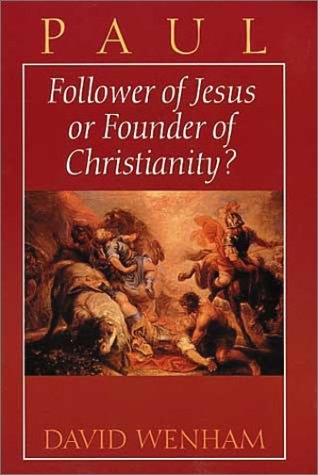
According to Paul . . . 1

[This was first posted on 


Paul who?


From the tribe of Benjamin,  born in Tarsus, a Roman citizen,  a pharisee who learned from Gamaliel—Paul introduced himself in his epistles with these words:

  • Sha’ul, a slave of the Messiah Yeshua, and set apart for the Good News of God.  [Romans 1:1]
  • Sha’ul, an emissary — I received my commission not from human beings or through human mediation but through Yeshua the Messiah and God the Father, who raised him from the dead—also from all the brothers with me.  [Galatians 1:1]
  • Shaul, by God’s will an emissary of the Messiah Yeshua.   [Ephesians 1:1]
  • Sha’ul” an emissary of the Messiah Yeshua by command of God our deliverer and the Messiah Yeshua our hope.  [1 Timothy 1:1]
  • Sha’aul, an emissary of the Messiah Yeshua by God’s will, which holds forth a promise of life through being united with Messiah Yeshua. [2 Timothy 1:1]
  • Sha’ul, Gods slave and an emissary of Yeshua the Messiah, sent to promote among God’s chosen people the trust and knowledge of truth which lead to godliness and which are based on the certain hope of eternal life. God, who does not lie, promised that life before the beginning of time but made public this word of his in its own season through a proclamation with which I have been entrusted by order of God, our Deliverer. [Titus 1:1-3]
  • Shaul, a prisoner for the sake of the Messiah Yeshua . . .  [Philemon1:1]— 
    • The Complete Jewish Bible
 

That is a tall order for someone who was not originally one of the 12 apostles!  Paul never met the flesh and blood Jesus of Nazareth and did not follow him all over Galilea and Judea like the other apostles did. In fact casual bible readers are often clueless about who the other 9 apostles were, aside from Peter and John and Judas; many are surprised that Paul was not among the handpicked 12 who dropped everything they were doing to respond to Jesus’ call  “follow me.”


While we might not know much about the 9 apostles, there is much to know about Paul from Paul himself.  He is first introduced in the book of Acts as Saul the pharisee who witnessed the stoning of the “first martyr” Stephen; then there are repeated accounts of his Damascus encounter with the “Risen Lord” where he ends up blind but is enabled to see again through Ananias. If there is a model of 180 degree turnabout from being a zealous persecutor of Jesus-followers to being the chief spokesman for the Risen Christ, that would be Paul THE SUPER-APOSTLE! [Acts 8:1-3/9:1-20, NASB]


So what does Paul do after his epiphany? You would think he would not lose the opportunity to learn directly from living witnesses to the earthly life of Jesus.  After all,  these 12 assisted at the sermons, witnessed the miracles,  heard the Father’s voice confirm the Sonship.  Paul at least could have inquired why the 11 abandoned their leader from his arrest to his crucifixion, then regathered to meet the resurrected Christ in the upper room.  You would think Paul would want to get the exact details of the Great Commission [which is a great omission in the Gospel of Mark].


If you were in Shaul/Paul’s sandals, wouldn’t you have so many questions to ask Peter, James and John, why pass up that prospect?  Isn’t that the expected thing to do?


Well, Paul probably weighed the evidence:  these are fishermen, tax collectors, none are of his religious stature, a Pharisee.  What could he possibly learn from them?  [This is not gospel truth, just speculation because of the strangeness of what Paul does next.]  So what does Paul actually decide to do?


  According to Paul himself . . . 


For I would have you know, brethren, that the gospel which was preached by me is not according to man. For I neither received it from man, nor was I taught it, but I received it through a revelation of Jesus Christ. For you have heard of my former manner of life in Judaism, how I used to persecute the church of God beyond measure and tried to destroy it; and I was advancing in Judaism beyond many of my contemporaries among my countrymen, being more extremely zealous for my ancestral traditions.  But when God, who had set me apart even from my mother’s womb and called me through His grace, was pleased to reveal His Son in me so that I might preach Him among the Gentiles, I did not immediately consult with flesh and blood, nor did I go up to Jerusalem to those who were apostles before me; but I went away to Arabia, and returned once more to Damascus. Then 3 years later I went up to Jerusalem to become acquainted with Cephas, and stayed with him 15 days. But I did not see any other of the apostles except James, the Lord’s brother. . . Then I went into the regions of Syria and Cilicia. I was still unknown by sight to the churches of Judea which were in Christ; but only, they kept hearing, “He who once persecuted us is now preaching the faith which he once tried to destroy.” And they were glorifying God because of me. [Galatians 1:11-24, NASB]


In Ephesians 3 , Paul continues to spin his background:  


For this reason I, Paul, the prisoner of Christ Jesus for the sake of you Gentiles—if indeed you have heard of the stewardship of God’s grace which was given to me for you; that by revelation there was made known to me the mystery, as I wrote before in brief. By referring to this, when you read you can understand my insight into the mystery of Christ, which in other generations was not made known to the sons of men, as it has now been revealed to His holy apostles and prophets in the Spirit; to be specific, that the Gentiles are fellow heirs and fellow members of the body, and fellow partakers of the promise in Christ Jesus through the gospel, of which I was made a minister, according to the gift of Gods grace which was given to me according to the working of His power. To me, the very least of all saints, this grace was given, to preach to the Gentiles the unfathomable riches of Christ and to bring to light what is the administration of the mystery which for ages has been hidden in God who created all things; so that the manifold wisdom of God might now be made known through the church to the rulers and authorities in the heavenly places . . . therefore I ask you not to lose heart at my tribulations on your behalf, for they are your glory. . . . 


2 Corinthians 12:1-12    


Boasting is necessary, though it is not profitable; but I will go on to visions and revelations of the Lord.  I know a man in Christ who 14 years ago—whether in the body I do not know, or out of the body I do not know, God knows—such a man was caught up to the third heaven.  And I know how such a man–whether in the boy or apart from the body I do not know, God knows—was caught up into Paradise and heard inexpressible words, which a man is not permitted tos peak.  On behalf of such a man I will boast; but on my own behalf I will not boast, except in regard to my weaknesses.  Because of the surpassing greatness of the revelations, for this reason, to keep me from exalting myself, there was given me a thorn in the flesh, a messenger of Satan to torment me–to keep me from exalting myself!  Concerning this I implored the Lord three times that it might leave me.  And He has said to me, “My grace is sufficient for you, for power is perfected in weakness.”  Most gladly therefore, I will rather boast about my weaknesses, so that the power of Christ may dwell in me.  Therefore I am well content with weaknesses, with insults, with distresses, with persecutions, with difficulties, for Christ’s sake; for when I am weak, then I am strong.  I have become foolish; you yourselves compelled me.  Actually I should have been commended by you, for in no respect was I inferior to the most eminent of apostles, even though I am a nobody.  The signs of a true apostle were performed among you with all perseverance, by signs and wonders and miracles.  


Image from bestcommentaries.com

Image from bestcommentaries.com

Read through the Pauline epistles and you will see a lot of “I, Me, and Myself” ad nauseum.  But to be fair, we have to hand it to Paul to be willing to suffer and die for the sake of the gospel he preached.  Unfortunately, the gospel he preached counters the message of the Scriptures of his own people who are the custodians of the original revelation.  Some observant theologians claim that christianity did not arise from the teachings of Jesus who at least upheld the Torah, but from Paul who did away with the Law altogether and took off with a religion totally at odds with the Tanach.  And he claimed this new revelation was made known only to him! 


What is the difference between this “revelation” to Paul and the revelation on Sinai to Moses and the mixed multitude?  On Sinai, God spoke to Moses and the masses who heard the same message all at the same time.  Later on, because the masses could not stand hearing the Creator of the universe addressing them directly, they prevailed upon Moses to be their mediator.  On the other hand, Paul is no different from all other cultic leaders who make claims to truths that are exclusively revealed to them alone by some divine being.  Just because they claim so does not make it so .


But . . . who backs up Paul’s claims? For one, the early church fathers who base christian doctrines and teachings on Paul epistles.  Textual critics today who have scrutinized the 14 epistles [including Hebrews] arrived at conclusions that not all epistles attributed to Paul were authentically his. 


There is more to Paul than we can cover in this article, this simply jump-starts a series of questions relating to the teachings of Paul. We have never questioned them before, we would like to re-examine them now.  


NSB@S6K

IN HIS NAME, amen! -8

[This is part of the series, IN HIS NAME, originally posted May 2012.–Admin1.]

 
Image from yahushua.net

Image from yahushua.net

The first thing we Sinaites did when we found the One True God and discovered His Name, was to repent of the sin of IDOLATRY.   Say that again?  IDOLATRY!  Why? Don’t we all worship the same God? Don’t all religions lead to Him?


We normally associate the sin of idolatry with idols, statues, carved images which are venerated; we had long left that behind as former Catholics.  It had never been a problem for us as evangelicals or messianics who had no need for visual representations as reminders of the god we worshipped.  Surely we were not in violation of the commandment that was stricken out of the Catholic version of the 10 Commandments: 


You shall not make yourself a carved image or any likeness of that which is in the heavens above or on the earth below or in the water beneath the earth.  You shall not prostrate yourself to them, nor worship them, for I am HASHEM your God—a jealous God, Who visits the sin of fathers upon children to the third and fourth generations, for My enemies; but Who shows kindness for thousands [of generations] to those who love Me and observe My commandments.  [AST]  Exodus 20:4 


But then rereading the decalogue in the Hebrew translations, we felt convicted of violating these two:


[AST]  Exodus 20:3:  You shall not recognize the gods of others in My presence.   


[AST]  Exodus 20:7  You shall not take the Name of HASHEM your God, in vain.


Who are “the gods of others”?   These commandments were given originally to the mixed multitude on Sinai.  Israel and the non-Israelites among them had witnessed the 10 plagues which were directed at the gods of Egypt by this God on Sinai who made His Name known to them as YHWH.  So in their context, the “gods of others” would be Egypt’s gods.  


The Hebrew Scriptures shows they struggled with this commandment through the centuries. Someone rightly said that YHWH succeeded in getting Israel out of Egypt but could not violate His gift to humanity, FREE WILL,  by forcibly getting Egypt out of Israel except by declarations and warnings.  It was not until the exile when Israel finally got rid of the sin of idolatry and devoted themselves to the God Who made a covenant with them on Sinai.  “Egypt” symbolizes the worship of false gods in the world who simply take on different names in the languages of different idolatrous people-groups and are re-invented by man-made religions.  


The character and attributes of this God on Sinai who introduced Himself as YHWH would be affirmed further by His constant declarations about Himself as well as His acts for and against Israel thereafter, all recorded in the Torah and further elaborated on in the Neviim [Prophets] and Ketuviim [Writings] in the official canon of the Hebrew Scriptures.   The declarations of YHWH are consistent throughout those Scriptures. To keep it simple—-

 
  • “His Name is YHWH
  • He is One,  as in ALONE
  • His Torah is to be obeyed by His people  
  • Any deviation is considered “sin” as in “missing the mark.”
  • There are automatic blessings for obedience and curses for disobedience;
  • For Israel, consequences were practically literal, as their history attests to.
 

So what about the rest of the world, non-Israel?  Have we been worshipping “the gods of others” and if so, whose?  


For us Sinaites, we were deep into believing, having faith in, declaring Christianity’s version of god: the Trinity.  We had been invoking a name other than YHWH in all our prayers, specifically “in Jesus’ mighty name.”   In fact because of this almost mindless habit of ending our prayers, it took us a while to consciously avoid uttering “in the name of . . . ”  followed by an awkward short silence, we would get flustered and either end with a fast “amen” or substitute “in YHWH’s Name”.  But why pray to YHWH and end with “in the name of YHWH”?  Doesn’t make sense.    


Time has passed since, and we thank our Adonai Elohim YHWH that we are where we have chosen to be  today—


  • and living His Way, the Torah life.  
  • learning His Truth,
  • on the pathway toward His Sinai revelation, 
Image from gabrielparadise.wordpress

Image from gabrielparadise.wordpress

There is a choice to make each time an alternative “truth” confronts you.  It’s like travelling—you don’t know the way, so you ask for directions.   If the sources you depend on for directions are reliable, you will get there; if not, well . . . .  If there’s a reliable map, you check out the route yourself and depend on nobody else.


Our map through life on earth is God’s original revelation, the Torah in the Hebrew Scriptures.  It took us a long time to figure that out.   


What a gracious and merciful God is He indeed, to have answered so many of our prayers all those years we were invoking the wrong name and praying to a non-god.  It continues to baffle us that YHWH would indeed answer such prayers positively, knowing that answered prayers further encourage and in fact reinforce the faith and belief of the person praying, attributing the answered prayer to their object of worship instead of to YHWH Himself!  In fact it is the very reason given by some who say they cannot possibly abandon Jesus, [or Mary, or their patron saint] because of answered prayers.  That alone, they say, is evidence Jesus is god, or that Mary can hear and even answer all prayers just like God.  


To us, it is evidence indeed, but more of the wisdom, understanding, grace and mercy, not to forget the long-suffering attribute of YHWH who patiently waits for each God-seeker to get over religion, abandon their false gods, and return to Abrahamic faith and to the Scriptures where one discovers Him.  


Amen indeed, and hopefully  “in  deed”!


logoNSB@S6K

for Sinai 6000

Core Community


Guide To Greatness – 2

[Our featured writer here is a former Christian pastor Ricky Samson who  shares his messages to his flock with Sinai 6000.  He has started this series, please refer to:   Guides to Greatness – 1.  Reformatted for this post. —Admin 1]


Guide To Greatness – 2

— 8/11/2014 —


This is a weekly guide prepared by your coach Ricky Samson.
The goal is to provide you with concrete step-by-step guide designed to bring you to the level of greatness that YHWH designed you for …
If you walk in the Way designed by YHWH, He promises to bless you …


Psalms 119:1-4 NKJV


1   Blessed are the undefiled in the way, Who walk in the law of the LORD {YHWH}!
2   Blessed are those who keep His testimonies, Who seek Him with the whole heart!
3  They also do no iniquity; They walk in His ways.
4  You have commanded us To keep Your precepts diligently.


Our guide to greatness, comes primarily from the portions of the TaNaK, YHWH’s words, written by King David and his son, King Solomon. It is during the reign of these two kings chosen by YHWH that Israel experienced the longest period of peace in their history!


Here is what King David recommends …


Psalms 91:1-16 NKJV


1   He who dwells in the secret place of the Most High Shall abide under the shadow of the Almighty.
2   I will say of the LORD {YHWH} , “He is my refuge and my fortress;
My God, in Him I will trust.”
3  Surely He shall deliver you from the snare of the fowler And from the perilous pestilence.
4  He shall cover you with His feathers, And under His wings you shall take refuge; His truth shall be your shield and buckler.
5   You shall not be afraid of the terror by night, Nor of the arrow that flies by day,
6  Nor of the pestilence that walks in darkness, Nor of the destruction that lays waste at noonday.
7   A thousand may fall at your side, And ten thousand at your right hand; But it shall not come near you.
8   Only with your eyes shall you look, And see the reward of the wicked.
9  Because you have made the LORD, who is my refuge, Even the Most High, your dwelling place,
10  No evil shall befall you, Nor shall any plague come near your
dwelling;
11  For He shall give His angels charge over you, To keep you in all your ways.
12  In their hands they shall bear you up, Lest you dash your foot against a stone.

13  You shall tread upon the lion and the cobra, The young lion and the serpent you shall trample underfoot.
14  “Because he has set his love upon Me, therefore I will deliver him; I
will set him on high, because he has known My name.
15  He shall call upon Me, and I will answer him; I will be with him in
trouble; I will deliver him and honor him.
16  With long life I will satisfy him, And show him My salvation.”


 King David understood the KEY TO GREATNESS and he shares it with us in many of his psalms.


What is the key?  The key is found in the very first verse:


1  He who dwells in the secret place of the Most High Shall abide under the shadow of the Almighty.


The Key Word is “Dwell” — yashab.  According to Vine’s Complete Hebrew Expository Dictionary it means:


yashab (H3427), “to dwell, sit, abide, inhabit, remain.”

The word occurs over 1,100 times throughout the Old Testament.
The word is also used to describe man’s being in YHWH’s presence and King David says that this is the “ONE THING I HAVE DESIRED”


Psalms 27:4 NKJV


4  One thing I have desired of the LORD {YHWH}, That will I seek: That I may dwell in the house of the LORD {YHWH} All the days of my life, To behold the beauty of the LORD {YHWH}, And to inquire in His temple.


The idea that YHWH also “dwells” among men is expressed by this verb. The usage of yasha in many verses describes YHWH’s presence at the ark of the covenant in the tabernacle and the temple.


1 Samuel 4:4 NKJV


4  So the people sent to Shiloh, that they might bring from there the ark of the covenant of the LORD of hosts, who dwells between the cherubim. And the two sons of Eli, Hophni and Phinehas, were there with the ark of the covenant of God.


“He who dwells in the secret place of the Most High” – This KEY TO GREATNESS is available to all believers but unfortunately, only a few
take it seriously. The blessings here promised are not for all believers, but for those who live in close fellowship with YHWH.  Every child of YHWH looks towards the inner sanctuary and the mercy-seat, yet all do not dwell in the most holy place; they run to it at times, and enjoy
occasional approaches, but they do not habitually DWELL in His presence.


How do we fellowship with YHWH?


1]  Daily — we write, read, meditate on His Word.
2]  Frequently — Day and Night —
3]  Prayerfully — After we read His Word, we call upon His name — Not a generic god.
4]  Weekly — We come together as a community to worship Him and
5]  Gratefully — We Thank Him for even creating us and caring for us!


We are protected when we are “dwelling” in His presence.


For this week, therefore, let us revive the practice we learned from the Torah to Copy, Read, Meditate and Do His Word.


Let us light incense and send our prayers to Him. Let’s spend time with Him — not just 5 minutes of hurried mechanical transcription. To many, unfortunately, spending time in the presence of YHWH is a waste of time. They do not have the wisdom to understand that this is the KEY To GREATNESS!


I applaud those who travel far every Sabbath just to be with YHWH and His people!  To many people, 5 hours, every Sabbath is a long time — To others who really love YHWH with all their heart, 5 hours seem so short .


As we learned from Jacob, 7 years is not a long time if you are doing it for someone you love!


This KEY To GREATNESS, when applied to our lives will produce the fruit of righteousness.  King Solomon wisely says about the righteous:


Proverbs 11:8-10 NKJV


8  The righteous is delivered from trouble, And it comes to the wicked instead.
9  The hypocrite with his mouth destroys his neighbor, But through knowledge the righteous will be delivered.
10  When it goes well with the righteous, the city rejoices; And when the wicked perish, there is jubilation.


Have a great week fellowshipping with YHWH …


Coach Ricky

A Sinaite's Liturgy – 2nd Sabbath of August

Image from www.worldslastchance.com

Image from www.worldslastchance.com


KINDLE THE SABBATH LIGHTS


Blessed are You, YHWH our God,

Lord and Master,  Creator of the universe,

Designer of earthly time,

measured in seconds, minutes, hours

according to the movement of Your magnificent heavenly bodies:


Your life-nurturing sun rises and sets on our horizon

to usher in times of work and times of rest

for all your creatures and most specially humankind;


Your moon guides us through the beginning and end of the monthly cycles,

visible signs on the passing of days and weeks.


O YHWH,

Eternal One,  Lord of History,

You have not left humanity without instructions

to navigate our way through the passing of time.


We thank You for teaching us by Your own example

how to measure our days in terms of seven,

to separate our six days of work from the Seventh Day,

to keep the Seventh special and holy

by resting  body and mind,

for health, for pleasure,

for special time with family, with  friends,

for study of Your Words of Life.


We thank You for not leaving us in ignorance of Your Way,

of a lifestyle that is ideal for all who live in community.

We thank You for teaching us how to care for our health,

for instructions regarding our physical, mental and spiritual welfare.


We thank You for Your TORAH, our Tree of Life.

May we continue to live Your Way every day of our lives,

from Sabbath to Sabbath  . . . until we enter Your Sabbath Rest.


We thank You, O YHWH,

for making us realize

that even as the earthly Sanctuary in Jerusalem

has been destroyed by human hands,

Your Sanctuary in Time still stands

even as man-made religions have departed from Your true Sabbath.


We are privileged to enter Your Sanctuary in Time,

joining with all Sabbath-Keepers who worship You,

YHWH, as the One True God.


A PSALM OF THANKSGIVING


Call out to YHWH, all the earth.

Serve YHWH with gladness, come before Him with joyous song.

Know that YHWH, He is God;

He made us, and we are His, 

His people and the sheep of His pasture.

Enter His gates with thanksgiving, His courts with praise;

Give thanks to Him, bless His Name.

For YHWH is good, His kindness endures forever,

and from generation to generation is His faithfulness.


Image from quotes-pictures.picphotos.net

Image from quotes-pictures.picphotos.net


SABBATH BLESSINGS


  family-quotes-and-sayings-1Blessed are You, YHWH, our God, Source and Giver of Life, for blessing us with family.


We seek Your gracious favor upon each one of us — husbands and wives, widows and widowers, each of our children and their children and generations down the line.


We pray for Your providence, protection, and guidance upon all of us.


May it be that those of our kin who have not yet accepted You, and recognized You as the One True God, will come to know You, that they will seek You with all their heart and mind and soul, for You have promised that all who do will find You.


May they make right and wise choices and find meaning in their endeavors.


But most of all,  may they be blessed with the knowledge of You through Your Sinai revelation,  by studying Your Words of Life, by learning how to apply Your Torah which is essential in understanding how to navigate through life in a rapidly changing world.


And may we—in this faith community of Sabbath keepers, Torah observers, worshippers of YHWH—-not only study and internalize Your instructions and commandments, but actually apply them as much as we are able to in the times and the culture in which we live, for then and only then will we make even a small difference in our little corner of Your world.


Blessed are You, YHWH, God of the families represented here.

 
Image from www.allhlwines.com

Image from www.allhlwines.com

 As we break bread and drink the fruit of the vine, we thank You for the joy we derive from fellowshipping with like-minded believers in You as the One True God, for the enjoyment of Your daily provisions from Sabbath to Sabbath.


We thank You most of all for the extension of life You have graciously allowed us to live, that we might continue to declare Your Name and serve You in as many ways as we are able to, till the end of our days.


To LIFE! L’Chaim!


SABBATH MEAL/TORAH STUDY

Image from www.chabad.org

Image from www.chabad.org

Image from www.wunderland.com

Image from www.wunderland.com

HAVDALAH

As we end our Sabbath fellowship, we remember the words of Moshe as he addressed the children of Israel:

 
For this mitzvah which I am giving you today is not too hard for you, nor is it beyond your reach.  It isn’t in the sky, so that you need to ask, ‘Who will go up into the sky for us, bring it to us and make us hear it so that we can obey it?’  Likewise, it isn’t beyond the sea, so that you need to ask, ‘Who will cross the sea for us, bring it to us and make us hear it, so that we can obey it?’  On the contrary, the word is very close to you—in your mouth, even in your heart; therefore you can do it!” (Deut. 30:11-14)


Dear God of Israel

Whom we have embraced as our God,

O YHWH,

Revelator on Sinai, God of the nations,

You would never give commandments that are impossible to obey,

for You are not an unwise nor unjust God!

You not only gave humankind the unique gift of free will,

but You  also provided Your Way of Life

to teach us how to live in this world You have created.

You have written Your TORAH in the minds and  hearts of humankind

such that even those who have not read it

are able to do good and be good and live rightly

and be other-centered;

except they are missing the knowledge of You,

the One True God.

For all like us who have discovered

Your Way through Your TORAH.

Indeed  ” the word is very close to us”—

We are not born depraved and helpless with an inherited fallen nature.

All we must do is exercise our gift of free will,

make a choice and respond to Your call with full conviction:

YES LORD,  WE CAN . . .DO IT!

 
Image from www.pinterest.com

Image from www.pinterest.com


Shabbat shalom!

NSB@S6K


Guides to Greatness – 1

[Once in a while we feature ‘sends’  from former Christians or Christian pastors/teachers who share their views or teaching; this is one of them.  The views expressed here represent those of the writer and not necessarily S6K.   Reformatted for post.—Admin1]

—————————————-

Shalom To All Of You,


Greetings of total peace and prosperity in the name of YHWH, the only true God, the God of Avraham, Isaac, and Jacob – Our awesome and powerful Father in heaven!


To Help everyone on their journey to greatness, as YHWH designed us all for, I attach what I call Guides To Greatness. This will be issued weekly and I pray that it will guide you during the week.


May Yahweh (YHWH, Hebrew name of God)creator of heaven and earth, bless you and your family abundantly!


———————————-

Guide To Greatness — July 27, 2014 —


This is a weekly guide prepared by your coach Ricky Samson.The goal is to provide you with concrete step-by-step guide designed to bring you to the level of greatness that YHWH designed you for …If you walk in the Way designed by YHWH, He promises to bless you …Psalms 119:1-4 NKJV


1) Blessed are the undefiled in the way, Who walk in the law of the LORD!

2) Blessed are those who keep His testimonies, Who seek Him with the whole heart!

3) They also do no iniquity; They walk in His ways.

4) You have commanded us To keep Your precepts diligently.


Our guide to greatness, comes primarily from the portions of the TaNaK, YHWH’s words, written by King David and his son, King Solomon. It is during the reign of these two kings that Israel experienced the longest period of peace in their history! Here is what King David recommends …


Psalms 97:1-12 NKJV

 
1) The LORD [YHWH] reigns; Let the earth rejoice; Let the multitude of isles be glad!
2) Clouds and darkness surround Him; Righteousness and justice are the foundation of His throne.
3) A fire goes before Him, And burns up His enemies round about.
4) His lightnings light the world; The earth sees and trembles.
5) The mountains melt like wax at the presence of the LORD, At the presence of the Lord of the whole earth.
6) The heavens declare His righteousness, And all the peoples see His glory.
7) Let all be put to shame who serve carved images, Who boast of idols. Worship Him, all you gods.
 

WHAT TO AVOID — So much of the world have religions that “serve” (worship) carved images. They place these images in their homes or in their cars as if a piece of wood or plastic could PROTECT them from harm. If we could just get statistics of cars that were involved in serious accidents and how many of these contained “carved images” we would realize the TRUTH that images made of wood or plastic, made by man, cannot PROTECT US or our properties.


This Psalm was written approximately 1004 B.C. — over 1000 years before the popular religion in the Philippines was established. So the question is why does our religion insist on worshipping carved images?Righteousness and justice are the foundations of the throne of YHWH … these are 2 traits that are ABSENT from the Philippines in a general sense … high government officials (and low officials) are in the habit of stealing what is not theirs and then on Sundays they serve their carved images …the “Ampatuan Massacre” of over 50 people has not been resolved … several of the witnesses are already found dead …where is “justice” and righteousness? Justice in our country is as blind as the carved images the majority of our population worship.

 
8) Zion hears and is glad, And the daughters of Judah rejoice Because of Your judgments, O LORD.
9) For You, LORD [YHWH], are most high above all the earth; You are exalted far above all gods.
10) You who love the LORD [YHWH], hate evil! He preserves the souls of His saints; He delivers them out of the hand of the wicked.
11) Light is sown for the righteous, And gladness for the upright in heart.
12) Rejoice in the LORD [YHWH], you righteous, And give thanks at the remembrance of His holy name.
 

WHAT TO PURSUE


Let us go through this week with ABSOLUTE REJOICING because no matter what is happening in our lives, we can be sure that YHWH reigns, He is in total control of all things. “Rejoice IN YHWH” — In His Person — That despite His high Position He cares about us!


Most people rejoice in their “blessings” rather than the One who gives the blessing! “Rejoice IN YHWH”! — Since He has promised never to leave us nor forsake us, and He is always withus, we can REJOICE ALWAYS — Money and other blessings disappear but YHWH is always with us!


Let us go through this week with ABSOLUTE CONFIDENCE — believing / trusting that YHWH will keep His promise to DELIVER us out of the hand of the wicked.


Let us go through this week with an ATTITUDE OF GRATITUDE — give thanks daily for all that YHWH has done for us! Let us involve our spouses and children in a daily session of THANKSGIVING as we burn incense to our great God YHWH!


RECOMMENDATIONS FROM KING SOLOMON for week of July 27, 2014


Here is a Proverb that our women (and men) can meditate on — something to stop doing — Proverbs 27:15-16 GNB  (Good News Bible)


15) A nagging wife is like water going drip-drip-drip on a rainy day.

16) How can you keep her quiet? Have you ever tried to stop the wind or ever tried to hold a handful of oil?In other words, men, it is useless to try and stop a wife from nagging. Just pray for her andbring her to Sabbath so that YHWH may change her from the inside. People who trust in YHWH do not have to resort to nagging … YHWH promised to DELIVER US … that is sufficient!
 

For over 5700 years, since the world was created, nagging has never worked effectively!


Therefore, we must change our ways to YHWH’s ways which are more effective!


Blessed be Avraham, Isaac, and Jacob of God Most High,Possessor of heaven and earth;


And blessed be YHWH most high who reigns over all the earth!May YHWH bless us all abundantly beyond all our expectations!


Coach Ricky


Ricky Samson

26-year Life Coach

Mobile Smart +63999-881-9345

           Sun    +63933-435-0723

           Globe +63927-877-7086

Skype: rickysamson

Facebook: http://facebook.com/ricardo.samson

Twitter: http://twitter.com/RickySamson

Yo searchers! Can we help you? – July 2014


Logo2 by BBB@S6K

Logo2 by BBB@S6K

[Yo searchers indeed!  Since this website was down for the latter half of June through July 7,  only a few search terms showed up starting July 8 when the website was restored; still, we hope this post can help in redirecting searchers to finding answers already provided here; if not, we will provide other sources in our links. —Admin1]

8/2  “august 4th the 4th of ahv what can we exspect according to prohecy” – We have not dealt specifically with the significance of this date in prophecy and fulfillment related to Israel.  You might check out the Jewish websites; the links are listed on our homepage.

8/2  images for sabbath blessings” – As you will notice,  Sabbath Liturgy posted week by week is full of images. The internet is the source of these, simply google “images for sabbath celebration” or “images for sabbath lights” or
“images for sabbath meals.”  Make sure you acknowledge the source of the image; if not, sometimes it will disappear from your post, particularly those that belong to collections with charges for usage.

7/28  “davarim” – The Hebrew title for the retitled book Deuteronomy; we have all the chapters of this 5th book. For background, here are suggested posts:  

7/28  “shimelites” –  Probably “Ishmaelites” . . .  descendants of Yismael, firstborn son of Abraham through Hagar, Sarah’s maid:

 7/27 “esau a caveman” – We look at Esau differently from the way he has been presented in Rabbinical as well as Christian commentaries.  In our eyes, he’s an admirable figure, not at all the villain he has been unfairly portrayed; in fact it is Yaakov/Jacob the heel, the supplanter, whose character (at least to us) is questionable, for a 3rd generation patriarch from whom would issue the 12 sons and the 12 tribes, in fact renamed “Israel” and rightly so . . . for he, as well as his descendants do “strive with God.”

 7/26  “why prophecy in lsrael remain obscurity” – Q&A: “Israel prophecy” – “veiled in obscurity”?

Image from www.goddessgift.net

Image from www.goddessgift.net

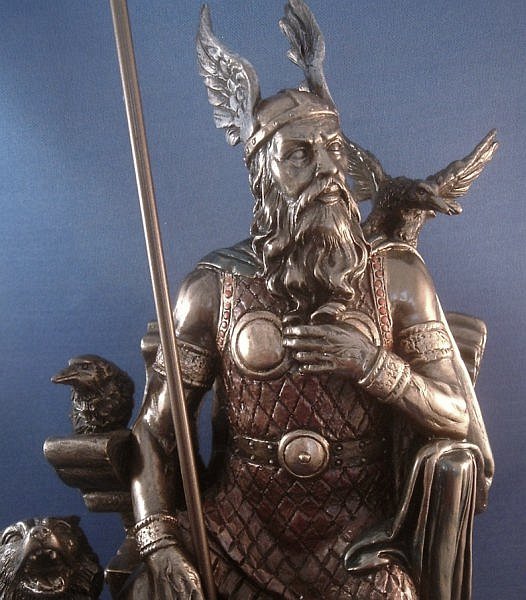
7/22 “odin and the god of old testament” –  Left image is a statue of the Norse god Odin.  All people groupings from the biblical times till the 21st century have their version of gods/goddesses.  Whether they take these gods seriously or not, only their lifestyles will show. The second entry in this search term is “the god of the old testament”  . . . if the searcher meant the Christian version of the Old Testament God, then that OT God—at least in the New Testament—is explained as the Trinity, with Jesus doubling as Creator, the Rock, the Shepherd, and all other roles originally attributed only to the God of Israel.  The God of the Hebrew Scriptures is totally different from the God of the Old Testament. Here are some posts that might clarify the differences:


7/20  “willeme defoe miscast as jesus” – Revisited: Tempted by ‘The Last Temptation of Christ’? Kazantzakis’ Jesus: “Salvation cannot be founded on lies.”


7/20  “o israel what does the lord demand of you?” – Deuteronomy/Davarim 10: ” And now, O Israel, what does YHVH your God ask of you. . .”


The answer to this question?  12 And now, O Israel, what does YHVH your God ask of you except to hold YHVH your God in awe, to walk in all his ways and to love him and to serve YHVH your God with all your heart and with all your being,

The question recalls the great utterance of the prophet Micah (VI,8), with which it should be compared:  “It hath been told thee, O man, what is good, And what the LORD doth require of thee: Only to do justly, and to love mercy, and to walk humbly with thy God.”
 

7/19 “happy sabbath”/”happy sabbath logo”/”sabbath blessings quotes”/”sabbath day”/”message to wish for friends for a happy sabbath” – So sorry, we have not been able to post a weekly Sabbath Liturgy for the months of June and July due to our transition to a new server.  However, there are enough posts that serve as samples or re-use-able.  Once the website transition is completed and there will be no more interruptions, we will resume posting new articles including Sabbath liturgies. Please check out the following:


7/14  “image for human sacrifice” – One such image we googled

usminc.org

showed a huge statue of the pagan idol Molech to whom children were slaughtered or burned as sacrifices.


The GOD of Israel prohibited human sacrifices, so why should He suddenly change His rule and require the sacrifice of Himself, purportedly as Jesus, 2nd person of the Christian Trinitarian godhead,  savior/messiah,  a human sacrifice crucified on the cross to satisfy His own divine justice?


This doesn’t make sense and does not fit the profile of YHWH Who is very clear in His declarations in the Torah and through His prophets regarding what He requires of humankind in relationship to Him—basically and simply, condensed in Declarations 1-3 of the Decalogue.


Micah 6:8: He has shown you, O mortal, what is good. And what does YHWH require of you? To act justly and to love mercy and to walk humbly with your God.


7/12 – “sabbath wishes images” – you may google images by entering “images for sabbath celebration” and find a wide variety; also, “sabbath meal” and “images for family”.  This is what we’ve been using for our Sabbath liturgy.


7/08- the old testament of odin orientations only” – Sorry, we have no post on this topic.

Must Read: Reuven Firestone – 2 – The Language of Chosenness

Image from amazon.com

Image from amazon.com

[Featured here is the Introduction to the Must Read/Must Own Who are the REAL Chosen People? – by Reuven Firestone.—Admin1.]


—————————-


Choosing is something we do everyday, from our choice of what to wear in the morning to our decision at the end of the day to turn out the light rather than read that next chapter.  Choosing is an ordinary act.  We choose which seat we prefer on the bus, which route to take to work, which pen to use to write this paragraph.  To choose is to select something freely and after consideration.  When a person chooses, that person shows a preference for one thing over something else.


Choosing is also limiting.  It is an act of identifying, of distinguishing, of separating.  Although it is possible to choose “a few” rather than one, it is understood generally as singling out.  The act of choosing immediately establishes a hierarchy.  What is chosen is somehow different than the others.  Usually, that difference represents a higher location on the ladder.  It can also mean choosing a lower, of course, but that would be unintentional; when you make a choice, you hope you are choosing a winner.  Being chosen, therefore, would appear to be a special and positive status that places the chosen over and above the non-chosen.


Image from thecrackeddoor.com

Image from thecrackeddoor.com

If being chosen is generally a good thing, consider being chosen by God.


Jews, Christians, and Muslims — all three families of monotheistic religions—claim in one way or another to be God’s chosen community.  Christian theologians have sometimes referred to God’s choosing for special favor as “election.”  Whether called chosenness or election, the special nature of that divinely authorized status—its presumed superiority—has been glorified by religious civilizations when in positions of imperial power, and it has sustained religious communities suffering persecution.  It has also made believers uncomfortable at times, especially in places where democracy, equality, and freedom are considered defining categories.


One important aspect of language is that every word has a range of meanings, often subtle, that affect its “personality.”  When we use a word in speech, we are often affected unconsciously by that word’s subterranean tones and shades of meaning that have become associated with it through usage.  The way a word has been used, say, in a famous speech or story provides shades of meaning that native speakers naturally pick up.  Those nuances then enter the life of the word as it continues to be used in speech and in writing.  This is very much the case with the word chosen.  In his 1828 American Dictionary of the English Language, Noah Webster used biblical language to support most of his definitions.  For his definition of choose, he includes, “To elect for eternal happiness; to predestinate to life.”  He cites Matthew 22:14, “Many are called but few chosen,” and Mark 13:20, “For his elect’s sake, whom he hath chosen.” This is a big jump from choosing between your beige or navy slacks.


To be chosen, then, can have a range of meaning from the mundane to the holy, but in all cases it means to be singled out and preferred over others.  The criteria for having been chosen could vary, from size and gender to wisdom and experience, but in a deep sense that permeates much or most of Western culture (and conveyed by Webster’s entry), having been chosen communicates a sense of something that is extraordinary, is transcendent, and entitles a reward.  What is assumed in this sense of the term is that God has done the choosing and the reward is something that is unequaled, for what could possibly equal divinely ordained eternal happiness?


Image from seongdo.blogspot.com

Image from seongdo.blogspot.com


Those of us who live deeply within one of the three families of monotheism tend to accept the assumption of chosenness that is articulated within it at one level or another.  It is good to believe that we live according to the will of God, and there is certainly nothing wrong about believing that we will receive divine reward for our religious activities or beliefs.  For many of us, these beliefs represent deep and abiding aspects of who we are and what our purpose in life is.  If we live entirely within our religious communities and with no interaction with people of other faith traditions, we would most likely not give the notion of being chosen a second thought.  But we live in a multireligious world and bump against people and situations that sometimes challenge our religious assumptions.  This is especially true when we hear believers in different faith traditions articulating the deep and abiding belief that they belong to God’s chosen.  That would imply that we do not.  Can more than one be chosen?  What about those of other faiths who seem so certain?  Can a religious tradition that expects or requires different beliefs or behaviors than our own also represent God’s will as surely as our own?


Unless we cut ourselves off entirely from interacting with anyone outside our religious communities, we cannot avoid this kind of cognitive dissonance.  Knowing something about how and why the notion of chosenness has become so important in the monotheistic traditions can be useful because it can help us navigate between our own beliefs and those of others, and it can help us make sense of our own unique place in a complex world.


At some deep level there is a lot at stake in being chosen—or not being chosen.  Webster’s definition shows that chosenness is associated with scripture, with happiness and even eternal life, and with a divine sense of order.  It remains for us to try to understand how and why the concept of preference for one person or people over others became so important in religion.


We all embark on this quest by traveling through the histories of emergence of Judaism, Christianity, and Islam and the early interaction between the believers in these religious traditions.  And we will examine the scriptures of each as well.  The translations of the Hebrew Bible and the Qur’an are my own, although I based them on well-respected English translations.  New Testament translations are derived from the Cambridge and Oxford Study Bibles.  In an attempt to preserve the original flavor of these works spanning thousands of years of history the original sense of the language has been maintained whenever possible.  This includes the use of masculine God language that may make some uncomfortable, but which I felt was necessary given the nature of this study.


Next:  In the Beginning