Must Read/MUST OWN: Reuven Firestone – 3 – In the beginning …

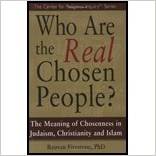
Image from amazon.com

Image from amazon.com

[First posted July 29, 2014, reposted February 2015—worth the review if you have  missed it, together with the other chapters featured to encourage our visitors to incude this in your library.  


This is revived to be part of the GENESIS commentary.  We are starting over the series focused on the books of the TORAH, starting with GENESIS of course.  Reuven Firestone has an interesting perspective to add to the commentaries we have featured; he not only provides an overview, a summary of this book of beginnings; best of all his insightful commentary makes us understand the Divine Mind and the Divine intent in forming the nation of Israel and choosing them to represent Him and His prescribed way of life for all humanity. We added in the title ‘MUST OWN’ because truly, this book should be part of the library of any serious student of the Hebrew Scriptures. Worth the purchase, as you will find out from this chapter as well as others we have featured.


 Here are ‘prequels’ to this chapter: Must Read: Who are the REAL Chosen People? – by Reuven Firestone and Must Read: Reuven Firestone – 2 – The Language of Chosenness.   Reformatted for post.—Admin1]


gebet15


In the Beginning …


“In the beginning God created the heavens and the earth” (Gen. 1:1).  


Divine creation did not privilege one set of objects or beings over another.  All were created on the sixth day, all things were “created equal” —the heavens and the earth and all that are in them.


The language of creation is consistent.  

Let there be …And so it was!” 


The sound of the Hebrew words for these phrases is airy and breathy, with the accent on the last syllable: Yehi! …Vayehi! The very act of creation conveys a feeling of breath in Hebrew, of breathing.  Breath is life; when God said Yehi (Be!), God was breathing life into creation.  


Image from numelesfant.wordpress.com

Image from numelesfant.wordpress.com

That very same Hebrew root for the act of creation is the root that forms the name of God, a name that Jews have not pronounced for thousands of years out of respect for the divine countenance.  The meaning of these unpronounceable sounds is “the One-Who-Is.”  The very name of God thus conveys the sense of the breath of life, the energy that powers the world and all that is in it.  Later, when Moses asked God to tell him the divine name, God answered, “Ehyeh asher ehyeh, which loosely translates to “I am the becoming,” or “I am what is.”


The language of creation continues through the creation of all aspects of life and the world.


 “God said, ‘Let there be light,’ and there  was light” (Gen.1:3),

 “God said, ‘Let there be a firmament between the waters … and so it was” (1:6-7).


This language continues through the creation of the two platforms for living things: the waters and the earth. God commands the waters and the earth to produce living things, and they do:

  • first plants,
  • then swarming things,
  • flying things,
  • swimming things,
  • creeping things.

God makes all the various categories of animals.  Then the language of creation changes.


“God said, ‘Let us make human beings in our image, after our likeness, to have dominion over the fish in the sea, the birds of the air, the cattle, all wild animals on land, and everything that creeps on the earth'” (Gen. 1:26).  


This verse has stimulated more commentary than perhaps any other verse in the entire Bible because it raises so many questions about the nature of God and the nature of humanity. Images for  We are concerned here with only a tiny piece of the mystery, and that is the narrowing of focus from all of creation to only one small piece of it:  humankind.


From that instant onward, the biblical epic history of the universe is focused only on one miniscule part of that universe.  Other parts of the world move in and out of focus only as they impact the history of humanity.  That point is made quite clearly in the very next chapter, when the details of God’s creation of humanity and the story of the Garden of Eden are prefaced with the words,


“This is the story of the heavens and the earth after their creation” (Gen. 2:4).


Surprisingly enough, “the story of the heavens and the earth after their creation” tells us virtually nothing about the heavens and the earth.  What it does tell us is all about the history of humanity,

  • from Adam and Eve 
  • and Cain and Abel
  • to the generations leading to Noah and his family,
  • the Tower of Babel,
  • and finally, Abraham.


We think of the universal narrative of the Hebrew Bible like the beginning of some films that open with a wide-angle shot that takes in the world in which the story takes place.  That large picture soon narrows and eventually focuses on the heroes of the story.  But unlike films that use this technique (a technique that may have been borrowed unconsciously from the core narrative that the Bible represents for the West), the Bible does it twice.


  • The first is the focus from creation to the story of humanity.
  • The second is the focus from the story of all humanity to the story of one tiny family within it.


Why the double focus?  That narrowing technique makes you come away from the biblical story of humankind with the impression that it was a failed experiment.  The narrative structure of the first chapter of Genesis reveals that God’s primary concern with creation was the formation of that set of creatures that is referenced as being constructed somehow in the divine image.  Exactly what “divine image” means is open to interpretation, but the first four stories of the Bible that follow creation demonstrate the consistent failure of humanity to live up to that image and God’s expectation.


  • Adam and Eve failed God in the Garden of Eden (Genesis 3).
  • Cain committed the unforgivable crime of fratricide (Gen. 4:1-16).
  • Noah’s entire generation was deeply steeped in violence (Gen. 6:9-13),
  • and the builders of the Tower of Babel conspired to build a structure that would reach the heavens only for the purpose of self-aggrandizement (Gen. 11:1-90).


In each story, humanity was left alone to fend for itself in the new and glorious world that God had created.  Each time, humanity failed, and in every case God articulated heavenly disapproval through words and punishments.  Why did humanity always fail when it had all the privileges?  Humans were given dominion over the fish in the sea, the birds of the air, the cattle, all wild animals on land, and everything that creeps on the earth.  And yet they failed repeatedly to realize their potential represented by that mysterious likeness of God.


God’s last act of disapproval resulted in the dispersion of humanity after the fiasco of the Tower of Babel.  From that point on, the divine modus operandi changes radically.  God would no longer simply leave humanity to go it alone.  From that moment onward in the Bible’s narrative history of humankind, God would intervene in human history and not wait for another failure.  God would henceforth engage personally with humanity—but not with all of humanity.  The scale would be narrowed down to one individual and that individual’s family.


It was almost as if God took one small sample from the whole and conducted an experiment.  What would happen if God personally engaged in a relationship with one person from that mass of problematic creation called humankind?  How would things fare if God informed and instructed that person and encouraged the behavior that humankind proved incapable of doing on its own? The experiment was conducted with Abraham and with his immediate family.  God chose Abraham.


coa2


A New Modus Operandi


God’s choice of Abraham is mysterious in the Hebrew Bible.  No reason is provided for that fateful call when God suddenly spoke and said,


Leave your country, your kin, and your father’s house, and go to a land that I will show you” (Gen. 12;1).  


God establishes a covenant with Abraham in Genesis 17.  A covenant is like a contract or an agreement, and in the agreement established in Gen. 17 God promises to fulfill the promises made to him earlier: that Abraham would be a great nation (Gen. 12:2); in Gen. 17 God promises that Abraham would be the father of many nations) and that he would possess the land of Canaan.   For his part, Abraham was required to “live always in [God’s] presence.” 


The Hebrew original of this phrase is very important:  


Hithalekh lefanay veheyeh tamim” (Gen. 17:1).  


This short phrase is often translated in a way that does not quite capture its essence.

“Live always in My presence and be blameless” (RSV), and

Walk in My ways and be blameless” (New JPS),

—-do not convey the conditional sense of the phrase.  


A better translation would be,

“If you walk in my ways, you will be blameless,” or,

“Walk in my ways in order to be blameless.”


What’s the difference?  


The conditional sense of the phrase is critical because it conveys that God is promising a reward for human engagement with the Divine.  Life in the semidesert environment of the ancient Near East was always precarious.  Drought, famine, disease, enemy attack, accidents, infertility, and a host of other incidents would easily spell disaster for a man and his family.  In the ancient world, adverse incidents such as these were often understood as punishments brought on by the gods.  Reward and punishment in the ancient Near East occurred in this world.


There is no evidence until the last chapter of the book of Daniel, the latest book of the Hebrew Bible, that biblical people believed in an afterlife in which the righteous would be rewarded or the sinful would be punished.  In the worldview conveyed by the Hebrew Bible, reward and punishment were meted out entirely in this world.  God was therefore giving Abraham the following message:  


If you live in my presence by walking in my ways and living according to my will, you will be innocent of any kinds of sins or errors that would bring on divine punishment in the form of famine or accidents or infertility.”  


  • God promises to protect Abraham and make him into a great nation (Gen. 12:2);
  • indeed, Abraham will be the father of many nations (Gen. 17:5).  
  • Abraham’s offspring will be greater than the sands on the seashore (Gen. 22:17)
  • or the stars in heaven (Gen. 12:2).  
  • All the nations of the earth shall bless themselves through him (Gen. 12:3).


“Just respond to my intervention,” God is telling Abraham.  

I will be there for you, but you must also be there for me!”  


This, then, is God’s new modus operandi.  No longer aloof as in the first eleven chapters of Genesis, God begins in chapter 12 to engage personally with Abraham and the biblical patriarchs and matriarchs.  God guides this Abrahamic family, gives warnings and blessings, and provides a sense of purpose and design to human life.  In short, God commands and the Abrahamic family obeys.


There is, of course, room for maneuver.  God expects obedience but does not demand that Abraham give up free will.  The human party to the covenant always retains his own freedom to choose, so Abraham and his family continue to struggle in the world, even under the protection of God.  Sarah and Hagar struggle over their status as rival wives to Abraham, each with her own son contending for primary (or chosen) status that would result in greater inheritance and blessing in the next generation.  Abraham naturally becomes involved in these conflicts (Genesis 16,17,21), and eventually needs to make a decision about how they will be resolved.


Abraham demonstrates his own personal initiative when he argues with God over the fate of the inhabitants of Sodom and Gomorrah (Gen. 18:20-32).  The stories of Abraham exemplify the patriarchal narratives of the Hebrew Bible, which display humans making decisions, and the sometimes questionable results of those decisions.  But they also portray God as available for guidance when necessary and sometimes directly intervening.


The Bible’s narrowing of the focus to Abraham is forceful and clear.  Abraham represents God’s new operating method, a new possibility of human relationship with God and the divine blessing.  The new method is covenantal and total, and it brought Abraham enormous benefit.  Abraham, therefore, becomes symbolic in the Bible for that most elite existential position: being God’s chosen one. Abraham was the first monotheist.  He was the recipient of God’s repeated blessing.  And God loved Abraham as God loved no other.  In the entire Bible, Abraham is the only person represented as God’s love, God’s friend; he is called avraham ohavi (Abraham, My love) (Isa. 41;8).


What about the rest of humanity? Where are they once the camera has focused on the family of Abraham?  From the end of the story of the Tower of Babel in Genesis 11 onward, the Bible rarely references humanity as a whole.  Parts of humanity enter into the picture only as they come in contact with the Abrahamic family and its offspring.  After the narrowing of the story to the choice of Abraham, the great history that began as the story of humanity becomes a history of humanity through the story of the Abrahamic family.  But that tiny family grows and becomes more significant in its relations with the rest of the world, expanding over a few generations from a nuclear family to an extended family, a clan, a tribe, and then a nation.


The Mystery of the Divine Choice


God’s choice of Abraham was neither the first nor the last time that God made a mysterious choice.  The first was when God accepted Abel’s offering from his flocks but did not accept Cain’s offering from his cultivation (Genesis 4).  No reason for that fateful choice is given.  Despite the brief intervention of warning Cain about his anger and resentment, God does not engage in any consistent relationship with that generation.  God simply favored one brother over the other in a mysterious manner that remains open to interpretation to this day.


In the generation after Abraham, God chose only one o the patriarchs two sons to be the bearer of the divine covenant (Gen. 17:15-21).  The reason for the divine choice of Isaac is again mysterious, although Ishmael was not rejected entirely.  He received a divine blessing that was not insignificant, but he was also removed from the ongoing history of humanity as narrated in the Bible (Gen. 17:19-21).


In the following generation, Jacob becomes the chosen one.  The choice is less obvious but also less mysterious because Jacob demonstrates his own initiative in obtaining the birthright that was due to be given to his older brother, Esau (Gen. 25:29-34).  He is also maneuvered into position to receive his father’s blessing through the initiative of his mother (Gen. 27:1-40).  But the decision of who will be God’s chosen is not left only to human actions; God blesses only Jacob (Gen. 28:10-15; 35:9-12), who then fathers twelve sons who will represent the twelve tribes of Israel.  Like Ishmael, his uncle (and father-in-law!) before him, Esau drops out of human history, and his descendants enter and exit the scene only when they have an impact on the history of the tribes of Israel.


Jacob’s name is changed to Israel when he receives his own divine blessings (first in Gen. 23:29 and again in Gen. 35:10).  Human history in the Bible then becomes the history of a clan of brothers whose numbers of offspring grow into a loose tribal confederation after moving to Egypt.  Finally, after experiencing a population explosion under Egyptian slavery (Exodus 1) and redemption from slavery and oppression through God’s power and grace (Exod. 3-15), the tribal confederation becomes unified into a nation by the experience of a renewed covenant with God at the foot of Mount Sinai.


On the third new moon after the Israelites had gone forth from the land of Egypt . . . Moses went up to God.  The Lord called to him from the mountain, saying: “Thus shall you say to the house of Jacob and declare to the children of Israel:  ‘You have seen what I did to the Egyptians, how I bore you on eagles’ wings and brought you to Me.  Now then, if you will obey Me conscientiously and keep My covenant, you shall be My treasured possession among all the peoples, for all the earth is Mine, and you shall be to Me a kingdom of priests and a holy nation.'” (Exod. 19:1,3-6).


This renewed covenant marks another change in the mode of divine engagement with God’s chosen people.  The book of Exodus counts the number of those who marched out of Egypt by tallying the men of fighting age.  The number given in Exodus 12:37 and Numbers 11:21 is six hundred thousand men of fighting age.  Adjusting for gender and age, that would equal a total of some two million Israelites who came together to receive the renewed covenant at Mount Sinai.


We must add to this number a mixed multitude of other oppressed peoples who escaped with the Israelites from Egypt (Exod. 12:37-38).  The total number would have been simply too many people for personal, individual engagement with God, so the model of covenant used with the patriarchs and matriarchs was updated.


Now the system would be one of divine intervention through the enactment of clear rules of behavior established by God.  Henceforth, God’s chosen human experiment would be governed by the rule of law:


Moses went and repeated to the people all the commands of the Lord and all the rules; and all the people answered with one voice, saying “All the things that the Lord has commanded we will do!” Moses then wrote down all the commands of the Lord.  Early in the morning, he set up an altar at the foot of the mountain, with twelve pillars for the twelve tribes of Israel.  He designated some young men among the Israelites, and they offered burnt offerings and sacrificed bulls as offerings of well-being to the Lord.  Moses took one part of the blood and put it in basins, and the other part of the blood he dashed against he altar.  Then he took the Book of the Covenant and read it aloud to the people.  And they said, “All that the lord has spoken, we will conscientiously do!”  Moses took the blood and dashed it on the people and said, “This is the blood of the covenant which the Lord now makes with you concerning all these commands.” (Exod. 24:3-8)


The dashing of the blood of the covenant on the people was both a ritual and a legal act.  It was a way for the people in a preliterate society to commit publicly in a manner that parallels large numbers of people signing a petition today.  This act, along with their open declaration of acceptance (“All that the Lord has spoken, we will conscientiously do!”), was a formal public pronouncement that Israel would try to abide by the terms of the covenant now defined by a code of behavior.  From that moment onward, the chosen nature of the divine relationship would apply not simply to an individual or a family, but to a nation.  Comprised of a combination of ethnic kin through Jacob’s genealogical line and a mix of fellow escapees representing various ethnic histories, this new covenanted, chosen people would henceforth be called “Israel.”


Image from www.thekosherchannel.com

Image from www.thekosherchannel.com


The Hebrew Bible subsequently would not mince words in its depiction of Israel’s uniqueness and chosen relationship with God:


  • And you shall be holy to Me, for I the Lord am holy, and I have set you apart from other peoples to be Mine (Lev. 20:26).
  • For you are a people consecrated to the Lord your God: of all the peoples of the earth the Lord your God chose you to be His treasured people (Deut. 7:6).
  • For you are a people consecrated to the Lord your God:  the Lord your God chose you fro among all other peoples on earth to be His treasured people (Deut. 14:2).
  • I the Lord, in My grace, have summoned you, and I have grasped you by the hand.  I created you, and appointed you a covenant people, a light of nations (Isa. 42;6).
  • Hear now, O Jacob My servant, Israel whom I have chosen (Isa. 44:1).
  • You alone have I singled out [known] of all the families of the earth (Amos 3:2).
  • Happy is the nation whose God is the Lord, the people He has chosen to be His own (Ps. 33:12).
  • For the Lord has chosen Jacob for Himself, Israel, as His treasured possession (Ps. 135:4).


Here we face one of the greatest conundrums to challenge those who count the Hebrew Bible to be divine (or divinely inspired) scripture.  Although God created all humanity in the divine likeness, why is one community of God’s loving creatures privileged over all the others?  Even with humanity’s repeated failures to live up to that likeness without ongoing heavenly intervention, why would a loving God not find a way to allow all of humankind to benefit directly from engagement with the Divine?  We can uncover some important information about this by examining the biblical notion of chosenness as it fits into the ancient Near Eastern world out of which biblical religion emerged.


Next:  Chosenness in the Ancient Near East


Yo searchers, need help? – April 2015

Image from marlboroughmarket.org.uk

Image from marlboroughmarket.org.uk

04/30/15 “origins of prophecy in israel” – 

Q&A: “Israel prophecy” – “veiled in obscurity”?


04/29/15  “storing abrahamic faith pdf” – 

James D. Tabor: Restoring Abrahamic Faith

04/29/15 – “judas” – 

Judas – did he really exist?


04/29/15  “abraham at the entrance of his tent” –  Genesis/Bereshith 18: “if they have done according to its cry that has come to me- destruction!”


04/28/15  “the jewish mystique ernest von haag” – 

Ernest Van Den Haag/MUST READ


O4/27/15  “jiwshish symok” –First word is probably “Jewish” but second word, who knows? So, entered it in google search and guess where it led?  “Jewish Symbols”. And if so, we do have a post for this searcher:  

Must Read – 6 – Robert Shoen/The Torah and the Law; Jewish symbols


04/27/15 “the jewish torah” – The Torah of YHWH is not only for “Jewish” application but for universal application; it was part of the Covenant with Israel on Sinai that the mixed multitude that was liberated from bondage in Egypt would now have a new Master and live by this Master’s Way of Life — the Torah.  By calling the Torah “Jewish” it promotes the Christian teaching that the Torah is only for the Jews, since Christians are to live by “grace” and not by “law”.  The Torah of YHWH was given to Israel to model this way of living so that all nations will see the wisdom of living it and will wish to live by it.  This is emphasized in the reiteration of the “law” in Deuteronomy, when Moses repeated the Sinai revelation to the second generation Israelites who were born free, born in the desert and who would enter the Land of Promise led by Joshua and Caleb, the two surviving the 1st generation that left Egypt. That said, here are some posts that might help understand that the Torah is universal and not for Israel alone:


04/26/15 “ark of the covenant” – The Ark of the Covenant: Was it in the Holy of Holies on the day Jesus died?


04/26/15  “jacob blessing his sons” – 


04/25/15 “jewish symbols” – Must Read – 6 – Robert Shoen/The Torah and the Law; Jewish symbols


04/24/15 “DynosArk”  – No wonder they’re extinct . . .


04/24/15 “ha satan vs satan” – TNK” ha satan” vs. OT “Satan”/NT “Devil”


04/24/15 –  “sabbath blessings” – All are welcome to use our Sabbath Liturgy; we have one for every Sabbath of the year.


04/24/15 – “sarah wife of abraham” – 


04/23/15  “genesis 42”  –  Genesis/Bereshith 42-43 – “and in homage they bowed low.”


04/22/15 “ark of the covenant” –  The Ark of the Covenant: Was it in the Holy of Holies on the day Jesus died?


04/20/15  “revelations in a nutshell” – Revelation in a Nutshell


04/20/15  “robert alter the five books of. oses pdf” – This is available on ebook form at amazon.com where we got our copy; we have featured Robert Alter’s commentary with Everett Fox’s and J.W. Hertz commentators in Pentateuch and Haftorahs.  Check this post:   MUST READ/MUST OWN: The Five Books of Moses, w/Commentary – by Robert Alter


04/20/15 “barthianism vs prooftext” – Sorry, we have no post on Karl Barth though we do have posts about Christian theology in general.


04/18/15  “joshua 1:8” – Scroll: Joshua 1:8-9


04/18/15 “yhwh’s land” – MUST READ: Sinai and Zion 3 – YHWH’S Home in No Man’s Land


04/18/15 “sabbath blessings images” – Please go to SITEMAP, category SABBATH LITURGY, and take your pick from among the images featured in those posts.  They are all found in the internet through google search; it just takes time to look-see through so many selections for the right kind of image you want. Use any of the ones we’ve posted, just don’t forget to acknowledge the original source, not Sinai 6000 but what the caption says in our selected images.  Always a good habit to give credit where it’s really due!


04/18/15  “who was gomer bereshith chapter 10 messianic interpretation” –  If you mean by “messianic interpretation” the Christian-Messianic  interpretation of “Old Testament”, then you won’t find it in this website unless our post is about correcting that interpretation infused with Christian theology.  However if you’re interested in reading Bereshith 10 minus Christian baggage,  then please check out:

04/17/15 “jesus crucifixion” – 


04/17/15  “judaism torah” – Must Read – 6 – Robert Shoen/The Torah and the Law; Jewish symbols


04/17/15  “ז’אן לאון ז’רום משה בהר סיני ” –  We don’t read Hebrew, so give us time on this one.


04/15/15  “uncircumcised lips” –  Exodus/Shemoth 6-b: Do you have “uncircumcised lips”?


04/15/15 “edom were cavemen” – Journey of Faith: Esau/Edom – A Second Look


04/15/15 “the jewish mystique” – The Jewish Mystique by Ernest Van Den Haag


04/14/15 “the amalekites and israelites” – Exodus/Shemoth 17 – Who is the Rock? Who are the Amalekites?


04/13/15  “discuss the view that prophesy in israel is veiled in obscuritypdf” – Q&A: “Israel prophecy” – “veiled in obscurity”?


04/13/15 “israel in wilderness” –  Numbers/Bamidbar – “In the Wilderness”

04/13/15  “sara hagar” – 


04/13/15 “ark of the covenant” – The Ark of the Covenant: Was it in the Holy of Holies on the day Jesus died?


04/11/15 “jewish temple sacrifices” – TORAH 101: What were the animal sacrifices all about? – Jewish Perspective

04/11/15  “jps tnk” – This is the acronym for “Jewish Publication Society Tanakh”, one of the translations we use for the Hebrew Scriptures.  In this website however, we choose Everett Fox’s for the Five Books of Moses and Richard Elliott Friedman’s Commentary on the Torah which use the Name YHWH instead of “LORD” which is the preferred substitute of JPS-TNK.  And until Everett Fox and Robert Alter publish their translations of the whole TNK, we are content with ArtScroll Tanach for the 24 books of the Hebrew Scriptures and insert “YHWH” where it uses “HASHEM” (the Name).

04/10/15 – “moshe weinfeld sex addict” – The things we learn from searchers who land on our website! Curious about who this “sex addict” namesake of the biblical Moshe, it turns out Moshe Weinfeld is a distinguished professor of biblical studies at Jerusalem’s Hebrew University, who gave his opinion about “documentary hypothesis” [http://omnireboot.com/2014/wrote-genesis/].  Now, how in the world did “sex addict” get associated with his name? Interestingly as you will discover on the webpage, there is a subtitle above an image of the parting of the Red Sea and guess what it says?  “SCI-FI ADDICTS CRAVE: BIBLICAL MOVIES”.   Go figure, how does “sci-fi” get distorted into “sex”? This searcher needs eyeglasses; meanwhile,  poor Moshe Weinfeld!

04/10/15- “the jewish mystique by ernest van den haag” – 


04/09/15  “aaron rod budded” – 

Numbers/Bamidbar 17 – ” And it will be that the rod of the man whom I will choose will bud;”

04/09/15 12  “tribes of israel symbols meanings” – Genesis/Bereshith 49: Jacob/Israel’s Legacy and Last Farewell


04/09/15 ” cherubim ark of the covenant picture” –  There is quite a selection of images on google from where we borrow all our images, except those on our collection of artworks by our members.  This post features one taken from Google: The Ark of the Covenant: Was it in the Holy of Holies on the day Jesus died?


04/07/15  “three men appeared to abraham” – 

04/07/15  “images of serpent” – We get all our images from hundreds of choices for every topic that are collected on google but it takes patience to scroll down and look at so much variety and pick exactly the right image.  All our serpent images including the blue serpent came from there.

04/07/15 “judas” –  Judas – did he really exist? 


4/06/15 “uncircumcised lips meaning” – Exodus/Shemoth 6-b: Do you have “uncircumcised lips”?


04/06/15  “ancient people of gadara worship” –  We don’t have a post about this, but this link has: http://www.followtherabbi.com/guide/detail/a-far-country-decapolisthe site is titled “follow the rabbi” but it is from a Christian perspective and not from Judaism.  Same with http://www.ldolphin.org/gadara.html.  Demoniacs, demonic spirits, Devil, all these creatures are prominent in the New Testament.  This website agrees with the Hebrew Scriptures view that God did not create ‘angels’ with free will and therefore, no angel can ‘choose’ to rebel against the Creator.  It’s simple logic.  We have over a dozen posts explaining and proving this from the Hebrew Scriptures; this post lists down all of them:  The Christian Devil Finally Goes to Christian Hell.


04/05/15 “crucifixion” –  A Rabbi analyzes the Crucifixion


04/05/15 “abraham and isaac” – 


04/04/15 “family tree” – Most all our Sabbath liturgies feature a ‘family tree’ which we take from the selections available at google search. We have used some of the nicest ones so feel free to copypaste, just as we did, but don’t forget to acknowledge the source as we always do.


04/04/15  “jesus crucifixion” –  A Rabbi analyzes the Crucifixion


04/03/15  “pictures of jesus crucified on the cross” – All our images featured here are from google, take your pick. Just enter “images for crucified Jesus.”


04/03/15  “www.sinai6000.net/must-read-6-robert-schoenthe-torah-and-the-law” – This post is one of the most ‘clicked’ by searchers; evidently there are many who are interested in the Torah of YHWH:  Must Read – 6 – Robert Shoen/The Torah and the Law; Jewish symbols


04/03/15  “jesus crucified” – 


04/01/15  – What???!! With 67 posts clicked, there’s not a single search term today? No fools rushing in? That’s a good sign, web visitors are navigating their way and finding what they need. 


[We won’t bother you with how this month was named “April” —nobody knows for sure and the speculations aren’t worth repeating here.  Ditto with the origin of April Fools Day. Let us simply welcome a new month and link up with the biblical calendar which features the celebration of two of YHWH’s feasts in Leviticus 23:  Passover and Feast of Unleavened Bread. And of course simultaneous with these two biblical seasonal feasts is the Christian celebration of Easter. This is the time we resurrect all our posts related to the life, death and resurrection of the Christian Savior.—Admin1]


——————————-

Discourse: Messianic/Sinaite – “On earth as it is in heaven?” — Postscript

[ First posted October 18, 2012.  “RW” Messianic pioneer in Asia Pacific region, and Sinaite “NSB” — a parting of faith directions causes an irreconcilable rift in the 3-decade relationship between Christian bible teacher and former Christian student.   This is part of the original email exchange; excerpt has been reformatted for posting.  Since this is a revisit, you might want to read previous posts leading to this postscript:  Discourse: S6K/Messianic — Sacrificial System in TNK.   We color code for visual aide, the Hebrew Scriptures or TNK is represented by Israel blue while NT is RED.Admin1.]


————————————–


RW:  ON EARTH→ HEAVEN –

  1. Shadows, Temporary→
    • Reality, Permanent  
  2. People born on earth into the Family of Adam #1→
    • Believers born-from-Above into the Family of Adam #2
  3. Wilderness Tabernacle – after the pattern in heaven→
    • Heavenly Tabernacle – permanent – shown to Moses.
  4. Access to Tabernacle limited to priesthood.→
    • Access to Tabernacle open to all Believers, even now.
  5. Levitical Priesthood to administer all sacrifices→
    • Melchizedek Priesthood to administer one sacrifice.
  6. Blood of animals make Atonement, temporary→
    • Yeshua, the one sacrifice, makes Propitiation, permanent.
  7. High Priest somewhat a mediator→
    • Yeshua as Man and Deity, the perfect Mediator.
  8. Unblemished bulls and goats for sin offerings→
    • Yeshua, Perfect sinless Lamb of God, THE sin offering.
  9. People on their own, live as they wish.→
    • People helpless slaves to sin Believers love slaves to Yeshua
  10. People of Israel chosen as God’s witnesses.→Believers live according to Torah, being in one Family
    • All Believers designated as God’s witnesses.


All believers, Jew or Gentile, should live according to Torah.


———————–


NSB@S6K comments on this conclusion of RW’s article “Lamb of God”:


At first glance, this comparison—or rather, this differentiation of  OT teaching with NT teaching systematically presented as prophecy and fulfillment according to “progressive revelation” appears credible, logical, insightful, even truthful . . . except that one has to ask, according to whose “truth”?  


Actually, “RW” has written a book about his own quest for God and Truth, titled “According to R.”  S6K Core Community have copies and have read it when we were still into messianic theology and learning from him at his annual messianic conferences.  None of these “truths” are new to us, we ourselves passed on these teachings to others. . . but now we reject all 10 except for 11 which we partly agree to, that —


All believers, Jew or Gentile,

should live according to the Torah.


Our problem is with that word “Believers” . . .  we have to ask, beievers in Whom? in which God? the TNK version or the Christian OT/NT version?  Of course we know RW is referring specifically to believers in Yeshua.


Messianics endorse the TORAH only  as long as Jesus is at the center and in every aspect of it.


Sinaites endorse the TORAH of YHWH, revealed on Sinai, so who is at the center of it?  YHWH, the Revelator, the Covenant-God of Israel and God of all who would believe in Him, embrace Him and commit themselves to obeying His Word.


Hear and heed indeed, O Jew, O Gentile, both in the “mixed multitude” that stood on Sinai, both liberated from bondage:  Representative Humanity.


Though the covenant is specifically with Israel, TORAH is for all nations.  By God’s grace, instead of leaving humanity ignorant of His Will, He leaves instructions about how to relate to Him and to one another in the Decalogue.


Absolutely, living the TORAH is good for all—individuals, families, communities, governments—and many do live by its guidelines, whether they’re aware of it or not–Catholics, Protestants, Evangelicals, Messianics.   Even atheists, agnostics, unbelievers with high moral and ethical values live by it; in fact many of them are even more understanding, more tolerant and more respectful of all kinds of religious beliefs than religionists themselves. There is something about religious fanaticism that promotes tunnel vision and exclusivism.  We know, we’ve been there.


———————————-


Here’s one sample of casual reading of biblical verses we have been guilty of, this relates to Point #3:


 Wilderness Tabernacle – after the pattern in heavenHeavenly Tabernacle – permanent – shown to Moses.


Check out #3 where Moses was supposed to have been shown the pattern for the tabernacle in the wilderness; we had always taken for granted that Moses was given a vision of the “Tabernacle in Heaven” because of the NT book of Hebrews.


Now, re-read Hebrews 8:5 and determine for yourself: [http://bible.cc/hebrews/8-5.htm]


New International Version (©1984)

They serve at a sanctuary that is a copy and shadow of what is in heaven. This is why Moses was warned when he was about to build the tabernacle: “See to it that you make everything according to the pattern shown you on the mountain.”


New Living Translation (©2007)

They serve in a system of worship that is only a copy, a shadow of the real one in heaven. For when Moses was getting ready to build the Tabernacle, God gave him this warning: “Be sure that you make everything according to the pattern I have shown you here on the mountain.”


English Standard Version (©2001)

They serve a copy and shadow of the heavenly things. For when Moses was about to erect the tent, he was instructed by God, saying, “See that you make everything according to the pattern that was shown you on the mountain.”


New American Standard Bible (©1995)

who serve a copy and shadow of the heavenly things, just as Moses was warned by God when he was about to erect the tabernacle; for, “SEE,” He says, “THAT YOU MAKE all things ACCORDING TO THE PATTERN WHICH WAS SHOWN YOU ON THE MOUNTAIN.”


King James Bible (Cambridge Ed.)

Who serve unto the example and shadow of heavenly things, as Moses was admonished of God when he was about to make the tabernacle: for, See, saith he, that thou make all things according to the pattern shewed to thee in the mount.


Here are the verses in TNK:


Exodus 25:9   

Make this tabernacle and all its furnishings exactly like the pattern I will show you.   


Exodus 26:30   

“Set up the tabernacle according to the plan shown you on the mountain.


Exodus 25:40 

See that you make them according to the pattern shown you on the mountain.


Exodus 27:8 

Make the altar hollow, out of boards. It is to be made just as you were shown on the mountain.


Take note:  just as you were shown on the mountain.


Do the NT/Hebrew verses and the Exodus verses indicate that Moses saw a vision of the Heavenly Tabernacle?


It appears Moses was shown a pattern while he was on the mountain.  Well, you might argue, ‘that’s nitpicking’; whether the pattern was shown on sand, or tablet of stone, or papyrus scroll, the pattern was reflecting the heavenly tabernacle.


Really, how can an earthly tabernacle be a replica of a heavenly original?


In the TNK, whenever a vision of something or someone ‘other’ (heavenly/divine) is described, the describer can barely describe it and resorts to so many images (see Ezekiel 1:4-28).  Why?   Because “it” is simply indescribable!   It is out of our perceived ‘reality’ and our human experience.


So, what must have been shown to Moses was an earthly design, for the purpose it will accomplish during the wilderness wanderings; redesigned by Solomon for the 1st magnificent Temple in Jerusalem which was destroyed, then rebuilt as the inferior 2nd Temple, which was later permanently destroyed by the Romans.


Now back to “whose truth”?


We’ve color-coded RW’s list of OT/NT; implicit are the following ideas suggested:

  • half-truth/complete truth
  • imperfect/perfect
  • temporary/permanent
  • blinded/sighted
  • legalistic/free from OT Law (by grace)


It is an insult to CHOSEN people of the ONE and ONLY Covenant YHWH made with humankind to portray them as “used” by the God of Israel as a mere springboard or stage setting, preparatory for the grand event to happen later to benefit a gentile religion/church, the “New Israel.”


Where is the source of this teaching? Paul’s Epistle to the Romans, aside from Hebrews.


NASB Romans 10:2-9  

Brethren, my heart’s desire and my prayer to God for them [Israel] is for their salvation.  For I testify about them that they have a zeal for God, but not in accordance with knowledge. For not knowing about God’s righteousness and seeking to establish their own, they did not subject themselves to the righteousness of God. For Christ is the end of the law for righteousness to everyone who believes.  For Moses writes that the man who practices the righteousness which is based on law shall live by that righteousness. But the righteousness based on faith speaks as follows: “Do not say in your heart, ‘Who will ascend into heaven’ (that is, bring Christ down), or ‘Who will descend into the abyss?’ (that is, to bring Christ up from the dead).”  But what does it say?The Word is near you, in your mouth, and in your heart—that is, the word of faith which we are preaching, ‘that “if you confess with your mouth Jesus as Lord, and believe in your heart that God raised Him from the dead, you will be saved:

11:7-15

What then?  What Israel is seeking, it has not obtained, but those who were chosen obtained it, and the rest were hardened; as it is written, “God gave them a spirit of stupor, eyes to see not and ears to hear not, down to this very day.”  


And David says let their table become a snare and a trap, and a stumbling block and a retribution to them.”  

“Let their eyes be darkened to see not, and bend their backs forever.”


NASB Notes:  

  • The spiritual dullness of the Jews had continued from Isaiah’s day to Pauls day.
  • The “transgression” and the “failure” of Israel leads to the salvation of the Gentiles, which leads to the jealousy or envy of Israel, which leads to the “fulfillment” of Israel when the hardening is removed, which leads to even more riches for the Gentiles.


Please check the context of the TNK verses quoted by Paul to support his teaching regarding his own people.  The quote from David is Psalm 69; read the whole psalm in the context of what period in David’s life it was written (good bible study for you);  then conclude for yourself if Paul’s using it as prooftext is applicable or even proper.


It is an insult to the God of Israel to portray Him as capable of doing what Paul of Tarsus teaches in the Epistle to the Romans, using TNK verses taken out of context to support this NT antithetical doctrine.


Supposedly, Israel will one day “see” and accept Jesus as Lord and be saved like Christians/Messianics; but God has to remove the blinders first.


Oh, so Israel was not at fault after all?

  • They were destined to be disobedient to TORAH since God knew all along it was impossible to obey His laws?
  • Yet God punishes Israel for failing to do what He knew they could never do without divine assistance from His indwelling Holy Spirit Who would not be available until the post-crucifixion Pentecost outpouring?
  • And Plan A had to come to pass first before Plan B, just so God could bring in the gentiles?
  • Was that REALLY the divine plan hidden here and there all over the TNK?
  • If so,  then poor Israel, to have suffered so much anti-semitism for something God Himself had planned all along.
  • Is that OT GOD a GOOD and JUST God?
  • Well no, that is why the compassionate and merciful SON-GOD had to come to change the image of that unjust and unfair Old Testament God.

All that “logic” according to NT teaching!


There was a time this made so much sense to us, we could not understand why Jews and unbelievers fail to see God’s GRAND PLAN according to NT!  Now that we’ve learned and understood the one and only original PLAN as revealed on Sinai, preserved in the Hebrew Scriptures, we realize we were the ones with blinders, not the Jews.


God will not take our blinders off our eyes; we have free will remember?  That is up to each truth-seeker to do for himself.  It’s always and ultimately about individual choice, ‘see’?


[AST] Micah 6:6-8


[You ask,] With what shall I approach HaSHEM, humble myself before God on high?  Shall I approach Him with burnt-offerings, or with calves in their first year? Will HaSHEM be appeased by thousands of rams or with tens of thousands of streams of oil?  Shall I give over my firstborn [to atone for] my transgression, or the fruit of my belly [for] the sin of my soul?  


He has told you O man, what is good!  What does HaSHEM require of you but to do justice, to love kindness and to walk humbly with your God?


[JPS]  Micah 6


6   ‘Wherewith shall I come before the LORD,
And bow myself before God on high?
Shall I come before Him with burnt-offerings,
With calves of a year old?
7   Will the LORD be pleased with thousands of rams,
With ten thousands of rivers of oil?
Shall I give my first-born for my transgression,
The fruit of my body for the sin of my soul?’
8   It hath been told thee, O man, what is good,
And what the LORD doth require of thee:
Only to do justly,
and to love mercy,
and to walk humbly with thy God.


Sig-4_16colors

logo

"Who's Afraid of the Old Testament God?" 3

[If you haven’t done so, please read the prequels to this post:   Revisited: “Who’s Afraid of the Old Testament God?” 1 and Revisited: “Who’s Afraid of the Old Testament God?” – 2,  first posted 2012 and reposted 2014,  still and always will be relevant.—Admin1.]


Image from enrichmentjournal.ag.org

Rule of thumb for seekers of Truth:


Keep an open mind when you read books you normally would not read because it counters everything you have ever learned from a lifetime of religious orientation.  


Some wise person (sorry, can’t remember who) said something to this effect:


Education is not about

filling empty minds

but teaching

how to keep an open mind.  


My father, founder of an educational foundation, has penned something similar:


 “Education is a shield against

   the intolerance of the mind.”  


Rightly so, a narrow and closed mind is the only block to getting further educated on any subject,  but particularly in religion where an open mind should be the first requirement;  yet unfortunately, narrow-mindedness or worse, closed mind and tunnel vision instead prevail because the tendency of religionists is to conclude that only they have a monopoly of truth.  Read our Sinai 6000 banner-scroll again please!


 Now back to our MUST READ flavor of the month.


The author Alden Thompson in his Preface—calls himself a “conservative Christian” whose concern is for the “conservative Christian community” and who has chosen a “conservative approach” to the Christian tradition because within this approach lies “great potential for good or for evil.”


“Conservative” to him is related to “strong religious convictions” which can lead to:

  • “a beautiful and liberating experience” 
  • OR can result in “bitterness, hostility, or despair.” 
  • He believes whichever way one’s experience goes–whether it blossoms or withers—depends on “the kind of God we serve and the kind of God we find revealed through Scripture.” 


Even if admittedly I can’t understand what he means by the foregoing, let us pause and think about that last line which I clearly understand and agree with:


  • the kind of God we serve
    • depends on—-
  • the kind of God we find revealed
    •  through Scripture.

This is true whether you apply it to Jews and Sinaites whose God is YHWH of the Hebrew Scriptures, or to Christians like this author whose “Scripture” is the whole Christian Bible composed of OT and NT.
 
We think and act according to what we believe God requires of us; the OT God requires one thing, the NT Godhead require another. With the very use of “Old” and “New” in the Christian Scriptures, the words settle the issue on what Christians are required to obey and that would be the new-er revelation, the later version which they say has superseded the earlier revelation.
 
Thompson continues: [reformatting and highlights mine]


You may find it surprising that it was actually the Old Testament that brought my Christian experience to life.  The Old Testament God generally has a rather poor reputation, even in Christian circles. But it was indeed my study of the Old Testament which has forced me to reexamine my understanding of God and has led me to a much clearer grasp of how he would have me live and what he would have me believe about him.


Throughout the book you will recognize an active dialogue with–


*the New Testament, 

**with traditional Christian positions, 

***with modern scholarship 

****and with Christian experience.


The book is not designed to be “scholarly,” but it does attempt to show how modern scholarship can often shed fresh light on biblical interpretation.  I have discovered that taking a fresh look at Scripture in the light of modern scholarship can lead to very worthwhile gains in the understanding of Scripture, and thus for Christian experience.


Conservatives have often been quite hostile to modern scholarship; part of the reason for that hostility no doubt stems from the rough treatment that their approach has sometimes received at the hands of biblical scholars.  In any event, more heat than light has often been generated, and that has been most unfortunate.  My own exposure to modern biblical scholarship came from the faculty of New College at the University of Edinburgh, under the direction of men who were extremely helpful even though they did not always share my convictions.  They asked the questions that I needed to face, questions that conservatives have often avoided.  The experience forced me to confront God and his word in a way that ultimately has led to this book.


Fundamental to the approach I have taken is the position that “All Scripture is inspired by God” (2 Tim. 3:16).  That means Old Testament as well as New.  Furthermore, I am convinced that we should never let Christian tradition or even another passage of Scripture rob us of the opportunity of coming afresh to each passage of Scripture as God’s word to us.  The Bible is normative, but we must not impose upon it a false unity which would have the practical effect of denying canonical status to certain parts of Scripture. 


Conservatives have often overlooked that canonical principle, if not in theory, at least in practice, for we have often assumed that the New Testament must always have the last word even in the interpretation of Old Testament passages.  I develop this argument in the first chapter, probably the most crucial one in the book, though others may be more helpful in other ways.


The discovery that I want to share above all else is that —


the Scriptures of the Old Testament can remain alive

and can lead us to a fresh appreciation

of all that God has done for us.  

That really is what the gospel is all about.


Table of Contents

  • Don’t let your New Testament get in the way of your Old Testament
  • Behold it was very good — and then it all turned sour
  • Whatever happened to Satan in the Old Testament?
  • Strange people need strange laws
  • Could you invite a Canaanite home to lunch?
  • The worst story in the Old Testament: Judges 19-21
  • The best story in the Old Testament:  The Messiah
  • What kind of prayers would you publish if you were God?

————————

 
The intent of this author in his book is noteworthy; he refocuses Christian attention to  the part of their bible which they have neglected or shied away from and endeavors to change their perception of that strange God many of them can’t relate to.   If this author has gone this far in his research, he could keep going and who knows where he might end, probably Abrahamic faith, just like we did . . . and faith in the gracious, merciful, all-wise, all-just, righteous self-revealing God on Sinai . . . just like us!
 
May it be so,  for him and everyone else on this beautiful planet earth which the awesome Creator God perfectly designed for all His creatures but most specially for the creature made in His Image.  


NSB@S6K

logo

 P.S.  Instead of presenting more excerpts from this book, if anyone is truly interested, the book is downloadable as ebook from amazon.com.  So sorry, after dragging you readers through a long-winded triplet-commentary, I must confess I lost my taste for my own ‘flavor of the month’!

"Who's Afraid of the Old Testament God?" 2

[Please read Revisited: “Who’s Afraid of the Old Testament God?” 1 before reading this post for this to make sense.;  first posted 2012, reposted April 2014.  Always worth the revisit.—Admin1]

————————————–

 
I don’t intend to feature the whole book here but I do want to share with our ‘FWH’ (frequent website habitues) the statements that should catch our attention; after all, we are dealing with similar thinking in our Christian connections.
 
So back to the introductory post #1 where complete endorsements by Christian pastors were featured and the highlighted text, hereunder are my reactions to each comment:
 

  • Peggy Corbett: “On what Scriptures did he base his interpretations?  None other than the Old Testament, the only Scriptures available at the time. . . the gracious God Paul discovered following his life-changing experience on the road to Damascus.”


If there is one person who should be rightly called the founder of Christianity, it would not be Jesus . . . it would be Paul; in fact some Christian scholars have so credited him.
 
If I were to choose 3 books in the New Testament canon that together, succinctly condenses its theology, it would be:  

  • The Gospel of John, 
  • Romans by Paul, 
  • Hebrews (which is still thought to be Paul hiding in anonymous authorship).  


  • The first not only echoes the opening line of Genesis to make sure we don’t miss the point of Jesus’ place in the OT as Creator-God Himself;
  • the second propounds Replacement Theology,
  • and the third not only connects the two “testaments” but cleverly presents the “old” as incomplete, a mere prequel to the fulfillment in the “new.”  

 
Indeed, WHO is the God who appeared to Paul on the road to Damascus?  Is it really YHWH? 

  • If so, what is the effect on Paul, meeting this God he has been reading about in his TNK, who leaves him blind but opens his eyes to “new” truths? 
  • And what did he immediately do after he regained his sight? 
  • Did he review the TNK, the ONLY SCRIPTURES he as a “pharisee of pharisees” knew and studied which is why he was at first supposedly persecuting the followers of Jesus? 
     

    Image from www.catholicvideo.com

“For you have heard of my former manner of life in Judaism, how I used to persecute the church of God beyond measure and tried to destroy it; and I was advancing in Judaism beyond many of my contemporaries among my countrymen, being more extremely zealous for my ancestral traditions. ” 

[Galatians 1:13-14/NASB]  


  • Did he even go to Jerusalem at the first opportunity to meet with the apostles who could have taught him everything they were taught in the 3-years they were with Jesus to find out if Jesus really taught what Paul eventually wrote in his epistles? 


   “Instead I did not immediately consult with flesh and blood , nor did I go up to Jerusalem to those who were apostles before me; but I went away to Arabia, and returned once more to Damascus.  Then three years later I went up to Jerusalem to become acquainted with Cephas, and stayed with him fifteen days. But I did not see any other of the apostles except James, the Lord’s brother.”    [Galatians 1:16-18/NASB] 

 
What did he do according to his own admission in Galatians?   Please reread Acts to save me from having to spell it out here.  


Paul did not backtrack to the God of Israel, the God of the Old Testament; instead he established “churches” and wrote epistles that—

  • redefined YHWH,
  • that did away with the Torah,
  • that made Israel appear like a clueless chosen people who misread the divine plan foretold in their own sacred scriptures
  • and yet, Paul admits their blinding was God’s plan so that the full number of the gentiles could come in.

If you reread his epistles more carefully, he reinvents the Jewish Jesus of history into the cosmic Christ of Christianity. 

 
A diaspora Jew with dual citizenship who claimed to be a pharisee who learned from Gamaliel . . . what happened?  


For I would have you know, brethren, that the gospel which was preached by me is not according to man. For I neither received it from man, nor was I taught it, but I received it through a revelation of Jesus Christ.”  [Galatians 1:11-12] 


Here are more comments by critics of the book:


Tito Correa:  “a God who works in context and yet who is at the same time just, loving and kind.”


Andrei Bogoslovsky:  “I’ve appreciated how this book deals openly and frankly with those situations and stories which, to our “New Testament mind,” appear most objectionable.  Especially helpful were the discussions of how God meets people at the level of their barbaric customs, but always in order to lead them to higher ground.”


Good insights:  What do they mean?


God effectively works at any point in history, in any culture, and overcome any language difficulty; the problem is not with God, but with man.  God meets us where we are and uses the tools that get our attention, IF we are paying attention.


 If there are those with no access to His Sinai Revelation, He is nevertheless  known through His created order, His natural revelation.  We have written about this in Revelation in a Nutshell, please review.  


The difficulty most readers have with the ‘Old’ Testament is we fail to recognize how God had to work within the context of those ancient cultures to whom He had to introduce Himself among gods they had worshipped out of ignorance, work within the social/moral/cultural context of those times.  We read with our 21st century mindset instead of transporting ourselves into those cultures.

 
American Peace Corps volunteers and missionaries adjust their whole orientation when they work in strange cultures where they are introduced to newer ways of dealing socially and communally with one another.  We do the same with our children; they are not up to our level of understanding, so we do condescend to go down to their level in an effort to lift them up in due time.
 
Approach the Hebrew Scriptures with the same open-mindedness and endeavor to differentiate between what is time-bound and culturally-different and what is timeless and which transcends all differences in culture and meet that awesome God Whose words have been recorded from antiquity but are still relevant 6 millennia later.


Pedrito U. Maynard-Reid:  

“It is well known that many Christians never or seldom read the Old Testament.”


Amen!  To our regret, we wasted decades avoiding the foundational scriptures in our Christian bible.  But think about it, is the “Old” Testament really “foundational” to the “New”?  I know, I know, our posts on this website often appear like we’re  attacking and bashing Christians and Christianity.  This is the point:  if the book on which Christianity bases its whole system of belief on is simply the New Testament, that is totally acceptable, no problem with any new religion that makes claims for itself.  The problem is, Christianity claims to trace its roots to a previous belief system and yet it not only drastically departs from its roots but it dares to supersede and make claims for itself, totally divesting its so-called roots of its God-endowed entitlements.


There are ‘NT-ONLY’ bibles on the market and perhaps that is as it should be, a stand-alone bible and a new religion with no claims but its unique teachings . . . except that as the decision-makers of the NT canon themselves concluded, the NT cannot stand alone; much of it would not make sense since it is presented as ‘fulfillment’ to which there must be answer to ‘of what?’  Fulfillment of what?  
 
We used to think there is so much to read and figure out in the NT alone, if the OT is only pointing to the NT, what need is there to read it? In fact, we could barely get through figuring out 4 gospels, Pauls 13 epistles, several other general epistles, and the most puzzling of all, the book of Revelation.


Who has time left to read 39 more books we can’t relate to and which have no importance to our new belief in a different God? Indeed, leave the Old Testament to the Jews, except they don’t read OT, surprised?  What they read is their TNK/Hebrew Scriptures.  Is there a difference?  We have posts explaining the difference, please refer to those. Here’s one:  Sinaite Notes – The Christian ‘Old’ Testament – 3


More comments:


  • “God appeared to me as a primitive Viking god, like the mythical Tor and Odin, . . . And to make matters worse, this Jesus claimed to be the god of the Old Testament.” 
  • “Could the atheists be right when they say that if you want to prevent people from becoming Christians, just give them the Old Testament and let them read it alone?  . . .  But I would then suddenly confront him as a blood-thirsty, avenging being a God to fear for the wrong reasons, as one fears a psychopath. . . .mercilessly cruel. “ 


This would be amusing if it weren’t so frustrating. My agnostic brother who is more respectful of religionists (than I am) has teased us with this joke:


“You know who the biggest terrorist is of all time?

The God of the Old Testament.”  


Don’t think all agnostics and atheists are where they are because they have not read the Bible; there are many books written by them justifying why they don’t believe in God and in their apologetics of sorts, they point to the Bible.  


Bart Ehrman, New Testament scholar is one such, he has published book after book exposing the questionable authorship of NT scriptures. John Shelby Spong in The Sins of Scriptures includes the OT, except he does claim to expose the “Bible’s Texts of Hate to Reveal the God of Love.”


Another comment:


John McLarty:

 “Why is the Old Testament God so different from the God revealed in Jesus Christ?  Thompson shows that God has never changed — and that’s why he goes to such lengths to reach people who do.”


Whoa . . . let us reverse that last one:  


“If God has never changed,

why is the Old Testament God so different

from the God revealed in Jesus Christ?”


And of course our answer would be simple and logical:


—because they are not one and the same.

 Repeat:  BECAUSE THEY ARE NOT ONE AND THE SAME!


Here are two posts among many that might put that wrong thinking in perspective: 


In every book, authors add a dedication, so here’s Thompson’s: 


“To my gentle wife, WANDA, 

Who still does not enjoy reading the Old Testament —

in spite of all my urgings and explanations.” 


Hmmmm . . .  if this writer has not even managed to convince his own wife to take a more serious interest in studying the Hebrew Scriptures, how many Christians out there will his book convince?  


Does it really take a book like this to convince anyone to take up the TNK and read it?  Or, as we previously thought in our Christian orientation, ‘just pray and leave it to God, let God do it for you!’  Pray He will change somebody’s mind, change someone’s action, make someone love Him . . . like we used to think and therefore intently prayed, then wondered why such prayers are not answered and people remain unchanged?


We forget that if there is one BEING in this universe who respects self-will, self-choice, SELF-ABOVE-ALL-ELSE-INCLUDING-GOD-HIMSELF, it is the Creator who made man in His image—


  • with free will to make life-choices every step of the way, 
  • and choose between 2 directions at every fork of the road,
  •  choose to follow or ignore divinely-arranged signs because he didn’t even realize Who put them there (like this whole magnificent universe, a tribute to the Creator!), 
  • refuse to hear, listen and heed divine screams in personal tragedies, natural calamities, earthshaking experiences.  


And yet, with or without those signs from YHWH, some do make it out of the bondage and ignorant teachings of man-made religions to venture back into the path leading toward the Sinai revelation.


 What does it take? Something very simple right within each individual.  Personal choice.  


Image from amazon.com

Image from amazon.com

Just look at the book cover . . . scary darkness . . . scary lightning . . .the intention was to project scary GOD.  Think of yourself in such a situation,   lost in unfamiliar territory and it’s pitch dark so that you can barely see where your foot is, you grope in the dark, you have eyes that can see but it sees only total darkness.  Then lightning streaks flash repeatedly which give you a few seconds to figure out where you are.  Wouldn’t you welcome that flashing light and wish you could have enough of it for a while to help you get your bearings?  


Let us not miss those signals that sometimes come in the guise of frightful experiences; we learn the hard way and may not ever understand why we each react differently to the signposts YHWH has placed on our life-path.  


Some heed, others do not. . . again, it’s all a matter of personal choice. . . . and might we add, an open mind . . . and might we add . . .a zeal to learn from God Himself, and not from men.  He has left the map leading to knowledge of Him:  the TORAH, in the Scriptures of Israel.


Continued in sequel “Who’s Afraid of the Old Testament God?” 3

 where finally!!!,  you get to read excerpts from the book.


NSB@S6K 

logo


"Who's Afraid of the Old Testament God?" 1

Image from www.tillhecomes.org

[We are into Easter,  the ‘bookend’ season marked by the death and resurrection of the Christian Messiah/Savior; the beginning ‘bookend’ would of course be Christmas, the designated ‘birth’ of the same.  

 
This 3-part series about the ‘Old Testament God’ was first posted in August 2012, reposted April 2014.  These posts are worth revisiting at this time since the message is still and ever will be relevant, particularly to those with open minds, with eyes ready to see and ears willing to hear a different ‘truth’ from what they’ve heard before.  For the strongly convicted Christ-centered believer, these posts will be difficult to chew and digest but as it is with free will, everyone has a choice to swallow or spit out . . . however, we hope you will read through and process and give another ‘truth’ different from what you’ve been taught, a chance.  Always a good thing to do for seekers after the One True God, that is, if they’re REALLY seeking!—-Admin1.]


                                                      ————————————


Who’s Afraid of the Old Testament God? This is the title of a book by Alden Thompson, a Christian pastor.
 
Neither title nor content come as a surprise to us Sinaites who, since we have reread and reviewed and finally understood the original Hebrew Scriptures,  found ourselves bowing down in awe of and reverence to the God of Israel, the God of Creation, the self-revealing God of Sinai, the God of the nations, of both Jew and gentile. That God of the Christian ‘Old Testament’—-YHWH– we have discovered, is nothing like the God imagined by those ignorant of Him.  And that included us once upon a time.  
 
Now why should the average NT-focused Christian ignore reading the foundational portion of our Christian Bible? Is that the normal thing to do for readers starting to leaf through any other book?  Do we jump to the conclusion of a mystery book first before reading the first few chapters to get a grip on the plot, and where all the significant characters are introduced?  Why do Christians treat their 2-part Bible any differently?  Why do they neglect such a basic prerequisite of reading any book that lays the groundwork for a sequel, that occupies 2/3 of the version of the Bible that Christians carry?
 
Part of the answer is because Christian pastors and teachers themselves barely go there and therefore do not lead their flock there; not only because of the general perception that after all—


  • the OT is for Jews,
  • the OT laws are passe,
  • but also because the OT scriptures are difficult to process

and besides, the OT God comes through as a strange deity compared to the gentle all so human Jesus, 2nd Person of the NT Trinitarian Godhead.
 
But why should we speak for Christian pastors, let them speak for themselves.
 
First, here are complete endorsements of this book by Christian pastors; you will notice that one thread runs through the comments—ignorance of the very crucial Part I of the Christian Bible.
 
[Reformat and highlights mine].
 
Arthur Patrick, Honorary Senior Research Fellow Avondale College, Australia:  

By the end of the 19th century, biblical scholars were posing so many important questions about the Old Testament that most conservative Christians were retreating from effective dialogue. By 1970s the questions were still there, and too important to ignore. Alden Thompson undertook Old Testament and Judaic Studies at St. Andrews in Scotland and then, with a newly-minted PhD, committed himself to offering answers that ordinary Christians could appreciate.  The outcome has been a fascinating, fruitful career.  Since 1988, Thompson’s early book Who’s Afraid of the Old Testament God? has been a reliable reference for Christians who are determined to understand the best insights of biblical scholarship and cherish a high view of Scripture.  Yes, there is a dark side to Scripture, but with Thompson’s searchlight we discern “the grandeur and nearness of God, his holiness and his friendliness.” In nearly 40 years of ministry and teaching, I have been trying to “listen” to congregants and students, and “hear” the Word of God.  What I had thought was a gap in between pew and academy was actually a chasm.  Thompson’s book helps bridge that chasm.  His writing is reliably informed, honest, and accessible.  A new edition will win another generation of readers by reason of Thompson’s deep understanding of Scripture, his transparency, and winsomeness.

 
Peggy Corbett, teacher British Columbia, Canada:  

When Martin Luther read the Book of Romans, his discovery of a loving God turned the world upside down.  Love like that is powerful and life changing. But how did Paul come to know the God that captured Luther’s heart?  On what Scriptures did he base his interpretations?  None other than the Old Testament, the only Scriptures available at the time.  For many contemporary believers, however, the God of the Hebrew Scriptures is the “persona non grata” of the Christian faith.  We know he exists but few delight in a relationship with him.  The blood, death, and slaughter found int he Old Testament narratives baffle us.  [This book] guides us through some of the most difficult passages, and points us to the gracious God Paul discovered following his life-changing experience on the road to Damascus. Thompson is a good tour guide for this journey through the Old Testament.  He writes with a mind of an informed scholar but with the heart of a pastor carefully guiding God’s sheep toward the good news about God. This book is a tour de force that will challenge what you thought about the Old Testament and introduces you to a loving savior.

 
Tito Correa, pastor, Oslo Norway Doctoral candidate, University of Cambridge, UK:   

For nearly 2000 years, Christians have struggled with much of the Old Testament because its portrayal of God seems to contrast so drastically with the gentle, loving, compassionate Jesus of the New Testament.  Thus we read the first testament selectively, ignoring or misinterpreting the challenging portions in order to make sense of our belief that Scripture in its totality is the Word of God.  Thompson helps us out of this quandary by giving us a glimpse into the world of Hebrew scripture as well as into the minds of the recipients and authors.  He helps us to see a God who works in context and yet who is at the same time just, loving and kind.  One cannot help but not be afraid of the Old Testament God after reading this work.

 
Pedrito U. Maynard-Reid, Walla Walla University, aughor of Complete Evangelism:  The Luke-Acts Model; Diverse Worship: African-American, Caribbean and Hispanic Perspectives:   

It is well known that many Christians never or seldom read the Old Testament.  Many of the stories remind them too much of values that are the direct opposite of those presented by Jesus in The New Testament.  How can one harmonize the avenging God in the Old Testament who bade his followers kill unbelievers, with the words of Jesus who commends everyone to love their enemies?  How is it possible to construct such opposing statements, and still attribute them to the same God?  What greater justification does one need for simply discarding the whole idea of the Christian God and all of Christianity?  Before those valid questions can be fully answered, however, some basic questions need to be addressed:  


  • What kind of book is the Bible?  
  • Who were the writers?  
  • What was their background and why did they write?  


These and many other questions are answered in [this book].  For me the book was a real eye-opener, the best book I know on the topic.  I always recommend it to others when discussions of God in the Old Testament occur.  In my own experience the book came as a rescue to me. I grew up as a Christian, became a pastor and later worked in Christian radio and TV in Norway.  I had, of course, read my Bible.  But when I started hearing what the Old Testament actually said, I was appalled.  In many of the stories God appeared to me as a primitive Viking god, like the mythical Tor and Odin, in no way similar to the much more thought-provoking and reflective Jesus.  And to make matters worse, this Jesus claimed to be the god of the Old Testament.  Suddenly I confronted a scary thought: It doesn’t matter at all what the book says, because religious people will always be “clever” enough to interpret it to fit their own views, or they’ll just take the stand that God is God and can do whatever he wants without questions from humans.  Both views scared the wits out of me.  Could the atheists be right when they say that if you want to prevent people from becoming Christians, just give them the Old Testament and let them read it alone?  Yes, I also read the beautiful stories that describe God as full of love and patience.  But I would then suddenly confront him as a blood-thirsty, avenging being a God to fear for the wrong reasons, as one fears a psychopath.  One moment he is the most loving and sympathetic person, but in the next he is mercilessly cruel.  To some degree I can understand those who have grown up as Christians who simply say that they trust God and will wait until they get to heaven to get answers to these hard questions.  But what about people who do not have the same natural ties to Christianity and who view that faith as only one of many options in the religious market? [This] is an important book. For some it might be crucial reading. To me it was an answer to my prayers when I needed it most. 

 
Yngvar Borresen, pastor, Norway:   

[This book] squarely and honestly confronts the particular problems which conservative Christians will face if they wish to actually read and understand the Old Testament, rather than to simply be content with the “toned-down” version too often prevalent in this community.  Thompson certainly succeeds in his aim “to show that it is possible to stand within a conservative Christian tradition and still be able to read the Old Testament for the purpose of discovering its most likely original meaning.”  It is unlikely that the argument of the book will be convincing to non-Christians, but this is not the audience addressed.  Nevertheless, the book would be of considerable value to first-year undergraduate students of theology and religious studies whatever their own religious or non-religious background.  The problems dealt with are real ones for any serious reader of the OT.

 
Peter Hayman, School of Divinity, University of Edinburgh:  

A helpful resource for me as I wrestled with the theological issues when ministering in an ‘Old Testament,’ cross-cultural situation.  An important book for all who take seriously the authority of Scripture and God’s reputation.

 
Ray Roennfeldt, President, Avondale College, Australia:  

For 2 decades, my copy has been used, referenced, loaned out, and given away time and time again.  It’s the most helpful book I have for helping people understand the God of the Old Testament.

 
Llewellyn Edwards, Seventh-day Adventist pastor, church administrator, Egypt: 

I could not solve some heavy biblical passages until this book found me. Now I know that God is my personal Friend who will use a radical touch to reach those far from him.


Alin Apostol, former student of Thompson’s, pastor and leader of a 100-voice male chorus, Romania: Thompson finds God’s compassion and wisdom in the most perplexing Old Testament stories. He teaches us to be faithful to the Bible ‘as it reads’ and to be confident in the God who inspired it.

 
John McLarty, pastor, author, editor, Washington State, USA: 

In simple language, the book addresses the question:  Why is the Old Testament God so different from the God revealed in Jesus Christ?  Thompson shows that God has never changed — and that’s why he goes to such lengths to reach people who do.

 
Kristen Falch Jakobsen, translator of the Norwegian edition, Norway:  

With openness, honesty and without glossing over the troubling parts, the author addresses the sharp contrast between the story of Jesus and the stories in Jesus’ Bible. The reader will be richly rewarded with an entirely new view of the God of the Old Testament.

 
Nils Detlefsen, hish school teacher, Switzerland:  

Thompson leads his readers into the very heart of difficult terrain.  His balanced, faithful, and courageous exploration ultimately makes it possible for us to read all of the Old Testament with anticipation rather than fear.

 
Paul Dybdahl, Biblical Studies, Walla Walla University:

This book was published in Russia at just the right moment and has attracted both atheists and believers.  The question of “extremism” in Scripture has tiggered heated discussions and awkward silence at the same time and we had no good answers. [This book] brings us back to the Bible’s message.

 
Andrei Bogoslovsky, EXMO Publishers, Russia:

I’ve appreciated how this book deals openly and frankly with those situations and stories which, to our “New Testament mind,” appear most objectionable.  Especially helpful were the discussions of how God meets people at the level of their barbaric customs, but always in order to lead them to higher ground.

 
Lasse Stolen, pastor, publisher of Norwegian edition, Norway:  

The book helps us understand the Old Testament within the context of its own culture.  The author’s clear style will be appreciated not only by serious Bible students, but also by those who may have dismissed the Old Testament for the New.  This work brings the testaments together.

 
To be continued in “Who’s Afraid of the Old Testament God?” 2


NSB@S6K

logo


A Sinaite's Liturgy – on the Celebration of Jewish Passover and Christian Easter

Image from archangeloracle.com

 [This is the Sinaite’s liturgy about liberation from bondage.  Bondage to what?  Man-made religion and teachings that run counter to YHWH’s Sinai Revelation, the Torah.  


The timing of observance changes every year,  intentionally coinciding with the Jewish memorial feast of the their Passover and with Christendom’s commemoration of the passion, death and resurrection of their Savior.


We choose to simply celebrate the Sabbath, with a special liturgy recounting Sinaites’ spiritual ‘exodus’,  our liberation from bondage to our former god toward the God we have come to recognize and embrace as our Lord—Creator, YHWH the Revelator on Sinai, the God of Abraham, Isaac and Jacob, the God of Israel.   


This Sabbath liturgy says it for us. If your experience has been similar, dear visitor to this website, then we hope this serves to express your sentiments as well and become meaningful for your own celebration of your personal journey of faith on this ‘deliverance’ Sabbath.—Admin1]


KINDLE THE SABBATH LIGHTS


O YHWH, Creator God, Lord and Master of the Universe, 

Giver of Life, Source of Light, Author of All that Exist—-


You revealed Yourself on a mountain in the wilderness of Sinai 

to a people You had formed into a nation

descended from Avraham, Yitzchak and Yaakov.


With them You cut a Covenant,

that You would be their new Lord and Master, that they might serve You,

and make known Your will and purpose for all humanity,

by modeling Your Way of Life,

so that peoples and nations might be drawn to them as Your ‘light to the gentiles’,

so that all might come to know You as the One True God

and call upon Your Name, O YHWH.  

Yet today, even as that revelation on Sinai

has long been recorded and preserved in the Scriptures of Israel,

for posterity, for all time, for all humanity,

only a remnant of Your people live Your Way, live Your Torah,

only a remnant call on Your Name.

The nations still go their way instead of your Way,

and majority of humankind continue to worship

—-not You, O YHWH—

but gods of their own making, gods according to man’s image,

replacing You and calling on names other than Yours.

It is as though everything you had accomplished in time past

and through the history of your chosen people 

have come to naught. 


As remnant Israel commemorate the liberation

of the ‘exodus generation’ from bondage

under Pharaoh’s cruel taskmasters,

we Sinaites,  

just like the non-Israelites in the mixed multitude that left Egypt,

reflect on our own ‘exodus’ from the ‘Egypt’ of today

which hold sway over people in religions

led by ‘pharaohs’ who ‘know You not,’

just like’ the pharaoh who knew not Yosef’ and his God.


Born in man-made religion,

raised to accept inherited beliefs without question,

we blindly and faithfully served gods whom we did not fully understand,

whose mysterious nature we simply accepted ‘by faith’;

and even as we diligently studied the “newer” testament

which we mistakenly believed were ‘the very words of God’.

So misled were we and fully convinced that the truth we were fed 

was divinely-sourced and not of human invention.


Through the decades we spent serving a god that was not You, 

little did we realize we were in ‘bondage’ as well, 

ignoring Your commandments,

neglecting Your teachings and instructions

as revealed in Your one-time, complete Revelation on that mountain in the wilderness of Sinai.

Like blind guides we led others into idolatry,

 propagating ‘truths’ based on questionable writings of men

passed off as ‘the very words of God’,

teaching to live ‘by grace 

and not by ‘Your Torah’ which was ‘done away with’.


In the historic exodus of Your chosen people,

You accomplished through miracle after miracle,

their deliverance from Egyptian bondage.

The record of their deliverance

has been available and accessible to all humanity,

no one has any excuse not to learn about You

and Your acts in the history of Your servant people.

And so we chose to shift our allegiance 

from the strange god of our former faith 

to You, O YHWH, 

the One and Only True God,

 God of Israel, Revelator on Sinai.


We have been liberated from our self-imposed bondage to ignorance;

our darkened minds have been enlightened

by the Sacred Scriptures of Israel.

Your truth had been staring us and all humanity in the face;

Your truth was imbedded in the very ‘bibles’ we carried,

to discover, to study, to learn from, to lead us to You;

and yet for so long we missed seeing Your Light,

 and we failed hearing Your voice

because we mindlessly followed the same beaten path

that many God-seekers had worn out for two millennia;

because by individual choice, even as we endlessly studied

the ‘map’ we had been given and followed,

little did we know it was headed in a different direction

leading to the wrong destination.

reilly-knowbefore

Image from artwork of Kathleen Reilly, www.ubm1.org

And yet Lord YHWH just as You had promised

“You will seek Me and find Me,

when you seek Me with all your heart,

I will be found by you.

[Yirmeyahu 29:31]


Certainly that promise was not for Israel alone,

but for all who have been led to Your Torah in the Scriptures of Your chosen people.

So we have responded,

just like the non-Israelites who joined the mixed multitude in the first Exodus from Egypt:


We will go with you [O Israel],

for we have heard that GOD is with you.”
[Zechariah 8:23]
 

And so finally we did find the life-map leading to You,

not toward Rome, not toward Jerusalem,

but toward the symbolic mountain of Sinai,

the historic site of Your Self-Revelation,

unidentified and unlocated in this day,

but it matters not; for what ultimately matters is

You, O YHWH,

the God Who spoke to the mixed multitude

about how all humankind are to live with one another

on this beautiful planet You created,

perfect in all ways to sustain life for all your creatures,

and specifically for humankind.

Now that we have partaken of Your Tree of Life, Your Torah

which nurtures us with its life-nourishing fruit,

we look back to the beginning of our final journey

that turned us toward Sinai in year 2010,

and it bewilders us to think that as misguided as we had been,

 how we backtracked to the foundational Scriptures

in our bible that had always pointed to ‘the WAY’ 

that would lead to ‘the TRUTH’ about YOU

Who is the only Source and Giver of ‘the LIFE’.


We fervently believe that all through the ages 

since You crafted humankind on day six of Creation week,

You have been calling every person

ever blessed with your ‘breath of life’ on this earth—-

for each one to seek to know You

and recognize You as the One and Only God,

and know that there is no other, none before and none after.

You have cued us to watch with wonder and amazement

Your Mighty Hand upon Your firstborn son, Israel

as they interact with the nations.

 Israel reached the Land of Promise, 

then lost it to gentile powers,

but is providentially back in the Land,

once again defending its right to re-establish itself

in a territory whose divinely-set boundaries

have been redefined and reassigned by humanity’s league of nations.

O God of Avraham, Yitzchak and Yaakov,

strangely by its very survival and existence,

Israel continues to reflect Your Light,

even as nations fail to understand Your designed purpose

in setting apart a people, a reborn nation.


We join Israel in their ‘wilderness wandering’ today,

except their destination is different from ours,

 because it has been Your design,

that they will  be based in the Land promised to their Patriarchs,

and so their Passover Seder ends with

“next year in Jerusalem.”


We Sinaites are not of Israel, have not been promised the Land,

and so we choose to return to the mountain of Your Revelation,

and live according to what You have taught from there,

ever learning to discern and determine what is for Israel,

and what is for us, gentiles.

We heed the prophet Isaiah’s reminder:


To the TORAH and the TESTIMONY,

if they speak not according to this Word

 there is no light in them”

(Isaiah 8:20).


We are grateful to You, O YHWH,

for liberating us from our ignorance, 

from our lack of understanding,

from being for so long blind and deaf to Your call

yet so quick to speak half truths and non-truths,

in our zeal to proclaim what we mistakenly thought was Your Truth.


We are beholden to You, O YHWH,  for delivering us—–

from  the cowardice that made us shirk from Your truth,

from the laziness that made us content with half truth,

from the arrogance that made us think we knew all truth.

 We reiterate our conviction that

 there is no knowledge more important than 

the knowledge of YouO YHWH,  

and that the beginning of wisdom is reverence

not just for a ‘god’ or any ‘god’

but for You as You have declared Yourself through Your prophet Moshe:

”YHWH, YHWH God,

merciful and gracious,

slow to anger,

and abounding in steadfast love and faithfulness,

keeping steadfast love for thousands,

forgiving iniquity and transgression and sin, 

by no means clearing the guilty . . . “ 

[Exodus 34:5-7]


And through the prophet Yirmeyahu 9:23:

“Let not the wise man boast of his wisdom

or the strong man boast of his strength

or the rich man boast of his riches

But let him who boasts boast about this:

that he understands and knows

 Me,

 that I Am 

YHWH

Who exercises 

kindness, justice and righteousness on earth,

for in these I delight,”

declares the LORD.  


Blessed are You, YHWH, God of Israel and the nations,

Whose Name Sinaites proclaim,

Amen.


BLESSINGS


[Tune: Bless this House O Lord we pray, revised lyrics]


Bless this wine O Lord we pray,

joys in life from day to day.

Bless this bread that from the earth,

which has nurtured us from birth,

Bread and wine for us to share

 from your providential care.

Image from Image from Image from www.mcjc.org

Bless our loved ones,  if You may 

   keep them safe from day to day;

may they choose to live Your Way,

may they learn to serve and say

    how they love You more each day,

Bless us all, this Sabbath day.


[Name your loved ones:  

parents, siblings, spouse,

sons, daughters, grandchildren,

in-laws, extended family, friends.] 


SABBATH MEAL


Image from hakallah_by_badusev-d5veid1.png

Image from hakallah_by_badusev-d5veid1.png


 TORAH STUDY


Image from www.messianicjudaism.me

Image from www.messianicjudaism.me


HAVDALAH


Psalm 67 


May YHWH favor us and bless us,  

May He illuminate His countenance with us, Selah.  

To make known Your way on earth,

among all nations Your salvation.  

The peoples will acknowledge You—all of them. 

Regimes will be glad and sing for joy,

because You will judge the peoples fairly

and guide with fairness the regimes on earth, Selah.  

The peoples will acknowledge You,

O YHWH;

the peoples will acknowledge You — all of them.  

The earth will then have yielded its produce;

May YHWH, our God, bless us.  

May YHWH bless us, 

and may all the ends of the earth fear Him. 


shabbat-shalom

                      
NSB@S6K logo


A Christian Pastor's Spiritual Testimony – 3

[Continuing the series of an ex-Christian Pastor, please refer to the prequels to this post:  

We presume readers are familiar with the bible translations and their acronyms; the author uses NASB [New American Study Bible]; TLB [The Living Bible]; NKJV [New King James Version]; GNB [Good News Bible] and JPS [Jewish Publication Society].


Edited, reformatted, highlights added, and colorcoding of verses from Hebrew Scriptures as Israel blue and verses from the New Testament as red for caution.—Admin1.]


————————–


One of the key questions that I had to re-examine on my journey to discovering the truth was:


Who said that someone has to PAY for our sin?


“Christians” teach that Jesus is the only one who can pay for our sins because he was the only one who never committed sin and therefore was the only worthy sacrifice to pay for our sins.  He paid for sin on our behalf.  It is as if we died on the cross with him.  


The Hebrew Scripture, however, knocks down the idea of a vicarious (substitutionary) sacrifice – someone dying for YOUR sin.  Read what Ezekiel has to say about this:


[Ezekiel 18:1-3​/NKJV]

1   The word of the LORD came to me again, saying,

2   “What do you mean when you use this proverb concerning the land of Israel, saying: ‘The fathers have eaten sour grapes, And the children’s teeth are set on edge’?

3   “As I live, ” says the Lord GOD, “you shall no longer use this proverb in Israel. The father was the one who ate, but it was the children’s teeth that were affected … That can never be! The wicked will die for their sin!


Ezekiel 18 —  son cannot die for father’s sins and vice versa.   We are responsible for our own sins.  Therefore, we may conclude that we are in trouble. What do I do if I have to pay for my own sins?


[Ezekiel 18:21-32/​NKJV]

21  “But if a wicked man turns from all his sins which he has committed, keeps all My statutes, and does what is lawful and right, he shall surely live; he shall not die.

22   None of the transgressions which he has committed shall be remembered against him; because of the righteousness which he has done, he shall live.

23   Do I have any pleasure at all that the wicked should die?​” says the Lord GOD, “and not that he should turn from his ways and live?

24   “But when a righteous man turns away from his righteousness and commits iniquity, and does according to all the abominations that the wicked man does, shall he live? All the righteousness which he has done shall not be remembered; because of the unfaithfulness of which he is guilty and the sin which he has committed, because of them he shall die.

25   “Yet you say, ‘The way of the Lord is not fair.’ Hear now, O house of Israel, is it not My way which is fair, and your ways which are not fair?

26   When a righteous man turns away from his righteousness, commits iniquity, and dies in it, it is because of the iniquity which he has done that he dies.

27   Again, when a wicked man turns away from the wickedness which he committed, and does what is lawful and right, he preserves himself alive.

28   Because he considers and ​turns away from all the transgressions which he committed, he shall surely live; he shall not die​.

29   Yet the house of Israel says, ‘The way of the Lord is not fair.’ O house of Israel, is it not My ways which are fair, and your ways which are not fair?

30   “Therefore I will judge you, O house of Israel, every one according to his ways, ” says the Lord GOD. “Repent​, and ​turn ​from all your transgressions, so that iniquity will not be your ruin.

31   Cast away from you all the transgressions which you have committed, and get yourselves a new heart and a new spirit. For why should you die, O house of Israel?

32   For I have no pleasure in the death of one who dies,​” says the Lord GOD. “Therefore turn and live!”


Nowhere is there any mention of a vicarious sacrifice. There is no mention that a messiah will die for your sins! This is a PURELY PAGAN CONCEPT!


Imagine if our senators and congressmen put this as part of Philippine law. When someone who is corrupt and steals the people’s money, that they should be forgiven because we will kill an “innocent lamb” in their place! Or worse, forgive them for Jesus already paid for their sins of plunder and murder!


The real problem is when men ​think ​about forgiveness of sins men cannot imagine that God can forgive us without sacrifice! We are projecting unto God our own nature that’s why we don’t believe God can forgive us without sacrifice.  Someone has to pay is our motto. We create God in our own image, as one who cannot forgive, as one who finds it very difficult to forgive.  Many are unable to turn to God.  Since we have difficulty forgiving others, we think God is the same; God can’t forgive me​– E.G. Wives become historical — remembering what happened three years ago — we think that God is like that … Don’t do that.


[Isaiah 55:6-11​/NKJV]

6   Seek the LORD while He may be found,

Call upon Him while He is near.

7   Let the wicked forsake his way,

And the unrighteous man his thoughts;

Let him return to the LORD,

And He will have mercy on him;

And to our God,

For He will abundantly pardon​.

8   “For My thoughts are not your thoughts​,

Nor are your ways My ways​, ” says the LORD.

9   “For as the heavens are higher than the earth,

So are My ways higher than your ways,

And My thoughts than your thoughts.

10   “For as the rain comes down, and the snow from heaven,

And do not return there,

But water the earth,

And make it bring forth and bud,

That it may give seed to the sower

And bread to the eater,

11   So shall My word be that goes forth from My mouth;

It shall not return to Me void,

But it shall accomplish what I please,

And it shall prosper in the thing for which I sent it.


My thoughts are not like man’s thoughts says YHWH.  Is the New Testament man’s thoughts or YHWH’s thoughts?  If YHWH does not want the sons of men to pay for their fathers’ sins, it does not make sense that He would kill “His son” for us!  YHWH does not take pleasure in the death of even the wicked!  When we take a PANORAMIC, wide angle view of Genesis, we see the difference in YHWH’s thoughts versus man’s thoughts:  


What is the major difference all the way back to Adam and Eve in the garden of Eden, from Cain and Abel?

What is the difference in thinking that we see?

God wanted man to accept responsibility for their actions.

Man refused to because they were “afraid” of God.

They did not, could not believe, that God would forgive.


[Genesis 3:7-13/​NKJV]

7   Then the eyes of both of them were opened, and they knew that they were naked; and they sewed fig leaves together and made themselves coverings.

8   And they heard the sound of the LORD God walking in the garden in the cool of the day, and Adam and his wife hid themselves from the presence of the LORD God among the trees of the garden.

9   Then the LORD God called to Adam and said to him, “Where are you?”

10   So he said, “I heard Your voice in the garden, and I was afraid because I was naked; and I hid myself.​”

11   And He said, “Who told you that you were naked? Have you eaten from the tree of which I commanded you that you should not eat?”

12   Then the man said, “The woman whom You gave to be with me, she gave me of the tree, and I ate.”

13   And the LORD God said to the woman, “What is this you have done?” The woman said, “The serpent deceived me, and I ate.”


Adam and Eve lacked personal responsibility​.  Both gave “excuses” for their actions.  Adam says, “It wasn’t me; it was the woman YOU gave me.” Eve says, “It wasn’t me, it was the serpent.”  It is as if they deny being the author of their own acts – as if they do not understand either freedom or the responsibility it entails.  


Cain does not deny personal responsibility. He does not say, “It wasn’t me. It was Abel’s fault for provoking me.” Instead he denies moral responsibility​: “Am I my brother’s keeper?”


Paul in the New Testament sets man up in such a way that man should not accept responsibility for his sin:


[Romans 7:14-23/NKJV]

14   For we know that the law is spiritual, but I am carnal, sold under sin.

15   For what I am doing, I do not understand. For what I will to do, that I do not practice; but what I hate, that I do.

16   If, then, I do what I will not to do, I agree with the law that it is good.

17   But now, it is no longer I who do it​, but sin that dwells in me.

18   For I know that in me (that is, in my flesh) nothing good dwells; for to will is present with me, but how to perform what is good I do not find.

19   For the good that I will to do, I do not do; but the evil I will not to do, that I practice.

20   Now if I do what I will not to do, it is no longer I who do it​, but sin that dwells in me.

21   I find then a law, that evil is present with me, the one who wills to do good.

22   For I delight in the law of God according to the inward man.

23   But I see another law in my members, warring against the law of my mind, and bringing me into captivity to the law of sin which is in my members.


Compare Paul’s thinking to YHWH’s thinking:


[Genesis 4:6-7/NKJV]

6   So the LORD said to Cain, “Why are you angry? And why has your countenance fallen?

7   If you do ​well, will you not be accepted? And if you do not do well, sin lies at the door. And its desire is for you, but you should rule over it​.”


Acts of Righteousness bring atonement too …


[Proverbs 16:6/​NKJV]

In mercy and truth Atonement is provided for iniquity;

And by the fear of the LORD one departs from evil.


[Proverbs 21:3 /NKJV]

To do righteousness and justice

Is more acceptable to the LORD than sacrifice.


Even Jesus in the New Testament says that during judgment day, the righteous will be separated from the wicked based on the righteous deeds they have done:


[Matthew 25:33-46​/NKJV]

33  And He will set the sheep on His right hand, but the goats on the left.

34  Then the King will say to those on His right hand, “Come, you blessed of My Father, inherit the kingdom prepared for you from the foundation of the world:

35  for I was hungry and you gave Me food; I was thirsty and you gave Me drink; I was a stranger and you took Me in;

36  I was naked and you clothed Me; I was sick and you visited Me; I was in prison and you came to Me.”

37   Then the righteous will answer Him, saying,  “Lord, when did we see You hungry and feed You, or thirsty and give You drink?

38   When did we see You a stranger and take You in, or naked and clothe You?

39   Or when did we see You sick, or in prison, and come to You?”

40   And the King will answer and say to them, “​Assuredly, I say to you, inasmuch as you did it to one of the least of these My brethren, you did it to Me​.”

41   Then He will also say to those on the left hand, “Depart from Me, you cursed, into the everlasting fire prepared for the devil and his angels:

42   for I was hungry and you gave Me no food; I was thirsty and you gave Me no drink;

43   I was a stranger and you did not take Me in, naked and you did not clothe Me, sick and in prison and you did not visit Me.”

44   Then they also will answer Him, saying, “Lord, when did we see You hungry or thirsty or a stranger or naked or sick or in prison, and did not minister to You?”

45   Then He will answer them, saying, “Assuredly, I say to you, inasmuch as you did not do it to one of the least of these, you did not do it to Me.”

46   And these will go away into everlasting punishment, but the righteous into eternal life.


We are held RESPONSIBLE FOR OUR ACTIONS;  

both for what we do and also what we DO NOT DO.  


Ask Christians — Is there a need for an animal sacrificial system now or in the future?  They will answer ‘No ​more need for animal sacrifice’! Their clear position:  Animal sacrifice are no longer needed NOW or in the future because Jesus already died for all our sins.


[Romans 6:10​/NKJV]

10   For the death that He died, He died to sin once for all​; but the life that He lives, He lives to God.


[Hebrews 9:11-14​NKJV]

11   But Christ came as High Priest of the good things to come, with the greater and more perfect tabernacle not made with hands, that is, not of this creation.

12   Not with the blood of goats and calves, but with His own blood He entered the Most Holy Place once for all​, having obtained eternal redemption.

13   For if the blood of bulls and goats and the ashes of a heifer, sprinkling the unclean, sanctifies for the purifying of the flesh,

14   how much more shall the blood of Christ, who through the eternal Spirit offered Himself without spot to God, cleanse your conscience from dead works to serve the living God?


[Hebrews 10:10-14 /NKJV]

10   By that will we have been sanctified through the offering of the body of Jesus Christ once for all.

11   And every priest stands ministering daily and offering repeatedly the same sacrifices, which can never take away sins.

12   But this ​Man​, after He had offered one sacrifice for sins forever​, sat down at the right hand of God,

13   from that time waiting till His enemies are made His footstool.

14   For by one offering He has perfected forever​those who are being sanctified.


[Hebrews 10:17-18​NKJV]

17   then He adds, “THEIR SINS AND THEIR LAWLESS DEEDS I WILL REMEMBER NO MORE.”

18   Now where there is remission of these, there is no longer an offering for sin.


As nice as all that sounded, that is NOT ​what the Hebrew Scripture says:  In fact, every time the Hebrew Scriptures talk about the end times when YHWH (not Jesus) will come, it talks about the return of animal sacrifices​:


[Jeremiah 33:16-18/​NKJV]

16   In those days Judah will be saved,

And Jerusalem will dwell safely.

And this is the name by which she will be called:

THE LORD OUR RIGHTEOUSNESS.’

17   For thus says the LORD: “David shall never lack a man to sit on the throne of the house of Israel;

18   nor shall the priests, the Levites, lack a man to offer ​burnt offerings before Me, to kindle grain offerings, and to sacrifice continually.”


[Zechariah 14:21 /NKJV]

21  Yes, every pot in Jerusalem and Judah shall be holiness to the LORD of hosts.

Everyone who sacrifices ​shall come and take them and cook in them.

In that day there shall no longer be a Canaanite in the house of the LORD of hosts.


Ezekiel 40-48  describes physical details of third temple to be built in future:


[Ezekiel 43:22-27​/NKJV]

22   On the second day you shall offer a kid of the goats without blemish for a sin offering​; and they shall cleanse the altar, as they cleansed it with the bull.

23   When you have finished cleansing it, you shall of er ​a young bull without blemish, and a ram from the flock without blemish.

24   When you offer them before the LORD, the priests shall throw salt on them, and they will offer ​them up as a burnt offering to the LORD.

25   Every day for seven days you shall prepare a goat for a sin offering​; they shall also prepare a young bull and a ram from the flock, both without blemish.

26   Seven days they shall make atonement for the altar and purify it, and so consecrate it.

27   When these days are over it shall be, on the eighth day and thereafter, that the priests shall of er your burnt offerings and your peace offerings on the altar; and I will accept you,” says the Lord GOD.


Notice that the sacrifice of animals are coming back!  Why, if Jesus already paid for all our sins with ONE SACRIFICE THAT IS GOOD FOREVER?   What is the TRUE GOSPEL according to Jesus?   How can we have eternal life?


[Matthew 19:16-24/​NKJV]

16   Now behold, one came and said to Him, “Good Teacher, what good thing shall I ​do that I may have eternal life​?”

17   So He said to him, “Why do you call Me good? No one is good but One, that is, God. But if you want to enter into life, ​keep the commandments.”

18   He said to Him, “Which ones?” Jesus said, “YOU SHALL NOT MURDER,  YOU SHALL NOT COMMIT ADULTERY,  YOU SHALL NOT STEAL,  YOU SHALL NOT BEAR FALSE WITNESS,  

19    HONOR YOUR FATHER AND YOUR MOTHER,  and,  YOU SHALL LOVE YOUR NEIGHBOR AS YOURSELF.”

20   The young man said to Him, “All these things I have kept from my youth. What do I still lack?”

21   Jesus said to him, “If you want to be perfect, go, sell what you have and give to the poor, and you will have treasure in heaven; and come, follow Me.”

22   But when the young man heard that saying, he went away sorrowful, for he had great possessions.

23   Then Jesus said to His disciples, “Assuredly, I say to you that it is hard for a rich man to enter the kingdom of heaven.

24   And again I say to you, it is easier for a camel to go through the eye of a needle than for a rich man to enter the kingdom of God.”


[Mark 10:17-23​/NKJV]

17   Now as He was going out on the road, one came running, knelt before Him, and asked Him, “Good Teacher, what shall I ​do ​that I may inherit eternal life?”

18   So Jesus said to him, “Why do you call Me good? No one is good but One, that is, God.

19   You know the commandments: DO NOT COMMIT ADULTERY,   DO NOT MURDER,   DO NOT STEAL,   DO NOT BEAR FALSE WITNESS,   Do not defraud,   HONOR YOUR FATHER AND YOUR MOTHER.

20   And he answered and said to Him, “Teacher, all these things I have kept from my youth.”

21   Then Jesus, looking at him, loved him, and said to him, “One thing you lack: Go your way, sell whatever you have and give to the poor, and you will have treasure in heaven; and come, take up the cross, and follow Me.”

22   But he was sad at this word, and went away sorrowful, for he had great possessions.

23   Then Jesus looked around and said to His disciples, “How hard it is for those who have riches to enter the kingdom of God!”


[Luke 18:18-25​/NKJV]

18   Now a certain ruler asked Him, saying, “Good Teacher, what shall I do to inherit eternal life?”

19   So Jesus said to him, “Why do you call Me good? No one is good but One, that is, God.

20   You know the commandments:  DO NOT COMMIT ADULTERY,   DO NOT MURDER,   DO NOT STEAL,   DO NOT BEAR FALSE WITNESS,   HONOR YOUR FATHER AND YOUR MOTHER.

21   And he said, “All these things I have kept from my youth.”

22   So when Jesus heard these things, He said to him, “You still lack one thing. Sell all that you have and distribute to the poor, and you will have treasure in heaven; and come, follow Me.”

23   But when he heard this, he became very sorrowful, for he was very rich.

24   And when Jesus saw that he became very sorrowful, He said, “How hard it is for those who have riches to enter the kingdom of God!

25   For it is easier for a camel to go through the eye of a needle than for a rich man to enter the kingdom of God.”


Over and over again, Jesus repeats his gospel:


“If you want to enter into life, obey the commandments of YHWH. To be perfect, give to the poor.”


In other words, it is one’s ACTION that determines his destiny. Not the “sacrifice of a substitute.”


Story ​– How does FBI train agents to detect counterfeit money? One would think that the way they do it is to show them the counterfeit money and its specific defects — NO that is not the way they do it — What they do is to bury the agents with REAL MONEY SO THAT WHEN THE COUNTERFEITS COME ALONG, THEY CAN EASILY SEE IT BECAUSE THEY KNOW THE STANDARDS SO WELL — Any deviation will be noticeable!


How do we translate this training technique to ourselves? Do we need to study all of the New Testament? Or go to theological school? No. We master the TRUTH! Forget the counterfeit. When they come, we will know because we have mastered the TRUTH! TEACH your children the TRUTH!


In Summary:

1]   In the Hebrew Scriptures, TaNaK, blood sacrifice is not the only way to attain atonement for sin. In fact, blood sacrifice of an animal is only used for atonement of unintentional sin. There is no sacrifice for intentional sin.


2]   Repentance and Doing righteousness or obeying YHWH’s commands is the way for our sins to be forgiven. If the wicked prays, confesses his sins to YHWH with broken and contrite heart, and turns away from his sin and obeys YHWH, he will live and not die. The IMPORTANT premise here is that YHWH’s mercy endures forever. YHWH is ready and able to forgive us our sins! YHWH does not delight in the death of the wicked!


3]   Vicarious sacrifice, especially human sacrifice, is contrary to the written word of YHWH. No man can pay for another’s sins.

4]   Animal sacrifices are prophesied to come back after YHWH has ushered in universal peace in the end days.


 What does it mean when we are declared “righteous before YHWH”?   Action, in line with YHWH’s will, brings righteousness. Obedience to YHWH’s commandments brings righteousness. Faith without action is dead.


[Psalms 106:30-31/​NKJV]

30  Then Phinehas stood up and intervened,

And the plague was stopped.

31   And that was accounted to him for righteousness

To all generations forever more.


Story of Phinehas


[Numbers 25:1-13​/NKJV]

1   Now Israel remained in Acacia Grove, and the people began to commit harlotry with the women of Moab.

2   They invited the people to the sacrifices of their gods, and the people ate and bowed down to their gods.

3   So Israel was joined to Baal of Peor, and the anger of the LORD was aroused against Israel.

4   Then the LORD said to Moses, “Take all the leaders of the people and hang the of enders before the LORD, out in the sun, that the fierce anger of the LORD may turn away from Israel.”

5   So Moses said to the judges of Israel, “Every one of you kill his men who were joined to Baal of Peor.”

6   And indeed, one of the children of Israel came and presented to his brethren a Midianite woman in the sight of Moses and in the sight of all the congregation of the children of Israel, who were weeping at the door of the tabernacle of meeting.

7   Now when Phinehas the son of Eleazar, the son of Aaron the priest, saw it, he rose from among the congregation and took a javelin in his hand;

8   and he went after the man of Israel into the tent and thrust both of them through, the man of Israel, and the woman through her body. So the plague was stopped among the children of Israel.

9   And those who died in the plague were twenty-four thousand.

10   Then the LORD spoke to Moses, saying:

11   “Phinehas the son of Eleazar, the son of Aaron the priest, has turned back My wrath from the children of Israel, because he was zealous with My zeal among them, so that I did not consume the children of Israel in My zeal.

12   Therefore say, ‘Behold, I give to him My covenant of peace;

13   and it shall be to him and his descendants after him a covenant of an everlasting priesthood, because he was zealous for his God, and made atonement ​for the children of Israel.’


[Deuteronomy 6:20-25/​NKJV]

20   When your son asks you in time to come, saying, “What is the meaning of the testimonies, the statutes, and the judgments which the LORD our God has commanded you?”

21   then you shall say to your son: “We were slaves of Pharaoh in Egypt, and the LORD brought us out of Egypt with a mighty hand;

22   and the LORD showed signs and wonders before our eyes, great and severe, against Egypt, Pharaoh, and all his household.

23   Then He brought us out from there, that He might bring us in, to give us the land of which He swore to our fathers.

24   And the LORD commanded us to observe all these statutes, to fear the LORD our God, for our good always, that He might preserve us alive, as it is this day.

25   Then it will be righteousness for us, if we are careful to observe all these commandments before the LORD our God, as He has commanded us.”


[Deuteronomy 24:13​/NKJV]

13   You shall in any case return the pledge to him again when the sun goes down, that he may sleep in his own garment and bless you; and it shall be righteousness to you before the LORD your God.


[Psalms 112:1-9​/NKJV]

1   Praise the LORD!

Blessed is the man who fears the LORD,

Who delights greatly in His commandments.

2   His descendants will be mighty on earth;

The generation of the upright will be blessed.

3   Wealth and riches will be in his house,

And his righteousness endures forever.

4   Unto the upright there arises light in the darkness;

He is gracious, and full of compassion, and righteous.

5   A good man deals graciously and lends;

He will guide his af airs with discretion.

6   Surely he will never be shaken;

The righteous will be in everlasting remembrance.

7   He will not be afraid of evil tidings;

His heart is steadfast, trusting in the LORD.

8   His heart is established;

He will not be afraid,

Until he sees his desire upon his enemies.

9   He has dispersed abroad,

He has given to the poor;

His righteousness endures forever​;

His horn will be exalted with honor.


Even the New Testament Epistle of James, the “brother” of Jesus agrees with the TaNaK:


[James 2:13-26/NKJV]

13   For judgment is without mercy to the one who has shown no mercy. Mercy triumphs over judgment.

14   What does it profit, my brethren, if someone says he has faith but does not have works? Can faith save him?

15   If a brother or sister is naked and destitute of daily food,

16   and one of you says to them, “Depart in peace, be warmed and filled,”  but you do not give them the things which are needed for the body, what does it profit?

17   Thus also faith by itself, if it does not have works, is dead​.

18   But someone will say, “You have faith, and I have works.” Show me your faith without your works, and I will show you my faith by my works.

19   You believe that there is one God. You do well. Even the demons believe—and tremble!

20   But do you want to know, O foolish man, that faith without works is dead​?

21   Was not Abraham our father justified by works when he offered Isaac his son on the altar?

22   Do you see that faith was working together with his works, and by works faith was made perfect​?

23   And the Scripture was fulfilled which says, “ABRAHAM BELIEVED GOD, AND IT WAS ACCOUNTED TO HIM FOR RIGHTEOUSNESS.” And he was called the friend of God.

24   You see then that a man is justified by works, and not by faith only​.

25   Likewise, was not Rahab the harlot also justified by works when she received the messengers and sent them out another way?

26   For as the body without the spirit is dead, so faith without works is dead also.


James does not focus on one verse (Genesis 15:6) but takes Abraham’s life to the end.  If a man is declared righteous by YHWH, it will surely reflect in his actions!  Abraham was willing to sacrifice even his son Isaac, simply because YHWH said so!  But notice that YHWH did not allow Abraham to kill Isaac.


This teaching of James is in line with the teaching of Jesus in the gospels as I have previously shown. It differs from the teaching of Paul who teaches salvation by faith alone! Do you believe Paul or Jesus?


It is INTERESTING that the epistles of James (and Jude) the brothers of Jesus, DO NOT​ EVER MENTION ​the sacrificial death of Jesus on the cross. The sacrificial death on the cross is INCOMPATIBLE with REPENTANCE!  A substitute removes all accountability to REPENT and CHANGE OUR WAYS!


REPENTANCE (a change of mind resulting in turning away from our evil ways) was the real gospel of John the Baptist and Jesus:


[Matthew 3:1-2​/NKJV]

1 In those days John the Baptist came preaching in the wilderness of Judea,

2 and saying, “Repent​, for the kingdom of heaven is at hand!”


[Mark 1:4/​NKJV]

4 John came baptizing in the wilderness and preaching a baptism of repentance for the remission of sins.


[Luke 3:3/​NKJV]

3 And he (John) went into all the region around the Jordan, preaching a baptism of repentance for the remission of sins,


[Matthew 4:17/​NKJV]

17 From that time Jesus began to preach and to say, “Repent​, for the kingdom of heaven is at hand.”


So who will pay for our sins? How do we remove sin? The simple yet profound answer is written by King David:


[Psalms 51:1-3​/NKJV]

To the Chief Musician. A Psalm of David When Nathan the Prophet Went to Him, After He Had Gone in to Bathsheba.

1  Have mercy upon me, O God,

According to Your lovingkindness;

According to the multitude of Your tender mercies,

Blot out my transgressions.

2  Wash me thoroughly from my iniquity,

And cleanse me from my sin.

3  For I acknowledge my transgressions,

And my sin is always before me.


[Psalms 32:1-5/​NKJV]

 A Psalm of David. A Contemplation.

1  Blessed is he whose transgression is forgiven,

Whose sin is covered.

2 Blessed is the man to whom the LORD does not impute iniquity​,

And in whose spirit there is no deceit.

3 When I kept silent, my bones grew old

Through my groaning all the day long.

4  For day and night Your hand was heavy upon me;

My vitality was turned into the drought of summer. Selah

5  I acknowledged my sin to You,

And my iniquity I have not hidden. I said, “I will confess my transgressions to the LORD, ”

And You forgave the iniquity of my sin. Selah


For over 3760 years before even Jesus was born, the Hebrew Scriptures teach that men have been forgiven by YHWH simply on the basis of His lovingkindness and mercy!


Let us repent, do well, and follow the ways of Abraham and King David. They made it to heaven long before Jesus died on the cross!


If you are a Pastor, like I was for 20 years, you really need to step back and THINK about what you are teaching others. Do not ASSUME you are correct simply because that is what you have come to believe. Look at the facts. Check out your BASIS for BELIEF. Heed the warning of James in your New Testament:


[James 3:1 NKJV]

My brethren, let not many of you become teachers, knowing that we shall receive a stricter judgment.


If you would like to discuss any of the above scriptures, please email me at help.others.ras@gmail.com and I would be more than happy to sit with you. The only condition is you come with an open or “fair mind.”


Ricky Samson

A Christian Pastor's Spiritual Testimony – 2

[If you haven’t done so, please read A Christian Pastor’s Spiritual Journey – 1 as the prequel to this 2nd of a series. The opening paragraph here is something Sinaites can relate to; we experienced exactly the same negative reactions from our former Christian/Messianic colleagues, expected among those who swallow teachings without question, unexpected from those we know are zealous Truth-seekers like ourselves.


We presume readers are familiar with the bible translations and their acronyms; the author uses NASB [New American Study Bible]; TLB [The Living Bible]; NKJV [New King James Version]; GNB [Good News Bible] and JPS [Jewish Publication Society].


Edited, reformatted, highlights added; we also colorcode verses from the Hebrew Scriptures using Israel blue and use red for verses from the New Testament, signifying caution.  This aids the reader greatly, particularly when verses in the Old Testament differ from the original Hebrew text.–Admin1.]


————————-


Because my spiritual journey has led me to question the most fundamental tenets of the “christian faith,”  some have accused me of starting a cult. They are so angry at anyone who “questions” or “challenges” the “christian beliefs”! The leaders of the church that I had helped establish have “excommunicated” me and warn people against me.


These leaders have not even attended any of my sessions and they are basing their condemnation of me on simple “hearsay” or “gossip.”  Not one of them has even tried to “reach out” to me and listen to why I have moved away from the fundamental beliefs of the “christian faith.”  


They are not therefore following the example and teaching of Jesus who came to SEEK AND SAVE THE LOST.  If they think I have made a mistake, then why don’t they reach out to try and bring me back?


The answer is obvious: they are not true followers of the Jesus Christ of the New Testament. They follow their own man-made doctrines, although they hide behind the words, “we are a bible-believing church.”  Maybe this is why Jesus was so frustrated with those who call him ‘lord’: 


But why do you call Me ‘Lord, Lord, ‘ and not do the things which I say?  [Luke 6:46​/NKJV]  


The scripture clearly teaches that the wise man listens to both sides of the story before making any decisions:


A wise man will hear and increase learning,  

And a man of understanding will attain wise counsel.

[Proverbs 1:5/​NKJV]


 8  Do not correct a scoffer, lest he hate you;

Rebuke a wise man, and he will love you.

9   Give instruction to a wise man, and he will be still wiser;

Teach a just man, and he will increase in learning.

10  The fear of the LORD is the beginning of wisdom,

And the knowledge of the Holy One is understanding.

[Proverbs 9:8-10/​NKJV]


Whoever loves instruction loves knowledge,

But he who hates correction is stupid.

[Proverbs 12:1​/NKJV]


The first one to plead his cause seems right,

Until his neighbor comes and examines him.

[Proverbs 18:17/​NKJV]


He who answers a matter before he hears it​,

It is folly and shame to him.

 [Proverbs 18:13/​NKJV]


12   If you hear someone in one of your cities, which the LORD your God gives you to dwell in, saying,

13   “Corrupt men have gone out from among you and enticed the inhabitants of their city, saying, ‘Let us go and serve other gods​’— which you have not known—

14   then you shall inquire,  search  out,  and ask diligently​.  And if it is indeed true and certain that such an abomination was committed among you,

15   you shall surely strike the inhabitants of that city with the edge of the sword, utterly destroying it, all that is in it and its livestock—with the edge of the sword.

[Deuteronomy 13:12-15​/NKJV]


Instead of discouraging a “dialogue” to seek the truth, YHWH invites His people to “reason together”:


 “Come now, and let us reason together,”

Says the LORD,

“Though your sins are like scarlet,

They shall be as white as snow;

Though they are red like crimson,

They shall be as wool.”

[Isaiah 1:18 ​/NKJV]


In Part 2 of my spiritual journey, I would like to focus on one of the MOST FUNDAMENTAL beliefs of the “christian faith”:


“Everyone sins … so how do we get atonement​?


In the “Old Testament” people brought sacrifice. But there is no more temple today, so no sacrifices. The only way to have sin forgiven is for one to accept the death of a “sinless substitute,” Jesus, to pay for all their sins, past, present and future.  Evangelicals teach that “innocent blood needs to be shed for the sins of sinners to be atoned for” — the concept of “vicarious or substitutionary death.”


English definition: vi·car·i·ous/​adj.

1. ​Felt or undergone as if one were taking part in the experience or feelings of another;

2. ​Endured or done by one person substituting for another.


And according to the law almost all things are purified with blood, and without shedding of blood there is no remission.

[Isaiah 1:18 /NKJV]


Jesus said to him, “I am the way, the truth, and the life. No one comes to the Father except through Me.

[John 14:6​/NKJV]


When you ask “where is this truth found in the torah,”  they will point to:


For the life of the flesh is in the blood, and I have given it to you upon the altar to make atonement for your souls; for it is the blood that makes atonement for the soul.’

[Leviticus 17:11/​NKJV]


At first glance, you might be persuaded that the New Testament author to the Hebrews is quoting the verse correctly. But if we examine the CONTEXT, we see again that it does not say what the author of Hebrews says.  


Let’s read the whole of Leviticus 17.   Then try to give it a TITLE, so that we can tell what is is all about, what would that TITLE be?  Yes, the whole chapter is about the prohibition to drink blood or eat an animal with blood in it​.  In other parts of scripture, we see YHWH making a list of animals that we should not eat, but He does not give us the reason(s) why.  As far as eating/drinking of blood,  it is the one time YHWH EXPLAINS WHY there is such a prohibition. The explanation is that you should not eat/drink the blood because it is to be used as an atonement. The verse DOES NOT SAY that blood of an animal is the ONLY WAY​ atonement can be attained!


Incidentally, the prohibition of eating blood goes back to Genesis:


3   Every moving thing that lives shall be food for you.

I have given you all things, even as the green herbs.

4   But you shall not eat flesh with its life, that is, its blood​.

5   Surely for your lifeblood I will demand a reckoning;

from the hand of every beast I will require it, and from the hand of man.

From the hand of every man’s brother I will require the life of man.

6  Whoever sheds man’s blood,

By man his blood shall be shed;

For in the image of God He made man.

[Genesis 9:3-6​/NKJV] 


If we are to pursue that thought that we should not eat/drink blood because it is for atonement, then this CONTRADICTS what the Roman Catholics and Evangelicals are doing every time they have communion because they are “drinking the blood of Jesus.”  Even if it is not literal blood, it is still violating the spirit of the law! That is why some say it is not Jesus who said these words but it was “added” on by non-Jews:


48  I am the bread of life.

49  Your fathers ate the manna in the wilderness, and are dead.

50  This is the bread which comes down from heaven, that one may eat of it and not die.

51   I am the living bread which came down from heaven. If anyone eats of this bread, he will live forever; and the bread that I shall give is My flesh, which I shall give for the life of the world.”

52  The Jews therefore quarreled among themselves, saying, “How can this Man give us His flesh to eat?”

53   Then Jesus said to them, “Most assuredly, I say to you, unless you eat the flesh of the Son of Man and drink His blood, you have no life in you.

54   Whoever eats My flesh and drinks My blood has eternal life, and I will raise him up at the last day.

55   For My flesh is food indeed, and My blood is drink indeed.

56   He who eats My flesh and drinks My blood abides in Me, and I in him.

57   As the living Father sent Me, and I live because of the Father, so he who feeds on Me will live because of Me.

58  This is the bread which came down from heaven—not as your fathers ate the manna, and are dead. He who eats this bread will live forever.”

[John 6:48-58​/NKJV]


Notice from verse 48-52, Jesus is talking about BREAD, claiming that he is the BREAD OF LIFE and comparing this to the bread,  i.e. manna, that YHWH gave to the Jews in the desert.  The paragraph also ends with BREAD in verse 58.  But in verse 53-56, the thought about drinking BLOOD is added ​to eating BREAD.  It did not rain blood from heaven in the desert.  This “blood concept” would not be possible for a “righteous” Jew to say or think as it goes against the Torah Laws including Leviticus 17.  Jesus certainly obeyed all the law even the tiniest tittle of the Law!


Jesus says:

17   “Do not think that I came to destroy the Law or the Prophets. I did not come to destroy but to fulfill.

18   For assuredly, I say to you, till heaven and earth pass away, one jot or one tittle will by no means pass from the law till all is fulfilled.

19   Whoever therefore breaks one of the least of these commandments, and teaches men so, shall be called least in the kingdom of heaven; but whoever does and teaches them, he shall be called great in the kingdom of heaven.

[Matthew 5:17-19​NKJV]


Even more important to note is that the blood being discussed in Leviticus 17 is the blood of an animal.  Not a human being!  Killing an innocent human being for the sin of the wicked is a perversion of justice and a violation of the commandment, “do not murder.”


QUESTION ​– Is it true that Scripture teaches that the ONLY WAY to get atonement is through the shedding of innocent blood for the sinner?


ANSWER:  Absolutely NOT -there are 3 ways described in the TaNaK whereby sins can be forgiven

1] Confession and Repentance

2] Charity

3] Calves’ Sacrifice


Which is more important? Or are they of equal importance?


In Leviticus, there is only ONE KIND OF SACRIFICE THAT IS OFFERED FOR SIN.  All other “sacrifices” are for thanksgiving, or celebration of the feasts.  


What kind of sin were these sacrifices in Leviticus offered for?  There were several categories specifically and precisely commanded by YHWH:


Category #1  [Leviticus 4:1-12​/NKJV]


1   Now the LORD spoke to Moses, saying,

2   “Speak to the children of Israel, saying: If a person sins ​unintentionally against any of the commandments of the LORD in anything which ought not to be done, and does any of them,

3   if the anointed priest sins​, bringing guilt on the people, then let him offer to the LORD for his sin which he has sinned a young bull without blemish​as a sin offering.

4   He shall bring the bull to the door of the tabernacle of meeting before the LORD, lay his hand on the bull’s head, and kill the bull before the LORD.

5   Then the anointed priest shall take some of the bull’s blood and bring it to the tabernacle of meeting.

6  The priest shall dip his finger in the blood and sprinkle some of the blood seven times ​before the LORD, in front of the veil of the sanctuary.

7   And the priest shall put some of the blood on the horns of the altar of sweet incense before the LORD, which is in the tabernacle of meeting; and he shall pour the remaining blood of the bull at the base of the altar of the burnt offering, which is at the door of the tabernacle of meeting.

8   He shall take from it all the fat of the bull as the sin offering. The fat that covers the entrails and all the fat which is on the entrails,

9   the two kidneys and the fat that is on them by the flanks, and the fatty lobe attached to the liver above the kidneys, he shall remove,

10   as it was taken from the bull of the sacrifice of the peace offering; and the priest shall burn them on the altar of the burnt offering.

11   But the bull’s hide and all its flesh, with its head and legs, its entrails and offal—

12   the whole bull he shall carry outside the camp to a clean place, where the ashes are poured out, and burn it on wood with fire; where the ashes are poured out it shall be burned.


Category #2  [Leviticus 4:13-21​/NKJV]


13   Now if the ​whole congregation of Israel sins ​unintentionally​, and the thing is hidden from the eyes of the assembly, and they have done something against any of the commandments of the LORD in anything which should not be done, and are guilty;

14   when the sin which they have committed becomes known, then the assembly shall of er a young bull for the sin, and bring it before the tabernacle of meeting.

15   And the elders of the congregation shall lay their hands on the head of the bull before the LORD. Then the bull shall be killed before the LORD.

16   The anointed priest shall bring some of the bull’s blood to the tabernacle of meeting.

17   Then the priest shall dip his finger in the blood and sprinkle it seven ​times before the LORD, in front of the veil.

18   And he shall put some of the blood on the horns of the altar which is before the LORD, which is in the tabernacle of meeting; and he shall pour the remaining blood at the base of the altar of burnt offering, which is at the door of the tabernacle of meeting.

19   He shall take all the fat from it and burn it on the altar.

20  And he shall do with the bull as he did with the bull as a sin of ering; thus he shall do with it. So the priest shall make atonement for them, and it shall be forgiven them​.

21   Then he shall carry the bull outside the camp, and burn it as he burned the first bull. It is a sin offering for the assembly.


Category #3  [Leviticus 4:22-26/NKJV]


22   When a ruler has sinned​, and done something unintentionally ​against any of the commandments of the LORD his God in anything which should not be done, and is guilty,

23   or if his sin which he has committed comes to his knowledge, he shall bring as his offering a kid ​of the goats​, a male without blemish.

24   And he shall lay his hand on the head of the goat, and kill it at the place where they kill the burnt offering before the LORD. It is a sin offering.

25   The priest shall take some of the blood of the sin offering with his finger, put it on the horns of the altar of burnt offering, and pour its blood at the base of the altar of burnt offering.

26   And he shall burn all its fat on the altar, like the fat of the sacrifice of the peace offering. So the priest shall make atonement for him concerning his sin, and it shall be forgiven him​.


Category #4  [Leviticus 4:27-35​/NKJV]


27   If anyone of the ​common people sins unintentionally by doing something against any of the commandments of the LORD in anything which ought not to be done, and is guilty,

28   or if his sin which he has committed comes to his knowledge, then he shall bring as his offering a kid of the goats, a female ​without blemish, for his sin which he has committed.

29   And he shall lay his hand on the head of the sin offering, and kill the sin offering at the place of the burnt offering.

30   Then the priest shall take some of its blood with his finger, put it on the horns of the altar of burnt offering, and pour all the remaining blood at the base of the altar.

31   He shall remove all its fat, as fat is removed from the sacrifice of the peace offering; and the priest shall burn it on the altar for a sweet aroma to the LORD. So the priest shall make atonement for him, and it shall be forgiven him.

32   If he brings a lamb as his sin offering, he shall bring a female ​without blemish.

33   Then he shall lay his hand on the head of the sin offering, and kill it as a sin offering at the place where they kill the burnt offering.

34   The priest shall take some of the blood of the sin offering with his finger, put it on the horns of the altar of burnt offering, and pour all the remaining blood at the base of the altar.

35   He shall remove all its fat, as the fat of the lamb is removed from the sacrifice of the peace offering. Then the priest shall burn it on the altar, according to the of erings made by fire to the LORD. So the priest shall make atonement for his sin that he has committed, and it shall be forgiven him.


What is common about these 4 categories?


1]   All categories involve UNINTENTIONAL ​sins.


Why does the Scripture make this distinction? This is the only way that a SUBSTITUTION makes sense. Since the sin was not intentional, then the substitute dies for it.  There is no sacrifice for INTENTIONAL SIN!


2]   The type and method of the offering CHANGES depending on who ​committed the unintentional sin.


3]   Notice that for the unintentional sin of the common man​, what was to be offered?  A FEMALE goat or lamb! Not a male.  Can’t be Jesus then!


4]   All of the sacrifices were BROUGHT BY THE ONE WHO SINNED! The sacrifice was costly to them so they would remember.  It was not for free!


5]   All the sacrifices were animals not human!


6]   All the sacrifices were burned not crucified!


7]  The sacrifice was done on the altar of YHWH!


8]  The body of sacrificed animal was taken out of the camp and burned! Not buried!


9]  None of the sacrifices were resurrected!


10]   All the sacrifices were offered by the Jewish priests not by the Romans!


Do any of these elements resemble ​Jesus’ sacrifice ​on the cross?


What if the sin one commits is INTENTIONAL?

There is no sacrifice sufficient for this kind of sin​.


Classic example is King David, who committed adultery and murder: 


6   Sacrifice and offering You did not desire;

My ears ​You have opened.

Burnt offering and sin offering ​You did not require​.

7  Then I said, “Behold, I come;

In the scroll of the book it is written of me.

8   I delight to do Your will, O my God,

And Your law ​is within my heart.”

9   I have proclaimed the good news of righteousness

In the great assembly; Indeed, I do not restrain my lips,

O LORD, You Yourself know.

10   I have not hidden Your righteousness within my heart;

I have declared Your faithfulness and Your salvation;

I have not concealed Your lovingkindness and Your truth From the great assembly.

11   Do not withhold Your tender mercies from me, O LORD;

Let Your lovingkindness and Your truth continually preserve me.

 [Psalms 40:6-11​/NKJV]


King David had personally experienced that sacrifices were not what YHWH wanted when people had sinned against Him intentionally.  


2 Samuel 11-12 tells us the sins that King David committed and how YHWH dealt with him.


[2 Samuel 12:13/​NKJV]

So David said to Nathan, “I have sinned against the LORD​.”

And Nathan said to David, “The LORD also has put away your sin; you shall not die. Without any sacrifice of bulls, YHWH forgave King David, as YHWH had done with all the patriarchs:


[Psalms 51:15-19​/NKJV]

15   O Lord, open my lips,

And my mouth shall show forth Your praise.

16   For You do not desire sacrifice​, or else I would give it;

You do not delight in burnt offering.

17   The sacrifices of God are a broken spirit​,

A broken and a contrite heart—

These, O God, You will not despise.

18   Do good in Your good pleasure to Zion;

Build the walls of Jerusalem.

19   Then You shall be pleased with the sacrifices of righteousness,

With burnt offering and whole burnt offering;

Then they shall offer bulls on Your altar.


[Psalms 51:1-4​/NKJV]

To the Chief Musician. A Psalm of David

1   When Nathan the Prophet Went to Him,

After He Had Gone in to Bathsheba.

Have mercy upon me​, O God,

According to Your lovingkindness;

According to the multitude of Your tender mercies,

Blot out my transgressions.

2   Wash me thoroughly from my iniquity,

And cleanse me from my sin.

3   For I acknowledge my transgressions,

And my sin is always before me.

4   Against You, You only, have I sinned,

And done this evil in Your sight—

That You may be found just when You speak,

And blameless when You judge.


King David’s sin was intentional! “I have done this evil in Your sight.”  He recognized that for intentional sin, there was no sacrifice acceptable to YHWH!  King David asked for forgiveness on the basis of the lovingkindness and tender mercies of YHWH, not on the basis of any sacrifice.   He certainly did not ask for forgiveness because Jesus had died for him!  The time span between the death of king David, and the death of Jesus was about 1000 years (between 990 and 1010 years) to answers.com website.


In the New Testament epistle to the Romans, Paul agreed that both Abraham and King David were declared righteous and forgiven not on the basis of works (or sacrifice) but simply because of their faith in YHWH (not Jesus) to forgive their sins:


[Romans 4:1-8​/NKJV]

1   What then shall we say that Abraham our father has found according to the flesh?

2   For if Abraham was justified by works, he has something to boast about, but not before God.

3   For what does the Scripture say? “ABRAHAM BELIEVED GOD​, AND IT WAS ACCOUNTED TO HIM FOR RIGHTEOUSNESS.”

4   Now to him who works, the wages are not counted as grace but as debt.

5   But to him who does not work but believes on Him who justifies the ungodly, his faith is accounted for righteousness,

6   just as David ​also describes the blessedness of the man to whom God imputes righteousness apart from works:

7   “BLESSED ARE THOSE WHOSE LAWLESS DEEDS ARE FORGIVEN, AND WHOSE SINS ARE COVERED;

8   BLESSED IS THE MAN TO WHOM THE LORD SHALL NOT IMPUTE SIN.”


But do you realize why there is so much of a difference between christianity and King David?  Because the writer of Hebrews had CHANGED the scriptures to make their “doctrine.”


Note​:  Scripture never says that those who are forgiven become “perfect” and have no more consciousness of sins.


This is taken from Psalm 40 which was “distorted” to suit their doctrine.


[Psalms 40:6-11]

6) Sacrifice and offering You did not desire;

My ears ​You have opened. Burnt offering and sin offering You did not require.

7   Then I said, “Behold, I come;

In the scroll of the book it is written of me.

8   I delight to do Your will, O my God,

And Your law ​is within my heart.”

9   I have proclaimed the good news of righteousness In the great assembly; Indeed, I do not restrain my lips, O LORD, You Yourself know.

10   I have not hidden Your righteousness within my heart; I have declared Your faithfulness and Your salvation; I have not concealed Your lovingkindness and Your truth From the great assembly.

11   Do not withhold Your tender mercies from me, O LORD; Let Your lovingkindness and Your truth continually preserve me.


[Hebrews 10:1-10​/NKJV]

1   For the law, having a shadow of the good things to come, and not the very image of the things, can never with these same sacrifices, which they of er continually year by year, make those who approach perfect.

2   For then would they not have ceased to be offered? For the worshipers, once purified, would have had no more consciousness of sins.

3   But in those sacrifices there is a reminder of sins every year.

4   For it is not possible that the blood of bulls and goats could take away sins.

5   Therefore, when He came into the world, He said​: “SACRIFICE AND OFFERING YOU DID NOT DESIRE, BUT A BODY ​YOU HAVE PREPARED FOR ME.

6   IN BURNT OFFERINGS AND SACRIFICES FOR SIN YOU HAD NO PLEASURE.

7   THEN I SAID, ‘BEHOLD, I HAVE COME— IN THE VOLUME OF THE BOOK IT IS WRITTEN OF ME— TO DO YOUR WILL, O GOD.’ “

8   Previously saying, “SACRIFICE AND OFFERING, BURNT OFFERINGS, AND OFFERINGS FOR SIN YOU DID NOT DESIRE, NOR HAD PLEASURE IN THEM” (which are offered according to the law),

9   then He said, “BEHOLD, I HAVE COME TO DO YOUR WILL, O GOD.”  He takes away the first that He may establish the second.

10   By that will we have been sanctified through the offering of the body of Jesus Christ once for all.


Key Points:

1] No one knows who the author of “Hebrews” is.  

Lately, commentators are trying to say they THINK it is Paul. Why this book was included by the Catholic Church in the “canon” of the NT is unknown.


2] This unknown author says that it was Jesus who said the things said in Psalm 40 when it is very clear that Psalm 40 was written by King David.


5 Therefore, when He (Jesus) came into the world, He said​:


Psalm 40 was written approximately 1015 B.C​. [based on Blue Letter Bible, google search] or 1015 years before Jesus “came into the world.” 


3] The unknown author of Hebrews not only misrepresents the author of Psalm 40 but clearly DISTORTS the meaning of the Psalm.


8   Previously saying, “SACRIFICE AND OFFERING, BURNT OFFERINGS, AND OFFERINGS FOR SIN YOU DID NOT DESIRE, NOR HAD PLEASURE IN THEM” (which are offered according to the law),

9   then He said, “BEHOLD, I HAVE COME TO DO YOUR WILL, O GOD.”  He takes away the first that He may establish the second.


He takes away the first that He may establish the second is clearly a non-sequitur conclusion. (i.e. it is illogical).


When King David says that YHWH did not desire burnt offerings and sacrifice, he certainly did not mean that YHWH was “taking away the Torah which contained the sacrificial system” in favor of a new one,  i.e. the body of Jesus who “did His will.”   In fact according to King David:


8   I delight to do Your will, O my God,

And Your law [Torah] ​is within my heart.”


Instead of doing away with the Torah, King David says “Your law is within his heart!” Where would one find YHWH’s will except in the Torah/TaNaK?


4]   This unknown author had to CHANGE what Psalm 40 says to “prove his point” from:


6   Sacrifice and offering You did not desire;

My ears You have opened.

to:


5   Therefore, when He came into the world, He said: “SACRIFICE AND OFFERING YOU DID NOT DESIRE, BUT A BODY ​YOU HAVE PREPARED FOR ME.


There is a big difference between “my ears ​You have opened” and “a body ​you have prepared for me.”   Why does King David say “my ears”?   What does that mean, especially in context?  What are ears for?  Listening!   Listening to what?   YHWH’s Torah! If one reads the verses before, here is King David’s conclusion:


[Psalms 40:4 ​/NKJV]

4   Blessed is that man who makes the LORD his trust,

And does not respect the proud, nor such as turn aside to lies.


This is very different from throwing away the words of YHWH in the Torah! Sacrificial system worked as a teaching device.   Prophet Hosea 3:4-5 actually prophecies that indeed there will be a long period of time when Jewish people shall have NO SACRIFICE … like today.


[Hosea 3:4-5/NKJV]

4   For the children of Israel shall abide many days without king or prince, without sacrifice or sacred pillar, without ephod or teraphim.

5   Afterward the children of Israel shall return and seek the LORD their God and David their king. They shall fear the LORD and His goodness in the latter days.


So what does Hosea says we should do instead of the sacrifice ​of calves?


[Hosea 14:1-3​/NKJV]

1  O Israel, return to the LORD your God,

For you have stumbled because of your iniquity;

2   ​Take words with you​,

And return to the LORD.

Say to Him, “Take away all iniquity;

Receive us graciously,

​For we will offer the sacrifices of our lips.

3   Assyria shall not save us,

We will not ride on horses,

Nor will we say anymore to the work of our hands,

‘You are our gods.’

For in You the fatherless finds mercy.”


There is a “footnote” added in the NKJV for “the sacrifices of our lips” :


Footnotes: Hosea 14:2

Literally bull calves; Septuagint reads fruit.  

Hosea 14 New International Version (NIV) Repentance to Bring Blessing

14 [a] Return, Israel, to the LORD your God.

Your sins have been your downfall!

2  Take words with you and return to the LORD.

Say to him: “Forgive all our sins and receive us graciously, that we may of er the fruit of our lips​.


[b] In the footnote “b” you will read:

[b] Hosea 14:2   Or offer our lips as sacrifices of bulls


So when we see these “modern” translations with these footnotes, it should make us suspicious and we check the Hebrew …


[Hosea 14:1-3/JPS]​

1)   (14:2)  Return, O Israel, unto the LORD thy God; for thou hast stumbled in thine iniquity.

2) (14:3) Take with you words, and return unto the LORD; say unto Him: ‘Forgive all iniquity, and accept that which is good; so will we render for bullocks the offering of our lips​. 3) (14:4) Asshur shall not save us; we will not ride upon horses; neither will we call any more the work of our hands our gods; for in Thee the fatherless findeth mercy.’


[Hosea 14:1-3/LITV]

1   O Israel, return to Jehovah your God, for you have fallen by your sin.

2   Take words with you and return to Jehovah. Say to Him, Lift up all iniquity and receive us well, that we may repay with the calves of our lips.

3   Assyria shall not save us; we will not ride on horses. We shall not say any more to the work of our hands, Our gods! For in You the fatherless finds mercy.


What is the IMPLICATION OF THIS VERSE FOR Evangelicals? It means that Blood is not NECESSARY for the atonement of sins. What would replace the blood of bulls was “words” …  not Jesus.


Read 1 Kings 8 when Solomon inaugurated the Temple he built for YHWH.  Solomon already prophesied that there will come a time when the Hebrews will be away from the promised land, so what will they do when they can’t offer sacrifices in their temple?


[1 Kings 8:41-60/​GNB]

41   “When a foreigner who lives in a distant land hears of your fame and of the great things you have done for your people and comes to worship you and to pray at this Temple,

42   (SEE 8:41)

43   listen to his prayer.  In heaven, where you live, hear him and do what he asks you to do, so that all the peoples of the world may know you and obey you, as your people Israel do. Then they will know that this Temple I have built is the place where you are to be worshiped.

44   “When you command your people to go into battle against their enemies and they pray to you, wherever they are, facing this city which you have chosen and this Temple which I have built for you,

45   listen to their prayers.

Hear them in heaven and give them victory.

46   “When your people sin against yo​u — and there is no one who does not sin– and in your anger you let their enemies defeat them and take them as prisoners to some other land, even if that land is far away,

47    listen to your people’s prayers.  If there in that land they repent and pray to you​, confessing how sinful and wicked they have been, hear their prayers, O LORD.

48   If in that land they truly and sincerely repent and pray to you as they face toward this land which you gave to our ancestors, this city which you have chosen, and this Temple which I have built for you,

49   then listen to their prayers. In your home in heaven hear them and be merciful to them.

50   Forgive all their sins and their rebellion against you​, and make their enemies treat them with kindness.

51   They are your own people, whom you brought out of Egypt, that blazing furnace.

52   “Sovereign LORD, may you always look with favor on your people Israel and their king, and hear their prayer whenever they call to you for help.

53   You chose them from all the peoples to be your own people, as you told them through your servant Moses when you brought our ancestors out of Egypt.”

54   After Solomon had finished praying to the LORD, he stood up in front of the altar, where he had been kneeling with uplifted hands.

55   In a loud voice he asked God’s blessings on all the people assembled there. He said,

56   “Praise the LORD who has given his people peace, as he promised he would. He has kept all the generous promises he made through his servant Moses.

57   May the LORD our God be with us as he was with our ancestors; may he never leave us or abandon us;

58   may he make us obedient to him, so that we will always live as he wants us to live, keeping all the laws and commands he gave our ancestors.

59   May the LORD our God remember at all times this prayer and these petitions I have made to him. May he always be merciful to the people of Israel and to their king, according to their daily needs.

60   And so all the nations of the world will know that the LORD alone is God​—there is no other​.


It is with great humility that we ask people to RE-EXAMINE what they believe to be the basis for forgiveness. King David clearly says that he was forgiven on the basis of the mercy of YHWH which is eternal.   For one who commits INTENTIONAL sin, there is NO SACRIFICE sufficient to erase that sin!


As for me, I rejoice in the knowledge that King David, and all of the Patriarchs, Abraham, Isaac, and Jacob were all forgiven on the same basis.  Paul, in the New Testament epistle to the Romans chapter 4 agrees. YHWH is not a God who changes. He is the same yesterday, today and tomorrow.  He does not have a different basis for forgiving sin then and now.


There is much more to say, but let’s stop here for now and in Part 3 of my testimony, I will examine the thought that many christians have when they say “someone has to pay for your sin.”   ​


Pick who shall pay for your sin — You or Jesus!


 If anyone has comments or questions pertaining to what we have discussed in Parts 1-2 of my testimony, please send me an email.


Ricky Samson

help.others.ras@gmail.com

A Christian Pastor's Spiritual Testimony – 1

[We feature journeys of former colleagues who are not Sinaites such as this former Christian pastor who has contributed ‘sermons’ he has preached, please refer to SITEMAP for his other past ‘sends’.  This begins a 3-part series on his ‘testimony’ as to how he too, just as Sinaites did, found his way back to the Hebrew Scriptures in his search for the One True God.
 
We presume readers are familiar with the bible translations and their acronyms; the author uses NASB [New American Study Bible]; TLB [The Living Bible]; NKJV [New King James Version]; GNB [Good News Bible] and JPS [Jewish Publication Society].
 
The original ‘send’ has been edited, reformatted, images and highlights added for this post. In this website, we color code texts from the Hebrew Scriptures with Israel ‘blue’ and New Testament text with red for caution. These visual aids alert readers on the source of verses since there is much going on in bad, poor or mis-translations of the Christian Old Testament Admin 1.]
 
Image from www.spiritualresearchfoundation.org

Image from www.spiritualresearchfoundation.org


Shalom,
 
As we start the first month in YHWH’s calendar,
I have updated my “testimonies” of how my belief
system has evolved over the years as I discovered
that the Hebrew Scriptures, the TaNaK is the real 
word of God.
 
It is my prayer that you can share this 3-part testimony
with your friends so that they can at least be exposed
to the truths that Scripture teaches and that they will use
it to examine the basis of their belief system.
 
The TRUTH will set people free!
 
May יהוה the One True God,
creator of heaven and earth,
bless you and your family abundantly!
yom nif-la!  ם נפאל

Ricky Samson
27-year Life Coach, helping others know the true God

Mobile:  +639998819345

Skype:    rickysamson
social:      http://tsu.co/freedomgate


——————————————


Chapter 1 — My Spiritual Journey
 
This summarizes my long spiritual journey, where I have moved from worshipping a triune God, mostly the “Lord” Jesus Christ, to worshipping ONE God, YHWH, who Scripture says is the God of Abraham, Isaac, and Jacob.
 

Image from www.missionsandiego.org

Image from www.missionsandiego.org

I was born 1948 and raised a Roman Catholic, believing in the virgin birth of a God-man, Jesus Christ, who died and rose again from the dead to pay the penalty of my sins. I graduated from the Ateneo de Manila University which was handled by the Jesuits and we venerated and prayed to Mary the “Mother of God”. To this day, I remember Ateneo’s graduation song chorus:

“Mary for you! For your white and blue! We pray you’ll keep us, Mary, constantly true! We pray you’ll keep us, Mary, faithful to you!”
 
When I entered corporate life in 1969, I had become a “practical atheist” , which meant, I would say I believed in God / Jesus, but my life was nowhere close to being “holy”. Religion had become a ritual and after a while, I had stopped going to church unless there was a practical reason for doing so.


Then after my father died in 1983, I began to ask questions about what life was all about. Burt Bacharach had popularized a song entitled “What’s it all about Alfie, Is it just for the moment we live?” [http://youtu.be/_KCHgjMJs18]


As my search for the meaning of life progressed, I was “discipled” by an American named Dwight Hill, who belonged to the “Navigator ministries” targeting businessmen all over the world. He showed me verses from the Bible which I had never read before as a Roman Catholic. Our religion then consisted of traditional rituals that we learned by rote. The “Mass” was in Latin so no one even understood what it was all about. Verses such as: John 3:3 ​NKJV Jesus answered and said to him,
 
“Most assuredly, I say to you, unless one is born again, he cannot see the kingdom of God. For God so loved the world that He gave His only begotten Son, that whoever believes in Him should not perish but have everlasting life. 
[John 3:16​NKJV]


I believed these verses to be true because I was told that they were written in the “Bible” which is God’s word.  
 
Image from wallpaper4god.com

Image from wallpaper4god.com

Believing the Bible and becoming born again was better than being Roman Catholic because Catholics followed the words of men rather than the words of God as written in the bible. The belief that the Bible was the inerrant word of God was the “cornerstone” of my new found faith.

 
The storyline was very clearly painted.  Simple.  Appealing.  I was the “prodigal son” whom the Father was ready to forgive if I “believed” in Jesus Christ, who the Bible said the only way to the Father:
 
Jesus said to him, “I am the way, the truth, and the life. No one comes to the Father except through Me. [John 14:6​NKJV] 


In 1987, I gave up my 18 year job in Procter & Gamble to “serve” Jesus.  Together with other businessmen, I helped put up a “New Testament” church in Manila.  


Of all the elders,
  • I was the only one who left his job to “attend” to the administration of the church, which was growing rapidly.  
  • I was the one who put together the “training manuals” of the church.  
  • I had studied the “cell group” concept in Singapore and Korea, which became the backbone of the church, which has since grown to over 20,000 people.

 

Image from www.clipartof.com

Image from www.clipartof.com

My “conversion” story reminds me of a story about a prince who was walking through the forest one day and he saw something very “surprising” … The Prince saw an arrow that had hit the center of a bull’s eye painted on a tree. What accuracy​, this prince thought. And then the prince saw another tree, where there was another arrow right at the center of a bull’s eye.  Amazing accuracy​!  After several more bull’s eye on a tree, the Prince saw a fat man under one of the trees holding his bow. The Prince asked him, “are you the one who shot these arrows directly to the bull’s eye in all these trees?” The man replied “Yes I was the one who shot these arrows”. Wow! You’re really a great archer! How do you do it? What’s your secret? The man replied “If you really want to know, the secret of hitting the bull’s eye perfectly is to shoot the arrow first and then draw the bull’s eye around the arrow​!”


That, in a way, is how they made me believe that I should be “born again”. They shot the arrow first then painted a story about the accuracy ​of the Bible because it is God’s word. If it is God’s word, then I should believe it.


In 2000, I was appointed to the position of Chairman of the Board of OMF Literature, which is the largest publisher for Christian books in the Philippines. It was here that my “perspective” began to expand and I began to ask more and more questions about the foundations of my belief. I “attended” two other Christian churches, two years each, to study their teachings and how these stacked up with what we had taught in our church.
 

Image from amazon.com

Image from amazon.com

At that time, Philip Yancey authored two books which highly stimulated more questions.


Billy Graham said of the author: “There is no writer in the evangelical world that I admire and appreciate more.”


Amazon.com book review says: Many Christians tend to ignore the Old Testament or dismiss it as impenetrable and obscure. Philip Yancey’s combination of scholarship and insight brings new light to old material and stimulates new discussion, thought, and further study.


Amazon.com writes: Philip Yancey helps reveal what two thousand years of history covered up. What happens when a respected Christian journalist decides to put his preconceptions aside and take a long look at the Jesus described in the Gospels? How does the Jesus of the New Testament compare to the “new, rediscovered” Jesus—or even the Jesus we think we know so well?  Philip Yancey offers a new and different perspective on the life of Christ and his work—his teachings, his miracles, his death and resurrection—and ultimately, who he was and why he came.  


Philip Yancey’s books asks that we REMOVE OUR PRE-CONCEPTIONS and take a new OBJECTIVE look at Scripture, especially the Old Testament. He allows us to see how the bull’s eye was PAINTED AFTER THE ARROW WAS SHOT!


We have two options at this point:


1] Close our minds and stay with our preconceived doctrines, refusing any NEW LIGHT in our dark world; or


2] Take a closer, objective look at what the Scripture says and ask fundamental questions about our “beliefs” to diligently seek TRUTH.

 

Image from savymama.com

Image from savymama.com

If you chose option 2, then go on this journey with me.


This is the first part, and there will be about three or four other parts.

  • Our investigation will follow the INDUCTIVE METHOD ​which means we look at all the facts and THEN make a conclusion AFTER we have studied the facts.
  • The opposite method is the DEDUCTIVE method where we have our preconceived conclusions already and we look for verses to support our conclusions.


Point #1 — The Background


Modern Christianity did not come out of thin air. It has its roots in Judaism, which is based on the Hebrew Scriptures called TaNaK. The concept of a “messiah” is a Jewish concept. Even the Samaritan woman (half Jew) was expecting a “messiah” to come:


25  The woman said to Him, “I know that Messiah is coming” (who is called Christ). “When He comes, He will tell us all things.”

26  Jesus said to her, “I who speak to you am He.”

[John 4:25-26/​NKJV 25]


How did the “founders” of Christianity paint a perfect bull’s eye around their arrow?

  • They took a Jew, Jesus, and “fit” him into the role of the Messiah of the Jews.
  • They created a new book called the New Testament where they littered Scripture verses to “prove” that Jesus “fulfilled” the requirements of the Jewish Messiah.


Notice how the first book of the New Testament is Matthew. This is not the earliest book written.  Earliest were —

Paul’s epistles –>50 AD;

Mark–>60 AD;

Matthew–>70 AD;

Luke–>80 AD;

John–>100 AD.  

Why was Matthew put first ahead of Mark?


A good guess would be because:


1] Matthew was one of the original apostles. Mark and Luke were not among the 12 apostles. (Most Christians are even surprised at this fact.)


2] Matthew starts his gospel with a genealogy of Jesus to prove that Jesus was a direct descendant of Abraham and King David. This is a good start to link Jesus to the Jewish Patriarchs. Instead of just telling the story of Jesus, Matthew goes out of his way to show that the things that happened in Jesus’ life were but a “FULFILLMENT” of the Jewish Scriptures​. Matthew therefore PAINTS a bull’s eye around the story of Jesus using the Jewish Scriptures.


However, in order for this painting to suit their needs perfectly, the writer had to use some of these Jewish Scriptures and TAKE THEM OUT OF CONTEXT​to make it “fit” their story.


Here is an example about the birth of Jesus:


13  Now when they {magi} had departed, behold, an angel of the Lord appeared to Joseph in a dream, saying, “Arise, take the young Child and His mother, flee to Egypt, and stay there until I bring you word; for Herod will seek the young Child to destroy Him.”

14  When he arose, he took the young Child and His mother by night and departed for Egypt,

15  and was there until the death of Herod, that it might be fulfilled which was spoken by the Lord through the prophet, saying, ​”OUT OF EGYPT I CALLED MY SON.​” 

[Matthew 2:13-15​/NKJV]


At first glance, this associates Jesus as fulfilling the words spoken by God through the Jewish “prophets”. It is important to point out at this stage that Matthew and ALL the New Testament writers AGREE that the words of the prophets in the Jewish Scriptures were “spoken by God.”  


Where does Matthew quote this from?


 “When Israel was a child, I loved him, And out of Egypt I called My son​.  [Hosea 11:1​NKJV]


What does it mean that Matthew has taken this verse out of context?


First, Matthew does not quote the entire verse​. If Matthew had quoted the entire verse rather than just a portion of the verse, it would be very clear to his readers that this verse was NOT REFERRING TO JESUS, but rather to Israel!  If we do not quote the verse in context, we can make the Scriptures prove anything.


One of my favorite examples of taking a verse out of context is — Did you know that it is written in the Scriptures that “there is no God​”?   Yes it is and here is the proof:


To the Chief Musician. A Psalm of David.

“There is no God.”  [Psalms 14:1​/ NKJV]


But if I quote the whole verse, then I get to know the real truth better:


To the Chief Musician. A Psalm of David.

The fool has said in his heart, “​There is no God​.​”

They are corrupt, They have done abominable works,

There is none who does good. 

[Psalms 14:1/ NKJV]


The Scripture does not teach that “there is no God.”  It is the FOOL who says there is no God!


A small point, but notice that according to Matthew Jesus went INTO EGYPT. The prophet Hosea says Israel was called OUT of Egypt. Yes the prophet Hosea says that YHWH called Israel “My son”!  In several other places, Scripture calls the nation of Israel “My Son,” “My First Born”


22  Then you shall say to Pharaoh, “Thus says the LORD [YHWH]: ‘Israel is My son, My firstborn.

23  So I say to you, let My son go that he may serve Me.  But if you refuse to let him go, indeed I will kill your son, your firstborn.”[Exodus 4:22-23/​NKJV].


For all the firstborn among the children of Israel are Mine, both man and beast; on the day that I struck all the firstborn in the land of Egypt I sanctified them to Myself  [Numbers 8:17​/NKJV]


Aside from taking verses out of context​, a second technique that is used to draw a perfect bull’s eye around the arrow is this:


21  Then he arose, took the young Child and His mother, and came into the land of Israel.

22  But when he heard that Archelaus was reigning over Judea instead of his father Herod, he was afraid to go there. And being warned by God in a dream, he turned aside into the region of Galilee.

23  And he came and dwelt in a city called Nazareth, that it might be fulfilled which was spoken by the prophets​, “He shall be called a Nazarene.”

[Matthew 2:21-23​/NKJV]


Where is this taken from? Normally in translations with cross-reference you will see where the text is quoted from.  In this case, you will not see it because this quotation is NOT FOUND IN THE HEBREW SCRIPTURES​!


If you can’t find a verse, what do you do to paint the perfect bull’s eye? YOU INVENT ONE!   Matthew in effect was lying!  Inventing a “verse” out of thin air is their second technique to draw a perfect bull’s eye around their arrow.


There is a THIRD TECHNIQUE which is more difficult to detect unless you know the Hebrew language well …


For dogs have surrounded Me; The congregation of the wicked has enclosed Me. They pierced ​My hands and My feet;

[Psalms 22:16/NKJV]


Who is this verse talking about?  Whose hands and feet have been pierced?  Every ”Christian” would say Jesus, of course.  We have painted the bull’s eye around the arrow.  


Now the problem is NOT CONTEXT anymore.  is a DELIBERATE MIS-TRANSLATION of the Hebrew text.  The Hebrew word translated as “pierced​” is: From Strong’s Concordance H738 אריה ארי ‘ărı̂y ‘aryêh ar-ee’ , ar-yay’ From H717  (in the sense of violence); a lion​: – (young) lion, + pierce [from the margin]. From Brown-Driver-Briggs’ Hebrew definitions ארי / אריה ‘ărı̂y / ‘aryêh B-D-B Definition: 1) lion 1a) pictures or images of lions.   The Jewish Publication Society [JPS] and the Good News Bible [GNB] do not translate the word as “pierced”:


[JPS]   For dogs have encompassed me; a company of evil-doers have inclosed me; like a lion​, they are at my hands and my feet.


[​GNB]   An evil gang is around me; like a pack of dogs they close in on me; they tear ​at my hands and feet.


There are 80 instances when this Hebrew word ארי / אריה is used in Scripture — Every time it is translated by the christian translators as LION EXCEPT in this ONE verse they changed it to PIERCED.   I wonder why?? In fact, in the very same Psalm 22 in verses 13 and 21, it is translated correctly as “lion” both times!


They gape at Me with their mouths, Like a raging and roaring lion​.  

[Psalms 22:13​/NKJV]


Save Me from the lion’s mouth And from the horns of the wild oxen! You have answered Me.

[Psalms 22:21​/NKJV]


So to summarize the “techniques” used by whoever is manipulating the New Testament to paint the “right” picture around Jesus:


1] Quote verses out of context.


2] Invent verses that are not in Scripture.


3] Deliberately mis-translate Hebrew words to suit their “painting” of a right picture of Jesus.


Here is a FOURTH TECHNIQUE​, which is used by Paul:  Say it is “according to scripture” but do not quote any verse:


1   Moreover, brethren, I declare to you the gospel which I preached to you, which also you received and in which you stand,

2   by which also you are saved, if you hold fast that word which I preached to you—unless you believed in vain.

3  For I delivered to you first of all that which I also received: that Christ died for our sins according to the Scriptures, 4) and that He was buried, and that He rose again the third day according to the Scriptures.

[1 Corinthians 15:1-4/​NKJV]


22  Therefore, having obtained help from God, to this day I stand, witnessing both to small and great, saying no other things than those which the prophets and Moses said would come ​—

23   that the Christ would suffer, that He would be the first to rise from the dead, and would proclaim light to the Jewish people and to the Gentiles.”

[Acts 26:22-23​/NKJV]


Most of us have “searched” through the Torah (Books written by Moses) and the Prophets, and we have not seen what Paul is talking about.  There is no mention about a messiah who will suffer, then rise from the dead and proclaim light to the Jews and Gentiles.  In fact, an objective investigation will reveal that the Scriptures do not focus on the qualities of the “messiah” and what will happen to this messiah but rather, the Scripture describes what will happen in the world when the messiah comes.  We will go into a lot of detail about the messiah and the prophecies of the end times in part 3.


CHAPTER 2  – The “virgin” birth of Jesus 


All scholars agree that the New Testament paints Jesus as being born of a “virgin.”   This is a “staggering” truth, if it is true, and therefore one would think that it would have occupied a prominent space in the New Testament.   But this “virgin birth” is only found in 2 books: Matthew and Luke.


20   But while he thought about these things, behold, an angel of the Lord appeared to him in a dream, saying, “Joseph, son of David, do not be afraid to take to you Mary your wife, for that which is conceived in her is of the Holy Spirit.

21   And she will bring forth a Son, and you shall call His name JESUS, for He will save His people from their sins.”

22  So all this was done that it might be fulfilled which was spoken by the Lord through the prophet​, saying:

23   “BEHOLD, THE VIRGIN SHALL BE WITH CHILD, AND BEAR A SON, AND THEY SHALL CALL HIS NAME IMMANUEL” which is translated, “God with us.”

[Matthew 1:20-23​/NKJV]


Where did Matthew get this verse from?


Therefore the Lord Himself will give you a sign​:

Behold, the virgin shall conceive and bear a Son,

and shall call His name Immanuel.

[Isaiah 7:14​/NKJV]


Let us check context and history to see if this verse COULD BE REFERRING TO JESUS​.   Let’s read the context :


1  During the reign of Ahaz (the son of Jotham and grandson of Uzziah), Jerusalem was attacked by King Rezin of Syria and King Pekah of Israel (the son of Remaliah). But it was not taken; the city stood.

2  However, when the news came to the royal court, “Syria is allied with Israel against us!” the hearts of the king and his people trembled with fear as the trees of a forest shake in a storm.

3  Then the Lord said to Isaiah, “Go out to meet King Ahaz, you and Shear-jashub, your son. You will find him at the end of the aqueduct that leads from Gihon Spring to the upper reservoir, near the road that leads down to the bleaching field.

4  Tell him to quit worrying. Tell him he needn’t be frightened by the fierce anger of those two has-beens, Rezin and Pekah.

5  Yes, the kings of Syria and Israel are coming against you. “They say,

6 ‘ We will invade Judah and throw her people into panic. Then we’ll fight our way into Jerusalem and install the son of Tabeel as their king.’

7  “But the Lord God says: This plan will not succeed,

8  for Damascus will remain the capital of Syria alone, and King Rezin’s kingdom will not increase its boundaries. And within sixty-five years Ephraim, too, will be crushed and broken.

9  Samaria is the capital of Ephraim alone, and King Pekah’s power will not increase. You don’t believe me? If you want me to protect you, you must learn to believe what I say.​”

10  

Not long after this, the Lord sent this further message to King Ahaz: 11  “Ask me for a ​sign​, Ahaz, to prove that I will indeed crush your enemies as I have said. ​Ask anything you like, in heaven or on earth.” 12  But the king refused. “No, ” he said, “I’ll not bother the Lord with anything like that.”

13  Then Isaiah said: O House of David, you aren’t satisfied to exhaust my patience; you exhaust the Lord’s as well!

14  All right then, the Lord himself will choose the sign​—a child shall be born to a virgin! And she shall call him Immanuel (meaning, “God is with us”).

15-16  By the time this child is weaned and knows right from wrong, the two kings you fear so much—the kings of Israel and Syria*—will both be dead.*

[Isaiah 7:1-13 … In Good News Bible/GNB, New King James/NKJ, Living Bible/TLB]


1] Who are the main characters? Who is Ahaz? Who are the 2 Kings?


2] What is Chapter 7 about?


3] To whom was the “sign” to be given to?


4] What is the prophecy of YHWH about the 2 Kings who were attacking Judah?


Point #1:

 It must have been a CONTEMPORARY SIGN for King Ahaz ​– something that would happen during the time of the reign of King Ahaz — rather than something that would happen 700 years later. Verse 15-16 says clearly that this boy will GROW UP but before he does, these enemies will be destroyed. Even before this boy is grown, the promise of YHWH associated with that sign would already be fulfilled! The focus of the “sign” was not whether it would be a virgin birth but on the fact that before the child became fully grown, the promise of YHWH would be fulfilled! The child could not have been Jesus who was born 700 years later, because Ahaz would have been dead by then​…


Point #2 


The Word “virgin” is a mistranslation Let’s put several translations together so we can see if there are any differences:


Isaiah 7:1-13 … In Good News Bible, New King James, Living Bible: Isaiah 7 Living Bible (TLB)


NKJV:  Therefore the Lord Himself will give you a sign: Behold, the virgin shall conceive and bear a Son, and shall call His name Immanuel.


 GNB:  Well then, the Lord himself will give you a sign: a young woman ​who is pregnant will have a son and will name him ‘Immanuel.’


TLB:   All right then, the Lord himself will choose the sign— a child shall be born to a virgin​!


Isaiah 7:14 [JPS]  Therefore the Lord Himself shall give you a sign: behold, the young woman shall conceive, and bear a son, and shall call his name Immanuel.


Note that the Good News and the Jewish Publication do not translate the word as “virgin” but as “young woman.”


 Hebrew Word Study​: “virgin” Strong’s H5959 עלמה ‛almâh al-maw’ Feminine of H5958; a lass (as veiled or private): translated in KJV as “damsel” , “maid” , virgin”. BDB​Definition:עלמה ‛almâh 1) virgin, young woman 1a) of marriageable age 1b) maid or newly married Part of Speech: noun feminine Hebrew word for “virgin” is “bethulah” not “almah.”


It is interesting that the Living Bible has a footnote about their translation of Isaiah 7:14:


1. Isaiah 7:14 a child shall be born to a virgin.


The controversial ​Hebrew word used here sometimes means “virgin” and sometimes “young woman.” Its immediate use here refers to Isaiah’s young wife and her newborn son (8:1-4).  This, of course, was not a virgin birth.  God’s sign was that before this child was old enough to talk (v. 4), the two invading kings would be destroyed.  


However, the Gospel of Matthew (1:23) tells us that there was a further fulfillment of this prophecy, in that a virgin (Mary) conceived and bore a son, Immanuel, the Christ.  We have therefore properly used this higher meaning, “virgin, ” in v. 14, as otherwise the Matthew account loses its significance​.  


What the translator is saying is that his translation of Isaiah 7:14 is INFLUENCED strongly by the verse in Matthew which was written thousand years later! Here is another example of a TRANSLATOR painting the bull’s eye where the arrow is! Would it not be better to translate the Hebrew word correctly as a “young woman” rather than a “virgin” since the context clearly demands it to be translated as “young woman”?  Then they could put “virgin” in the footnote!


The Hebrew word is not “controversial”! It only becomes “controversial” when one tries to paint the bull’s eye over the arrow!


Point #3Who is this son of a “almah” in Isaiah 7:14


Refer to the son of Isaiah ​as per next chapter … Isaiah 8:1-4​/NKJV


1  Moreover the LORD said to me, “Take a large scroll, and write on it with a man’s pen concerning Maher-Shalal-Hash-Baz.

2  And I will take for Myself faithful witnesses to record, Uriah the priest and Zechariah the son of Jeberechiah.”

3  Then I went to the prophetess, and she conceived and bore a son. Then the LORD said to me, “Call his name Maher-Shalal-Hash-Baz; 4  for before the child shall have knowledge to cry ‘My father’ and ‘My mother, ‘ the riches of Damascus and the spoil of Samaria will be taken away before the king of Assyria.”


a] Footnote of Living Bible agrees:


Its immediate use here refers to Isaiah’s young wife and her newborn son (8:1-4). This, of course, was not a virgin birth. God’s sign was that before this child was old enough to talk (v. 4), the two invading kings would be destroyed.


b] Vine’s Expository dictionary agrees: The child immediately in view was the son of the prophet and his wife (cf. Isa_8:3) who served as a sign to Ahaz that his enemies would be defeated by God.


c] JFB (Jamieson, Fausset, Brown) also agrees: Isaiah 8:3 prophetess ​— perhaps the same as the “virgin” (Isa_7:14), in the interim married as Isaiah’s second wife:  this is in the primary and temporary sense.  Immanuel is even in this sense distinct from Maher-shalal-hash-baz. Thus nineteen months at least intervene from the prophecy (Isa_7:14), nine before the birth of Immanuel, and ten from that time to the birth of Maher-shalal-hash-baz: adding eleven or twelve months before the latter could cry, “Father” (Isa_8:4), we have about three years in all, agreeing with Isa_7:15, Isa_7:16.


There is another interesting discovery when one studies the Hebrew text:  Some may have noticed that the majority of translations use the definite article “THE​ VIRGIN”


[NKJV]  Therefore the Lord Himself will give you a sign: Behold, the ​virgin shall conceive and bear a Son, and shall call His name Immanuel.


[MKJV]  So, the Lord Himself shall give you a sign. Behold, the ​virgin will conceive and shall bring forth a son, and they shall call His name Immanuel.


[​LTV]   So, The Lord Himself will give you a sign: Behold! The ​virgin will conceive and will bring forth a son; and she shall call His name Immanuel.


[NIV]   Therefore the Lord himself will give you a sign: The ​virgin will conceive and give birth to a son, and will call him Immanuel.


[JPS]  Therefore the Lord Himself shall give you a sign: behold, the ​young woman shall conceive, and bear a son, and shall call his name Immanuel.


The article, “the​” [Ha Almah], indicates a definite person known to both the speaker and his hearers; so Isaiah and King Ahaz both knew who this “young woman” was.  It was, as we know, the wife of Isaiah. Therefore as Isaiah 8:3 says: Then I went to the prophetess, and she conceived and bore a son.  It was not a virgin birth.  


The translator of the Living Bible and other commentators suggest that “there was a further fulfillment of this prophecy, in that a virgin (Mary) conceived and bore a son, Immanuel, the Christ.”  In other words, they see that the prophecy was fulfilled in the time of King Ahaz but they interpret the verse in Matthew as a “further fulfillment” of this prophecy.  If there were a further fulfilment, then would it not be logical to conclude that since the first fulfilment is not of a “virgin,” then the further fulfilment would also not be of a “virgin.”  Also if there were a “further fulfilment” then everything would be fulfilled by the time Jesus is 3 years old as was the case in the first fulfilment!


Point #4 -Who is the real “sign” being referred to in Isaiah 7:14 


Isaiah and his son(s) were the SIGNS ​for Judah that YHWH would keep His promise to protect Judah:


[Isaiah 8:17-19​/NKJV]

17  And I will wait on the LORD, Who hides His face from the house of Jacob; And I will hope in Him.

18  Here am I and the children whom the LORD has given me! We are for signs ​and wonders in Israel From the LORD of hosts, Who dwells in Mount Zion.

19  And when they say to you, “Seek those who are mediums and wizards, who whisper and mutter, ” should not a people seek their God?  Should they seek the dead on behalf of the living?


The sign was given and the 2 Kings that were trying to overcome Ahaz were killed …


2 Kings 16:1-6​/NKJV

 In the seventeenth year of Pekah the son of Remaliah, Ahaz the son of Jotham, king of Judah, began to reign.

2  Ahaz was twenty years old when he became king, and he reigned sixteen years in Jerusalem; and he did not do what was right in the sight of the LORD his God, as his father David had done.

3  But he walked in the way of the kings of Israel; indeed he made his son pass through the fire, according to the abominations of the nations whom the LORD had cast out from before the children of Israel.

4  And he sacrificed and burned incense on the high places, on the hills, and under every green tree.

5  Then Rezin king of Syria and Pekah the son of Remaliah​, king of Israel, came up to Jerusalem to make war; and they besieged Ahaz but could not overcome him.

6  At that time Rezin king of Syria captured Elath for Syria, and drove the men of Judah from Elath. Then the Edomites went to Elath, and dwell there to this day.


2 Kings 15:29-30 /NKJV

29  In the days of Pekah king of Israel​, Tiglath-Pileser king of Assyria came and took Ijon, Abel Beth Maachah, Janoah, Kedesh, Hazor, Gilead, and Galilee, all the land of Naphtali; and he carried them captive to Assyria.

30  Then Hoshea the son of Elah led a conspiracy against Pekah ​the son of Remaliah, and struck and killed him​; so he reigned in his place in the twentieth year of Jotham the son of Uzziah.


2 Kings 16:8-9/​NKJV

8  And Ahaz took the silver and gold that was found in the house of the LORD, and in the treasuries of the king’s house, and sent it as a present to the king of Assyria.

9  So the king of Assyria heeded him; for the king of Assyria went up against Damascus and took it, carried its people captive to Kir, and killed Rezin​.


Point #5​– A “virgin” ​cannot be ​the sign!


Think about a “sign” – What is the PROBLEM of using a “virgin” as a “sign”?  


Story to make the point​:


Street signs were being blown away in BF Homes Paranaque because of the storm “Ondoy”. One councilor suggested that they BURY all the signs under ground so that it would be protected from the storm — the council laughed!  Why ? Signs are not signs if no one can see them.


How can you see if someone is a virgin?  

 

background_night_sky_by_templep2k2-d5kx59wWhat was the First SIGN ​in Scripture?


Genesis 1:14 /JPS  And God said: ‘Let there be lights in the firmament of the heaven to divide the day from the night; and let them be for signs​, and for seasons, and for days and years;


What was the Second SIGN in Scripture?


Genesis 9:12-17​/NKJV

12  And God said: “This is the sign ​of the covenant which I make between Me and you, and every living creature that is with you, for perpetual generations:

13  I set My rainbow in the cloud, and it shall be for the sign ​of the covenant between Me and the earth.
Image from www.lds.org

Image from www.lds.org

14  It shall be, when I bring a cloud over the earth, that the rainbow shall be seen in the cloud;

15  and I will remember My covenant which is between Me and you and every living creature of all flesh; the waters shall never again become a flood to destroy all flesh.

16  The rainbow shall be in the cloud, and I will look on it to remember the everlasting covenant between God and every living creature of all flesh that is on the earth.”

17  And God said to Noah, “This is the sign ​of the covenant which I have established between Me and all flesh that is on the earth.”


Sun, Moon, Stars, Rainbows, are not MIRACLES,  they are natural but ‘a sign’ from YHWH.   Virgin birth can be a “miracle” but it cannot be a sign because it cannot be seen ​by men!


Point #6​ – Mary never called Jesus Immanuel!


The name Immanuel is not really used for Isaiah’s son but it was rather used for JUDAH!


Isaiah 8:5-10/JPS

5  And the LORD spoke unto me yet again, saying:

6  Forasmuch as this people hath refused the waters of Shiloah that go softly, and rejoiceth with Rezin and Remaliah’s son;

7  Now therefore, behold, the Lord bringeth up upon them the waters of the River, mighty and many, even the king of Assyria and all his glory; and he shall come up over all his channels, and go over all his banks;

8  And he shall sweep through Judah overflowing as he passeth through he shall reach even to the neck; and the stretching out of his wings shall fill the breadth of thy land, O Immanuel​.

9  Make an uproar, O ye peoples, and ye shall be broken in pieces; and give ear, all ye of far countries; gird yourselves, and ye shall be broken in pieces; gird yourselves, and ye shall be broken in pieces.

10  Take counsel together, and it shall be brought to nought; speak the word, and it shall not stand; for God is with us​.


Note that in Isaiah 7:14, it is the “almah” [young woman] that will call her son Immanuel. I n Matthew, it is “THEY” will call him Immanuel.   Nowhere is Jesus called Immanuel by Mary.  


Why did Matthew try to prove that Jesus was born of a virgin?  Only 2 out of 4 gospels mention it.


Point #7There is an incompatibility between a virgin birth and the messiah coming from the lineage of King David.


Here is a thought from John D. Keyser:


“Roman Catholicism has taught the doctrine of perpetual virginity — that Mary lived, gave birth to the Messiah, and remained a virgin throughout her entire life. Islam also teaches that Mary was a virgin when she conceived the Messiah. Some of the early leaders of The Church of Jesus Christ of Latter-day Saints — by far the largest of the Mormon denominations — taught that YEHOVAH God has a physical body, and that He came down to earth, engaged in sexual intercourse with Mary, and conceived the Messiah. However, this was never made an official church teaching and is rarely heard of today, with the exception of statements by anti-Mormon groups who often claim that YEHOVAH God engaging in sexual intercourse with Mary is current LDS Church teaching. However, there is an incompatibility ​between belief in the virgin birth and the messiahship of Yeshua:


1) The virgin birth says the actual father of Yeshua was the holy spirit.


2) Numerous places in the Hebrew Scriptures state that the coming messiah was to be of the House of David.


Therefore:

1) If Yeshua is the Messiah, then he could not have been born of a virgin; he would have had to have a father who was of the House of David, and


2) If Yeshua was born of a virgin, then he could not have been the messiah, because his father — the holy spirit — was not a human descendant of the House of David.


Most modern educated theologians have generally rejected the virgin birth. They regard it as a religious myth that was added to Christian belief in the late first century A.D. and was triggered by a Greek mistranslation of the book of Isaiah from the original Hebrew. Its purpose was to make Christianity more competitive ​with contemporary pagan religions in the Mediterranean region, most of whom featured their founder having been born of a virgin. Without the claim of a virgin birth, many believe it to be unclear whether “Christianity” could have survived.”


Point #8 – What is clear is that history reveals that virtually all pagan religions had a “virgin” birth as a key part of their beliefs.


We can therefore theorize that Because the Jews were rejecting Jesus,  Matthew was forced to do this​.  The founders of “christianity” were forced to go to the Gentiles.  


It is interesting that Paul, who wrote the majority of the New Testament, and whose writings came ahead of Matthew and Luke, NEVER ​even mentions the virgin birth!


But when the fullness of the time had come, God sent forth His Son, born of a woman, born under the law, Paul could have easily said virgin here but he said “a woman. 

[Galatians 4:4 NKJV]


It is logical that Gentiles would only embrace a “new” religion if it resembled their religion where their Gods were born of a virgin ​… so to be “competitive,” a virgin birth concept was also created for christianity.


In summary, when all the “facts of history” are laid together to form a “whole picture” , I (Ricky Samson) get to conclude that all of these religions were indeed very similar.


Appendix “A” shows a long list of different religions which had a “virgin” birth as their cornerstone belief. It also shows that most of the storyline of the birth of Yeshua were a direct lift from Buddhist writings.


The ONLY EXCEPTION to this “virgin birth” concept was the Jewish Scripture​.


The Jewish scripture do not propagate a belief in a “mother and son” who came out of a Union with the spirit of God.


These scriptures focus only on one person – YHWH – and we are asked to Love YHWH and to Trust in YHWH with all our heart, soul, strength. In fact, the Torah CONDEMNS the co-habitation of spirit beings (angels) with human women:


1  And it came to pass, when men began to multiply on the face of the earth, and daughters were born unto them,

2  that the sons of God saw the daughters of men that they were fair; and they took them wives, whomsoever they chose.

3  And the LORD said: ‘My spirit shall not abide in man for ever, for that he also is flesh; therefore shall his days be a hundred and twenty years.’

4  The Nephilim were in the earth in those days, and also after that, when the sons of God came in unto the daughters of men, and they bore children to them; the same were the mighty men that were of old, the men of renown.

5 And the LORD saw that the wickedness of man was great in the earth, and that every imagination of the thoughts of his heart was only evil continually.

[Genesis 6:1-5​/JPS]


As an aside, ask yourself: Who wrote the book of Matthew? Luke? If you answer Matthew or Luke, where is this based upon?  It is not stated in the gospels who wrote these books.  Like  the book of Hebrews we do not know who the human authors were.  It is simply based on Roman Catholic tradition!


Assignment​:


So as we close this first part, it is my prayer that all of us will examine the verses cited above and meditate on them.  Ask yourself these questions:


1] Is Matthew quoting Scripture verses accurately? If not, then what would be the reason for this?


2] If Matthew is going out of his way to QUOTE Scriptures to make sure that his readers believe that the events in Jesus’ life are a “fulfillment of scripture,”  then what should we think of the Scriptures?


3] Can we agree with Matthew that what the Prophets wrote were “spoken” by God?  


If yes, then why do we call Scriptures “Old Testament” in the first place?  Can God’s words be “old” in the sense of it no longer being in effect?  Jesus says in Matthew 5:17-19/​NKJV:


17  Do not think that I came to destroy the Law or the Prophets. I did not come to destroy but to fulfill.

18  For assuredly, I say to you, till heaven and earth pass away, one jot or one tittle will by no means pass from the law till all is fulfilled.

19  Whoever therefore breaks one of the least of these commandments​, and teaches men so, shall be called least in the kingdom of heaven; but whoever does and teaches them, he shall be called great in the kingdom of heaven.


4]  We can also ask the question Philip Yancey asked, what bible did Jesus read?


I have asked this question to many christians and they do not have an answer. The truth is Jesus, and all the people in the first century ONLY READ THE SCRIPTURES WHAT WE NOW CALL THE “OLD TESTAMENT.”  The New Testament was not yet written at that time. There is not even a hint from Jesus or his apostles that a “new Testament” was going to come.


5] Can we agree that the Hebrew Scriptures should be the STANDARD by which we evaluate what is TRUTH?


In the book of Acts, which is the history of the church after the death of Jesus, it is clear that the ordinary believers at that time followed the lead of the Apostles and used the Hebrew Scriptures as their standard for checking the truth. Acts 17:10-11 ​NKJV:


10  Then the brethren immediately sent Paul and Silas away by night to Berea. When they arrived, they went into the synagogue of the Jews.

11  These were more fair-minded than those in Thessalonica, in that they received the word with all readiness, and searched the Scriptures daily to find out whether these things were so.


Acts 17:11​GNB

11  The people there were more open-minded than the people in Thessalonica. They listened to the message with great eagerness, and every day they studied the Scriptures to see if what Paul said was really true.


The word Scriptures in the above verse can only mean The Hebrew Scriptures since the New Testament were not yet written at that time.


The Hebrew Scripture, especially the Torah, are the real foundations of truth and that is why meditating on them day and night is the formula YHWH gives for us to be successful in any endeavor.  


What wisdom do we have if we dismiss the Hebrew Scriptures as “old” and no longer in effect?  Maybe that is one of the reasons we have so many problems.


Joshua 1:7-8 ​/NKJV

7  Only be strong and very courageous, that you may observe to do according to all the law which Moses My servant commanded you; do not turn from it to the right hand or to the left, that you may prosper wherever you go.

8  This Book of the Law shall not depart from your mouth, but you shall meditate in it day and night, that you may observe to do according to all that is written in it. For then you will make your way prosperous, and then you will have good success.


Psalms 1:1-3/NKJV

1 Blessed is the man Who walks not in the counsel of the ungodly, Nor stands in the path of sinners, Nor sits in the seat of the scornful;

2  But his delight is in the law of the LORD, And in His law he meditates day and night.

3  He shall be like a tree Planted by the rivers of water, That brings forth its fruit in its season, Whose leaf also shall not wither; And whatever he does shall prosper.


I pray YHWH will open the eyes of our hearts that we may see the TRUTH of YHWH and it will set us free! If you have any questions or comments, please do not hesitate to contact me. Coach Ricky Samson email — help.others.ras@gmail.com


——————————–


APPENDIX “A” — From Google:


There is very, very little that is “original” in Christianity. There were many older religions that had virgin births, wise men, crucifixions, miracles, resurrections and the like, long before Christianity came along.
 

Image from www.stephenjardent.com "Christ the copcat, Mithras retold?"

Image from www.stephenjardent.com “Christ the copcat, Mithras retold?”

Take Mithraism for example. It was a religion followed by the Romans just before Christianity came along and it contained the following:


Virgin Birth. Born in either a stable or a cave.

Visited by wise men bringing Frankincense, gold and myhrr.

Twelve Disciples.

Last Supper

Died on a cross and ressurected.

Followers ate the “flesh” and drank the “blood” of Mithras.

Mithras day was celebrated on the 25th of December and that’s now the day that we celebrate Christmas.

Even though the Bible does not tell us that Christ was born on December 25.


And that’s just one religion and just a small sample of the similarities it contains!!! Christianity also borrowed from a number of other religions as well.


The Siamese (Taiwan), had a God and saviour who was Virgin Born whom they called Codom.

In this very ancient story, the beautiful Virgin had been informed in advance that she was to become the mother of a great messenger of God, and one day while in her usual period of meditation and prayer, she was impregnated by divine sun beams.

When the boy was born, he grew up in a remarkable manner, became a protégé of wisdom and performed miracles.

When the first Jesuit priest visited china, they wrote in their reports at finding a heathen religion of that country, of a story of a redeeming saviour who was born of a Virgin and divinely conceived.

The God was said to have been born 3468 B.C (before Christ), his name was Lao-Tsze and was said to have been born of a virgin black in complexion and as beautiful as a Jasper.


The Egyptian Myths About two thousand years before the Christian era Mut-em-ua, the virgin Queen of Egypt, ​was said to have given birth to the Pharaoh Amenkept ​(or Amenophis) III, who built the temple of Luxor, on the walls of which were represented:


1)​The Annunciation​: the god Taht announcing to the virgin Queen that she is about to become a mother.

2)​The Immaculate Conception​: the god Kneph (the holy spirit) mystically impregnating the virgin by holding a cross, the symbol of life, to her mouth.

3)​The Birth ​of the Man-god.

4)​The Adoration​ of the newly born infant by gods and men, including ​three kings (or Magi?), who are offering him gifts.


In this sculpture the cross again appears as a symbol.


In another Egyptian temple, one dedicated to Hathor, at Denderah, one of the chambers was called “The Hall of the Child in his Cradle”; ​and in a painting which was once on the walls of that temple, and is now in Paris, we can see represented the Holy Virgin Mother with her Divine Child in her arms. The temple and the painting are undoubtedly pre-Christian.
Image from blogsdelagente.com

Image from blogsdelagente.com

Therefore, we find that long before the Christian era there were already pictured — in pagan places of worship — virgin mothers and their divine children, and that such pictures included scenes of an Annunciation​, an Incarnation​, and a Birth and Adoration​, just as the Gospels written in the second century A.D. describe ​them, and that these events were in some way connected with the God Taht, who was identified by Gnostics with the Logos.


And, besides these myths about Mut-em-ua and Hathor, many other origins of a virgin birth story can be traced in Egypt.


Another Egyptian god, Ra (the Sun), was said to have been born of a virgin mother, Net (or Neith), and to have had no father.

Horus was said to be the parthenogenetic child of the Virgin Mother, Isis.

In the catacombs of Rome black statues of this Egyptian divine Mother and Infant still survive from the early Christian worship of the Virgin and Child to which they were converted.

In these the Virgin Mary is represented as a black negress, and often with the face veiled in the true Isis fashion.


When Christianity absorbed the pagan myths and rites it also adopted the pagan statues, and renamed them as saints, or even as apostles.


Statues of the goddess Isis with the child Horus in her arms were common in Egypt, and were exported to all neighboring and to many remote countries, where they are still to be found with new names attached to them — Christian (Roman Catholicism) in Europe, Buddhist in Turkestan, Taoist in China and Japan. ​Figures of the virgin Isis do duty as representations of Mary, of Hariti, of Kuan-Yin, of Kwannon, and of other virgin mothers of gods.


And these were not the only pre-Christian statues and engravings of divine mothers and children. Such figures were stamped on very ancient Athenian coins.  


Among the oldest relics of Carthage, of Cyprus, and of Assyria figures of a divine mother and her babe-god are found. Such figures were known under a great variety of names to the followers of various sects; the mothers as Venus, Juno, Mother-Earth, Fortune, etc., and the children as Hercules, Dionysos, Jove, Wealth, etc.


Events Surrounding the Messiah’s Birth in Matthew and Luke:


● The “multitude of the heavenly host” who, according only to Luke, sang before the shepherds as they watched their flocks by night while the Messiah was being born, are paralleled in Buddhist scriptures by a heavenly host who worship the Buddha in heaven immediately before his descent into his mother’s womb.

● The miraculous birth is pre-announced both to Maya and to her husband, King Suddhodana, who parts from her for thirty-two months, so that she should live immaculately during the whole of that time.

● Maya, “in order that the (Buddhist) scriptures might be fulfilled, ” was on a journey when the birth took place as, according to Luke, was Mary when the Messiah was born. Some of the Apocryphal Gospels give fuller details than the Canonical of the wonders attending the birth of the Messiah. In these – as also in the account given in the Koran – the resemblances to the Buddhist legends are even more remarkable than those to be found, as we have already seen, in the Gospels according to Matthew and to Luke. The latter has, however, another story which corresponds closely with the earlier Buddhist legends about Gautama.

● The devout Simeon who is filled with the holy ghost and recognizes the child Yeshua as the Messiah (Luke 2:25-35) is a duplicate of the Holy Brahmin Asita​, who recognizes the child Gautama as the Buddha. He, Simeon, speaks of the Messiah as “a light to lighten the Gentiles” (verse 32), using the same metaphor as is used in the ​gatha with which, later on in the story, the young Gautama is greeted by the rishis: “In the darkness of the world a light has appeared to lighten all ​who are in ignorance.”

● And Matthew’s story of Herod being told that one who would be “King of the Jews” had been born, and of the consequent massacre of the innocents, also corresponds with Buddhist legend​.

Image from www.yahweh.com

Image from www.yahweh.com