Shavuot – What it means to Jews and Gentiles

[This was first posted May 2013;  contributed by BAN@S6K, translation is EF/Everett Fox, The Five Books of Moses.  For two other excellent articles, please go to this links:  

Admin1.] 


Image from Chabad of South Orlando

Image from Chabad of South Orlando


On May 30, 2017,  Torah believers will be celebrating Shavuot, a biblical feast, the name of which is almost unknown to most, since the feast of Shavuot is more widely known throughout Christendom as the ‘feast of Pentecost.”  Christians celebrate it 50 days after Easter because for them, it commemorates the descent of the Holy Spirit upon the 12 disciples of Yeshua/Jesus and multitudes gathered with them; on this occasion, the Holy Spirit is said to empower them so that they could spread the gospel that is proclaimed in the New Testament (read Acts 2:1-31).  Pentecost commemorates for Christians, the birth of the Christian church.  But what originally and biblically is the “feast of Shavuot”? 


The Torah calls Shavuot the “Festival of Weeks” (Numbers 28:26).  The very word “Shavuot is Hebrew for “weeks,” referring to the seven weeks counted from the second day of Passover, when the Omer (barley) offering is brought each day until the feast of Shavuot.  It is one of the three biblical feasts (the other two being Pesach and Sukkot), when every man in the land of Israel was commanded to come up to  celebrate the festival when the Temple still stood in Jerusalem.


What is most significant about Shavuot is — it commemorates the single important event in the Torah as well as in Jewish history—the receiving of the Torah at Mount Sinai.  For more then 3,300 years ago, the Israelites directly experienced divine revelation (Deuteronomy/Davarim 4:12-13). 


The giving of the Torah was an event of awesome proportions which indelibly stamped the people and nation of Israel with a unique character, faith and destiny.  And in the 3,300 years since then, the Torah’s ideals of monotheism, justice, responsibility have become the moral basis for Western civilization.

If you ask people:  “To whom did God give the Torah at Mount Sinai?”  Most will reply, “God gave it to Moses”.  But what does the biblical account say?  That a mixed multitude that left Egypt during the Exodus heard God speak on Mount Sinai, that all of them experienced national revelation.  God did not just appear to Moses privately, He appeared to everyone—some 3 million people.  The Torah mentions this many times:

Moses told the Israelites: 


Deuteronomy/Davarim 4:9-13

9 Only : take you care, take exceeding care for your self, lest you forget the things that your eyes saw,  lest you turn-aside in your heart all the days of your life; make-them-known to your children, and to your children’s children:
10 The day that you stood before the presence of YHVH your God at Horev,  when YHVH said to me:  Assemble the people to me, that I may have them hear my words  that they may learn to hold me in awe all the days that they are alive on the soil,  -and their children, they are to teach!-
11 you came-near, you stood beneath the mountain: now the mountain was burning with fire,  up to the (very) heart of the heavens,  (in) darkness, cloud and fog.
12 And YHVH spoke to you from the midst of the fire:  a voice of words you heard, a form you did not see,  only a voice!
13 He announced to you his covenant which he commanded you to observe, the Ten Words,  and he wrote them down on two tablets of stone.


4:32-36


32 For inquire, pray, of past days, which were before you: from the day that God created humankind on the earth, and from one edge of the heavens to the (other) edge of the heavens:  has there ever been such a great thing, or anything heard like it?
33 Has a people ever heard the voice of a god speaking from the midst of the fire as you have heard, yourself, and remained-alive?
34 Or has a god ever essayed to come and take himself a nation from within a nation, with trials, signs, portents and deeds-of-war,  with a strong hand and an outstretched arm  and with great awe-inspiring (acts), according as all that YHVH your God did in Egypt before your eyes?
35 You yourself have been made-to-see, to know that YHVH-he is God,  there is none else beside him!
36 From the heavens he had you hear his voice, to discipline you; on earth he had you see his great fire,  and his words you heard from the midst of the fire.

5:1-4


1 Moshe called all of Israel (together) and said to them:
Hearken, O Israel,
to the laws and the regulations
that I am speaking in your ears today! 
You are to learn them, 
you are to take-care to observe them!
2 YHVH our God cut with us a covenant at Horev.
3 Not with our fathers did YHVH cut this covenant,
but with us, yes, us, those here today, 
all of us (that are) alive!
4 Face to face did YHVH speak with you on the mountain, 
from the midst of the fire.


The Torah claims that the entire Jewish nation heard God speak at Sinai, an assertion that has been accepted as part of their nation’s history for over 3,300 years.   Shavuot is the birthdate of Torah believers, Jews and Gentiles alike, their acceptance and commitment to follow God’s directive on how life has to be lived.  No leap of faith was taken,  their faith was based on revelation that was experienced by all of them, at the same time, at the same place.  Furthermore, the author of the Torah predicts that there will never be another claim of national revelation throughout history. 


4:32-33


32 For inquire, pray, of past days, which were before you:
from the day that God created humankind on the earth, and from one edge of the heavens to the (other) edge of the heavens: 
has there ever been such a great thing,
or anything heard like it?
33 Has a people ever heard the voice of a god speaking from the midst of the fire
as you have heard, yourself,
and remained-alive?


This Jewish claim of the revelation at Mount Sinai is a fact.  No other nation has ever claimed such similar national revelation.  It is a one time event because God decreed it to be so. History has validated it.  This is what is so remarkable about the feast of Shavuot. 


Let us take a look at how world religions came to be, thousands of religions have been started by individuals who claimed to have received a personal communication from God.  All religions based on some type of personal revelation share the same beginning.  A holy person goes into solitude, suddenly gets  communication from God, goes back to his people, announcing that he had received a personal revelation from his God and was appointed as a prophet by his God.  


To give two examples;

  • this was how Islam was born, when Mohammed claimed that he received a personal revelation from God, was appointed a prophet by his God,giving birth to the religion of Islam.
  • The apostle Paul had the same experience, had a vision of Christ, stayed for 14 years in the desert to study and emerged as the foremost theologian of Christianity.

All one has to do is study how all the world religions had emerged and the common thread will be a personal revelation from God, of all the founders.  Is the claim credible?  Maybe yes, maybe no.  The claim is unverifiable.


Personal revelation is an extremely weak basis for a religion since we can never know if it is indeed true, even if the individual claiming personal revelations, performs miracles.  Miracles do not prove anything.. All it shows, assuming the miracles are genuine, is the person has certain powers  It has nothing to do with his claim of prophecy.


Maimonides writes:

“Israel did not believe in Moses, on account of the miracles he performed.  For when one’s faith is based on miracles, doubt remains in the mind that these miracles may have been done through the occult and witchcraft… What then were the grounds of believing him? The revelation on Sinai which we saw with our own eyes, and heard with our own ears, not having to depend on the testimony of others.

 
What about us Gentiles?  What does Shavuot mean to us?  Shavuot is the holiday on which the nation of Israel celebrates the giving of the Torah to them.  We, Gentiles, as Torah believers can commemorate this feast too  as a celebration of our acceptance and commitment to the Torah.  It is a day upon which we recommit ourselves once again to accept the Torah and treat it, through study, with honor and dignity that this precious gift deserves.  This acceptance each year carries with it ramifications for spiritual growth


On each Shabbat, we read and study a portion of the Torah.  We start each yearly cycle on the Shabbat following the feast of Simchas Torah, with the first portion, that of Genesis.  However during the feasts, there are special portions of the Torah read.   These portions deviate from the yearly cycle.  Instead, the subject of the portion read relates to the particular feast. 


Rabbi Moshe Chayim Luzzato explains further the concept of reading the Torah.  He writes—


“. . . the reason for the reading of the Torah is that the Torah consists of something that was given to us by God to read.  It was furthermore designated so that His holy light should be transmitted to us through such reading . . . .

On certain special days, it is also appropriate that special portions be read, relating to the concepts of those days,  In this way, the special holy light of these days is strengthened through the power of the Torah, which is the strongest power that we have.”


The Torah was given to us to read, to study and to explore.  So that we maximize our spiritual benefit from this reading, it was ordained that we read the Torah every week and on special days.  On these special days, our spiritual benefit is increased, we receive not only the holiness that comes from the reading of the Torah but also that from the holiday itself.


By reading the passages concerning the giving of the Torah, with a spirit of devotion, it is as if we ourselves stood at Sinai and accepted the Torah.  On Shavuot, we are presented with an unparalleled opportunity to achieve spiritual greatness.  The devotional reading of the Torah bestows upon us spiritual benefit.   We read the Torah with appreciation. 


Without the Torah,

  • we would not know how to function .
  • We would not know the best way to serve our Creator. 
  • We would not have the tools to distinguish between reality and illusion, between light and darkness. 
  • We would not have moral clarity. 
  • We would not have a guidebook for living. 
  • We would not know how to confront the greatest challenges of life or answer life’s difficult questions. 

We would still be wondering in the desert of spirituality.

Shavuot is a time to appreciate, to say thank you, to imagine the void of a life without Torah and to experience it as if, for the first time, how it lights up our lives and lifts up our souls.  In the midst of our daily lives,  our chores and our struggles, we may end up obeying commandments routinely, taking our Torah values and lifestyles for granted.  


Shavuot is an opportunity to see the values of Torah with new insights, to look with wonder and awe to our ALMIGHTY’S wisdom and generosity. Torah is HIS gift to us so that we can keep HIS LAWS.

May Shavuot remind us always what a magnanimous GOD we have, that HE has given us the Torah, what a privilege it is and how we should cherish it.


BAN@S6K

logo-e1422801044622

A Sinaite’s Liturgy – 2nd Sabbath in June


Kindle the Sabbath Lights

Blessed are You,

YHWH, our God,

King of the Universe,

Who commanded all humanity

to set aside the Sabbath

as a day of rest,

That we might cease from our nonstop striving

for six days of our workweek.

As we Gentiles, Sinaites, Sabbath-keepers

come together in fellowship,

We borrow the symbolic act in Jewish tradition

of lighting the Sabbath candles.

We welcome Your Queen of all days,

joyfully entering Your Sanctuary in Time,

Your Holy Sabbath on erev,

at sundown Friday.

————————


Image from www.kingjamesbibleonline.org

Image from www.kingjamesbibleonline.org

In the beginning,

the SOURCE of LIGHT,

whose blinding brilliance

dazzled a darkened world

when there was not a soul–animal or human—

to witness and wonder at the awesome spectacle—

the Creator YHWH spoke all matter into existence, 

one after another

according to their function and purpose,

designed to fit into His Grand Design

as only He can orchestrate it all,

with harmony and balance,

with variety and diversity,

with beauty and utmost creativity,

with perfection.  

Truly, how can we begin to describe

the testimony of the created order,

the witness of  science,

of nature and of humankind—

to the existence of God?
And by witness of the Hebrew Scriptures,
a God Who merely speaks and suddenly there “is”?
3 God said: Let there be light! And there was light.
4 God saw the light: that it was good.
God separated the light from the darkness.
5 God called the light: Day! and the darkness he called: Night!

There was setting, there was dawning: one day.
6 God said: 

And so it was.

Image from www2.kenyon.edu

Image from www2.kenyon.edu

These Sabbath lights do not dazzle nor blind, 

but they dispel enough darkness in space 

where once there was light from the brilliance of a created sun

which has withdrawn from our horizon on this erev Shabbat,

as it regularly does in obedience to the Divine command: 


14 God said:

Let there be lights in the dome of the heavens,

to separate the day from the night, 

that they may be for signs-for set-times, for days and years, 

15 and let them be for lights in the dome of the heavens,

to provide light upon the earth!  It was so.

16 God made the two great lights,  

the greater light for ruling the day

and the smaller light for ruling the night, and the stars.

17 God placed them in the dome of the heavens
18 to provide light upon the earth,

to rule the day and the night,

to separate the light from the darkness.   

God saw that it was good.

19 There was setting,  there was dawning: fourth day.


O Lord YHWH, Creator-God,

we read these verses in the opening chapter of Your Torah

and believe with our mind and our heart

every word You have spoken, as recorded by Moshe

to whom is attributed the authorship

of Your Sinai Revelation.


We celebrate this Sabbath day

in loving tribute to You,  

the first Celebrant of the first Sabbath, 

and as a memorial to Your first Sabbath, 

the seventh day

when You rested from Your creative work,

in the company of the first man and woman 

who would be the first father and mother of all humanity.


Image from artbyjoani.squarespace.com

Image from artbyjoani.squarespace.com

We conclude

 that You did not cease from Your work

because You needed rest;

We surmise that by doing so,

You were impressing upon us who now read this account, 

the importance of rest

from a six-day workweek.


We imagine

that You did not celebrate the Sabbath alone,

all by Yourself;

We imagine

what a blessing it must have been

for the representatives of Your ‘crown of creation’,

humankind,

to have been there

to be commanded the Sabbath law

that was to be the fourth

of Your Ten Declarations on Sinai.


The first human made from existing material, the earth,

was split by You into two beings

to complement one another in all ways,

that they might participate

in the supreme act of reproducing another being,  

of their kind, but of different genders,

male and female.

And that is Your original design.

 And we guess that the first couple

who were made on day six

were a day old

when they celebrated their first Sabbath with You.


From that first Sabbath of Creation week,

You have made certain

that Your Sabbath will be enshrined in Torah

as a commandment,

not a mere suggestion.

 We join Your chosen nation obedient Israel,

in taking joy and delight

in celebration of Your Queen of days.

Come, YHWH, O Lord of the Sabbath,

You are welcome in our hearts,

in this meeting place, our Sabbath sanctuary.

Our community of Sinaites, Gentile Torah-observers

embrace Your Lordship and Your Kingship,

and love Your Law, Your Torah,

Your Book of Instructions

initially given to Your Firstborn Israel,

though intended for all humanity,

Jew and Gentile.

 Would that the day will come

that the prophets of Israel envisioned,

that all nations will know You

and honor Your Name YHWH,

by worshipping You as Creator, God,

Lord and Master, King of the universe,

and living according to Your Torah.


BLESSINGS

The Sabbath is a blessing, a joy and a delight.

Our Sinai community of believers in YHWH, 

delight in the company of one another.

The families represented here, 

have been blessed with life

through each generation— 

parents, sons and daughters, grandchildren, 

extended families through spouses and kin.


For them all, O Giver of Life and Lord of Love,

we bless You YHWH,

and share this bread of fellowship,

and drink this wine in joyful celebration

of Your loving-kindness and mercy, 

grateful for Your daily provisions,

thankful for Your protection

of our homes

and specially our loved ones,

wherever they may be.

Amen.


SABBATH MEAL /TORAH STUDY

magicmoonbeams.blogspot.com

magicmoonbeams.blogspot.com

Image from anshesholomnewrochelle.org

Image from anshesholomnewrochelle.org

 HAVDALAH

 [Read the following quotation from Isaiah 60:19-20  

addressed to YHWH’s firstborn son Israel. 

Sinaites pray that this will happen soon, 

that the end of the age might come.]


 19 The sun shall be no more thy light by day,

neither for brightness

shall the moon give light unto thee;

but the LORD shall be unto thee

an everlasting light,

and thy God thy glory.

20 Thy sun shall no more go down,

Neither shall thy moon withdraw itself;

for the LORD shall be thine everlasting light,

and the days of thy mourning shall be ended. 


Image from www.pinterest.com

Image from www.pinterest.com

                                                             Sig-4_16colors
    logo

Hoy Searchers, need help? – June 2017

Image from imgarcade.com

Image from imgarcade.com

06/11/17 – “the origins of prophecy are still valid in obscurity” / “the origins of prophecy are still vailed in obcsturity” /  “discuss the origins of prophecy are still vailed in obscurity” —  Ahem, 3 attempts of one searcher to get to the right post, so here it is!


06/10/17 – “what is clean meat” – 


06/10/17  “silver trumpets” – 

06/06/17  dss.collections.imj.org.il/isaiah” – 


Half of 2017 gone already? Contrary to the saying “time flies”,  TIME moves exactly as it has been programmed since the beginning of earthly time — in seconds, minutes, hours, days, weeks, months, years, decades, etc.  When we’re cramming to meet a deadline, time does seem to move too fast; but when we’re waiting, waiting, waiting, time seems to move too slowly. Through both situations, time moves exactly as it does.


There are many quotes about time and out of all of them, we’ve chosen this one by, of all people, guess who?


If you love life,

don’t waste time,

for time

is what life is made up of.

[Bruce Lee]


[Read more at:

 https://www.brainyquote.com/quotes/topics/topic_time.html]


Every first day of the year, forecasts and predictions abound together with resolutions.  For starters on this first day of June, why not check out our post about the “future”:  Want to know the ‘Future’?

————————-


While we’re waiting for the first search term entry, here’s FYI about the month of June,  from —https://www.thoughtco.com/june-fun-facts-3456082.


June, named after Juno, the goddess of marriage, is the sixth month of the year, and is one of the four months with a length of 30 days.  Just like the month of May, no other month begins on the same day as June.  This is also the month with the longest daylight hours of the year.


June’s birthstones are the Alexandrite, the Moonstone, and the Pearl. Alexandrite represents health and longevity. Moonstones represents change, new beginnings and the shifting tides of emotion and can help a wearer to alleviate stress, especially due to sudden changes in life. Moonstone is also believed to increase intuition and aid in lucid dreaming. Pearls symbolize purity of heart and faith, as well as growth and transformation through difficult circumstances.  Its birth flowers are the honeysuckle and the rose. Honeysuckle traditionally stands for bonds of devotion, love, fidelity and generosity. Few flowers have as many meanings attributed to them as the rose. Depending on the type of rose, roses can indicate romantic love, secrecy, desire, gratitude, mourning, impossible hopes, modesty, joy, love at first sight, innocence, sacrifice and much more. In the traditional language of flowers, roses are among the most important flowers.


Gemini and Cancer are the astrological signs for June. Birthdays from June 1 through the 20 fall under the sign of Gemini while June 21 through the 30 birthdays fall under the sign of Cancer.


A Bug Named June?

The June Bug, also known as June beetle, is the name for several large beetles seen in the United States during May and June. They are usually seen at night when the light attracts them.


June bugs eat the young leaves of trees and plants. They deposit their eggs in the ground and the young larvae bury themselves in the soil in the autumn and stay there two years. They then come out in May or June as adult beetles.


June Holidays

  • International Men’s Month
  • National Seafood Month
  • National Candy Month
  • National Dairy Month
  • National Iced Tea Month
  • 5 World Environment Day
  • 6 D Day, WWII
  • 14 Flag Day
  • 15 Father’s Day – third Sunday
  • 19 Juneteenth Day
  • 21 Summer Solstice, the longest day of the year.

Here are a few interesting things and the month of June along with some events that fall during this month:

  • De Soto claimed Florida for Spain, June 3, 1539.
  • U.S. Senator Robert F. Kennedy was shot by an assassin on June 5, 1968 and he died the following day.
  • The YMCA was organized in London on June 6, 1844.
  • The Continental Congress adopted the Flag of the United States on June 14, 1777.
  • Charles Goodyear was granted a patent for rubber vulcanization, June 15, 1844.
  • The Ford Motor Company was founded on June 16, 1903.
  • Congress adopted the design for the Great Seal of the United States on June 20, 1782.
  • Eli Whitney applied for a patent on the cotton gin, June 20, 1793.
  • President Andrew Johnson announced the purchase of Alaska from Russia, June 20, 1867.
  • Daniel Carter Beard, founder of Boy Scouts of America, was born on June 21, 1850.
  • Cyrus McCormick was granted a patent for the reaper on June 21, 1834.
  • The United Nations Charter was signed by delegates from 50 nations at San Francisco on June 26, 1945.

A Sinaite’s Musical Liturgy – 1st Sabbath in June

KINDLE THE SABBATH LIGHTS

Blessed are You, YHWH, our God,

King of the Universe,

Who commanded all humanity

to set aside the Sabbath as a day of rest,

And as we Gentiles, Sinaites, Sabbath-keepers,

borrow the symbolic act in Jewish tradition,

of lighting the Sabbath candles,

We welcome the Queen of all days,

Your Holy Sabbath at sundown Friday.

Image from hardcoremesorah.wordpress.com

Image from hardcoremesorah.wordpress.com


[Blessed be the NAME Medley by Don Moen/Slightly Modified lyrics]

Blessed be the Name of the LORD,

He is worthy to be praised and adored;

So we lift up holy hands in one accord, singing—

Blessed be the Name, blessed be the Name,

Blessed be the Name of the LORD.


No other Name but the Name of YAHUWAH,

No other Name but the Name of the LORD,

No other Name but the Name of YAHUWAH,

Is worthy of glory, is worthy of honor,

Is worthy of worship  and of praise!


Worthy, Thou art Worthy,

King of kings, Lord of lords,

Thou art Worthy;

Faithful, Thou art Faithful,

King of kings, Lord of lords,

We worship You!


Thou art worthy, Thou art worthy,
Thou art worthy, O LORD,
To receive glory,  glory and honor,
Glory and honor and pow’r.
For Thou has created, hast all things created,
Thou hast created all things,
And for Thy pleasure they are created:
For Thou art worthy, O Lord!


Soul-Thirst

“Soul Thirst” – Watercolor Art by Sinaite AHV@S6K who is now based in Houston, TX, USA.


[Psalm 42  

As the deer pants for streams of water/Revised Lyrics]

1.  As the deer pants for streams of water,

so my soul  deeply thirsts for You,

You alone are my heart’s desire;

worship You, I have longed to do.

CHO:  You alone are the God I need,

Your Words of Life are the words I heed;

You alone are my heart’s desire,

Worship You, have I longed to do.


2.  You’re my God, yes there is no other,

You’re the One, only ONE TRUE GOD,

I love You, yes there is no other

 in my heart, in my soul, just You.

CHO: You alone I desire to know,

YAHUWAH, Lord, how I love You so . . .

YAHUWAH, You”re the One and Only God

this world needs to know, yes know.


3.  In a world full of hungry minds and hearts

who search for what satisfies, 

Seeking after all earthly pleasures,

none of which truly gratifies.

CHO: May they find the true path to You, 

that they may drink living waters true,

Like the deer and like those of us

who thirsted long after You, just You.


lbb-add-to-joy-blessings


[Original Tune: Bless this House/Revised Lyrics]

1.  Bless this time O Lord we pray,

We’ve looked forward to this day.

From our routines, time away,

From the Path, we dare not stray,

Sabbath keepers, if we may

 live for Thee from day to day.


2.  Celebrate the family,

Each life is a gift from Thee,

Joy and blessing have they been,

near or far and though unseen,

May they come to know Thee more,

love Thee much more than before.


[Name your loved ones one by one at this time,

and pray for specific concerns regarding each one.]


f148f88ce8e7a5c6bcbcc0f773390f52

Image from www.westchabad.org

Image from www.westchabad.org


HAVDALAH


[Original Tune:  What a friend we have in Jesus/Revised Lyrics]

1.  What great friends have we been given

by the God Who sees through all,

He’s the One Who puts together

those of us who hear His call.

Strangers once were we, unknowing,

He would link our chain of lives,

One connection to another,

all relationships survive.


2.  Central is He to relations,

whether friend or family,

Work might be our sole connection,

yet how fortunate are we . . . .

When we link with one another,

Worshipping the One True God,

We shall never ever sever

Ties that bind us thru our God.

3.  Should we ever have to part ways,

rest assured we’re one in heart,

Each connected to the other,

even when we are apart.

Are we chosen by YAHUWAH,

when we choose Him as our Lord,

God of Israel and Gentiles,

all committed to His Word.


SHABBAT SHALOM,

Sinaites, Jews and Gentiles, Messianics,

Sabbath Keepers,  all over the world!

Image from www.datehookup.com

Sig-4_16colors

logo

Ever wonder about the Star of David symbol?

Image from www.vectorstock.com

Image from www.vectorstock.com

[First posted in 2012.  Ever wonder about the six-angled star symbol used for the reborn nation of Israel?  I overheard a discussion about it among some clueless gentiles:  one said “isn’t it known as ‘Mogen David'” and the other responded, “Nah, that’s a wine brand!”; another made a connection:  “it’s like the upside down or right side up of the Satanic star symbol”.   Let’s get it right,  time to clarify!


We’re featuring an informative article on the Star of David symbol written by Rabbi Shraga Simmons, an Orthodox Jewish rabbi, journalist and filmmaker involved in Orthodox Jewish outreach. He is the senior editor of Aish.com which is listed on our links, and the director of JewishPathways.com, both Jewish learning websites.  Highlights and reformatting ours.  


The Sinaites’ prayer for Israel:


Israel,

beloved of YHWH,

firstborn, servant and son,

divinely chosen for a specific destiny—

we Sinaites salute you,  

and stand with you,

praying blessings of peace upon your people

and upon the Land of Promise to which your remnant have returned.  

May the nations come to recognize and acknowledge

the God of Israel,

as Creator, Lord and King of the universe,

as the God of all peoples, all nations!

May all of humanity come to know Him

and call upon His Name with reverence and awe,

and live the lifestyle He prescribed for all humanity,

through your light and the light of His Torah,

and be blessed,

just as we, Sinaites, have been blessed

since we have come to know Him, and His Name, YHWH,

indeed, all in His time.

Shalom, Israel!

On behalf of Sinai 6000 core community—Admin1.]

—————————-


From the Holocaust to the Israeli flag, what is the deeper meaning of this six-pointed Jewish symbol?


In modern times, the Star of David has become a premier Jewish symbol. This six-pointed star (hexagram), made of two interlocking triangles, can be found on mezuzahs, menorahs, tallis bags and kipot. Ambulances in Israel bear the sign of the “Red Star of David,” and the flag of Israel has a blue Star of David planted squarely in the center.


What is the origin of this six-pointed symbol?


The six points symbolize God’s rule over the universe in all six directions.

Through the Jewish people’s long and often difficult history, we have come to the realization that our only hope is to place our trust in God. The six points of the Star of David symbolize God’s rule over the universe in all six directions: north, south, east, west, up and down.


Originally, the Hebrew name Magen David ― literally “Shield of David” ― poetically referred to God.


Image from www.thinkstockphotos.ca

Image from www.thinkstockphotos.ca

It acknowledges that our military hero, King David, did not win by his own might, but by the support of the Almighty. This is also alluded to in the third blessing after the Haftorah reading on Shabbat: “Blessed are you God, Shield of David.”


Suggested Symbolism


So when did the Star of David become adopted as a Jewish symbol? It is not referred to in the Bible or the Talmud, and was apparently adopted later in Jewish history. Still by exploring some various explanations on the meaning behind the Star of David, we can appreciate deep Jewish concepts.


One idea is that a six-pointed star receives form and substance from its solid center. This inner core represents the spiritual dimension, surrounded by the six universal directions. (A similar idea applies to Shabbat ― the seventh day which gives balance and perspective to the six weekdays.)


In Kabbalah, the two triangles represent the dichotomies inherent in man.

In Kabbalah, the two triangles represent the dichotomies inherent in man: good vs. evil, spiritual vs. physical, etc. The two triangles may also represent the reciprocal relationship between the Jewish people and God. The triangle pointing “up” symbolizes our good deeds which go up to heaven, and then activate a flow of goodness back down to the world, symbolized by the triangle pointing down.

Some note that the Star of David is a complicated interlocking figure which has not six (hexogram) but rather 12 (dodecogram) sides. One can consider it as composed of two overlapping triangles or as composed of six smaller triangles emerging from a central hexogram. Like the Jewish people, the star has 12 sides, representing the 12 tribes of Israel.


A more practical theory is that during the Bar Kochba rebellion (first century), a new technology was developed for shields using the inherent stability of the triangle. Behind the shield were two interlocking triangles, forming a hexagonal pattern of support points. (Buckminster Fuller showed how strong triangle-based designs are with his geodesics.)


One cynical suggestion is that the Star of David is an appropriate symbol for the internal strife that often afflicts Jewish nation: two triangles pointing in opposite directions!


The Star of David was also a sad symbol of the Holocaust.


The Star of David was a sad symbol of the Holocaust, when the Nazis forced Jews to wear an identifying yellow star. Actually, Jews were forced to wear special badges during the Middle Ages, both by Muslim and Christian authorities, and even in Israel under the Ottoman Empire.


So whether it is a blue star waving proudly on a flag, or a gold star adorning a synagogue’s entrance, the Star of David stands as a reminder that for the Jewish people… 

in God we trust.

Image from pillarofenoch.blogspot.com

Image from pillarofenoch.blogspot.com

A Sinaite’s Liturgy – 4th Sabbath in May

KINDLE THE SABBATH LIGHTS
Image from creativedesignsbyteresa.com

Image from creativedesignsbyteresa.com

O GOD of Creation,

You are the Master of time and all that time produces;

Designer of all created order:

all that sustain life, all works, all gifts,

all callings and missions,

all history, all institutions,

all laws, all righteousness.


You are the ETERNAL,

Governor of time past,

of our present,

and of the future.


O GIVER and SUSTAINER of LIFE

You sanctify the ordinary experiences of each day

by Your mercy and grace,

and by Your providential care of all,

to whom You have granted Your ‘breath of life’.


You have given us talents and resources, opportunities and benefits

You dispense Truth and Wisdom,

and have made known Your Way of life,

so that humanity might learn to live with one another

in peace and harmony,

with justice and righteousness,

with compassion and care for the less privileged.


For all these and more we are grateful and give You praise.


[Opening Prayer – copied from the Baccalaureate Program of the University of the Cordilleras in Baguio City, RP.]

 
Image from palmettorabbi.com

Image from palmettorabbi.com

As the kindling of sabbath lights begins our Sabbath celebration,

we thank You for Your Presence,

gracing the Sabbath fellowship of family, friends,

like-minded believers,  Sabbath-observers all,

whoever they are, wherever they are;

and we look forward to the joy and delight

that every Sabbath celebration

never fails to bring into our hearts,

and the sense of peace that we feel on this day of Rest,

truly the anticipated blessing for obedience

to Your 4th Commandment in the Decalogue.

Most of all we seek the wisdom we always gain

from the study of Your Torah

which guides our lives

moment by moment, day after day,

from the rising of Your sun to its setting,

from one Sabbath to another.

Your Torah instructs us in right living,

as we wander through the ‘darkness’ of world systems

that follow man’s way instead of Your Way,

and yet, the wonder is —

despite man’s ignorance and limitations,

basic Torah values  are enshrined

in democratic societies which attest,

O Lord YHWH, to Your declaration

that Your Torah is written

on the tablet of every heart and mind

of every individual born in this world.


Blessed are You, O God of Israel, Giver of the Torah,

Who revealed Yourself and Your Name

to the mixed multitude in the wilderness of Sinai,

and from that moment on,

humanity had no more excuse to be ignorant of

Your Will and Your Way.

May Your Light to the Gentiles, Israel,

shine even more brightly

as a testimony to Your faithfulness to Your promise

to their Patriarchs and to them as Your Firstborn son.

May we, Gentiles,

who have been privileged to be reflectors of Your Light,

continue to shine in ways we don’t realize,

even when our life-wick has reached its end,

to signal our entry into Your Eternal Sabbath.

Indeed, Lord YHWH, may it be so!


A Psalm of Life

by Henry Wadsworth Longfellow

Henry Wadsworth Longfellow Image from cathyneff.com


Image from cathyneff.com

Tell me not, in mournful numbers,

   life is but an empty dream!
For the soul is dead that slumbers,
   and things are not what they seem.


Life is real! Life is earnest!

   And the grave is not its goal;
dust thou art, to dust returnest,
   was not spoken of the soul.


Not enjoyment, and not sorrow,
   is our destined end or way;
but to act, that each to-morrow
   find us farther than to-day.


Art is long, and Time is fleeting,
   and our hearts, though stout and brave,
still, like muffled drums, are beating
   funeral marches to the grave.


In the world’s broad field of battle,
   in the bivouac of Life,
be not like dumb, driven cattle!
   be a hero in the strife!
Trust no Future, howe’er pleasant!
   Let the dead Past bury its dead!
Act,— act in the living Present!
   Heart within, and God o’erhead!


Lives of great men all remind us
   we can make our lives sublime,
and, departing, leave behind us
   footprints on the sands of time;


Footprints, that perhaps another,
   sailing o’er life’s solemn main,
a forlorn and shipwrecked brother,
   seeing, shall take heart again.
Let us, then, be up and doing,
   with a heart for any fate;
still achieving, still pursuing,
   learn to labor and to wait.
S6K:  AMEN!


BLESSINGS

Image from chefronlock.com

Image from chefronlock.com

Blessed are You, Lord YHWH, our God,

King of the universe,

Who has blessed us with the breath of life,

Who has directed us to the pathway

that leads to Your Way of Life,

Who has granted us the potential for  procreation,

the gift of children—sons and daughters,

the blessing of succeeding generations

and extended families. [Name them.]

May each of our kin learn to anchor their faith in You,

and in the good in humankind,

the only created species who bear Your image.

May they choose to tread the path

toward what is right in Your eyes

and in the eyes of men,

so that Your image is reflected

in each and every one,

from generation after generation of our lineage.


As we share the Sabbath wine and bread,

we are grateful for Your provisions

for each day of our life.

We delight in entering Your Sanctuary in time,

and say with all gusto, ‘to Life’,  ‘Mabuhay‘,

and join Your chosen people in offering

their traditional Shabbat toast:  l’chaim!


Sabbath Meal & Torah Study


img_2989

Image from www.torahstudies.com

Image from www.torahstudies.com


HAVDALAH


 Psalm 4 – A Psalm of David.

Answer me when I call, O God of my righteousness!

You have given me relief when I was in distress.

Be gracious to me and hear my prayer!

O men, how long shall my honor be turned into shame?

How long will you love vain words and seek after lies? Selah

 But know that the Lord has set apart the godly for himself;

the Lord hears when I call to him.

Be angry and do not sin;

ponder in your own hearts on your beds,

and be silent. Selah

Offer right sacrifices,

and put your trust in the Lord.

There are many who say,

“Who will show us some good?

Lift up the light of your face upon us, O Lord!”

You have put more joy in my heart

than they have when their grain and wine abound.

 In peace I will both lie down and sleep;

for you alone, O Lord, make me dwell in safety.

Image from Pinterest

Image from Pinterest


Shabbat Shalom!


Sig-4_16colors

logo

Leviticus/Wayyiqrah 19: The Essentials of Torah/Counterpart of the Ten Commandments

Image from amazon.com

Image from amazon.com

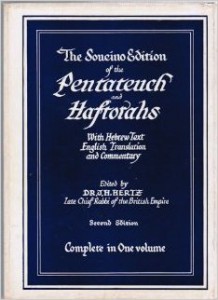
[First posted in 2013.  Since this chapter is a crucial one, we will quote in toto the commentary of our MUST READ/MUST OWN Pentateuch & Haftarahs, not only the Introduction but the comment for specific verses. Commentary is enclosed in  [brackets].  Highlighting and reformatting have been added.—Admin1.]


———————-


CHAPTER XIX. A MANUAL OF MORAL INSTRUCTION


  • This remarkable chapter occupies the central position in Leviticus, and therefore in the Pentateuch.  The Rabbis rightly regarded it as the kernel of the Law and declared that ‘the essentials of the Torah are summarized therein’ (Sifra).
  • This chapter has in fact been looked upon as a counterpart of the Decalogue itself, the Ten Commandments being in essence repeated in its verses (I and II in v.4; II in v. 12; IV and V in V. 3; VI in V. 16; VII in v.29; VIII and IX in v.11-16; and X in v.18).
  • The precepts contained in the chapter may, at first sight, appear a medley of the spiritual and ceremonial—fundamental maxims and principles of justice and morality alongside of ritual laws and observances.  The Torah, however, regards human life as an indivisible whole, and declines to exclude any phase thereof from its purview. . . .

2.  HOLINESS AND THE IMITATION OF GOD


As the command, ‘ye shall be holy, for I the LORD your God am holy,’ dominates not only this chapter but the whole ethical legislation in Leviticus, it is necessary to have a clear understanding of the word holy in its ethical, as distinct from its ritual, signification.

  • First, it denotes the sublime exaltedness and overpowering majesty of God; in the presence of that Divine holiness, mortal man feels ‘but dust and ashes’ and is crushed by the sense of his unworthiness (Isa. VI, 5).  
  • Secondly, holy expresses everything that makes men imperfect, and His recoil from everything impure and unrighteous; in the words of the Prophet, ‘Thou art of eyes too pure to behold evil, and canst not look on mischief’ (Hab.I.13).
  • Thirdly, holy stands for the fullness of God’s ethical qualities—for more than goodness more than purity, more than righteousness; it embraces all these in their ideal completeness.  ‘The Holy One, blessed be He!’ is the most common name for God in Rabbinical literature, as well as on the lips of the Jewish masses.  In its ritual usage, the word ‘holy’ is applied to persons and things connected with the Sanctuary, or consecrated for religious purposes.


Leviticus/Wayyiqrah 19

1 YHVH spoke to Moshe, saying:
2 Speak to the entire community of the Children of Israel, and say to them: 
Holy are you to be,
 for holy am I, YHVH your God!

The Torah and its message of holiness is the heritage of the assembly of Israel. There was not to be a small class of ‘specialists’ in religion who dwelt apart, while the people were sunk in ignorance and superstition.  Israel was to form a spiritual democracy; Deut. XXXIV.

Holy are you to be, [set-apart in righteousness];
for holy am I, YHVH your God!
Man is not only to worship God, but to imitate Him.  By his deeds he must reveal the Divine that is implanted in him; and make manifest, by the purity and righteousness of his actions, that he is of God.  Mortal man cannot imitate God’s infinite majesty or His eternity; but he can strive towards a purity that is Divine, by keeping aloof from everything loathsome and defiling (XI,44); and especially can he imitate God’s merciful qualities.  This ‘imitation of God’ is held forth by the Rabbis as the highest human ideal.

 ‘Be like God; as He is merciful and gracious, so be thou merciful and gracious.  Scripture commands, Walk ye after the LORD your God. But the LORD is a consuming fire; how can men walk after Him?  But the meaning is, by being as He is—merciful, loving, long suffering. Mark how, on the first page of the Torah, God clothed the naked—Adam; and on the last, He buried the dead–Moses.  He heals the sick fees the captives, does good even to His enemies, and is merciful both to the living and the dead’ (Talmud).

These merciful qualities, therefore, are real links between God and man; and man is never nearer the Divine than in his compassionate moments.  Dr. Schecter has pointed out that the Imitation of God is confined by the Rabbis to His attributes of mercy and graciousness.  ‘The whole Rabbinic literature might be searched in vain for a single instance of the sterner Biblical attributes of God being set up as a model for a man to copy’ (Abrahams).

Holiness is thus not so much an abstract or a mystic idea, as a regulative principle in the everyday lives of men and women.  The words, ‘ye shall be holy,’ are the keynote of the whole chapter, and must be read in connection with its various precepts;

  • reverence for parents,
  • consideration for the needy,
  • prompt wages for reasonable hours,
  • honourable dealing, no talebearing or malice,
  • love of one’s neighbour and cordiality to the alien,
  • equal justice to the rich and poor,
  • just measures and balances—
  • together with abhorrence of everything unclean, irrational, or heathen.

Holiness is thus attained not by flight from the world, nor by monk-like renunciation of human relationships of family or station, but by the spirit in which we fulfill the obligations of life in its simplest and commonest details: in this way—by doing justly, loving mercy, and walking humbly with our God—is everyday life transfigured.


3-4. FUNDAMENTAL MORAL LAWS

3 Each-man-his mother and his father you are to hold-in-awe, 
and my Sabbaths you are to keep: I am YHVH your God!

The first precept stressed is reverence for parents.  Neglect of filial duty vitiates a man’s whole attitude to life, and places the ideal of holiness out of his reach.  ‘If we have failed in our duty towards our parents, we are not likely to succeed in our relations towards others’ (Foerster).  

fear . . . . his mother, lit ‘stand in awe of . . . his mother’. In the Decalogue the father is mentioned before the mother, and the word used is honour instead of fear.  The Rabbis suggest the following reason for the difference:  the father is the parent who disciplines the child; the mother is richer in manifestations of affection and kindliness.  The child would consequently have ‘love’ for the mother, but ‘stand in awe’ before the father.  Therefore, the Torah insists on the child showing love and reverence to both.  The term ‘fear’ in this verse is that used in reference to God.  

‘Dear to God is the honouring of father and mother, for Scripture employs the same expressions about honouring and revering Himself’ (Talmud).  

For the child, his father and mother are more than ordinary mortals; and, in fact, the Fifth Commandment is in the Decalogue the connecting link between our duties towards God and our fellowmen.  Many are the beautiful sayings in Rabbinical literature in regard to this Commandment, but none more beautiful than the story of Dama.  

Dama, a heathen dealer in jewels in Ascalon, had a stone such as was required to replace one of the precious stones in the High Priest’s breastplate.  A deputation from Jerusalem came to him to negotiate for its purchase; and he agreed to sell it for one hundred dinars, but when he went into an inner room to fetch the stone, he found that his father was asleep in that room. Dama came back, and said he could not after all sell the stone.  The deputation offered 200 dinars, 300, a thousand dinars—but in vain.  Soon after, his father having waked, Dama ran after the Temple emissaries with the jewel; but he refused to take more than the original 100 dinars of the first offer.  ‘I will not make any profit from the honour which I paid to my father,’ he said.  Filial reverence, the Rabbis held, was a dictate of Natural Religion, and therefore of universal application; and it is characteristic of their broad humanity that they selected the action of a contemporary heathen as a perfect example of filial piety.


and my Sabbaths you are to keep: 
The connection of these two precepts is significant.  Even as honouring of parents stands foremost among human duties, the sanctification of the Sabbath is the first step towards holiness in man’s spiritual life.  For the Sabbath is not only a day of cessation from work, but the weekly opportunity for communal worship and spiritual growth. These two commands are placed side by side in order to teach that the fear of parents must not exceed the fear of God.  Should they demand anything that contravenes God’s law, then the child must place his duty to God before that to his parents (Talmud).


I am YHVH your God!  This phrase (often in the shorter form, I am the LORD), occurs 16 times in this Chapter.  It is the Divine seal set to the enactments of the law.  It ‘points to God at once as the Holy One and as the Judge; it is meant both to encourage and to awe; both to exhort to vigilance and to menace with punishment’ (Kalisch).


4   Do not turn-your-faces to no-gods, and molten gods you are not to make yourselves, 
I am YHVH your God!

 lit. ‘things of nought, non-entities’; i.e. things that have no real existence; see Jer. XIV,14.


5-8. RITUAL LAWS

5 Now when you slaughter a slaughter-offering of shalom to YHVH,
 for your being-accepted you are to slaughter it.

 when ye offer. Or ‘if you offer’ . . Note that the form used is not the imperative—ye shall offer’; sacrifices are voluntary (Kimchi).  The main concern of Scripture seems to be not so much that a sacrifice shall be brought, as, if brought, how it shall be brought; i.e. that it be offered in strict accordance with the regulations prescribed for avoiding heathen associations.


6 At the time of your slaughtering it, it is to be eaten, and on the morrow (as well), 
but what remains by the third day is to be burned in fire.
7 Should it be eaten, yes, eaten on the third day,
 it is tainted-meat, it will not be accepted;
8 those who eat it-his iniquity must he bear,
 for the holy-offering of YHVH he has profaned, 
cut off shall that person be from his kinspeople!


9-10. CONSIDERATION FOR THE POOR

9 Now when you harvest the harvest of your land, 
you are not to finish (to the) edge of your field in harvesting,
 the full-gathering of your harvest you are not to gather;

 corner of thy field. What is here commanded is a statutory charge on one’s harvest, to which the English poor rate is analogous.  It does not exclude private and voluntary assistance, according to the generous impulse of the giver.

Consideration for the poor distinguishes the Mosaic Law from all other ancient legislations, such as the Roman Law.  The object of the latter seems to be primarily to safeguard the rights of the possessing classes.  In the Torah, the poor man is a brother, and when in need he is to be relieved ungrudgingly not only with an open hand but with an open heart.  In his noble self-defence, Job (XXXI,17029) protests:

Never have I eaten my morsel alone,
Without sharing it with the fatherless;
Never saw I any perish for want of clothing
But I warmed him with fleece from my lambs,
And his loins gave me their blessing.
 

The Rabbis continued this doctrine, and declared pity to be a distinguishing trait of the Jewish character.  If a Jew–they held–shows himself lacking in consideration for a fellowman in distress or suffering, we may well doubt the purity of his Jewish descent.  ‘There is no ethical quality more characteristic of Rabbinic Judaism than Rachmonuth–pity.  The beggar whose point of view is that you are to thank him for allowing him to give you the opportunity for showing Rachmonuth, is a characteristically Jewish figure’ (Montefiore).

gleaning. The ears of corn which fall to the ground at the time of reaping.


10 your vineyard you are not to glean,
 the break-off of your vineyard you are not to gather-
 rather, for the afflicted and for the sojourner you are to leave them, 
I am YHVH your God!


11-16. DUTIES TOWARDS OUR FELLOWMEN

These precepts restate the fundamental rules of life in human society that are contained in the Second Table of the Decalogue.  These moral principles were expanded by the Rabbis and applied to every phase of civil and criminal law.


11 You are not to steal,
 you are not to lie, 
you are not to deal-falsely, each-man with his fellow!


Even as a practical joke; or, in order to enable another to profit by the four- or five-fold restitution which thou shalt have to make; or, to reclaim by stealth thine own stolen property, lest thou seem a thief” (Sifra).  Everything that has the appearance of stealing is strictly forbidden, lest a man become habituated to the act of stealing (Schulchan Aruch).  Especially reprehensible is ‘stealing the good opinion of others’—by any manner of misrepresentation, ‘publicity,’ or flattery deceiving others into having a better opinion of him or his doings than he deserves. (Mechilta, Mishpatim). ‘Let a man earn the good opinion of his fellowmen, but let him not steal it’ (S.R. Hirsch).  A classical example is afforded by Absalom’s manner of ingratiating himself with all who felt discontent at ‘the law’s delay’, suggesting that if he were king, things would be very different.

 ‘And Absalom used to rise up early, and stand beside the way of the gate: and it was so, that when any man had a suit which should come to the king for judgment, then Absalom called unto him and said . . . See, thy matters are good and right; but there is no man deputed of the king to heart thee.  Absalom said moreover, Oh that I were made judge in the land, that every man which hath any suit or cause might come unto me, and I would do him justice! . . . So Absalom stole the hearts of the men of Israel’ (II Sam. XV,2-6).


neither will you deal falsely, lit. ‘falsely deny’.

nor lie to one another. ‘Let your Yes be righteous, and your No be righteous.  He who exacted retribution from the generation of the Flood will exact it of the man who does not stand by his word.  Truth is one of the pillars of the Universe; it is God’s own seal.  The liar is an outcast from the Divine fellowship.  Men too punish him, fo he is not believed even when he speaks the truth.  The good man is he who is what he seems’ (Talmud).  The truth, however, must be spoken in love. Truthfulness must be moral; it ceases to be truthfulness and becomes an abominable form of lying when it is used as a tool of revenge or malice in order to ruin another or for putting him to open shame.


‘A truth that’s told with bad intent
Beats all the lies you can invent’ (Blake).
 
12 You are not to swear by my name falsely,
 thus profaning the name of your God-
 I am YHVH!

 And indicates that the verse is to be closely associated with the preceding one. “If thou hast stolen, thou wilt end by falsely denying, lying, and swearing by My Name to a falsehood’ (Sifra)—profaning the Name of God for the purpose of deceit and fraud.


13 You are not to withhold (property from) your neighbor, 
you are not to commit-robbery. 
You are not to keep-overnight the working-wages of a hired-hand with you until morning.

oppress.Defraud’ (Moffatt).  In Deut. XXIV,14, ‘a hired servant’ is substituted for ‘thy neighbour’.  ‘Oppressing’ a hired servant means taking advantage of his helplessness and paying him less than his due for his work.  

rob him.  By witholding from him that which is his.  

abide with theeIf the labourer is hired by the day, his wages must be paid to him immediately after the day’s work is done.  The poor man lives from hand to mouth.


14 You are not to insult the deaf,
 before the blind you are not to place a stumbling-block:
 rather, you are to hold your God in awe; 
I am YHVH!

Defame the deaf, or anyone who cannot hear, and so cannot vindicate his own character.

nor put a stumbling block before the blind, [‘Trip up a blind man’ (Moffatt), either in sport or malice.  Alas for the prevalence of human callousness and cruelty that render the formulation of such a precept necessary.

‘Deaf’ and ‘blind’ are typical figures of all misfortune, inexperience, and moral weakness.  This verse is a warning against leading the young and morally weak into sin, or provoking them to commit irretrievable mistakes.  The following are typical violations of this ethical precept:  he who gives disingenuous advice to the inexperienced; he who tempts the Nazirite to break his oath not to drink wine; he who sells lethal weapons to weak or dangerous characters—all these transgress the command. ‘Thou shalt not put a stumbling block before the blind’.  Equally so does the man who administers corporal punishment to a grown-up son: it may make that son forgetful of filial duty, and in blind anger commit an unpardonable offence (Talmud).

you are to hold your God in awe  [fear thy God. Who is the avenger of the helpless; of the deaf or absent ma who cannot protect himself from the reviling which he has not heard; of the ‘blind’ man who cannot avoid the stumbling block of which he is not aware.  Furthermore, the man who deliberately gives harmful advice may allege the noblest of intentions.  But Scripture exhorts him to ‘fear God’, who searches the innermost recesses of the human heart and knows its secret thoughts.   . . fearing God means natural piety and fundamental humanity.


15 You are not to commit corruption in justice; 
you are not to lift-up-in-favor the face of the poor,
 you are not to overly-honor the face of the great;
 with equity you are to judge your fellow!

lift-up-in-favor the face of the poor  ‘You shall not be partial to a poor man’ (Moffatt).  With all its sympathy for the poor and helpless, the Torah fears that justice might be outraged in favour of the poor man when he is in the wrong.  Even sympathy and compassion must be silenced in the presence of Justice.  In this Scriptural command, as in Exod. XXIII,3 (Thou shalt not favour a poor man in his cause) ‘there is a sublimity of moral view, which compels the reverence of all’ (Geiger).

not to overly-honor the face of the great [The judge must not say, ‘This man is rich and well connected; how can I put him to shame by deciding against him?’ (Sifra)

 with equity you are to judge your fellow!  [There is to be neither prejudice in favour of the poor, nor dread o offending the great, but justice‘ . . . Thus, one of the litigants is not to be permitted to state his case, at length, and the other bidden ‘to cut it short’.  One litigant must not be allowed to be seated in court, and the other kept standing (Sifra).  ‘The judge should feel as though a sword were suspended above his head throughout the time he sits in judgment” (Talmud).

Another authoritative explanation is, ‘Judge every man in the scale of merit; refuse to condemn by appearances, but put the best construction on the deeds of your fellowmen’ (Talmud).

The teaching of this and the preceding verses is thus restated by the Prophet:


 “Speak ye every man the truth with his neighbour; execute the judgment of truth and peace in your gates; and let none of you devise evil in your hearts against his neighbour; and love no false oath; for all these are things that I hate, saith the LORD’ (Zech. VIII, 16, 17).

16 You are not to traffic in slander among your kinspeople. 
You are not to stand by the blood of your neighbor, 
I am YHVH!
 
 lit. ‘go up and down as a pedlar’. This expressive idiom is here applied to a person who travels about dealing in scandal and malicious hearsay, getting the secrets of people and retailing them wherever he goes (Rashi).  A mischievous business, even if the report is true and told without malice (Maimonides).  ‘A more despicable character exists not; such a person is a pest to society, and should be exiled from the habitation of men’ (Adam Clarke).  Injurious gossip may often do as much harm as slanderous defamation.  Hence the prayer, three times daily, “O my God, guard my tongue from evil and my lips from speaking guile’ (Authorised Prayer Book, p. 54). The slanderer, the man of the evil tongue, the calumniator, is worse than a murderer, since he destroys a man’s reputation, which is ore precious than his life (Talmud).  Hence the informer (moser) was deemed the most abandoned creature among all evil-doers to their kind.
You are not to stand by the blood of your neighbor, 
I am YHVH!  i.e. when hislife is in danger.  Do not stand idly by, watching with indifference thy fellowman in mortal danger through drowning, or attacked by wild animals, or robbers, without hastening to his rescue (Talmud).  In protecting the life of another, it is permitted to take the life of the assailant, even as in self-defence.  The Sifra gives a further application to this verse: if thy fellowman is accused of a crime, and evidence that would clear him of it is in thy possession, thou art not at liberty to keep silent.


17-18. PROHIBITION OF HATRED AND VENGEANCE: LOVE OF NEIGHBOR
17 You are not to hate your brother in your heart;
 rebuke, yes, rebuke your fellow, 
that you not bear sin because of him!
 
 Nursing your grievance against your fellowman.  Most of the hating in the world is quite unjustified, groundless hating for its own sake. ‘Thou shalt not hate thy brother in thine heart. Our Rabbis taught that if Scripture had merely said, ‘Thou shalt not hate thy brother,’ this precept might be explained to mean only that you must not injure him, nor insult him, nor vex him; and so the words ‘in thine heart’ are added to forbid us even to feel hatred in our heart without giving it outward expression. Causeless hatred ranks with the three cardinal sins:  Idolatry, Immorality, and Murder.  The Second Temple, although in its time study of the Law and good works flourished and God’s commandments were obeyed, was destroyed because of causeless hatred’ (Achal Gaon).  When it is fed by racial rivalry or religious bigotry, causeless hatred petrifies the heart and becomes organized malice.  None has suffered, and is still suffering, from causeless hatred more than the Jewish People.  The Talmud instances the Emperor Hadrian’s conduct as typical of men swayed by such hatred.  One day on Hadrian’s journey in the East, a Jew passed the Imperial train and saluted the Emperor.  Hadrian was beside himself with rage.  ‘You, a Jew, dare to greet the Emperor! You shall pay for this with your life.”  In the course of the same day, another Jew passed him, and, warned by example, he did not greet Hadrian. ‘You, a Jew, dare to pass the Emperor without a greeting,’ he angrily exclaimed.  ‘You have forfeited your life.’ To his astonished courtiers he replied: ‘I hate the Jews. Whatever they do, I find intolerable. I therefore make use of any pretext to destroy them.’  So are all anti-Semites; so are all slaves of ’causeless hatred’.

 rebuke, yes, rebuke your fellow,  A precept extremely difficult of fulfillment; it is as difficult to administer reproof with delicacy and tact, as it is to receive reproof.  Reproof must, of course, be offered in all kindness, otherwise it fails of its purpose; and if it entails putting a man to shame in public, it is mortal sin.  No matter how much learning and good works the man who commits such a sin may possess, he has no share in the world to come—says a great Mishnah teacher.

that you not bear sin because of him!  Unless there is a frank statement from the aggrieved party, the hatred or dislike smouldering in his heart may lead him into sin.


18 You are not to take-vengeance, you are not to retain-anger against the sons of your kinspeople-
 but be-loving to your neighbor (as one) like yourself,
 I am YHVH!

 Forbids repaying evil with evil.  ‘If a man finds both a friend and an enemy in distress, he should first assist his enemy, in order to subdue his evil inclination,’ i.e. man’s inborn passion for revenge (Talmud). Scripture inculcates this virtue both by precept and illustrious example.  Joseph’s conduct to his brethren, and David’s to Saul, are among the noblest instances of forgiveness to be found in literature.  Such examples are not confined to the Biblical period.  Samuel ibn Nagrela was a Spanish-Jewish poet of the 11th century, who was vizier to the king of Granada.  He was one day cursed in the presence of the king, who commanded Samuel to punish the offender by cutting out his tongue.  The Jewish vizier, however, treated his enemy kindly, whereupon the curses became blessings.  When the king next noticed the offender, he was astonished that Samuel had not carried out his command.  Samuel replied, ‘I have torn out his angry tongue, and given him instead a kind one.’  The Rabbis rightly declare, ‘Who is mighty? He who makes his enemy his friend.’

The Jew is not ‘a good hater.’ Shylock is ‘the Jew that Shakespeare drew’.  He is not the Jew of real life, even in the Middle Ages, stained as their story is with the hot tears—nay the very heart’s blood—of the martyred race.  The medieval Jew did not take vengeance on his cruel foes.  The Jews hunted out of Spain in 1492 were in turn cruelly expelled from Portugal.  Some took refuge on the African coast.  Eighty years later the descendants of the men who had thus inhumanly treated their Jewish fellowmen were defeated in Africa, whither they had been led by their king, Dom Sebastian.  Those who were not slain were offered as slaves at Fez to the descendants of the Jewish exiles from Portugal.  ‘The humbled Portuguese nobles,’ the historian narrates, ‘were comforted when their purchasers proved to be Jews, for they knew that they had humane hearts’ (M. Joseph).

you are not to retain-anger against the sons of your kinspeople-  Waiting for an opportunity to repay evil with evil.  The Rabbis give the following explanation of these two phrases:  ‘If a man says, I will not lend you the tool you require, because you did not lend it me when I asked for it—that is vengeance.  If a man says, I will lend you the tool, although you refused to lend it when I asked for it—that is bearing grudge.’  In the ancient Jewish book, that has come down to us probably from Maccabean times, known as The Testaments of the Twelve Patriarchs, we read:  ‘Love ye one another from the heart; and if a man sin against thee, cast forth the poison of hate and speak peaceably to him.  If he confess and repent, forgive him.  But if he be shameless and persist in his wrongdoing, even so forgive him from the heart, and leave to God the avenging.  Beware of hatred; for it works lawlessness even against the Lord Himself.  For it will not hear the words of the Commandments concerning the loving of one’s neighbour.  Love would quicken even the dead, and would call back them

 but be-loving to your neighbor (as one) like yourself,
 I am YHVH!   i.e., let the honour and property of thy fellowman be as deer to thee as thine own.  These three Heb. words were early recognized as the most comprehensive rule of conduct, as containing the essence of religion and applicable in every human relation and towards all men.  Even the criminal condemned to die, say the Rabbis, has a claim on our brotherly love, and we must spare him unnecessary suffering.  Hillel paraphrased this rule into ‘Whatever is hateful unto thee do it not unto thy fellow’; and declared it to be the whole Law, the remainder being but a commentary on this fundamental principle of the Torah.


19-26. MISCELLANEOUS PRECEPTS


19 My laws, you are to keep: 
Your animal, you are not to (allow to) mate (in) two-kinds; 
your field, you are not to sow with two-kinds; 
a garment of two-kinds, of shaatnez, is not to go on you.

statutes. Laws for which the reason has not been

revealed to us. However, the word may here mean as in Jer. XXXIII,26, fixed laws which God had instituted for the government of the physical universe.  The purpose of the following regulations would then be:  man must not deviate from the appointed order of things, nor go against the eternal laws of nature as established by Divine Wisdom.  What God has ordained to be kept apart, man must not seek to mix together.

You will not let your cattle copulate with a diverse kind:
you will not sow your field with two kinds of seed:
neither will there come upon you a garment of two kinds of linen and wool together.  Josephus suggested as the reason for the prohibition of mixed breeding the fear that such unnatural union in the animal world might lead to oral perversion among human beings. . . .’Nature does not rejoice in the union of things that are not in their nature alike’.

19 My laws, you are to keep: 
Your animal, you are not to (allow to) mate (in) two-kinds; 
your field, you are not to sow with two-kinds; 
a garment of two-kinds, of shaatnez, is not to go on you.

Here we have an example of ‘prohibited mixture in the sphere of moral relationship’—the union with a heathen bondsmaid betrothed to a Hebrew slave.  The offence is not as serious as in the case of a betrothed freewoman; nevertheless, the act is branded as immoral and one to be punished.


 21 But he is to bring as his asham-offering to YHVH, to the entrance of the Tent of Appointment, a ram of asham-offering.
22 The priest is to effect-atonement for him with the ram of asham-offering, before the presence of YHVH,
 for the sin that he has sinned, 
and he shall be granted-pardon for the sin that he has sinned.
23 Now when you enter the land, and plant any-kind of tree for eating,
 you are to regard its fruit (like) a foreskin, a foreskin. 
For three years it is to be considered-foreskinned for you, 
you are not to eat (it).

 lit. you shall regard its fruit as defective.  The fruit tree in its first three years is to be regarded as a male infant during his first eight days; i.e. as unconsecrated (Dillmann).  Its fruit was then stunted in its growth and unfit as a first-fruit offering to God; and hence forbidden for human use.


24 And in the fourth year shall all its fruit be a holy-portion, (for) jubilation for YHVH;
25 in the fifth year may you eat its fruit, to add for you its produce,
 I am YHVH your God! 

The trees become more productive if they are stripped of the blossoms in the early years.


26-31. PROHIBITION OF CANAANITE CUSTOMS


The context suggests that the allusion is to a heathenish rite of divination, well-known to the Israelites.


26 You are not to eat (anything together) with blood. 
You are not to practice-divination, you are not to practice-soothsaying.

 They killed a beast, received the blood in a vessel or pot, and ate of the flesh of that beast, whilst sitting round the blood.  they imagined that in this manner, the spirits would come to partake of the blood which was their food; brotherhood and friendship would be established with the spirits’ (Maimonides).  It is, however, taken by the Rabbis both in a literal sense (‘do not eat flesh from an animal whose blood is yet in it’, i.e. whose life has not yet departed), and as an ethical injunction (‘the members of a Court whose decree of capital punishment has been carried out shall on that day abstain from all food’).

You are not to practice-divination, you are not to practice-soothsaying 

divination. Charms and incantations. Ancient life, whether in Egypt, Canaan, or Mesopotamia, was crushed under an intolerable weight of enchantment, magic, and demonology.  The Israelite was freed from the incubus of superstition by these prohibitions, which constitute one of the great negations of Judaism; cf. Num. XXIII, 23.

soothsaying. Or ‘divination’ by observing times and seasons and declaring one day ‘lucky’ and another ‘unlucky’ — a common practice among heathens.


27 You are not to round off the edge-growth of your head, you are not to diminish the edge-growth of your beard;

round the corners. In this and the following verse, various mourning customs connected with the heathen worship of the dead are forbidden, as unbecoming the dignity of God’s people and incompatible with loyalty to a God of holiness.


28 an incision for a (dead) person you are not to make in your flesh, 
writing of skin-etching you are not to place on yourselves,
 I am YHVH!

cuttings . . . for the dead.  Eastern peoples, in their excessive demonstration of grief at a bereavement, often gashed and mutilated themselves.  The shedding of blood was also believed to have a sacrificial value for the dead person.  Even apart from the prohibition of this idolatrous practice, the Torah inculcates reverence for the human body, as the work of God.

imprint any marks. By means of writing that sinks into the flesh.  What is here forbidden is the custom of tattooing some part of the body.  Often this was a representation of the deity worshipped by the bearer of that mark.


29 You are not to profane your daughter by making her a whore,
 that the land not go whoring 
and the land be filled with insidiousness.

 A prohibition for a father to hand over his daughter to a man without the previous rites of ‘sanctification’–i.e. without a legal marriage; as well as prohibition for a woman of her own free will to consort with a man without such legal marriage (Sifra).  The use of the word profane is noteworthy.  It presupposes the sacredness of womanhood; and it brands such an action as a profanation and a desecration of the sacred personality of a human being.

the land. i.e., its inhabitants.

fall into harlotry. Looking upon the ‘demand’ for harlotry as a normal condition of things, and tolerating the consequent ‘supply’ of human beings for such a life of shame.


30 My Sabbaths you are to keep, my Holy-shrine you are to hold- in-awe, 
I am YHVH!

The parenthetical insertion of this injunction may be intended to impress upon the Israelite that reverence for Sabbath and Sanctuary will keep him from the heathenish rites and immoralities mentioned in the preceding verses and that following.


31 Do not turn-your-faces to ghosts, of favorable-spirits do not inquire, to become-tamei through them,
 I am YHVH your God!

familiar spirits.  The English word ‘familiar’ here means ‘attendant’.  The wizard professes to know through the spirit attendant upon him, or residing within him, what is hidden from the ordinary person.

to be defiled. Physically, by coming into contact with the dead bones which were part of the paraphernalia of the wizard; and spirituality, by sinking into the mire of superstition inseparable from witchcraft and necromancy.


32-37.  ETHICAL INJUNCTIONS


32 In the face of the gray-hair, you are to rise, 
you are to honor the face of the elderly, thus holding your God in awe, 
I am YHVH!

rise up before the hoary head. ‘Hoary’, white with age.  The ethical sublimity of this exhortation is not diminished by the fact that parallels exist among other ancient peoples, and that in the Orient reverence for old age is or was the rule until the present day.

honor the face of the old man. ‘Honour the person of an old man’ (Moffatt).  The Rabbis enlarged the connotation of the word ‘old’ and made it include anyone who had acquired wisdom. But even where there is no book-learning, there may be the matured wisdom of experience.  A famous rabbi would stand up even before an aged heathen peasant, saying , ‘What storms of fortune has this old man weathered in his life-time.’

thou shalt fear.  Here, too, the inner motives of a man are involved, not only his outward acts.


33 Now when there sojourns with you a sojourner in your land, 
you are not to maltreat him;


a stranger. The duty of loving the stranger is stressed 36 times in Scripture and is placed on the same level as the duty of kindness to, and protection of, the widow and the orphan.  ‘The alien was to be protected, although he was not a member of one’s family, clan, religious community, or people; simply because he was a human being.  In the alien, therefore, man discovered the idea of humanity’ (Hermann Cohen).

not do him wrong. Not only oppression by unrighteous deeds, such as taking advantage of his ignorance to overreach him.  The Rabbis take the word in sense of ‘offend’ and they emphasize the peculiar heinousness of wounding the alien’s feelings by insulting speech.  Few modern peoples, alas, can truthfully be said to have learned this ethical precept.


34 like the native-born among you shall he be to you, the sojourner that sojourns with you; be-loving to him (as one) like yourself,
 for sojourners were you in the land of Egypt.
 I am YHVH your God!

as home born.  There was to be one law only, the same for home-born and alien alike (XXIV,22; Num. XV,16).  The stranger is to share in the corners of the field, the forgotten sheaf, and every form of poor relief.  The tremendous seriousness with which justice to the stranger is inculcated is seen from the fact that, among the covenant admonitions at Mount Ebal, we read ‘Cursed be he that perverteth the justice due to the stranger’ (Deut. XXVI, 19). Israel was not permitted to hate even the Egyptian, the people that enslaved him.  It was to transform those memories of bitter oppression into feelings of compassion to all the friendless and downtrodden.  In other ancient codes, the stranger was rightless.  Thus, the Romans had originally one word, ‘hostis’ for both stranger and enemy.


35 You are not to commit corruption in justice, 
in measure, weight, or capacity;

in judgmentNot an unnecessary repetition of the same phrase in v. 15.  God abhors unrighteousness, i.e. dishonesty, in business.  For all that do such things are an abomination unto the LORD’ (Deut. XXV,16).


36 scales of equity, weighing-stones of equity, an efa of equity and a hin of equity you shall have. I am YHVH your God, who brought you out of the land of Egypt!

brought you outGod had delivered the Israelites from a land where they had suffered from injustice; let them not practise injustice in their dealings with one another.


37 You are to keep all my laws and all my regulations, and observe them, 
I am YHVH!
I am the LORDThus this remarkable series of precepts ends on the exalted note with which it opened; v. 2.


THE TORAH – GENESIS/Chapter by Chapter

Image from www.knanayaregion.us

Image from www.knanayaregion.us

[Every new day is 

a good time 

for starting anew.  Every new day, one could consciously decide to return to foundational truth,

the basics in bible study . . .

so here’s the Book of Beginnings,

the first of the Five Books of Moses,

known as the TORAH,

Instructions for Living,

Guidelines for Life,

conveniently listed for the serious student,

a product of Sinaites’ final reorientation

to the Sinai Revelation.

—Admin1]


————————–


GENESIS/BERESHITH

SINAI 6000 COMMENTARY


THE TORAH – EXODUS/Chapter by Chapter

[This is still a work in progress, not complete in terms of the commentary we wish to add to the biblical text, specifically the translation of Everett Fox.  It is complete however, in terms of the text for searchers who simply wish to read this official translation we have chosen for our website. —Admin1]


—————————


Exodus/Shemoth

A Sinaite’s Dissertation on the Book of Exodus

[In Memoriam — These posts were authored by Sinaite ELZ when she chose to write her doctoral dissertation on the book of Exodus.  She passed her orals; she finished her Ph.D. She contributed many more articles for Sinai6000.net.  Even if they have passed away, we honor both ELZ and VAN by reposting their articles every year when the season/celebration is relevant.  We certainly miss them both, who have left us on this side of eternity and moved on to their final Sabbath Rest.—Admin1.]


CHAPTERS


SINAI 6000 COMMENTARY

THE TORAH – LEVITICUS/Chapter by Chapter

[This is a work in progress; incomplete in terms of the commentary we wish to add to the text from our 3 sources: Pentateuch and Haftorah, Everett Fox, Robert Alter.  It is complete however in terms of the chapter-by-chapter translation of Everett Fox’s THE FIVE BOOKS OF MOSES.–Admin1]

—————————–  

Leviticus/Waiqrah

CHAPTERS