THE TORAH – NUMBERS/Chapter by Chapter

[This is a work in progress; it simply features the text from the translation of our choice, Everett Fox’s THE FIVE BOOKS OF MOSES, a must-read/must-own biblical resource.  As we keep repeating, the reason it is our choice is because unlike Hebrew translations which do not print ‘the Name YHWH’ and substitute “LORD” or “HASHEM”, Everett Fox has no qualms using the sacred Name YHWH where it appears in the original.  For this, we are thankful to him and feature his work, urging others to get your personal copy of his translation.—Admin1]


——————–


Numbers/Bemidbar

THE TORAH – DEUTERONOMY/Chapter by Chapter

[This is a work in progress; simply featuring the translation of Everett Fox’s THE FIVE BOOKS OF MOSES.  It does not include all the commentaries we usually insert after each verse, from PENTATEUCH AND HAFTORAHS, Everett Fox’s as well as Robert Alter whose translation is the same title as Fox.  We hope we can finish adding the commentary this year, but for now, for the serious student of the TORAH who has no access to Everett Fox’s translation, this is the alternative source.  We do urge all to secure a copy of it, whether by ebook or hard copy, it is worth the cost!—Admin1]


——————————–


Deuteronomy/Dabarim

MUST READ/MUST OWN – The Jewish Mystique – Ernest van den Haag

Image from amazon.com

Image from amazon.com

[The Jewish Mystique by  Ernest Van Den Haag.  This book was donated to our Sinai 6000 library by a Filipino doctor who enjoyed going to  estate sales in the USA, where  ‘treasure finds’ sell for a pittance.  This half-a century hardback edition (1969) was published by Stein and Day, a husband & wife printing-venture in New York, that lasted 27 years, from 1962-1989.  There are only a few hard copies available at amazon.com, some used, some new.   Definitely a collector’s item, we are grateful to Dr. “T” for this addition to our library.

Other posts from this book:

This is just the ‘come on’ for the book; chapters are outlined below. —Admin1]


———————————–


Publishers:  STEIN AND DAY, New York – 1969


Inside Back Cover:  

Ernest van den Haag, for fifteen year professor of Social Philosophy at New York University and lecturer in Sociology and Psychology at the New School, has been a visiting professor at some of America’s most distinguished universities.  A Guggenheim fellow in 1967, he is a practicing psychologist, the author of three books, and many papers in learned journals.  Dr. van den Haag has published as well in Commentary, Harper’s, Esquire, Encounter, Fortune, The New Leader, Partisan Review, National Review, Dissent, and many other publications.


Jacket Design by Tim Gaydos.


Inside Front Cover:

Einstein was an agnostic, Freud an atheist, Karl Marx a Protestant—were they Jewish?  Was Elizabeth Taylor or Marilyn Monroe? Are Jews a denominational group, a nation, or a race?  What makes them Jewish?  Why can’t Sammy Davis, Jr., make it?  How do they (or do they?) differ from Gentiles?  What makes anti-Semites anti-Semitic?


Dr. van den Haag investigates the mystique about Jews created by their friends, their enemies, and, not the least, the Jews themselves.  Are they smarter than other people?  Do they have the golden touch?  Why do they seem to have influence disproportionate to their numbers?  It is remarkable how little is really understood about a people who have had so much impact on the history and destiny of the world.


Wittily and in depth, Dr. van den Haag explores subjects as topical as Jewish hippies, campus radicals, and Negro anti-Semites, or as perennial—and misunderstood—as the sexual attraction of Jewish men and Gentile girls to each other; the popularity of Jewish physicians, Jewish intellect, morality, and sensibility; the Jewish cultural establishment, Jewish masochism, and much much more.


Preface


I propose to write about Jews without hostility or apologetics, and with affection and seriousness, although my temperament makes me unable to resist occasional irony.


I hope to be accurate.  But I should deceive myself were I to believe that accuracy in detail, and veracity about matters as a whole, are enough.  For too many centuries the Jews have been used as Rorshach blot by Gentiles, who attribute to them sometimes the most, and more often the least, desired traits of their own personalities.  And for too many centuries the Jews have incorporated the image of themselves created by others and added it to their self-image.  Under these circumstances any description will displease many who miss their favorite vices, virtues, and characteristics—or find those they prefer to ignore.


If this causerie be anywhere near as engaging as its subject I shall have exceeded my most arrogant ambitions; if it be only half as ambiguous, I shall have done better than I feared.  However, I shall be satisfied if it be recognized that I wrote sine ira et studio, and with apprehension.


E. v. d. H.


CONTENTS


  1.  Are Jews Smarter than Other People?

Jewish breeding for, Gentile breeding against intelligence; the role of ecclesiastical celibacy; and of the rabbis; intelligence tests; Askenazim, Sephardim, and the role of culture; Jewish overrepresentation among Nobel Laureates professionals, and students.


2.   Who are the Jews and What Were They Chosen For?


Leopold Bloom as Ulysses; now you can see them, now you can’t;  Jewish traditionalism; Jean Paul Sartre: “anti-Semites create the Jews”; Marx: capitalism does; Jewishness a feeling; Marilyn Monroe and Sammy Davis, Jr.; the purity of the Jewish genotype; Jews as innovators and conservators; Jewish survival; the Jewish mystique.


3.  Is There a Jewish Character?


Jewish situations and characters; Judaism and Jewishness; messianism, intellectualism, moralistic outlook; Philip Roth and Norman Mailer; Jewish utopianism; Jewish scripture, law and conduct; the role of the rabbis; national character defined.


4.  To Suffer Is to Survive–and Vice Versa


History molds the Jewish character; violence brings defeat and suffering; the internalizastion of passive suffering; survival and the Jewish self-image—advantages over Negroes; Jewish anti-Semitism; Jewish jokes; Jewish passivity and the Nazis.


5.  Why Anti-Semitism?


Anti-Semitism as a relationship; Characteristics of aggressor and victim.  Pre-Christian Anti-Semitism; Monotheism as cause of pre-Christian anti-Semitism; monopolistic claims of the Jewish God among the competitive polytheistic religions of antiquity; the Jewish God is truly supernatural, universal yet tribal; the religious zeal of the Jews, and the tolerance of the Romans; the Jewish God an end not a means; moral demands of hte Jewish God; a cause of anti-Semitism.  Christian Anti-Semitism: pre-Christian and Christian anti-Semitism; deicide and history; resentment of the moral demands of Christianity shifted to its originators; resentment of the father; Jews identified with the fathers; Fried on Moses; the Jewish denial of the genuineness of the messiah felt as chutzpah; The Jewish Conspiracy: an Anti-Semiti Fantasy; Jews and Christian solidarity; the secularization of the devil in conspiracy theories; Hitler, Marx, and C. Wright Mills.


6.  Two Kinds of Discrimination:  Jews and Negroes


Prewar discrimination against Jews, effects on the Jewish image:  superiority: German reaction: if you can’t beat them–beat them; American reaction:  join them; discrimination against Negroes; reverse discrimination in favor of Negroes; the Jewish role; the disastrous effects on the Nero image.  Negro Anti-Semitism; Negro anti-Semitism and Jewish civil rights workers; the need of Negroes to discharge anger and the guilt feeling of the Jews; Jewish left attitudes toward Negroes.


7.  Jewish Radicals and Jewish Hippies


Radicals, liberals, conservatives; the number of Jewish radicals; Jewish guilt feelings an radicalism; the children can afford it; Schopenhauer on boredom; psycho-drama and reality; types of Jewish radicals; why hippies?


8.  The Jewish Cultural Establishment


Jewish sensibility; “Establishment” defined; characteristics of the Jewish cultural Establishment; Jewish liberals and the communications industry; identification with the “underdog”; “in” and “out” people; if you are left, you are right; if you are right, you are out; Hollywood; The New York Times; magazines.


9.  Jews and Sex


The Greek tradition of the body; the Christian tradition of the body; the Jewish tradition of the body; sex, the rejection of romantic love; the pragmatic attitude; alienation from the body; Spinoza on love and pressure; Jewih girls, sex, and marriage; Jews and fashion; circumcision as a rite de passage; as a bond; reasons and rationalizations; symbolic significance; the actual ceremony and its genteelization.


10.  Do Jews Make Better Doctors?


Christian dogma and medicine; Jewish attitude; allied with the devil?; medical knowledge as unconfiscable wealth; status, the physician as manual worker; the physician as magician; and as a father image.


11.  Or More Aggressive Lawyers?


Jewish attachment to law and charity; relation to Jewish and to Christian law; ambivalence; Jews, economic inequality and rationalism; the Pereira Brothers and St. Simon; philanthropy, education and oversensitivity.


12.  You Don’t Have to Be Jewish Anymore to Charge Interest


Why some Jewish economic activities become Jewish; Jewish legal and psychological relation to money; money as the only power available to Jews; and the only protection; impersonal transfer and interest, the price of money; the attitude of the church; Jews driven to become pioneers of the money economy; trading, speculating, an producing from Quesnay to Marax to economics; Jewish wealth.

13.  The Pecking Order Among American Jews, Then and Now


Suburban living and its repudiation:  the relaxed style; “Our Crowd” in the past; German Jews, “kikes,” and Sephardim; some careers; Jewish snobbery and anti-Semitism.

14  The Darkest Suburbia


Jewish suburbia an religion; fathers, mothers, and children; everything for the children; permissiveness; children as status symbols; Jewish suburbia and the Hippies; children driven to become Hippies?

15  The Sexual Power of the Stranger


Jews and Gentile girl; mutual fantasies; the availability of strangers; projections; forbidden fruit; an escape from family bonds; Jews as fathers; Marilyn Monroe; contradictory causes, psychologically consistent; Jews as family men; intermarriage.

16.  The Vanishing Jew


The frequency of intermarriage in the older and in the younger generation; the trend in comparative terms; reasons for the trend; Hollywood’s past attitude to intermarriage; Counselor at Law; Hollywood now; children of mixed marriages; the decline of religion; reasons for intermarriage.

17.  Jews and the Promised Land


American Jews and Israel;  are Israeli Jews “Jewish”?  Why so few?  American Jews uncomfortable in Israel; back and forth; problem of identity; American Jewish parents and Israeli born children

Epilogue

The Spiritual Contrast between Israel And Egypt

Image from creationrevolution.com

Image from creationrevolution.com

[Revisiting an old article first posted in 2012.


Source:  Pentateuch & Haftorahs, ed.Dr. J. H. Hertz, published by The Soncino Press; Excerpts from: EXODUS—ADDITIONAL NOTES .  Reformatting and highlights and images added.—Admin1.]


————————–


Israel and Egypt represent two world-conceptions, two ways of looking on God and Man that are not merely in conflict, but mutually exclusive.


For ages Egypt was the Land of Wonder, and men spoke in awe of the wisdom of the Egyptians.  We know now that they were indeed a wonderful people; but it is only in the arts and crafts, and especially in their colossal and titanic architecture, that they attained truly astonishing results.


The real tests of a nation’s civilization, however, are far other than these.


The supreme test is its vision of God.


Now what were the objects of Egyptian worship?  Stocks and stones, and, above all else, the beast.  While there are traces, albeit faint traces, that the men of the Nile Valley were capable of learning both in religion and conduct, they seem to have been quite incapable of forgetting.  Egypt never discarded the low animism and savage fetishism of its prehistoric days, and remained always ‘zoomorphic’ in its conception of God:  bulls, crocodiles, beetles, apes, cats, and goats–these were its gods.  There were, it is true, stammerings of something nobler; glimpses of higher religious truth; but these remained only glimpses–like flashes of light for one brief moment in the night-time, leaving greater darkness, Egyptian darkness, behind.  Once only was an attempt made by that remarkable man, Amenophis IV, to reform the barbarism of Egyptian worship and to put a kind of monotheism in its place.  The sun was to be worshipped as the single deity under the name of Aton; and he changed his own name to Ikhnaton, ‘Glory to the Sun.’  But the reformation was a failure.  He died amid the curses of his subjects, and the old confused polytheism returned stronger than ever.


‘We have no grounds for holding the opinion,’ says Prof. R. H. Hall, ‘that the educated Egyptian priest, far less the man in the street, normally accepted any pious theories of a latent monotheism, underlying his blatant polytheism.  Ikhnaton was branded as a criminal; and after his failure, we go back to the old spells and mumbo-jumbo again . . . till the death of the Egyptian religion in the days of Justinian. In religious matters, the Egyptians at all periods (except the educated at the end of the 18th Dynasty) were in the mental condition of the blacks of the Gold Coast and Niger delta.  They had “mysteries”, of course like the Ashantis or Ibos.  It is a mistake, however, to think that these mysteries enshrined truth, and that there was an occult ‘faith’ behind them.  There is no more proof of it than in the case of the Ashantis or Ibos’ (Encyclopaedia Brittanica, 1929).


Now where there is no vision of God

there can be no vision of man.


Hence the insignificance of man in the Egyptian world-conception.  They bent the knee to the beast, but man throughout Egyptian history was in bondage.  Human life had absolutely no value.  The lives of vast multitudes of men were sacrificed in connection with the frenzied building schemes.  Herodotus tells us that in the time of Pharaoh Necho II (609-588 B.C.E.), 120,000 labourers were worked to death in the construction of a canal connecting the Nile and the Red Sea.  The pyramids, erected by the tyrant’s unlimited command of human forces, remain everlasting deification of reckless and irresponsible power.


In eternal contrast to Egypt,

the whole story of Israel

is one long protest

against idolatry and inhumanity. 

A single incident in the life of a Jewish ruler will illustrate the world-wide difference between Israel and Egypt.


King Jehoiakim, a contemporary of Pharaoh Necho II, tried to emulate his example, and built himself palaces by means of forced labour.  In Egypt, such a thing was taken as a matter of course, as the unquestioned prerogative of the king.  In Israel, that enterprise was deemed an outrage against reason and human decency.  Jeremiah the Prophet arose and came to the door of Jeoiakim’s palace, crying:


Woe unto him that buildeth his house by unrighteousness, and his chambers by injustice; that useth his neighbour’s service without wages, and giveth him not his hire . . . Thine eyes and thy heart are not but for thy covetousness, and for shedding innocent blood, and for oppression, and for violence, to do it.  Therefore thus saith the LORD concerning Jehoiakim, the son of Josiah, king of Judah:  They shall not lament for him . . . He shall be buried with the burial of an ass, drawn and cast forth beyond the gates of Jerusalem (Jer. XXII,13,17-19).  


These words of Jeremiah are but a Prophetic echo of the Israelite’s cry for freedom that pierced the heavens in the days of Moses; they are but the translation of the trumpet sounds of the Exodus and the Sinaitic Covenant, with their Divine and everlasting proclamation of the rights of man.


Another characteristic element in the religious life of Egypt was Worship of the dead.


[From: Max Muller’s article in the Encyclopedia Biblica.]

The huge pyramids alone, says Prof. Muller, would be sufficient to testify that the Egyptians devoted greater zeal than any nation on earth to the abodes of their dead, and to the sustenance of their souls by sacrifices.  The Bible of the Egyptians is the so-called ‘Book of the Dead’.  It contains magic formula for the guidance of man after death, warning him of the dangers he might expect to meet, and providing him with powerful spells–previously placed on the coffins for this purpose–to guarantee his safety.  When the dead man reached the great Judgment Hall of the god Osiris, his moral life was tested.  In the course of that judgment, the deceased denied that he had ever committed any of the 42 cardinal sins.  (H.R. Hall rightly says: ‘The Egyptian was never a humble person, either genuinely or hypocritically.  When he confessed he did not say, ‘I am guilty’; he said, ‘I am not guilty’; his confession was negative, and the onus probandi lay on his judges.) Simultaneously with the doctrine just stated, there existed the conflicting belief that the departed souls lived in darkness and misery in the nether world, persecuted by evil spirits, so that it was best for the dead person to become, by witchcraft, one of these evil monsters himself.


No wonder that the influence of the Egyptian religion on the lives of men was not very profound.  In every aspect the morality of the Egyptians seems to have been lax.  One example will suffice.  The tombs were almost invariably broken into soon after burial, and no military protection could prevent even the royal tombs from being plundered.


When we compare the Egyptian attitude towards death with that of the Pentateuchs, we see in the latter what appears to be a deliberate aim to wean the Israelites from Egyptian superstition.


In this way alone can we explain

the silence of Israel’s Torah

in regard to the Life after Death. 


On the one hand, there is not a word concerning immortality, or concerning reward and punishment in the Hereafter; and on the other hand, there is rigorous proscription of all magic and sorcery, of sacrificing to the dead, as well as every form of alleged intercourse with the world of  the spirits.


Israel’s Faith is a religion of life, not of death;

a religion  that declares man’s humanity to man

as the most acceptable form of adoration

of the One God,

the Creator of heaven and earth,

Who is from everlasting to everlasting.


Israel while in Egypt was yet but a child, and was not strong enough to withstand Egypt in Egypt.


Only out of Egypt could it grow, uncontaminated by noxious influences of a decadent civilization.


Only when liberated from the contagion of a nation of mere childish stammerers in the things of the Spirit, could it flourish, and fill the earth with the glad tidings of a God of holiness and pity, and the message of Righteousness to men and nations.

S6K – A Collective Voice for Truth-seeking Gentiles

Image from Saskatoon Public Schools

Image from Saskatoon Public Schools

[This article was first posted in 2012.  The occasion for the article was a comment made by a former colleague of the Messianics among us, regarding the identity of the ‘writer’ who goes by ‘Admin1′.  We think that ultimately, the message is what is most important, not the messenger who is merely the ‘delivery person’ of the collective thinking of the Sinai Community Core Group. Any reader curious enough to know the identity of any of the contributors can write a comment in the reply box, leave your email and we will communicate with you directly and privately. For now, the internet is too much of a free-for-all cyberworld where exposure is not comfortable for most of us. And there is of course our email address for any inquiries:  sinai6000@gmail.com. —Admin1.]


—————————–

 
In one of our discourses “S6K/RW” there was a suggestion by “JC” (a Messianic) in LEAVE A REPLY [specifics edited out]:

May I also suggest that whoever is answering or writing for Sinai 6000 use his/her real name.  Never in [our organization] have we used [our acronym] for our emails but we use our real names.  Even Mt. Zion people Center and all.   The president of the Philippines will not use “Philippines” in his letters, will he?”
 

It is a point well taken and has been in our minds for sometime now.
 
When we write individual articles, we do identify the writer with their 3-letter initials plus “@S6K” to indicate they belong to our small Sinai community. Later, we might be comfortable enough to write our real names; it’s just that the web exposure is so new to us, we’re treading cautiously this early on since the cause we have espoused is bound to arouse anger, confusion, perhaps even hostility, judging from the reaction among our former colleagues.
 
As we have repeatedly stated, we are not a church nor a religion, just a breakaway sect, if you will, from our former religious affiliations within the wide umbrella of diverse Christianity.  Some of us are actually still members of church communities and are simply relearning the “Old Testament” in its original form, the Hebrew Scriptures.  In fact what little these particular members have learned in our Torah sessions, they have been recognized in their Christian community as “Old Testament” experts, simply because they have gone more in-depth in their Torah study than Christians normally do.  We have encouraged them to remain where they are, because we feel that since our Adonai YHWH has originally placed them there to grow and bloom and to minister, they owe it to their   following in their respective communities to enlighten them on the Torah of YHWH.  What does it profit them to separate and start over with an unpopular (shocking to some) belief system when we can barely convince anyone else in our familial, social and religious circles to hear us out or even consider the Sinaite’s route?
 
Now back to the suggestion to identify “whoever is answering or writing for Sinai 6000.”
 
It is not fair to credit one person for the articles we post when it is the collective work and thinking of the whole core group of Sinai 6000.  We meet regularly to study and scrutinize the Hebrew Scriptures, discuss our differences in understanding, compare the research we individually have done, and agree on our common stand which we then post on this website. We have not always agreed on the stand we are to declare and in such cases, we take a vote.  The writer assigned to articulate our collective voice simply organizes and arranges the group discussions and explains the official stand in these articles in their published form.  We also seek out comments and reactions from Sinaites living elsewhere in other countries to incorporate theirs.  The writer does not deviate from the core group’s stand on any issue, the writer simply gives final form to the content collectively decided.
 
When any of us venture on our own to write a personal view, an opinion, share an experience, have a running discourse with our former Christian colleagues, then that writer is identified with his/her initials. If anyone is curious enough to want to know the identity of any writer, we will oblige, but privately and only to that individual.
 
[Update:  This was posted when this website began in 2012;  Sinai 6000 organized in 2010; we are 7-years old as of year 2017.]  We decided to share as we progress in our studies because there is so much to relearn and unlearn.  For now we are only on the first  few steps in the ladder, or the first layers of  skin to peel off multiple levels of truths in the vast and rich collection of writings in the Hebrew Bible. We are barely scratching the surface. We know that as we mature and grow, our 2nd, 3rd and more readings and reviews will yield more insight, more comprehension of the same texts we’ve read before.  That is the nature of the Book on which is recorded YHWH’s one-time complete historic revelation to mankind. As we mature, when we read the same text, we see and understand more the next time around. We are in transition; our audience are people who have started questioning their long-held beliefs. We don’t expect Jews to learn from us, we address non-Jews just like ourselves who care to know how we arrived at where we are now.
 
Israel has left us (non-Israel,  Gentiles of the nations,) their legacy in their Hebrew Bible. Christianity has attached its version of Israel’s legacy to its scriptures but it barely emphasizes the importance of studying OT on its own merit rather than as a “proof-text” to support all its Nicene Creed dogmatic declarations.
 
We provide the Gentile voice and Gentile understanding of the Hebrew Scriptures, not a Jewish voice, since their agenda is different.
 
Our Lord YHWH is the God of all nations, we belong to “the nations.” We want to know what YHWH requires of us Gentiles; and how or IF it differs from what He requires of His chosen people.  We seek to provide the Gentile’s perspective on the Hebrew Scriptures.
 
To our frequent website visitors, we share your hunger for Truth and encourage you to share your own journey with us; send your contributions, write in your questions, your disagreements, join the discussions and discourses. The FORUM is the avenue for this, please feel free to write in your opinion so we can learn from you. You may also email us at:    sinai6000@gmail.com.
 
We thank our Lord YHWH for the opportunity He has provided for us to reach beyond the borders of our mountain city and our national boundaries, enabling us to reach as many other seekers like ourselves around the world; truly we are fortunate to live in these times when the internet highway takes us right into the personal realm of nameless God-seekers like ourselves.
 
May His Truth be declared, may His Name be known and proclaimed. . . hear O Gentiles, O Nations, His Name is YHWH.


In behalf of Sinai 6000

Core Community,

Year VII—


logo


SHEMA – Perspective from Judaism

[First posted in 2013 with the following introduction: 


If this was worth the typing, all the more it is worth reading! So prayerfully and hopefully, you—visitor to this website—will take the time to discover and truly understand the Jewish perspective on the Oneness and Unity of Israel’s God as stated in the opening line of the Shema.  Find out why Israel has been regarded as the ‘Prophet of Monotheism’ and how its belief system has been belittled as ‘the minimum of religion’.  Man is truly the inventor of religions and conceptualizations of God and what is common in all their thinking is reducing God down to man’s size and making Him manifest as one of His multi-faceted creations, talk about smallness of the mind.  This is what makes the One True God of the Hebrew Scriptures all the more stand out as unique, according to His own Revelation.  Indeed, there is none like You, O YHWH, God of Israel.  


Commentary is from Pentateuch and Haftorahs, ed. Dr. J.H. Hertz; reformatting and highlights added. Translations: NIV/New International Version & EF/Everett Fox, The Five Books of Moses.Admin1.]


———————————-


Image from guide.discoveronline.org


THE MEANING OF THE SHEMA


[NIV]  Hear oh Israel, the LORD is our God, the LORD is One.’

[EF]  Hearken O Israel: YHWH our God, YHWH is One!


These words enshrine Judaism’s greatest contribution to the religious thought of mankind.  They constitute the primal confession of Faith in the religion of the Synagogue, declaring that—

  • the Holy God worshipped and proclaimed by Israel is One;
  • and that He alone is God,
  • Who was, is, and ever will be.

That opening sentence of the Shema rightly occupies the central place in Jewish religious thought; for every other Jewish belief turns upon it: all goes back to it; all flows from it.  The following are some of its far-reaching implications, negative and positive, that have been of vital importance in the spiritual history of man.


ITS NEGATIONS


PolytheismThis sublime pronouncement of absolute monotheism was a declaration of war against all—

  •  polytheism, the worship of many deities,
  • and paganism, the deification of any finite thing or being or natural force.


It scornfully rejected —

  • the star-cults and demon worship of Babylonia,
  • the animal worship of Egypt,
  • the nature worship of Greece,
  • the Emperor worship of Rome,
  • as well as the stone, tree, and serpent idolatries of other heathen religions with their human sacrifices, lustful rites, their barbarism and inhumanity.

Polytheism breaks the moral unity of man, and involves a variety of moral standards; that is to say, no standard at all.  The study of Comparative Religion clearly shows that, in polytheism, ‘side by side with a High God of Justice and Truth, the cults of a goddess of sensual love, a god of intoxicating drink, or of thieves and liars, might be maintained’ (Farnell).  It certainly is not the soil on which a high and consistent ethical system grows.  This is true of even its highest forms, such as the heathenism of the Greeks.  ‘The Olympian divinities merely copied and even exaggerated the pleasures and pains, the perfections and imperfections, the loftiness and baseness of life on earth.  Man could not receive any moral guidance from them.  The Greeks possessed nothing even remotely resembling a Decalogue to restrain and bind them’ (Kastein).  Despite the love of beauty that characterized the Greeks, and despite their irridescent minds, they remained barbarians religiously and morally; and their race was held up by their pupils, the Romans of Imperial days, as the prototype of everything that was mendacious, cruel, grasping and unjust.  The fruit of Greek heathen teaching is, in fact, best seen in the horrors of the arena, the wholesale crucifixions, and the unspeakable bestialities of these same pupils, the Romans of Imperial days.


Quite other were the works of Hebrew Monotheism.

  • Its preaching of the One, Omnipotent God liberated man from slavery to nature; from fear of demons and goblins and ghosts; from all creatures of man’s infantile or diseased imagination.
  • And that One God is One who ‘is sanctified by righteousness’, who is or purer eyes than to endure the sight of evil, or to tolerate wrong.
  • This has been named ethical monotheism.  


There may have been independent recognition of the unity of the Divine nature among some peoples; e.g. the unitary sun-cult of Ikhaton in Egypt, or some faint glimpses of it in ancient Babylon. But in neither of these systems of worship was it essentially ethical, completely transfused with the Moral Law, and holding moral conduct to be the beginning and end of the religious life.  Likewise, moral thinking and moral practices had indeed existed from immemorial times everywhere; but the sublime idea that morality in something Divine, spiritual in its inmost essence—this is the distinctive teaching of the Hebrew Scriptures.


In Hebrew monotheism, ethical values are not only the highest of human values, but exclusively the only values of eternal worth.


 ‘There is none upon earth that I desire beside Thee,’

exclaims the Hebrew Psalmist.  These words are but a poetic translation of the Shema in terms of religious experience.


Dualism.  The Shema excludes dualism, any assumption of two rival powers of Light and Darkness, of the universe being regarded as the arena of a perpetual conflict between the principles of Good and Evil.  This was the religion of Zoroaster, the seer of ancient Persia.  His teaching was far in advance of all other heathen religions.  Yet it was in utter contradiction to the belief in One, Supreme Ruler of the World, shaping the light, and at the same time controlling the darkness (Isa. XLV,7).


In the Jewish view, the universe, with all its conflicting forces, is marvellously harmonized in its totality; and, in the sum, evil is overruled and made a new source of strength for the victory of the good.  ‘He maketh peace in His high places.’


Zoroastrianism is alleged by some to be responsible for many folklore elements in Jewish theology, especially for its angelology.  But though later generations in Judaism did speak of Satan and a whole hierarchy of angels, these were invariably thought of as absolutely the creatures of God.  To attribute Divine powers to any of these beings, and deem them independent of god, or in any way on par with the Supreme Being, would at all times have been deemed in Jewry to be wild blasphemy.  It is noteworthy that the Jewish Mystics placed man—because he is endowed with free will—higher in the scale of spiritual existence than any mere ‘messenger’, which is the literal translation of the word angel, as well as of its Hebrew original, malakiym.


Pantheism.  And the Shema excludes pantheism, which considers the totality of things to be the Divine.  The inevitable result of believing that all things are divine, and all equally divine, is that the distinction between right and wrong, between holy and unholy, loses its meaning.  Pantheism, in addition, robs the Divine Being of conscious personality.  In Judaism, on the contrary, though God pervades the universe, He transcends it.


 ‘The heavens declare the work of Thy hands. They shall perish, but Thou shalt endure; yea, all of them shall wax old like a garment; as a vesture shalt Thou change them, and they shall pass away.  But Thou art the selfsame, and Thy years shall have no end’ (Psalm CII,26-8).


The Rabbis expressed the same thought when they said:

‘The Holy One, blessed be He, encompasses the universe, but the universe does not encompass Him.’

And so far from submerging the Creator in His created universe, they would have fully endorsed the lines,


Though the earth and man were gone,

And suns and universes ceased to be,

And Thou wert left alone,

Every existence would exist in Thee’.

(Emily Bronte)
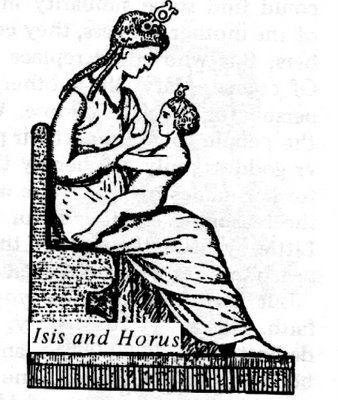
Image from piney.com

Belief in the Trinity.  In the same way, the Shema excludes the trinity of the Christian creed as a violation of the Unity of God.  Trinitarianism has at times been indistinguishable from tritheism; i.e. the belief in three separate gods.  To this were added later cults of the Virgin and saints, all of them quite incompatible with pure monotheism.  


Judaism recognizes no intermediary between God and man; and declares that prayer is to be directed to God alone, and to no other being in the heavens above or on earth beneath.


ITS POSITIVE IMPLICATIONS


Brotherhood of Man.  The belief in the unity of the Human Race is the natural corollary of the Unity of God, since the One God must be the God of the whole of humanity.  It was impossible for polytheism to reach the conception of One Humanity.  It could no more have written in the 10th chapter of Genesis, which traces the descent of all the races of man to a common ancestry, than it could have written the first chapter of Genesis, which proclaims the One God as the Creator of the universe and all that is therein.  Through Hebrew monotheism alone was it possible to teach the Brotherhood of Man; and it was Hebrew monotheism which first declared,


Thou shalt love thy neighbour as thyself’, 

and 

‘The stranger that sojourneth with you shall be unto you as the homeborn among you, and thou shalt love him as thyself’ (Lev. XIX,18,34).


Unity of the Universe.  The conception of monotheism has been the basis of modern science, and of the modern world-view.  Belief in the Unity of God opened the eyes of man to the unity of nature; that there is a unity and harmony in the structure of things, because of the unity of their Source’ (L. Roth).

  • A noted scientist wrote;  —‘The One, Sole God—conceived as the Supreme and Absolute Being who is the Source of all the moral aspirations of man—that conception of the Deity accustomed the human spirit to the idea of Reason underlying all things, and kindled in man the desire to learn that Reason’ (Dubois-Reymond).
  • Likewise, A.N. Whitehead declares that the conception of absolute cosmic regularity its monotheistic in origin.  And ‘every fresh discovery confirms the fact that in all Nature’s infinite variety there is one single Principle at work; that there is one controlling Power which—in the words of our Adon Olam hymn—is of no beginning and no end, existing before all things were formed, and remaining when all are gone’ (Haffkine).


Unity of History.  And this one God—Judaism teaches—is the righteous and omnipotent Ruler of the universe.  In polytheism, it was practically impossible to arrive at ‘the conception of a single Providence ruling the world by fixed laws; the multitude of divinities suggests the possibility of discord in the divine cosmos; and instills a sense of the capricious and incalculable in the unseen world’ (Farnell).  Not so Judaism, with its passionate belief in a Judge of all the earth, who can and will do right.  as early as the days of the Second Temple, the idea of the Sovereignty of God was linked with the Shema.


The Rabbis ordained that the words,

 ‘Hear, O Israel, the LORD is our God, the LORD is One,’


—should be immediately followed by “Blessed be His name, Whose glorious kingdom is for ever and ever”—the proclamation of the ultimate triumph of justice on earth.  Jewish monotheism thus stresses the supremacy of the will of God for righteousness over the course of history: ‘One will rules all to one end—the world as it ought to be’ (Moore).


The Messianic Kingdom.  The cardinal Jewish teaching of a living God who rules history has changed the heart and the whole outlook of humanity.  Not only the hallowing of human life, but the hallowing of history flows from this doctrine of a Holy God, who is hallowed by righteousness.

It is only the Jew, and those who have adopted Israel’s Scriptures as their own, —

  • who see all events in nature and history as parts of one all-embracing plan;
  • who behold God’s world as a magnificent unity;
  • and who look forward to that sue triumph of justice in humanity on earth which men call the Kingdom of God.
  • And it is only the Jew, and those who have gone to school to the Jew, who can pray ‘May His kingdom come.’
 

Highest among the implications of the Shema is the passionate conviction of the Jew that the day must dawn —

  • when all mankind will call upon the One God,
  • when all the peoples will recognize that they are the children of One Father.

Nine hundred years ago, Rashi commented as follows on the six words of the Shema:


‘He Who now is our God and is not yet recognized by the nations as their God, will yet be the one god of the whole world.  As it is written in Zephaniah III,9,

 I will turn to the peoples a pure language, that they may all call upon the name of the LORD, to serve Him with one consent;

and it is said in Zechariah XIV,9,

 And the LORD shall be king over all the earth; in that day shall the LORD be One, and His Name One.


A word must be added in regard to the two proof-texts cited by Rashi.  The first,

‘I will restore to the peoples a pure language, that they may call upon the name of the LORD,’

—must be reckoned among the most remarkable utterances of the Prophets.  It foretells a wonderful transformation of spirit that will come over the peoples of the earth. They are now only groping dimply after the true God, and stammering His praise.  But the time will come when they shall adore Him with a full knowledge of Him; and with one consent (lit. ‘shoulder to shoulder’, i.e. without any superiority of one over the other), they will form a universal chorus to chant His praise.  ‘The amazing thing about this prophecy is that it forsees the time when the curse of Babel will be removed from the children of men, and the confusion of tongues will end: one world-language, based on man’s moral and religious needs, will be the speech in the Kingdom of the spirit on earth’ (Sellin).


As to the words,

And the LORD shall be king over all the earth; in that day shall the LORD be One, and His Name One,’ 

they are combined with the Shema Yisroel in the Musaph Prayer of the New Year—one of the most solemn portions of the Jewish Liturgy.  They also form the last sentence of the Oleynoo prayer, and thus end every statutory Jewish service—morning, afternoon, and evening.  There could be no more fitting conclusion for the Jew’s daily devotions than this universalist hope of God’s Kingdom.


THE HISTORY OF THE SHEMA


The work of the Rabbis.  Who unveiled to the masses of the Jewish people the spiritual wonders enshrined in the Shema?  It is the immortal merit of the Rabbis in the centuries immediately before and after the common era, that these religious treasures did not remain the possession of the few, but became the heritage of the whole House of Israel.  The recitation of the Shema was part of the regular daily worship in the Temple.  They took it over to the Synagogue, and gave it central place in the morning and evening prayers of every Jew.  We may judge the important part it played in the rabbinic consciousness from the fact that the whole Mishnah opens with the question, ‘From what hour is the evening Shema to be read?”

Image from perfectmemorials.com

It is the Rabbis who raised the six words to a confession of Faith; who ordained that they be repeated by the entire body of worshippers when the Torah is taken out on Sabbath and Festivals; in the Sanctification (Kedusha) on these sacred occasions; after the Neilah service, as the culmination of the great Day of Atonement; and in man’s last hour, when he is setting out to meet His Heavenly Father face to face.  In this way, the Shema became the soul-stirring, collective self-expression of Israel’s spiritual being.  But even in the private prayer of the individual Jew, the Rabbis spared no effort to enhance the solemnity of its utterance.  It is to be said audibly, they ordained, the ear hearing what the lips utter; and its last word echod (‘One’) was to be pronounced with special emphasis.  All thoughts other than God’s Unity must be shut out.  It must be spoken with entire collection and concentration of heart and mind; the reading of the Shema may not be interrupted even to respond to the salutation of a king.  If the words of the Shema are uttered devoutly and reverently–the Rabbis taught–they thrill the very soul of the worshipper and bring him a realization of communion with the Most High.

 ‘When men in prayer declare the Unity of the Holy Name in love and reverence, the walls of earth’s darkness are cleft in twain, and the face of the Heavenly King is revealed, lighting up the universe’ (Zohar).


The Shema and martyrdom.  The unwearied national pedagogy of the Rabbis bore blessed fruit.  The Shema became the first prayer of innocent childhood, and the last utterance of the dying. It was the rallying cry by which a hundred generations in Israel were welded together into one Brotherhood to do the will of their Father in heaven; it was the watchword of the myriads of martyrs who agonized and died for the Unity ‘as the ultima ratio of their religion’ (Herford).  During every persecution and massacre, from the time of the Crusades to the wholesale slaughter of the Jewish population in the Ukraine in the years 1919 to 1921, Shema Yisroel has been the last sound on the lips of the victims.  All the Jewish martyrologies are written around the Shema.  The Jewish Teachers in medieval Germany introduced a regular Benediction for the recital of the Shema at the hour of ‘sanctification of the Name’; i.e. when a man is facing martyrdom.  It is as follows:

‘Blessed art Thou, O LORD our God, King of the Universe, who hast sanctified us by Thy commandments and bade us to love Thee with all our heart and all our soul, and to sanctify Thy glorious and awful Name in public.  Blessed art Thou, O Lord, Who sanctifiest Thy Name amongst the many.’

Numberless were the dire occasions when this Benediction was spoken.  One instance will suffice.  When the hordes of the Crusaders reached Xanten, near the Rhine (June 27,1096), the Jews of that place were partaking of their Sabbath-eve meal together.  The arrival of the Crusaders meant, of course, certain death to them, and the meal was discontinued.  But they did not leave the hall until the saintly R. Moses ha-Cohen first said Grace, enlarging the regular text with prayers appropriate to the awful moment.  The Grace was concluded with the Shema.


 Thereupon they went to the synagogue, where they all met with martyrdom.  It is such happenings, which decimated the Jewish communities in the Rhine region by massacre and self-immolation to escape baptism, that caused the contemporary Synagogue poet, Kalonymos ben Yehudah, to sing;

‘Yea, they slay us and they smite,

Vex our souls with sore affright;

All the closer cleave we, LORD,

To thine everlasting word.

Not a line of all their Mass

Shall our lips in homage pass;

Though they curse, and bind, and kill,

The living God is with us still.

We still are Thine, though limbs are torn;

Better death than life forsworn.

From dying lips the accents swell,

“Thy God is One, O Israel.”;

The bridegroom answers unto bride,

“The LORD is God, and none beside,”

And, knit with bonds of holiest faith,

They pass to endless life through death.’


The reading of the Shema indeed fulfilled the promise of the Rabbis that it cloths man with invincible lion-strength.  It endowed the Jew with the double-edged sword of the spirit against the unutterable terrors of his long night of suffering and exile.


Defence of the Unity.  The Rabbis not only trained Israel to the understanding of the vital significance of the Divine Unity; they also defended the Jewish God-idea whenever its purity was threatened by enemies from without or within.  They permitted no toying with polytheism, be its disguises ever so ethereal; they brooked no departure, even by a hair’s breadth, from the most rigorous monotheism; and rejected absolutely everything that might weaken or obscure it.  The fight against idolatry and paganism begun by the Prophets was continued by the Pharisees.  Abraham, the father of the Hebrew people, they taught, started on his career as an idol-wrecker.  In legends, parables, and discourses, they showed forth the folly and futility of idol-worship, and pointed to the infamy and moral degradation evidenced by the Roman deification of the reigning Emperor. Josephus records that, when Caligula ordered the symbols of his divinity to be erected in the Temple at Jerusalem, tens of thousands of Jews declared their readiness to be trampled to death under the heels of the Roman cavalry, rather than suffer the Jewish belief in the Unity of God to be outraged.

‘In the world-wide Roman Empire, it was the Jews alone who refused the erection of statues and the paying of divine homage to Caligula.  They thereby saved the honour of the human race, when all the other peoples slavishly obeyed the decree of the imperial madman’ (Fuerst).
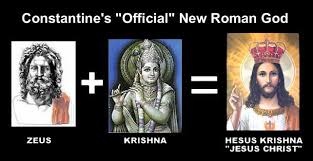


The Rabbis defended the Unity of God against the Jewish Gnostics, those ancient heretics who blasphemed the God of Israel, ridiculed the Scriptures, and asserted a duality of Divine Powers.  And they defended it against the Jewish Christians, who darkened the sky of Israel’s monotheism by teaching a novel doctrine of God’s ‘sonship’; by identifying a man, born of woman, with God; and by advocating the doctrine of a Trinity.  Said a Palestinian Rabbi of the 4th century: ‘Strange are those men who believe that God has a son and suffered him to die.  the God who could not bear to see Abraham about to sacrifice his son, but exclaimed “Lay not thine hand upon the lad,” would He have looked on calmly while His son was being slain and not have reduced the whole world to chaos!’


In the Middle Ages.  Throughout the Middle Ages, the Jewish Teachers continued the religious education of the people begun in earlier centuries.  They upheld the cause of pure Monotheism at the Religious Disputations in which thy were compelled to participate by the triumphant and all-powerful Church.  That portion of their defence of Judaism which found expression in literary form, like the ‘Book of Victory’ (Sefer Nizzachon), is of lasting value.  Such likewise is the book of Isaac Troki, a Polish Karaite of the 16th century, ‘the Defence of the Faith,’ which evoked the warm praise of Voltaire.  Of special importance is the work of the Jewish philosophers, whose effort represents a distinct enrichment of the world’s religious thinking.  Saadyah, Gabirol, Bachya, Hallevi, Maimonides purge the concept of God of all anthropomorphism, and vindicate the unity and uniqueness of Israel’s God-conception.  Solomon Ibn Gabirol, renowned alike as philosopher and Synagogue poet, begins his Royal Crown with the words: ‘Thou art One, the first great Cause of all: Thou art One, and none can penetrate—not even the wisest heart—the unfathomable mystery of Thy Unity.  Thou art One; Thy Unity can neither be lessened nor increased, for neither plurality nor change nor any attribute can be applied to Thee.  Thou art One, but the imagination fails in any attempt to define or limit Thee.  Therefore I said, “I will take heed to my ways, that I sin not with my tongue.”‘


In the present day.  The long and arduous warfare begun by the Prophets and continued by the Rabbis is not yet ended.  The unity of God has its antagonists int he present day, as in former ages.  Even advanced non-Jewish writers on religion are, as a rule, but hesitating witnesses to the Unity of God; and liberal Christian theologians wax quite eloquent in depicting the amenities of life under polytheism.  They plead that it helped to interfuse the whole life with ‘religion’; to intensify the ‘joy of life’ and delight int he world of nature; and that it made for religious tolerance.


On closer examination, these partisan claims collapse entirely.  As for tolerance, even enlightened Greek polytheism permitted three of the greatest thinkers of the Periclean age—Socrates, Protagoras, and Anaxagoras—to be put to death on religious grounds.  The Jews came into contact with Greek polytheism in its later stages.  But neither Antiochus Epiphanes, who attempted to drown Judaism in the blood of its faithful children, nor Apion, the frenzied spokesman of the anti-Semites in Alexandria, displayed particular tolerance.


Again, the alleged interfusion of the whole of life with ‘religion’ under polytheism did not save the votaries of Greek polytheism from moral laxity, licentiousness and inhuman behavior both in war and peace.  As to intensifying the ‘joy of life’—that ‘joy of life’, even among the Greeks, seems to have been the prerogative of the few.  Thus, Greek society was broad-based on unrighteousness, i.e. on human slavery; and in Greece ‘the animated tool,’ as Aristotle defined the slave, was denied all human rights.  It is, furthermore, difficult to see wherein the ‘joy of life’ consisted for the human sacrifices regularly offered by the heathen Semites and Slavs, Germans and Greeks.  In regard to the last-named, it is not generally remembered that we find traces of human sacrifice throughout the Hellenic world, in the cult of almost every god, and in all periods of the independent Greek states.  In the Roman Empire, this hideous accompaniment of polytheism continued till the fourth century of our present era; while in India the burning of widows was abolished only in the year 1840!


The other claims on behalf of polytheism are seen to be equally untenable.  Delight in the world of nature was not confined to the polytheists.  It could not have been alien to the people that produced the Song of Songs, and is therefore not the possession of heathenism alone.  No less a scientist and thinker than Alexander von Humboldt was shown that the aesthetic contemplation of nature only began when the landscape was freed from its gods, and men could rejoice in nature’s own greatness and beauty.


Various secular writers on religion go far beyond modernist theologians in their depreciation of monotheism.  Unlike those theologians, they do not halt between two opinions, and they know no hesitancies.  Ernest Renan ascribed the rise of belief in One God to the desert surroundings of the early Hebrews.  ‘The desert is monotheistic,’ he announced.  He omitted, however, to explain why, if so, the other Semitic desert-dwellers had remained polytheists; or why the primeval inhabitants of the Sahara, Gobi and Kalahari deserts were not monotheists.  Anti-Semites go further still.  In order to belittle Israel’s infinite glory as the Prophet of Monotheism, they decry the Unity of God as ‘a bare, barren, arithmetical ideal as merely ‘the minimum of religion’.  (It is strange that the alleged ‘minimum of religion’ should have given the Decalogue to the world; should have produced the Psalms, the book of devotion of civilized humanity; should have succeeded in shattering all idols, turning the course of history, and freeing the children of men from the stone heart of heathen antiquity.)  Some of these anti-Semites contrast the bountiful abundance displayed by Greece in its hundreds of gods and goddesses, by India in its thousands of fantastic deities, with the one God of Israel.  ‘Only one God—how mean, how meagre!’—they exclaim.  It would serve no purpose to repeat further strictures on monotheism on the part of men who deem that, in attacking Jews, one need be neither logical nor fair; and that one may say anything of Jews and Judaism so long as it covers them with ridicule.  But Truth is on the march; and the number of those thinkers is growing who recognize that ‘the Shema is the basis of all higher, ethical, spiritual religion; an imperishable pronouncement, reverberating to this day in every idealistic conception of the universe’ (Gunkel).


Conclusion.  ‘It was undeniably a stroke of true religious genius—a veritable prompting by the Holy Spirit, —to select as Prof. Steinthal reminds us, out of the 5,845 verses of the Pentateuch this one verse (Deut. VI,4) as the inscription for Israel’s banner of victory.


 Throughout the entire realm of literature, secular or sacred, there is probably no utterance to be found that can be compared in its intrinsic intellectual and spiritual force, or in the influence it exerted upon the whole thinking and feeling of civilized mankind, with the six words which have become the battle-cry of the Jewish people for more than twenty-five centuries’ (Kohler).

Need NOT Read – What did God do before He created?

Image from azquotes.com

Image from azquotes.com

[This post was in the back burner for 6 months; we’ve been reluctant to feature this book, you’ll understand why.  The hypothetical title should be enough to pique anyone’s curiosity to either invest or waste money in buying it.  Human nature being naturally curious, our added negative comment, instead of discouraging,  probably further strengthens the ‘come on’.  Remember,  Eve was drawn to the one ‘NO-NO’ tree in the garden of Eden in such a way she simply had to satisfy her urge to ‘know’ why it’s forbidden . . . and that’s the conundrum:  ‘know the NONO’ becomes a KNOW-Why-NO!  It is only humanly natural to want to know what is ‘behind curtain number 2’, what’s in a gift box, a package, a closed door, in short, the UNKNOWN.  That’s how and where scientific discoveries begin:  square one; ‘don’t know’. . . but will soon find out regardless of the cost, for good or ill.  That’s how all religions begin, the human urge to know an UNKNOWN INVISIBLE GOD that one senses or rationalizes EXISTS.  We will be curious how many of you, our readers, did succumb just like Eve, to this non-recommendation; remember, it’s not a prohibition.  What is your inclination? If you did not heed our suggestion on the title “Need NOT Read”, please let us know by leaving a comment on the box below or by writing us at sinai6000@gmail.com.  Now if you really care to know if we invested or wasted money on this book, if you have gained a sense of what Sinai6000 is all about by reading through our over 1000 articles, you need not wonder, right? Admin1.]


—————————-


BOOK SUMMARY


What did God do before he created?


A book as you have wished for long time! – A book which will simply blow you away.


A book for all people of good will who have for a long time searched for a coherent world view which is not at loggerheads with our previous knowledge like the numerous big and small religions.


Not suited for esoteric dreamers, no playground for mystical apparitions, but an upright clarity which is truly enlightening.


No snag, no double moral standards, no association, no sect, no guru, no membership fee.


The Bible of the new millennium which outlines in which direction humanity shall evolve itself in the coming time in order to be finally able to get out of the current absolutely poor form.


The author defies all those who stand in the way of this target, from the established religions via the financial sharks to the truly mighty ones on this planet – not the politicians as puppets but the powerful ones in the background.


A sweeping attack which nevertheless hits each bull’s eye. A genuine revelation which originates from an ordinary boy and was transformed by Martin Weise into a fiery speech or a technician’s factual description. Not everything contained in this book is destined for everyone, but everyone will find everything which he always wanted to know. A fantastic and unique but on the other hand captivatingly simple, coherent and logical world view. Quantum leaps in your database of knowledge are consequently not excluded. The creation as a real thought experiment of the one who always existed, with all the possibilities and meanders which still await their implementation. A God who is not absolutely flawless and who is heading for perfection by gaining experiences.


With plenty of divine humour the author explains the actual state and the target and does not forget to emphasize that he cannot prove anything and that you consequently do not have to believe him. The same applies to the Medicine of God where you do not have to believe anything because it can be proven in the next best case and therefore you may question everything as long as you can substantiate at least to some point that you are clearly more right.


This book answers many open questions which have been answered by hardly anyone in such a comprehensible and clear way. Moreover, it spares you the reading of 20 specialist books; it is thus a book not for scholars but for people like you and me.


The approaches concerning God and his creation are logically comprehensible but rather unconventional. There are many things which had not yet been written about in this way. The few genuine esoterics who can remember former reincarnations or even the stages between them confirm what Martin Weise has learned from his paranormal foster child Theo.


Even if your breath might be taken away sometimes as soon as your previous religions convictions are getting caught in the cross fire: do not believe this book but accept it as a hypothesis and afterwards test – slowly, step by step and very carefully. Then you might ask yourself what seems more probable to you:


Our current and rather distorted image of the past or the bright future of a new era.

A new book – unprecedented – provocative – unique – brilliant.


The second edition which is published mainly as an e-book complements the discoveries which are meanwhile five years old, with recent scientific findings and specifies them in a few points:


Two physicists have dared to carry out a backward calculation behind the big bang and, lo and behold, there existed (at least) one preceding universe which they had calculated with the help of the spatial structure in the fourth dimension. Many esoterics are unmasked as ignorant persons who are unable to cope with life and who try to veil their incapacity with plenty of nice sounding words.


Crop circle pictures liven up the whole book even though the latest dual crop circle with the face on the Shroud of Turin from August 2010 is unfortunately not contained in it. In exchange, the book describes in detail how the Vatican falsified the facts in order to keep its power structure further alive. That the church which is currently led by the Pope who is reigned by the forbidden high financial lodge P2 and the grand lodge of the Opus Dei is driven into the ground or into the abyss is a different kettle of fish. The motto “If you want to build a new temple, you need to demolish the old one first” applies here as well.


It has already been well known that the present nutrition sciences lead directly to illnesses. A novelty in this book is the representation of the entire climate hysteria. From the ozone hole which is allegedly caused by the CFCs, via the so called ecological cleaning – a drastic step backward! – or the substances which are on account of manipulated laboratory tests demonized as cancer-producing the global warming lie finally escalates into the CO2 hysteria.


These are nothing but lies and deception because carbon dioxide is heavier than air and only a share of three per mil exists in the earth atmosphere. Without carbon dioxide there would be no life on this planet and the reduction of carbon dioxide which costs several billions of Dollars is nothing but an enormous suicide programme.


If one views the predicted flooding disasters more closely from a scientific standpoint, they also would melt away like the icebergs which float around in the sea. Moreover, science has in the meantime discovered a “climate seesaw” which ensures a long term balance between north and south. After the real estate bubble and the banking crisis the climate bubble which has for a long time been overheated has now also burst when one dared to approach it armed with the truth.


Of course only a part of the readers will be interested to find out that the Bible of the Old Testament – as many had assumed long before – was retroactively written, rewritten or complemented accordingly a few centuries after the events described in it so that it actually only represents merely a book of poems for which the following statement applies: “Even if it is not the truth, it has at least been well thought out.”


Due to this back projection of beliefs over the millennia the Jews have succeeded in converting JHWH, a small provincial God including his wife, the Canaanite mother goddess Asherah, into the Almighty God, the creator of heaven and earth. And to such a dubious history is the chosen people referring.


In chapter 6 extensive space is devoted to the moral component of our monetary economy and the question of the compound interest curve. A separate subchapter 19 “The crash and the monetary system of the future” describes in detail how things shall continue after the crash that still inundates us in waves, so that humanity will in the truest sense be put back on the path to a promising future.


Everyone knows how things do not work but no one has yet revealed to us how things could work in a reasonable way. This book ventures an attempt to explain how the insights of Silvio Gesell about the nature of money could be put into the reality of a future monetary economy on the computer. It goes without saying that the powerful self-proclaimed world elite will put up a fierce struggle against this and that not a stone will be left standing. However, the idea that a “Golden Age” will rain down on us like April showers without this creative destruction is just some clueless esoterics’ illusion.

Hoy Searchers, need help? – May 2017

Image from PicturesCafe.com

Image from PicturesCafe.com

05/31/17 “their open their mouth place the wafer on your tongue biblical” – hmmm, I had to read this a few times before I figured out what the searcher is saying. It seems to relate to  communion rites as practiced by Catholics and other Christian churches/sects that use the round flat wafers.  The searcher wants to know if this practice is “biblical”.  We have no post that addresses this so we’ll just give the answer here.  No, communion is not biblical although it is taught that the practice is rooted in the “last supper” which Jesus supposedly celebrated with his 12 apostles, before his betrayal by Judas.  Our messianic teacher would correct that statement by connecting that supper with the Jewish Passover Seder and connect the symbolism of the food items (bitter herbs, hardboiled egg, salt, lamb shank, etc.) not so much to Israel’s liberation from Egyptian bondage but to liberation from spiritual bondage of believers in the Christian Savior.  More to this than we can say here, this being the last entry for the month of May.  So, searchers, see you in the June post!


05/22/17 “http://thejewishhome.org/counter/Psa2.pdf” – This is a back-up research featured in the post

Revisit: Psalm 2:12 “Kiss the Son” vs. “Yearn for purity . . .serve the Lord YHWH with fear”.  If you haven’t noticed yet, when searchers click a post buried in our over-1000 list of published articles, we check out if our position expressed way back when is still relevant to our position today.  ALL of the time, it still is, we have not changed our mind . . . except occasionally, we add even more arguments or ‘text-proofs

(not ‘prooftexts’) to bolster a point of contention.


05/20/17 “torah”


05/15/17 -“isaiah 66:23” –  Isaiah and Israel’s major and minor prophets all prophesy a time when the nations, including errant Israel, will recognize the God of Israel as the One True God, and that all people will worship Him.  We don’t have a post on this specific verse as yet, so for now we will just quote some of Israel’s prophets from ArtScroll Stone Edition of TANACH.  This Jewish Bible does not print the Tetragrammaton and instead, uses the circumlocution “HaSHEM”.  We believe in proclaiming the NAME for, how else will it be known?  So it is inserted wherever “HaSHEM” is mentioned.


Isaiah 66:23

“It shall be that at every New Moon and on every Sabbath all mankind will come to prostrate themselves before Me, says HaSHEM [YHWH].”


Malachi 1:11

For from the rising of the sun to its setting, My Name is great among the nations, and in every place [where offerings’ are presented to My Name], and also pure meal offerings; for My Name is great among the nations, says HaSHEM  [YHWH], Master of Legions.


Zechariah 14: 9,16

HaSHEM [YHWH] will be the King over all the land; on that day HaSHEM will be One and His Name will be One.

It shall be that all who are left over from all the nations who had invaded Jerusalem will come up every year to worship the King HaSHEM [YHWH], Master of Legions, and to celebrate the festival of Succos.


Habakkuk 2:14, 19

For the earth will be filled with knowledge of HaSHEM’s [YHWH] glory.

But HaSHEM is in His holy Sanctuary; let all the world be silent before him.


Zephaniah 3:9

For then I will change the nations [to speak] a pure language, so that they all will proclaim the Name of HaSHEM [YHWH], to worship Him with a united resolve.


Micah 4:1-2

It will be in the end of days that the mountain of the Temple of HaSHEM [YHWH] will be firmly established as the most prominent of the mountains, and it will be exalted up above the hills, and peoples will stream to it.  Many nations will go and say, ‘Come, let us go up to the Mountain of HaSHEM [YHWH] and to the Temple of the God of Jacob, and He will teach us of His ways and we will walk in His paths.’  For from Zion shall go forth the Torah, and the word of HaSHEM [YHWH] from Jerusalem.


05/15/17  “everett fox five books of moses pdf” – The translation of Everett Fox is our official translation in this website, supplemented by Robert Alter’s version with the same title.


05/11/17 –hearoyisrael.net – search terms entered for this specific website  lands on our website for understandable reasons; we featured its contents as well as its administrator quite extensively in 2013.  It appears the website is no longer active and the searcher(s) somehow find their way here.  Hopefully, they find answers to their specific search as well;  the place to start is the Site Map.  In connection with this, reproduced below is our answer to the same entries in April:


04/14/17  “benmara of hearoyisrael.net” –  2nd search entry, this time including  the pseudonym of the owner/administrator of the website; please refer to the  first entry below:


04/14/17  “hearoyisrael.net” We are not surprised that this search term landed on our website.  We  hosted the administrator/owner of the website hearoyisrael.net circa 2013, for about 6 months; he went by the pseudonym “Benmara” (Hebrew for “son of bitterness”); a unique individual in many ways, definitely one of a kind.  We featured his teaching as well as the unfinished bible translation he was working on which he titled “His Name Tanakh”.  That translation was what made us link up with him, we were looking for a version that used the Name YHWH.  None of the Jewish bibles would use it; The Artscroll TANAKH used “HaShem” (The Name) instead of the Tetragrammaton while the JPS (Jewish Publication Society) used the same term used in the Christian Old Testament, “LORD”.   In fact, as unfinished as the version was, we made bookform printouts and added it to the Sinai 6000 library, so we still have copies of it.  What made the version interesting to us at the time was the substitution of Hebrew names, titles, words in the text, similar to the Messianic Jewish Bible except the latter was really a Christian Bible in Jewish Dress”.  It appears Benmara was not able to continue maintaining his website after 2013,  actually and admittedly a good resource for non-Rabbinical and  non-Christian interpretation of the Tanakh, from a different perspective of a self-taught and original Scripture-interpreter . We have some posts that still mention him and his work. We believe that as soon as he finds a patron who will support his website, both he and his website will be back on the world-wide-web.


05/06/17 – SabbathSchool” – We do not have a post about a “sabbath school” but we do have articles about the Sabbath and of course, the Sinaite’s Liturgy for every Sabbath of the year.  Please go to Site Map

and scroll down to the category A Sinaite’s Sabbath Liturgy.


As for posts on the Sabbath, reading these are virtually like attending “sabbath school”:


05/06/17  “the sermon on mount sinai” – There was no sermon on Mount Sinai even if our title used that word; what happened on Sinai was Revelation from the Creator, God of the Universe, Who made a covenant with a people/nation He formed through the lineage of Abraham-Isaac-Jacob.  This post explains the difference:  Revisit: The Sermon on Sinai vs. The Sermon on the Mount


———————-


Nobody notices and no one could care less, about what? The title of this post has undergone a few edits and we’ve made yet another, this time, to reflect our language/dialect’s word to call attention:  “Hoy”,  a typical Tagalog word, particularly when you can’t remember or don’t know someone’s name; convenient fall-back meaningless word just like “kwan” (another Tagalog word for anything you can’t remember).  So from “Oy searchers”, it’s now “Hoy searchers!” and perhaps we should say, “need help about kwan?”


That trivia out of the way, have you checked out  Site Map, which has over 1000 articles posted under specific categories?  If you don’t find what you need under the titles, enter a search term which will be immediately addressed in this post.


While we’re waiting for search entries, here are articles that give you an idea of what to expect in this website:

————————–


Welcome, dear visitor to Sinai 6000!  If you have not found the information you’re seeking on our SITEMAP, this post  is intended to help searchers who are not familiar with our format; we check search term entries daily and whether or not our web visitor found articles that address their query, we post all existing articles that might help.  This way, others who check out this post learn more information they might not have been aware of nor were seeking to know about.  This search aid used to be fuller and busier in the past; but of late, less and less search terms end up on our website.  Still, we continue it sometimes as a way of blogging current developments or new insights we have not touched on in our long formal articles.


Q: What is the Sinaite’s stand on “prophecy”?

Image from Life, Hope & Truth

Image from Life, Hope & Truth

[Sinaites have been asked about our stand on “prophecy”; instead of writing a new article on it, here’s an excerpt from one of the most frequently visited posts: 

 Here’s the unedited ending of the recommended link, lengthy enough to merit an independent post.  Unedited, because we have not changed our position on biblical “prophecy” since the article was first posted in 2015.—Admin1].

——————————-


This is Sinai 6000’s position on Prophecy:


It is our understanding and reading of the Prophetic books — Neviim —that —

  • there was no “new” vision and knowledge of God by the time of the Prophets—
  • rather, there was a reiteration of all that the God on Sinai had already revealed to the first generation of Israelites and gentiles mixed among them,
  • and reiterated to the 2nd generation that entered the Land.

What might have been “new” are the judgments that were to fall on Israel and Judah if they refused to obey . . . and worse, if they did not repent:

  • judgments of being overtaken by gentile powers
  • and being exiled to lands that practiced idolatry.
  • In effect, ‘give them what they want’, the gods of the nations, but at what cost!

And it is not as though these warnings were not already embedded in the five books of Moses, reiterated just before the 2nd generation born in the wilderness were about to enter and conquer the Land with Joshua and Caleb, all repeated in Deuteronomy with new applications relating to living in the Land.


YHWH had revealed Himself and His Way of Life to Israel and repeatedly emphasized the importance of their keeping the Covenant and obeying His Torah.


For what? to keep this way of life and the Name of their God exclusively to themselves, to Israel only?

No, on the contrary . . .

  • to start the Torah movement . . .
  • a way of living,
  • YHWH’s guidelines for Israel and the nations.

But in His wisdom, and knowing clueless humanity is prone to worshipping man-made gods, He had to start with —

  • an identifiable people
  • chosen’,
  • who will be different,
  • be other’,
  • be His ‘servant’,
  • His ‘son’,
  • be His model community
  • where individuals are ‘other’-centered instead of ‘self’-centered.

And most of all, direct all nations to Himself, the One True God, the Self-revealing God on Sinai.  That is the objective and purpose of having a ‘chosen’ among vast humanity.  How do we know?  He says so!


Deuteronomy 28:9-10


YHWH will establish you to be a people holy to him,

as he swore to you,

when you keep the commandments of YHWH

your God and walk in his ways.

10  And when all the peoples of the earth

see that the name of YHWH is proclaimed over you,

they will hold you in awe.

. . . 12 and by blessing all the doings of your hand;

you will lend to many nations.


After their dismal track record of repeated disobedience as their own Historical-Scriptures/Kings-Chronicles attest to, Israel’s Prophets were merely sent to redirect them back to YHWH and His Torah.


Like a firstborn son, Israel was taught from the start but unfortunately learned the hard way through disobedience and resulting judgment,  and reaped curses for disobedience”.


Eventually, to recover and retain their Covenant legacy after they had lost their Land and Temple though not their God and His Torah, the religious remnant of Israel started over with a strict religion “Judaism.”  Indeed the pendulum had swung the other way, perhaps to an extreme but indeed, ‘better safe than sorry’.


Deuteronomy 30:17-19

17 Now if your heart should face-about,

and you do not hearken

and you thrust-yourself-away

and prostrate yourselves to other gods,

and serve them,

18 I announce to you today

that perish you will perish, 

you will not prolong days on the soil

that you are crossing the Jordan to enter,

to possess.

19  I call as witness against you today

the heavens and the earth:

life and death I place before you

blessing and curse

now choose life, in order that you may stay alive,

you and your seed,

20 by loving YHWH your God,

by hearkening to his voice and by cleaving to him,

for he is your life and the length of your days,

to be settled on the soil

that YHWH swore to your fathers,

to Avraham, to Yitzhak and to Yaakov,

to give them!


Why do Christians call Israel’s strict observance of YHWH’s Torah as “legalism”?   Because the Torah was “done away with”,  as in they are “under grace and not law”?  Really?  Obedience to Torah is “legalism”?   Is YHWH’s Torah a “burden,”  a “load,” a “yoke around one’s neck”? Would the all wise Creator Self-revealing God give instructions impossible to obey?


To the Christian, yes, because their NT scriptures had declared it thus.  The culprit?   ‘Thus saith Paul of Tarsus’ whose teachings in his epistles dominate Christian theology.


Where can one find ‘Thus Saith the LORD YHWH?’  


Indeed,

to the Law and the Testimony!’ 

. . . if they speak not according to this word, it is because there is no light in them.


Isaiah 8:

20  Should not a people inquire of their own God? . .

21  I swear by the Torah and the teaching. . .


Why not go back to basics, the claimed “foundation” of NT, the original Sinai revelation, the TORAH!  As long as Israel did not add to the original Torah, they are simply obeying the God Who chose them as His servant/son/light to the nations.


What part of “HEAR”

don’t we still understand,

oh Jew, oh Gentile?


Sig-4_16colors

logo-e1422801044622

"The Moment at Sinai" — An Essay by Abraham Joshua Heschel

51+Z6LNg1-L._SY346_[First posted 2012; one of 40 essays written by Abraham Joshua Heschel (AJH) circa 1953, in a collection edited by his daughter Susannah Heschel, titled:  Moral Grandeur and Spiritual Audacity;  another excellent MUST READ/MUST OWN for serious students of the “Bible”.


What AJH calls “the Bible” is only the TNK, the Hebrew Scriptures, not the Christian Bible, and not even its “Old Testament”.  Consider that as a Jewish philosopher, he addresses primarily the people he proudly belongs to, though gentiles have much to learn and absorb from his wisdom and unique understanding of what happened on Sinai. In fact, this is the other book that was instrumental in our decision to connect with the Revelator on Sinai and choose the revelation there (Torah) not only as the main source of spiritual illumination and redirection of our way of life, but as the only source for “the very words of God”, at least the One we recognize as God—YHWH.


Where does an ex-Christian go when you don’t want to join Judaism, but still be focused on the Hebrew Scriptures, particularly the Torah of YHWH? Our chosen recourse?  Sinai, a neutral place chosen by the Creator to reveal Himself to a ‘mixed multitude’. Think of yourself among the ‘mix’, the gentile among Israelites, the odd-man out, but represented nevertheless on that crucial moment in biblical-historical time. Non-Israelite slaves took advantage and joined the exodus, leaving the place of bondage and idolatry to wander in the wilderness toward a Liberator who gives instructions on how to live in the world He created. The Covenant was with Israel, but the prescribed Way of life is for all nations. Gentiles represented the ‘stranger among you’ in Numbers 9:


 There shall be one law for you,

whether stranger or citizen of the country.”


The excerpts have been reformatted and highlighted for this post; consider it as though you’re reading through a Sinaite’s notes from a lecture. [EF] is Everett Fox, translator of our choice, The Five Books of Moses.—Admin1.]

 
Image from www.kingjamesbibleonline.org

Image from www.kingjamesbibleonline.org


The Bible reflects its divine as well as its human authorship;


    • expressed in the language of a particular age, it addresses itself to all ages;
    • disclosed in particular acts, its content is everlasting.  


The word of God is in time and in eternity.  

    • It preceded the creation of the world, the beginning of time,
    • and is given to us in the setting of time.
    •  It is therefore continually in need of new understanding.


The Bible is not a system of abstract ideas but a record of happenings in history.  Indeed, some of the biblical maxims and principles may be found or could have been conceived elsewhere.


  •  Without parallel in the world are the events it tells about and the fact of taking these events as the points where God and man meet.
  •  Events rather than abstractions of the mind are the basic categories by which the biblical man lives; they are to his existence what axioms are to measuring and weighing.  Man does not steal because of a timeless imperative but because he was told by God not to steal; the Sabbath is kept not because it is of timeless value—because it is good to rest—but because God commanded us to rest.

————————————

The God of the philosopher is a concept derived from abstract ideas; the God of the prophets is derived from acts and events.  

————————————–


The root of Jewish faith is, therefore, not a comprehension of abstract principles but an inner attachment to those events;  to believe is to remember, not merely to accept the truth of a set of dogmas.  


Our attachment is expressed—

    • by our way of celebrating them,
    • by the weekly reading of the Pentateuch rather than by the recital of a creed.  

To ignore these events and to pay attention only to what Israel was taught in these events is like tearing out a piece of flesh from a living body.


AN AESTHETIC experience leaves behind the memory of a perception and enjoyment; a prophetic experience leaves behind the memory of a commitment, not only of a perception.  

  • Revelation was not an act of enjoyment.  God spoke and man not only perceived but also accepted the will of God.  Revelation lasts a moment, acceptance continues.
  • Biblical revelation must be understood as an event, not as a process.   What is the difference between process and event?
    • A process happens regularly, following a relatively permanent pattern; an event is extraordinary, irregular.
    • A process may be continuous, steady, uniform; events happen, intermittently, occasionally.  The term “continuous revelation” is as logical as the term “a round square.”
    • Processes are typical; events are unique.
    • A process follows a law; events create a precedent.
    • Nature is made up of processes—organic life, for example, may be described as consisting of the processes of birth, growth, and decay; history consists primarily of events . . . .
  • The term “event” is a pseudonym for “mystery.”  
    • An event is a happening that cannot be reduced to a part of a process.
    • It is something we can neither predict nor fully explain.  
    • To speak of events is to imply that there are happenings in the world that are beyond the reach of our explanations.  
    • What the consciousness of events implies, the belief in revelation claims explicitly, namely, that there is a voice of God in the worldnot in heaven or in any unknown sphere—that pleads with man to do His will.
  • What do we mean by “the world”?
    • If we mean an ultimate, closed, fixed, and self-sufficient system of phenomena behaving in accord with the laws known to us, then such a concept would exclude the possibility of admitting any super-mundane intervention or penetration by a voice not accounted for by these laws.  Indeed, if the world as described by natural science is regarded as the ultimate, then there is no sense in searching for the divine which is by definition the ultimate.  How could there be one ultimate within the other?

The claim of the Bible is absurd, unless we are ready to comprehend that the world as scrutinized and depicted by science is but a thin surface of undisclosed depths.  Order is only one of the aspects of nature; its reality is a mystery given but not known.  Countless relations that determine our life in history are neither known nor predictable.  What history does with the laws of nature cannot be expressed by a law of nature.


Revelation is not an act of interfering with the normal course of natural events but the act of instilling a new creative moment into the course of natural events.


  • An event . . .  retains its significance even after it has passed;  it remains important because and regardless of its effects.   Great events, just like great works of art, are significant in themselves.  Our interest in them endures long after they are gone.
  • The decisive event in the spiritual history of our people was the act that occurred at Sinai.  It had a two-fold significance.
    • One in opening up a new relationship of God with man, in engaging Him intimately to the people of Israel,
    • and second in Israel’s accepting that relationship, that engagement to God.
  • It is an event in which both God and Israel were partners.  
    • God gave His word to the people, and the people gave its word of honor to God.
    • That word of honor was not given by one generation alone.
    • All generations of Israel were present at Sinai.
    •  It was an event that happened at a particular time and also one that happened for all time.

“Not is it with you only that I make this sworn covenant, but with him who is not here with us this day as well as with him who stands here with us this day before the Lord our God” (Deuteronomy 29:13-14).

[EF]:  “Not with you-alone

do I cut this covenant and this oath,

but with the one that is here, standing with us today

before the presence of YHWH our God,

and (also) with the one that is not here with us today. 


    •  It was an act of transcending the present, history in reverse: thinking of the future in the present tense.  
    • It was a prophetic foresight, for to be a prophet is to be ahead of other people’s time, is to speak of the future in the present tense.

The contemporaries of Moses succeeded in transcending the present and committed subsequent generations to follow the word of God, because of their ability to think of life in terms of time.  

    • They had no space,
    • they had no land,
    • all they had was time
    • and the promise of a land.

Their future depended upon God’s loyalty to His own promise, and their loyalty to the prophetic events was the essence of their future. . . .


The Bible teaches that life without a commitment is not worth living, that thinking without roots will bear flowers but no fruit.  Our commitment is to God, and our roots are in the prophetic events of Israel.


  • In the light of the Bible, history, then, is not a mere succession of faits accomplis, things done and no longer worth arguing against.
  • In the eyes of God nothing is ever lost; the past is always present.
  • Though events do not run according to a predestined plan, and though the ultimate goal can never be expressed in one word or in words at all, we believe that history as a whole has a meaning that transcends that of its parts.
 

We must remember that God is involved in our doings, that meaning is given here and now.  Great are man’s possibilities. For time is but a little lower than eternity, and history is a drama in which both man and God have a stake.  In its happenings we hear the voice as well as the silence of God.


What is the spirit of the Bible?


  •  Its concern is not with the abstract concept of disembodied values, detached from concrete existence.  
  • Its concern is with man and his relation to the will of God.  
  • The Bible  is the quest for the righteous man, for a righteous people.  

“The Lord looks down from heaven upon the children of man, to see if there are any that act wisely, that seek after God.  They have all gone astray, they are all alike corrupt; there is none that does good, no, not one” (Psalms 14:2-3).


  • To the discerning eye the incidents recorded in the Bible are episodes of one great drama:
      • the quest of God for man,
      • His search of man,
      • and man’s flight from Him.

———————————–


Judaism is a way of thinking, not only a way of living.  And this is one of its cardinal premises:  


The source of truth is found not in “a process forever unfolded in the heart of man” but in unique events that happened at a particular moment in history.  

There are no substitutes for revelation, for prophetic events.

 Jewish thought is not guided by abstract ideas, by a generalized morality.

At Sinai we have learned that spiritual values are not only aspirations in us but a response to a transcendent appeal addressed to us.  Greek philosophy is concerned with values; Jewish thought dwells on mitzvot.


The movement of revelation must not be separated from the content of revelation.  Loyalty to what was uttered in the event is as essential as the belief in the reality of the event.  The event must be fulfilled, not only believed in.  


Revelation is the beginning,

our deeds must continue,

our lives must fulfill it. 


Yet we must not idolize the moment or the event.  The will of God is eternal, transcending all moments, all events, including acts of revelation.  


The significance of time depends upon what is done in time in relation to His will.  


The moment at Sinai depends for its fulfillment upon this present moment, upon all moments.  


Goldencalf (1)

 The

tablets 

are

broken

whenever 

the

Golden

Calf

is

called

 into

being. 


We believe that every hour is endowed with the power to lend meaning to or withhold meaning from all other hours.  No moment is as a moment able to bestow ultimate meaning upon all other moments.  No moment is the absolute center of history.


Time is a circle whose center is everywhere and whose periphery is nowhere.


Abraham Joshua Heschel

1953