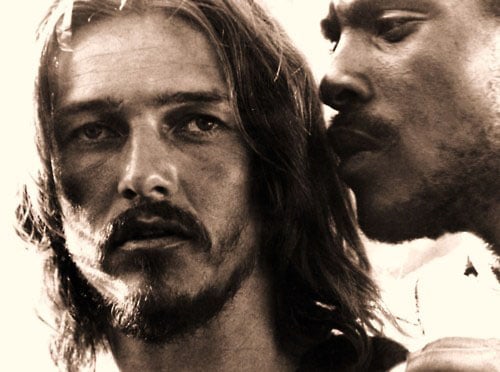
"Who killed Jesus?"

[This is from Rabbi Schmuley Boteach’s Kosher Jesus.  Please check out previous posts from this MUST READ/MUST OWN resource; we’re sharing excerpts. In this chapter, Rabbi explains the roots of antisemitism and guess how big an influence is the Christian Scriptures’ depiction of the Jews who have been labeled ‘Christ-killers.’ . Reformatting and highlights added.—Admin1.]


Chapter 9: The Fantasy of the Evil Jews


Though Jesus did not believe himself divine, he did believe that he was the messiah.  This meant he thought he was the long-promised messianic king that would restore Jewish political independence by throwing off the yoke of an external oppressor.  This mission of political liberation – the creation of an independent Jewish nation capable of worshipping their God without the obstruction of an external oppressor -is the first and most important role of the messiah.  For believing this, he paid the highest price and was crucified for political insurrection.  Jesus joined the ranks of his people’s martyrs, millions of whom have been prepared to die for their faith and the welfare of their people throughout history.

Once we agree that Jesus was a martyr, the more difficult question is this one:  Who killed Jesus?


No question defines the Jewish-Christian relationship more than this one, for the Jews have long borne the brunt of being falsely listed in answer.  The anti-Semitic claim that the Jews killed Jesus became the wellspring from which Christian anti-Semitism flowed, and its root is in the text of the Gospel itself.  Just imagine the enormity of the charge.  The Jews are accused of being possessed of such infinite demonic power that they were capable of murdering God himself, snuffing out the ultimate source of life and light.  Only a truly savage and dark nation, enemies of the deity and all holiness, could be capable of even attempting—let alone succeeding–exterminating the Creator.
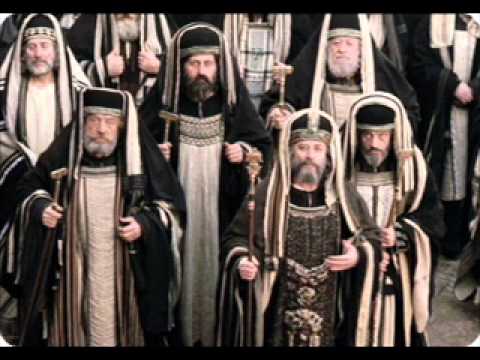
 
Leaven of the pharisees - Image from www.youtube.com

Leaven of the pharisees – Image from www.youtube.com

Portions of the New Testament seem to suggest quite clearly that the Jews in Jesus’ time possessed such deep, demonic power that they were reading, willing and able to murder God’s incarnate.  From this allegation emerged the image of Jews and Judaism as agents of Satan, sworn enemies of God.  In the long annals of history, has any nation or individual ever been accused of something more serious than killing the source of all that is?  Just how monstrous must one be to snuff out the very light of the universe, plunging humanity into a hell of eternal darkness?  All the anti-Semitic caricatures of the Jews manipulating banks and the media and intent on conquering the world itself stem from this charge.  The Jews are jealous of God and His power, and wish to claim all for themselves.  They are voracious and insatiable.  They will destroy and consume all who stand in their way, including the Creator Himself.  The damage done by this abominable slander over the past two millennia is so great that it is simply too large to accurately reckon.


The truth is that the Jews did not kill Jesus, nor did they want him dead.  The Roman government did, and it was they who dispatched him with great alacrity once he was perceived as a threat.


The Myth that the Jews Killed Jesus


The myth that the Jews killed Jesus has become so ingrained in our culture that even many contemporary Christians accept it as axiomatic.  In the introduction to  Our Hands are Stained with Blood, a book that proposes to condemn anti-Semitism, my friend the Jewish convert to Christianity, scholar Dr. Michael Brown, with whom I have debated Christianity and Jesus in high-profile debates more than twenty times, can’t help but write, “I am convinced that international Christian repentance for the Church’s past (and present) sins against the Jews will lead to international Jewish repentance for Israel’s past (and present) sins against Jesus.

This is simply amazing.  Even in a book written to condemn historical Christian Jew-hatred, the author thinks nothing of condemning Jewish “sins” against Jesus, that is, the Jews’ rejection of Jesus and their turning him over to the Romans and demanding that he be crucified.  Brown believes Jew still bear the blame for Jesus’ death, but nevertheless Christians should not be anti-Jewish.  His reasoning posits first that the perception of anti-Semitism prevents other Jews from potentially converting to Christianity.  And second, even if the Jews are guilty of killing Jesus, they must be forgiven and brought to a belief in Jesus, since Jesus ultimately laid down his life for the atonement of human sin and was therefore complicit in the Jewish act of slaughter.  This is truly a disheartening—and self-defeating– line of thinking.

Jacques-Benigne Bossuet, the influential seventeenth-century French orator and bishop, said the following about Jewish culpability in the death of Jesus:

 “I hear the Jews crying out.  ‘His blood falls on us and our children’ (Matthew 27:25).  There it shall be, a cursed race! Your prayer will be answered more than amply.  His blood will pursue you and your last offspring until the Lord, grown tired of His vengeance, will remember at the end of time, your miserable remnants . . . According to God’s hidden counsel, the Jews will survive in the midst of the nations . . . banished from the Promised Land, having no land to cultivate, slaves wherever they are, without honor, without freedom, without the appearance of a people.”


Bossuet’s brand of theological justification for inflicting suffering and slaughter on Jews has survived into the modern era.  It served as the principal justification for the Catholic Church’s refusal to formally recognize the State of Israel until 1993.  The Church could not accept a reconstituted Jewish sovereignty because their world-view relied, even in the modern age, upon imagining the Jews to be accursed, dangerous, outsiders, rebels, sneaks, and a host of other smears that allowed the Church to orient itself as the center of the good and right world.


Many anti-Semitic commentators would not be satisfied until the Jews of today express sorrow or shame for what, in their eyes, the Jews of antiquity had done.  Ernest Renan, the French Orientalist and author of Life of Jesuswrote,

“According to our modern ideas, there is no transmission of moral demerit from father to son; no one is accountable to human or divine justice except for that which he himself has done . . . But nations, like individuals, have their responsibilities, and if ever crime was the crime of a nation, it was the death of Jesus.” For Renan, the Jews as a nation can and do have the eternal mark of guilt upon them.  Yet, somehow, the modern Christian cannot blame the individual modern Jew.  In response, Renan enunciates a strange paradox as if saying to the Jew, “You as yourself are blameless, but you in your heritage and identity are demonic.”

Renan like so many others, wants Jews to feel ashamed and guilty.  He wants the individual Jew to renounce Judaism for Christianity, and by doing so presumably escape the blame for Jesus’ execution.
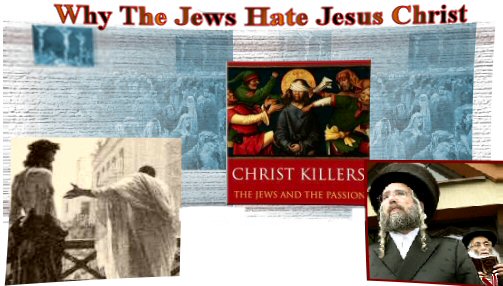
 
Image from www.realjewnews.com

Image from www.realjewnews.com


This line of thinking is not a modern innovation—it can be found in the words of one of the greatest Christian Church fathers, Augustine of Hippo.  In his poisonous words,

“The Jews held Jesus, they insulted him:  the Jews bound him; they crowned him with thorns, dishonored him by spitting on him; they scourged him; they heaped abuse upon him; they hung him on a tree; they pierced him with a lance.”

This quotation became popular in Eastern sermons in churches, and these very sermons often led to pogroms in Jewish communities.


Augustine wrote extensively about the fate of the Jews on earth.

“The Church admits and avows the Jewish people to be cursed,” he wrote in a letter, “because after killing Christ they continue to till the ground of an earthly circumcision, an earthly Sabbath, an earthly Passover, while the hidden strength or virtue of making known Christ, which this tilling contains, is not yielded to the Jews while they continue in impiety and unbelief, for it is revealed in the New Testament.  While they will not turn to God, the veil which is on their minds in reading the Old Testament is not taken away . . . the Jewish people, like Cain, continue tilling the ground, in the carnal observance of the law, which does not yield to them its strength, because they do not perceive in ti the grace of Christ.”


He manages to be incredibly cruel even when he urges Christians not to outright murder Jews:

 “Not by bodily death shall the ungodly race of carnal Jews perish.  For whoever destroys them in this way shall suffer sevenfold vengeance, that is, shall bring upon himself the sevenfold penalty under which the Jews lie for the crucifixion of Christ.  So to the end of the seven days of time, the continued preservation of the Jews will be a proof to believing Christians of the subjection merited by those who, in the pride of their kingdom, put the Lord to death.”


According to this vision the Jews should not be killed so that their presence can serve as testimony to God’s disfavor:  they will forever live their lives as second-class citizens.


John Chrysostom (ca. 344-407 CE), a saint in the eyes of the Catholic Church, became one of the significant early instigators of intense hatred against Jews.  He declared:

No Jew adores God! . . . The Jews themselves are demons . . . In their synagogue stands an invisible altar of deceit on which they sacrifice not sheep and calves but the souls of men . . . They live for their bellies, they gape for the things of this world, their condition is not better than that of pigs or goats because of their wanton ways and excessive gluttony.  They know but one thing: to till their bellies and be drunk . . . Shun the evil gatherings of the Jews and their synagogues, both in the city and in the suburbs, because these are robbers’ dens and dwellings of demons . . . The Jews are more savage than any highwaymen.


According to this so-called saint, the Jews possess magical powers and perform strange demonic rites of an almost cannibalistic nature.  The people who raised and listened to Jews, says Chrysostom, are utterly earthly and animalistic.  Their code of living espouses a conduct of crime and bestial behavior.  Chrysostom’s scathing rhetoric makes his message crystal clear: Fear the Jews.   Fear them to your core. Fear them, hate them, and do not doubt that they will kill you to satisfy themselves.  He transforms the Jews into something out of his personal fantasy of evil and excess, a living blight upon the earth that his personal Jesus came to save.


Even Thomas Aquinas (1225-1274), arguably the greatest Catholic intellectual of all time, preached that the Jewish people were damned for killing Jesus, and could only be saved by renouncing their faith and accepting baptism.

 “They should be compelled by the faithful, if at all possible to do so,” Aquinas wrote, “so that they do not hinder the faith, by their blasphemies, or by their evils persuasions, or even by their open persecutions.  It is for this reason that Christ’s faithful often wage war with unbelievers.”


If anything, the Protestant Reformation made the situation even worse.  In his work On the Jews and Their Lies, Martin Luther preached:

[Christians should] set fire to their synagogues or schools and to bury and cover with dirt whatever will not burn, so that no man will ever again see a stone or cinder of them . . .  .I advise that [Jewish] houses also be razed and destroyed.  For they pursue in them the same aims as in their synagogues. Instead they might be lodged under a roof or a barn, like the gypsies.  This will bring home to them the fact that they are not masters in our country as they boast, but that they are living in exile and in captivity, as they incessantly wail and lament about us before God.


By the time of Hitler’s Holocaust, two thousand years of Christian hatred toward Jews made it easy for Europeans to look the other way, or even actively assist as Nazis slaughtered the Jews en masse.  Rabbi Michael Dov-Ber Weissmandel escaped from deportation to Auschwitz and approached the papal nuncio for help in stopping the extermination of Slovakian Jews.  The Catholic archbishop replied, “There is no innocent blood of Jewish children in the world.  All Jewish blood is guilty.  You have to die.  This is the punishment that has been awaiting you because of that sin [the murder of Jesus].”


The Catholic Church’s tragic refusal at the papal level to make a public stand and commit itself to saving Jewish lives during Hitler’s Holocaust was all too consistent with the Church’s historical indifference to Jewish suffering.  Pius XII was pope of the worldwide Catholic Church from 1939 to 1958, and was the first foreign dignitary to reach an accord with Nazi Germany after Hitler took power.  It would be a stretch to refer to this deeply anti-Semitic pope as “holy” father.  British journalist John Cornwell chronicled the life of Pope Pius in his international best seller Hitler’s Pope. Before ascending the papacy, Pius then Cardinal Eugenio Pacelli, signed a concordat with Nazi Germany; this was seven months after Hitler had been appointed chancellor of Germany.  As papal nuncio, Pacelli directly negotiated with Hitler, and HItler praised Pacelli’s treaty for being “especially significant in the urgent struggle against international Jewry.”


His papal record was just as tragic.  After Pacelli was named pope in 1939, he shelved a papal encyclical condemning the outbreak of anti-Semitism in Germany that had been prepared by his predecessor, Pius XI.  He refrained from condemning the Holocaust during the six years in which six million Jews, and millions of others in Europe, were systematically detained, deported, incarcerated, and exterminated.  In 1942, he refused to sign an Allied condemnation of Germany’s systematic destruction of European Jews despite extensive pressure to do so.  He actively flattered Hitler, courting his favor, writing him letters in which he praised him, referring to him as “the illustrious Hitler.”  he also saw fit to turn Hitler’s birthday into a de facto holiday.  As Cornwall writes,

“On April 20,1939, at Pacelli’s express wish, Archbishop Orsenigo, the nuncio in Berlin, opened a gala reception at Hitler’s fiftieth birthday. The birthday greetings thus initiated by Pacelli immediately became a tradition. EAch April 20 during the few fateful years left to Hitler and his Reich. Cardinal Bertram of Berlin was to send ‘warmest congratulations to the Fuhrer in the name of the bishops and the diocese in Germany,’ to which he added ‘fervent prayers which the Catholics of Germany are sending to heaven on their altars.;”


In December 2004, evidence surfaced that Pius had specifically ordered Church authorities not to return Jewish children to their rightful guardians after World War II had ended.  In October 1946, Jewish parents came knocking on Church doors to retrieve children secreted away in Catholic guardianship during the Holocaust.  In response, the Vatican sent its instructions to the papal nuncio  in France, Cardinal Angelo Roncalli, who later became Pope John XXIII. Roncalli was a man of known compassion for Jews—he had been working to reunite Jewish children hidden in Catholic institutions with their parents, relatives, and Jewish organizations.  However, this papal letter ordered Roncalli to desist:

 “Those children who have been baptized cannot be entrusted to institutions that are unable to ensure a Christian education.”


Pope Pius insisted on depriving Jewish parents of their own children.

“If the children have been entrusted [to the Church] by their parents, and if the parents now claim them back, they can be returned, provided the children themselves have not been baptized.  It should be noted that this decision of the Congregation of the Holy Office has been approved by the Holy Father.”


The Church’s authoritative Congregation deliberated and decided on this monstrous policy of refusing to returned baptized Jewish children to their parents.  And the pope himself personally approved it.


Robert Katz’s The Battle for Rome  convincingly demonstrates that Pius collaborated with the Nazi government in their occupation of Rome and did nothing to stop the rounding up of Jews for extermination at Auschwitz.  Plus was informed eery step of the way as the Germans, on October 16,1943, collected more than one thousand Jews of Rome, nearly all of whom would perish in gas chambers a few days later at Auschwitz.  A special SS contingent was brought in for the roundup.  Many of them had never before seen the great city, and they used this action as a partial tourist excursion.  They brought the Jews to St. Peter’s Square, and herded them into open trucks parked not more than three hundred feet from Pius’s window.  Plus offered no protest and upheld a scandalous policy of strict neutrality while the Germans in his diocese literally turned the people of Jesus into ash.


Plus granted a secret audience to Supreme SS Politzeiführer Wolff, Himmler’s former chief of staff, serving in 1943 as the chief of German persecution apparatus in occupied Italy.  The meeting took place in strict confidence, and Wolff came dressed in disguise.  Years later, Wolff said of the meeting:

“From the Pope’s own words I could sense the sincerity of his sympathy and how much he loved the German people.”


But while he may not have prized the lives of Jews, Pius held the bricks and mortar of his churches in high esteem. As the British and American armies geared up for a massive offensive in the spring of 1944, Pius suddenly found his voice.  He condemned the Allies for bombing the Eternal City and ordered his American bishops to launch public relations offensives in the United States to pressure the Roosevelt administration to preserve the sacred monuments of the city.  This, while the Nazis were gassing more than fifteen thousand Jews per day.


These horrific details make abundantly clear that despite his white robes, Pius was an unholy soul whose beatification, now under consideration by the Church would be a sin against God, a stain upon Christianity, and an affront to the memory and teachings of the Jewish freedom fighter whom he worshipped, Jesus.

But we cannot be shocked at the pope’s actions nor the history of Christian anti-Semitic acts when we consider that Christianity has maintained for two thousand years that the Jews killed God incarnate.  Only Pius’s illustrious and righteous successor, John XXIII, convened Vatican II were Jews finally absolved of the charges of deicide.


Without condoning or excusing such behavior, we can easily imagine how an allegation of such severity might make some Christians indifferent to Jewish suffering.  For this reason, we must now put to final rest the utter falsity of the idea that Jews killed Jesus and that Jesus hated his own people.

The hand that rocks the cradle . . .

Image from www.sirc.org

Image from www.sirc.org

[Mother’s Day follows Labor Day —- wonder if the holiday planners made an unconscious connection between the two? We are resurrecting this post which analyzes how women in scripture fared in their roles as individuals with free choice, as wives, as mothers, and other roles they were limited to in their culture. Not surprisingly even in patriarchal narratives, women actually had a ‘voice’ and in fact ‘led’ men (husbands, sons) in decision making. It didn’t always go well, but the record of their counterparts—male biblical figures—were just the same, all humans are prone to committing mistakes and making unwise decisions when they follow their will over and above the revealed Divine Will in any circumstance. So here’s a short list of notable women, named or unnamed.—Admin1]

——————————

When we look for role models for mothers in the Bible, the track record for the women who are mentioned for what they did or did not do, is not all that impressive in some cases though surprising in others.  


Consider Eve. Not the best role model for the first woman nor the first mother.  Her name in Hebrew is Hawwah, for “living one” or “source of life”.  “Eve” is from the Greek Eua, heua.  She was named by Adam, who was given by the Creator the assignment and hence privilege of naming all the animals and all things living.  Hebrew names are usually descriptive, but to non-Hebrew speakers these descriptive words are taken for names.  Eve is rightly named, for it is she, the woman, and not the man, who is given the privilege [and later after the curse of painful childbirth] of carrying to full term and birthing humans.  


Having had no role model of a mother to teach her how to mother and raise her children, we see her firstborn, Cain, turn into everything a mother would not wish for — a murderer of her other son.  Was she a failure?  We keep forgetting that while one son made wrong choices, another son seemed to have done right, at least in the only act for which he is commended by the Creator HImself — a pleasing offering.  And there’s yet another son, Seth, from whom the line of other biblical figures like Noah and Abraham supposedly descended.


The next mother figure is practically invisible in the flood narrative, this would be Mrs. Noah.  And yet she figures in birthing and mothering three sons — Jepthah, Shem, and Ham —-who would repopulate the earth again after all mankind has been wiped out.  The wives of these sons are mentioned only in connection with their husbands, just like Noah’s wife.  


Mrs. Abraham —Sarai later changed to Sarah [princess]—could not be a mother without God’s help and promise to her husband Abraham.  She, like Eve, is not the best role model to emulate. For one, her faith in God’s promise to Abraham was weak, so she convinces Abraham to father a child through her maid Hagar.  Then she sends off Hagar not once, but twice.  She holds the track record, as far as we know, of birthing a son in her old age, something she herself could not believe and laughed when she first heard the promise.  To her credit, she did produce an obedient son, Isaac.  It has been speculated that her death was a result of Abraham’s willingness to sacrifice Isaac because the narrative mentions her death thereafter.


Rebecca is next in line.  She is sought out not by Isaac but by Abraham through his servant Eliezer.  She marries Isaac, bears him twins, and since Isaac favored the older twin Esau, she favored the younger twin Jacob.  She teaches Jacob to be conniving and together they manage to fool Isaac into giving the birthright and blessing to the younger twin. The rest of the story is recorded in Genesis 25-33.


The mothers of the 12 sons of Jacob get to be confusing, if one reads casually.  There are two sisters, Leah and Rachel, and two servant-concubines Bilhah [Rachel’s servant] and Zilpah [Leah’s servant]. From these four women are born the 12 sons of Israel:  


  • Reuben, Simeon, Levi and Judah [Leah]; 
  • Dan and Napthali [Bilhah]; 
  • Gad and Asher [Zilpah]; 
  • Issachar and Zebulun [Leah]; 
  • Joseph and Benjamin [Rachel]. 

Such an extended family from the patriarch Jacob renamed Israel shows some complicated relationship between the sisters:

  • Rachel is more loved than Leah, 
  • one is fertile while the other is barren, 
  • maidservants get into the picture due to the rivalry. 

 The effect on the next generation is not discussed, but trouble in a family such as this is to be expected.  Two last tidbits related to this generation: there is one daughter born to Jacob and Leah, this is Dinah who is raped by Hamor, the prince of Shechem.  Simeon and Levi, her brothers, exact vengeance and this has consequences on their future. Then there’s the firstborn of Jacob, Reuben, he defiled his father’s bed with Bilhah so he loses his birthright as firstborn to the sons of Joseph born in Egypt from an Egyptian mother.  Read all about it in Genesis 34 and 35.


By the time we get to the Moses narratives, women are key to the early years of this greatest of biblical figures.  He owes his being born first to YHWH of course, then the midwives who did not obey Pharaoh’s orders to kill all the male babies, then to Jochebed who gave him birth and put him on a floating cradle with sister Miriam watching closeby when the Egyptian princess discovers him and claims him as her adopted son.  Midwives, mother, sister, princess—save the life of the man to whom YHWH not only reveals His Name, but His plan of redemption for His yet-to-be-formed nation.  And then there’s Zipporah who connects Moses with the Midianites.


One more mother worth mentioning would be Naomi in the story of Ruth.  Bereft of husband and two sons who die in the land of Moab, she turns bitter and releases her daughters-in-law before returning to her homeland but one, Ruth, chooses to return with her, giving one of the best quotes for gentile proselytes:  “Your people will be my people, your God will be my God.”  Ruth marries Boaz and mothers Obed who is the ancestor of David.  


Next in line would be Bathsheba who became David’s wife under most sinful circumstances [adultery and murder] and yet she mothers the third king of Israel, Solomon, to whom is given the privilege of building the magnificent Temple in Jerusalem. Unfortunately, despite the wisdom Solomon is given which he himself asked for, he hardly applied that wisdom as King, having ended up with 700 wives and 300 concubines.  The united monarchy which he inherited from his father David split into two, not the greatest legacy for a supposed “wise” king.  


So  . . . what is the influence of women and motherhood in a patriarchal society?  Did they make a difference in the lives of Israel’s patriarchs and their progeny? Yes, of course . . . though it appears, at least in this short list of stories where some women contributed to making life complicated for their husbands and their sons, that unfortunately, some hands that rocked the cradle also rocked the boat!  

NSB@S6K

Yo Searchers! Can we help you? – April 2014

[Here’s a tip from World of Judaica/support@worldofjudaica.com: 

“It isn’t an April Fool’s Joke! Today’s date of April 1st also coincides with the Biblical New Years Day, 1 Nisan. Even though the more commonly known Jewish New Year is on Rosh Hashana (the first of Tishrei), the first month is actually Nisan!”

This post is intended to help searchers who ‘land’ in this website to find posts that would address their ‘search term’. Admin1.]

———————————————————

4/30  two messiahs in the dss” – James Tabor

4/29  vengeful god vs loving god” – “Angry, vengeful God” of OT vs. “Merciful loving God” of NT

4/29  seth in the image of adam” – Q&A: Why is Seth the one “in the likeness of Adam” instead of firstborn son Cain?

4/29  “two goats jacob brought rebecca, scapegoat and the lamb of god” –  Not sure how the temple offerings are related to Jacob and Rebecca but here’s a post that might correct wrong thinking:  Sacrificial goat, Scapegoat . . . what about the Lamb? Not on Yom Kippur.

4/29  “define the word orthonymous” – Bart D. Ehrman – Must Read: Misquoting Jesus

4/28  “Caleb the Kennite” – My servant Caleb – a different spirit

4/28  “is the origins of prophecy veiled in obscurity ?” –  Q&A: “Israel prophecy” – “veiled in obscurity”?

4/28  “a 15th century rabbi claimed adam and eve had the faces of monkeys” –  Really? That sounds more like the image concluded by evolutionists rather than a rabbi.  Some men not only like to reconfigure God but strangely have such a low opinion of humanity that they can’t believe humans are the epitome of creation, the last living creature to be designed with a life-nurturing environment already prepared to sustain them. If it was a rabbi who truly said that, then he should review his scriptural legacy, the Torah, and align his thinking with it instead of speculating outside of the text. 

Would the Creator who designs the first human later split into two—perfectly designed in all ways,  endowed with free will PLUS bear the stamp of His ‘Image’— choose to make them look like the ape species He had already designed as a different and unique animal species with some variations (gorilla, orangutang, monkey, etc.)? Really, let’s give the Creator more credit than that.

When we look at the diversity of His creation, each species remain the same, identifiable in characteristics and function, that’s why scientists can come to final conclusions and not guess forever what a creature would evolve to next. True, the germ and virus world mutate so their species could survive, but they don’t evolve into the next level of created species and still remain as germs and viruses, except stronger because they’re programmed to survive. Yet and unfortunately, many species have become extinct . . . we don’t see any current species evolving into the next level.  Have they discovered “missing links” of every stage of the supposed evolutionary process? Unless scientists tamper with the balance of nature and recreate mixed species (prohibited in Torah), most of nature, including humanity, remain as originally created—“good” and “very good” . . . NOT “could be better” or “improve later.”

 Each person simply must decide whose word will he believe, man ‘s or God’s.

Here’s a post:  The Creator 5 – How is Man in God’s “Image” or “Likeness?

4/27  “abraham joshua heschel” pdf – Here’s everything we’ve posted on AJH: 

4/26  “when is sabbath celebrate 25 april” – The scriptural definition of day comes from the Creator of Time Himself  as early as Genesis— “and it was evening, then it was morning, one day” so the Jews, custodians of Torah, define their ‘day’ as ‘from sundown to sundown.’  Welcoming the Sabbath begins Friday at sundown; that is called “erev Shabbat” and ends on Saturday sundown” —havdalah — “bidding farewell to the Sabbath”.  Sinaites used to meet for Saturday lunch but have shifted to Friday dinner, either way, observing the Sabbath is a joy and a delight.  Those who have to work on Saturday take lunch-break off and meet to pray the Sabbath liturgy together, and have a short discussion of Torah living.  YHWH, the Lord of the Sabbath, is honored any way a Sabbath-keeper is able to ‘remember the Sabbath to keep it holy.”. 

4/26  “i forgive all those who may have hurt or aggravated me either physically, monetarily, or emotionally, whether unknowingly or willfully, whether accidentally or intentionally, whether in speech or in action, whether in this  incarnation or another, and may no person be punished on account of me…””  –Revisited: Why forgive/how to deal with angry relatives, former friends, enemies . . .

4/26  “your people will be my people, your god will be my god” jps – A Literary Approach to the Book of Ruwth/Ruth

4/25  sinai and sermon on the mount” – The Sermon on Sinai vs. The Sermon on the Mount

4/24  “the spiritual inheritance of abraham, which would normally have passed into the hands of esau” – Becoming Israel – Esau and ‘Israel’

4/24   “what was israel’s occupation, which was abominable to the egyptians” – 

  • “Goshen has been assigned as the land where the tribe will dwell, separated from Egypt; why, because they are shepherds, an occupation abominable to Egyptians . . . the first hint about the lamb being among the gods that Egyptians worship. This will figure later at the requirements that YHWH would specify on Passover night.  But let us not get ahead of the narrative.”
  • This is from the post: Genesis/Bereshith 45: “Yosef my son is still alive; I must go and see him before I die!”

4/24  the jewish mystique, ernest von haag copy” –  Ernest Van Den Haag – The Jewish Mystique by Ernest Van Den Haag

4/23  literary perspective bible” – A Literary Perspective on the Biblical ‘Canon’

4/23  “saith the lord quotes” –  TSTL, acronym for Thus Saith the Lord is a category we have discontinued;  however, if this or any searcher wishes to know what the LORD YHWH has declared about anything at all, please enter the Q and we will work on the and it will fall under “Q&A.”

4/23  “joseph milgrom torah scholar” – We have no post about Jacob Milgrom, but google yields quite a number of interesting resources, including Milgrom’s opinion on whether homosexuality  is condemned in the Hebrew Scriptures. Also, he is included in the recommended reads by Joseph Telushkin:

Several prominent Bible scholars in the Conservative movement have recently produced a new commentary on the Torah, also published by JPS: While the books are all of high quality, I have had occasion to study Milgrom’s commentary in depth and found it to be brilliant.
  • Genesis and Exodus (Nahum Sarna),
  • Leviticus(Baruch Levine),
  • Numbers (Jacob Milgrom),
  • and Deuteronomy (Jeffrey Toogay).

Please check out the following:

4/23  “the origins ofprophecy are veiled in obscurity.discuss” – Q&A: “Israel prophecy” – “veiled in obscurity”?

4/22   “600 chariots and 50,000 horsemen and 200,000 infantry” – Exodus/Shemoth 14 – And Yisra’el saw …4/22   “esau caveman” –  Journey of Faith: Esau/Edom – A Second Look

4/22  “no religion is an island heschel” – No Religion is an Island – Abraham Joshua Heschel

4/22   “bereshith 1 pdf” – Genesis/Bereshith 1

4/21  “the revelation in a nutshell” – Revelation in a Nutshell

4/21  “how do the metaphors in the song of songs draw on the geography of the land of israel and the way of life of the people?” –  A Literary Approach to the Song of Songs

4/21  “davidic messiah” – The Messiahs – 2 – The Davidic Messiah

4/20  “torah bone conjugate forms” – We have no post on this, but since we learn from searchers’ terms, we look it up to check what we’re missing and on this one, here’s the yield: Hebrew Grammar – Jewish Virtual Library

The feminine singular noun, such as תּוֹרָחִי (tôrâ, “Torah“) with a suffix (“my Torah“) … The case-endings were dropped and the resultant formתּוֹרָת (tôrāṯ) was …… are investigated, it will be seen that the opposition in all conjugated forms is a/i, as, …… by their plural forms as עֲצָמִים :עֶצֶם (substance), עצמוֹת (bones).

4/20  “chabad on who was seth in the bible” – From a Sinaite post, here’s: Q&A: Why is Seth the one “in the likeness of Adam” instead of firstborn son Cain?

From Chabad, here’s:  Adam’s Descendants – Jewish History – Chabad.orgwww.chabad.org › … › Jewish History › A Brief Biblical History‎ /Adam’s Death, Seth’s Children, Enoch, Methuselah. … I read you website with much intereset as it gives imform ation not found in theBible. One subject which …

4/19  “rasta sabbath” – We have no post on this, but here’s a google find: 

4/18  “vengeful and jealous god- hebrew translation” – Jeffrey Cranford  “Angry, vengeful God” of OT vs. “Merciful loving God” of NT

4/17  “asereth hadebariym” 

4/17  no man can see my face and live in the torah – Exodus/Shemoth 33 – “for no man can see My Face and live”

4/16  “christianity a karaite’s perspective” – Daniel Lefebvre – MUST READ: A Karaite’s Perspective on the faith he left behind

4/16  “abraham and angels” – Revisited: Journey of Faith: YHWH, Abraham and “3 men”

4/16  “how are jeremiah and ezekial writings alike and how are they different” – 

4/16  “pentateuch and haftorahs pdf” – MUST OWN: PENTATEUCH AND HAFTORAHS – Versions and Commentators Consulted

4/15  “the origins of israelite prophecy are veiled in obscurity discuss” – Q&A: “Israel prophecy” – “veiled in obscurity”?

4/15  “how can gentiles pray to hashem?” –  Q&A: “How does a gentile pray to Hashem?”

4/15  “the sermon on the mount liken to sinai” – The Sermon on Sinai vs. The Sermon on the Mount

4/15  “1 samuel 16 torah commentary” – 1 Samuel 16:14-23 – “an evil spirit from God”?

4/15  “what is the first annual sabbath of 2014″ – “MY feasts” of YHWH in Leviticus 23 are “sabbaths” or days of cessation of work, observed just like the weekly Sabbath.  So since Israel are commanded to commemorate the first Passover, and the feast of Unleavened Bread is likewise observed, these are “sabbaths”.  As Sinaites have deteremined, 5 of the 7 Leviticus feasts are specific to Israel’s experience, so they celebrate all 7; Messiancs even if theyr’e Christ-focused, celebrate the same feasts with a Christ-connection. Sinaites do not and we explain why in this post:

4/13  “bible commentaries for genesis chapters 27 and28″ – Genesis/Bereshith 27: “for should I be bereaved of you both in a single day?”

4/13  “oil wick and the fire nephesh” – Not sure about this searcher’s terms; will check and get back to this.

4/12  “have a blessed sabbath quotes” – We recommend all the Sabbath liturgies we have posted every Shabbat since November 2013, too many to list here, please go to Updated Site Contents and scroll down almost to the end.

4/12  “shema symbol” – Signs and Symbols from the SHEMA

4/12  “rastafari sabbath” – We have no post for this searcher but here’s a link that might help: http://rastafari-christ.webs.com/holysabbath.htm

4/11  “god in search of man abraham joshua heschel pdf” – 

4/11  “verses about our duty towards fellowmen” – The Ten “Declarations”: 6-10/Duties Towards Fellowmen 4/11  “book of matthew bridge between judheaism christianty” – Jesus – the Bridge between Judeo-Christian Values 4/11  “mummy israel joseph” – Genesis/Bereshith 50 – “And Yosef died . . . they put him in a coffin in Egypt.”

4/11  “egypt plagues gods messianic” – EXODUS: The 10 Plagues–Judgment of YHWH upon Egypt’s gods

4/10  “moses uncircumcized lips” – Exodus/Shemoth 6-b: Do you have “uncircumcised lips”?

4/9  “hasatan vs satan” – TNK” ha Satan” vs. NT “Devil”

4/8  “messiah long journey second passover” – במדבר Bemidbar/Numbers – 9 – The Second Passover

4/6  “biblical atusies tge tree of knowlwdge” – The Tree of the Knowledge of Good and Evil

4/6  “jewish sinaite” – There is no “Jewish Sinaite” . . . there are “Sinaites” who are accused of being “Jew-wannabes.”  It is a misconception that when we tell people we’re not Christ-believers and are asked “what are you?” and we answer “we’ve gone back to YHWH, the God of Israel,” the conclusion is “so you’re worshipping the ‘Jewish God'” or “you’re joining Judaism” or “you want to become Jews.” No, No, NO!

4/5  “garden of Eden” – We have no post specifically about  the garden of Eden but we have plenty about what happened there, please check out:

4/5  “disinheritance of jephthah” – The Bible as “Literature” – 3 – Jephthah as “literary art

4/5  “how to pray to hashem” – Q&A: “How does a gentile pray to Hashem?”

4/4 ” jacob travelling bible lessons with picture: – Please check out the posts on chapters devoted to the Yaakov series.

4/3  “the origin of prophecy in Israel is veiled in obscurity discuss” – Q&A: “Israel prophecy” – “veiled in obscurity”?

4/3  “noah the truth thesis pdf” – No Inconvenient Truths for Noah

4/3  “where in torah – am i my brothers keeper” – Am I my brother’s keeper?

4/3  “who is the woman in genesis 3:15″ – Prooftext 1a – Genesis 3:15 – Who is the “woman”?

4/3  “google bible verse deuteronomy 28:1-19″ – דברים Dabariym 28: “And it will come to pass . . . IF . . .”

4/2  “hear the pentateuch and haftorahs on tape” – will check out if P&H has an audio version.

4/1 “ joseph telushkin on moses” – TORAH 101 – Rabbi Joseph Telushkin on TANAKH

4/1 “heschel brink of abyss” – Here are posts on one of our favorite Jewish writers/philosophers, Rabbi Heschel:

4/1 “ joseph telushkin on moses” – TORAH 101 – Rabbi Joseph Telushkin on TANAKH

Overview of Exodus/Shemoth – by Everett Fox

[Commentary by EF/Everett Fox, THE FIVE BOOKS OF MOSES.  Reformatted for this post.–Admin1.]

PART I

THE DELIVERANCE NARRATIVE

(1-15:21)

The first part of the book of Exodus is presented as a continuation of the Genesis narratives, by abbreviating the genealogy of the immigrant Yaakov from Gen. 46:8-25.  We find here the same centrality of God, the same kind of sparse by powerful biographical sketch of the human hero, and a narrative style similar to that of the previous book.


And yet Exodus introduces a new and decisive element into the Hebrew Bible, which becomes paradigmatic for future generations of biblical writers.

The book speaks of a God who acts directly in history, blow by blow—a God who


  • promises,
  • liberates,
  • guides,
  • and gives laws to a people.

 
This is, to be sure an outgrowth of a God who brings the Flood and disperses the Babel generation, but it is also a decisive step forward from a God who works his will in the background, through intrafamily conflicts (which comprise most of Genesis).  This deity frees his people, not by subterfuge, but by directly taking on Egypt and its gods.  Pharaoh and the Nile, both of which were considered divine in Egypt, are in the end forced to yield to superior power.  Surely it is no accident that the ending of Part I—the Song of Moshe at the Sea—hails YHWH as Israel’s true king, a king whose acts of “leading,” “redeeming” and “planting” his people are exultingly affirmed in the body of the Song.
 

Part I receives its structure coherence in a number of ways.  For one, it encompasses a straight chronological narrative, moving from Israel’s enslavement to its liberation and triumph over its oppressors.  The ending, Chapter 15, is rhetorically and stylistically fitting (see Gaster 1969), celebrating as it does the mighty deeds of God.  For another, Part I carefully paces its climaxes, building up from the Burning Bush to various stages of Plagues, to the Tenth Plague/exodus and finally the great scene at the sea.  There are also a number of key words that help to tie together various sections of the narratives: “know,” “serve,” and “see.”  All of these go through interesting changes in meaning, through which one can trace the movement of central ideas.


In the area of vocabulary, David Daube (1963) has made the interesting observation that the Deliverance Narrative uses a number of verbs that occur regularly in biblical law regarding the formal release of a slave: “send free” (Heb. shale’ah), “drive out” (garesh), and “go out” ( yatzo). In addition, the motif of the Israelites “stripping” the Egyptians (3:22,12;36) links up with the regulation of release in Deut. 15:13 ” . . . you are not to send him free empty-handed.”  Daube sees our text as bearing the stamp of Israelite social custom: Pharaoh is made to flout “established social regulations.”


Finally, several scholars (Kiwada, Ackerman 1974, Fishbane 1979, and Isbell) have pointed out that the vocabulary of the first few chapters of the book foreshadows the whole of Part I.  This use of sound and idea helps to create unity in these narratives (despite their possibly diverse origins), and is also of importance in viewing the biographical material in the first four chapters.

 
THE EARLY LIFE OF MOSHE AND RELIGIOUS BIO0GRAPHY

Dominating the early chapters of exodus, more than the description of bondage, is the figure of reluctant liberator, Moshe the portrayal of his beginnings contrast strongly with the classic hero stories of the ancient world.
 
This is not immediately apparent. Moshe’s  birth narrative parallels that of  King Sargon of Akkad : his flight from Egypt  and return  as leader  are reminiscent of Jetthah and David  in the bible , and  of the Syrian  king Idrima (as recounted in Akkadian text) as well . in addition , half a century  ago Lord Raqglan attempted to demonstrate common elements  in hero  biographies  by compiling a list up to  thirty key motifs. Those relevant to Moshe include: the father a relative  of the mother, an attempt  made to kill  him at birth, his escape through the action of the others, being raised by foster parent, little information about his childhood, his traveling to his” future  kingdom ” upon reaching adulthood , promulgating laws losing favor  with the deity, dying on the top of hill, not being succeeded by his children, and and a hazy death /burial Moshe therefore shares with Oedipus, Hercules, Siegfried, and Robin Hood , among others, a host of common elements ;his point total according to Raglan’s  scheme puts him toward the top of the list as an archetypal traditional hero. it must be concluded that, far from being a factual account , his biography is composed largely of literary constructs.
 
When one looks closer at the biblical portrayal of Moshe, however, the purpose and particularly Israelite thrust of these construct becomes clear. Almost every key element sin Moshe’s early life e.g., rescue from death by royal decree rescue from death by water , flight into the desert, meeting with God on the sacred mountain-foreshadows Israel and Egypt , so centrals to the plague Narrative and to Israelite religion as whole , is brought out beautifully in the depiction of Moshe’s development  from Egyptian prince  to would-be liberator to shepherded in the wilderness, the latter an ancestral calling(cf. Nordberg, who  also discuss Yosef as developing in exactly the opposite direction-from Israelite shepherd boy to Egyptian viceroy, complete Egyptian appearance, wife, and name). What is important in these early chapters of exodus , then is not the customary focus on the young hero’s deeds ( e.g. Hercules strangling serpents in the cradle) or his fatal flaw (although there is a hint  of this too), but one on what he shares with his people ,or more  precisely , how  he prefigures them. Another aspect of these stories removes them from  the usual realm of heroic biography, elsewhere in the Bible, individual hero types  are at least partially over shadowed by the true central” character”: God . This appears to be true in Exodus the plague Narrative, to emerge sporadically I later encounters with the people (e.g. chaps.16 and 32-33; the portrait expends in the narrative of the book of Numbers). No wonders that later Jewish legend (and further, Christian and Muslim Stories as well) found it necessary to fill in the tatalizing hints left by the biblical biographer, with sometimes fantastic tale. But in the exodus text. It is God who holds sway. in this context, one is reminded that Israelite thinking had room neither for worship of Human heroes nor interest in the biography of God (i.e.., divine birth and marriage) on the model of surrounding cultures The biblical portrayal of both God and Moshe has been reduced in our books to only such facts as will illuminate the relationship between Israel and its God. Thus we learn from the Moshe of Exodus much about the people themselves, and about prophecy (Chaps. 3-4); from the God of Exodus, how he acts in history and what he demands of the people. More than that is not easily forthcoming from our text (interesting, the Passover Haggadah picked up on the Bible’s direction and all but omitted Moshe’s name in the celebration of the holiday).
 
as we have suggested , later  Jewish legend – some of which may actually be of great antiquity- sought to fill in various aspect of Moshe’s life that are missing  from Exodus text. A perusal of Ginsberg wills uncover rich legendary material, dealing with Moshe’ Childhood, family identity, experience in Midyan and elsewhere as a hero. While this material does not always illuminate the biblical story, it does demonstrate how folk belief includes a need for heroes in the Classic Raglan mold; the Midrashic portrait of Moshe corresponds nicely to what we find in other cultures.
 
Turning to stylistic characteristics of these early chapters we may note that a good deal of repetition occurs, as if further to highlight the themes. Baby Moshe is saved from death twice; three times he attempts   of opposing oppression; twice ( chaps. 2 and 5) he fails in his attempts to help his enslaved brothers; ands twice ( chaps.3 and 6) God reassures him with long speeches that center around  the divine Name. This kind of continuity is artfully literary, but it is also an echo of real; life, where people often live out certain themes in patterns.
 
Finally there is the matter of recurring words. Most important is the telling use of “see” fro the loving gaze of Moshe’s sympathetic observing of his brothers’ plight (2; 6), then Moshe sympathetic observing of his  brothers’ plight(2;ii); all this seems to be linked to the episode  at the burning Bush, where God is “ seen” by the future leader(3;2), and where  the climax of this  whole development takes place: God affirms that he has “ seen. Yes, seen the affliction of my people that is in Egypt…. And I have also seen the oppression with the Egyptian oppress them” (3; 7, 9) Thus Moshe’s biography lead to , and is an out growth of the people’s own situation.
 
In sum, Moshe’s early biography leads us ponder the “growing up”  process through which the people of Israel must pass on their way out of Egypt. The narratives that deal with his leadership of the people in the wilderness period from the Ex. 16 on will help to round out our picture of him as a real personality, with the tragedy and triumphs that our a part of human life but magnified on the case of individual
 
ON THE JOURNEY MOTIF

World literature is dominated by stories involving a journey. More often than not, these tales are framed as quest for holy or magical object (e.g., the Holy Grail) or for external youth/ immorality (Gilgamesh). The classic pattern, as Joseph Campbell has describe it, calls for the hero to make a kind of roundtrip, crossing dangerous thresholds (monster, Giant, unfriendly supernatural being) both on the way towards the goal and on the way home. Either at the middle or at the end of the journey stands goal, which often entails meeting with the divine and or obtaining a magical or life- giving object (e.g.., the Golden Fleece).
 
Such stories mirror our own longings for accomplishment and acceptance, as well as universal desire to overcome the ultimate enemy, Death. In the Heroes triumph, we triumph; his vanquishing of death cathartically becomes our own.
 
This mythic substructure has penetrated the biblical tales but it has been toned down for human protagonist, to suppress the idea the mortal Hero in favor of divine one. Thus all the patriarchs except Yitzhak (Isaac) go on fateful long journeys (his is reserved for the three days treat to Moriah in Gen.22), yet there is none of the color and adventure that we find, for example, in the Greek methodology. Outside of Yaakovs’s encounter with mysterious wrestler in Gen.32, there is little in Genesis to suggest hero tales on the classic mold. In Exodus, too, Moshe makes a significant journey—to Midya—one might say, within himself, to find his true identity and calling, but it is highly muted, containing virtually details. The roundtrip containing thresholds of death, with Moshe first threatened by Pharaoh’s justice (2; 15) and, on the way back to Egypt, by God himself (4; 24-26). The initial goal is attained at the”mountain of God” behind the wilderness”, where, meeting with divinity amid fire, he is finally able to integrate on his past, present, and the future (as he will return to this mountain with the entire people in Chaps.19ff).  At the burning bush, the Egyptian prince, the Israelite Shepherd, and the Hebrew liberator coalesce, investing Moshe with unique qualification for his task.
 
But it is to a larger journey framework that we must look to understand the “hero” content of Exodus, and with it, that of the Torah as a whole. The major journey under taken is, of course, that of the people of Israel from slavery to Promised Land it is also a Journey from death to life, from servitude to God –king to the service of God as king along the way, death serve to purify an entire generations. And yet even this most obvious of journey stories differs markedly from those of God and Heroes saw familiar in western culture. The people of Israel function us a collective anti hero, an example of precisely how not to behave. They play no active role whatsoever in their liberation, used neither brawn nor wits to survive in the wilderness, constantly grumble about wanting to return to Egypt , and at both  Sinai and the threshold  of the promise Land ( in the books of numbers)  their chief form of behavior I s first fear and later rebellion.
 
Moshe’s own journey parallel thiose of the entire people later on. Like them, he flees from Pharaoh in to the wilderness, meets God at flaming Sinai, and half trouble accepting his task but must in the end. Here is where Moshe shines as the true leader; he epitomizes his peoples experience and focuses and forges it into something new.


MOSHE BEFORE PHAROAH: THE PLAGUE NARRATIVE (5-11)

The heart of the Exodus stories sets out the confrontation between the visible god-king Pharaoh, who embodies the monumental culture of Egypt, and the invisible God of Israel who fights for his ragtag people. The drama conveyed by means of alternating conversations/ confrontation and events. The narrator has built his account, bracketed by the early approach of Moshe and Aaron (Aaron) to Pharaoh, which fails (Chap. 5). And the extended construct of the Tenth Plague (11-13); in between fall the schematically arranged first nine plagues.
 
Three overall stages characterize this latter section. The first is indicated by the oft-repeated demand, “Send free my people, that they may serve me!” in the second is the hardening” of Pharaoh’s heart; and the third, the unleashing of each plague. Further, it can be shown that the plagues are presented via a variety of structures and substructures (see Greenberg 1969 and the chart in Sarna 1986). Some commenter divides them into five thematic groups of two apiece—1 and 2, the Nile; 3 and 4, insects; 5and 6, disease; 7 and 8, airborne disaster; and 9 and 10, darkness/ death (Plaut). Also fruitful is the following threefold division: 1, 4, and 7, God’s command to confront Pharaoh in the morning; 2 ,5 and 8, God say, “Come to Pharaoh”; 3, 6, an d9, no warning is given to Pharaoh. Yet another grouping of themes is possible (Bar Efrat): i-3 God vs. the magicians of Egypt 4-6, stress on the distinction between Egypt; 7-9, the most powerful plagues.
 
This utilization of order symbolized by “perfect” numbers such as 3 and 10 finds a parallel in the creation story of Genesis ( where the key number, of  course, is 7,3+3+1 whereas here we have 3+3+3+1) both texts display a  desire to depict God as one endows nature and history with meaning . the poetic tradition about the plagues , as represented , for instance , by psalm  78, was content to describe  the plagues  in brief ,within  the setting  of a single  poem. The narrator of Pentateuchal traditions, however, has a different point to make, and structured exposition is the best way to do it.
 
There is another structural tendency that one may observe in the plague narrative repeating words and motifs comprise over twenty shared and discrete elements in the story. Since the vast majority of these occur by the end  of the fourth plague , this leaves the narrator  free to develop plagues 7 and 8 with particular intensity, using  a full palette of descriptions, with  the addition  of the theme  that these were  the worst of their  kind ever to take place  in Egypt. It will be the full here to list a few of the key words and phrases, and Motifs that can be found in the plague narrative
 
Word / phrases: Go pharaoh; send … free; know; throughout the land of Egypt ; plead;  distinguish ; tomorrow ; man and beast ; not  one remained ; heavy [i.e.., severe ] as YHwH had said.
 
Motifs; Moshe’s staff; Aharon as agent; magicians; death
 
It is important to note here that the structuring of the plagues is not perfectly balanced one. The narrative varies between exact repletion of elements and phrases non repetition (licht). By thus using sounds and ideas in variation, the narrator is able to weave a tale whose message constantly reinforces itself, and which holds bolds audiences attention without getting tedious.
 
I have deliberately omitted the question of Pharaoh’s heart above, as a separate issue. A host of expression is used in the text to describe Pharaoh’s stubbornness: “harden” (Heb. hiksha), “make heavy- with stubbornness( hakhbed), and strengthen “(hehzik /hazzek), with the resultant “refused “ and “ did not hearken” This motif is though only one occur in all nine  plagues, and therefore stands at the very heart of our narrative . When one notes the pattern within- that Pharaoh does the hardening at the beginning, God at the end- the intent begins to become clear. The plagues narrative is  recounting of God’s  power , and Pharaoh’s stubbornness, which starts out as a matter of will , eventually becomes  trapped by his own refusal to accept the obvious( in biblical parlance, to know “). Despite the prophetic idea that human beings can be forgiven, we find here another one- that evil leads to moiré evil, and become petrified and unmovable.
 
A final note about the backdrop of these stories. Cecil B. DeMille did it differently, and in the difference lies the gap between Western cultures and biblical culture and biblical culture in the movie (a strange title, given the actual content of the film!), DeMille’s own The Ten Commandments 1956 remake of his earlier silent film , great  stress is put on the physical; visual trappings of Pharaoh’s  court. Apparently no expense was spared to bring in costumes, sets and extras, and extras, and the result causes the audience to focus on the splendor of Egypt culture, despite the fact that ii is peopled by the villains of the story. In contrast, the bible says practically nothing about the visual backdrop of plague Narrative. Just as Genesis made reference to the mighty culture of Babylonia by parodying it (for instance, in the Babel story of Chap.II), Exodus strips down Egyptian culture by making it disappear, and by reticulating it gods. The book saves description saves descriptive minutiae for the Tabernacle (Chaps.25ff,), proffering to stress the positive and simply to omit what is found as negative. This profoundly “Anticultural” stance (see the intriguing analysis by the  Schniedau ) was characteristic of Israel’s worldview  and was a  mystery to the Greek and Romans  who centuries later conquered the land ; it  was to stand  the people of Israel  in good stead in their wandering through the  centuries.


Exodus/Shemoth 2 – "A sojourner have I become in a foreign land."

[Translation w/commentary is by EF/Everett Fox, The Five Books of Moses; additional commentary from RA/Robert Alter, and REF/Richard Elliott Friedman. 

A reminder about the commentary from  P&H/Pentateuch and Haftorah, ed. Dr. J.H.Hertz; this resource book is as invaluable as the others; however, the commentators often go beyond what is stated in the text, making presumptions and logical conclusions.  It is wise for the reader to keep in mind that while the comments might be plausible, they are outside of the simple text and should not be understood as fact. Since much of it is Rabbinic commentary, this is to be expected; their target audience are Jews, not gentiles; therefore they justify and rationalize the behavior and action of the acknowledged great figures and heroes of their people.  We are like outsiders looking in.

This is why we provide the balance from three other commentaries; it takes a lot of work to put these together so we hope readers and students appreciate the effort.  If no one ever reads these posts, only the typist/admin/poster have benefitted and that’s too bad!–Admin1]


Chapter 2


[P&H] THE BIRTH AND EDUCATION OF MOSES.


Providence overrule the despotic plans of men, and Israel’s future deliverer is being prepared for his task in the very court of the merciless tyrant.  The marvellous and unique experience of a people from the midst of another land and people would be both impossible and inexplicable, apart from a great directing genius.  This chapter opens the story of the Father of the Prophets, the Liberator and Teacher of Israel, the man who not only led the children of Israel from the Egyptian house of bondage, but brought them to Sinai and trained them to become a free people consecrated unto God an righteousness.


 ‘Moses was a great artist, and possessed the true artistic spirit.  But this spirit was directed by him, as by his Egyptian compatriots, to colossal and indestructible undertakings.  He built human pyramids, carved human obelisks; he took a poor shepherd family and made a nation of it—a great, eternal, holy people:  a people of God destined to outlive the centuries and to serve as a pattern to all other nations a prototype of the whole of mankind.  He created Israel’ (Heine),


Even in its literary form this chapter is noteworthy.  Few portions of Scripture condense so many dramatic incidents into a few verses.  The power of the narrative only gains thereby.


————————————————-


[EF] Moshe’s Birth and Early Life (2:1-22) Picking up from the last phrase of Chap. 1, “let every daughter live,”  Chap. 2 opens as a story of three daughters (the word occurs six times here), Moshe’s real and foster mothers, and his sister.


It has long been maintained that the story of Moshe’s birth is a classic “birth of the hero” tale, sharing many features with other heroes of antiquity. The parallel most often drawn is that of Sargon of Akkad, whose birth story is set in an era before Moshe but was written down later; similar elements include being separated from the real parents through a death threat, and being set adrift on the river.  Hallo cites other parallels in Hittite an Egyptian literature noting at the same time that “none of them includes all the elements of the Moses birth legend.”


If, as I maintained in the introduction (“On the Book of Exodus and Its Structure”), most of this material has been collected for didactic and not for historical purposes, we are entitled to ask what this story was intended to teach.  It cannot simply be written off as an attempt to explain away Moshe’s name and origins.  Two elements seem crucial.


  • First, the text as we have it centers around the activity of women—giving birth, hiding, watching and adopting Moshe.  The female principle of life-giving triumphs over the male prerogatives of threatening and death-dealing; the Nile, source of all life in Egypt, births another child.
  • Second, the story and its continuation to the end of the chapter set up Moshe as a man of two sides:  Hebrew and Egyptian.  He is at once archetypal victim (of Pharaoh’s death decree) and archetypal collaborator, growing up, as he apparently does, in Pharaoh’s palace.

What are we to make of this two-sided fate and personality?  It may well have been intended as a reflex of the people of Israel itself.  Often in the Hebrew Bible the hero’s life mirrors that of Israel (see Greenstein 1981), and the case of Moshe is a good example.  Moshe develops into a Hebrew—that is, he eventually recovers his full identity.  This is accomplished, first, through his empathy with and actions on behalf of “his brothers” (vv. 11,12), then through his exile from Egypt and finally through the purifying life in the wilderness as a Shepherd.  Thus Moshe’s personality changes are wrought by means of separation, and the same process will characterize the coming Plague Narrative (with its emphasis on “distinction” between Egypt and Israel) and the entire Israelite legal and ritual system, which stresses holiness and separation.

The first section of the chapter (vv. 1-10) uses a number of repeating words:  “take” appears four times, indicative of divine protection; “child” seven times (Greenberg 1969); and “see,” which as I have mentioned, will recur meaningfully in Chap. 3.  There is also a threefold motif of death threat in the chapter: at birth, on the Nile, and at the hand of the avenging Pharaoh.  Isbell notes several items of vocabulary (e.g., “deliver,” “feared,” “amid the reeds”) that return in the victory account at the Sea of Reeds (Chap. 14).


From the other two accounts here (vv.11-14 and 15-22), we learn all we need to know about Moshe’s early personality: he is Hebrew-identifying but Egyptian-looking; concerned with justice, but impetuous and violent in pursuit of that goal.  It is also ominous that his first contacts with the Israelites end in rejection since that will so often be his experience with them later on.  The doubly unsatisfactory situation of confused identity and impetuous means must be rectified, and it is exile that accomplishes it.  The Midianite wilderness transforms Moshe into shepherd, foreigner, father, and seer—in short, into a son of the Patriarchs.


Incredibly, the man whose activity is to span four whole books has, it seems, half his life (or, according to the chronology of 7:7, two-thirds of his life!) described in a single chapter.  Typical of biblical storytelling, much has been compressed and left out, but enough is told to establish the person who is to come.


————————————————————–
1 Now a man from the house of Levi went and took (to wife) a daughter of Levi.
[P&H]  the house of Levi. i.e. tribe of Levi. His name and that of his wife are given in VI,20.  Here the narrative hastens on to the story of the Redemption.


took to wife.  The explicit language in these two verses brings out an important characteristic of Judaism.  In other religions thee founders are represented as of supernatural birth.  Not so in Judaism.  Even Moses is human as to birth, as also in regard to death (Deut. XXXIV,5).


[RA]  took. This verb is commonly used in biblical Hebrew for taking a wife, even when “wife” is elided, as here.  It is worth translating literally because the verb is echoed in the woman’s “taking” the wicker ark (verse 3) and in the Egyptian slavegirl’s “taking” the ark (verse 5).


2 The woman became pregnant and bore a son. 
When she saw him—that he was goodly, she hid him, for three months.
[P&H]  bore a son. Two children had already been born to them—Miriam, the elder, was a young woman at the time of the birth of Moses; and Aaron, who was born three years before Moses.  The king’s order to drown the Israelite children must have been promulgated after the birth of Aaron, as his life had not been in peril.
when she saw.  Better, and she saw that he was a goodly child, and she hid. etc.; because the mother would in any case have been anxious to preserve his life.


a goodly child. i.e. a ‘good child’; not betraying his presence by crying, so that she could hide him for a space of three months (Luzzatto).


[EF]  she saw him—that he was goodly:  The parallel in Genesis is “God saw the light: that it was good” (Gen I:4). goodly:  Handsome (so Ibn Ezra, among others), although others interpret the Hebrew tov as “healthy” given the context.  What is important is the Genesis connection just mentioned.  three months: Another “perfect” number, which will recur with the Israelites’ three-month trip to Mount Sinai.
[REF] gave birth to a son.  Moses is profoundly a lone figure.  Although he has a family, Exodus is not about family relations and does not develop them in Moses’ case.  Coming on the heels of Genesis, with its long stories of families, this is striking.  We learn little of Moses’ mother and less of his father.  The most central family relationship is between Moses and his brother Aaron, yet it plays no role in the story.  Aaron need not be Moses’ brother for the sake of the development of the story; their interactions usually do not depend on it at all.  And Miriam, when she is first identified by name, is identified as “the sister of Aaron,” rather than of Moses (15:20), and she and Moses are never pictured exchanging any words.  Family members play a part in the birth story of Moses, but the account establishes, after all, not a relationship but the distance between Moses and his family; it is about his being raised by others, from another people.  Moses has a family of which he is husband and father, but this just further demonstrates the point, because the text merely reports that he has a wife and sons.  They play no role.  There is no story about them except the strange story of Zipporah’s circumcising their son, and it is only three verses long (4:24-26), and it is incomprehensible.


3 And when she was no longer able to hide him, 
she took for him a little-ark of papyrus, 
she loamed it with loam and with pitch, 
placed the child in it, 
and placed it in the reeds by the shore of the Nile.
Image from www.goodsalt.com

Image from www.goodsalt.com

[P&H]  an ark.  A chest.  The Heb. for ‘ark’ is elsewhere used only for Noah’s ark.
bullrushes.  The Heb. is an Egyptian loan-word.  It denotes the paper-reed (called papyrus), growing ten to twelve feet high.  Its leaves were used for making boats, mats, ropes, and paper.
slime. i.e. bitumen—to make it watertight.
flags. A kind of reed, of smaller growth than the papyrus.
[EF] little-ark:  The term used to designate the little basket/boat, teiva, has clearly been chosen to reflect back to Noah’s ark in Genesis.  The implication is that just as God saved Noah and thus humanity from destruction by water, so will he now save Moshe and the Israelites from the same.  papyrus: A material that floats; it was also used in biblical times for writing, including biblical texts.  in the reeds:  Another foreshadowing; when Moshe grows up, he will lead the liberated people through the Sea of Reeds.  The word suf (reeds) appears to be a loan-word from Egyptian.


[RA]  As numerous commentators have observed the story of Moses begins with a pointed allusion to the Flood story.  In Genesis, a universal deluge nearly destroys the whole human race.  Here, Pharaoh’s decree to drown every Hebrew male infant threatens to destroy the people of Israel.  As the ark in Genesis bears on the water, the saving remnant of humankind, the child borne on the waters here will save his imperiled people.  This narrative recapitulates the Flood story, itself a quasi-epic narrative of global scope, in the transposed key of a folktale:  the story of a future ruler who is hidden in a basket floating in a river has parallels in Hittite, Assyrian, and Egyptian literature, and approximate analogues in many other cultures.  Otto Rank sees the basket as a womb image and the river water as an externalization of the amniotic fluid.  Psychoanalytic speculation apart, it is clear from the story that water plays a decisive thematic role in Moses’s career.  He is borne safely on the water, which Pharaoh had imagined would be the very means to destroy all the Hebrew male children.  His floating along the reeds (suf) foreshadows the miraculous triumph over the Egyptians that he will lead in the parting of the Sea of Reeds (yam suf).  His obtaining water for the thirsting people will figure prominently in the Wilderness stories.


[REF] the Nile.  The same river that means death for all the other male newborns means life for Moses.
4 Now his sister stationed herself far off, to know what would be done to him.
[P&H]  stood. Better, ‘took her stand,’ not far from the place reserved for bathing.
[EF]  to know:  Better English would be “to learn.”  This first occurrence of the Hebrew word yado’a foreshadows the later theme of the Egyptians’ and the Israelites’ coming to “know” (or “acknowledge”) God’s power.  For the moment, and in the story that follows, the issue is one of revealing information—Moshe’s fate (2:4) and the discovery of his crime (2:14).
5 Now Pharaoh’s daughter went down to bathe at the Nile, 
and her girls were walking along the Nile.
She saw the little-ark among the reeds and sent her maid, and she fetched it.
Image from www.pinterest.com

Image from www.pinterest.com

[P&H]  came down.  From her palace, probably at Zoan (Tanis), one of the chief royal residences in the Delta.
by the riverside. To give warning of any intrusion upon the privacy of the princess.
handmaid.  Her personal attendant at the moment of bathing.
[EF] Pharaoh’s daughter:  Her station is important, for it enables Moshe to be saved and to be brought up in the Egyptian palace (useful both for his political future and for literary irony of situation).  girls: Maidservants.
6 She opened (it) and saw him, the child— 
here, a boy weeping! 
She pitied him, and she said: 
One of the Hebrews’ children is this!
[P&H]  a boy that wept.  lit. ‘a weeping boy’.
she had compassion. Despite Pharaoh’s orders, she is moved to spare the child.  She ‘feared God’.
one of the Hebrews’ children. Only a Hebrew mother, in desperation to save her child from destruction, would thus expose it on the River.


[EF] She opened . . . boy weeping:  The emphatic, halting syntax of the narrative brings out the visual drama of seeing, taking, opening, and identifying.  One of the Hebrews’ children: How does she know that? The simplest explanation lies in the situation itself and not in any identifying marks.  Who else but a Hebrew, under the threat of losing her baby, would set a child adrift?  Is this: Or “must this be.


[RA]  and, look, it was a lad weeping. “Lad,” na’ar,  is more typically used for an older child or a young man, but it may be employed here to emphasize the discovery—“and look,” wehinah—that this is a male child.  (It might also be relevant that na’ar occurs elsewhere as a term of parental tenderness referring to a vulnerable child.)  The fact that this is a male child left hidden in a basket would be the clue to the princess and her entourage that he belongs to the Hebrews against whom the decree of infanticide has been issued.  Nahum Sarna notes that this is the sole instance in the Bible in which the verb “to weep” is used for an infant, not an adult.


7 Now his sister said to Pharaoh’s daughter: 
Shall I go and call a nursing woman from the Hebrews for you,
that she may nurse the child for you?


[P&H] sister.  When she saw that the ark was found she ventured to join the princess’s attendants to see what would happen to her brother.
a nurse of the Hebrew women. lit. ‘a woman giving suck’.  A native Egyptian woman would not have undertaken to nurse a Hebrew child (Driver).
8 Pharaoh’s daughter said to her:
Go! 
The maiden went and called the child’s mother.


[EF] Go: In biblical Hebrew, a verb repeated from a question is the equivalent of “Yes,” for which there was no other expression.
9 Pharaoh’s daughter said to her:
Have this child go with you and nurse him for me, 
and I myself will give you your wages.
So the woman took the child and she nursed him.


[P&H] give thee thy wages.  Pharaoh’s plans for the annihilation of the Israelite children are defeated by women—the human feelings of the midwives, the tender sympathy of a woman of royal birth, and a sister’s watchfulness and resource in extremity.  ‘It was to the merit of pious women that Israel owed its redemption in Egypt,’ say the Rabbis.
10 The child grew, she brought him to Pharaoh’s daughter, 
and he became her son. 
She called his name: Moshe/He-who-pulls-out;
she said: For out of the water meshitihu/I-pulled-him.
[P&H] the child grew.  He remained under his mother’s care till he was quite a lad.  During these most impressionable years of his life, his mother must have instilled in him the belief in one God, the Creator of heaven and earth, an Eternal Spirit without any shape or form that the mind of man could devise; and imparted to him the sacred traditions of Israel, the story of the Fathers in Canaan, of Joseph in Egypt, and of the Divine promise of deliverance from Egyptian bondage.  When Moses returned to the Palace, he received, as the adopted child of the princess, the education of boys of the highest rank, probably at Heliopolis—‘the Oxford of Ancient Egypt’ (Stanley).  There he ust have learnt many things which from a Hebrew point of view would be extremely undesirable for him to know’ (Driver0. But whenever the priests undertook to initiate him into their fantastic idolatry, he remembered the teachings of his childhood; and he remained a Hebrew.


he became her son. He was adopted by the princess, and life at the Egyptian court gave him the training which was essential for a leader of men.  ‘Deep are the ways of Providence!  It was His inscrutable intention that Moses should be reared in a Palace, that his spirit might remain uncurbed by the oppressive and enervating influence of slavery.  Thus he slew the Egyptian because his heart could not see violence and injustice, and from the same generous motive he took the part of the daughters of Reuel against the shepherds.  It served another purpose also.  Had he always lived amongst his own people, they would not so readily have accepted him as their leader, nor would they have shown him the respect and deference which were essential for the accomplishment of his great mission’ (Ibn Ezra).


Mose. Heb. Mosheh, the Hebraised reproduction of an Egyptian word which probably means ‘child of the Nile’ (Yahuda).  The explanation of the name given in the text (‘because I drew him out of the water’) rests upon the similarity of sound, as is repeatedly seen in Genesis the word Mosheh resembling the word for ‘the one who is drawn out.’


[EF] grew: His age is not mentioned, but weaning may be inferred (c. Gen. 21:8) as the appropriate boundary, and hence the child was probably around three (De Vaux 1965).  he became her son:  A formulaic expression for legal adoption.  Moshe/He-Who-Pulls-Out: Trad. English “Moses.” Mss is a well-attested name in ancient Egypt, meaning “son of” (as in Ra’amses—“son of Ra”—in Ex. I:11).  Thus it is quite appropriate that Pharaoh’s daughter names her adopted son in this manner.  However, there is an explicit irony here, as Buber (1988) and others have pointed out.  The princess in a Hebrew folk etymology (one base on sound rather than on the scientific derivation of words), thinks that the name Moshe recalls her act of “pulling out” the baby from the Nile.  But the verb form in moshe is active, not passive, and thus it is Moshe himself who will one day “pull out” Israel from the life-threatening waters of both slavery and the Sea of Reeds.


[RA]  And the child grew.  The verb clearly indicates his reaching the age of weaning, which would have been around three.  This might have been long enough for the child to have acquired Hebrew as his first language.  The same verb “grew” in verse 11 refers to attaining adulthood.


became a son to her. The phrase indicates adoption, not just an emotional attachment.


Moses.  This is an authentic Egyptian name meaning “the one who is born,” and hence “son.”  The folk etymology relates it to the Hebrew verb mashah, “to draw out from water.”  Perhaps the active form of the verb used for the name mosheh, “he who draws out,” is meant to align the naming with Moses’s future destiny of rescuing his people from the water of the Sea of Reeds.


[REF] Pharaoh’s daughter, and he became her son.  The story is intriguingly similar to the legend of the Mesopotamian king Sargon, found in Assyrian and Babylonian texts, in which a priestess places her infant son in a basket of rushes with pitch on its exterior and casts him into the river, and a water-drawer retrieves the baby and rears him as his son.  This and other literary parallels to the birth account of Moses suggest how enigmatic the biblical story is.  Freud observed that such stories generally involve three steps:  (1)  a child is born of noble or royal lineage, (2) the child comes to be brought up as a commoner, and (3) the child grows up and eventually arrives back at his rightful place in a royal house.  Freud noted that such stories were conceived etiologically, composed as justifications of cases in which commoners rose to thrones.  The historical truth in such cases lay in the second step: the king really came from commoner roots.  The story was composed to legitimize his kingship, as an answer to those who would deny his royal blood.  Freud considered the birth story of Moses against this background and suggested the possibility that here, too, the truth behind the etiology lay in the second step, that Moses was an Egyptian, and that the birth story was composed to explain how an Egyptian had come to be the leader of the Israelites.  Freud’s interest (on this particular point of his larger study) was primarily historical, and his hypothesis has never been proved or disproved; but it is also important because it indicates what the Torah and its audience valued.  In the Israelite story, the values are reversed.  The royal house is step two, the aberration, rather than the prized position.  Moses’ royal placement simply is not what is important.  There is no information about his early life in the Egyptian court.  We are informed that he is nursed by his own mother, but we are not certain what this report is supposed to establish.  We cannot even be certain that it means that Moses thus knows that he is Israelite.  Later the text says that he “went out to his brothers and saw their burdens” (2:11), but this wording, too, is not definitive as to whether he nows that the Israelites are his kin.  There is even ambiguity in his killing of an Egyptian taskmaster whom he sees striking a slave: is it because of his bond with the Israelites or his sense of justice?  In a curious parallel to the deity Himself, Moses’ background and motives are mysterious.


she called his name Moses. Even learned people often recall this story out-of-order, imagining the Pharaoh’s daughter naming Moses as she draws him from the water, but she does not in fact name him until after he has grown and his mother brings  him to her.  What was he called until that time?  Classical and recent commentators have not addressed this.  Since the text does not tell us, we must assume that the concern is to explain the origin of the name Moses and that there is no interest in pursuing whether there was any prior name given by his parents.  Presumably the only name known in tradition and history was Moses, and so the author was not free to make up any other. And the story had to ascribe the naming to the Pharaoh’s daughter because she was the one in power, the one who would present him to the Egyptian society, and so on.  Still, we can hardly resist wondering why the parents would not be pictured as giving their son a name.  If he is with them until he is weaned, that may be several years, and we can hardly resist imagining what the parents would call him.  Imagine—this is my midrash—that they do not give him a name.  They call him ‘the child” (Hebrew hayyeled).  When they talk to him they call him “my child” (yaldi).  And this gives those years a mysterious, portentous quality.  They know that his naming simply is not in their power.  And so his fate is not in their hands either.  Count how many times you call your child by his or her name in a day, and you will know how many times these parents are reminded of their unique situation:  thankful that their son alone is spared from death but sad and frightened that he will be raised by others, from the very household that is their enemy, and worried that he will not know who his real people and family are.  From the perspective of Jewish history,, this is not a singular experience.  In the 20th century, Jewish parents in Europe gave their children to non-Jewish families to save them during the holocaust.


because I drew him. The naming of Moses argues both for and against the story’s historicity.  On one hand, there is the unlikelihood of the idea that the princess would know Hebrew, let alone choose to derive the baby’s name from a Hebrew etymology.  And in fact the name Moses is not Hebrew.  It is Egyptian, meaning, “is born,” as in the name Ramesses, meaning “Ra (the sun-god) bore him.”  On the other hand, the fact that the great leader of Israelites has an Egyptian name (as do other early priests: Phinehas, Hophni) is evidence that Israelites did indeed live for some time in Egypt.  Names are valuable evidence in tracing a community’s origins and history.  One might suggest that the Egyptian name Moses was just made up to make the story sound authentic.  But we can be fairly certain that the Israelites did not make it up, precisely because they told the story about the princess calling him Moses “because I drew him”—which shows that the Israelites were not  conscious of the name’s Egyptian meaning!


11 Now it was some years later, Moshe grew up; 
he went out to his brothers and saw their burdens. 
He saw an Egyptian man striking a Hebrew man, (one) of his brothers.
Image from www.free-minds.org

Image from www.free-minds.org


[P&H] when Moses was grown up. lit. ‘when Moses became great’, he went out to his brethren.  In alter ages it must alas be said of many a son of Israel who had become great, that he went away from his brethren.  Not so Moses.  He went out of the Palace into the brick-fields where his brethren toiled and agonized in cruel bondage. It was lovingkindness to his people that impelled him to do so.  There are ten strong things in the world, say the Rabbis:  rock is strong but iron cleaves it; fire melts iron; water extinguishes fire; the clouds bear aloft the water; the wind drives away the clouds; man withstands the wind; fear unman man; wine dispels fear; sleep overcomes wine; and death sweeps away even sleep.  But the strongest of all is lovingkindness, for it defies and survives death.  Now Moses was filled with lovingkindness.  Full of pity, he watched his brethren groaning beneath their burdens.  ‘What has Israel done to deserve such wretchedness?’ he wondered.
an Egyptian smiting. Probably one of the taskmasters applying the lash to an Israelite.  We know only too well from ancient writings and paintings what the flogging of slaves was like.  Moses for the first time saw a poor Hebrew flogged, and it was more than he could bear.  His loyalty to his kin had not been destroyed by his Egyptian upbringing.


[EF] some years later:  Heb. yamin, lit. “days,” can mean longer periods of time, and often years.  Here the narratie skips over what it considers unimportant, and we are presented with a young man, who already has strong identity and opinions.  his brothers: Occurring twice in this verse, this phrase can only mean that Moshe was aware of his background, and concerned with the plight of the Israelites (Heb. r’h b-, “see” with a specific preposition, indicates not only observation but sympathy).


[REF] Moses. Although Exodus is ultimately about God, Israel, and Egypt, the narrative attention is focused on Moses from its second chapter to the end.  Thus, although Exodus is about nations and extraordinary divine interventions into the course of human affairs, it directs its readers to this dynamic through the lens of an individual man.  Notably, even though Exodus is not about individuals in the way that Genesis is, it introduces a figure in whom character development reaches a new level, equaled by no other figure in the Hebrew Bible except possibly David.  Moses is pictured at various stages in his life, expressing a variety of moods and emotions, changing, especially in the way in which he relates and speaks to God.


12 He turned this-way and that-way, and seeing that there was no man (there),
he struck down the Egyptian 
and buried him in the sand.


[P&H] he smote. Moses resembles ‘the great patriots of the past and the present, who have taken the sword to deliver their people from the hands of tyrants. His act may be condemned as hasty  In its immediate results it was fruitless, as is every intemperate attempt to right a wrong by violence.  However, it allied Moses definitely with his kinsmen’ (Kent).


[EF] no man (there): Although some have interpreted this as “no man around to help,” the expression taken in context would seem to indicate that Moshe was afraid of being seen.  This incident reveals Moshe’s concern and early leanings toward being a liberator, but also demonstrates his youthful lack of forethought.  In fact, it will take God, not Moshe’s own actions, to set the liberation process in motion.  struck down: This is the same verb (Heb. hakkeh) that the narrator used in v. 11 to describe the fatal beating received by the Israelite slave.


[RA] and saw there was no man about.  Although the obvious meaning is that he wanted to be sure the violent intervention he intended would go unobserved, some interpreters have proposed, a little apologetically, that he first looked around to see if there was anyone else to step forward and help the beaten Hebrew slave.  “About” is merely implied in the Hebrew.  In any case, there is a pointed echoing of “man” (‘ish)—an Egyptian man, a Hebrew man, and no man—that invites one to ponder the role and obligations of a man as one man victimizes another.  When the fugitive Moses shows up in Midian, he will be identified, presumably because of his attire and speech, as “an Egyptian man.”


13 He went out again on the next day, and here: two Hebrew men scuffling!
He said to the guilty-one:
For-what-reason do you strike your fellow?
[P&H] to him that did the wrong. i.e. to the man who was in the wrong.
[EF]  Hebrew men scuffling: A rhyme in Hebrew, anashim ‘tviyyim nitzim.
[RA]  Why should you strike your fellow?  The first dialogue assigned to a character in biblical narrative typically defines the character.  Moses’s first speech is a reproof to a fellow Hebrew and an attempt to impose a standard of justice (rasha’, “the one in the wrong,” is a legal term).
14 He said: 
Who made you prince and judge over us?
Do you mean to kill me 
as you killed the Egyptian?
Moshe became afraid and said:
Surely the matter is known!
[P&H] who made thee a ruler. A typical attitude of a small but persistent Jewish minority towards anyone working for Israel.  The Rabbis speak of it as the Dathan-and-Abiram type of mind (Nu. XVI).


surely the thing is known.  Referring to the death of the Egyptian.  The Midrash takes these words as an answer to his question why Israel should suffer such slavery.  Now he knew the person:  they deserved it.  It is characteristic of the faithfulness of the Sacred Record that his flight is occasioned rather by the malignity of his countrymen than by the enmity of the Egyptians’ (Stanley).


The first action of Moses shows him swept away by fierce indignation against the oppressor; the second, anxious to restore harmony among the oppressed.  In both these acts, Moses is seen burning with patriotic ardour.  His nature, however, requires to be freed from impetuous passion. In the desert, whither he is now fleeing, his spirit will be purified and deepened, and he will return as the destined Liberator of his brethren.


15-22.  MOSES IN MIDIAN


[EF] Who made you prince . . .: One hears here echoes of Moshe’s later experiences with his “hard-necked” people, which commence in the book of Exodus (Greenberg 1969).  judge:  Or “ruler.”  I have retained “judge” here in order not to lose the connection with 5:21.


[RA] Who set you as a man prince and judge over us? These words of the brawler in the wrong not only preface the revelation that Moses’s killing of the Egyptian is no secret but also adumbrate a long series of later incidents in which Israelites will express resentment or rebelliousness toward Moses.  Again, “man” is stressed.  Later, “the man Moses” will become a kind of epithet for Israel’s first leader.
thing. The Hebrew davar variously means “word,” “thing,” “matter,” “affair,” and much else.
15 Pharaoh heard of this matter and sought to kill Moshe.
But Moshe fled from Pharaoh’s face and settled in the land of Midyan; 
he sat down by a well.


[P&H] Midian.  In the south-eastern part of the Sinai peninsula.  Here he would be beyond Egyptian jurisdiction.  The main home of the Midianites appears to have been on the east side of the Gulf of Akabah.


[EF] Moshe fled . . . and settled:  The details about what must have been a psychologically important journey are not spelled out, as the narrative rushes toward its first great climax in Chap. 3.  More important than the journey motif is that of exile, brought out tellingly in v. 22.  settled . . . sat:  Adding the “settle down” of v. 21, we hear a threefold use of yashov, perhaps to stress Moshe’s new life.


[RA]  Midian. The geographical location of this land in different biblical references does not seem entirely fixed, perhaps because the Midianites were seminomads.  Moses’s country of refuge would appear to be a semidesert region bordering Egypt on the east, to the west by northwest of present-day Eilat.


sat down by the well. The verb yashav, “sat down,” is identical with the previous verb in this sentence where it reflects its other meaning, “to dwell” or “to settle.”  It makes sense for the wayfarer to pause to rest and refresh himself at an oasis as Moses does here.  “The well” has the idiomatic force of “a certain well.”


16 Now the priest of Midyan had seven daughters;
they came, they drew (water) and they filled the troughs, 
to give-drink to their father’s sheep.
Image from saltlakebiblecollege.org

Image from saltlakebiblecollege.org


[P&H] priest of Midian. Heb. kohen, which does not necessarily mean priest. It may also mean “chief’.  And so Onkelos and Rashi translate it here.  The sons of David are likewise termed kohanim in II Sam. VIII,18, where it only means nobles or officers.


to water their father’s flock. Even to this day the young women tend the sheep among the Bedouin of the :Sinai peninsula.


[EF] Priest of Midyan: This title has spawned extensive theorizing about the origins of Mosaic religion (sometimes called the “Kenite Hypothesis” after the Kenites, a tribe of smiths connected to Moshe’s father-in-law and spoken of favorably at a number of points in the Bible).  It has been suggested that  Moshe learned the rudiments of his religious legal system from this source.  We do not have enough evidence to make a positive judgment on this theory; biographically, it does make sense for Moshe to marry into a holy family of some sort.  seven daughters:  The requisite “magic” number, a in a good folk tale


[RA]  seven daughters . . . came and drew water.  By this point, the ancient audience would have sufficient signals to recognize the narrative convention of the betrothal type-scene (compare Abraham’s servant and Rebekah, Genesis 24, and Jacob and Rachel, Genesis 29):  the future bridegroom, or his surrogate, encounters a nubile young woman, or women, at a well in a foreign land; water is drawn; the woman hurries to bring home news of the stranger’s arrival; he is invited to a meal; the betrothal is agreed on.  In keeping with the folktale stylization of the Moses story, the usual young woman is multiplied by the formulaic number seven.


17 Shepherds came and drove them away.
But Moshe rose up, he delivered them and gave-drink to their sheep.
[P&H] drove them away.  These ‘chivalrous’ Arabs wished to water their own sheep first, although the women had already filled the troughs.  Moses again takes the part of the injured side, but this time without violence.


[RA] the shepherds came and drove them off.  Only in this version of the betrothal scene is there an actual struggle between hostile sides at the well.  Moses’s intervention to “save” (hoshi’a) the girls accords perfectly with his future role as commander of the Israelite forces in the wilderness and the liberator, moshi’a, of his people.
18 When they came (home) to Re’uel their father, he said:
Why have you come (home) so quickly today?


[P&H] Reuel their father. Reuel seems to have been their father while Jethro was the father-in-law of Moses.  The word Jethro means, ‘His Excellence,’ and may be regarded as a title borne by the priest or chief of Midian, whose proper name is given in Num. X,29, as Hobab.  Reuel, therefore, was the grandfather (often called ‘father’ in Scripture; see Gen. XXVIII,13 and XXXII,10) of the shepherdesses.  If Jethro and Reuel are taken as one person, there is nothing unusual in one man having two names (e.g. Jacob, Israel); and South Arabian inscriptions show many chieftains having two names.
ye are come so soon. Reuel was familiar with the usual delay caused by the interference of the shepherds.


[RA] Why have you hurried back today? With great narrative economy, the expected betrothal-scene verb, “to hurry,” miher, occurs not in the narrator’s report but in Reuel’s expression of surprise to his daughters.


19 They said:
An Egyptian man rescued us from the hand of the shepherds, 
and also he drew, yes, drew for us and watered the sheep!


[P&H] an Egyptian. Moses’ dress and speech would be Egyptian.
drew water for us. lit. ‘he actually drew water for us’; they are surprised at the kindness of his action in helping them to draw water.


[EF]  An Egyptian man:  Moshe would have been recognizable as such from his manner of dress and lack of facial hair.  In addition, he is not yet fully an Israelite, spiritually speaking.


[RA]  he even drew water for us and watered the flock. Their report highlights the act of drawing water, the Hebrew stressing the verb by stating it in the infinitive before the conjugated form—daloh dalah (in this translation, “even drew”).  The verb is different from mashah, the term associated with Moses’s name, because it is the proper verb for drawing water, whereas mashah is used for drawing something out of water.  In any case, this version of the scene at the well underscores the story of a hero whose infancy and future career are intimately associated with water.


20 He said to his daughters:
So-where-is-he? 
For-what-reason then have you left the man behind? 
Call him, that he may eat bread (with us)!
[P&H]  where is he?  Expresses displeasure that they had failed in hospitality towards the stranger who had befriended them.


[EF] So-where-is-he:  This is one word in the Hebrew (ve-ayyo).  The whole verse stands in ironic contrast to Moshe’s earlier treatment (v. 14) at the hand of “his brothers” (Childs).  There, he was rejected; here, his host cannot welcome him quickly enough.  For-what-reason: Similarly this is one Hebrew word (lamma).bread: As often in both the Bible and other cultures, “bread” is here synonymous with “food.”


[RA] Call him that he may eat bread.  “Call” here has its social sense of “invite,” and “bread” is the common biblical synecdoche for “food.”  Reuel’s eagerness to show hospitality indicates that he is a civilized person, and in the logic of the type-scene, the feast offered the stranger will lead to the betrothal.


21 Moshe agreed to settle down with the man, 
and he gave Tzippora his daughter to Moshe.


[P&H] was content.  Or, ‘agreed.’  One cannot help contrasting the breadth with which the wooing of both Isaac and Jacob is recounted, with the extraordinary, nay irreducible, brevity with which the wooing of Moses is told. What we would call the ‘romantic’ element in the story of Moses disappears like a bubble; it is the woe of his People that engrosses his mind.
Zipporah.  The meaning of this name is “bird”. The Midianites spoke a language kindred to Hebrew.


[EF] Tzippora:  Trad. English “Zipporah.”  The name means “bird”; such animal names are still popular among Bedouin.
22 She gave birth to a son,
and he called his name: Gershom/Sojourner There, 
for he said: A sojourner have I become in a foreign land.


[P&H] Gershom. Heb. ger, ‘a stranger,’ and sham, ‘there,’ in a strange land.  His heart was with his suffering brethren in Egypt.
strange land. i.e. foreign land.
23-25.  Transition to the Call and Commission of Moses.


[EF] Gershom/Sojourner There:  Related to the Hebrew ger, “sojourner” or resident alien.  The name more accurately reflects the sound of the verb garesh “drive out” (so Abravanel), which plays its role in the Exodus stories (and in Moshe’s recent experience in the narrative).  A sojourner . . . in a foreign land:  The KJV phrase”a stranger in a strange land,” is stunning, but the Hebrew uses two different roots (gur and nakhor).


23 It was, many years later, 
the king of Egypt died. 
The Children of Israel groaned from the servitude, 
and they cried out; 
and their plea-for-help went up to God, from the servitude.


[P&H] many days.  Rabbinic tradition assigns 40 years to the period spent by Moses in exile from Egypt.
the king of Egypt died. Probably Ramses II, who reigned 67 years.  The Israelites evidently hoped that his successor, Merneptah, might offer them some relief; but hey were disappointed.  The regime of ruthless oppression towards Israel would now become the status quo.  They realize the hopelessness of their bondage.  Therefore, ‘they cried unto God.’


[EF] the king of Egypt died./The Children of Israel groaned: The change in regime does not prove beneficial to the suffering slaves, but makes it possible for Moshe to return to Egypt thus impelling the narrative along and reestablishing the link between Moshe and his people.  cried out:  The same verb (Heb. tza’ok) is used to describe the “hue and cry” of Sodom and Gomorra (Gen. 18:20).
23-24  groaned . . . cried out . . . plea-for-help . . . moaning:  As in 1;7, four phrases describe the Israelites’ actions.  Note also the double use of “from the servitude.”
24 God hearkened to their moaning, 
God called-to-mind his covenant with Avraham, with Yitzhak, and with Yaakov,


[P&H] remembered His covenant.  Not that He had forgotten it, but that now the opportunity had come for the fulfillment of His merciful purposes.


[REF] 23-24. groan, cry, wail, moan. Four different words are used in the Hebrew to describe their crying.  This conveys that their agony is intense, continuous, and pervasive.


25 God saw the Children of Israel, 
God knew.


[P&H] took cognizance of them. God did not close His eyes to their suffering (Rashi), but He chose His own time when to send deliverance and cause Israel to go forth from Egypt.


[EF] knew:  Others, “took notice,” but yado’a needs to be noticed throughout the book as a key word.

 [RA] 24-25.  Until this point, God has not been evident in the story.  Now He is the subject of a string of significant verbs—hear, remember (which in the Hebrew has a strong force of “take to heart”), see, and know.  The last of these terms marks the end of the narrative segment with a certain mystifying note–sufficiently mystifying that the ancient Greek translators sought to “correct” it –because it has no object.  “God knew,” but what did He know?  Presumably, the suffering of the Israelites, the cruel oppression of history in which they are now implicated, the obligations of the covenant with the patriarchs, and the plan He must undertake to liberate the enslaved people.  And so the objectless verb prepares us for the divine address from the burning bush and the beginning of Moses’s mission.


Exodus/Shemoth – 2 – Moses Age '1-40'

[Translation: EF/Everett Fox, The Five Books of Moses; in practice, we usually present the chapter text with as little interruption as possible except for S6k side comments, for the first reading; then follow this up with the same chapter complete with the regular commentaries we have constantly featured, to further aid readers’ in understanding cultural, historical, linguistic context that are not included in the text. —Admin 1]

To pick up from Shemoth 1:

  • What was the Pharaoh’s precise order to the 2 Hebrew midwives?
  • Was it not to kill any male child born to Hebrew women?
  • And if so, then Shifrah’s and Puah’s lame excuse about Hebrew women being so robust that they give birth before the midwives could get to them . . . that would not have satisfied Pharaoh, since his general intent was to kill every male baby, period.  In fact, verse 22  says Pharaoh resorted to plan B, this time commanding ALL his people (not just the midwives assisting in the birthing process) to simply cast male babies into the river.
  • So where the midwives failed to deliver, all Egyptians would ensure success.
  • We have to ask — if the Hebrews had multiplied, outnumbering the Egyptian population, why are only 2 midwives given this assignment?

Whether or not any Hebrew babies died as a result is not indicated in the text, but it prepares the stage for the saving of one specific male child to Jocheved and Amram (parents named later in Exodus 6:20), third from the eldest sister Miriam,  with Aaron between. ArtScroll notes that the father, Aram is a grandson of Levi married a daughter of Levi . . . . figure that out.

Image from www.joemaniscalco.ne

Image from www.joemaniscalco.ne

Chapter 2

1 Now a man from the house of Levi went and took (to wife) a daughter of Levi.
2 The woman became pregnant and bore a son. 
When she saw him-that he was goodly, she hid him, for three months.
3 And when she was no longer able to hide him, 
she took for him a little-ark of papyrus, 
she loamed it with loam and with pitch, 
placed the child in it, 
and placed it in the reeds by the shore of the Nile.
4 Now his sister stationed herself far off, to know what would be done to him.
5 Now Pharaoh’s daughter went down to bathe at the Nile, 
and her girls were walking along the Nile.
She saw the little-ark among the reeds and sent her maid, and she fetched it.
6 She opened (it) and saw him, the child- 
here, a boy weeping! 
She pitied him, and she said: 
One of the Hebrews’ children is this!
7 Now his sister said to Pharaoh’s daughter: 
Shall I go and call a nursing woman from the Hebrews for you,
that she may nurse the child for you?
8 Pharaoh’s daughter said to her:
Go! 
The maiden went and called the child’s mother.
9 Pharaoh’s daughter said to her:
Have this child go with you and nurse him for me, 
and I myself will give you your wages.
So the woman took the child and she nursed him.

S6K Notes:

  • Readers who know this story about baby Moses hardly connect the precocious sister who offered a wet nurse (the baby’s real mother) with Miriam who later figures quite prominently with her two brothers in the wilderness wanderings.
  • How close in sound is the Hebrew name Mosheh to the English name Moses, making us think that since he was adopted by the Pharaoh’s daughter, he assumed an Egyptian name, similar to the names of pharaohs like Thutmoses and Ram(o)ses. It would seem out of place for Pharaoh’s daughter to have a son bearing a Hebrew name; hence, Moshe’s assimilation into Egyptian society and the Pharaoh’s court would have been smoother. 
  • Commentator Ibn Ezra says that the Egyptian name is actually Monios, which means he was drawn out of the water, and that Moses/Moshe is the Hebrew translation of that Egyptian name.
  • A good-hearted daughter of the Pharaoh is reminiscent of the good-hearted Pharaoh who was kind to Joseph and his people.
  • It is said that he was raised as an Egyptian prince and therefore would have been educated, preparatory to his later roles as YHWH’s emissary to Pharaoh, leader of the Exodus out of Egypt, receiver and transmitter of the TORAH, truly the greatest prophet of Israel.
  • Having brought up in Pharaoh’s court, would he have known his true heritage?  Yes, the text says so, to continue . . . .
10 The child grew, she brought him to Pharaoh’s daughter, 
and he became her son. 
She called his name: Moshe/He-who-pulls-out;
she said: For out of the water meshitihu/I-pulled-him.
11 Now it was some years later, Moshe grew up; 
he went out to his brothers and saw their burdens. 
He saw an Egyptian man striking a Hebrew man, (one) of his brothers.
12 He turned this-way and that-way, and seeing that there was no man (there),
he struck down the Egyptian 
and buried him in the sand.

S6K:  In the earlier post we asked the question: when is it alright to tell a lie?  This time, the question is: is preconceived murder allowed?  Mosheh’s actuations before striking the abusive Mitsriy (Egyptian) shows he had an intent to stop the abuse; whether or not the killing was accidental, hiding the body was a sureptitious cover up; he actually thought he got away with his crime. . .  until . . 

13 He went out again on the next day, and here: two Hebrew men scuffling!
He said to the guilty-one:
For-what-reason do you strike your fellow?
14 He said: 
Who made you prince and judge over us?
Do you mean to kill me 
as you killed the Egyptian?
Moshe became afraid and said:
Surely the matter is known!
15 Pharaoh heard of this matter and sought to kill Moshe.
But Moshe fled from Pharaoh’s face and settled in the land of Midyan; 
he sat down by a well.

S6K Notes:

  •  It would help if the Pharaoh’s who interact with Israelite figures were named;  if this Pharaoh was the brother of Mosheh’s’ Egyptian  mother, then he would be uncle to Mosheh.
  • As a prince, isn’t Mosheh’s status higher than the slave taskmaster that he killed? 
  • If Pharaoh could order the killing of Hebrew male babies, surely the killing of an abusive taskmaster is excusable, particularly when committed by the Pharaoh’s nephew of sorts?
  • Evidently not, for Pharaoh did seek to kill Mosheh, which precipitates Mosheh’s abrupt self-imposed exile from Egypt to escape into the wilderness.  
16 Now the priest of Midyan had seven daughters;
they came, they drew (water) and they filled the troughs, 
to give-drink to their father’s sheep.
17 Shepherds came and drove them away.
But Moshe rose up, he delivered them and gave-drink to their sheep.
18 When they came (home) to Re’uel their father, he said:
Why have you come (home) so quickly today?
19 They said:
An Egyptian man rescued us from the hand of the shepherds, 
and also he drew, yes, drew for us and watered the sheep!
20 He said to his daughters:
So-where-is-he? 
For-what-reason then have you left the man behind? 
Call him, that he may eat bread (with us)!
21 Moshe agreed to settle down with the man, 
and he gave Tzippora his daughter to Moshe.
22 She gave birth to a son,
and he called his name: Gershom/Sojourner There, 
for he said: A sojourner have I become in a foreign land.
23 It was, many years later, 
the king of Egypt died. 
The Children of Israel groaned from the servitude, 
and they cried out; 
and their plea-for-help went up to God, from the servitude.
24 God hearkened to their moaning, 
God called-to-mind his covenant with Avraham, with Yitzhak, and with Yaakov,
25 God saw the Children of Israel, 
God knew.

ArtScroll commentary:  

The narrative now leaves Moses and returns to the plight of the Jews in Egypt.  

  • Nearly 210 years had elapsed since Jacob’s descent to Egypt, 
  • 116 since the beginning of the servitude, 
  • and 86 years since the beginning of the backbreaking oppression. 

The Jewish people groaned.  God heard their outcry, looked at their degrading conditions and determined that the time had come to begin the process of redemption.  

Thus the two threads of the previous narrative — 

  • the enslavement of Israel
  • and the growth of Moses to maturity

—come together.


Discourse: Messianic 'RW'/Sinaite 'VAN'

[Another resurrected post from a year ago— at about this same time yearly, Sinaite VAN celebrates his birthday timed when the Jewish Passover and the Christian Easter are celebrated.  Last year, our Messianic teacher-friend made a last-ditch effort to make VAN rethink the direction he had taken,basically from NT Jesus to OT YHWH; after all, VAN and wife BAN had served in Christian ministries for decades of their lives, and were incorporators of the first messianic congregation in their city of residence.  


VAN just celebrated another birthday last week; this time RW no longer sent any greeting or message directly to him, though one of us still receive his newsletter and the latest one was about the blood moon appearing on Passover this year to indicate judgment time has come. If indeed it is judgment time, then we should all seriously rethink, restudy and reconsider where we are at this time in our lives.  Sinaites did it four years ago and have never been more sure we’re finally on the right track. But it’s always helpful to look back, and this resurrected post says it for Sinaite VAN.Admin1.]

——————————————————————

Shalom VAN,

Now that you’ve turned ____ . . .  I expect more wisdom from you and clear thinking.

Check out Isaiah 48:16.

(LITV)  Come near to Me; hear this: I have not spoken in secret from the beginning. From its being, I was there; and now the Lord Jehovah, and His Spirit, has sent Me. (“i” and “Me” all refer to the Son, Yeshua.)  I looked at this in Hebrew and the translation seems correct.  I do not see any way to twist it to mean anything other than Father & Spirit sent the Son.
 
Check out the context – God is speaking, which we easily identify as Yeshua.
 
Isa 48:12-13  “Listen to me, O Jacob, and Israel, whom I called! I am he;
 
I am the first, and I am the last.  My hand laid the foundation of the earth, and my right hand spread out the heavens; when I call to them, they stand forth together.”
 
Now as far as, “Behold the Lamb of God that takes away the sin of the world.”
 
The Burnt Offering sacrifice, total dedication to God, is the #1 sacrifice that includes all others.  This is the morning sacrifice and the evening sacrifice, every day, and a Lamb is the sacrificial animal.  This is why Yeshua was put on the cross about 9am, the time for the morning burnt offering sacrifice, and dismissed His spirit about 3pm, the time for the evening burnt offering sacrifice.  Yeshua was the Totally Dedicated to God voluntary sacrifice that encompassed or included all the others, THE LAMB of God, which satisfied the Justice of God against all sin of the entire world.
 
If interested, you can get the book “Yeshua, The Name of Yeshua revealed in Code in the Tanakh,”  . . . .

Shalom,

RW

—————————————————————————
Shalom!

This is in reply to your email of the 16th April on Isaiah 48:12-13 and 16. And, this is my understanding as it is written in the Tanach (Hebrew Scriptures ):
 
(1). v 12 – 13 The Prophet Isaiah speaking God’s words—

  • calling Jacob as Israel, the name He gave Jacob,
  • proclaiming God’s omnipotence
  • and declaring that God is the Creator…
  • ”My hands founded the earth, and My right hand spread out the heavens..”.The ‘Me” and the “I” is God ,

YHWH. I do not believe this is Yeshua.

v 14 The Prophet Isaiah still speaking—

  • and having proclaimed God’s omnipotence,
  • is now calling on the idolaters to gather
  • and declare that God has made Cyrus,
    • the one whom the “LORD loves”
    • to carry out His will against the Chaldeans.

(2). v 16 Here the Prophet Isaiah is still speaking—

  • and he declares that he had spoken his prophecy regarding Sennacherib’s downfall (chap. 37)
  • for all to hear from the very first time it was revealed to him by God.

Isaiah then issues a new prophecy (v 17). The “me” and the “I” is Isaiah the Prophet. Again, not Yeshua.
 
(3). Now coming to the “Lamb of God who takes the sins of the world” who, according to the Apostolic (New Testament) writers the “lamb” is Yeshua  who was offered as a sacrifice for our sins.
 
As I study the Torah, the sacrifices, as instituted by God, were all animals. I have  not come across human sacrifices except those offered to the god Molech and this is condemned by God. I could not understand where the  Apostolic  writers got this idea that this is acceptable to God. Also, the  animals sacrificed were “slaughtered” not “crucified”. How then did the “crucifixion” got into the picture? Yeshua, man, was “crucified” as a sacrifice. Has God changed His mind? God did not even allow Abraham  to offer his son Isaac as a sacrifice (Gen.22). Abraham offered a ram instead for a burnt offering in place of his son.
 
I thank Adonai Eloheinu for you who have led me to the study of the Tanach (Hebrew Scriptures) and I thank Him for giving me the knowledge and the wisdom at 83 (clear thinking for a bonus!) and a better, clearer understanding of His words. I pray that we will all get there.
 
By the way, I would like to suggest, if I may, to please check out these websites:Messiahtruth.org and Outreachjudaism.com , two of the websites that would give you the “other side” of the picture.
 
I would also suggest that you get a good copy of the Hebrew Scriptures. What I have is The Stone Edition, The Tanach, Artscroll Series. It is a translation from Hebrew to English. And, it is not adulterated.
 
Hag Pesach Sameach!

VAN@S6K

The United Nations Environmental Sabbath Service

[The Creator commanded the first human to ‘tend the garden’, in effect—take care of this earth that He has created to sustain all life.  Humanity has not heeded and today, the generations currently inhabiting planet earth are threatened by mother nature’s backlash, consequences in the various forms of destructive natural calamities. We are reprinting this as our way of joining the United Nations call not only prayer, but to action.  Torah living includes caring for the only planet designed to sustain and nurture all forms of life, specially human life.

From “Only One Earth,” a United Nations Environment Programme publication for “Environmental Sabbath/Earth Rest Day,” June 1990; UN Environment Programme, DC2-803 United Nations, New York, NY 10017. For permission to reprint any part of this service, please contact the United Nations Environment Programme directly. Contact information is on their website http://www.unep.org/contacts/.—Admin1.]


The United Nations Environmental Sabbath Service

A Call to Prayer


We who have lost our sense and our senses – our touch, our smell, our vision of who we are; we who frantically force and press all things, without rest for body or spirit, hurting our earth and injuring ourselves: we call a halt.


We want to rest.  We need to rest and allow the earth to rest.  We need to reflect and to rediscover the mystery that lives in us, that is the ground of every unique expression of life, the source of the fascination that calls all things to communion.


We declare a Sabbath, a space of quiet: for simple being and letting be; for recovering the great, forgotten truths; for learning how to live again.


A Prayer of Awareness


Today we know of the energy that moves all things: the oneness of existence, the diversity and uniqueness of every moment of creation, every shape and form, the attraction, the allurement, the fascination that all things have for one another.


Humbled by our knowledge, chastened by surprising revelations, with awe and reverence we come before the mystery of life.


A Prayer of Sorrow

Reader: We have forgotten who we are.
We have forgotten who we are
We have alienated ourselves from the unfolding of the cosmos
We have become estranged from the movements of the earth
We have turned our backs on the cycles of life.


We have forgotten who we are.


We have sought only our own security
We have exploited simply for our own ends
We have distorted our knowledge
We have abused our power.


We have forgotten who we are.


Now the land is barren
And the waters are poisoned
And the air is polluted.


We have forgotten who we are.


Now the forests are dying
And the creatures are disappearing
And the humans are despairing.


We have forgotten who we are.


We ask forgiveness
We ask for the gift of remembering
We ask for the strength to change.


Silence


A Prayer of Healing


Reader: We join with the earth and with each other.
To bring new life to the land
To restore the waters
To refresh the air


We join with the earth and with each other.


To renew the forests
To care for the plants
To protect the creatures


We join with the earth and with each other.


To celebrate the seas
To rejoice the sunlight
To sing the song of the stars


We join with the earth and with each other.


To recall our destiny
To renew our spirits
To reinvigorate our bodies


We join with the earth and with each other.


To create the human community
To promote justice and peace
To remember our children


Reader: We join together as many and diverse expressions of one loving mystery: for the healing of the earth and the renewal of all life.


A Prayer of Gratitude


Reader: We rejoice in all life.
We live in all things
All things live in us


We rejoice in all life.


We live by the sun
We move with the stars


We rejoice in all life.


We eat from the earth
We drink from the rain
We breathe from the air


We rejoice in all life.


We share with the creatures
We have strength through their gifts


We rejoice in all life.


We depend on the forests
We have knowledge through their secrets


We rejoice in all life.


We have the privilege of seeing and understanding
We have the responsibility of caring
We have the joy of celebrating.


Reader: We are full of the grace of creation
We are graceful
We are grateful
We rejoice in all life.


Tempted by 'The Last Temptation of Christ'? Kazantzakis' Jesus: "Salvation cannot be founded on lies."

[We are resurrecting posts that are relevant to the season of resurrection; this was first posted in August 2012. While it started to be about the film version of a book by Kazantzakis, it gradually focused more on Kazantzakis himself, a most gifted writer and deep thinker who struggled with his God.  His life is more interesting than the thought-provoking book on which Scorsese’s controversial film was based.—Admin1.]


 ——————————-


Image from www.pappaspost.com

Credit Christians for respecting freedom of speech while upholding their religious beliefs, by going only as far as demonstrating outside theaters which featured this bold and avant-garde film.  If you dared see the movie when it was released in 1988, you’d have been surprised; its box office success was due not so much because it was a great film but because of its content, offensive to Christians (so atheists, agnostics, the curious probably lined up to see their first ‘religious’ movie).   In effect, all the demonstrating and protesting gave the movie more press than it deserved. In free-speech-protected-societies, notoriety is the way to go when you want free publicity; otherwise it would have been relegated to the so-so, low-budget, ignored religious film category. 


Fortunately television brought this film right into my living room for free many years later, long after the controversy had died.  Strangely, it was on Holy Week when all that the theaters and TV ever show are antiquated religious films like The 10 Commandments, Ben Hur, The Greatest Story Ever Told, The Robe; (update 2014: Noah, and yet another Jesus retelling.) But back to Christ’s ‘last temptation’ film; obviously the media censors took a break, not monitoring TV religious fare so this film managed to slip through OR, they didn’t read the title carefully, so that anything with Christ or Jesus in it got a General Patronage rating.


As little as I had known about the film, I was not about to pass up the opportunity to check out what about it was so offensive.  By that time, I was a more broad-minded evangelical Christian; still, I was unprepared for its challenge to my long-held beliefs about Christianity’s God-Man Savior.

I think it planted a “serpent’s seed” in the subconscious “for future reference” compartment of my mental reservation because now, the serpent of doubt has been aroused . . . . I do remember that I was focused primarily on the peripherals, like Martin Scorsese’s miscasting of Willem Dafoe as Jesus whose features better fit Judas, and that I wanted to get a copy of the 1953 novel by Nikos Kazantzakis on which the film was based, wondering why he would dare rewrite the gospel plot.


Since it’s not gospel truth and in fact got a “rotten tomato” rating, and to save myself from having to write a summary, here’s a ready-made one—[http://en.wikipedia.org/wiki/The_Last_Temptation_of_Christ_(film)] which details far more than I can remember from my 1-time exposure over 2 decades ago—- [highlights mine]

Plot


The film begins with a man whispering in despair, “The feeling begins. Very tender, very loving. Then the pain starts. Claws slip underneath the skin and tear their way up. Just before they reach my eyes, they dig in. And I remember. First I fasted for three months. I even whipped myself before I went to sleep. At first it worked. Then the pain came back. And the voices. They call me by the name: Jesus.” Jesus of Nazareth (Willem Dafoe) is a carpenter in Roman-occupied Judea, torn between his own desires and his knowledge that God has a plan for him. This conflict results in self loathing, and he collaborates with the Romans to crucify Jewish revolutionaries.


Judas Iscariot (Harvey Keitel), originally sent to kill Jesus for collaboration,[1] instead suspects that Jesus is the Messiahand asks him to lead a revolution against the Romans. Jesus replies that his message is love of mankind; whereupon Judas joins Jesus in his ministry, but threatens to kill him if he strays from the purpose of a revolutionary. Jesus also has an undisclosed prior relationship with Mary Magdalene (Barbara Hershey), a Jewish prostitute, who asks Jesus to stay with her, a request that he considers before leaving for a monastic community. Jesus later saves Mary from a mob gathered to stone her for prostitution and working on the sabbath. Jesus compels the mob to spare her life, instructing “Which one of you people has never sinned? Whoever that is, come up here and throw these”, with Jesus offering two stones.[2] (As explained in the DVD commentary track, Scorsese deliberately avoided the overly familiar statement, “He who is without sin cast the first stone.”) Later, Jesus preaches to the crowd using many of the parables from the Sermon on the Mount.


Jesus acquires disciples, but remains uncertain of his role. He visits John the Baptist, who baptizes Jesus, and that night the two discuss their differing theologies and political views. John believes that one must first gain freedom from the Romans to achieve their end, while Jesus maintains that love is more important and people should tend to matters of the spirit. Jesus then goes into the desert to test God’s connection to himself, where he is tempted by Satan as a cobra, a lion, and a pillar of flame (voiced by Barbara Hershey, Harvey Keitel, and Leo Marks), but resists each of these and instead envisions himself with an axe, being instructed by John the Baptist in answer to Jesus’ dilemma of whether to choose the path of love (symbolized by the heart) or the path of violence (represented by the axe). Jesus returns from the desert to the home of Martha and Mary of Bethany (both sisters of Lazarus), who restore him to health and attempt to persuade him that the way to please God is to have a home, a marriage, and children. Jesus then appears to his waiting disciples to tear out his own heart and invites them to follow him. With newfound confidence he restores sight to a blind man, changes water into wine, and raises Lazarus (Tomas Arana) from the dead.


Eventually his ministry reaches Jerusalem, where Jesus performs the Cleansing of the Temple and leads a small army to capture the temple by force, but halts on the steps and begins bleeding from his hands. This convinces him that violence is not the right path and that he must die to bring salvation to mankind. Confiding in Judas, he persuades the latter to give him to the Romans, despite Judas’ inclination otherwise. Jesus convenes his disciples for Passover seder, later known as the Last Supper; whereupon Judas leads a contingent of soldiers to arrest Jesus in the garden of Gethsemane, identifying him with a kiss. In the struggle to defend his master, Peter (Victor Argo) cuts off the ear of Malchus; whereupon Jesus reattaches it and turns himself over to the soldiers. Pontius Pilate (David Bowie) confronts Jesus and tells him that he must be put to death because he represents a threat to the Roman Empire. Jesus is subsequently flogged and a crown of thorns is placed on his head. He is then crucified.


While on the cross, Jesus converses with a young girl who claims to be his guardian angel (played by Juliette Caton). She tells him that he is neither the Son of God nor the Messiah, but that God loves him, is pleased with him, and wants him to be happy. She brings him down off the cross and, invisible to others, takes him to Mary Magdalene, whom he then marries. They are soon expecting a child and living an idyllic life; but Mary abruptly dies, and Jesus is consoled by his angel; wherefore he takes Mary andMartha, the sisters of Lazarus, for his wives. He starts a family with them, having many children, and lives his life in peace. Jesus is next seen as an older man who encounters the apostle Paul preaching about the Messiah and tries to tell Paul that he is the man about whom Paul has been preaching. Paul (who in this film has slain the resurrected Lazarus) repudiates him, saying that even if Jesus had not died on the cross, his message was the truth, and nothing would stop him from proclaiming that. Jesus debates him, claiming that salvation cannot be founded on lies.


Near the end of his life, an elderly Jesus calls upon his former disciples to his deathbed. Peter, Nathaniel, and a scarred John visit their master as Jerusalem is in the throes of rebellion; whereupon Judas comes last and reveals that the youthful angel who released Jesus from the crucifixion is in fact Satan. Crawling back through the burning city of Jerusalem, Jesus reaches the site of his crucifixion and begs God to let him fulfill his purpose and to “let him be God’s son.”


Jesus then finds himself once more on the cross, having overcome the “last temptation” of escaping death, being married and raising a family, and the ensuing disaster that would have consequently encompassed mankind. Naked and bloody, Jesus cries out in ecstasy as he dies, “It is accomplished!”, and the screen flickers to white.


———————————————


After posting this, I found Kazantzakis’ novel downloadable as ebook from amazon.com.  The film does not compare to its literary version as films rarely do, but what turned out just as fascinating was the life of the author. It appears he had authored many other books, including Zorba the Greek and translated literary classics of antiquity such as Homer’s Odyssey and Dante’s Divine Comedy.  

If atheists, agnostics and unbelievers thought they had found in Kazantzakis an ally to their anti-Christ cause, his Prologue says otherwise:


THE DUAL SUBSTANCES of Christ — the yearning, so human, so superhuman, of man to attain to God or, more exactly, to return to God and identify himself with him—has always been a deep inscrutable mystery to me.  This nostalgia for God, at once so mysterious and so real, has opened in me large wounds and also large flowing springs.  My principal anguish and the source of all my joys and sorrows of my youth onward has been the incessant, merciless battle between spirit and the flesh. Within me are the dark immemorial forces of the Evil One, human and pre-human; within me too are the luminous forces, human and pre-human, of God–and my soul is the arena where these two armies have clashed and met. The anguish has been intense.  I loved my body and did not want it to perish; I loved my soul and did not want it to decay.  I have fought to reconcile these two primordial forces, which are so contrary to each other, to make them realize that they are not enemies but, rather, fellow workers, so that they might rejoice in their harmony–and so that I might rejoice with them.


Every man partakes of the divine nature in both his spirit and his flesh.  That is why the mystery of Christ is not simply a mystery for a particular creed: it is universal. The struggle between God and man breaks out in everyone, together with the longing for reconciliation.  Most often this struggle is unconscious and short-lived.  A weak soul does not have the endurance to resist the flesh for very long.  It grows heavy, becomes flesh itself, and the contest ends.  But among responsible men, men who keep their eyes riveted day and night upon the Supreme Duty, the conflict between flesh and spirit breaks out mercilessly and may last until death.


The stronger the soul and the flesh, the more fruitful the struggle and richer the final harmony.  God does not love weak souls and flabby flesh.  The Spirit wants to have to wrestle with flesh which is strong and full of resistance.  It is a carnivorous bird which is incessantly hungry; it eats flesh and, by assimilating it, makes it disappear. Struggle between the flesh and the spirit, rebellion and resistance, reconciliation and submission, and finally—the supreme purpose of the struggle—union with God: this was the ascent taken by Christ, the ascent which he invites us to take as well, following in his bloody tracks.


This is the Supreme Duty of the man who struggles—-to set out for the lofty peak which Christ, the first-born son of salvation, attained.  How can we begin? If we are to be able to follow him we must have a profound knowledge of his conflict, we must relive his anguish: his victory over the blossoming snares of the earth, his sacrifice of the great and small joys of men and his ascent from sacrifice to sacrifice, exploit to exploit, to martyrdom’s summit, the Cross.


Image from quoteseverlasting.com

I never followed Christ’s bloody journey to Golgotha with such terror, I never relived his Life and Passion with such intensity, such understanding and love, as during the days and nights when I wrote The Last Temptation of Christ.  While setting down this confession of the anguish and the great hope of mankind I was so moved that my eyes filled with tears.  I had never felt the blood of Christ fall drop by drop into my heart with so much sweetness, so much pain.


In order to mount to the Cross, the summit of sacrifice, and to God, the summit of immateriality, Christ passed through all the stages which the man who struggles passes through.  That is why his suffering is so familiar to us; that is why we share it, and why his final victory seems to us so much our own future victory.  That part of Christ’s nature which was profoundly human helps us to understand him and love him and to pursue his Passion as though it were our own.  If he had not within him this warm human element, he would never be able to touch our hearts with such assurance and tenderness; he would not be able to become a model for our lives.  We struggle, we see him struggle also, and we find strength. We see that we are not all alone in the world: he is fighting at our side.


Every moment of Christ’s life is a conflict and a victory.  He conquered the invincible enchantment of simple human pleasures; he conquered temptations, continually transubtantiated flesh into spirit, and ascended.  Reaching the summit of Golgotha, he mounted the Cross.


But even there his struggle did not end. Temptation–the Last Temptation–was waiting for him upon the Cross. Before the fainted eyes of the Crucified the spirit of the Evil One, in an instantaneous flash, unfolded the deceptive vision of a calm and happy life.  It seemed to Christ that he had taken the smooth, easy road of men.  He had married and fathered children.  People loved and respected him.  Now, an old man, he sat on the threshold of his house and smiled with satisfaction a he recalled the longings of his youth. How splendidly, how sensibly he had acted in choosing the road of men!  What insanity to have wanted to save the world! What joy to have escaped the privations, the tortures, the Cross!


This was the Last Temptation which came in the space of a lightning flash to trouble the Saviour’s final moments.


But all at once Christ shook his head violently, opened his eyes, and saw.  No, he was not a traitor, glory be to God! He was not a deserter.  He had accomplished the mission which the Lord had entrusted to him.  He had not married, had not lived a happy life. He had reached the summit of sarifice: he was nailed upon the Cross. Content, he closed his eyes.  And then there was a great triumphant cry: It is accomplished! In other words: I have accomplished my duty, I am being crucified, I did not fall into temptation . . . .


This book was written because I wanted to offer a supreme model to the man who struggles; I wanted to show him that he must not fear pain, temptation or death—because all three can be conquered, all three have already been conquered.  Christ suffered pain, and since then pain has been sanctified.  Temptation fought until the very last moment to lead him astray, and Temptation was defeated.  Christ died on the Cross, and at that instant death was vanquished forever. Every obstacle in his journey became a milestone, an occasion for further triumph.  We have a model in front of us now, a model who blases our trail and gives us strength.


This book is not a biography; it is the confession of every man who struggles.  In publishing it I have fulfilled my duty, the duty of a person who struggled much, was much embittered in his life, and had many hopes.  I am certain that every free man who reads this book, so filled as it is with love, will more than ever before, better than ever before, love Christ.  —-N. KAZANTZAKIS


Image from skipthegreek.blogspot.com


NSB@S6K:


 Sorry, this has become some sort of a rambling blog. I would title this: “Looking for God in all the wrong places  . . . .”  because I am wondering why it had never once occurred to this indefatigable God-seeker who travelled far and untiringly sought truth from various sources including the whole spectrum of intellectuals of his time, from the irreligious to the fanatically religious, to simply read the first part of his Christian Bible which might have led him to the Hebrew Scriptures which would have undoubtedly led him to discover the One and Only True Saviour of mankind and creation—YHWH. He would have discovered how simple YHWH has made it for man to reach Him through partaking of the Tree of Life, living the TORAH and knowing Him through His Sinai revelation . . . not the complicated theology he had been taught and embraced.  If he did investigate the Hebrew Scriptures and yet chose to remain within his Christian beliefs, then it’s such a pity, because for those of us who discovered this truth even late in life, we now know that despite adversities in this world, life in YHWH is a joy and a celebration, the true Sabbath and Shalom, not unnecessary suffering and a lifetime of struggle and wondering, wondering, wondering . . . 

So, to finish off (in case you’ve managed to read this far down), here’s more about the author, written by P.A. Bien [translator of the original Greek novel]:


THE LAST TEMPTATION OF CHRIST is the summation of the thought and experience of a man whose entire life was spent in the battle between spirit and flesh.  Out of the intensity of Kazantzakis’ struggle, and out of his ability to reconcile opposites and unite them in his own personality, came art which succeeded in depicting and comprehending the full panorama of human experience.


If the scope of Kazantzakis’ art was remarkable, even more remarkable was the scope and diversity of his life.  He was an intellectual—the author of treatises on Nietzsche, Bergson and Russian literature, the student of Buddhism, the translator into Modern Greek of Homer, Dante and Goethe—but at the same time he knew and loved ordinary educated people, and it was to them that he always gave his greatest allegiance.  Though he travelled over most of the world, restless and uprooted in a self-imposed exile, his native Crete remained his true spiritual home, and his devotion to it and to the peasantry into which he was born in 1883 (his father dealt in feeds and kept a small farm) gave his writings the sense of the “spirit of place” which is such an important ingredient of great literature.  It was in Crete that he first came to know the shepherds, farmers, fishermen, innkeepers and peasant entrepreneurs who people his novels; it was in Crete too that he first experienced revolutionary ardor, his childhood being spent in an atmosphere where dare-devil hard-drinking heroism was the highest virtue, a virtue best exemplified for the boy by his own father.  But when this ardor exploded in 1897 into an uprising against the Turks, young Kazantzakis, who was evacuated to Naxos, suddenly found himself in an atmosphere quite opposite to Western thought.  More important, he was introduced to a new virtue, contemplation, and to the heroism of a very different kind of father—Christ.


These early experiences set the pattern for a lifetime in which Kazantzakis, constantly torn between the need for action and for ascetic withdrawal, was to search intiringly for his true father, his true saviour—for the meaning of his, and our, existence.


His greatest ascetic fervor came after he had taken his degree at the University of Athens and gone to Paris to study philosophy with Henri Bergson.  He decided to travel to Mt. Athos in Macedonia, famous for its ancient monasteries and its exclusion of all females—cows and hens as well as women.  Kazantzakis remained on the Holy Mountain for six months, alone in a tiny cell, trying through spiritual and bodily exercises to achieve direct contact with the Saviour.  Unsuccessful, he decided to renew his allegiance to a saviour he had already found during his studies in Athens and Paris: Nietzsche.


He was thereafter to renounce Nietzsche for Buddha, then Buddha for Lenin, then Lenin for Odysseus.  When he returned finally to Christ, as he did, it was to a Christ enriched by everything that had come between.


He was able to return to Christ with conviction precisely because he experienced in his own right the temptations which Christ rejected as false saviours.  The same young man who shut himself up in a cell on the mountain where no female has penetrated since the 10th century also came to know the joys of the hearth, for he married in 1911 and if he and his wife eventually began to live a great deal apart, the price in terms of loneliness which his spiritual searchings exacted from him is movingly attested to in his letters. (The marriage ended in divorce; Kazantzakis remarried in 1945).


He was also confronted, like Jesus, with the temptation of violent revolution in the cause of freedom.  His knowledge of the heroism of the Cretan revolutionaries had left him in a fervent admiration for the active life, plus a desire to participate in it, and in 1917 this desire was whetted by two things: the Russian Revoltuion, and his association with a Peloponnesian mining venture with a dynamic man named George Zorbas—an experience immortalized in Kazantzakis’ novel Zorba the Greek (1946), the principal theme of which is the conflict between action and contemplation.  Two years later, having been appointed Director General of the Greek Ministry of Welfare, Kazantzakis had an opportunity to visit Russia, together with Zorbas, in an effort to secure the repatriation of Greek refugees in the Caucasus.  The seeds were planted for his short-lived faith in the Bolsheviks.


This faith did not blossom, however, until the middle 20s.  At the beginning of the decade he was still unsettled, still searching for his saviour.  Although the author of numerous verse plays, and of translations from Bergson, Darwin, Eckermann, William James, Maeterlinck, Nietzsche and Plato, he still did not know the ultimate direction of his life.  In Paris he had been tremendously impressed by Bergson’s vitalism: the life force which can conquer matter; he had also been swept away by Nietzsche’s idea of man making himself, by his own will and perseverance, into the superman, that he had gone on a pilgrimage to all the towns in Germany where Nietzsche had lived.  Nietzsche, he later said, taught him that the only way a man can be free is to struggle—to lose himself in a cause, to fight without fear and without hope of reward.  These lessons helped prepare him for his next saviour but one, Lenin.


Buddha intervened.In 1922 while staying in Vienna (where, incidentally he had the opportunity of seeing psychoanalysts in action) Kazantzakis embraced the doctrine of complete renunciation, of complete mutation of flesh into spirit.  Buddha, like Christ, was for Kazantzakis a superman who had conquered matter.  Under this influence, and feeling a great turmoil in his soul, he began to write his credo, the Salvatores Dei.  But this was in Berlin, where he had moved the same year.  He lived there until 1924, during a period in when Germany was prostrate and starving, racked by postwar inflation.  Kazantzakis became friendly with a group of Marxists.  Here was the cause he could give himself to!  He had long been influenced by Spengler’s theory that cultures, like human beings, grow old and die; and the war and its aftermath seemed to him the last gasp of Western Christianity.  He felt that 20th century man had been left in a void, had nothing to relate to, to hold on to—but that he had the potentiality of fashioning a new world and a new god for himself, if he would but seize the occasion.  This was precisely what the Bolsheviks seemed to be doing and Lenin became Kazantzakis’ new god.  Besides, he reflected, how could a Cretan nursed on revolution and reckless heroism become a Buddhist?  Impossible!


He was consumed with the desire to act, to do something concrete–and this meant he must go again to Russia.  His desire became a reality in 1925, when he spent over three months in the Soviet Union, but by this time a new hero, Odysseus, had already begun to attract him, and he had set to work on his epic, the Oddyssey.  In 1927 he returned to Russia for the 10th anniversary of the Revolution, after having traveled through Palestine, Spain, Egypt, Italy, where his sojourn in Assisi reflected an interest which flowered almost 30 years later in a magnificent novel on St. Francis.  He returned from Moscow resolved to embark on a new life and began at once by writing newspaper articles about his experiences and addressing a mass meeting in Athens.


In 1928 he made his 4th trip to Russia.  The Soviet government had given him a railroad pass, and he planned to travel from one end of the vast country to the other in order to write about the new saviour.  But he found that his thoughts, instead of dwelling on the glories of the Revolution, drifted constantly to the Odyssey, the first draft of which he had just completed.  He began to realize that everything he saw and heard must find expression not in propaganda but in art: his epic was to become a vast depository of all geography and all ideas.  Kazantzakis now found his vocation—it was to create.  Poetic creation was the Saviour! A basic distrust which he had always had for “big ideas” now applied itself to Marxism, which, despite his great enthusiasm, he had never considered able to satisfy the spiritual needs of men; and by the early 30s Kazantzakis allegiance to the communists had come to an end.  (He continued to dream, however, of an ideal system which he called “metacommunism.”).


Thus at age 50, he threw all his energies into what he considered his sole duty—to forge, like Joyce, the uncreated conscience of his race; to become a priest of the imagination. . . . The Odyssey  was published in 1938.


. . . In 1932 Kazantzakis translated the Divine Comedy into Modern Greek.


There are paragraphs of interesting material about how translations from one language to another simply cannot compare to the original; I’m picking up on the final commentary:


The Last Temptation of Christ fanned the inquisitional flames all the more, but this time Kazantzakis —who had experienced 30 years of non-recognition and then, when recognition came , the complete misrepresentation of his aims—had learned the Nietschean lesson that the struggle for freedom must be fought not only without fear but without hope.


He saw Jesus, like Odysseus, as engaged in this struggle, and as a prototype of the free man.  [In the book] Jesus is a superman, one who by force of will achieves a victory over matter, or, in other words, is able because of his allegiance to the life force within him, to transmute matter into spirit.  But this over-all victory is really a succession of particular triumphs as he frees himself from various forms of bondage—family, bodily pleasures, the state, fear of death.  Since, for Kazantzakis, freedom is not a reward for the struggle but rather the very process of struggle itself, it is paramount that Jesus be constantly tempted by evil in such a way that he feel its attractiveness and even succumb to it, for only in this way can his ultimate rejection of temptation have meaning.


This is heresy.  It is the same heresy that Milton, led by his scorn of cloistered virtue and his belief in the necessity of choice (ideas shared by Kazantzakis), slipped into on occasion—as when he declared that evil may enter the mind of God and, if unapproved, leave “no spot or blame behind.”


The fact that Kazantzakis not only slipped into this heresy but deliberately made it the keystone of his structure should give us some clue to his deepest aims.  He was not primarily interested in reinterpreting Christ or in disagreeing with, or reforming, the Church.  He wanted, rather, to lift Christ out of the Church altogether, and–since int he 20th century the old era was dead or dying—to rise to the occasion and exercise of man’s right (and duty) to fashion a new saviour and thereby rescue himself from a moral and spiritual void.  His own conflicts enable him to depict with great penetration Jesus’ agony in choosing between love and the ax, between household joys and the loneliness and exile of the martyr, between liberation of the body alone and liberation of both body and soul.  Kazantzakis tried to draw Christ in terms meaningful to himself an thus, since his own conflicts were those of every sensitive man faced with the chaos of our times, in terms which could be understood int he 20th century: he wished to make Jesus a figure for a new age, while still retaining everything in the Christ-legend which speaks to the conditions of all men of all ages.  The measure with which the reader of this book feels (perhaps for the first time) the full poignancy of the Passion will be the measure of the author’s success.


Image from quotepixel.com355

Kazantzakis, like Odysseus, had an unconquerable ardor to gain experience of the world.  In 1957, against the advice of his physicians (he had been suffering from leukemia since 1953), he accepted an invitation to visit China.  On the return trip he fell ill due to a smallpox vaccination which was given him inadvertently in Canton, and was hospitalized in Germany.  There his last days were cheered by a visit from Albert Schweitzer, who had been one of the first to recognize his greatness.  His remains were flown from Germany to Athens, preparatory to interment in Crete.  Though his European fame had by this time convinced the Greeks that they should welcome him as a national hero, their Archbishop firmly refused to allow his body to lie in state in a church, in the normal manner.  In Crete, however, he was granted a Christian burial, and a colossus, seemingly right out of one of his books, seized the coffin and lowered it singlehandedly into the grave.


———————————————-


NSB@S6K: Ah, how dramatic! Martin Scorsese should have made a film about Kazantzakis himself, the man’s biographical sketch is so absorbing to read! By the way this tidbit is out of order though informative:  I’ve been pronouncing “Scorsese” as any Filipino would — “Is-kor-se-se” — only to hear on TV the proper pronunciation is “Skor-seize”; see how much you learn from reading this insufferably long and rambling blog, but patience my friend, as I always say there is a point to all this.


In closing and in sum, may I repeat the two quotations I chose from Kazantzakis many memorable statements.  Truly this man was a genius, unknown and appreciated only by those who have heard about him.  Surely he didn’t score many points among Christians with his “Last Temptation” . . . . still, what a mind, what literary talent, what a gifted writer;  too bad his lifelong angst over his relationship with his God did not take him to where it took us—-the God on Sinai, the God of Israel, the God of the “Old Testament” portion of his Catholic Bible.  


He should have learned from his own words:

  • “you can knock on a deaf man’s ears forever” . . .
  • “the real meaning of enlightenment is to gaze with undimmed eyes on all darknesses.”  


And, how I wish he applied the quote used as his eulogy not to his death but to what he would have discovered as his ‘tree of life” had he returned to the alleged ‘roots’ of his New Testament faith, the Hebrew Scriptures; then he could have really died happy with his own words:

Thank you Lord for bringing me where I did not want to come.”  


Here’s my rephrase to describe every Sinaite’s journey:

“Thank You YHWH,
for finally directing me to the path I should have taken
when I faced that fork on the road several times
in my journey of faith.”
 
AMEN.
 

NSB@S6K


"Superstar" – Confessions of an Idolater

[We are into the Resurrection Season so here’s a resurrected post first published in 2012. —Admin1.]

——————————–


JCS – “Jesus Christ Superstar”


Image from www.betsysview.com

Andrew Lloyd Webber is such a musical genius whose contribution to musical theater includes Evita, Cats, The Phantom of the Opera, and two biblically-based musicals Joseph and the Amazing Technicolor Dreamcoat and his classic rock opera Jesus Christ Superstar.


When JCS first appeared on broadway in 1970 and immediately became a huge success particularly among the ‘flower children’, I refused to see its local college campus production because as a closed-minded Catholic then, I thought it was sacrilegious to turn the crucified Savior into a rock-singing cult hero surrounded by hippies.  I hadn’t yet realized how effective it was to resort to evangelism via entertainment; I mean, if you can’t convince the masses to go to mass, you can bring your mass to the masses; much like what they’re doing at the malls today, making it convenient to attend mass while ‘malling.’ Better yet, if you can’t keep your congregants from falling asleep at church service, liven up your service with audio-visual aids—dancers, singers, bands–and just watch the masses flock to your revivals, or end up with a televised service so your flock can enjoy the comforts of home and feel they have “churched” on Sunday!


About 1973 the broadway musical was immortalized on film and was directed by Norman Jewison (often mistaken for being Jewish because of his surname although he was a Protestant and a Canadian).


By 1975 when I was fast deteriorating into a nominal Catholic and happened to be a graduate student in fine arts, majoring in dance at SMU in Dallas, TX, JCS was shown in the local movie theater.  I went to see it initially to watch the choreography; then I went back to rewatch the choreography, the 2nd time around I found myself listening to the rock music; went back a 3rd time and started listening intently to the lyrics; but truth to tell, the real reason I kept going back was because I was smitten with the actor-singer who played Jesus—Ted Neeley.  I fell in love with Jesus because of Ted Neeley, or perhaps I fell in love with Ted Neeley who I imagined would have been exactly what Jesus would have looked like.  I left my catholic faith and became an evangelical Christian after that and was in love with Ted Neeley’s Jesus eversince.


Little did I realize I was an idolater! I praised the Lord for bringing Jesus into my life through Ted Neeley. Each time the movie would be resurrected for showing on “Holy Week” or Easter, I would go see my idol, never missing a year.


Come 1996, I was a mother of three teenage sons who I wanted to expose to musical theater. I figured their best introduction would be what else, my favorite rock opera! Ipods and portable CD players were already affordable and my boys easily took to JCS in eardrum-splitting volume through earphones.  It so happened during a family vacation visit to my husband’s kin in North Carolina, the summer production of JCS would be shown in Greensboro, NC; Ted Neeley was the star, so off I went with sons in tow.  We went backstage after the performance, Ted always met with his fans and gave all the adoring female fans (of differing ages) a hug. I got mine plus an autographed souvenir program.


TedHugNeneFast forward to June 2007, Ted Neeley was to make his farewell JCS performance in San Francisco, CA.  By then, my grown-up sons had been exposed to a lot of broadway musicals and did develop the same passion for live theater as I had, so since we lived nearby in wine country, Santa Rosa, CA at the time, we all went to see the show one last time. [I know, this is beginning to sound like a tour of the U.S. of A.; in fact I was certain at the time there was a Divine Hand arranging all these “coincidences” in my spiritual wandering].  Of course we did line up to see Ted again backstage. I had a chance to tell him how many times I had seen his movie, how I saw him perform in Greensboro with my sons; we all had our picture taken with him and of course, I got my looonnnnnng linnnnngerinnnnnng hug (picture proof frozen in time).  By then, we both had obviously aged; he didn’t sing as well as he did in his movie debut (vocal chords about to retire), but had Jesus lived to age 60-something, he’d have grown older just as handsomely as my stage matinee idol.  It felt like I’ve had a 4-decade albeit one-sided love affair with this actor who best personalized and humanized Jesus for me. 


What is the point of this confession?


As an evangelical Christian, I recounted this as my testimony many a time, that I came to love Jesus as my Lord and Savior because of Ted Neeley through whom I gradually started seeing a very human Jesus; his divinity was never a problem for me, his humanity was.  


Andrew Lloyd Webber had depicted him as a puzzled and reluctant messiah, one who didn’t understand his divine mission, who enjoyed the attention of his followers and adoring crowds but felt overwhelmed by lepers and the more difficult part of his ministry (all the demands for miracles on the spot!).  


When he eventually gives in to the Father’s will, the lyricist gives him the striking line “alright, I’ll die, watch me die . . . take me now, before I change my mind.”  


image from judas-kiss-from-jesus-christ-superstar

image from judas-kiss-from-jesus-christ-superstarWebber expl

Webber explained in one of his interviews that JCS was not so much about Jesus as it was about Judas being used by God to fulfill a betrayer’s role, like a pawn in the hands of the divine puppeteer.  I was mystified at how man makes choices and yet plays right into the drama scripted by God Himself but I clearly understood why a God who becomes human is more appealing to us, because we can more easily relate to him when he looks like one of us and might even be as cute and can sing like Ted Neeley.   We lovestruck women age only on the outside; as my own mother confessed when she was pushing 80, she had always felt 26 and had crushes through each decade of her life on Elvis Presley, Bruce Lee, Neil Diamond and Edmund Purdom [lip-sync-ing Mario Lanza’s voice] in the Student Prince, what a strange lineup! 


What is even more strange which I didn’t expect is this:  when I finally discovered the historical Jesus was only human and not divine, I suddenly got over Ted Neeley and I doubt I will go to another showing of JCS!


Now the tables have turned . . . I don’t have a problem with Jesus’ humanity, it’s his divinity I no longer accept.


The lyrics of JCS (placed in the mouth of Judas the betrayer who did make it to HIPPIE- HEAVEN) make more sense to me now; no doubt Andrew Lloyd Webber was way ahead of me in spiritual discernment or skepticism or plain common sense:


“Jesus Christ, Jesus Christ, who are you, what have you sacrificed?
Jesus Christ Superstar, Do you think you’re what they say you are?” 


Sig-4_16colors

logo