Discourse – Sinaite to Christian Pastor – 3

10th October, 2014


Dear “CP”,


Further to my letter of the 1st October, here now is my response to your item 7 regarding:


a rabbinic tradition that 40 years before the destruction of the Temple,

God no longer accepted sacrifices in the Temple.

Why? Because Messiah had already died on the cross.”


Which Temple? Not that it really matters.  With no scriptural evidence that the ‘Messiah’ had already died on the cross, I presume you are referring to Jesus, the Messiah of Christianity. Anyway here is my take on this issue.


The scriptural support on sacrifices and offerings is found mainly in the Book of Leviticus (Vayyikra in the Hebrew Scriptures, a title taken from the opening line of chapter 1, verse 1, “And God called Moses to come near (or closer)”. The concept therefore, on the teaching of sacrifice and offerings is mainly based on ‘how to come near or come close to God’. This was first introduced in the Book of Exodus where God instructed to build Him a “Mishkan,” a tent of meeting, a sanctuary, a place to meet or dwell with His people. This later on was referred to as the Temple (Ex. 25:8).


The Temple became a centralized place where sacrifices are to be brought (Lev. 17:1-4).  And, if this not possible, it is forbidden (Deut. 10:12-13). The system was established in order to exact obedience on the part of the penitent. The bringing of the sacrifice or offerings to the temple is therefore, an outward expression of the penitent’s obedience to God’s commandment.


So, does this mean that without the Temple, that God has abandoned us by not providing any other means for our sins to be forgiven? Of course not!  God’s answer is always –Repentance – a turning away from sin and a new commitment to follow His law – obedience!


Forgiveness is obtained through Prayer, Repentance, and Charity or Good Deeds. The following are the Scriptural support:


  • Deuteronomy 4:27-31; 30:1-3;
  • 1 Kings 8:46-52;
  • Job  22:23;
  • Proverbs  21:3;
  • Isaiah  1:11-18; 55:7;
  • Jeremiah  7:21-23;36:3;
  • Hosea 3:4-5; 6:6; 14:2-3;
  • Ezekiel  18:21-23, 30-32;  33:10-16;
  • Micah  6:6-8;
  • Zechariah 1:3;
  • Jonah 3 (where no sacrifices whatsoever were involved, only repentance and fasting).


This scriptural support is clear, and consistent. 


There is no scriptural support, in the Hebrew Scriptures (OT) for anyone—-

  • to die for someone else,
  • to pay either for his sins or for anyone else,
  • to need an advocate (lawyer) to defend him for his transgression before God.


If what some claim that the New Testament is a fulfilment and interpretation of the Old Testament (Hebrew Bible) then, this teaching must come from a source other than the Hebrew scriptures (OT). Otherwise, it is inconsistent.


It has been for some time now that I have been studying the scriptures and I am beginning to realize that there could be no meeting of the minds if one document is written with a ‘Jewish mind set’ and another with a ‘Greek mind set’.  I have no doubt about the Hebrew scriptures but I am beginning to suspect, and even believe what others say that the New Testament was written with a ‘Greek mind set’.  Is this why at times we find some ‘Greek mythology’ adapted into the teaching? Interesting, huh?


It is for this reason that I find the Hebrew Scriptures most trustworthy than any document ever produced.  Can you blame me if I feel more confident and secure placing my faith in God (YHVH) in this document?


Furthermore, the Jewish people, the chosen people of God, Israel which is clearly described and identified still exist.  And yet, the only people in this world that almost everybody wants eradicated and totally removed.


For as long as Israel exists, my faith in the God of Abraham, Isaac, and Jacob, the God of Israel, the One True God, and the God that revealed Himself to the “mixed multitudes” in Mt. Sinai, stands and it stands firmly!


Some has asked me why now when I am already 87 years old, almost at the end of my lifetime. Well, for almost all of my life there is always the desire in my heart to know Him and know Him more. But because the world held me captive in idolatry, He has to ‘snatch me out’ of it to be free to worship and serve Him. Some even say that I am ‘dammed to hell’ because I have turned my back on Jesus, the only one who saves. I now stand before the One True God (YHVH), He and He alone, can judge me.


Again, take an advice (even if this is to be my last) from an old friend who loves you and your family dearly, take some time to re-examine your faith.

  • Who is your God?
  • What is His name?
  • Is the source and foundation of your faith trustworthy?


God (YHVH) has placed you where you are right now, in a most respected position of leadership in a large community (a church). Who knows He might use you again, and this time, to lead His people ( like Moses ) ‘out of captivity’ to serve and worship the One True God (YHVH) who revealed Himself on Mt. Sinai. I strongly believe He will.


Many congregations have already followed Jesus out of Christianity, like Roots of Faith, Synagogue without Walls, and many more. You might be the first to start the movement here in the Philippines. Who knows?


Jeremiah 29: 13,14

 “And you will seek Me and find Me,

when you search with all  your heart.

And I will be found by you,

declares the  LORD (YHVH)”.


May YHVH bless you and your loved ones abundantly.  And, may He use you mightily.


Your old friend,


VAN@S6K

AIbEiAIAAABDCNPkvrXuucmdeSILdmNhcmRfcGhvdG8qKGJkZTc0YTk3NmUxMGM4OTAzZjk5MDhkMjdkZDI2ODQ3OTliYmQ2MDkwAe5UdNp0lvYvCf8bjAFEJOY_fdsj


Next:   Discourse – Christian Pastor to Sinaite – 4

Discourse: Sinaite to Christian Pastor – 2

[This is the sequel to the opener post:  Discourse: Sinaite and Christian Pastor– 1 referred to as “CP.”  Please read that if you haven’t yet done, so you can understand Sinaite VAN’s response here.  A discussion between two ‘friends’/colleagues where each one shows respect for the other’s opinion while defending each one’s faith/belief is educational for those of us on the sidelines.—Admin1.]


Dear “CP” —


Meeting with you after a long, long time, has brought us many pleasant memories and inexpressible joy.   Nakakataba ng puso (better expressed in Tagalog)!


It was truly an expression of love and concern on your part to invite us to a get-together, to dialogue with us to consider returning to the faith we once knew.


You were the one who invited us to the 1st Billy Graham Crusade. I accepted your invitation because of your promise to treat us to a ‘good Chinese dinner, remember?  And, you were the one responsible for my accepting faith in Jesus Christ.  After that, everything else is history.


So, why did I make the change?


It has been a long journey.  I grew up a Catholic Christian, then became an evangelical Christian, then a messianic Christian.


In Messianic Christianity , the main theme is that the roots and foundation of our faith in the Messiah (Yeshua/Jesus).  This connects us with the Land, the People, and the Scriptures of Israel.


The New Testament of the Christian Bible, tells us that Yeshua (Jesus in Hebrew) was a Jew, believed in the God of the Torah, taught from the Torah, and lived a Torah life-style.


We in the Messianic community therefore, celebrated the Sabbath, the biblical festivals, and studied and taught from the Hebrew Scriptures (Tanach).


We were involved with this group from year 2003 and left in the year 2010 when we began to notice some inconsistencies, vagueness, and at times the doctrinal teaching is not fully supported by scripture.


Doctrinal teaching in Christianity is drawn out from specific and isolated passages and not from an understanding of the totality of scripture. This approach is usually taken to support the position that ‘the New Testament is a fulfilment of the Old Testament’.  When you find some inconsistencies, vagueness in the message of scripture it becomes unacceptable. These discrepancies made me question my Christian faith.


And so, I asked myself these questions:

  • If I believe in God, who is this God?
  • Is this God who I (a man) say He is, or, who He (God) says He is?
  • Does He have a name?
  • What is His name?
  • What is the source of my faith or belief?
  • Is the source of my faith or belief trustworthy?


Who is my God?


  • I believe in the God of the Scriptures, the Torah, who has revealed Himself at Mt. Sinai.
  • He is the God in the Book of Genesis as Creator, Governor, Provider, Lawmaker, and Ruler.
  • He is the God of Abraham, Isaac, and Jacob.
  • The God of Israel and the Nations, whose name is YHVH, in the Book of Exodus and Deuteronomy and, consistently addressed to, in the rest the Hebrew Scriptures (OT Testament in the Christian Bible).
  • He introduced Himself in the manner in which He established His relationship to humankind through Israel,the chosen people.
  • This revelation was God’s way in teaching us whom to worship and who not to worship (Deut. 4).
  • The Scriptures , in its totality,  give us a clear message to worship only the God who has revealed Himself in Mt. Sinai. It follows, therefore, that any teaching which deifies a human being is clearly to be precluded. Any deification of a human is idolatry, plain and simple.
  • Scriptures also teaches that God has no form (Isaiah 40:17, 25) , and no representation of Him is to be worshipped (Deut.14:15).


You claim under item 3 of your letter that a tribal affiliation and succession could come from a woman if the father is not around or has passed away (Numbers 36).


Numbers 36, which you have quoted refers to the inheritance and not to lineage.


“Thus no inheritance shall be transferred from one tribe to another, for the tribes of of the sons of Israel shall its hold to his own inheritance. Just as the LORD had commanded Moses, the daughters of Zelophehad did: Mahlah, Tirzah, Hoglah, Milcah and Noah, the daughters of married those from the families of the sons of Manasseh the son of Joseph, and their inheritance remained with the tribe of the family of their father. These are the commandments and the ordinances which the LORD commanded to the sons of Israel through Moses I the plains of Moab by the Jordan opposite Jericho”(vs, 9-13).


You also claim that Jesus was a descendant of David through Mary, and therefore, succession could come from a woman according to the genealogy in Luke’s Gospel (3:23ff.)  A New Testament passage to support the claim that Jesus is the Messiah who comes from the line of King David.


In Luke and in Matthew, both tried to show that whether Jesus comes from Mary or Joseph, he is the rightful heir to the throne of David. However, there seem to be some discrepancies in both genealogies, as written. If you trace the line of Jesus through Mary in Luke’s genealogy, although it says from Joseph (3:23), there seems to be a notion that Joseph passed on the lineage through  adoption, although such rights does not exist. This makes Luke’s genealogy irrelevant. Furthermore, Luke’s list proclaims Jesus the descendant of Nathan and not Solomon, his brother (1 Chronicles 22:9) which disqualifies Jesus from the line of succession.


In both genealogies Jesus is disqualified from being a Messiah. This Christian teaching that Jesus is the coming Messiah is crucial to all other prophesies as this supports their position that the New Testament is the fulfilment of the Old Testament.


For now allow me to give you my reply to your item 7 on my next letter for reasons of time and space.  As I understand this issue involves “sacrifices” and “atonement” which is quite a lengthy topic.


I would close with a Scripture verse from Jeremiah 9 : 23,24  which I believe you are familiar with:


“Thus says YHVH, “Let not a wise man boast of his wisdom, and not let a mighty man boast of his might, let not a rich man boast of his riches; but let him who boasts boast of this, that he understands and knows Me, that I am YHVH who exercises loving-kindness, justice and righteousness on earth; for I delight in these things,” declares YHVH.


May YHVH the God of Abraham, Isaac, and Jacob bless you and your loved ones .


From an old friend,


VAN@S6K

AIbEiAIAAABDCNPkvrXuucmdeSILdmNhcmRfcGhvdG8qKGJkZTc0YTk3NmUxMGM4OTAzZjk5MDhkMjdkZDI2ODQ3OTliYmQ2MDkwAe5UdNp0lvYvCf8bjAFEJOY_fdsj


Next:  Discourse – Sinaite to Christian Pastor – 3

Revisited for Rosh Hashanah 5775: L’shanah tovah tikateivu vetichateimu (May we all be written and sealed for a good year).

[For this season of restrospection and renewal, there are many articles to read in the Jewish websites.  Of all the readings S6K checked out, we picked 3 that were a bit different from the usual; all from one source: the JTS/Jewish Theological Seminary (http://www.jtsa.edu). Please check out their website for so many more readings.  Reformatting and highlights added for this post.

As a Jewish friend greeted us:  “May you be inscribed in the Book of Life for a happy and healthy year!”]

————————————————————————–


By Rabbi Danielle Upbin | Rabbinic Fellow, JTS Florida Region

posted on September 3, 2013 / 28 Elul 5773
Years ago, when I was a student living in the mystical city of Safed in Israel’s Northern District, a teacher of mine asked our group of young seekers, “What is the most important book in your life?” Many of us spent hours studying various books and reference materials, Jewish and non-Jewish alike. How then could one book be the most important out of the many?

Suspecting we knew the answer that would please our teacher, we replied practically in unison, “The Bible!” Turns out he’d asked a trick question. Our teacher’s intention in making this basic inquiry, we later learned, was to inspire us to think more deeply and globally about how we live, what we value, and how we spend our time.


When Moses delivered his final words to the congregation of Israel, perhaps he had a similar intent. Upon completing the recitation of Ha-azinu, a complex poem reflecting the Israelites’ history and destiny, the following in junction is offered:

Moses . . . recited all the words of this poem in the ears of the people. And when Moses finished reciting all these words to all of Israel, he said to them: Take to heart to all the words with which I have warned you this day. Enjoin them upon your children that they may observe faithfully all the terms of this Teaching. For this is not a trifling thing for you: it is your very life, through it you shall long endure on the land that you are to possess upon crossing the Jordan. (Deut. 32:44–47)

What is striking about this passage is the repeated use of the word all (kol). Certainly, the poetry of Ha-azinu tells an encompassing story, but it hardly represents the totality of the Israelite experience. The repetition of all, then, points the reader beyond the confines of our immediate experience of the text. The Rabbis of the Talmud recognized this when they commented that the phrase “All the words of this poem” (kol divrei hashira hazot) refers to the whole Torahnot just the final poem (Nedarim 38a). Just as a poem requires the reader to deconstruct, analyze, hypothecate, and appreciate, so too the poem that is the Torah also calls out to us to engage with it all.


“Simu levavchem” (Take to heart / Pay attention), Moses declares, because the tools you need for a long and meaningful life are contained in these teachings. Like any precious material, however, it needs to be “mined.” On this passage, the French medieval commentator Rashi quotes the rabbinic dictum, “The words of Torah are as ‘mountains hanging by a hair’” (Chagigah 10a). This enticing visual metaphor suggests that the study of Torah requires delicate concentration and full focus. It invites us to probe, make sense of, and apply the wisdom we find there.


When we study Torah deeply, we are like the witness to the mountains, not daring to pull our eyes away from this spectacular site for fear of missing something. The beauty of Torah study is that we are called upon to bring our whole being, all of our life experience, and all of our intellect to unravel its mysteries and apply its teachings to the present day.


But the forceful use of the word all in Moses’s teaching suggests that while the study of Torah is of value in and of itself, the application of Torah to our daily lives is the essential point. Rabbi Ze’ev Wolf of Zhitomir, an early Hasidic master, taught, “The essence of what we accomplish in our Torah study and prayer depends on our actions in the world” (Ohr Ha’meir on Parashat Eikev). Moses’s final words indicate that the study of Torah was never meant to be an activity we merely do as an aside. It is the activity of life—be it mundane or intricate—that permeates everything we do. Whether we’re doing the dishes or closing a business deal, the Rabbis warn us: don’t take your eyes off the mountain. Live Torah fully. Be mindful of a path that is present and passionate.


Certainly, we are enjoined to set aside time to study so that we can gain the knowledge of our text and traditions. But, if that study doesn’t lead to living an informed life, then the teaching becomes a trifle, or literally an empty thing (d’var reik). “For this is not a trifling thing for you: it is your very life”(ki lo dv’ar rayk hu mekem; ki hu chayeichem): all the world is a stage for Torah. It is found in conversations, editorials, art, and music.


A true story: a rabbinic colleague of mine was once questioned by the IRS for including the theatrical trade paper Variety in his tax deductions. The rabbi responded, “Do you know how many good sermons I have gotten out of that paper!?” I am not sure how much the tax man appreciated that, but the point is that Torah is everywhere, or at least, to paraphrase a well-known Hasidic teaching, “wherever we let Torah in!”


This, then, is the lesson gleaned from my teacher in Safed. Is the answer to the “most important book” question “The Holy Bible”? No. Not necessarily.

The most important book, he suggested, was not our book of laws, but our book of days. Today he might say our “calendar app.” What we choose to do with our time and with whom we choose to spend it informs the very character of our lives and the length of our days. Moses’s final words do not dictate that we spend every moment studying Torah, but that in every moment we allow the Torah to resonate.

May we be blessed to welcome this New Year with the intention to make it all Torah all the time; to fill our days with Torah and teach it through our actions to the next generation, thereby fulfilling the command to “enjoin them upon our children that they may observe faithfully all the terms of this teaching.”

————————————————————


By Rabbi Matthew Berkowitz | Director of Israel Programs

posted on September 3, 2013 / 28 Elul 5773

During the 10 days between Rosh Hashanah and Yom Kippur, we devote ourselves to the process of repentance, attempting to tip the balance in our favor as we approach the Day of Atonement.


The Sabbath in between the two holidays is known as Shabbat Shuvah, the Sabbath of Return; and Shabbat Shuvah is considered an auspicious time to reflect on this sacred endeavor. It would seem that the Torah reading this week reinforces this notion, reminding us of earlier, harmonious days in our relationship with God (Deut. 32:7), and of days marred by our collective wayward behavior (32:15–16). We, indeed, seek a closer, more intimate relationship with God and our fellow humans, and so hope that “our days will be renewed as of old.”


About half way through Moses’s poem of Parashat Ha-azinu, he describes God’s response to Israelite disloyalty:

The Lord saw and was vexed and spurned His sons and daughters. God said, “I will hide My countenance from them, and see how they fare in the end. For they are a treacherous breed, children with no loyalty in them.” (Deut. 32:19–20)

How are we to understand the expression about hiding the Divine Face?

Nahmanides (Ramban) clarifies two very important and seemingly contradictory points.

  • First, when God makes this threat, Ramban explains that God says it either to Himself or to the ministering angels—not to the People. That is to say, God knows well that the divine anger and threat should not preclude the process of teshuvah (repentance) and repair of relationships. Verbalizing such a destructive message directly to the People will lead to a sense of futility.
  • Second, Nahmanides goes on to explain that the meaning of this notion of “hiding” is that the People will go out to seek God, but ultimately fail in their search. In this instance, God’s quality of justice and desire for vengeance seems to overwhelm God’s desire for mercy.

Every year, we are given the gift of finding God anew. And while our previous track record may discourage God from opening the door, it should not deflate us and our attempts to open the door to repentance. Even when it seems we have drifted quite a distance from our divine source, the possibility of returning is within reach. God may continue to hide the divine presence, but we need to be firm in “knocking harder.” Our persistence will awaken God’s quality of mercy.


May our teshuvah, tzedakah (charity), and tefillah (prayer) all diminish the severity of the decree and lead to a revealing of the Divine Countenance.

——————————————————————–

 By Rabbi Samuel Barth | Senior Lecturer in Liturgy and Worship

posted on September 3, 2013 / 28 Elul 5773

In the three great themes of Rosh Hashanah, the encounter with memories (zichronot) is nestled between the power of sovereignty (malchuyot) and the triumphant, enigmatic sound of the shofar (shofarot). Zichronot reminds us
  • that each of us is remembered,
  • that our acts are significant,
  • that we come, each of us individually,
  • into the divine presence.

In spite of the massive processing power of our machines, there are problems that cannot be solved—even if every computer on earth were to be harnessed in parallel.
Yet we affirm that God is infinite. If this means anything, it means that each of us is noticed, and we can each turn to God not only as Sovereign (for kings and queens appear to ordinary people only in vast assemblies), but as a parent who has time and love for each child. The powerful poem “Unetaneh Tokef” speaks of the Sefer haZichronot (Book of Memories) that is opened on Rosh Hashanah, and the new Mahzor Lev Shalem offers the translation: “which speaks for itself” (143).


The opening words of the traditional Zichronot (160) say (almost reminding us) that God sees all that is hidden and recalls all that might have been forgotten. The text affirms that this “chok zikaron” (the “rite of remembrance”) has been established from of old—perhaps a bridge between the biblical name for the day Yom Hazikkaron and the rabbinic construction of Rosh Hashanah (unknown in the Bible).

The 10 biblical verses all allude to memories, ending with the tender words of Jeremiah, “Is not Ephraim My dear child whom I remember fondly?” for which there are many haunting melodies.


I also share with you a more creative and contemplative approach to Zichronot, which might enrich preparations for Rosh Hashanah or your experience of the day itself. Opening with words by Rabbi Lionel Blue:

We remember a year that is gone with opportunities which can never return.

With God’s help we try to face our past without excuses or reproach.

We consider the good we did and the good we missed; the hurts we endured and the hurts we inflicted.

The Book of Memory is still open and the ending is not yet written. We read it in order to repent. (Days of Awe Machzor, 235)

Then recite Psalm 90, verse 12, and use those words as a transition into your own silent reflections and meditation. Try to allow at least five minutes (and as much more time as you wish), and then turn to a reflective chant or melody.


niggun attributed to Rebbe Nachman of Bratslav has been embraced by many: “Teach us to number our days that we may grow into a heart/mind of wisdom.”


May we grow through our experience during Rosh Hashanah to deepen our love for God, for our families and communities, and for ourselves. May all that we hear and learn in the coming days support us in building a world of peace, joy, learning, and celebration of humanity and all life.


L’shanah tovah tikateivu vetichateimu(May we all be written and sealed for a good year).


Discourse: Christian Elder to Sinaite- 1

[Sinaites VAN and BAN, husband and wife, used to be active members in a huge and successful Church ministry .  Recently, the ‘Head Elder’ [HE] of this church  invited this couple for a get-together during which time he requested them to reconsider their current faith choice and reminded them of the fate of all who reject the Christian Savior, Jesus Christ.  He handed them a letter he had written when he first heard about their decision to embrace Abrahamic faith and worship the God of the Hebrew Scriptures, YHWH. That letter is featured here as the springboard for a discussion of the specific points presented by [HE].  
 
We feature these exchanges because we believe exposure to two differing views on any issue is helpful and informative so that our readers can arrive at a decision for themselves.  It is like listening to a debate  where neither side wins, really, if “winning” means one side is convinced by the other.  Defnitiely, Sinaites can no longer be convinced to return to Christianity and it is only reasonable to expect, based on previous similar appeals from other Christian pastors, that this Christian Church leader will stand his ground based on arguments coming from New Testament text.   The reader is the ultimate judge of what he will decide to believe for himself, after following the progress of the discourse.  —Admin1.]
————————
 
Dear VAN and BAN,
I have gone through the writings you shared with me and have thought about some points mentioned in these articles.  After meditating on my faith and my personal knowledge of God and His word (including the New Testament) I am more convinced than ever that Jesus is who He said He is, that He is the Lord and my Savior.
 
Issues like the ones raised in the artilces you shared with me are good topics intellectually and academically.  These are opinions of men –Rabbis are men.
 
The God of the Torah is what Jesus preached and I believe in that God, too. But I have not confined myself to the Torah.  God Himself led me to the New Testament as the fulfillment and interpretation of the Old Testament.  And He has confirmed the New Testament message to me through my life and experience with Jesus.
 
You are familiar with the New Testament and have read about Jesus Christ.  As a lawyer, you know the importance of evidence.  And the preponderance of ancient testionies and recent archeological discoveries clearly point to a real person who lived with men at the time that the New Testament records.
 
To throw away the authenticity of the New Testament is not logical if you consider the science of determining the authenticity of ancient manuscripts and documents.  Why do we accept the writings of the rabbis, Plato, Aristotle, etc. and throw away the authenticity of the writings of the apostles and early church fathers?
 
Jesus was a historical figure who preached and taught.  He who claimed to be the Son of God, a term that is always used of Jesus in the New Testament.  Whether or not you accept the views of some rabbis that Messianic prophesies never indicated that Messiah would be divine, the point is Jesus claimed to be the way, the truth and the life and no one comes to God exept through Him.  we are all sinners in need of forgiveness and redemption.  We cannot escape this issue.
 
Here is the point.  A person who taught what Jesus taught and lived a life that Jesus lived and claimed to e the Son of God would either be a lunatic, a liar, or Lord.  I know that you are familiar with this line of reasoning from C.S. Lewis and I will not bore you by repeating this.  But you must seriously consider your view on Jesus simply because your belief in God is at the center of the issue.  At the end of the day, you must decide if Jesus is lunatic, liar, or Lord.  The eternal destiny of your soul depends on it.
 
Why will you choose to believe the Rabbis or other human opinions and close your minds to the evidence of the reality of the death and resurrection of Jesus?  Consider this.  Why did the early disciples and followers of Jesus who were eye witnesses of His death and resurrection, willingly choose to die a martyr’s death for Jesus?  Why did they keep on preaching His death and resurrection and proclaiming Jesus as the Messiah if they knew that was not true?  ‘People may die for their faith if they believe it is true but no one will purposely die for something if they know it to be false.’  The Apostles died for their belief.
 
The death and resurrection of Jesus is one of the most well documented events in human history.  Sir Lionel Luckhoo and Simon Greenleaf, two of the most notable lawyers in history did not believe in Jesus’ death and resurrection at first.  But after a careful investigation, both of them came into the conclusion that the evidence for Jesus’ resurrection is overwhelming and thus, leaves no room for doubt.
 
Eventually faith is a choice.  I choose to believe in Jesus, the New Testament scriptures and the Old Testament.  I respect the opinion of the rabbis — but not agree with their interpretations.  To me Jesus was the greatest Rabbi.  The early apostles such as Paul, Peter, etc. who were Jewish and familiar with the Old Testament scriptures knew the issues at hand and the importance of who Jesus is.
 
My friend I write this to you in love and concern.  I pray that you will reconsider your position.  Please study the book The Case for Christ by Lee Strobel and The Reliability of the New Testament by Josh McDowell.  Let me know what you think.  God bless!
 
Much love in Christ,
 
Signed:  [HE]
 
1.  On the view that Jews never lost a single debate to Gentiles or Christians, the very first recorded debate between Jews and a Christian was decisively won by the latter, according to Acts 18:28 [‘for he [Apollos] vigorously refuted the Jews publicly, showing from the Scriptures that Jesus is the Christ’).
 
2.  Jews say that Christians shot an arrow and then drew a bulls-eye where it stuck and said, ‘O look!  Jesus hit the bulls-eye.  He fulfilled the Old Testament prophesies when in fact, He fulfilled none.  The truth is that Jesus did hit the bulls-eye perfectly and later, Judaism moved the target away where the arrow was and said that He fulfilled nothing.
3.  On the view that tribal affiliation to succession comes only through the paternal line, this is not true a tribal affiliation and succcession could come from the woman if the father is not around or has passed away (Numbers 36).  Jesus was a descendant of David through Mary (Luke 3:23ff).
4.  Jesus did not condone Sabbath-breaking but condemned binding Sabbath traditions.  Nothing in rabbinic literature said that rubbing grain in one’s hand was work.  Jesus did not break Jewish dietary laws.  In fact years after the resurrection, one of Jesus’ disciples, Peter, would say, “I’ve never eaten anything unclean.”
5.  Views of respected Jewish leaders (even those who violently opposed Christians) on Jesus are positive.
Joseph Klausner (Jewish scholar).  “Jesus was a Jew and remained a Jew until his last breath.  Jesus was more Jewish than most Jews.  He was more Jewish than Rabbi Hillel.”
Former President of the Central Conference of American Rabbis, Hyman Enelow noted:  “Who can compute all that Jesus has meant to humanity?  The love he has inspired, the solace he has given, the good he has engendered, the hope and joy he has kindled —all that is unequaled in human history.

6.  In truth, it is the Rabbis who by their writings contradict God and the Torah.  For example, Moises Maimonides (a 12th century rabbi) wrote in his introduction to his commentary on the Mishna:  “If a prophet, proven by God with miracles, says to you, ‘Follow the plain sense of the Scripture and that plain sense violates the Tradition of the Sages, he is a false prophet.  He should be put to death.”  A classic passage in the Talmud Bava Metzia 59b, states that God Himself can be overruled by the majority of the Sages (revered scholarly rabbis).

 
7.  There is a rabbinic tradition that 40 years before the destruction of the Temple, God no longer accepted sacrifices in the Temple.  Why?  Because Messiah had already died on the cross.
 

Prooftext 1b: Genesis 3:15 – Seed of the Woman vs. Seed of the Serpent

[NASB]   And I will put enmity between you and the woman,

and between your seed and her seed;

He shall bruise you on the head,

And you shall bruise him on the heel.


[AST] I will put enmity between you and the woman, 

and between your offspring and her offspring. 

He will pound your head, and you will bite his heel.


[EF] 15  I put enmity between you and the woman,

between your seed and her seed:  

they will bruise you on the head,

you will bruise them in the heel.


There isn’t much difference between these translations except for some key words. When reading this prooftext out of its context, with information confined within the verse itself — this much can be deduced:

 
  • “I”

  • enmity

  • you vs. woman

  • “your offspring/seed” vs. “her offspring/seed”

  • [bruise-pound-smash] head/bruise-bite-bruise] heel.


Questions a reader should be asking:

 
  • Who is the “I” speaking to the “you”? 

  • Who is the “woman”? 

  • What brought on this enmity between “you” and “her”?   

  • Who are:  “offspring/seed”? 

  • What’s with the  conflict involving the seeds’ “head” and “heel”? Is that an even match?

  • Why is this verse being presented as a “prooftext” that Jesus is the “messiah” prophesied in the “Old Testament?” 

  • Is he even in the situation, previously mentioned in the verses before or after this text?

  • Is he specifically referred to or even named, or simply alluded to?  

  • How does one know the allusion is about him?


“Prooftext” is defined by the dictionary as—

“a passage of the Bible to which appeal is made in support of an argument or position in theology.”


Another definition: 

“a verse or verses from the Bible that are used to prove or to substantiate a belief through the interpretation of that verse.”  

 
  • Notice that both definitions connect the word with the Bible because no other book requires “prooftexts,” understandably.  
  • Notice as well, that neither definition suggests that the interpretation is correct or true or absolute, simply that a prooftext is cited to firm up a belief, true or not.
  • Add to these that whenever a prooftext is presented, it is divorced from its original context presumably because when read in isolation, clueless readers tend to agree, trusting the interpreter to know more than they do; and even when some might bother to check out the context, they do so with a mindset already steeped in the theology that has made the connection [between prophecy and fulfillment] for them.  They’re like sponges ready to soak up the information/teaching.  
 

We can relate to this because we were among the sponges hungry for truth and lapping up as much as we could absorb within the limitation of our ignorant minds. Now that we’re older and definitely wiser and reasonably learned in the Scriptures, having checked out interpretations we used to believe, here we are— like nobodies daring to challenge prooftexts long upheld by the best of Christian minds.


Here’s a rule of thumb for any reader presented with a prooftext:  


—pay attention to CONTEXT,

—for it is ultimately the deciding factor for the accurate reading and interpretation of the text.  


And as explained repeatedly in previous articles, context includes—

  • verses before and after the text under scrutiny; 

  • chapter context [what are the previous chapters about leading to the text, as well as the chapter that follows] 

  • book context [in which book in Torah does it occur, or in the whole TNK]

  • and the context of the whole of Scripture, to make sure one little prooftext does not contradict the consistent teaching in the whole Word of God. 


If the God of Truth desires to be known and understood by finite creatures with limited understanding and language problems, would He make His message so difficult for man to understand? Would He communicate in cryptic codes that only a few can grasp?


What does the Great Communicator YHWH Himself say in Deuteronomy 30:11-14:


For the commandment that I command you this day:

it is not too extraordinary for you,

it is not too far away!  

It is not in the heavens

(for you) to say:  

Who will go up for us to the heavens and get it for us

and have us hear it, that we may observe it?  

And it is not across the sea,

(for you) to say:

Who will cross for us, across the sea, and get it for us

and have us hear it, that we may observe it?

Rather, near to you is the word, exceedingly,

in your mouth and in your heart, to observe it!  


So where lies the problem? It must be with us!  We are 21st century God-seekers trying to read and understand His original revelation in a book of antiquity, not in its original language but through flawed translations, in a language that has difficulty finding modern equivalents for ancient cultural and linguistic expressions.


While the core message is relevant to us, we forget to consider how the original recipients of the revelation understood it because we keep infusing our times, culture, thinking and religious orientation into our reading and interpretation of the original text.  We also tend to accept hand-me-down traditional interpretations.  Be honest, just how much bible text have we read compared to bible commentary?  The answer is probably common to all bible students—more commentary than biblical text, why? Because we can more easily relate to the commentary written by people of our times; let them explain it to us, they’re the experts.


A word about Christian commentaries:  keep in mind that Christians/Messianics believe in “progressive revelation,” i.e., the proposition that God did not reveal everything all at one time on Sinai; that instead, God spread out hints, cues, clues, all over His initial revelation.  


If that were true, could God fault Israel for being blind to His ‘Christian’ plan of salvation so that gentiles could be grafted into “spiritual Israel” [this is all Pauline theology, read Romans please].  Could the Jews be blamed if they rejected Jesus as their long-awaited messiah?  Progressive revelation is used to justify a strange way of interpreting the TNK which is virtually considered as Part I of the full revelation, unfinished, incomplete, to the detriment of the original recipients of that original revelation. 


Now back to the biblical text under scrutiny here— what a great opportunity it presents for teaching the ABCs of READING any book, but specially the BOOK that is claimed to be the very Word of God.  We will simply scrutinize this one verse and hopefully learn some do’s and don’ts when we approach Scripture. When we say “Scripture” we mean only within the confines of the TORAH, since everything else after is commentary.


Genesis 3:15 is the first prooftext in Christianity’s list of about 600+ messianic prophecies. If you google this verse, what will pop up are predominantly Christian interpretations; strangely, Jewish websites don’t even bother with this verse in their list of Christian prooftexts to counter; they probably consider this verse clear within its context, unlike others on the list.


First let us identify the “Who” in the isolated verse by reading the previous verses leading up to it — the immediate context. The location is the opening chapters of the first book of the TORAH.  The first man and woman have violated the first ‘DO NOT’ commandment, partook and tasted the fruit from the forbidden tree.  They had played ‘hide and seek’ with God as well as the ‘finger-pointing blame game’ and God had pronounced the judgment for each of the characters so far introduced.


 There are 4 figures so far introduced at this point:

  •  the Creator God,
  • the first man,
  • the first woman,
  • and a figure we cannot relate to in the natural created order: a walking talking serpent who interacts and converses with the woman.
 

So—

  • the “I” is Creator God;
  • the “you” is the serpent;
  • the “woman” is the only woman mentioned in context, Christians call her “Eve” while Everett Fox’s translation names her “Woman/Isha”.

Before we go to the “seed” or offspring, it is interesting to read the identification of the “woman” according to Catholic, Protestant-Evangelical, and Messianic interpretation.  This will be the topic in the sequel —  to be continued in Prooftext 1a.


Check out these related posts:


Sig-4_16colors


logo-e1422801044622

Must Read/Must Own – The Great Partnership – Diverging Paths – 3c

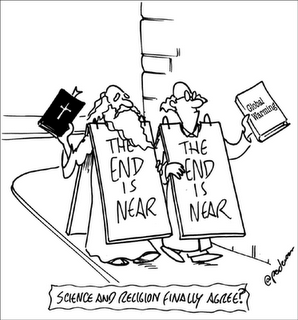
Cartoon from diaryofanalevelstudent.wordpress.com

Cartoon from diaryofanalevelstudent.wordpress.com

[The last installment for Chapter 3 of Rabbi Jonathan Sacks’ book—a most interesting read, that’s why I bother to type its long chapters.  If you haven’t done so yet, please secure a copy of his book; downloadable on kindle from amazon.com.  Also, if you haven’t done so yet, read the previous posts leading to this one.  We will feature only one more chapter —the concluding one; what else is written between the beginning and the end, you have to find out for yourself when you buy your copy of the book.   Reformatted for this post, image added.—Admin1.]


————————


  The third story is simply told.  We still do not know what it was about the seventeenth century that led to the rise of experimental science.  Some claim it was religion: Protestantism in general or Calvinism in particular.  Others claim it was the waning of religion.  Some say it was an attempt to repair the Fall of man, who had been exiled from eden for wrongly eating of the tree of knowledge.  Some say it was the attempt to build an Earthly paradise by the use of purely secular reason.  Stephen Toulmin has argued, convincingly in my view, that it was the impact of the wars of religion of the sixteenth and seventeenth centuries that led figures like Descartes and Newton to seek certainty on the basis of a structure of knowledge that did not rest on dogmatic foundations.


One way or another, first science, then philosophy, declared their independence from theology and the great arch stretching from Jerusalem to Athens began to crumble.

  • First came the seventeenth-century realisation that the Earth was not the centre of the universe.
  • Then came the development of a mechanistic science that sought explanations in terms of prior causes, not ultimate purposes.
 

Then came the eighteenth-century philosophical assault, by Hume and Kant, on the philosophical arguments for the existence of God.  Hume pointed up the weakness of the argument from design.  Kant refuted the ontological argument.  

  • Then came the nineteenth century and Darwin.  This was, on the face of it, the most crushing blow of all, because it seemed to show that the entire emergence of life was the result of a process that was blind.
 

We think of these as shaking the religious worldview of the Bible, but in fact they were something else entirely.  

  • For it was the Greeks who saw the Earth as the centre of the celestial spheres.
  •  It was Aristotle who saw purposes as causes.  
  • It was Cicero who formulated the argument from design.  
  • It was the Athenian philosophers who believed that there are philosophical proofs for the existence of God.  
 

The Hebrew Bible never thought in these terms.  The heavens proclaim the glory of God; they do not prove the existence of God.  All that breathes praises its Creator; it does not furnish philosophical verification of a Creator.  In the Bible, people talk to God, not about God.  The Hebrew word da’at, usually translated as ‘knowledge’, does not mean knowledge at all in the Greek sense, as a form of cognition.  It means intimacy, relationship, the touch of soul and soul.  God, for the Bible, is not to be found in nature for God transcends nature, as do we whenever we exercise our freedom.  In Hebrew the word for universe, olam, is semantically related to the word ‘hidden’, ne’elam.  God is present in nature but in a hidden way.  


So the shaking of the foundations that took place between the seventeenth and nineteenth centuries was, in reality, the undermining and eclipse of Greek rationalist tradition, not of the Judaic basis of faith itself, which, while respecting and honouring science as a form of divine wisdom, never allied itself to one particular scientific tradition and specifically distanced itself from certain aspects of Greek culture.  


That means that the original basis of Abrahamic monotheism remains, whatever the state of science.  For religious knowledge as understood by the Hebrew Bible is not to be construed as the model of philosophy and science, both left-brain activities.  God is to be found in relationship, and in the meanings we construct when, out of our experience of the presence of God in our lives, we create bonds of loyalty and mutual responsibility known as covenants.  People have sought in the religious life the kind of certainty that belongs to philosophy and science.  But it is not to be found. Between God and man there is moral loyalty, not scientific certainty.


Construe knowledge on the basis of science and, with the best will in the world, you will discover at best only one aspect of God, the aspect the Hebrew Bible calls Elokim, the impersonal God of creation as opposed to the personal God of revelation.

 This is Spinoza’s and Einstein’s God, and they were indeed two profoundly religious individuals — Novalis called Spinoza a ‘God-intoxicated man’.  They could see God in the universe, and find awe at the universe’s complexity and law-governed order.  What they could not conceive was God as the consecration of the personal, the Divinity that underwrites our humanity.  


Elokim, the God of creation whose signature we can read in the natural world, is common ground between the God of Aristotle and the God of Abraham.  These two great conceptions came together for almost seventeen centuries in Christianity and for a short period between the eleventh and thirteenth centuries in Islam (Averroes) and Judaism (Maimonides).  But since the seventeenth century science and religion have gone their separate ways and the old synthesis no longer seems to hold.  


But most of the Bible is about another face of God, the one turned to us in love, known in the Bible by the four-letter name that, because of its holiness, Jews call Hashem, the name’.  This aspect of God is found in relationship, in the face of the human other that carries the trace of the divine Other.  We should look for the divine presence in compassion, generosity, kindness, understanding, forgiveness, the opening of soul to soul.  We create space for God by feeding the hungry, healing the sick, housing the homeless and fighting for justice.  God lives in the right atmosphere of the brain, in empathy and interpersonal understanding, in relationships etched with the charisma of grace, not subject and object, command and control, dominance and submission.  


Faith is a relationship in which we become God’s partners in the work of love.  The phrase sounds absurd.  How can an omniscient, omnipotent God need a partner?  There is, surely, nothing he cannot do on his own.  But this is a left-brain question.  The right-brain answer is that there is one thing God cannot do on his own, namely have a relationship.  God on his own cannot live within the free human heart.  Faith is a relationship of intersubjectivity, the meeting point of our subjectivity with the subjectivity, the inwardness, of God.  God is the personal reality of otherness.  Religion is the redemption of solitude.  


Faith is not a form of ‘knowing’ in the sense in which that word is used in science and philosophy.  It is, in the Bible, a mode of listening.  The supreme expression of Jewish faith, usually translated as ‘Hear, O Israel, the Lord our God, the Lord is one’ (Deuteronomy 6:4), really means ‘Listen, O Israel’.  Listening is an existential act of encounter, a way of hearing the person beneath the words, the music beneath the noise.  Freud, who disliked religion and abandoned his Judaism, was nonetheless Jewish enough to invent, in psychoanalysis, the ‘listening cure’; listening as the healing of the soul.  


It may be that we are already embarked on a fourth story.  Again, for me it began with an episode in Cambridge.  I had been taking part in a debate on religion and science.  this was just before the appearance of the string of books by the new atheists, and at the time I thought the subject was so passé that I assumed only a handful of people would turn up.  To my surprise I discovered that the organisers had taken the largest auditorium in the university and it was filled to overflowing.  


My opponent, the professor of the history of science, the late Peter Lipton, was generous and broad-minded.  we found ourselves agreeing on almost everything — so much so the chair of proceedings, Lord Robert Winston, Britain’s most famous television scientist and a deeply religious Jew, said after about half an ahour, ‘In that case, I’m going to disagree with both of you.’  It was a good-natured and open conversation and left most of us feeling that religion and science, far from being opposed, were on the same side of the table, using their distinctive methods to help us better understand humanity, nature and our place in the scheme of things.  


As we were leaving, a stranger came up to me, gentle and unassuming, and said, ‘I’ve just written a book that I think you might find interesting.  If I may, I’ll send it to you.’   I thanked him and some days later the book arrived.  It was called Just Six Numbers, and with a shock of recognition I realised who the stranger was;  Sir Martin, now Lord, Rees, Astronomer Royal, Master of Trinity College, Cambridge and President of the Royal Society, the world’s oldest and most famous scientific association.  Sir Martin was, in other words, Britain’s most distinguished scientist.  


The thesis of the book was that there are six mathematical constants that determine the physical shape of the universe.  Had any one of them been even slightly different, the unvierse as we know it would not exist.  Nor would life.  It was my first glimpse into the new cosmology and the string of recent discoveries of how improbably our existence actually is.  James Le Fanu, in his 2009 book Why Us?, adds to this a slew of new findings in neuroscience and genetics to suggest that we are on the brink of  a paradigm shift that will overturn the scientific materialism of the past two centuries:


The new paradigm must also lead to a renewed interest in and sympathy for religion in its broadest sense, as a means of expressing wonder at the ‘mysterium tremendum et fascinans’ of the natural world.  It is not the least of the ironies of the New Genetics and the Decade of the Brain that they have vindicated the two main impetuses to religious belief — the non-material reality of the human soul and the beauty and diversity of the living world — while confounding the principle tenets of materialism: that Darwin’s ‘reason for everything’ explains the natural world and our origins, and that life can be ‘reduced’ to the chemical genes, the mind to the physical brain.


There may be, in other words, a new synthesis in the making.  It will be very unlike the Greek-thought-world of the medieval scholastics with its emphasis on changelessness and harmony.  Instead it will speak about the emergence of order, the distribution of intelligence and information processing, the nature of self-organising complexity, the way individuals display a collective intelligence that is a property of groups, not just the individuals that comprise them, the dynamic of evolving systems and what leads some to equilibrium, others to chaos.  Out of this will emerge new metaphors of nature and humanity, flourishing and completeness.  Right-brain thinking may reappear, even in the world of science, after its eclipse since the seventeenth century.  Right and left may be closer alignment than they have been.  I say more on the new science in chapters 11 and 14.


What I have sought to show in this chapter, however, is that there is a significant history in the Western experience of God and religion on the one hand, philosophy and science on the other.  They came together in the grand, unique synthesis of Christianity from Paul, through the Church Fathers and the scholastics, to the seventeenth century.  Since then they have been progressively separated, but they may be coming together again in ways we cannot forsee.  There always was, though, an alternative, the road less travelled, adhered to by a tiny people the Jews.


On this view, religion, faith and God are not among the truths discovered by science or philosophy in the Greek and Western mode.  They are about meaning.  Meaning is made and sustained in conversations.  It lives in relationships:  in marriages, families, communities and societies.  It is told in narrative, invoked in prayer, enacted in ritual, encoded in sacred texts, celebrated on holy days and sung in songs of praise.


The left brain, with its linear, atomising and generalising powers, is effective in dealing with things.  It is not best in dealing with people.  It does not understand the inner life of people, their hopes and fears, their aspirations and anxieties.  Religion consecrates our humanity.  In discovering God, singular and alone, our ancestors discovered the human individual, singular and alone.  For the first time in history sanctity was conferred on the human individual as such, regardless of class, caste, colour or creed, as God’s image and likeness, God’s beloved.


Science takes things apart to see how they work.  Religion puts things together to see what they mean.  They speak different languages and use different powers of the brain.  We sometimes fail to see this because of the way the religion of Abraham entered the mainstream consciousness of the West, not in its own language but in the language of the culture that gave birth to science.  Once we recognise their difference we can move on, no longer thinking science and religion as friends who became enemies, but as our unique, bicameral, twin perspective on the difference between things and people, objects and subjects, enabling us to create within a world of blind forces a home for a humanity that is neither blind nor deaf to the beauty of the other as the living trace of the living God.

Must Read/Must Own: The Great Partnership – Diverging Paths – 3b

[This continues the series on our current MUST READ and MUST OWN, featuring Rabbi Jonathan Sacks.  This is the continuation of  Chapter 3: Diverging Paths where Rabbi Sacks narrates his  journey of faith toward Judaism and the Truth it upholds in the Hebrew Scriptures.  But he also gives a perspective to Judaism and Jewish rabbis which/who respect truth and wisdom whatever the source, a value worth emulating by all religionists!


In our Sinaite’s core group just recently, we discussed what has changed in our thinking when we broke away from our former religious beliefs and embraced the Torah and learned from the Jewish Sages.  One significant answer relates to this post:  we have become less judgmental of others of differing religious persuasions; we consider all who are travelling the path to seek to know God better as co-travellers who will eventually arrive at Sinai, the place of divine revelation. . . if they keep seeking with all their heart and mind and soul!


 My free-thinker-non-religious father once wrote “Education is a  shield against the intolerance of the mind.”  In a way he was right; education does widen mental horizons to every kind of information out there . . . but it has been our experience that education is not enough; the will to know truth is a good start, but once truth is known, each person has yet to decide whether to accept it or not, particularly divinely-revealed truth and its source, both of which are questioned because of ‘religious’ intolerance and close-mindedness and the confusion of so much information out there.  Enough said, this is about Rabbi Sacks’ mind-opening perspective-widening book, so let’s get to it.


Please refer to the previous posts if you haven’t already done so.  Reformatting and highlights added, as well as images.—Admin1.]


—————————

The second story began for me in 1993 when I was privileged to receive an honorary doctorate from Cambridge University together with, among others, James Watson, co-discoverer of DNA.  It gave me the opportunity of saying the ancient blessing, coined by Judaism’s sages some two thousand years ago and still to be found in all Jewish prayer books, thanking God for bestowing His wisdom on human beings.  Essentially it is a blessing to be said on seeing a great scientist, although the word ‘scientist’ was not coined until many centuries later, and it reflects a time when religion and science were seen not as adversaries but as respected friends.


I thought hard about that blessing because it is so unexpected.  The Talmud says it is to be said on seeing ‘one of the sages of the nations of the world’.  The sages they were referring to were either Greek or Roman.  Remember that Greeks, under the Seleucid Antiochus IV, had banned the public practice of Judaism.  Centuries later, the Romans had destroyed the Temple and razed Jerusalem.  These were Israel’s enemies, politically, militarily, above all culturally and spiritually.  The Greeks were polytheists.  The Romans had a disturbing tendency to turn caesars into gods.  For the sages to institute a blessing — a religious act of thanksgiving — over their scholars showed a remarkable open-mindedness to wisdom whatever its source.  ‘Accept the truth, whoever says it,’ said Maimonides.  There is religious dignity and integrity to science.


No less remarkable is the way in which the rabbis of the era recognised that when it came to science, their own views might simply be wrong.  There is a talmudic passage — it reads somewhat quaintly nowadays — in which the rabbis are discussing the question of where the sun goes at night.  First they give their own opinion, then they cite the Greek view, that of Ptolemy.  They then conclude, ‘And their view seems more plausible than ours.’  That is the way the Talmud says the story.  They are right.  We are wrong.  End of discussion.


Similarly, on a more religiously sensitive matter, the rabbinic literature records a conversation between Rabbi Judah the Prince, head of the Jewish community in the early third century and Antoninus, a Roman sage, about when the soul enters a child.  Rabbi Judah says, at birth.  Antoninus says, at conception.  The rabbi then astonishingly declares that Antoninus is right.  Thereafter when he repeats the teaching, the rabbis is careful to say, ‘Antoninus taught me this.’  This was a religious attitude to science both open-minded and willing to learn.


Yet I remained puzzled about one of the most curious facts in the intellectual history of Judaism.  The first chapter of Genesis with its momentous simplicity — ‘And God said let there be . . . and there was . . . and God saw that it was good’ –was described by Max Weber and more recently by Peter Berger as the origin of Western rationality.

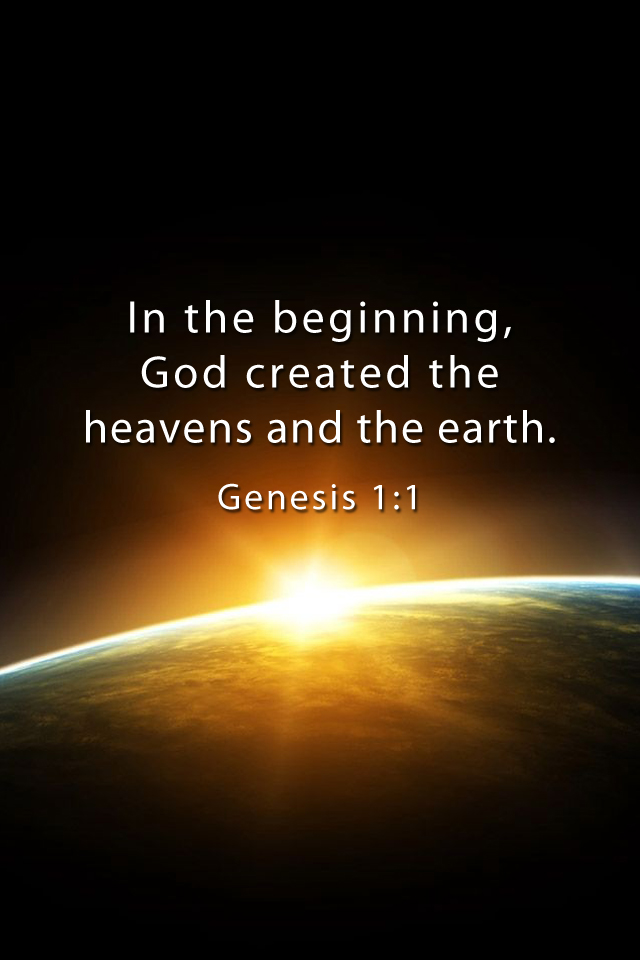
Image from aviewfromtheright.com

Image from aviewfromtheright.com

 Unlike all the cosmological myths of the ancient world, there is no clash of the gods and their rivals, no cosmic battles like those of Tiamat and Marduk, Seth and Osiris, Kronos and Zeus.  There is no myth at all.  God speaks and the universe comes into being.  The universe has been stripped of its overlay of mystery and caprice.  It has been, in Weber’s famous word, ‘disenchanted’.


 Genesis 1 is the beginning of the end of mythic imagination.

It made science possible.  No longer was the universe seen as unpredictable.  It was the work of a single, rational creative will.  Nor was it — as were the gods of myths — at best indifferent, at worst actively hostile to human beings.  Genesis spoke of a God who endowed humanity with his image.  Evidently he wanted humans to be, in at least some respect, god-like.  Had we the evidence of Genesis 1 alone, we could have predicted that the people who lived by this book would have become a nation of scientists.


The curious incident is that they did not.  The Greeks did.  Jews knew that they did.  As we have seen, they admired their work and even coined a blessing over its practitioners.  Yet neither in the biblical nor in the early rabbinic age did Jews evince a sustained, widespread, focused interest in science.  It is as if from the outset Jews knew that science — what they called ‘wisdom’ –was one thing, and religion another.

  • Science was about natural law, religion about moral law.
  • Natural laws are laws that predict and explain, moral laws are laws that command or constrain.
  • Science was about things, religion about people and their freely chosen acts.

Having established the preconditions of science, Jews evinced no further interest in it at least until the Middle Ages.


Why then is Genesis 1 there?


1.  The most obvious reason is that it is not a myth but a polemic against myth.  Unlike the gods of myth, God is not part of nature.  He is the author of nature which he created by a free act of will.  By conferring his image on humankind, God gives us freedom of the will.  This generates the entire moral world of the Bible with its vision of the human person as a responsible, choosing moral agent.  Rejecting myth, the Bible discovers freedom.


2.  Second is the insistence on the goodness of the world.  Even times we read that God saw that it was good.’   This too was revolutionary.  Most religions, ancient and modern, have contrasted this world and the next, Earth and heaven, the world of the senses and that of eternity, this life and the afterlife.  Here is chaos, there is order.  Here is suffering, there is its reward.  To a remarkable degree the Hebrew Bible is reticent about life after death and never uses it to reconcile people with their condition on Earth.  The religious drama takes place here.  This world, this life, is where we meet God and either do or fail to do his will.  The universe is good, but humans are free to do evil.  This frames the entire religious drama of humankind.


3.  Third is the orderliness of the universe.  Gone is the mythic mindset of ever-threatening chaos.  The narrative is tightly structured.  For three days God creates domains — light and dark, sea and sky, sea and dry land.  For the next three days he populates those domains with moving things: the sun, moon and stars, fish and birds, land animals and man.


The seventh day, the day of rest, is holy: an enduring symbol of the world at peace with itself and its maker.  The implication is clear.  God creates order; it is man who creates chaos.


Equally radical is the fact that, since God created everything, he is God of everywhere.  For the first time, God and religion are de-territorialised.  There is no longer a god of this place and a god of that; a god of these people as opposed to those.  Abrahamic universalism is born here.  This will prove crucial in the book of Exodus when God intervenes to deliver one nation out of another, what we would call today an international intervention in defence of human rights.  His authority extends, as it were, not only over the Promised Land but also over Egypt.  God is the God of everyone, though not necessarily in the same way.  Unlike Plato, the Hebrew Bible emphasises both the universal and the particular.


It is a worldview of extraordinary simplicity and power.  The buzzing confusion of the polytheistic pantheon has disappeared and the entire universe has been cleared for the drama between the lone God and lonely humanity, who have, as it were, only each other for company.  Nature has been demystified and demythologised.  All Earthly power has been relativised, allowing for the desacralisation of kingship and the eventual secularisation of the political domain.


So Genesis 1, a text that might have been a prelude to science, turns out not to lead in that direction at all.  Its frame of reference is moral and spiritual.

  • It is about freedom and order and goodness.
  • It is about a God who creates and makes a bing, Homo sapiens, able to create;
  • a God who is free and bestows on his most cherished creation the gift of freedom.

Virtually everything that follows in the Bible is about this personal relationship between Creator and creation, at times tender, often tense.  To be sure, from time to time the Hebrew Bible expresses wonder at the divine wisdom within creation — the wisdom tracked by science — but that is not where its interest lies.


I have told this second story to show that there was an alternative to the synthesis that eventually emerged in Christianity, namely the way taken by the Judaism of the Hebrew Bible and the rabbinic sages.  It saw science as an autonomous activity with its own dignity.  It was the wisdom of the Greeks, not the gift of the Jews.  Science reveals the wisdom of God in creation, and wisdom is itself the gift God gave humanity when he made us in his image and likeness, which Rashi, the classic Jewish commentator, reads as ‘with the capacity to understand and discern’.


But there is a difference between wisdom and Torah.

  • Wisdom tells us how the world is.  Torah tells us how the world ought to be.
  • Wisdom is about nature.  Torah is about will.  It is about human freedom and choice and the way we are called on to behave.
  • Wisdom is about the world God makes.  Torah is about the world God calls on us to make, honouring others as bearers of God’s image, exercising our freedom in such a way as not to rob others of theirs.

The difference between the two is freedom.  The natural universe is as it is because that is how it is.  The planets are not free int heir movements.  Chemical elements do not choose which way to combine.  Genes do not make decisions.  But we are free; we do choose; we do make decisions.  


If the movements of the planets fail to obey Aristotle’s law of circular motion, that is not because they are disobedient but because Aristotle’s law is wrong.  But if human beings fail to obey the laws against murder, robbery or theft, that is not because there is something wrong with the laws but because there is something wrong with us.  Moral laws are not scientific laws.  They belong to a different world, the human world, the world of freedom, God’s most fraught and fateful gift.  The Hebrew Bible is entirely about this drama of human freedom.  Hence the possibility of admiring science as wisdom while at the same time seeing it as a separate discipline best left to scientists.


Must Read/Must Own: The Great Partnership – 2

[Please read the introduction to this post:   Must Read: The Great Partnership: Science, Religion, and the Search for Meaning.

Rabbi Jonathan Sacks has his own website at  http://www.rabbisacks.org 


Reformatted for this post is the whole Introduction that explains what to expect in every chapter; initially I intended to pick out only excerpts but while following the discussion, I just couldn’t stop typing the whole piece!   Please notice as well that the Rabbi being British, uses British spelling of some English words, use of ‘s’ instead of ‘z’ for instance, or ‘ou’ for ‘u’.—Admin1.]


————————

TABLE OF CONTENTS


PART ONE   God and the Search for Meaning

  1. The Meaning-Seeking Animal
  2. In Two Minds
  3. Diverging Paths
  4. Finding God

PART TWO   Why It Matters
5.  What We Stand to Lose
6.  Human Dignity

7.  The Politics of Freedom

8.  Morality

9.  Relationships

10.  A Meaningful Life


PART THREE   Faith and Its Challenges

11.  Darwin

12.  The Problem of Evil

13.  When Religion Goes Wrong

14.  Why God?


Epilogue:  Letter to a Scientific Atheist

Notes

For Further Reading

Appendix:  Jewish Sources on Creation, the Age of the Universe and Evolution


—————————


INTRODUCTION


If the new atheists are right, you would have to be sad, mad or bad to believe in God and practise a religious faith.  We know that is not so.  Religion has inspired individuals to moral greatness, consecrated their love and helped them to build communities where individuals are cherished and great works of loving kindness are performed.  The Bible first taught the sanctity of life, the dignity of the individual, the imperative of peace and the moral limits of power.


To believe in God, faith and the importance of religious practice does not involve an abdication of the intellect, a silencing of critical faculties, or believing in six impossible things before breakfast.  It does not involve reading Genesis 1 literally.  It does not involve rejecting the findings of science.  I come from a religious tradition where we make a blessing over great scientists regardless of their views on religion.


So what is going on?


Debates about religion and science have been happening periodically since the seventeenth century and they testify to some major crisis in society.

  • In the seventeenth century it was the wars of religion that had devastated Europe.
  • In the nineteenth century it was the industrial revolution, urbanisation and the impact of the new science, especially Darwin.
  • In the 1960s, with the ‘death of God’ debate, it was the delayed impact of two world wars and a move to the liberalisation of morals.
 

When we come to a major crossroads in history it is only natural to ask who shall guide us as to which path to choose.

  • Science speaks with expertise about the future, religion with the authority of the past.
  • Science invokes the power of reason, religion the higher power of revelation.
 

The debate is usually inconclusive and both sides live to fight another day.


The current debate, though, has been waged with more than usual anger and vituperation, and the terms of the conflict have changed.  In the past the danger — and it was a real danger –was a godless society.  That led to four terrifying experiments in history—

  • the French Revolution
  • Nazi Germany
  • the Soviet Union
  • and Communist China.
 

Today the danger is of a radical religiosity combined with an apocalyptic political agenda, able through terror and assymetric warfare to destabilise whole nations and regions.  I fear that as much as I fear secular totalitarianisms.  All religious moderates of all faiths would agree.  This is one fight believers and non-believers should be fighting together.


Instead the new atheism has launched an unusually aggressive assault on religion, which is not good for religion, for science, for intellectual integrity or for the future of the West.  When a society loses its religion it tends not to last very long thereafter.  It discovers that having severed the ropes that moor its morality to something transcendent, all it has left is relativism, and relativism is incapable of defending anything, including itself.  When a society loses its soul, it is about to lose its future.


So let us move on.


I want, in this book, to argue that we both need religion and science; that they are incompatible and more than incompatible.  They are the two essential perspectives that allow us to see the universe in its three-dimensional depth.  The creative tension between the two is what keeps us sane, grounded in physical reality without losing our spiritual sensibility.  It keeps us human and humane.


The story I am about to tell is about the human mind and its ability to do two quite different things.  One is the ability to break things down into their constituent parts and see how they mesh and interact.  The other is the ability to join things together so that they form relationships.  The best example of the first is science, of the second, religion.


Science takes things apart to see how they work.

Religion puts things together to see what they mean.


Without going into neuroscientific detail, the first is a predominantly left-brain activity, the second is associated with the right hemisphere.


Both are necessary, but they are very different.  The left brain is good at sorting and analyzing things.  The right brain is good at forming relationships with people.  Whole civilisations made mistakes because they could not keep these two apart and applied to one the logic of the other.


When you treat things as if they were people, the result is myth: light is from the sun god, rain from the sky god, natural disasters from the clash of deities, and so on.  Science was born when people stopped telling stories about nature and instead observed it; when, in short, they relinquished myth.


When you treat people as if they were things, the result is dehumanisation: people categorised by colour, class or creed and treated differently as a result.  The religion of Abraham was born when people stopped seeing people as objects and began to see each individual as unique, sacrosanct, the image of God.


One of the most difficult tasks of any civilisation — of any individual life, for that matter — is to keep the two separate, but integrated and in balance.  That is harder than it sounds.  There have been ages — the sixteenth and seventeenth centuries especially — when religion tried to dominate science.  The trial of Galileo is the most famous instance, but there were others.  And there have been ages when science tried to dominate religion, like now.  The new atheists are the most famous examples, but there are many others, people who think we can learn everything we need to know about meaning and relationships by brain scans, biochemistry, neuroscience and evolutionary psychology, because science is all we know or need to know.


Both are wrong in equal measure.  Things are things and people are people.  Realising the difference is sometimes harder than we think.


In the first part of the book I give an analysis I have not seen elsewhere about why it is that people have thought religion and science are incompatible.  I argue that this has to do with a curious historical detail about the way religion entered the West.  It did so in the form of Pauline Christianity, a religion that was a hybrid or synthesis of two radically different cultures, ancient Greece and ancient Israel.


The curious detail is that all the early Christian texts were written in Greek, whereas the religion of Christianity came from ancient Israel and its key concepts could not be translated into Greek.  The result was a prolonged confusion, which still exists today, between the God of Aristotle and the God of Abraham.  I explain in chapter 3 why this made and makes a difference, leading to endless confusion about what religion and faith actually are.  In chapter 4 I tell the story of my own personal journey of faith.


In the second part of the book I explain why religion matters and what we stand to lose if we lose it.  The reason I do so is that, I suspect, more than people have lost faith in God, they simply do not see why it is important.  What difference does it make anymore? My argument is that it makes an immense difference, though not in ways that are obvious at first sight.  The civilisation of the West is built on highly specific religious foundations, and if we lose them we will lose much that makes life gracious, free and humane.


We will, I believe, be unable to sustain the concept of human dignity.  We will lose a certain kind of politics, the politics of common good.  We will find ourselves unable to hold on to a shared morality — and morality must be shared if it is to do what it has always done and bind us together into communities of shared principle and value.  Marriage, deconsecrated, will crumble and children will suffer.  And we will find it impossible to confer meaning on human life as a whole.  The best we will be able to do is to see our lives as a personal project, a private oasis in a desert of meaninglessness.


In a world in which God is believed to exist, the primary fact is relationship.  There is God, there is me, and there is the relationship between us, for God is closer to me than I am to myself.  In a world without God, the primary reality is ‘I’, the atomic self.  There are other people, but they are not as real to me as I am to myself.  Hence all the insoluble problems that philosophers have wrestled with unsuccessfully for two and a half thousand years.  How do I know other minds exist?  Why should I be moral?  Why should I be concerned about the welfare of others to whom I am not related?  Why should I limit the exercise of my freedom so that others can enjoy theirs?  Without God, there is a danger that we will stay trapped within the prison of the self.


As a result, neo-Darwinian biologists and evolutionary psychologists have focused on the self, the ‘I’.  ‘I’ is what passes my genes on to the next generation.  ‘I’ is what engages in reciprocal altruism, the seemingly selfless behaviour that actually serves self-centered ends.  The market is about the choosing ‘I’.  The liberal democratic state is about the voting ‘I’. The economy is about the consuming ‘I’.  But ‘I’, like Adam long ago, is lonely.  ‘I’ is bad at relationships.  In a world of ‘I’s, marriages do not last.  Communities erode.  Loyalty is devalued.  Trust grows thin.  God is ruled out completely.  In a world of clamorous egos, there is no room for God.


So the presence or absence of God makes an immense difference in our lives.  We cannot lose faith without losing much else besides, but this happens slowly, and by the time we discover the cost it is usually too late to put things back again.


In the third part of the book I confront the major challenges to faith.  One is Darwin and neo-Darwinian biology, which seems to show that life evolved blindly without design.  I will argue that this is true only if we use an unnecessary simplistic concept of design.


The second is the oldest and hardest of them all:  the problem of unjust suffering, ‘when bad things happen to good people’.  I will argue that only a religion of protest — of ‘sacred discontent’ — is adequate to the challenge.  Atheism gives us no reason to think the world could be otherwise.  Faith does, and thereby gives us the will and courage to transform the world.


The third charge made by the new atheists is, however, both true and of the utmost gravity.  Religion has done harm as well as good.  At various times in history people have hated in the name of the God of love, practised cruelty in the name of the God of compassion, waged war in the name of the God of peace and killed in the name of the God of life.  this is a shattering fact and one about which nothing less than total honesty will do.


We need to understand why religion goes wrong.  That is what I try to do in chapter 13.  Sometimes it happens because monotheism lapses into dualism.  Sometimes it is because religious people attempt to bring about the end of time in the midst of time.  They engage in the politics of the apocalypse, which always results in tragedy, always self-inflicted and often against fellow members of the faith.  Most often it happens because religion becomes what it should never become: the will to power.  The religion of Abraham, which will be my subject in this book, is a protest against the will to power.


We need both religion and science.  Albert Einstein said it most famously:  ‘Science without religion is lame; religion without science is blind.’  It is my argument that religion and science are to human life what the right and left hemispheres are to the brain.  They perform different functions and if one is damaged, or if the connections between them are broken, the result is dysfunction.  The brain is highly plastic and in some cases there can be almost miraculous recovery.  But no one would wish on anyone the need for such recovery.


  • Science is about explanation.  Religion is about meaning.
  • Science analyses, religion integrates.
  • Science breaks things down to their component parts.  Religion binds people together in relationships of trust.
  • Science tells us what is.  Religion tells us what ought to be.
  • Science describes.  Religion beckons, summons, calls.
  • Science sees objects.  Religion speaks to us as subjects.
  • Science practices detachment.  Religion is the art of attachment, self to self, soul to soul.
  • Science sees the underlying order of the physical world.  Religion hears the music beneath the noise.
  • Science is the conquest of ignorance.  Religion is the redemption of solitude.
 

We need scientific explanation to understand nature.  We need meaning to understand human behaviour and culture.  Meaning is what humans seek because they are not simply part of nature.  We are self-conscious.  We have imaginations that allow us to envisage worlds that have never been, and to begin to create them.  Like all else that lives, we have desires.  Unlike anything else that lives, we can pass judgment on those desires and decide not to pursue them.  We are free.


All of this, science finds hard to explain.  It can track mental activity from outside.  It can tell us which bits of the brain are activated when we do this or that.  What it cannot do is track it on the inside.  For that we use empathy.  Sometimes we use poetry and song, and rituals that bind us together, and stories that gather us into a set of shared meanings.  All of this is part of religion, the space where self meets other and we relate as persons in a world of persons, free agents in a world of freedom.  That is where we meet God, the Personhood of personhood, who stands to the natural universe as we, free agents, stand to our bodies.  God is the soul of being in whose freedom we discover freedom, in whose love we discover love, and in whose forgiveness we learn to forgive.


I am a Jew, but this book is not about Judaism.  It is about the monotheism that undergirds all three Abrahamic faiths:  Judaism, Christianity, and Islam.  It usually appears wearing the clothes of one of these faiths.  But I have tried to present it as it is in itself, because otherwise we will lose sight of the principle in the details of this faith or that.  Jews, Christians and Muslims all believe more than what is set out here, but all three rest on the foundation of faith in a personal God who created the universe in love and who endowed each of us, regardless of class, colour, culture or creed, with the charisma and dignity of his image.


The fate of this faith has been, by any standards, remarkable.  Abraham performed no miracles, commanded no armies, ruled no kingdom, gathered no mass of disciples and made no spectacular prophecies.  Yet there can be no serious doubt that he is the most influential person who ever lived, counted today, as he is, as the spiritual grandfather of more than half of the six billion people on the face of the planet.


His immediate descendants, the children of Israel, known today as Jews, are a tiny people numbering less than a fifth of a percent of the population of the world.  Yet they outlived the Egyptians, Assyrians, Babylonians, Persians, Greeks and Romans, the medieval empires of Christianity and Islam, and the regimes of Nazi Germany and the Soviet Union, all of which opposed Jews, Judaism or both, and all of which seemed impregnable in their day.  They disappeared.  The Jewish people live.


It is no less remarkable that the small persecuted sect known as Christians, who also saw themselves as children of Abraham, would one day become the largest movement of any kind in the history of the world, still growing today two centuries after almost every self-respecting European intellectual predicted their faith’s imminent demise.


As for Islam, it spread faster and wider than any religious movement in the lifetime of its founder, and endowed the world with imperishable masterpieces of philosophy and poetry, architecture and art, as well as a faith seemingly immune to secularisation or decay.


All other civilisations rise and fall. The faith of Abraham survives.


If neo-Darwinism is true and reproductive success a measure of inclusive fitness, then every neo-Darwinian should abandon atheism immediately and become a religious believer, because no genes have spread more widely than those of Abraham, and no memes more extensively than that of monotheism.  But then, as Emerson said, consistency is the hobgoblin of small minds.


What made Abrahamic monotheism unique is that it endowed life with meaning.  That is a point rarely and barely understood, but it is the quintessential argument of this book.  We make a great mistake if we think of monotheism as a linear development from polytheism, as if people first worshipped many gods, then reduced them to one.  Monotheism is something else entirely.  The meaning of a system lies outside of the system.  Therefore the meaning of the universe lies outside the universe.  Monotheism, by discovering the transendental God, the God who stands outside the universe and creates it, made it possible for the first time to believe that life has meaning, not just a mythic or scientific explanation.


Monotheism, by giving life a meaning, redeemed it from tragedy.  The Greeks understood tragedy better than any other civilisation before or since.  Ancient Israel, though it suffered much, had no sense of tragedy.  It did not even have a word for it.  Monotheism is the principled defeat of tragedy in the name of hope.  A world without religious faith is a world without sustainable grounds for hope.  It may have optimism, but that is something else, and something shallower altogether.


A note about the theological position I adopt in this book:  Judaism is a conversation scored for many voices. It is, in fact, a sustained ‘argument for the sake of heaven’.  There are many different Jewish views on the subjects I touch on in the pages that follow. My own views have long been influenced by the Jewish philosophical tradition of the Middle Ages — such figures as Saadia Gaon, Judah Hallevi and Moses Maimonides — as well as modern successors: Rabbis Samson Raphael Hirsch, Abraham Kook and Joseph Soloveitchik.  My own teaher, Rabbi Nachum Rabinovitch, and an earlier Chief Rabbi, J.H. Hertz have also been decisive influences.  Common to all  of them is an openness to science, a commitment to engagement with the wider culture of the age, and a belief that faith is enhanced, not compromised, by a willingness honestly to confront the intellectual challenges of the age.  For those interested in Jewish teachings on some of the issues touched on in this book, I have added an appendix of Judaic sources on science, creation, evolution and the age of the universe.


A note about style:  often in this book I will be drawing sharp contrasts, between science and religion, left-and-right brain activity, ancient Greece and ancient Israel, hope cultures and tragic cultures, and so on.  These are a philsopher’s stock-in-trade.  It is a way of clarifying alternatives by emphasising extreme opposites, ‘ideal types’.  We all know reality is never that simple.  To give one example I will not be using, anthropologists distinguish between shame cultures  and guilt cultures. Now, doubtless we have sometimes felt guilt and sometimes shame.  They are different, but there is no reason why they cannot coexist.  But the distinction remains helpful.  There really is a difference between the two types of society and how they think about wrongdoing.


So it is, for example, with tragedy and hope.  Most of us recognise tragedy, and most of us have experienced hope.  But a culture that sees the universe as blind and indifferent to humanity generates a literature of tragedy, and a culture that believes in a God of love, forgiveness and redemption produces a literature of hope.  There are no Sophocles in ancient Israel. There was no Isaiah in ancient Greece.


Throughout the book, it may sometimes sound as if I am setting up an either/or contrast.  In actuality I embrace both sides of the dichotomies I mention:  science and religion, philosophy and prophecy, Athens and Jerusalem, left brain and right brain.  This too is part of Abrahamic spirituality.  People have often noticed, yet it remains a very odd fact, indeed, that there is not one account of creation at the beginning of Genesis, but two, side by side, one from the point of view of the cosmos, the other from a human perspective.  Literary critics, tone deaf to the music of the Bible, explain this as the joining of two separate documents.  They fail to understand that the Bible does not operate on the principles of Aristotelian logic with its either/or, true-or-false dichotomies.  It sees the capacity to grasp multiple perspectives as essential to understanding the human condition.  So always, in the chapters that follow, read not either/or but both/and.


* * * * * * * *


The final chapter of this book sets out my personal credo, my answer to the question, ‘Why believe?’  It was prompted by the advertisement, paid for by the British Humanist Association, that for a while in 2009 decorated the sides of London buses:  ‘There’s probably no God.  Now stop worrying and enjoy your life.’  I hope the British Humanists will not take it amiss if I confess that this is not the most profound utterance yet devised by the wit of man.  It reminds me of the remark I once heard from an Oxford don about one of his colleagues:  ‘On the surface, he’s profound; but deep down, he’s superficial.’  Of course you cannot prove the existence of God.  This entire book is an attempt to show why the attempt to do so is misconceived, the result of an accident in the cultural history of the West.  But to take probability as a guide to truth, and ‘stop worrying’ as a route to happiness, is to dumb down beyond the point of acceptability two of the most serious questions ever framed by reflective minds.  So, if you want to know why it makes sense to believe in God, turn to chapter 14.


Atheism deserves better than the new atheists, whose methodology consists in criticising religion without understanding it, quoting texts without contexts, taking exceptions as the rule, confusing folk belief with reflective theology, abusing, mocking, ridiculing, caricaturing and demonising religious faith and holding it responsible for the great crimes against humanity.   Religion has done harm; I acknowledge that candidly in chapter 13.  But the cure of bad religion is good religion, not no religion, just as the cure of bad science is good science, not the abandonment of science.

The new atheists do no one a service by their intellectual inability to understand why it should be that some people lift their eyes beyond the visible horizon or strive to articulate an inexpressible sense of wonder; why some search for meaning despite the eternal silences of infinite space and the apparent random injustices of history; why some stake their lives on the belief that the ultimate reality at the heart of the universe is not blind to our existence, deaf to our prayers, and indifferent to our fate; why some find trust and security and strength in the sensed, invisible presence of a vast and indefinable love.  A great Jewish mystic, the Baal Shem Tov, compared such atheists to a  deaf man who for the first time comes on a violinist playing in the town square while the townspeople, moved by the lilt and rhythm of his playing, dance in joy.  Unable to hear the music, he concludes that they are all mad.


Perhaps I am critical of the new atheists because I had the privilege of knowing and learning from deeper minds than these, and I end this introduction with two personal stories to show that there can be another way.   I had no initial intention of becoming a rabbi, or indeed of pursuing religious studies at all (I explain what changed my mind in chapter 4).  I went to university to study philosophy.  My doctoral supervisor, the late Sir Bernard Williams, described by The Times in his obituary as ‘the most brilliant and most important British moral philosopher of his time’, was also a convinced atheist.  But he never once ridiculed my faith; he was respectful of it.  All he asked was that I be coherent and lucid.


He stated his own credo at the end of one of his finest works, Shame and Necessity:

We know that the world was not made for us, or we for the world, that our history tells no purposive story, and that there is no position outside the world or outside history from which we might hope to authenticate our activities.


Williams was a Nietzchean who believed that not only was there no religious truth, there was no metaphysical truth either.  I shared his admiration for Nietzsche, though I drew the opposite conclusion — not that Nietzsche was right, but that he, more deeply than anyone else, framed the alternative:  either faith or the will to power that leads ultimately to nihilism.

 William’s was a bleak view of the human condition but a wholly tenable one.  His own view of the meaning of a life he expressed at the end of that work in the form of one of Pindar’s Odes:

Take to heart what may be learned from Oedipus:

If someone with a sharp axe

Hacks off the boughs of a great oak tree,

And spoils its handsome shape;

Although its fruit has failed, yet it can give an account of itself

If it comes later to a winter fire,

Or if it rests on the pillars of some palace

And does a sad task among foreign walls,

When there is nothing left in the place it came from.


I understood that vision, yet in the end I could not share his belief that it is somehow more honest to despair than to trust, to see existence as an accident rather than as invested with meaning we strive to discover.  Sir Bernard loved ancient Greece; I loved biblical Israel.  Greece gave the world ltragedy; Israel taught it hope.  A people, a person, who has faith is one who, even in the darkest night of the soul, can never ultimately lose hope.


The only time he ever challenged me about my faith was when he asked, ‘Don’t you believe there is an obligation to live within one’s time?’  It was a fascinating question, typical of his profundity.  My honest answer was, ‘No.’  I agreed with T.S. Eliot, that living solely within one’s time is a form of provincialism.  We must live, not in the past but with it and its wisdom.  I think that in later years, Williams came to the same conclusion, because in Shame and Necessity, he wrote that ‘in important ways, we are, in our ethical situation, more like human beings in antiquity than any Western people have been in the meantime’.  He too eventually turned for guidance to the past.  Despite our differences I learned much from him, including the meaning of faith itself.  I explain this in chapter 4.

The other great sceptic to whom I became close, towards the end of his life, was Sir Isaiah Berlin.  I have told the story before, but it is worth repeating, that when we first met he said, ‘Chief Rabbi, whatever you do, don’t talk to me about religion.  When it comes to God, I’m tone deaf!’  He added, ‘What I don’t understand about you is how, after studying philosophy at Cambridge and Oxford, you can still beleive!

‘If it helps,’ I replied, ‘think of me as a lapsed heretic.’

‘Quite understand, dear boy, quite understand.’


In November 1997, I phoned his home.  I had recently published a book on political philosophy which gave a somewhat different account of the nature of a free society than he had done in his own writings.  I wanted to know his opinion.  He had asked me to send him the book, which I did, but I heard no more, which is why I was phoning him.  His wife, Lady Aline, answered the phone and with surprise said, ‘Chief Rabbi — Isaiah has just been talking about you.’

‘In what context?’ I asked.

‘He’s just asked you to officiate at his funeral.’

I urged her not to let him think such dark thoughts, but clearly he knew.  A few days later he died, and I officiated at the funeral.


His biographer Michael Ignatieff once asked me why Isaiah wanted a religious funeral, given that he was a secular Jew.  I replied that he may not have been a believing Jew but he was a loyal Jew.  In fact, I said, the Hebrew word emunah, usually translated as ‘faith’, probably means ‘loyalty’.  I later came across a very significant remark of Isaiah’s that has a bearing on some of today’s atheists:

I am not religious, but I place a high value on the religious experience of believers . . . I think that those who do not understand what it is to be religious, do not understand what human beings live by.  That is why dry atheists seem to me blind and deaf to some forms of profound human experience, perhaps the inner life:  It is like being aesthetically blind.


Since then, I have continued to have cherished friendships and public conversations with notable sceptics like the novelists Amos Oz and Howard Jacobson, the philosopher Alain de Botton, and the Harvard neuroscientist Steven Pinker (my conversation with Pinker figures in the recent novel by his wife Rebecca Goldstein, entitled 36 Arguments for the Existence of God, subtitled A Work of Fiction).


The possibility of genuine dialogue between believers and sceptics show why the anger and vituperation of the new atheists really does not help.  It does not even help the cause of atheism.  People who are confident in their beliefs feel no need to pillory or caricature their opponents.  We need a genuine, open, serious, respectful conversation between scientists and religious believers if we are to integrate their different but conjointly necessary perspectives.  We need it the way an individual needs to integrate the two hemispheres of the brain.  That is a major theme of the book.


When he last visited us, I asked Steven Pinker whether an atheist could use a prayer book.  ‘Of course,’ he said, so I gave him a copy of one I had just newly translated.  I did not pursue the subject further but I guess, if I had asked, that he would have told me the story of Niels Bohr, the Nobel Prize-winning physicist and inventor of complementarity theory.

A fellow scientist visited Bohr at his home and saw to his amazement that Bohr had fixed a horseshoe over the door for luck.  ‘Surely, Niels, you don’t believe in that?’

‘Of course not,’ Bohr replied.  ‘But you see –the thing is that it works whether you believe in it or not.’


Religion is not a horseshoe, and it is not about luck, but one thing many Jews know — and I think Isaiah Berlin was one of them — is that it works whether you believe in it or not.  Love, trust, family, community, giving as integral to living, study as a sacred task, argument as a sacred duty, forgiveness, atonement, gratitude, prayer:  these things work whether you believe in them or not.  The Jewish way is first to live God, then to ask questions about him.


Faith begins with the search for meaning, because it is the discovery of meaning that creates human freedom and dignity.  Finding God’s freedom, we discover our own.



Must Read/Must Own: The Great Partnership: Science, Religion, and the Search for Meaning

[We have just added this book to our Sinai 6000 library —by Rabbi Jonathan Sacks, our third favorite resource person.  As it is our practice, to encourage our website visitors to get a copy of books we recommend not only as MUST READ but MUST OWN, we feature key chapters from the book, usually Introduction and Conclusion and some in between.  Nothing works in whetting readers’ curiosity than to give tidbits, excerpts from the actual book.  For now, hereunder are some customer reviews of this book from amazon.com.  We always learn from the critics themselves, it is a good prelude to reading more of the recommended book.  Reformatted for this post.—Admin1.]


———————–

 
Image from amazon.com

Image from amazon.com

Format: Kindle Edition
Price:$12.99
Customer Reviews
MOST HELPFUL POSITIVE REVIEW
Sacks again at his best
on September 19, 2012
 

This is the 5th book I read by R’ Sacks, and as a current doctoral candidate in the sciences this is one of my favorites. Sacks doesn’t go the route of various other writers who attempt to integrate the bible and science by using compromised/shoddy science or using ‘secret/mystical’ readings of the bible to explain that the bible and science are completely in sync.


Rather, Sacks takes a more philosophical approach arguing that even the assumption the the bible must be ‘proven’ with science or must corroborate physical phenomena is mistaken and an alien way of reading the bible.


Once again, Sacks does this with his usual gift for beautiful prose that is both clarifying and inspiring.


That having been said those who take a more conservative/literalist approach to theology should be wary as R’ Sacks may be challenging to their belief system.


For everyone else, however, from the religious minded to atheists should read this book as one of the best cases for God/the bible in the 21st century.

 
MOST HELPFUL CRITICAL REVIEW
 
Best by a Theologian
 
on June 20, 2013
 

This is the best book ever written by a theologian seeking to refute the views of “New Atheists” like Richard Dawkins and Sam Harris.


The rabbi is not a nutcase. He is moderate and reasonable, and seems perfectly willing to concede some points that theologians don’t normally concede. But while making his concessions, he also qualifies them.

 
Some examples are:

1. It is possible that God does not exist, he concedes. Not very likely, he insists, but possible. Not believing in God is as much an act of faith as believing in God, he points out.

2. It is possible to be moral without believing in God, he concedes. In fact, he says, it happens all the time. But people who believe in God are statistically more likely to be moral than people who don’t believe in God, he insists.

3. Religion at times has been more of a force for evil in the world than a force for good, he concedes. Although the good has generally outweighed the evil, he insists.

 
on September 29, 2012
The Great Partnership by Rabbi Sachs is a remarkable, scholarly, well written, page turner that will keep thinkers and seekers enthralled. The scope of his scholarship is amazing. I was bookmaking and making notes almost every page. He does justice to every view he presents.
By way of full disclosure I am a retired married Catholic priest / psychologist, active in promoting interfaith understanding for four decades. I still lead workshops integrating psychology and spirituality, and blogs regularly on wellness, braid research and faith. For integrative studies, holistic thinker and those who are concerned about cultural values, this book is a treasure.

Anyone interested in interfaith dialogue will find this book full of insights and quotable statements. Those seeking to deepen the understanding of their own faith tradition will find this book transforming. Scientists, skeptics and agnostics will find this book helps understand the cultural value of the Abrahamic traditions: Hebrew, Christian and Muslim. The book ends with a well written Epilogue for atheists.


Many people of faith do not know or want to know the enormous harm done in God’s name for several thousand years. Rabbi Sachs faces the world as it is, and addresses this “power over” human temptation and abuse with adequate discussion of remedies. “Men never do evil so comfortably and cheerfully as when they do it from religious confection.” Blaise Pascal.

In the main, Rabbi Sachs shows how science and religion need one another, and how either by itself, is incomplete. I can hardly recommend this book highl6 enough. I made over 200 notes on my kindle while reading this. I look for his other writings. For its purposes, scope, scholarship, readability and relevance, this book is a winner.


Paschal Baute, Ed. D.


on November 13, 2012
 
This is one of the finest discussions for those of us who do not believe that science and religion need to be at odds. His integration of current scientific understanding and religious thinking is a breath of fresh air after the spate of new atheists writings and radical right rhetoric.
on December 26, 2012
 
I heard Rabbi Sacks on a radio show, and had to buy the book. I’m now on my third copy as I keep giving them away. A great book for a thoughtful college student to help him or her navigate overwhelming secularism. Jonathan Sacks reminds us that we have much wisdom to learn from each other in our quest for meaning.
 
on June 10, 2013
 
It was difficult to decide how many stars to give this book because it was incredibly strong and important in some parts, but in others, merely laborious and repetitive.
Let me explain.
First, it’s important to say from the outset that I think is Rabbi Sacks is incredibly learned, maybe a genius, and his facility to weave Biblical texts with those held sacred from the Western canon is always thrilling for this English teacher.
 

Also, as a response to recent works by New Atheists (Sacks’s term, not sure if it’s pejorative) like Richard Dawkins, Christopher Hitchens (RIP), and Sam Harris, Sacks’s defense of the religious life is thoughtful, moderate, respectful, and conducted at low decibel. And though It is an incredibly welcome and needed entry into that discussion, in many ways, Sacks’s preoccupation with defending religion against the NA’s overtly dismissive diatribes is one of its faults as well. What I mean is that, and maybe I’m wrong here, I don’t think that many thinking people believe, as Hitchens claimed, that “religion poisons everything.” Emanating from such brilliant minds, it’s a startlingly stupid assertion. OBVIOUSLY, one can cherry pick ANY “ism’s” most morally deranged followers, most chillingly nationalistic writings, and most violent outliers and claim that the ISM “poisons everything.” So Sacks spends far too much of this book arguing that there is something worthwhile, noble, and good, about leading a religious life. He never claims that these are guaranteed, only that throwing out religion altogether, as the NAs would have us do, robs humanity of one its most beautiful creations.


One other weakness (and then onto the justification for FOUR stars). As Sacks spends chapter after chapter explaining what is lost if we abandon religion (and by contrast what one gains through its maintenance), he bases much of his argument upon the foundation that the alternatives to God are meaninglessness, loneliness, loss, and desperation. In time, perhaps all of those are possible. But just because an existentialist understanding of the universe causes sadness and a sense of life’s being absurd, doesn’t make it UNTRUE! Sacks says here, as he has elsewhere, that he doesn’t see why it’s any more intellectually honest to choose despair over hope and faith. He’s right. But he’s mis-identifying the context of that belief moment: For many, especially in the atheist camp he’s chiding, the disbelief in God is NOT a choice. To suppose that they’re making a choice is to presuppose God as a given. As if God is a completely natural, logical, and untaught conclusion to come to merely through living. It is, for scientists, not that way at all. I think Sacks KNOWS this as well because he’s brilliant.

And so the REAL choice being offered and defined in this book is: given the pain and suffering in the world, and frequently, its seeming meaninglessness, doesn’t religious faith offer an amazingly healthful, holistic, communal, and thoughtful alternative? Absolutely! It just doesn’t mean that its tenets are TRUE!


Where Sacks is strongest is in two sections. First, his discussion of right and left brain thought as mirrored in Hebraic and Hellenistic LANGUAGE and culture is absolutely fascinating, and as far as I know, novel. He admits that the right/left split he describes is overly reductive, but it is illustrative nonetheless.

Finally, and this is no small feat—Sacks’s chapter on suffering and why bad things happen to good people is brilliant. Thankfully, at least from this reviewer’s perspective, he REJECTS all traditional theodicies as facile and “comfort too cheaply earned.” He never explains away suffering, but rather, argues that central to Hebraic thought is the REJECTION of comfort and an embracing of conflict and cognitive dissonance. He calls this the “The Theology of Protest,” and though at times its real life implications seem cloudy, it is on the whole inspirational and smart.


on January 15, 2013
 

Insightful, intelligent, thought provoking. Very good for anyone with an open mind to hearing the positives of religion on long lasting cultures and the downsides of pure philosophy, neo-Darwinism, and the like on the cultures that have abandonned the Abrahamic religions (Judaism, Christianity, and Islam) specifically. Sacks makes a very convincing argument not just for mono-theism but for societies’ need for religion. I highly suggest that anyone with curiousity give this book a chance. (Note: I’m a cradle Catholic with a degree in Biological Sciences trying that is very excited to see someone bring together Science, Philosophy, Religion and a bit of Theology in a logical and well thought out manner.)

 
on July 21, 2013
 

I was disappointed in this book. Such a learned man could have written a better book. I think Rabbi Sacks should have written for his usual audience instead of trying to convince atheists why they should believe. They won’t. But a book synthesizing science with Jewish thought could have been very uplifting and inspiring. Like some other reviewers, I thought this book would draw more heavily on Jewish textual sources to make its argument. Rabbi Sacks does so, mostly in the last chapter; these chapters shine and are the reason I give it 3 stars. When he draws on Maimonides, other sages, and Talmud, his case is solid and his writing superb. He should have done more of this to educate those of us who lack his grasp of these texts. In other areas, drawing on physicists and philosophers, the writing is still wonderful, but the facts muddled.

 
Examples:
 

1) Einstein’s quote regarding G-d not playing dice with the universe is not a comment on religious view, it is Einstein’s rejection of the Heisenberg Uncertainty Principle;


2) The Greeks did not practice infanticide of deformed infants, the Spartans (with whom the Greeks were at war at times) purportedly did. They also gave such children to slaves to raise;


3) The story of Oedipus was misrepresented: Oedipus’ father Laius received an oracle that a son would be born who would murder Laius and marry his mother Jocasta. When a son was born (with a club foot, hence the name Oedipus, meaning swollen foot), Laius put the infant on the hillside to die.  A shepherd couple found the infant and raised it as their own. The rest is told by Sophocles in the famous trilogy.


4) Ancient Greeks believed strongly in an afterlife; indeed the most famous street in Paris is named for the Greek concept of Heaven, and there are descriptions in stories such as that of Orpheus and Euridice;


5) In the last chapter discussing technological advances Rabbi Sacks thinks demean human civilization he includes “abortion on demand.” That’s a legal construct and not a technological advance;


6) Several times Rabbi Sacks mentions abortion and contraceptives as if they are antithetical to Judaism; it is not so. There are limits, to be sure. But I noticed that nowhere did Rabbi Sacks mention the Talmudic notion of a fetus as rodef (that is, pursuer, meaning a pregnancy that if allowed to continue will kill the mother);


7) In the discussion of the rabbi with Lucretius, Rabbi Sacks would leave the reader thinking that Judaism accepts ensoulment at conception. That is not the mainstream belief- ensoulment at birth is; An index would have been most useful, so that one could go back to specific topics covered within chapters. I think I will stick to Rabbi Sacks’ strictly religious books (which, by the way, I think are the best out there- siddur, haggadah, machzorim for the High Holy Days) in the future.

 
on May 23, 2013
 
This is a remarkable book. Sacks has read all that there is to read in Western philosophy and literature from the Greeks through Nietzsche and beyond and makes a strong case against the “new atheism.” This is far from a fundamentalist tract, and although Sacks is a former chief rabbi of the United Kingdom, this is not a case for the Jewish religion. Rather, it is an effort to show that after Darwin and after all those thinkers who may be seen by some as negating the possibility of the belief in God, there is a strong basis for belief. Religion and science, Sacks says, are complementary and not contradictory. In order to see the subtlety of his thought, one must read the book carefully.
Instead of seeing Science and Religion as implacable enemies the success of one of which must lead to the demise of the other Rabbi Sacks sees them as two complementary areas of human endeavor. His method of doing this is not through trying to see the Biblical text as somehow containing or even foreshadowing basic scientific discoveries, a method which is employed by many apologists for Religion. Instead he by and large accepts scientific findings as authoritative even in areas where others see them as contradicting fundamental religious doctrines, such as those involving the Age of the Universe, or the Origins of Humanity.
 

Instead he distinguishes Science as providing explanations of Reality, while Religion provides interpretations that give Life Meaning. As he understands it the meaning of the Universe can be understood only by going outside the universe, and pointing to the transcendent God that Abraham first revealed to Humanity. The discovery and revelation of God , is for Sacks the key element in transforming the story of Humanity from being one of Tragedy to one of Hope.


As he passionately argues “man despite being the product of seemingly blind causes is not blind, that being in the image of God he is more than an accidental allocation of atoms; that being free, he can rise above his fears, and, with the help of God, create oases of justice and compassion in the wilderness of space and time, that though his life is short he can achieve immortality by his fire and heroism,his intensity of thought and feeling, that humanity too, though it may one day cease to be , can create before night falls, a noonday brightness of the human spirit , trusting that none of our kind will be here to remember, yet in the mind of God, none of our achievements is forgotten-all these things, if not beyond dispute have proven themselves time and again in history. We are made great by our faith,small by our lack of it. Only within the scaffolding of these truths,only on the firm foundation of unyielding hope, can the soul’s salvation be built.”


In making this forceful argument Sacks underlines the truth that Religion provides to the masses of mankind possibilities of Faith and Hope that Science does not. But he too acknowledges that the scientific method over the past four centuries has provided Humanity with a means of insight into the workings of Nature, and powers to transform it unlike any other Power Humanity has known.
 
As in other realms Sacks tone and emphasis is on a kind of peace- making and ‘dignity of difference.’ He wants practicioners of Science and religious believers to respect and honor each other. Here he has harsh words for the New Atheists not because of their Atheism which he surprisingly seems to consider a serious and respectable human option but because of their harsh accusatory tone, their dismissal of religious practice without real understanding of it. This is not to say that Sacks does not have strong corrective words against extremists of religion, does not have a real awareness of the horrors advocates of various Religions have brought to the world historically. But his emphasis is on human dignity, on mutual respect, on living the moral life, one with emphasis on Justice and Compassion.
 

This is an eloquent and in many ways strongly persuasive work. It certainly shows why Science is not and cannot be a substitute for Religion.


My one real problem with it is that it does not deal with the question of how scientific discoveries have by undermining tradiional religious doctrines put into question the truth- value of each of the three Abrahamic faiths. It is after all one thing to defend Religion as useful, and even invaluable to Mankind, and another to defend it as Truth.


Nonetheless even this objection has a kind of answer in Sacks text. In perhaps the most illuminating section of the book called ‘Why God?’ Sacks makes telling arguments against Atheism showing how in its hypothesis of Multiverses it substitutes what he calls an improbability, the existence of a transcendent Creator of the Universe for greater improbabilities. Sacks takes the scientific findings regarding the improbability of their being a Universe at all, the improbability of their being Life on Earth, the improbability of our unique human consciousness, and makes the argument that improbability should not stand in the way of Faith. As Sacks sees it Faith is Courage and Faith provides the means through which humans not simply establish a connection with God but give order and meaning to their own lives. It is almost as if he is saying that we should believe in God be religious believers because it is better for us. Here I find certain echoes of the Pascalian wager but where Pascal was telling us to wager for God in order to win the world- to- come Sacks suggests we wager for God in order to provide meaning, happiness, goodness in this life.


This book is one of the most helpful and meaningful books I have read in many years. I have long held a position similar to the one Rabbi Sacks espouses in this book and this is the most convincing presentation of this position I know.


Yo searchers! Can we help you? – September 2014

[The 1st of September 2014 in the Gregorian calendar is the 6th of Elul 5774 in the Hebrew calendar.  For insights into the significance of Elul, please go to this link: http://www.jewishpress.com/judaism/holidays/abcs-of-elul/2014/09/01/?src=ataglance. This post is intended to aid searchers whose search terms land on this website; this directs you to articles that address your query.  Thank you for visiting Sinai 6000, we hope we can be of help to your search for Truth, the Source of Truth, and the One True God.—Admin1.]

————————–

9/30   “what was israel’s occupation, which was abominable to the egyptians” – When Jacob and clan arrived in Egypt (because favored son Joseph was much appreciated by the good Pharaoh for his wise counsel to save Egypt from impending famine which had already adversely affected other land such as Canaan, the Jacobites/Israelites were ‘set apart’ in the land of Goshen, away from Egyptian population.  So what, you would think, so much better since they could stay together in one place.  The reason, we are told, is that Israelites are shepherds by profession.  So what, you would say again, nothing wrong with that profession.  To Egyptians who were nature-worshippers, the lamb is in its pantheon of gods.  Check out this post:

9/30   “spell life in hebrew” – In the Jewish celebration of  Sabbath,  the blessing of the bread and wine is a ‘toast’ where they say “l’chaim” or  “to life!”


9/30  “quotes about god’s creation” – Genesis/Bere’shith 1: “At the beginning of God’s creating the heavens and the earth”

9/29   “ark of the covenant” – 


9/29   “jewish symbols” – Must Read – 6 – Robert Schoen/The Torah and the Law; Jewish symbols


9/29   “should we believe in aswang ? essay” – The Knowledge that Awakened Me – 3 – An essay of a student in World Mythology and Folklore


9/29    “levenson the wedding of god and israel” –  Jon D. Levenson, SINAI & ZION: An Entry into the Jewish Bible.


9/29  “esau wants to kill jacob” – Esau at first did want to seek revenge against Jacob when this twin whose name means ‘supplanter’ tricked their father Isaac into giving him Esau’s birthright; but years later, he underwent a change.  Check these posts:


9/28  “yhwh” – We have a whole series on the Name, please check out: 


9/27  “happy sabbath day wallpaper” –We get our images by googling “sabbath lights” or “sabbath blessings” or “sabbath greetings”; for now here’s our latest Sabbath liturgy:  A Sinaite’s Anniversary Celebration – 4th Sabbath of September


9/27   “gods of egypt” –


9/26 “pdf(biblical perspectives of the shema)”  – SHEMA – Perspective from Judaism


9/25  “angry god vs loving god” – “Angry, vengeful God” of OT vs. “Merciful loving God” of NT


9/25  “lecture by reuvin firestone “who are the real chosen people” 


9/25  “gods and goddesses of greece” –  This is from:  Must Read: Reuven Firestone – 4 – Chosenness in the Ancient Near East  

The Greek kings then fancied themselves as pharaohs as well, with the result that the Egyptian god Osiris, for example, was merged with the Greek God Dionysis, and the Egyptian god Thoth with the Greek god Hermes. The result was the weakening of the local religions and assimilation to a system that was closer to the religion of the conquerors.


Image from www.sporcle.com


The Greeks brought not only their gods, but also their culture. The power and popularity of Hellenic culture influenced local cultures and “hellenized” them. This resulted in the emergence of what historians call “Hellenism,” a synthesis of pure Greek (Hellenic) culture with the local Near Eastern cultures.  Many locals learned the Greek language and integrated their traditional indigenous cultures with that of the Greeks. They were inevitably attracted to the Greek religious system as well. Because of the overwhelming and unifying power of Hellenism, local tribal religions began to lose some of the distinctiveness of their culture. Eventually, the independent integrity of the local Near Eastern religious systems would die out entirely to this assimilation, though that process would not be complete until the arrival of the Romans.


  The assimilation process encouraged by the Greek and Roman conquerors was not successful, however, under the strident monotheism of Israel. By the time the Greeks had come to the area, the Israelites had become localized in a region called Judea and increasingly referred to themselves as Judeans, from which we get the term Jew. One of the problems that Jews faced after the Greek conquest was that they were expected, like all foreign peoples, to make offerings to the Greek gods. Because they simply and adamantly refused to do so, a compromise was eventually reached that allowed the Jews to worship in their own unique manner and make donations to their temple in Jerusalem.

9/25  “lecture by reuvin firestone “who are the real chosen people”

  •  Must Read: Reuven Firestone – 3 – In the beginning …
  • Must Read: Reuven Firestone – 4 – Chosenness in the Ancient Near East
 

9/25  “may you be inscribed in the book of life for god” – “May you be inscribed in the Book Of Life.”


9/23  “shema jewish symbols” – Signs and Symbols from the SHEMA


9/21  “what did moses mean when he said i have been a sojourner in a foreign land” –  Exodus/Shemoth 2 – “A sojourner have I become in a foreign land.”


9/21  “sojourner in a foreign land” – Exodus/Shemoth 2 – “A sojourner have I become in a foreign land.”


9/21  “jewish symbols” – Must Read – 6 – Robert Schoen/The Torah and the Law; Jewish symbols

9/18  “neil gillman and views on death” –  Must Read: The Death of Death


9/18  “child lighting sabbath candles painting” – A Sinaite’s Liturgy – 1st Sabbath of May


9/18  “inscribed in book of life card” – “May you be inscribed in the Book Of Life.”


9/18  “the origins of prophecy remains vailed in obscurity” how far true is this statement –  Q&A: “Israel prophecy” – “veiled in obscurity”?


9/18  “location of the palace where moses was reared” – Presumably, Moses was reared in the palace where Pharaohs of Egypt; but just out of curiosity, we googled the same search entry and landed here:  this: http://biblehub.com/library/pamphilius/the_life_of_constantine/chapter_xii_that_like_moses_he.htm


9/18  “joshua 1 8-9” – Scroll: Joshua 1:8-9


9/17  “the jewish mystique ernest von haag” –  Revisited: The Jewish Mystique by Ernest Van Den Haag


9/17   “rabbi may you be inscribed” –  “May you be inscribed in the Book Of Life.”


9/15  “jewish symbols” – Must Read – 6 – Robert Schoen/The Torah and the Law; Jewish symbols


9/14  “yhwh elohim” – This whole website is dedicated to declaring the Name of the one True “Elohim” so there are many posts that can address this searcher.  Please check out the series “In His Name”.


9/13  “esau” – 


9/13  “what did moses mean “but i am of uncircumcised lips”  Exodus/Shemoth 6-b: Do you have “uncircumcised lips”?


9/13  “why not to forgive a relative”  – Revisited: Why forgive/how to deal with angry relatives, former friends, enemies . . .


9/13  “when is the 3rd sabbath of the month” – For this year 2014,  the next Sabbath is the 3rd, date:September 20.

9/12  “bamidbar – send for yourself men” –Numbers/Bamidbar – 13 – “Send for yourself men, that they may scout out the land of Canaan”


9/12  “discuss the view that the origins of israelite prophecy remain held in obscurity” – Q&A: “Israel prophecy” – “veiled in obscurity”?


9/12  “judaism torah” – Check these posts:


9/12   “hebrew symbol for god” – The Hebrew word for god, any god, is elohim.  When they refer to their God, it becomes Elohim or Elokim.  This word is used in Genesis for the Being responsible for Creation. As for a ‘hebrew symbol for god’, we know the Israelites were prohibited from making any representation of their God, but since His self-revealed Name is YHWH, we presume the Tetragrammaton would be the ‘hebrew symbol for god” — that is, their God.


9/12  “the greek gods” –  Must Read: Reuven Firestone – 4 – Chosenness in the Ancient Near East


9/11  “jewish symbols” – Must Read – 6 – Robert Schoen/The Torah and the Law; Jewish symbols


9/11  “judaismemerging christian community” – Paul 5 – Conflict with the Jews, and emerging Pauline theology


9/11  “happy sabbath photos” – If this searcher is interested in the images we use in our Sabbath Liturgy, here are the terms we enter in google search:  “images for Sabbath celebration” or “images for Sabbath lighting” or “images for Shabbat Shalom.”


9/10  “egyptian gods and goddesses” – 


9/10  “origins of lsraelite prophecy remains veiled in obscurity’discuss” –  Q&A: “Israel prophecy” – “veiled in obscurity”?


9/10  “leaving christianity for karaite judaidm” –  MUST READ: A Karaite’s Perspective on the faith he left behind


9/10   “‘origins of israelite prophecy remains veiled in obscurity’discuss” –   Q&A: “Israel prophecy” – “veiled in obscurity”?


9/10  “egypt gods” – 

9/9  “jewish symbols” – Must Read – 6 – Robert Schoen/The Torah and the Law; Jewish symbols


9/8  “scape goat and sacrafice on yom kippur” – 


9/8   “egypt gods” – 


9/8  “the shema” – 

 
Image from consigliere77.livejournal.com

Image from consigliere77.livejournal.com

9/6  “жена лота картинка” – The things we learn from searchers —frankly,  we had no idea what this search entry was about; so checked it out and it appears to be connected with Lot’s wife who turned into a pillar of salt when she looked back at the destruction of Sodom and Gomorrah.  This natural rock formation or pillar among others, is believed to be her.


9/6  “happy sabbath with angels” – We haven’t used any angel images on our sabbath liturgy but now that a searcher has this entry, will try using them in future liturgies.


9/3  “egyptian gods and goddesses” – The Lamb/Ram in Egypt’s Pantheon


9/3  the judah interlude” –  Strange Interlude: Judah and Tamar


9/3  “yom kippur and scapegoat” – 

9/3   “if israel was promised to the jews why dont they have it yet” –  In a nutshell — in the book of Joshua, Israel did occupy BuKwTjSCAAAfIoYthe land promised to them . . . but after centuries of failure to obey their God and live Torah, judgment fell upon them; their land was conquered by gentile powers—all these are recorded in their books of history (Kings, Chronicles).  They lost land and the Temple in Jerusalem was destroyed, rebuilt, and finally destroyed in 70 BC.  The amazing fulfillment of prophecy was “a nation will be born in one day” — in 1949 the UN, horrified at the holocaust, made a decision to grant the Jews in diaspora a portion of the land and Jews from all over the world made aliyah and returned to the portion of the land of Israel granted to them . . . but neighboring Islamic nations would not let them live in peace and attacked them; the wars they fought to defend their right to live in the land continue to this day.  Modern history is a testimony to the fulfillment of prophecy regarding this ‘chosen’ nation.

Here are some articles:


9/2  “the origins of israelite prophecy remains viewed as obscurity.discuss” – Q&A: “Israel prophecy” – “veiled in obscurity”?


9/1  “egyption gods” – EXODUS: The 10 Plagues–Judgment of YHWH upon Egypt’s gods


9/1  “sabbath blessings” – Take your pick!