Exodus/Shemoth 16 – "for today is a Sabbath for YHVH"

[This was first posted on November 4, 2012.  Commentary is from a Sinaite’s perspective.  Translation:  EF/Everett Fox, The Five Books of Moses.–Admin1.]


———————-


If the New Testament is merely a continuation, a fulfillment of the “Old Testament,” then how did NT church practices veer so far away from the original?  It is explained that on the basis of Jeremiah 31:31, a new covenant would replace the old and original covenant with Israel.  There are many articles in this website which explain the shifts.


When the NT claims that christians are not under the Law but under grace, the rationale is that the Law was given to Moses and Israel, all that is passé, obsolete.  NT goes so far as calling that “Law” the “Mosaic Law,” as though Moses was the “Law-maker” or the “Law-giver” when in fact he was simply the recipient of the TORAH of YHWH and the transmittor of it to the Israelites, a mediator, if you will.  And yet, with such casual and careless use or misuse of words, or possibly intentional misapplication of terms, unthinking readers of the bible (if they even seriously read and study and understand the Old Testament) swallow the line: ‘Old’ for Jew, ‘New’ for Christian. And so the replacements all fall in place, according to New Testament orientation. Replacement theology remained unquestioned because it was not widely known, until the Messianic movement arising from within Christianity made its adherents aware of many shifts from the original TORAH.


The Sabbath is one of those shifts.  Bible students read as early as Genesis that the Creator Himself rested on the 7th day, when the creation of the world and man was completed on day 6. Sabbath is a testimonial, a memorial to the Creator God, as vs. 25 says, “for today is a Sabbath to YHWH.”


To add to the fact that Sabbath precedes the giving of the TORAH on Sinai, the national God of Israel who disclosed His Name as YHWH, teaches the Israelites a valuable Sabbath lesson in this chapter, linking it this time to His gracious provision of manna to feed the multitudes in the wilderness.


“God told Moses that food would fall from the sky but also that this food would be the basis of a test of faith for the Children of Israel” (Arthur Kurzweil, Torah for Dummies).  How so? Why would food be a test of faith?  

As this chapter explains the details for the daily gathering of food provisions, the Israelites had to have faith, to borrow a Christian phrase “live by faith” that there would be provisions for tomorrow, and the next day, and the next . . . that they would be totally reliant upon the Provider of their needs on a daily basis; that means they would not have to worry about scrambling for their portion, for there would be enough for every individual, nor scrounge around to look for it, for it would be visible to gather every day.


“I will rain bread from heaven for you,” . . . .


Ah, Divine Providence, what people have ever experienced such grace from a loving God?


 Exodus/Shemoth 16


1 They moved on from Elim, and they came, the entire community of the Children of Israel, to the Wilderness of Syn, which is between Elim and Sinai, 

on the fifteenth day after the second New-moon after their going-out from the land of Egypt.
2 And they grumbled, the entire community of the Children of Israel, against Moshe and against Aharon in the wilderness.
3 The Children of Israel said to them:

Would that we had died by the hand of YHVH in the land of Egypt, 

when we sat by the flesh pots, 

when we ate bread till (we were) satisfied!

For you have brought us into this wilderness

to bring death to this whole assembly by starvation!
4 YHVH said to Moshe:

Here, I will make rain down upon you bread from the heavens,

the people shall go out and glean, each day’s amount in its day, 

in order that I may test them, whether they
will walk according to my Instruction or not.
5 But it shall be on the sixth day

when they prepare what they have brought in,

it shall be a double-portion compared to what they glean day after day.
6 Moshe and Aharon said to all the Children of Israel: 

At sunset 

you will know that it is YHVH who brought you out of the land of Egypt;
7 at daybreak 

you will see the Glory of YHVH:

when he hearkens to your grumblings against YHVH- 

what are we, that you grumble against us?
8 Moshe said: 

Since YHVH gives you

flesh to eat at sunset,

and at daybreak, bread to satisfy (yourselves); 

since YHVH hearkens to your grumblings which you grumble against him- 

what are we: 

not against us are your grumblings, but against YHVH!
9 Moshe said to Aharon:

Say to the entire community of the Children of Israel:

Come-near, in the presence of YHVH, 

for he has hearkened to your grumblings!
10 Now it was, when Aharon spoke to the entire community of the Children of Israel, 

they faced the wilderness,

and here:

the Glory of YHVH could be seen in the cloud.
11 YHVH spoke to Moshe, saying:
12 I have hearkened to the grumblings of the Children of Israel- 

speak to them, and say:

Between the setting-times you shall eat flesh, 

and at daybreak you shall be satisfied with bread, 

and you shall know

that I am YHVH your God.
13 Now it was at sunset 

a horde-of-quail came up and covered the camp.

And at daybreak 

there was a layer of dew around the camp;
14 and when the layer of dew went up,

here, upon the surface of the wilderness, 

something fine, 

scaly,

fine as hoar-frost upon the land.
15 When the Children of Israel saw it

they said each-man to his brother:

Mahn hu/what is it?

For they did not know what it was.

Moshe said to them: 

It is the bread that YHVH has given you for eating.


[Note from Arthur Kurzweil, Torah for Dummies: The food appeared each morning in the form of dew with little grains underneath called manna in English; in Hebrew the word is mun (muhn).


16 This is the word that YHVH has commanded: 

Glean from it, each-man according to what he can eat, 

an omer per capita, according to the number of your persons, 

each-man, for those in his tent, you are to take.
17 The Children of Israel did thus,

they gleaned, the-one-more and the-one-less,
18 but when they measured by the omer, 

no surplus had the-one-more, and the-one-less had no shortage; 

each-man had gleaned according to what he could eat.
19 Moshe said to them: 

No man shall leave any of it until morning.
20 But they did not hearken to Moshe, 

and (several) men left some of it until morning;

it became wormy with maggots and reeked.

And Moshe became furious with them.
21 They gleaned it in the morning, (every) morning, each-man in accordance with what he could eat,

but when the sun heated up, it melted.
22 Now it was on the sixth day

that they gleaned a double-portion of bread, two omers for (each) one.

All the exalted-leaders of the community came and told it to Moshe.
23 He said to them: 

It is what YHVH spoke about:

tomorrow is a Sabbath/Ceasing, a Sabbath of Holiness for YHVH. 

Whatever you wish to bake-bake, and whatever you wish to boil-boil; 

and all the surplus, put aside for yourselves in safekeeping until morning.
24 They put it aside until morning, as Moshe had commanded, 

and it did not reek, neither were there any maggots in it.
25 Moshe said:

Eat it today, 

for today is a Sabbath for YHVH, 

today you will not find it in the field.
26 For six days you are to glean, 

but on the seventh day is Sabbath, there will not be (any) on it.
27 But it was on the seventh day

that some of the people went out to glean, and they did not find.
28 YHVH said to Moshe:

Until when will you refuse to keep my commandments and my instructions?
29 (You) see 

that YHVH has given you the Sabbath, 

therefore on the sixth day, he gives you
bread for two days. 

Stay, each-man, in his spot;

no man shall go out from his place on the seventh day!
30 So the people ceased on the seventh day.
31 Now the House of Israel called its name: Mahn.

-It is like coriander seed, whitish, 

and its taste is like (that of) a wafer with honey.-
32 Moshe said:

This is the word that YHVH has commanded:

An omer of it for safekeeping throughout your generations, 

in order that they may see the bread that I had you eat in the wilderness 

when I brought you out of the land of Egypt.
33 Moshe said to Aharon:

Take a vat and put an omer of mahn in it, 

and put it aside in the presence of YHVH, in safekeeping throughout your generations.
34 As YHVH had commanded Moshe, Aharon put it aside before the Testimony, in safekeeping.
35 And the Children of Israel ate the mahn for the forty years, until they came to settled land, 

the mahn they ate, until they came to the edge of the land of Canaan.
36 Now an omer-it is a tenth of an efa.


[Note from ArtScroll Tanach: The manna fell until the 7th of Adar, when Moses died, before the people had crossed the Jordan into Eretz Yisrael.  From then on, remnants of manna remained in their vessels and they continued to eat it until the 16th of Nissan, when they were in the land and were able to eat its produce. (Kiddushin 38a).]


From Paul Johnson (Christian historian), A History of the Jews, p. 37:  


The Sabbath was the other great and ancient institution which differentiated the Israelites from other peoples, and was also the seed of future unpopularity.  The idea seems to have been derived from Babylonian astronomy, but its rationale in the Books of Exodus and Deuteronomy is variously stated as commemorating God’s rest after creation, the liberation of Israel from Egyptian slavery and the humanitarian need to give laborers, especially slaves and beasts of burden, some respite.  The day of rest is one of the great Jewish contributions to the comfort and joy of mankind.  But it was a holy day as well as a rest day, being increasingly associated in the minds of the people with the belief that the elect nation of God, so that eventually Ezekiel has God present it as designed to differentiate Jews from others:


 Moreover also I gave them my sabbaths, to be a sign between me and them, that they might know that I am the Lord that sanctify  them.  


So this, too, became an element in the belief of other peoples that the Jews held aloof from the rest of humanity.


Typical of Christian thinking, the Sabbath is perceived even by a supposedly objective and scholarly historian as a “Jewish” observance, only for Jews, exclusively for Israel.  It is conveniently forgotten by Sunday-worshippers that—

  • Sabbath is time sanctified by the Creator Himself,
  • then taught and later commanded as Torah, in fact the 4th in the 10 Commandments.  
  • The Sabbath precedes the Sinai Covenant with Israel.  
  • It is not “derived from Babylonia astronomy” as Johnson surmises;

“in fact, the Sabbath is the mark of a span of time that is dependent NOT on planetary movements unlike the month (days the moon goes around earth) or the year (days the earth goes around the sun), or even a day (24 hours the earth revolves on its axis). There is no astronomical or scientific reason why a week should be 7 days other than the fact that the Creator ordained it on day 7. “


How important is the Sabbath to our Creator God?  You should know the answer by now.

 

logoNSB@S6K


P.S.  
  

 As Sabbath-keepers, loving the Sabbath and looking forward to celebrating it individually or with family at sundown Friday, I looked for a special song for Sabbath worship and discovered a beautiful hymn composed by a 7th-Day Adventist music director; I added two extra stanzas (2&3) to their original (#1 & 4). Now that I have learned how to upload the accompaniment, get familiar with the tune enough to sing the lyrics on your Sabbath celebration.  I am deeply grateful to the composer whose name I have yet to research; I happened to hear their chorale sing on TV, recorded it on my Iphone.


REMEMBER THE SABBATH


[Original] 1.  Remember the Sabbath to keep it holy, honor the day;

And our Lord commands us to sing songs holy, and we obey,

That we may know Him and learn His sacred ways,

Keeping the Sabbath holy in all our days.


[Added] 2.  The Lord God Creator, ceased from creating on the 7th day.

He blessed it, declared it the 4th commandment, never changed the day.

So why does the world today observe another day,

They forgot God’s Sabbath, the seventh day.


[Added] 3.  But we who’ve discovered the ancient pathway, where Jews have led the way,

Where Sabbath is sacred and still kept holy, from all other days.

We’ve come to worship the God Whose Day is blest,

To His Sabbath-keepers, in Him we rest.


[Original] 4.  So enter His temple with hearts thanksgiving, worship our Lord,

And fill up His house with your voices ringing, let them be heard

For we are longing to lift our hearts in praise,  keeping the Sabbath holy in all our days.


[Added]  YHWH is Lord of Sabbath, in HIM we REST.


Who do you think you are . . .

Image from arouda.blogspot.com

Image from arouda.blogspot.com

[Four years ago at the start of our Sinaite’s spiritual pilgrimage to biblical Mt. Sinai, i.e., the Revelation of YHWH, we encountered a lot of opposition and criticism from our Christian colleagues, understandably.  This article first posted June 6, 2012 was in answer to the exact words in the title.—Admin1.]

 
————————–
 
 
WHO do you think you are . . . to question centuries of biblical scholarship attesting to the veracity, divine source, and canonicity of the New Testament, “the very words of God”?


This is a question commonly asked by Christian colleagues who are incredulous at our proclamation that we have left Christianity based on our conviction that the New Testament is man-sourced, not divinely-authored.  We have explained how we have arrived at this conviction [and all its implications] in many articles posted in this website. Visitors to this website do not know Sinaites on a personal level, only what we project in the articles that declare the basics of our belief.  Some know who we are, specifically the other person who debates one of us in posted discourses.  


Our Christians friends echo the same questions, the same counter-arguments, the same verses as prooftexts.  Our Christian colleagues would know that we are not blind, unthinking, spoon-fed, disciples who just swallow teachings without question.  If we journeyed through previous stages in various sects within Christianity, it is only because it has been our nature to seriously examine beliefs we have embraced at each stage of our spiritual growth.  They would know that we would not resort to a “drastic” turnabout in direction without having thoroughly weighed the consequences.


Indeed, who are we to think we know better than the theological giants of the Christian faith, all of whom confirm just the opposite of what we question?  Actually we are nobodies compared to them, but these are what we Sinaites share in common: 


1.  Just like our Christian colleagues, we love God so much we continue to seek Him in all the sources, we deem, best teach us about Him.  


2.  Just like our Christian colleagues, we are independent-minded, will rely on teachers only to a certain extent, but also and at the same time do our own research and study, checking out the teaching as well as the scriptural basis for it.

3.  Just like some of our Christian colleagues, we do not limit our research to books and sources from Christian bookstores; we venture out into perspectives and opinions outside of Christian thinking, outside of the box.

4.  While we settled into each religious persuasion for a time [Catholicism, Protestantism, Evangelicalism, Messianism], when we were confronted with more truth about the questionable foundations of beliefs we embraced,  we unhesitatingly moved on, once convinced there was more to explore or something to take out of our belief system.

5.  We are not afraid of transition, paradigm shift, loss of all former religious affiliation and association, as long as we are convinced we are moving toward the right direction and that is toward the One True God.

6.  We agree on the following:

    • How can anyone go wrong, lose one’s salvation, when one returns to the GOD revealed in the foundational scriptures of Israel, the Tanakh?
    • Once you get to know the God of the Hebrew Scriptures from His own declarations about Himself, any deviation cannot possibly be of HIM.
    • HE has spoken very clearly, making sure anyone who seriously undertakes a Truth quest will end up right at His doorstep.
    • What HE is like. His attributes and characteristics HIS ONE-ness are all associated with the NAME HE reveals —YHWH —“I will be who I will be.” Christians might jump at that translation of THE NAME with “aha, see, YHWH can be anything He wants to be, even a trinity!”  No way.
       
Who do we think we are to challenge the best of Christian scholarship through centuries?


We are simple truth-seekers, wondering why the most brilliant minds in Christianity did not see what we saw simply by reading the history and roots of Christianity. Perhaps information was not available to them, perhaps they were convinced as we once were so as not to look any further, perhaps they knew  . . . but chose not to change.  


Ultimately each of us are accountable to our Creator for how we react to and act on His revelation.  Christians and Sinaites will never see eye to eye as long as we are arguing from two differing scriptural bases. On our part, we are certain that we cannot ever return to Christianity and worship a Jew transformed by Christian scriptures into the Creator God, YHWH Himself. Or, worship the “Father” in the Trinitarian Godhead, who shares his throne with two other divine ‘persons’; that is not the God we have come to know in the Hebrew Scriptures.


Who do we think we are?  
 
  • Grateful, humble Truth-seekers who have arrived at the sanctified place of divine revelation, Spiritual Sinai —, and therefore have become worshippers of YHWH, the Law-giver, the Author of the TORAH.
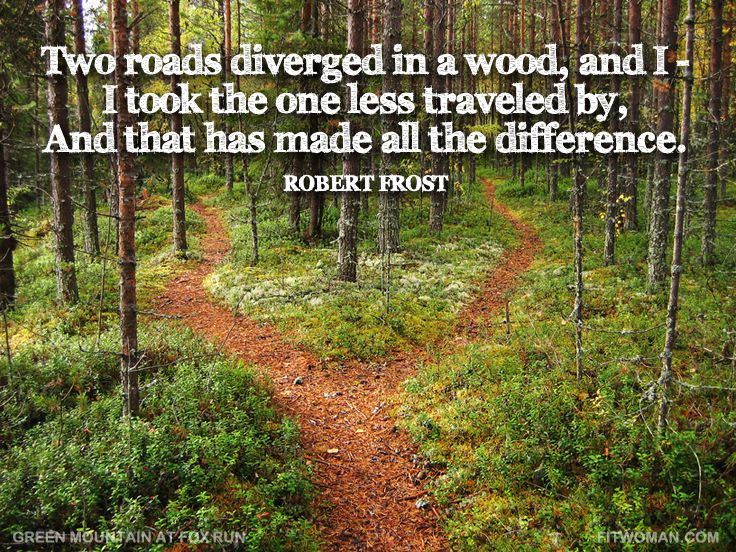
  • When God seeks us out asking the same question he asked Adam and Eve, and Cain, “Where are you?”  We can confidently say:  We have found the Way, retracing our steps back where the forked road misled us to the wrong direction. We have gotten on the road less travelled, the same pathway long trodden by the chosen people of Israel.  Yes, we are starting over and yes, as our messianic teacher has mockingly suggested, we’re taking a few more laps toward and around Sinai because it IS good for our spiritual health which enhances our physical health; in fact we’re taking as many laps as are needed to get into our thick skulls the long neglected truths issued by the God Who spoke on Sinai.  
  • What is there to be afraid of?  We’re going back to the Source of the historic, one-time, complete revelation and that Source is YHWH.  
  • We are grateful to Israel, the Jews, for preserving the Ten Words, and more.  Truly Israel has lived up to its anointing as YHWH’s light to the gentiles, to the nations.  They left their legacy to the world, the Hebrew Scriptures for all to learn from, closely examine, make a decision whether to believe or not, live or not.  Their light as biblical people surviving to this day continues to shine simply by their very presence today, in the Land promised to them by their God, by the God of Abraham, the Revelator on Sinai.
Any world religion that uses the Hebrew Scriptures as the foundation and base of their beliefs must be true to the original and not spin off from it any strange doctrines that do not conform with YHWH’s foundational truths.  


If they do, who do they think they are? 
 
 
logo

NSB@S6K

for Sinai 6000

Core Community


Did you know? – 4 – Israel-RP Stamp

Sinai 6000 and the core community, in case you didn’t know, was birthed and is based in the only Christian country in Asia, where Catholicism was introduced by Spain in 1521.  


The Philippines is predominantly Christian; Filipinos are a very spiritual people.  As such, it is no wonder that this country historically linked with Israel from the time of its recognition by the United Nations as a nation whose people was restored to the Land of Promise in fulfillment of Isaiah 66:8:  

Who has ever heard of such things? Who has ever seen things like this? Can a country be born in a day or a nation be brought forth in a moment?


Check out:

watchmanbiblestudy.com/articles/1948propheciesfulfilled.htm
weareisrael.org/last-days-sequence/nationborn/
www.aish.com/h/iid/48906257.html
www.kolhator.org.il


Previous posts on the relationship between the two countries:


Here’s the link that shows the Stamp:


https://drive.google.com/file/d/0B8UVnW5q3SNiWTJPUmtkc2o1Nm0zSTNBeUozb1NwSWd2SjVJ/view?usp=sharing


Here’s the English text:


Israel-Philippines Joint Issue,

The Philippine Rescue of Jews from the Holocaust


The relations between Israel and the Philippines are SPECIAL  founded upon two events that were morally and politically significant for the Israeli and Philippine peoples.


The first event was the decision made by Manuel L. Quezon, the President of the Philippines at the time, to open his country’s gates to Jewish refugees from Germany and Austria on the eve of WWII, which stood in stark contrast to the conduct of the “enlightened” nations during that period.


The second event was that the Philippines was the only Asian country to vote in favor of Israel at the United Nations on November 29, 1947 during the historic decision that led to the establishment of the State of Israel and the recognition thereof by the family of nations.


This friendly relationship is also related to the fact that Israel is the Holy Land and the land of the Bible, which greatly affects the Philippino [sic] people.


According to a study conducted by the Anti-defamation League, the Philippines is one of the only countries in the world that has virtually no anti-Semitism, a fact that is in line with the two countries’ joint history. Israel has a significant Filipino population, whose contribution to the welfare for incurable patients and the disabled is greatly appreciated.  Against the background of this appreciation, a Filipino nursing worker won Israel’s “X-Factor” competition in 2014, creating waves of support for Israel as an open and tolerant society.


In support of their special relationship, Israel was the first country to provide aid to the Philippines in late 2014 as it was faced with disaster in the wake of the strongest typhoon in history and the Philippines’ gratitude was felt throughout Filipino society. Israel and the Philippines cooperate in the realm of infrastructural development, mainly in the field of agriculture. Some 3,000 people participated in educational training programs in various fields in Israel, run by Mashav – the Center for International Cooperation, and thousands of Filipino agriculture students have come to Israel in recent years to participate in a year-long training program.


The Philippines’ rapid development makes it a promising partner for diverse economic cooperation to the benefit of our two Nations.


Effie Ben Matityau

Ambassador of Israel to the Philippines.


The Open Doors Monument is located at the center of the Memorial Garden in the city of Rishon LeZion. It was dedicated in 2007 and marks the assistance the Philippines provided to Jewish refugees during WWII.


In the late 1930’s most countries of the world closed their doors to Jews who were being persecuted by the Nazi regime. During this difficult period Philippine President Manuel L. Quezon agreed to issue 10,000 immigrant visas to European Jews. Some 1,300 Jews utilized these visas to immigrate to the Philippines. Many of them worked in the cigarette factory founded by the Freidar family in Manila and lived in blocs that President Quezon had built especially for them.


The monument, created by Philippine artist Mr. Jun Yee, consists of three doors in graded sizes symbolizing the courage and humanity of the Filipino people in welcoming the Jewish refugees. The triangular shape of the open doors represents the triangle on the Philippine flag and the triangles that comprise the Star of David. This integration of triangles is a symbol of the close friendly ties that exist between the Philippine Republic and the State of Israel.


The concrete floor below each door features an impression of a pair of feet crossing the threshold into the open door. These footprints belong to George Levinstein, a Jewish refugee who arrived in the Philippines in 1939, Max Weissler, who arrived in the Philippines in 1941 at age 11 and Dorilis Goffer, a 10-year old Filipino Israeli girl who is the granddaughter of Holocaust survivors. Her footprints represent the continued friendship between the two countries.


—————————-


S6K:  In the city-base of Sinai 6000,  there is a club composed of Jewish residents and in fact, the president of the club is the gracious host of our Sinai 6000 website.  The friendship of the two nations is reflected in the friendship we maintain with our Jewish friends.  We seriously take the words of Genesis 12: 3: 

 And I will bless them that bless thee, and curse him that curseth thee: and in thee shall all families of the earth be blessed.


 http://www.hebrew4christians.com/Articles/Blessing_the_Jews/blessing_the_jews.html


For this reason, our Sabbath liturgy often includes prayers for Israel and its people; here is one: https://sinai6000.net/a-sinaites-liturgy-3rd-sabbath-of-september-2/


As Gentiles who worship You, the God of Israel,

and embrace Your firstborn son Israel as our brother,

we pray for peace in the Holy Land,

for peace of heart and mind,

and continued protection of the Jewish people

amidst the threats they face daily.

We pray for their continued existence

and survival during these much troubled times.

We pray for their unity not only in matters of ethnicity and culture,

but most of all, unity in matters of faith,

 in belief and trust in You, their God, the God of their Patriarchs,

Who prepared them to become a blessing to the world,

and a light to the nations.

May they continue to be both blessing and light,

as doubters watch with skepticism,

as people of faith await the fulfillment of prophecies

regarding a “chosen” people whose very survival

is the testimony to the truth of Your pronouncements

from ancient past.


You are the God whose Name is etched in their collective memory,

and whose acts are recorded in their national history.

We thank You for the blessing Israel has been to the world,

for fulfilling the role you have assigned them as witnesses for You,

for recording the Torah for all humanity to consider as a Way of life,

for their contributions to the advancement of knowledge

in all fields of learning,

and contributions to the quality of life brought about

by the brilliance and genius of their outstanding achievers.


We cling to the promises uttered by the prophet Isaiah to Israel,

for just like observant Jews,

we consider Your Holy Day, the Sabbath, 

as a day of joy, a day of celebrating life,

a day to delight in, devoted to connecting with You,

O God of Israel, God of the Nations,

Lord of the Sabbath.


As Gentiles, virtual ‘outsiders looking in’,

May we share in the blessings You have promised Israel,

Gentiles who love you with all mind, heart and soul,

Gentiles who obey Your commandments,

and who live Your Torah.


Amen.


NSB@S6K

Logo by BBB@S6K

Logo by BBB@S6K

Discourse: Sinaite to Christian Pastor – 10

8th January, 2015


Hi “CP” and “D”,


I am glad that you noticed how I struggled to reconcile the New Testament with the Tanach (OT) scriptures especially on the issue of Jesus as the ‘Lamb of God’ or the ‘Passover lamb’ offered as a sacrifice for the atonement of sin, according to John.    And you said in your letter it’s not “a problem” to you but “a confirmation.”   Confirmation of what?


Also, Paul said ‘Jesus is our Passover lamb’ (1Cor. 5:7).   You mentioned also that Paul was an Old Testament scholar,  a Pharisee who knew the connection.   Maybe so.   Please explain, it might  help me understand.


You also mentioned that payment for sin involves a blood sacrifice, a practice in many cultures, that  even the Chinese have the same tradition of animal sacrifice.  I have no quarrel with that.  But, a human sacrifice is something else.


In the Tanach human sacrifice is an abomination to God. Why is this allowed in the New Testament, when Jesus, a man, crucified, died, on the cross was acceptable? This is just one of the problems.


Here is another one.  In the New Testament John and Paul draw a connection between the Passover lamb with Jesus.  However, in gospels of Matthew, Mark, and Luke, there seem to be no connection.   In the gospels it would appear that the Apostles were simply celebrating the Passover by doing the Seder, as it was the practice of Jews;  eating together in the manner they were instructed to do with unleavened bread,  roasted bone shank of a lamb, and bitter herbs. The celebration commemorates the Exodus experience, the flight of the Israelites from Egypt (Ex. 12 & 13).


In so far as  the genealogy of Jesus is concerned, I have already taken this up with you in my 1st letter of the 1st October, 2013 where I pointed out certain discrepancies in both Matthew and Luke. I would suggest to please refer to it again and tell me what you think. And maybe, you can also explain what the term “the Son of God” means as this is always used to refer to Jesus.


I might as well take this opportunity to ask, why man needs a mediator,  an advocate, or a middle man to approach God?  I used to tell myself,  and of course others, that if you sin and have Jesus as your advocate it’s a “win-win” situation. If Jesus is your advocate and he is also God, who is the judge, for sure you will be absolved of any wrongdoing,  right?


As we used to say before, “it’s not what you know but who you know,” a saying which became popular with politicians.


Looking forward to your early reply. I would certainly appreciate your helping me out in my “struggles.”  I certainly also appreciate keeping this correspondence open, especially between friends, as these would help me a lot in my studies of the Scriptures, both the New Testament, as the foundation of the Christian faith, and the Tanach (OT).


May GOD (YHVH) continue to bless you, your family, and loved ones, abundantly.


VAN & BAN@S6K

AIbEiAIAAABDCNPkvrXuucmdeSILdmNhcmRfcGhvdG8qKGJkZTc0YTk3NmUxMGM4OTAzZjk5MDhkMjdkZDI2ODQ3OTliYmQ2MDkwAe5UdNp0lvYvCf8bjAFEJOY_fdsj


Next:  Discourse: Sinaite to Christian Pastor – 12

Sinaite Notes – Prophecy – 6

A Sinaite's Notes/Sinai6000.net

A Sinaite’s Notes/Sinai6000.net

[This was first published June 10,2012.  Future-oriented bible readers tend to read the signs of the times as fulfillment of biblical forthsaying, whether in the Old or the New Testament of the Christian Bible.  Prophesied dates and years pass and still no sign of fulfillment, except perhaps for one:  the return of Israel to the Promised Land.  At the turn of another year, the serious superstitious or half-believing readers of horoscopes rely on prognostications of professional and quack soothsayers and expectedly, they are popular seasonal guests at talk shows.  It is amusing to listen to their sometimes vague and general pronouncements on how the coming year will work itself out.  The Eternal God who knows the future tells Israel (and the rest of us who take His Word seriously):  

To the Torah and to the Testimony: if they speak not according to this word, it is because there is no light in them.” Isaiah 8:20.


From the OVERVIEW from The Stone Edition of TANACH, here are more excerpts from “The Essence of Prophecy.”  For those who are interested in owning this Hebrew Bible, it may be ordered from Mesorah Publications, Ltd., The ArtScroll Series; www.artscroll.com.Admin1]


—————————


ArtScroll TanachEssential to an understanding of Tanach is the concept of prophecy.  Colloquially, people think of prophets as predictors of the future or as spokesmen for an ideal.  However, although prophets may perform these functions, they are not essential to prophecy.


As defined by the classic Renaissance commentator, Rabbi Moshe Chaim Luzzatto:


Part of a prophet’s function may include being sent on a mission by God, but this in itself is not the essence of prophecy, nor is it necessary that a prophet be sent on a mission to others . . . The essence of prophecy is that one be attached to God, and he experience His revelation

(Derech Hashem 3:4:6).


The Talmud teaches that there were hundreds of thousands of prophets, but Scripture quotes only 55.  What did the rest of them do, and why are so few mentioned in Scripture?


By definition, prophets are people who had refined their minds and conduct sufficiently to deserve that God’s spirit could rest upon them.  It was not necessary for them to bring messages to the people; their greatness was personal.  Indeed, prophets were also known as “seers’ (I Samuel 9:9) because they were people whom God had given insight far beyond that of ordinary people.  In a sense we may compare prophets to outstanding scholars, some of whom may write and teach, while others may devote themselves exclusively to study and personal growth.  The way to compare their relative stature is certainly not by counting their published works.


The prophets elevated the nation simply by being role models of holiness, scholarship and closeness to God.  In modern times,  civilized societies value artists and intellectuals for what they are and for the standards they set for the rest of community.  Governments and philanthropists support them because of the benefits they provide to society.  How much more so the people who bring the spirit of God into their communities.  Such were the prophets, Seeing them, their peers would know that God had rested His Spirit upon Israel, and this itself would raise the level of national aspirations.


. . . . people whose spiritual antennae are attuned to holiness can hear things that others do not.  The generation that stood on Sinai, that saw and heard the Revelation, that experienced prophecy, that lived with daily miracles, that could feel the Divine Presence hovering above them  —such people could hear the teachings of Moses and detect in them the holiness of Samuel, the inspiration of David, the wisdom of Solomon, the visions of Isaiah.  They were so imbued with the lessons and perspectives of the Torah that the future teachings of the great prophets had become part of their nature, in the same way that someone who has mastered a field of knowledge knows the contents of elementary textbooks without ever having seen them.  He knows them because he has mastered the subject perfectly.


It was only later, when Moses and Joshua were gone and subsequent generations let themselves be seduced by the life-styles of their pagan neighbours, that the clarity of Moses’ teaching began to fade, and the people failed to hear its sacred resonance.


How it happened that Jews do not say nor write the Name

[This was first posted June 21, 2013.  Every time we write the Tetragrammaton Name of the God of Israel,  we are constantly aware that we might be offending the chosen people who, out of utmost reverence, avoid the Name altogether and instead substitute ‘circumlocutions’ such as LORD or HASHEM. whether in speech or in writing.  Here’s an attempt to explain when and how this avoidance might have begun. —Admin1.]


———————————-


How did it happen that the Name of the One True God was all but forgotten?


Image from communio.stblogs.org

Was there a biblical prohibition regarding men calling on the Name?  As far as we have researched, none.


So why can we not read the Name in Christian/Messianic/Jewish Bibles?  Instead of the Name, we read substitutes such as LORD, ADONAI, and HaShem.


Here is the rabbinic explanation, from Everyman’s Talmud by Abraham Cohen:


THE INEFFABLE NAME


To the Oriental, a name is not merely a label as with us.  It was thought of as indicating the nature of the person or object by whom it was borne.  For that reason special reverence attached to “the distinctive Name” (Shem Hamephorash) of the Deity which He had revealed to the people of Israel viz. the tetragrammaton, JHVH.


In the Biblical period there seems to have been no scruple against its use in daily speech.  The addition of Jah or Jahu to personal names, which persisted among the Jews even after the Babylonian exile, is an indication that there was no prohibition of the four-lettered Name.  But in the early Rabbinic period the pronunciation of the Name was restricted to the Temple service.  The rule was laid down:  


“In the Sanctuary the Name was pronounced as written; but beyond its confines a substituted Name was employed” (Sot. VII,6).


The tetragrammaton was included in the priestly benediction which was daily pronounced in the Temple (Sifre Num. 39;12a).  It was also used by the High Priest on the Day of Atonement, when he made the threefold confession of sins on behalf of himself, the priests, and the community.  The third occasion is described in this manner:


“Thus did he say:  O JHVH, Thy people, the House of Israel, have committed iniquity, have transgressed, have sinned before Thee.  I beseech Thee by the name JHVH, make thou atonement for the iniquities and for the transgressions and for the sins wherein Thy people, the House of Israel, have committed iniquity, have transgressed and sinned before Thee; as it is written in the Torah of Thy servant oses, saying:  ‘For on this day shall atonement be made for you, to cleanse you; from all your sins shall ye be clean before JHVH’ (Lev.xvi,30).  And when the priests and the people that stood in the Court heard the glorious and revered Name pronounced freely out of the mouth of the High Priest, in holiness and purity, they knelt and prostrated themselves, falling on their faces, and exclaiming:  Blessed be His glorious, sovereign Name for ever and ever” (Joma VI, 2).


In the last stage of the Temple’s existence, there was reluctance to give a clear enunciation of the tetragrammaton.  This practice is attested by R. Tarphon, who belonged to a priestly family.  He records that in his boyhood, before he was old enough to officiate,


“On one occasion I followed my uncles on to the dais, and I inclined my ear to catch what the High Priest said.  I heard him cause the Name to be drowned by the singing of his brother-priest” (Kid.7Ia).


Behind the care not to give explicit utterance to the Name may be detected a lowering in the moral standard of the priests.  The Talmud declares:


 “At first the High Priest used to proclaim the Name in a loud voice; but when dissolute men multiplied, he proclaimed it in a low tone” (p. Joma 40d).


On the other hand, there was a time when the free and open use of the Name even by the layman was advocated.  The Mishnah teaches:


 “It was ordained that a man should greet his friends by mentioning the Name” (Ber. IX, 5).


 It has been suggested that the recommendation was based on the desire to distinguish the Israelite from the Samaritan, who referred to God as “the Name” and not as JHVH, or the Rabbinite Jew from the Jewish-Christian.


This custom, however, was soon discontinued, and among those who are excluded from the share in the World to Come is

“he who pronounces the Name according to its letters” (Sanh. X,I).


 A third-century Rabbi taught:

 “Whoever explicitly pronounces the Name is guilty of a capital offence” (Pesikta 148a).


Instead of JHVH the Name was pronounced Adonai (my Lord), in the Synagogue service; but there is a tradition that the original pronunciation was transmitted by the Sages to their disciples periodically—once or twice every seven years (Kid. 71a).  Even that practice ceased after a while, and the method of pronouncing the Name is no longer known with certainty.


————————-


This is why, in our website, we have chosen one translation to extensively feature, chapter by chapter, and this is The Five Books of Moses by Everett Fox.  It is downloadable for free,


http://toby.weebly.com/uploads/2/7/4/8/2748917/everett_foxxstorah.pdf.


For the other books of the TNK, the Prophets (Neviim) and the Writings (Ketuviim), we feature ArtScroll and add YHWH whenever they use HaShem (the Name) and the Jewish Publication Society (JPS) and substitute YHWH whenever they use LORD.  


When the Name of the One True God is written all over His Torah and the TNK or the Hebrew Scriptures, and one can read it over and over wherever it occurs, there is no room for mistaking any other name for THE NAME.


Man is without excuse.  When asked:  who is your God and what is His Name? The answer should be one and only one:  YHWH. . . that is, if He is the God you worship.


[ESV] 1 Kings 18:21


1 And Elijah came near to all the people and said, “How long will you go limping between two different opinions? If [YHWH] is God, follow him; but if Baal, then follow him.” And the people did not answer him a word.


For further reading, here’s a good article titled “God is not God’s Name”: http://www.yhwh.com/gingn/gingn.htm.


NSB@S6K

logo

Life is a Pilgrimage

Image from www.praisesnprayers.com

Image from www.praisesnprayers.com

[Had to dig out this post from the 2nd month at the start of this website, April 6, 2012.  


For people ‘on the move’ which is what life is all about, for pilgrims in search of meaning in life, it is good to look back to the start of a journey if only to appreciate how much distance one has travelled and more importantly, if the journey has changed the traveller in any significant way. Is one the same person at the beginning as one is at any point of the journey?


Each Sinaite began with a re-examination of unquestioned and unchallenged set of beliefs and convictions.   That beginning led unexpectedly to an awakening and consequently a major shift in core beliefs.  The decision to  shed and unlearn what amounted to virtually a lifetime of accumulated doctrinal knowledge moved toward taking on the challenge of rediscovering foundational truths that were ‘buried’ in the first part of the Christian bible we had neglected to read with fresh eyes and a blank mental slate.   One had to  seriously study what is referred to as the “root” —- with no preconceptions and baggage from the supposed “fruit.”—admittedly, not an easy thing to do, for it required —in computerese terms —“delete” and start over with a mental blank slate.  How does the mind do that?   With conscious choice and will power, one can do it:   ‘Learn the Old, unlearn the New’  became the battlecry in our rewrite of lyrics to the tune of “Onward Christian Soldiers.”  


What were we thinking at the beginning of this pilgrimage?  This post reviews. —Admin1]


——————————–


For God-seekers/Truth-seekers, life is a pilgrimage.


We journey through each phase of our earthly life, choosing pathways we think will lead us to our destination . . . only to face that fork on the road that gives us pause. Those who don’t wish to stray from ‘the familiar’ continue on the same convenient and comfortable pathway; after all, they have been convinced that the map they’ve depended on has been reliable. Few dare to stray into the unknown, unbeaten path.


Thankfully, many of us did and have been blessed for doing so, for in checking what was on the “other pathway” that diverged from the road widely travelled—the beaten path—we learned, we matured, we became progressively more discerning; best of all, we got biblically educated!


Some of us have spent almost a lifetime journeying toward that “Sacred Place” where we expect to meet the ONE TRUE GOD. On that journey, we made a thoughtful decision every time we faced a fork on the road. That fork showed up not once, not twice, but thrice on this pilgrimage.


Some of us started out as children inheriting the religious choices of our parents, baptized in the Roman Catholic Church; then, discontented with mere tradition, ritual and unquestioned dogma, we turned to seeking God in what we were told contained His complete revelation—The Christian Bible.


So we ended up in one of the “protestant” sects or turned to one of the many evangelical fellowships where we listened to preachings from “The Word of God”, except much of that preaching/teaching focused only on the newer testament. Many of us organized into weekly bible study groups and got involved in churches/fellowships.


While comfortable and content in following that map provided by The Christian Bible, later in the journey, we faced yet another fork on the road. This time, the alternative led us to a closer look into the neglected part of the Christian Bible —the so-called “Old” Testament. Messianic Theology introduced us to the Hebraic roots of our Christian Faith.


Well and good, most of us felt we had finally arrived. . .only to encounter one more fork on the road . . . one that challenged us not only to venture more deeply into the foundational Hebrew Scriptures on which the supposedly newer testament was based, but also to question the very foundations of our Christian heritage.


It is this latter investigation that shook up the very core of our God-search, for we discovered that what we had unquestioningly accepted as God-given Truth turned out to be man-made doctrine hatched in mere councils of men within the first three centuries of millennium 4 in the Biblical reckoning of time, though in the Gregorian calendar, it would be the first thousand years after the supposed birth of Christianity’s Savior — Jesus Christ.


Jesus of Nazareth, Yeshua–like any Jew in his time —was raised and educated in the Hebrew Scriptures, lived Torah, worshipped the God of Israel. Other than that, there isn’t much written in historical records about this man; much of what we know about him comes from “New” Testament books.


We who have awakened to the consistent message of the Hebrew Scriptures about the self-revelation of the God on Sinai have followed Jesus out of Christianity into his faith in Israel’s God [Following JesusOut of Christianity – A Synagogue Without Walls, www.rootsoffaith.net/video/followingjesusout-of/Ross Nichols].  The faith OF Jesus is not the same as faith IN Jesus, as explained by one author who greatly influenced our individual and collective decision, James D. Tabor, Restoring Abrahamic Faith.


With all due respect, this is where we now depart from our former Christ-centered colleagues, friends, teachers and pastors. Contrary to misunderstandings about our faith, we are not joining Judaism; we are gentiles drawn to the God of Creation, the same God of Abraham, the God of Moses Whose self-revealed Name is YHWH, the God who made His one and only covenant  with Israel, the God of the Jews and of the historical Jesus.


Our former co-travellers on this journey [committed and dedicated Christ-worshippers] who are befuddled at our turnabout from a whole belief system we had embraced all our lives, have understandably reacted in various ways—ranging from pity that we’ve lost our salvation, to active resistance by warning others and labelling us “apostates”, “bastards” and “anti-christs”. Such negative reactions hardly threaten our resolve to continue on this last and final lap of our pilgrimage.

This pathway has led us back to the place of Divine Revelation:


  • geographically, that place is Mount Sinai;
  • historically, that time is recorded in Exodus . .
  • literarily, that “place” is the repository of the True Revelation—the Hebrew Scriptures, the TNK, but specifically the TORAH.

The journey’s length depends on the God-seeker . . . for the True Revelator had given His directions as early as that historical point in time to Moses and the mixed multitude. That Revelation has been accessible to all mankind for 6 millennia now, but it has taken each one of us almost a lifetime to get to it.


Why?  That is a question each one must answer for himself.


Image from thesoberistblog.wordpress.com

Image from thesoberistblog.wordpress.com

There is nothing to lose in pursuing this path. We all have already known the other side; all our lives have been spent on studying its theological/scriptural/doctrinal implications and conclusions.

All we can say at this point is — none of us regret ever returning to the original Way. We wish we had discovered this Way so much earlier, so that we could have worshipped, served, and made known the One True God in the spring instead of the autumn of our lives. It is not too late for the youth among us; we trust they will carry on our legacy.


Blessed be the true and living God we have come to know, love and now serve—


His Name is YHWH.


logoNSB@S6K

 On behalf of Sinai 6000 Core Community


Sinaite Notes on The TORAH – 1

A Sinaite's Notes/Sinai6000.net

A Sinaite’s Notes/Sinai6000.net

[First posted June 5, 2012; the Sinaite’s early notes on a book we had not yet determined at the time, would be what we would later decide as the true Word of YHWH.—Admin1]


—————————-


The word “TORAH” has been bandied about all over this website.  We have endeavored to explain what we mean by it in our articles.  What we have accepted as “TORAH” comes out of our collective understanding from extensive individual study and group research.  Our main source of information comes from the chosen people of YHWH to whom was given this special divine revelation to record for posterity, to live out and to pass on to generations of Israelites/Jews, but also to the whole world of non-Israelites, to us gentiles.


The “notes” we share here come from different books and Jewish websites; hopefully our visitors, new and regular, will benefit from these notes.  They are not organized in a systematic manner; they’re what you might read if you happen to read a student’s notebook, scribblings of information that are useful/helpful in understanding this collection of five books attributed to the main recipient of the revelation—Moses.


But first,  a blessing for the Torah, just as the Rabbis pray:


Blessed are you

YHWH our God,

King of the universe,

who gives us the Torah of truth

so that we may study, live, learn,

and be changed by it,

so that we may have righteous judgment and your spirit of love,

so that we may keep your commandments,

do them, and live in them, and teach them

to our children and our children’s children forever.  Amain!


“Torah” — the word is said to come from the same root as hora’ah, the Hebrew word for “instruction” or “teaching.”  

Such instruction has been given by YHWH Himself so that all of mankind could find and follow this path leading toward God. Without God Himself revealing this path, man could only guess or determine their own ideas of how to find God [religion].  


The Jewish sages teach that studying Torah is not simply studying the word of God; Torah study is in effect an actual or authentic encounter with God HImself.  The sages promote the belief that on Mount Sinai, Moses actually received two Torahs—a written Torah and an oral Torah.  For Jews, or the Jewish religion — Judaism — the written and oral make up their Torah. They explain that the written gives general principles while the oral expands on these basics so that they could be applied to new and current situations through the centuries.  


There are sects [Karaites] that deviate from that belief and are more fundamentalist, accepting only the written Torah.  Understandably so . . . because when one starts reading the oral Torah, some writings appear to spin off from the text.  We Sinaites do bother to read the oral Torah to understand Jewish thinking but in the end, accept only the Written Torah as YHWH’s revelation. 


Image from amazon.com

Image from amazon.com

One of the most helpful books for clueless gentiles like us is the series of “how to” books  “for Dummies.”  There is actually “The Torah for Dummies.”  The author Arthur Kurzweil simplifies what appears like a formidable task of navigating through writings that most people can barely relate to.


Here are a few tips that he gives:

  • The Torah, also known as the Five Books of Moses, is the most sacred object and the most important text of the Jewish people.  As a sacred scroll found in every synagogue throughout the world, it’s referred to as a sefer Torah (Torah scroll); as a bound book, it’s referred to as a chumash (five).
  • The Torah is more than a text, though; it’s also the spiritual tradition of the Jewish people, communicated by God (the Creator and Master of the universe) to Moses (The greatest prophet of the Jewish people) on Mount Sinai in 1280 BCE and handed down from generation to generation.
  • You can understand the word “Torah” in a third way as well.  Torah is the vast and constantly growing body of teachings and wisdom of Judaism, and in this sense it even includes what a qualified teacher will teach tomorrow.  The “study of Torah” is not necessarily the same as the “study of the Torah.”  “The Torah” usually means the Written Torah, the Five Books of Moses, whereas “Torah” is Torah studies in the more general sense.
  • Even though the Torah is mainly about God, it’s also important to remember that the Torah’s author is God.  Although the first line of the Torah says, “In the beginning of God’s creation of heaven and earth . . .,” it’s God who is speaking. 
  • God chose Moses to receive and write down a divine message; which is why the Torah is also known as the Five Books of Moses, but the Torah emanates from God.  God reaches into the human world with the Torah.
  • God didn’t create the world out of nothing.  God’s creation is an emanation of divine light that God sculpted into all that exists.  God is not just “in” everything.  Rather, everything is God. . . on the deepest level everything is God.
  • The Torah is mainly God’s communication to people about how to behave.  Most of the Torah is directed toward the Jewish people, although it also contains instructions for all other peoples of the world.  But for reasons that only God knows, the Jewish people are given extra burdens and responsibilities.  God chose the Jewish people, but in no way does this status of being chosen by God imply superiority. 
  • People have responsibilities to God and to each other, and the Torah is filled with instructions about how to fulfill both.


Sig-4_16colors

logo

Yo! Searchers can we help you? – January 2015

Image from kevinmartineau.ca

Image from kevinmartineau.ca

[Hear this often? “Time goes by so fast!”   Actually, time goes by the same way it always has since the beginning of time, taking its own sweet time.  What they probably mean is, toward the end of the  year, it seems time went so fast . . . but when you REALLY look back, it took a YEAR for time to go from beginning to end. Whatever.  Anyway, welcome 2015!


A most blessed year to our dear visitors who frequent this website;  hopefully in your individual search for truth and for the One True God, Creator of the universe, Sinai 6000 has managed to answer some lingering doubts and questions to encourage you to continue your own journey of faith. We praise our Lord YHWH for giving us the opportunity to add to lighting His Way and we thank our benefactor, Bruce Silverman of SilverConnect for hosting our website for free!  


May YHWH’s bountiful blessings touch your lives in a way that is significant for you! Blessed 2015 to one an all! —Admin1]


——————————–


01/30/15 “judaism torah” –  The First Torah-based Religion – Judaism


01/30/15 “the jewish mistique” – 


01/30/15 “keturah and abraham images” – Genesis/Bereshith 25a: “Yitschaq and Yishma’el buried him in the cave of Makpelah”


01/30/15 “conservative judaism symbols” – Must Read – 6 – Robert Schoen/The Torah and the Law; Jewish symbols


 01/25/15 – “rod of aaron that budded” –  Numbers/Bamidbar 17 – ” And it will be that the rod of the man whom I will choose will bud;”


01/25/15 – “was Cain not in adam’s likeness but seth was” – Q&A: Why is Seth the one “in the likeness of Adam” instead of firstborn son Cain?


1/25/15  “sinai and zion summary” – MUST READ: SINAI & ZION – 1


01/25/15   “the sermon on the mount and mount sinai”   – The Sermon on Sinai vs. The Sermon on the Mount


01/25/15  “explain the direction Judah took when he went down . . .” – 

01/24/15  “who are amalekites” –  Exodus/Shemoth 17 – Who is the Rock? Who are the Amalekites?


01/23/15  “www.bing.com/search?q=the+miracle+of+jephthah+becoming+a” – The Bible as “Literature” – 3 – Jephthah as “literary art”


01/21/15  “the pentateuch and haftorahs 1868″ – MUST OWN: PENTATEUCH AND HAFTORAHS – Versions and Commentators Consulted


01/21/15  “burn evil out of our mist” – Deuteronomy/Davarim 13: “so shall you burn out the evil from your midst!”


01/21/15  “adam and eve monkeys” – Q: ” “a 15th century rabbi claimed adam and eve had the faces of monkeys”


01/21/15 – “serpent” – Imagine, one word that evokes a whole theology on evil symbolism, at least to Christianity.  Here’s a whole list of articles to ponder if the symbolism is appropriate, if not remotely related:


Image from www.christianpost.com

Image from www.christianpost.com


01/17/15  “images of abraham with 3 men” – Journey of Faith: YHWH, Abraham and “3 men”


01/17/15  “uncircumcised lips of moses” – Exodus/Shemoth 6-b: Do you have “uncircumcised lips”?


01/17/15  “sacrificing lamb at yom kippur” – Sacrificial goat, Scapegoat . . . what about the Lamb? Not on Yom Kippur.


Image from www.pinterest.com

Image from www.pinterest.com

Image from www.pinterest.com

Image from www.pinterest.com

01/16/15  “egyptian relief of ham,shem and japheth”


Oy, the new things we learn from searchers who land on this website.  This one was searching for actual images of Noah’s sons but what is amazing about the search term is the identifying of the bas relief as specifically of Egyptian origin.  Of course, he/she didn’t find it here, but we’re pasting images anyway, courtesy of pinterest, one of our favorite sources.


The questions that come to mind upon seeing this are:  


  • where did the Egyptians learn about Noah
  • and the flood,
  • and more specifically his three sons and their names?  
  • Why was there a sculpted artistic portrayal of these sons
  • Why not Noah?  

While thinking aloud, possibly one answer is because the sons  repopulated the earth after all humankind supposedly perished in the flood.  As it is taught, we all come from Noah through whom the Creator did a ‘take-2’ or ‘start-up’ race.  Noah supposedly came from the righteous line of Seth, so starting over from a ‘good’ line should have some positive impact on the future generations, shouldn’t we think? (Check the Scriptures, actually the tower of Babel follows the Flood and then the focus narrows down to Abraham and his lineage.)


Did the Egyptians think this way? We won’t know from this sculpture, but perhaps their religious literature might elaborate.  


Or we could simply connect the dots provided in Scripture itself:  that actually, the descendants of Ham were supposed to be people of color, and the Egyptians would be among them.  Eureka, that’s it! Perhaps that is why they did have a sculpture portraying the sons of Noah, they are among the “Hamites”.


Here’s a post:   Genesis/Bereshith 10: “. . . these are the begetting of the sons of Noah. . . Sons were born to them after the Deluge.”


01/15/15 – “jews and heaven and hell” –  Does Judaism believe in heaven and hell?


 01/14/15 “3rd monotheistic of islam” –  


01/14/15 ” rabbi answer to genesis 3:15″ – 


01/14/15  “uncircumcised lips in torah” –  Exodus/Shemoth 6-b: Do you have “uncircumcised lips”?


01/13/15 “serpent”


01/12/15  “dostoyevski quotes on god” –  “Without God, everything is permitted.” – Dostoyevsky


01/12/15  “jesus superstar” – “Superstar” – Confessions of an Idolater


01/12/15  “what does uncircumcised lips mean” – Exodus/Shemoth 6-b: Do you have “uncircumcised lips”?


01/12/15  “hallellu yah”  – Not “Hallelujah” . . . but Hallelu YAH!


01/11/15 “el elohe israel” “God, the God of Israel”; this is from our post:   https://sinai6000.net/revisited-%D7%91%D7%A8%D7%90%D7%A9%D7%99%D7%AA-bereshiyth-33-i-have-enough-my-brother-what-you-have-let-it-remain-yours/

specifically verse 20 and the commentary from Pentateuch and Haftorah and Robert Alter’s The  Five Books of Moses:  

20 There he set up a slaughter-site
and called it: El/God, the God of Yisrael! 

altar.  In gratitude to God, who had permitted him to return in safety to the land of his fathers.

El-elohe-Israel. A profession of faith in the one true God, made at the moment when Jacob comes to dwell among the heathen Canaanites (Ryle).

[RA]  El-Elohei-Israel. The name means “El/God, God of Israel.”  Claus Westermann makes the interesting argument that Jacob marks his taking up residence in Canaan by subsuming the Canaanite sky god in his monotheistic cult: “El, the creator God, the supreme God in the Canaanite pantheon, now becomes the God of the people of Israel.”

Image from kumi07.wordpress.com


01/11/15  “triadic line genesis” – Ah, the things we learn from searchers and their search terms, this is a great example!  Clueless as to what this searcher was looking for,  we resorted to google and discovered quite a variety of topics associated with the first word “triadic” (a threesome anything). We picked only 3 to feature here, relating to biblical issues:  


 One article focused on the Holy Spirit:


01/10/15  “sinai torah” –  Must Read – 6 – Robert Schoen/The Torah and the Law; Jewish symbols


01/08/15  “origins of prophecy in israel”


01/08/15 “hebrew symbol for l” — This searcher should check out any of the Jewish websites on our link.


01/07/15  “five books of moses fox revised edition publication date” – 

The Five Books of Moses: Genesis, Exodus, Leviticus, Numbers, Deuteronomy (The Schocken Bible, Volume 1) Paperback – February 8, 2000   by Everett Fox (Translator)


01/05/15 “ john.d.levenson 1987 sinai and zion” – Jon D. Levenson, SINAI & ZION: An Entry into the Jewish Bible.


01/05/15  “were the two silver trumpets in numbers 10 shofars?” – Numbers/Bamidbar -10- Two silver trumpets, not the Shofar 


01/03/15 “jacob reconciling with essau” – Genesis/Bereshith 33: “I have plenty, my brother, let what is yours remain yours. “


01/03/15 “sabbath messages”/ “happy sabbath quotes” – We have our own Sinaite’s Liturgy for every Sabbath of the year — please go to the category:   A Sinaite’s Sabbath Liturgy.  Aside from our own prayers and revised hymn lyrics that reflect the Sinaite’s creed, we have images from the internet that contain “Sabbath messages.”  Please feel free to use any of our material; this website offers everything for ‘free’ and for use of anyone interested.  If used for publication, we would appreciate acknowledgment of source so that others might be referred to this website.


01/02/15  “shema symbols”   

01/02/15  “gentiles at mt sanai” –  Exodus 12: 38

37 The Children of Israel moved on from Ra’amses to Sukkot, 
about six hundred thousand on foot, menfolk apart from little-ones,
38 and also a mixed multitude went up with them, 
along with sheep and oxen, an exceedingly heavy (amount of) livestock.

01/01/15  “kazantzakis it is the responsibility of every man to be the savior in a world in which there can be no salvation” – 

Discourse: Christian Pastor to Sinaite – 9

[Update 2015: For website visitors who have not followed this discourse between two friends who were involved as pastor/elder/minister in one of the biggest church/fellowship in a metropolitan area, please refer to these prequels:

Admin1.]


—————————————


Hi VAN and BAN,


The passover account you struggled with when John said Jesus is the lamb of God is not a problem to me but a confirmation.
Even Paul in  1 Corinthians 5: 7 said, ” .., Jesus our passover also has been sacrificed. “   Remember Paul was an old testament scholar – a Pharisee also. He knew the connection clearly.


Historical fact  –  Jesus died on the passover.   Why ?  Why not another date? To let  us see it is no coincidence.  He is indeed our passover sacrifice. Payment for sin involves blood sacrifice.


 This is practiced in many cultures. The Chinese has the same tradition of animal sacrifice to appease the God of heaven. Coincidence or divinely inspired and taught ?


VAN,  eventually faith is a choice. The connecting of the details and dots about the old testament and Jesus is so amazing.
From his—
  • ancestry,
  • genealogy,  
  • to his birth place,
  • time of his birth,
  • His teachings
  • and miracles,
  • prediction about His own death,
  • suffering on the cross,
  • betrayed for 30 pcs of silver,
  • death
  • and resurrection
  • etc..


I humble myself and chose to believe His claims –

  • The son of God,
  • The way,
  • The Truth
  • and The life.
  • “No one comes to the father but Me.”


God bless!
“CP”