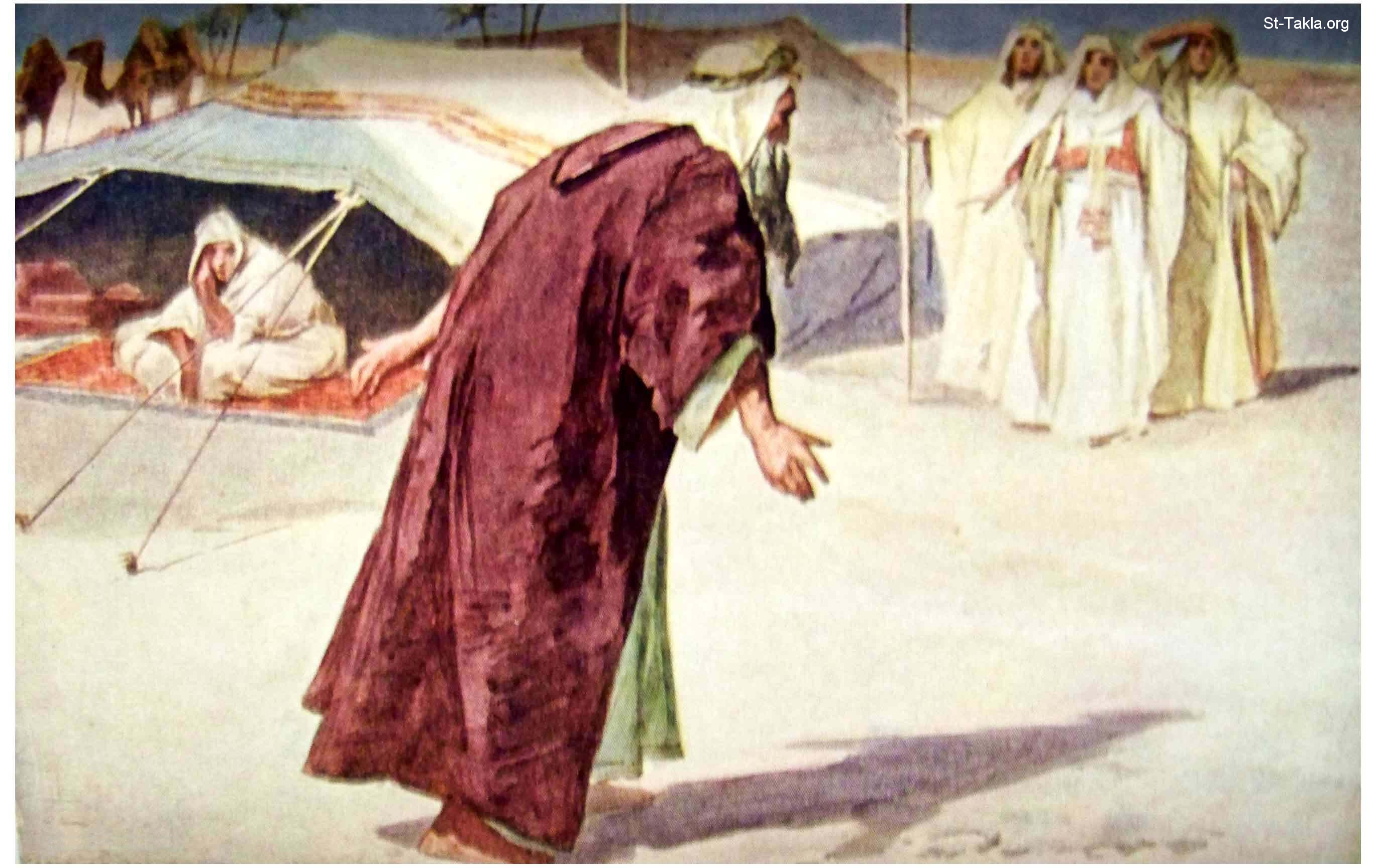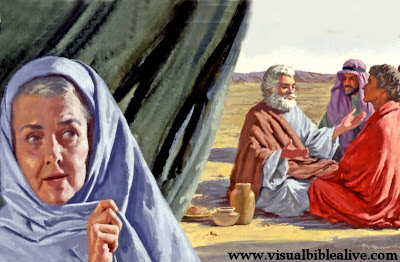
Whose 'voice' do you listen to?

[This is the latest ‘send’ from a former Christian pastor whose teachings to his flock have been shared with Sinaite BAN.  He has been a regular contributor, please read his previous posts:
The original format which was in the form of preaching notes has been revised according to S6K format.–Admin1.]

3/15/2014 – Torah Insights   –  Passage: Genesis 21:1-3


Genesis 21:1-3 NKJV
1] And the LORD [YHWH] visited Sarah as He had said, and the LORD [YHWH] did for Sarah as He had spoken.
2] For Sarah conceived and bore Abraham a son in his old age, at the set time of which God had spoken to him.
3] And Abraham called the name of his son who was born to him–whom Sarah bore to him–Isaac.

Important major life-changing truth is laid out before us …

If we apply this truth in our lives, we will live in peace without much stress no matter what happens in our lives.

KEY TRUTH TO EMPHASIZE: “As YHWH has spoken …”

If YHWH says it, It will certainly happen … Believe it and act upon it.

One of the greatest tragedies in our world today is that we pay more attention to WHAT PEOPLE SAY

RATHER THAN WHAT GOD SAYS …

Every action we take, especially those actions that are “public”, We are always asking, “What will people say”?

We are interested in what the columnist say in the newspaper …

We listen intently for “talk shows” …

We believe the reporters more than God …

We believe in the opinion of the talk show host more than God …

Scripture, on the other hand, emphasizes what YHWH says …

Genesis 21:1-3 recalls what YHWH had spoken to Abraham in the previous chapters:

Genesis 17:15-22 NKJV

15] Then God said to Abraham, “As for Sarai your wife, you shall not call her name Sarai, but Sarah shall be her name.
16] And I will bless her and also give you a son by her; then I will bless her, and she shall be a mother of nations; kings of peoples shall be from her.”
17] Then Abraham fell on his face and laughed, and said in his heart, “Shall a child be born to a man who is one hundred years old?  And shall Sarah, who is ninety years old, bear a child?” 
18] And Abraham said to God, “Oh, that Ishmael might live before You!”
19] Then God said: “No, Sarah your wife shall bear you a son, and you shall call his name Isaac:  I will establish My covenant with him for an everlasting covenant, and with his descendants after him.  
20] And as for Ishmael, I have heard you. Behold, I have blessed him, and will make him fruitful, and will multiply him exceedingly. He shall beget twelve princes, and I will make him a great nation.
21] But My covenant I will establish with Isaac, whom Sarah shall bear to you at this set time next year.”
22] Then He finished talking with him, and God went up from Abraham.

In chapter 18 of Genesis, YHWH once again repeated His statements about Isaac:

Genesis 18:10-15 NKJV

10] And He said, “I will certainly return to you according to the time of life, and behold, Sarah you wife shall have a son.” (Sarah was listening in the tent door which was behind him.)
11] Now Abraham and Sarah were old, well advanced in age; and Sarah had passed the age of childbearing.
12] Therefore Sarah laughed within herself, saying, “After I have grown old, shall I have pleasure, my lord being old also?”
13] And the LORD [YHWH] said to Abraham, “Why did Sarah laugh, saying, ‘Shall I surely bear a child, since I am old?’
14] Is anything too hard for the LORD [YHWH]? At the appointed time I will return to you, according to the time of life, and Sarah shall have a son.”
15] But Sarah denied it, saying, “I did not laugh,” for she was afraid. And He said, “No, but you did laugh!”

What is our reaction to what YHWH says?

Like Abraham and Sarah, OUR reaction to what YHWH says is we laugh.

We say “impossible”. We do not believe …

Why is this? Because we have been trained to believe what others say and anything outside of our culture, we do not believe.

This is especially true with religious beliefs.

Think about your religion? How did you get into it?

By assimilation, right? You were born into it.

You were a little child when you were “baptized” … incapable of using your mind and thinking about it —

Think back to when you were a child … what were you taught?

Santa Claus … Superman … Batman … superheroes …

Fairy tales … lots of superstitious beliefs … The “boogie man” will get you … Friday the 13th is a bad day …

Even when we discover that these were fairy tales and not true what do we do? — We pass them on to our children as our parents did with us …

Our culture determines what we believe … it is passed on from one generation to another …

If one grew up in Communist China, what would he believe about God?

If one grew up in India, who would be their God?

If one grew up in the Philippines, who would be their God?

Question is who is right?

Proverbs 14:12 NKJV

12] There is a way that seems right to a man, But its end is the way of death.

Proverbs 12:15 NKJV

15] The way of a fool is right in his own eyes, But he who heeds counsel is wise.

Proverbs 3:7 NKJV

7] Do not be wise in your own eyes; Fear the LORD [YHWH] and depart from evil.

Proverbs 16:25 NKJV

25] There is a way that seems right to a man, But its end is the way of death.

We believe what we learned as children because it was the first thing that we were taught …

Proverbs 18:17 NKJV

17] The first one to plead his cause seems right, Until his neighbor comes and examines him.

The problem is we never bother to EXAMINE OUR BELIEFS …

We never bother to examine the EVIDENCE or lack of it …

We say “Basta, that is how we grew up and that is how we will die …”

This is not very smart or intelligent … this is a closed mind …

It would not be good to teach this close-minded attitude to our children …

We want our children to be “educated” to learn the truth …

Here is what Yeshua (Jesus) said to people who put man’s teaching /tradition above God’s word:

Matthew 15:1-9 NKJV (Yeshua’s words in red)

1] Then the scribes and Pharisees who were from Jerusalem came to Jesus, saying,

2] “Why do Your disciples transgress the tradition of the elders? For they do not wash their hands when they eat bread.”

3] He answered and said to them, “Why do you also transgress the commandment of God because of your tradition?

4] For God commanded, saying, ‘HONOR YOUR FATHER AND YOUR MOTHER’; and, ‘HE WHO CURSES FATHER OR MOTHER, LET HIM BE PUT TO DEATH.’

5] But you say, ‘Whoever says to his father or mother, “Whatever profit you might have received from me is a gift to God”–

6] then he need not honor his father or mother.’ Thus you have made the commandment of God of no ef ect by your tradition.

7] Hypocrites! Well did Isaiah prophesy about you, saying:

8] ‘THESE PEOPLE DRAW NEAR TO ME WITH THEIR MOUTH, AND HONOR ME WITH THEIR LIPS, BUT THEIR HEART IS FAR FROM ME.

9] AND IN VAIN THEY WORSHIP ME, TEACHING AS DOCTRINES THE COMMANDMENTS OF MEN.’ “

Several things to note about this New Testament passage from Matthew:

1] Yeshua confirms that GOD IS THE ONE WHO COMMANDED “honor your father and mother” as found in Exodus 20:12. If these are God’s commands, then why do most people teach that these “old Testament” commandments are no longer in effect? Yeshua shows no hint of these commandments being replaced!

2] Yeshua quoted from the prophet Isaiah, proving that Yeshua had a very high regard for what we call “Old Testament.”

Isaiah 29:13-16 NKJV

13] Therefore the Lord said:
“Inasmuch as these people draw near with their mouths
And honor Me with their lips,
But I have removed their hearts far from Me,
And their fear toward me is taught by the commandment of men,
14] Therefore, behold, I will again do a marvelous work
Among this people,
A marvelous work and a wonder;  
For the wisdom of their wise men shall perish,
And the understanding of their prudent men shall be hidden.”  
15]  Woe to those who seek deep to hide their counsel far from the LORD [YHWH],
And their works are in the dark;
They say, “Who sees us?” and, “Who knows us?”
16] Surely you have things turned around! Shall the potter be esteemed as the clay;
For shall the thing made say of him who made it, “He did not make me”?
Or shall the thing formed say of him who formed it, “He has no understanding”?

3] It is clear that worship of God [YHWH] is in vain if it is based on the teachings of men.

4] Here are some interesting facts about book of Isaiah from about.com

In summary, the message of Isaiah is that salvation comes from God—not man. God alone is Savior, Ruler and King.

Author of the Book of Isaiah: Isaiah the prophet, son of Amoz.

Date Written: between (circa) 740-680 B.C.,

Therefore, even if Isaiah wrote his prophecy approximately 700 years before Yeshua was born, the fact that Yeshua was quoting it clearly says that YHWH’s words are still in effect. They never are made obsolete.

Yeshua confirmed that YHWH’s words are always in effect in an earlier chapter of Matthew where he gave us an important LIFE-PRINCIPLE in Matthew 4:4 as he quoted from Deuteronomy 8:3.

Matthew 4:4 NKJV

4] But He answered and said, “It is written, ‘MAN SHALL NOT LIVE BY BREAD ALONE, BUT BY EVERY WORD THAT PROCEEDS FROM THE MOUTH OF GOD.’

It is amazing that the so-called followers of Yeshua do not abide by this great principle that their master quoted. Very few people even know what are the words that come our of the mouth of YHWH much less live by it …

Here is a nice film that summarizes this major truth: show video about center of Bible … https://www.youtube.com/watch?v=z5qgHtIlD0w


Psalms 118:4-16 NKJV

4] Let those who fear the LORD [YHWH] now say, “His mercy endures forever.”
5] I called on the LORD [YHWH] in distress; The LORD [YHWH] answered me and set me in a broad place.
6] The LORD [YHWH] is on my side; I will not fear. What can man do to me?
7] The LORD [YHWH] is for me among those who help me; Therefore I shall see my desire on those who hate me.
8] It is better to trust in the LORD Than to put confidence in man.
9] It is better to trust in the LORD Than to put confidence in princes.
10] All nations surrounded me, But in the name of the LORD [YHWH] I will destroy them.
11] They surrounded me, Yes, they surrounded me; But in the name of the LORD [YHWH] I will destroy them.
12] They surrounded me like bees; They were quenched like a fire of thorns; For in the name of the LORD [YHWH] I will destroy them.
13] You pushed me violently, that I might fall, But the LORD [YHWH] helped me.
14] The LORD [YHWH] is my strength and song, And He has become my salvation.
15] The voice of rejoicing and salvation Is in the tents of the righteous; The right hand of the LORD [YHWH] does valiantly.
16] The right hand of the LORD [YHWH] is exalted; The right hand of the LORD does valiantly.

KEY PRINCIPLE TO REMEMBER

It is better to trust YHWH’s words rather than man’s. His thoughts / ways are different from ours:

Isaiah 55:8-11 NKJV

8] “For My thoughts are not your thoughts, Nor are your ways My ways,” says the LORD [YHWH] .
9] “For as the heavens are higher than the earth, So are My ways higher than your ways, And My thoughts than your thoughts.
10] “For as the rain comes down, and the snow from heaven, And do not return there, But water the earth, And make it bring forth and bud, That it may give seed to the sower And bread to the eater,
11] So shall My word be that goes forth from My mouth; It shall not return to Me void, But it shall accomplish what I please, And it shall prosper in the thing for which I sent it.

APPLICATION TO US:

It is time that we examine our beliefs. What is the basis for them? God’s word or man’s.

While the world around us put their trust in man and man-made teachings, let us have the courage to believe and act upon the words that YHWH has given us through Scriptures (Old Testament). Yeshua, all his apostles, and all the writers of the “New Testament” believed in Scriptures (Old Testament) and it was their standard for evaluating all teaching.

Neither Yeshua nor his apostles ever read or quoted the “New Testament”, which was put together by the Roman Catholic church over 300 years AFTER the death of Yeshua.

The apostle Paul praised those in Berea as they searched the scriptures (Old Testament) daily to check if what Paul was teaching was in accordance to standard.

Acts 17:10-11 NKJV

10] Then the brethren immediately sent Paul and Silas away by night to Berea. When they arrived, they went into the synagogue of the Jews.

11] These were more fair-minded than those in Thesalonica, in that they received the word with all readiness, and searched the Scriptures daily to find out whether these things were so.

Side Note on Acts 17:10-11 – The Book of Acts depicts events that happened after Yeshua had supposedly risen from the dead and ascended into heaven. Notice that even the apostle Paul was going to the “synagogue of the Jews”. These synagogues are open only on Sabbath. These were the place of worship for the Jews before Yeshua was born and after he ascended into heaven.

Is your religious beliefs in line with Scriptures or are they in conflict with Scriptures?

Here are some encouraging promises from the Torah for those that observe carefully all of YHWH’s commandments:

Deuteronomy 28:1-2 NKJV

1] “Now it shall come to pass, if you diligently obey the voice of the LORD [YHWH] your God, to observe carefully all His commandments which I command you today, that the LORD [YHWH] your God will set you high above all nations of the earth.
2] And all these blessings shall come upon you and overtake you, because you obey the voice of the LORD [YHWH] your God: 

Deuteronomy 29:9 NKJV

9] Therefore keep the words of this covenant, and do them, that you may prosper in all that you do.

If you have any comments or need clarification, please do not hesitate to contact me.

Ricky Samson

soYsbg – “servant of YHWH saved by grace”

skype: rickysamson

email: help.others.ras@gmail.com

Journey of Faith – Yitzchak, not a pro-active Patriarch

We wrote this commentary introducing Chapter 25 in July 2012:

This chapter is supposed to be concerned with Isaac but it is dominated by Eliezer, the faithful servant who is commissioned by Abraham to bring back a wife from the land of his birth and from among his kindred. It is obvious Eliezer’s God is his master Abraham’s God, to whom he prays that his mission be successful.  (We should not impose our faith on others but if others in our employ embrace our faith willingly because of what they observe from our life witness, that is better.)

Just a few observations about Isaac:

  • he doesn’t make things happen, rather, things happen to him.  
  • He’s passive through the Mt. Moriah experience, except perhaps when he helped carry the wood;
  • he’s passive at Sarah’s passing;
  • he has no participation in seeking a wife for himself although that was Abraham’s decision, not his;
  • he’s just there waiting to receive his prospective bride;
  • about his one moment of greatness is as the passive compliant elevation offering, submitting to his father’s strange actuations.  
  • What was he thinking when he didn’t see any lamb offering and he was being bound and placed on the altar?
  • To his credit, he must have had total faith in his father as well as in his father’s God.   

His prospective bride Rebecca, on the other hand is a woman of action, observable from the time she fetched water from the well, interacted with a stranger, gave him a drink, watered all 10 of his camels, guided him home, then agreed to travel all the way to her prospective husbands home without having met him; she certainly more than makes up for Isaac’s passivity.  It is a divinely-arranged match indeed.  

The narrative is self-explanatory, no interpretation needed except perhaps for that strange custom of swearing an oath by placing the swearer’s hand on the sworn-to’s thigh, supposedly a euphemism for touching the genitalia, equivalent to raising the right hand with the left hand on the bible . . . which, thankfully, is what is done today.  

Now that we’re reviewing/revisiting our reading of the TORAH books two years hence, here is an interesting commentary from Everett Fox whose translation we use in this website. This is from Part III of this The Five Books of Moses, his introduction to the cycle focusing on the third Patriarch, Yaakov;

BEFORE COMMENTING ON THE YAAKOV CYCLE, it is appropriate to consider why his father Yitzhak, the second of the Patriarchs, receives no true separate group of stories on his own.

Yizchak functions in Genesis as a classic second generation—-that is, as a transmitter and stabilizing force, rather than as an active participant in the process of building the people.  There hardly exists a story about him in which he is anything but a son and heir, a husband, or a father.  His main task in life seems to be to take roots in the land of Canaan, an admittedly important task in the larger context of God’s promises in Genesis.  What this means, unfortunately, is that he has almost no personality of his own.  By Chapter 27, a scant two chapters after his father dies, he appears as (prematurely?) old, blind in both a literal and figurative sense, and as we will see, he fades out of the text entirely, only to die several chapters, and many years, later.

The true dynamic figure of the second generation here is Rivka.  It is she to whom God reveals his plan, and she who puts into motion the mechanism for seeing that it is properly carried out.  She is ultimately the one responsible for bridging the gap between the dream, as typified by Avraham, and the hard-won reality, as realized by Yaakov.

Admin1. 

 
Genesis/Bereshith 24

1 Now Avraham was old, advanced in days,
and YHVH had blessed Avraham in everything
2 Avraham said to his servant, the elder of his household, who ruled over all that was his:
Pray put your hand under my thigh!
3 I want you to swear by YHVH, the God of Heaven and the God of Earth,
that you will not take a wife for my son from the women of the Canaanites, among whom I am settled;
 
4 rather, you are to go to my land and to my kindred, and take a wife for my son, for Yitzhak.
5 The servant said to him:
Perhaps the woman will not be willing to go after me to this land;
may I then bring your son back there,
back to the land from which you once went out?
6 Avraham said to him:
Watch out that you do not ever bring my son back there.
7 YHVH, the God of Heaven,
who took me from my father’s house and from my kindred,
who spoke to me, who swore to me, saying: I give this land to your seed—
he himself will send his messenger on before you,
so that you take a wife for my son from there.
8 Now if the woman is not willing to go after you,
you will be clear from this sworn-oath of mine,
only: You are not to bring my son back there! 
9 The servant put his hand under the thigh of Avraham his lord,
and swore to him (an oath) about this matter.
10 The servant took ten camels from his lord’s camels and went, all kinds of good-things from his lord in his hand.
He arose and went to Aram Of-Two-Rivers, to Nahor’s town.
11 He had the camels kneel outside the town at the water well at setting time, at the time when the water-drawers go out,
12 and said:
YHVH, God of my lord Avraham,
pray let it happen today for me, and deal faithfully with my lord Avraham!
13 Here, I have stationed myself by the water spring as the women of the town go out to draw water.  
14  May it be
that the maiden to whom I say:  Pray lower your pitcher that I may drink,
and she says:  Drink, and i will also give your camels to drink—
let her be the one that you have decided on for your servant, for Yitzhak,
by means of her may I know that you have dealt faithfully with my lord.
15 And it was: Not yet had he finished speaking,
when here, Rivka came out,
—she had been born to Betuel, son of Milca, wife of Narhor, brothr of Avraham—
16 The maiden was exceedingly beautiful to look at,
a virgin-no man had known her.
Going down to the spring, she filled her pitcher and came up again.
17 The servant ran to meet her and said:
Pray let me sip a little water from your pitcher!
18 She said:
Drink, my lord!
And in haste she let down her pitcher on her arm and gave him to drink. 
19 When she had finished giving him to drink, she said:
I will also draw for your camels, until they have finished drinking.
20 In haste she emptied her pitcher into the drinking-trough,
then she ran to the well again to draw,
and drew for all his camels.
21 The man kept staring at her,
(waiting) silently to find out whether YHVH had granted success to his journey or not.
22 It was, when the camels had finished drinking,
that the man took a gold nose-ring, a half-coin in weight, and two bracelets for her wrists, ten gold-pieces in weight,
23 and said:
Whose daughter are you? Pray tell me!
And is there perhaps in your father’s house a place for us to spend the night? 
24 She said to him:
I am the daughter of Betuel, son of Milca, whom she bore to Nahor. 
25 And she said to him:
Yes, there is straw, yes, plenty of fodder with us, (and) yes, a place to spend the night.
26 In homage the man bowed low before YHVH 
27 and said:
Blessed be YHVH, God of my lord Avraham,
who has not relinquished his faithfulness and his trustworthiness from my lord!
While as for me, YHVH has led me on the journey to the house of my lord’s brothers!
28 The maiden ran and told her mother’s household according to these words.
29 Now Rivka had a brother, his name was Lavan.
Lavan ran to the man, outside, to the spring:
30 and it was,
as soon as he saw the nose-ring, and the bracelets on his sister’s wrists,
and as soon as he heard Rivka his sister’s words, saying: Thus the man spoke to me,
that he came out to the man—there, he was still standing by the camels, by the spring—
31 and said:
Come, you who are blessed by YHVH, why are you standing outside?
I myself have cleared out the house and a place for the camels!
32 The man came into the house and unbridled the camels,
they gave straw and fodder to the camels
and water for washing his feet and the feet of the men that were with him.
33 (Food) was put before him to eat, but he said:
I will not eat until I have spoken my words.
He said: Speak! 
34 He said:
I am Avraham’s servant
35 YHVH has blessed my lord exceedingly, so that he has become great,
he has given him sheep and oxen, silver and gold, servants and maids, camels and donkeys.
36 Sara, my lord’s wife, bore my lord a son after she had grown old, and he has given him all
that is his. 
37 Now my lord had me swear, saying:
You are not to take a wife for my son from the women of the Canaanites, in whose land I am settled! 
38 No! To my father’s house you are to go, to my clan,
and take a  wife for my son. 
39 I said to my lord:
Perhaps the woman will not go after me!
40 He said to me:
YHVH, in whose presence I have walked, will send his messenger with you,
he will grant success to your journey,
so that you take a wife for my son from my clan and from my father’s house.
41 Only then will you be clear from my oath-curse:
When you come to my clan,
if they do not give her to you, you will be clear from my oath-curse.
42 Now I came to the well today and said:
YHVH, God of my lord Avraham,
pray, if you wish 
to grant success to the journey on which I am going, 
43 here: I have stationed myself by the water spring;
may it be
that the girl who comes out to draw,
to whom I say: Pray give me a little water from your pitcher to drink,
44 and she says to me: You drink, and I will also draw for your camels—
let her be the woman whom YHVH has decided on for the son of my lord. 
45 (And) I, even before I had finished speaking in my heart, here,
Rivka came out, her pitcher on her shoulder,
she went down to the spring and drew.
I said to her: Pray give me to drink! 
46 In haste she let down her pitcher from herself and said:
Drink, and I will also give your camels to drink.
I drank, and she also gave the camels to drink. 
47 Then I asked her, I said: Whose daughter are you?
She said: The daughter of Betuel, son of Nahor, whom Milca bore to him.  
I put a ring on her nose and the bracelets on her wrists.  
48  and in homage I bowed low before YHWH, and blessed YHWH, God of my lord Abraham,
who led me on the true journey to take the daughter of my lord’s brother for his son. 
49 So now, if you wish to deal faithfully and truly with my lord, tell me,
and if not, tell me,
that I may (know to) turn right or left.
50 Lavan and Betuel answered, they said:
The matter has come from YHVH;
we cannot speak anything to you evil or good.
51 Here is Rivka before you,
take her and go, that she may be a wife for the son of your lord,
as YHVH has spoken.
52 It was
when Avraham’s servant heard their words, that he bowed to the ground before 
YHVH. 
53 And the servant brought out objects of silver and objects of gold and garments, and gave 
them to Rivka,
and he gave presents to her brother and to her mother.
54 They ate and drank, he and the men that were with him, and spent the night.
When they arose at daybreak, he said:
Send me off to my lord
55 But her brother and her mother said:
Let the maiden stay with us a few days, perhaps ten-after that she may go.
56 He said to them:
Do not delay me, for YHVH has granted success to my journey;
send me off, that I may go back to my lord. 
57 They said:
Let us call the maiden and ask (for an answer from) her own mouth.
58 They called Rivka and said to her:
Will you go with this man?
She said: I will go. 
59 They sent off Rivka their sister with her nurse, and Avraham’s servant with his men,
60 and they gave Rivka farewell-blessing and said to her:
Our sister, may you become thousandfold myriads!
May your seed inherit the gate of those who hate him!
61 Rivka and her maids arose, they mounted the camels and went after the man.
The servant took Rivka and went away.
62  Now Yitzhak had come from where you come to the Well-of-the-Living-One Who-sees-me—for he had settled in the Negev.
63 And Yitzhak went out to stroll in the field around the turning of sunset.
He lifted up his eyes and saw: here, camels coming!
64 Rivka lifted up her eyes and saw Yitzhak;
65 she got down from the camel and said to the servant:
Who is the man over there that is walking in the field to meet us?
The servant said:
That is my lord. She took a veil and covered herself.
66 Now the servant recounted to Yitzhak all the things that he had done. 
67 Yitzhak brought her into the tent of Sara his mother,
he took Rivka and she became his wife, and he loved her.
Thus was Yitzhak comforted after his mother.


Leave a Reply

Logged in as Admin1@S6KLog out? 


Genesis/Bereshith 18: "if they have done according to its cry that has come to me- destruction!"

[We have a post on this chapter as part of the Journey of Faith Abraham series which reflects our Sinaite’s interpretation:  Journey of Faith: YHWH, Abraham and “3 men”.
This post features our usual commentaries: unbracketted comments are from Pentateuch and Haftorahs, ed. Dr. J.H.Hertz; EF/Everett Fox and RA/Robert Alter, both published translations with commentary with the same title: The Five Books of Moses. Our translation is EF, free download courtesy of publisher Shocken Bible: http://toby.weebly.com/uploads/2/7/4/8/2748917/everett_foxxstorah.pdf .Admin1

——————————


8:1 Now YHVH was seen by him by the oaks of Mamre

as he was sitting at the entrance to his tent at the heat of the day. 

and the LORD appeared unto him.  

Image from www.tamilcatholic.de


The Rabbis connect this chapter with the preceding, and declare that God visited the Patriarch during the indisposition which resulted from his circumcision.  From this passage they deduce the duty of visiting the sick.


in the tent door. Abraham was watching for passers-by to offer them hospitalit, an occupation in which he delighted.


[EF]  entrance to his tent: Also used in vv. 2 and 10, it may hint at the important events being portrayed: the “entrance to the tent” is often a sacred spot in subsequent books of the Bible.


[RA]  And the LORD appeared.  The narrator at once apprises us of the divine character of Abraham’s guests, but when Abraham peers out through the shimmering heat waves of the desert noon (verse 2), what he sees from his human perspective is three “men.”  The whole scene seems to be a monotheistic adaptation to the seminomadic early Hebrew setting of an episode from the Ugaritic Tale of Aqhat (tablet V:6-7) in which the childless Dan’el is visited by the craftsman-god Kothar.  As Moshe Weinfeld has observed, there are several verbal links between the two texts: Dan’el also is sitting by an entrance, overshadowed by a tree; he also “lifts up his eyes” to behold the divine visitor; and similarly enjoins his wife to prepare a meal from the choice of the flock.


2 He lifted up his eyes and saw: here, three men standing over against him. When he saw them, 
he ran to meet them from the entrance to his tent and bowed to the earth.
 
three three men. One to announce the tidings of the birth of Isaac; the second to destroy Sodom; and the third to rescue Lot. ‘An angel is never sent on more than one errand at a time’ (Midrash).

[EF] three men: See note on 16.7. over against him: Heb. alav could mean “over” or “next to” him.


3 and said:

My lords,

pray if I have found favor in your eyes,

pray do not pass by your servant! 


my lord.  Abraham speaks to the one who appeared to be the chief of the three men.


Image from st-takla.org


[EF] My lords: Some use ‘My Lord.”


[RA]  My lord.  The Masoretic Text vocalizes this term of courtly address (not YHWH) to read “my lords,” in consonance with the appearance of three visitors.  But the vocative terms that follow in this verse are in the singular, and it is only in verse 4 that Abraham switches to plural vers.  Rashi, plausibly, suggests that Abraham initially addresses himself to “the greatest” of the three.  As verses 10 and 13-15 make clear, that greatest one is God Himself, who will tarry to speak with Abraham while the two-human-seeming angels of destruction who accompany Him head down to the cities of the plain.


4 Pray let a little water be fetched, then wash your feet and recline under the tree; 


wash your feet.  A refreshing comfort to travellers who wore sandals; XIX,2;XXIV,32; XLIII,24.

recline yourselves. While the meal was being prepared for them, they could enjoy the shade of the tree in front of his tent (see v.1).

[EF] wash your feet: Customary for weary travelers in the ancient world.

[RA]  Let a little water be fetched.  With good reason, the Jewish exegetical tradition makes Abraham figure as the exemplary dispenser of hospitality.  Extending hospitality, as the subsequent contrasting episode in Sodom indicates, is the primary act of civilized intercourse.  The early Midrash (Abot di Rabbi Nathan) aptly noted that Abraham promises modestly, a little water and a morsel of bread, while hastening to prepare a sumptuous feast.  “Fetch” appears four times in rapid succession, “hurry” three times, as indices of the flurry of hospitable activity.


5 let me fetch (you) a bit of bread, that you may refresh your hearts,

then afterward you may pass on—

for you have, after all, passed your servant’s way!

They said:

Do thus, as you have spoken. 


and I will fetch a morsel of bread. It is a mark of the good man, declare the Rabbis, to perform more than he promises. The Patriarch belittles the fare he offers to provide for his guests, but gives them of his best.

state ye your heart.  Refresh your strength.

forasmuch as. Seeing that you are in haste, for otherwise you would not be passing my tent in the heat of the day.


6 Avraham hastened into his tent to Sara and said:

Make haste! Three measures of choice flour! 
Knead it, make bread-cakes! 


and Abraham hastened.  Note also the instruction to Sarah, ‘make ready quickly.’


7 Avraham ran to the oxen,

he fetched a young ox, tender and fine, and gave it to a serving-lad, that he might hasten to make it ready; 


unto the servant. lit. ‘the lad’, Ishmael, whom Abraham was thus instructing in the duties of hospitality (Midrash).  Such instruction in the duty of hospitality to strangers may appear superfluous in the eyes of some parents and teachers today.  They are in error.  In Western countries, the old Bible command, Love ye the stranger (Deut. X,19), is honoured more in the breach than in the observance.  The vulgar, high and low, deem it ‘patriotic’ to despise aliens, and find their foreign manners and language contemptible.


8 then he fetched cream and milk and the young ox that he had made ready, and placed it before 
them. 

Now he stood over against them under the tree while they ate.


The verse may be understood as meaning that the guests were given curd and milk to slake their thirst and refresh them (Judges, IV,19), and then followed the meal proper, which consisted of the calf.  This procedure would be quite in accord with the dietary laws.

and he stood by them. In the East, the host does not sit with his guests, but stands and attends to their needs.


and they did eat.  This is the only place in the Bible where the celestial beings are mentioned as partaking of food, or as appearing to do so. The Rabbis deduced from this, that it is necessary to conform to the social habits of the people in whose midst one lives.
 

9 They said to him:

Where is Sara your wife?

He said:

Here in the tent. 

Now he said:


in the tent.  The Talmud sees herein praise of Sarah, the highest excellence of a wife being her domesticity.

[RA]  Where is Sarah.  The fact that the visitors know her name without prompting is the first indication to Abraham (unless one assumes a narrative ellipsis) that they are not ordinary humans.


10 I will return, yes, return to you when time revives,

and Sara your wife will have a son!

Now Sara was listening at the entrance to the tent, which was behind him.


and He said. One of the angels.

cometh round.  lit. ‘reviveth’—this time next year.

and Sarah heard in the tent door. More accurately, ‘now Sarah was listening at the entrance of the tent.’

[EF] when time revives: An idiom for “next year.” B-R uses “at the time of life-bestowing.”

[RA]   he said, “I will surely return.” Evidently, one of the three visitors, unless the text reflects a fusion of two traditions, one in which there were three visitors, another in which there was one (which old then explain the switch from singular to plural early in the story).at this very season. This phrase or its equivalent, recurs in the various annunciation type-scenes, of which this is the first instance.  The narrative motifs of the annunciation type-scene, in sequence, are: the fact of barrenness, the promise of a son by God or angel or holy man, and the fulfillment of the promise in conception and birth.  But only here is the emphatically matriarchal annunciation displaced from wife to husband, with the woman merely eavesdropping on the promise; only here is the barren woman actually postmenopausal; and only here is there a long postponement, filled in with seemingly unrelated episodes, until the fulfillment of the promise (chapter 21).  Thus the patriarch takes over the center-stage location of the matriarch, and the difficult–indeed, miraculous–nature of the fulfillment is underscored.


11  And Avraham and Sara were old, advanced in days,

the way of women had ceased for Sara.


[EF] the way of women: The menstrual period.


12  Sara laughed within herself, saying:

After I have become worn, is there to be pleasure for
me? And my lord is old!

 
and Sarah laughed.  Incredulous at the news.

[EF] pleasure: Sexual.

[RA] 11-13.  This sequence of three utterances is a brilliant example of how much the definition of position and character can be achieved in biblical narrative through variation in repetition.  First the narrator informs us, objectively and neutrally, of Abraham’s and Sarah’s advanced age, stating the fact, repeating it with the emphasis of a synonym, and reserving for last Sarah’s menopausal condition, which would appear to make conception a biological impossibility.  When Sarah repeats this information in her interior monologue, it is given new meaning from her bodily perspective as an old and barren woman: her flesh is shriveled, she cannot imagine having pleasure again (the term ‘ednah is cognate with Eden and probably suggests sexual pleasure, or perhaps even sexual moistness), and besides–her husband is old.  The dangling third clause hangs on the verge of a conjugal complaint: how could she expect pleasure, or a child, when her husband is so old? Then the LORD, having exercised the divine faculty of listening to Sarah’s unspoken words, her silent laughter of disbelief, reports them to Abraham, tactfully editing out (as Rashi saw) the reference to the patriarch’s old age and also suppressing both the narrator’s mention of the vanished menses and Sarah’s allusion to her withered flesh–after all, nothing anaphrodisiac is to be communicated to old Abraham at a moment when he is expected to cohabit with his wife in order at last to beget a son.


13 But YHVH said to Avraham:

Now why does Sara laugh and say: Shall I really give birth,
now that I am old? 


shall I . . . who am old?  Sarah had referred both to her and to Abraham’s extreme age.  God only mentioned the reference to herself.  This was done so as not to give cause for quarrel between husband and wife, say the Rabbis.


14 Is anything beyond YHVH?

At that set-time I will return to you, when time revives, and Sara  will have a son.


is anything too hard for the LORD? Or, ‘Is anything too wonderful for the LORD?’


15 Sara pretended (otherwise), saying:

No, I did not laugh.

For she was afraid.

But he said:

No, indeed you laughed.


[RA] I did not laugh. . . Yes, you did laugh.  Sarah’s fearful denial and God’s rejection of it afford an opportunity to foreground the verb of laughter, tsaaq, already stressed through Abraham’s laughter in chapter 17, which will become the name of her son.  After the birth, Sarah will laugh again, not in bitter disbelief but in joy, though perhaps not simply in joy, as we shall have occasion to see in chapter 21.


16 The men arose from there, and looked down upon the face of Sedom,

and Avraham went with them to escort them.


to bring them on the way. The final act of courtesy of a gracious host.


17-33. ABRAHAM’S INTERCESSION FOR SODOM


17 Now YHVH had said (to himself):

Shall I cover up from Avraham what I am about to do? 


the LORD said. Equivalent to ‘the LORD thought’—a usage often found in the Bible.


18 For Avraham is to become, yes, become a nation great and mighty (in number),

and all the nations of the earth will find blessing through him. 


blessed in him. See on XII,3.

[RA]  And the LORD had thought.  The verb ‘amar, “say,” is sometimes used elliptically for ‘amar belibo, “said to himself,” and that seems clearly the case here.  With the two divine messengers about to be sent off on their mission of destruction, God will be left alone with Abraham, and before addressing him, He reflects for a moment on the nature of His covenantal relationship with the patriarch and what that dictates as to revealing divine intention to a human partner.  Abraham is in this fashion thrust into the role of prophet, and God will so designate him in chapter 20.


19 Indeed, I have known him,

in order that he may charge his sons and his household after him: 
they shall keep the way of YHVH,

to do what is right and just,

in order that YHVH may bring upon 
Avraham what he spoke concerning him. 


for I have known him. i.e. regarded and chosen him; Amos III,2. ‘You only have I known of all the families of the earth’; Psalm I,6, ‘The LORD regardeth the way of the righteous.’ God’s choice of Abraham is no arbitrary election.

command to the children. Or, ‘charge his children.’ An important doctrine is here taught in connection with the word’ command’, which has played a conspicuous part in Jewish life.  It is the sacred duty of the Israelite to transmit the Jewish heritage to his children after him. The last injunction of the true Jewish father to his children is that they walk in ‘the way of the LORD’ and live lives of probity and goodness.  These injunctions were often put in writing; and this custom has given rise to a distinct type of literary production, the Jewish Ethical Will.

[RA]  to do righteousness and justice.  This is the first time that the fulfillment of the covenantal promise is explicitly contingent on moral performance.  The two crucial Hebrew nouns, tsedeq and mishpat, will continue to reverberate literally and in cognate forms through Abraham’s pleas to God on behalf of the doomed cities, through the Sodom story itself, and through the story of Abraham and Abimelech that follows it.


20 So YHVH said:

The outcry in Sedom and Amora-how great it is!

And their sin-how exceedingly heavily it weighs! 


the cry of Sodom.  The cries of those who suffered from the atrocious wickedness of the inhabitants of Sodom and who implored Heaven’s vengeance against their cruel oppressors (Ezek. XVI,49).  the following legend graphically describes their hatred of all strangers and their fiendish punishment of all who departed from their ways.  A girl, overcome by pity, supplied food to a poor stranger. On detection, she was stripped, bound, daubed with honey and palced on the roof under the burning sun to be devoured by the bees.


their sin. Exemplified in the narrative of the next chapter.

[RA] outcry.  The Hebrew noun, or the verb from which it is derived, tsa’aq or za’aq, is often associated in the Prophets and Psalms with the shrieks of torment of the oppressed.


21 Now let me go down and see:

if they have done according to its cry that has come to me–
destruction!

And if not- I wish to know. 


I will go down now.  An anthropomorphic expression, as in XI,7, to convey the idea that before God decided to punish the dwellers of the cities, ‘He descended,’ as it were, to obtain ocular proof of, or extenuating circumstances for, their crimes.


[EF] destruction: Some read “altogether (according to its cry)”

[RA]  Let Me go down. The locution indicating God’s descent from on high echoes the one in the story of the Tower of Babel.

dealt destruction. Some construe the Hebrew noun as an adverb and render this as “done altogether.”  But the verb “to do” (‘asah) with the noun kalah as direct object occurs a number of times in the Prophets in the clear sense of “deal destruction.”


22 The men turned from there and went toward Sedom,

but Avraham still stood in the presence of YHVH. 


from thence.  From the place to which Abraham had accompanied them.

[EF] but Avraham still stood in the presence of YHWH: Some manuscripts read “But YHWH still stood in the presence of Avraham.”  The subject of the sentence has been reversed by scribes who were uncomfortable with the passage’s human portrayal of God.

[RA] while the LORD was still standing before Abraham. The Masoretic Text has Abraham standing before the LORD, but this reading is avowedly a scribal euphemism, what the Talmud calls a tiqun sofrim, introduced because the original formulation smacked of lese-majeste.


23 Avraham came close and said:

Will you really sweep away the innocent along with the guilty?


The remainder of the chapter forms one of the sublimest passages in the Bible or out of the Bible.  Abraham’s plea for Sodom is a signal illustration of his nobility of character.  Amid the hatreds and feuds of primitive tribes who glorified brute force and despised pity, Abraham proves true to his new name and embraces in his sympathy for all the children of men.  Even the wicked inhabitants of Sodom were his brothers, and his heart overflows with sorrow over their doom.  The unique dialogue between God and Abraham teaches two vital lessons: first, the supreme value of righteousness: and, secondly, God’s readiness to pardon (Ezek. XXXIII,11), if only He can do so consistently with justice.

drew near. By the act of prayer (Abarbanel).

righteous. . . wicked. i.e. ‘innocent . . . guilty.’ Abraham rests his case in the conviction but only in accordance with perfect justice.  In an indiscriminate destruction, however, all the inhabitants, whether good or wicked, would share the same fate. Abraham pleads that as it would not be just to destroy the righteous, therefore, in order to save the righteous, the judgment which had been pronounced over the cities should be stayed (Ryle).  This intercession on behalf of Sodom and Gomorrah—Abraham arguing with God, yea, bargaining with Him, to save their depraved inhabitants from merited destruction—is the highest spiritual pinnacle reached by the Patriarch.  Its grandeur exceeds even the willingness to sacrifice his son at the Divine bidding.  Within his breast there was a conflict between his sense of justice that the wicked must pay the penalty of their misdeeds, and his anguish at the thought that human beings were about to perish.

[RA] And Abraham stepped forward.  The verb, often used for someone about to deliver a legal plea, introduces an Abraham who is surprisingly audacious in the cause of justice, a stance that could scarcely have been predicted from the obedient and pious Abraham of the preceding episodes.

the innocent.  The term tsadiq has a legal usage—the party judged not guilty in the court of law, though it also has the moral meaning of “righteous.”  Similarly, the term here for guilty, rasha’, also means wicked.”  Tsadiq is derived from the same root as tsedaqah, “righteousness,” the very term God has just used in His interior monologue reflecting on what it is the people of Abraham must do.


24 Perhaps there are fifty innocent within the city,

will you really sweep it away?

Will you not bear with the place because of the fifty innocent that are in its midst? 

25 Heaven forbid for you to do a thing like this,

to deal death to the innocent along with the guilty,

that it should come about: like the innocent, like the guilty,

Heaven forbid for you!

The judge of 

all the earth-will he not do what is just? 


far from Thee. i.e. it would be unworthy of Thee (Mendelssohn).

shall not the Judge of all the earth do justly? These words have been well described as an epochal sentence in the Bible (Zangwill).  They make Justice the main pillar of God’s Throne: without it, the whole idea of the Divine totters.  Justice, it is true, is not the only ethical quality in God or man, nor is it the highest quality: but it is the basis for all the others.  ‘That which is above justice must be based on justice, and include justice, and be reached through justice’ (Henry George).  Only Israel, the justice-intoxicated people, in time became ‘merciful children of merciful ancestors.’  The boldness of the Patriarch’s ringing challenge, the universality of the phrase ‘all the earth’, an the absolute conviction that the infinite might of God must be controlled by the decrees of Justice—that, in fact, an unjust God would be a contradiction in terms—are truly extraordinary.  Despite the lapse of thousands of years, mankind has not yet fully grasped this lofty conception of God and its ethical consequences in human society.  ‘When Abraham could not find fifty righteous men in Sodom, and pleaded on behalf of forty, thirty, twenty, ten, that the great city might be spared, do you think God did not know all the time that there were not even ten righteous men in Sodom?  But God wanted our father Abraham to show whether he was a man or no; and didn’t he show himself a man!’

[EF] Heaven forbid: Lit. “May you have a curse,” an ironic turn of phrase in this situation.  like the innocent, like the guilty: Or “innocent and guilty alike.”

[RA]  the Judge of all the earth.  The term or “judge,” shofet, is derived from the same root as mishpat, “justice,” which equally occurs in God’s interior monologue about the ethical legacy of the seed of Abraham.


26 YHVH said:

If I find in Sedom fifty innocent within the city,

I will bear with the whole place for their sake. 

27 Avraham spoke up, and said:

Now pray, I have ventured to speak to my Lord,

and I am but earth and ashes: 


[EF] earth and ashes: Heb. afar va-efer, traditionally “dust and ashes.”  The phrase, while common in English, is used in the Bible again only in Job 30:19, 42:6).


28 Perhaps of the fifty innocent, five will be lacking—

will you bring ruin upon the whole city because of the five?

He said:

I will not bring ruin, if I find there forty-five. 


[RA]  Here, pray, I have presumed to speak to my Lord when I am but dust and ashes.  Like the previous verbal exchange with the three divine visitors, this whole scene is a remarkable instance of the use of contrastive dialogue in biblical narrative.  In the preceding scene, Abraham is voluble in his protestations of hospitable intention, whereas the three visitors only answer impassively and tersely, “Do as you have spoken.”  Here, Abraham, aware that he is walking a dangerous tightrope in reminding the Judge of all the earth of the necessity to exercise justice, deploys a whole panoply of the abundant rhetorical devices of ancient Hebrew for expressing self-abasement before a powerful figure.  At each turn of the dialogue, God responds only by stating flatly that He will not destroy for the sake of the number of innocent just stipulated.  The dialogue is cast very much as a bargaining exchange—it is not the last time we shall see Abraham bargaining.  After Abraham’s second bid of forty-five, each time he ratchets down the number he holds back the new, smaller number, in good bargaining fashion, to the very end of this statement.


29 But he continued to speak to him and said:

Perhaps there will be found there only forty!

He said:

I will not do it, for the sake of the forty. 

30 But he said: Pray let not my Lord be upset that I speak further:

Perhaps there will be found there only thirty!

He said:

I will not do it, if I find there thirty. 

31 But he said:

Now pray, I have ventured to speak to my Lord:

Perhaps there will be found there only twenty!

He said:

I will not bring ruin, for the sake of the twenty. 

32 But he said:

Pray let my Lord not be upset that I speak further just this one time:

Perhaps there will be found there only ten!

He said:

I will not bring ruin, for the sake of the ten. 


[RA] just this time . . . ten.  Abraham realizes he dare not go any lower than ten, the minimal administrative unit for communal organization in later Israelite life.  In the event, Lot’s family, less than the requisite ten, will be the only innocent souls in Sodom.


33 YHVH went, as soon as he had finished speaking to Avraham, and Avraham returned to his place.


returned unto his place. From where he prayed, unto his own abode, Mamre: see v.1.

[EF]  YHWH went: See note on 17:22.

[RA]  and Abraham returned to his place.  The report of a character’s returning to his place or home is a formal convention for marking the end of an episode in biblical narrative.  But this minimal indication has a thematic implication here—the contrast between Abraham’s “place” in the nomadic, uncorrupted existence in the land of promise and Lot’s location in one of the doomed cities of the plain.


Journey of Faith: YHWH, Abraham and "3 men"

[Translation:  EF/Everett Fox, The Five Books of Moses; this translation is downloadable from http://toby.weebly.com/uploads/2/7/4/8/2748917/everett_foxxstorah.pdf.  

The commentary is from a Sinaite’s perspective. —Admin1.]


————————–


Christian prooftexts list Genesis 18 among the ‘pre-incarnation’ appearances of Jesus, the second Person of the Trinity who is said to be the active member of the Godhead from OT to NT and is therefore identified as one of the 3 “men” here with the other 2 being angels.


Jewish interpretation, on the other hand, suggests these “3 men” were actually the angels Michael, Gabriel and Raphael, each with a specific assignment to accomplish relating to Sarah, to Abraham, and to the execution of divine judgment upon Sodom.   


Since we’ve set out to reread the TNK with “fresh eyes,” determined not to be influenced by anything extraneous to the text and context, we gather information only from—-


  • what is written, no more, no less, 
  • what we know so far, having read Genesis 1 to 17, 
  • and what we know about YHWH from His self-revelation in the whole TNK.


The last factor—what we know about YHWH—-is ultimately the deciding factor in the conclusions we reach in our Torah discussions; it overrides all other considerations, and specially vague or confusing texts due to translators who have preconceived interpretations that influence the way they render the original Hebrew text.  


Rule of thumb:

 If the text or translation goes against what we know about YHWH gained from our study of the whole of TNK, we relegate the questionable text to faulty translation.  This is the most we can do as readers dependent on English translations.


——————————-


Before anything else, it helps to understand exactly how God interacted with Abraham.  Notice the wording in these Genesis/Bereshith verses:


12:1  YHVH said to Avram: 
12:7   YHVH was seen by Avram and said: 
13:14  YHVH said to Avram
15:1   After these events YHVH’S word came to Avram in a vision, saying: 
15:4   But here, YHVH’S word (came) to him, saying:
15:17-18   Now it was, when the sun had come in, that there was night-blackness, and here, a smoking oven, a fiery torch that crossed between those pieces. On that day YHVH cut a covenant with Avram, saying:
17:1   Now when Avram was ninety years and nine years old YHVH was seen by Avram and said to him:


From these descriptions, just like the interactions of the Creator with Adam and Eve, Cain, and Noah, we’re not sure in what form the Creator was “appearing” to these biblical figures:

  • Do they just hear an audible voice giving them instructions?  
  • Or do they hear a voice in their mind? 
  • They are portrayed as conversing with God as though it was the most natural thing to do. 

‘Said’ . . . ‘appeared, saying’ . . . ‘the word of YHWH came in a vision saying’ . . .’appeared to him saying’  . . .  none of these give any mental picture of how YHWH presents HImself to Abraham; it seems the initiative to communicate usually starts with YHWH.  


Finally in 17:1  YHVH was seen by Avram and said to him . . . in this translation by Everett Fox; others express it differently.  One has to ask, how did YHWH manifest Himself to Avram here?  Later, with Moses and the Israelites in the wilderness, we are told YHWH manifests in theophanies of fire and light, as in the burning bush and shekinah glory cloud. But here?


The image of the smoking fire-pot at the ceremonial cutting of the Covenant is the first graphic divine manifestation, moving between the cut-up 3-year old heifer and she-goat and uncut birds, following the ratifying ceremony of treaties:


“the most widely used rite was that of cutting the bodies of animals in halves and placing them in two rows with enough space between for the two parties of the treaty to walk side by side. As they walked between the pieces, they were vowing to each other, ‘May what has happened to these animals, happen to me if I break this covenant with you'” [www.fivesolas/suzerain, htm].


Too bad Abraham missed an awesome moment by falling into a deep sleep, but perhaps the message here is the unconditional nature of this relationship between two unequal parties, with YHWH committing Himself to fulfilling everything He promised to Abraham and his descendants.


A word about fire being one of God’s physical manifestations in the TNK (theophany).  On the one hand, fire is associated with gentle comforting warmth, heat, light.  On the other, one of YHWH’s  self-descriptions is that He is a “consuming fire” [Deuteronomy/Dabarim 4:24].  


Just think —there is no hell-fire eternally burning, so the One Who does and can consume by fire is YHWH Himself.  Fire is not only a purifying agent but also reduces even the human body to ashes. YHWH appears to Moses as a burning bush that does not consume itself. YHWH’s Presence accompanies the desert-wandering Israelites as a pillar of fire by night, Shekinah by day.


To go now to the question about this chapter:  Does YHWH ever manifest Himself in human form?  Are we to infer from this narrative that YHWH is one of the “3 men” who appear to Abraham?


8:1 Now YHVH was seen by him by the oaks of Mamre as he was sitting at the entrance to his
tent at the heat of the day.
2 He lifted up his eyes and saw: here, three men standing over against him. When he saw them,
he ran to meet them from the entrance to his tent and bowed to the earth


Because the narrative flows from vs 1 which says YHWH appeared to Abraham, and vs 2 which says Abraham lifted his eyes and spotted 3 men, the presumption is YHWH was one of the 3 men.   Perish the thought!  Imagine this scenario instead:  YHWH and Abraham were into one of their usual tete-a-tete when Abraham spotted 3 men at a distance.  As hospitality to strangers was a cherished custom in Abraham’s times and culture, he proceeded to do as was expected of him as a host. 

Image from www.patheos.com

3 and said: My lords, pray if I have found favor in your eyes, pray do not pass by your servant!
4 Pray let a little water be fetched, then wash your feet and recline under the tree; 

5 let me fetch (you) a bit of bread, that you may refresh your hearts, then afterward you may
pass on- for you have, after all, passed your servant’s way! They said: Do thus, as you have spoken.
6 Avraham hastened into his tent to Sara and said: Make haste! Three measures of choice flour!
Knead it, make bread-cakes!
7 Avraham ran to the oxen, he fetched a young ox, tender and fine, and gave it to a serving-lad,
that he might hasten to make it ready;
8 then he fetched cream and milk and the young ox that he had made ready, and placed it before
them. Now he stood over against them under the tree while they ate.


Imagine! What Abraham did in these 5 verses must have taken a whole day, just to feed his guests and after all that work, he does not sit down to eat with them, Now he stood over against them under the tree while they ate. Sarah does not help him serve, he does it all himself!  Notice so far, the reference to the three men is consistently “they” and “them” as if they spoke together as a company of one. 


9 They said to him: Where is Sara your wife? He said: Here in the tent.


Notice in vs 9 that “they” asked the question about Sarah . . . but read vs 10 where, “He” (in some versions) and “he” (in others) announces ‘he’ will return at the specific time Sarah births the promised heir.


Now he said: 10 I will return, yes, return to you when time revives, and Sara your wife will have a son! Now  Sara was listening at the entrance to the tent, which was behind him.


Who spoke the prophecy, YHWH or one of the 3 men? Who was standing in front of the tent door, Abraham or one of the 3 men?


It is inconsistency in English translations from the Hebrew that makes this confusing. Some translators render “Him” while others “him”.  Readers automatically will read capitalized pronouns as YHWH, while “him” in this context could be Abraham. But using simple logic which is what we should ALWAYS resort to FIRST, why should YHWH be standing in front of the tent door? In what form is He manifesting? We might surmise He was one of the 3 men, but why should we infer that from the text alone, minus previous religious interpretive baggage?


For now, we will choose the lower case “him” as  the more accurate one, since our stand is that YHWH does not manifest in the whole of TNK as a “man.”  Anthromorphisms or the attribution of human traits to God are widely used all over the bible, but that’s different from YHWH taking on human form.


11-12  And Avraham and Sara were old, advanced in days, the way of women had ceased for Sara.
Sara laughed within herself, saying: After I have become worn, is there to be pleasure for
me? And my lord is old!


Nothing wrong with Abraham’s capability to procreate at his age, the difficulty would indeed be with Sarah conceiving at her age, what woman would not laugh.  Their God truly had a sense of humor but then who would miss the point that this pregnancy leading to the birth of the ‘promised’ son, like many other births among other biblical barren matriarchs, had to be miraculous, divinely proclaimed, determined and arranged, to validate that YHWH made all of it happen according to what He had previously announced.


13 But YHVH said to Avraham: Now why does Sara laugh and say: Shall I really give birth,
now that I am old?
14 Is anything beyond YHVH? At that set-time I will return to you, when time revives, and Sara
will have a son.


Here, YHWH is clearly identified as the One who had spoken in verse 10.


15 Sara pretended (otherwise), saying: No, I did not laugh. For she was afraid. But he said: No,
indeed you laughed.


It’s not as though Sarah sinned by laughing, it isn’t as though she was doubting God’s word.  To be barren for almost nine decades and then birth a firstborn?  The text says her denial was out of fear; that is a normal human response.


16 The men arose from there, and looked down upon the face of Sedom, and Avraham went with
them to escort them.


Abraham went with the men to show them the way and that is when YHWH reveals the impending judgment on Sodom, but allows Abraham to plead for mercy in behalf of the righteous (if any) among the evil population of Sodom.  Following the alternative scenario we suggested earlier, YHWH and Abraham resume their discourse after the “guests” had left Abraham’s tent.   


17 Now YHVH had said to himself: Shall I cover up from Avraham what I am about to do?
18 For Avraham is to become, yes, become a nation great and mighty (in number), and all the
nations of the earth will find blessing through him.
19 Indeed, I have known him, in order that he may charge his sons and his household after him:
they shall keep the way of YHVH, to do what is right and just, in order that YHVH may bring upon
Avraham what he spoke concerning him.
20 So YHVH said: The outcry in Sedom and Amora-how great it is! And their sin-how
exceedingly heavily it weighs!
21 Now let me go down and see: if they have done according to its cry that has come to me-
destruction! And if not- I wish to know.
22 The men turned from there and went toward Sedom, but Avraham still stood in the presence
of YHVH.
23 Avraham came close and said: Will you really sweep away the innocent along with the guilty?

24 Perhaps there are fifty innocent within the city, will you really sweep it away? Will you not bear with the place because of the fifty innocent that are in its midst? 

25 Heaven forbid for you to do a thing like this, to deal death to the innocent along with the guilty, that it should come about: like the innocent, like the guilty, Heaven forbid for you! The judge of all the earth-will he not do what is just? 
26 YHVH said: If I find in Sedom fifty innocent within the city, I will bear with the whole place for their sake. 
27 Avraham spoke up, and said: Now pray, I have ventured to speak to my Lord, and I am but earth and ashes: 
28 Perhaps of the fifty innocent, five will be lacking- will you bring ruin upon the whole city because of the five? He said: I will not bring ruin, if I find there forty-five. 
29 But he continued to speak to him and said: Perhaps there will be found there only forty! He said: I will not do it, for the sake of the forty. 
30 But he said: Pray let not my Lord be upset that I speak further: Perhaps there will be found there only thirty! He said: I will not do it, if I find there thirty. 
31 But he said: Now pray, I have ventured to speak to my Lord: Perhaps there will be found there only twenty! He said: I will not bring ruin, for the sake of the twenty. 
32 But he said: Pray let my Lord not be upset that I speak further just this one time: Perhaps there will be found there only ten! He said: I will not bring ruin, for the sake of the ten. 
33 YHVH went, as soon as he had finished speaking to Avraham, and Avraham returned to his place.


The rest of the narrative doesn’t need further interpretation. YHWH allows Abraham to plead for the righteous among the evil population of Sodom, thereby giving Abraham a sense of divine justice—that He is willing to withhold judgment where righteous people live among the majority evil population.  The standard is different with Israel later on, where the nation is judged as a whole, innocents among the guilty.  Here, YHWH repeatedly declares He will not destroy for the sake of the few righteous.  After this bargaining exchange, YHWH and Abraham go their separate ways. Where are the 3 men? On their way to Sodom.


To conclude:

  • YHWH does not appear in the TNK in human form. 
  •  If so, then He was not one of the “3 men” in this narrative.  
  • There is an explanation given in the notes of ArtScroll Tanach as to the presentation of this story which explains the confusion readers might have.  

(NOTE: COMMENTARY FROM ARTSCROLL ENGLISH TANACH):  


” As is apparent from the rest of the narrative, these three angels were actually in the guise of men.  The Hebrew word for angel, malach, means “agent.”  These angels were agents sent to carry out three missions: announce Sarah’s impending pregnancy, destroy the sinful city of Sodom, and provide salvation: for Abraham from his illness and for Lot from the destruction of Sodom.  First Abraham saw the three men. Then he perceived that they stopped walking toward him because they did not wish to trouble him.” (Hebrews 18:2)
” The Hebrew title lords is in the plural and the possessive your eyes is in the singular, indicating that Abraham was inviting the three visitors, but directed his remarks to the leader of the group.  The Hebrew sages derive from this passage the great importance of extending hospitality, because Abraham interrupted his visit from God in order to invite the wayfarers.” (Hebrews 18:3)


  • This narrative supposedly fuses 3 separate themes in the original manuscripts: one is the visit of the 3 men [angel messengers with specific assignments from YHWH]; another is the reiteration of the promised heir which amuses Sarah; and the third is Abraham’s plea for the righteous few in Sodom.  In fusing these themes together, the progress of the narrative weaves in YHWH’s exchanges with Abraham the interlude of the appearance of the 3 men and Abraham’s hospitality, and Sarah’s laughter.  


Mentally rearrange such possibility:

  • YHWH’s conversation with Abraham from beginning to end, without the interruption of the 3 men.
  • Abraham spots the 3 men from a distance, plays host to them until they leave.


Makes sense to us, and that is why this article was titled “YHWH, Abraham and 3 Men” and not “YHWH, Abraham and the 2 Men.”


NSB@S6K

logo

YO, searchers, can we help you? – March 2014

[Last year we called this “the AIDS of MARCH”.  This serves as an aid for searchers who have difficulty finding articles that address their specific query; we get some interesting search terms and assist the searcher — if we have no post on it, we do research and refer the searcher to other websites.–Admin1.]

—————————————–

3/31  “scripture joseph in pharohs court” – Genesis/Bereshith 41: From Prison to Pharaoh’s Court

3/30  “former bible student” – Revisited: To a former bible student . . .

3/30  “name spring well outside nahor town” – Genesis 24:10 

10 The servant took ten camels from his lord’s camels and went, 
all kinds of good-things from his lord in his hand. He arose and went to Aram Of-Two-Rivers,
to Nahor’s town.
Notes from P&H, EF:

Aram-naharaim. i.e. Aram of the two rivers, Euphrates and Tigris, Mesopotamia.

the city of Nahor.  i.e. the city in which Nahor and his family dwelt, Haran.

[EF]  Aram Of-Two-Rivers: Others leave untranslated, “Aram-Naharahim.”

3/29  “robert alter the shema”- Deuteronomy 6:4-6 

Hear, Israel, the LORD our God, the LORD is one. And you shall love the LORD your God with all your heart and with all your being and with all your might.

Compare with Everett Fox:
 

Hearken O Israel:  YHWH our God, YHWH (is) One!
You are to love YHWH your God with all your heart, with all your being, with all your substance!
 

To us, Sinaites, there is a big difference in reading and hearing the Name YHWH in verses where it belongs; Who is One? When the answer is “the LORD” — that does not identify that One and Only God, “YHWH, our God”, the God Who chose Israel to represent Him and His way of life to all humanity.  If only the title “LORD” is used, even when it is explained that all caps refers to the Tetragrammaton Name, anyone who doesn’t know about the translator’s substitution will think it is his/her God, if they worship any other God than the One named YHWH.


The other difference in wording between the two translations is EF/”substance” and RA/”might.”  The words are not synonymous, the first suggests possession/wealth, the second suggests strength/power/the level of loving instead of how much is one willing to give up in loving YHWH which is what “substance” seems to suggest.

3/29  “tsipporah’s sons”- Check this link, Jewish Women’s Archive: http://jwa.org/encyclopedia/article/zipporah-bible

3/28  “discuss the view that the origins of lsraelites prophecy remains veiled in obscurity” – This is the third time this search phrase has come up, most likely by the same searcher.  We’ve answered it on two different dates;  however, it turns out that the post from which “remains veiled in obscurity” comes from is one of our sourcebooks titled:  The Prophets of Israel – Christian Perspective.  Ay, there’s the rub as Hamlet would say:  “Christian Perspective.”


In the context where the phrase is embedded, it is understandable that Curt Kuhl the author of the recommended book explains that at his time of writing his book, his sources were limited [highlighted and reformatted for emphasis]:


The lack of precise data for the dating of individual prophets, and still more for the dating of the many isolated utterances, has rendered our task all the more difficult. On the other hand the defective nature of what has come down to us has become all the more perceptible.


  • For long periods of time, sources are lacking.
  • There are thus entire ages of which we have no knowledge.
  • The origin of Israelite prophecy remains veiled in obscurity.

All the information we possess on many a prophet (especially in the earlier monarchy) consists either in brief utterances or in narratives of a legendary nature which are insufficient to give us a true picture of the prophet and his work.
 

But let us not leave it at that; here’s part of his concluding statement [highlight and comment ours]:
Yet the greatness of the prophets of Israel and their significance for religion and spiritual life does not lie in these prophecies but in the lofty and exceptional knowledge of God that the best of them possessed. [AMEN!!]


Their call and their other mysterious spiritual experiences bring them to the knowledge of God as a living powerful Person, the One whose almighty will rules in righteousness and love over the lives and destinies of nations and men. His holiness and majesty bring home to man what a vast distance separates him from God.


It is true that the prophets were unable to save their people from downfall and could not prevent its religion from degenerating into cultic religiosity and legalism [a Christian misperception resulting from their NT writers]. Yet they preserved the faith of their people during and after the Exile. Form of worship, moral action and social sensibility–the particular expression of these is not fundamental.


What is authoritative and decisive is a new vision and knowledge of God leading the nation and men one by one into a new spiritual attitude to Him which must then be expressed in their life and their faith.

S6K comment:  No, there was no “new” vision and knowledge of God by the time of the Prophets—there was a reiteration of all that the God on Sinai had already revealed to the first generation of Israelites and gentiles mixed among them and reiterated to the 2nd generation that entered the Land. YHWH had revealed Himself and His Way of Life to them and repeatedly emphasized the importance of keeping the Covenant and obeying His Torah.  Israel’s Prophets were merely sent to redirect them back to Him and His Torah. Israel was taught from the start, learned the hard way through disobedience and resulting judgment, and started over with a strict religion “Judaism.”  Why call their strict observance of YHWH’s Torah “legalism”?  As long as they did not add to the original Torah, they were simply obeying.  Is obedience “legalism”?  To the Christian, yes, because their NT scripture had declared it thus — ‘thus saith Paul of Tarsus’, that’s the source, unfortunately.

3/27  “why was a goat rather than some other animal chosen as the “scapegoat?” – Sacrificial goat, Scapegoat . . . what about the Lamb? Not on Yom Kippur.


3/27  “what were the views that the origins of israel prophecy remains veiled in obscurity” –
Pasting a previous answer to this same query, this was posted on 3/20/14:

 “origins of prophecy in israel veiled in obscurity discuss” – Think about this:  if you were God, YHWH the Revelator on Sinai, the Creator who gave instructions to the first couple, spoke to Cain, Noah, Abraham and others—-would you not make your instructions CLEAR as clear as can be?


What is the point of giving “prophecies” to be fulfilled in the future if the recipient or hearer at the time it was given has to guess what it means?  Why would the Self-revealing God who speaks through his human mouthpieces, the prophets of Israel, “veil in obscurity” the important declarations He would want His people to understand? No, No, NO!
 

Surely in communication, YHWH is perfect and wishes the recipients of His messages to understand, specially if it has to do with JUDGMENT!  The purpose of sending prophet after prophet to HIS PEOPLE, was to remind them to return to Him, to His Torah, to live it individually, in community, and as a ‘chosen’ people whose lifestyle the nations who were not privy to the Torah (as yet) would envy.
 

He says so in Davarim or Deuteronomy, for instance 28:9-10.  YHVH will establish you to be a people holy to him, as he swore to you, when you keep the commandments of YHVH your God and walk in his ways. Now when all the peoples of the earth see that the name of YHVH is proclaimed over you, they will hold you in awe.


The prophecy/revelation is “obscure” only for those with eyes but cannot or refuse to see, with minds but refuse to disengage it from previous religious orientation.   Why not simply read the books on the prophets of Israel with a Hebrew mindset and in the context of Israel instead of looking for justification for futuristic religions unrelated to these prophecies.

Religionists misinterpret the declarations of Israel’s prophets because of their religious agenda.  Fortunately, we have posts from the literary perspective, whereby the commentators understand figurative language and stick to simple reading rules applicable to any piece of writing, including the Hebrew Scriptures.

3/27  “artscroll deuteronomy “32 35” – Here is ArtScroll’s translation of Deuteronomy 32:35 –

“Mine is vengeance and retribution at the time their foot will falter, for the day of their catastrophe is near, and future events are rushing at them.”  

When reading verses in isolation, please make sure you go to the chapter context, book context, historical context of the isolated verse to know who is being referred to by pronouns “their” and “them”, and to who is the verse being addressed. Why is the Speaker saying this at this time of Israel’s wilderness wandering?

3/27  “pilate ce veritas” – Pilate: ‘Quid est veritas?’ – Gospel Truth? – 1

3/27  “joshua 1 8-9” – Scroll: Joshua 1:8-9

3/27  “is 2014 sabbath year” – Please go to this link: http://www.jewfaq.org/calendar.htm

3/27  “morasha kehillas yaakov don’t read morasha” – Check this out:

  • Thinking Torah /www.yehatzvi.org/shiurim/…/Simchat%20Torah%205766_10_06.rtf

    Rav Hamnuna says: Torah Tziva lanu Moshe Morasha Kehillat Yaakov” (Talmud Sukka 42a) … {Take a second before you read on, to read the passuk a couple of times, and to think this …. You don’tneed to be a Talmid Chacham to dance.

3/27  “gilgal house of prayer : blessing & cursing” – check this out:

3/26  “teaching ezekiel “37 1-14″ within judaism” – “Can these bones come to life?” – Ezekiel 37:1-14

3/26  “double fulfillment ps2 and handel’s messiah” –  Q&A: Who is the Wonderful Counselor, Prince of Peace in Isaiah 9:6

3/26  “what problems did prophet daniel have?” – Correction: Daniel was not a prophet, just another ‘divinely-enabled’ interpreter of dreams, like Joseph of Genesis.  The book of Daniel was not originally placed with the major prophets of Israel, not even in the minor prophets.  In the TNK, Daniel belongs to the Writings (Ketuviim) and not to the Prophets (Neviim). The Writings are simply inspired literature, not “the very word of God” which is the TORAH and prophetic warnings to Israel.
 

Strangely, in the tampering and rearrangement of the Christian Bible’s “Old Testament”, the book of Daniel was moved to the category of ‘major’ prophets, together with Isaiah, Jeremiah and Ezekiel.  Why?  Well, because the book was made to figure quite prominently to partner with the last book of NT, Revelation, to suggest prophecy and fulfillment.  Why?  Easy to figure out, but you have to do it for yourself.


Here are helpful posts on the ‘problematic’ book of Daniel:

3/26 “ reconciling the vengful god of the old testimate with jesus” – “Angry, vengeful God” of OT vs. “Merciful loving God” of NT

3/26   “6000 men who have not bowed to balaam” – The Adversary & Balaam

 3/25  “how long is the distance between mamre and keriath arba” – 


Genesis 23:2 Sarah died in Kiriath Arba (the same is Hebron), in the land of  to Mamre, to Kiriath Arba (which is Hebron), whereAbraham and Isaac lived as …. long there had been a tradition that the original site was some distance from the  
Genesis 35:27 Jacob came to Isaac his father, to Mamre, to Kiriath Arba (which is Hebron), where Abraham and Isaac lived as foreigners. Genesis 49:30 in the  


3/25  “without god everything is permissible” – “Quid is veritas?” – 5 – “Without God, everything is permitted.” – Dostoyevsky

3/23  “https://sinai6000.net/bible-study/a-literary-approach-to-the-book-of-leviticuswaiqrah” – A Literary Approach to the book of Leviticus/Wai’qrah

3/23  “saul and the medium contacts samuel from messianic perspective” 

3/23  “bible verse about jews wiping out canaanites” – Deut. 20:10/Israel wiping out Canaanites

3/22  “http://www.google.com/search?q=cache:https://sinai6000.net/doctrinal-issues/whose-voice-do-you-listen-to – Whose ‘voice’ do you listen to?

3/22  “jewishencyclopedia.com/articles/1351-amalek-amalekites” – Exodus/Shemoth 17 – Who is the Rock? Who are the Amalekites?


3/21 “why jewish calendar reads 5774 and not 6000” – Why? Because we are in biblical year 5774, moving in time toward the 7th millenium which begins after 5999. The world goes by the count-up from the supposed birth of the Christian savior Jesus of Nazareth so the Gregorian calendar is only in year 2014, but if the ‘calendar-revisers’ never had a countdown to the supposed date of Jesus, the biblical calendar would be what the world will go by.  Tampering with the True God YHWH’s timetable and timeline, how presumptuous of men indeed! Sadly, the world simply follow whoever is in power to make such changes but sadder is the fact that majority did follow a different drummer.

3/20  “origins of prophecy in israel veiled in obscurity discuss” – Think about this:  if you were God, YHWH the Revelator on Sinai, the Creator who gave instructions to the first couple, spoke to Cain, Noah, Abraham and others—-would you not make your instructions CLEAR as clear as can be?
 

What is the point of giving “prophecies” to be fulfilled in the future if the recipient or hearer at the time it was given has to guess what it means?  Why would the Self-revealing God who speaks through his human mouthpieces, the prophets of Israel, “veil in obscurity” the important declarations He would want His people to understand? No, No, NO!
 

Surely in communication, YHWH is perfect and wishes the recipients of His messages to understand, specially if it has to do with JUDGMENT!  The purpose of sending prophet after prophet to HIS PEOPLE, was to remind them to return to Him, to His Torah, to live it individually, in community, and as a ‘chosen’ people whose lifestyle the nations who were not privy to the Torah (as yet) would envy.
 

He says so in Davarim or Deuteronomy, for instance 28:9-10.  YHVH will establish you to be a people holy to him, as he swore to you, when you keep the commandments of YHVH your God and walk in his ways. Now when all the peoples of the earth see that the name of YHVH is proclaimed over you, they will hold you in awe.


The prophecy/revelation is “obscure” only for those with eyes but cannot or refuse to see, with minds but refuse to disengage it from previous religious orientation.   Why not simply read the books on the prophets of Israel with a Hebrew mindset and in the context of Israel instead of looking for justification for futuristic religions unrelated to these prophecies.

Religionists misinterpret the declarations of Israel’s prophets because of their religious agenda.  Fortunately, we have posts from the literary perspective, whereby the commentators understand figurative language and stick to simple reading rules applicable to any piece of writing, including the Hebrew Scriptures.

3/20  “volcanic eruption+fire and brimstone” – It would not be farfetched to think that the Creator would use natural phenomena for what writers of scripture interpreted to be ‘divinely caused’.  Natural phenomena ARE divinely sourced and divinely caused.  Scientists and archeologists keep finding clues that even the crossing of the sea of Reeds was actually timed during a natural phenomenon when such was possible.  So, was the destruction of Sodom and Gomorrah from volcanic eruption? Most likely. Even if scripture says YHWH did it from the heavens, remember the point of view of humankind is from where he is . . . earth.  Here’s a post:  Genesis/Bereshith 19: “But YHWH rained down brimstone and fire upon Sedom and Amora, coming from YHVH, from the heavens,”

3/19  “gentile wannabes jews make believe” – Are you Jew-wannabes? If not, what are you?

3/19  “eden” – We have no post about “eden” except for what happened there according to the opening chapters of Genesis/Bereshith.  So here are posts that might help:

3/19  “death of death by neil gillman” –  Must Read: The Death of Death

3/18 ” melchizedek vs levitical preist order” – Discourse: S6K/Messianic – 13 – Levitical Priesthood vs. Order of Melchizedek

3/17  the five books of moses everett fox pdf – See same entries below.

3/17  the origin of prophetism in israel.pdf –

3/17  pdf the schoken bible – PDF] – THE SCHOCKEN BIBLE

toby.weebly.com/uploads/2/7/4/8/2748917/everett_foxxstorah.pdf

 THE SCHOCKEN BIBLE. Translated by Everett Fox.

3/17  toby.weebly.com/uploads/2/7/4/8/2748917/everett_foxxstorah.pdf …; pdf the schoken bible; the five books of moses everett fox pdf – 3 entries in search of the official translation we use here: http://toby.weebly.com/uploads/2/7/4/8/2748917/everett_foxxstorah.pdf

3/17   “rebekah givin water to the camells” – Genesis/Bereshith 24: ” . . . go to my land and to my kindred, and take a wife for my son, for Yitzhak.”

3/17  “what was religious in islamic in first century bc like” – What about the 3rd world monotheistic religion, Islam?

3/16  “mt sinai vs sermon on mount” – The Sermon on Sinai vs. The Sermon on the Mount

3/16  “may your name be inscribed in the book of life” – May you be inscribed in the Book Of Life.”

3/16  “best torah study sites” – DDS (Dead Sea Scrolls) in English ONLINE? Thank Israel Museum and Google!

3/16  “jewish marrano and filipino” – ISRAEL & RP

3/16  “heavenly messiah” – Revisited: The Messiahs – 5 – A Heavenly Messiah?

3/14  “discourses of isis to horus” – Jesus and Horus

3/13  “what are the political implications to korach” – Refer to this article from a Jewish link:  website: http://www.chabad.org/library/article_cdo/aid/246641/jewish/Korahs-Rebellion

3/13  “why antisemitism” – Revisited: Why Anti-Semitism?

3/13  “leviticus 5:20-26 in the tanach” 

3/12  “origin of messianic ideas” – Revisited: The Messiahs – 1 – The Origin of the Messiah Idea

3/11  “images of the midwives shifrah and puah” – ART by BBB@S6K – Hebrew Midwives: Shiphrah and Puah

3/11  “garden of eden” – Here are posts on what happened in this garden:

3/11  “moses expression of momotheism in deuteronomy 6:4 is known as dabar, misphat, berith, or shema” – 

3/11  “jacob and esau” – 

3/10  “wheamatic irony used in the book of exody” – Dramatic Ironies in the Book of Exodus

3/10  “yhvh” – The WAY of YHVH

3/9 “grammatical errors in tanach 1 samuel 4, 15″ – Will get back to this searcher . . . not sure what “grammatical errors” are in the scripture cited.

3/8  “ecumenicism debate 1263 ramban” – THE REAL MESSIAH by Aryeh Kaplan – Jews for Judaism www.jewsforjudaism.ca/publications/…/the-real-messiah-by-aryeh-kapla‎ ECUMENICISM AND DIALOGUE—1263 C.E. by Berel Wein. 6.  4) Do not debate, dialogue or argue with missionaries. …… Later events proved to the Ramban how costly the exercise of this freedom would prove to him personally. I would  

3/7   “rabbi sacks the book of good and evil” – Not sure where this specific topic is discussed but hey, why not read all our posts about Rabbi Sacks; it will be worth your time:

3/7  “israelofgod q&a” – Q&A: “Israel means, ‘he will rule as god’ and so the question is . . .”

3/6  “every religion is idolatry”  – No Religion is an Island – 2 – “To equate religion and God is idolatry” – AJHesche

3/5  “restoring abrahamic faith free download” – Abrahamic Faith – 1 – Knowing God

3/3   “shemoth 7:10″ – Exodus/Shemoth 7-10: Mosheh at 80 – The Plagues 3/3  “composed largely of ritual ordinances which have warmed the hearts of few” – A Literary Approach to the book of Leviticus/Wai’qrah 3/3  “dictionary qodeshiym” – As far as we know, qodesh is the Hebrew word for “holy” or “set apart” and when the word ends with “im” or “iym” it is the plural form. 3/2  “sacrifice is my food” –  במדבר Bemidbar 28-29: “My sacrifice, My food for My offerings made by fire, of a pleasing smell to Me, you will observe to offer to Me in their due season.”

Updated Site Contents – March 2014

There is no knowledge more important than

the knowledge of God.

Consider these scriptural passages:

The beginning of wisdom is reverence for God.

(Proverbs 1:7).

“Let not the wise man boast of his wisdom
or the strong man boast of his strength
or the rich man boast of his riches
But let him who boasts boast about this:
that he
understands
and
knows
Me,
that
I Am
YHWH
Who exercises
kindness,
justice
and
righteousness
on
earth,
for in these I delight,”
declares the LORD.
(Jeremiah 9:23)

Please Note: Dear S6K Visitor

  • Sinai 6000 library resources are available for those who wish to read specific books/articles; many of these are available on the websites recommended in LINKS; if you are unable to download or procure a book, please contact mail@sinai6000.net and we will assist you.
  • Sinai 6000 believes that to get to TRUTH, one must be exposed to all sides of any issue in order to make a conscious and informed decision on what to believe, based on as much evidence available, conflicting though they are. Hence, included on this listing are readings reflecting opinions contrary to Sinai 6000 core beliefs.
  • We trust that our Abba Father, YHVH, Who is far more interested that we know HIM as the One and Only True God through His Sinai Revelation, will guide your search and enable you to sift through the confusing voices of man-sourced religions.
  • May the path you take lead you to a knowledge of and a relationship with the One who revealed His Name as YHVH.

About Us

BIBLE TRANSLATIONS USED IN THIS WEBSITE
Please note: This February we are doing some major revisions/review/revisits on our posts so please bear with us for this month. Part of the revision is changing the translation we’ve been formerly using into two excellent highly recommended translations of the TORAH: The Five Books of Moses—one by Everett Fox and another of the same title by Robert Alter, both with Commentary.
HEBREW
  • AST/ArtScroll Tanach, Stone Edition, Edited by Rabbi Nosson Scherman
  • JPS/Jewish Publication Society
CHRISTIAN
  • NASB/New American Standard Bible
  • ESV/English Standard Version
MESSIANIC CJB/Complete Jewish Bible by David Stern
COMMENTARY on TORAH:
  • P&H/Pentateuch & Haftorahs, Edited by Dr. J.H. Hertz
  • Commentary on the Torah – Richard Eliott Friedman,
  • The Five Books of Moses – Robert Alter
  • The Five Books of Moses – Everett Fox
——————————————————————

TORAH STUDY GENESIS/BERESHITH

———————————————————————————————————————————— PLEASE NOTE: The TORAH Books listed hereunder are still in process of being revisited/reviewed/revised/re-edited/updated; even so, there is much to learn from reading them ‘as-is’.

Also, the translation we previously used is being changed in favor of a complete and more recent official publication that also features the Name “YHWH” and even better, in the format of poetry:

Everett Fox’s The Five Books of Moses [with Commentary, published by Shocken Books, 1997 latest edition]. This translation is downloadable for free, just google Schocken Bible or check this link: http://toby.weebly.com/uploads/2/7/4/8/2748917/everett_foxxstorah.pdf

——————————————————————————————————————————————-

EXODUS/SHEMOTH

LEVITICUS/WA’IYQRAH

במדבר BEMIDBAR/NUMBERS

דברים Dabariym/Deuteronomy

ASSORTED TOPICS

Posts by DVE@S6K

Posts by ELZ@S6K – December 31, 2013

IN MEMORIAM: God is near, do not fear . . . Friend, Sinaite goodnight

CHRISTIANITY

DISCOURSE

Posts by BAN@S6K

DISCOURSE:

IMAGES

ISRAEL

OPINION

Q & A

SINAI 6000

A SINAITE’s SABBATH CELEBRATION

TSTL – Thus Saith the LORD

WORSHIP AIDS

Archives

What kind of person are you?

[There are two kinds of writers on this website: “Ghost Writers” who use initials, and “Guest Writers” who boldly declare their identity and their teaching as well as their contact info. The latter is the sender of this post; this is his most recent contribution, please refer to the following for previous sends:
Shalom To All Who Love YHWH with all their heart,
 

Greetings of Joy and Total Peace in the name of YHWH,
the only true God, our Father in heaven,
the God of Abraham, Isaac, and Jacob.


As you start the new year, I attach for your review
Torah Insights Feb 1 2014. Meditate on the verses
and importantly apply into your life. Be doers of the
word not simply hearers.


One way to master this material is to “teach it diligently”
to your family and others. I have discovered from personal
experience that teaching something to others benefits the
teacher the most.


If you have any questions, please contact me.


May Yahweh (YHWH, Hebrew name of God)
creator of heaven and earth,
bless you and your family abundantly!Ricky Samson
26-year Life Coach
Mobile +63999-881-9345
Skype: rickysamson
Facebook: http://facebook.com/ricardo.samson

Twitter: http://twitter.com/RickySamson

————————————————————

Sabbath 2/1/2014 Lessons From Abraham
 
Bereshit 12-18 — What kind of person are you? QUESTION — Are you dead or alive? — Are you like this dead fish?
 
We just started a new year from the Chinese point of view — But several days after people already feel like dead zombies. FIRST LESSON FROM ABRAHAM — COURAGE — People with courage become Leaders. Leaders lead.
 
That does not mean that leaders don’t follow. But what they follow is different from what most people follow. They don’t conform for the sake of conforming. They don’t do what others do merely because others are doing it.
 
They follow an inner voice, a call. They have a vision, not of what is, but of what might be. They think outside their box. They march to a different tune.Never was this more dramatically signalled than in the first words of YHWH to Abraham, the words that set Jewish history in motion:
 

Genesis 12:1 [NKJV]
Now YHWH had said to Abram:
“Get out of your country,
From your family And from your father’s house,
To a land that I will show you.


Why do you think this was the first command of YHWH to Abraham? Because people do conform. Abraham had 75 years of conformity in him.
 
People adopt the standards and absorb the culture of the time and place in which they live – “your country.”
 
At a deeper level they are influenced by relatives – “your family.” More deeply still they are shaped by their parents and the family in which
 
they grew up – “your father’s house.”
 
Joshua 24:1-3 NKJV

1 Then Joshua gathered all the tribes of Israel to Shechem and called for the elders of Israel, for their heads, for their judges, and for their officers; and they presented themselves before God.

2 And Joshua said to all the people, “Thus says the LORD [YHWH] God of Israel: ‘Your fathers, including Terah, the father of Abraham and the father of Nahor, dwelt on the other side of the River in old times; and they served other gods.

3 Then I (YHWH) took your father Abraham from the other side of the River, led him throughout all the land of Canaan, and multiplied his descendants and gave him Isaac.

 
YHWH is a leader. He is not just the Creator of the Universe but He is the “Commander-In-Chief” of His people. He is very involved in their affairs.
 
YHWH wanted Abraham, to be different from the rest of the world. Not for the sake of being different, but for the sake of starting something new: a nation that will not worship power and the symbols of power – for that is what idols really were and are.
 
YHWH wanted Abraham to “teach your children and your household afterward to follow the way of YHWH by doing what is right and just.”
 
To be like Abraham is to be willing to challenge the prevailing consensus when, as so often happens, nations slip into worshipping the old gods.
 
They did so in Europe throughout the 19th and early 20th century. That was the age of nationalism: the pursuit of power in the name of the nation-state that led to two world wars and tens of millions of deaths.
 
It is the age we are living in now as North Korea acquires and Iran pursues nuclear weapons so that they can impose their ambitions by force.
 
It is what is happening today throughout much of the Middle East and Africa as nations descend into violence and what Hobbes called “the war of every man against every man.”
 
We make a mistake when we think of idols in terms of their physical appearance – statues, figurines, icons.
 
In that sense, they belong to ancient times we have long outgrown.
 
Instead, the right way to think of idols is in terms of what they represent. They symbolise power. That is what Ra was for the Egyptians, Baal for the Canaanites, Chemosh
 
for the Moabites, Zeus for the Greeks, and missiles and bombs for terrorists and rogue states today.
 
Power allows men to rule over others without their consent. As the Greek historian Thucydides put it:

The strong do what they wish and the weak suffer what they must.

Abraham’s nation would be formed on the basis of obedience to YHWH where the real power reside.
 
It is about how to construct a society that honours the human person as the image and likeness of God. It is about a vision, never fully realised but never abandoned, of a world based on justice and compassion, in which “They will neither harm nor destroy on all my holy mountain, for the earth will be filled with the knowledge of the LORD [YHWH] as the waters cover the sea” (Isaiah 11:9).
 
Abraham is without doubt the most influential person who ever lived.
 
Today, in the 21st century, he is claimed as the spiritual ancestor of 2.4 billion Christians, 1.6 billion Muslims and 13 million Jews, more than half the people alive today.
 
Yet Abraham ruled no empire, commanded no great army, performed no miracles and proclaimed no prophecy. He is the supreme example in all of history of influence without human power.
 
Why? Because he was prepared to be different. He was prepared to follow YHWH rather than lean on his own understanding. He was willing to let go of those closest to him to follow YHWH, his God.
 
Leadership, as every leader knows, can be lonely. Yet you continue to do what you have to do, because you know that the majority is OFTEN not right and conventional wisdom is not often wise.
 
Dead fish go with the flow. Live fish swim against the current.
 
Which one are you?
 
So it is with courage. So it is with the children of Abraham. They are prepared to challenge the idols (symbols of power) of their age.
 
After the Holocaust some social scientists were haunted by the question of why so many people were prepared, whether by active participation or silent consent, to go along with a regime that they knew was committing one of the great crimes against humanity.
 
One key experiment was conducted by Solomon Asch.
 
He assembled a group of people, asking them to perform a series of simple cognitive tasks. They were shown two cards, one with a line on it, the other with three lines of different lengths, and asked which was the same size as the line on the first. Unbeknown to one participant, all the others had been briefed by Asch to give the right answer for the first few cards, then the wrong one for most of the rest.
 
On a significant number of occasions the experimental subject gave an answer he could see was the wrong, because everyone else had done so. Such is the power of the pressure to conform — it can lead us to say what we know is untrue.
 
The pressure to conform to assigned roles is strong enough to lead people into doing what they know is wrong — like women maintaining their virginity in an age where pre-marital sex is very prevalent.
 
Story of young woman who, in the midst of her peers, was being cajoled by her friends to have pre-marital sex like they had all done. Because of her strong value system she learned as a child, she said:
 
“I can give away my virginity like you all have done, any day; but I choose not to become “average” like you. I choose to reserve this for the man I will marry.”
 
How many young women today are like her? Very few. Statistics show that more than in the USA, 50% of women, aged 13 and below, not only
 
are not virgins anymore but already have had an abortion. Do you want your daughter to be one of these statistics? Hopefully not.
 
That is why Abraham, at the start of his mission, was told to leave “his land, his birthplace and his father’s house,” to free himself from the pressure to conform.
 
Leaders must be prepared not to follow the consensus. One of the great writers on leadership, Warren Bennis writes: 

“By the time we reach puberty, the world has shaped us to a greater extent than we realise. Our family, friends, and society in general have told us – by word and example – how to be. But people begin to become leaders at that moment when they decide for themselves how to be.”

One reason why Jews have become, out of all proportion to their numbers, leaders in almost every sphere of human endeavour, is precisely this willingness to be different. Throughout the centuries Jews have been the most striking example of a group that refused to assimilate to the dominant culture or convert to the dominant faith.
 
Will you continue to be conformed, even when you know that there are errors or things that are wrong in YHWH’s eyes?
 
In the business world examples abound. — Understating the value of a shipment of goods so that you pay less taxes. In the “religious” world examples abound. — People stick to their beliefs even if they know it is pure superstition and displeasing to the God of Scripture and totally against reason — simply because this is what the majority is following.
 
One other finding of Solomon Asch is worth noting. If just one other person was willing to support the individual who could see that the others were giving the wrong answer, it gave him the strength to stand out against the consensus.
 
That is why, however small their numbers, Jews created communities. It is hard to lead alone, far less hard to lead in the company of others even if you are a minority.
 
This is why we have started this “community” of like-minded people who are willing to stand up and say to the world that YHWH is their God — their only God — the God they will follow like Abraham did.
 
Show “Most Important Video About Israel” They are following Abraham.
 
Jews do not follow the majority merely because it is the majority. In age after age, century after century, Jews were prepared to do what the poet Robert Frost immortalised in his book, The Road Not Taken:
 
“Two roads diverged in a wood, and I, I took the one less traveled by, And that has made all the difference.”
 
APPLICATION TO US:

Will we follow Abraham’s example of COURAGE not to CONFORM?

Joshua 1:5-9 [NKJV]

5 No man shall be able to stand before you all the days of your life; as I was with Moses, so I will be with you. I will not leave you nor forsake you.
6 Be strong and of good courage, for to this people you shall divide as an inheritance the land which I swore to their fathers to give them.
7 Only be strong and very courageous, that you may observe to do according to all the law which Moses My servant commanded you; do not turn from it to the right hand or to the left, that you may prosper wherever you go.
8 This Book of the Law shall not depart from your mouth, but you shall meditate in it day and night, that you may observe to do according to all that is written in it. For then you will make your way prosperous, and then you will have good success.
9 Have I not commanded you? Be strong and of good courage; do not be afraid, nor be dismayed, for the LORD your God is with you wherever you go.”

Be Strong and of Good Courage are the two characteristics that we must seek to develop in 2014 so that we can become the leaders that YHWH created us to be.
 
Let us share with the world YHWH’s vision of a “great nation” who will be blessed and become a blessing to others.
 
Imagine if you are a networker or an entrepreneur, and your organization was filled with leaders who will follow YHWH … Your business results would be phenomenal!

SONG:

I’m Bold (echo: be bold) I’m Strong (echo: be strong)
For YHWH Elohim is with me (2x)
I am not afraid (no, 3 x) I am not dismayed (no, 3x)
For I’m walking
in Faith and Victory
Yes I’m walking in Faith and Victory
For YHWH Elohim is with me. I’m Bold!

S6K – A Collective Voice for Truth-Seeking Gentiles – Year II

We’ve almost forgotten, this month marks the 2nd anniversary of this website.  We joined the internet highway in February 2012, six months after we organized in September 2011.


Sinai 6000 was ‘birthed’ as a recognizable faith community with a creed declaring Who is our God, YHWH, and What is His Way of life for humanity—the TORAH.  


We marked our first year anniversary with this post:

 S6K – a Collective Voice for Truth-seeking Gentiles


Here’s part of what we said then, partly revised:


We decided to share as we progress in our studies because there is so much to relearn and unlearn.  For now we are only on the beginning rungs of the ladder, or the first layers of skin to peel off multiple levels of truths in the vast and rich collection of writings in the Hebrew Scriptures. We have barely scratched the surface. We know that as we mature and grow, our 2nd, 3rd and more readings and reviews will yield more insight, more comprehension of the same texts we’ve read before.  That is the nature of the Book of the TORAH on which is recorded YHWH’s one-time, complete, historical revelation to mankind. As we mature, when we read the same text, we see and understand more the next time around.


We are in transition; our audience are people who have started questioning their long-held beliefs.


We don’t expect Jews to learn from us, we address non-Jews just like ourselves who care to know how we arrived at where we are now.


Israel has left us gentiles their legacy in their Hebrew Scriptures, the TNK. Christianity has attached its version of Israel’s legacy to its Bible as “Old Testament,”  but it barely emphasizes the importance of studying OT on its own merit rather than as a “proof-text” source to support all its Nicene Creed dogmatic declarations.


We provide the gentile voice and gentile understanding of the Hebrew Scriptures, not a Jewish voice, since their agenda is different and rightly so.


Our Lord YHWH, the God of Israel, the God on Sinai is the God of all nations; we belong to “the nations.”


We want to know what YHWH requires of us gentiles, since He has been specific about requirements of His chosen people; we wish to know how or IF it differs from what he requires of Israel.


We seek to provide the gentile perspective on the Hebrew Scriptures, the first part of which — the TORAH — we have wholeheartedly embraced as our Way of Life. We are in the process of figuring out which part of TORAH is for Israel, and which is for all humanity.


To our frequent website visitors, we share your hunger for Truth and encourage you to share your own journey with us; send your contributions, write in your questions, your disagreements, join the discussions and discourses.


We are going through some changes in our format at this time; with easier navigation through over 700 posts to date, we also hope to have more interaction with our visitors. We see in our “Visitor’s Global Map” where you’re signing in from, location/country (9066 in two years!); we’re always interested to know about you and why you have ‘landed’ on Sinai 6000.  Obviously some are accidental landings; but many return and we see you over and over and wish to hear from you.  Feedback, whether positive or negative, is not only welcome but eagerly anticipated; discourse even between parties who don’t see eye to eye is beneficial to both, as well as the non-participant listening in.


We thank our Lord YHWH for the opportunity He has provided for us to reach beyond the borders of our mountain city and our national boundaries, enabling us to reach as many other seekers like ourselves around the world.  Truly we are fortunate to live in these times when the internet highway takes us right into the homes of nameless God-seekers like ourselves.


May His Truth be declared, may His Name be known and proclaimed. . .  to echo the Shema to Israel . . .


Hear O gentiles, O nations,

our God is One, there is no other . . . .

His Name is YHWH.


logoNSB@S6K

for SINAI 6000  

Core Community

Yo searchers! Can we help you? – February 2014

[What searchers enter as ‘search terms’ interest us no end. Sometimes we are able to help, sometimes not, at least not on this website, though we direct them where they might find answers to their quest.  This February we are doing some major revisions/review/revisits on our posts so please bear with us for this month.  Part of the revision is changing the translation of our choice which has been HNT/His Name Tanakh by Benmara of hearoyisrael.net to two excellent highly recommended translations of the TORAH: The Five Books of Moses—one by Robert Alter, with Commentary, and another by Everett Fox. Have a great month this February, may the love of our great God YHWH fill our hearts to overflow to others not so much in words but in deeds!—Admin1.]

————————————————–

1/28  “you’ll never understand” israel pic” – Not sure how to address this searcher, hope he/she found what he/she was looking for in this website or another.

1/28 ” ernest van den haag and anti semitism” – The first part of this search is answered by the entry below; the second part “anti-semitism” is best answered by an excellent book, comprehensive in its sweep of how, who, when and where anti-semitism (as in hatred of the Jews) began, you’ll be surprised at the historical answer.  The title? Christian Anti-Semitism, A History of Hate.

1/28 ” the jewish mystique van den haag” – MUST READ – The Jewish Mystique by Ernest Van Den Haag

1/27  “jewish mid-wives” –  Actually the correct term is “Hebrew” midwives.  There were no “Jews” in those days as yet, we have to learn to be precise with terms; some people think Adam and Eve, Noah, Abraham and Isaac were “Jewish”.  And so, back to the “Hebrew” midwives? The artwork we feature here was not originally about the Hebrew midwives but since an artist-son of a Sinaite had painted two women who could well represent them, we’ve used it as illustration.  Here’s the post:  ART by BBB@S6K – Hebrew Midwives: Shiphrah and Puah

1/27  “personification of lamentations bible” – A Literary Approach to the Book of Lamentations

1/27  “hoolow win prtiy” – A Hollow Win

1/27  “evil spirit from god 1samuel 16:14″ – 1 Samuel 16:14-23 – “an evil spirit from God”?

1/26  “seth made in adam’s image” – Q&A: Why is Seth the one “in the likeness of Adam” instead of firstborn son Cain?

1/25  “qumran king messiah of god” – Revisited: The Messiahs – 2 – The Davidic Messiah

1/25  “rabbi sacks what one must know in order to understand a book” – The Creator 3 – “Covenant and Conversation” – Chief Rabbi Jonathan Sacks

1/24  “what does uncircumcised lips mean in the bible” – Exodus/Shemoth 6-b: Do you have “uncircumcised lips”?

1/23  “bible study on doubt” – Exodus/Shemoth 5: Doubt, Doubt

1/23   “ancient egypt lamb -recipes” – This is an interesting entry; as far as we know, ancient Egypt would not EAT their God—the lamg is among their pantheon of Gods. Check this out: The Lamb/Ram in Egypt’s Pantheon

1/22  “redigging the wells of respect” – thinking about how to help this searcher. Metaphor of “wells digging” to yield “respect” which, presumably, is lacking these days?  Respect for elders? women? teachers? Perhaps, more relevant to “religion”, beliefs of another particularly when it runs counter to yours? Yes, mutual respect among believers of different persuasions would be nice, but how does one connect that with presenting the “truth” that each side doggedly cling to without wishing to listen to another side?  Truth different from what one knows as ‘truth’ comes through as offensive to the hearer.  And that is why two rabbis are featured here who are proponents for exactly this topic — Rabbi Abraham Joshua Heschel who wrote about interfaith and Rabbi Schmuley Boteach who wrote about Jesus as the hyphen between Judaism and Christianity. The tone of their writings has a calming effect, a reflection of shalom, not the heated discourse that often happens between two sides who are not listening to each other but preparing their next counterargument instead.  Ever experience that?

1/21  “passage in the bible god is a vengeful god” –

1/21 “the beauty of the hexagon yahushuwah” – We have no post about the “hexagon” but here’s one about Yahushuwah:  A Literary Approach to Yahushuwa’/Joshua and Shophtiym/Judges

1/21  “+ruwth writing” – A Literary Approach to the Book of Ruwth/Ruth

1/21   “uncircumcised lips” – Exodus/Shemoth 6-b: Do you have “uncircumcised lips”?

1/21   “hagar god sees me” – Revisited: בראשית Bere’shiyth 16: “And ‘Abram listened to and obeyed the voice of Saray.”

1/20  “puah” – This artwork was not originally about the Hebrew midwives but since an artist-son of a Sinaite had painted two women who could well represent them, we’ve used it as illustration.  Here’s the post:  ART by BBB@S6K – Hebrew Midwives: Shiphrah and Puah

1/20   “if a jewish sacrificial lamb was not good enough” – This searcher posits an interesting though unfinished query: there is presumption of  a “sacrificial lamb” that is not only “jewish” but that it was not “good enough”—for whom?  Presumably for God who commanded specific offerings for specific feasts in Leviticus 23.   This requires a whole article — so we will post onel soon, but for now, check out this post:  Sacrificial goat, Scapegoat . . . what about the Lamb? Not on Yom Kippur.

1/20  “do you hyphinate jesus’s or jesus'” – Jesus – “The Hyphen that Unites Us”

1/20  “uncircumcised lips” – Exodus/Shemoth 6-b: Do you have “uncircumcised lips”?

1/20   “seth + image of adam” – Isn’t it a curious thing – –  if Adam fell from grace and was tainted with original sin, then Scripture should have mentioned Cain, the firstborn of all humanity, as the son in the likeness of fallen Adam.  And what about second-born Abel, who was portrayed as pleasing to the Creator through his acceptable offering, would he have also been in the likeness of fallen Adam? And what about Seth? The rabbis explain why, from their perspective.  How would Christians who believe in original sin explain why indeed it is Seth singled out to be in his father’s likeness? Could it have been, as someone suggested, Seth resembled Adam physically?  Q&A: Why is Seth the one “in the likeness of Adam” instead of firstborn son Cain?

1/20  “uncircumcised lips” – Exodus/Shemoth 6-b: Do you have “uncircumcised lips”?

1/18  “is there true justice” – Is there true justice on earth?

1/18  Q&A:  What does the TNK say about ‘gehenna’ or ‘gehinnom’ ? Thank you. –

We submitted this to “ask the rabbi” in www.aish.com and received this answer:

Hello,

The Torah is generally a work which discusses how to live properly in this world. It is not a philosophical work which discusses issues beyond the realm of the world, but a practical guide to living ethically and meaningfully in the world we know.

 Nevertheless, there are many allusions to Hell in Tanach, described as a place of punishment for the wicked. Here are several verses you can check out: I Samuel 32:22, Isaiah 5:14, Isaiah 14:9-15, Daniel 12:2, Psalms 116:3, Job 33:30.
With blessings,
Rabbi Dovid Rosenfeld
Aish.com
---------------------
By the way, if you live in North America and are interested in trying out one-on-one Jewish learning, we would be happy to arrange this for you, at: http://image.aish.com/Partners-In-Torah.html. Any subject can be studied, by phone or in person, at a time convenient for you. This is a free service.
---------------------
"Ask the Rabbi" involves considerable manpower and research costs and we greatly appreciate your support.
Brought to you by Aish HaTorah
One Western Wall Plaza POB 14149
Old City, Jerusalem, 9114101 ISRAEL

1/18   “‘ha satan’ verses tanakh” – ‘ha satan’ is Hebrew for the adversary, a messenger of YHWH that is assigned to act as an adversary; it is prominently used in the book of Job for one of the sons of YHWH in His heavenly court who is assigned to challenge the faith of Job. The same term is used for the messenger blocking the way of Balaam (when the donkey spoke). We have written posts to challenge the Christian teaching that ‘ha satah’ is the Christian ‘devil’, please check these out:

Is God the author of “evil”?

1/18   “qodeshiym” – as far as we know, qodesh is Hebrew for ‘holy’ so with the ‘iym’ or ‘im’ at the end, plural form.

1/17  “review the christ-myth theory and its problems” – MUST READ: The Christ Myth Theory and Its Problems

1/17 “ luzon sculpture” – Wish there was one more word entered by this searcher what sculpture in Luzon, there are many? The Marcos head, it’s gone.  The giant 10 commandments on Dominican Hill? 

1/17  “when laban heard the tidings of jacob his sister’s son, that he ran to meet him, and embraced him, and kissed him, and brought him to his house childrens story” –  Check these out:

1/16 ” tnk books of moses’ –  Revisited: TORAH Through Time – Rabbi Shai Cherry

1/15  “what does the tanakh say about gehenna” – As far as we know, “Gehenna” is Yiddish while “Gehinnom” is Hebrew, both referring to an area around Jerusalem where pagan idolaters sacrificed infants to the god Molech. Eventually the term was related to the Christian concept of ‘hell’. We have written articles that there is no “hell” and “fallen angels” and a “Devil” so please read the following posts:

1/15  “sermon on the mount vs the giving of the law at sinai” – The Sermon on Sinai vs. The Sermon on the Mount

1/15  “pregnant hagar and god” – Revisited: בראשית Bere’shiyth 16: “And ‘Abram listened to and obeyed the voice of Saray.”

1/14   “deer picture, as the deer panteth for the water” – “Soul Thirst” – Art by AHV@S6K

1/13   “bible study lesson on abigail- an example of feminine leadership 1 sam 25:1-13;36-38″ – We have no post on this topic, but will work on one.

1/13  “bible tamar and judah” – Strange Interlude: Judah and Tamar – Bere’shiyth 38

1/13  bible study lesson on abigail- an example of feminine leadership 1 sam 25:1-13;36-38 – We have no post on this topic.

1/12  “study and teach on torah portions each … (tanakh) that is publicly … each year that we will” – Can’t help this searcher, not sure what he/she wants.

1/11  “why was seth made in adams likeness” – Q&A: Why is Seth the one “in the likeness of Adam” instead of firstborn son Cain?1/12 1/12  “study and teach on torah portions each … (tanakh) that is publicly … each year that we w

1/10   “yeshua and shaul never started a new relogion called christianity” – MUST READ: Paul and Jesus: How the Apostle Transformed Christianity

1/10  “david stern prooftexts 17:1″ – David Stern produced the CJB/Complete Jewish Bible, the version used by Messianics since he added a ‘Jewish flavor’ to the Christian Bible. How?  By substituting Hebrew words, names, titles all over.  Just like “Messianic Judaism”, the CJB is the Christian Bible in Jewish dress, and that’s all it is.  As for the searcher’s “prooftexts 17:1” — since the specific book is not included, there isn’t much help we can give here.

1/10  “the most sacred things in tachash” – Most likely this means “the most sacred things in tanach” . . . please be reminded that “holy” and “sacred” in the Hebrew simply means “set apart for Divine purpose” . . . . “the most sacred things” would be all such as set aside by YHWH for His purposes—that includes the chosen nation/people, the Levitical priesthood, the specific items in the Sanctuary/Tabernacle in the wilderness, specific offerings, etc.

1/10  .” the shema or jewish creed is essentially a restatement of the first commandments of the decalogue in pc. . .” – Dabariym 6:4-9 – ArtScroll comments that the first two verses of the Shema command Israel to acknowledge their God’s Oneness and to love Him; and that in today’s world “only Israel recognizes Hashem [YHWH]  as the One and Only, thus He is our God . . .”  We Sinaites acknowledge the Shema in the context, being addressed to Israel, is exclusively for Israel to obey . . . but it doesn’t mean that we gentiles are exempt from obeying the same — after all, the Torah is for Jew and Gentile, for all humanity.  As ArtScroll adds, “one expresses love of God by performing His commandments lovingly” — with all your soul andwith all your resources.

1/9  “rosh hashanah rabbi sachs” – Thoughts on Rosh Hashana from Chief Rabbi Lord Sacks

1/8  “what is shai cherrys purpose of genesis 1″ – Revisited: TORAH Through Time – Rabbi Shai Cherry

1/8  “shemoth 37 bible commentary” – Exodus/Shemoth 35-39: Do we have to read these chapters?

1/7  ‘the torah biblical principle teaches that ot her the voice of god you must study to __________, to listen” – Rewrite:  “the torah biblical principle teaches that to hear the voice of god you must study to__________, to listen” — still stumped, can’t figure out how to help this searcher.  What we do teach is this:  You want God to hear you, then pray and live the Torah life to be blessed; you want to hear God, then read His Sinai revelation in the Torah. Not just read but study!

1/7  “shemoth 20″ – Exodus/Shemoth 20: “I am יהוה”

1/6   “how does a gentile pray to hashem?” – Q&A: “How does a gentile pray to Hashem?”

1/6   “scriptures that deal with a heavenly courtroom” – Ha Satan in YHVH’s Heavenly Court?

1/6  “read bere’shiyt & haftarah free” – We haven’t yet gotten to providing the weekly readings for Pentateuch and Haftorahs, but please go to our Jewish web-links; they provide everything you need to know about the cycle of readings for the Jewish Sabbath.

1/5  “god was a jealous and vengeful god” – 

1/5  test study torah” – not sure about this entry, but check these out:

1/5   “what are the connections between spectacular theophany at sinai, and the lengthy account about the tab” – A Literary Approach to the book of Shemoth/Exodus

2/4 “what is amos attitude towared the sacrificial cult” – Additional Notes to Wai-qrah/Leviticus – 3/Understanding the Sacrificial Cult

2/3 “ha satan” – Ha Satan got a bad rap

2/3“understanding the shema” – Understanding the SHEMA

2/2  “mi name is bere ask” – Revisited: בראשית Bere’shiyth 32: “For what reason do you ask after my name? “

2/1  “a book for all people” – A Book for All People

2/1  “biblical diet in matthew” – Biblical Diet 4b: NT: Matthew 15:1-20

Here’s more on Leviticus 11, the “Maker’s Diet”:

MUST READ/MUST HAVE: The Five Books of Moses by Everett Fox – 3

[Please read the previous posts leading to this explanation of the translator regarding using the Tetragrammaton, among other info.  Unfortunately this is not available in ebook form that is usually downloadable from amazon.com, but please check out bookstores under the category “Religion” for a hard or paperback copy. —Admin1]

—————————

ON THE NAME OF GOD

AND ITS TRANSLATION

Image from crepanelmuro.blogspot.com

THE READER WILL IMMEDIATELY NOTICE THAT THE PERSONAL NAME OF THE BIBLICAL GOD appears in this volume as “YHWH.”  That is pretty standard scholarly practice, but it does not indicate how the name should be pronounced.  I would recommend the use of the traditional “”the LORD” in reading aloud, but others may wish to follow their own custom.  While the visual effect of “YHWH” may be jarring at first, it has the merit of approximating the situation of the Hebrew text as we now have it, and of leaving open the unsolved question of the pronunciation and meaning of God’s name.  Some explanation is in order.

The name of God has undergone numerous changes in both its writing and translation throughout the history of the Bible.  At an early period the correct pronunciation of the name was either lost or deliberately avoided out of a sense of religious awe.  Jewish tradition came to vocalize and pronounce the name as “Adonai,” that is, “the/my Lord,” a usage that has remained in practice since late antiquity.  Another euphemism, regularly used among Orthodox Jews today, is “Ha-Shem,” literally, “The Name.”

Historically, Jewish and Christian translations of the Bible into English have tended to use “Lord,” with some exceptions (notably, Moffatt’s “The Eternal”).  Both old and new attempts to recover the “correct” pronunciation of the Hebrew name have not succeeded; neither the sometimes-heard “Jehovah” nor the standard scholarly “Yahweh” can be conclusively proven.

For their part, Buber and Rosenzweig sought to restore some of what they felt was the name’s ancient power; early drafts of their Genesis translation reveal a good deal of experimentation in this regard.  They finally settled on a radical solution:  representing the name by means of capitalized personal pronouns.  The use of YOU, HE, HIM, etc., stemmed from their conviction that God’s name is not a proper name in the conventional sense, but rather one which evokes his immediate presence.  Buber and Rosenzweig—both of whom wrote a great deal about their interpretation (see Buber and Rosenzweig 1994) based it on their reading of Ex. 3:14, a text in which another verbal form of YHWH appears, and which they translated as “I will be-there howsoever I will be-there” (i.e. my name is not a magical handle through which I can be conjured up; I am ever-present). . . .

The B-R rendering has its attractiveness in reading aloud, as is demonstrated by recordings of Buber reading his text, but it is on doubtful grounds etymologically.  It also introduces an overly male emphasis through its constant use of “HE,” an emphasis which is not quite so pronounced in the Hebrew.  For these reasons, and out of a desire to reflect the experience of the Hebrew reader, I have followed the practice of transcribing the name as HYHWH.

Readers whoa re uncomfortable with the maleness of God in these texts may wish to substitute “God” for “he” in appropriate passages.  While, as a translator, I am committed to reproducing the text as faithfully as I can, it is also true that the ancient Hebrews viewed God as a divinity beyond sexuality, and modern readers as well may see fit to acknowledge this.

 GUIDE TO THE PRONUNCIATION OF HEBREW NAMES

THE PRECISE PRONUNCIATION OF BIBLICAL HEBREW CANNOT BE DETERMINED WITH CERTAINTY.

The following guide uses a standard of pronunciation which is close to that of modern Hebrew, and which will serve for the purpose of reading the text aloud.

a (e.g., Adam, Avraham, Aharon) as in father (never as in bat)

or ei (e.g., Lea, Levi, Rahel, Esav) as the in cape (never as the in be)

(e.g. Edom, Lot, Moshe) as in stone (never as in hot)

(e.g. Luz, Zevulun, Shur) as in Buber (never as in sun)

When occurs in both syllables of a name (e.g., Hevel, Peleg), it is generally pronounced as the in ten.  In such cases the first syllable is the accented one; generally speaking, Hebrew accents the last syllable.

When is the second letter of a name (e.g. Devora, Yehuda, Betzalel), it is often pronounced as the in ago.