The Sinaite’s Liturgy – 4th Sabbath in July

Image by: Mongkol Chakritthakool

Image by: Mongkol Chakritthakool

[Every so often, we feature prayer traditions of believers/worshippers from all over the world,  if only to prove that no matter how different people’s religious beliefs are, the common denominator is worship of the God they know,  expressed in words. The prayers in this  Sabbath Liturgy  are randomly chosen from the sources listed under the Category:  WORSHIP AIDS on Site Map and/or UPDATED SITE CONTENTS – July 2018.


Shabbat shalom to Sinaites all over the world,  and to our Christian, Messianic and Jewish friends who are Sabbath-observers— Admin1.]


 ———————–

KINDLE THE SABBATH LIGHTS

globe candle The light of life is a finite flame.

Like a candle, life is kindled:

it burns, it glows,

it is radiant with warmth and beauty.

But soon it fades;

its substance is consumed,

and it is no more.

In light we see;

in light we are seen.

The flames dance and our lives are full.

But as night follows day,

the candle of our life burns down and gutters.

There is an end to the Flames.

We see no more and are no more seen.

Yet we do not despair,

for we are more than a memory,

slowly fading into the darkness.

With our lives we give lives.

Something of us can never die: 

we move in the eternal cycle of darkness and death,

of light and life.


Where God is Found

Image from Pinterest.com

Image from Pinterest.com

God, where shall I find Thee,

Whose glory fills the universe?

Behold I find Thee

Wherever the mind is free to follow its own bent,

Wherever the words come out from the depth of truth,

Wherever tireless striving stretches 

its arms toward perfection,

Wherever men struggle for freedom and right,

Wherever the scientist toils

to unbare the secrets of nature,

Wherever the poet strings pearls of beauty in lyric lines,

Wherever glorious deeds are done.

—Jewish Reconstructionist Prayer Book


Great becomes the fruit,

Great the advantage of earnest contemplation,

When it is set round with upright conduct.

Great becomes the fruit,

Great the advantage of intellect, when it is set round with earnest contemplation.

The mind set round with intelligence is set quite free from the intoxications:

From the intoxication of sensuality,

From the intoxication of  becoming,

From the intoxication of delusion,

From the intoxication of ignorance.

—BUDDHA’S SONG


Our eyes may see some uncleanness,

But let not our mind see things that are not clean.

Our ears may hear some uncleanness,

But let not our mind hear things that are not clean.

SHINTO


BLESSINGS

Image from Pinterest

Image from Pinterest

Author of life, 

as You renew all things,

take us, Your children, and make us new.

————

Blessed are YOU, our GOD and the GOD of our ancestors,

Who has enabled us to further the generations

with courage, and blessed us with the new life.

Blessed are YOU, the GOD of Life,

Who has given me strength in this difficult hour

and blessed me with the joy

of taking part in the act of creation.

Blessed are YOU, our GOD

and the GOD of our mothers and fathers,

for the miracle of birth and the joy of parenthood,

For the beauty and love and the harmony of the life cycle.

RABBI ELYSE GOLDSTEIN


[Take this time to pray for FAMILY:  parents, siblings, spouse, children, extended kin.  Include special people: friends, co-workers, etc., and institutions, work places, churches/fellowships.]


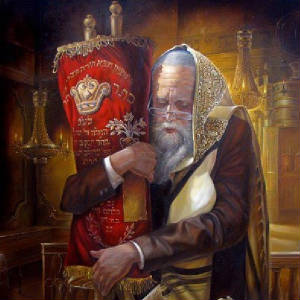
image from judaicafinearts.com

image from judaicafinearts.com


TORAH STUDY

Image from My Morning Meditations

Image from My Morning Meditations

Blessed are You

YHWH,

our God,

King of the universe,

Who gives us

the Torah of Truth

so that we may study,

live,

learn,

and be changed by it,

so that we may have righteous judgment

and Your spirit of love,

so that we may keep Your commandments,

do them,

and live in them,

and teach them to our children

and our children’s children forever.  

Amain!

Blessing for the TORAH


————-


There are obligations without measure, their fruit we eat now, their essence remains for us in the life to come:

To honor father and mother,

to perform acts of love and kindness;

to attend the house of study daily;

to welcome the stranger;

to visit the sick;

to rejoice with bride and groom; 

to console the bereaved;

to pray with sincerity;

to make peace when there is strife.

But the study of Torah is equal to them all.

—Gates of Repentance (Jewish Liturgy)


God spake these words, and said:

I am the LORD thy GOD;

Thou shalt have none other gods but Me.

Thou shalt not make to thyself any graven image, nor the likeness of anything that is in heaven above, or in the earth beneath, or in the water under the earth; thou shalt not bow to them, nor worship them.

Thou shalt not take the name of the LORD thy GOD in vain.

Remember that thou keep holy the Sabbath-day.

Honor thy father and mother.

Thou shalt do no murder.

Thou shalt not commit adultery.

thou shalt not steal.

Thou shalt not bear false witness against they neighbor.

thou shalt not covet.

Lord have mercy upon us,

and write all these Thy Laws in our hearts,

we beseech Thee.

—HOLY COMMUNION DECALOGUE

FROM THE BOOK OF COMMON PRAYER


Blessed are You, Adonai our God, King of the universe,

who has given us a Torah of truth,

implanting within us eternal life.

Blessed are You, Adonai, who gives the Torah.

The Rabbi’s Blessing after reading the Torah


HAVDALAH

interfaith_logo1-150x150

May the time not be distant, O God,

—when Your name shall be worshipped in all the earth,

—when unbelief shall disappear and error be no more.

Fervently we pray that the day may come

—when all shall turn to You in love,

—when corruption and evil shall give way to integrity and goodness,

—when superstition shall no longer enslave the mind,

nor idolatry blind the eye, 

—when all who dwell on earth shall know that You alone are God.

O may all, created in Your image,

become one in spirit and one in friendship, 

forever united in Your service.


Then shall Your Kingdom be established on earth, 

and the word of Your prophet fulfilled:

“The Eternal God will reign for ever and ever.”


Let the glory of God be extolled,

let God’s great name be hallowed

in the world whose creation God willed.

May God’s rule soon prevail, in our own day,

our own lives, and in the life of all Israel,

and let us say: Amen.

Let God’s great name be blessed for ever and ever.

Let the name of the Holy One, the Blessed One,

be glorified, exalted and honored,

though God is beyond all praises, songs, and adorations

that we can utter, and let us say:  Amen.

For us and for all Israel,

may the blessing of peace and the promise of life come true,

and let us say: Amen.

May the One who causes peace to reign in the high heavens, 

let peace descend on us,

on all Israel,

and all the world,

and let us say: Amen.

—Gates of Repentance (Jewish Prayers)


is-2

Now I lay me down to sleep,

I pray Thee, Lord,

Thy child to keep:

Thy love guard me

through the night

and wake me

with the morning light.

 BEDTIME PRAYER


Image from www.huffingtonpost.com

god-has-no-religion-gandhi


—————————————————–

My religion is to be good and to do good.”

BRS—Benjamin Romero Salvosa,

1913-1994 

Founder and President,

BC/BCF-UC

http://www.uc-bcf.edu.ph/

Baguio City, Philippines

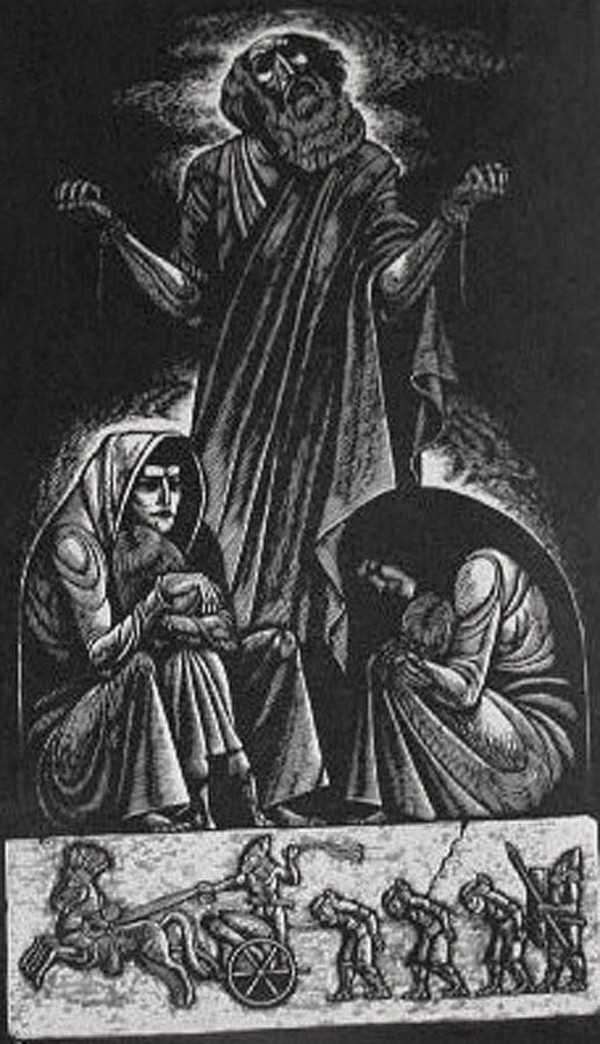
A Literary Approach to the Book of Jonah

[First posted in 2013.  This is another excellent commentary from A Literary Approach to the Bible, one of our MUST READ, if not MUST OWN books.  Please read all the other articles from this great resource which have already bene posted. Reformatting, highlighting and underscoring added.]


Jonah – by James S. Ackerman  Although the Book of Jonah appears among the Minor Prophets in the biblical canon, it differs considerably from all the others as a piece of literature. Whereas the Major and Minor Prophets are essentially collections of oracles, Jonah recounts the adventures of a prophet who struggles against his divine commission. The story rather recalls the prophetic legends in 1 and 2 Kings that focus on Elijah, Elisha, and others. Scholars have struggled with the problem of genre, and there is no consensus. I prefer the general label “short story,” and I will later try to point out elements in the narrative that bring it close to classical satire. The story was probably written during the sixth or fifth century B.C.E., when Jews were struggling to adjust to and recover from the Babylonian Exile.

  • How were they to perceive the nature of God in the light of what had happened?
  • By what means could the community transform its institutions and traditions in order to adapt itself to the changed circumstances?

Drawing on a wide range of biblical allusions, as well as on a bit of Mediterranean folklore (the fish episode), the writer scrutinized some of the answers that were evolving. In doing so, he created a literary masterpiece that has captivated its readers and stirred artistic imaginations from the Midrash to Melville—long after the particular issues faced by the post-Exilic community had been resolved. “Jonah son of Amittai” (1:1) is surely a reference to the eight-century Northern Kingdom prophet briefly described in 2 Kings 14:25 as a popular prophet who, in the context of the Israelite king’s sin, proclaims divine mercy and support for that kingdom. The name means “Dove son of truth,” and the dove has two major characteristics in the Hebrew Bible:

  • it is easily put to flight and
  • seeks secure refuge in the mountains (Ezek. 7:16, Ps. 55:6-8),
  • and it moans and laments when in distress (Nahum 2:7; Isaiah 38:14, 59:11).

Will these characteristics, we wonder, also apply to our hero? And what meaning will the story give to “son of truth”? The formula in 1:1 makes it clear that Jonah is a prophet, but we are surprised and intrigued by the divine command. Prophets had pronounced judgment on enemy nations within the safe confines of Israelite territory. But commanding a prophet to enter a foreign city with a word of judgment from the Lord—given the mistreatment and misunderstanding the prophets suffered when they spoke to God’s own people Israel—is, to say the least, an expansion of the prophetic vocation! Jonah is commanded to “arise… go … and cry against” (1:2); he immediately “rose up to flee” (1:3). Reluctance to serve is a conventional feature of the genre of prophetic call (cf. Jer. 1:6). But Jonah’s total disobedience puzzles us, especially when we learn that his flight is “from the presence of YHWH.” Nineveh and Tarshish are geographic antipodes.

  • Nineveh, to the east,
    • is the later capital of Assyria, the very nation that would destroy and carry off Jonah’s people—the ten tribes of the Northern Kingdom—sixty years later.
    • The Assyrians were renowned for their power and gross cruelty, and allusions in our story recall the Flood and the judgment on Sodom and Gomorrah.
    • Thus we know Nineveh as a city whose power is a threat to Israel’s existence
    • and whose evil is antithetical to God’s will.
  • Tarshish, on the other hand,
    • lies somewhere in the far west and is a place where YHWH is not known (Isaiah 66:19).
    • Jonah, a servant fleeing his master’s sovereignty, also sees Tarshish as a refuge beyond YHWH’s domain.
    • Since the story depicts YHWH as the almighty creator God, it has placed Tarshish at the ends of the earth, where death and chaos begin.
    • Strangely, Tarshish also connotes luxury, desire, delight.
    • C. H. Gordon suggests that “whatever the original identification of Tarshish may have been, in literature and popular imagination it became a distant paradise.”
    • For Jonah, therefore, Tarshish may paradoxically represent a pleasant place of security that borders on nonexistence.

Prophets were thought to be servant-messengers who attended the divine court, “standing before YHWH’s presence” (as in 1 Kings 17:1), just as royal servants stood “before the presence” of their king. Jonah’s flight from YHWH’s presence is described as a series of descents (Hebrew yarad):

  • he “went-down”—to Joppa, into the ship, and into the innermost part of the ship.
  • He then lay down and fell into a deep sleep, the latter term again echoing the yarad descent pattern.
  • This motif—extremely common in Psalms—is continued in Jonah’s prayer, which describes his entering Sheol, the world of the dead (2:2-9).
  • The narrative, therefore, seems to be depicting Jonah’s flight from YHWH’s presence as a descent to the underworld.
  • Our prophet is taking a path that leads to death as he seeks to avoid the road to Nineveh.

The unusual term yarketei hasefina (“the innermost parts of the ship,” 1:5 [AT]) seems to be a word play on yarketei tsafon, which in Psalm 48 is equated with Mount Zion

  • (the city of our God,
  • the final refuge for Israel against the attacking nations)
  • and in Isaiah 14:12-19 is described as God’s dwelling place in the heavens
  • (the antipode of Sheol, the Pit, into which Lucifer has been brought down).

Why is the writer asking us to think of Zion, God’s dwelling place, as we read of Jonah’s descent into the hold of the ship?

  • Is the ship both a mini-Sheol and a mini-Zion,
  • or is there an antithetical relationship?

We are also given clues that this is no ordinary ship that is leaving the Joppa seaport. Jonah pays “her fare” [AT]; and when the storm hits, “the ship thought to be broken up” [AT]. Nowhere else in the Hebrew Bible are “fare” and “thought” used with inanimate objects. What kind of a maw has our hero entered in his descent from YHWH’s presence? The ship’s captain and crew are depicted quite sympathetically.

  • In contrast to our sleeping prophet, they resourcefully pull out all the stops in order to stay alive—praying to their gods, jettisoning their cargo, casting lots.
  • They know that their fate is in the hands of higher powers whose workings they cannot fathom (“if so be that God will think upon us, the we perish not,” 1:6;for thou, O Lord, hast done as it pleased thee,” 1:14).
  • They also do everything possible to save Jonah’s life. Jonah had descended, lain down, and slept. The captain tells him to “arise”; the crew tries to “return” [AT] to dry land.

Describing death, Job says

so man lieth down, and riseth not: till the heavens be no more, they shall not awake, not be raised out of their sleep” (14:12); “so he that goeth down to the grave shall come up no more. He shall return no more to his house” (7:9-10).

  • Ironically, the captain’s appeal to Jonah (“arise, call upon”) echoes the divine command in 1:2. The captain is appealing to Jonah to “get up” and pray to his God; but by implication he is pointing the way by which Jonah can “arise” from his death descent.
  • The crew are trying to steer the ship to shore, so that he can obey his divine commission; but by implication they are attempting to “return” him to the land of the living.
  • The sailor’s frantic activity highlights Jonah’s inactivity.

Unlike Jesus (see Mark 4:35-41), his sleeping in the storm suggests paralysis rather than faith. We must assume that, in response to the captain’s appeal, he continues to lie low and snore on. Taken out of context, his response in 1:9 sounds like a wonderful confession of faith. But he omits any confession of his disobedience, and his claim to fear YHWH rings hollow when contrasted with the growing piety of the sailors (see especially 1:16). We must join the crew and read the entire statement ironically: how does one escape “the God of heaven, which hath made the sea and the dry land,” by embarking on the high seas? Although Jonah does not mention his flight, the sailors immediately realize what he has done. Some interpreters see 1:12 reflecting growth in Jonah’s character.

  • He now has more compassion for the crew,
  • and, ready to accept God’s judgment for his disobedience,
  • he is willing to give up his life that the crew may survive.

But Jonah’s search for refuge from YHWH has been depicted as a descent toward death. This subconscious death wish is now reinforced by his request to be thrown into the sea. And even at the end of the story Jonah will still be claiming that death is preferable to life. Just as a lion summarily slays the disobedient prophet in 1 Kings 13, YHWH sends a great fish after Jonah: and the verb “to swallow up” never has a positive connotation in the Hebrew Bible. Korah and his followers were swallowed up by the earth/Sheol, as were Pharaoh and his chariots (Num. 16:28-34, Exod. 15:12). Thus YHWH seems to be reinforcing Jonah’s descent pattern—three days and three nights being the traditional time it takes to reach the underworld. Much to our surprise, Jonah prays; and the Hebrew word denotes an appeal for help in which, if appropriate, divine forgiveness is sought. We expect the prayer to be a lament, and indeed the 3/2 stress pattern of the lament genre dominates. The tense of the opening verb is ambiguous, so we don’t know at first whether to read “I cried” or “I cry.” Since laments begin with an appeal for help, we assume that we are reading Jonah’s cry for help. But as we read further, we discover that the prayer is a song of thanksgiving for having been delivered from death’s domain. Scholars have made various attempts to naturalize this part of the story. The majority maintain that Jonah’s prayer is a later insertion. But both in terminology (going down, calling out, steadfast love, vows and sacrifices) and in theme (casting, presence of God, idol worship, divine sovereignty) the song is closely tied to the rest of the story.


By setting us up to receive Jonah’s song as a lament, the narrative forces us to question how a prophet heading toward the underworld could sing of his deliverance from Sheol. Jonah has feared drowning; he describes his sinking into the seas as a descent to the city of the dead (2:6). Why, then, does he feel so secure in the belly of the fish which he thinks is delivering him from the belly of Sheol?


We know from 1:9 that Jonah is capable of making wonderful statements of faith in a context that turns every word to parody. Both the inner part of the Tarshish-bound ship and the belly of the fish give Jonah the same false, deathlike security. The prayer begins “I cried”—precisely the same action that Jonah had been commanded, by both YHWH and the captain, to carry out against Nineveh and in behalf of the ship. Having refused to cry out to save the others, he changes his tune when he himself faces the prospect of violent death. And when 2:3 continues: “for thou hadst cast me into the deep… I am cast out from thy presence” [AR], remember that it is Jonah who fled from the divine presence and who requested to be hurled into the sea. Jonah regards idolaters (and there is a clever wordplay in 2:8 that associates them with the sailors of chap.1 as deserters of hesed—a term indicating a chief characteristic of YHWH (translated as “mercy”), denoting a loving response performed within a covenant relationship.


In some songs of thanksgiving, as in Jonah’s, hesed can be virtually synonymous with God.

  • But the idol-worshiping sailors have forsaken their gods and fear YHWH!
  • It is Jonah who has forsaken his God; and, we will later discover, the main reason for his flight is God’s superabundant hesed (4:2).
  • In case we have missed this subtle contrast, the narrative permits Jonah to conclude his prayer with a promissory note: someday he will perform that which we know the sailors have already accomplished one thousand leagues above (1:16).

It is not strange that Jonah expresses his eagerness to return to theTemple, especially when there is no mention of his repentance or willingness to go to Nineveh?

  • Where is the fear of YHWH that he had owned to in 1:9?
  • Does he perceive his near-death in the waters as sufficient divine punishment?
  • Is he counting on divine hesed to overlook his disobedience and cancel his commission?
  • Is not the piety reflected in this song a bit too cozy?
  • To what extent is the story aligning the Temple with the ship’s hold and the fish’s belly—as yet another deathlike shelter that he hopes will protect him from fulfilling his divine commission?

In the Jonah story there are structural parallels between chapters 1 and 3, as well as between chapters 2 and 4. Chapter 4 also begins with a lament appeal from Jonah, to which YHWH responds with actions and questions. Although YHWH appoints the great fish in chapter 2, there is no verbal response to Jonah’s prayer.


The divine response, though muted, is still eloquent: YHWH commands the great fish to vomit; and if the narrative had wanted to achieve any effect other then satire, there are many other Hebrew words for “bringing forth” our hero onto dry land. Again we are disoriented. The fish which we had thought was carrying Jonah to his doom has indeed rescued him. Does Jonah’s deliverance confirm the viewpoint articulated in the prayer? I think not. The prayer closes with “Salvation is of the Lord (2:9)a key theme of the story; and to dramatize this very point, YHWH and the writer deliver Jonah by a means that our imagination cannot naturalize—by simply letting the text say that it is so. We have been subtly prepared for the just-as-miraculous deliverance that will soon take place in Nineveh. The second half of the story seems to return us to the beginning; but there are some differences, and we are asked to account for them. This time God gives the prophet a specific message, and Jonah now goes to Nineveh. We cannot be certain that Jonah’s oracle to the Ninevites is a faithful repetition of God’s words. Because the verbal repetition in 3:2-3 implies that Jonah is now complying with God’s commands, and because he will later turn on the deity for canceling the judgment he had pronounced, we can reasonably assume that “yet forty days…” (3:4) is indeed the divine proclamation. Knowing that Nineveh will be “overthrown” in “forty days”—words that, along with others, recall the unleashing of divine judgment in the Flood and Sodom and Gomorrah stories—Jonah may be more willing to comply. From his foiled flight he has learned that God is unrelenting in carrying out the divine will; thus he can assume that the oracle he brings will indeed come to pass.


The response of the Ninevites is unprecedented in the prophetic tradition:

  • Jonah barely enters the city and speaks five Hebrew words (not even introduced by “thus says the Lord”), and thereby instigates the most frantic reform ever heard of.
  • In a scene that is both comic and moving (we can imagine animals and servants in sackcloth; unwatered flocks and nobility “crying mightily unto God”), the sinful city instantly and completely turns itself around.
  • Through Jonah God “has cried unto” [AT]Nineveh; and now Nineveh ‘cries unto” that God.
  • The Ninevites have “turned from” their “evil”; and now God “turns away” from the “evil” that had been planned for the city.

This episode is replete with allusions to Jeremiah 36, in which the king of Judah scorns Jeremiah’s warnings of impending judgment onJerusalem. The narrative suggests a contrast between the bitter experience of the prophets in Jerusalem and the amazing success of Jonah in Nineveh. Had the writer used realistic narrative to depict Nineveh’s repentance, we would have wondered whether the city’s new heart could possibly be genuine and whether the remission of divine punishment was deserved. But the story’s comic exaggeration permits us to accept the amazing transformation as “fact” precisely because we are asked to imagine it as a beautiful fantasy. We will soon learn that Jonah is unwilling to accept what has happened; thus the narrative has driven a wedge between reader and prophet—between the justice we had hoped would fall on the sinful city and the mercy we are made willing to imagine. The story establishes a relationship

  • between the great fish (in which Jonah remains three days and nights)
  • and the great city (which requires three days to traverse).
  • Both function as enclosures, and Jonah perceives them antithetically.

The great fish is aligned with the ship’s hold, Tarshish, and perhaps the Temple in Jerusalem—shelters that offer the illusion of security but in fact result in a deep sleep that brings one down to the city of Death. For Jonah the only negative enclosures are the city of Death, from which he barely escaped in the heart of the sea, and the city of Nineveh, from which he attempted to flee. As readers we begin the story by sharing Jonah’s perception; but the possible Temple/fish/ship/ Tarshish equation, coupled with the amazing conversion of Nineveh, prompts a realignment of these images. The narrative has consistently called Nineveh “the great city”; but in 3:3b the Hebrew reads “and Nineveh was a great city for God[AT]. Jonah made the traditional equation between city of Nineveh and city of Death; but the story suggests that the opposite is potentially true. The key feature of Nineveh’s reversal is its turning away from violence. The larger context, however, is the community’s symbolic association with the world of the dead—although ashes, sackcloth, and fasting. Whereas Jonah’s disobedience precipitated his descent to the world of the dead, Nineveh’s symbolic death is part of a return from its evil way and an appeal to God that it be spared. No prophet within the biblical tradition has ever had such success.

  • Jonah flees his divine commission, and the entire crew ends up worshiping YHWH.
  • He speaks five words in Nineveh, and the whole city instantly turns away from its “evil.”
  • But as God repents of the “evil” that has been planned for the city, this “evil” Jonah “a great evil” (4:1) [AT].

In the context of a petition prayer (the same word used for his activity in the belly of the fish in 2:1) we finally learn why Jonah has fled his divine commission. For the third time he proclaims a statement of faith from Israel’s religious traditions (4:2; see Exod. 34:6, Joel 2:13). The first two, taken out of context, many initially be understood as positive affirmations. The narrative does not permit such a reading this time: I attempted to flee your realm because I knew that, ultimately, you are a merciful God. But why is Jonah so upset? A strong line of interpretation that goes at least as far back as the early rabbis proposes that Jonah is angry because he has been made to look foolish. When the judgment oracle does not come to pass, the prophet and his deity become the objects of taunting abuse. But we find no hint of this in the story. It seems more likely to me that Jonah’s problem is theological. Unlike Israel’s ancient Near Eastern neighbors, who perceived their gods as capricious monarchs, the Exodus-Sinai experience convinced Israel that its God—the creator and redeemer God—was also a just God. Divine justice could sometimes take three or four generations to work itself out; but ultimately, Israel believed, people would receive their just deserts. And there could be no question about what Nineveh deserved.


How could God possibly be swayed by one sudden change of heart, blotting out long generations of iniquity? If divine mercy can so easily cancel out divine justice, then life is arbitrary and capricious. Jonah’s theological problem is the reverse of Job’s. Whereas suffering causes Job to probe the caprice of divine sovereignty, the sparing of Nineveh drives Jonah to do the same. For both protagonists YHWH’s rule must be expressed through a well-ordered universe. The story has satirized Jonah as a prophet whose piety is out of sync with his behavior. But Jonah, strangely, is also depicted as a man of faith driven to challenge and disobey God out of a zeal for divine integrity. Echoing the descent theme of chapters 1-2, Jonah would rather die than live in a world where a just God no longer reigns (4:3, 9). In 4:5-11 we find that Jonah has not given up: he camps out east of the city, probably in the hope that Nineveh will falter (can a leopard change its spots?) and that divine judgment will finally fall. The booth the prophet builds for himself reminds us of the shelter images that have that have recurred throughout the story. Israel is commanded to build and dwell in booths annually as an act of worship (“rejoicing”; Deut. 16:13-14, Neh.8:15-17); and the fact that Jonah also “rejoices a great rejoicing” [AT] in his booth suggests an association between shelter and worship. Psalms 31:20 uses the booth as a figure for the divine presence in which those who “fear” God are “hidden” (Hebrew tsafan; compare the yarketei hasefina in which Jonah hides); and Isaiah 4:6 envisions YHWH’s covering Zion with a protective booth to “shade” it from the heat. Is Jonah’s booth a dim reflection of Zion—of the Temple that had been the hoped-for destination of his song? If Jonah has shaded himself with the booth, why does YHWH add the shade of the gourd? And how does that “deliver” (the Hebrew has a wordplay with ”shade”) Jonah from his “grief” (Hebrew “evil,” that is, anger)? We should note that the first half of the story has concluded with a divine “preparation” that functions as a thematic resolution: Jonah had repeatedly “descended,” so YHWH “prepared” a great fish “to swallow” [him] up.” Paradoxically, however, the fish both took Jonah all the way down and spewed him forth toward his commission. The same pattern obtains in chapter 4 if we interpret the three divine “preparations” in verses 6-8 as one interrelated sequence. Jonah has become hot-angry after YHWH had spared Nineveh; now YHWH intends to “deliver/shade” him from his anger by really heating things up. Of the many protective shelters in the Jonah story (Tarshish, ship’s hold, fish’s belly, Temple, booth), three have allusive connections to Mount Zion. Ancient Near Eastern iconography is replete with figures of the tree of life that flourishes atop the divine mountain but is attacked by a serpent. It is possible that gourd and worm are caricatures of tree of life and serpent, appropriate images in a satiric story? Psalms strongly connects Mount Zion with the cosmic mountain; and the Jerusalem Temple—YHWH’s dwelling place on Zion—may contain symbolism associated with the Edenic tree of life. Moreover, the author now introduces the form “Lord God” (4:6)—the divine name in the Eden story. Lord God, it would seem, has reestablished and then destroyed both Zion and Eden in order to “deliver” Jonah from his “evil.” How is this a deliverance?


The prophet who in 4:3 would rather die than live in a capricious, amoral universe now asks for death rather than live in a world without divinely provided shelter. Chapter 4 begins with Jonah’s complaint about the divine hesed (mercy). YHWH concludes the story, using the same number of words as Jonah, with a lesson on “pity” (Hebrew hus, perhaps used because of its phonetic associations with hesed). Jonah told that his pity for the withered gourd is misdirected, as he is forced to contrast his feelings for “Nineveh, that great city,” with the pity that God has shown (4:9-11). YHWH, as creator, has the prerogative of showing compassion for the world in its entirety—including creatures that don’t know up from down. Jonah may still seek secure enclosures and perceive all that is outside as life-threatening. But God’s world—even Nineveh—is able to repent its evil. In fact, as the fate of the exposed Nineveh suggests, it is more life-threatening to seek out a secure refuge. The gourd (like Tarshish, Eden, and perhaps Zion) has been blown away; the ship and the fish spew one forth. In a world that offers no eternally secure shelters, Jonah is urged to understand (and perhaps emulate) the divine pity. The Judean community had a very difficult time reestablishing itself inJerusalem after the Exile. The eschatological hopes of Isaiah 40-55 did not come to pass, even after the Temple was rebuilt (see Haggai). The resulting despair and anger are reflected in the book of Malachi, where the primary issue is divine justice: perhaps we Israelites deserved the exile in Babylonia; but how can YHWH hold back judgment on the other nations that deserve it even more? Jonah’s paralysis and withdrawal also seem to result from his anger over divine injustice (see 4:2). He seeks secure shelters that inhibit his fulfilling the divine will and thus separate him from God and humanity; and yet, paradoxically, these same shelters have strong allusive associations with the divine cultic presence, in which the prophet can rejoice and feel protected from the rest of the world. Since the story’s conclusion invites us to side with God over against Jonah, we can guess that one of its targets was the Zadokite priesthood—with its strongTemple Presence theology—which was rising to power soon after the return from the Exile (ca. 538-400 B.C.E.). The prayer sung in the belly of the great fish provides the key to the story’s genre. What appears to be a supplication for help becomes a song of thanksgiving as it is sung by a man descending toward Sheol.


When the song’s piety becomes sickeningly sweet or unwittingly perceptive (“Salvation is of the Lord”), the prophet is vomited onto dry land just as he is about to hit the sea bottom. Such a scene is close to farce; since the story is also quite serious, however, I would argue that satire is a more appropriate designation of genre. There is no evidence of cultural contact between the writer and the classical satire that was probably evolving in other parts of the Mediterranean world at the time. But it does seem to give the modern reader the most useful handle on the story. In satire we find incongruous, distorted events; a mixture of literary genres; an image of violence at the heart of the story; journeys as typical settings; and relatively little emphasis on plot or character development. The author of Jonah has skillfully used irony in order to distance us from the hero while also keeping the story on its narrow path between invective and farce.

A Literary Approach to the Book of Daniel

Image from amazon.com

Image from amazon.com

[First posted in 2013.  As Christians/Messianics, we—Sinaites—must have studied the book of Daniel no less than a dozen times,  because it had been drummed into our clueless minds  that the only way we could and would and should understand the last prophetic NT book of Revelation is by understanding the OT book of Daniel, for the imagery of both are interconnected.  Well, after attending endless updated teaching seminars and conferences on both books, we were still left clueless and we figured, as we have also been taught, that whatever we do not understand on this side of eternity, we will understand if we make it to heaven on the other side.  The easiest fallback when one doesn’t want to give in and simply admit to oneself and others— “I don’t get it”—is to relegate it to the category of “mystery” . . . where you file such question marks as the Trinity, the human-divine nature of Jesus Christ, and the whole of the Old Testament which Christians hardly ever get to, since they’re told it is passe, obsolete, only for the Jews, etc. 


Then, just before we left the fold of Christ-centered believers, we were deep into listening to yet another mind-boggling study, this time with book and CD making the rounds, titled “Daniel’s Timeline.”  As far as we know, our Messianic friends bought into that teaching so much so that some had seriously started preparing for the ‘end times’.


 Well, guess what? As Sinaites, we were dismayed to discover that Daniel did not even belong to the category of “Prophets” because Daniel was not a prophet but an interpreter of dreams just like Joseph was gifted by YHWH for purposes we learn from the story.  You will discover that the literary approach to the book of Daniel makes EVEN MORE SENSE and you will simply have to read through this whole post to discover why you should no longer waste any more time figuring out all the question marks that never were resolved for you by the best of Christian teachers who were approaching it as prophecy!


Again, credit is due the compilers of our resource book: A LITERARY APPROACH TO THE BIBLE, recommended all over our posts as MUST READ/MUST OWN.  Enjoy your study and leave a message if you feel differently from what we have predicted here. Reformatting and highlights added.—Admin1.]
 —————————-


Daniel
Shemaryahu Talmon
The linguistic and literary diversity of Daniel reveals a composite structure.


The opening and concluding parts (1:1—2:4a and 8-12), in Hebrew, frame a portion in Aramaic which is itself a composite (2:4b—6:28 and 7:1-28). A smooth transition from the opening Hebrew section to the Aramaic part is deftly achieved by the introduction in Hebrew (2:4b), of some Chaldean soothsayers who speak Aramaic: “Then spake the Chaldeans to the king in Syriak [Aramaic].” This linguistic structure resembles that Ezra; there, too, a composite Aramaic passage (Ezra 4:7—6:18 and 7:1-26) is sandwiched between two pieces of Hebrew narrative (Ezra 1:1-4:6 and 7:27-10:44). This combination may indicate the writers’ decision to use both languages spoken by Jews in the post-Exilic period.


It remains a matter of debate whether or not the entire book was originally written in one language (Aramaic or Hebrew), with parts subsequently translated into the other. Likewise it cannot be determined whether a translator into the vernacular Aramaic was addressing himself to a wider reading public or whether the translation into Hebrew was intended for a scholarly audience. In any event, the very fact that parts of the book were translated appears to indicate an increasing interest in apocalyptic speculations and literature among Jews before the turn of the era.


The first half of the book (chaps. 1-6) uses a narrative style. It is composed of a series of six court tales about—-
  1. Daniel and his three friends
  2. Hananiah,
  3. Mishael,
  4. and Azariah.

The tales are linked by common motifs and literary imagery and by an apparent concentration on human affairs.

  • All four men are introduced as young Judean nobles who were exiled by the Babylonian king Nebuchadnezzae when he conquered Jerusalem in the third year of the reign of Jehoiakim, king of Judah.
  • Because of their beauty, wisdom, and righteousness (chap. 3), they are chosen to serve at Nebuchadnezzar’s court.
  • When Daniel successfully interprets the king’s enigmatic dream, he is elevated to a position of exceeding prominence (2:48), and at his request his three friends are also given high offices in the imperial administration (2:49).
  • Daniel’s position is further strengthened when he interprets another dream of Nebuchadnezzar’s (chap. 4).
  • Later, in the reign of Belshazzar, he explains a cryptic inscription which appears on a wall in the palace during a banquet given by the king (chap. 5; a vivid scene described by Xenophon in his Cyropaedia and captured by Rembrandt in his famous “Belshazzar’s Feast”).


Although these tales are obviously intended to be read as historical reports, their fictitious character is revealed by several flaws in the historical references:
  • Belshazzar, for example, was not the son of Nebuchadnezzar, as stated in 5:2,
    • but rather of Nabonidus, the last Babylonian king.
  • No evidence is available to support the affirmation thatJerusalem was taken by the Babylonians in the third year of Jehoiakim’s reign (1:1). Nor is there a historical record of a King Darius the Mede, son of Ahasuerus, mentioned in 9:1,
    • This datum was probably extrapolated from the report in 2 Chronicles 36:6 of the undated deportation of Jehoiakim by Nebuchadnezzar.
  • or a Median empire between the fall of Babylon under Nabonidus
  • and the rise of the Persian Empire under Cyrus the Great (chaps. 6 and 9).


Quite different in style and outlook from the pseudo-historical narrative is the second part of the book (chaps. 7-12). It consists of four units of dreams and visions in which future world events are revealed to Daniel, leading up to the persecution of the Jews in the reign of Antiochus Epiphanes (second century B.C.E.) and their ultimate salvation (12:1).
  • The first unit speaks of Daniel in the third person, These units, too, are conjoined by recurring motifs and expressions and by their apocalyptic character.
    • whereas in the remaining three, Daniel himself is the narrator.


Both halves of the book contain poetic passages of varying length 4:23-26, 12:1-3 (Hebrew); 2:20-23; 4:10-12, 14-18; 6:27-28; 7:9-14; 8:23-26 (Aramaic).


These common elements indicate that notwithstanding the internal linguistic, stylistic, and literary diversity, which has led some scholars to suggest that the book was written and made public in serial fashion, Daniel has conceptual unity.


The writer presents a religious philosophy of history which links the past with the future—a future which is in fact the writer’s own present.


With trust in God, he assures us, and obedience to his commandments, the Jewish people will overcome all setbacks in the present age, as in the past, and pave the way for the ultimate triumph of God and Israel in history. Or, as Philo of Alexandria would have phrased it (Life of Moses 2.278), the fulfillment of promises in the past guarantees their realization in the future.


The quite different character of the two halves of Daniel seems to have caused the different positioning of the book in the Hebrew and the Greek canons.
  • In the latter, which became the Bible of the Church, Daniel is regarded as a prophet, and his book follows that of Ezekiel, the last of the great prophets.
    • This tradition shows in a florilegium of biblical passages from Qumran (4Q 174),
    • in the New Testament texts (Matt. 24:15, Mark13:14),
    • and in Josephus (The Antiquities of the Jews 10.11-12), all of which refer to “Daniel the Prophet.” This inclusion of Daniel among the prophets was suggested by the visionary character of chapters 7-10.
  • The Jewish Sages expressly rejected the designation of Daniel as a prophet, declaring:
    • “they [Haggai, Zechariah, and Malachi] are prophets,
    • while he [Daniel] is not a prophet” (Babylonian Talmud: Sanhendrin 93b-94a).
    • Accordingly, in the Hebrew canon Daniel comes after Esther and before Ezra-Nehemiah, that is, between books which are considered historiographies.
    • Maimonides, the most prominent Jewish authority in the Middle Ages, confirmed the correctness of this order: “the entire nation is agreed that the Book of Daniel should be placed among the Writings and not among the Prophets” (The Guide of the Perplexed 2.45).
    • In this instance it was obviously the narrative character of chapters 1-6 which caused the book to be placed among the post-Exilic historiographies.
 
Historicity


Daniel is said to have lived through the days of the last Babylonian kings Nebuchadnezzar (chaps. 1-4) and Belshazzar (chaps. 5, 7-8), into the reigns of the Persian kings Cyrus (chap. 10) and Darius I Hystaspes (if indeed this is the ruler referred to in 11:1 as Darius the Mede; but see 9:1), that is, from about 600 to about 520 B.C.E.

However, its historical inaccuracies support other indications that the book should be dated much later. The writer,

  • who presumably lived in the second century B.C.E.,
  • wove his tales and visionary dreams around a legendary figure,
  • in a literary fashion popular in his time.
  • He was probably acquainted with traditions to which the prophet Ezekiel alludes, about a Daniel unequaled in wisdom (Ezek. 28:3) and righteous like Noah and Job (Ezek. 14:13-14, 19-20).


These allusions are possibly the immediate cause for the replacement of Daniel after Ezekiel in the Greek canon. Further, the caves of Qumran have yielded not only fragments of the biblical Book of Daniel but also a fragment of a composition entitled by its editor “Prayer of Nabonidus.” The latter bears a telling resemblance to a central theme in Daniel 4 (which there, however, focuses on Nebuchadnezzar): King Nabonidus, plagued by maladies and exiled to the oasis of Taima, is exhorted by a Jewish sage to relinquish his “idols of gold, silver [bronze, iron], wood, stone, and clay” and embrace the faith in the once true God, so that he will he healed and reinstated to his royal office.

  • The biblical Daniel may also be linked with the figure Dnil/Dnel known from the Ugaritic epic Aqht (not later than the fourteenth century B.C.E.).
    • While no definite connection between the Ugaritic Dnil/Dnel and the biblical Daniel can be established, the combined evidence from the Book of Ezekiel, the “Prayer of Nabonidus,” and the epic Aqht makes it seem likely that the author of the biblical Book of Daniel knew of traditions concerning an antediluvian “wise and just Dnil/Dnel.”
    • He shifted that figure from its original Mesopotamian or Phoenician-Canaanite setting into Palestine-Judea and made him the kingpin of his own literary creation.
    • Such shifts in period and location are common in comparable specimens of apocryphal and pseudo-epigraphical literature,
      • including the Book of Jubilees, in which Noah is the central dramatis persona;
      • the Book of Enoch, ascribed to the godfearing ancient known from a tradition in Genesis 5:18;
      • the “testaments” allegedly composed by the twelve sons the patriarch Jacob;
      • and the Book of Baruch, said to have been composed by the ascribe of the prophet Jeremiah (Jer. 45).


By a similar literary maneuver,

  • King Solomon was made the author of the apocryphal Book of Wisdom
  • and of a collection of “psalms,”
  • possibly in emulation of the ascription to him of Proverbs (Prov. 1:1; cf. 25:1),
  • the Song of Songs (Song 1:1),
  • and Ecclesiastes,
  • said to have been written by “Koheleth the son of David, king in Jerusalem” (Eccles. 1:1).
  • Likewise, rabbinic tradition saw King David as the author of the Book of Psalms.


It appears that in this respect as in others (discussed below), Daniel represents both the earliest and the most accomplished example of a genre which achieved wide currency in the Judeo-Christian literature of the Hellenistic-Roman (or intertestamental) period. This genre, which could be designated “inverted plagiarism,” was emulated by much later writers: an author bent on attaining public acclaim of his writings would willingly suppress his own name, ascribing his creations to a worthy figure of old whose name alone would suffice to assure them of general acceptance.
 
Style and Imagery


The author of Daniel incorporates motifs, imagery, and phraseology from biblical, and to some degree also from nonbiblical, literature. The text is shot through with literary allusions, paraphrastic quotations, and borrowed phrases which were presumably current when the book was made public.


Daniel, especially in its Hebrew sections, contains original phraseology which demonstrates considerable stylistic innovation. Some of this novel phraseology is echoed in the writings of the Covenanters of the Judean desert, the Qumran scrolls. But the book is also replete with imagery and turns of phrase which appear to be lifted from a variety of canonical Hebrew writings, as even a small selection of examples illustrates:
  • The expression kalah weneheratsah, “utter desolation” (9:27 [AT]), occurs only once elsewhere in the Hebrew Bible, in Isaiah 10:23.
  • In Daniel 11:7, 10, and 36 we find still more expressions from Isaiah (11:1, 8:8, 10:25).
  • Daniel10:14 is seemingly made up of phrases taken from Genesis 49:1 and Habakkuk 2:3.
  • The opening paragraph in 11:30 is adapted from Balaam’s oracle in Numbers 24:24.
  • “Daniel sat in the gate of the king” (2:49) echoes “Mordecai sat in the king’s gate” (Esther 2:21).
  • Daniel and his fellow ministers are appointed to ensure proper taxation, so that “the king[‘s treasure] should have no damage” (6:2).
  • Likewise, the Persian officials warn the king of the exiles who have returned to Judah lest their activities “damage the revenue of the kings” (Ezra 4:13).
  • And Esther would acquiesce in anything but the destruction of her people, so as not to “cause damage to the king[‘s interest]” (Esther 7:4; compare 3:8-9).
  • The humanlike figure that touches Daniel’s lips (10:16) is described in imagery that appears to be derived from the inauguration visions of Jeremiah (Jer. 1:9)), Ezekiel (Ezek. 1, esp. v. 26), and possibly Isaiah (Isa. 6:6-7).
  • Folklore furnishes numerous parallels for a (world-) tree which provides nourishment to all beings and shelter to beast and fowl, such as that seen by Nebuchadnezzar in his dream (4:10-14).
  • The image also shares striking details with the portrayal of the primeval Behemoth in Job 40:15-24.
 
Patterns and Motifs


Daniel shares with other biblical writings a predilection for the ascending numerical pattern 3 + 1, observable in other ancient Near Eastern literatures. Whatever the roots of this pattern, it signifies a basic “complete” unit of three, topped by a fourth of special standing and importance.
  • The tale of Daniel and his three friends immediately brings to mind the parallel tradition concerning Job and his three Friends. In both instances, the names of all four dramatis personae are carefully recorded (Dan. 1:6; Job 2:11, 42:9).
  • This is also the case in one strand of tradition which records David as the youngest of his father’s sons, who, despite his youth, outranks his three oldest brothers:

“the three eldest sons of Jesse went and followed Saul to the battle: and the names of his three sons that went to the battle were Eliab the firstborn, and next unto him Abinadab, and the third Shamma.  And David was the youngest” (1 Sam. 17:13-14a).

  • Solomon is the fourth of David’s sons who were born to him in Jerusalem(2 Sam. 5:14). Solomon vies for the succession to the throne and prevails over his three older brothers, Amnon, Absalom, and Adonijah.
  • Again, after two of the four sons of Aaron the high priest, Nadab and Abihu, are consumed by a fire from heaven (Lev. 10:1-2), and Ebiathar, a descendant of the third, Ithamar, is banished to Anatoth (1 Kings 2:26-27; cf. 1 Chron. 24:1-5), the priestly office at the Temple in Jerusalem reverts to the fourth son, Eleazar, and his descendants.
  • The 3 + 1 pattern also underlies the episode of Daniel’s appointment by Darius as the first of “three presidents” whom the king put in charge of 120 princes who oversaw the affairs of his kingdom (6:2). We are specifically told that “Daniel was preferred above the presidents and princes, because an excellent spirit was in him; and the king thought to set him over the whole realm” (6:3).
The stereotyped wording makes it seem likely that the original version of this tale spoke of 120 governors of the empire, superintended by three ministers, with Daniel controlling the entire administrative hierarchy, second only to the king himself.


Understood thus, this administrative scheme would be an exact replica of the one ascribed to Nebuchadnezzar in 2:48-49:
“the kind made Daniel … ruler over the whole province of Babylon, and chief of the governors … of Babylon … and he set Shadrach, Meshach, and Abednego, over the affairs of the province of Babylon: but Daniel sat in the gate of the king” (cf. Esther2:21).


The 3 + 1 pattern is well represented in biblical Wisdom literature. An entire series occurs in Proverbs 30:15-31. Some of the “topped triads”—“three things … yea, four”—derived from the animal world, exemplified by the smallest creatures (Prov. 30:24-28) or larger beasts (Prov. 30:29-31).


Another proverb starts out with an enumeration of three inscrutable facts in the animal and the inanimate world, leading up to an even more unfathomable fourth phenomenon in human life:
“There be three things which are too wonderful for me, yea, four which I know not: The way of an eagle in the air; the way of a serpent upon a rock, the way of a ship [better: a fish] in the midst of the ocean; and the way of a man with a maid” (Prov. 30:18-19).


An additional series is set altogether in human experience. Three things are unbearable: a slave who becomes king, an evildoer who prospers, a hated wife who conceives (and therefore triumphs), but worst of all, “an handmaid that is heir to her mistress (Prov. 30:21-23).


The same model recurs also in visionary or prophetic literature. Balaam the seer blesses the people Israel three times instead of cursing them as the Moabite king Balak had commissioned him to do (Num. 24:10), and then adds a fourth blessing which surpasses the previous ones (Num. 24:15-24). Likewise, on the journey from Pethor, Balaam’s ass sees three times “the angel of the Lord standing in the way, and his sword drawn in his hand, and … turned aside” to avoid him (Num. 22:23-30), until the seer’s eyes are opened, and the fourth time he perceives the angel who threatens his life (Num. 22:31-33).


The pattern 3 + 1 finds a most salient expression in Amos’s oracles against foreign nations (Amos 1:3-2:3) and against Judah and Israel (Amos 2:4-16). The phrase “for three transgressions … and for four,” which recurs in every instance, shows the fourth to be more damnable than the preceding ones: “Thus saith the Lord … I will not turn away the punishment thereof” (Amos 1:3, 6, 9, 11, 13; 2:1, 4, 6).  In this as in many other instances, the quintessence of the pattern is to be sought in the “fourth” item in which the series culminates, and which is intrinsically different from the preceding unit of “three” which serves as its antithesis.


Therefore, the component “three” cannot be interpreted as referring to a precise number, but rather should be viewed as a schematic literary figure.


Such an understanding would remove a difficulty in the explanation of Daniel’s visions of “four kingdoms” that shall arise (chap. 11; cf. 8:18-26), likened to “four beast” (7:1-8; cf. Prov. 30:29-30) and culminating in the fourth, the Greek Empire (8:21, 10:20, 11:2). While the immediately preceding third kingdom is obviously Persia and the first is Babylon, the exact definition of the second has been subject to speculations since antiquity. But these speculations may be unnecessary. If we view these visions of Daniel as further examples of the 3 + 1 pattern, their thrust and the clue to their meaning would lie in the fourth, the Greek Empire, with the preceding unit of “three” supplying the indispensable foil required by the traditional schema.


Similarly, the puzzling mention of an otherwise undocumented Babylonian siege of Jerusalem in the third year of the reign of Jehoiakim, king of Judah, which opens the book (1:1) may reflect another literary convention.


It cannot go unnoticed that the book dates two of Daniel’s visions in the third regnal year of a king: one in the third year of Belshazzar (8:1) and one in the third year of Cyrus (10:1). Likewise, Ahasuerus gave his banquet, which was to become of crucial importance in Esther’s life history (compare Belshazzar’s feast in chap. 5 and Pharaoh’s in Gen. 40:20), in the third year of his reign (Esther 1:3). Although the possible exactitude of this date cannot be categorically ruled out in this or the other case, its recurrence in visions and tales in Daniel and Esther appears to reveal a predilection for this literary convention among post-Exilic writers (see further 2 Chron. 17:7).


Use of Traditions


The author of Daniel adopts and develops certain biblical traditions, moving from the genre of prophecy to that of apocalypticism.


  • Building on Jeremiah’s divinely inspired assurance that Israel would experience a restoration of its fortunes seventy years after the destruction of the Temple(Jer. 25:11-12; 29:10; cf. Zech. 1:12, 7:5; Ezra 1:2; 2 Chron. 36:21-23),
    • he foresees a new redemption of his people after seven times seventy years (9:2, 25-26).
    • But his pronouncements are intentionally veiled, as if to prevent his readers from fully fathoming the apocalyptic visions.
    • In this he appears to imitate Ezekiel’s equally mystifying description of his vision of the heavenly chariot (Ezek. 1).
    • He takes from Ezekiel 3:1-2 and Zechariah 5:1-4 the motif of a celestial scroll in which are spelled out divinatory matters that the prophet is commanded to assimilate or even to ingest, though with an interesting and significant variation.
      • Ezekiel digests the contents of the scroll by physically eating it.
      • To the post-Exilic prophet Zechariah, the content of the scroll he sees is explained by a heavenly interpreter (Zech. 5:1-4), probably identical with the angel who interprets for him the ensuing visions (Zech. 5:5-6:8) as in Zechariah 1-4.
    • Daniel, too, is enlightened by a heavenly messenger:
      • the angel Gabriel explains the meaning of what he has read in “books” of an obviously revelatory nature (chap. 9) and later interprets a vision of Daniel’s (chap. 10).
      • But revealed matters of ultimate significance must remain unintelligible to Daniel (12:8) and to other men, securely hidden away in sealed books until the appointed time of revelation (12:4, 9).


This mystification seems to indicate a theological trend, the roots of which are discernible in late biblical writings but which comes into full bloom in apocryphal, Qumran, and early rabbinic literature:  the unbridgeable chasm which increasingly separates man from the divine sphere.
  • In the biblical past, a prophet could bring God’s word to man.
  • Now, the seer requires a celestial interpreter to explain his visions to him.
  • Mediator upon mediator intervenes between man and God.
  • And even then the meaning of the revelation may remain hidden.
 
The Type-Plot of “The Successful Exile”


Scholars have accurately recognized traits in the Daniel story which it shares with other biblical tales of a destitute (fatherless) young Judean or Israelite exile who rises to an unprecedented height at a foreign court. Some focal events and circumstances in the progress of —
  • Joseph in Egypt,
  • of Esther and Mordecai,
  • and of Nehemiah and Ezra at the Persian court
  • are unmistakably reflected in the alleged life history of Daniel and his friends. the expatriate Daniel wins the goodwill of the Babylonian courtiers charged with his education (1:3-18).
    • Like Joseph, who was “stolen away out of the land of the Hebrews” (Gen. 40:15) and found favor with his master, an Egyptian official (Gen. 39:1-4),
    • and the orphaned Esther (Esther 2:7), who gained the support of the overseer of Ahasuerus’ harem (Esther 2:9),
  • Because of their good looks, intelligence (cf. Ezra 7:25), and modesty (Gen. 39:2-12; Esther 2:8-10, 15-16; Dan. 1:4; cf. Neh. 2:5-8), all three attract the attention of those in authority and ultimately of the ruler of the foreign land into which they have been abducted (Gen. 41:37-39; Esther 2:17; Dan. 1:6-7, 19-20).
  • They soon attain the highest positions in the realm: Likewise, Nebuchadnezzar elevates Daniel to the rank of “ruler over the whole province of Babylon, and chief of the governors over all the wise men of Babylon” (2:48); and Belshazzar makes “a proclamation concerning him, that he should be the third ruler in the kingdom” (5:29).
    • Joseph becomes viceroy of Egypt  (Gen. 41:40-44);
    • Esther is made queen of the realm (Esther 2:17);
    • Mordecai (Esther 2:21-23, 6:3, 10:2),
    • Ezra (Ezra 7:6, 11-26), and Nehemiah (Neh. 1:1, 2:1-9) are given important appointments at court.
The elevation to such exalted office is marked by an installation ceremony which in all three instances is described in almost identical terms:
  • “Then commanded Belshazzar, and they clothed Daniel with scarlet, and put a chain of gold about his neck” (5:29);
  • Pharaoh said unto Joseph, See I have set three over all the land of Egypt. And Pharaoh took off his ring from his hand, and put it upon Joseph’s hand, and arrayed him in vestures of fine linen, and put a gold chain about his neck; And he made him to ride in the viceroy’s chariot [AR]; and they cried before him,
  • Haman to conduct the ceremony exactly as the latter has specified, erroneously assuming that he himself is to receive these honors:

“For the man whom the king delighteth to honour, Let the royal apparel be brought which the king useth to wear, and the horse that the king rideth upon, and the crown royal which is set upon his head … Then took Haman the apparel and the horse, and arrayed Mordecai, and brought him on horseback through the street of the city, and proclaimed before him, Thus shall it be done unto the man whom the king delighteth to honour” (Esther 6:7-11; cf. Esther 8:15).

  • Joseph starts out as a dreamer (Gen. 37:5-11) to become a successful interpreter of dreams (Gen. 40). Thanks to this faculty he achieves highest distinction in the Egyptian kingdom (Gen. 41).
  • Likewise, Daniel makes his way to the top in Babylon by convincingly explaining the dreams of Nebuchadnezzar (chaps. 2, 4) and the mysterious writing which appears on the wall during Belshazzar’s feast (chap. 5). But in contrast to the story of Joseph, he starts out as an interpreter of dreams and only later becomes a dreamer and a visionary (chaps. 7, 8, 10-12).
  • Both Joseph and Daniel succeed where all Egyptian and Chaldean wise men fail. (cf. Gen. 41:8 with Dan. 2:1-13; 4:1-4, 15).
  • Similarly, in the final event, Mordecai and Esther prove to be wiser than the scheming Haman (Esther 6:13, 9:24-25).


The full integration of the foreigner in the very hub of his new milieu requires one additional adjustment: the change of his Hebrew name to an appellation which conforms with local usage. (The renaming may also be considered a status symbol, comparable to a throne name sometimes adopted by kings at the beginning of their reign.)
  • The Judean Hadassah takes on the pagan name Esther (Esther 2:7);
  • Pharaoh confers upon Joseph the Hebrew (Gen. 40:15) the meaningful appellation Zaphenath-paneah, interpreted by tradition to mean “Riddle Solver” (Gen. 41:45);
  • and a high-ranking official at Nebuchadnezzar’s court renames Daniel and his friends Belteshazzar, Shadrach, Meshach, and Abed-nego (1:7).


The rise of the exile at the foreign court does not proceed altogether smoothly. The type-plot setting requires that on his way to the top, the stranger will have to overcome obstacles placed in his path by envious adversaries. Being unable to attack him openly because of his excellent reputation and good standing, his enemies conspire to bring about his fall and temporarily succeed in their aim. This turn of plot is variously manifested in the stories of–
  • Joseph,
  • Mordecai,
  • and Nehemiah.


Like Ahasuerus (Esther 3), Nebuchadnezzar is easily persuaded by his advisers and has Daniel’s three friends thrown into the blazing furnace (3:19-23). They are saved, however, by divine intervention (3:24-27), while their tormentors are consumed by the flames that leap out of the furnace (3:22).


The motif “from pit to pinnacle” is enacted once more in an episode of court intrigue against Daniel, set in the reign of King Darius the Mede (chap. 6). Unable to find any malpractice in Daniel’s administration of the kingdom, his adversaries scheme to devise a charge involving his religion, Knowing that Daniel prays three times a day to his God, they induce the malleable ruler to proclaim himself the only divinity to whom the citizens of the realm may present a petition for the next thirty days. They catch Daniel making supplication to his God and report him to the king. Unable to act against his own ordinance, Darius reluctantly gives orders to have Daniel thrown into the lion’s pit, comforting himself and the victim with the thought that Daniel’s God will surely save him. And indeed, when the sealing stone is removed from the mouth of the pit the next morning, Daniel answers Darius’ anxious call with a declaration of his loyalty to him (6:22) and emerges unscathed from the pit. Overwhelmed by the greatness of this miracle, Darius offers homage to Daniel’s God and decrees that all men in his royal domain shall revere him (6:25-27). Applying retributive justice, he orders Daniel’s accusers to be thrown into the lion’s pit with their wives and children (cf. Esther 9:6-10, Num. 16:32). They are immediately set upon and consumed by the wild beasts (6:24).


As a symbol of mortal danger, lions play an important role in Hebrew Scriptures.
  • Shepherds tremble before the lion’s roar (for example, Isa. 31:4; Amos 3:4, 8; Zech. 11:3; Ps. 22:13; Job 4:10),
  • which is compared to the noise made by armies on the march (Isa. 5:29-30)
  • and to the tempest which manifests God’s intervention in nature and history (for example, Jer. 25:30, Hos. 11:10, Joel 3:16, Amos 1:2, Job 37:4).
  • Lions mete out divine punishment, ravaging transgressors and recalcitrants (1 Kings 13:24-28,20:36; 2 Kings 17:24-26; Jer. 50:17).
  • Only exceptional men can vanquish a lion (2 Sam. 23:20), like the divinely inspired Samson (Judges 14:5-9) and David (1 Sam. 17:34-37).


But the lions of the Daniel tradition are a different breed. They are the only specimens of their kind in biblical narrative which are turned from ferocious beasts into docile animals.
  • They recall Isaiah’s visionary lion that in a future ideal age “shall eat straw like the ox” and forage together with calves, a little child leading them to the pasture (Isa. 11:6-9, 65:25). The depiction of that era of universal peace is enfolded by means of ring composition between two sections of a complementary vision of the future ruler of the appeased world, “a rod out of stem of Jesse” (Isa. 11:1-5, 10) on the other hand, and on the other the restitution of Israel’s fortune and its victory over its historical enemies (Isa. 11:11-16).
  • The thematic similarity with Isaiah spells out the “message” contained in the episode of Daniel in the lion’s den. At the same time, it links the narrative part of the book, which centers on the person of Daniel (chaps. 1-6), with the series of dreams and visions (chaps. 7-12) which center on world history and, in this framework, on the fate of the people of Israel and their ultimate redemption (12:1-3). It is because of this message that the two tales of Daniel’s and his friends’ rescue from the blazing furnace and the ferocious lions became paradigms of divine deliverance in the repertoire of Western literature and visual art inspired by the Hebrew Scriptures.
 
A Diaspora Novel


The Exilic setting of the type-plot and the motifs which Daniel shares with the stories of Esther, Joseph, and, to a degree, with Ezra-Nehemiah—as well as with some features of the Moses-in-Egypt tradition—have given rise to the attractive supposition that there narratives are representative examples of a distinct biblical genre—the Diaspora Novel.


However, despite the persuasive commonality, there are some telling differences among these narratives.
  • The Book of Esther in particular is, in certain respects, quite unlike the other specimens of the presumed genre in that it is almost totally devoid of specifically Israelite historical reminiscences and religious-cultic traditions.
    • Esther is the only book of the Hebrew Bible in which the name of God is not evoked even once. God is, in fact, altogether absent from the scene on which the drama is acted out by human antagonists to the best of their skill and cunning.
    • There is no mention of prayers, which one would have expected Esther, Mordecai, and the Jews of Persia to have uttered in times of mortal distress. Such prayers were, not unexpectedly, supplied by the author of the additions to the Greek translation of the Hebrew book. Mordecai, Esther, and probably also some of their compatriots revel at the king’s table, seemingly without paying attention to the dietary prescriptions which regulate the consumption of food in Jewish tradition.
    • In view of the post-Exilic date of the book, when Israel certainly abided by a particular religious-cultic code, the silence on such matters is highly significant. It may be explained by the Wisdom coloring of the Esther tale, which accentuates the human and the general rather than the religious and the particular.
  • The Joseph story similarly exhibits conspicuous Wisdom traits.
    • But in this instance the “Land of the Hebrew” serves throughout as a visible backdrop of scene,
    • and the God of Israel determines the progress of events in the unfolding drama.
    • This presence is fully explicated by Joseph when he reveals to his brothers the hidden propitious significance of their evil deed:

“Now therefore be not grieved, nor angry with yourselves, that ye sold me hither: for God did send me before you to preserve life” (Gen. 45:5; see also Gen. 45:6-8; 50:19-20; 41:16, 32).

The absence of any mention of the observance of food taboos or any other cultic prescriptions by Joseph or, for the matter, by Moses while at Pharaoh’s court, is in keeping with the setting of these traditions in the pre-Sinai (revelation) period, that is before the issuance of the laws, beginning with Exodus 20, which pertain to these matters.


How different, predominantly from the Esther tale, is the atmosphere which prevails in the other Diaspora Novels.
  • Ezra-Nehemiah is pervaded by
    • an awareness of Jewish history,
    • a wholly Jewish religious outlook,
    • and an unrelenting endeavor to make tradition the mainstay of the reconstituted community’s public and private life.
    • The civic and cultic leaders offer prayers of confession and thanksgiving to Israel’s God (Ezra 9:3—10:1; Neh. 2:4, 9:4-37).
    • Life is regulated by the ordinances of “the Law” (for example, Ezra 10:4-44; Neh. 8:1-3, 10:1-39, 12:44-47).
    • There is no mistaking the Jewish character of the book and of the community whose history it portrays.


The “Jewishness” of the chronicle of Daniel and his friends comes even more to the fore because of its biographical character, which makes for a more graphic presentation of the religious way of life.
  • The divine immanence, the young men’s reliance on Israel’s God, and their trust in his efficacy pervade the narrative.
  • The young men meticulously observe the food taboos, subsist—even flourish—on a diet of seeds and water rather than partake of the king’s provision of unclean meat and wine (1:5-16).
  • Daniel prays three times a day, “his windows being open in his chamber toward Jerusalem” (6:10), and makes supplication for his people (9:3-19), like Ezra (Ezra 9:6-15) and the Levites or the entire community (Neh. 9:4-37).


[The pronounced Jewish piety which permeates the Book of Daniel invites a comparison with the similarly oriented apocryphal Book of Judith, also set in the reign of Nebuchadnezzar, although there he is presented as king of Assyria, not of Babylonia (Judith 1:1). Judith, a beautiful and wealthy widow, meticulously observes all ritual rites incumbent on her. She prevails upon her compatriots not to lose faith in God, who will surely have mercy on his people. Like Daniel and his friends, Ezra and Nehemiah, and unlike Esther, Mordecai, and the Jews of Susa, Judith and her compatriots profusely offer prayers to the God of Israel. Like Esther, Judith uses her beauty and her cunning to save her people. She tricks Holofernes into believing that, spurred by a prophetic revelation, she fled from Betuliah to lead him and his army victoriously into the city of Jerusalem. But whereas Esther feasts at Ahasuerus’ table, Judith refuses to partake of the Assyrians’ food and drink. She brings with her, her own ritually clean provisions, just as Daniel and his friends avoid defilement by eating the king’s meat and drinking his wine, and subsist on “pulse and water” (1:12). Ultimately, Judith accomplishes her mission by killing the lusting Holofernes (Judith 12:16-13:8) rather than by becoming the consort of a Gentile as Esther does.]
 
The Abundant Evidence of literary and intellectual dependence on earlier biblical writings and the religious-conceptual affinity with apocryphal literature confirm the late date of Daniel, arrived at on the strength of other (for example, historical) indices. The range of quotations, allusions, and paraphrases demonstrates the writer’s familiarity with the Hebrew Scriptures. Since it may be assumed that his audience was also familiar with the biblical texts, the very makeup of the book may reflect on the learning of the ancient audience, and may help explain the book’s attainment of popularity.


Daniel must be classified as a fictional tale rather than as a historical narrative; but a comparison with Chronicles and Ezra-Nehemiah, which together with Daniel constitute the closing triad of the Hebrew canon, shows that it is also a distinctive variant of late biblical historiography.
  • Whereas the Chronicler’s outlook is altogether retrospective, and the compiler of Ezra-Nehemiah records contemporaneous events, the author of Daniel professes to be concerned with “prospective” history.
  • It is presumably this visionary perspective that made the motifs, imagery, and episodes of Daniel a source of inspiration to writers and artists of much later generations.
  • The apocalyptic, utopian—that is, nonhistorical—character of the visions facilitates their use as prototypes.
  • By applying, in essence, the same technique so well known from the Qumran pesher writings, the ad hoc interpretation of prophetic pronouncements which the author of Daniel had himself practiced, later readers could discern their own situations prefigured in the ancient tales and visions of Daniel.

A Literary Approach to the Book of Lamentations

Image from www.oneyearbibleblog.com

[First posted in 2013.  The original Introduction:

It is timely to feature a book which, most likely, few students venture into reading; for why would anyone wish to vicariously experience the horror of witnessing YHWH’s destruction of the remnant of His people, in His center of worship and governance? Why timely?  Because the 9th of Av is a date on which tragic events have occurred in the history of Israel.   This commentary is from the book we have featured here as MUST READ/MUST OWN, THE LITERARY GUIDE TO THE BIBLE.  

Reformatted and highlighted for S6K post.—Admin1.]


————————–

Image from amazon.com

Image from amazon.com

Lamentations

Francis Landy
 
Lamentations is as historical as the Song of Songs; it marks, with untempered immediacy, the focal calamity of the Bible, the destruction of Jerusalem in 586 B.C.E.


The lyric discharges the cumulative emotions suppressed in the narrative and anticipated or recalled in the Prophets. The alienation, temporal and social, of the Prophets suddenly becomes a collective experience. There is no more need to persuade, to find communicable symbols; the voice simply bears witness to its failure, turns over broken images and hopes. The barrenness and desolation of the poem are, then, also matters of rhetoric; the descriptive voice is direct, unenigmatic, as if the scene spoke for itself, and uses rhetorical techniques—repetition, metaphor, personification, and so forth—in the service of negation.


Laments must be as old as love poems; we find laments
  • for the destroyed cities of Sumer,
  • laments for the dying god Tammuz,
  • and, in the Bible, David’s laments for Saul and Jonathan and for Abner.

The Prophets, especially Ezekiel, compose derisive laments for the cities whose doom they foretell.

Grief tries to find expression in an order or words that will —
  • restore the dead to the human community,
  • articulate the inexpressible,
  • turn death into beauty.
Thus the lament closes and echoes back the narrative, as it does in Gilgamesh;
  • it consummates the prophecy.
  • It preserves for us the direct impact of the fall of Jerusalem.
  • But with one reservation: there are five laments.
    • Each has its own perspective,
    • its own vocabulary
    • and rhetorical technique,
    • linked by the form (the acrostic, whereby each verse begins with its corresponding letter of the Hebrew alphabet)
    • and by verbal and thematic correspondences.
The effect is both of overwhelming plangency, finding the solace of repeated poetic expression, and of polysemy, as the inarticulate initial cry, ‘eikhah, “how,” generates linguistic divergence.


The discourse attempts to—
  • explain,
  • illustrate,
  • and thus mitigate the catastrophe,
  • to house it in a familiar literary framework;
  • it must also communicate its own inadequacy.

Its success, in a sense, depends on its failure. This happens, for example, if a poem fades out in a whimper or an ineffectual cry for revenge, and it has to recognize the silence that exhausts it, the power of the enemy, and the necessity of starting again. But this success through the enactment of inadequacy is also reflected, as always, in the details of language.


Let us take the superb beginning: ‘eikhah yashvah badad ha’ir, “How doth the city sit solitary.” Badad, “solitary,” is ambiguous; the city may be solitary because it is unpopulated or because it is isolated among the nations; its uniqueness turns into its nemesis.


This ambiguity is compounded by rabati-‘am, “that was full of people,” which could also mean “mistress of people,” linking the present misery of the city to its former grandeur as rabati bagoyim sarati bamedinot, “mistress of the nations, princess of the provinces” (that is, countries [AR]).


The populace (‘am) could refer either to Zion’s citizens or to the world, and hence to psalms such as 48, quoted in Lamentations 2:15, in which Jerusalem is called “the joy of the whole earth.” But this magnitude is perilous, since the city’s pretensions to grandeur and its illicit relations with the world—hence the loaded terms “mistress … princess”—are held responsible for its fate.


Thus the culminating simile of the first line, “she has become as a widow” [AT], is also ambiguous:
  • is she bereft of her people,
  • of YHWH,
  • of her lovers,
  • or of all three?

This simile complements “she has become tributary” [AT] at the end of the second line; the repeated verb “has become,” together with the opening “doth sit,” imposes a stillness and finality on the verse that also permeates the second: “She weepeth sore [literally, ‘Weeping she weeps] in the night, and her tears are [literally, ‘tear is’] on her cheeks [literally, ‘cheek’]: among all her lovers she hath none to comfort her.” The repetition of the verb “weep,” though a Hebrew emphatic idiom, suggests reiteration, an ever-replenish plaint: it could well be a model for the book. The sorrow is silhouetted by the quiet of the night and the destroyed city. But the figure of continuity and repetition is juxtaposed with one of arrested time: “her tear is on her cheek.” It is as if she will never escape this moment. This introduces a powerful motif of the first chapter, “There is none to comfort her.”


What, then, is the function —
  • of the poet
  • and the poem,
  • as an attempt at response and consolation?

And further, what is the function of the arch comforter, God?

We come to the central dilemma of the book. It draws on the ready-made explanations of the calamity—
  • Jerusalem has sinned,
  • its prophets lied,
  • they shed innocent blood, and so forth—
  • without apparent question (at least until the very end, 5:20), as if a bad explanation were better than no explanation, and juxtaposes them with descriptions of misery.

Parataxis works to establish not connections but dissonances. This is very clear in chapter 2, the second poem in the sequence, where God’s wrath is contrasted without comment with the grief of the aged and the young girls, the incessant weeping of the poet, and the starvation of children.


The same images repeat themselves at intervals, as if fixated in the memory, only to be carried ultimately to a logical inversion.
  • The mothers eat their children,
    • to whom they cannot give suck;
  • the mourners,
    • covered in ritual ash,
    • lie dead in the dust.
But this is God’s work:Thou hast slain them in the day of thine anger; thou hast killed, and not pitied” (2:21). 
  • In the first half of the chapter,
    • which is an unremitting, frightening, yet almost objective account of God’s onslaught,
    • the focus is essentially on physical destruction
    • and the paradox of God’s violation of his own holy place;
  • in the second half of the chapter,
    • the catastrophe is solely and gratuitously human.

Yet the sacrilege and the human suffering cannot be entirely dissociated, because the victims are God’s children. 


The chapter begins its conclusion with a rhetorical question,
“Behold, O Lord, and consider:
to whom hast thou done this?” (2:20 [AR]).
Among the victims are —
  • priest
  • and prophet,although the prophets have ceased to receive visions (2:9)
    • killed in the sanctuary (2:20),
  • and have prophesied falsely (2:14).
Thereby God has fulfilled his ancient purpose,
that he had commanded in the days of old” (2:17).


Not only are the false prophets, then, agents of his will—a persistent and traumatic biblical theme (for example, in the story of Micaiah, 1 Kings 22)—
  • but also God is being induced to recognize equated through parallelism in 2:20 to the starving and cannibalized children.
    • that despite their wrongdoing
    • they are his servants,
  • But this might also be a metaphorical equivalence: like the children sucking dry breasts,
  • the prophets receive no vision, there is no Torah (2:9),
  • and God greedily swallows—just like the death-god Mot in Canaanite myth—his people (2:2, 5, 8).

Image from sacredartpilgrim.com

The first part of chapter 2 is controlled by
  • the metaphor of God as an enemy who destroys what is his.
  • The fortresses of the daughter of Judah(v. 2)
    • are really his fortresses (v. 5),
    • over which she laments (v. 5).
  • He substitutes for his mo’ed
    • meaning both “festival”
    • and “appointed time”
    • —the celebration of the victors in the Temple (v. 7).
The shifting of terms is insistent. The enemy are summoned to this convocation by God, whose instrument they are; God, however, is only apparently an enemy—hence the simile ka’oyev, like an enemy” (vv. 4, 5)—and will ultimately, so the poet hopes, invite them to a festival or appointed time of retribution (2:22). The compounding of illusions tactically displaces the reality of horror and the hardly concealed conceptual chasm when all the symbols of religious identity have vanished.


Another example of this predicament is “The Lord hath caused the solemn feasts and Sabbaths to be forgotten in Zion” (v. 6), which also uses the word mo’ed.
But festivals and Sabbaths are
  • seasons of remembrance,
  • points of contract between contingent time and mythic time,
  • and hence assertions of cosmic order.

In erasing this memory, God implicitly annuls the symbolic links through which we situate ourselves in the world; amnesia is a reversion to chaos.


The pitiless sequence is interrupted only twice,
  • once by the grief of the daughter of Judah (2:5),
  • and a second time by that of the walls of Jerusalem, in a lovely alliterating phrase waya’avel hel wehomah yahdaw ‘umlalu, “therefore he made the rampart and the wall to lament; they languished together” (2:8). The weeping of stones (see 2:18) appeals against God’s relentlessness.
Chapter 3 attempts to escape from these quandaries through transposition to another mode. In it, the central chapter of the book, the poet grieves over his own fate, in terms very reminiscent of Jeremiah, Job, and the anonymous Psalms of Lament. The particular catastrophe, with its vivid immediacy, is replaced by a genre.


The eyewitness of the first two chapters gives way to a series of stock metaphors. This may be illustrated by the initial words of the poems. ‘Eikhah, “How,” the sheer response to something beyond words, is opposed in chapter 3 by ‘ani, “I,” as self-definition as “the man that hath seen affliction by the rod of his wrath” (3:1), whose uniqueness is unconvincing because of its conventionality.


The tradition is, however, being used as a resource and a foil. Its evocation affirms that the difference between individual and collective calamity is one of degree, not of kind, that language which was efficacious in the past may also be of service now. It is thus a search through old formulas for a context through which to comprehend this new catastrophe, a search that does not work because it never worked. It is not as if the tradition were directly criticized. The poet talks like Job one minute, and like one of Job’s friends the next. He seems unaware of the contradiction—that a God who refuses to listen to prayer may be persuaded by it. But the appeal is to no avail: the end of the poem is as desperate as the beginning, with a passionate but as yet impotent cry for vindication.


The fourth chapter returns to the theme of the first two, the fall of Jerusalem, and to their initial word, ‘eikhah: it repeats much of their material. It is, however, more understated and shorter; two-line acrostic strophes replace three-line ones. It lacks the pathos of the first chapter, with its personification of weeping Jerusalem, and the dramatic sweep of the second. Instead there is a note of returning reality.


The dominant figure of speech is comparison, which here operates as a powerful distancing device, in contrast to the metaphors of the first two chapters.
  • Mothers are as cruel to their children as the proverbial ostriches;
  • the sin of Jerusalem was worse than that of Sodom;
  • its Nazirites were whiter than snow, are now blacker than black.

These insistent comparisons set the catastrophe in a context that is partly literary, partly historical. The carelessness of ostriches (4:3) effects a spatial displacement to the wilderness, to the absurdity of nature, as in God’s speech from the whirlwind in Job, and the comparison is of course unfair to the mothers of Jerusalem, and consequently a conceit.


Alongside these rhetorical devices that idealize and divert is a simple account of the fall of the city. We experience the defenders waiting in vain for relief,
  • the growing claustrophobia,
  • the celerity of the enemy,
  • the capture of the king.

A feature of this description is emotional economy; for example, the king is depicted as “the breath of our nostrils, the anointed of the Lord” (4:20). (The image is very ancient and has been found in the Tel-el Amarna letters, written a thousand years earlier.) He signifies at once—

  • the vitality of the state through which his subjects live,
  • and a divine effluence, as the one who directs his kingdom.

The perception is appropriate and comprehensive; elsewhere in the book, however, it might have been greatly expanded.


Finally, there is a curse against the daughter of Edom, which is reminiscent not only of Obadiah but of the imprecation against Babylon in Psalm 137. The absence of specification of the real enemy, the Babylonians, is perhaps evidence of political expedience, of a people living under occupation; at any rate, Edom, the brother-cum-enemy, is of far greater symbolic import. We see here (as in Malachi) the possible beginning of Edom’s career in Hebrew literature as the archetype of Rome and all the enemies of Israel.


The final chapter is an evident coda, distinguished from the others by its brevity and its lack of a formal acrostic. It is a prayer to YHWH to remember all Israel’s sufferings, which are summarized in rapid detail. The language calls to mind that of Job as well as of chapter 3, but without any of Job’s subversive implications. From the appeal to the memory of God and the desolation of Zion, the poet evokes his eternity and apparent forgetfulness, concluding with a plea—despite God’s continuing wrath and utter rejection—for a reversal and renewal of time, a time fraught with ambiguity from the beginning.


Lamentations is one of the most obstrusively formal books in the Bible.
  • On each side, two chapters of twenty-two verses each surround one of sixty-six verses;
  • each except the last in an alphabetic acrostic (the third chapter is a triple acrostic;
  • hence its sixty-six verses).

This formal arrangement is useful for the study of Hebrew metrics, since for once we know where verses begin and end. The acrostic provides a purely external structure for the poem, predictable and yet open to all the possibilities of expression and fragmentation. This assurance and freedom counteract the loss of political and religious structure described in the poem. They may be seen as an ironic wish-fulfilling gesture, an ineffectual assertion of control over language, and hence over thought, in the face of devastating reality. But this formal structure works on a deeper level.


The acrostic is—
  • a sign of language—
  • the system of signs—
  • in which all the letters of the alphabet cooperate to generate meaning.
  • Beyond this it is a sign language–
    • as play,
    • free of signification,
      • of the multiple word games that permeate Hebrew poetry.
  • Language is
    • self-fulfilling,
    • self-gratifying.

We return to the theme of the first chapter: “She hath none to comfort her.”

Out of the dark night, in which Jerusalem’s tear is on her cheek, the voice rises,
  • turning the weeping into differentiated poems and words,
  • human desolation into grandeur.

That plangent phrase recurs through the chapter,

  • changing context,
  • seeking a corresponding phrase of consolation from God as well as from Zion’s faithless lovers,
  • eliciting identification and appeasement from us.

So the phrase, like the poem,

  • speaks of our solitude amid our ruins,
  • that the destruction to which it bears witness should turn to hope.

The Bible as “Literature” – 2 – Introduction to the ‘Old Testament’

Image from amazon.com

Image from amazon.com

[First posted in 2013.  For what it’s worth for those who wish to read The Bible as ‘Literature’these excerpts from The Literary Guide to the Bible, eds. Alter and Kermode, offer a different approach to reading this book of antiquity, not as ‘religious” or “sacred text” but more as literary pieces, some even masterpieces, worthy to land in the reading list of students of comparative literature. Reformatted and highlighted for this post.—Admin1.]


————————————-


Introduction to the Old Testament

Robert Alter

The difficulty of getting a bearing on the Old Testament as a collection of literary works is reflected in the fact that we have no comfortable term with which to designate these books. Common usage in Western culture, following Christian tradition, calls them the Old Testament, a name originating in the assumption that the Old requires completion in the New or is actually superseded by the New. (The term itself, more properly rendered “new covenant,” derives from the reading given in Hebrew 8:6-13 of a prophecy in Jeremiah 31:31, where the phrase first occurs. In Jeremiah it actually signals a grand renewal of Israelite national existence under God, but Hebrews takes it to mean the replacement of an “aging” covenant about to expire by a new one.) That is in fact how major writers from Augustine to Dante to Donne to Eliot have conceived Hebrew Scripture and absorbed it into their own work, and this conception is persistent enough to have figured centrally as recently as 1982 in a book by one of our most important critics, Northrop Frye’s The Great Code: The Bible and Literature.The Jews collectively have rejected the term for all that it implies, and as a matter of literary history there is surely no warrant to imagine that the ancient Hebrew writers composed their stories and poems and laws and genealogical lists with the idea that they were providing a prelude to another set of texts, to be written in another language centuries later. Harold Bloom, a critic who has tirelessly studied the ways in which later writers appropriate the achievements of their predecessors for their own purposes, makes this point with witty incisiveness when he speaks of “the Christian triumph over the Hebrew Bible, a triumph which produced that captive work, the Old Testament.”


It is nevertheless a question what to call these books and how to think of them outside a state of captivity. The very term Bible (from the Greek ta biblia, “the books”) is more a vague classification than a title. Jewish Bible refers to the choice and order of the texts made by rabbinic Judaism for its canon, and so in its way it also represents an appropriation of ancient writings by latecomers, though not so egregious a one as the Christian. Hebrew Bible, the term which Bloom prefers and which I shall use in what follows, comes closer to the originating literary facts, though it is not strictly accurate, for three post-Exilic books, Ezra, Nehemiah, and Daniel, are partly composed in Aramaic, a Semitic tongue merely cognate with Hebrew. Postbiblical Hebrew tradition itself has never enshrine a single title but instead has wavered among several that in different ways suggest the elusive heterogeneity of the corpus. Rabbinic literature refers to the Writings and to the Twenty-four Books. Most commonly, the Hebrew Bible has been designated by Jews as Tanakh, an acronym forTorah (Pentateuch), Neviim (Former and Latter Prophets), and Ketuvim (miscellaneous Writings, or Everything Else), which is no more than a crude generic division of the books in their traditional order according to the Jewish canon. Finally, these books are often called Miqra’especially in modern secular contexts, and that term simply indicates “that which is read,” more or less in the sense of “the Text,” and so will scarcely serve as a definite title.


Any literary account of the Hebrew Bible must recognize just this quality of extreme heterogeneity, a condition which the essays in this volume will vividly confirm. From one point of view, it is not even a unified collection but rather a loose anthology that reflects as much as nine centuries of Hebrew literary activity, from the Song of Deborah and other, briefer archaic poems embedded in the prose narratives to the Book of Daniel (second century B.C.E.). The generic variety of this anthology is altogether remarkable, encompassing as it does —-


  • historiography,
  • fictional narratives,lists of laws,
    • and much that is a mixture of the two,
  • prophecy in both poetry and prose,
  • aphoristic and reflective works,
  • cultic and devotional poems,
  • laments and victory hymns,
  • love poems,
  • genealogical tables,
  • etiological tales,
    • and much more.

One might imagine that religious ideology would provide the principle of selection for the anthology. In some minimal sense, that must be true. There are, for example, no truly syncretistic or pagan texts included, though it is perfectly plausible that there might have been ancient Hebrew compositions written in such a spirit. The Hebrew Bible itself occasionally refers to annalistic or possibly mythological works such as the Book of the Battles of YHWH and the Book of Yashar, which have not survived. (The oldest extant scrolls, it should be noted, are those that were found in the caves at Qumran, going back to the first century B.C.E.; as far as we know, whatever else was written in the ancient period in Hebrew on parchment or papyrus has long since turned to dust, so we can only guess at the full scope of this literature.) But even within the limits of monotheistic ideology, there is a great deal of diversity in regard to —

  • political attitudes;
  • conceptions of history,
  • ethics,
  • psychology,
  • causation;
  • views of the roles of law and cult,
  • of priesthood and laity,
  • Israel and the nations,
  • even of God.

Indeed, when one contemplates the radical challenge in Job not only to the doctrine of retribution but to the very notion of a man-centered creation, or Ecclesiastes’ insistence on cycles of futility in place of the linear, progressive time familiar from Genesis, or the exuberant eroticism of the Song of Songs, one begins to suspect that the selection was at least sometimes impelled by a desire to preserve the best of ancient Hebrew literature rather than to gather the consistent normative statements of a monotheistic party line. In fact, the texts that have been passed down to us exhibit not only extraordinary diversity but also a substantial amount of debate with one another.


But the idea of the Hebrew Bible as a sprawling, unruly anthology is no more than a partial truth, for the retrospective act of canonization has created a unity among the disparate texts that we as later readers can scarcely ignore; and this unity in turn reflects, though with a pronounced element of exaggeration, an intrinsic feature of the original texts—their powerfully allusive character. All literature, to be sure, is necessarily allusive: as a writer, you are compelled in one way or another to make your text out of antecedent texts (oral or written) because it would not occur to you in the first place to do anything so unnatural as to compose a hymn or a love-poem or a story unless you had some model to emulate.


In the Hebrew Bible, however, what is repeatedly evident is the abundance of authoritative national traditions, fixed in particular verbal formulations, to which later writers respond through incorporation, elaboration, debate, or parody. Perhaps, as a good many scholars have conjecture, these formulations first circulated in oral tradition in the early, premonarchical phase of Israelite history. In any event, literacy is very old in the ancient Near East and there is no preliterate stage of full-fledged Israelite national existence; so there is no reason to assume that the activity of putting things down on a scroll (sefer; see, for example, Exod. 17:14) was not part of the formative experience of ancient Israel. The internally allusive character of the Hebrew texts—not to speak of allusions in them to non-Hebrew ancient Near Eastern texts—is more like the pervasive allusiveness of Eliot’s The Waste Land or Joyce’s Ulysses than, say, the occasional allusiveness of Wordsworth’s The Prelude. In this central regard, the Hebrew Bible, because it so frequently articulates its meanings by recasting texts within its own corpus, is already moving toward being an integrated work, for all its anthological diversity.

Let me offer one relative simple example.


When Boaz first meets Ruth in the field, after she prostates herself before him in response to his offer of hospitality and protection, he praises her in the following words: “It hath been fully told [AR] me, all that thou hast done unto thy mother in law since the death of thy husband; and how thou hast left thy father and thy mother, and the land of thy birthplace [AR], and art come unto a people which thou knewest not heretofore” (Ruth 2:11).


There is a strong echo here, as surely anyone in the ancient audience would have recognized of God’s first imperative words to Abraham that inaugurate the patriarchal tales: “Get thee out of thy country, and from thy birthplace [AR], and from thy father’s house, unto a land that I will shew thee” (Gen. 12:1).

The identical verbal-thematic cluster, land-birthplace-father, stands out in both texts, though the author of Ruth adds “mother” to the configuration, understandably enough because his protagonist is a woman and because she takes Naomi, her mother-in-law, as a kind of adoptive mother when she abandons her homeland of Moab.


What is the point of the allusion? It sets Ruth up as a founding mother, in symmetrical correspondence to Abraham the founding father. She, too, comes from a foreign country to the east to settle in the Promised Land. God’s next words to Abraham—“And I will make of thee a great nation, and I will bless thee, and make thy name great” (Gen. 12:2)—will also apply directly to her as the woman from whom David will be descended. Progenitrix as Abraham is progenitor, she too will have to overcome a palpable threat to the continuation of the family line for the fulfillment of the promise. The very encounter here of a future bride and groom in a pastoral setting involving the drawing of water (Ruth 2:9) recalls a series of similar patriarchal tales. And perhaps most pointedly in regard to the complex themes of the Book of Ruth, God’s very first word to Abraham, lekh, “get thee” (root halak), or simply “go,” is made a chief thematic key word strategically reiterated in her story: again and again, we are reminded that her “going” from Moab is, paradoxically, a “returning” to a land she has never seen, a return because it is now by choice her land. Thus, taking up the destiny of the covenanted people, for Ruth as for Abraham, means putting behind one the filiations of geography and biology, replacing the old natural bonds with new contractual ones, as Abraham does with God, having left his father’s house, and as Ruth does with the clan of Elimelech and the land of Judea. The patriarchal text, trumpeting the departure from father and birthplace,


announces a new relation to God and history; the text in Ruth, with a less theological and ultimately more political frame of reference, adopts the language of the earlier writer to define its own allied but somewhat different meanings: the tale of the foreign woman who becomes staunchest of kin through her acts of love and loyalty. Such intertextual play occurs repeatedly in the Hebrew Bible, drawing its disparate elements into a certain mobile, unpredictably unity.


The very invocation of the technique of allusion, some may object presupposes what is most in need of demonstration—that the primary element that pulls the disparate texts together is literary. According to one common line of thought, the Hebrew Bible exhibits certain literary embellishments and literary interludes, but those who would present “the Bible as literature” must turn it around to an odd angle from its own original emphases, which are theological, legislative, historiographic, and moral. This opposition between literature and the really serious things collapses the moment we realize that it is the exception in any culture for literary invention to be a purely aesthetic activity.


Writers put together words in a certain pleasing order partly because the order pleases but also, very often, because the order helps them refine meanings, make meanings more memorable, more satisfying complex, so that what is well wrought in language can more powerfully engage the world of events, values, human and divine ends. One hardly wants to deny the overriding spiritual earnestness of the ancient Hebrew writers; certainly what has survived of their work in the canon offers no more than occasional fleeting glimpses of the kind of playfulness often detectable in ancient Greek and Latin literature. And yet, a close study of these writings in the original discoveries again and again, on every level from word choice and sentence structure to the deployment of large units of composition, a delight in the manifold exercise of literary craftsmanship.


It goes without saying that these writers are intent on telling us about—-

  • the origins of the world,
  • the history of Israel,
  • God’s ethical requirements of mankind,
  • the cultic stipulations of the new monotheistic faith,
  • the future vistas of disaster and redemption.

But the telling has a shapeliness whose subtleties we are only beginning to understand, and it was undertaken by writers with the most brilliant gifts for intimating character, defining scenes, fashioning dialogue, elaborating motifs, balancing near and distant episodes, just as the God-intoxicated poems of the psalmists and prophets evince a dazzling virtuosity in their arabesques of soundplay and syntax, wordplay and image.


It is probably more than a coincidence that the very pinnacle of ancient Hebrew poetry was reached in Job, the biblical text that is most daring and innovative in its imagination of God, man, and creation; for here as elsewhere in the Hebrew Bible the literary medium is not merely a means of “conveying” doctrinal positions but an adventurous occasion for deepening doctrine through the play of literary resources, or perhaps even, at least here, for leaping beyond doctrine.


The facts of the matter, however, are rather more untidy than I have indicated so far. It is our own predisposition to parcel out prose writing into fiction and nonfiction, as is done in our libraries and our lists of bestsellers; and, despite the occasional occurrence of a prose-poem, we also tend to think of prose and poetry as distinct, even opposed, categories. For the ancient Hebrews, these were not strict oppositions, and sometimes they could be intertwined in baffling ways. Fiction and nonfiction, because they seem to involve a substantive issue of the truth value of a text, pose a thorny question to which we shall have to return, but from where we stand we probably have no way of recovering what might have figured as a fact in the ancient Hebrew mind, whether the narrative data of centuries-old oral traditions were assumed to be facts, or to what extent the writers consciously exercised a license of invention.


The interplay of poetry and prose is more definable because it is a formal issue, verse being scannable, even the “free rhythms” of biblical parallelistic verse. Some texts, like Psalms, Proverbs, Song of Songs, and all but the frame-story of Job, are unambiguously assemblages of poems, but there are also many mixed instances.


Biblical prophecy is composed predominantly in formal verse, but there are also substantial portions of prose prophecy and passages of rhythmic prose that sometimes almost scan. The overwhelming bulk of the narrative books, in contrast to the practice of other ancient literatures, is written in prose; but the texture of the prose is studded with verse insets, most often a memorable small set piece just one or two lines long at some particularly significant or ceremonial juncture in the narrative; occasionally, a full-scale poem of fifty or more lines.


This by no means exhausts the formal untidiness of the texts with which we have to deal. For the Hebrew Bible quite frequently incorporates as integral elements of its literary structures kinds of writing that, according to most modern preconceptions, have nothing to do with “literature.” I am thinking in particular of—-


  • genealogies,
  • etiological tales,
  • laws (including the most technical cultic regulations),
  • lists of tribal borders,
  • detailed historical itineraries.

Those who view the Bible as literature in conventional terms have quietly ignored these materials as unfortunate encumbrances, while most modern historical scholarship has seen in them either an inscrutable ancient impulse to cherish traditions for their own sake or an effort to provide quasi-documentary authentication for political realities of the later biblical period. As a result, the sundry lists have been chiefly analyzed by scholars for whatever hints of long-lost history they might preserve in fossilized form or for whatever oblique reflections they might offer of the situation of the writers and redactors. One need not reject such considerations to note, as several recent literary students of these texts have persuasively argued, that the lists are very effectively employed to amplify the themes and to effect a complementary imaginative realization, in another genre, of the purposes of the narratives in which they are embedded.


  • Thus J.P. Fokkelman proposes that the abundant genealogies in Genesis are enactments of the theme of propagation and survival so central to that book;
  • David Damrosch invites us to see the laws of the cult in Leviticus as a symbolic realization of an order of wholeness contrasted to the pattern of human failure reiterated in the surrounding narrative;
  • David Gunn suggests that the lists of tribal borders in Joshua are a way of imaginatively mapping out and making real the as yet unconquered Land.

In any case, the Hebrew Bible, though it includes some of the most extraordinary narratives and poems in the Western literary tradition, reminds us that literature is not entirely limited to story and poem, that the coldest catalogue and the driest  etiology may be an effective subsidiary instrument of literary expression.

A Literary Perspective on the Biblical ‘Canon’

Image from amazon.com

Image from amazon.com

[First posted in 2013.  This is from:  The Literary Guide to the Bible, eds. Robert Alter and Frank Kermode. Reformatting and highlights added.–Admin1.]


——————


The Canon

Frank Kermode


This chapter  offers some explanation of the processes by which the Bible came to include the books it does—insofar as that can be done in reasonable space, if indeed at all—and to venture some remarks on the consequences of their transmission to us as a single book. But it is necessary to begin by saying why we have chosen this particular version of the Bible; for there are many differently constituted Bibles, each with its own version of the canon, and it might be thought that our choice is quite arbitrary.


  • Most obviously, the Jewish Bible lacks the twenty-seven books of the New Testament.
  • The Jewish Bible in Greek—a collection of great antiquity and authority—differs as to contents, and frequently as to text, from the Hebrew Bible.
  • The Latin Bible of the Roman Catholic tradition contains in its Old Testament books dismissed by the Bibles of the Reformed churches as apocryphal.
  • Those churches include as their Old Testament the books of the Hebrew Bible and the twenty-seven New Testament books.
    • This is the ”Bible” treated in the present book;
    • it is what most people think of when they think of the Bible;
    • it is the collection to which modern literatures mostly refer;
    • and the fact that all Bibles have them, no matter what else they include, gives them an importance greater than that of the disputed elements.

This does not imply a literary judgment on the works excluded, nor does it reflect a belief that all the canonical books are of superior merit.


We do not understand all the criteria of canonicity, but we know enough to be sure that modern criteria of literary quality have no relevance to them.  Even the most learned explanations of how the constituent books found themselves together in a canon are highly speculative and have to deal with an intractable mixture of myth and history.


Once a sacred book is fully formed, deemed to be unalterable and wholly inspired, it acquires a prehistory suitable to its status and related only very loosely to historical fact or probability.


The real history involves all manner of external influences:


  • for example, the closing of the Jewish canon must be in some sense consequent upon the waning of Hebrew as a spoken language,
  • and upon the destruction of the Temple in 70 C.E., when the book rather than theTemple cult became central to religion.
  • Already there were more Jews in the Diaspora than in Palestine, so the time for such a change was ripe, and the Bible already holy, acquired an extra cultic sanctity.

In the case of the New Testament it seems possible that—


  • the lack of an appropriate technology prevented its achieving definitive shape until the fourth century.
  • The Christians preferred the codex or leaf-book to the scroll,only in the fourth century did it become possible to produce a codex that would hold all the accepted Christian Scriptures.
    • and during the earlier period these newfangled codices could not contain texts of any great extent;
  • Thus canon formation is affected by what seem on the face of it to be political, economic, and technological forces without immediate religious or literary relevance.

The legendary account of the growth of the Bible tells of—

  • the destruction of the sacred books during the Babylonian Captivity
  • and their reconstruction by the divinely inspired memory of Ezra.

By this time (fifth century B.C.E.) the canon was virtually complete, though Daniel, traditionally ascribed to the sixth century, was added in the second.

At the end of the first century C.E. a final list was established at the Council of Jamnia.


A more scholarly account would say that—-


  • the importance of the Law after the return from Babylon speeded the process by which all the disparate material in the Pentateuch acquired final form and authority;
  • the other two sections, the Prophets and the Writings, developed at a different pace,
  • and in some instances, notably that of the Song of Songs, there was dispute about a book’s status well into the second century C.E., tradition has it that the Song of Songs was saved by the advocacy of Aquiba, as a religious allegory.
  • Although the proceedings at Jamnia are not nowadays thought to have been concerned with the canon, the learned still appear to accept the date, ca. 100 C.E., as about right for the closure of the canon.
  • It was of course necessary to leave things out as well as let things in, and a distinction was drawn between.  Such was the practice as early as Ezra, who, according to legend, set aside for the use of the wise seventy books apart from the Scripture proper.
    • books which “defiled the hands” because of their sacred quality,
    • and “outside” books which presumably failed this test, though they might still be granted a certain extra-canonical utility.
  • Books thus set aside or hidden away would be apocrypha in the original sense; the word later acquired dyslogistic overtones, and the apocryphal came to mean the false or inauthentic.

It would be wrong to suppose that all the constituent books were submitted to the same impartial examination.


  • The Five Books of Moses were naturally of unassailable authority,
  • as were the Psalms
  • and the Prophets.

The invocation of Old Testament texts in the Gospels is evidence, if such were needed, of the reverence accorded the Scriptures in a time before the canon was finally established. One might say that there was a canonical habit of mind before there was finally a canon, and that it was in evidence during the long centuries that separate Ezra from 100 C.E.


There is some question whether it is proper to speak of a Jewish canon at all, and insofar as it has to be accepted as corresponding to real historical developments it may be thought of as a fictional construct concealing the historical truth.

Thus the large redactive enterprises carried out on the Torah are concealed by its canonical form, and scholarship has to break it down again into its original components.


It is true that revisions of the Old Testament books were carried out in response to external pressures—for example,


  • the political needs of post-Exilic Israel,
  • and, in the first century C.E., the centrifugal force of heresy and schism.

But the fact that Judaism reacted to these forces by affirming the cohesion of the Scriptures and, ultimately, by effectively closing the canon is sufficient evidence not only of the significance of the individual books, but of the belief that their power was enhanced by membership in a whole greater than the sum of its parts.


The evolution of the New Testament is another story, though hardly less complicated and conjectural.


The first Christians already had a Bible—the Jewish Bible in various forms, Hebrew and Greek and Aramaic—and saw no need of another.


What was central to their beliefs was transmitted by oral tradition; indeed the authority of that tradition survived into the second century, although most of what to become the New Testament already existed.


The power of the oral tradition did not reduce the Christian commitment to the Jewish Scriptures; the faithful lived in the end time, history was coming to a close, and events would all occur “according to the scriptures,” as they had in the life of Jesus. In a sense the oral tradition took its place beside the Scriptures, just as the Jewish tradition of oral interpretation filled out the implications of the written Torah. In the end both were written down, but the Christian writings came earlier, partly because as the years passed it must have seemed important to perpetuate the increasingly fragile oral testimony of the works and sayings of Jesus.


One consequent of the growth of Christian Scripture was the transformation of the Old Testament into quite a different book, a sort of unintended prologue to the New Testament. Whether it should be retained at all became a serious question; and the reasons for keeping it were of a kind that had nothing to do with Judaism.


The gradual replacement of the oral tradition by writing was the necessary prelude to the establishment of a canon, with all the consequences of that development.

  • Oral tradition is quite different from written;
    • it is variable,
    • subject to human memory (however aided by mnemonics),
    • discontinuous,
    • selective,
    • and affected by feedback from audiences.
    • It would encourage its transmitters to invent
    • and to add interpretations.

It has been suggested that Mark’s Gospel—which we take to be the first of the canonical four—resulted from a conscious rejection of the oral tradition, which it represents as virtually extinct (the women at the tomb fail to transmit an oral message to the disciples) or as corrupted by the false preachers and prophets Mark assails in chapter 13.


Neither Paul nor the evangelists wrote with the object of adding to the existing Bible; indeed the only book of the New Testament that claims such inspired status is Revelation, with its threat of damnation to anybody presuming to add to it.


  • Paul’s earliest letters belong to about 50 C.E.;
  • the Gospels are of uncertain date, the consensus being that they belong to some time between 60 and 90 C.E., though earlier dates have been proposed.
  • It seems likely that the contents of the New Testament were written over a span of something close to a century,
  • and none of them by writers who supposed they were candidates for entry into a fixed corpus of Scripture.

It is easier to understand why gospels got written (though less easy to see why they took the form they have) than to guess why four, no more and no less, were finally accepted. There must have been many more, and it appears that in the second century there were three versions of Mark available, one public, one reserved for the few, and another used by a Gnostic sect and condemned by the orthodox. Only the public version survives.


John was also attractive to Gnostics, and there was accordingly stiff opposition to his inclusion in the canon. Here again we need to remember that “gospel” originally meant not a piece of writing but the good news proclaimed by Jesus; the evangelists wrote down their versions of this news, which were labeled “the Gospel according to X,” and eventually the term came to mean also this new genre.


The relation of these new documents to the existing Scriptures was a matter for dispute; the heretic Marcion wanted to do away with the Jewish Scriptures altogether, and to recognize as authoritative only a version of Luke and of some Pauline letters. It was conceivably in response to such ideas that orthodoxy felt it must decide what had authority and what didn’t, settling on four Gospels as part of the New Covenant or Testament.


The concept of a new covenant and of its fulfilling or even replacing an older one is immediately indebted to the Eucharist, for Jesus spoke of the cup as the new covenant (he kaine diatheke) (1 Cor. 11:25, Luke 22:20), and ultimately to the covenantal element in Jewish theology.


When Paul (2 Cor. 3:14) talks about the Jewish dispensation as the old written covenant now replaced by that of Christ—the letter replaced by the Spirit—he is still thinking of the new testament (this is the Latin translation of diatheke) as unwritten. Indeed the expressions diatheke and testamentum (sometimes instrumentum) were not applied to the new writings until late in the second century, by which time the idea of a body of authoritative Christian writings, including the letters of Paul and the four Gospels, was well established.


In the intervening period it is probable that the originals were altered or augmented for the sake of doctrine or inclusiveness; they were not thought of as inspired. Reasons for holding them to be so were provided later. Only when their inspiration became an issue did the discrepancies among the four seem to call for attention.


Around 170 C.E. Tatian produced his Diatessaron (“Through the Four”), the first of many attempts to harmonize the Gospels. The idea of producing synopses to expose rather than eliminate the differences and facilitate research into relations and priorities arose many centuries later in modern biblical criticism.


Fanciful explanations were available for there being four Gospels, no more and no less:
  • the compass has four points,
  • the cherubim four faces;
  • there are four covenants,
    • associated with Adam, Noah, Moses, and Christ.

The discrepancies among them could be explained as a test of faith. Perhaps the commonsense answer is that of Harry Y. Gamble, that the fourfold Gospels represent “a precarious balance between unmanageable multiplicity on the one hand and a single self-consistent gospel on the other.” At any rate the four came to be canonical.


Other books were scrutinized according to criteria on the nature of which there is still much dispute, though it is interesting to note that the tests applied were in part philological. It was noticed, for instance,


  • that the Greek of Revelation is not that of the evangelist John, to whom it was attributed;
  • and that the Greek of Hebrews is of a quality sufficient to prove that it was not written by Paul—
  • perhaps, it was proposed, Luke wrote it up from notes.
  • Doubts were entertained concerning 2 Peter and 2-3 John.

These issues never quite died away and were important at the time of Reformation, since sola scriptura requires one to be sure what scriptura really is. Luther at first rejected Revelation and had grave doubts about James. But all these works have survived in the canon.


As time passed Christianity also became to a great extent dependent on a book, and although the authority of the oral tradition survived—and continues to survive in the magisterium of the Roman Church—the written word acquired the greater power.


There remained the need to close the canon, and the date given for this is 367 C.E., when Athanasius listed the twenty-seven books as the only canonical ones. He actually used the word, and also gave a list of rejected books, which he called apocrypha. Doubts persisted, and there may be argument as to whether the canon can really be said to be closed; but it is not been added to as yet, nor has anything been taken away from it; and it is hard to see how the Gospel of Thomas, discovered in this century, if added to the canon, could partake of the authority acquired by the others over the years.


Kanona Greek word originally meaning “rod,” came to signify many other things,

  • including an ethical norm or a rule or criterion.
  • It could also mean a list of books,
  • sometimes—and this is the beginning of the biblical sense—a list of recommended books.
  • By 400 C.E. it meant, for Christians, only those books held to be holy and of authority.

The Jewish canon, even though it was not so called, had similar qualities.

  • It is characteristic of the Jewish tradition that great care taken over the transmission by copying of the sacred text, which was held to be unalterable and without corruption, though, as bibliographers know well, this is humanly impossible.
  • The books contained within the canon or canons are held to be inspired and to be interrelated like the parts of a single book.
  • Their relations with “outside” books are of a quite different order. It is important to understand the extraordinary privilege of these inside books.

Religious and political history would have been unimaginably different if the apocalyptic prophecies of Daniel had been excluded from the Old Testament, or those of Revelation from the New. John Barton has some interesting observations on the overwhelming importance of inclusion in the canon: suppose Ecclesiastes had been turned down, lost, and rediscovered recently among the documents at Qumran—would it not be virtually a different book from the one we have? Canonization can thus, as it were, alter the meanings of books.


The doctrine that the Bible is its own interpreter was held in different circumstances by both the rabbis and Luther, and the belief that one can best interpret a text by associating it with another text of similar authority clearly presupposes a canon; the idea of explorable correspondences between every part would be absurd if one had no certainty about the extent of the whole.

If the entire text is inspired—a belief deeply held by the Jews, with their scrupulousness about every jot and tittle, and given formal expression for the Christian canon at the Council of Trent in the sixteenth century—then the most fleeting echo, perhaps only of a single word, is significant. And given that everything is inspired, all possible relations among parts of the text are also inspired.


The poet George Herbert had these relations in mind when he wrote, in “The Holy Scriptures,II”:

Oh that I knew how all thy lights combine,
   And the configurations of their glorie!
   Seeing not onely how each verse doth shine,
But all the constellations of the storie.
This verse marks that, and both do make a motion
   Unto a third, that ten leaves off doth lie:
   Then as dispersed herbs do watch a potion,
These three make up some Christians destinie.
 

We can now specify certain characteristics of the mythical or magical view of the canon.

Regardless of innumerable historical vicissitudes, redactions, interpolations, and corruptions, the canonical text is held to be eternally fixed, unalterable, and of such immeasurable interpretative potential that it remains, despite its unaltered state, sufficient for all future times.

This perpetual applicability is established by a continuing tradition of interpretation, as the relevance of old texts to new times always is. Interpretation is controlled by changing rules but is remarkably free, for the canonical book, itself fixed in time and probably in a dead language, has to be made relevant to an unforeseen future. It must prefigure history: hence we have typological interpretations. The book becomes a mythical model of the world: the Torah is said to be identical with the Creation, the Christian Bible becomes the twin of the Book of Nature. And the exploration of these world-books requires interpreters who can study the subtle hidden structures just as physicists and chemists (or their ancestors, the alchemists and astrologers and magician) studied the created world.

It is hardly surprising that the assumptions underlying these views collapsed with the onset of modern scientific philology. From the beginning the canon was seen as a late and arbitrary imposition on the books it contained. Those books should be studied like any other ancient texts, understood in their original senses, and valued for what they told us about the past, so that the work of the interpreter becomes primarily archaeological. It is not the book’s membership in a canon that gives it authority, but its report of or allusion to various historical events and persons. And of course the true as opposed to the legendary history of the formation of the canons supports this commonsense view of the matter, for there is little reason to believe that such a series of accidents, unexplained judgments, decisions taken under who knows what political or ecclesiastical duress, should result in a divinely privileged, exclusively sacred, compilation. For the factitious context of the canon the scholars substituted the larger contexts of history. They knew by what methods the sacred texts had been made closely applicable to modern situations; if the New Testament had not already taught them that lesson, the Dead Sea Scrolls, which applied ancient Scriptures exclusively to the concerns of a particular sect at a moment presumed to be just before the End, must have made it plain. And thus the canon, despite its importance in the formation and continuance of the religious institutions which indorsed it, seemed to crumble away. It was no longer a separate cognitive zone, merely a rather randomly assembled batch of historical texts; really, one may say, no longer a Bible so much as a collection of biblia.


Such attitudes are as old as “scientific” biblical criticism, from the beginnings of which in the late eighteenth century it was assumed, by Michaelis among others, that the canon was not uniformly inspired, and that by historical analysis one could even assist religion by finding out which books were inspired and which were not. Later the question of inspiration was dropped, or the word acquired a new sense. It might be difficult for some investigators to devote themselves to pure historical truth when it involved the dissolution of the New Testament into a scatter of fortuitously assembled occasional writings; for in most cases these scholars were Christians, and the New Testament is after all the foundation document of their religion. But there were ways out of that dilemma which did not involve their subscribing to obsolete and false ideas about the canon.


In recent years the historical-critical tradition, now well over two centuries old, has been under challenge. That tradition also made hermeneutical assumptions of which its practitioners were not fully aware. For example, they were ready to believe that older views on the canon and the status of the separate books could be dismissed as peculiar to their time and as founded on assumptions now evidently false; but they took it granted that they themselves were exempt from historical “situatedness,” that they could, without interference from their own prejudices (of which they were unaware), transport themselves across history in a pure and disinterested way. As Hans-Georg Gadamer has put it, the historical critic is always seeking in the text something that is not the text, something the text of itself, is not seeking to provide; “he will always go back behind [the texts] and the meaning they express [which he will decline to regard as their true meaning] to enquire into the reality of which they are the involuntary expression.” But it is possible to take an interest in the text and its own meaning; that is literary criticism proper, and Gadamer believes that it has for too long (in these circles) been regarded as “an ancillary discipline to history.”


The opposition that has lately developed to “scientific” disintegration of the canon is based on the idea that the Bible still ought to be treated as a “collection with parameters.” Brevard Childs, who uses these words, has studied both Testaments from the point of view of a revived but still moderate belief in canonicity. Childs wants to eliminate the tensions between historical criticism and an understanding of the Bible as canonical Scripture; he wants, not a return to precritical notions of the canon, but attention to its historical integrity; for he thinks it important that the canon was the product of historical interactions between the developing corpus and the changing community, not of some belated and extrinsic act of validation. And when fully formed the canon is not just an opaque wrapping that must be removed so that one can get as the contents and see them as they really were. Of course the constituents have their own histories, and it is good to know about them. But their preservation and their authority are owing not primarily to their usefulness as testimony to historical events. It is their capacity to be applied, their applicability to historical circumstances other than those of their origin, that has saved them alive.


Whatever one’s view of the controversy now in progress between defenders of the tradition of historical criticism and practitioners of what is now called “canonical criticism,” it is clear that the latter is not a primitive revival of precritical notions of plenary and exclusive inspiration. Since we are still living in an epoch in which the historical or “scientific” approach is normal, and therefore seems commonsensical or natural, we may tend to dismiss the opposition as merely eccentric. Yet its presuppositions are at least as defensible as those of the “normal” practitioners; both sides make large assumptions, the one believing that events and persons can be made available, as if by magic, to the reader, and the other that historical application can form a body of discrete writing into a whole—as if by magic.


This, of course, is a different kind of magic from the old one; yet the old one still exerts its attractions. It remains quite difficult to think of the wholeness of a canon without associating the idea with the wholeness of an organism or the wholeness of a world. We observe in the realm of secular literary criticism the powerful effect of canon formation on the kinds of attention paid to the books included, even though it is impossible to think of secular canons as closed with the same definitiveness as ecclesiastical canons. And it is undeniably attractive to be able to think of the canon as forming an intertextual system of great complexity, to be studied, by a weaker magic than was available in the past though it is still a kind of magic, as a fascinating array of occult relations, a world of words.


Goethe, commending Hamlet, said it was like a tree, each part of it there for, and by means of, all the others. Five hundred years earlier a Kabbalist said this of the Torah: “Just as a tree consists of branches and leaves, bark, sap and roots, each one of which components can be termed tree, there being no substantial difference between them, you will also find the Torah contains many things, and all form a single Torah and a tree, without difference between them… It is necessary to know that the whole is one unity.” Moses de Leon and Goethe appear to have had the same thought, though we could make the two statements sound very different by examining their contexts: one of them belongs to what we think of as Romantic organicism, the other to Kabbalistic mysticism and a Jewish tradition that has always accommodated change and variety of interpretation but has always thought of the Torah as an entity, coextensive with the created world.


A flatter, more rational version of the holisms of Goethe and Moses de Leon might be thought to suit us better in our own time. It is true that both historically and actually we grant a different form of attention to canonical books, and that secular criticism has seriously entertained notions of the literary canon that might well be thought to give it a kind of wholeness and a high degree of intertextual relations. Examples include the canonical element in the criticism of T.S. Eliot and the stronger holistic claims of Wilson Knight. It is surprising, therefore, that the professional biblical critics should feel a renewed obligation to save their canon. Schleiermacher, usually thought to be the founder of modern hermeneutics, was also a major New Testament scholar; he believed that the study of the constituents of the canon must be carried on by exactly the same methods and with the same object as the investigation of secular texts, but he also remarked that “a continuing preoccupation with the New Testament canon which was not motivated by one’s own interest in Christianity could only be directed against the canon.” It was out of such a conflict of interest that new ways of thinking about the interpretation of ancient texts developed, and new ways of thinking about history in general.


Whether the canon in question is Christian or Jewish or secular, we can no longer suppose that there is a simple choice between the historical and the canonical approach, since the two are now inextricably intertwined. It is an empirical fact that each book has its own history; it is also true that the association of many books is a canon was the result of a long historical process and owed much to chance and much to the needs and the thinking of people we know little or nothing about. But it is also a fact that works transmitted inside a canon are understood differently from those without, so that, if only in that sense, the canon, however assembled, forms an integral whole, the internal and external relations of which are both proper subjects of disinterested inquiry. Nor need we suppose that we have altogether eliminated from our study of canonical works every scrap of the old organicist assumptions, every concession to a magical view of these worlds and their profound, obscure correspondences. When we have achieved that degree of disinterests we shall have little use for the canon or for its constituents, and we shall have little use either for poetry.

 

A Sinaite’s Musical Liturgy – 3rd Sabbath in July

Image from Pinterest

Image from Pinterest

Kindle the Sabbath Lights


LORD YHWH, 

Your glorious sun has set,

its light and heat has faded from our vision and our horizon.

And yet, just like You Yourself,

O YHWH,  Light of our lives, Who is ever present in our lives, 

we know your sun continues to light other parts of our world,

even if it is not within our vision during the dark nights in our side of our planet earth.

Once again, as the biblical day begins,

and continues from sundown to sundown,

we welcome Your Queen of Days,

Your Holy Sabbath,

our Sanctuary in time,

a day set apart from our work week,

a gift of rest from our daily toiling,

for rest is the Divine design for all living creatures,

which we observe among the smallest to the largest,

from the weakest to the strongest, 

all are naturally designed to stop, to cease, 

and take a rest . . . a natural part of existing,, 

an important part of living,

not merely a human natural necessity,

but basic as well to all living, breathing beings,

as designed according to the Wisdom of the Creator.

So we kindle these Sabbath lights,

to signify the beginning of YHWH’s Sabbath,

set apart from other days of the week,

for rest . . . amen.


I Sing the Mighty Power of God  [Original Lyrics]

1.  I sing the mighty power of God that made the mountains rise;

That spread the flowing seas abroad and built the lofty skies.

I sing the wisdom that ordained the sun to rule the day;

The moon shines full at God’s command and all the stars obey.


2.  I sing the goodness of the LORD that filled the earth with food;

God formed the creatures with a Word and then produced them ‘good’.

LORD, how Thy wonders are displayed where’er I turn my eyes;

If I survey the ground I tread or gaze upon the skies!


3.  There’s not a plant or flow’r below but makes Thy glories known;

The clouds arise and tempests blow by order from Thy throne;

While all that borrows life from Thee is ever in Thy care,

And everywhere that we can be, Thou God art present there.


“How can  men hear . . .”

Original Tune: I Must Tell Jesus/Revised Lyrics


How can ‘they’ hear of God’s revelation

if we’re afraid of ‘them’ more than God?

How can ‘they’ hear if we just keep silent,

Keep to ourselves the Truth that we know.

How hard it is to change others’ thinking,

When ‘they’ are deaf or choose to be blind?

It’s in the Torah, the five books of Moses,

God has revealed His will to mankind.

REFRAIN:  How can I tell ‘them’, how can I tell ‘them’,

When they refuse to listen to me?

I can’t keep silent, I must forewarn ‘them’,

God’s Will is clear, as clear as can be.


Who really opens our hearts and minds,

Is the choice ours or is the choice God’s?

If it were God’s choice, then we are nothing

more than His puppets, hung on a string!

God did not give us free will and freedom,

Just so He could take it back from us,

Freedom to choose the path that we walk on,

Free will to go His Way or our way.

REFRAIN:  How can we tell ‘them’, how can we tell ‘them’,

How can we tell— who listens to us?

We can’t keep silent, we must tell others,

God’s will is clear, as clear as can be!


Torah Reading and Discussion:

Deuteronomy 29:1-28

thMoses summoned all of Israel and said to them:  “You have seen everything that HASHEM did before your eyes in the land of Egypt, to Pharaoh and to all his servants and to all his land–the great trials that your eyes beheld, those great signs and wonders.  But HASHEM did not give you a heart to know, or eyes to see, or ears to hear until this day.  I led you for forty years in the Wilderness, our garment did not wear out from on you, and your shoe did not wear out from on your foot. Bread you did not eat and wine or intoxicant you did not drink, so that you would know that I am HASHEM, your God.  Then you arrived at this place and Sihon, King of Heshbon, and Og, king of Bashan, went out toward us to battle, and we smote them.  We took their land and gave it as an inheritance to the Reubenite, the Gadite, and to half the tribe of the Manassite.  You shall observe the words of this covenant, so that you will succeed in all that you do.”


You are standing today, all of you, before HASHEM, your God: the heads of your tribes,  your elders, and your officers–all the men of Israel;  your small children, your women, and your proselyte who is in the midst of your camp, from the hewer of your wood to the drawer of your water, ” for you to pass into the covenant of HASHEM, our God, seals with you today,  in order to establish you today as a people to Him and that He be a God to you, as He spoke to you and as He swore to your forefathers, to Abraham, to Isaac, and to Jacob.  Not with you alone do I seal this covenant and this imprecation, but with whoever is here, standing with us today before HASHEM, our God, and with whoever is not here with us today.


For you know how we dwelled in the land of Egypt and how we passed through the midst of the nations through whom you passed. And you saw their abominations and their detestable idols–of wood and stone, of silver and gold that were with them.  Perhaps there is among you a man and woman, or a family or tribe, whose heart turns away today from being with HASHEM, our God, to go and serve the gods of those nations; perhaps there is among you a root flourishing with gall and wormwood. And it will be that when he hears the words of this imprecation, he will bless himself in his heart, saying, “Peace will be with me, though I walk as my heart sees fit”–thereby adding the watered upon the thirsty.


HASHEM will not be willing to forgive him, for then HASHEM’s anger and jealousy will smoke against that man, and the entire imprecation written in this Book will come down upon him, and HASHEM will erase his name from under heaven.  HASHEM will set him aside for evil from among all the tribes of Israel, like all the imprecations of the covenant that is written in this Book of the Torah.


The later generation will say — your children who will arise after you and the foreigner who will come from a distant land–when they will see the plagues of that Land and its illnesses with which HASHEM has afflicted it:  “Sulphur and salt, a conflagration of the entire Land, it cannot be sown and it cannot sprout, and no grass shall rise up on it; like the upheaval of Sodom and Gomorrah, Admah and Zebolim, which HASHEM overturned in His anger and wrath.  And all the nations will say, “For what reason did HASHEM do so to this Land, why this wrathfulness of great anger?”

And they will say, “Because they forsook the covenant of HASHEM, the God of their forefathers, that He sealed with them when He took them out of the land of Egypt; and they went and served the gods of others and prostrated themselves to them–gods that they knew not and He did not apportion to them.  So God’s anger flared against the Land, to bring upon it the entire curse that is written in this Book; and HASHEM removed them from upon their soil, with anger, with wrath, and with great fury, and He cast them to another land, as this very day!”


The hidden [sins] are for HASHEM, our God, but the revealed [sins] are for us and our children forever, to carry out all the words of this Torah.


Image from www.essex1.com

Image from www.essex1.com

 Original Tune:  Bless this Home  

[Revised Lyrics]

Bless this time, O LORD we pray,

Bless us all from day to day.

Bless all  parents gathered here,

Bless our children, far and near,

Bless our efforts, that we may

love Thee more than we can say.

Bless our home on earth we pray,

Keep it safe from day to day.

May the love of family,

linger here for all to see,

May that love spread out to be

in our hearts where’er are we.

Image from yahuahshomemaker.wordpress.com

Image from yahuahshomemaker.wordpress.com

Image from messianicpublications.com

Image from messianicpublications.com

HAVDALAH

Lead On, O King Eternal 

[Original Lyrics]

Lead on O King Eternal,

The day of march has come;

Henceforth in fields of conquest

Your will shall be our home.

Through days of preparation,

Your grace has made us strong,

And now O King Eternal,

We lift our battle song.

Lead on, O King Eternal,

till sin’s fierce war shall cease,

And holiness shall whisper

the sweet Amen of peace;

For not with swords loud clashing

nor roll of stirring drums,

With deeds of love and mercy,

the heavenly kingdom coms.

Lead on O King Eternal,

We follow not with fears;

For gladness breaks like morning

where’er Your face appears;

Your Name is lifted o’er us,

We journey in its light;

The crown awaits the conquest:

Lead on, O God of might!


Image from www.datehookup.com

Image from www.datehookup.com


A blessed Sabbath to Sinaites wherever you are,

and to all Christian and Messianic Sabbath-keepers,

In behalf of the Sinai 6000 Core Community,

NSB@S6K

logo-e1422801044622

A Sinaite’s Liturgy – 2nd Sabbath in July

Image from www.bethimmanuel.org

Image from www.bethimmanuel.org


KINDLE THE SABBATH LIGHTS


O Creator of all existence,

of all things visible and invisible to our naked eye,

the Eternal, YHWH,

God of Israel and the nations!


We welcome Your Presence once again

to our celebration of this holy and blessed day,

unique and set apart by You Yourself,

when You rested

after the completion of Your creative work,

all of which You declared ‘good’ and ‘very good’.


As our Lord and Master and our God,

we bless You back for blessing us and all humankind

with your Gift of the Sabbath day;

a day to rest from our labors,

a time of refreshment,

an occasion to connect in spirit with  Sabbath-keepers all over this world,

a joyful time to gather family and friends,

to break bread and study Your Words for Life.


Your TORAH is the Truth that we believe in;

it is our guide, our wisdom,

our pathway to knowing

as much as we can possibly know about You,

for what You have revealed of Yourself

and Your will for all humankind.


Your TORAH is the way of life we embrace

and have appropriated for ourselves and our community.

By Your grace,

You have imparted instructions,

laws, precepts, commandments

to regulate human relationships

with a focus on the “other” instead of the “self”.

We pray that all peoples would learn to live Your Way;

for then and only then

will there be long-lasting peace,

justice and righteousness.


Indeed, your TORAH

is the Tree of Life that nourishes us

physically, mentally, and spiritually —

a guide for all aspects of living

amidst family, society, community.

 May it be Your will—

that we live the length of the lifetime

you have allotted to each of us,

bearing fruit,

using time well,

to the blessing of family and fellowmen,

for we best serve You

through how we live our lives

for the benefit of others

and not simply for ourselves, 

understanding that other-consciousness,

other-centeredness and consideration of the other,

is the key to moving forward this world

toward the end of the age,

when Your Messiah will be ruling Israel

and the Nations in peace and prosperity,

living in harmony with Your Torah,

all people finally acknowledging You

as God, Lord, and King,

and worshipping in Your Holy Temple

in the City of Shalom, Yerushalayim.

Indeed, may it be so!


Blessed are You, O YHWH,

Creator, Giver of the TORAH,

Lord of the Sabbath, God of Israel,

God of the Nations,


May Your Name YHWH be known to all!

May all people worship You as the One True God!

That is our desire as Sinaites,

and that is our prayer until our last breath. 

Amen.


Image from auditingfaith.wordpress.com

Image from auditingfaith.wordpress.com

PSALM 146


Praise YHWH, O my soul.

I will praise YHWH all my life,

I will sing praises to my God YHWH,

as long as I live.


Do not put your trust in princes,

in mortal men, who cannot save.

When their soul departs,

they will return to the ground;

on that very day their plans come to nothing.


Blessed is he whose help is the God of Jacob,

whose hope is in YHWH, his God,

the Maker of heaven and earth, the sea,

and everything in them —

YHWH, who remains faithful forever.


He upholds the cause of the oppressed

and gives food to the hungry.

YHWH sets prisoners free.

YHWH gives sight to the blind,

YHWH lifts up those who are bowed down,

YHWH loves the righteous.

YHWH watches over the alien

and sustains the fatherless and the widow,

but He frustrates the ways of the wicked.


YHWH reigns forever,

your God, O Zion, for all generations.

Praise YHWH.


BLESSINGS


Image from www.shutterstock.com

Image from www.shutterstock.com

We thank You, O YHWH, for birthing us in the context of family:  

parents who raised us,

siblings  with whom we grew up and matured,

spouses we’ve partnered with to procreate new life,

in precious gifts of children,

down through generations

that continue our family lines:

[Name your loved ones]

We ask for Your blessing upon them all.  


And as we break bread that symbolizes Your Divine Providence,

and drink wine, symbol of the joy we delight in

as we celebrate Your Holy Sabbath,

as we celebrate Your gift of Life,

not only our life,

but each life that You have added to our family,

to their blessing as well as ours.


May it happen in our lifetime—

that all our loved ones will come to know You

as the One True God ;

that they will acknowledge You as Lord over their lives;

that they will endeavor to learn Your TORAH

and more importantly, live it-

so that they will be greatly blessed

by their growing knowledge of You,

just as we continue to be blessed

everytime we study Your Words of Life.


To LIFE,

To Your Life in those who live the Torah Life, 

To the life we have been given on earth,

l’chaim and mabuhay!


SABBATH MEAL

Image from kolamifrederick.org

Image from kolamifrederick.org

TORAH STUDY


1855


HAVDALAH


[Source: Gates of Repentance:

The New Union Prayer Book,for the Days of Awe.]


THE LORD OF ALL


The God of all, who reigned supreme,

Ere first creation’s form was framed;

When all was finished by Your will,

Your name Almighty was proclaimed.


When this our world shall be no more,

In majesty You still shall reign,

Who was, Who is, Who will remain,

Your endless glory we proclaim.


Alone are You, beyond compare,

Without division or ally;

Without initial date or end,

Omnipotent You rule on high.


You are my God, my Savior You,

To whom I turn in sorrow’s hour–

My banner proud my refuge sure,

Who hears and answers with Your pow’r.


Then in Your hand myself I lay.

And trusting sleep, and wake with cheer;

My soul and body are Your care;

You are my guard, I have no fear.


Image from certainsoundministry.com

Image from certainsoundministry.com


SHABBAT SHALOM

Dear Sinaites, Israel,

and all Gentile Torah-observers!


Sig-4_16colors

logo

UPDATED SITE CONTENTS – July 2018

Image from larundel - DeviantArt

Image from larundel – DeviantArt

[This serves

as a backup

to SITEMAP

which sometimes

fail to completely

download.  

The contents

are the same

as the SITEMAP. ]

Site Map


TORAH STUDY


Exodus/Shemoth


Genesis/Bereshith

Leviticus/Waiqrah

Numbers/Bemidbar

EDIT

Post:

CHRISTIANITY


DAILY POSTS

DISCOURSE

IMAGES


ISRAEL

JOURNEYS


KETUVIM


MUST READ

Revisit: Must Read: The Death of Death

REVISIT: A Crash Course in Comparative Religion

Revisit: Religion and Science – “The best of enemies, the worst of friends?”

Revisit: One God or One Lord?

Revisit: A World of Deceptions and Forgeries – 3

Revisited: MUST READ: A World of Deceptions and Forgeries – 1

Revisit: The WAY of SALVATION in TNK

Revisit: No Religion is an Island – 2 – “To equate religion and God is idolatry” – AJHeschel

Revisit: Did Jesus ever claim to be ‘divine’?

Revisit: What about the 3rd world monotheistic religion, Islam?

Revisit: July 4: THOMAS JEFFERSON ON CHRISTIANITY & RELIGION

Revisit: “The Moment at Sinai” — An Essay by Abraham Joshua Heschel

Revisit: What if you were God . . . ?

Introduction to The Five Books of Moses by Robert Alter – 2

Revisit: MUST OWN: The Five Books of Moses by Everett Fox – 1

Revisit: MUST READ: Sinai and Zion 3 – YHWH’S Home in No Man’s Land

Revisit: The First Torah-based Religion – Judaism

Revisit: Why the Jews?

Revisit: The ‘Redeemed’ and the ‘Elect’ in Judaism, Christianity, and Islam

Revisit: The 3rd Monotheistic Religion that is from Abraham

Revisit: Dogmatic Theology – Christianity/Judaism

Revisit: What about the 3rd world monotheistic religion, Islam?

Revisit: SINAI and ZION 4 – SINAI and the Covenant Formulary

The Messiahs – 4 – Restoring the Biblical Balance

Revisit: An Inconvenient Truth: THE SABBATH of YHWH

A Rabbi analyzes the Crucifixion

Revisit: What!? There’s a Gospel of Judas?

The Messiahs – 5 – A Heavenly Messiah?

Revisit: The Messiahs – 6 – Was Jesus the Nazarene the Messiah?

Must Read: Reuven Firestone – 4 – Chosenness in the Ancient Near East

The Sabbath – Its Meaning for Modern Man – Epilogue

The Sabbath – Its Meaning for Modern Man – Prologue

Revisit: MUST READ: Sinai and Zion 3 – YHWH’S Home in No Man’s Land

Revisit: The Great Partnership – ‘Why God?’ – 4

Revisit: No Religion is an Island – Conclusion – “Revelation to Israel continues as a revelation through Israel.”

Revisit: TORAH Through Time – Rabbi Shai Cherry

Revisit: “The Moment at Sinai” — An Essay by Abraham Joshua Heschel

Revisit: The Ever-Renewed Covenant

No Religion is an Island – Abraham Joshua Heschel

MUST READ: Another “How to” read the Hebrew Scriptures

MUST READ: Another “how to” read the Hebrew Scriptures – 2

MUST READ: Another “how to” read the Hebrew Scriptures – 3

MUST READ: Another “how to” read the Hebrew Scriptures – Conclusion

Revisit: The Sabbath: A Tabernacle in Time

Revisited: KINGSHIP – Divine and Human

SINAI AND ZION 2 – The Sinaitic Experience and Traditions About It

MUST READ: Was Christ our Passover?

SINAI and ZION 4 – SINAI and the Covenant Formulary

Recommended Read: Judaism and the Gentiles

Q&A: Excerpts from an Interview with Abraham Joshua Heshel

“The Moment at Sinai” — An Essay by Abraham Joshua Heschel

The Creator – 2 “The Science of God” – MUST READ

“Who’s Afraid of the Old Testament God?” 3

“Who’s Afraid of the Old Testament God?” 2

“Who’s Afraid of the Old Testament God?” 1

The Wedding of God and Israel

The Messiahs – 6 – Was Jesus the Nazarene the Messiah?

What!? There’s a Gospel of Judas?

Abrahamic Faith – 1 – Knowing God

The Messiahs – 3 – The Second Coming of YHVH

The WAY of YHVH – 5b -TORAH Faith for Non-Jews – Conclusion

The WAY of YHVH – 5 – TORAH FAITH for Non-Jews?

MUST READ – Sabbath: Day of Eternity

The Messiahs – 2 – The Davidic Messiah

The ‘Redeemed’ and the ‘Elect’ in Judaism, Christianity, and Islam

The First Torah-based Religion – Judaism

The 3rd Monotheistic Religion that is from Abraham

If Israel was ‘the chosen’ in the “Old” Testament, are the New Testament believers “the new chosen”?

The Messiahs – 1 – The Origin of the Messiah Idea

Must Read/Must Own – The Great Partnership – Diverging Paths – 3c

Must Read/Must Own: The Great Partnership – Diverging Paths – 3b

Must Read/Must Own – The Great Partnership – Diverging Paths 3a

Must Read/Must Own: The Great Partnership – 2

Must Read/Must Own: The Great Partnership: Science, Religion, and the Search for Meaning

A Book for All People

Must Read: Reuven Firestone – 2 – The Language of Chosenness

Must Read: Who are the REAL Chosen People? – by Reuven Firestone

Must Read: Robert Schoen – 5 – Jews, Jesus, and Christianity/Judaism

Must Read: Robert Schoen – 4 – Going to Church: The Jewish Roots of Christian Worship

Must Read/Robert Shoen -3: A Range of Jewish Lifestyles, Beliefs, and Behaviors

Must Read/Robert Schoen – 2: The Purpose for this Book

MUST READ: What I Wish My Christian Friends Knew about JUDAISM by Robert Shoen

Why give the Torah in the desert?

Wow, a quantum physicist’s perspective on . . . – 1

A World of Deceptions and Forgeries – 4

A World of Deceptions and Forgeries – 2

“Who killed Jesus?”

MUST READ: SINAI & ZION – 1

“Is there a Jewish character? ” – The Jewish Mystique/Ernest Van Den Haag

MUST READ/MUST HAVE: The Five Books of Moses by Everett Fox – 3

MUST READ/MUST OWN: The Five Books of Moses by Everett Fox – 2

The Book of Job – Annotated & Explained

MUST READ: A Karaite’s Perspective on the faith he left behind

MUST READ/MUST OWN: The Five Books of Moses, w/Commentary – by Robert Alter

An Understanding of Revelation

The WAY of YHVH – TORAH Faith for Non-Jews

MUST OWN: PENTATEUCH AND HAFTORAHS – Versions and Commentators Consulted

“What makes the Jews so Jewish?”

Israel is the Promised Land . . . but not for American Jews

MUST READ: Paul and Jesus – 4 – Paul: A Jewish Apostate?

A Literary Perspective on the Biblical ‘Canon’

Biblical Poetry, anyone?

MUST READ: Forged by Bart Erdman – 2

MUST READ: Forged by Bart D. Erdman

MUST READ: A great ‘Graduation Message’ but not just for graduates . . .

MUST READ: Paul and Jesus – 2

MUST READ: Paul and Jesus: How the Apostle Transformed Christianity

Must Read: Misquoting Jesus

Must Read: Latest Articles by James Tabor

Must Read: Future Tense – Prologue

A Pattern in History

Where Judaism Differed – 3

Where Judaism Differed – 2

Where Judaism Differed – 1

Must Read: The Misunderstood Jew

Jesus – “The Hyphen that Unites Us”

Jesus – the Bridge between Judeo-Christian Values

Will the Real Jesus please step forward?

Dogmatic Theology – Christianity/Judaism

Must Read: 7 Days that Divide the World: The Beginning According to Genesis and Science

Must Read: People of the Book

The Afterlife – A Sober Look – 4

The Afterlife – A Sober Look – 3

The Afterlife – A Sober Look – 2

The Afterlife: A Sober Look

Thoughts on Rosh Hashana from Chief Rabbi Lord Sacks

The Creator 3 – “Covenant and Conversation” – Chief Rabbi Jonathan Sacks

REVISITED: Moral Grandeur and Spiritual Audacity – Abraham Joshua Heschel

MUST READ: The Jesus Mysteries

Ever heard of KARAISM?

Abrahamic Faith – 2 – The Awesome Name of God

Must Download: Free ebook on Jewish History

July 4: THOMAS JEFFERSON ON CHRISTIANITY & RELIGION

MUST READ: God According to God, Gerald L. Schroeder

NEVIIM – The Prophets


OPINION


Q & A

SINAI 6000

TNK/Tanach/Tanakh


TSTL – Thus Saith the LORD


WORSHIP AIDS

Oy Searchers, need help? – July 2018

http://www.lovethispic.com/

http://www.lovethispic.com/

07/21/18 – So, 3 weeks after the first entry on July 1st, there was not  a single “search term” entry which tells us that there is no need for a post like this unless we turn it into a blog.


One item we would like to take up though — a website we discovered in 2013 was hearoyisrael.net and since we met the website owner and found his material useful, we added it among our links.  However the domain is now “for sale” and the material has changed, so we will be removing the link from our list, and will remove references to it in our posts.


07/01/18  –  We’re into half the year of 2018 and moving on.  Maybe we should re title this post “Oy Searchers! WE NEED HELP!”  The search terms landing on this website are dwindling down and we keep thinking this post will soon be blank with nothing to feature . . . so we’re resorting to turning it into a blog.  So many topics to tackle, just from watching daily news!


July is birthday month for some of us Sinaites and also a month to remember loved ones who have passed away.  And that’s simply a reflection coming straight from the narrator Kohelet in the book of Ecclesiastes. Indeed there is a time to be born and a time to die.  But in between those two events in every individual’s experience is life to be lived and time to be used.  Hopefully we use both well — the gift of life and the gift of time while on this earth.  In fact, we encourage our visitors/readers to visit/revisit  Ecclesiastes, a book that should be reread every time one celebrates a birthday.  If you haven’t read it and you finally do,  we’re wondering if you will think just like like we did, “what in the world is this book doing in the canon of the sacred scriptures???!!!”  Curious how you will react, so drop us a line!